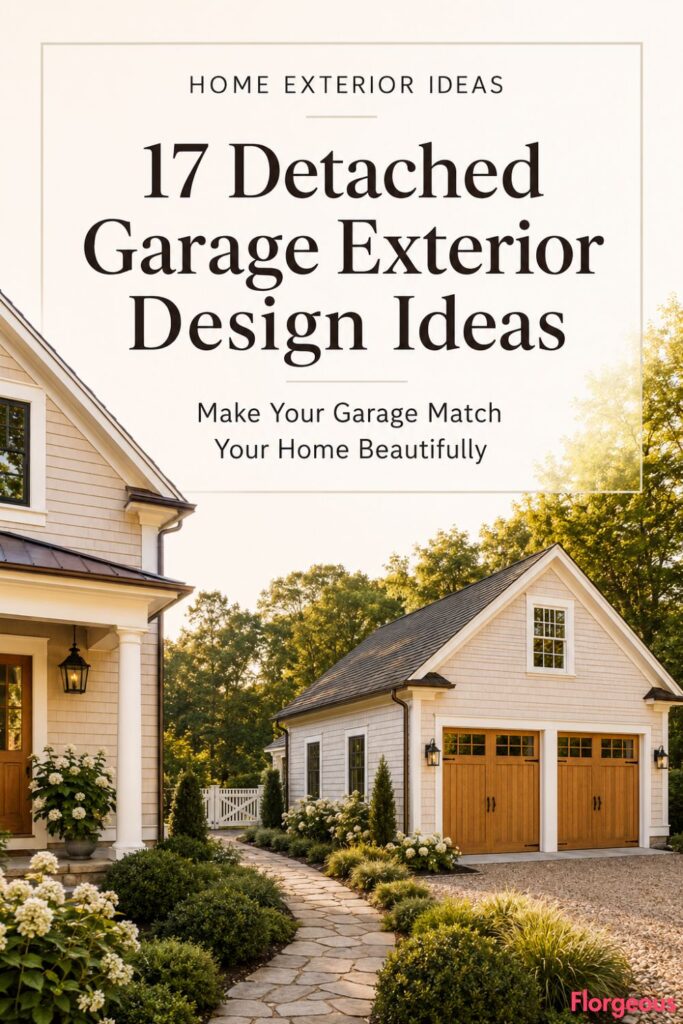
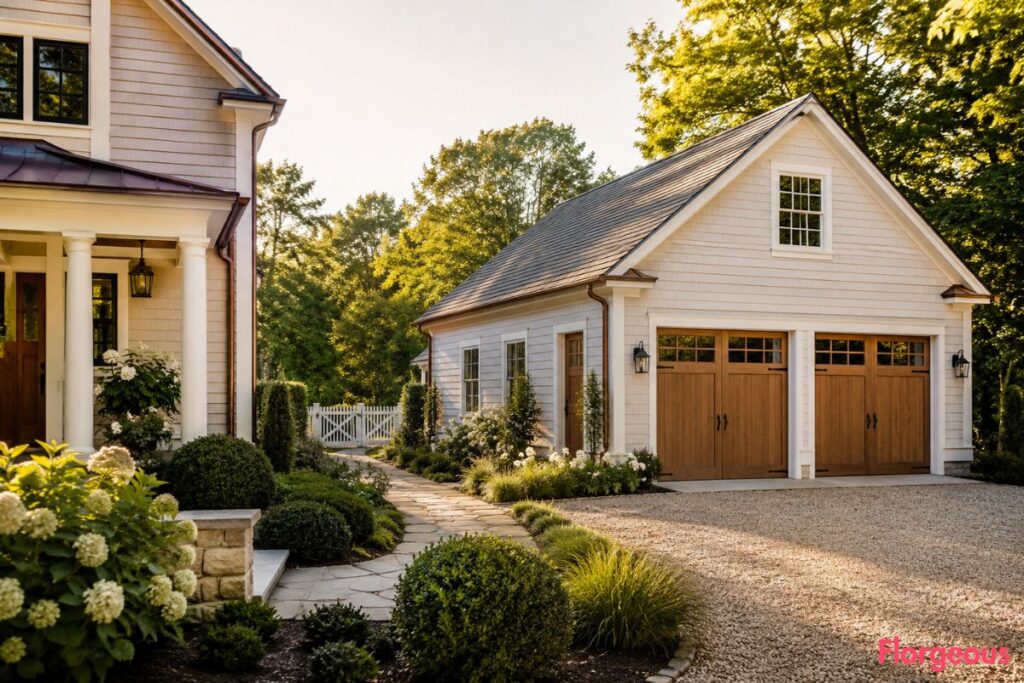
A detached garage can either feel like a forgotten box at the end of the driveway, or it can become one of the most charming parts of your property.
The difference usually comes down to a few design choices: roofline, siding, color, trim, lighting, landscaping, and how well the garage speaks the same visual language as the main house.
If you are planning a new build, refreshing an older garage, or trying to make a standalone structure feel more intentional, these detached garage exterior design ideas will help you create a garage that looks stylish, useful, and completely at home.
1. Match the Garage Roofline to the Main House
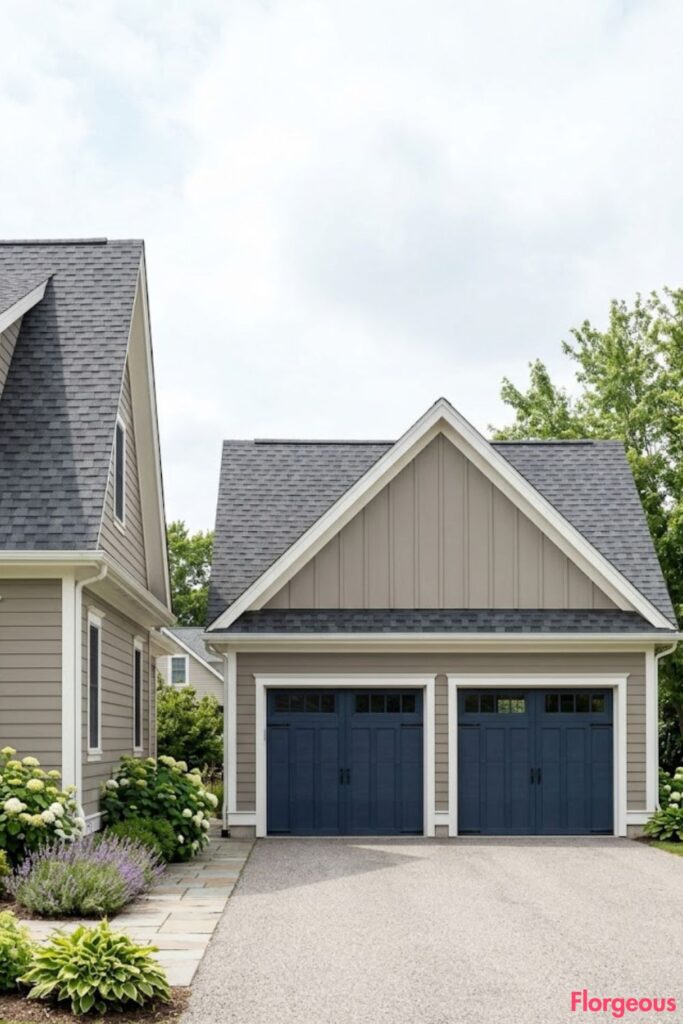
One of the easiest ways to make a detached garage feel connected is to repeat the roof shape of the main home.
If your house has a gabled roof, echo that with a simple front-facing or side-facing gable on the garage. If the house has a hip roof, a low hip roof on the garage will feel more natural than a random flat or shed-style roof.
The garage does not need to be an exact copy. It just needs to feel related. Matching the roof pitch, overhang depth, or shingle color can instantly make the two buildings look like they were planned together.
2. Use the Same Siding in a Simpler Way
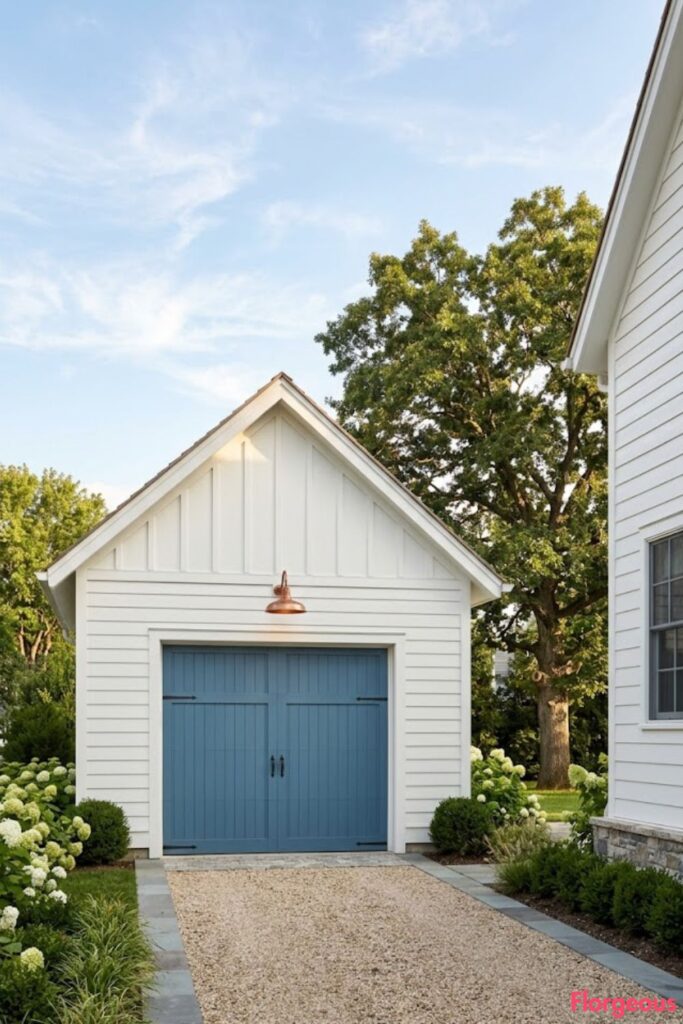
For a polished detached garage exterior design, carry the main house siding onto the garage, but keep the details slightly quieter.
If your home has white lap siding, use the same siding on the garage. If the main house has board and batten, repeat it on the garage doors or upper gable. For brick homes, consider a brick base with siding above to avoid making the garage feel too heavy.
This creates a cohesive look without making the garage compete with the house.
3. Repeat the Main House Trim Color
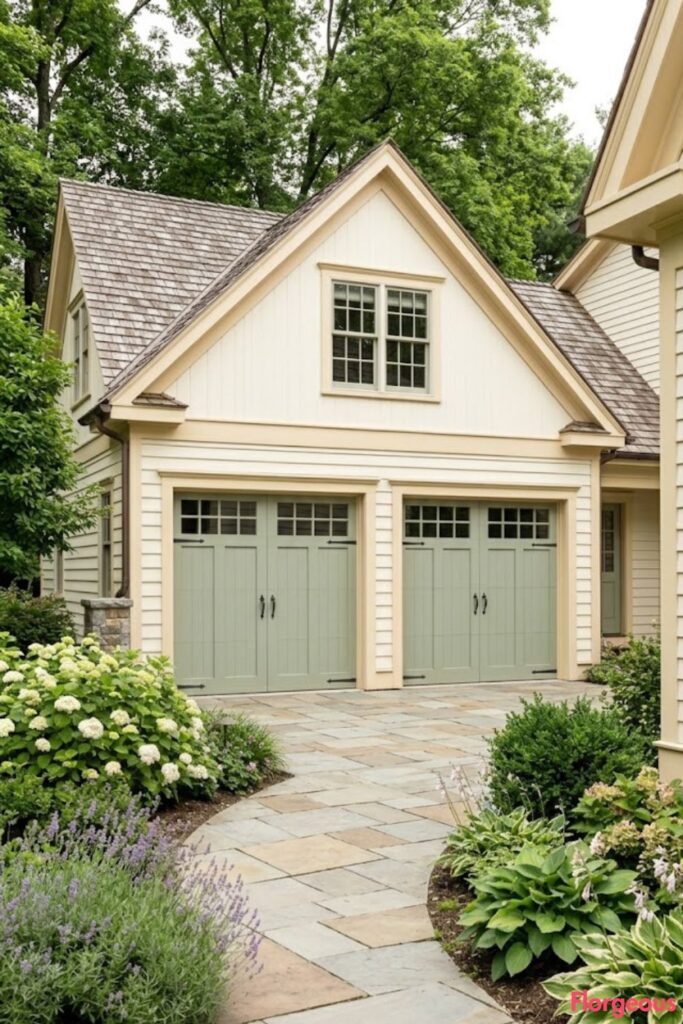
Trim is one of those details that quietly ties everything together.
Use the same color on the garage fascia, window trim, door casing, and corner boards that you used on the house. Crisp white trim feels fresh and classic, while black, charcoal, cream, or deep bronze can look more modern.
For a softer cottage-style property, try warm ivory trim instead of bright white. It feels gentler next to natural wood, stone, and garden planting.
4. Choose Garage Doors That Feel Architectural
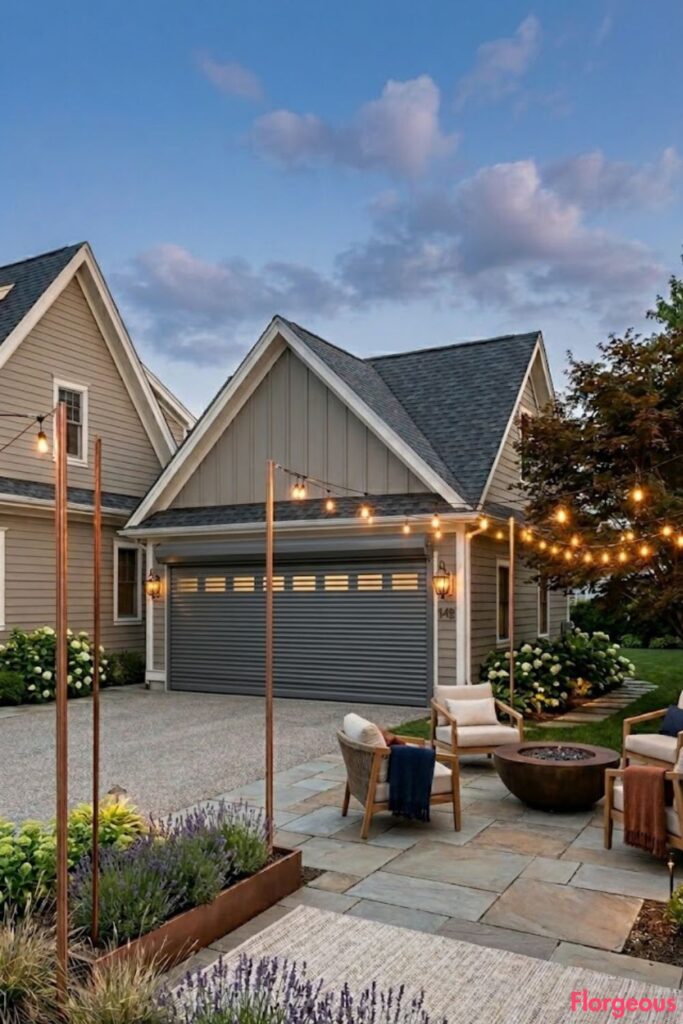
Garage doors take up a large part of the exterior, so they should never feel like an afterthought.
Carriage-style doors work beautifully with farmhouse, cottage, and traditional homes. Flat-panel doors suit modern and minimalist houses. Slim vertical grooves can make the garage feel taller, while horizontal panels create a calm, contemporary look.
For a more custom feel, choose doors with subtle windows, decorative straps, or a wood-look finish. Just keep the style aligned with the house.
5. Paint the Garage the Same Color as the House
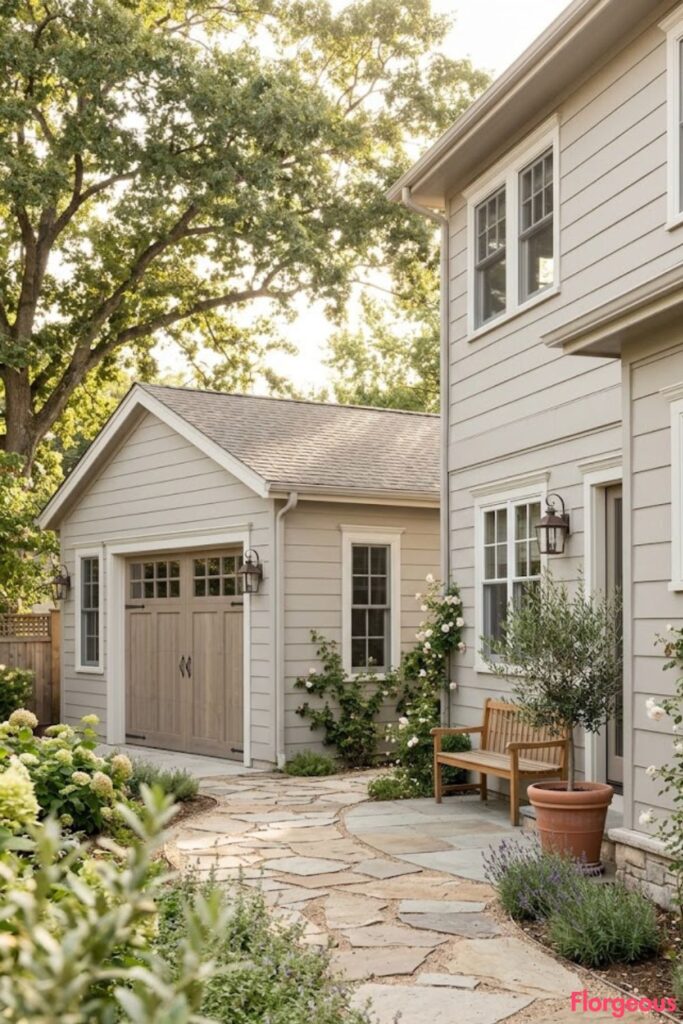
A matching paint color is a simple way to make the garage disappear into the overall property design.
This works especially well for small homes, narrow lots, or detached garages that sit close to the house. A consistent color palette makes the property feel larger, calmer, and more expensive.
Try warm white, soft greige, sage green, pale taupe, charcoal, or muted blue. Avoid choosing a totally different color unless you want the garage to become a feature.
6. Try a Slightly Darker Garage Color for Depth
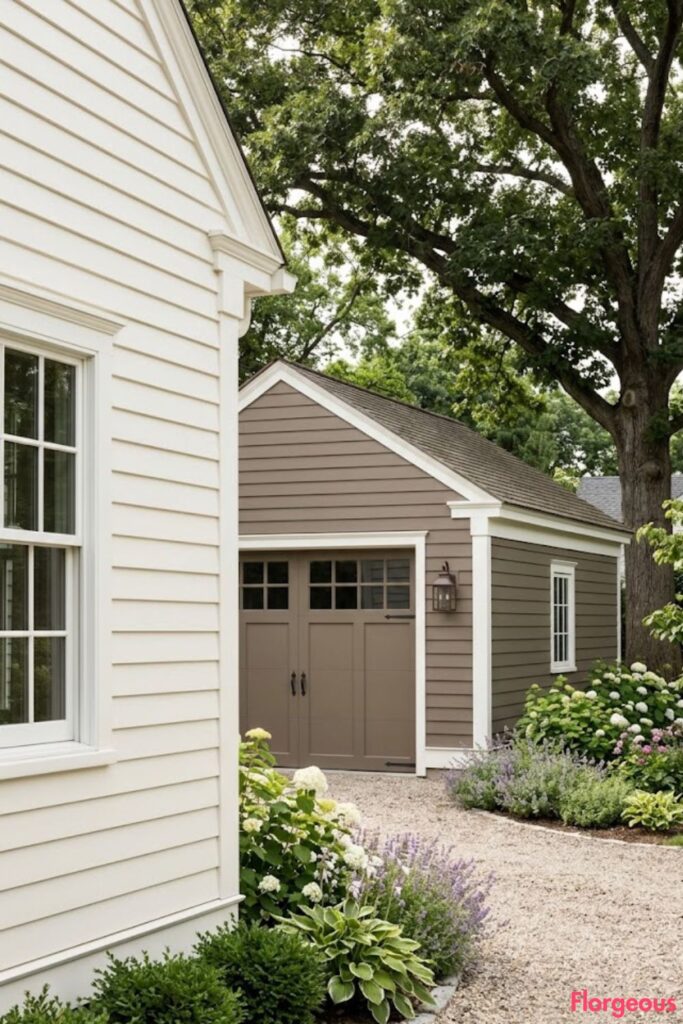
If you want the garage to feel connected but still have its own personality, paint it one or two shades darker than the main house.
For example, pair a warm white house with a mushroom garage. Use a pale gray house with a charcoal garage. Match a creamy cottage with a soft olive garage.
This approach is especially beautiful when the garage sits behind the main home or near a garden. The darker tone gives it depth without making it look disconnected.
7. Add Windows That Match the House Style
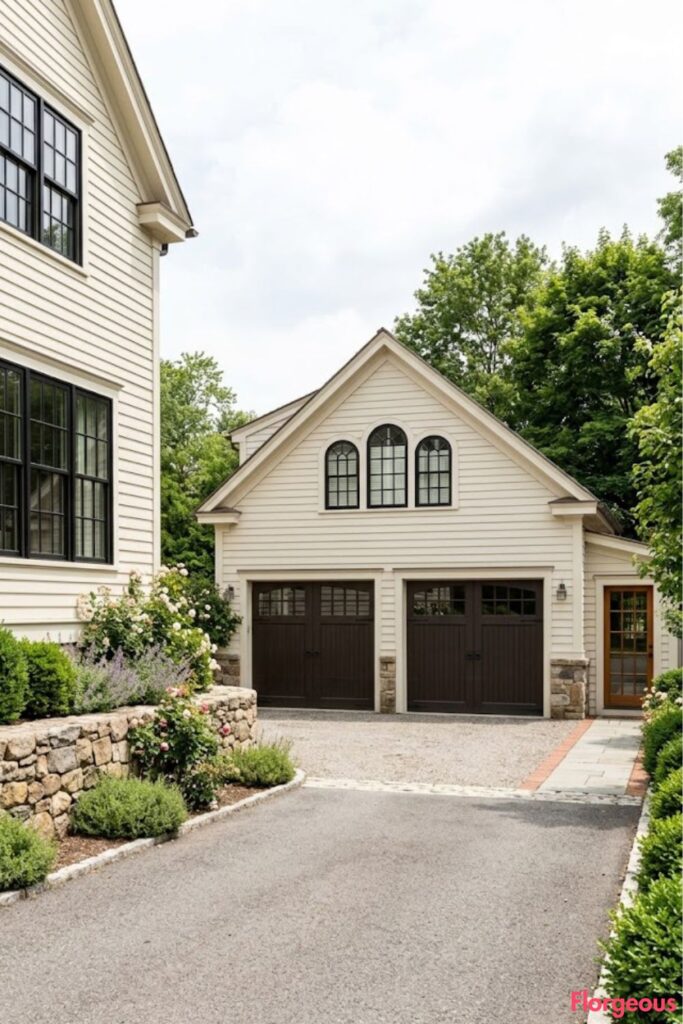
Windows can make a detached garage feel less like storage and more like a real architectural structure.
Repeat the window shape from your main house if possible. Use divided-light windows for traditional homes, black-framed windows for modern homes, or arched windows for Mediterranean and romantic cottage styles.
Even small windows above the garage doors can help. They bring in light, soften the exterior, and make the building feel more designed.
8. Connect the Garage With a Beautiful Pathway
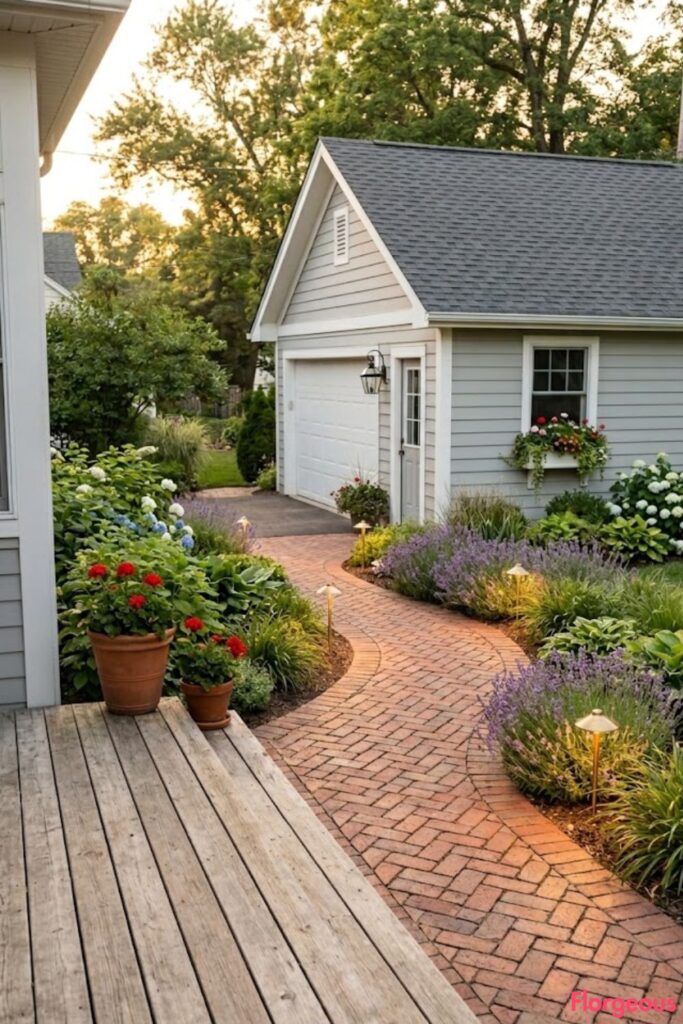
A detached garage should feel easy to reach, not stranded at the edge of the property.
Create a walkway from the house to the garage using materials that match your home’s style. Brick pavers feel classic and charming. Large concrete stepping stones look modern. Gravel with stone edging works well for cottage, farmhouse, and garden-style homes.
Add low lighting along the path for evening use. It makes the connection feel practical and visually intentional.
9. Use Landscaping to Soften the Structure
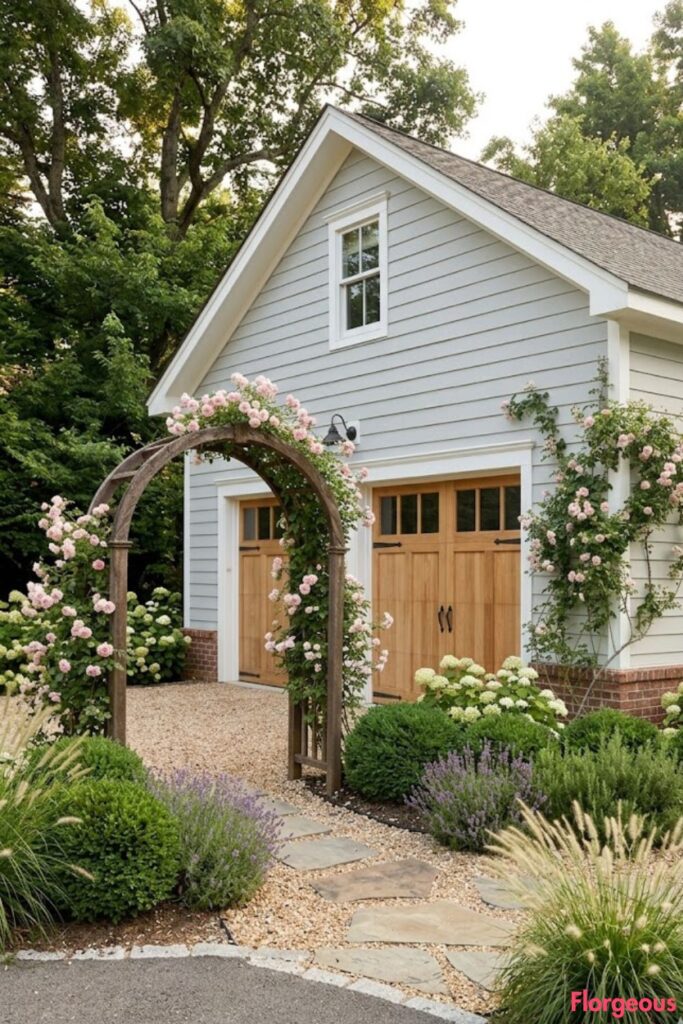
Landscaping can make even a plain detached garage look thoughtful.
Plant shrubs along the foundation, add climbing vines near the corners, or frame the garage doors with grasses and flowering perennials. Boxwood, hydrangeas, lavender, rosemary, ornamental grasses, and small evergreens all work beautifully depending on your climate.
The goal is to ground the garage into the property, so it feels nestled into the landscape instead of dropped onto the driveway.
10. Add a Mini Entry Door With Personality
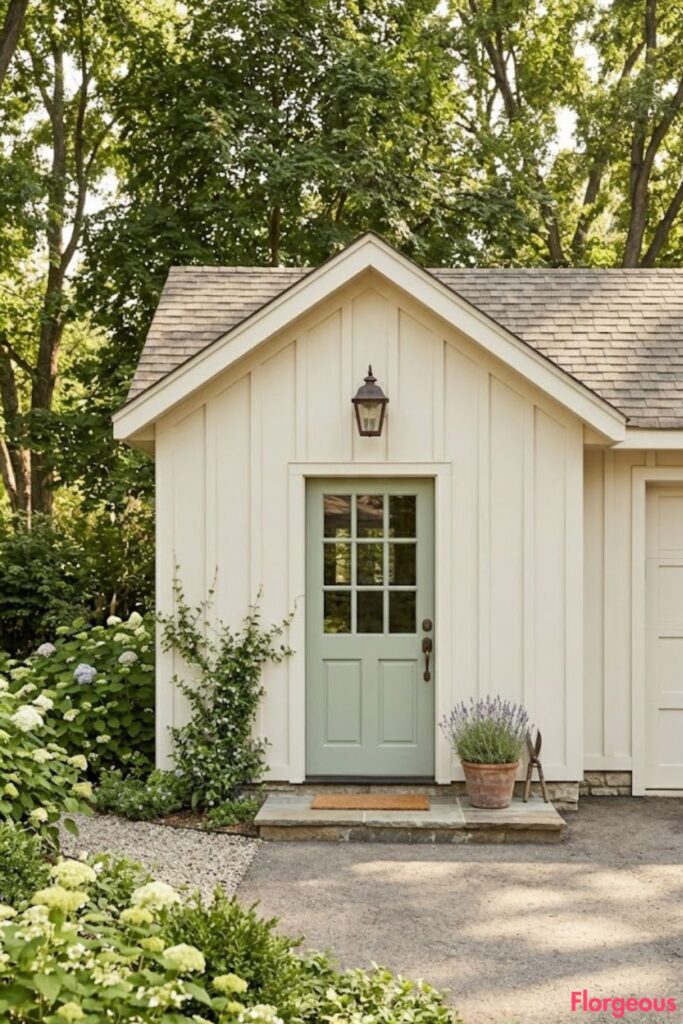
If your garage has a side entry or pedestrian door, treat it like a small design moment.
Paint it the same color as the front door, or use a softer version of that color. Add a pretty handle, a small lantern, a simple step, and a potted plant nearby.
This detail makes the garage feel like a small guest house or garden studio, even if it is mainly used for cars and storage.
11. Create a Detached Garage Exterior Design With Matching Stone Accents
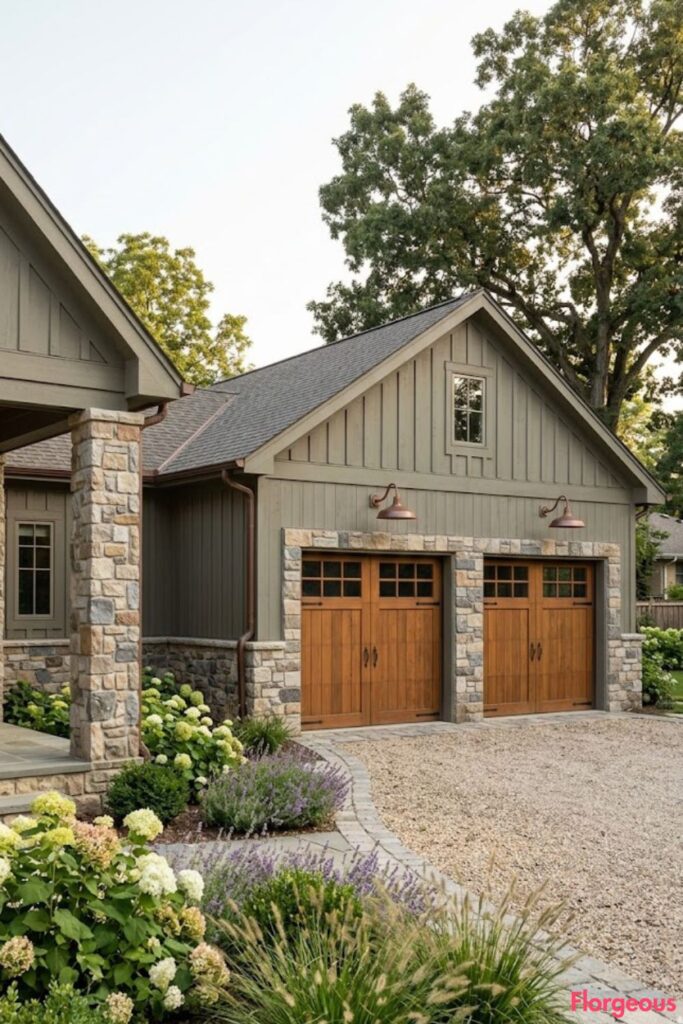
Stone is a beautiful way to visually connect a garage to the main house.
If your home has a stone chimney, foundation, porch column, or entry wall, repeat that stone on the garage base or around the doors. You do not need to cover the whole building. A low stone skirt or stone detail around the entrance is often enough.
For a budget-friendly version, use stone veneer in a controlled area. Keep the color mix close to the stone already used on the house.
12. Add a Covered Breezeway or Pergola
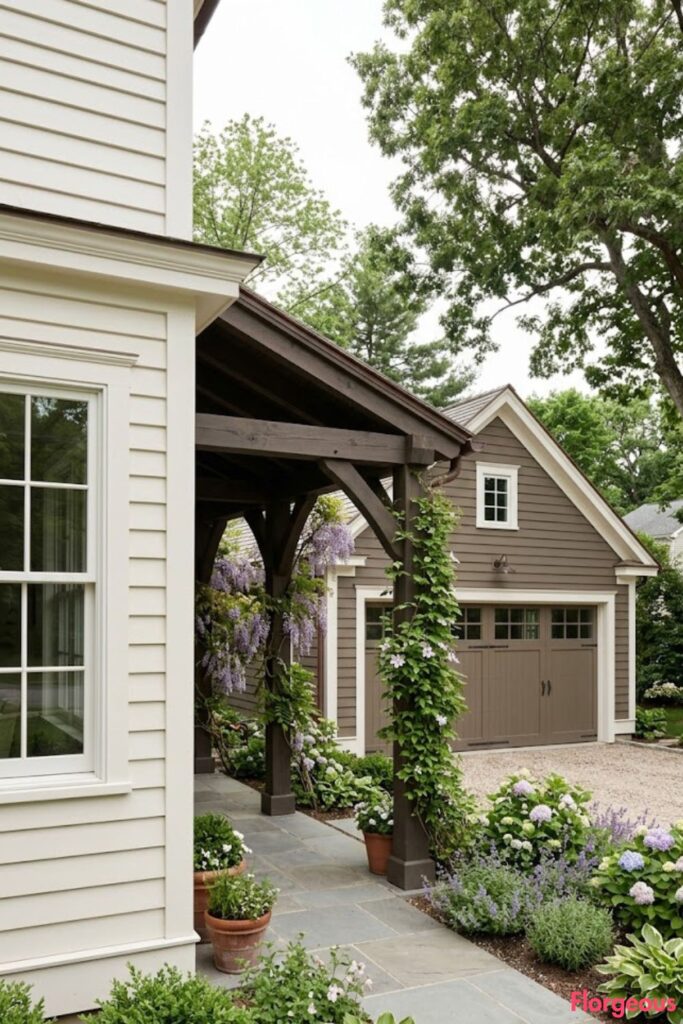
A breezeway can make a detached garage feel almost attached while still keeping its standalone charm.
A covered walkway is practical in rain or strong sun, and it creates a graceful transition between the home and garage. For a more open look, try a pergola with climbing plants instead of a solid roof.
Use the same posts, beams, paint color, or roofing material as the main house. This small connection can make the whole property feel custom.
13. Use Lighting That Matches the Home’s Exterior Fixtures
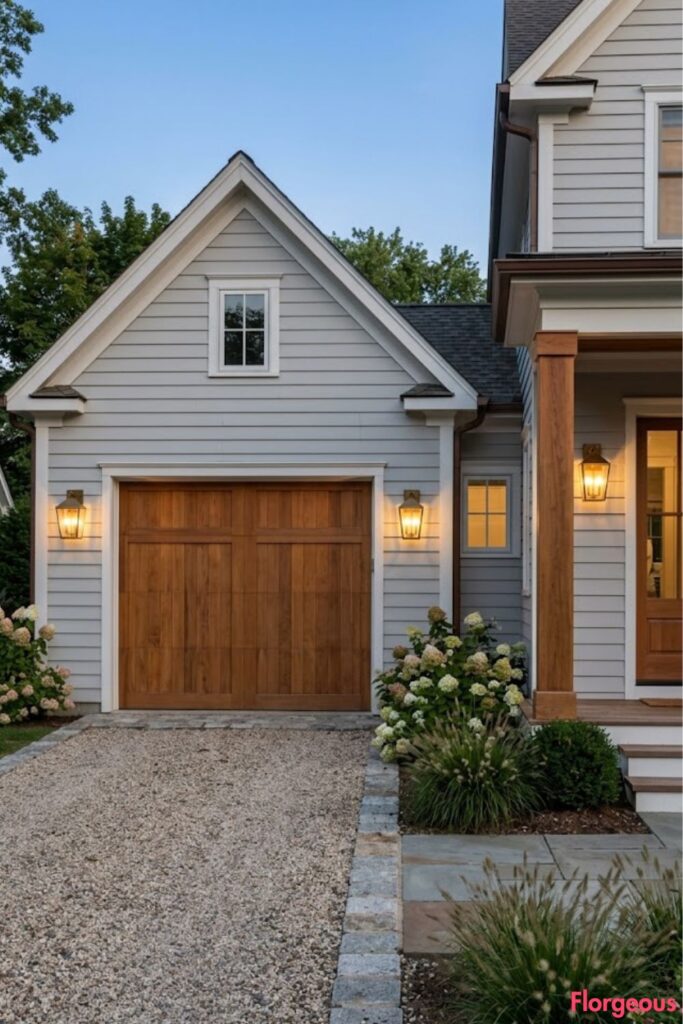
Outdoor lighting is often overlooked, but it makes a huge difference.
Choose garage sconces that match or coordinate with the lights on your porch, entry, or patio. Black lanterns, aged brass sconces, bronze gooseneck lights, and simple modern cylinders can all work depending on the home style.
Place lights on either side of the garage doors or above each bay. Warm white bulbs create a softer and more welcoming glow than cool white bulbs.
14. Add a Small Overhang Above the Garage Doors
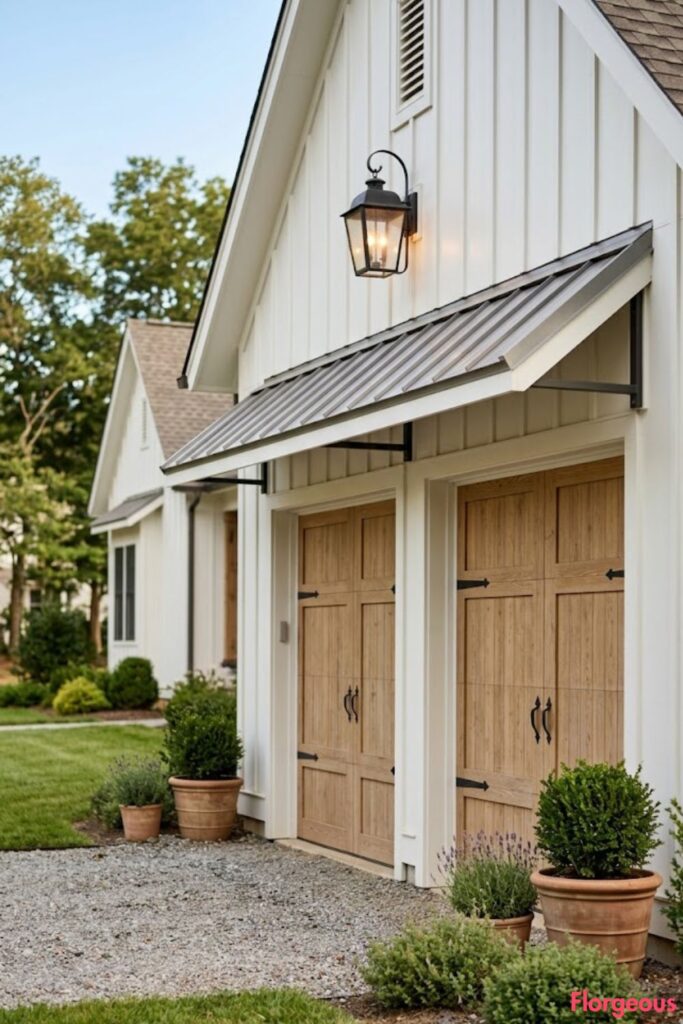
An overhang gives a detached garage more character and shadow.
It can be a simple metal awning, a small shingled rooflet, or a wood bracketed canopy. This detail works especially well on garages with flat siding or very simple doors because it adds shape without clutter.
Match the overhang material to the house. Use standing seam metal for a modern farmhouse, cedar for a rustic home, or painted brackets for a traditional cottage.
15. Make the Driveway Part of the Design
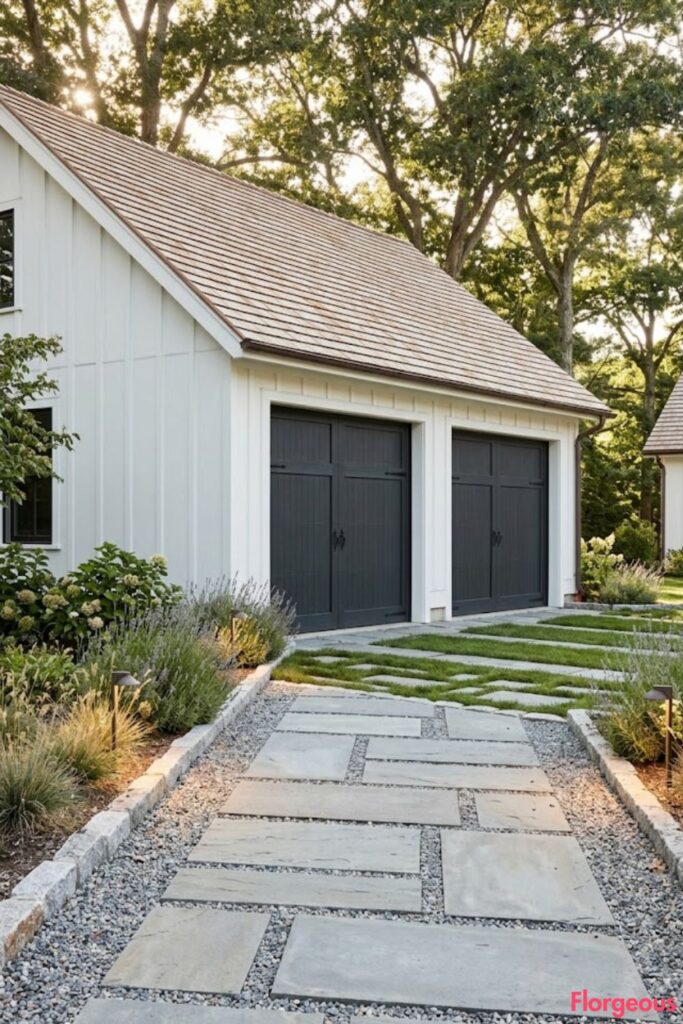
A detached garage exterior design is not just about the building. The driveway matters too.
A wide plain concrete driveway can make the garage feel harsh. Soften it with gravel borders, grass strips, brick edging, or large pavers with ground cover between them.
If replacing the driveway is not realistic, focus on the edges. Add planting beds, low lighting, or a narrow border of stone to make the approach feel more finished.
16. Turn the Garage Gable Into a Feature
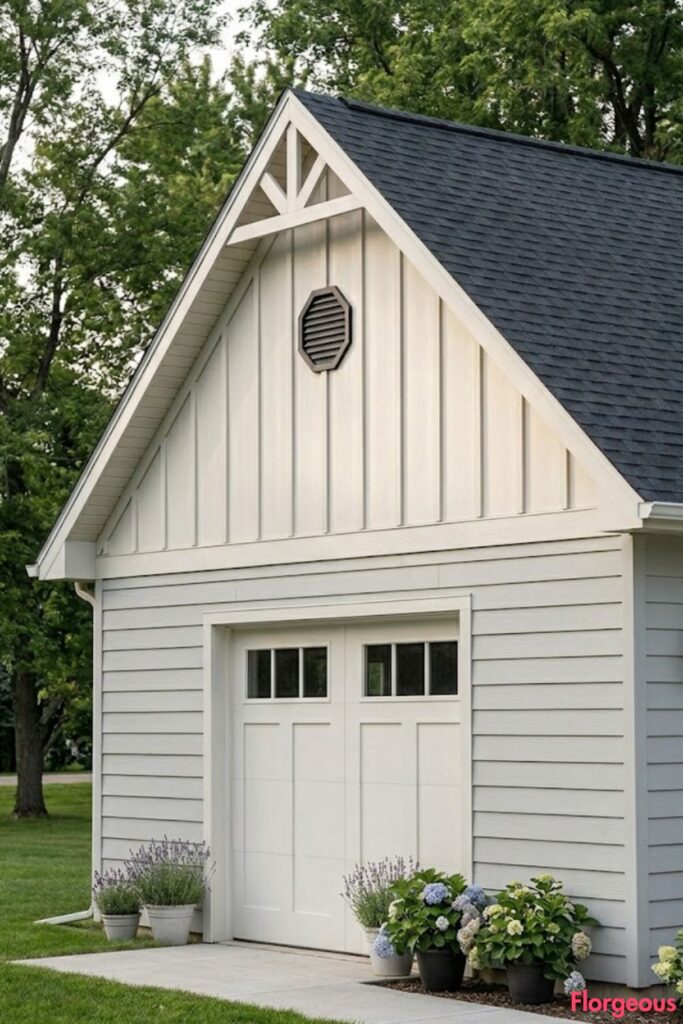
The gable is a perfect spot to add charm without overdecorating.
Try vertical board and batten in the gable if the lower walls have horizontal siding. Add a small round vent, decorative truss detail, cedar shake, or a simple accent panel.
This works especially well for farmhouse, craftsman, cottage, and lake house styles. Keep the color palette restrained so the detail feels architectural rather than busy.
17. Design a Detached Garage Exterior Design That Looks Like a Small Cottage
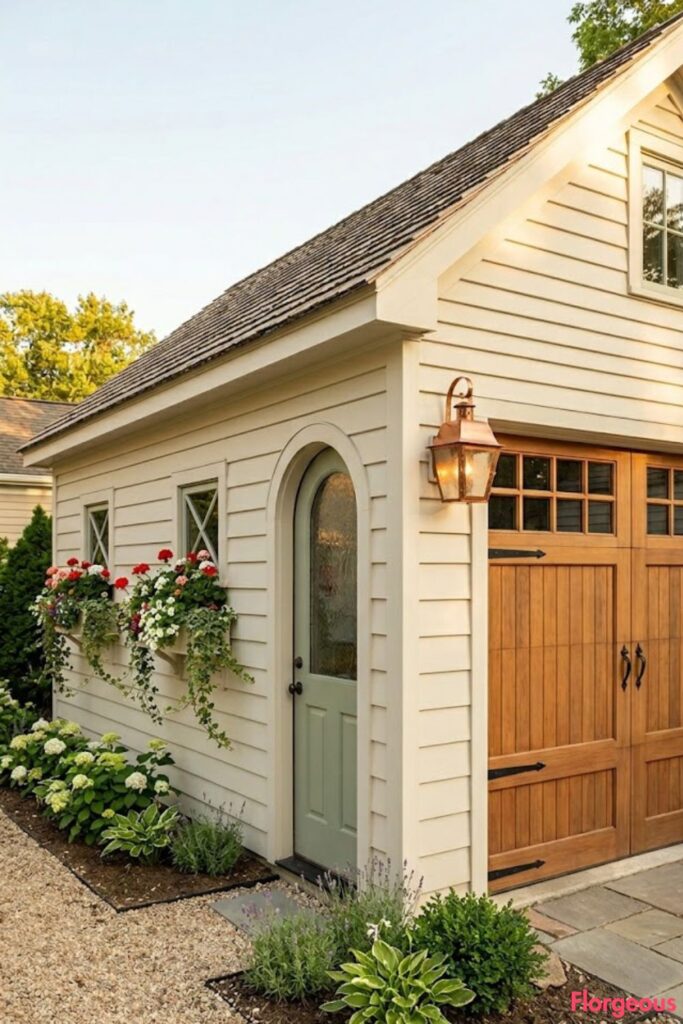
For a truly charming look, treat the garage like a small companion building.
Add flower boxes under the windows, a pretty side door, a pitched roof, soft wall color, warm lanterns, and a simple garden bed. Use materials that echo the main house, but let the garage feel slightly more relaxed.
This idea is perfect for detached garages that double as workshops, studios, guest spaces, or garden storage. It gives the structure a purpose beyond parking and makes the entire property feel more layered.
Final Thoughts on Detached Garage Exterior Design
A beautiful detached garage exterior design does not have to be complicated. The best results usually come from repeating a few key details from the main house, then adding thoughtful touches that make the garage feel useful, charming, and intentional.
Start with the roofline, siding, paint color, and trim. Then look at the details people notice up close: lighting, doors, windows, landscaping, pathways, and hardware.
The goal is not to make the garage steal attention from the house. It should feel like a stylish supporting character, one that makes the whole property look more complete, welcoming, and carefully designed.