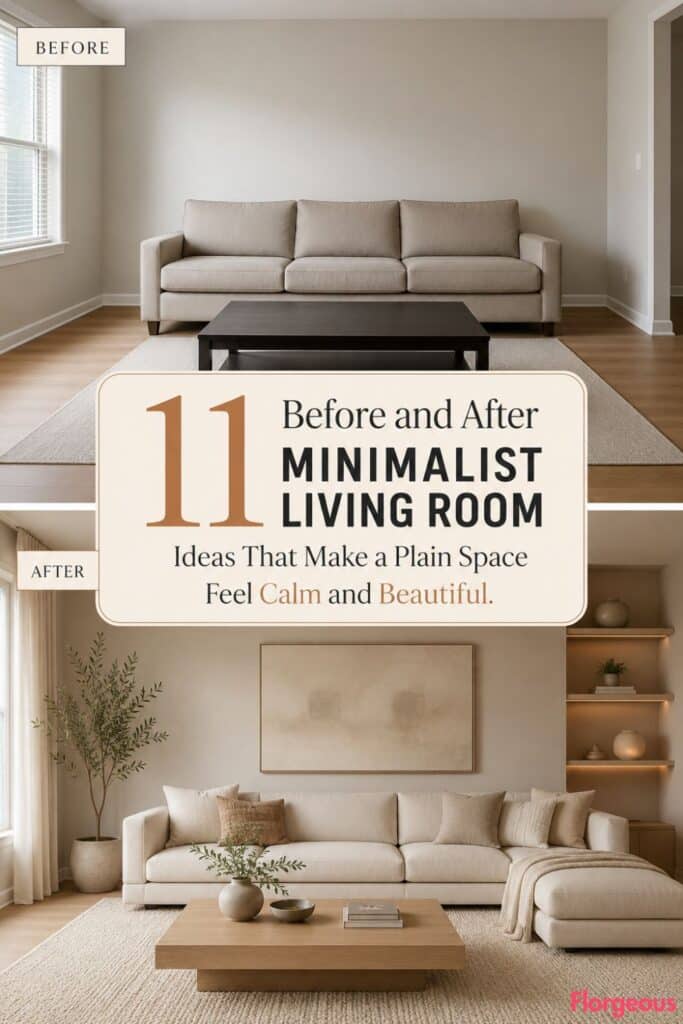
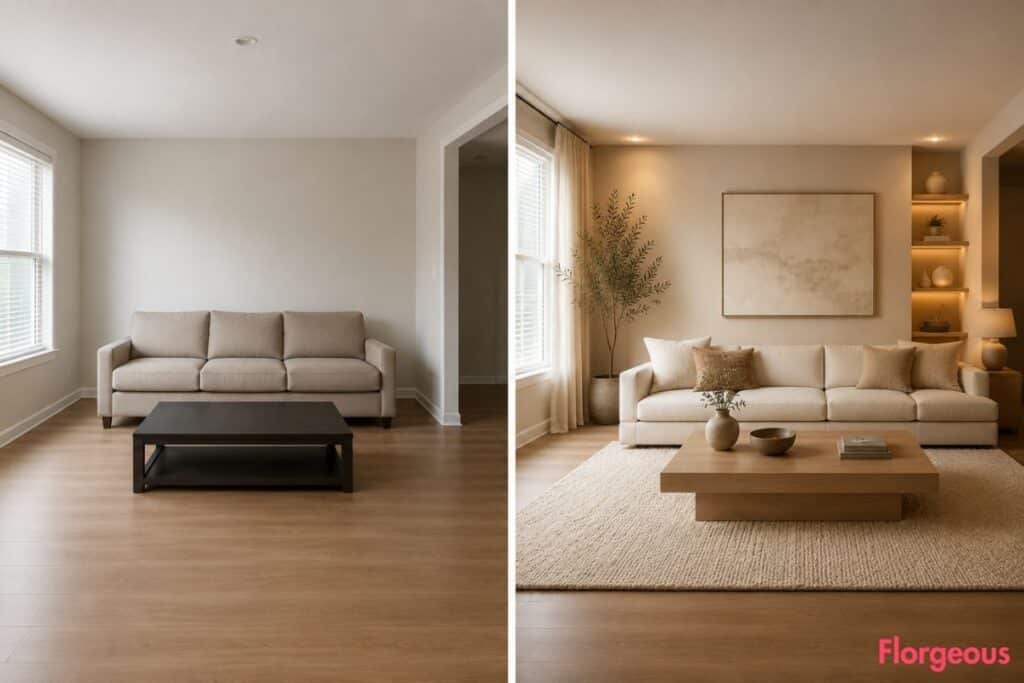
A plain living room can feel strangely hard to decorate. The walls are neutral, the sofa is useful, the coffee table is there, and the room technically works, but nothing about it feels finished.
That is where a Minimalist Living Room can be more powerful than it looks. Minimalism is not about stripping a room until it feels empty. It is about choosing fewer pieces with more purpose, warmer materials, better spacing, and details that quietly make the room feel complete.
For this before-and-after gallery, imagine the same simple living room each time: neutral walls, a basic sofa, a bare coffee table, simple rug or no rug, minimal styling, soft natural light, and no strong focal point.
Each idea starts with that same plain room, then reimagines it in a different minimalist direction. Some are soft and warm, some are more sculptural, and some are perfect for small spaces that need calm without feeling cold.
1. Turn a Plain Living Room Into a Warm Neutral Minimalist Retreat
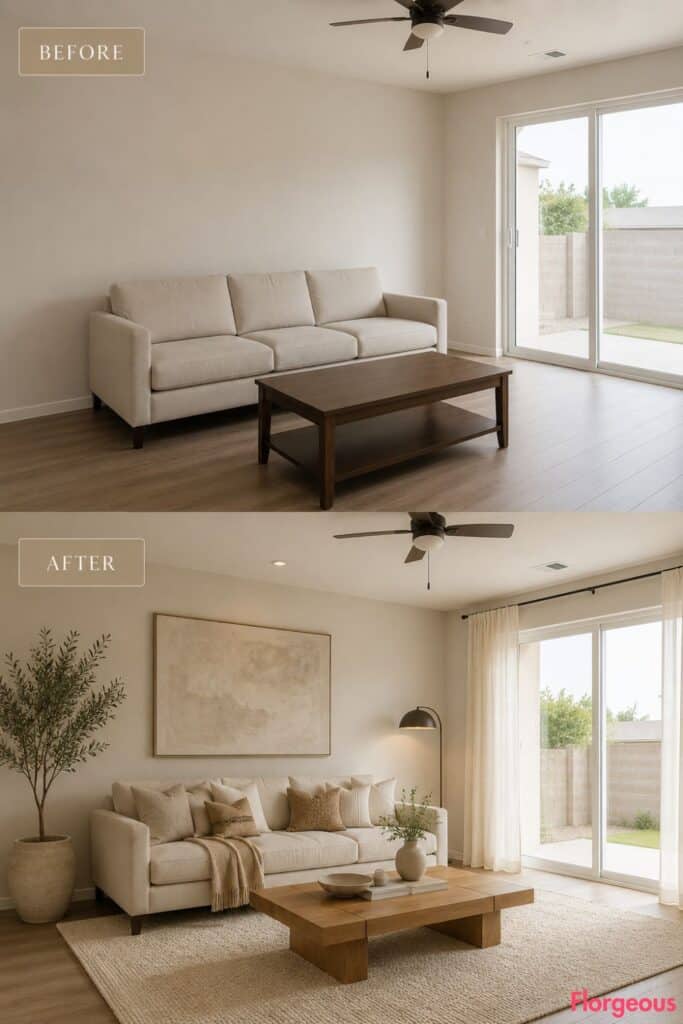
The easiest minimalist makeover usually starts with color. A plain living room can feel unfinished when the neutrals are too flat, but warm whites, oatmeal, beige, and pale taupe instantly make the same space feel softer.
Before: The room has neutral walls, a basic sofa, a bare coffee table, simple rug or no rug, minimal styling, and no clear focal point.
After: The sofa is softened with linen pillows, a textured cream rug anchors the seating area, and a slim oak coffee table adds warmth without heaviness. A single oversized abstract artwork above the sofa gives the room focus while keeping the palette quiet.
Why it works: Warm neutrals make a minimalist room feel inviting instead of empty.
Try this: Choose three main tones only, such as warm white, oatmeal, and light oak, then repeat them across textiles, furniture, and decor.
Designer Tip: If your room feels cold, do not add more decor first. Adjust the undertone of your neutrals, because warm white and greige often feel more livable than bright white.
2. Change a Bare Living Room Into a Japandi-Inspired Space With Wood and Linen
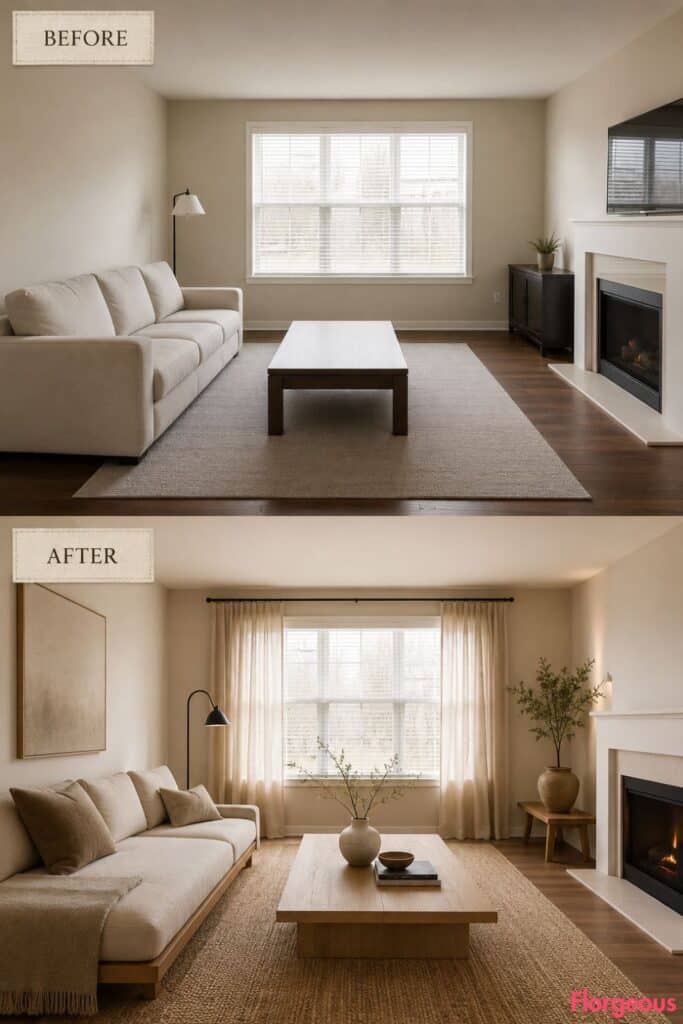
Japandi style works beautifully in a minimalist living room because it combines clean lines with natural warmth. Instead of filling every wall and surface, this look lets shape, texture, and material do the decorating.
Before: The same plain living room has a basic sofa, neutral walls, bare surfaces, flat lighting, and a slightly unfinished feeling.
After: The sofa becomes lower and softer, the coffee table is simple wood, and the rug has a woven natural texture. Linen curtains fall from ceiling height, a small ceramic vase sits on the table, and a slim wood bench adds quiet structure.
Why it works: Japandi design feels calm because every piece has a purpose, but the natural materials keep it from feeling severe.
Try this: Use pale oak, black accents, linen, and off-white walls for a simple starting palette.
3. Make a Simple Living Room Feel Calm With Low Furniture and Negative Space
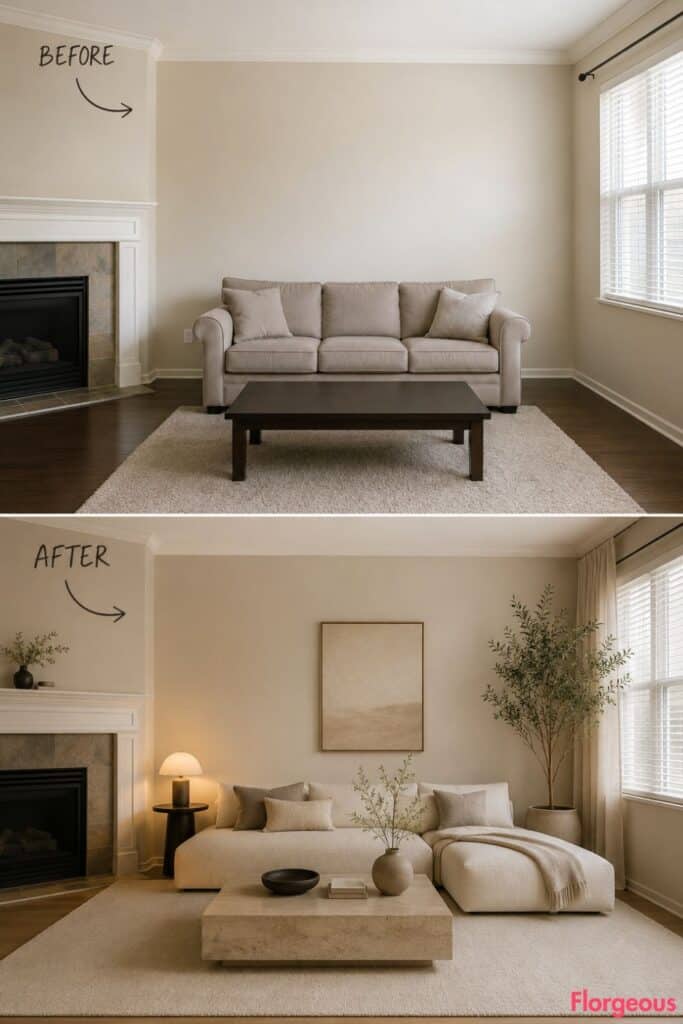
One of the most overlooked minimalist tricks is furniture height. Lower furniture can make the ceiling feel taller and the room feel more relaxed.
Before: The living room has neutral walls, a standard sofa, a bare coffee table, minimal styling, and no strong design direction.
After: A low, clean-lined sofa sits with a slim stone coffee table and a large plain rug. The wall above the sofa is left mostly open except for one simple framed piece, and the side table is small enough to keep the room airy.
Why it works: Negative space gives the eye somewhere to rest. The room feels designed because it is not trying too hard.
Try this: Leave at least one wall area intentionally simple. In minimalist rooms, empty space is part of the design.
Common Mistake: Minimalism can look unfinished when everything is small. Use fewer pieces, but choose pieces with enough scale to hold the room.
4. Turn a Builder-Grade Living Room Into a Minimalist Space With Hidden Storage
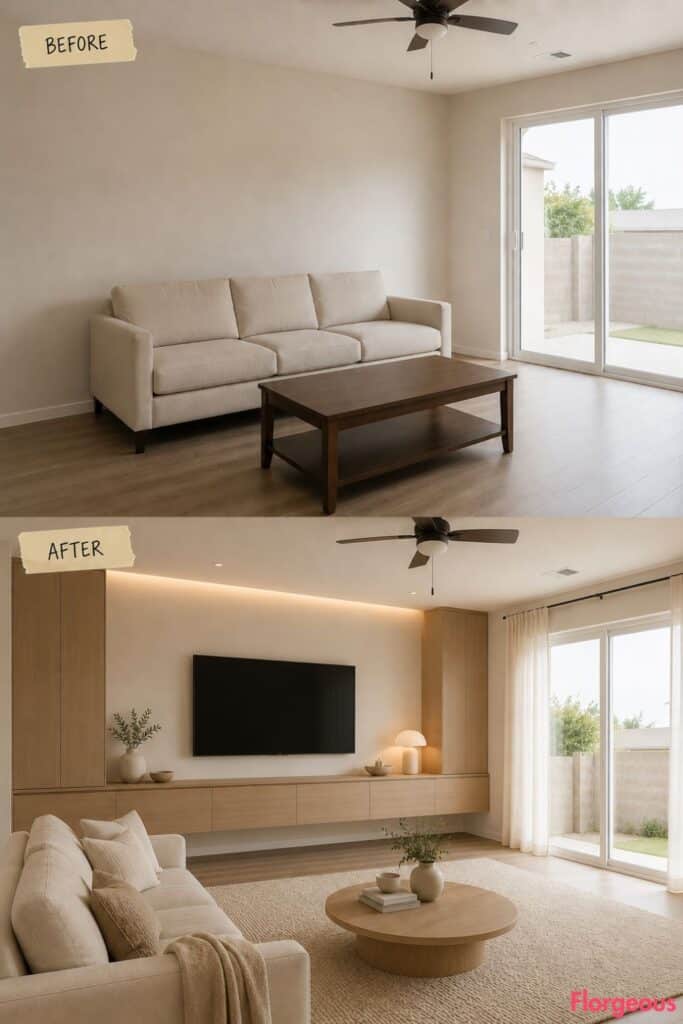
A clutter-free living room is easier to love when storage is built into the design. The goal is not to remove everything from daily life. The goal is to give everything a quiet place to go.
Before: The same basic living room has bare surfaces, builder-grade finishes, a basic sofa, and no visual anchor.
After: A floating media console stretches across one wall in warm white or light oak. Closed cabinets hide remotes, games, chargers, and extra blankets. A simple lamp, one bowl, and a few books create a styled but not crowded surface.
Why it works: Hidden storage keeps the room looking calm even when real life is happening behind the cabinet doors.
Try this: Choose handleless doors or slim integrated pulls for a cleaner look.
Budget Version: Use a long floating shelf with matching closed baskets underneath if custom cabinetry is not possible.
5. Give a Plain Living Room a Soft Organic Modern Look With Curves and Texture
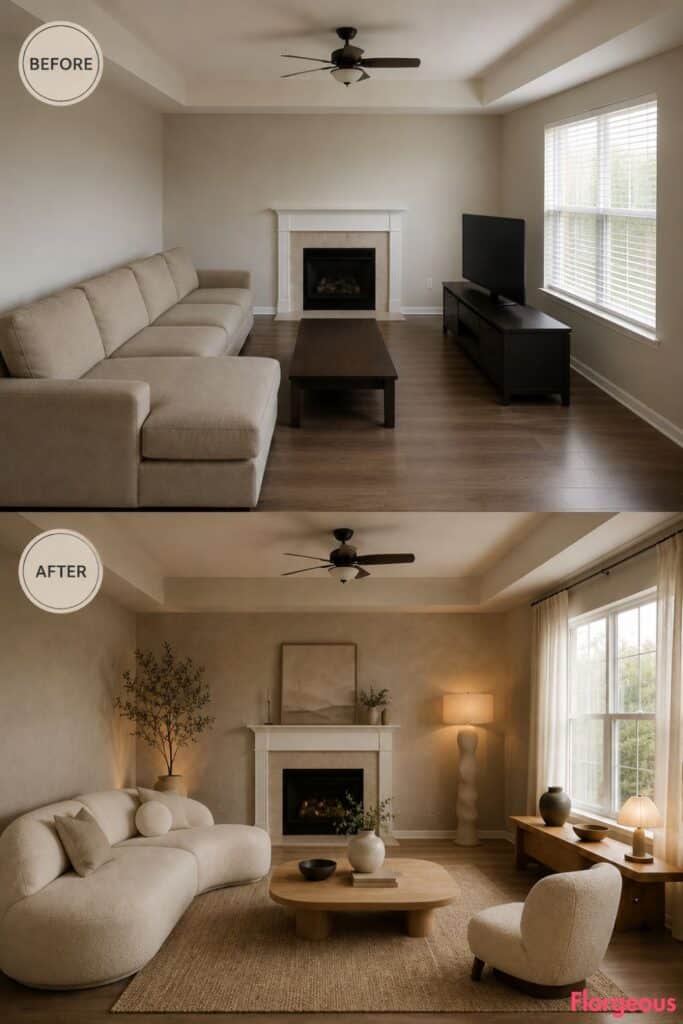
Minimalist design does not have to mean sharp corners everywhere. Organic modern style brings in curved forms, soft texture, and earthy materials while keeping the room edited.
Before: The living room has neutral walls, a basic sofa, a bare coffee table, simple rug or no rug, and no statement feature.
After: The sofa has rounded arms, the coffee table is oval or pebble-shaped, and a boucle accent chair adds texture without pattern. A plaster-look wall finish or soft greige paint gives the background depth.
Why it works: Curves make a minimal room feel gentle and human. The space still feels clean, but it is much more inviting.
Try this: Pair rounded furniture with simple materials, such as oak, stone, wool, ceramic, and linen.
6. Add a Quiet Focal Wall With Limewash or Soft Plaster Texture
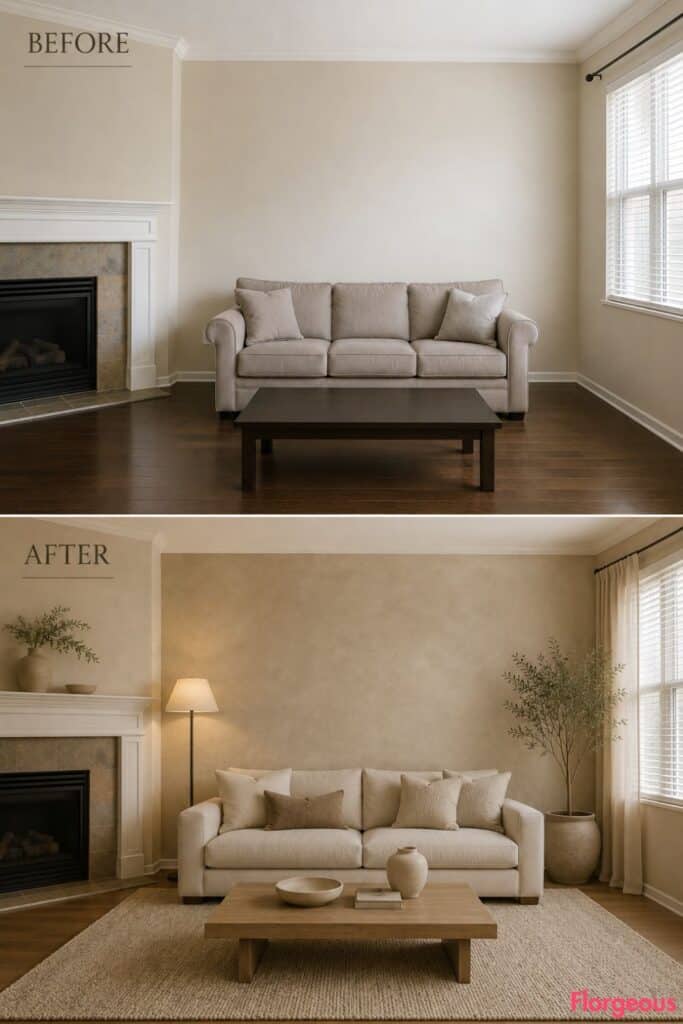
A minimalist room still needs a focal point. Instead of using bold wallpaper or busy art, a textured wall can add depth in a very quiet way.
Before: The plain living room has neutral walls, a basic sofa, bare coffee table, minimal styling, and flat visual texture.
After: The wall behind the sofa is finished in soft limewash, warm plaster, or a subtle paint effect in stone, mushroom, or pale clay. The rest of the room stays simple with a clean sofa, wood table, textured rug, and one sculptural lamp.
Why it works: Texture creates interest without adding clutter.
Try this: If limewash feels like too much work, use a matte paint with a warm earthy undertone.
Color Story: Stone, mushroom, and pale clay are soft enough for minimalism but warmer than plain white.
7. Use Floor-to-Ceiling Curtains to Make the Room Feel Taller
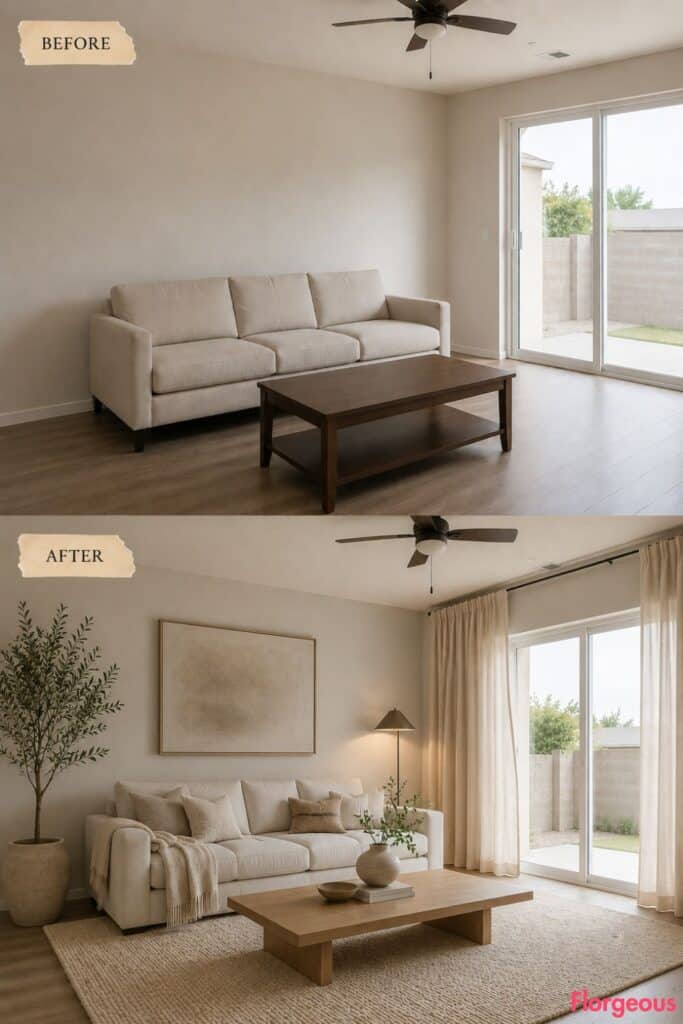
Curtains can completely change the feel of a living room without adding clutter. In a minimalist space, they also soften hard edges and make the room feel more intentional.
Before: The living room has plain windows, a basic sofa, bare surfaces, and a clean but unfinished mood.
After: Soft linen or linen-look curtains are hung high and wide so the window feels larger. The sofa stays simple, the rug is textured, and the coffee table has only one or two sculptural objects.
Why it works: Tall curtains create vertical lines, which make the space feel larger, calmer, and more finished.
Try this: Choose curtains that just kiss the floor. Pooled fabric can feel romantic, but a cleaner length usually fits a minimalist look better.
8. Create a Minimalist Media Wall That Looks Built In
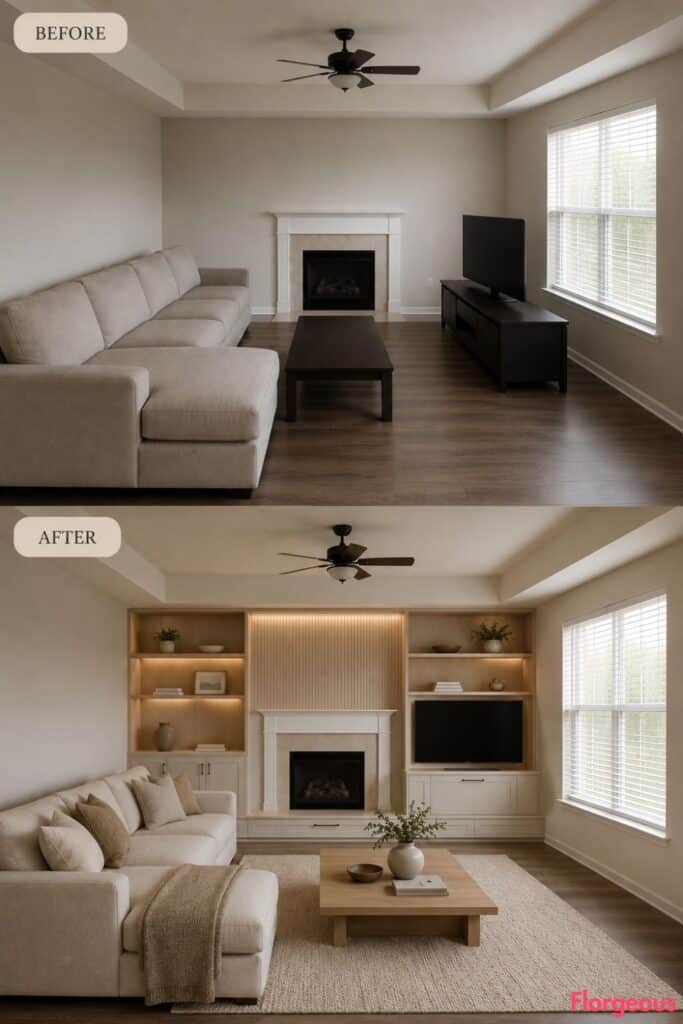
Television walls can quickly make a living room feel cluttered. A minimalist media wall solves that by turning the practical part of the room into a clean architectural feature.
Before: The same living room has a basic sofa, plain wall, bare coffee table, and no strong focal point.
After: The TV is framed by a slim built-in or floating media wall in warm white, pale oak, or soft greige. Closed storage sits below, a few open shelves hold ceramics and books, and lighting is soft rather than harsh.
Why it works: The TV becomes part of a larger design instead of looking like an afterthought.
Try this: Keep open shelves at least half empty. The negative space is what makes the wall feel minimalist.
9. Style the Room With One Oversized Artwork Instead of Many Small Pieces
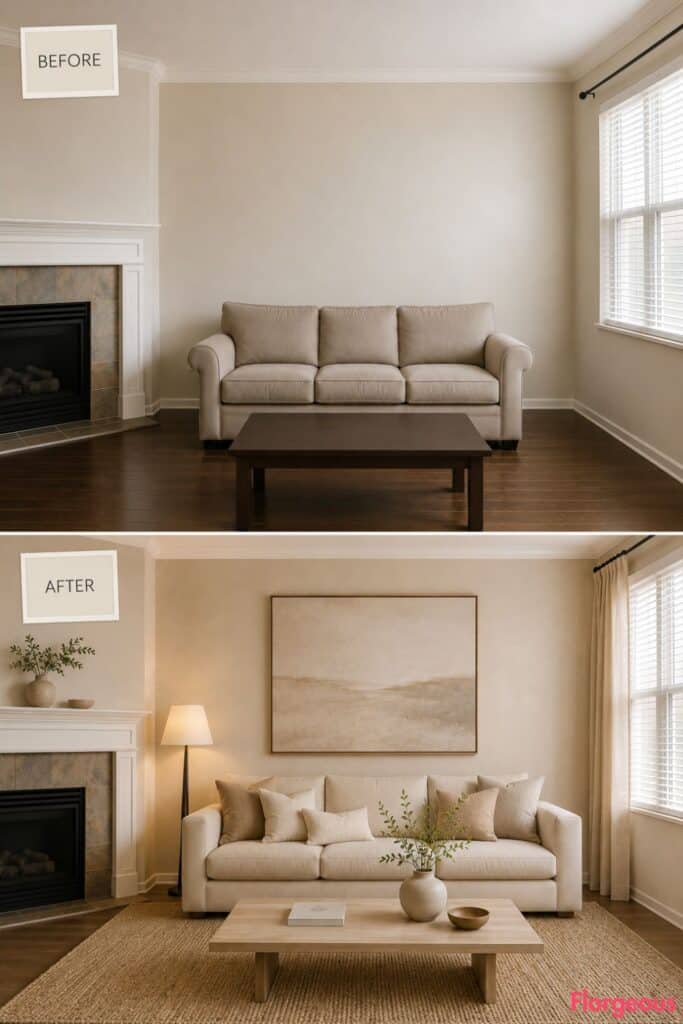
A gallery wall can be beautiful, but for a minimalist look, one large artwork often feels stronger. It gives the room confidence while keeping the wall calm.
Before: The plain living room has neutral walls, basic essential furniture, minimal styling, and no focal point.
After: One oversized artwork sits above the sofa in soft abstract tones, charcoal line work, or muted landscape colors. The rest of the room stays edited with a low coffee table, simple rug, and a few natural decor pieces.
Why it works: Larger art can make a room feel more expensive and less busy.
Try this: Choose art that repeats one or two colors already in the room so it feels connected rather than random.
Pinterest-Worthy Detail: A large frame with a thin wood, black, or brass edge can make even simple art feel more finished.
10. Make a Minimalist Living Room Feel Cozy With Layered Lighting
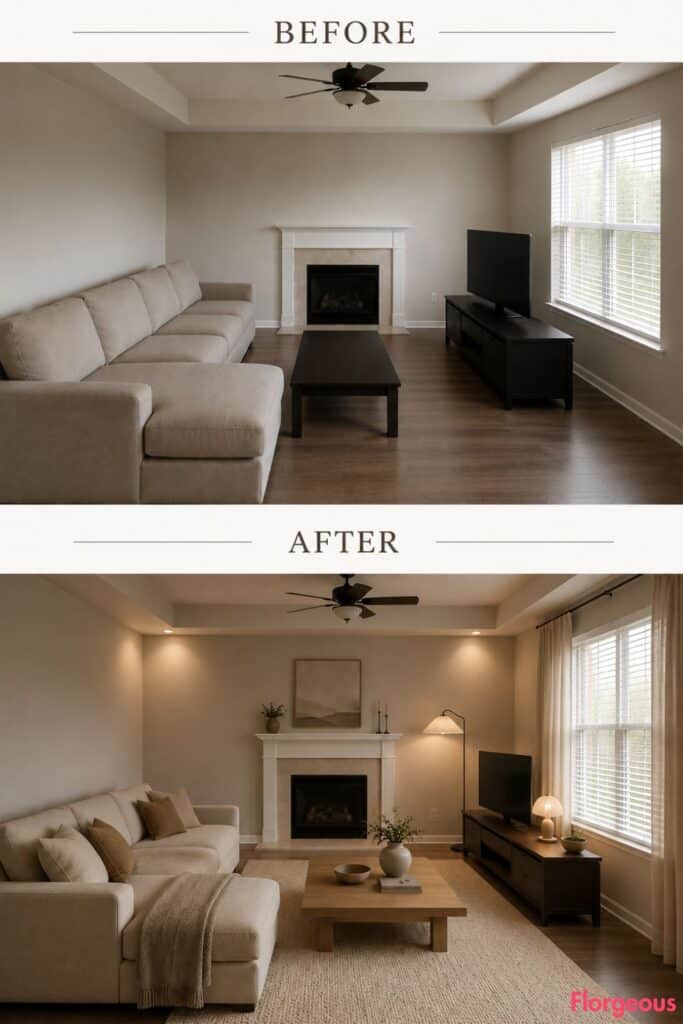
A room can have beautiful furniture and still feel unfinished if the lighting is flat. Minimalist rooms especially need lighting layers because there is less decor to create mood.
Before: The living room has neutral walls, a basic sofa, bare coffee table, minimal styling, soft natural light, and no evening atmosphere.
After: A sculptural floor lamp sits near the sofa, a small table lamp adds glow beside the seating area, and warm wall lighting highlights the texture of the room. The decor stays simple, but the lighting gives the space depth.
Why it works: Lighting creates softness, shadow, and shape. That is what keeps a minimal room from feeling empty at night.
Try this: Use warm bulbs, dimmers, and shaded lamps instead of relying on one ceiling light.
11. Finish the Room With Edited Styling and One Living Green Accent
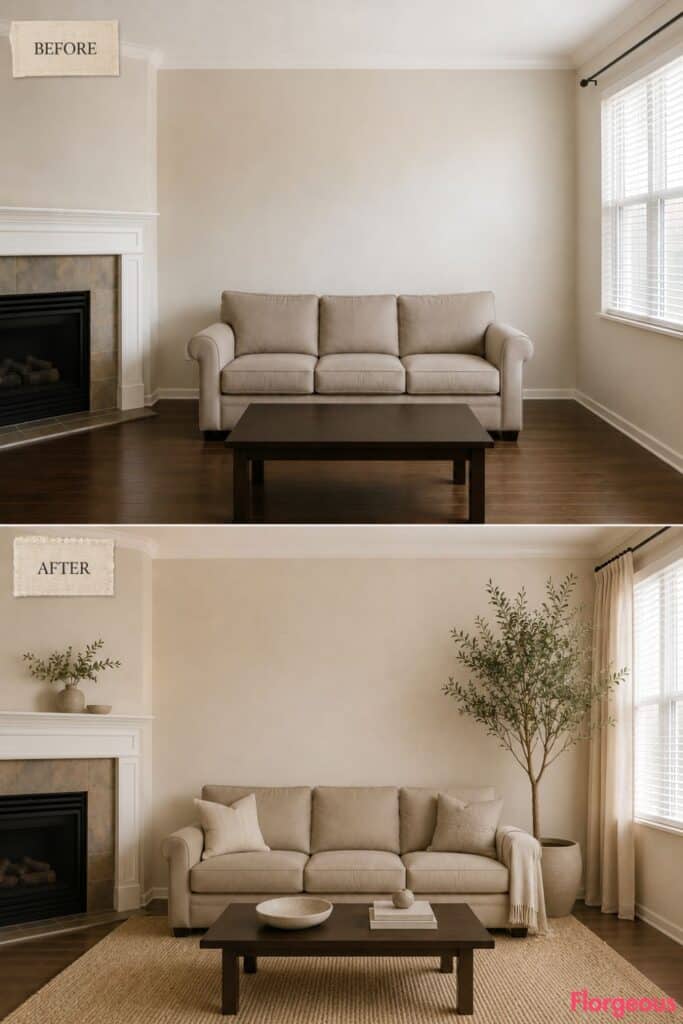
The final layer of a minimalist makeover is editing. Instead of adding many small decorations, choose a few pieces that have shape, texture, or meaning.
Before: The living room has a basic sofa, neutral walls, a bare coffee table, simple rug or no rug, minimal styling, and a slightly empty feeling.
After: The coffee table holds one ceramic bowl and a small stack of books. A tall indoor tree or simple branch arrangement adds life. The pillows are limited to two or three, and every surface has breathing room.
Why it works: A little greenery prevents minimalism from feeling static. Edited styling makes the room feel cared for without becoming cluttered.
Try this: Remove half the small decor first, then add back only the pieces that improve the shape, texture, or warmth of the room.
Style Note: The best Minimalist Living Room ideas usually begin with subtraction. Clear the visual noise, then add one strong texture, one warm material, and one quiet focal point.
How to Choose the Right Minimalist Makeover for Your Living Room
The best minimalist before-and-after rooms are not empty. They are edited, warm, and intentional.
If your living room feels cold, start with texture: linen curtains, a wool rug, warm wood, or soft plaster tones. If it feels cluttered, start with storage and remove the small pieces that do not add comfort or function.
For a rented space, focus on curtains, rugs, lighting, art, and furniture layout. For a homeowner makeover, built-ins, plaster walls, and custom media storage can make the room feel more architectural.
A Minimalist Living Room works best when it still feels like someone lives there. Choose the idea that fits your habits first, then build the style around that. A calm room is not just about what you add, it is also about what you decide to leave out.