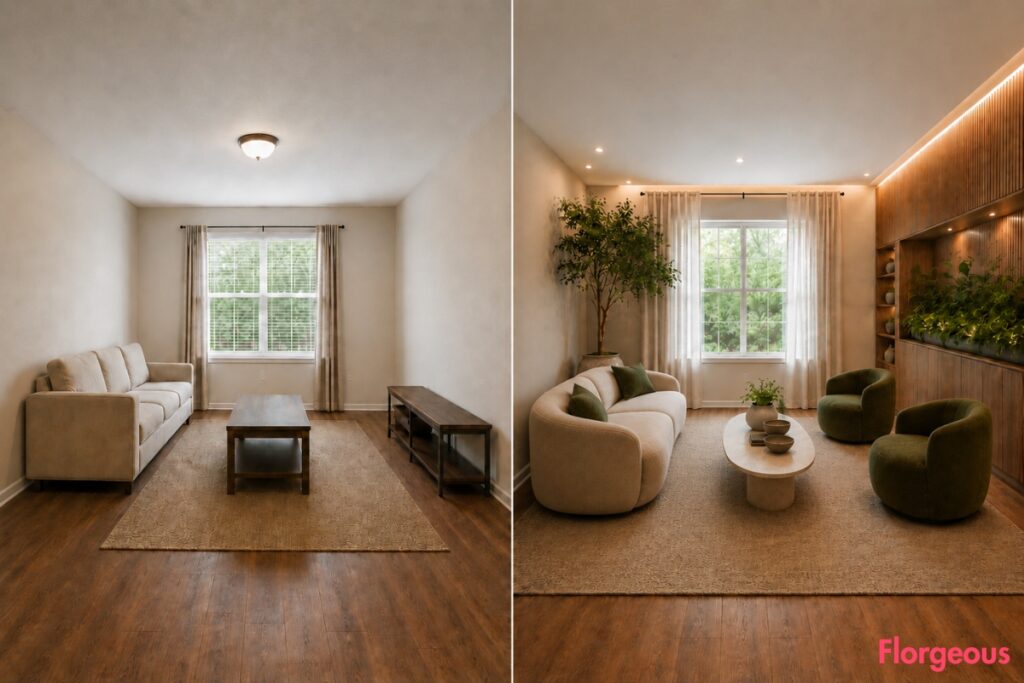
A builder-grade living room can be perfectly functional and still feel oddly unfinished. Warm neutral walls, a basic sofa, a bare coffee table, short curtains, and flat styling provide a clean starting point, but there is little personality or connection to nature.
That is where an Urban Jungle Living Room becomes interesting. The best examples are not rooms covered in dozens of tiny pots. They use greenery almost like architecture, shaping sightlines, framing furniture, softening hard edges, and bringing life into spaces that previously felt generic.
For these 15 makeovers, we kept the exact same room shell, doorway, window, flooring, proportions, camera position, daylight direction, and circulation. What changes is the design strategy. Each version explores a completely different relationship between plants, furniture, materials, color, and everyday living.
1. Let One Oversized Plant Become the Room’s Main Focal Point
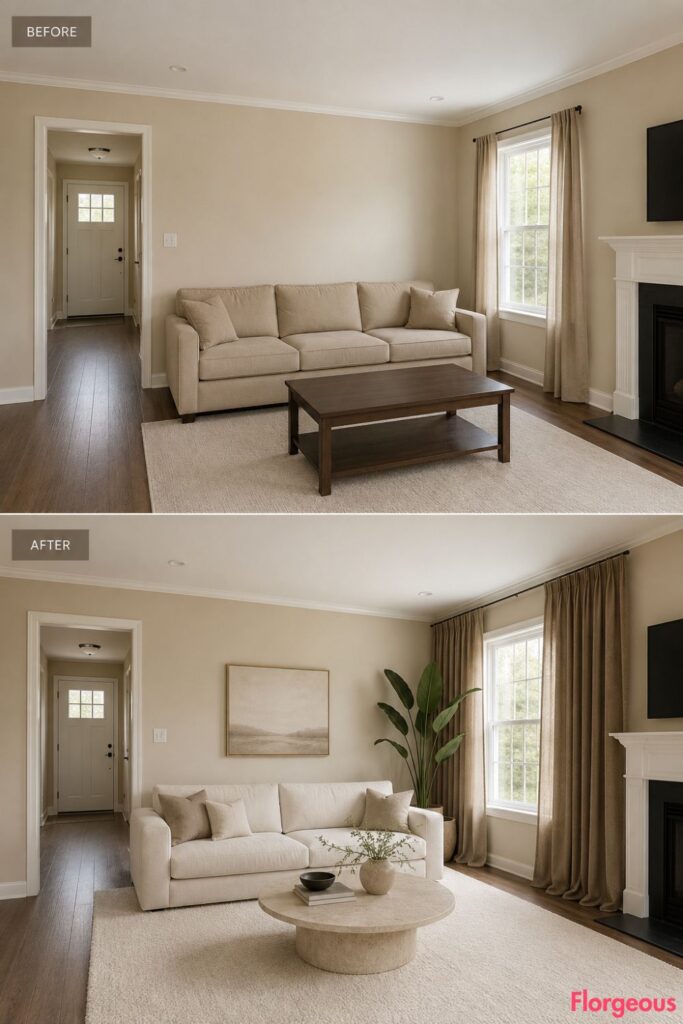
The first makeover proves that urban jungle styling does not require a huge plant collection.
Before: A plain living room with warm neutral walls, a basic straight sofa, bare rectangular coffee table, simple neutral rug, short plain curtains, minimal styling, builder-grade finishes, soft natural daylight, and no strong focal point.
After: A low oatmeal linen sofa replaces the generic seating, paired with a round honed-travertine table and broad ivory wool rug. One mature bird of paradise stands beside the brightest part of the window, with enough breathing room for its silhouette to read clearly.
The remaining decor stays restrained: one ceramic lamp, a walnut side table, and full-height tobacco linen curtains.
Designer Tip: Buy the focal plant before filling the room with smaller greenery. Its scale may eliminate the need for extra pots altogether.
2. Frame the Window With Plants Instead of Covering It
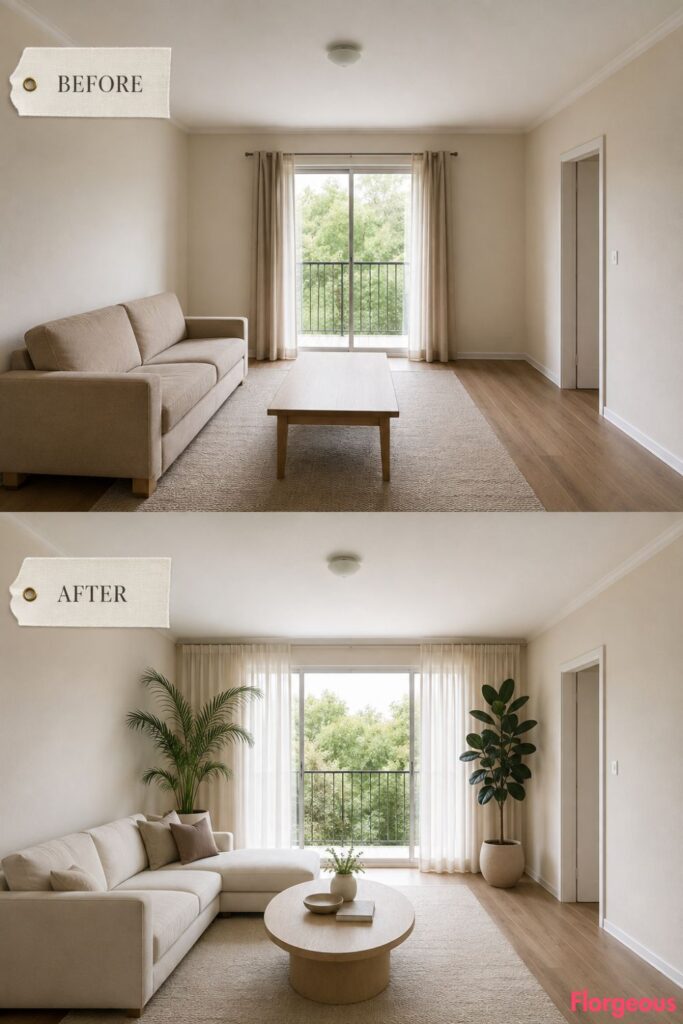
This makeover puts the brightest architectural feature at the center of the design.
Before: A plain living room with warm neutral walls, a basic straight sofa, bare rectangular coffee table, simple neutral rug, short plain curtains, minimal styling, builder-grade finishes, soft natural daylight, and no strong focal point.
After: The sofa rotates perpendicular to the window, opening the seating area toward the daylight. A slender Kentia palm sits at one outer edge, while a rubber plant balances the other.
The center of the glass remains completely open. Ceiling-height sheer curtains, a pale oak oval table, and a flatwoven wool rug keep the room airy.
Why it works: The greenery behaves like a natural frame rather than a curtain of leaves.
3. Push Everything Outward for a Family-Friendly Green Perimeter
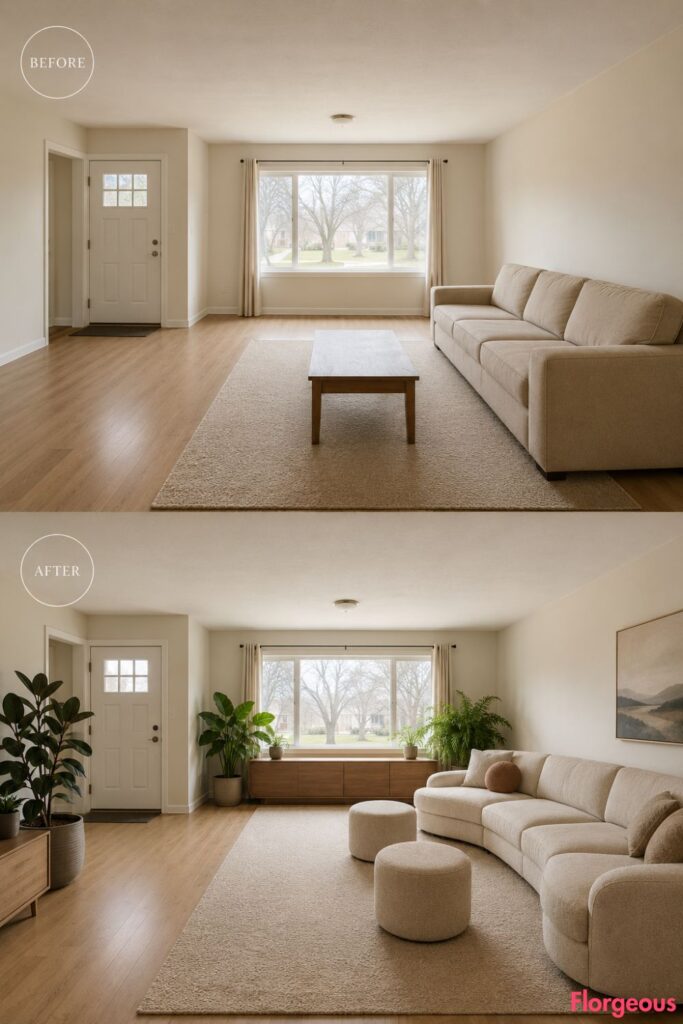
Instead of building the room around a coffee table, this version protects an open central zone.
Before: A plain living room with warm neutral walls, a basic straight sofa, bare rectangular coffee table, simple neutral rug, short plain curtains, minimal styling, builder-grade finishes, soft natural daylight, and no strong focal point.
After: A rounded washable sectional follows one side of the room. Two lightweight upholstered ottomans can move wherever extra seating is needed, while low oak storage hugs the wall.
Three larger plant groups occupy the perimeter instead of the center. The result feels lush around the edges while leaving a broad, practical floor area for everyday movement.
Small Space Tip: Empty floor space is part of the composition. It prevents a plant-filled room from feeling overgrown.
4. Turn the Brightest Corner Into a Botanical Reading Retreat
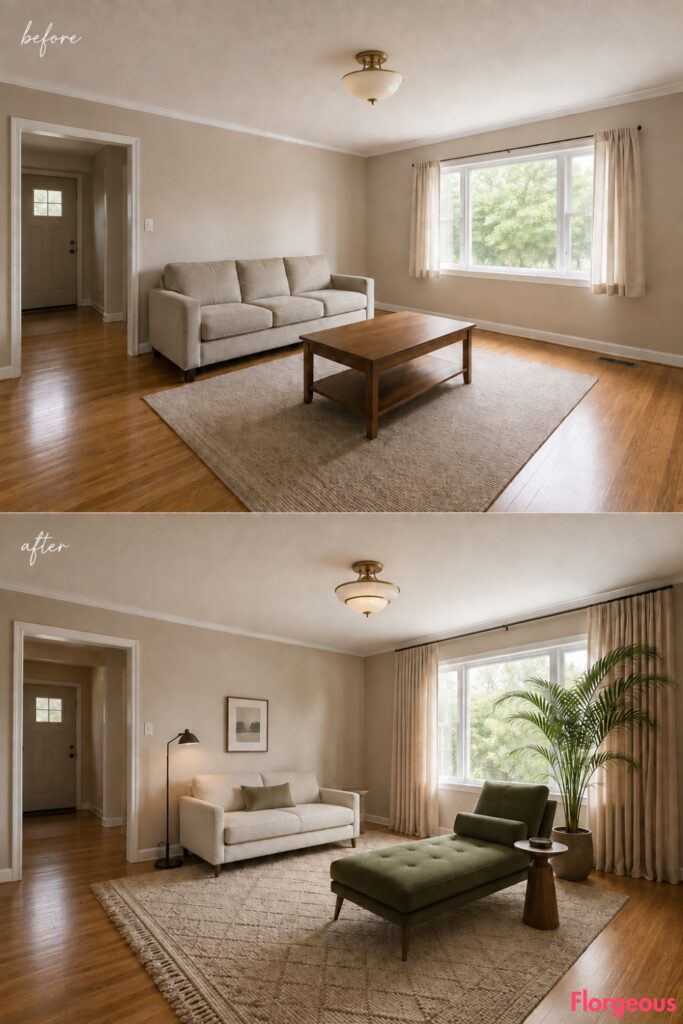
This design changes the purpose of the room instead of simply restyling the furniture.
Before: A plain living room with warm neutral walls, a basic straight sofa, bare rectangular coffee table, simple neutral rug, short plain curtains, minimal styling, builder-grade finishes, soft natural daylight, and no strong focal point.
After: A slim moss-green chaise sits diagonally near the window, paired with a compact cream settee positioned farther back. A tall palm rises behind the chaise, with a small walnut pedestal table and sculptural floor lamp completing the reading zone.
There is no central coffee table at all, which immediately distinguishes the room from a conventional living-room layout.
Try this: Give an underused corner its own function rather than forcing every seat into one symmetrical group.
5. Mix Walnut, Olive Upholstery and Deep Green Leaves
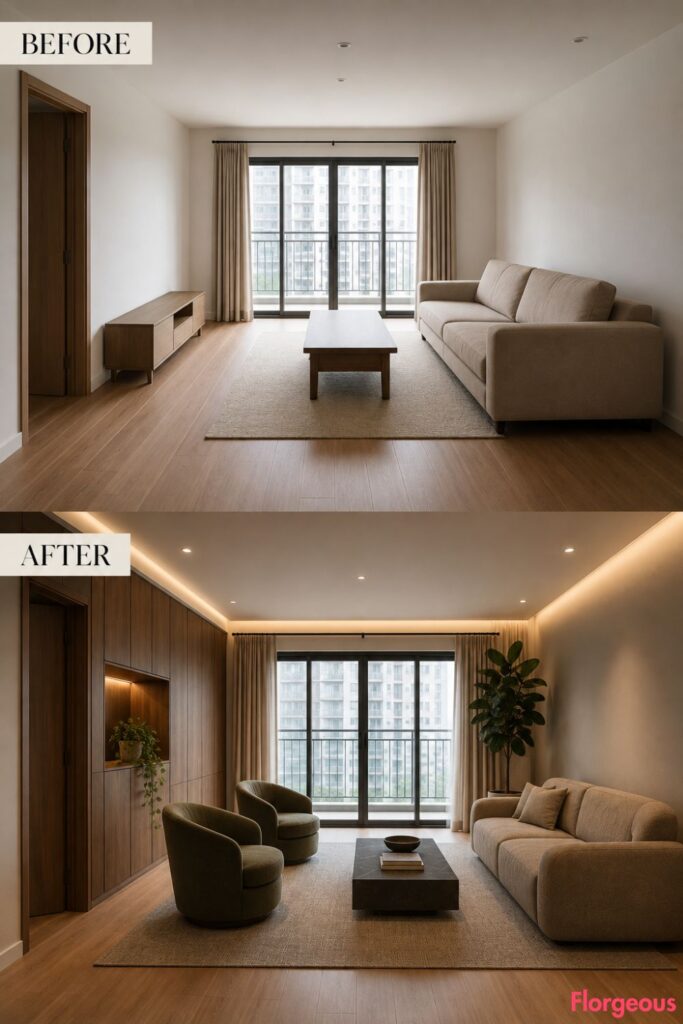
Here, the jungle mood comes from material depth rather than plant quantity.
Before: A plain living room with warm neutral walls, a basic straight sofa, bare rectangular coffee table, simple neutral rug, short plain curtains, minimal styling, builder-grade finishes, soft natural daylight, and no strong focal point.
After: A compact mushroom sofa faces two olive swivel chairs arranged as a close conversational pair. Floor-to-ceiling walnut cabinetry creates a dark architectural backdrop, with most storage concealed.
One glossy rubber tree sits beside the cabinetry, while a single trailing pothos softens one open niche.
Style Note: Walnut and deep foliage already provide plenty of visual richness. Keep shelves mostly empty so the room feels residential rather than like a plant shop.
6. Warm Up the Jungle With Clay, Cork and Terracotta
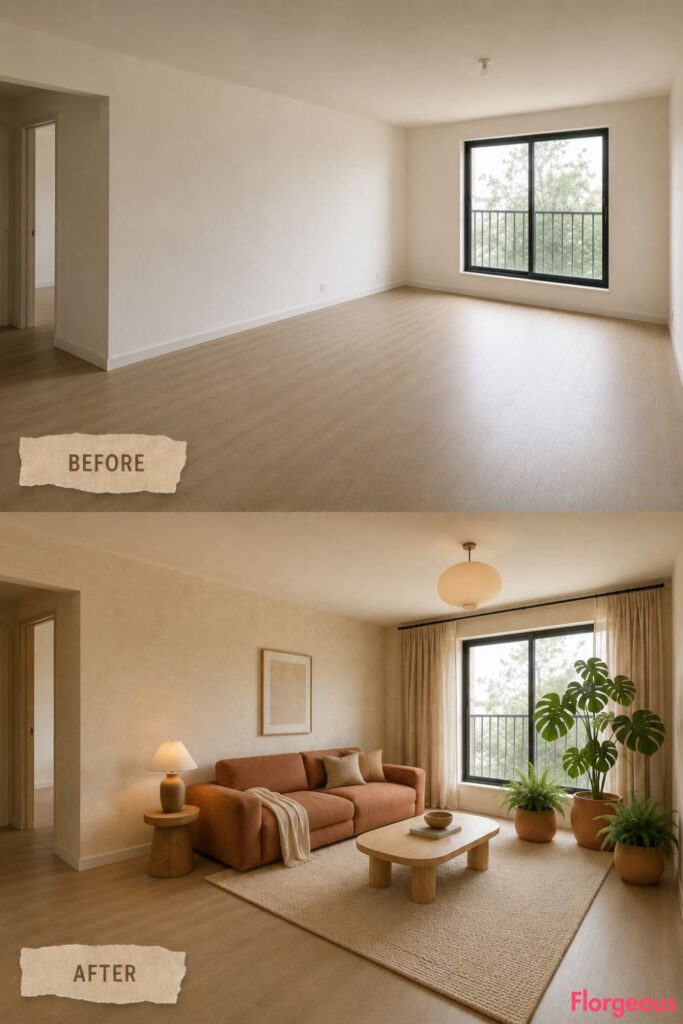
Green is no longer the dominant interior color in this makeover.
Before: A plain living room with warm neutral walls, a basic straight sofa, bare rectangular coffee table, simple neutral rug, short plain curtains, minimal styling, builder-grade finishes, soft natural daylight, and no strong focal point.
After: Dusty-clay upholstery sits against softly limewashed walls. A cork side table, pale oak coffee table, oatmeal rug, and matte terracotta planters build a warm mineral palette.
A monstera and two lower ferns are grouped together near the brightest side rather than scattered across the room.
Color Story: Terracotta makes green foliage look richer because the warm clay tone creates natural contrast without relying on bright colors.
7. Use Vertical Greenery to Stretch a Compact City Room
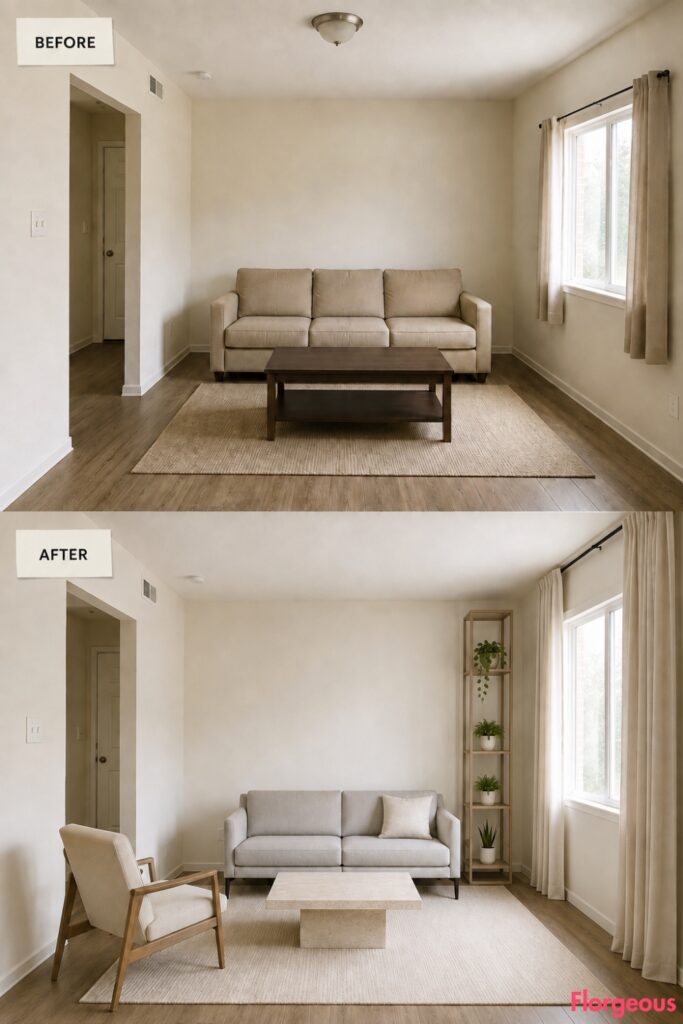
This concept is about height rather than plant volume.
Before: A plain living room with warm neutral walls, a basic straight sofa, bare rectangular coffee table, simple neutral rug, short plain curtains, minimal styling, builder-grade finishes, soft natural daylight, and no strong focal point.
After: A compact pale gray settee opens more floor area, while one sculptural ash-framed chair sits diagonally across from it. A slender floor-to-ceiling shelving tower holds just three plants at staggered heights.
One pothos trails from the upper level. Full-height curtains continue the vertical line all the way to the ceiling.
8. Take the Look Moody With Forest Green Walls and Evening Light
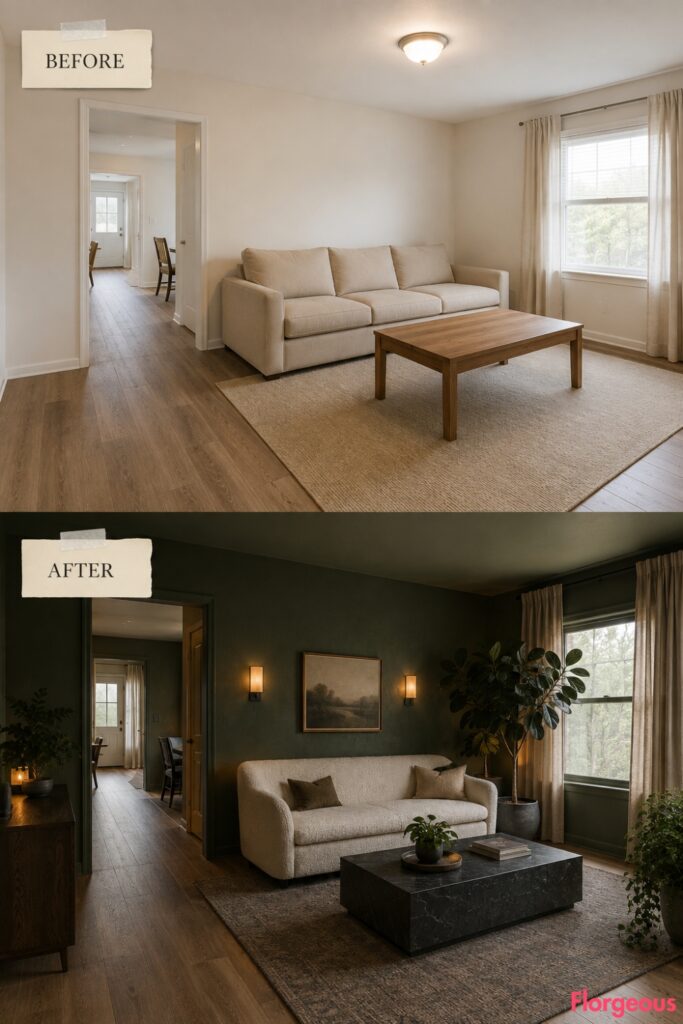
Urban jungle interiors do not have to depend on bright white backgrounds.
Before: A plain living room with warm neutral walls, a basic straight sofa, bare rectangular coffee table, simple neutral rug, short plain curtains, minimal styling, builder-grade finishes, soft natural daylight, and no strong focal point.
After: Forest-green mineral paint wraps the walls, while a cream bouclé sofa prevents the palette from becoming too heavy. A charcoal stone table, dark oak side cabinet, and amber wall lights shift the room toward an evening mood.
A rubber tree stays close to the window. Lower-light philodendrons sit deeper inside the room with discreet supplemental lighting.
Low-Light Tip: Select plants for the real conditions first. Grow lights should support a sensible plant choice, not rescue an impossible one.
9. Keep the Existing Sofa for a Fully Renter-Friendly Makeover
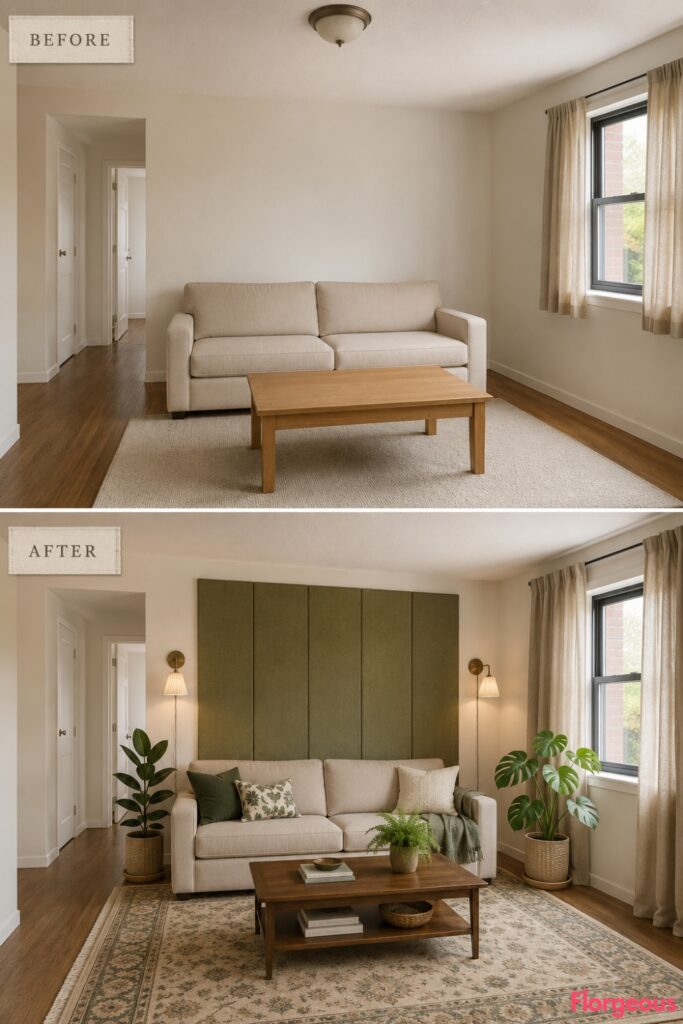
This version focuses on changes that can leave with you.
Before: A plain living room with warm neutral walls, a basic straight sofa, bare rectangular coffee table, simple neutral rug, short plain curtains, minimal styling, builder-grade finishes, soft natural daylight, and no strong focal point.
After: The existing beige sofa remains. Removable olive fabric panels create a richer backdrop, ready-made full-length curtains replace the short pair, and a secondhand walnut table introduces warmth.
Three substantial plants in lightweight cachepots provide greenery, while plug-in sconces add softer evening light.
Budget Version: Prioritize a larger rug, longer curtains, and one healthy floor plant before buying small decorative objects.
10. Float the Sofa in the Middle and Hide a Green Zone Behind It
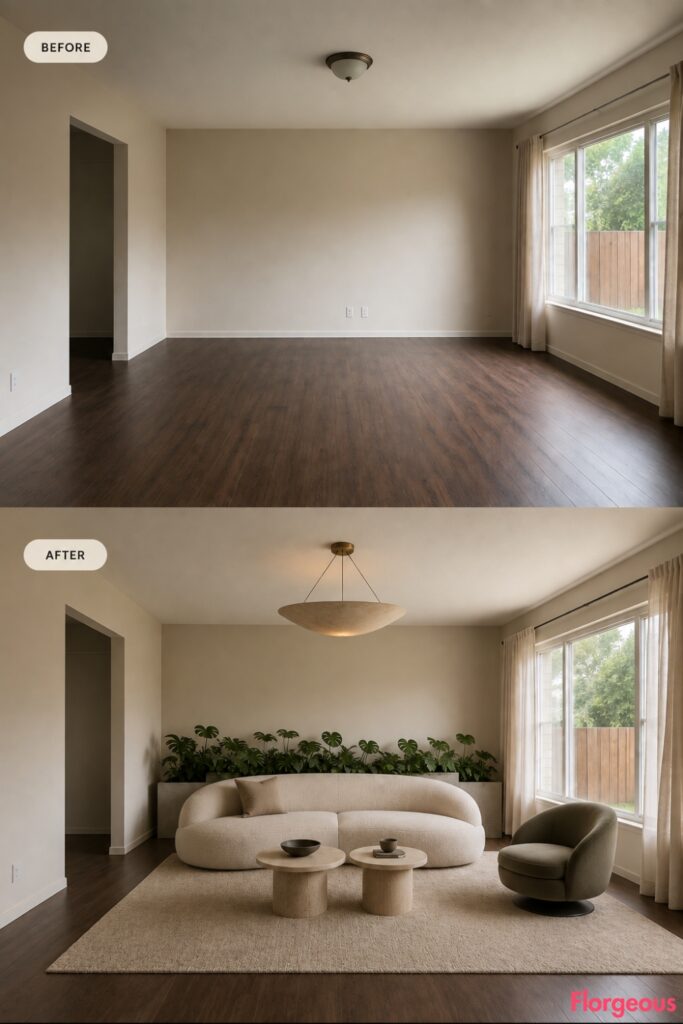
This makeover changes the room’s circulation pattern completely.
Before: A plain living room with warm neutral walls, a basic straight sofa, bare rectangular coffee table, simple neutral rug, short plain curtains, minimal styling, builder-grade finishes, soft natural daylight, and no strong focal point.
After: A low curved sofa floats away from the wall, creating a narrow botanical strip behind it. A long waterproof planter trough holds restrained philodendrons, making the greenery appear as a continuous backdrop.
Two small stone side tables replace the conventional coffee table. The main walking route wraps cleanly around the seating island.
Why it works: The plants become a spatial boundary instead of decorative objects placed in leftover corners.
11. Give the Greenery a Collected Vintage Backdrop
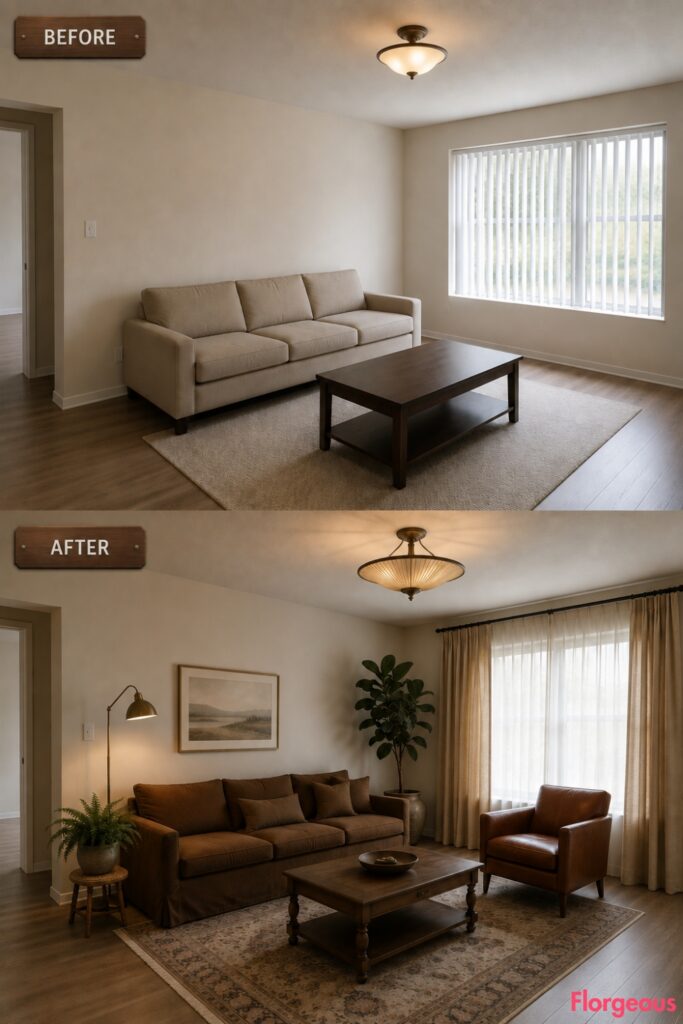
This room avoids both slick modern minimalism and bohemian excess.
Before: A plain living room with warm neutral walls, a basic straight sofa, bare rectangular coffee table, simple neutral rug, short plain curtains, minimal styling, builder-grade finishes, soft natural daylight, and no strong focal point.
After: A tobacco linen sofa pairs with one aged cognac leather lounge chair, a vintage walnut table, faded wool rug, handmade ceramic planters, and antique-brass floor lamp.
A mature rubber plant provides height, while a fern sits on a small cane stool. The pieces are intentionally mismatched but share warm, earthy undertones.
Try this: Vintage occasional furniture is easier to mix successfully than an entire antique seating suite.
12. Treat Three Large Plants Like Botanical Sculpture
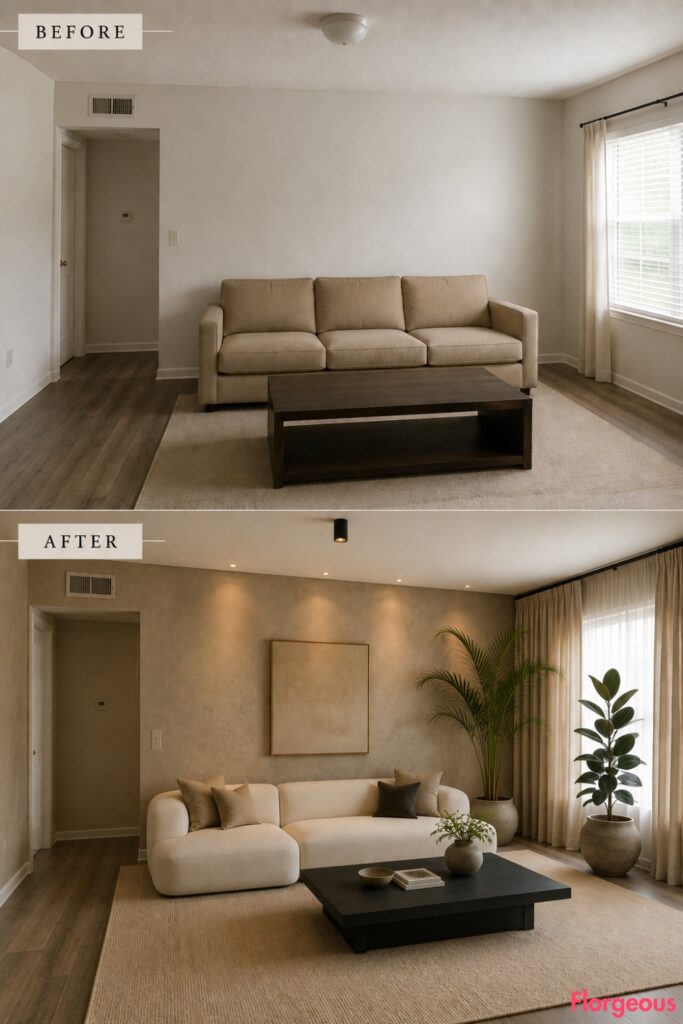
This is the quietest interpretation in the gallery.
Before: A plain living room with warm neutral walls, a basic straight sofa, bare rectangular coffee table, simple neutral rug, short plain curtains, minimal styling, builder-grade finishes, soft natural daylight, and no strong focal point.
After: A low ivory sofa sits against a warm textured-plaster wall. There are only three plants: a broad monstera, slender palm, and upright rubber plant.
Each occupies a separate architectural position. A blackened-oak table and oversized natural wool rug keep the room grounded without adding visual noise.
Common Mistake: Sparse plant styling only works when the specimens have enough scale and healthy foliage to hold their own visually.
13. Use a Slim Green Screen to Define the Entry
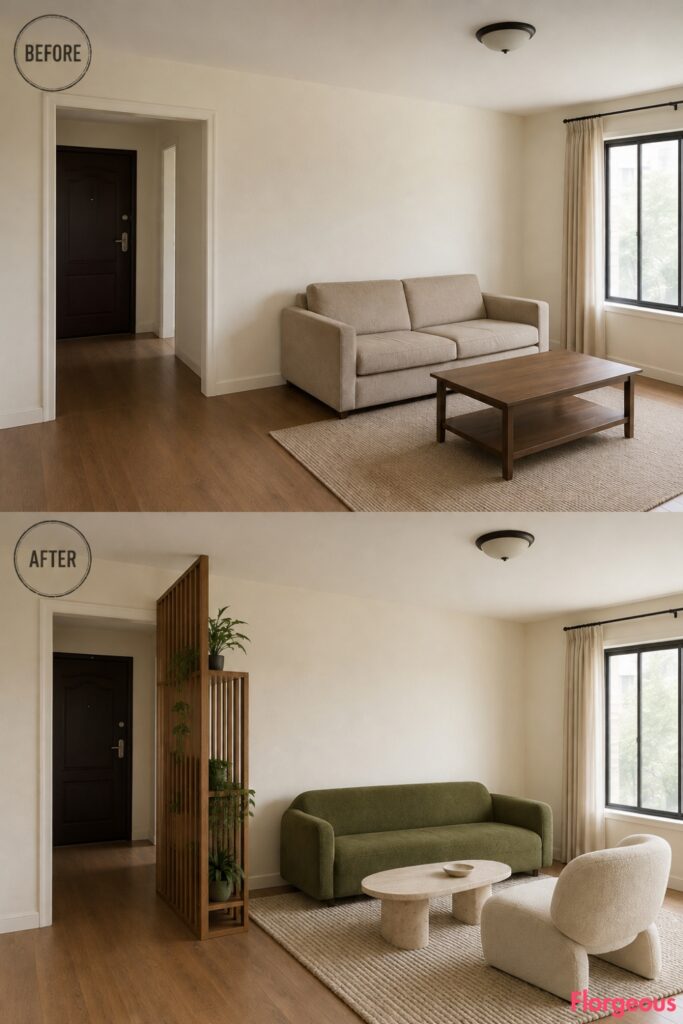
Here the plants solve a layout problem rather than simply decorating the room.
Before: A plain living room with warm neutral walls, a basic straight sofa, bare rectangular coffee table, simple neutral rug, short plain curtains, minimal styling, builder-grade finishes, soft natural daylight, and no strong focal point.
After: A slim freestanding oak slatted screen sits parallel to the entrance route, never across it. Selected sections hold a few upright and trailing plants.
On the living-room side, a compact moss settee and sculptural cream chair form a clearly defined sitting area without blocking the doorway.
Designer Tip: Any divider near an entry should clarify movement at first glance. If people need to weave around it, the layout is not working.
14. Create a Media-Free Botanical Entertaining Salon
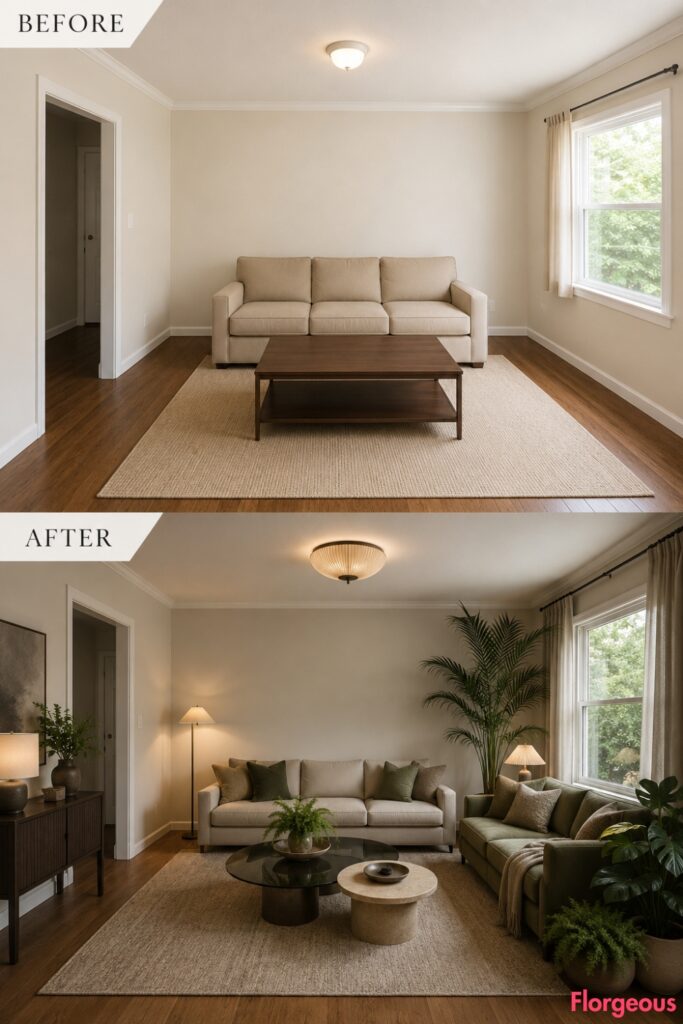
Instead of orienting the room toward a television or a single sofa, this makeover is designed entirely around conversation.
Before: A plain living room with warm neutral walls, a basic straight sofa, bare rectangular coffee table, simple neutral rug, short plain curtains, minimal styling, builder-grade finishes, soft natural daylight, and no strong focal point.
After: Two compact sofas form a broken perpendicular L around offset nesting tables. A tall palm anchors the outer end of the arrangement, while a low fern and philodendron grouping balances the opposite side.
Walnut, smoked glass, moss textiles, and layered evening lighting make the room feel intimate without becoming dark or crowded.
15. Make the Greenery Part of the Architecture
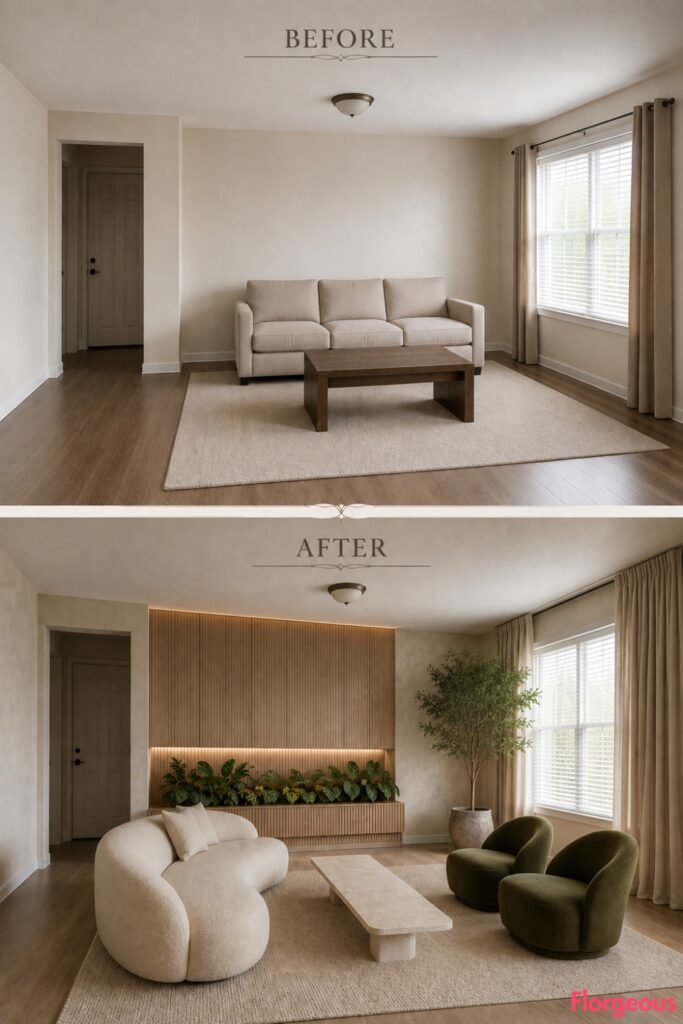
The final makeover uses fewer freestanding pots because much of the planting is integrated into the room itself.
Before: A plain living room with warm neutral walls, a basic straight sofa, bare rectangular coffee table, simple neutral rug, short plain curtains, minimal styling, builder-grade finishes, soft natural daylight, and no strong focal point.
After: A sculptural oatmeal sofa faces two compact moss lounge chairs placed as a coordinated pair. Floor-to-ceiling fluted oak cabinetry incorporates a shallow waterproof planter bench with restrained philodendrons.
One mature tree stands beside the window. Textured mineral plaster, honed limestone, wool, and concealed plant-support lighting complete the composition.
The room feels deeply connected to nature, yet the center, doorway, and window remain visually open.
How to Choose the Right Jungle Look for Your Own Living Room
A successful Urban Jungle Living Room is not measured by plant count. What matters is whether the greenery improves the architecture, works with the available daylight, and leaves the room comfortable to use.
Start with furniture and circulation. Decide where the sofa, chairs, doorway, and main walking route need to be before placing a single large planter. Then identify the brightest areas and choose one focal plant that can realistically thrive there.
Small rooms usually benefit from vertical planting or a few larger specimens. Family rooms work well with greenery concentrated around the perimeter. Renters can create a dramatic difference with floor-length curtains, a larger rug, warm secondhand wood, plug-in lighting, and two or three substantial plants.
Finally, limit the planter palette. Repeating terracotta, warm ceramic, stone, or one neutral finish will make unrelated plants feel like a collection. Build the room slowly, watch how each plant responds to the light, and leave enough empty space for the greenery you already have to become the focal point.