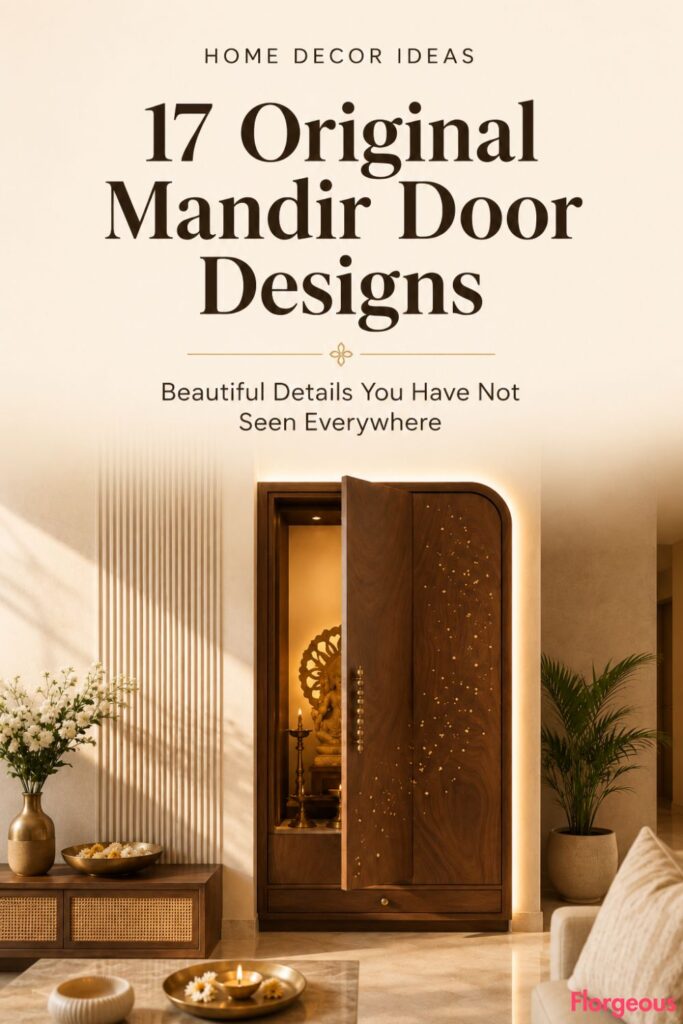
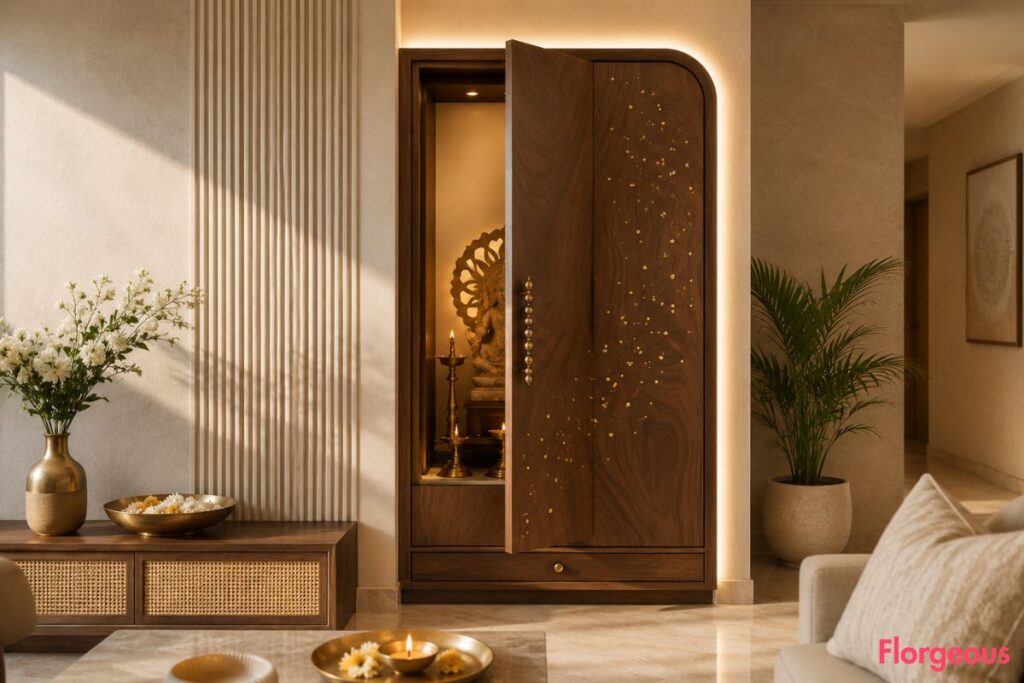
A mandir door does not have to look like every carved wooden panel you have already seen online.
Sometimes, the most beautiful home temple door is the one with one quiet detail: a soft glow behind textured glass, a hidden drawer for incense, a curved corner that feels sculptural, or a handle that makes the simple act of opening the mandir feel ceremonial.
The best mandir door design should feel personal, practical, and deeply connected to the way you use your prayer space every day.
If you want something more original than the usual jaali panel or standard brass border, these ideas are designed to feel fresh, stylish, and memorable.
1. Layered Shadow Mandir Door Design
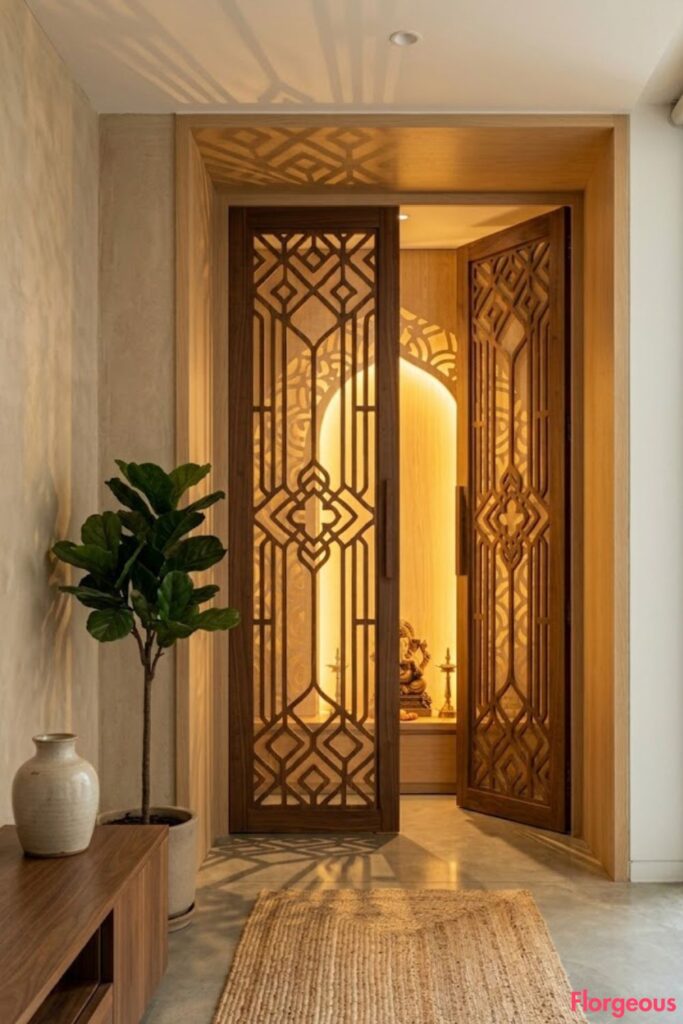
A layered shadow door uses two slim decorative panels instead of one flat surface.
The front layer can feature simple cutouts, while the second layer sits slightly behind it with a softer, offset pattern. When warm light glows from inside the mandir, the two layers create moving shadows that feel peaceful and almost meditative.
This mandir door design works beautifully in pale oak, walnut, matte ivory, or soft champagne metal. Keep the pattern open and minimal so the door feels custom, not crowded.
It is a beautiful choice for modern homes where you want spiritual detail without heavy ornamentation.
2. Floating Brass Constellation Door
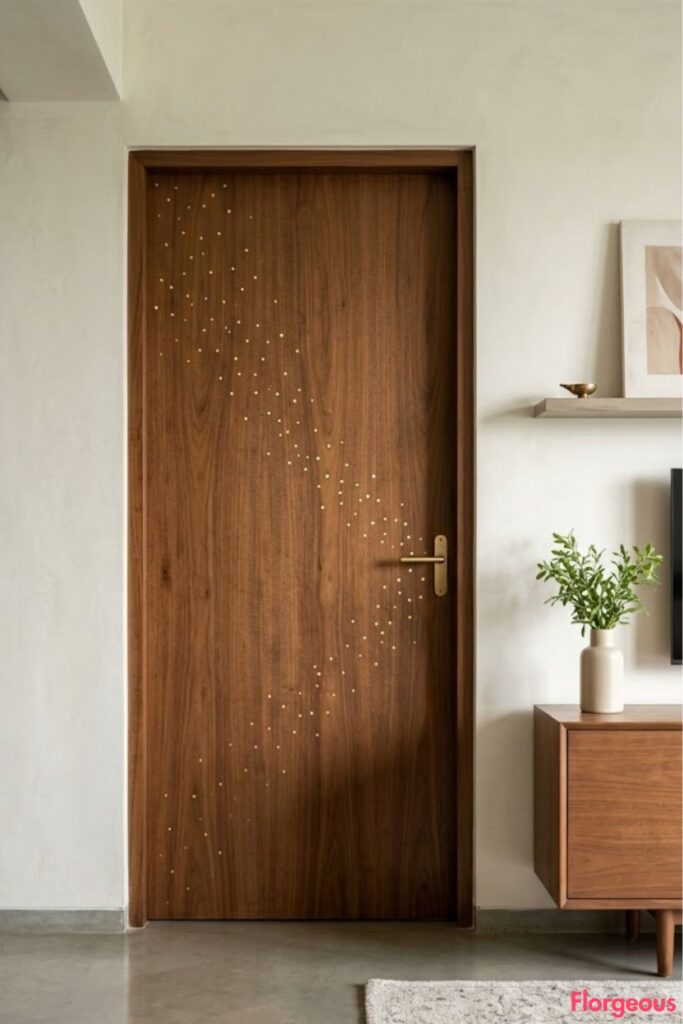
Instead of using common religious motifs, try a plain wooden mandir door scattered with tiny brass dots.
The dots can be arranged like a loose constellation, flowing gently from one corner toward the handle. It gives the door a soft celestial quality without looking too literal.
Use a warm wood base such as teak, ash, or walnut. The brass dots should be small, irregular, and delicate, almost like stars catching the light.
This idea feels especially fresh in apartments, contemporary Indian homes, and living rooms with clean furniture lines.
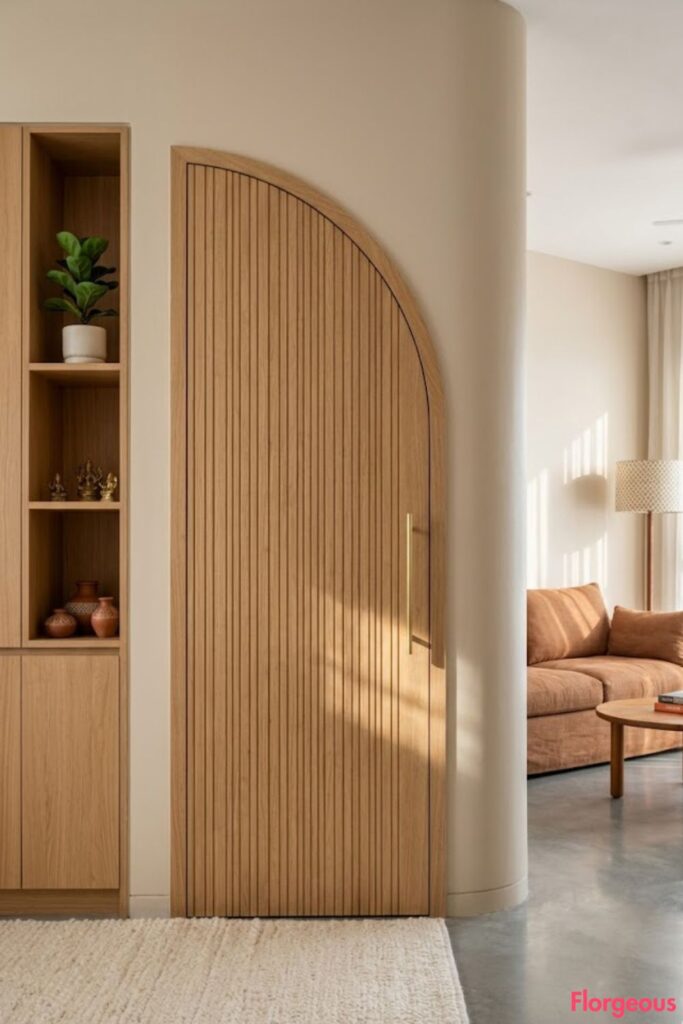
3. One-Sided Curved Corner Mandir Door
A full arch is beautiful, but a one-sided curved corner feels more unexpected.
Picture a mandir door with one rounded top corner and one straight top corner. The shape feels soft, artistic, and quietly architectural.
This design looks lovely in fluted wood, painted ivory, or warm beige laminate. Add a slender brass pull to keep the look refined.
It is a smart way to hint at temple architecture without copying a traditional arch. The result feels modern, graceful, and very Pinterest-worthy.
4. Cane and Brass Mandir Door
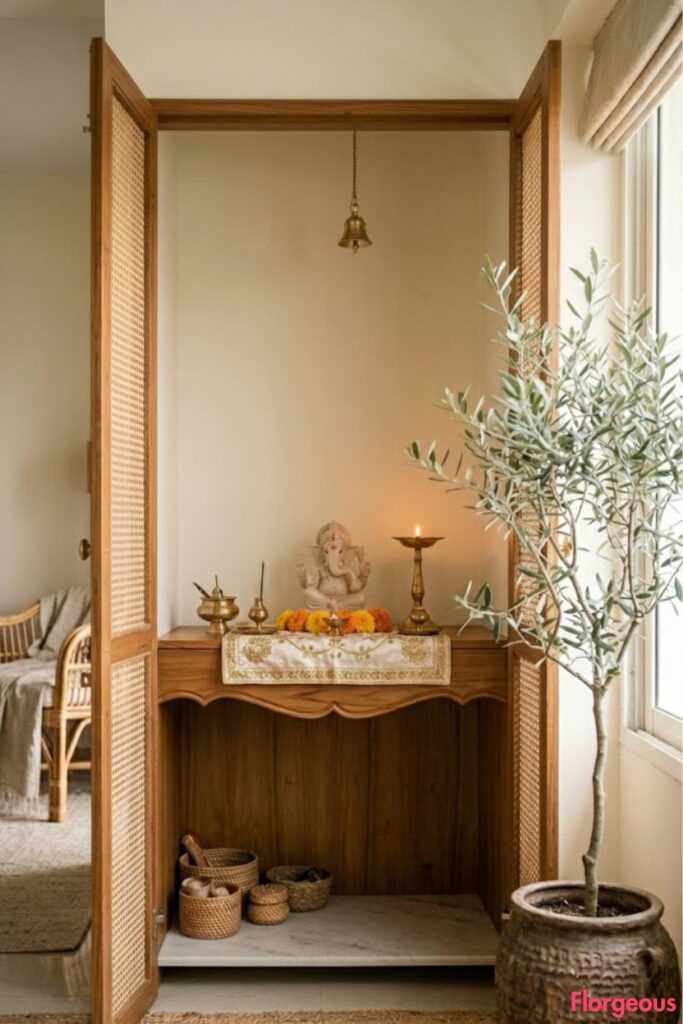
Cane can make a mandir door feel light, handmade, and warm.
Use woven cane panels inside a slim brass or wooden frame. The cane adds texture and breathability, while the brass brings a gentle sacred glow.
This mandir door design works best for earthy homes, rental-friendly pooja corners, coastal-inspired interiors, and spaces with rattan furniture or linen curtains.
Choose fine cane weaving rather than thick rustic cane if you want the door to look elegant. A clear protective coating will also help keep the material easier to maintain.
5. Mandir Door With a Hidden Incense Drawer
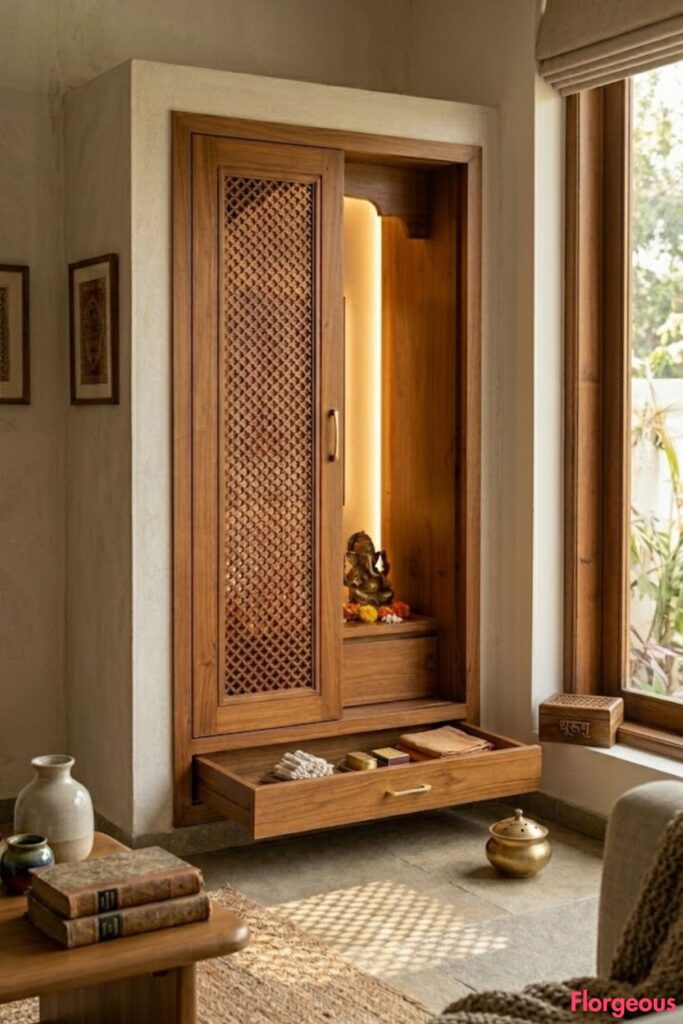
A beautiful door can also solve a practical problem.
Add a slim horizontal drawer into the bottom rail of the mandir door frame. It can hold incense sticks, cotton wicks, small matchboxes, camphor, sandalwood paste, or folded prayer cloths.
From the outside, the door still looks clean and calm. The storage is hidden until you need it.
Use a tiny brass finger pull or a push-to-open mechanism so the design remains seamless. This is especially useful for small homes where every inch matters.
6. Frosted Glass Door With an Abstract Diya Glow
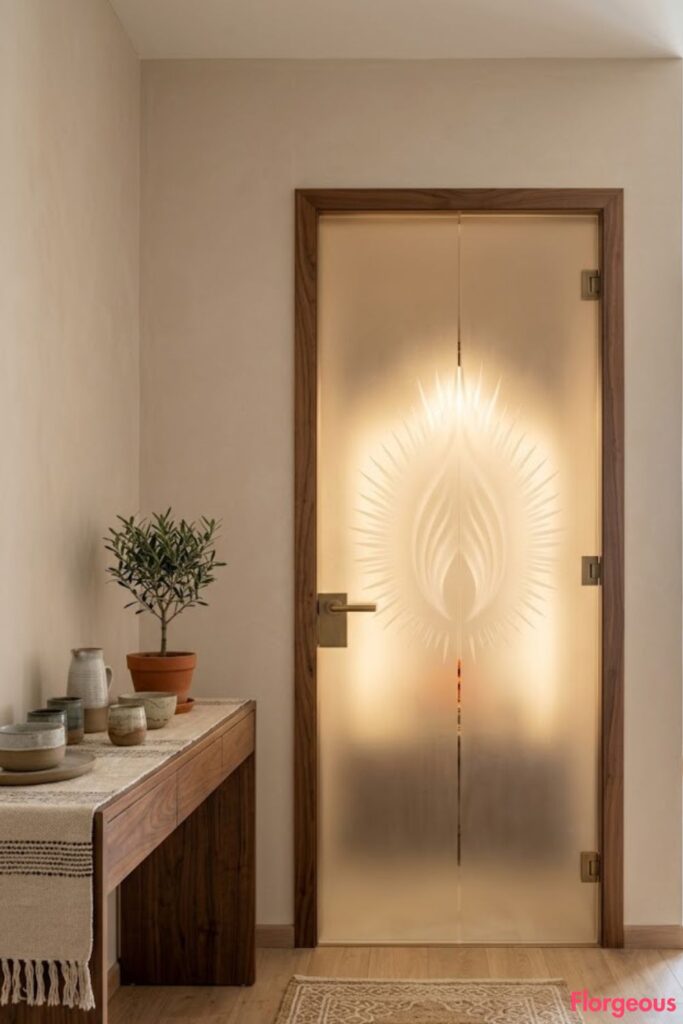
Instead of a literal diya illustration, use frosted glass with a soft etched glow pattern.
The design can look like a gentle flame, a halo, or light spreading outward. It feels spiritual without becoming too decorative.
The beauty of frosted glass is that it hides clutter inside the mandir while still letting light pass through. When a warm LED or diya glows behind it, the etched pattern becomes the focus.
Frame the glass in warm wood, antique brass, or matte bronze for a more finished look.
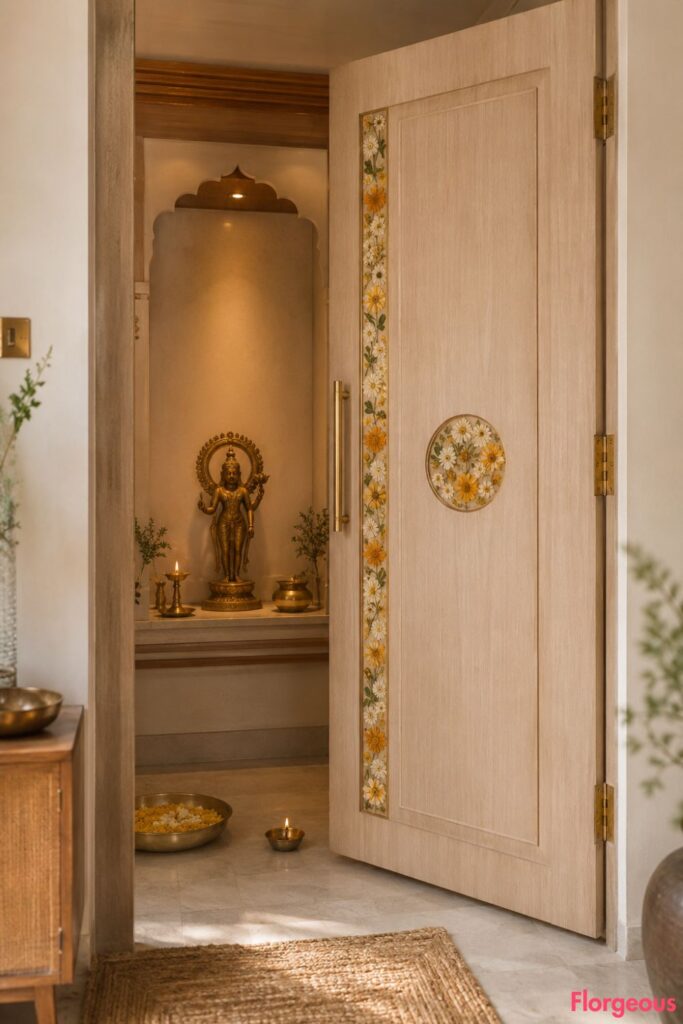
7. Mandir Door With Pressed Flower Resin Inserts
For a poetic, one-of-a-kind idea, add small resin inserts with pressed flowers or leaves inside the door.
Use them sparingly, perhaps as a vertical strip, tiny corner details, or a small circular panel. Marigold petals, jasmine-like white florals, or soft green leaves can create a delicate devotional mood.
Pair with pale wood, cream paint, or matte brass so the flowers feel special instead of crafty.
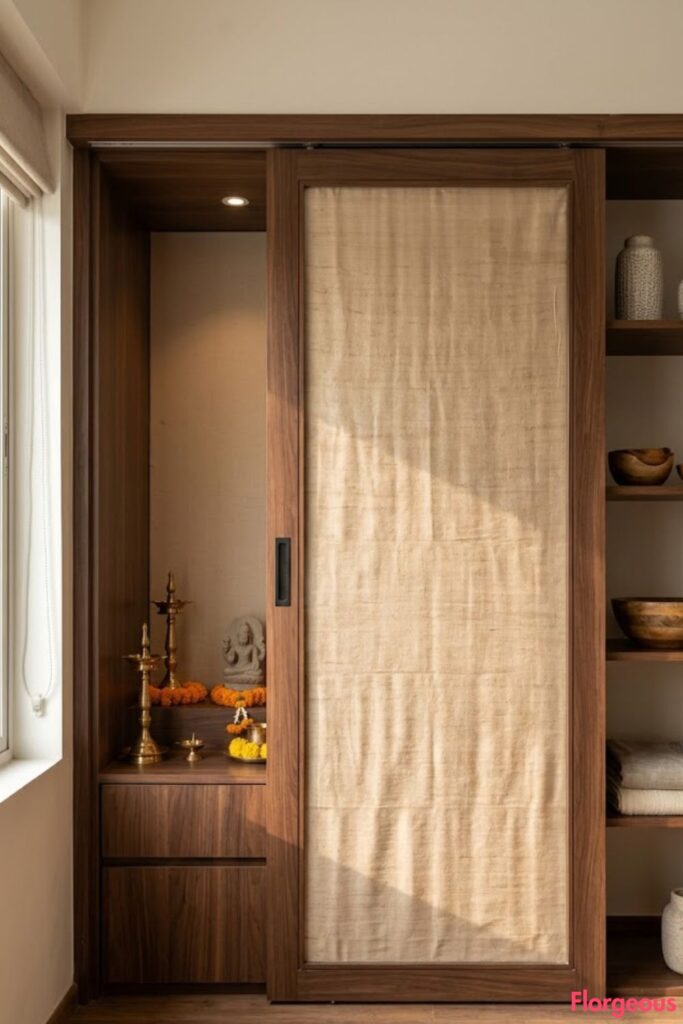
8. Sliding Textile-Laminated Mandir Door
A textile-laminated door feels soft, intimate, and wonderfully different.
Use raw silk, khadi, linen, or woven cotton sealed beneath protective glass or acrylic. The fabric gives the mandir door texture, while the clear layer keeps it practical and wipeable.
Choose muted colors such as sandalwood beige, warm ivory, rust, soft gold, or smoky rose. These shades feel calm but still connected to Indian interiors.
This is a great option if your home temple is part of a built-in cabinet or a modern feature wall.
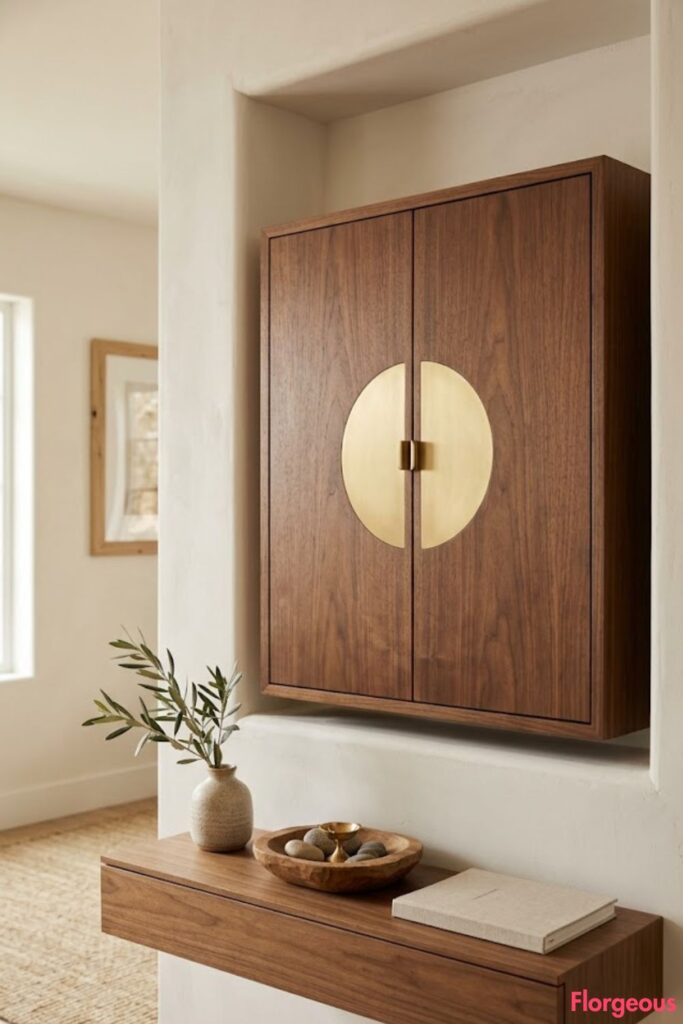
9. Half-Moon Double Door Design
For a poetic detail, create two mandir doors where each panel carries a half-moon shape.
When the doors are closed, the two halves meet to form a full circle. The circle can be made from brass inlay, reeded glass, mother-of-pearl, carved wood, or a painted raised detail.
This design gives the mandir a symbolic center without using obvious temple patterns.
It works beautifully on compact pooja cabinets, wall-mounted mandirs, and modern niches where the doors are small enough for detail to matter.
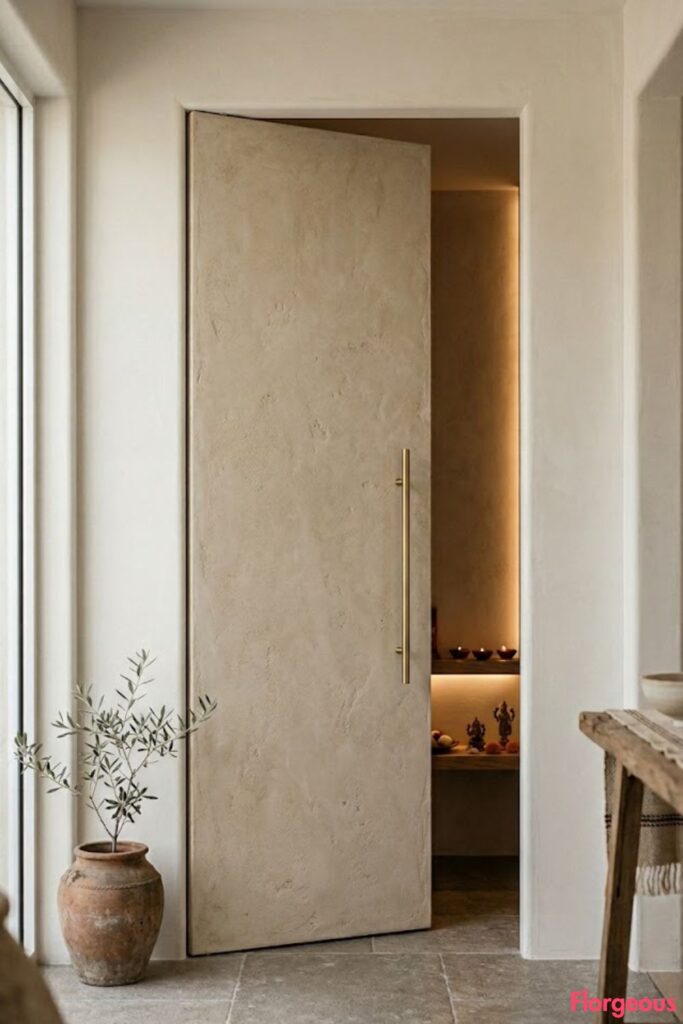
10. Stone-Textured Mandir Door
A stone-textured mandir door can feel grounded and serene.
Instead of using heavy real stone, choose microcement, stone-look laminate, limewash texture, or lightweight veneer in limestone, sandstone, travertine, or warm grey tones.
Pair the surface with one slim brass handle or a recessed pull. The contrast between raw texture and polished metal feels calm and expensive.
This mandir door design is perfect for homes with organic modern decor, neutral palettes, clay pots, stone flooring, or soft plaster walls.
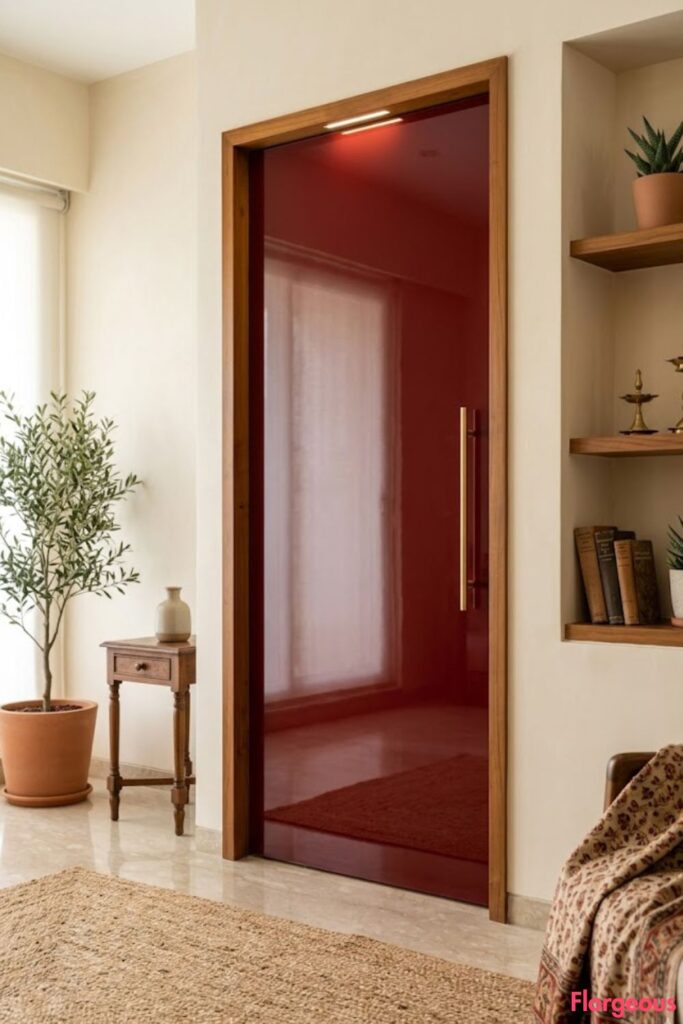
11. Back-Painted Glass Mandir Door in Sacred Colors
Back-painted glass can look sleek, rich, and surprisingly spiritual.
Choose a color inspired by temple rituals, such as kumkum red, sandalwood beige, turmeric yellow, smoky bronze, deep maroon, or warm ivory. Because the paint sits behind the glass, the surface looks glossy and smooth.
Keep the door design simple. A small brass knob, a thin border, or a single vertical pull is enough.
This idea works well in contemporary homes where a heavily carved door would feel out of place.
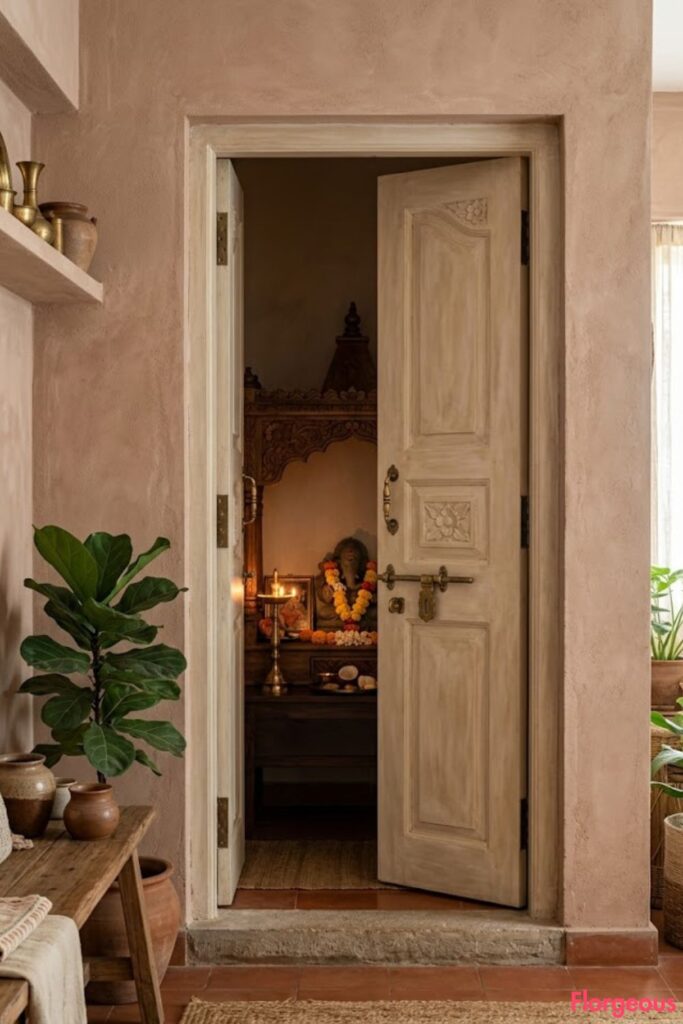
12. Hand-Brushed Limewash Mandir Door
A limewash-finish mandir door feels soft, handmade, and different from the usual polished wood designs.
Choose warm ivory, clay beige, pale ochre, or muted terracotta. The slightly cloudy texture gives the door a peaceful, old-world feeling, especially when paired with brass hardware and a simple stone threshold.
This works well in homes with Mediterranean, earthy, or organic modern styling.
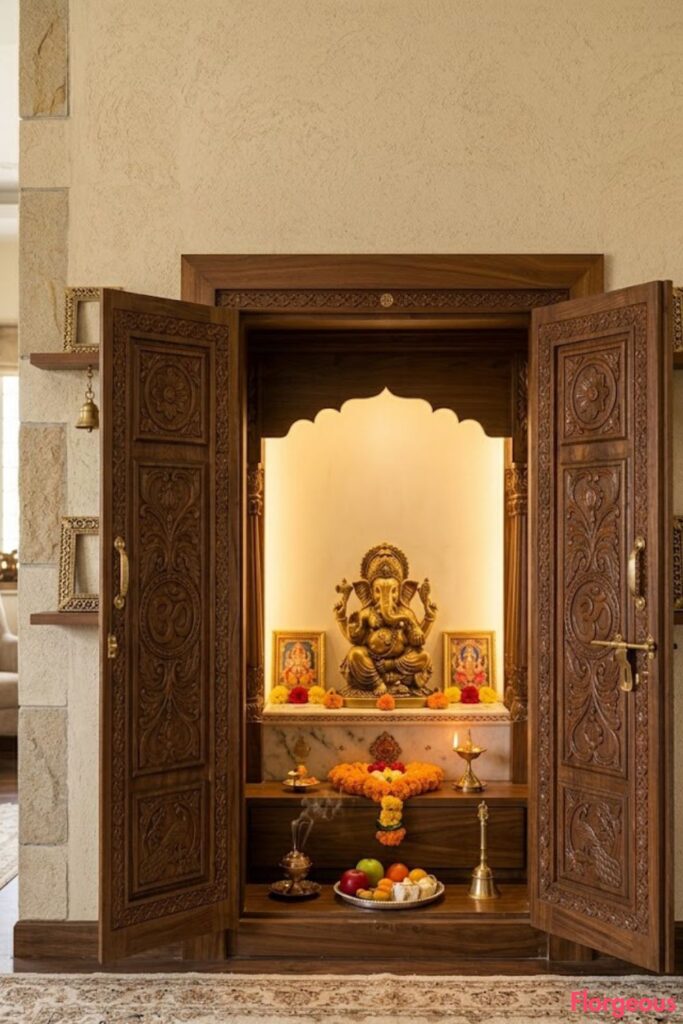
13. Bookmatched Wood Mandir Door Design
Bookmatched veneer creates beauty through natural wood grain rather than decoration.
Two veneer panels are mirrored so the grain meets in the center like a quiet pattern. Walnut, teak, rosewood, ash, and oak can all look stunning this way.
Add a slim brass line where the two doors meet for a refined finish. Avoid extra carving, knobs, or symbols, because the grain is already doing the work.
This mandir door design feels luxurious, calm, and very different from typical temple doors.
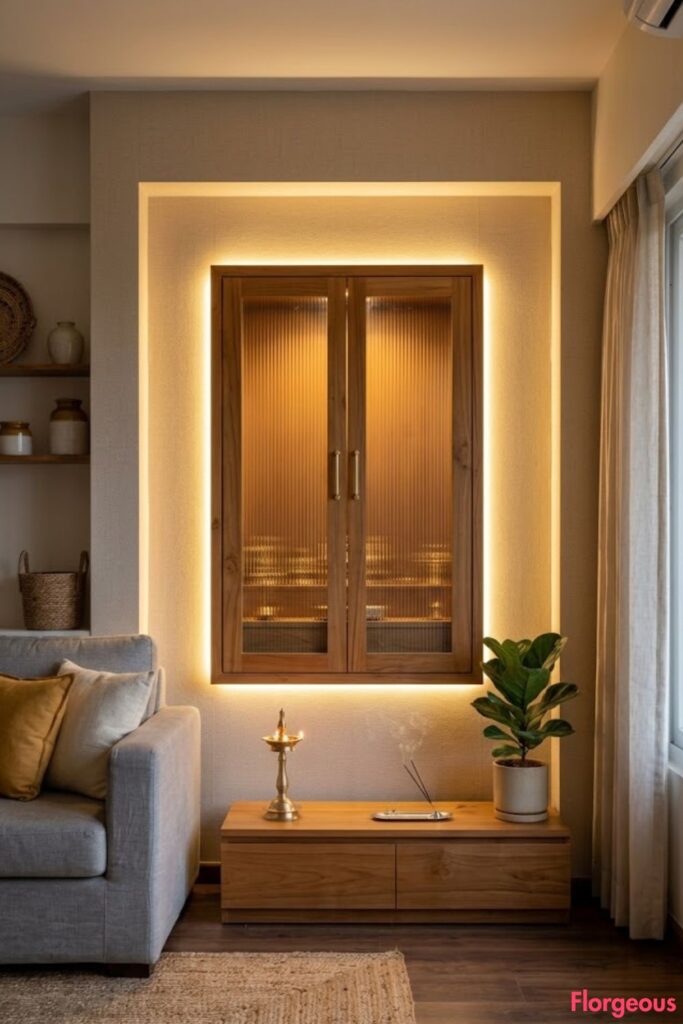
14. Soft Halo Frame Mandir Door
A soft halo frame uses hidden lighting around the outside of the mandir door.
The door itself can be simple: frosted glass, plain wood, textured laminate, or cane. The magic comes from the warm glow around the frame.
This makes the entire mandir feel gently outlined, especially in the evening. It can also help the prayer area stand out in an open-plan living room without needing a large structure.
Use diffused warm lighting. Bright exposed strips can make the design feel commercial instead of peaceful.
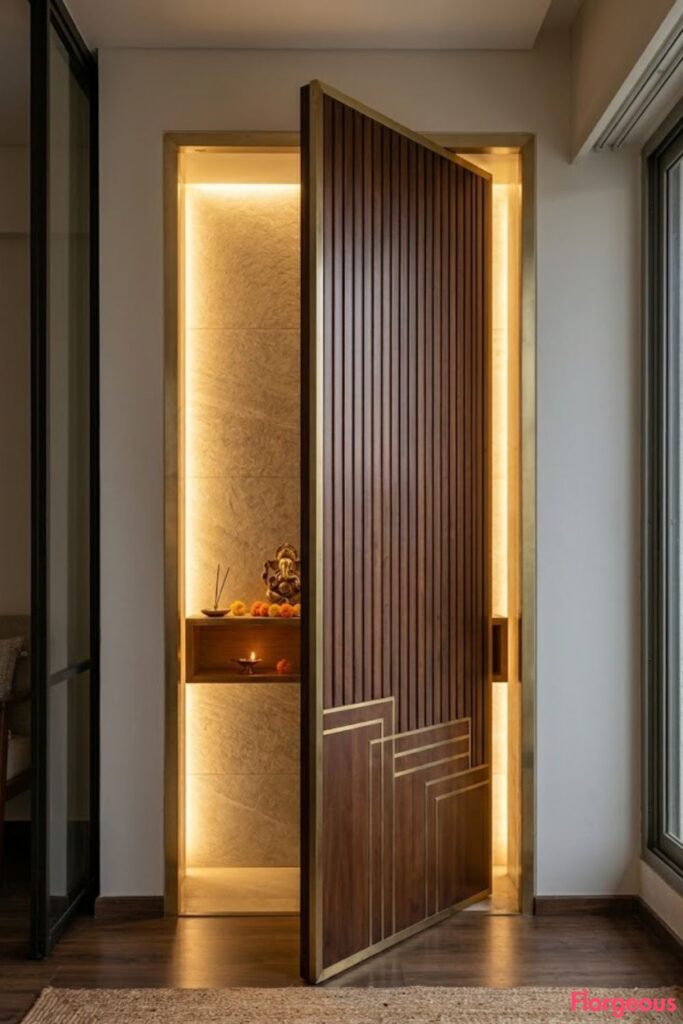
15. Narrow Pivot Mandir Door
A pivot mandir door feels sculptural and unexpected.
Instead of opening from side hinges, the door rotates from a hidden pivot point. This gives even a narrow door a smooth, architectural movement.
Use this idea for a taller mandir niche or a feature-wall pooja space. The door can be fluted wood, brushed brass-toned metal, textured stone-look panel, or matte painted MDF.
A pivot design needs careful installation, so it is best for custom carpentry projects rather than quick updates. Done well, it feels elegant and memorable.
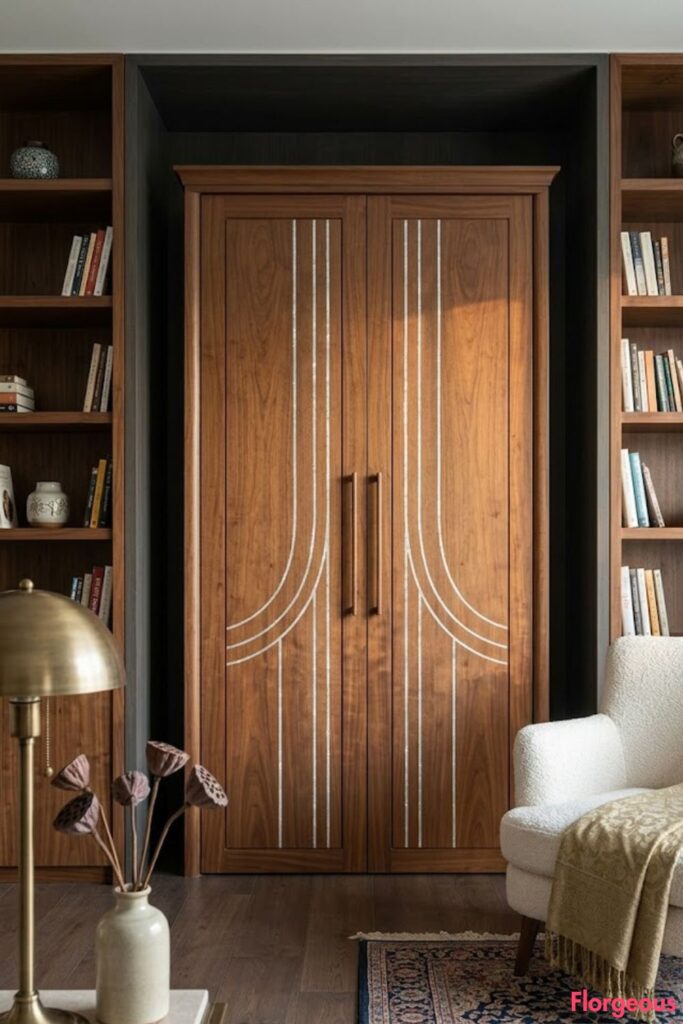
16. Mandir Door With Mother-of-Pearl Pinstripes
Mother-of-pearl can add shimmer without making the mandir door look loud.
Instead of covering the whole surface, use very thin vertical or curved pinstripes set into wood or painted panels. The shimmer appears only when light catches it.
This detail looks beautiful on warm walnut, ivory lacquer, charcoal wood stain, or soft beige paint.
It is a lovely alternative to brass inlay if you want something quieter, cooler, and more delicate.
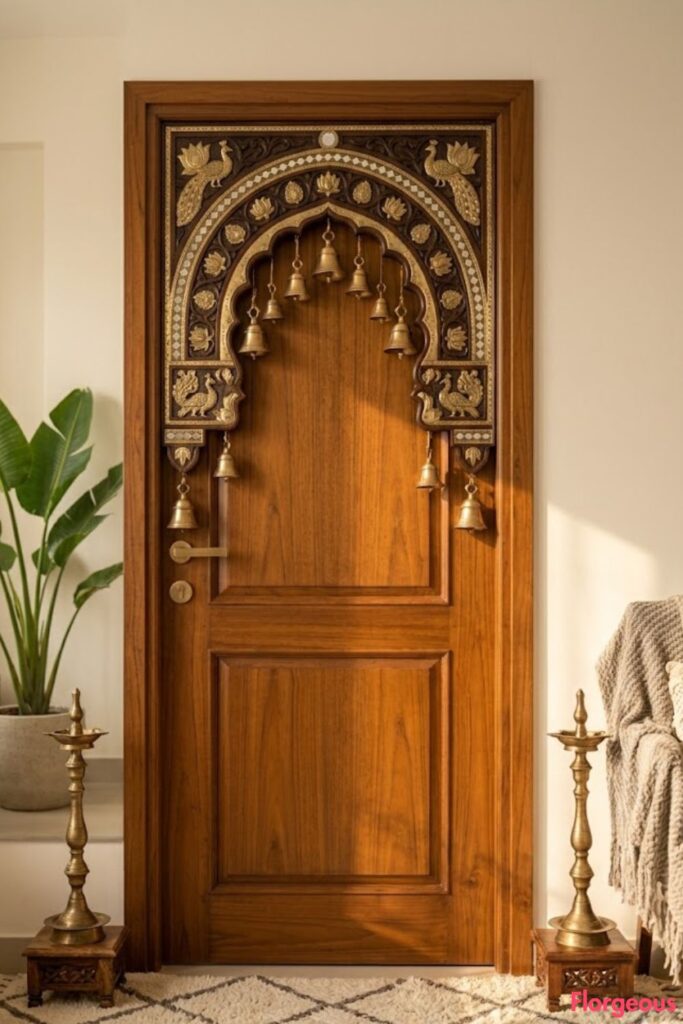
17. Mandir Door With a Removable Festival Panel
A removable festival panel makes the mandir door adaptable.
Design the main door to stay simple all year, then create a lightweight decorative panel that can clip on during Diwali, Navratri, housewarming ceremonies, or family celebrations.
The panel could feature fabric, bells, brass charms, marigold-inspired cutouts, mirror work, or painted motifs. After the festival, remove it and return to a calm everyday look.
This is a smart idea for people who love seasonal decorating but do not want a permanently busy mandir door design.
Final Thoughts on Choosing an Original Mandir Door Design
A memorable mandir door design does not need to be loud, expensive, or overly traditional.
The most beautiful ideas often come from small, thoughtful details: layered shadows, soft lighting, tactile handles, hidden storage, unusual textures, or a shape that feels quietly sacred.
Choose a design that fits your home first. A compact apartment may suit sliding textile panels, cane, frosted glass, or a hidden incense drawer. A larger home temple can handle pivot doors, halo lighting, bookmatched wood, or stone-textured finishes.
The right mandir door should feel peaceful to open, easy to live with, and personal enough that it does not look like every other home temple online.