Sliding doors have a quiet way of making a room feel more intentional. They save floor space, hide storage beautifully, and can make even a simple doorway look custom.
The best part is that sliding door design is not limited to plain white wardrobe doors anymore. You can use wood, glass, mirrors, cane, fluting, color, or hidden tracks to create something that feels practical and Pinterest-worthy.
If your home has tight corners, compact bedrooms, narrow hallways, or wardrobes that fight with furniture placement, these ideas can help you rethink the way your doors work and look.
1. Full-Height Wardrobe Sliding Doors
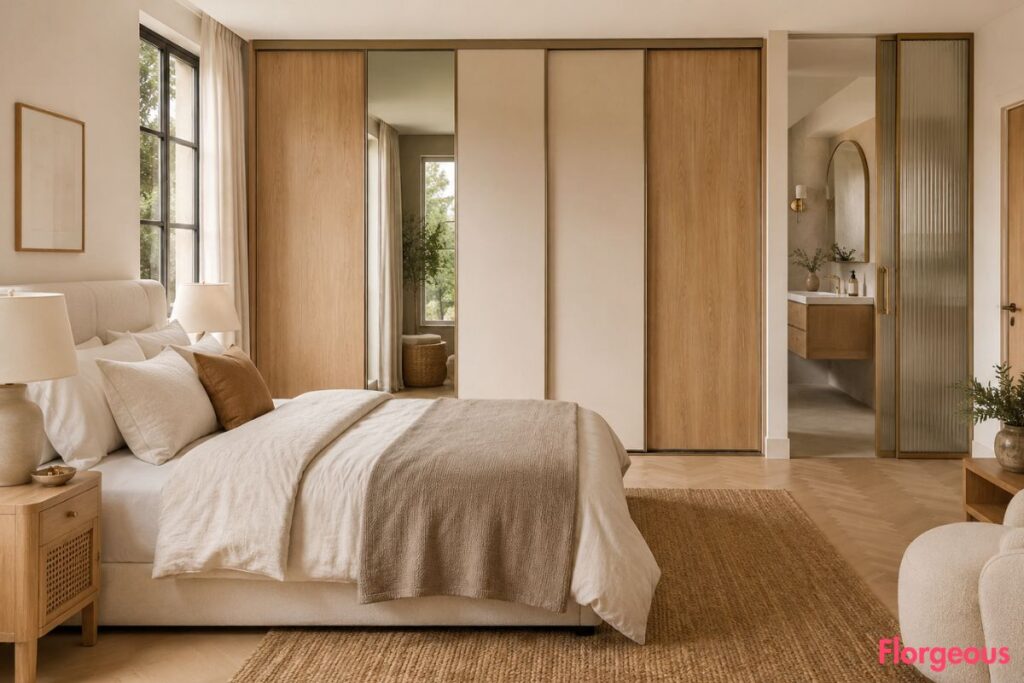
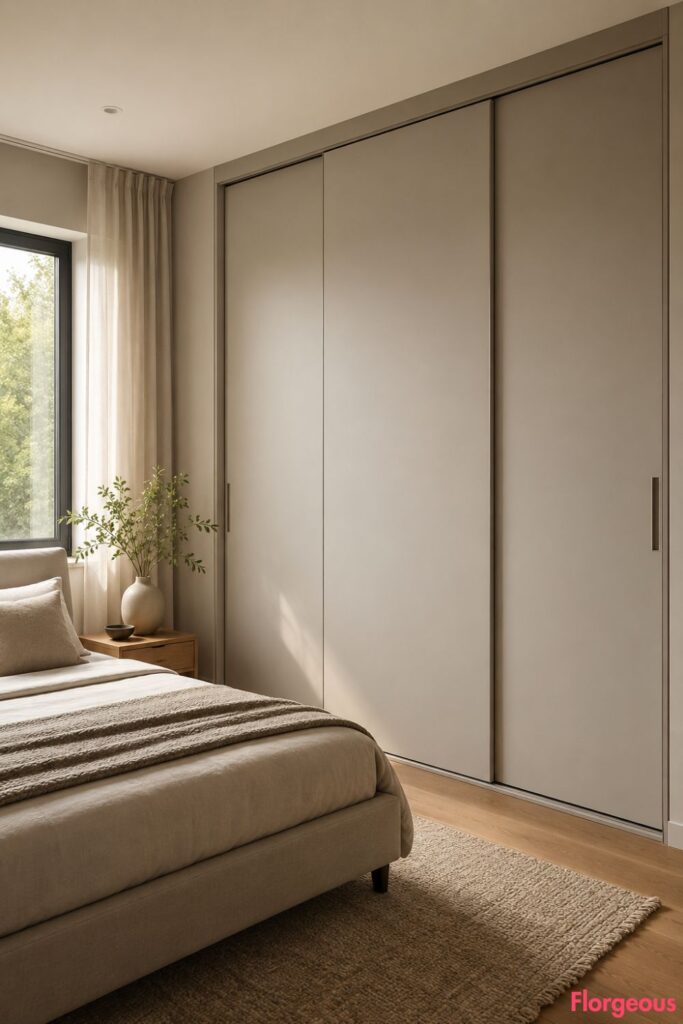
Full-height sliding wardrobe doors make a bedroom feel cleaner and taller.
Instead of stopping at standard door height, run the doors from floor to ceiling so the wardrobe looks built-in. This is especially useful in small bedrooms where visual clutter can make the space feel cramped.
Choose matte white, warm oak, soft greige, or pale walnut for a calm look. For a more seamless design, match the wardrobe doors to the wall color and keep the handles slim or recessed.
2. Mirrored Sliding Door Design for Small Bedrooms
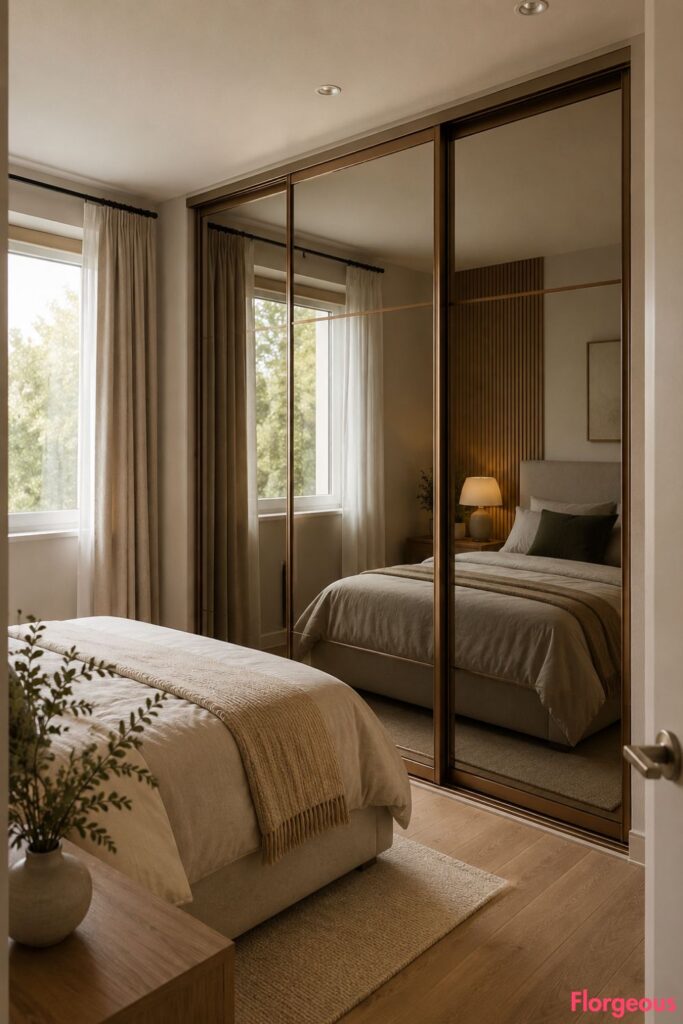
A mirrored sliding door design is one of the easiest ways to make a small bedroom feel brighter.
Mirrors reflect natural light and visually double the space, which works beautifully in apartments, guest rooms, and narrow dressing areas. Instead of using shiny mirror panels across the whole room, try framed mirror panels for a softer look.
Bronze mirror feels warmer and more luxurious. Smoked mirror feels moody and modern. Avoid overly reflective mirror doors in rooms with too much clutter, since they will reflect everything.
3. Pocket Doors for Bathrooms
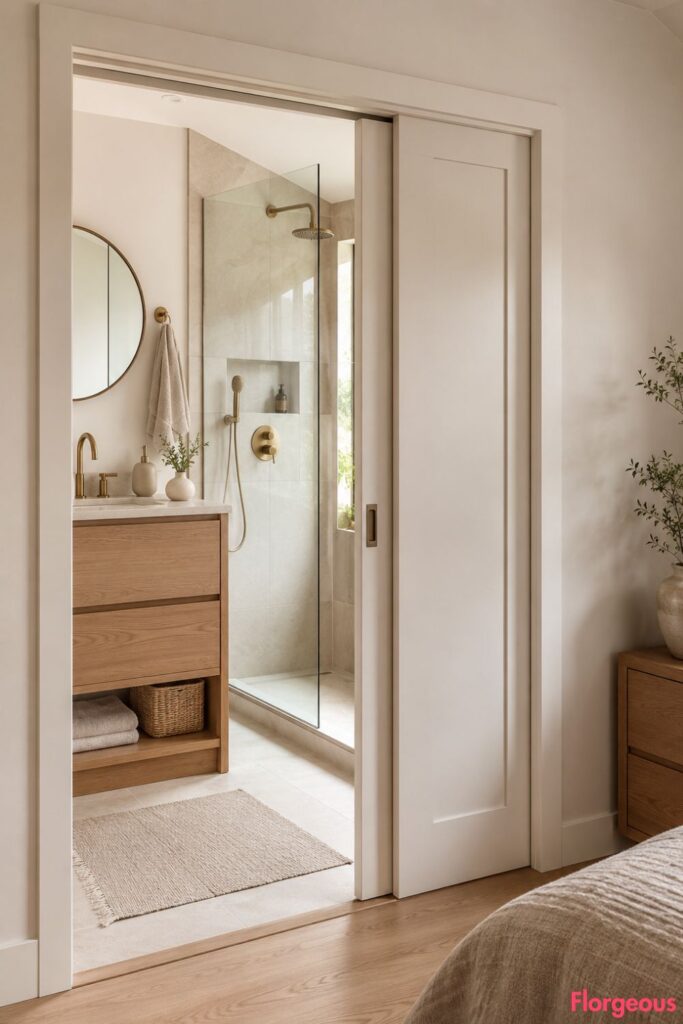
Pocket doors are perfect when a swinging door takes up too much room near a vanity, toilet, or shower.
Because the door slides into the wall cavity, you free up valuable floor space and make the bathroom easier to move around in. This is especially helpful in en suites, powder rooms, laundry bathrooms, and compact apartments.
For bathrooms, use moisture-resistant materials and good-quality hardware. A soft painted pocket door with a recessed pull can look simple, clean, and very custom.
4. Fluted Glass Sliding Doors
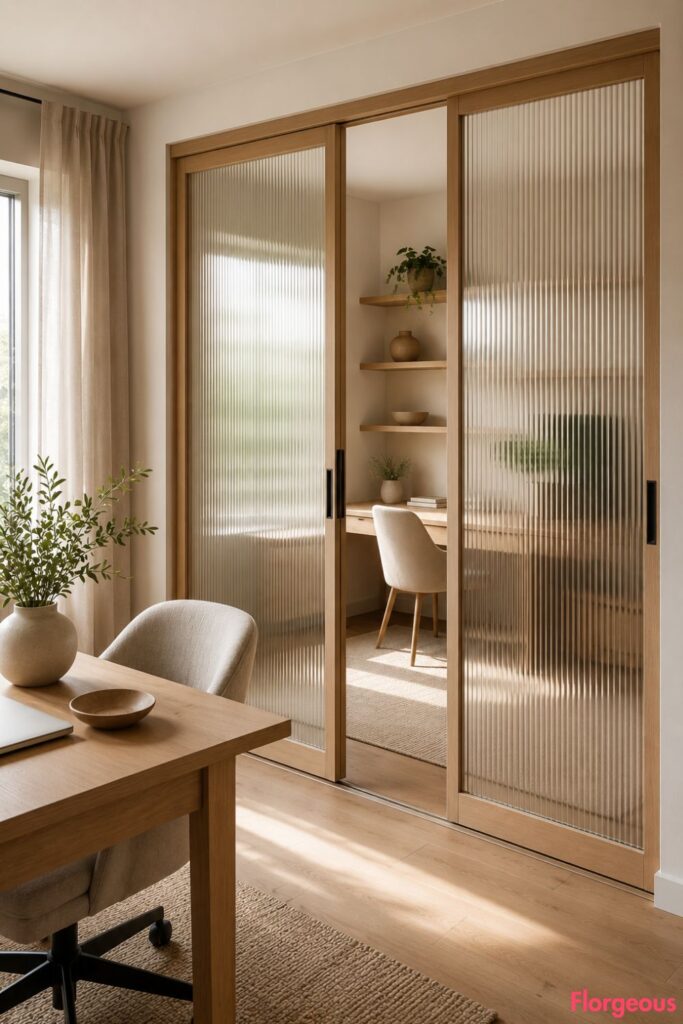
Fluted glass gives you privacy without making a space feel closed off.
Use it for a bathroom entrance, home office, pantry, or wardrobe where you want light to pass through but still need a little softness. The vertical texture blurs the view and adds a beautiful architectural detail.
Black metal frames feel crisp and modern. Brass frames feel warmer. Pale oak frames create a Scandinavian-inspired look that feels airy and gentle.
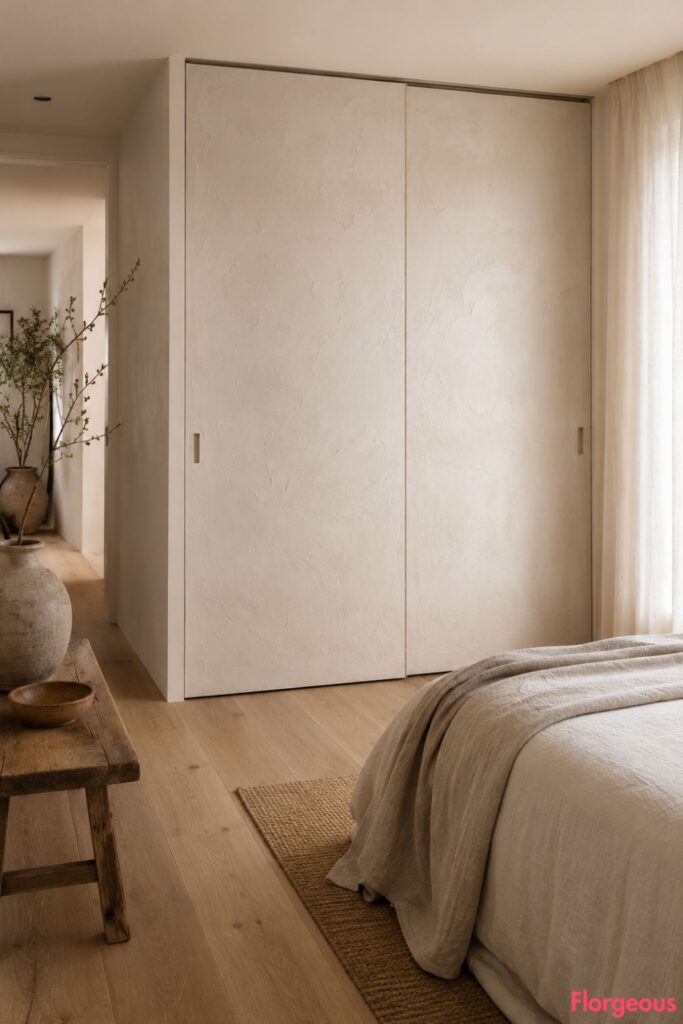
5. Textured Plaster-Look Sliding Doors
Use sliding doors finished in a soft plaster-effect texture for a seamless architectural look.
This is beautiful for minimalist bedrooms, hallway closets, or hidden storage walls. The slightly uneven surface adds depth while keeping the room calm and uncluttered.
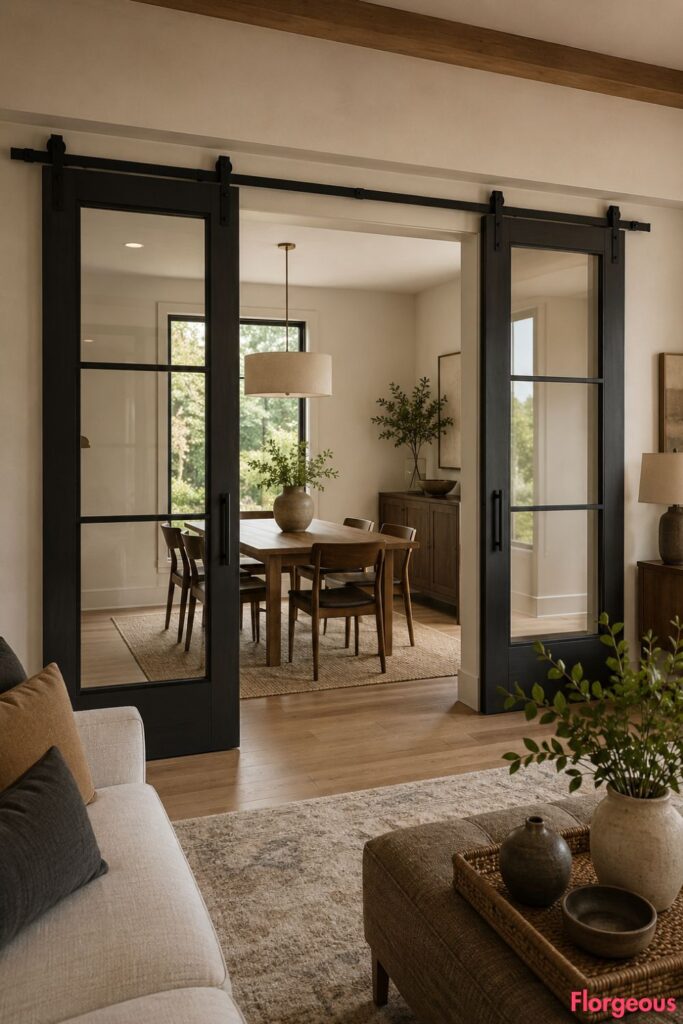
6. Double Sliding Doors for Wide Openings
Double sliding doors are a smart solution for wide doorways between living rooms, dining spaces, and home offices.
They give you flexibility. Leave both doors open for flow, slide one side closed for privacy, or close both when you want a quieter zone.
For a polished look, use symmetrical panels and a track that feels intentional. Wood frames with glass inserts work beautifully in traditional homes, while slim black frames suit modern interiors.
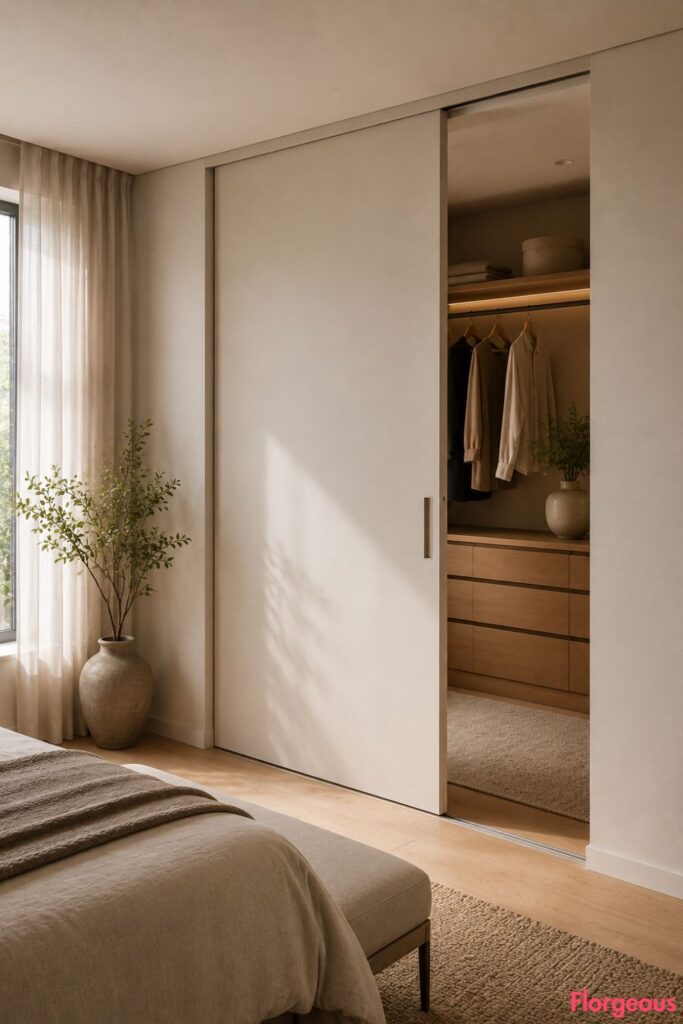
7. Hidden Track Sliding Doors
A visible track can look stylish, but a hidden track gives sliding doors a more refined feel.
This design works especially well for wardrobes, media walls, and modern room dividers. The track is tucked into the ceiling or covered by a slim pelmet, so the door appears to glide quietly across the wall.
Use this idea when you want the door to blend into the architecture. It pairs beautifully with flat panels, minimal handles, and calm wall colors.
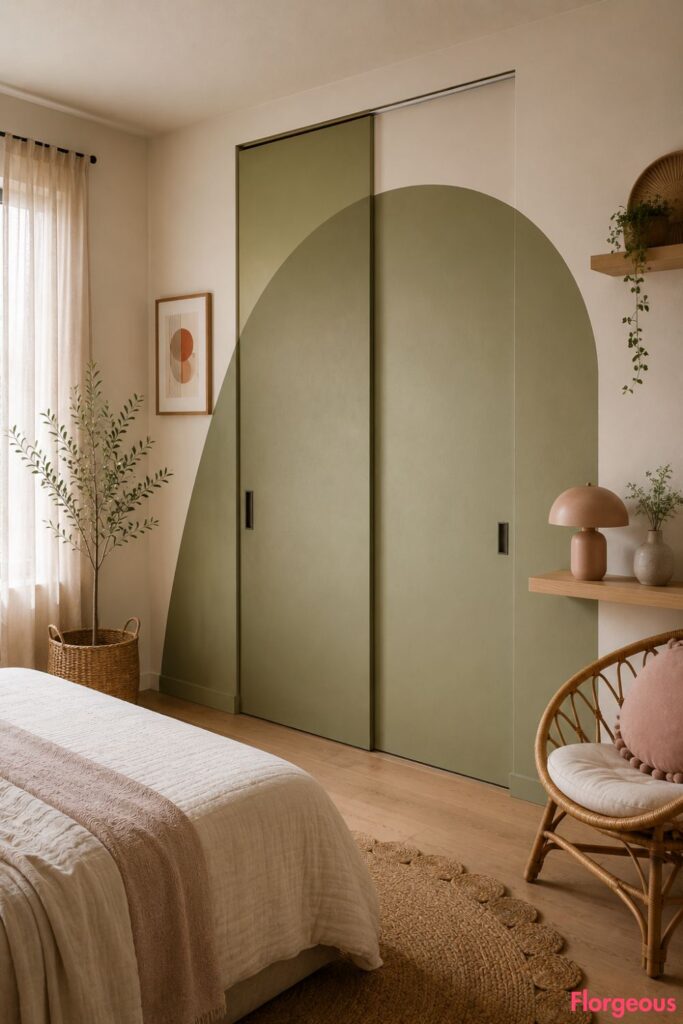
8. Sliding Door With a Curved Color Block
Paint a large curved shape across the sliding door and surrounding wall, so the door becomes part of a mural-like feature.
This works well in kids’ rooms, creative studios, or playful guest bedrooms. Try clay and cream, sage and white, or muted blue with warm beige.
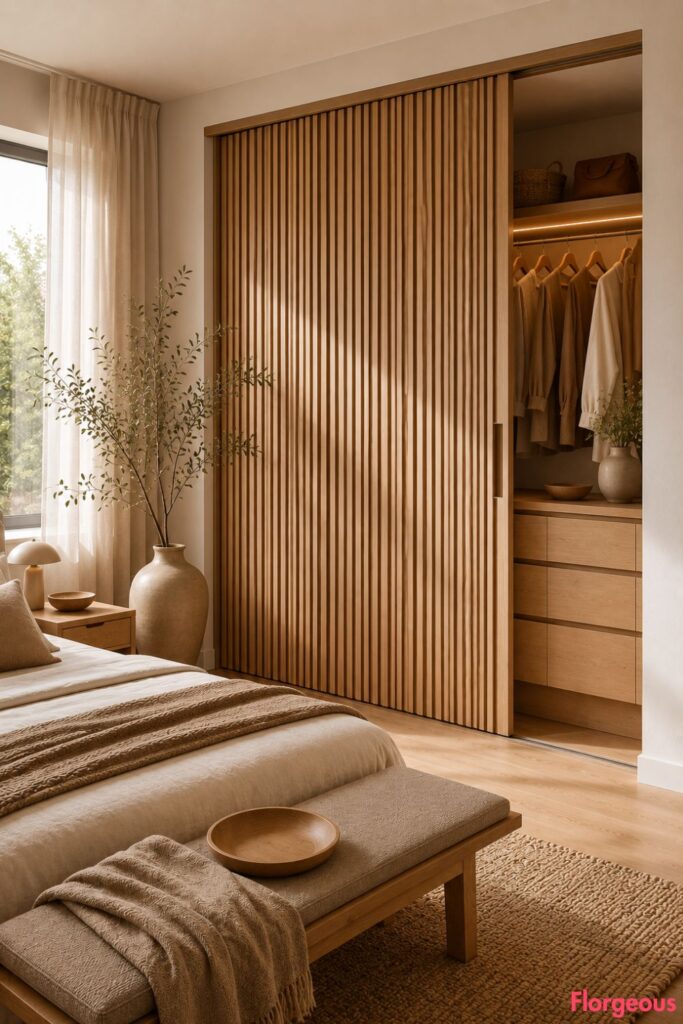
9. Sliding Door Design With Vertical Wood Slats
Vertical wood slats create a stylish sliding door design that feels architectural but still warm.
Use slim oak, ash, or walnut slats across a sliding panel for a wardrobe, hallway cupboard, or room divider. The vertical lines draw the eye upward, which can make ceilings feel higher.
This look works best when the spacing is even and the wood tone matches another element in the room, such as flooring, a vanity, shelving, or a bed frame.
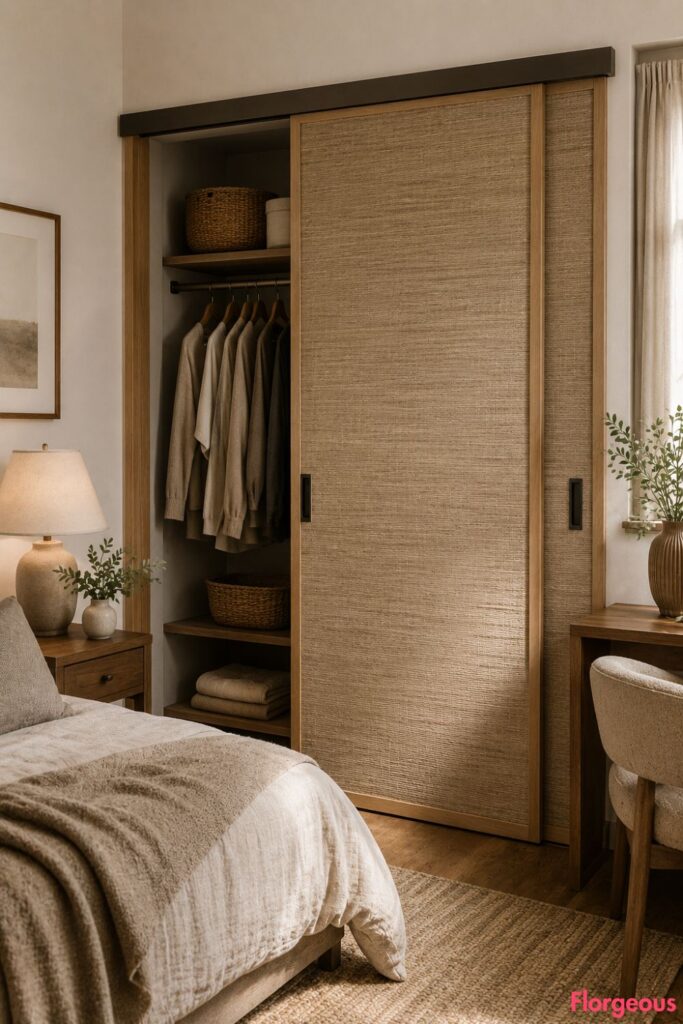
10. Sliding Door With a Woven Grasscloth Finish
Cover the sliding door panels in textured grasscloth for a warm, tailored look.
Grasscloth adds depth without loud pattern, so it works well in bedrooms, home offices, and hallway closets. Choose sandy beige, warm taupe, olive gray, or soft charcoal.
Use slim wood trim around the edges to keep the finish neat and protected.
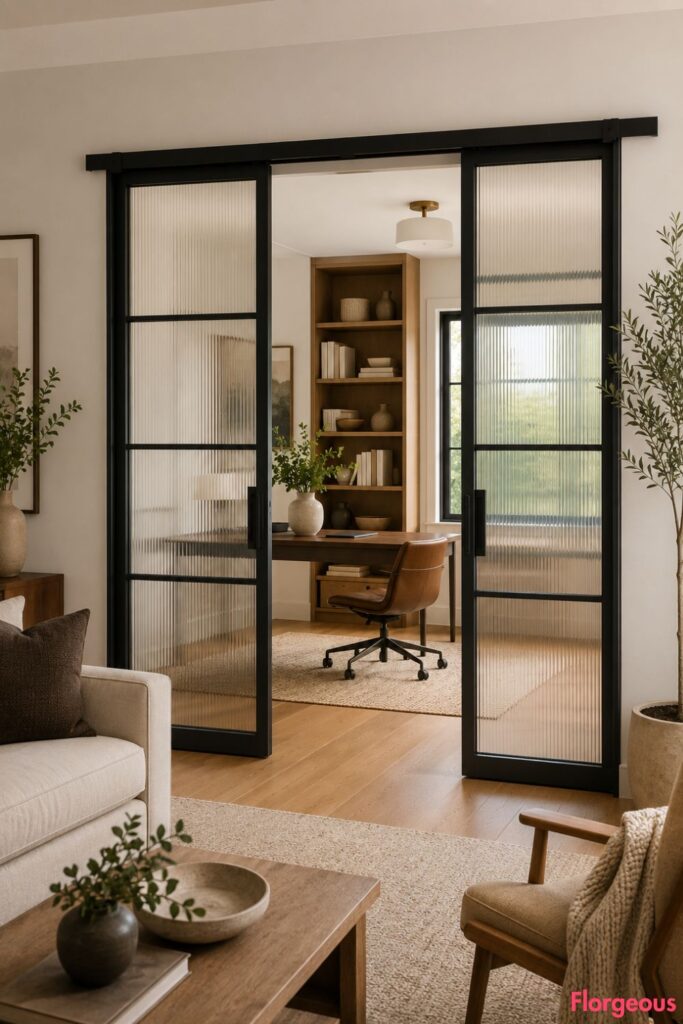
11. Black-Framed Glass Sliding Doors
Black-framed sliding glass doors are perfect for separating spaces without losing light.
They work beautifully between a kitchen and dining room, bedroom and dressing area, or living room and home office. The black frame adds definition and gives the room a modern, slightly industrial edge.
For privacy, use reeded, frosted, or smoked glass. For a brighter feel, keep the surrounding walls light and let the dark frame become the feature.
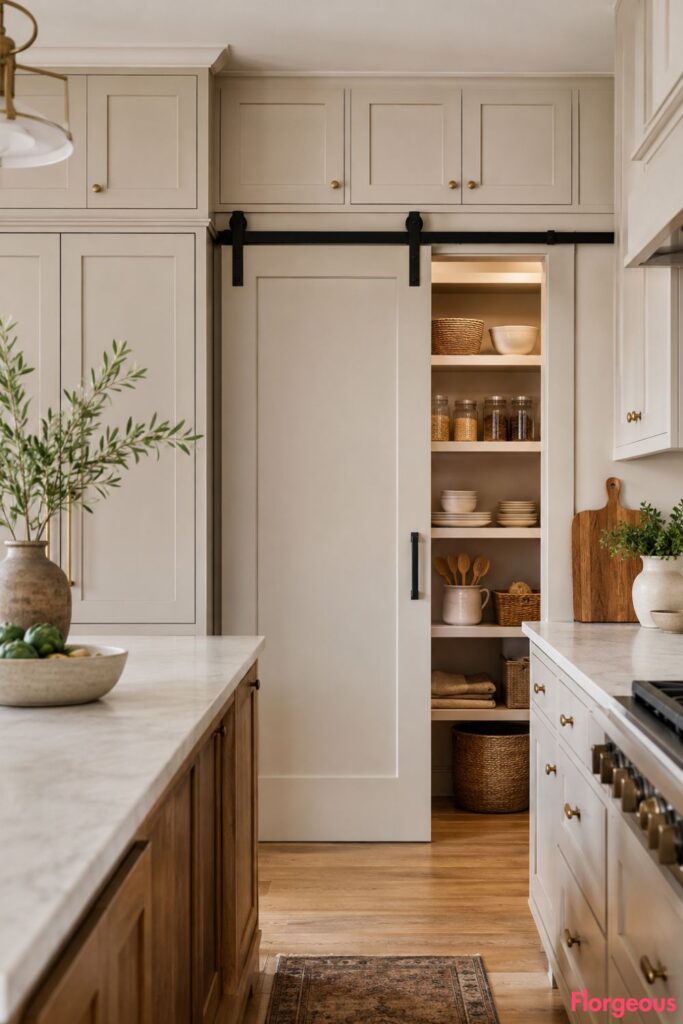
12. Sliding Pantry Doors
A sliding pantry door can make a kitchen feel more practical and more styled.
Use a single sliding door if the pantry opening is narrow, or double sliding doors for a wider pantry wall. Painted wood, glass panels, or even chalkboard inserts can all work depending on the kitchen style.
For a farmhouse kitchen, try warm wood with black hardware. For a modern kitchen, use a flat painted door that matches the cabinetry. The mistake to avoid is choosing a track that blocks upper cabinets or lighting.
13. Wallpapered Sliding Doors
Wallpapered sliding doors are a clever way to turn plain doors into a decorative moment.
This works especially well for wardrobe doors, hallway closets, and children’s rooms. Use grasscloth for texture, botanical prints for charm, or subtle geometric patterns for a modern feel.
Keep the surrounding walls simple so the doors can be the feature. If the doors are used often, choose durable wallpaper or seal it properly to prevent peeling at the edges.
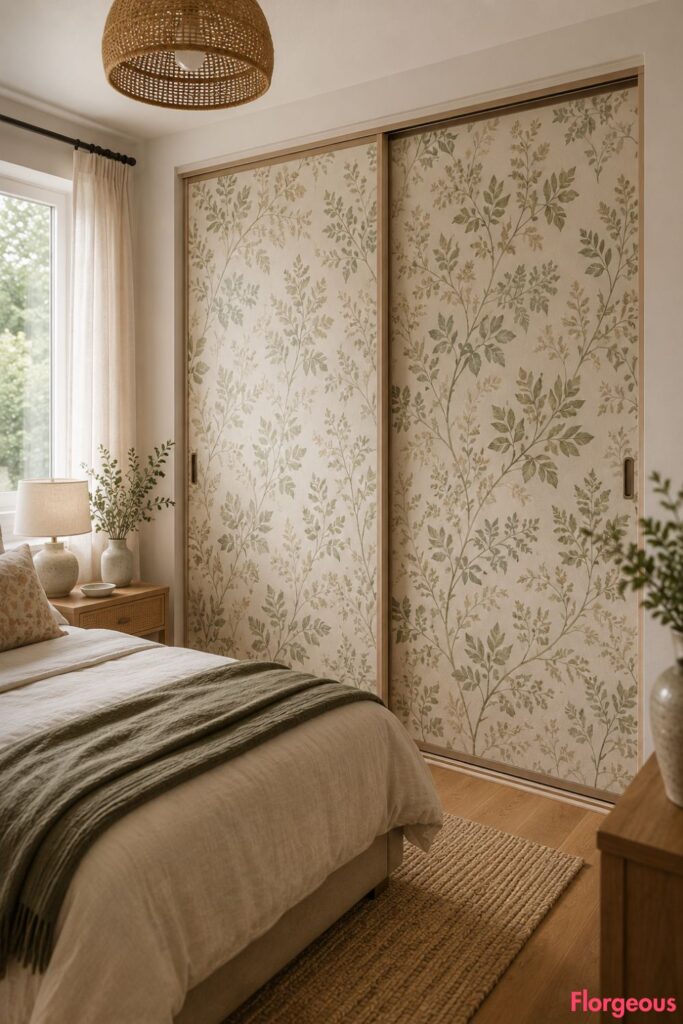
14. Sliding Doors Behind the Bed
In very small bedrooms, sliding wardrobe doors behind or beside the bed can solve awkward layout problems.
Because they do not swing outward, you can place a bed, chair, or small nightstand closer to the wardrobe without blocking access. This makes the room feel more usable.
For a soft bedroom look, choose warm neutral doors with minimal hardware. If the wardrobe runs across the wall behind the bed, consider matching the doors to the headboard color for a calm, built-in effect.
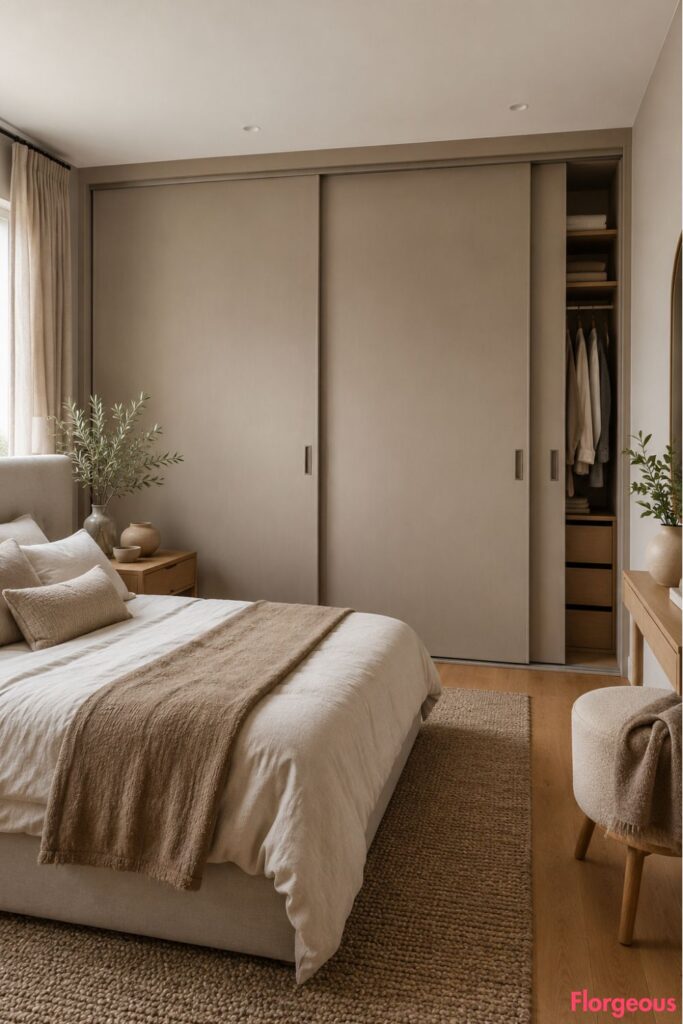
15. Pocket Doors for Home Offices
A pocket door can make a home office feel private without stealing space from the room.
This is useful in converted bedrooms, hallway offices, small dens, and open-plan homes. Close the door during calls, then slide it away when you want the room to feel connected again.
A glass pocket door is great if you still want borrowed light. A solid painted pocket door is better if you need more sound control and visual privacy.
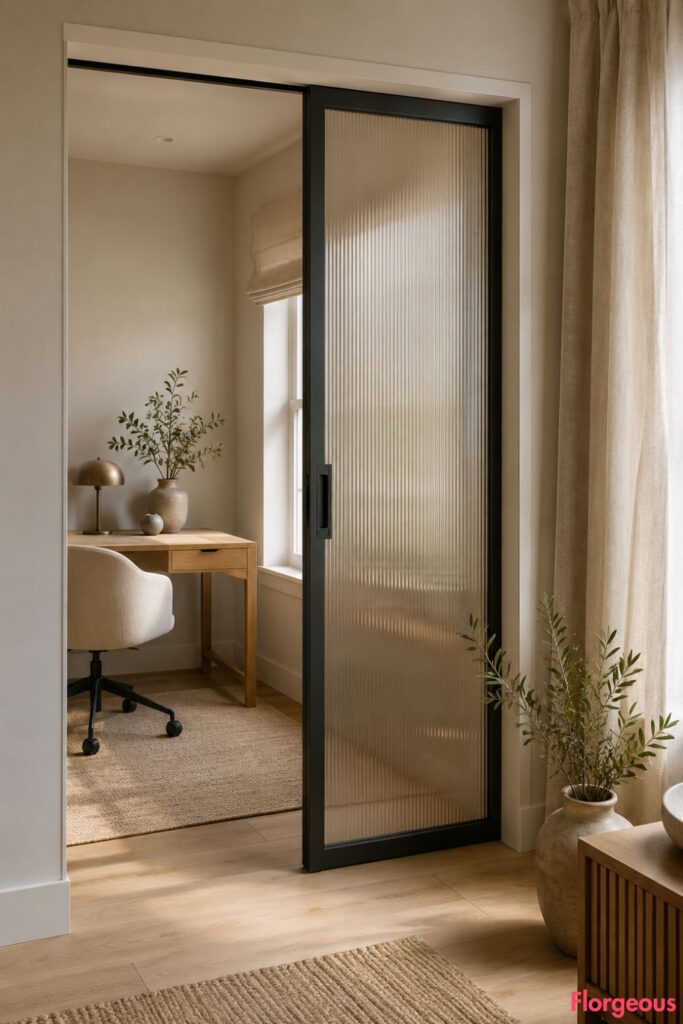
16. Two-Tone Sliding Wardrobe Doors
Two-tone wardrobe doors add interest without making the room feel busy.
Try warm wood on the lower half and painted panels on the top, or use a narrow vertical color block along one side. This gives the wardrobe a more custom furniture feel.
Soft combinations work best: oak and cream, walnut and taupe, sage and white, charcoal and pale wood. Keep the handles simple so the color pairing remains the focus.
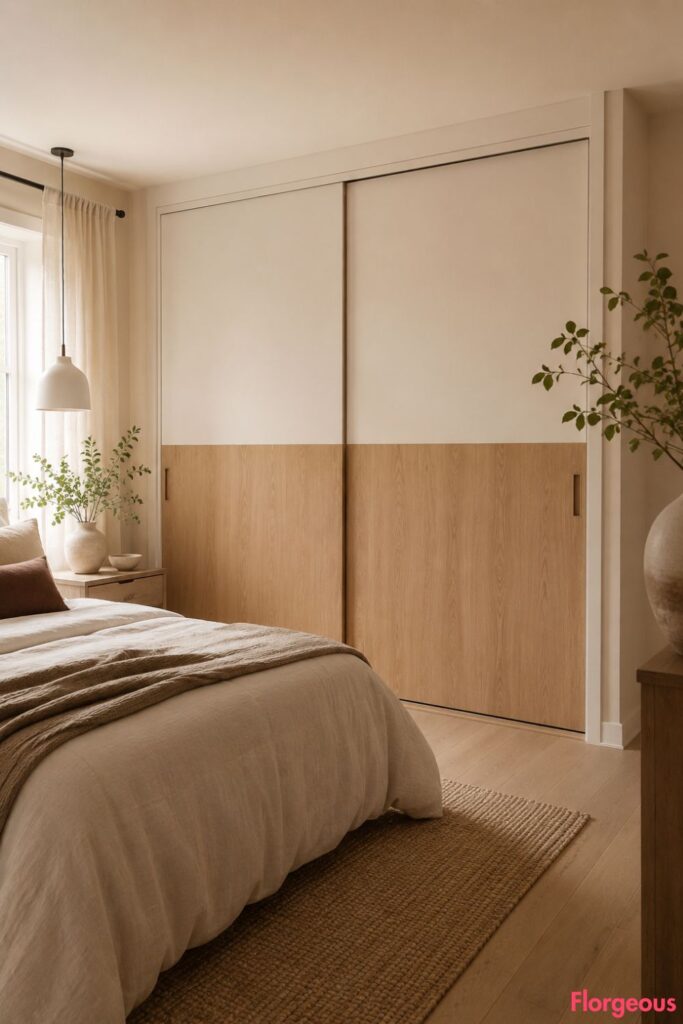
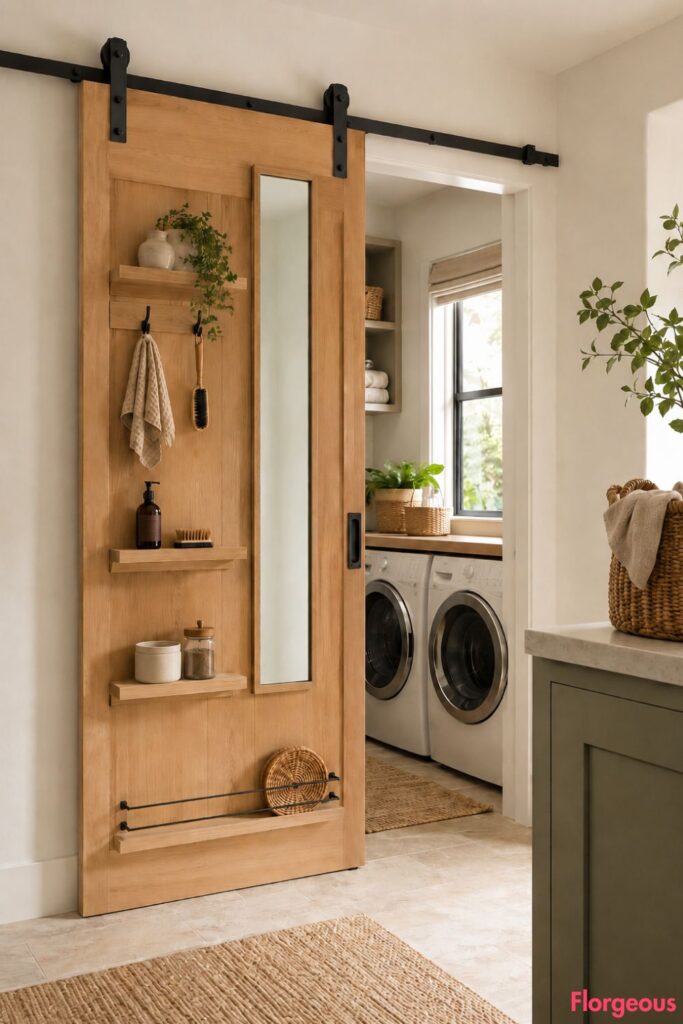
17. Sliding Door Design With Built-In Storage Panels
For a truly practical sliding door design, look for ways to add storage to the door itself.
A sliding door can include shallow shelves, hooks, a mirror strip, a corkboard panel, or a slim rail for accessories. This works well for laundry rooms, craft rooms, entry closets, and kids’ rooms.
Keep the storage shallow so the door can still move easily. This idea is best for surface-mounted sliding doors rather than pocket doors, since pocket doors need a smooth panel to slide into the wall.
Final Thoughts on Sliding Door Design
Sliding doors are more than a space-saving trick. They can make wardrobes feel custom, bathrooms feel easier to use, and small rooms feel calmer and more considered.
The right sliding door design depends on your space, style, and budget. A mirrored wardrobe door can brighten a compact bedroom, while a fluted glass pocket door can make a bathroom feel beautifully finished.
Start with the problem you need to solve: privacy, storage, light, layout, or visual clutter. Then choose the material, finish, and hardware that makes the design feel like it belongs in your home.