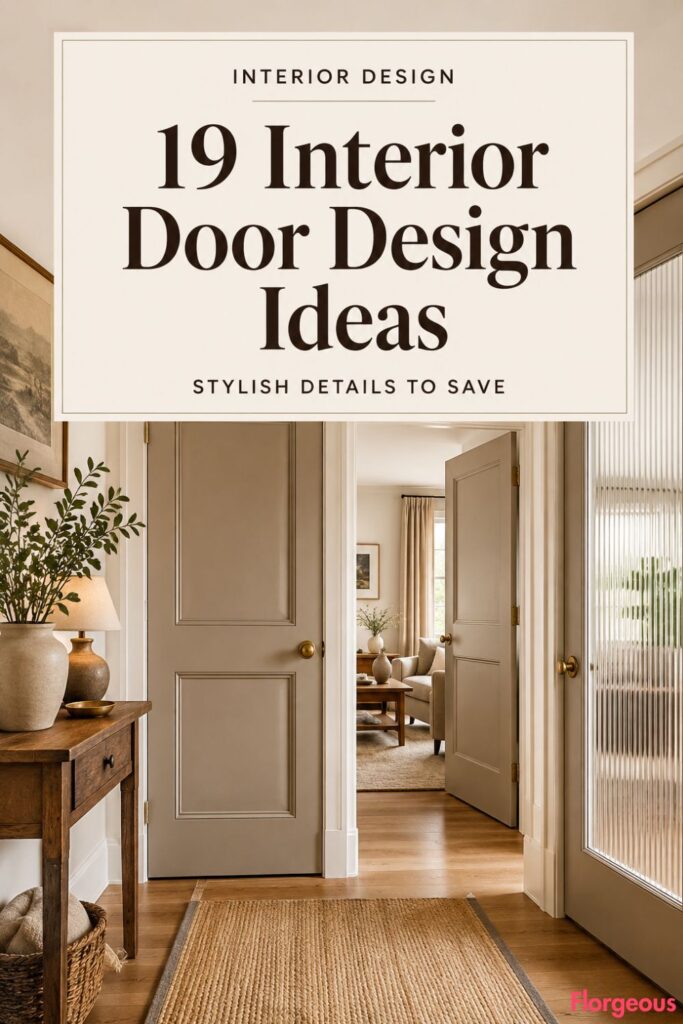
Interior doors can do so much more than close off a room.
They can frame a view, soften a hallway, add rhythm to a passage, or make a living room feel thoughtfully designed before you even step inside.
The best interior door design ideas are often in the details: a painted edge, a textured glass panel, a sculptural handle, or a finish that quietly connects one room to the next.
Here are 19 stylish and creative interior door design ideas that feel fresh, practical, and beautiful enough to save to a mood board.
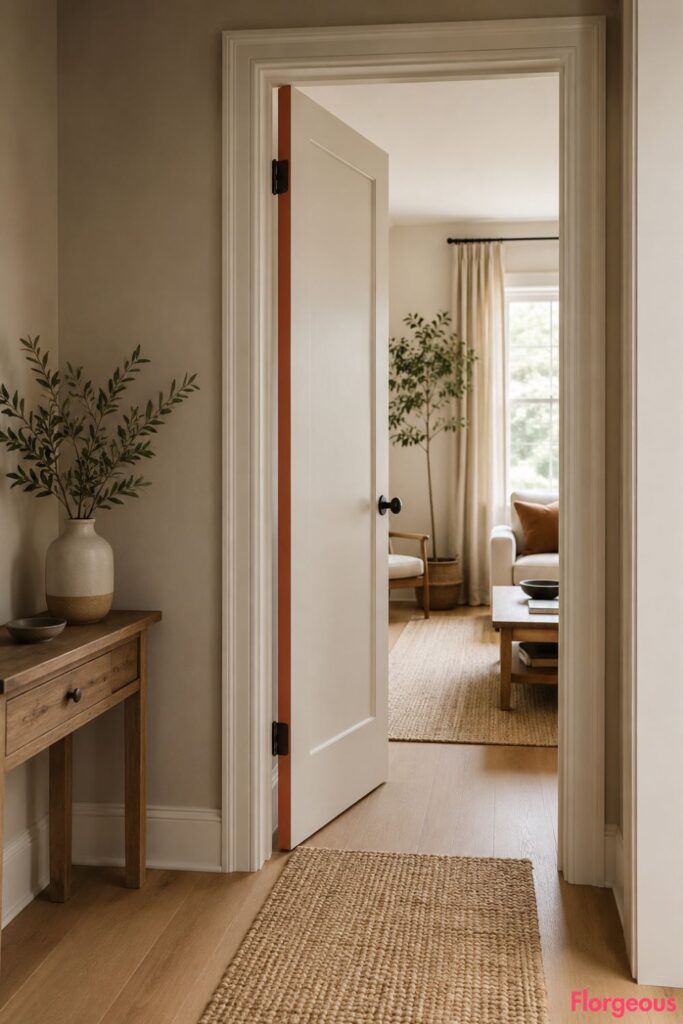
1. Interior Door Design With a Painted Side Edge
Instead of painting the whole door a bold color, paint only the narrow side edge.
This detail is especially beautiful on doors that stay slightly open, such as living room doors, hallway doors, or bedroom doors. A warm white door with a terracotta edge feels subtle and artistic. A pale oak door with a black side edge feels sharp and architectural.
It is a small design moment, but it makes the door feel custom.
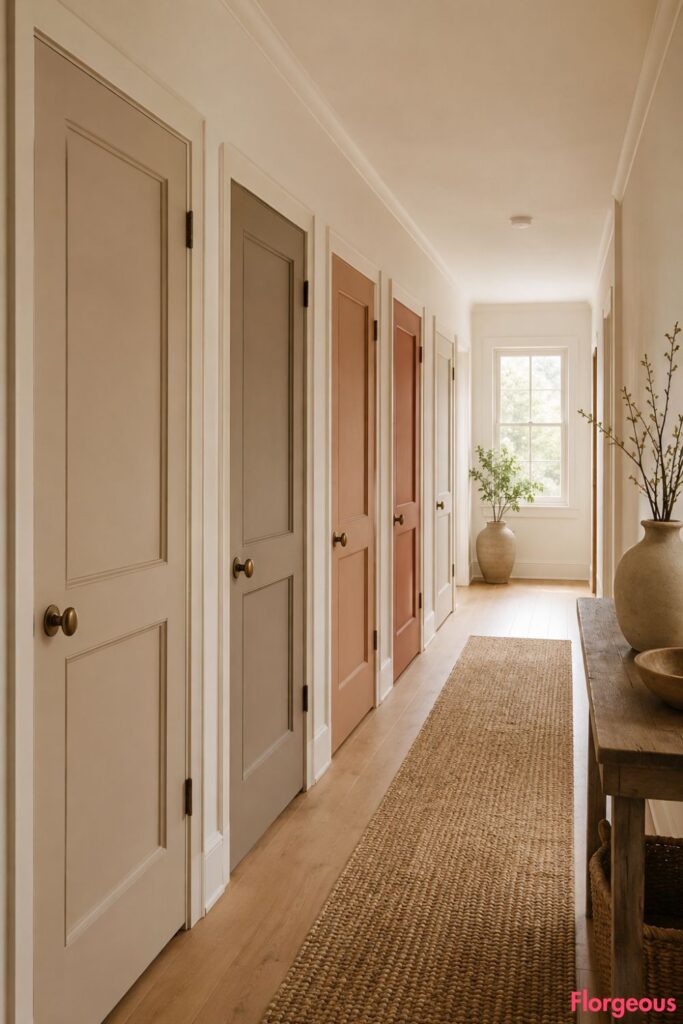
2. Hallway Doors in a Soft Gradient Palette
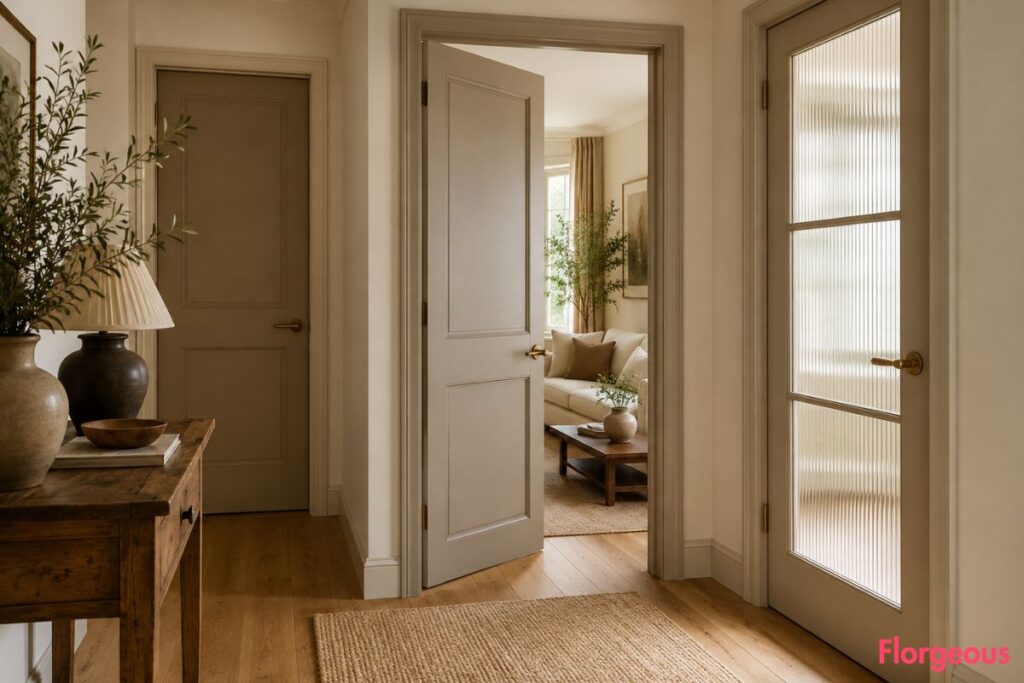
If your hallway has several doors, use them as a quiet color story.
Paint each door in a slightly different shade within the same palette, such as mushroom, taupe, clay, and warm beige. For a cooler look, try misty blue, slate, pale gray-green, and soft charcoal.
The result feels collected rather than random. It also adds movement to a long hallway without needing gallery walls or extra decor.
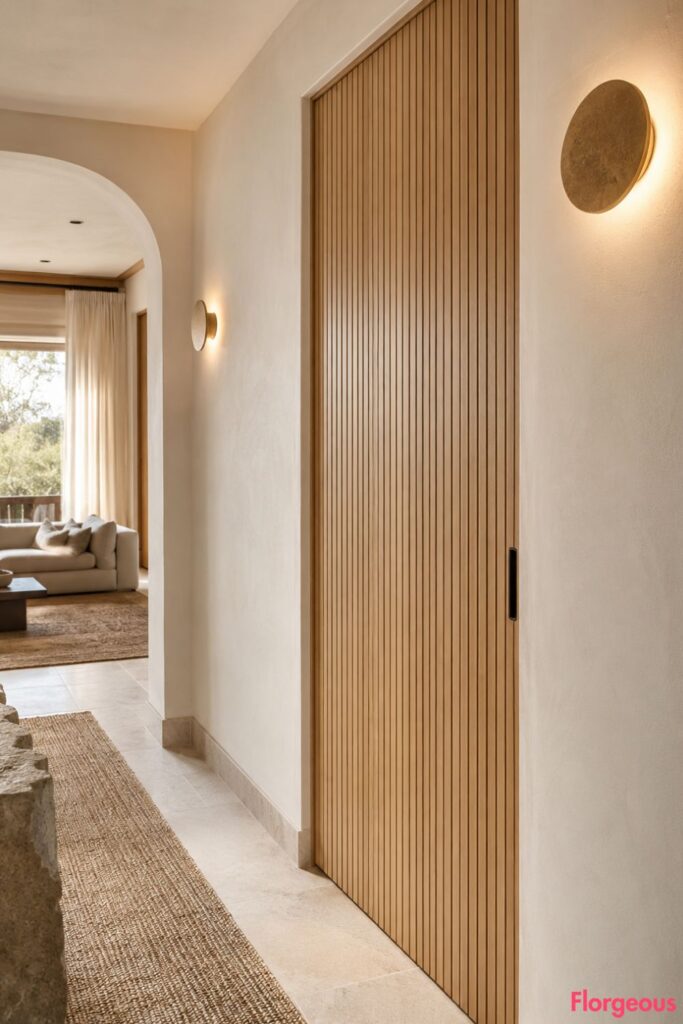
3. Fluted Wood Doors for Passageways
Fluted wood doors add texture, warmth, and vertical rhythm.
They work beautifully in hallways, living room entrances, home offices, and closet passages. Light oak feels airy and modern, while walnut creates a richer, more tailored look.
Keep the surrounding trim simple so the grooves can stand out. Pair with round wall sconces, linen curtains, and stone accents for a calm, high-end feel.
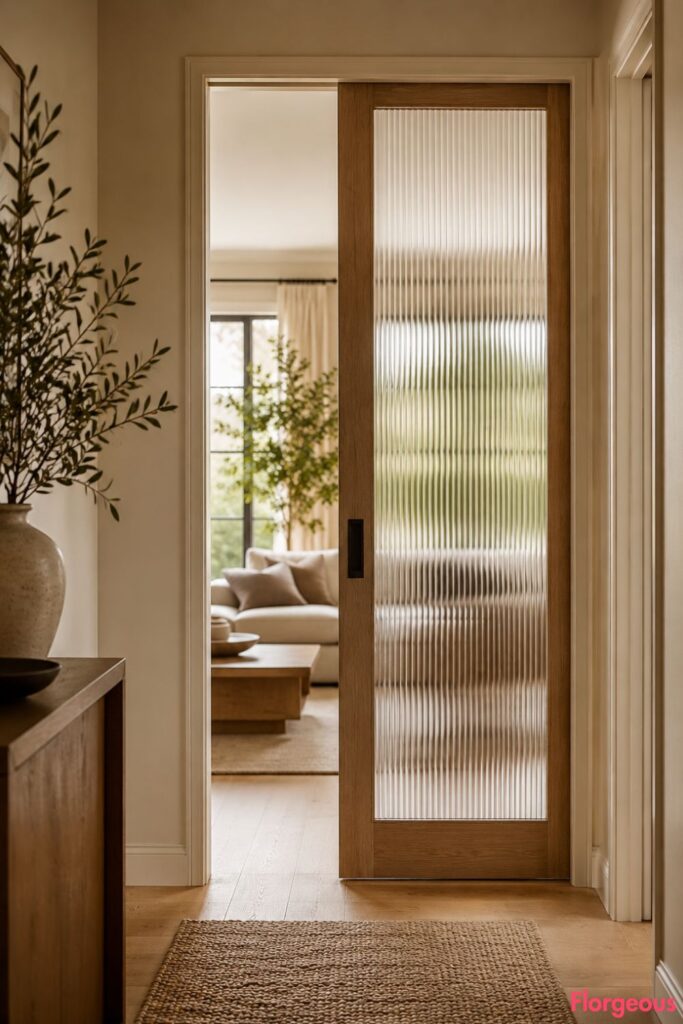
4. Reeded Glass Doors for Gentle Privacy
Reeded glass is perfect for interior doors because it lets light through while blurring the view.
Use it between a hallway and living room, a kitchen and pantry, or a bedroom and dressing area. The vertical texture catches light beautifully and feels more interesting than plain frosted glass.
Black frames look modern. Warm wood frames feel softer. Painted cream frames give the door a cozy, old-house charm.
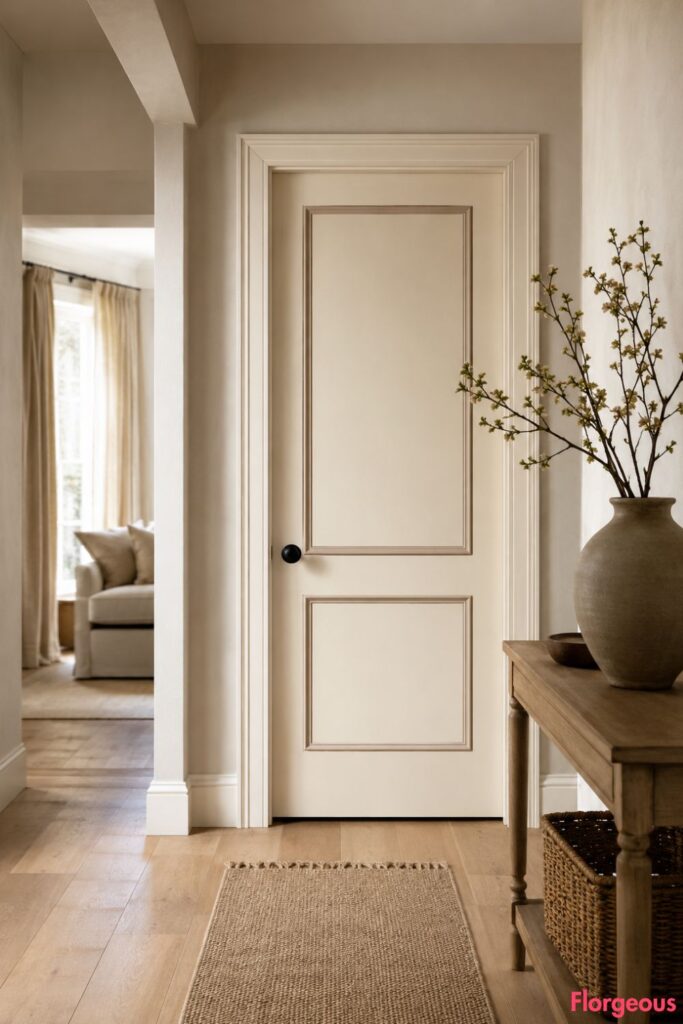
5. Doors With Contrast-Painted Recessed Grooves
For a paneled door that feels more designer, paint the recessed grooves in a slightly deeper shade.
A cream door with taupe grooves looks classic but layered. A sage green door with olive grooves feels botanical. A dusty blue door with smoky gray grooves feels calm and coastal.
This works best when the contrast is subtle. The goal is dimension, not stripes.
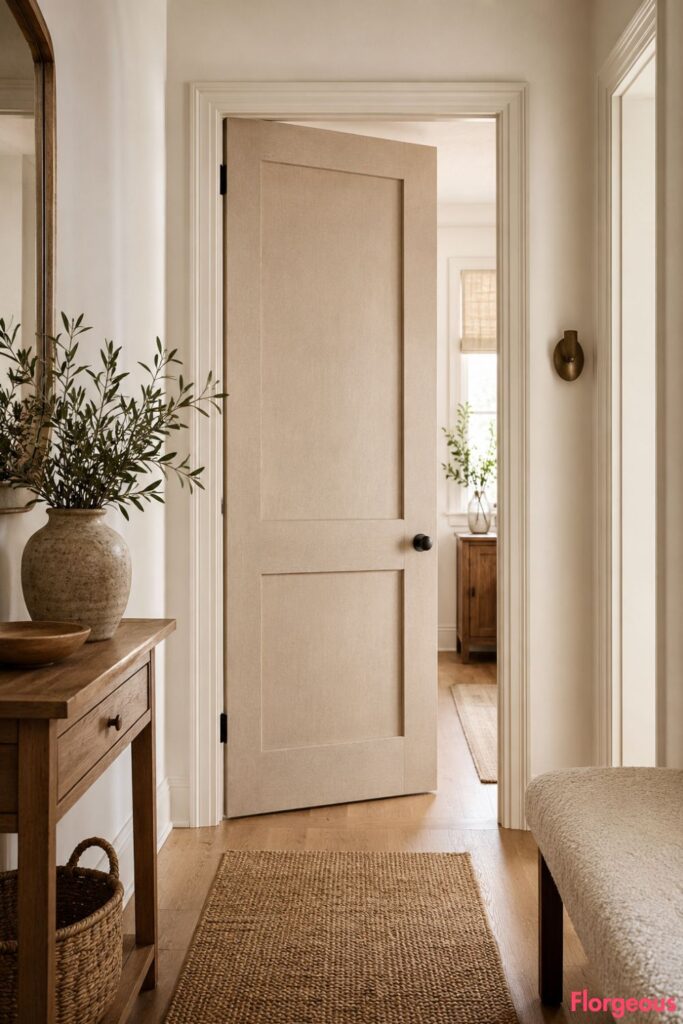
6. Fabric-Inspired Painted Doors
Choose paint colors and finishes that feel like fabric rather than flat color.
A matte linen-beige door can make a hallway feel soft and natural. A washed velvet rose door feels romantic in a bedroom passage. A suede-like charcoal door adds a moody feel to a living room entrance.
Use low-sheen paint for this look. Glossy finishes can make the effect feel too hard.
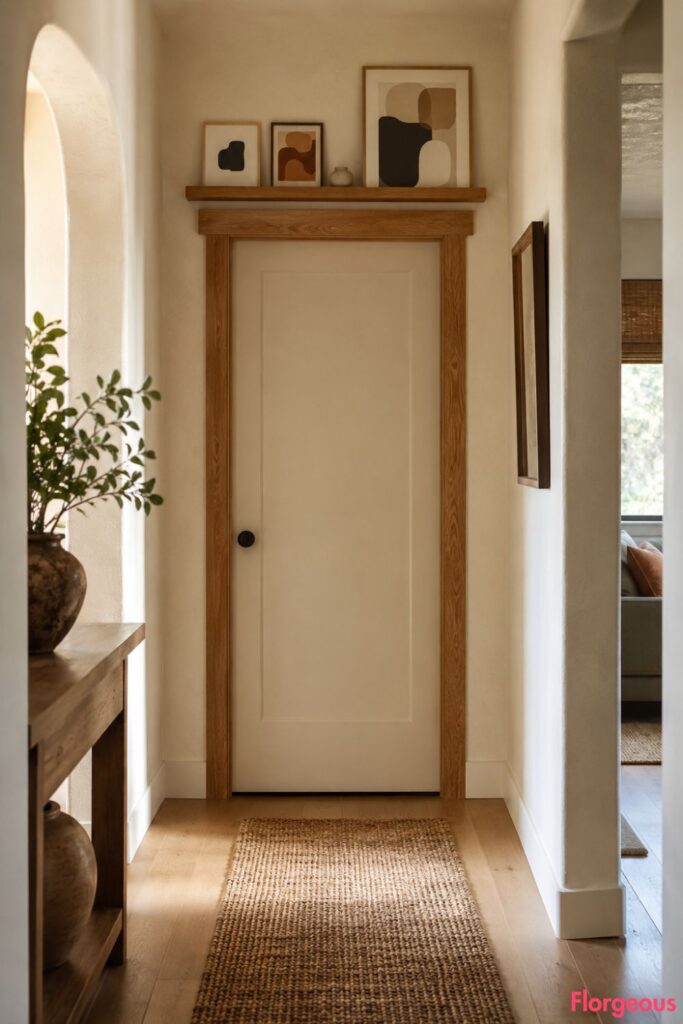
7. Interior Doors With Slim Picture Ledges Above
Turn a doorway into a styled moment by adding a narrow picture ledge directly above the trim.
This works beautifully in hallways where wall space is limited. Add small framed art, a tiny ceramic object, or a leaning vintage print above the door.
Keep the door itself simple so the detail feels intentional. A cream door, warm wood frame, and tiny art ledge can make even a plain passage feel charming.
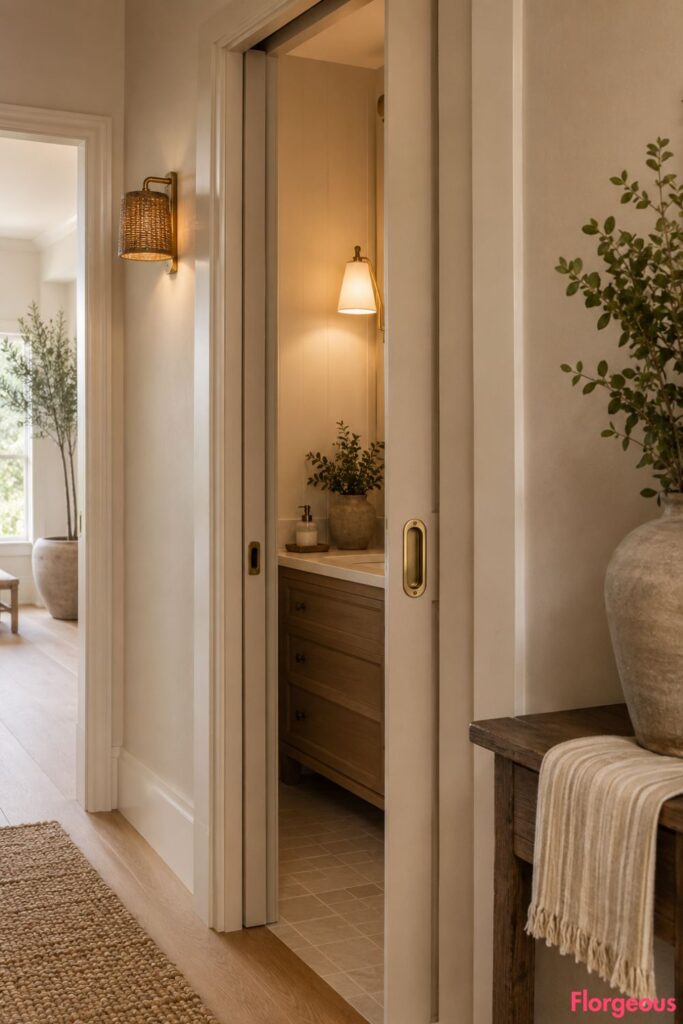
8. Pocket Doors With Jewelry-Like Pulls
Pocket doors are practical, but the hardware can make them feel special.
Choose a recessed pull in aged brass, matte black, polished nickel, or antique bronze. For a softer look, try an oval pull instead of a standard rectangle.
This idea is perfect for powder rooms, laundry rooms, pantries, and tight hallway spaces where a swinging door gets in the way.
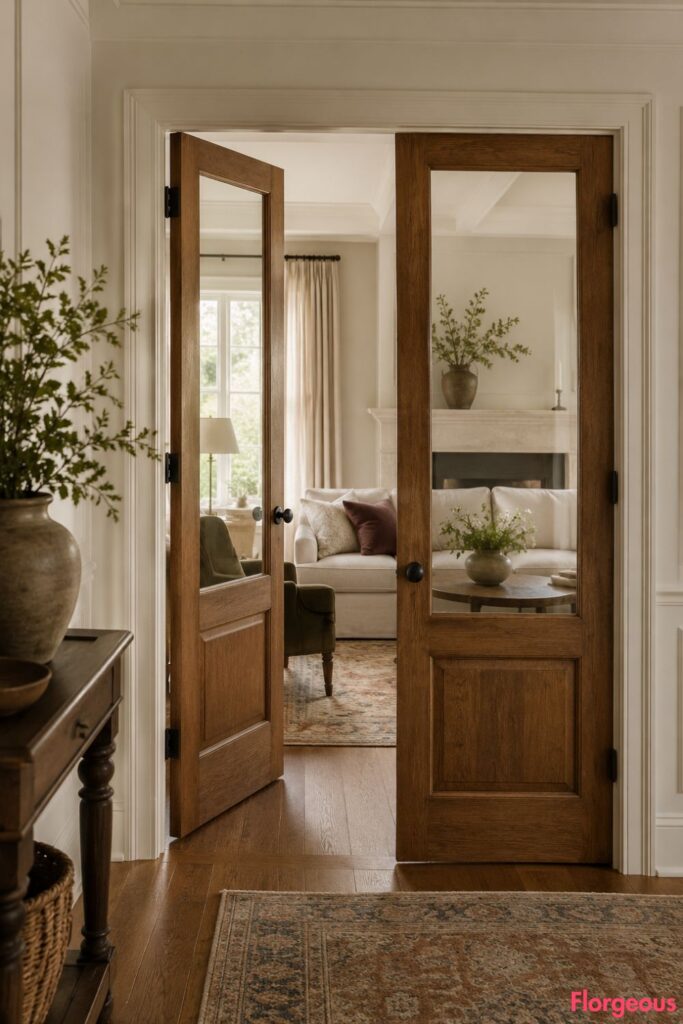
9. Half-Glass Living Room Doors With a Solid Lower Panel
A half-glass interior door gives you light, openness, and a little visual grounding.
Use clear glass for a formal living room or dining room. Use reeded or smoked glass for a study, snug, or media room.
The solid lower panel keeps the door from feeling too exposed. It also pairs beautifully with traditional furniture, vintage rugs, and warm wood floors.
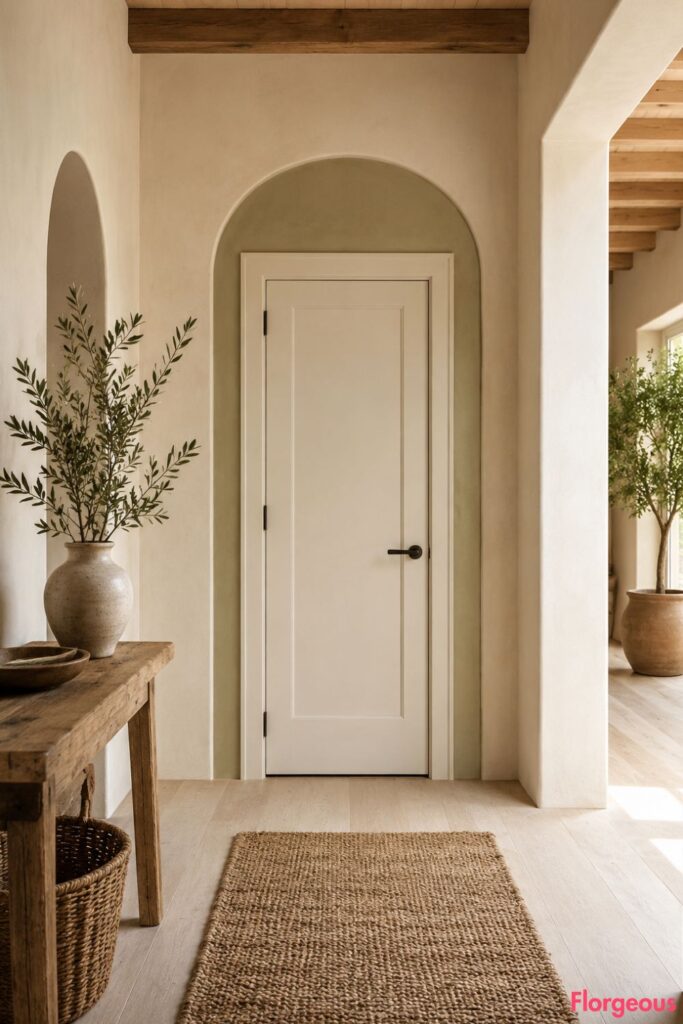
10. Arched Door Trim Around a Standard Door
You do not always need a fully arched door to get the softness of an arch.
Add arched trim or a curved painted surround around a standard rectangular interior door. This creates the feeling of architecture without replacing the door itself.
It works especially well in hallways, bedroom entrances, and living room passages. Try warm white, plaster beige, clay, or muted olive for a Mediterranean-inspired look.
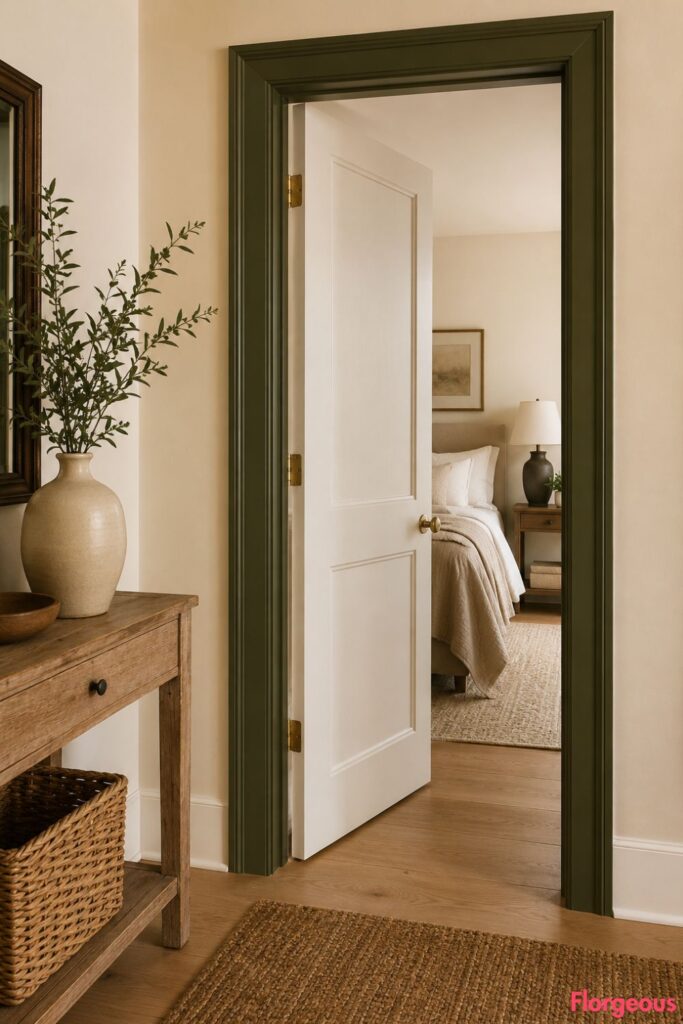
11. Painted Door Frames Without Painting the Door
For a fresh twist, leave the door neutral and paint only the frame.
A white door with a deep olive frame feels crisp and charming. A wood door with a black frame feels graphic and modern. A cream door with dusty blue casing feels soft and cottage-like.
This is a great idea for renters or anyone who wants color without committing to every door.
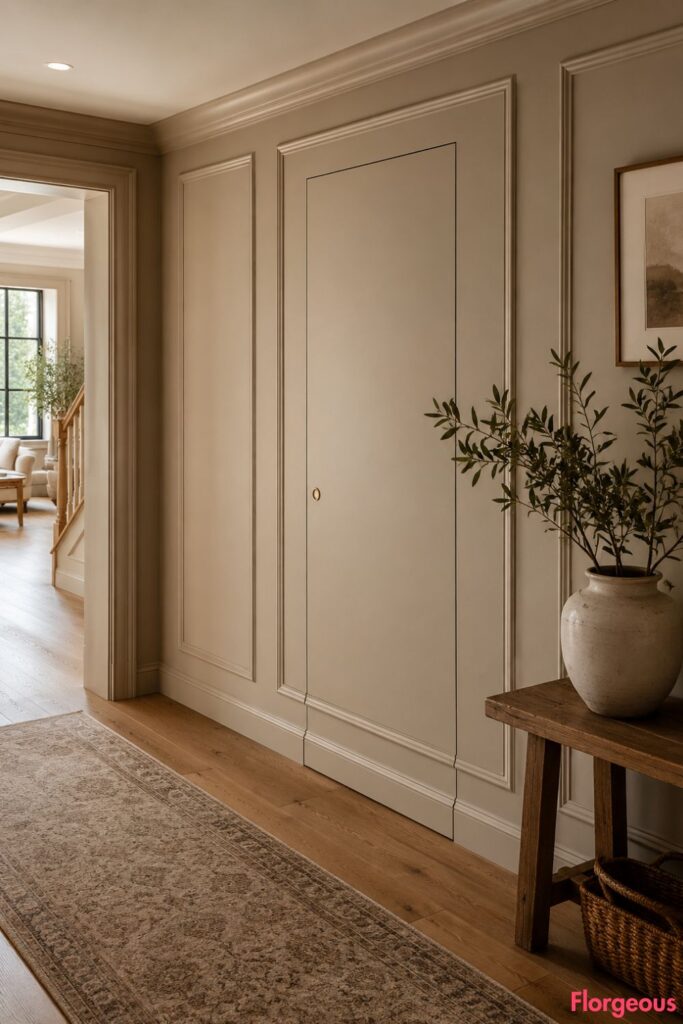
12. Hidden Storage Doors That Look Like Wall Paneling
A storage closet does not have to look like a storage closet.
Cover the door with the same wall paneling as the surrounding passage, then use minimal hardware or a push-latch system. This works beautifully for hallway closets, under-stair storage, utility rooms, and media equipment cupboards.
The result feels clean, clever, and custom-built.
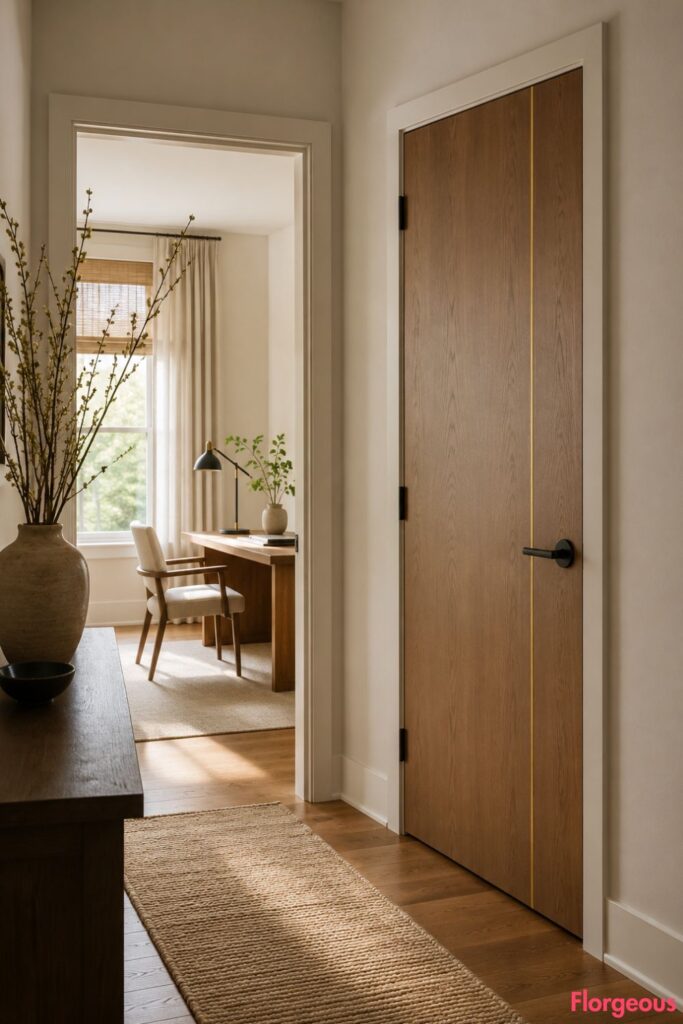
13. Interior Doors With a Single Vertical Inlay
A single vertical inlay can make a simple door feel quietly artistic.
Think a slim brass strip, a narrow black groove, a wood veneer stripe, or a stone-look accent running down one side of the door. It adds detail without making the door feel busy.
This looks especially beautiful on flat slab doors in hallways, modern living spaces, and home offices.
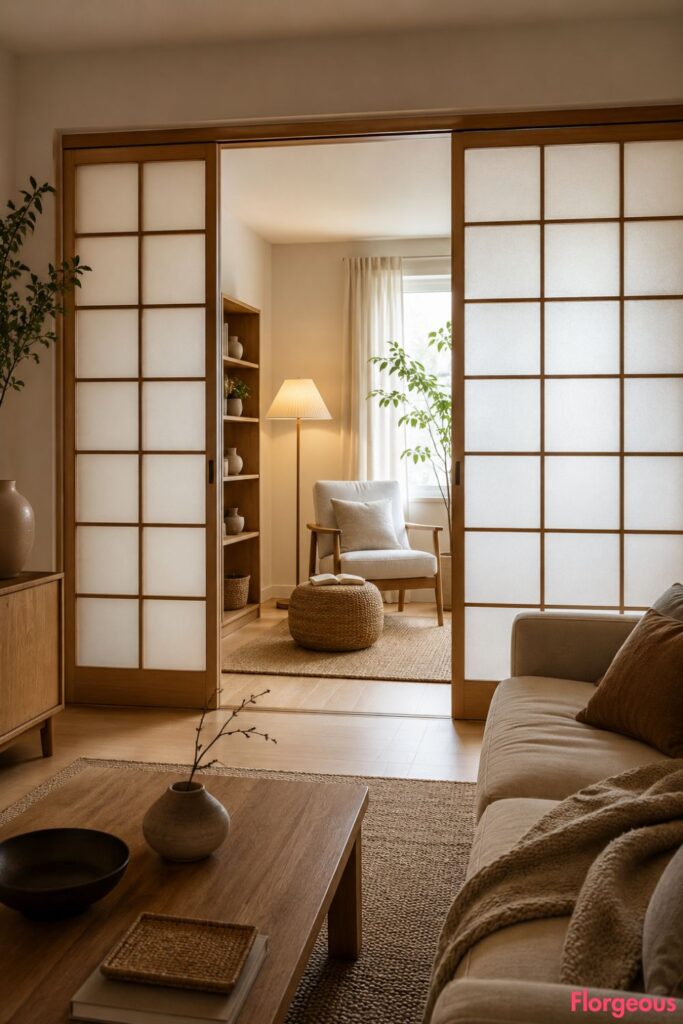
14. Shoji-Inspired Doors for Soft Room Separation
Shoji-inspired doors bring a calm, filtered-light effect to the home.
Modern versions can use frosted glass, acrylic panels, or pale wood grids instead of delicate paper. They work beautifully between a living room and reading nook, bedroom and dressing area, or office and hallway.
Pair with neutral walls, simple furniture, woven textures, and warm floor lamps.
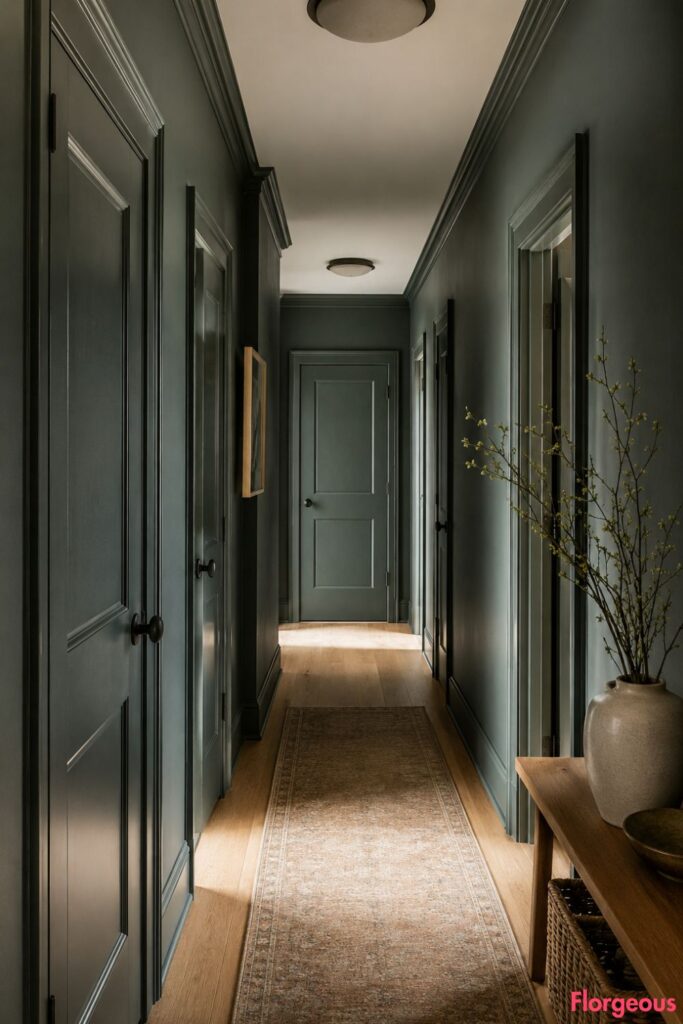
15. Color-Drenched Hallway Doors and Trim
Instead of treating hallway doors as separate pieces, paint the doors, trim, and walls in one enveloping color.
This works especially well in narrow passages. Deep green, smoky blue, clay beige, warm gray, or chocolate brown can make a small hallway feel cozy and intentional.
Use a slightly different sheen on the doors so the surfaces catch the light differently.
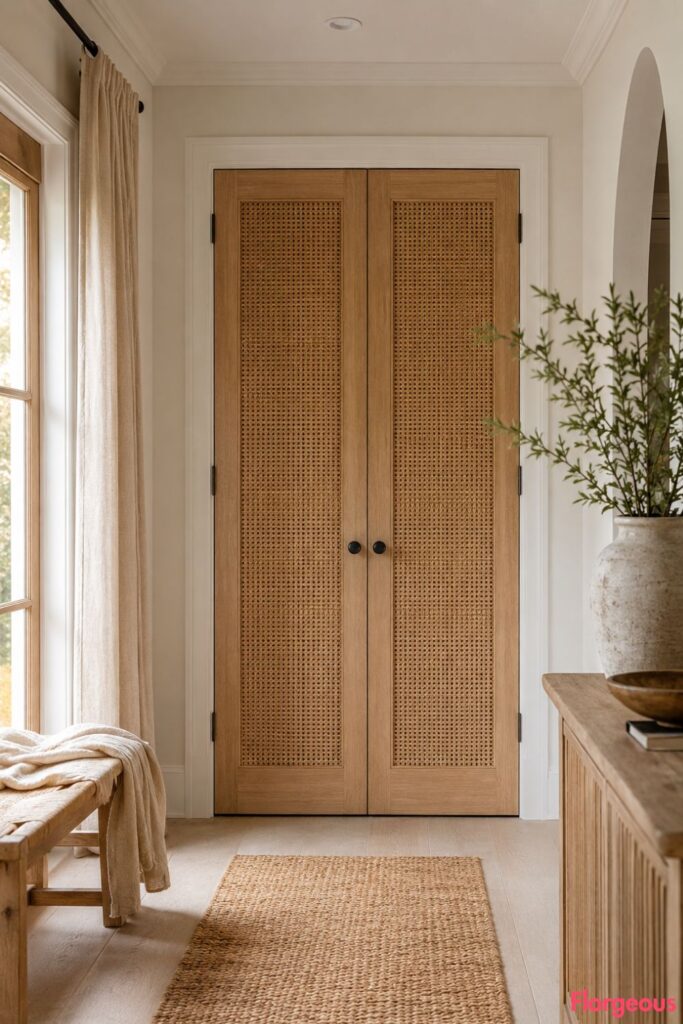
16. Doors With Woven Cane or Rattan Inserts
Cane inserts are perfect for closets, laundry areas, pantries, and relaxed living spaces.
They add texture and allow airflow, which makes them both beautiful and practical. Natural cane looks warm and casual, while painted cane can feel more refined.
Try cane panels with warm white frames for cottage style, black frames for a modern look, or oak frames for a soft organic feel.
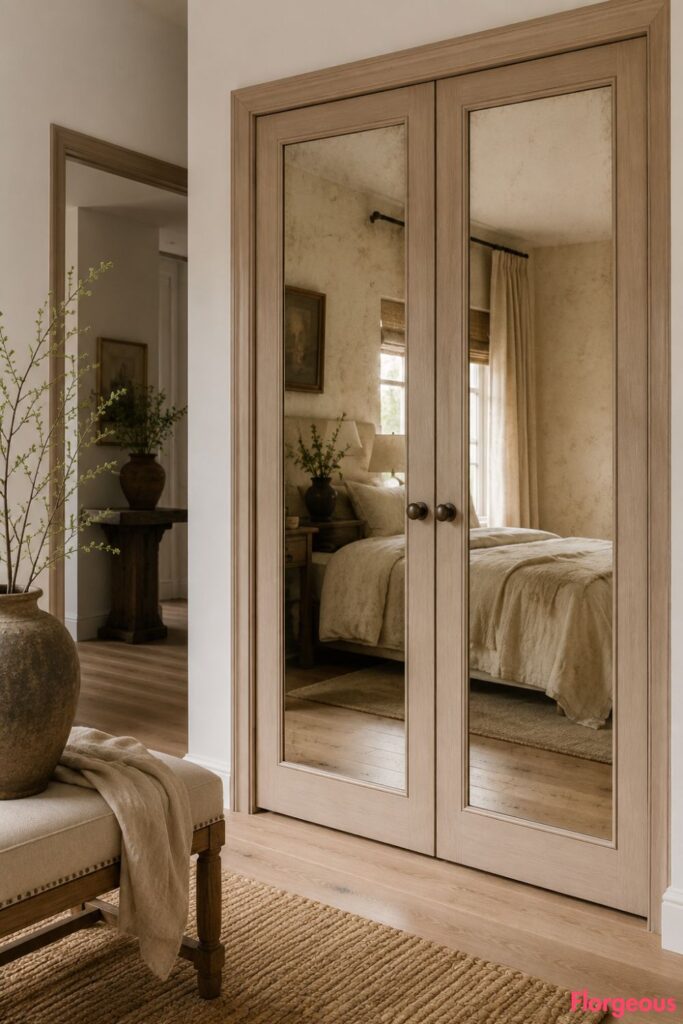
17. Mirror-Panel Doors With Thin Custom Frames
Mirrored doors can look much more stylish when they feel intentional.
Instead of plain mirrored closet doors, choose mirror panels framed in slim wood, black metal, or painted trim. Aged mirror or bronze-tinted mirror adds a softer, more expensive look.
This idea is especially useful in dressing areas, dark hallways, bedrooms, and small apartments.
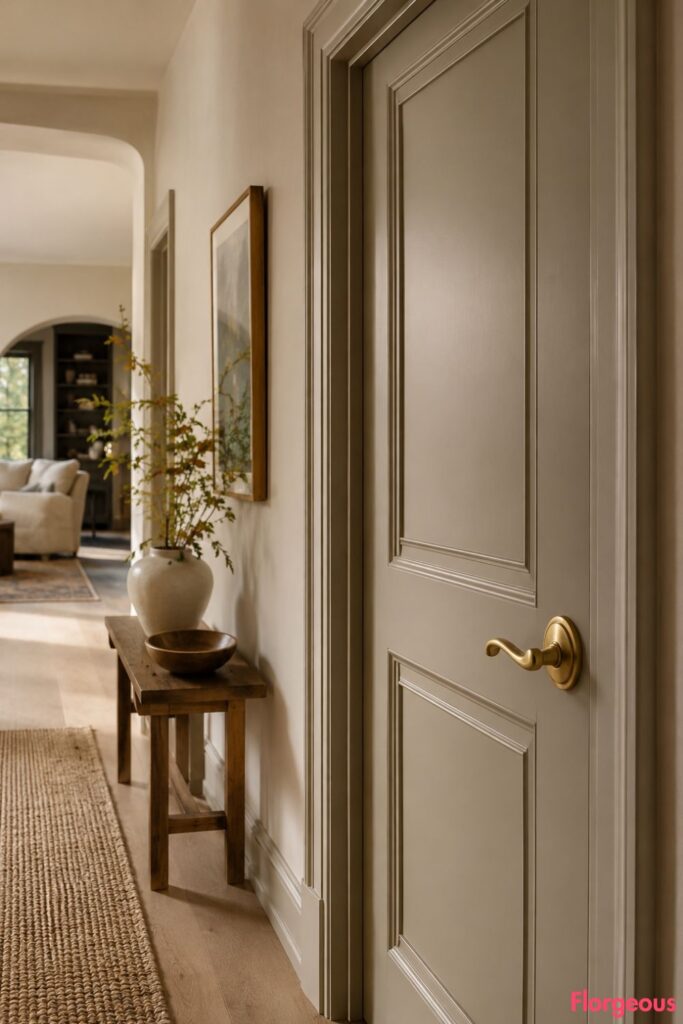
18. Interior Doors With Rounded Hardware Plates
A small hardware change can completely shift the mood of a door.
Try handles with round backplates, oval knobs, arched escutcheons, or softly curved lever shapes. These details feel more sculptural than basic square hardware.
They are especially pretty on paneled doors, painted doors, and hallway doors that you see every day.
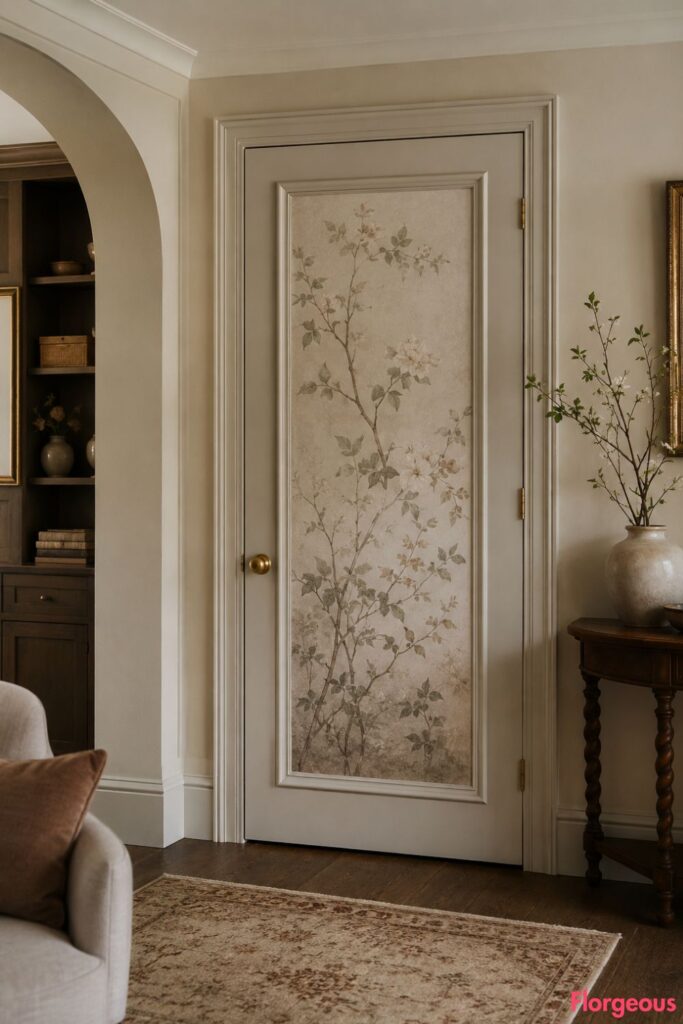
19. Gallery-Style Doors With Framed Art Panels
For a truly unique interior door design, treat the door like a framed artwork.
Add molding to create one large central panel, then paint or wallpaper inside that panel. Try grasscloth, delicate botanical wallpaper, a mural-style print, or a tonal painted pattern.
This works best on a special door rather than every door in the house. Use it for a study, powder room, living room entrance, or dressing room door.
Final Thoughts on Interior Door Design
Interior door design is one of the most overlooked ways to make a home feel stylish and personal.
A hallway can feel softer with gradient-painted doors. A living room can feel more polished with reeded glass. A simple passage can become memorable with cane inserts, painted frames, fluted wood, or a single elegant inlay.
Choose the idea that fits your home’s architecture, your budget, and the way you actually live. The most beautiful door is not always the most expensive one, it is the one that makes the room around it feel more considered.