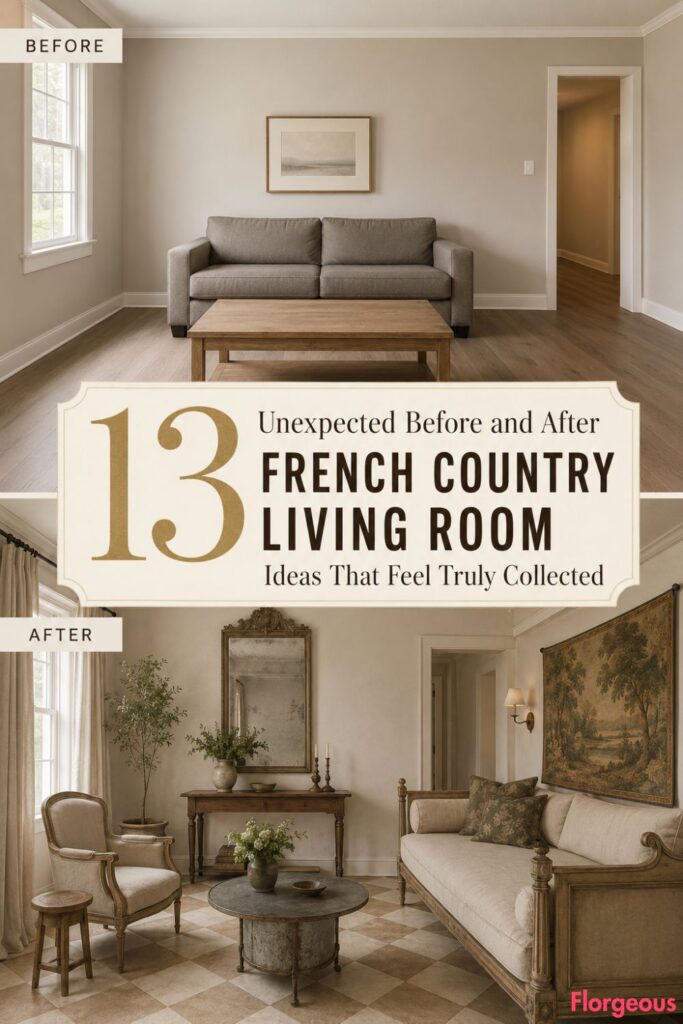
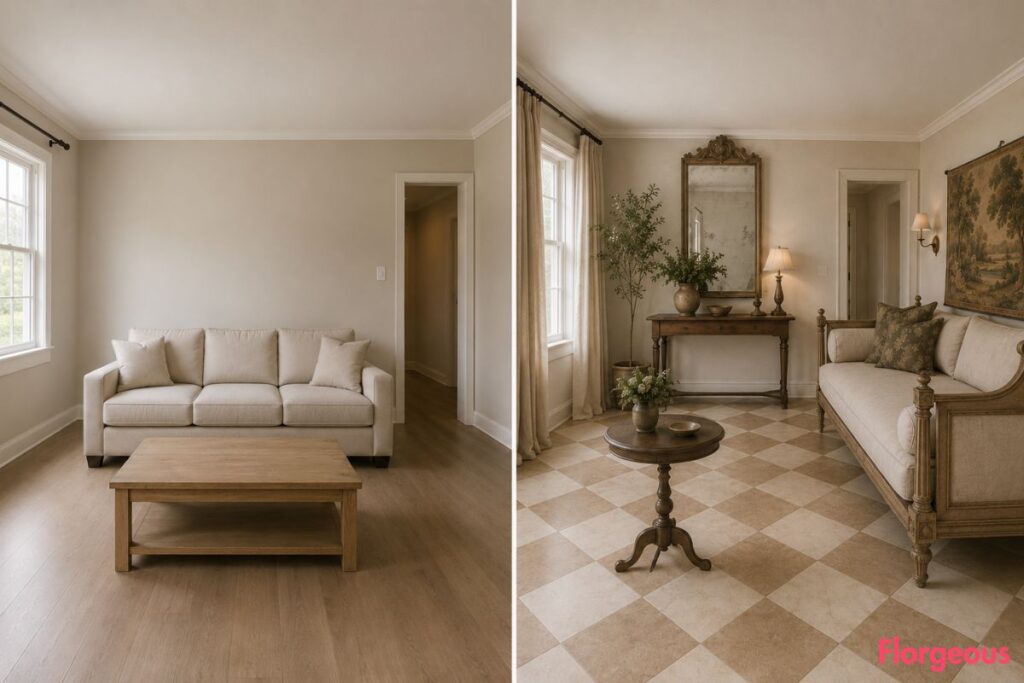
A plain neutral living room can be pleasant without feeling personal. The sofa works, the coffee table fits, and the walls are clean, but the room still lacks the details that make an interior feel as though it has evolved over time.
These makeovers begin with that same basic room, then take it in 13 entirely different directions. Instead of repeating familiar French country formulas, each idea introduces a new focal point, layout, architectural detail, or furnishing concept.
The result is a French Country Living Room gallery filled with less predictable inspiration, from painted checkerboard floors and antique tapestries to plaster niches, caned screens, salon tables, and fabric-lined wall panels.
1. Create a Focal Wall With a Tall Trumeau Mirror
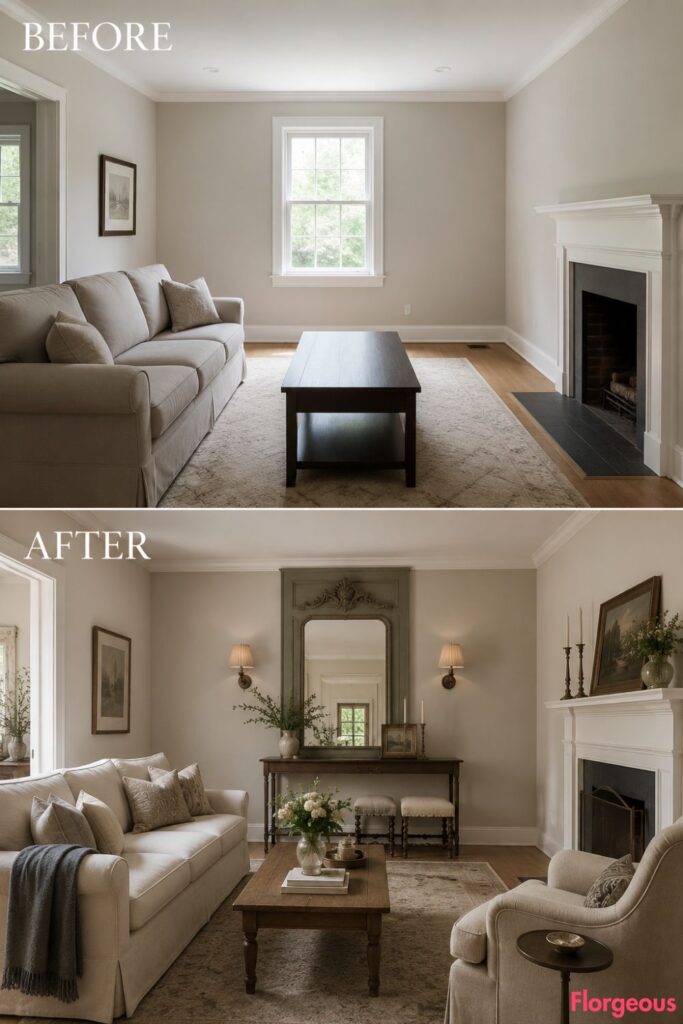
A tall French trumeau mirror can give a blank wall the presence of built-in architecture.
Before: The plain living room has neutral walls, a basic sofa, a bare coffee table, minimal styling, flat lighting, and no visual anchor.
After: A tall painted trumeau mirror is centered above a narrow walnut console. Two shaded wall lights sit on either side, while a pair of compact upholstered stools tuck beneath the console.
The mirror adds height and reflects natural light, helping the room feel larger without adding bulky furniture.
Designer Tip: Choose a muted painted finish rather than bright gold if the room has low ceilings or limited daylight.
2. Replace the Plain Floor With a Faded Checkerboard Pattern
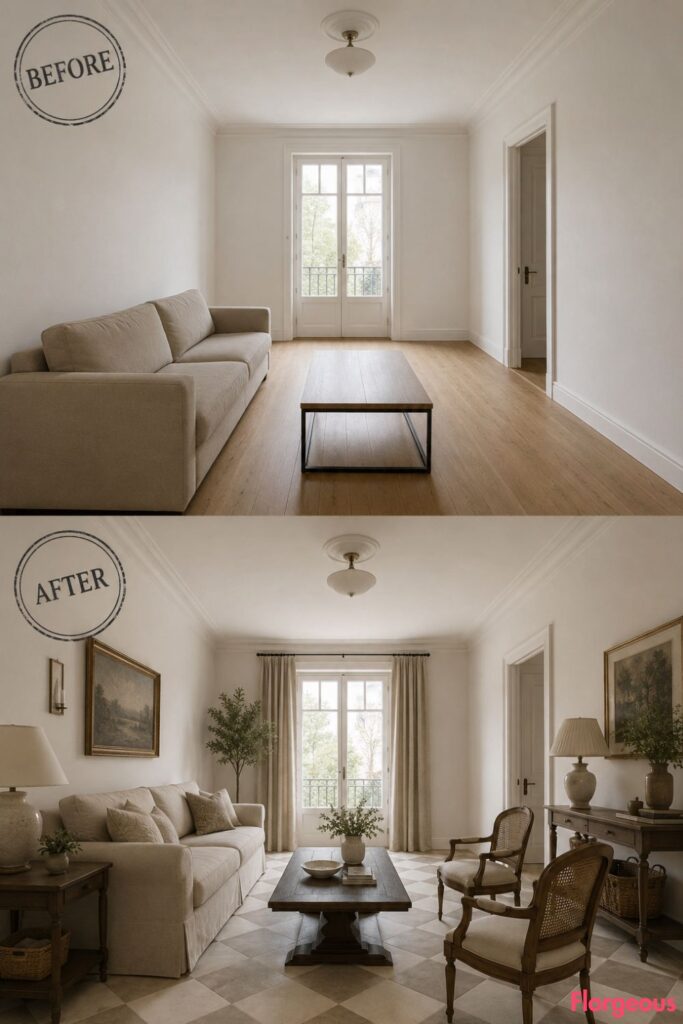
This makeover shifts the focus downward, turning the floor into the defining design element.
Before: The original room has a plain floor that makes the furniture appear disconnected and temporary.
After: A softly painted checkerboard floor in warm ivory and faded mushroom gives the room subtle rhythm. A simple flax sofa, dark wood table, and two cane-back chairs allow the floor to remain visible.
The pattern feels architectural, yet it is quieter than a bold black-and-white treatment.
Budget Version: Use a large painted floor cloth or removable vinyl squares to test the look before altering the actual flooring.
3. Build a Window Banquette That Feels Like a Country House Seat
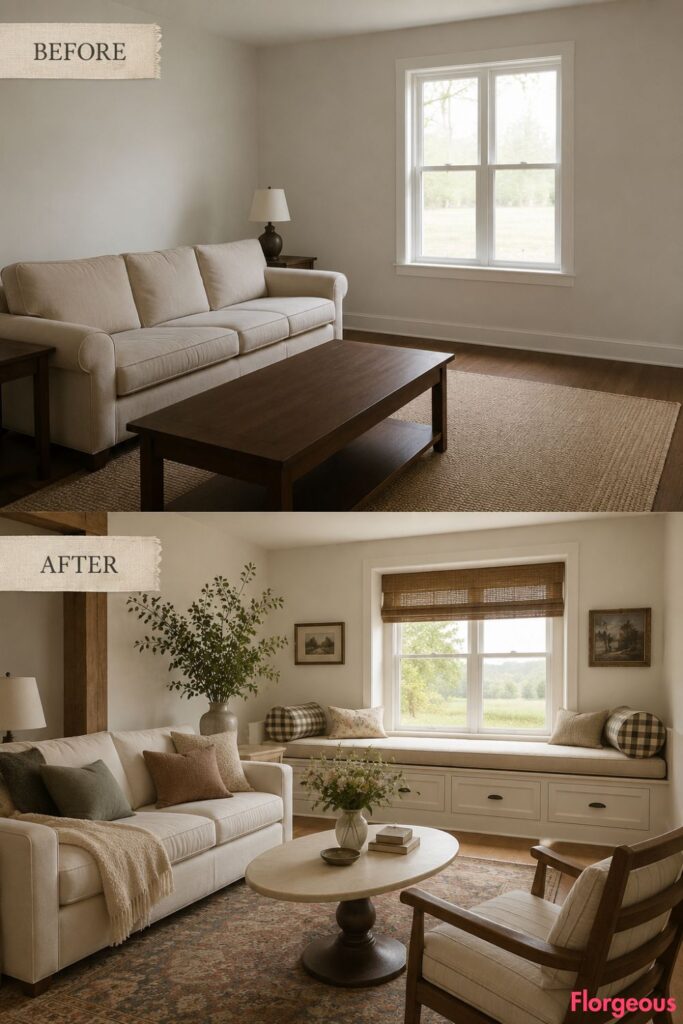
An unused window wall can become the most welcoming feature in the room.
Before: The window is surrounded by empty wall space, and the furniture floats awkwardly in the center.
After: A built-in window banquette stretches beneath the window with a thick oatmeal cushion, small checked bolsters, and deep drawers below. A petite oval table allows the seat to work for coffee, conversation, or casual meals.
The banquette adds storage without introducing another tall cabinet.
Small Space Tip: Keep the base the same color as the wall so the seat feels integrated rather than added later.
4. Turn a Flat Wall Into a Series of Arched Plaster Niches
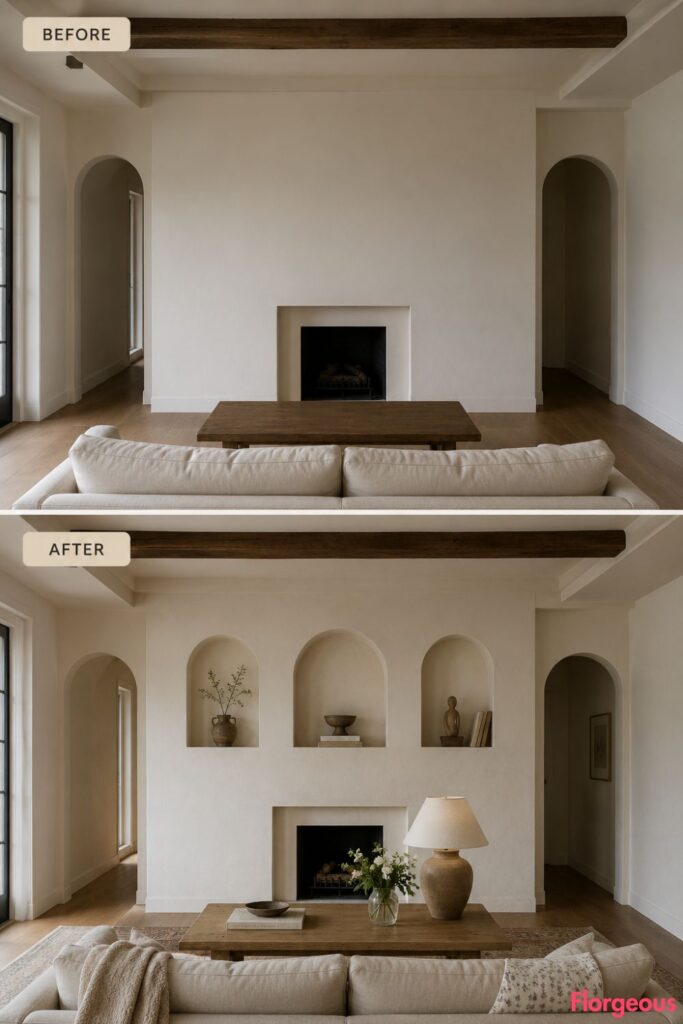
Plaster niches introduce age and depth without filling the room with furniture.
Before: The main wall is blank and builder-grade, giving the living room no architectural identity.
After: Three shallow arched niches are built into the wall and finished in warm chalky plaster. Each niche holds one sculptural object, such as an earthenware vessel, a small bust, or an aged wood fragment.
Low, simple furniture keeps the wall visible and prevents the room from feeling crowded.
Why It Works: Repeating the arch creates order, while the handmade plaster texture softens the symmetry.
5. Introduce an Aged Zinc Table and Blackened Iron Details
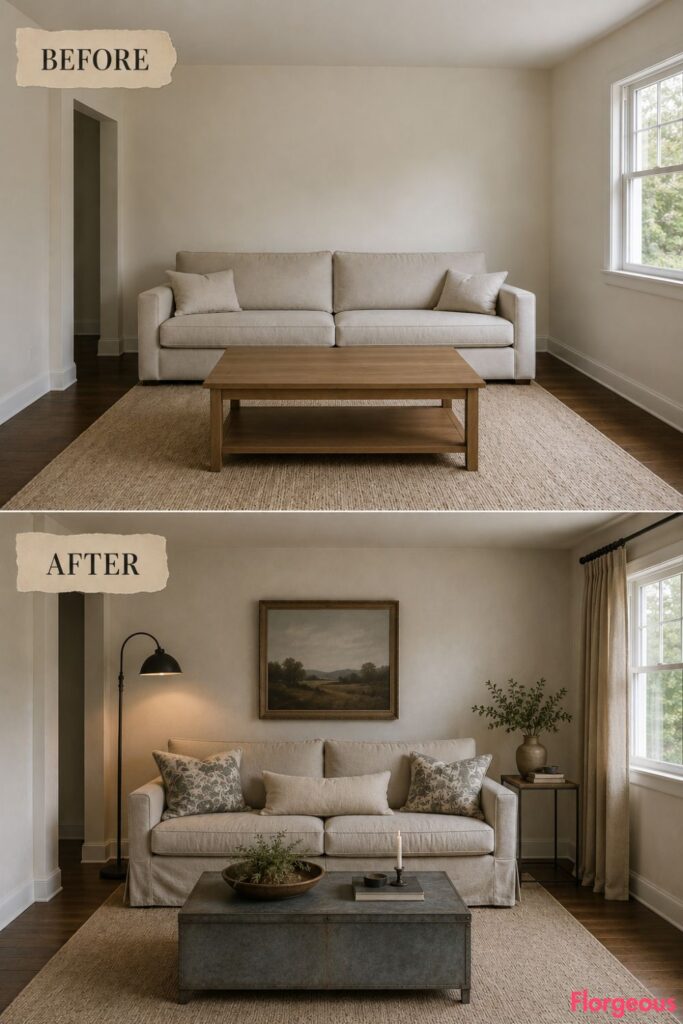
French country rooms do not need to rely entirely on pale wood and painted furniture.
Before: The base room feels soft but visually flat because every finish is similar.
After: An aged zinc coffee table introduces a cool, timeworn surface. Blackened iron curtain rods, a slender floor lamp, and a compact iron-framed side table repeat the darker note around the room.
Natural linen and chalky walls keep the metal from making the space feel industrial.
Style Note: Limit metal finishes to a few repeated pieces. Too many competing patinas can make the room feel busy.
6. Hang an Antique-Style Tapestry as the Main Artwork
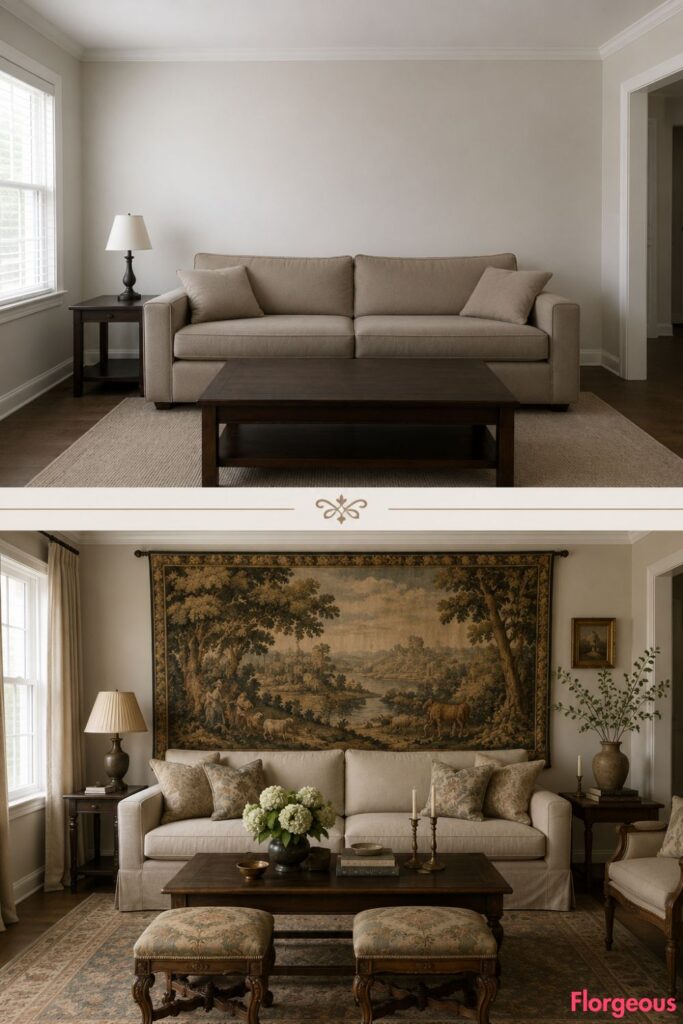
A tapestry can add scale, softness, and history to a large wall without using a gallery arrangement.
Before: The wall above the sofa is empty, making the room feel unfinished and acoustically hard.
After: A large pastoral tapestry in muted olive, ochre, brown, and dusty blue fills the wall. The sofa remains plain, while two carved stools and a low dark wood table support the richer artwork.
The tapestry absorbs sound and introduces pattern without scattering small decorative items around the room.
Common Mistake: Avoid hanging a small tapestry too high. It should relate directly to the furniture beneath it.
7. Add a Glazed Bibliothèque Wall With Hidden Lower Storage
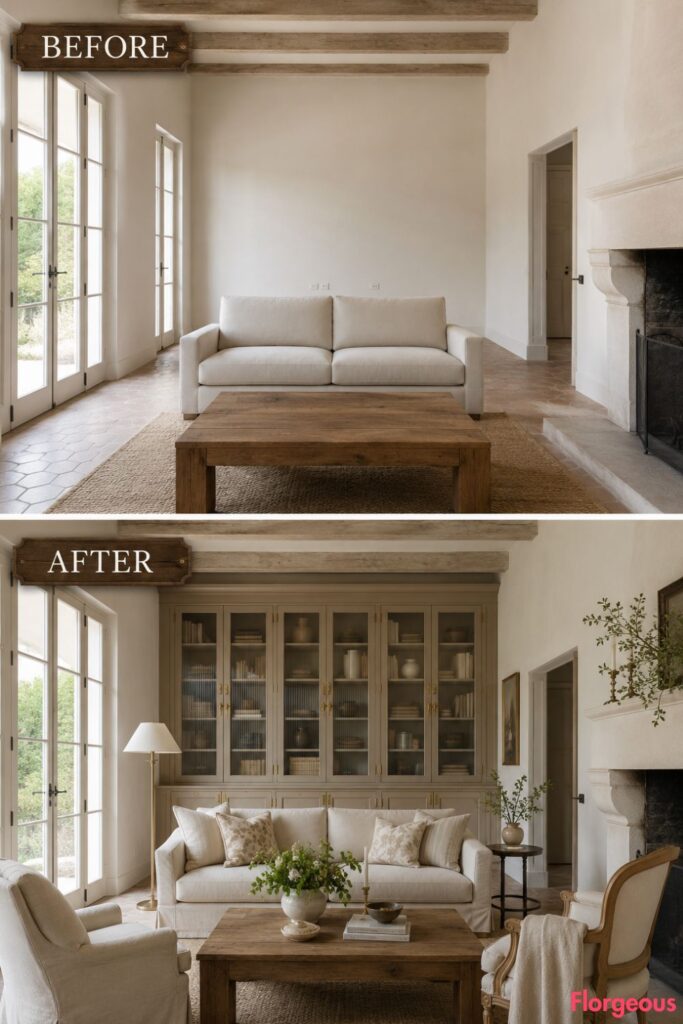
This idea brings the character of an old French library into the living room without creating a separate reading corner.
Before: The room lacks storage, and small objects collect on the coffee table.
After: A wall of shallow glazed cabinets rises above closed lower cupboards. Reeded glass softens the view of books and stored objects, while aged brass latches create a furniture-like finish.
The cabinetry is painted warm putty rather than bright white, helping it blend into the room.
Budget Version: Place two matching glass-front cabinets side by side and connect them visually with one continuous top molding.
8. Create a Conversation Zone Around a Rush-Seat Game Table
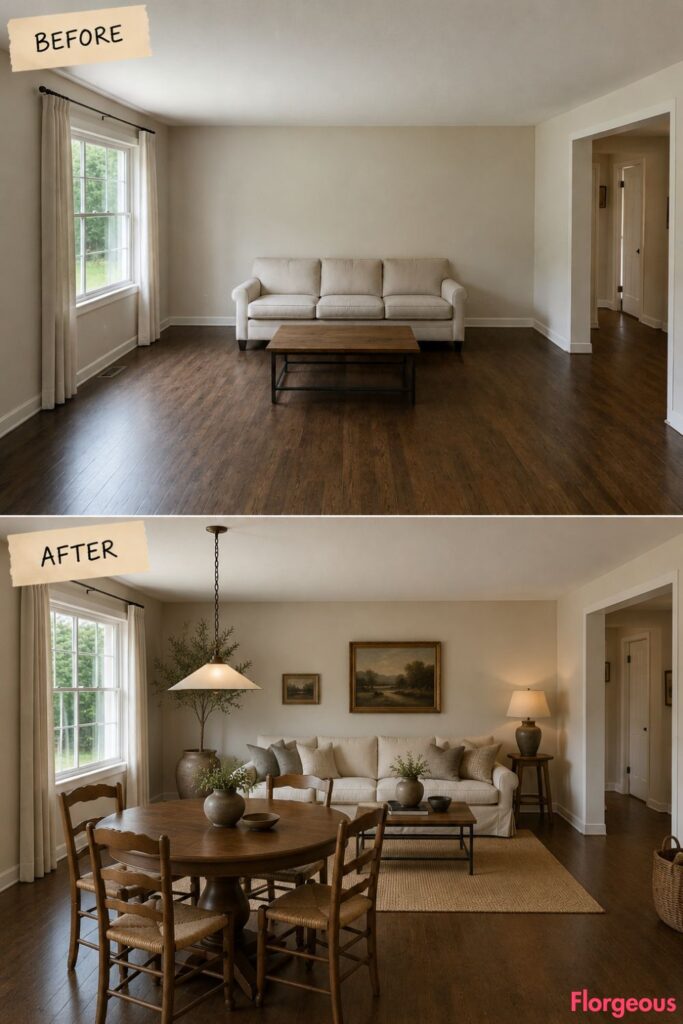
This makeover changes how the room is used rather than simply changing its finishes.
Before: All the seating faces one direction, leaving the room formal and underused.
After: A small round game table with four rush-seat chairs occupies one side of the room. The main sofa remains nearby, creating separate areas for conversation, cards, puzzles, or drinks.
A simple hanging light above the table visually defines the zone without installing a wall or partition.
Try this: Use chairs that can move easily between the game table and the main seating group when guests arrive.
9. Give the Ceiling a Plaster Rosette and Oversized Lantern
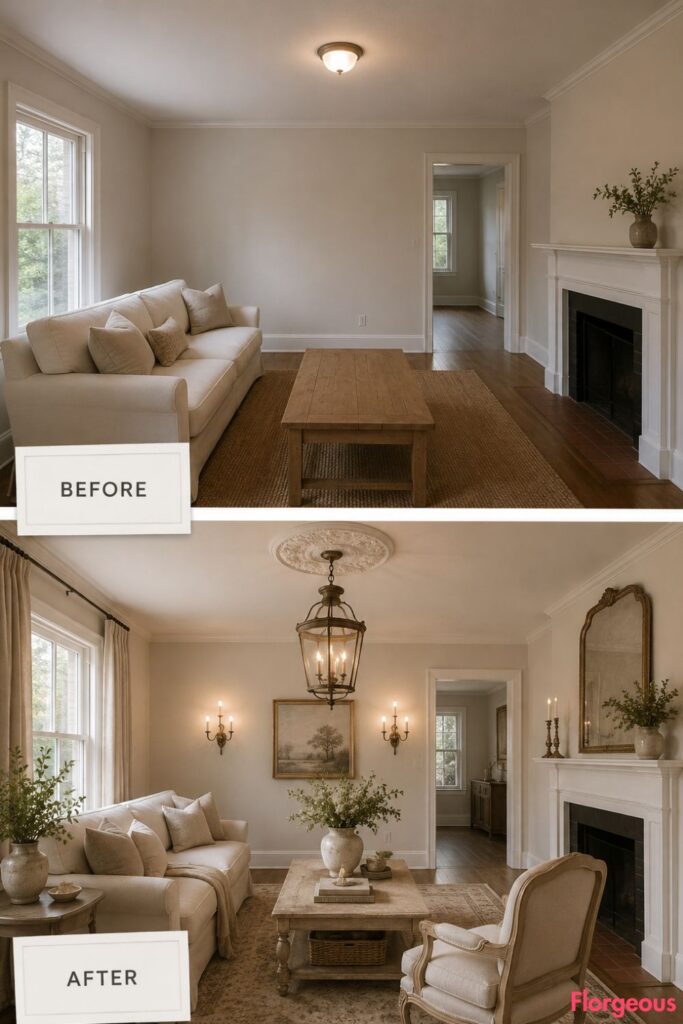
The ceiling becomes the focal point in this transformation.
Before: A small builder-grade light fixture makes the room feel temporary and visually low.
After: A broad plaster ceiling rosette surrounds an oversized antique-inspired lantern. The fixture hangs high enough to preserve sightlines, while small candle-style wall lights repeat its warm glow.
The room below remains simple so the ceiling detail can feel special rather than ornamental.
Designer Tip: Match the rosette to the ceiling color. Contrasting paint can make the feature look newly applied.
10. Define the Entry With a Caned Folding Screen
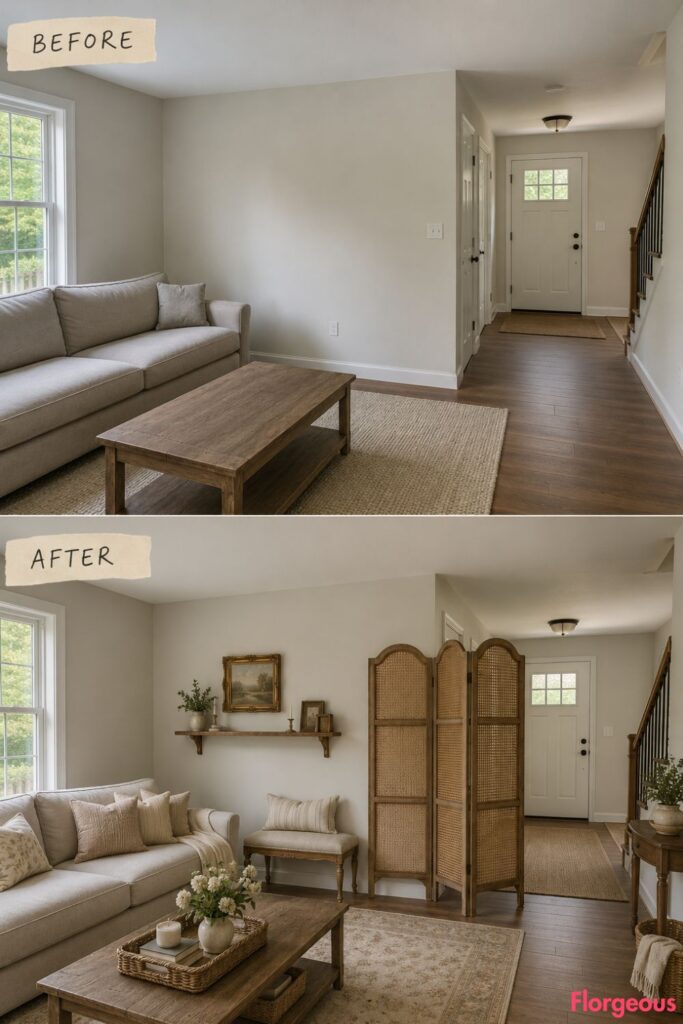
An open living room can gain structure without permanent construction.
Before: The front door opens directly into the seating area, making the room feel exposed and difficult to arrange.
After: A tall caned folding screen creates a soft boundary near the entrance. A shallow wall shelf and small upholstered bench establish a practical arrival zone behind it.
The cane allows light to pass through, so the divider adds privacy without making the room feel smaller.
Small Space Tip: Use a three-panel screen rather than a wider four-panel version, and angle it slightly instead of placing it in a straight line.
11. Replace Matching End Tables With Petite Guéridon Tables
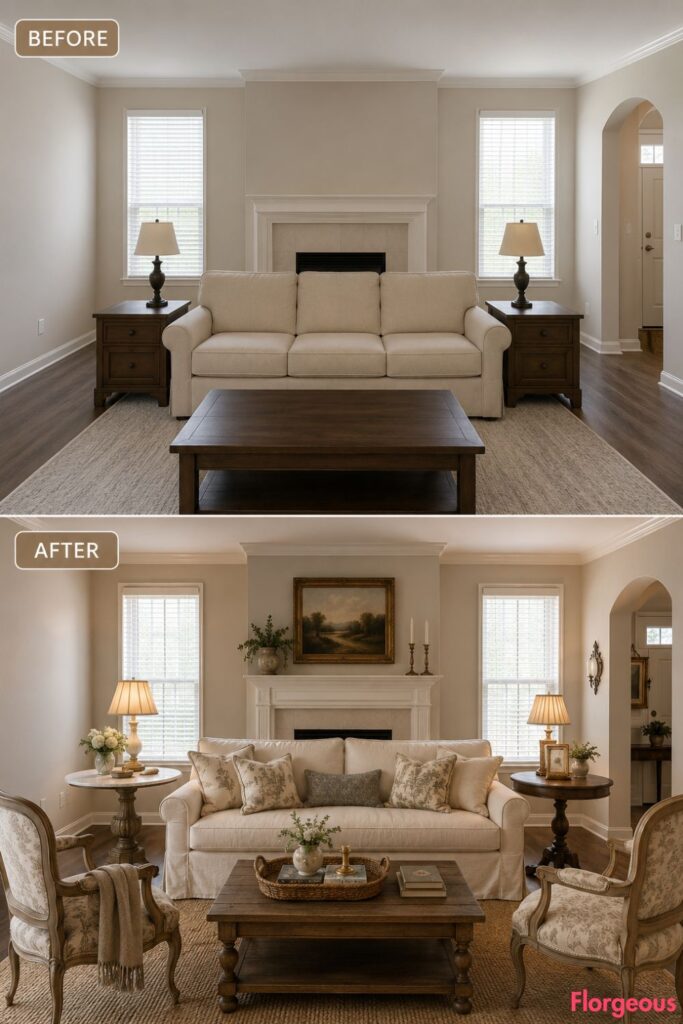
Small salon tables can make a conventional seating plan feel lighter and more collected.
Before: Two bulky matching end tables make the basic sofa arrangement look heavy and predictable.
After: A pair of nonmatching guéridon tables sits beside the sofa, one with a pale marble top and one with dark wood. Their slim pedestal bases leave more floor visible and create a subtle old-world rhythm.
Compact shaded lamps provide practical light without overwhelming the tables.
Why It Works: The pieces relate through scale and shape rather than matching materials.
12. Line the Walls With Muted Fabric Panels
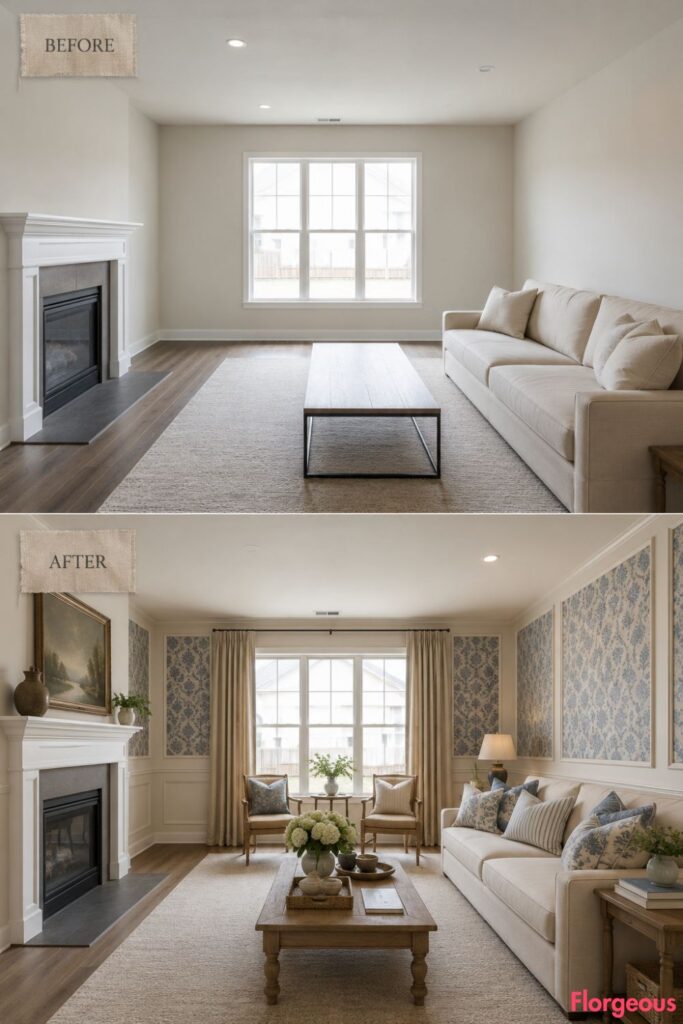
Fabric-covered panels create softness and pattern without wallpapering the entire room.
Before: The flat walls feel cold, and sound carries through the sparsely furnished space.
After: Large framed wall panels are lined with muted flax-and-indigo block-printed fabric. Narrow painted trim separates each panel, giving the room an orderly salon-like structure.
Solid upholstery and plain flooring prevent the textile walls from becoming overly decorative.
Budget Version: Stretch fabric over lightweight foam boards and mount them inside simple painted frames.
13. Replace the Standard Sofa With a French-Style Daybed
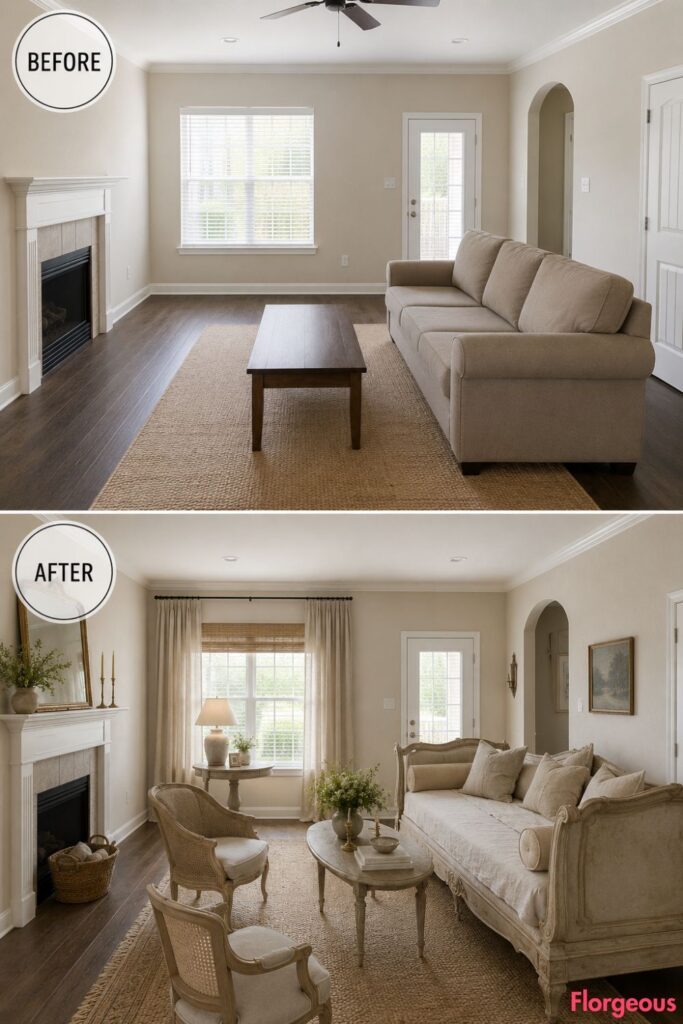
The final makeover changes the room’s central silhouette completely.
Before: A generic sofa dominates the wall but contributes little personality.
After: A long French-style daybed with carved ends and a thick natural linen mattress replaces the standard sofa. Loose bolsters make it comfortable for sitting, while a small oval table and two lightweight chairs allow the arrangement to shift easily.
The daybed gives the room a relaxed salon quality and works especially well in narrow spaces.
How to Choose the Most Convincing Makeover
The most believable French country interiors are rarely built from a long shopping list. They usually begin with one memorable decision, such as changing the floor, adding a tapestry, defining the ceiling, creating a banquette, or replacing a generic sofa with a more distinctive silhouette.
Choose the idea that solves an actual problem in your room. A folding screen can improve an exposed entry, glazed cabinetry can control clutter, and a window banquette can turn wasted space into useful seating.
Before beginning your French Country Living Room makeover, measure the room and choose one dominant feature. Add supporting materials only after that focal point is settled. This keeps the finished space collected, practical, and personal rather than crowded with decorative references.