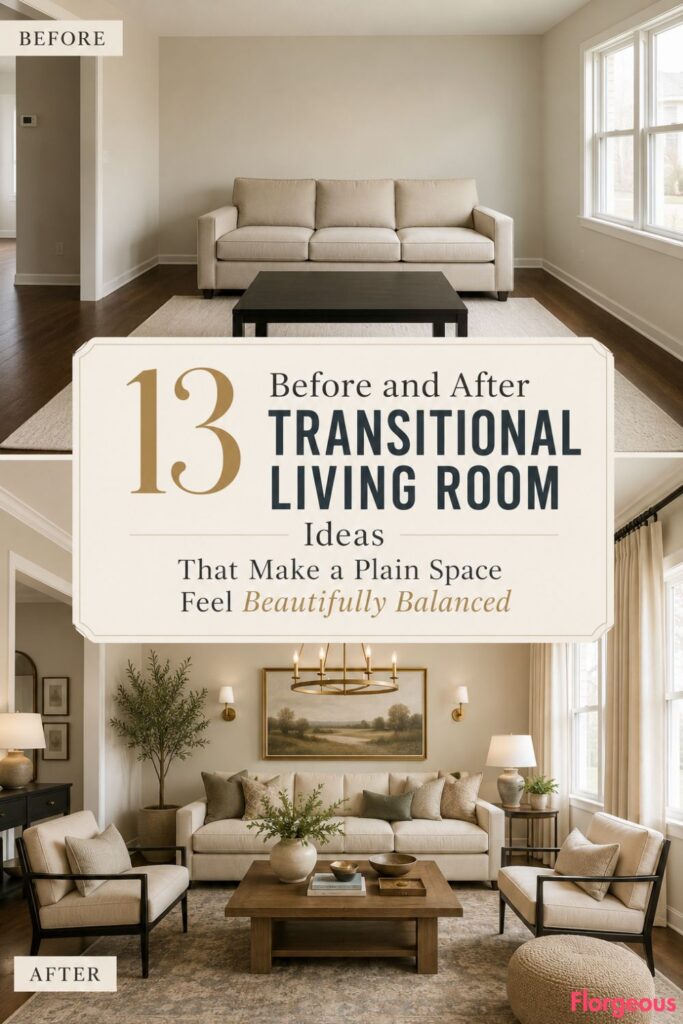
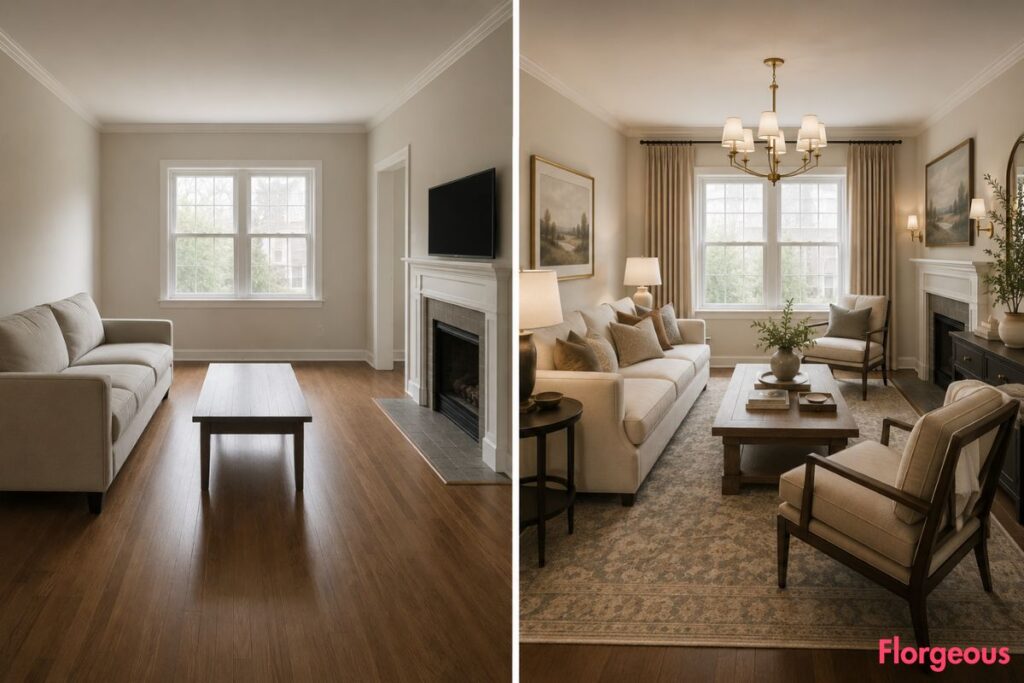
A plain living room can feel surprisingly hard to finish. The sofa is there, the walls are neutral, the coffee table is in place, but the room still feels flat, temporary, and missing that one detail that makes everything click.
That is why a Transitional Living Room is such a smart direction. It does not ask you to choose between modern and traditional. Instead, it lets clean lines, classic comfort, warm neutrals, polished lighting, and layered texture work together.
For every idea below, imagine the same starting point: a plain, simple living room with neutral walls, a basic sofa, bare coffee table, simple rug or no rug, minimal styling, bare surfaces, soft natural light, no bold decor features, and a clean but slightly unfinished feel.
Each makeover keeps that same before-room base, then gives the after version a different design story.
1. Build a Transitional Living Room Around a Curved Sofa and Classic Wood Tables
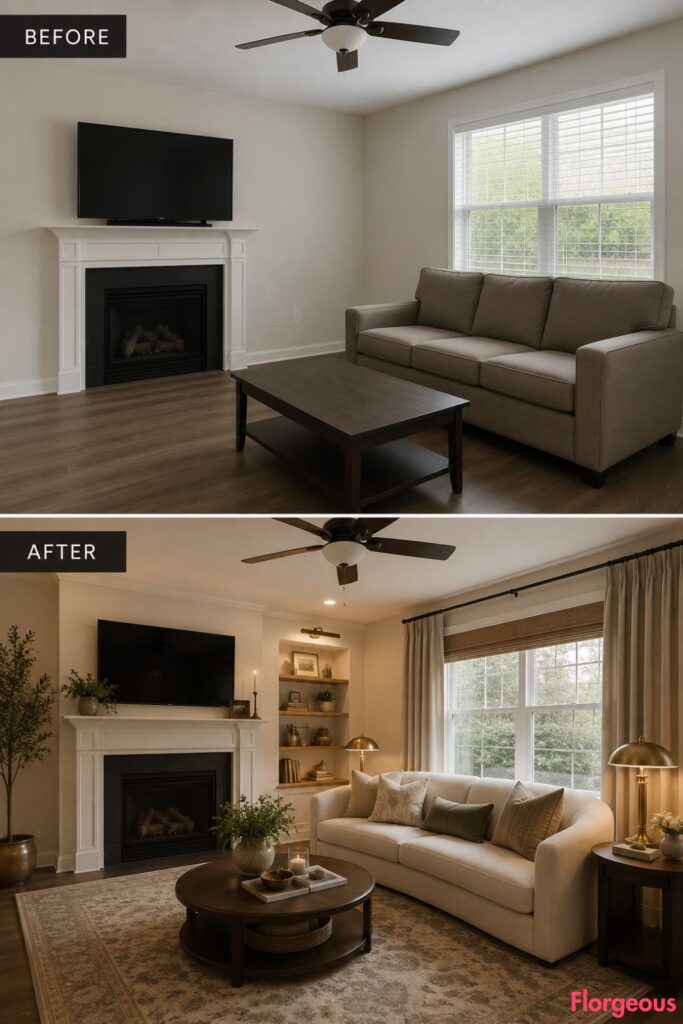
A curved sofa immediately softens a plain boxy room, but the look still feels timeless when paired with traditional wood pieces.
Before: The room starts with neutral walls, a basic sofa, a bare coffee table, little styling, and no strong focal point.
After: The space becomes a warm, tailored seating room with a cream curved sofa, dark wood side tables, a round coffee table, a muted patterned rug, brass lamps, and linen pillows.
Why it works: The curved sofa brings modern softness, while the wood tables and brass lighting add classic weight.
Designer Tip: Keep the largest upholstery piece simple. Let the shape feel modern, then add traditional character through wood, lamps, and art.
2. Add a Fireplace-Style Focal Wall Without a Full Renovation
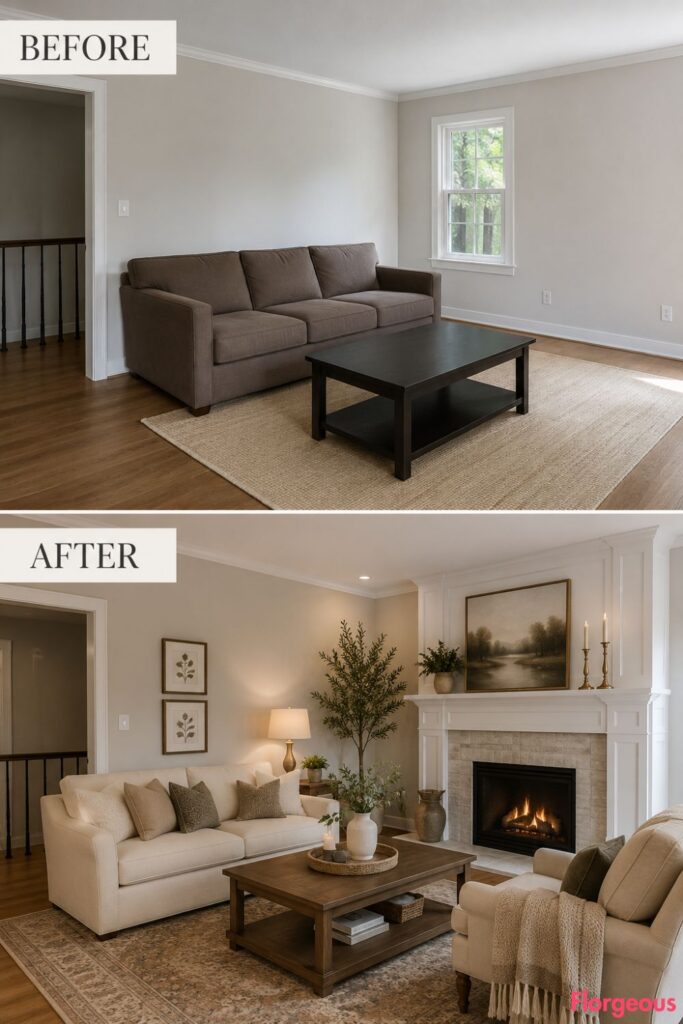
A room without a focal point often feels like furniture floating in a box. A fireplace-style wall gives the eye somewhere to land, even if it is created with a slim electric insert or faux mantel.
Before: The same plain living room has bare walls, basic seating, a simple coffee table, and flat lighting.
After: The wall becomes a refined focal point with a simple white mantel, stone surround, large framed artwork, low greenery, brass candleholders, and clean-lined seating.
Why it works: The mantel adds classic structure. The simplified styling keeps the look fresh instead of overly formal.
Budget Version: Use a faux mantel with art and sconces if a real fireplace is not possible.
3. Turn the Blank Sofa Wall Into a Modern Classic Gallery Moment
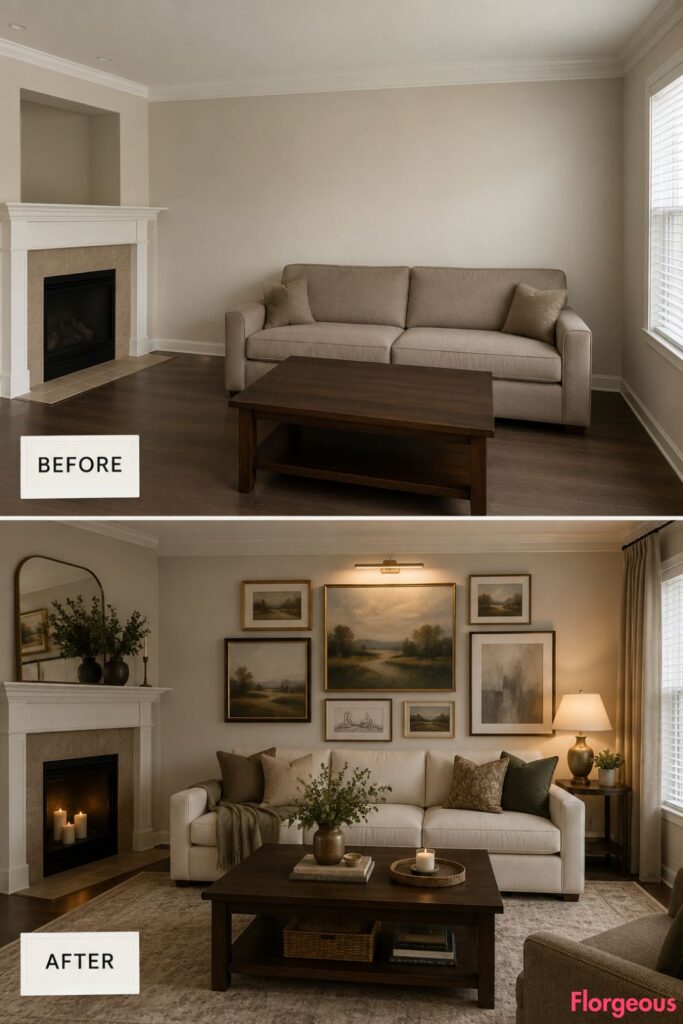
A gallery wall can go messy quickly, but a transitional version feels calm, edited, and intentional.
Before: The room has a plain wall above the sofa, a bare coffee table, minimal textiles, and no visual story.
After: The sofa wall is styled with a balanced gallery of muted landscapes, soft abstract art, black frames, antique brass frames, and one slim picture light.
Why it works: The mix of modern and traditional art gives the room personality without making it feel cluttered.
Try this: Keep the artwork palette tight. Cream, taupe, charcoal, muted blue, and warm brown are enough to create variety.
4. Make the Room Feel Custom With Built-In Style Bookcases
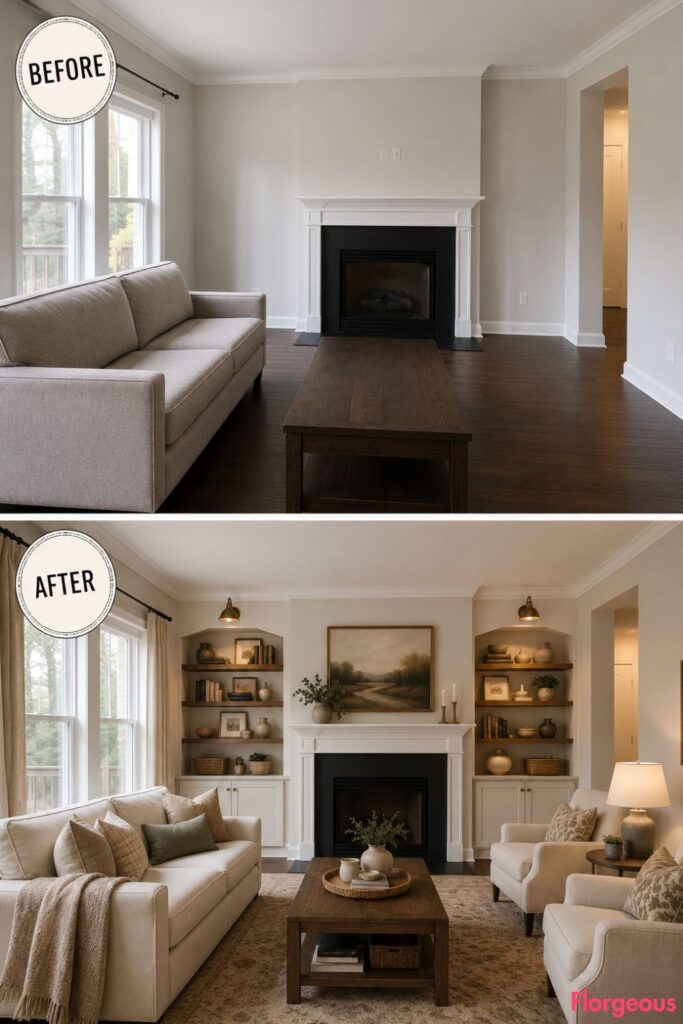
Built-ins are one of the fastest ways to make a living room feel finished. The transitional version should look architectural, but not too heavy.
Before: The room feels empty around the edges, with bare walls, simple seating, and no meaningful storage.
After: A wall of built-in style bookcases adds closed lower cabinets, warm wood shelves, brass sconces, framed art, ceramic objects, baskets, and books with no readable titles.
Why it works: Closed storage hides clutter, while the open shelves give the room a styled, collected look.
Common Mistake: Do not fill every shelf. Transitional styling needs breathing room.
5. Create a Quiet Luxury Look With Tone-on-Tone Neutrals
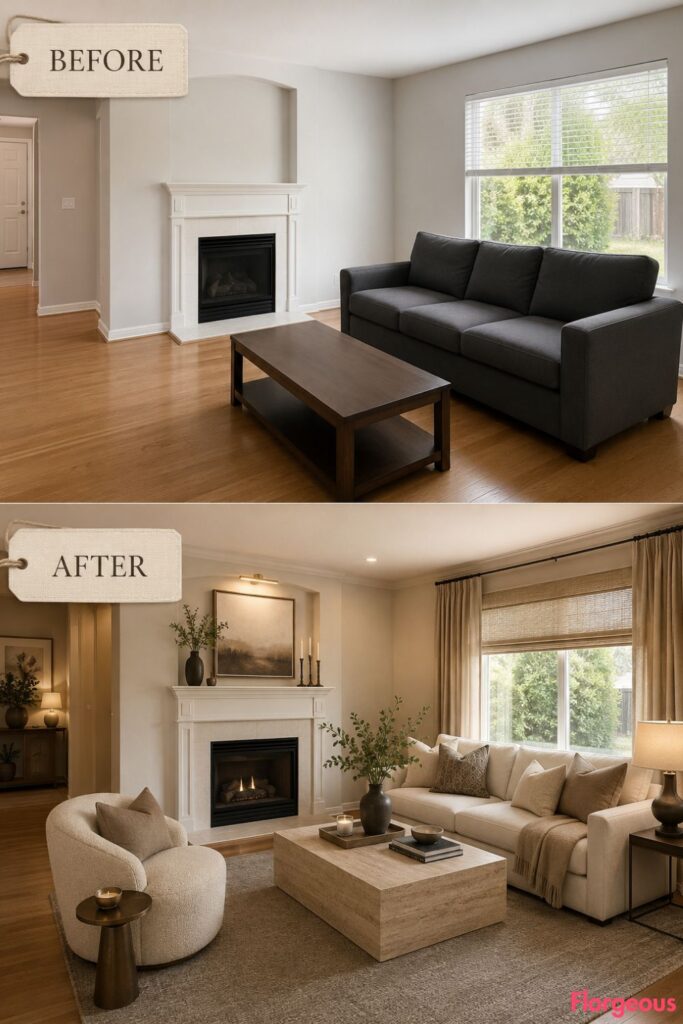
Some makeovers do not need bold color. A quiet neutral palette can look rich when the textures are varied and the shapes are strong.
Before: The living room feels washed out, with neutral walls, a basic sofa, and very little contrast or layering.
After: The space becomes calm and expensive-looking with ivory upholstery, warm beige curtains, a taupe wool rug, travertine coffee table, boucle chair, and soft bronze accents.
Why it works: The palette is simple, but the textures do the work.
Color Story: Use at least four neutral textures, such as linen, wool, stone, wood, and woven fibers, so the room does not feel flat.
6. Use a Sculptural Chandelier to Change the Whole Mood
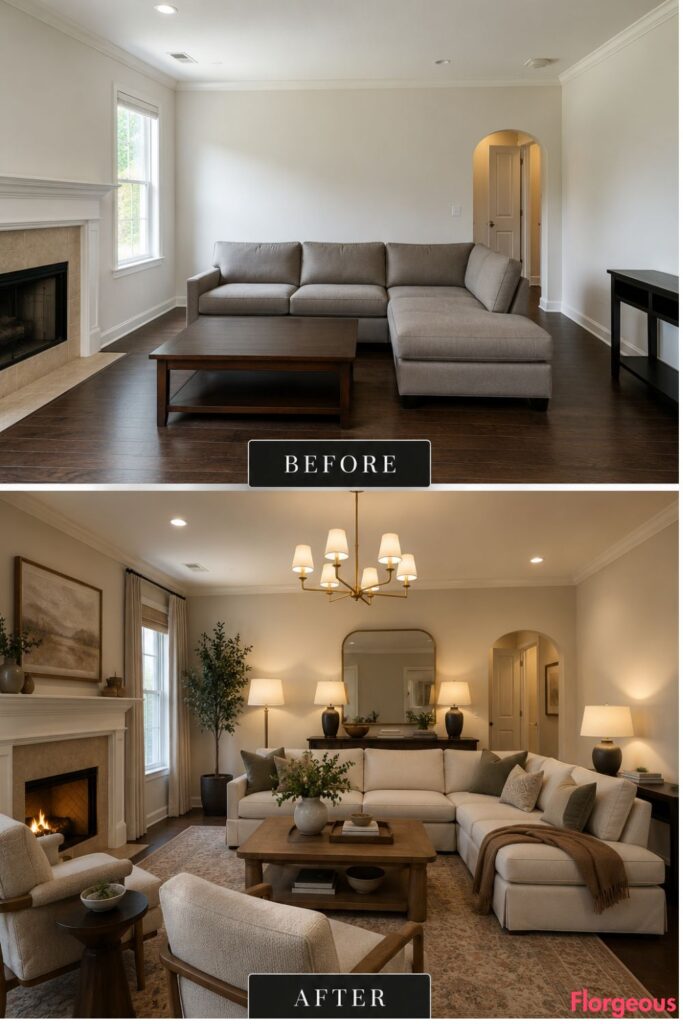
Lighting can shift a room from basic to designed in one move. A sculptural fixture gives the space a modern edge, while lamps keep it soft.
Before: The living room has flat lighting, bare surfaces, plain walls, and no evening atmosphere.
After: A sculptural chandelier anchors the ceiling, with shaded table lamps, a slim floor lamp, a classic rug, and tailored seating below.
Why it works: The chandelier adds modern drama. The shaded lamps bring traditional warmth.
Try this: Choose a chandelier with simple curves or clean arms. Avoid anything too ornate if the rest of the room is already detailed.
7. Add Picture Frame Molding for a Soft Architectural Backdrop
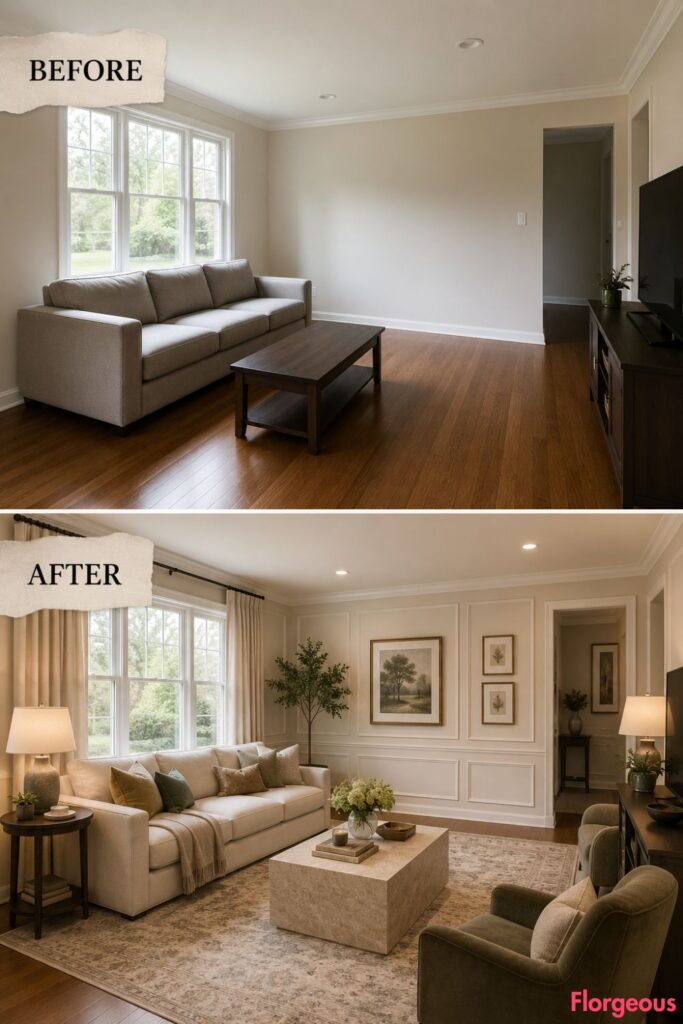
Plain walls can make a living room feel builder-grade. Picture frame molding gives the room subtle architecture without requiring a full remodel.
Before: The same simple living room has flat neutral walls, basic furniture, and no built-in character.
After: Warm white picture frame molding wraps the walls, paired with a clean sofa, tailored curtains, stone coffee table, restrained art, and classic table lamps.
Why it works: The molding adds traditional detail. The furniture keeps the room crisp and modern.
Budget Version: Paint the molding the same color as the wall for a softer, more expensive look.
8. Mix a Modern Sofa With Traditional Accent Chairs
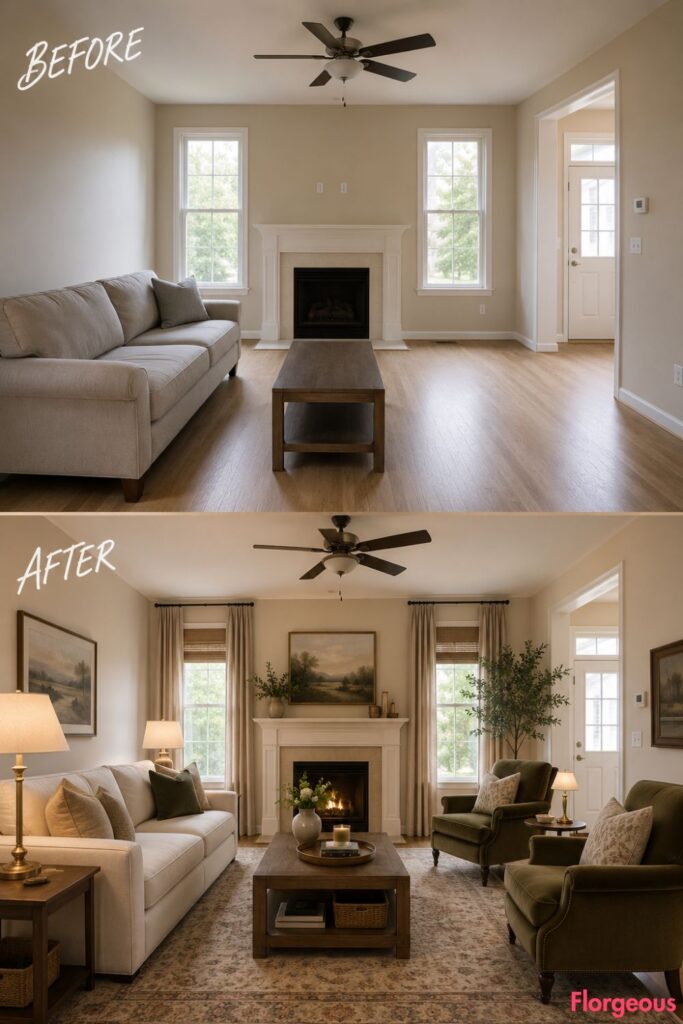
A matching furniture set can make a room feel stiff. A transitional mix feels more natural, especially when the sofa and chairs come from different design languages.
Before: The room has one basic sofa, no layered seating plan, bare surfaces, and a simple unfinished feel.
After: A modern straight-arm sofa is paired with traditional rolled-arm chairs, a faded rug, warm wood coffee table, brass lamps, and textured pillows.
Why it works: The sofa brings clean lines, while the chairs add comfort and classic shape.
Small Space Tip: Use smaller club chairs or slipper chairs if rolled arms feel too bulky.
9. Try a Soft Blue, Cream, and Walnut Palette
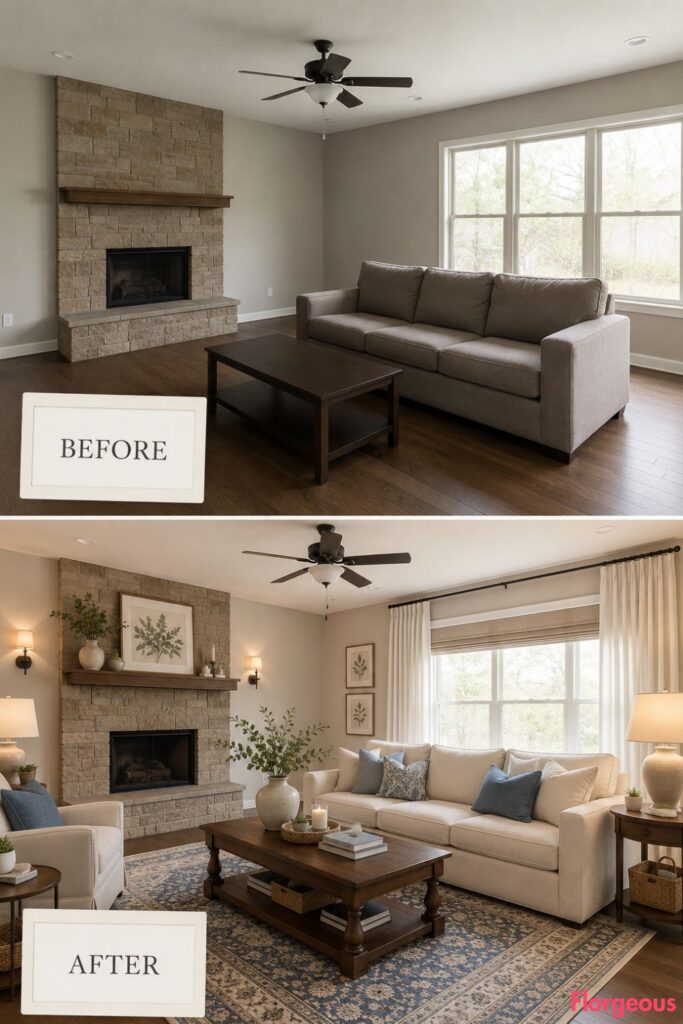
Blue can make a transitional room feel calm, classic, and fresh. The key is to keep it muted instead of bright.
Before: The living room feels plain and colorless, with neutral walls, a basic sofa, and minimal styling.
After: The room gains cream upholstery, soft blue pillows, a blue and ivory rug, walnut tables, white pleated curtains, ceramic lamps, and botanical art.
Why it works: The blue adds personality, while cream and walnut keep the room grounded.
Style Note: Choose dusty blue, slate blue, or blue-gray instead of bright navy for a softer transitional effect.
10. Turn One Empty Corner Into a Polished Reading Nook
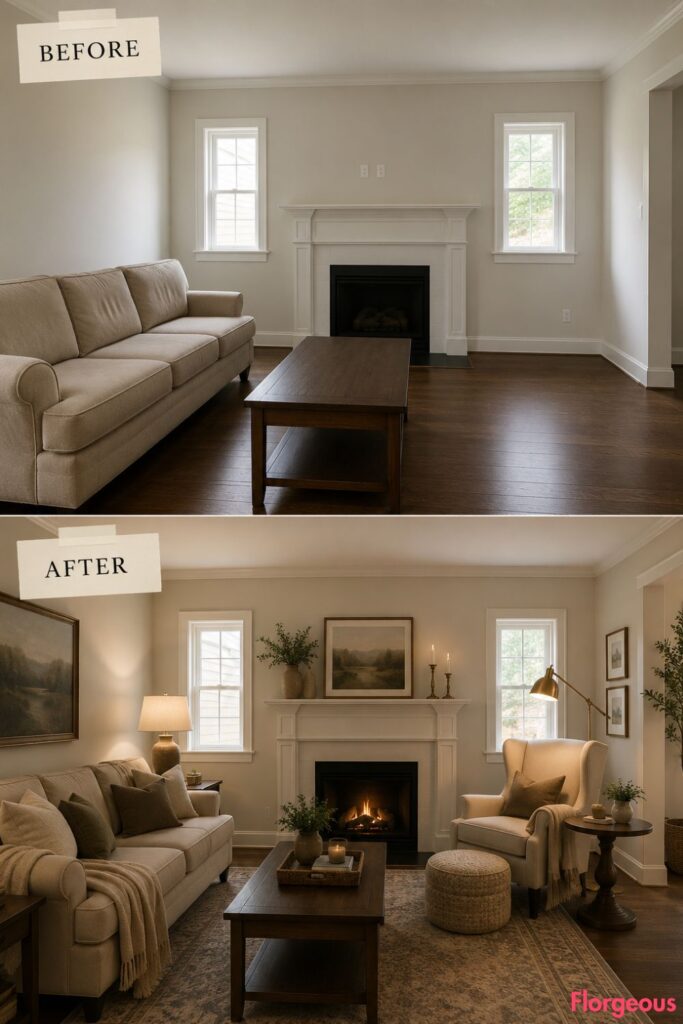
A forgotten corner can make a room feel unfinished. In a transitional design, that corner can become a small but beautiful destination.
Before: The room has an empty corner beside the sofa, plain walls, a basic coffee table, and minimal styling.
After: The corner becomes a reading nook with a classic wing chair in a modern fabric, small round table, brass floor lamp, framed art, textured ottoman, and cozy throw.
Why it works: The nook gives the room another layer of function and makes the layout feel intentional.
Try this: Use one strong chair instead of many small pieces. A single sculptural seat can make the corner feel designed.
11. Design an Elegant Media Wall That Does Not Feel Cold
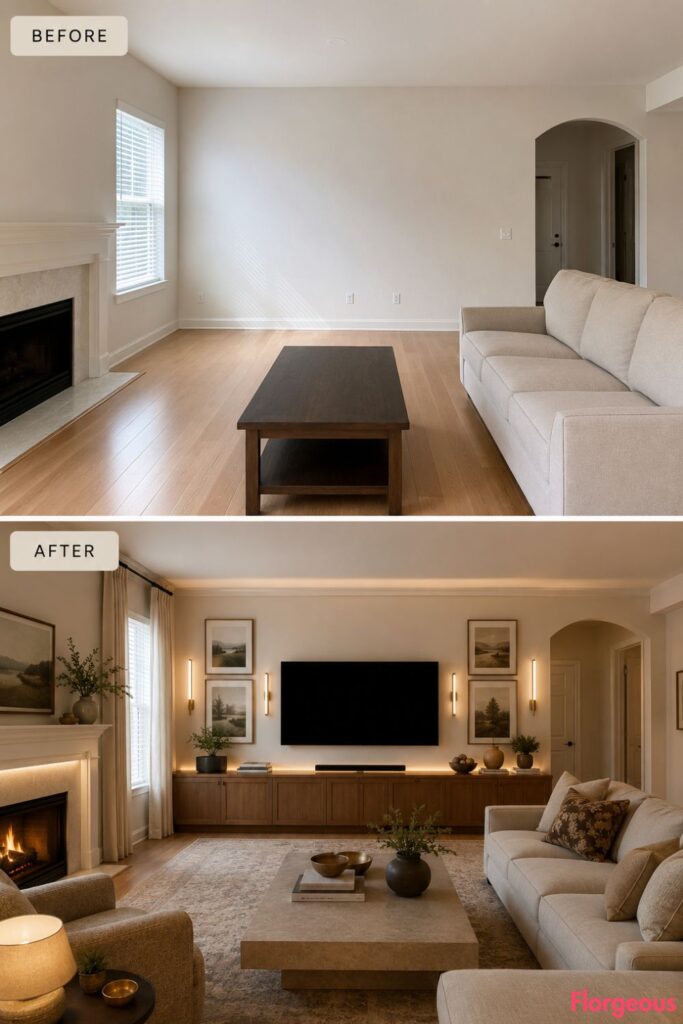
A television wall can easily become the least attractive part of the room. Transitional styling makes it feel integrated rather than ignored.
Before: The living room has a blank wall, basic sofa, simple coffee table, and no thoughtful media setup.
After: The media wall includes a low warm wood cabinet, framed art around the TV, slim sconces, hidden storage, neutral decor objects, and a large rug to soften the seating area.
Why it works: The TV blends into a designed composition instead of becoming the only focal point.
Common Mistake: Avoid tiny decor beside a large screen. Use fewer, larger pieces so the wall feels balanced.
12. Add a Statement Stone Coffee Table for Modern Contrast
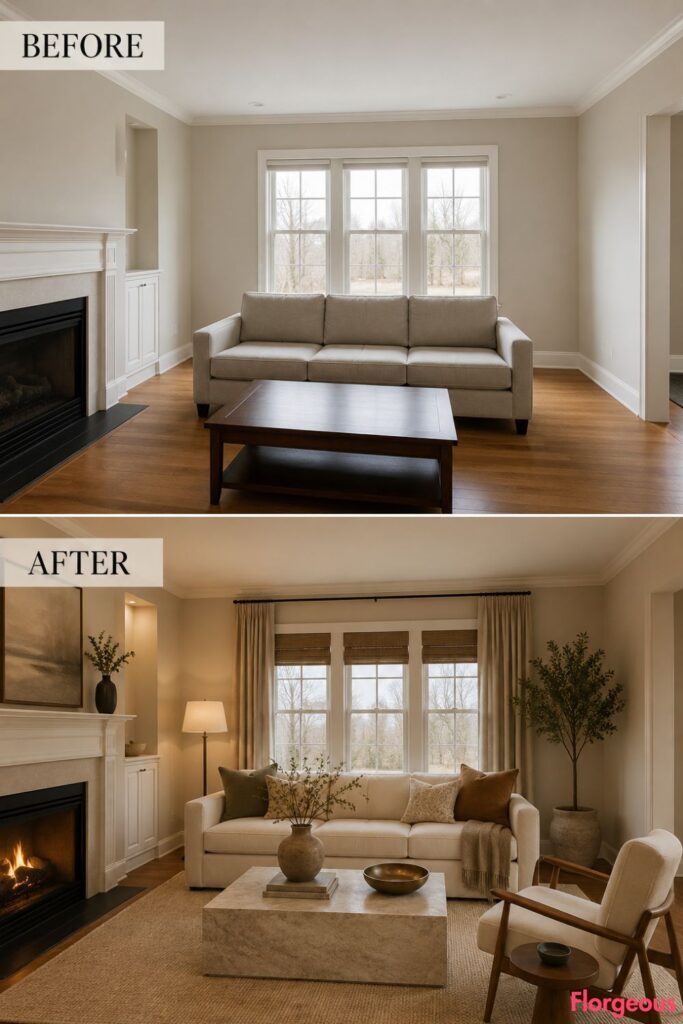
A coffee table can change the personality of the whole seating area. Stone adds weight and polish, especially in a room with softer traditional furniture.
Before: The plain living room has a basic coffee table, minimal styling, neutral walls, and a slightly unfinished feeling.
After: The room centers around a statement stone coffee table, paired with a classic sofa, modern lounge chair, wool rug, bronze bowl, ceramic vase, and tailored pillows.
Why it works: The stone introduces a modern material, while the softer seating keeps the room welcoming.
13. Create a Collected Console Moment Behind the Sofa
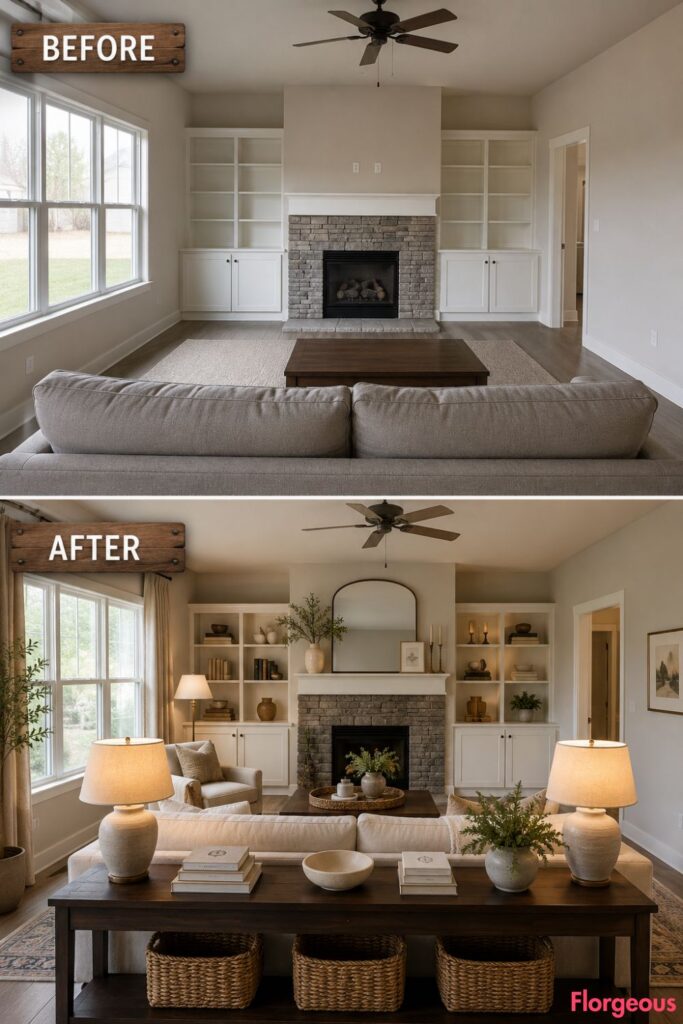
The back of a sofa often becomes dead space, especially in an open living room. A console table can make the room feel finished from every angle.
Before: The room has a basic sofa pushed into the layout, bare surfaces, plain walls, and little depth.
After: A slim dark wood console sits behind the sofa with matching lamps, stacked books with no readable titles, a large mirror, ceramic bowl, greenery, and textured baskets below.
Why it works: The console adds height, storage, and styling without changing the whole room.
Try this: Match the console height closely to the sofa back. Too high looks awkward, and too low disappears.
How to Choose the Right Transitional Look for Your Own Living Room
The best makeover usually starts with the problem your room has right now. If it feels empty, add a focal wall, built-in style shelves, or a console moment. If it feels cold, bring in wood, wool, linen, warm lighting, and a softer rug. If it feels too traditional, simplify the furniture shapes and choose calmer artwork.
A Transitional Living Room works because it does not depend on one single trend. It blends clean lines with classic comfort, polished materials with cozy texture, and practical furniture with beautiful styling.
Before buying everything new, choose one anchor first. That anchor might be a rug, sofa, fireplace wall, gallery wall, chandelier, or built-in style cabinet. Once that piece is in place, the smaller layers become easier to choose, and the room starts to feel intentional instead of unfinished.
itional Living Room is the second most prominent phrase in a bold uppercase modern sans-serif or luxury condensed serif, and the supporting words use smaller complementary serif and sans-serif typography in deep charcoal and soft neutral tones. Keep the design mobile-readable, bright, polished, warm, editorial, high-end but achievable, with generous whitespace around the headline. No logo, no watermark, no extra text beyond the BEFORE label, AFTER label, and exact article title overlay text.