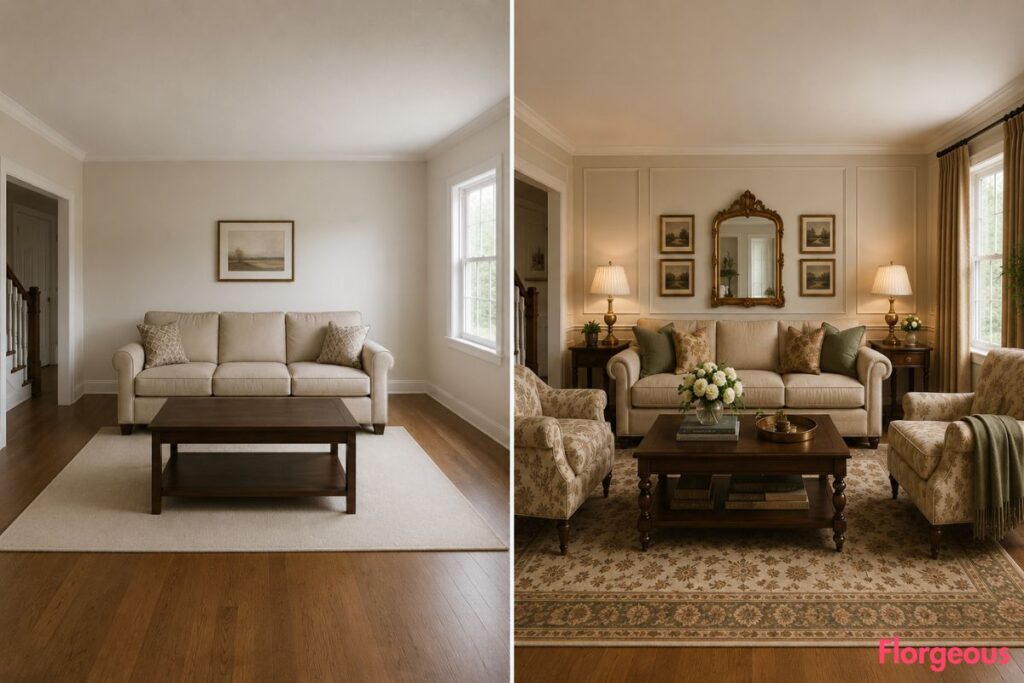
A plain living room can feel strangely unfinished, even when it has all the basics. The sofa is there, the coffee table is there, the walls are painted, but the room still feels flat, quiet, and a little forgettable.
That is where a Traditional Living Room makeover can completely change the mood. Classic furniture shapes, graceful curtains, rich wood tones, framed artwork, soft lamps, and layered rugs can make the same simple room feel polished and deeply welcoming.
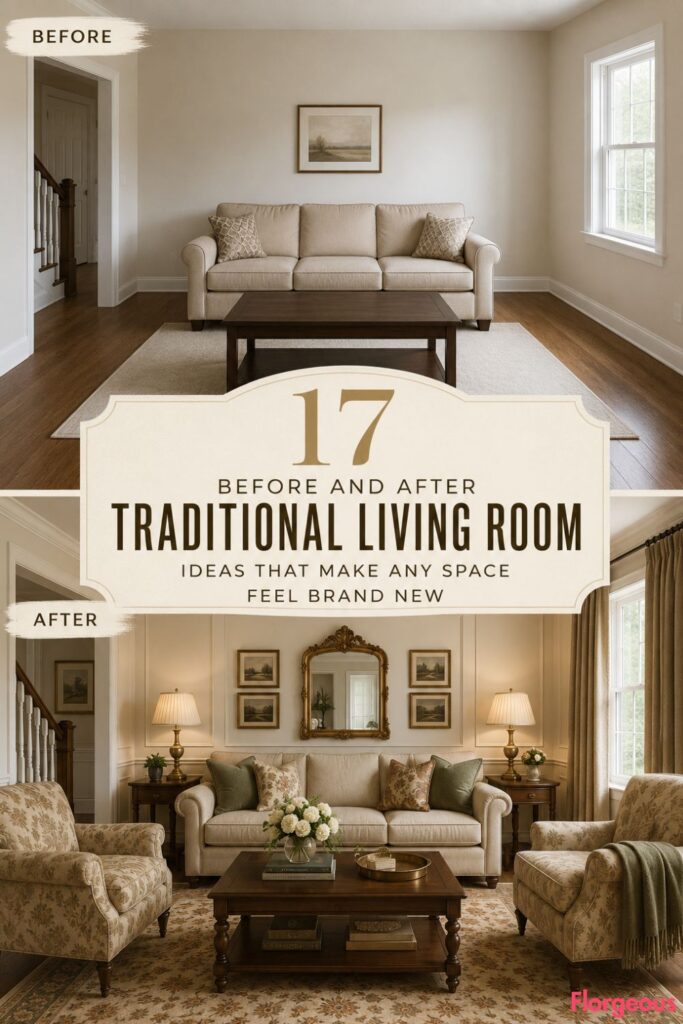
For each idea below, imagine the same starting point: a neutral living room with a basic sofa, bare coffee table, simple rug or no rug, minimal styling, builder-grade finishes, and soft natural light. The fun is seeing how many beautiful directions that same plain room can take.
1. Turn a Bare Room Into a Classic Seating Room With Matching Armchairs
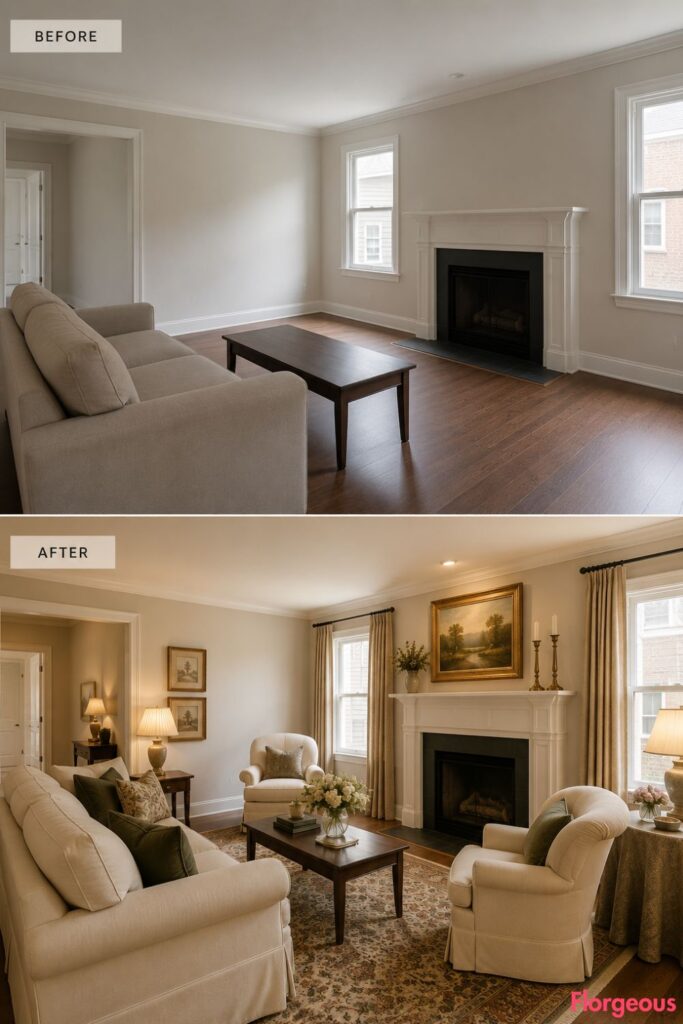
This is the most timeless way to give a simple living room structure. A basic sofa suddenly feels intentional when it is paired with two matching armchairs, a wood coffee table, and a balanced layout.
Before: The room has neutral walls, a basic sofa, bare surfaces, and no strong seating arrangement.
After: The space feels composed with a skirted cream sofa, two rolled-arm chairs, a dark wood coffee table, a patterned rug, framed landscape art, and brass table lamps.
Why it works: Symmetry gives traditional rooms their calm, polished feeling. Matching chairs instantly make the layout feel planned.
Try this: Place the chairs opposite or angled toward the sofa so the room feels ready for conversation, not just television.
2. Add Crown Molding and Picture Frame Walls for a Built-In Traditional Look
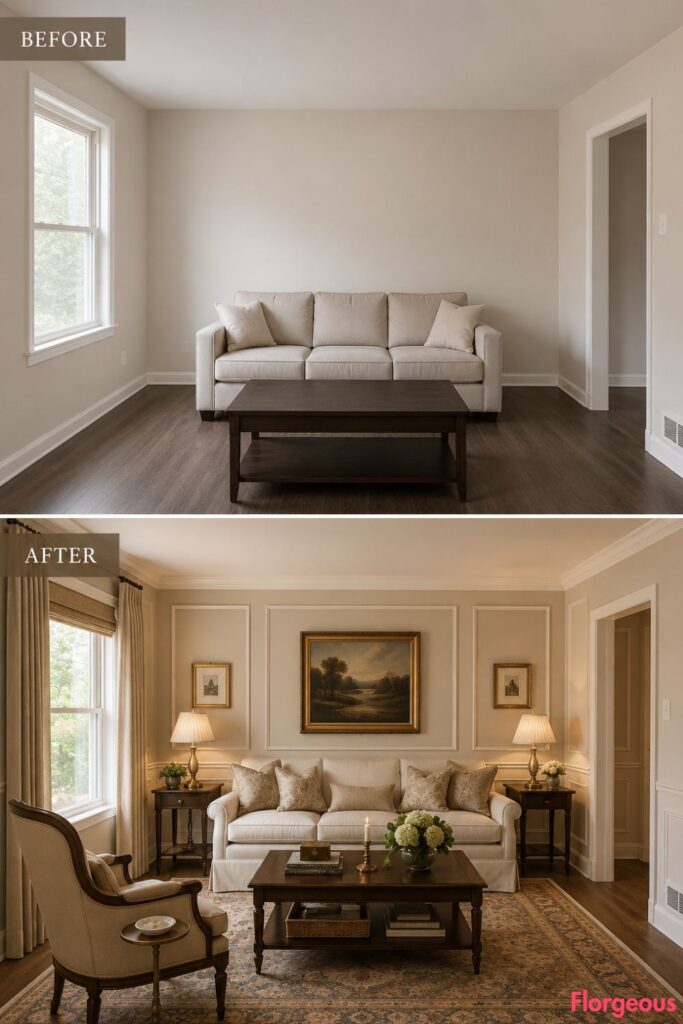
Plain walls are often the biggest reason a living room feels unfinished. Crown molding and picture frame molding give the room architecture, even before you add furniture.
Before: The room has flat neutral walls, basic furniture, and no decorative detail.
After: The walls are softened with warm white picture frame molding, crown molding, a classic sofa, pleated curtains, and antique-style framed artwork.
Designer Tip:
Keep the molding color close to the wall color for a subtle, expensive look. High contrast can work, but tone-on-tone feels more classic.
3. Change a Simple Room Into a Heritage-Inspired Space With Dark Wood
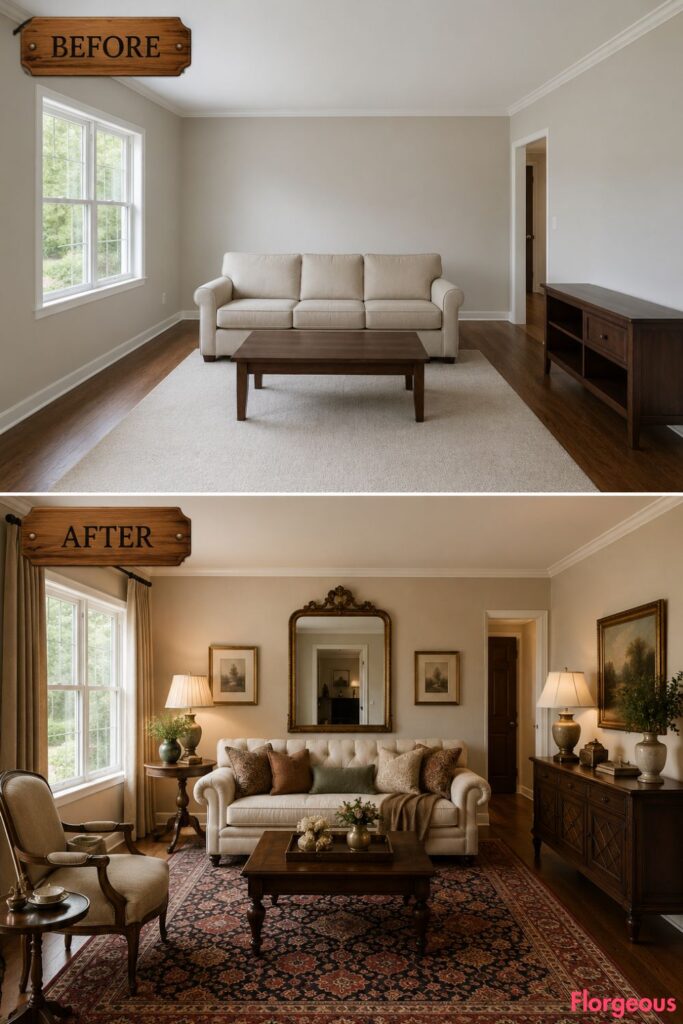
Dark wood makes a traditional room feel grounded. Instead of filling the space with too many decorative pieces, use a few handsome wood accents that look collected over time.
Before: The room feels light but empty, with a basic sofa and bare coffee table.
After: A rich wood console, carved side tables, a framed mirror, a Persian-style rug, and warm lamps make the living room feel mature and layered.
Try this: Use one large dark wood piece first, such as a console or coffee table, then repeat the tone in smaller accents.
4. Create a Polished Focal Point With a Traditional Fireplace Wall
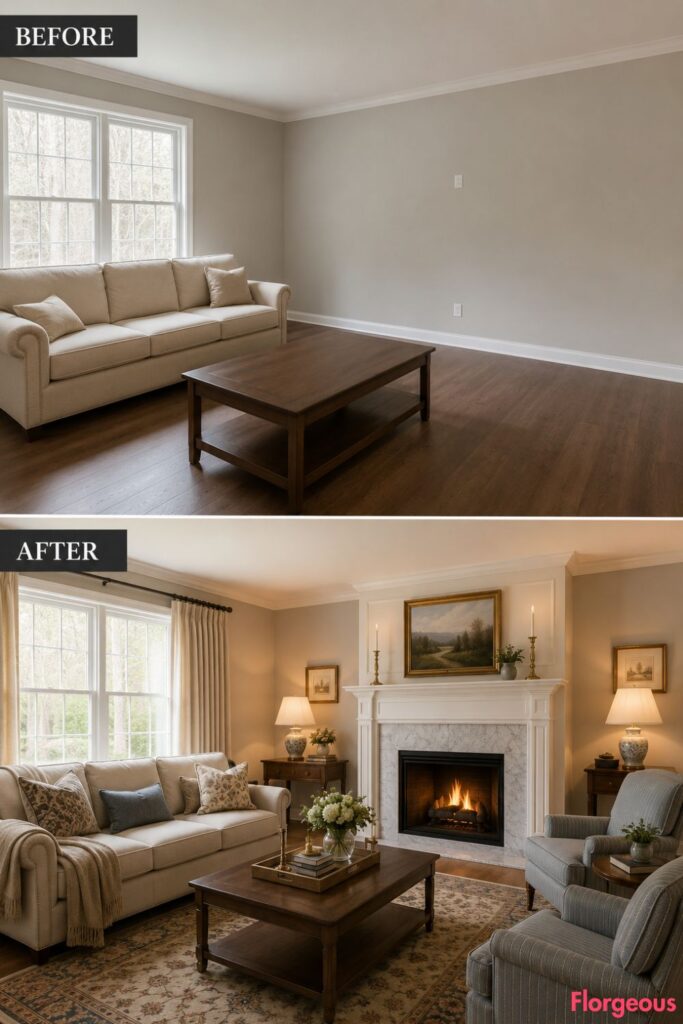
Even a room without much personality can become memorable with one strong focal point. A traditional fireplace wall gives the eye somewhere to land.
Before: The living room has no focal point, plain walls, and basic furniture.
After: The room centers around a classic fireplace mantel, stone or marble surround, framed art above the mantel, candleholders, and a pair of lamps on either side.
Why it works: Traditional design often relies on a central anchor. A mantel, even a faux one, adds structure and charm.
5. Make the Room Feel Grand With Floor-Length Curtains
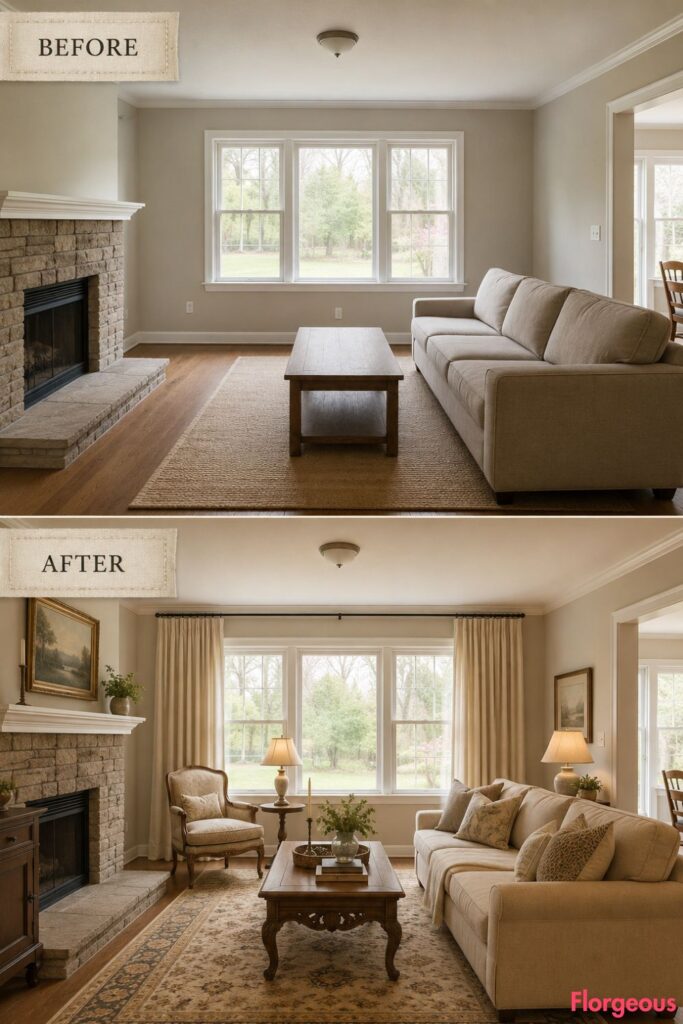
Short curtains can make a room feel casual and unfinished. Long, lined curtains hung high and wide add softness, height, and classic drama.
Before: The windows are bare or dressed with simple blinds, and the room feels plain.
After: The living room gains floor-length pinch-pleat curtains, a warm neutral sofa, a carved coffee table, classic lamps, and a soft patterned rug.
Budget Version:
Use ready-made curtain panels and clip rings, then hang the rod close to the ceiling. The right placement matters as much as the fabric.
6. Give the Living Room a Collected Look With Antique-Style Art
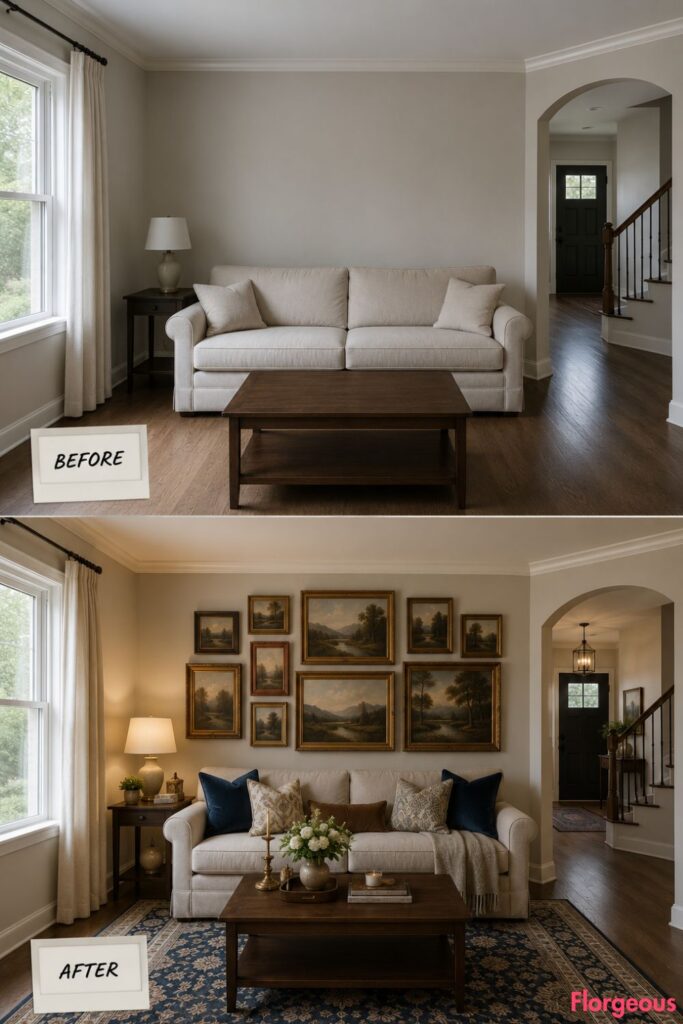
Traditional rooms rarely feel complete with bare walls. Framed art brings history, color, and personality without making the room feel busy.
Before: The wall above the sofa is empty, making the whole room feel unfinished.
After: The sofa wall becomes a classic gallery arrangement with oil painting-style landscapes, gold and wood frames, a blue and cream rug, velvet pillows, and warm table lamps.
Try this: Mix frame finishes, but keep the art palette connected. Soft greens, browns, creams, and muted blues work beautifully.
7. Turn a Plain Space Into a Soft Blue Traditional Living Room
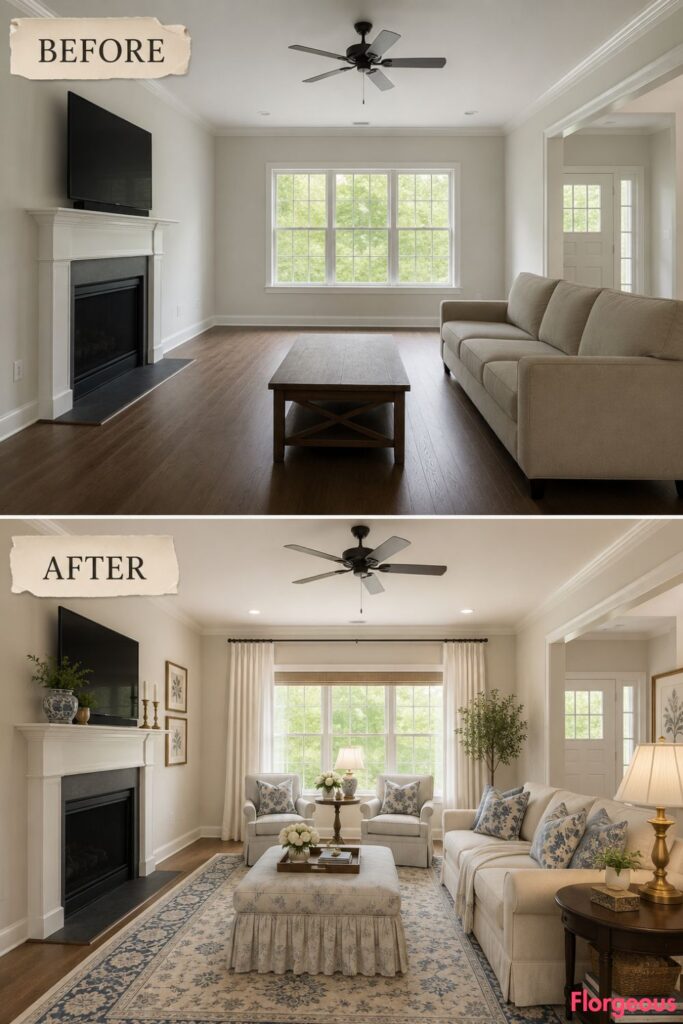
Blue is one of the easiest colors to use in a classic living room. It feels calm, familiar, and elegant without being too formal.
Before: The room has neutral walls, plain furniture, and very little color.
After: The room feels fresh with blue floral pillows, a blue and ivory rug, pleated lampshades, a skirted ottoman, white curtains, and framed botanical prints.
Color Story:
Soft blue works best with warm whites, natural wood, antique brass, and a little cream. Too much bright white can make it feel colder.
8. Build a Formal Library Feeling With Bookcases and Sconces
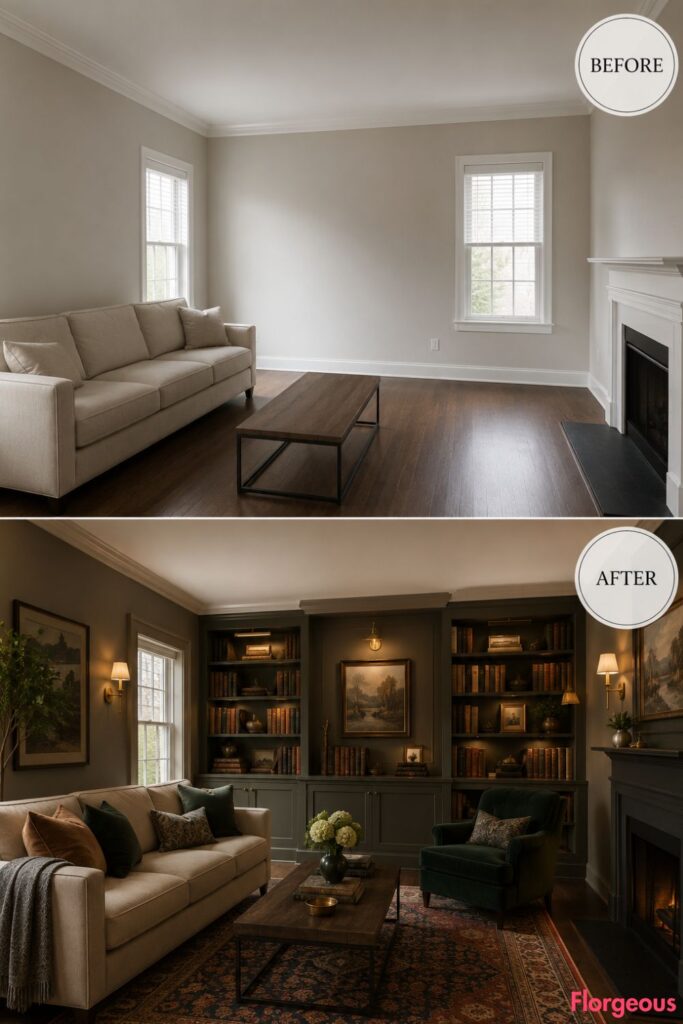
A living room can feel richer when it borrows details from an old library. Bookcases, picture lights, and darker accents bring depth to a plain space.
Before: The room has no built-ins, no storage, and no visual weight.
After: The wall behind the sofa features built-in style bookcases, warm wood shelves, classic books with no readable titles, framed art, brass sconces, and a deep green velvet chair.
Why it works: The shelves add architecture and storage while making the room feel established.
9. Warm Up the Room With a Layered Traditional Rug
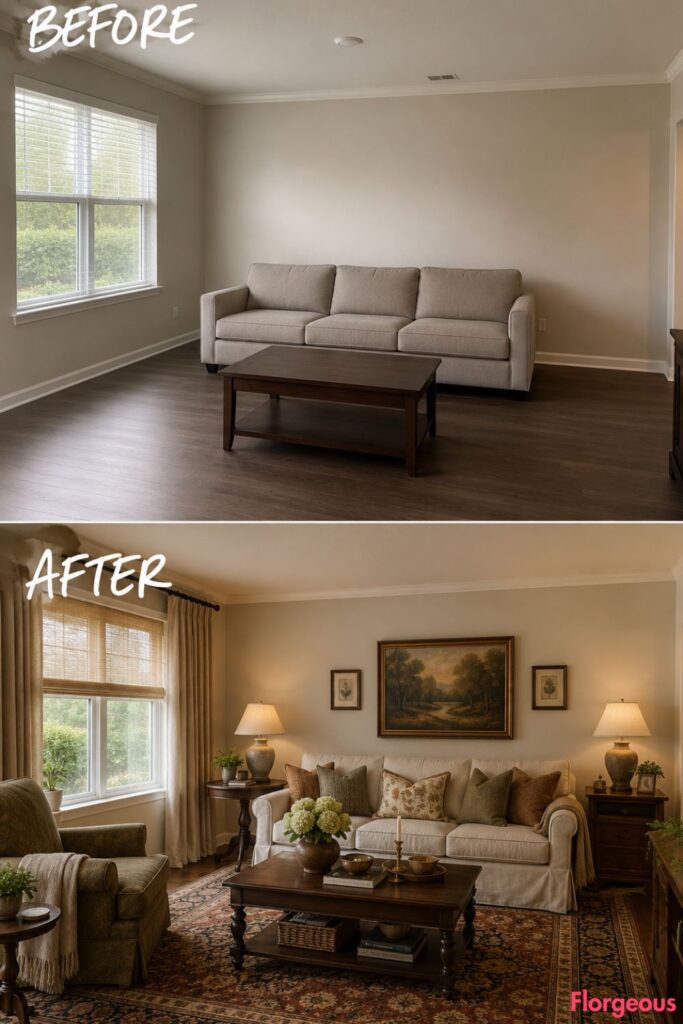
A small or plain rug can make a living room feel disconnected. A larger patterned rug pulls everything together.
Before: The sofa and coffee table feel like separate pieces floating in the room.
After: A large vintage-inspired rug anchors the seating area, layered with a linen sofa, wood tables, classic pillows, and shaded lamps.
Common Mistake:
Do not choose a rug that stops before the front legs of the sofa. Traditional rooms look better when the rug generously grounds the main furniture pieces.
10. Add a Traditional Sofa With Refined Upholstery
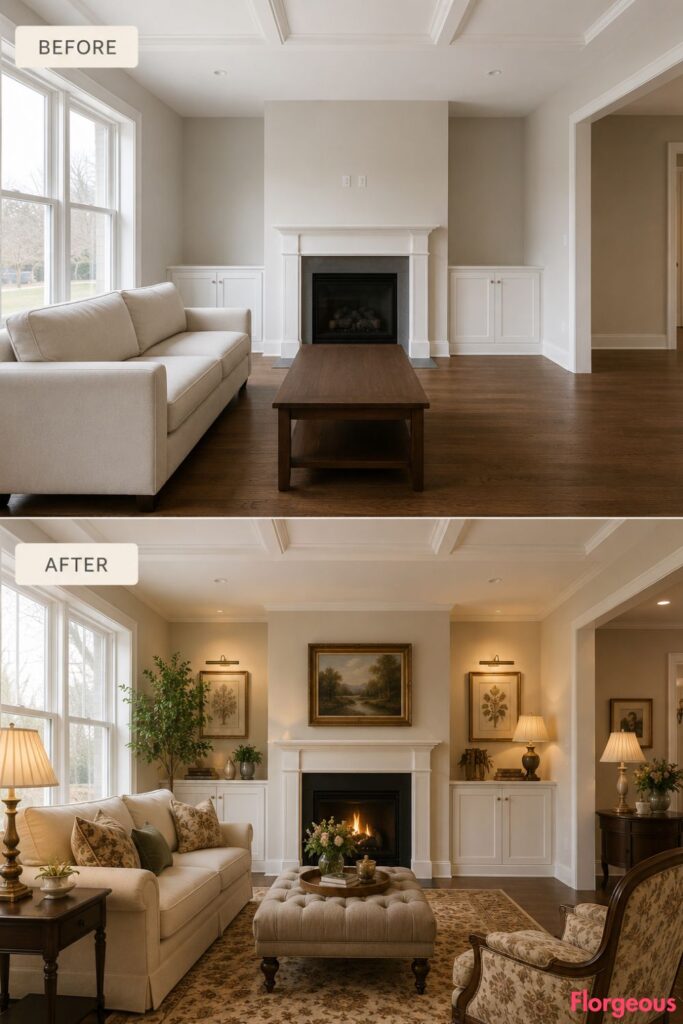
Sometimes the biggest shift comes from one furniture swap. A sofa with a graceful silhouette can make the entire room feel more finished.
Before: The basic sofa looks casual and does not support the traditional direction.
After: A rolled-arm sofa in cream linen or soft taupe upholstery becomes the anchor, paired with a tufted ottoman, patterned pillows, wood side tables, and framed art.
Try this: Choose upholstery that feels durable and classic. Linen blends, performance velvet, and textured neutrals age well.
11. Make a Cozy Traditional Room With Plaid, Velvet, and Brass
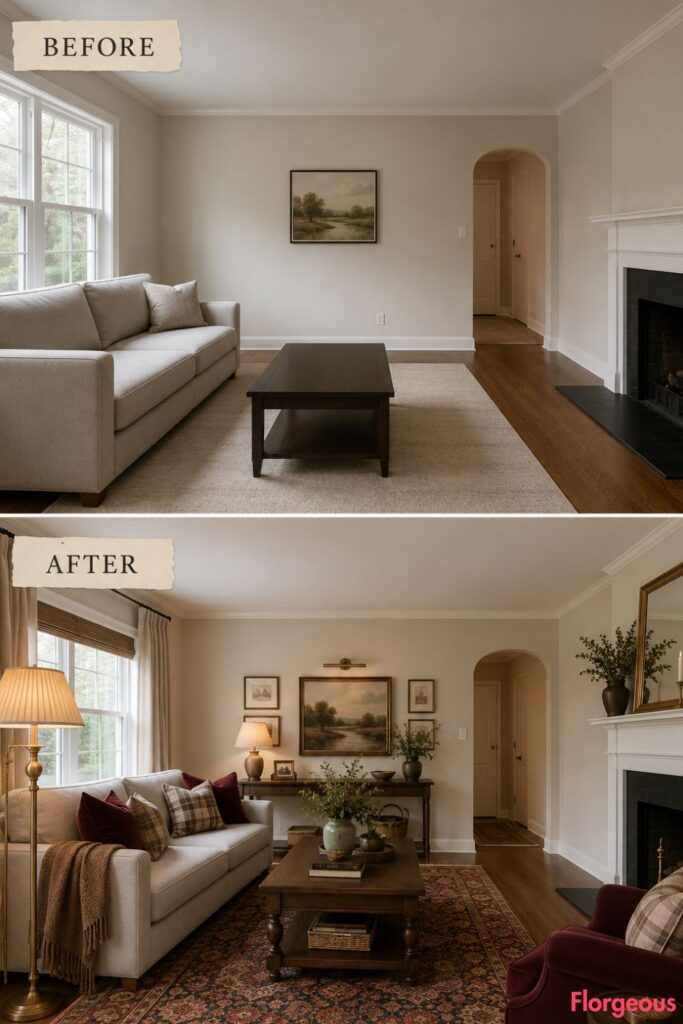
Traditional style does not have to feel formal. Plaid pillows, velvet accents, and warm brass details can make the room feel cozy and lived-in.
Before: The room feels clean but lacks warmth and personality.
After: The space gains plaid pillows, burgundy velvet accents, an antique brass floor lamp, a wood coffee table, a warm patterned rug, and a few stacked books with no readable titles.
12. Turn the Room Into an Elegant Space With an Antique Mirror
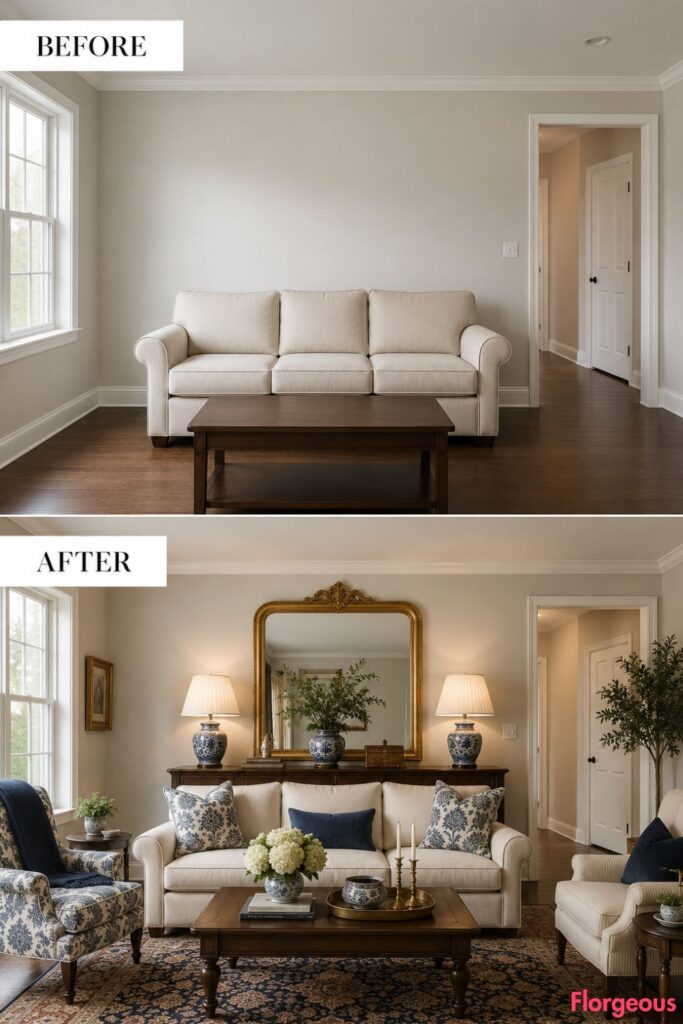
An antique-style mirror is a simple way to add height, light, and a sense of history. It works especially well above a console, fireplace, or sofa.
Before: The wall feels blank and the room has no reflective detail.
After: A large antique gold mirror becomes the focal point, paired with a dark console, blue porcelain lamps, classic greenery, and a warm wool rug.
Pinterest-Worthy Detail:
Blue and white porcelain lamps are small, but they photograph beautifully in traditional rooms. They add pattern without making the space feel cluttered.
Visual Prompt:
Create a realistic vertical 2:3 before-and-after living room makeover image. The image is split horizontally into two equal sections showing the same living room from the same camera angle. TOP SECTION BEFORE: Show a plain, simple version of the living room with neutral walls, a basic sofa, bare coffee table, simple rug or no rug, minimal styling, bare surfaces, builder-grade finishes, and soft natural light. BOTTOM SECTION AFTER: Show the same living room transformed with a large antique gold mirror, dark wood console, blue and white porcelain lamps, classic greenery, warm wool rug, cream sofa, and elegant traditional styling. Use Magazine Style Headers reading “BEFORE” and “AFTER.” Include warm ambient lighting, cozy textures, layered styling, realistic decor, natural materials, beautiful focal points, and a polished Pinterest-worthy home design look. No logos, no watermarks, no additional text beyond the selected BEFORE and AFTER labels.
13. Add Traditional Wallpaper for Pattern and Charm
Wallpaper can make a plain living room feel designed in one afternoon. For a classic effect, choose small florals, damask, toile, stripes, or muted botanical prints.
Before: The room has plain walls and no pattern.
After: A soft botanical wallpaper gives the sofa wall charm, while cream upholstery, dark wood tables, brass lamps, and simple artwork keep the look balanced.
Budget Version:
Try peel-and-stick wallpaper on one wall first. It gives the room a strong traditional mood without committing to the entire space.
14. Create Balance With Matching Lamps and Side Tables
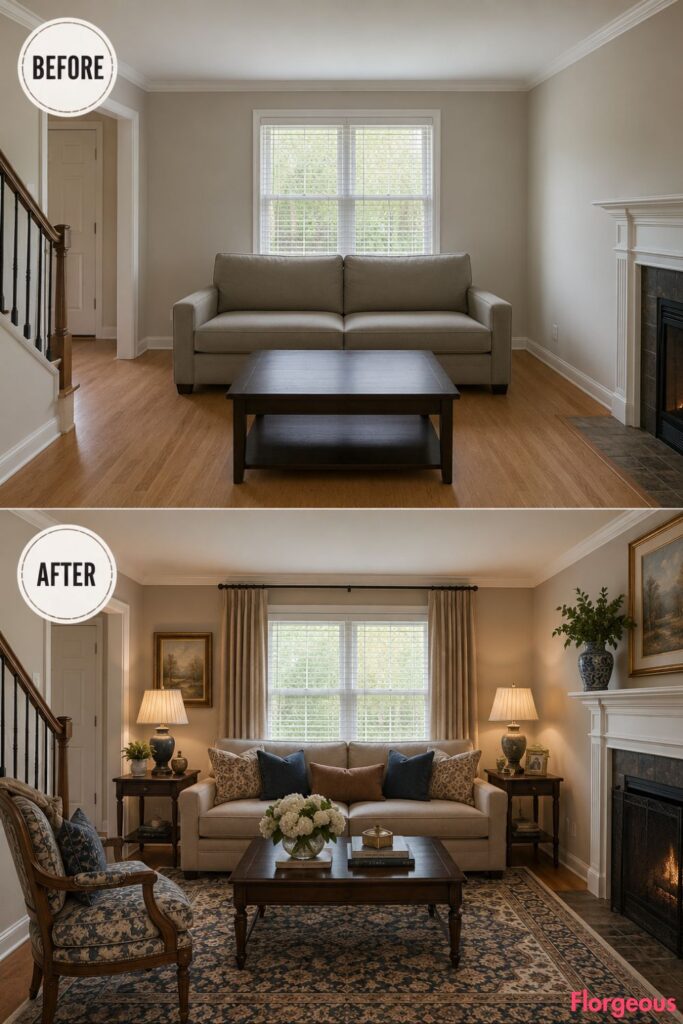
If a living room feels scattered, matching side tables and lamps can quickly calm it down. This is one of the simplest traditional styling moves.
Before: The sofa has bare ends, no proper lighting, and no sense of balance.
After: Matching wood side tables, pleated shade lamps, framed art, a centered coffee table, and tailored pillows create a pulled-together classic living room design.
15. Give the Room a Classic English Country Feeling
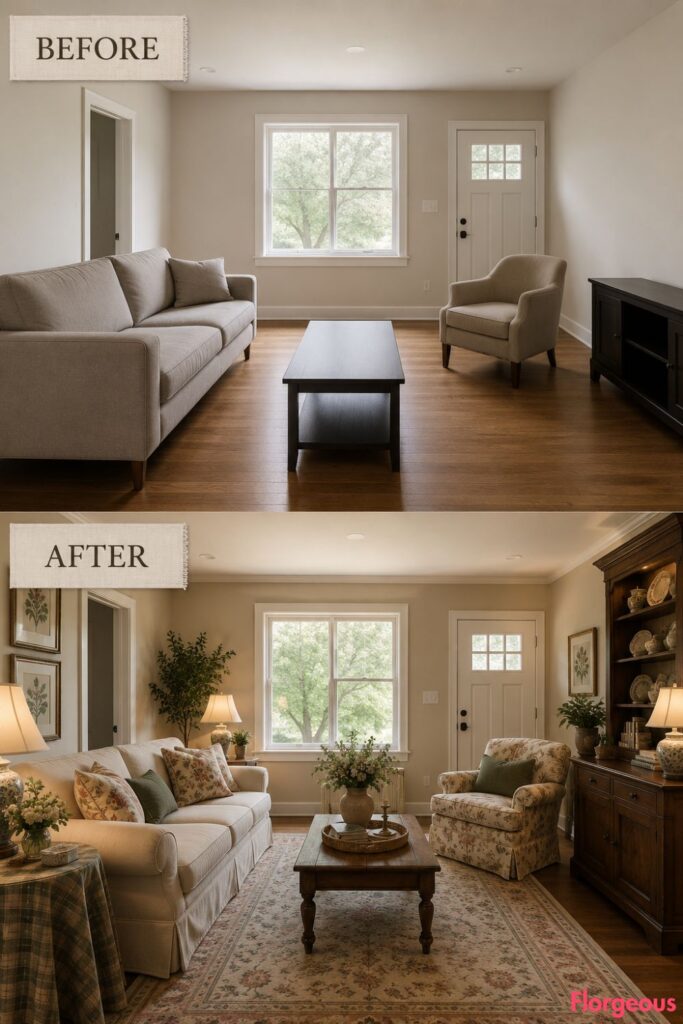
English country style is a softer side of traditional decorating. It feels collected, comfortable, and full of pattern without looking overly perfect.
Before: The living room feels empty, neutral, and a little too clean.
After: Floral pillows, a roll-arm sofa, skirted side table, warm wood cabinet, botanical prints, ceramic lamps, and a faded rug create a cozy heritage-inspired living room.
Style Note:
The secret is mixing patterns in a controlled palette. Florals, stripes, and small checks can work together if the colors repeat.
16. Make a Formal Living Room Feel Inviting With Warm Lighting
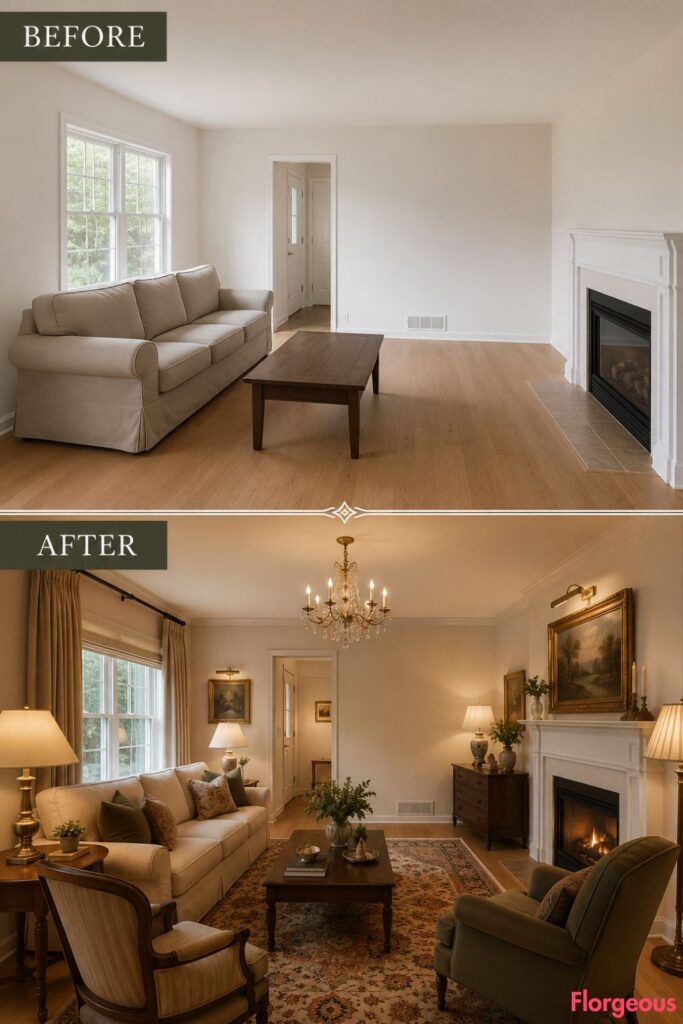
A room can have good furniture and still feel cold if the lighting is flat. Traditional rooms look best with layers of warm light.
Before: The room relies on basic overhead lighting and feels flat in the evening.
After: A classic chandelier, table lamps, picture lights, and a shaded floor lamp create soft pools of light around the sofa, artwork, and reading chair.
Try this: Use warm white bulbs and lampshades with fabric texture. Harsh bright bulbs can make classic decor feel less inviting.
17. Turn the Plain Room Into a Fully Layered Traditional Living Room
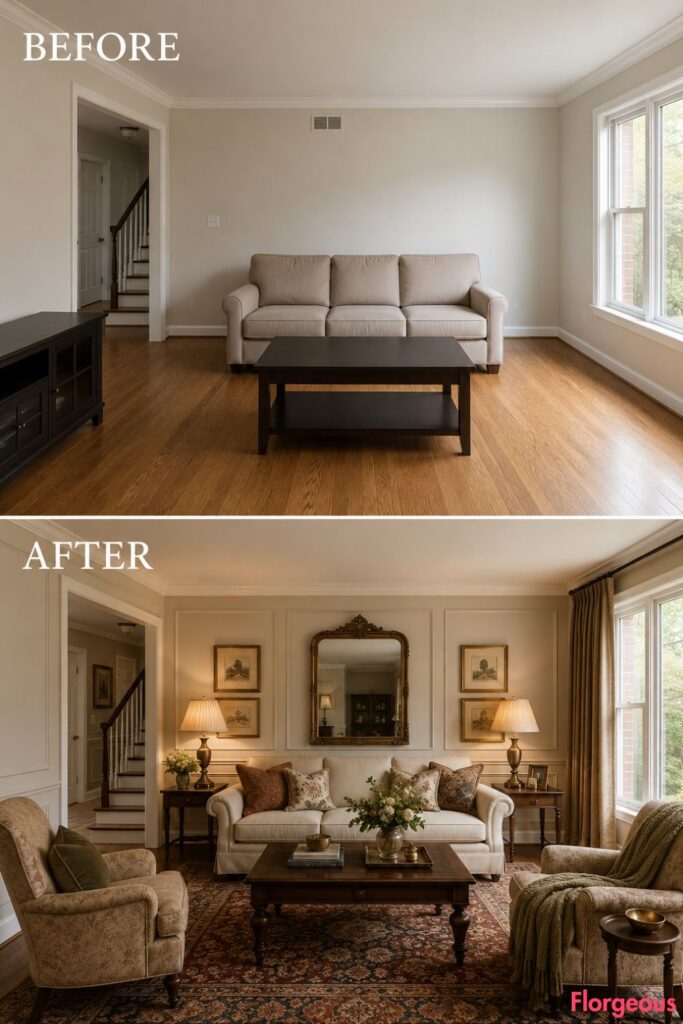
This final idea brings the whole look together. It uses molding, curtains, a classic sofa, antique accents, artwork, a patterned rug, and warm lighting so the room feels complete from every angle.
Before: The living room has neutral walls, a basic sofa, bare coffee table, minimal styling, and no real design direction.
After: The same room becomes a Traditional Living Room with picture frame molding, floor-length curtains, a roll-arm sofa, matching armchairs, antique mirror, dark wood coffee table, patterned rug, brass lamps, framed art, and layered pillows.
Why it works: Every element supports the same classic mood. The architecture, furniture, textiles, lighting, and decor all feel connected.
How to Choose the Right Traditional Makeover for Your Room
The best before-and-after ideas work because they give the room a clear point of view. A plain living room may only need better curtains and a larger rug, or it may need architectural detail, richer lighting, and more classic furniture shapes.
Start with the part of the room that feels most unfinished. If the walls feel empty, begin with molding, wallpaper, art, or a mirror. If the room feels cold, start with curtains, lamps, a patterned rug, and warmer wood tones.
A Traditional Living Room does not need to look stiff or overly formal. The most beautiful versions feel layered, comfortable, and personal, with pieces that look like they have been gathered slowly and thoughtfully.