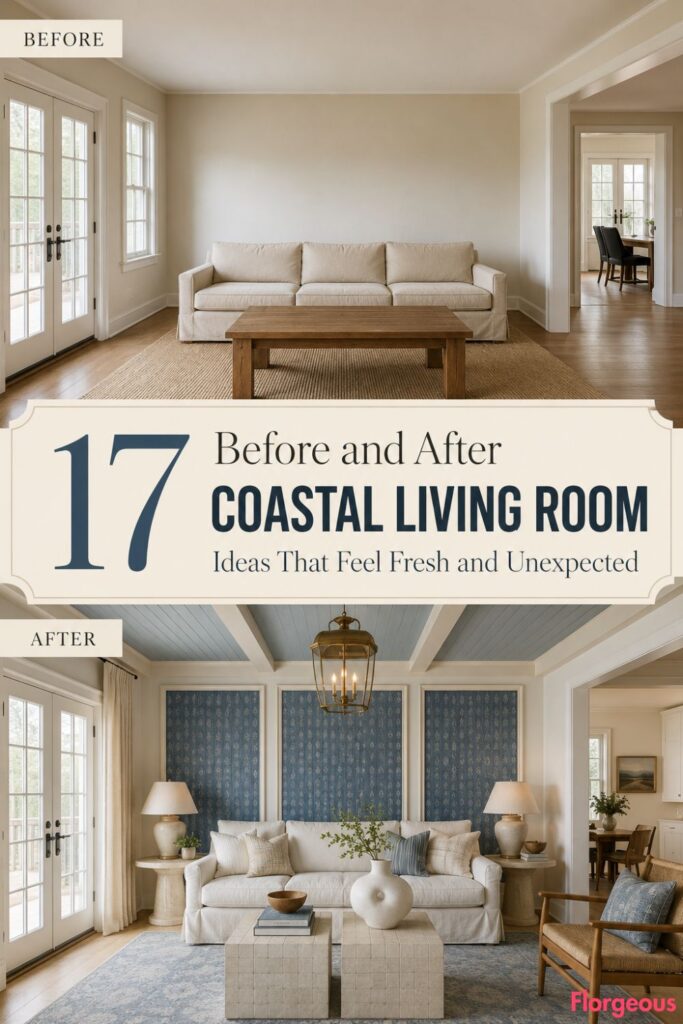
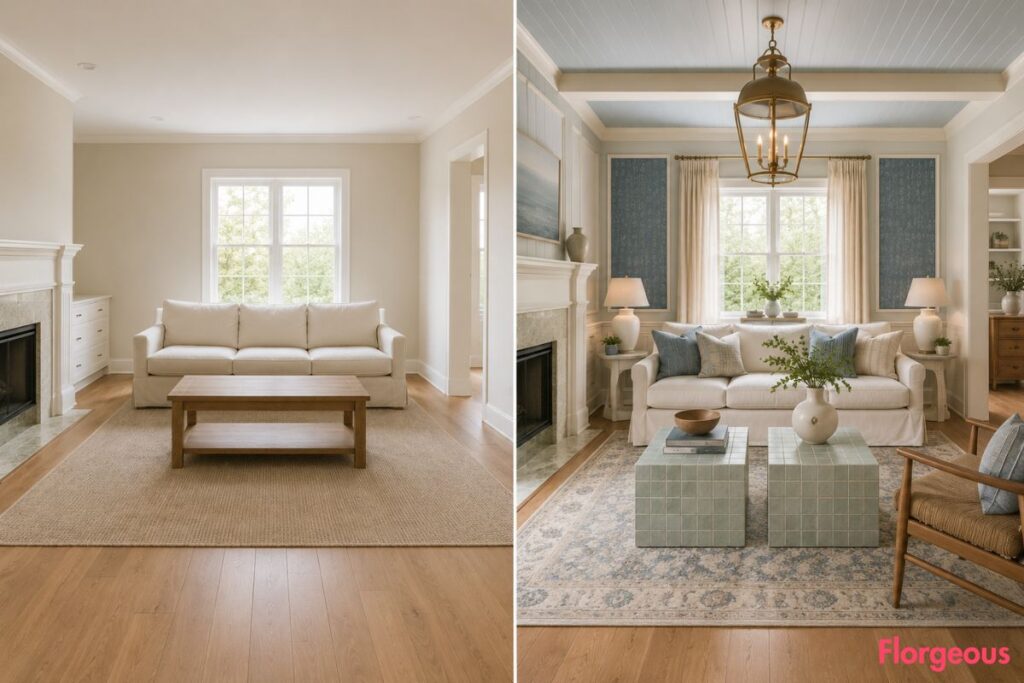
A neutral living room can be calm without feeling complete. A basic sofa, bare walls, flat lighting, and a simple coffee table provide function, but they do not give the space a memorable point of view.
A sophisticated Coastal Living Room does not need anchors, rope accents, or rows of seashells. The most interesting rooms interpret the coast through light, movement, weathered finishes, quiet color, sculptural forms, and materials that feel softened by time.
Each idea below begins with the same plain room. The 17 after versions take completely different design directions, showing how architecture, layout, pattern, lighting, and practical furniture can create a coastal mood without repeating the same white-sofa formula.
1. Draw the Eye Up With a Shell-Blue Beadboard Ceiling
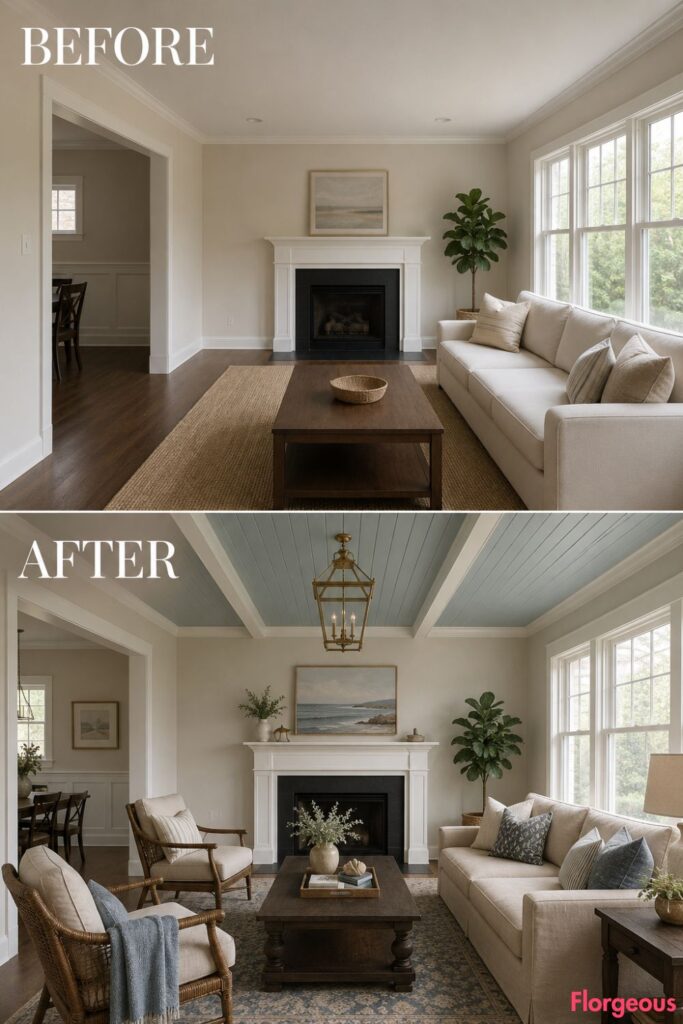
Instead of changing the walls first, make the ceiling the room’s defining feature.
Before: Neutral walls, a basic sofa, a bare coffee table, a simple rug, minimal styling, builder-grade finishes, and soft natural light.
After: Narrow beadboard covers the ceiling in a chalky shell blue. Slim warm-white beams frame the boards, while an oversized aged-brass lantern creates a strong central focal point. The furniture remains restrained, with flax upholstery, dark oak tables, and one faded blue cushion.
Keeping the color overhead makes the room feel coastal without surrounding it in blue.
Designer Tip: Test ceiling paint in both daylight and lamplight. Horizontal surfaces often make a color appear darker than expected.
2. Wrap Two Walls in Ceiling-Track Linen Drapery
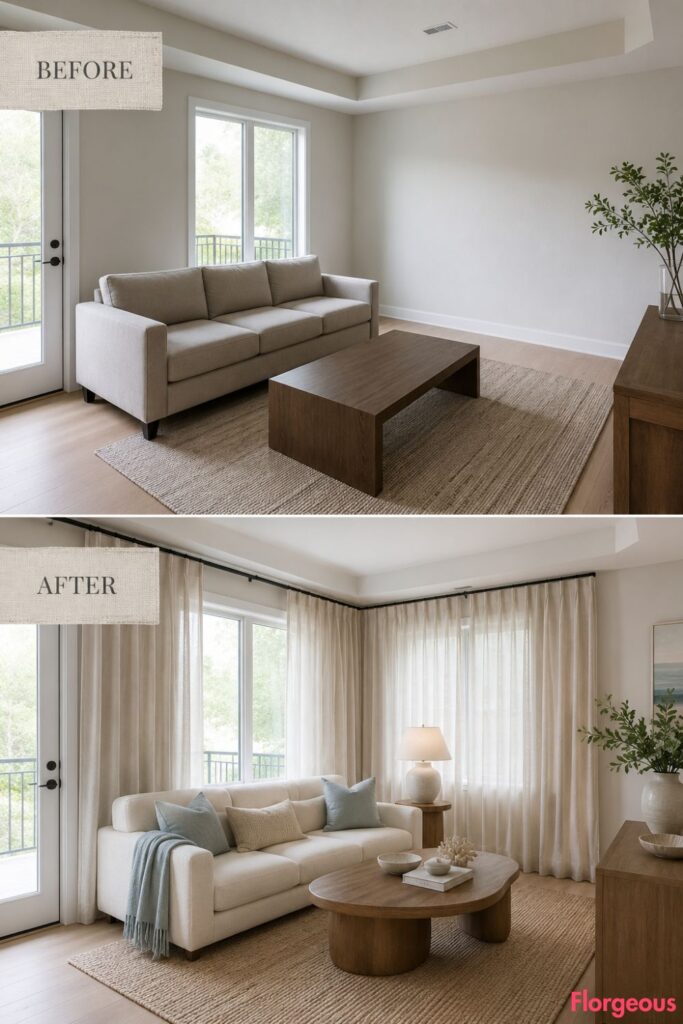
Curtains do not have to stop at the edge of a window. Wrapping an entire corner in fabric can disguise awkward openings and soften a boxy room.
Before: Neutral walls, a basic sofa, a bare coffee table, a simple rug, minimal styling, builder-grade finishes, and soft natural light.
After: Ripple-fold linen curtains run along a discreet ceiling track across the window wall and continue around one corner. The fabric hides uneven window placement while creating a soft, enveloping backdrop for a compact sofa and sculptural side table.
Choose a stone, oyster, or faded fog color rather than brilliant white. The slight contrast makes the folds visible.
Budget Version: Use several matching ready-made curtain panels and connect the tracks at the corner.
3. Replace Generic Artwork With a Hand-Painted Dune Mural
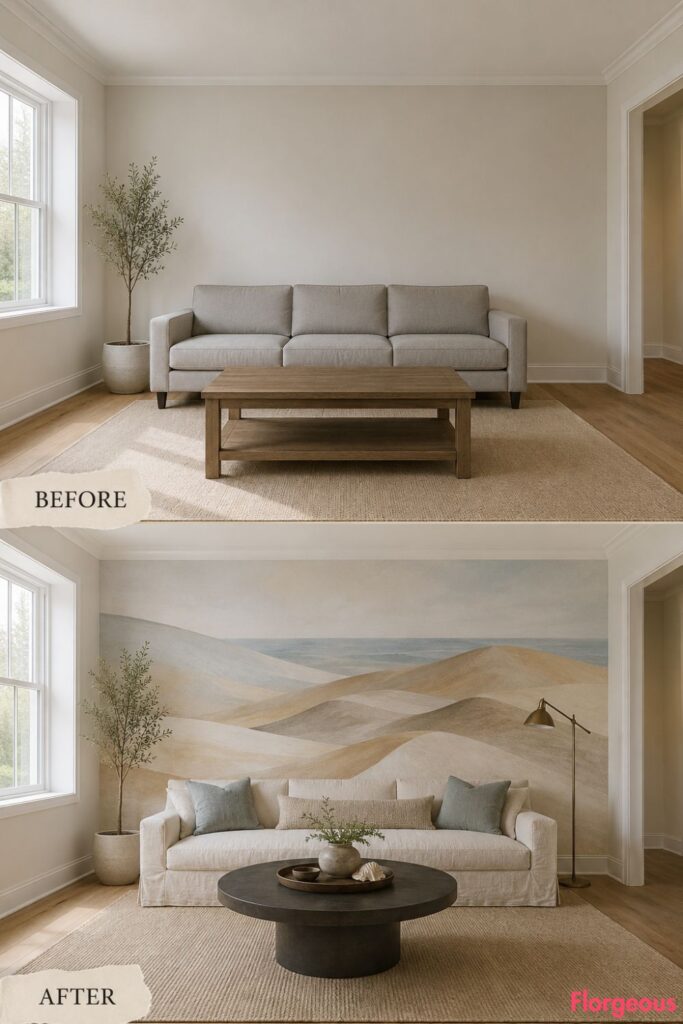
A mural can introduce movement and atmosphere without looking like a literal beach scene.
Before: Neutral walls, a basic sofa, a bare coffee table, a simple rug, minimal styling, builder-grade finishes, and soft natural light.
After: The main wall becomes an abstract landscape of blurred sand, chalk, misty blue, and pale ochre. Broad horizontal shapes suggest dunes and distant water, but no part of the mural is overly detailed.
Low furniture allows the painting to remain visible. A simple linen sofa, dark pedestal table, and narrow bronze floor lamp keep the room grounded.
For a removable option, use a mural printed on peel-and-stick wallpaper.
4. Line Framed Wall Panels With Faded Coastal Fabric
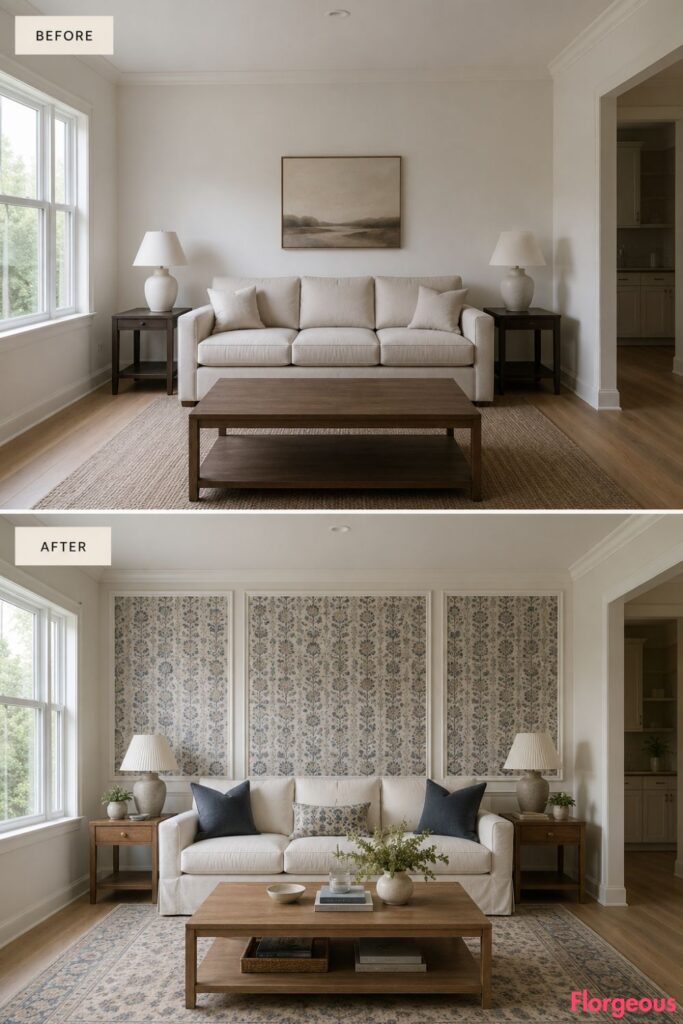
Fabric-lined panels give the room softness, pattern, and architectural structure in one move.
Before: Neutral walls, a basic sofa, a bare coffee table, a simple rug, minimal styling, builder-grade finishes, and soft natural light.
After: Large rectangular wall panels are framed with narrow painted molding and lined in a muted flax-and-indigo block print. Solid upholstery and plain wood furniture balance the pattern.
The fabric should look hand-printed and slightly irregular rather than crisp or graphic. This keeps the room collected and relaxed.
Apply fabric to removable lightweight boards when decorating a rental.
5. Carve Three Shallow Plaster Niches Into the Focal Wall
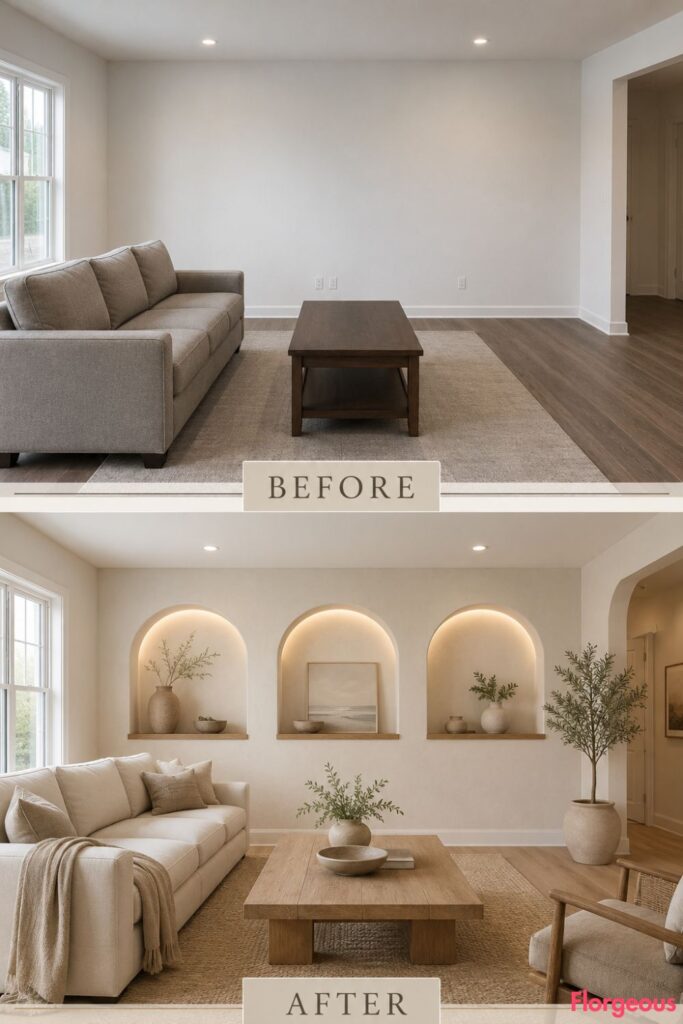
Built-in niches provide depth without requiring a full wall of cabinetry.
Before: Neutral walls, a basic sofa, a bare coffee table, a simple rug, minimal styling, builder-grade finishes, and soft natural light.
After: Three shallow arched niches are formed in warm chalky plaster. Each niche contains one carefully chosen object, such as a weathered ceramic vessel, a pale stone sculpture, or a small piece of coral-like abstract art.
A low sofa keeps the arches visible, while concealed lighting inside the niches creates a gentle evening glow.
Common Mistake: Filling every niche with several small accessories. One substantial object in each opening looks calmer and more intentional.
6. Create an Entry Zone With a White-Oak Slatted Screen
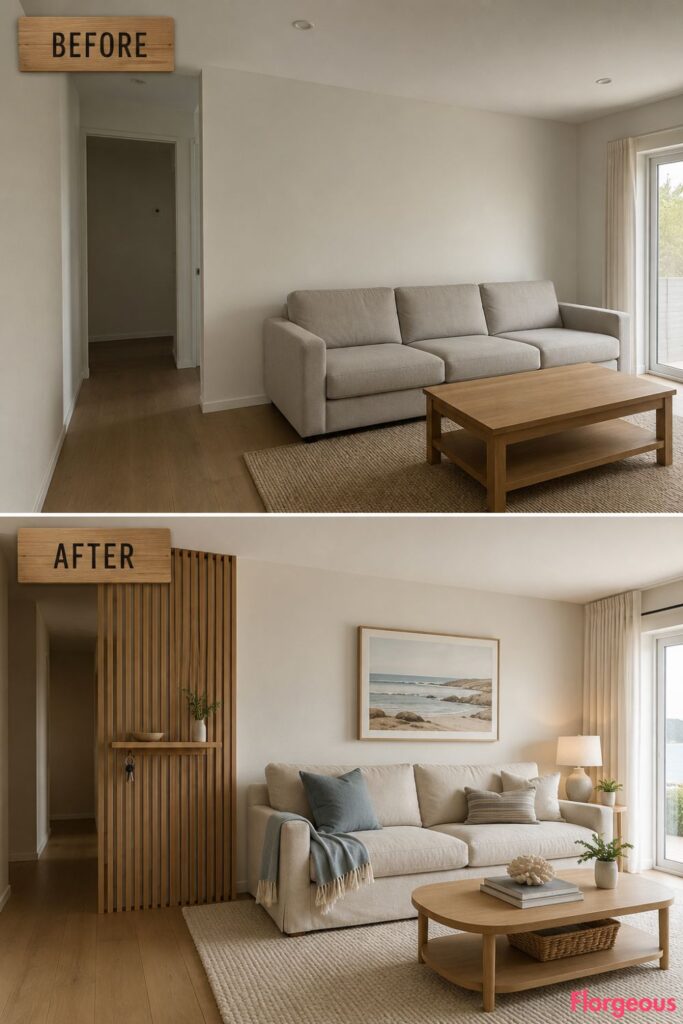
An open living room often feels unfinished because the front door empties directly into the seating area.
Before: Neutral walls, a basic sofa, a bare coffee table, a simple rug, minimal styling, builder-grade finishes, and soft natural light.
After: A floor-to-ceiling white-oak slatted screen separates the entrance from the sofa without blocking daylight. A narrow floating shelf on the entry side holds keys and a small lamp, while the living room side becomes a warm architectural backdrop.
Keep the slats evenly spaced and avoid adding too many decorative details.
Small Space Tip: A freestanding slatted panel can create the same effect without permanent construction.
7. Hide the Television Behind a Retractable Cinema Wall
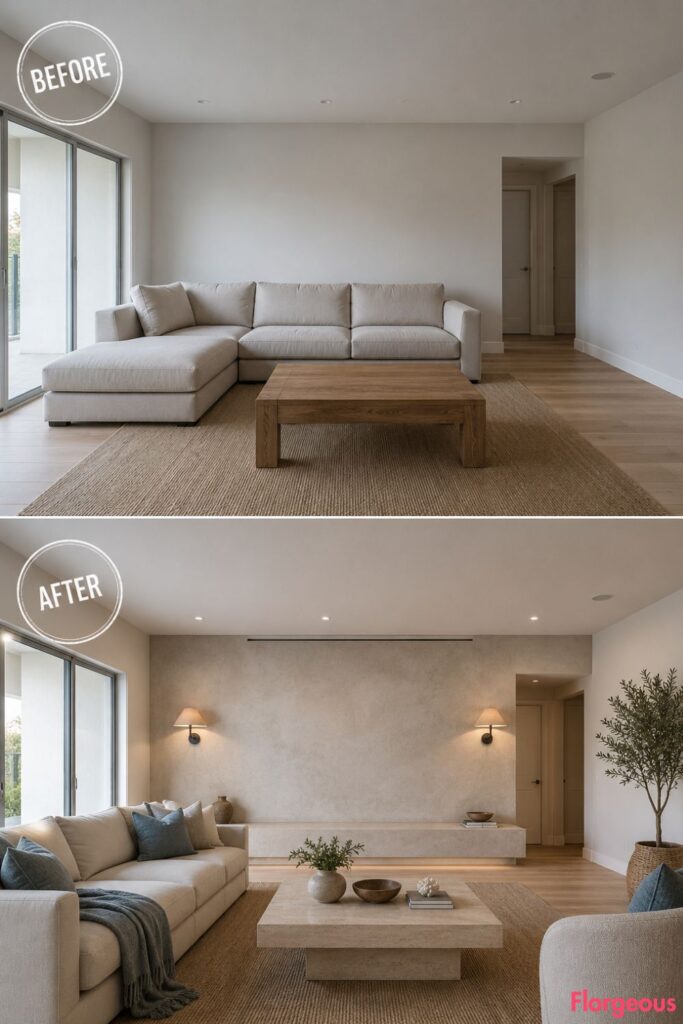
A coastal room can still support movie nights without making a black screen its permanent focal point.
Before: Neutral walls, a basic sofa, a bare coffee table, a simple rug, minimal styling, builder-grade finishes, and soft natural light.
After: A smooth limewashed wall remains visually empty during the day. A concealed projection screen lowers from the ceiling when needed, while equipment is hidden inside a long plaster-finished bench below.
Two shaded wall lights flank the arrangement and make the wall feel complete when the screen is retracted.
The result is softer and more architectural than a conventional media unit.
8. Add a Console-Height Worktable Behind the Sofa
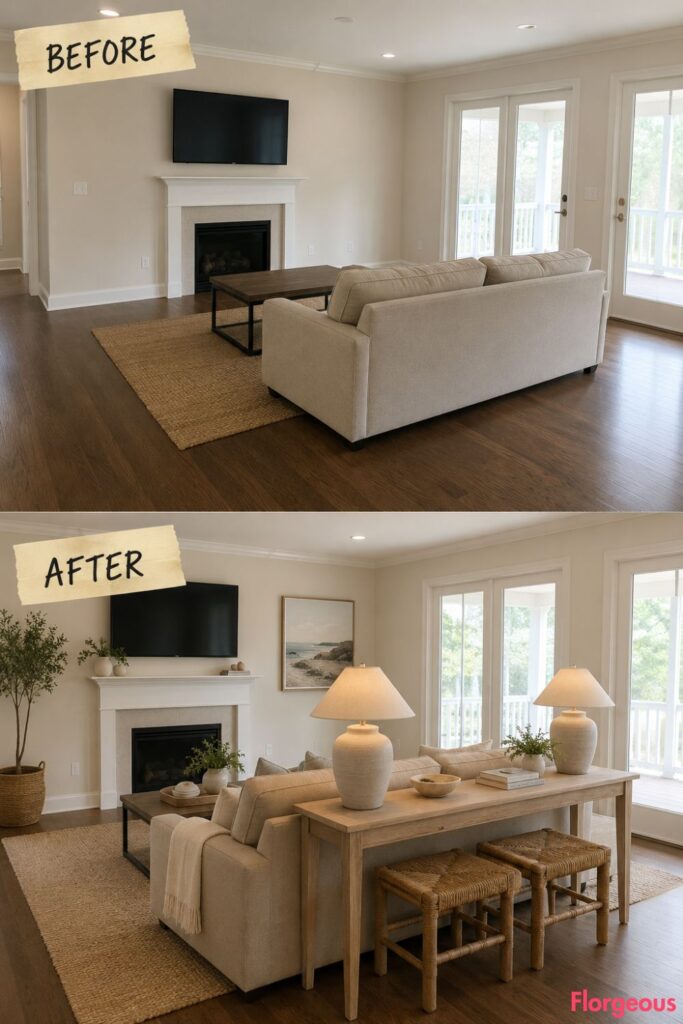
A long table behind the sofa can turn unused floor space into a practical work, dining, or homework zone.
Before: Neutral walls, a basic sofa, a bare coffee table, a simple rug, minimal styling, builder-grade finishes, and soft natural light.
After: A slim bleached-oak worktable runs behind the sofa with two backless woven stools tucked beneath it. Small ceramic lamps at either end provide task lighting, while a shallow tray keeps chargers and notebooks contained.
The arrangement adds function without changing the main conversation area.
Choose a table slightly lower than the sofa back so it does not dominate the room.
9. Build a Faux Sunken Lounge With Floor-Level Seating
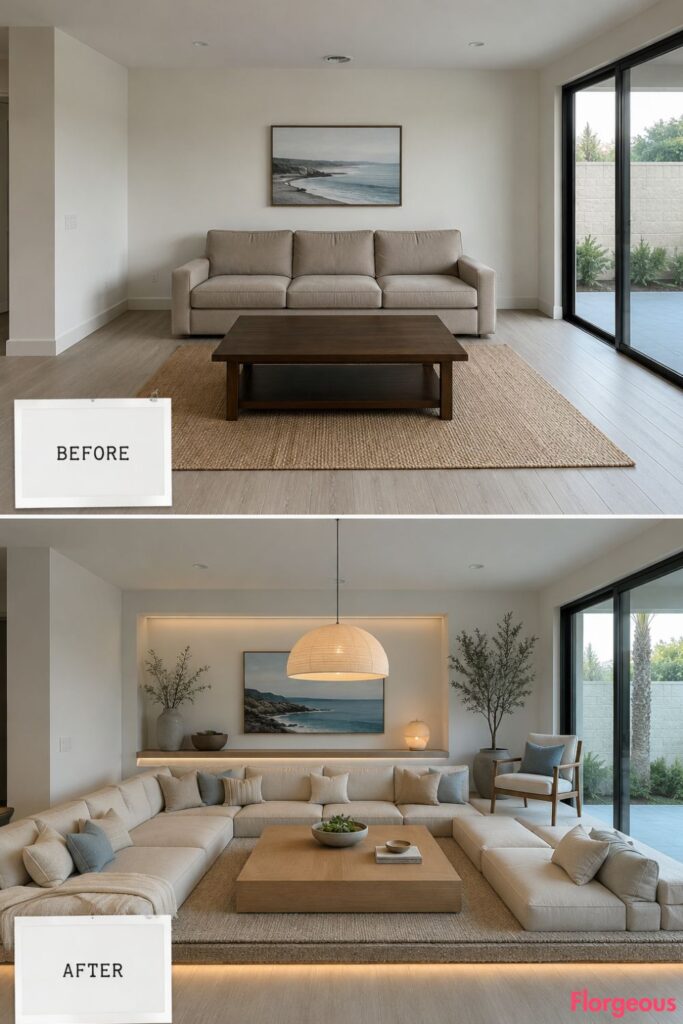
A conversation pit can be suggested without cutting into the floor.
Before: Neutral walls, a basic sofa, a bare coffee table, a simple rug, minimal styling, builder-grade finishes, and soft natural light.
After: Deep floor-level modular seats surround a low square oak table. Thick oatmeal cushions, wide arms, and a slightly raised perimeter rug create the visual impression of a sunken lounge.
One taller lounge chair prevents the layout from feeling too low, while a large pendant draws attention back upward.
This design works best in a room with generous circulation around the seating island.
10. Rotate the Entire Room Onto a Diagonal
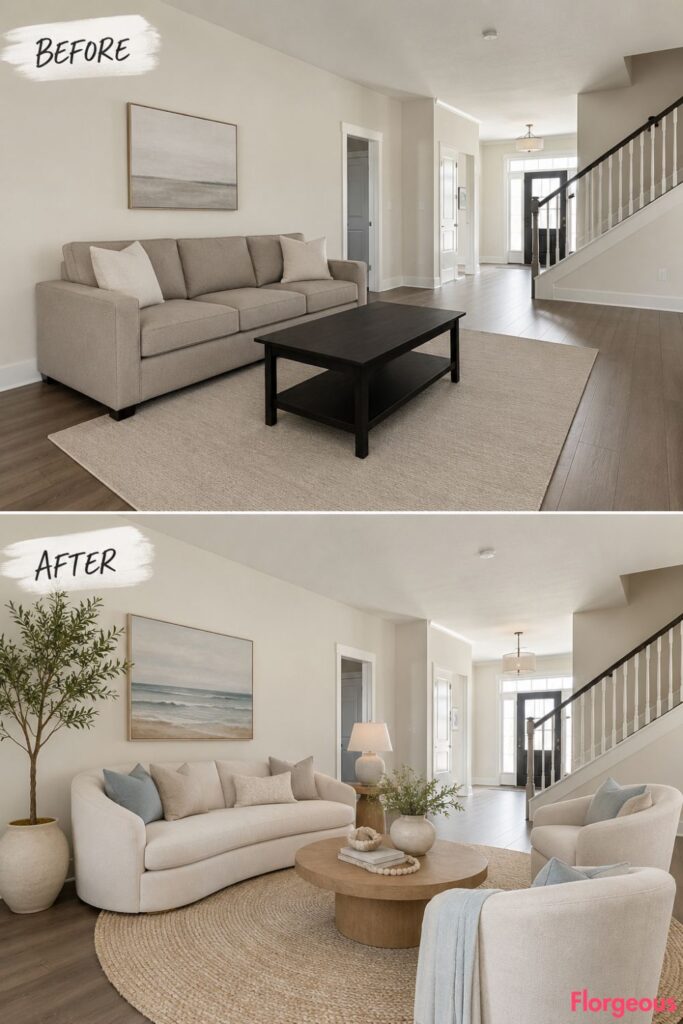
Changing the furniture angle can create a more dynamic room without purchasing anything new.
Before: Neutral walls, a basic sofa, a bare coffee table, a simple rug, minimal styling, builder-grade finishes, and soft natural light.
After: The sofa and two chairs rotate slightly away from the walls and center on a large round rug. A circular coffee table reinforces the new angle, while an open corner becomes a home for a tall ceramic lamp and sculptural plant.
The diagonal arrangement works especially well when doors or windows prevent a conventional symmetrical layout.
Leave clear walking paths behind the furniture before committing to the angle.
11. Create a Defined Rug Island With Two Contrasting Weaves
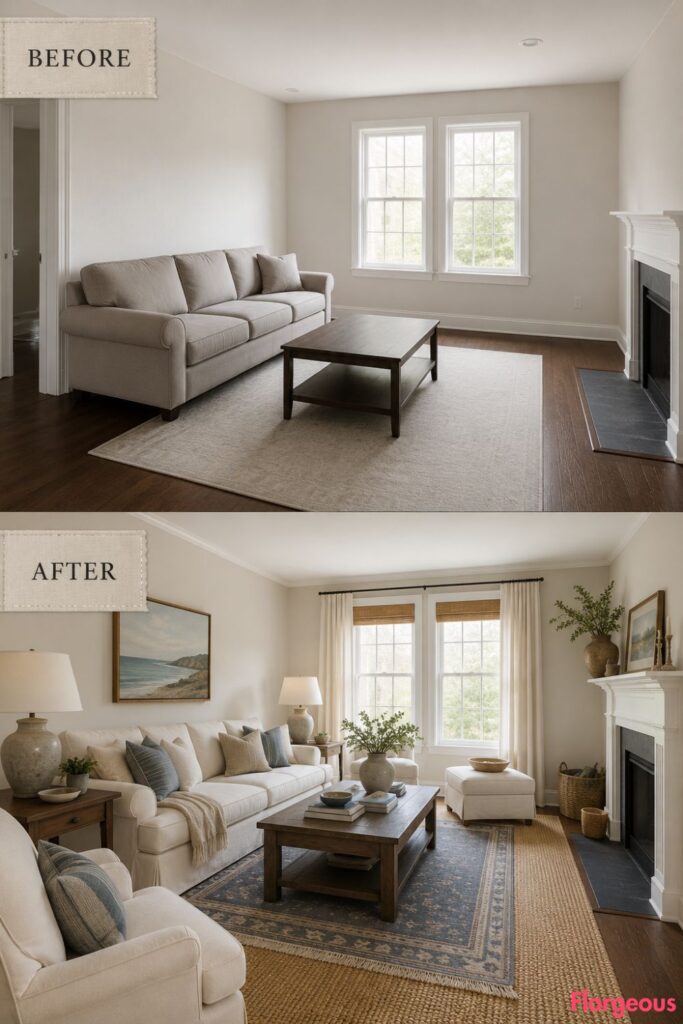
Layering rugs can organize a large room while introducing pattern in a controlled way.
Before: Neutral walls, a basic sofa, a bare coffee table, a simple rug, minimal styling, builder-grade finishes, and soft natural light.
After: A room-size natural sisal rug creates a quiet foundation. A smaller faded indigo dhurrie sits beneath the coffee table and front legs of the seating, marking the conversation area.
The contrast between coarse sisal and flatwoven cotton adds depth without requiring extra decor.
Color Story: Choose a faded indigo with gray or brown undertones. Bright royal blue can make the room feel themed.
12. Replace the Coffee Table With Handmade Tile Plinths
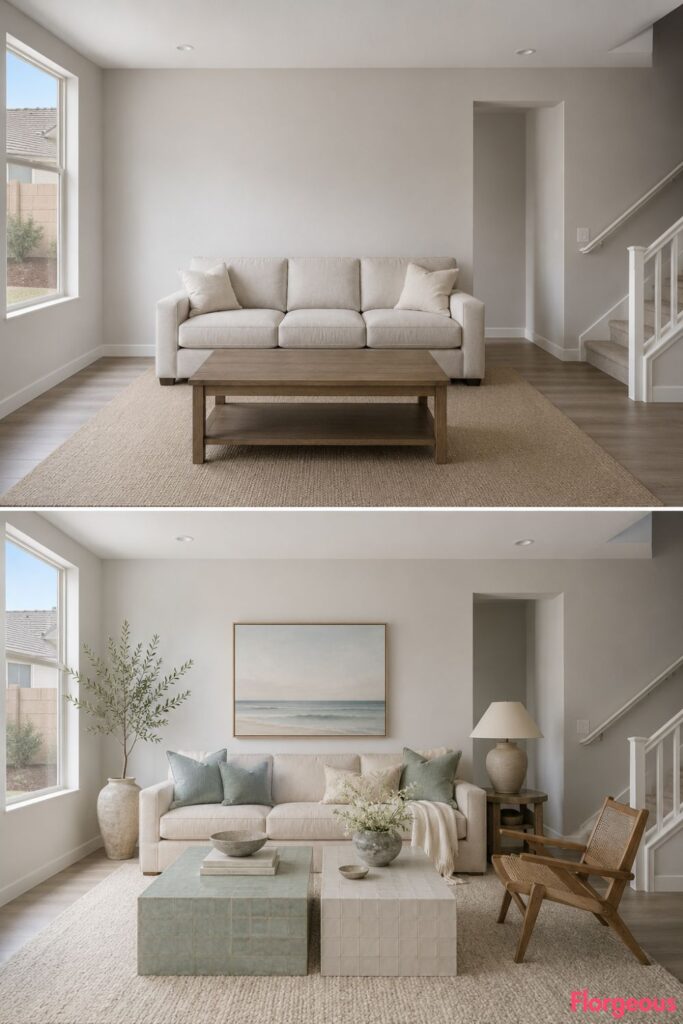
Two tiled plinth tables can bring color and craftsmanship into the middle of the room.
Before: Neutral walls, a basic sofa, a bare coffee table, a simple rug, minimal styling, builder-grade finishes, and soft natural light.
After: The standard table is replaced by two blocky plinths covered in handmade glazed tiles. One is pale celadon, while the other has a chalky off-white finish with visible variation.
Their different heights create movement and allow the tables to separate when extra surface space is needed.
Pair the glossy tiles with matte linen and wool so the room does not feel overly polished.
13. Make an Oversized Shell-Plaster Mirror the Focal Point
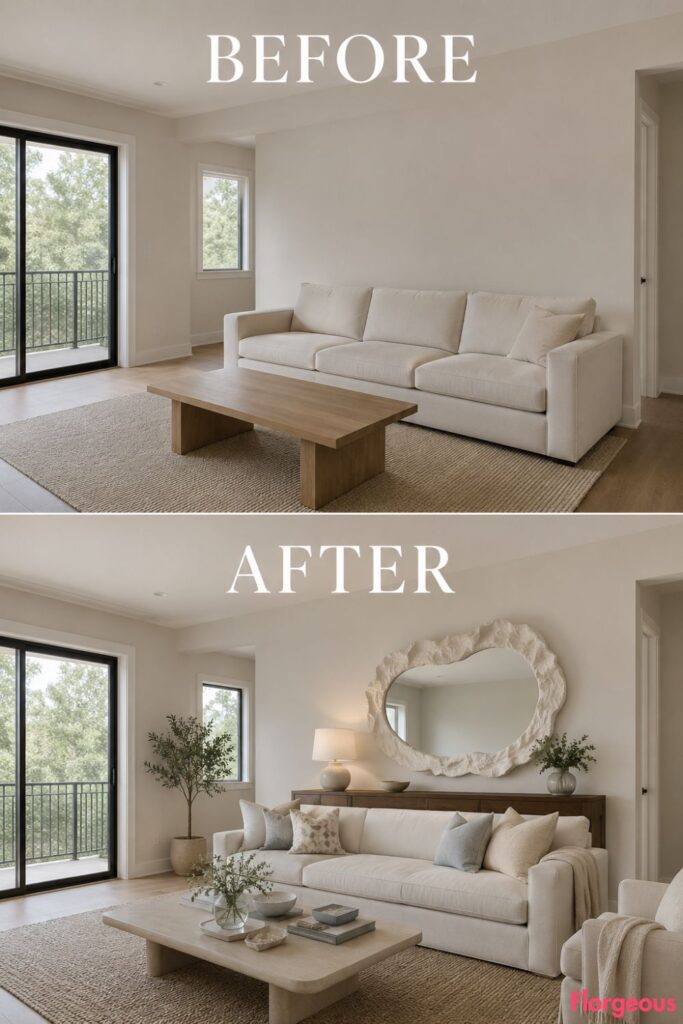
One sculptural mirror can give a plain room identity while increasing reflected light.
Before: Neutral walls, a basic sofa, a bare coffee table, a simple rug, minimal styling, builder-grade finishes, and soft natural light.
After: An oversized irregular mirror with a thick hand-applied shell-plaster frame hangs above a narrow walnut console. The organic outline feels shaped by erosion rather than manufactured.
A compact lamp and one ceramic bowl are enough to style the console. Keep the rest of the wall empty so the mirror has room to breathe.
An irregular MDF frame coated in textured plaster offers a practical handmade alternative.
14. Introduce a Seaweed-Green Drinks Armoire
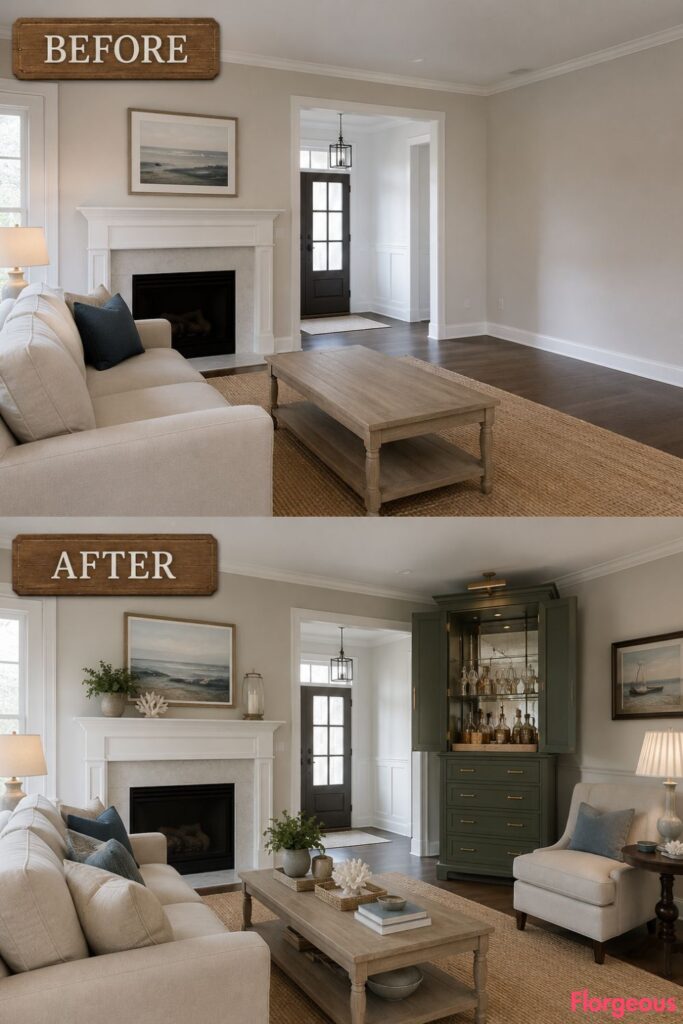
A freestanding cabinet can add rich color and hidden function without covering an entire wall.
Before: Neutral walls, a basic sofa, a bare coffee table, a simple rug, minimal styling, builder-grade finishes, and soft natural light.
After: A tall vintage-style armoire painted muted seaweed green occupies an empty corner. Inside, mirrored shelves, a stone preparation surface, and small drawers create a concealed drinks station.
When closed, the cabinet reads as a confident piece of furniture rather than a bar. A nearby slipper chair and shaded lamp form a compact evening corner.
Use removable wallpaper inside the cabinet to add depth without permanent changes.
15. Design a Coastal Listening Corner
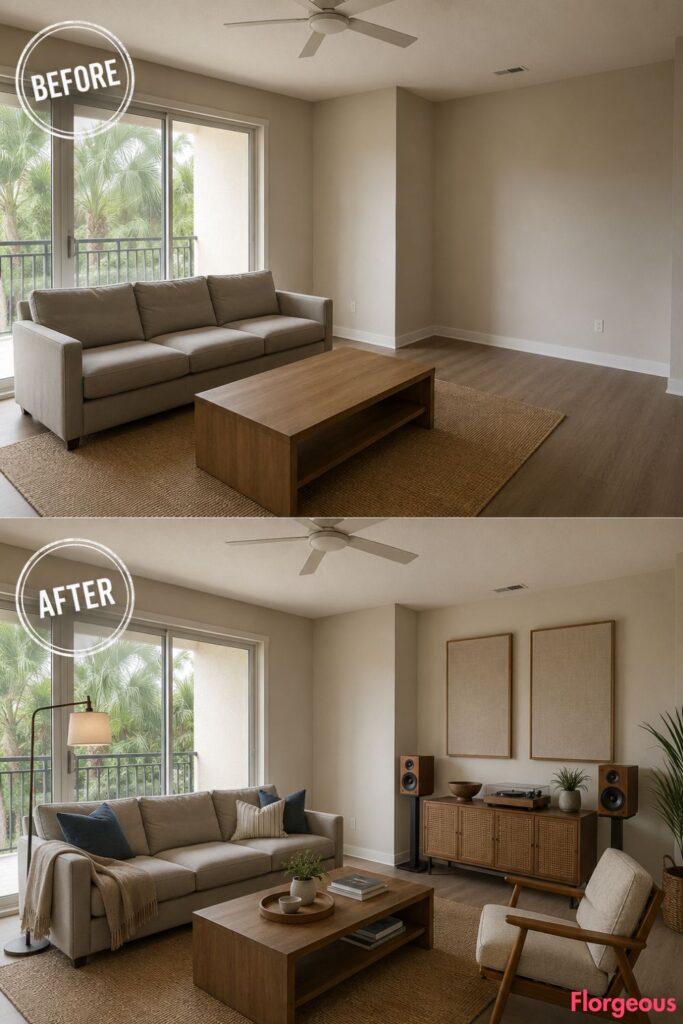
A music corner can bring personality to the room without relying on decorative beach references.
Before: Neutral walls, a basic sofa, a bare coffee table, a simple rug, minimal styling, builder-grade finishes, and soft natural light.
After: A low cane-front record cabinet sits beneath two framed linen acoustic panels. Compact wood speakers, a turntable, and a single lounge chair create a purposeful listening area.
The woven cabinet and fabric panels soften sound while contributing natural texture. Hide cables inside a paintable wall channel to keep the arrangement clean.
Choose album storage with solid doors if colorful covers would compete with the room’s palette.
16. Widen the Room With a Painted Horizon Band
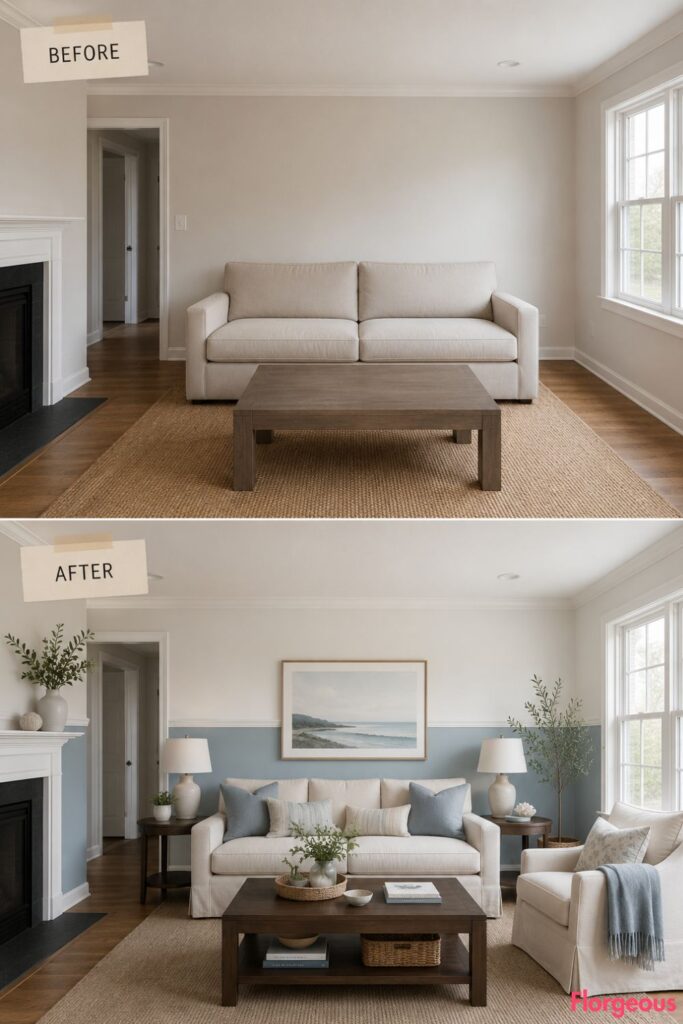
A broad horizontal paint treatment can make a narrow living room feel visually wider.
Before: Neutral walls, a basic sofa, a bare coffee table, a simple rug, minimal styling, builder-grade finishes, and soft natural light.
After: The lower third of the walls is painted a muted fog blue, with warm chalk white above. A narrow plaster rail creates a clean transition between the colors.
Furniture legs and low tables remain visible against the blue band, emphasizing the room’s horizontal lines. Keep artwork above the division so the composition does not feel crowded.
This treatment requires only paint and simple trim, making it one of the most achievable transformations.
17. Divide the Room With Back-to-Back Loveseats
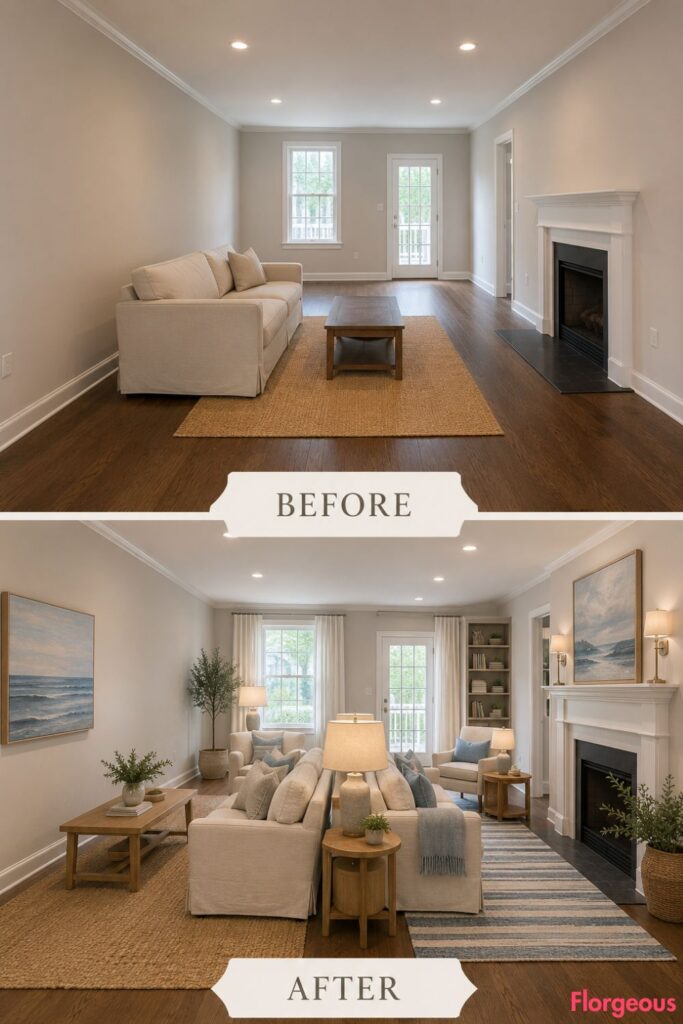
For a long living room, one oversized seating group can leave half the space unused. Two back-to-back loveseats create separate zones without constructing walls.
Before: Neutral walls, a basic sofa, a bare coffee table, a simple rug, minimal styling, builder-grade finishes, and soft natural light.
After: Two slim linen loveseats sit back to back at the center of the room. One faces a social seating area, while the other faces a quieter reading zone with a lamp and small table.
Matching upholstery connects the two spaces, but different rugs give each side its own purpose. A narrow shared console can fit between the loveseats if space allows.
This final Coastal Living Room concept works especially well in open-plan homes where one area must support several activities.
How to Choose Your Starting Point
The strongest makeovers begin with the part of the room that currently causes the most frustration. Awkward windows may call for wraparound drapery. A featureless wall could become a mural, a niche composition, or a projection surface. An open-plan layout may benefit more from a slatted screen or back-to-back seating than from new decor.
Choose one major intervention first, then support it with no more than three repeating materials or colors. For example, combine fog blue, pale oak, and flax linen, or pair shell plaster, dark walnut, and chalk white.
Before purchasing furniture, mark the proposed layout on the floor with painter’s tape. This simple step reveals crowded walkways, incorrect table sizes, and seating arrangements that look better in photographs than they function in real life.