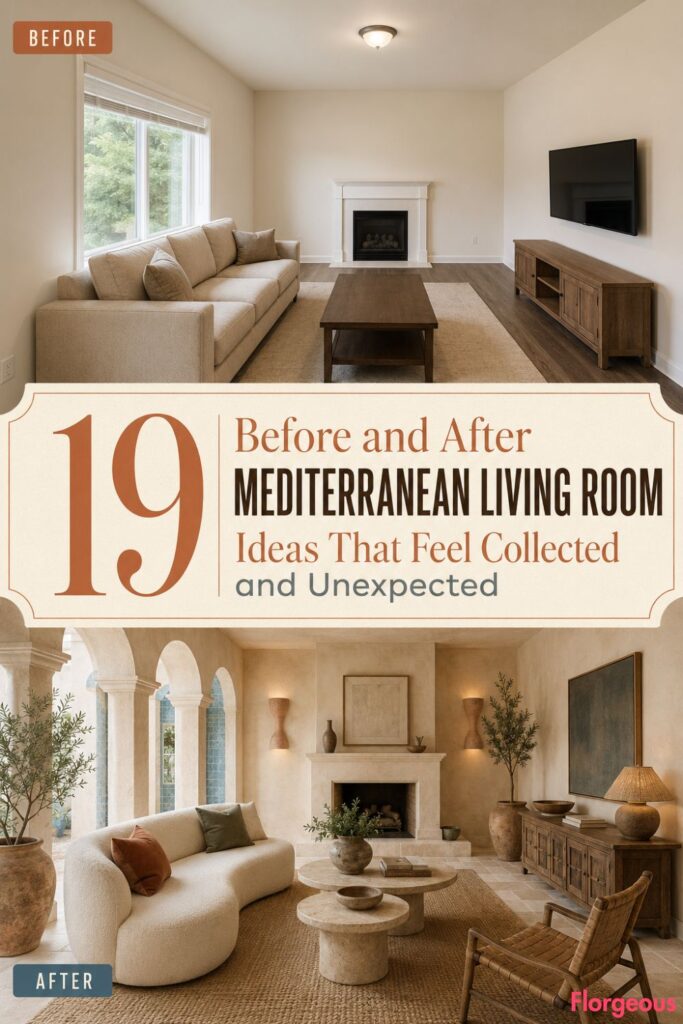
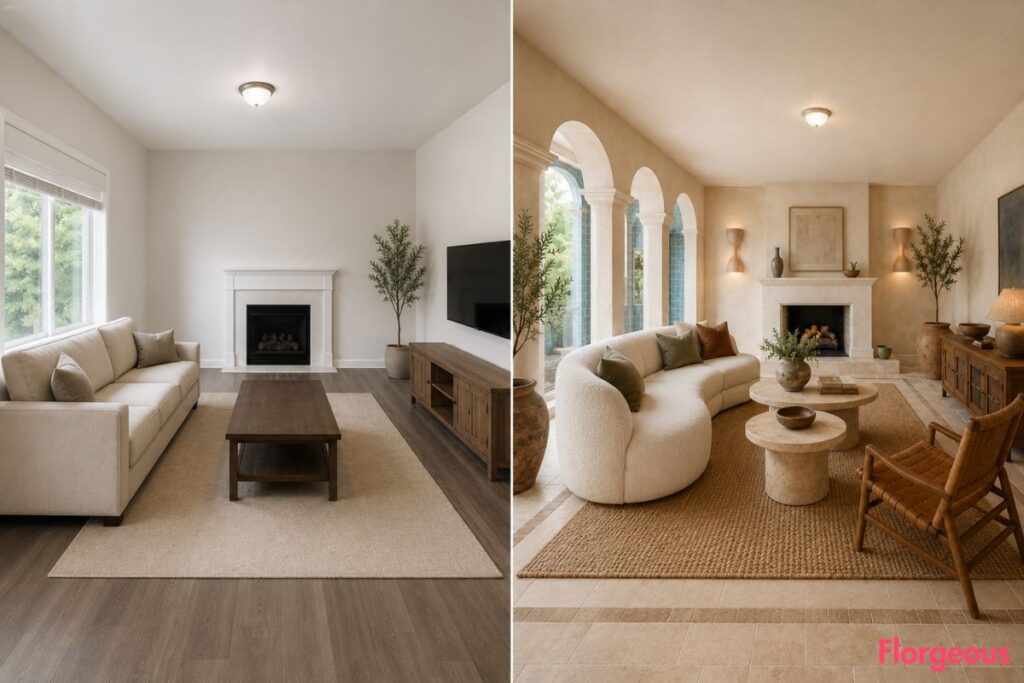
The plain living room is perfectly usable, but it has no visual rhythm. A basic neutral sofa sits against warm-white walls, the coffee table is bare, the ceiling fixture feels undersized, and nothing gives the room a sense of place.
A memorable Mediterranean Living Room does not need to resemble a themed villa or beach resort. Its warmth can come from one architectural gesture, a beautiful handmade surface, an unusual furniture layout, or a material that looks shaped by sunlight and time.
Each makeover below begins with the exact same simple room. The architecture, proportions, and camera angle remain consistent, while the after version explores a completely different interpretation of Southern European style.
1. Divide the Room With a Slender Arched Colonnade
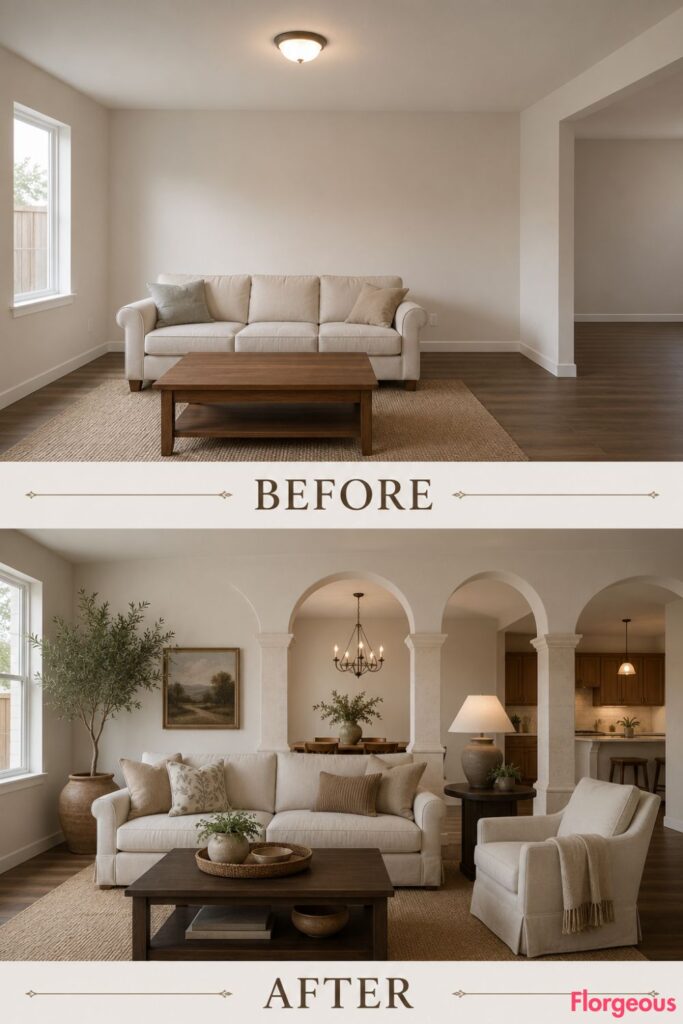
A row of shallow arches can separate the living area from an entrance or dining zone without closing either space completely.
Before: The plain room has a basic neutral sofa, bare coffee table, simple rug, minimal styling, builder-grade lighting, and an undefined open edge.
After: Three slender plaster arches create a graceful colonnade along one side. Pale stone bases, a flax sofa, and compact dark-wood tables keep the new architecture light and balanced.
Why it works: The arches create rhythm and definition while allowing daylight to travel through the room.
2. Frame the Windows With Glossy Faded-Blue Zellige
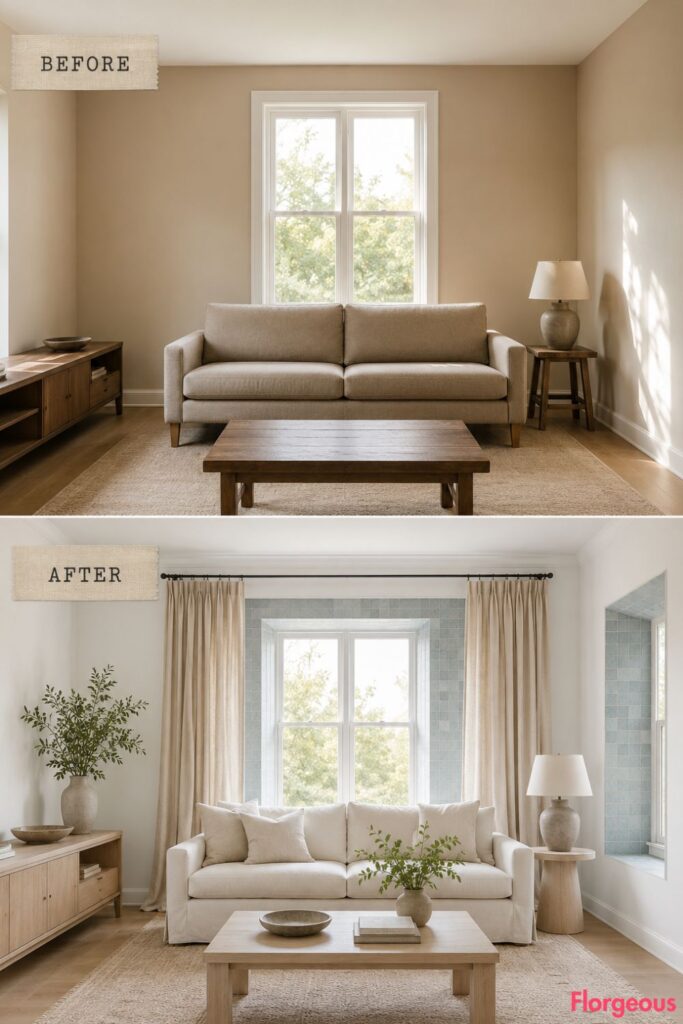
Instead of tiling a fireplace or floor, use handmade tile inside deep window reveals. The color becomes most vivid when natural light passes across the uneven glazed surface.
Keep the surrounding walls chalky white and choose sandy linen curtains, pale oak furniture, and a simple ivory sofa.
Designer Tip: Tile only the inner reveals rather than the entire window wall. This creates a precise architectural detail without overwhelming the room.
3. Raise One Corner Into a Tiled Lounge Platform
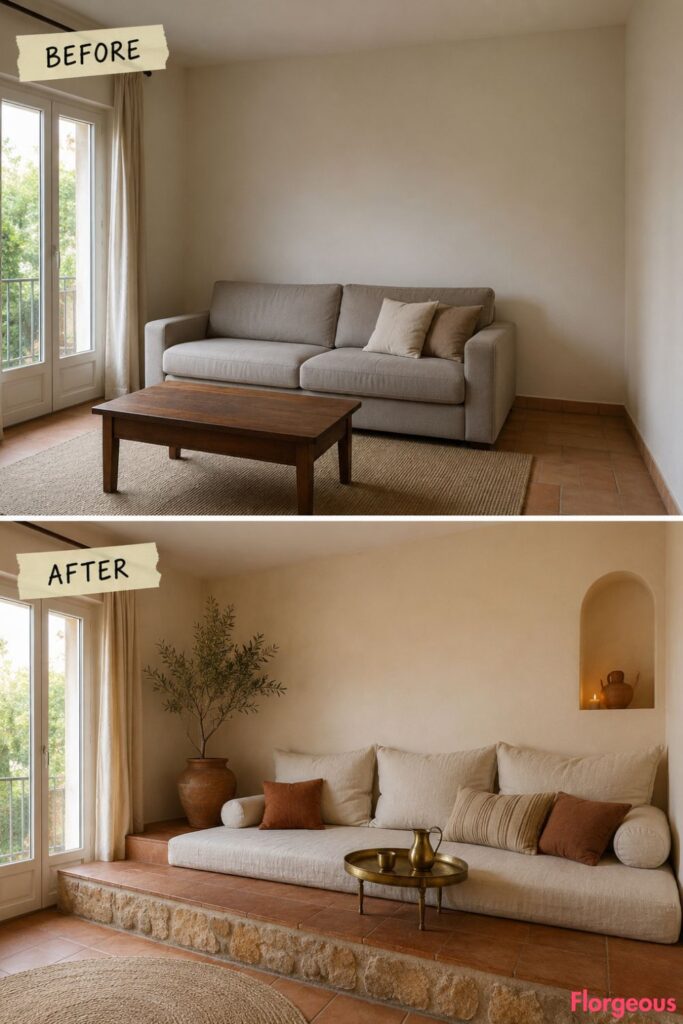
A low platform can turn an empty corner into a defined retreat without adding walls. Finish the edge in warm stone and cover the surface with solid clay-colored tiles.
Place a loose mattress-style seat on top, then add oversized linen cushions, a low brass tray table, and a single reading light.
Before: The room has unused floor space and no secondary seating zone.
After: The raised lounge introduces a subtle change in level and gives the room a relaxed, built-over-time feeling.
4. Replace the Sofa With a Four-Chair Mediterranean Salon
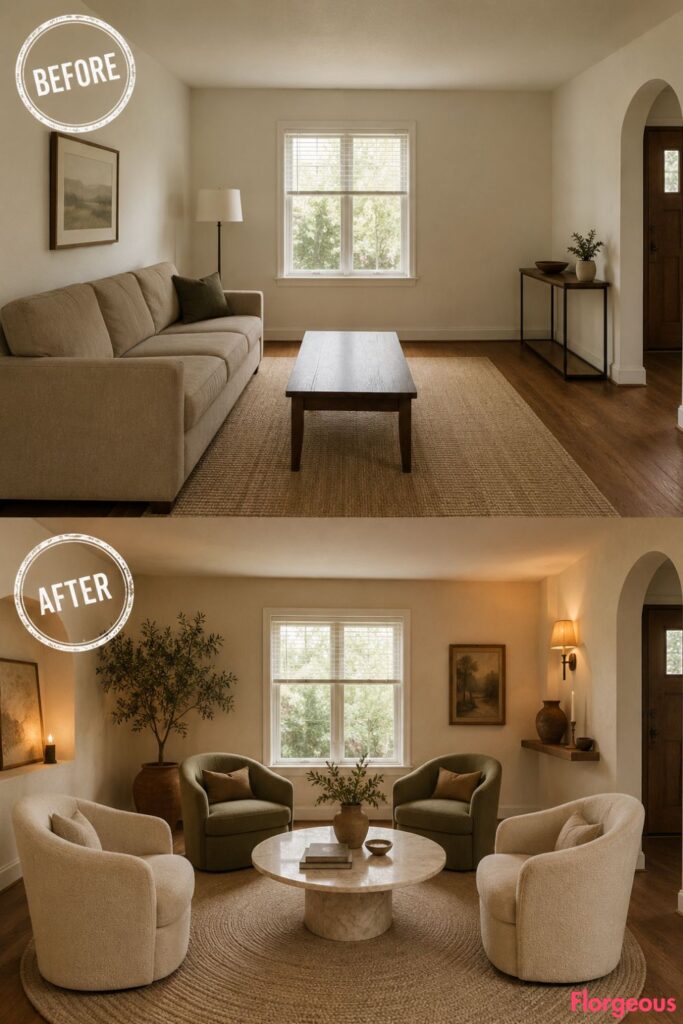
Removing the sofa can make a living room feel more sociable and less predictable. Arrange four generously proportioned lounge chairs around a round table, leaving clear paths between them.
Use two flax chairs and two muted olive chairs rather than a matching set. A circular wool rug and compact marble table unify the arrangement.
Small Space Tip: Choose chairs with visible legs and narrow arms so the grouping feels open rather than crowded.
5. Cover the Ceiling With Woven Reed Matting
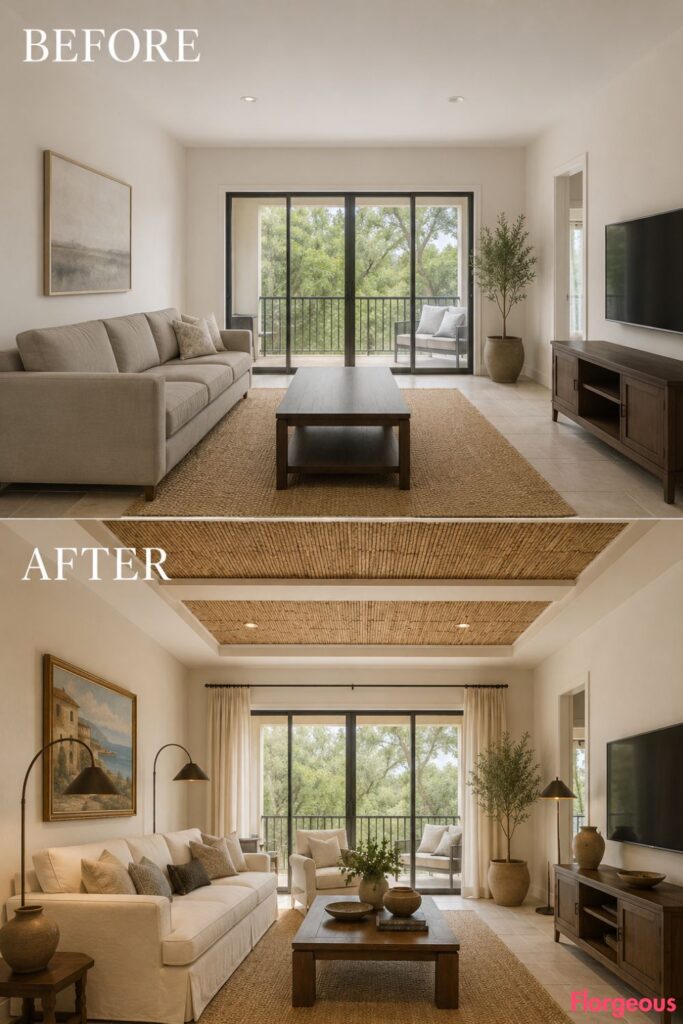
A reed-lined ceiling introduces texture overhead without the visual weight of dark timber. Frame the woven surface with a broad warm-white plaster border to give it a clean finish.
Pair it with cream upholstery, a chestnut coffee table, and simple bronze floor lamps. The room remains pale, but the ceiling prevents it from feeling bland.
6. Replace Ordinary Curtains With Full-Height Interior Shutters
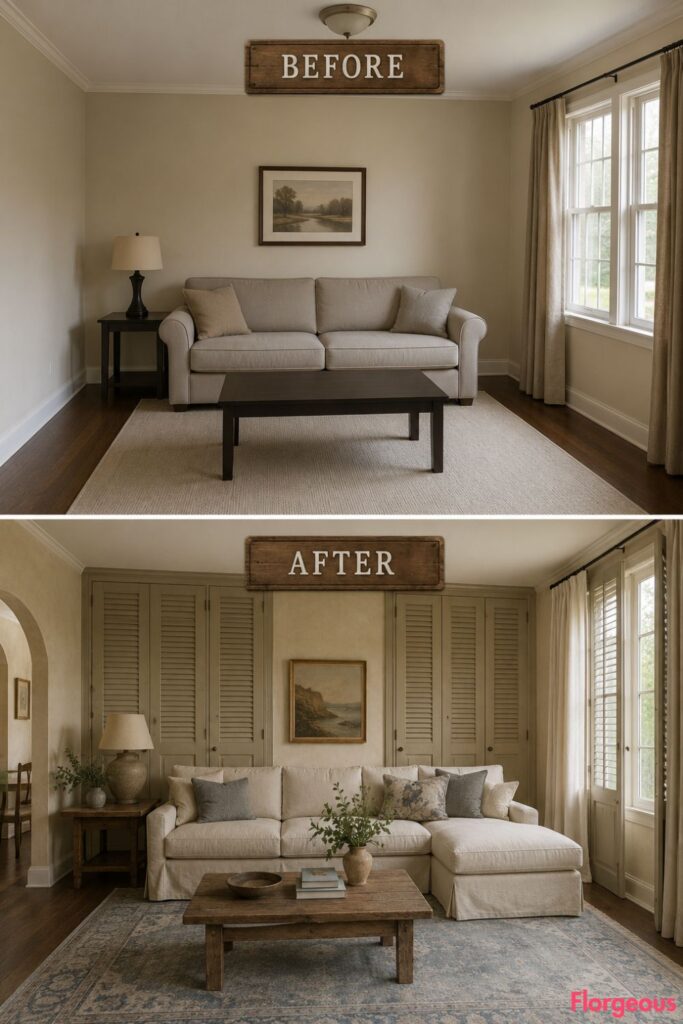
Tall folding shutters can give a plain window wall the depth of an older European home. Paint them a soft mushroom tone and use narrow slats that filter light rather than blocking it.
The shutters should extend almost to the ceiling, making the windows appear taller. Simple linen seating and a faded blue-gray rug keep the focus on the millwork.
Budget Version: Apply ready-made shutters only to the lower half of the windows, then paint the frames and surrounding trim the same color.
7. Anchor the Focal Wall With a Carved Stone Console
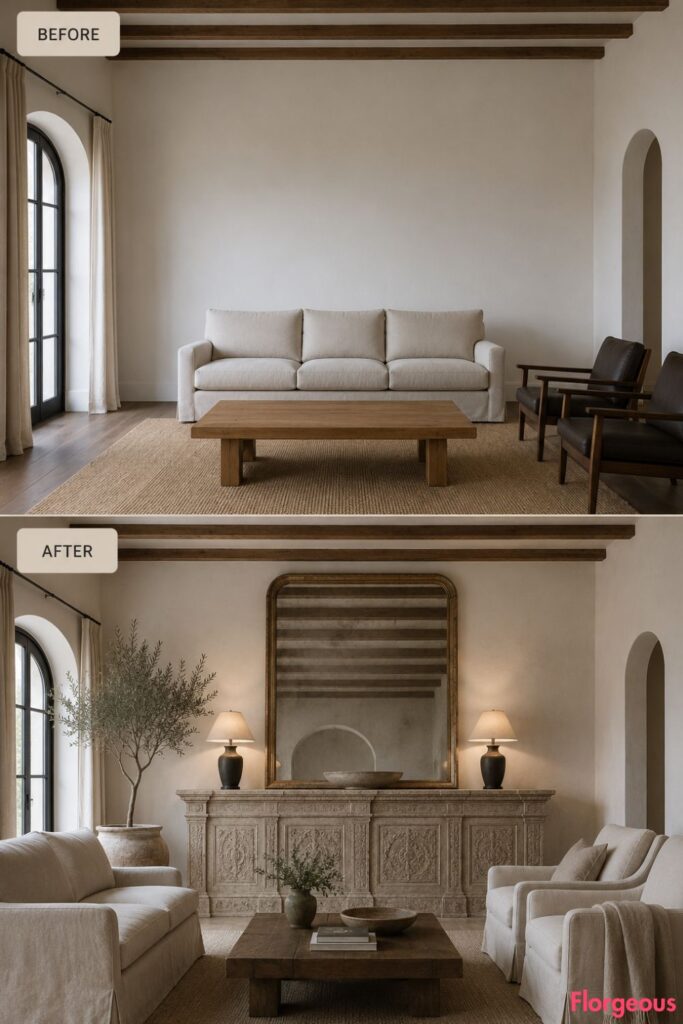
A monumental console can give a bare wall the presence of architecture. Choose a long carved-stone base with a thick, slightly irregular top.
Hang one oversized antiqued mirror above it and place a pair of small shaded lamps at each end. Keep the center nearly empty except for a shallow ceramic bowl.
Before: The wall behind the sofa lacks scale and purpose.
After: The console and mirror create a formal focal point without relying on a fireplace or built-in cabinetry.
8. Turn Antique Textile Fragments Into a Framed Triptych
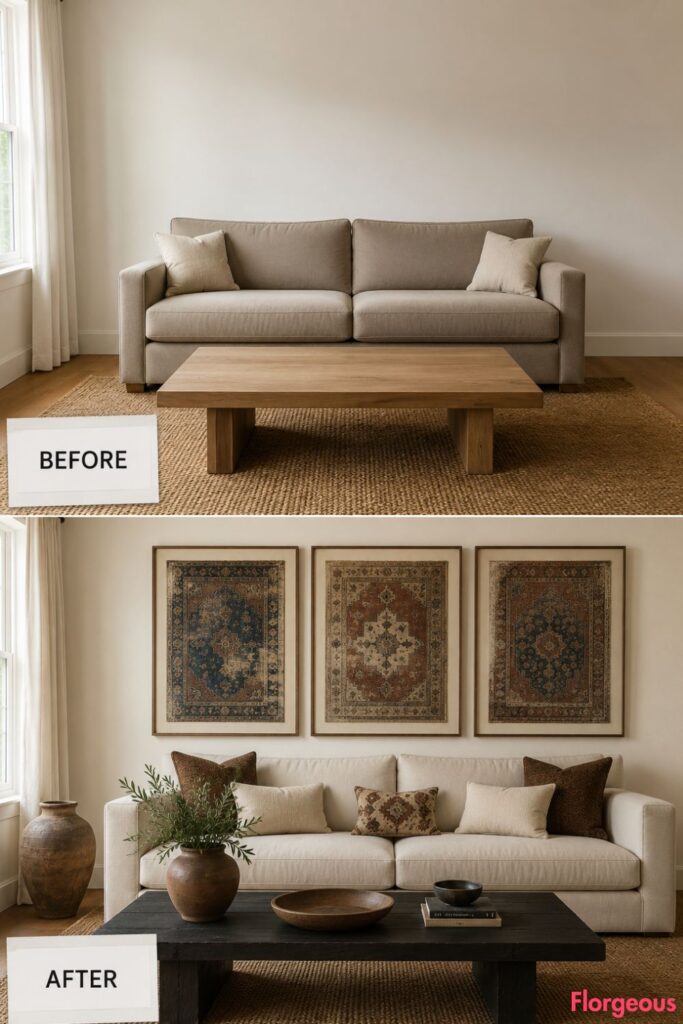
Rather than hanging one large tapestry, divide three different antique textile fragments into matching oversized frames. Look for faded stripes, small geometric motifs, and softened red, indigo, or tobacco tones.
The generous spacing between the frames keeps the display calm. A plain oatmeal sofa and blackened-wood table prevent the room from becoming overly decorative.
Style Note: Use museum-quality fabric mounting or archival backing so delicate textiles remain supported.
9. Make a Mosaic Coffee Plinth the Centerpiece
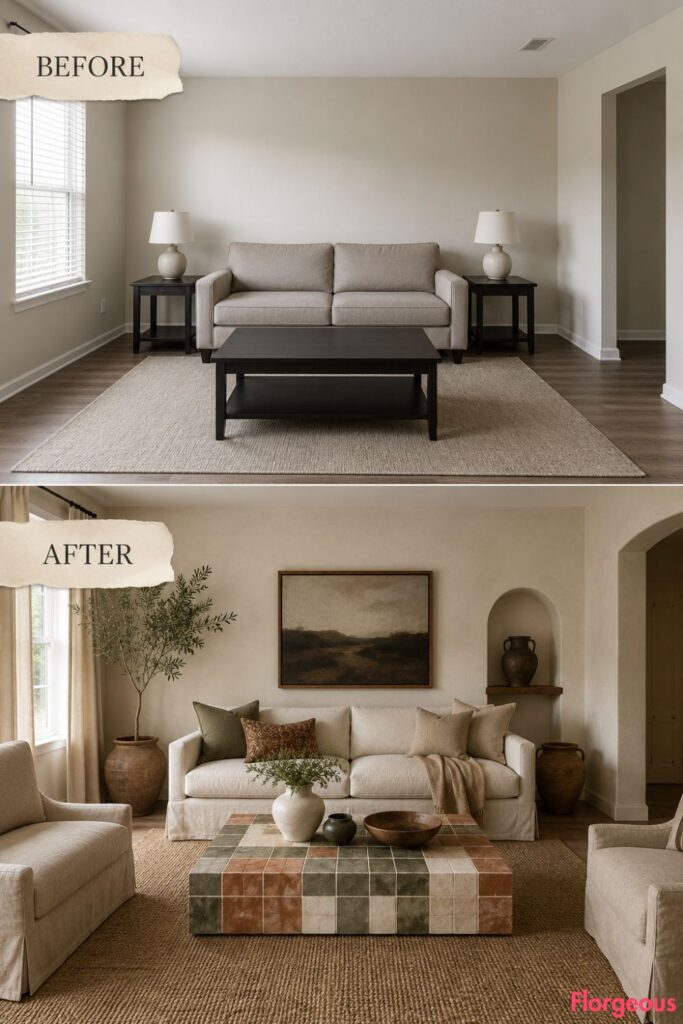
Replace the conventional coffee table with a low rectangular plinth covered in tiny matte mosaic tiles. Choose chalk, muted olive, and dusty terracotta in an irregular geometric pattern.
The solid shape grounds soft furniture and gives the room a custom feature without requiring structural work.
Try this: Cover an inexpensive plywood base with mesh-backed mosaic sheets, then soften sharp corners with rounded edge trim.
10. Trace the Architecture With Hand-Painted Geometric Borders
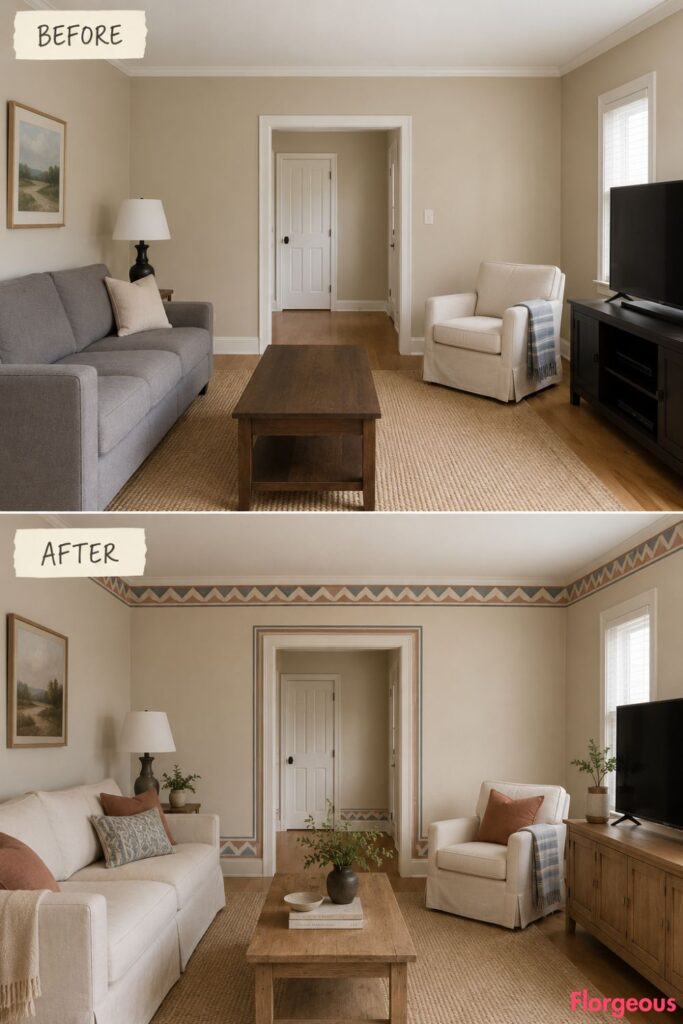
A narrow painted border can make ordinary walls and doorways feel carefully crafted. Use a repeating stepped or diamond motif around the room’s base, door frames, and one ceiling edge.
Keep the pattern small and use only two softened colors, such as clay and smoky blue on a warm-white background.
Before: The flat walls have no visual structure.
After: The hand-painted lines create movement and craftsmanship without covering the room in pattern.
11. Zone the Entrance With Iron and Ribbed Glass
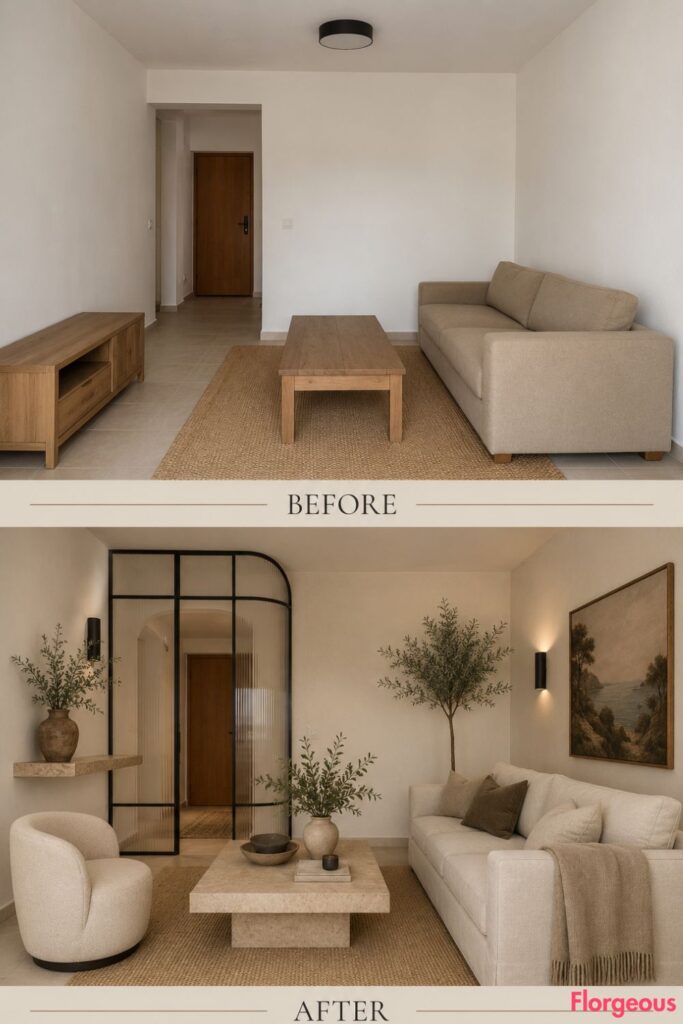
A slim blackened-iron screen filled with ribbed glass can define the entrance while preserving light and partial views. Use a curved top rather than a strict rectangle to soften the industrial material.
Place a narrow stone shelf on the entrance side and a compact upholstered chair on the living-room side.
Why it works: The glass provides separation without making the room appear smaller.
12. Soften the Entire Room With a Tented Linen Ceiling
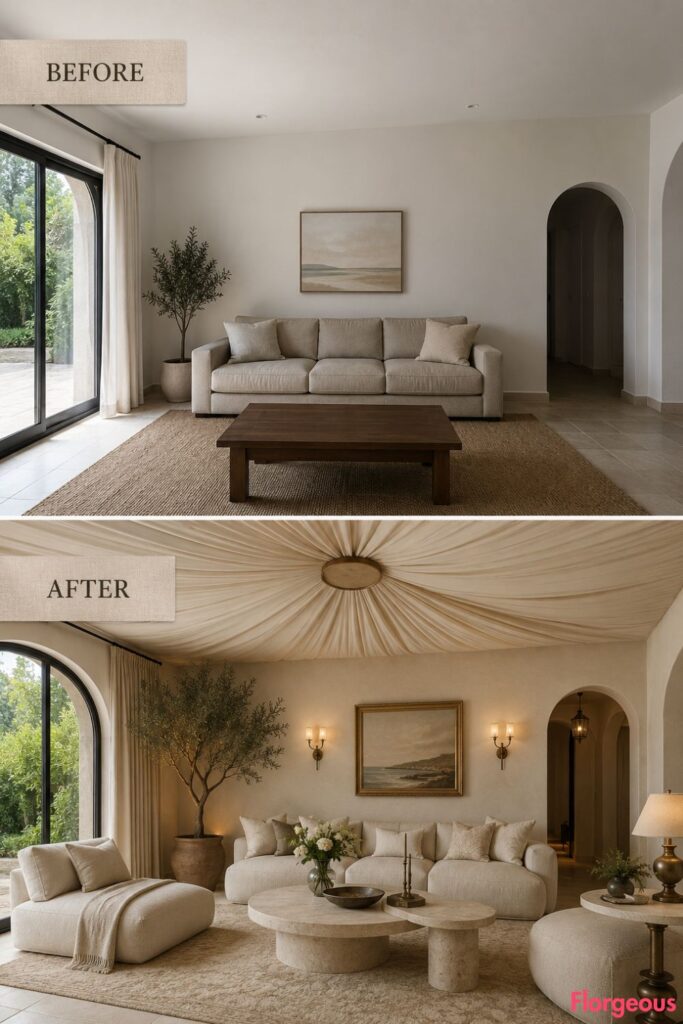
For a romantic interpretation, drape wide panels of oyster-colored linen from the perimeter toward a shallow central ceiling ring. Keep the fabric relaxed but controlled rather than theatrical.
Use low furniture, pale stone, and only a few dark bronze details below. The soft folds filter sound and give the room an intimate atmosphere.
Common Mistake: Avoid bright white synthetic fabric. It can look temporary and reflect light too harshly.
13. Lay a Pale Limestone Floor With Fine Bronze Inlay
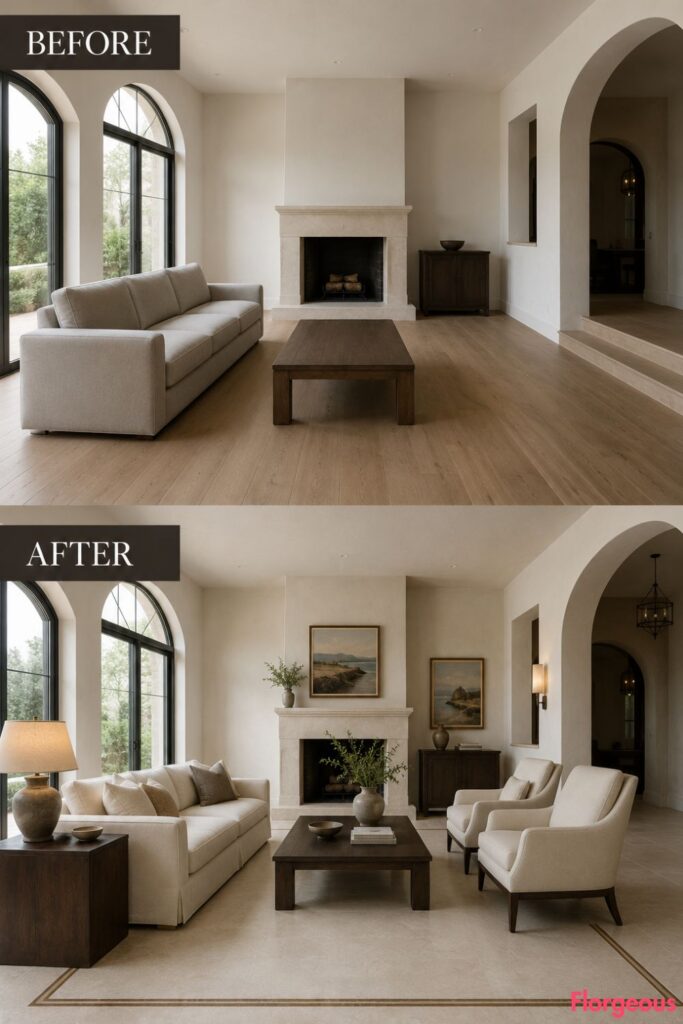
A pale honed-limestone floor can make a small room feel brighter and more permanent. Add slim bronze inlay lines to create a large border and a centered rectangular field beneath the seating.
The pattern should be subtle enough to reveal itself only as the light changes. A dark walnut table provides necessary contrast.
Before: The simple flooring looks disconnected from the rest of the room.
After: The limestone and metal detailing give the floor quiet precision and old-world permanence.
14. Add a Colorful Majolica-Fronted Sideboard
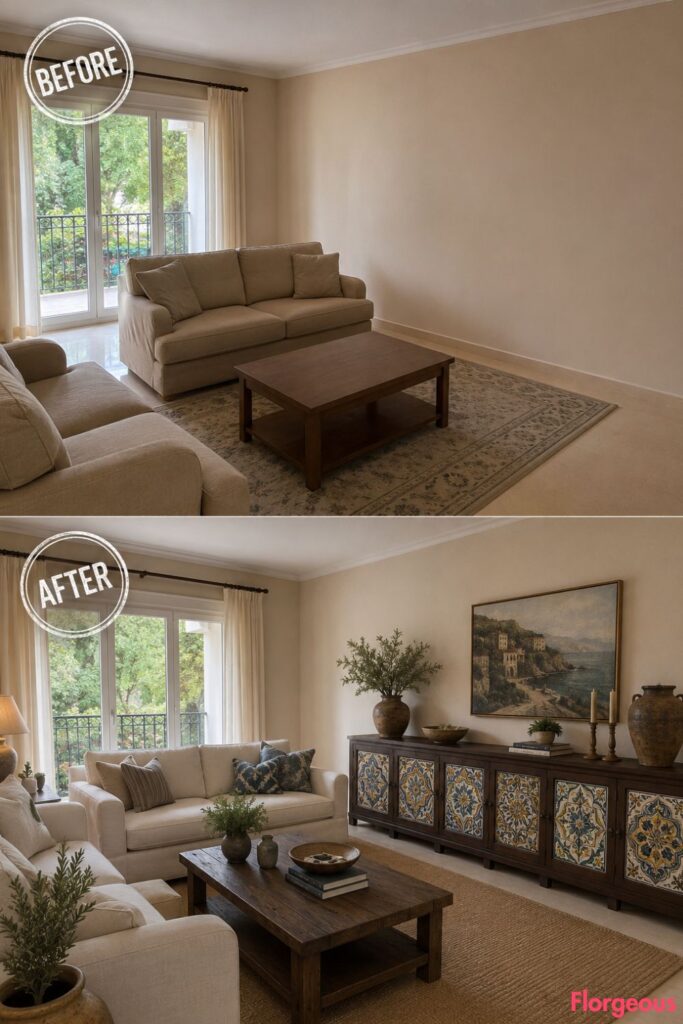
A long sideboard with hand-painted ceramic door fronts can introduce pattern without placing it across the walls or floor. Choose different related motifs rather than identical repeating tiles.
Keep the cabinet frame dark walnut and the top plain stone. Above it, hang a single simple artwork with no readable text.
Color Story: Pull one subdued color from the ceramic panels into a cushion or lamp shade, then stop. Too many matching accents will make the room feel staged.
15. Replace the Builder-Grade Doorway With Arched Double Doors
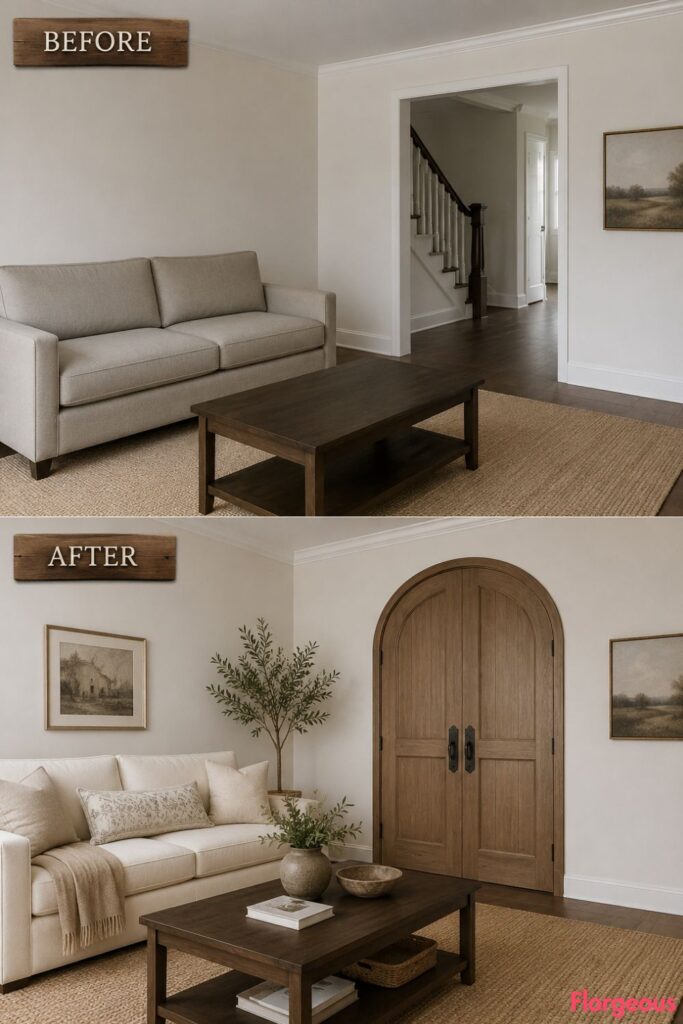
A standard rectangular doorway can become a strong feature when replaced with tall arched double doors. Use aged oak, narrow recessed panels, and hammered bronze handles.
Leave the doors partially open so the curve remains visible while the adjoining room still feels connected. Warm-white walls and a low ivory sofa keep the doorway from looking too formal.
16. Create a Rhythm of Handmade Ceramic Wall Lights
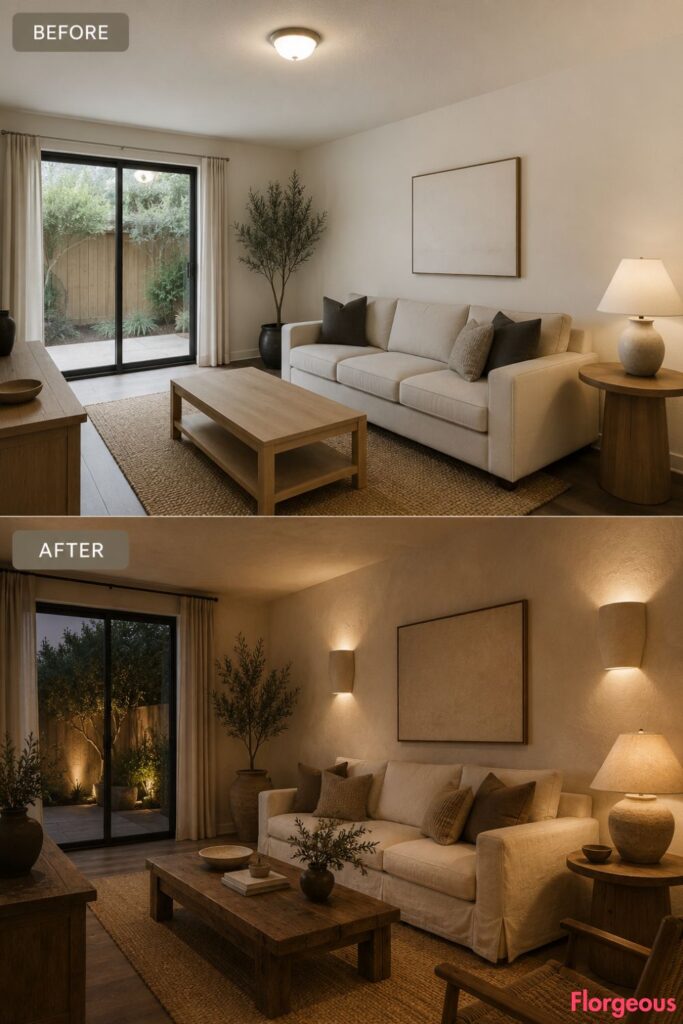
Remove the central ceiling fixture and use a measured row of ceramic sconces instead. Place four or six shallow fixtures around the room at the same height.
Their hand-pinched surfaces can vary slightly, but the glaze should remain consistent, such as chalk white, sand, or soft olive. Pools of warm light bring out the wall texture after sunset.
Designer Tip: Install dimmers so the sconces can provide ambient light without becoming too bright or creating harsh shadows.
17. Build a Sculptural Wall From Oversized Woven Baskets
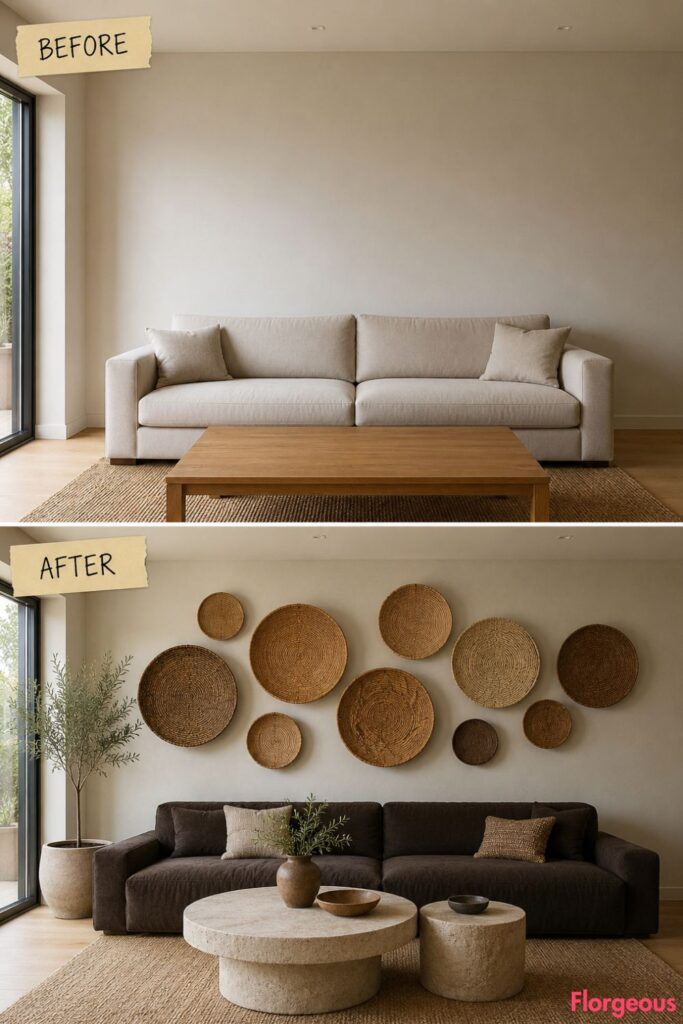
Instead of a standard gallery wall, arrange a group of unusually large shallow baskets across one wall. Mix tight geometric weaving with looser radial patterns, but keep the fibers within a natural wheat-to-tobacco palette.
Allow generous negative space around the installation. A dark low sofa or bench beneath it helps the pale woven forms stand out.
Before: The empty wall feels broad and difficult to furnish.
After: The baskets add scale, shadow, and handmade texture without introducing busy color.
18. Introduce a Serpentine Sofa and Paired Stone Drums
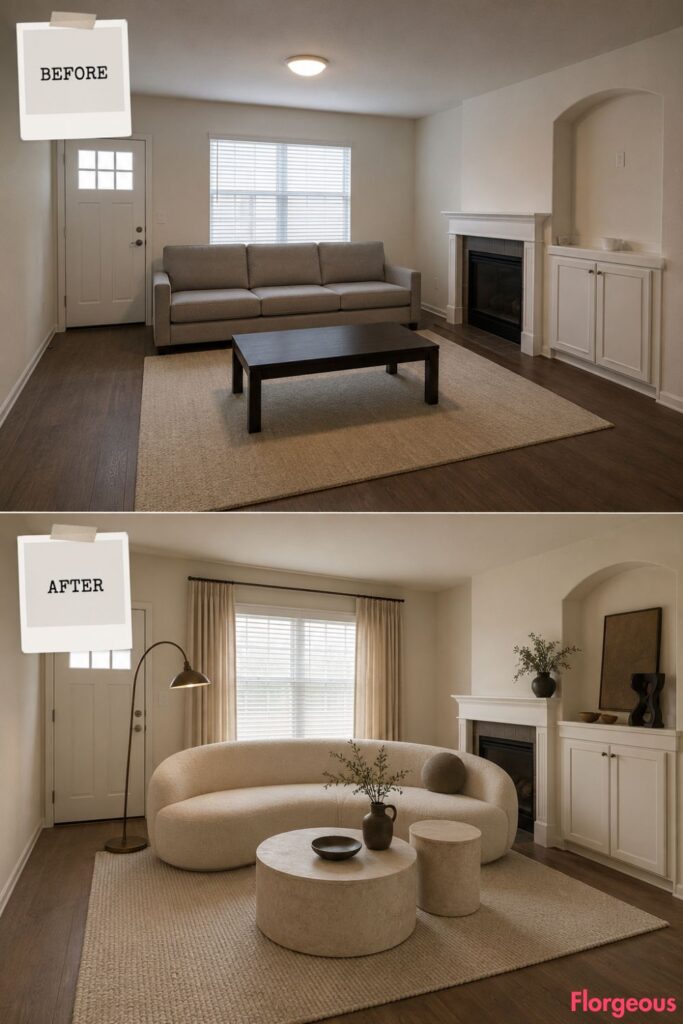
One curved sofa can completely change the movement of a rectangular room. Choose a long serpentine shape upholstered in textured oatmeal fabric and float it away from the walls.
Use two different-height stone drum tables instead of one central coffee table. A plain rug beneath them keeps the unusual silhouettes clear.
Why it works: The curves interrupt the room’s straight lines and create several natural conversation positions.
19. Finish With a Monochrome Plaster Bas-Relief Wall
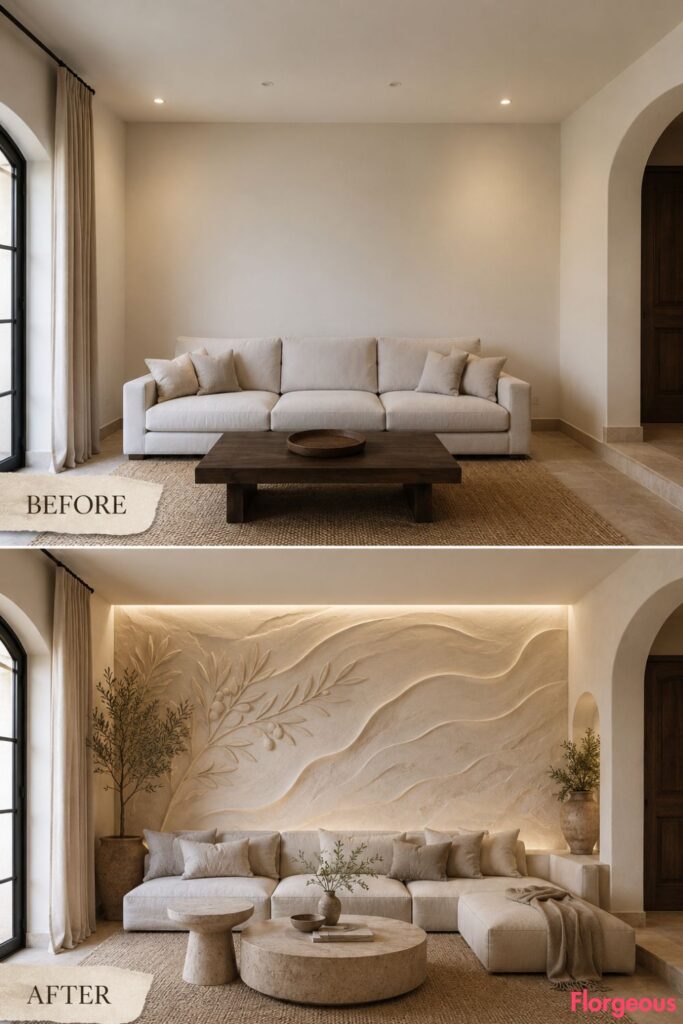
The final makeover turns a blank wall into a sculptural artwork. Commission or create a shallow plaster bas-relief featuring abstract olive leaves, folded fabric, or eroded wave-like forms.
Keep the entire relief the same warm-white color as the wall. Concealed grazing lights from above reveal the shadows without introducing additional color.
Before: The room has a bare wall and no memorable artistic feature.
After: The relief creates depth and movement while remaining calm enough to support linen furniture, stone tables, and a muted rug.
Budget Version: Use lightweight molded relief panels, join them carefully, then paint the entire installation and wall in one mineral finish.
How to Choose the Right Mediterranean Makeover
The strongest room will not necessarily be the one with the most Mediterranean details. It will be the one where a single clear idea changes how the space feels, whether that is a new ceiling, a more sociable layout, an architectural divider, a handmade surface, or one unforgettable piece of furniture.
Begin by identifying the room’s weakest area. An undefined entrance may benefit from a glass screen, while a flat ceiling could support reed matting or soft linen. A room with good architecture but little personality may need only ceramic lighting, carved stone, or a carefully placed textile installation.
Before purchasing anything, compare your wall color, main fabric, wood finish, metal, and one decorative material in the room’s actual daylight. A successful Mediterranean Living Room should feel naturally layered, not assembled from a themed collection.