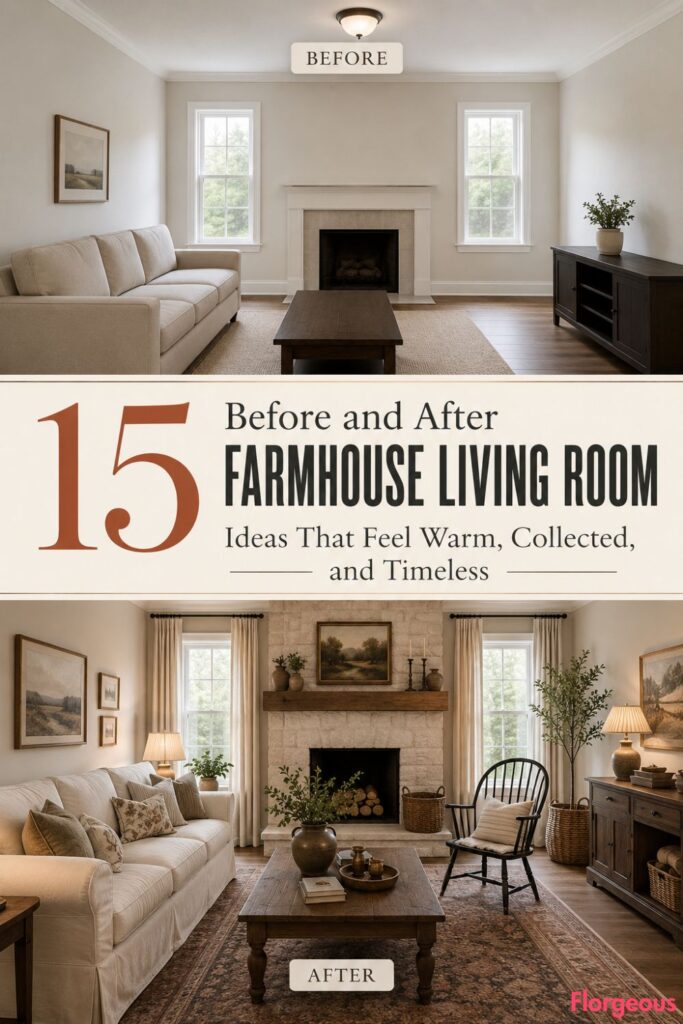
A living room can have all the basic pieces and still feel unfinished. Neutral walls, a standard sofa, a generic rug, and one small ceiling light often create a space that works, but does not feel memorable.
These Farmhouse Living Room makeovers begin with that same plain room every time. The architecture, proportions, furniture starting point, and camera angle stay consistent, while each after version follows a completely different design direction.
The ideas move beyond distressed signs and predictable rustic accessories. Instead, they use stone, reclaimed wood, linen, aged metal, vintage textiles, practical storage, and thoughtful lighting to create rooms that feel relaxed, useful, and naturally collected.
1. Build a Quiet Focal Point With a Limewashed Stone Fireplace
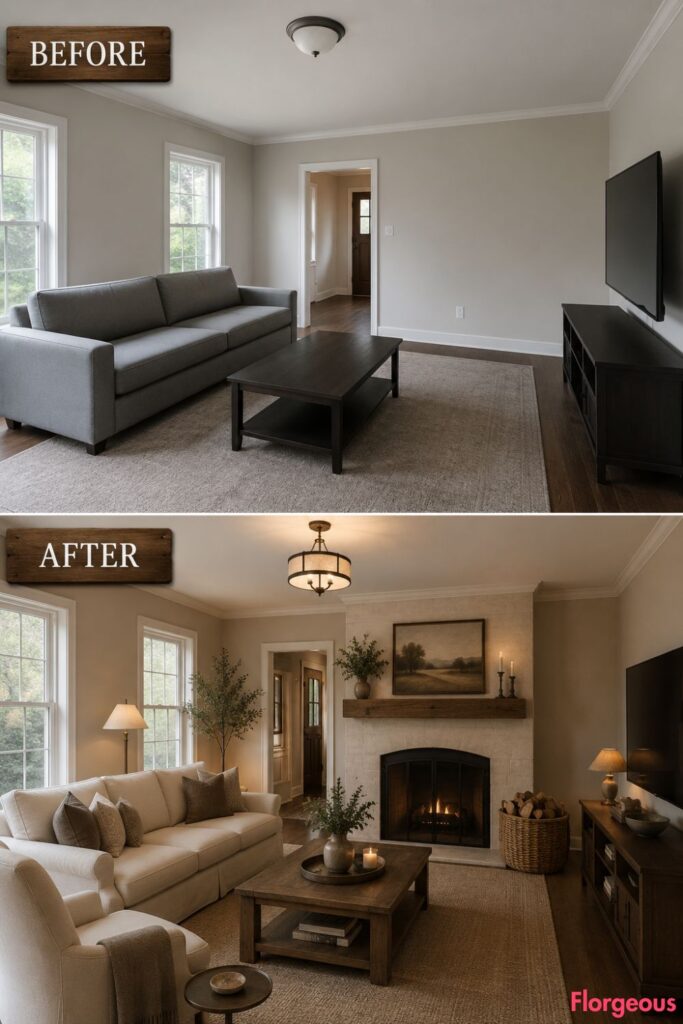
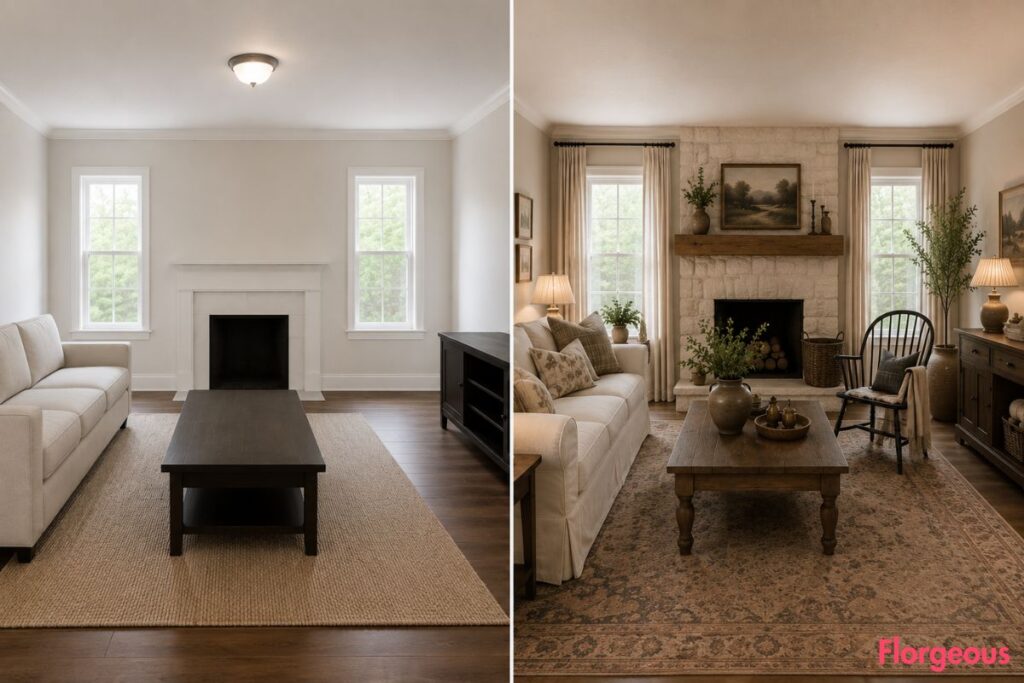
The empty focal wall becomes a substantial fireplace made from irregular pale limestone. A creamy limewash softens the stone variation, while a thick reclaimed-oak mantel adds warmth without looking overly rugged.
A simple iron fire screen, low woven log basket, and one framed landscape complete the arrangement. The fireplace carries the room visually, so the surrounding decor can remain restrained.
Before: Neutral walls, a basic straight sofa, bare rectangular coffee table, generic rug, builder-grade ceiling light, minimal styling, and no clear focal point.
After: A light stone fireplace anchors the room, supported by linen seating, warm oak, and a small amount of aged metal.
Designer Tip: Keep the mantel styling asymmetrical and sparse. One piece of art, one ceramic vessel, and a branch arrangement are usually enough.
2. Turn the Longest Wall Into a Reclaimed-Oak Library
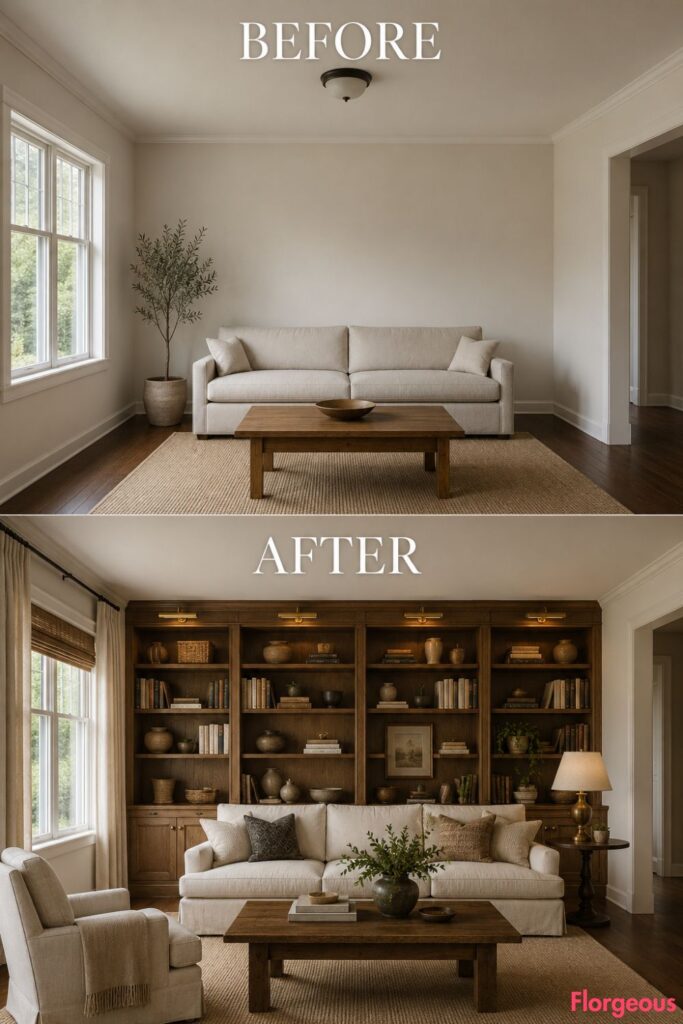
Instead of adding several small pieces of storage, cover one wall with full-height reclaimed-oak shelving. Closed cabinets along the bottom hide electronics and household clutter, while open shelves hold books, pottery, framed sketches, and a few baskets.
The natural grain gives the room depth, but the simple cabinet profile keeps it from feeling heavy. Leaving sections of each shelf empty makes the display look collected rather than crowded.
Budget Version: Place matching unfinished bookcases side by side, connect them with trim, and stain the entire unit in one warm oak finish.
3. Shape the Window Into a Built-In Reading Nook
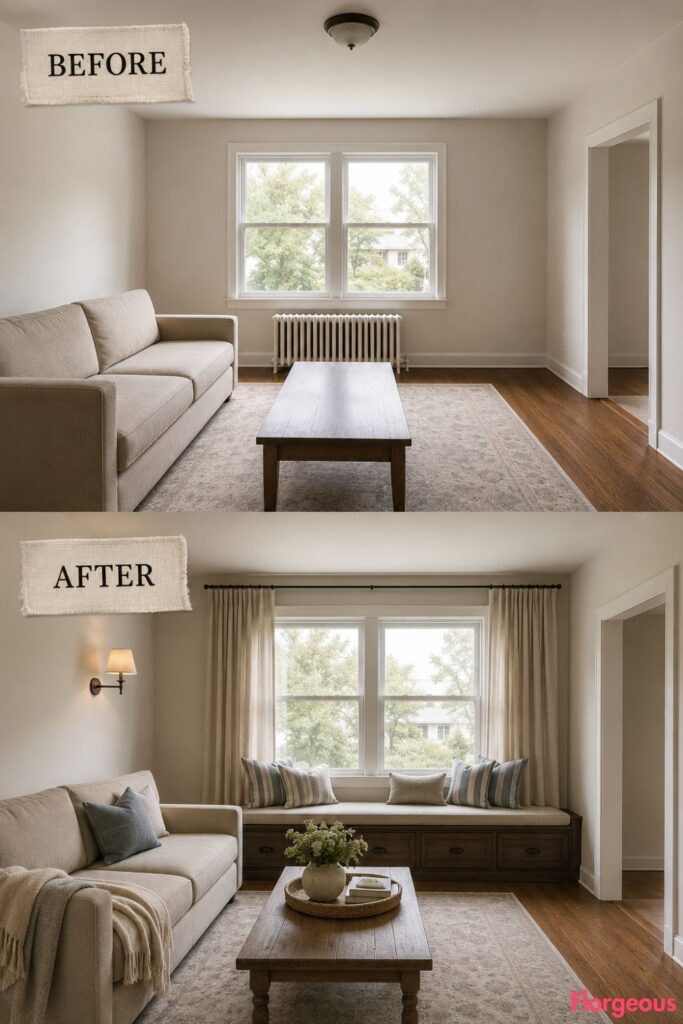
A basic window becomes the most inviting feature in the room with a deep oak window seat. Drawers underneath provide storage, while an oatmeal cushion and faded blue ticking-stripe pillows introduce softness.
Full-length linen curtains frame the nook and visually raise the ceiling. A compact shaded wall lamp makes the seat useful after daylight fades.
This makeover gives the room a destination without changing the main seating arrangement.
Small Space Tip: A freestanding storage bench placed tightly beneath the window can create a similar effect without permanent construction.
4. Hide the Television Inside an Antique Hutch Wall
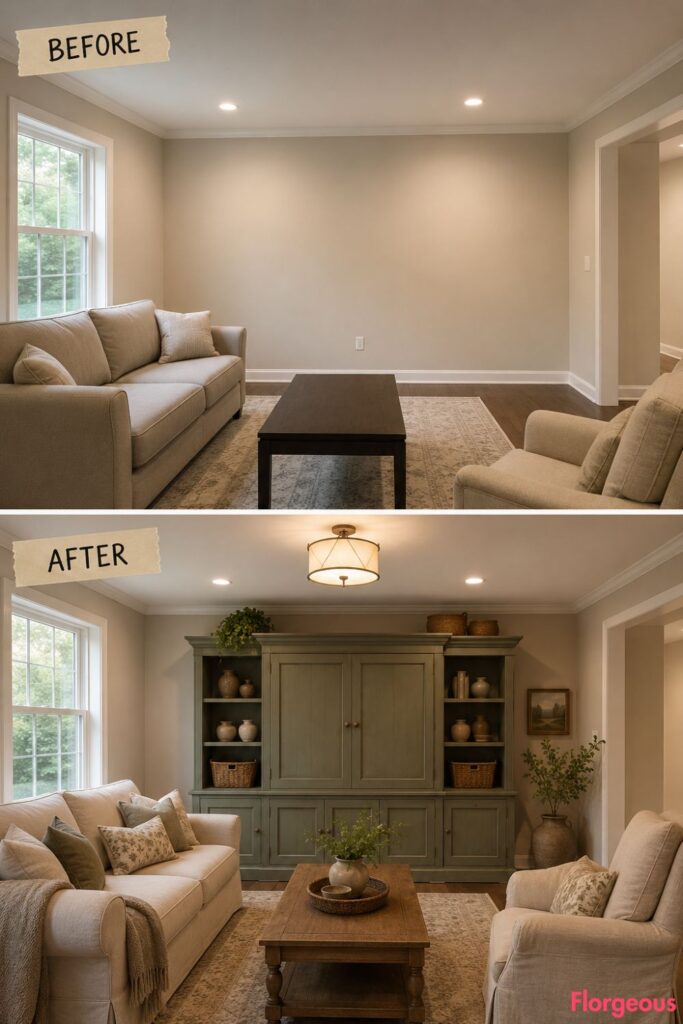
A large antique hutch gives the television a more natural architectural setting. The screen sits inside the upper cabinet, while the lower doors conceal cables, remotes, electronics, and media storage.
Choose a piece with straightforward paneling rather than ornate carving. A warm cream, muted sage, or rubbed charcoal finish helps the cabinet feel integrated with the room.
A small ceramic lamp and two handmade vessels are enough to style the visible surfaces.
5. Replace the Straight Layout With a Linen Conversation Circle
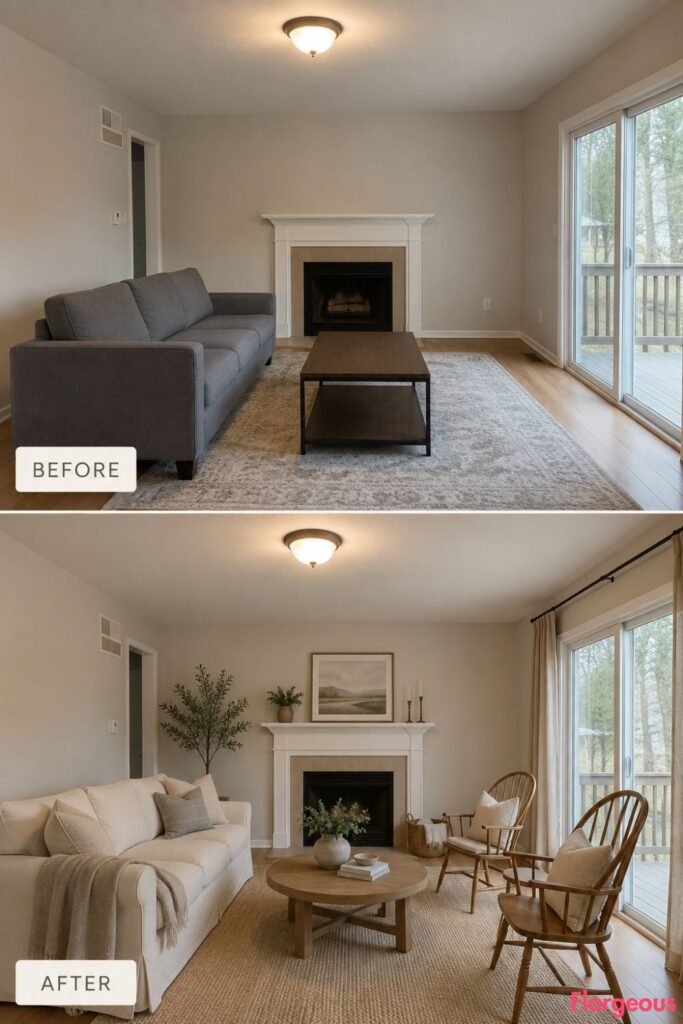
The original sofa faces an empty wall and makes the room feel one-directional. In the after version, an ivory slipcovered sofa, two compact spindle-back chairs, and a round oak table form a loose conversation circle.
The new layout creates better movement around the room and makes every seat feel connected. A plain wool rug defines the arrangement without introducing a strong pattern.
Why It Works: The circular furniture placement softens the room’s rectangular architecture and makes the space feel more sociable.
Try this: Angle the chairs slightly toward the sofa rather than lining every piece up with the walls.
6. Add a Run of Low Shaker Cabinets Beneath the Artwork
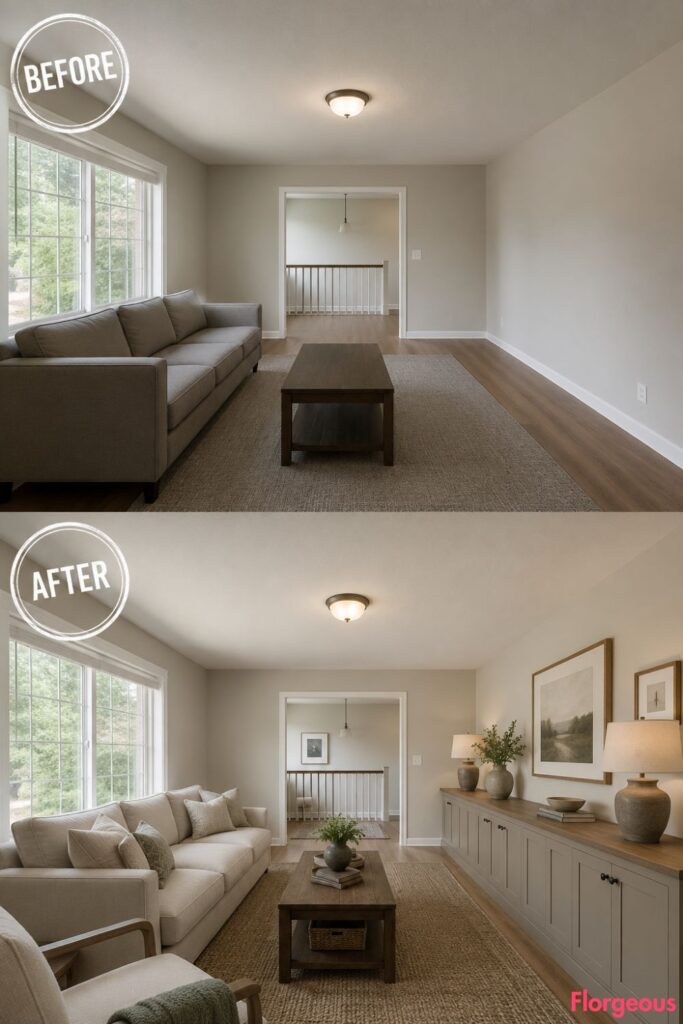
A blank side wall becomes practical storage with low Shaker-style cabinets painted in mushroom gray. A continuous oak top provides space for lamps, pottery, framed photographs, and seasonal branches.
Because the cabinetry stays below eye level, the room feels more finished without becoming enclosed. The broad top also creates a strong horizontal line that balances the sofa.
Use drawers for small items and deeper cupboards for throws, games, and media equipment.
Common Mistake: Avoid filling the entire surface. Leave open areas between lamps and decorative objects so the cabinetry still feels useful.
7. Warm the Flat Ceiling With Softly Brushed Oak Beams
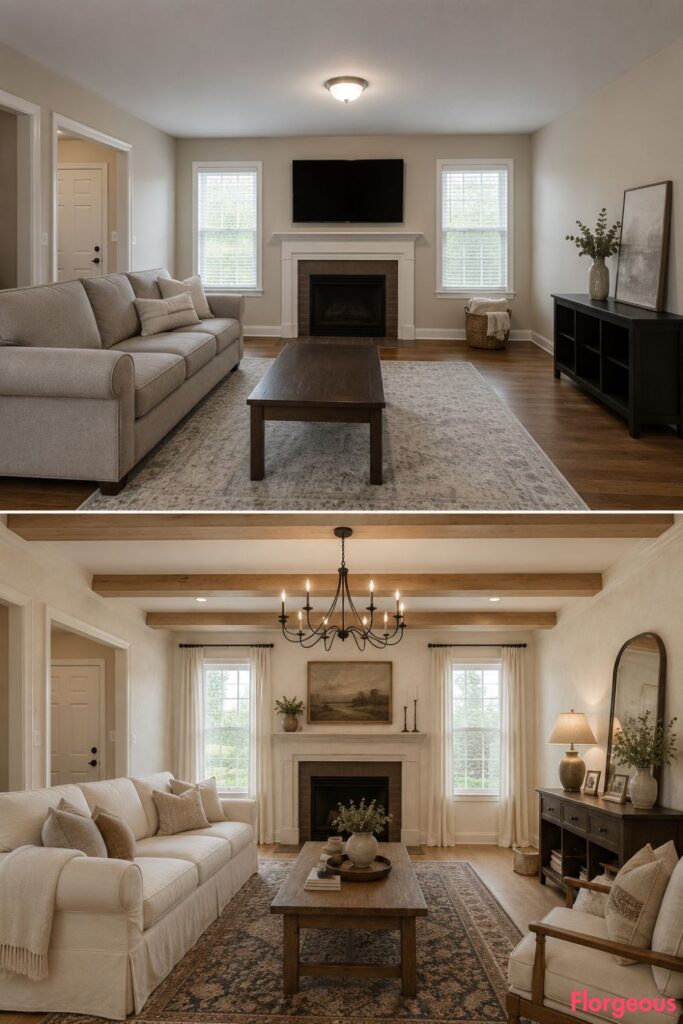
The plain white ceiling becomes part of the design with several simple oak beams. Their spacing follows the architecture, making them feel structural rather than added as decoration.
Creamy walls and pale upholstery keep the room bright, while a dark iron chandelier creates a crisp focal point between the beams.
Faux beams can deliver the same visual effect with less weight, cost, and disruption.
Style Note: Choose a matte finish with subtle grain. Glossy orange-brown stain can make new beams look artificial.
8. Turn an Empty Corner Into a Spindle-Chair Retreat
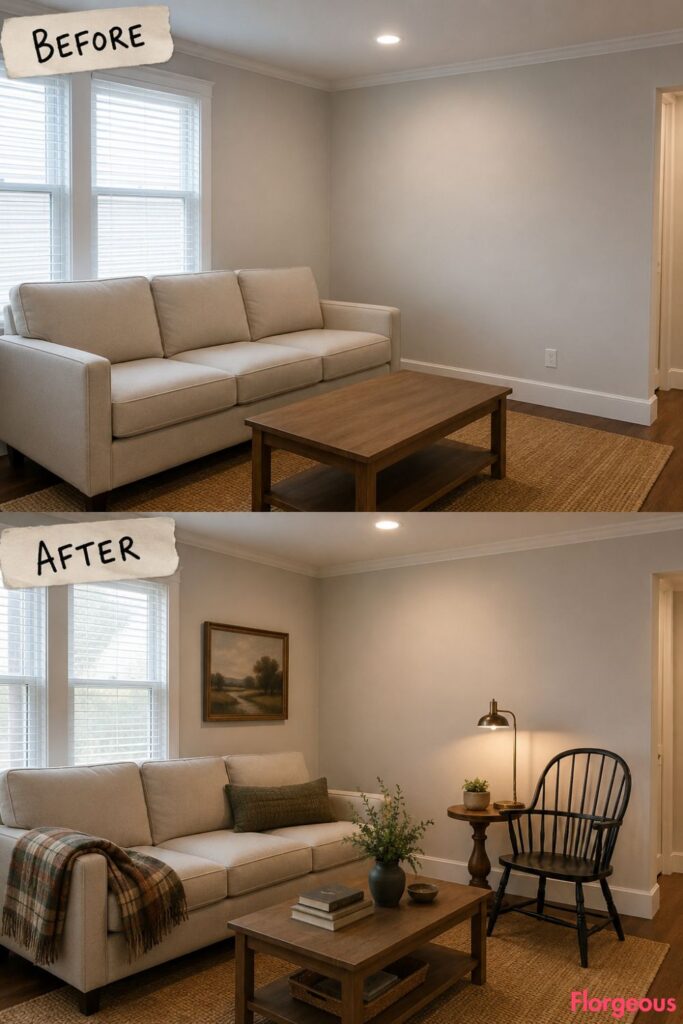
An unused corner becomes a compact reading area with one black spindle-back chair, a turned-oak drinks table, and a slim antique brass floor lamp.
A folded wool throw in muted plaid adds softness, while a small landscape painting gives the corner a clear visual boundary. The result feels intentional without requiring built-ins or major furniture changes.
This idea works especially well in rentals because every element can move to another room later.
9. Let a Faded Vintage Rug Control the Entire Palette
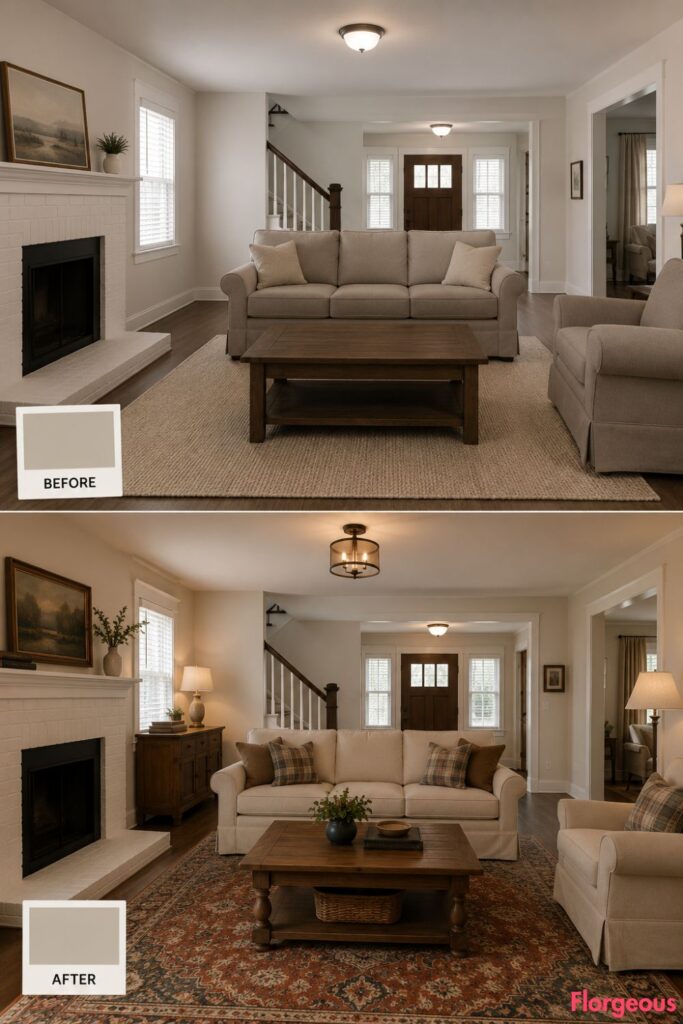
A large vintage rug in brick red, dusty blue, warm tan, and muted olive replaces the generic floor covering. Those softened colors then appear in small amounts through cushions, artwork, and one upholstered chair.
The worn pattern gives new furniture a sense of history and helps separate the seating area from the rest of the room.
Keep the largest pieces neutral so the rug remains the primary source of color.
Color Story: Pull no more than three shades from the rug. Repeating every color can make the room look overly coordinated.
10. Frame the Windows With Layered Linen and Ticking Stripe
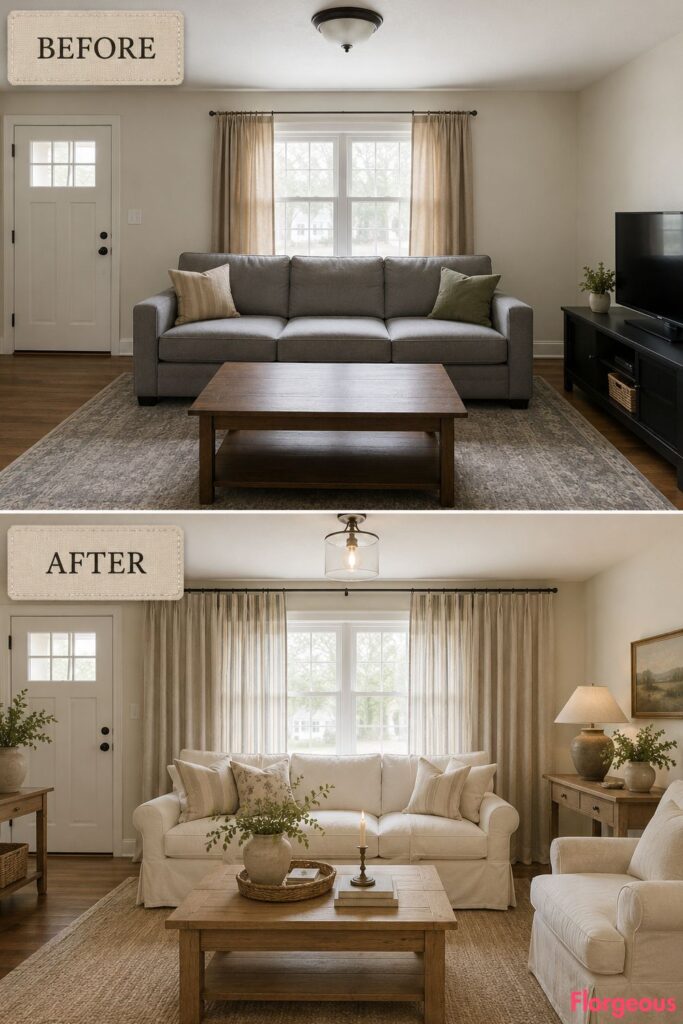
Short basic curtains are replaced with full-height undyed linen panels mounted close to the ceiling. Narrow ticking-stripe inner panels add pattern without making the window treatment feel formal.
A blackened-iron curtain rod provides contrast, while the gathered fabric softens the straight lines of the room.
The layered treatment works best when the colors stay close in tone, such as flax, warm ivory, faded gray, and washed blue.
11. Replace Flat Lighting With an Iron and Milk-Glass Composition
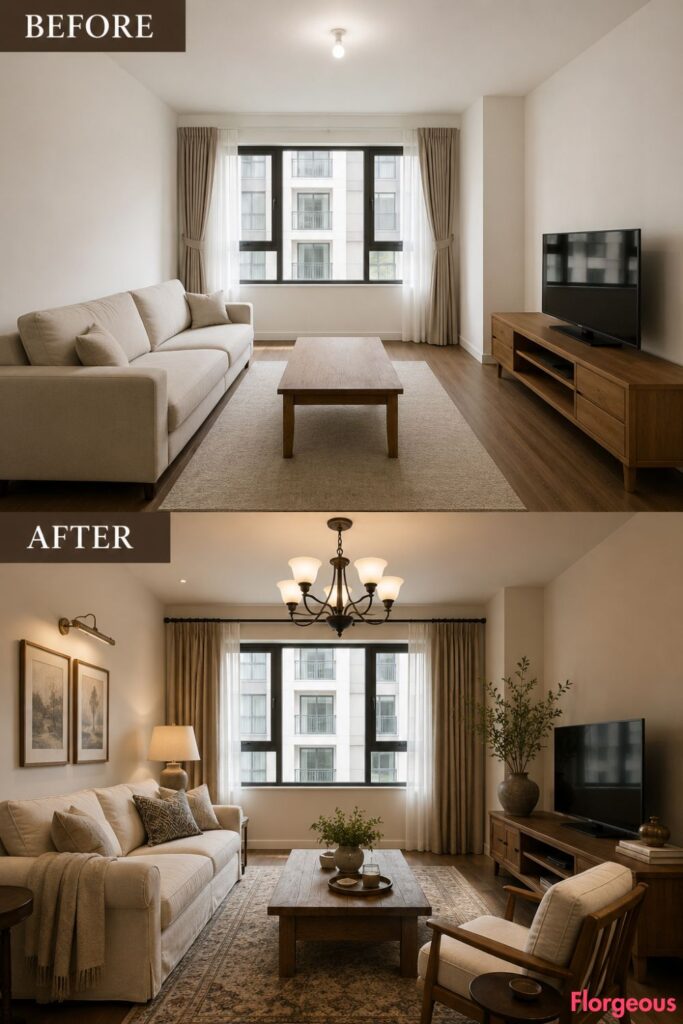
One small ceiling fixture cannot provide enough depth for a room filled with natural textures. Replace it with a blackened-iron chandelier fitted with softly glowing milk-glass shades.
Add a ceramic table lamp beside the sofa and one antique brass picture light above the artwork. These three lighting levels make stone, wood, linen, and aged metal look richer after sunset.
Use warm bulbs, simple shades, and dimmers to keep the effect calm.
Designer Tip: Match the warmth of the bulbs, but do not match every fixture finish. A small mix of iron, ceramic, and brass feels more collected.
12. Build a Botanical Gallery Above a Narrow Antique Console
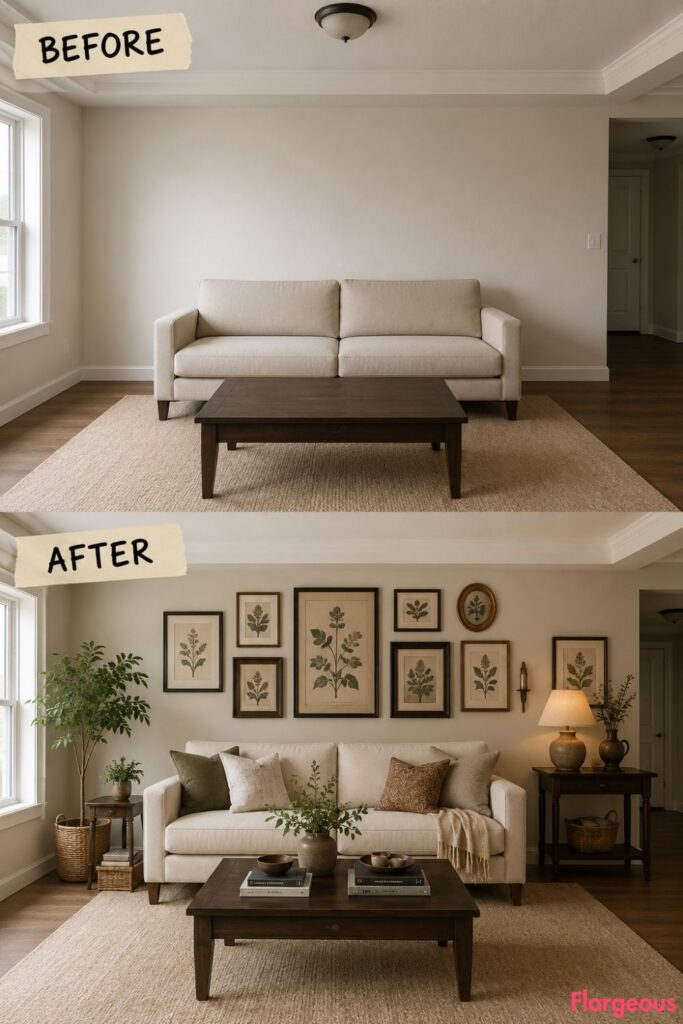
The bare wall becomes a collected gallery of pressed leaves, vintage garden studies, and small landscape sketches. Frames in dark wood, painted black, and aged brass create controlled variation.
A narrow antique console below the gallery holds a pottery lamp, a low wooden bowl, and a small stack of books. The display adds personality without using signs, slogans, or literal farmhouse graphics.
Vary the frame sizes, but align the outer edges of the arrangement to keep it visually calm.
13. Create a Darker Fireside Mood With Leather and Muted Plaid
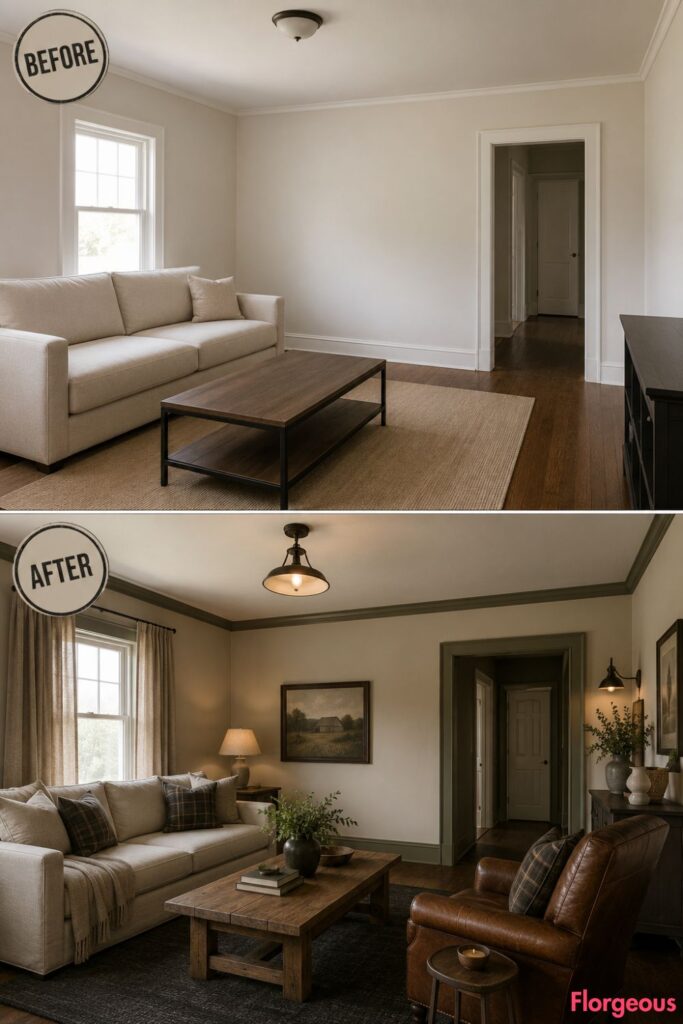
Farmhouse interiors do not need to stay pale. Introduce one aged cognac leather chair, an olive-painted trim color, a charcoal wool rug, and cushions in muted windowpane plaid.
The deeper palette creates a sheltered evening atmosphere, while natural linen and oak keep the room from becoming formal or heavy.
Use leather as an accent rather than the dominant upholstery. One well-worn chair often brings more character than a full matching suite.
14. Introduce a Freestanding Arched Pottery Cabinet
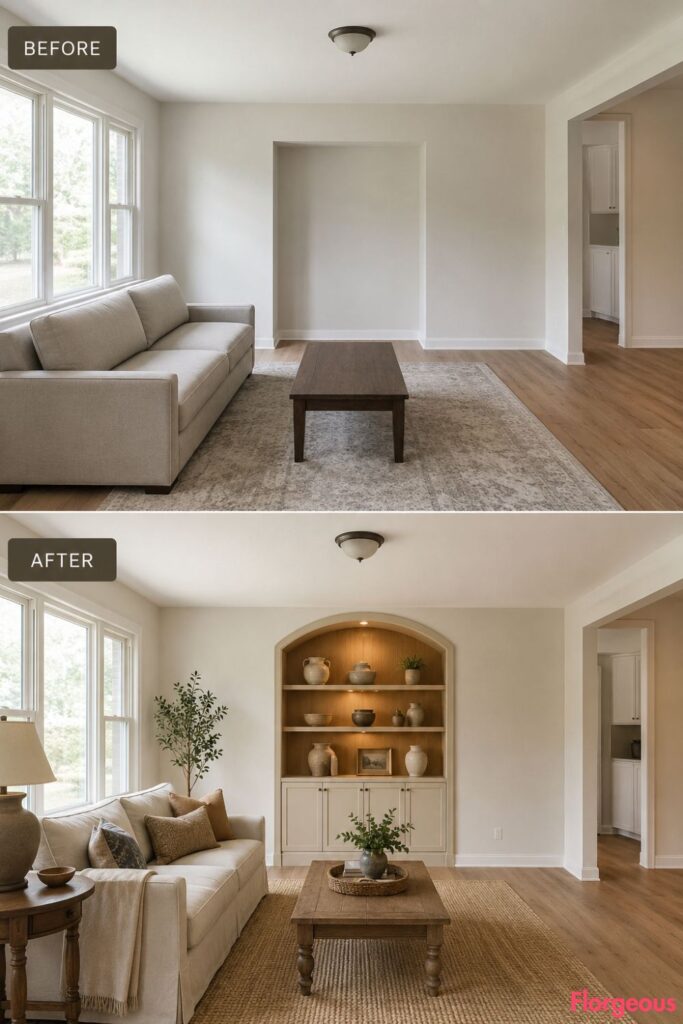
A tall arched cabinet turns an empty wall recess into a handcrafted focal point. The warm cream exterior blends with the walls, while the natural oak interior gives the shelves more depth.
Handmade pitchers, bowls, candlesticks, and a few old books fill the open section. Closed lower doors hide practical items that do not need to be displayed.
The arch adds softness to the room without repeating the shape elsewhere.
15. Give the Farmhouse Living Room a Greenhouse-Inspired Plant Ledge
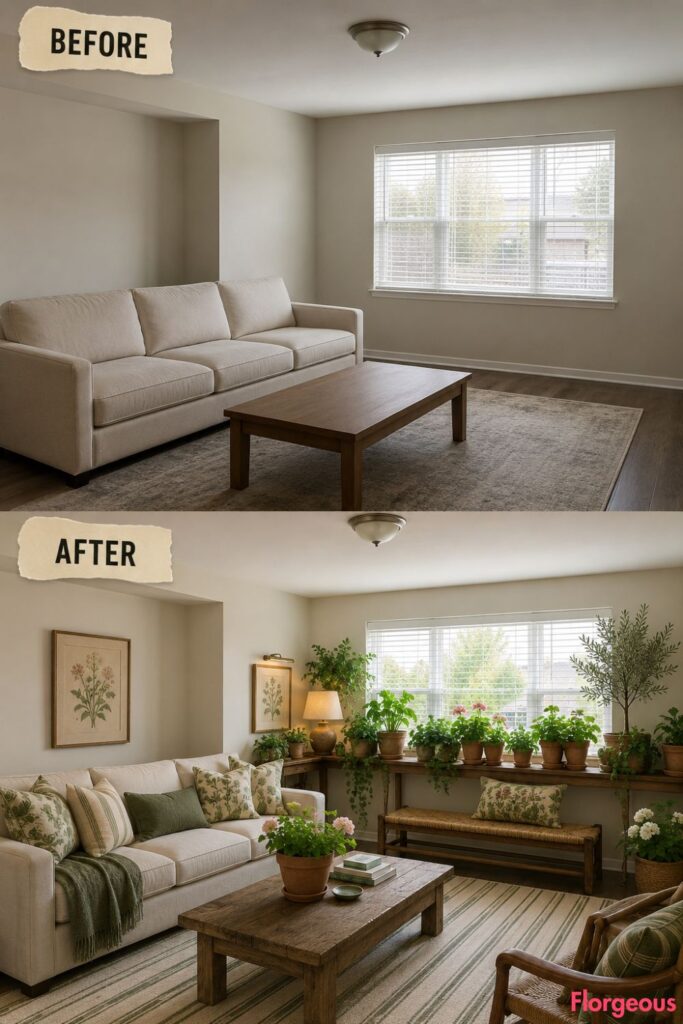
The final makeover brings an unexpected garden-room quality to the same neutral space. A long reclaimed-oak ledge runs beneath the window, supporting terracotta pots, trailing ivy, scented geraniums, herbs, and one small olive tree.
A rush-seat bench sits below the ledge, while botanical cushions and a washable striped rug connect the greenery to the seating area.
The plants introduce color and movement without relying on extra furniture or decorative clutter. This version feels especially natural in rooms with strong daylight.
Try this: Use matching clay pots in varied sizes. Repeating one material keeps a large plant collection from looking chaotic.
Choosing the Right Farmhouse Direction for Your Room
The strongest farmhouse rooms usually begin with one meaningful feature rather than a group of themed accessories. Start by identifying the room’s largest problem, such as a missing focal point, poor lighting, awkward storage, an empty corner, or windows that feel unfinished.
Next, choose a limited material palette. One warm wood, one soft neutral, one aged metal, and one restrained pattern will give the room consistency while leaving space for vintage finds and personal objects.
Before purchasing furniture, test the layout with painter’s tape and photograph the room from the doorway. That simple step makes it easier to choose the Farmhouse Living Room idea that fits the room’s proportions, daylight, storage needs, and daily routines.