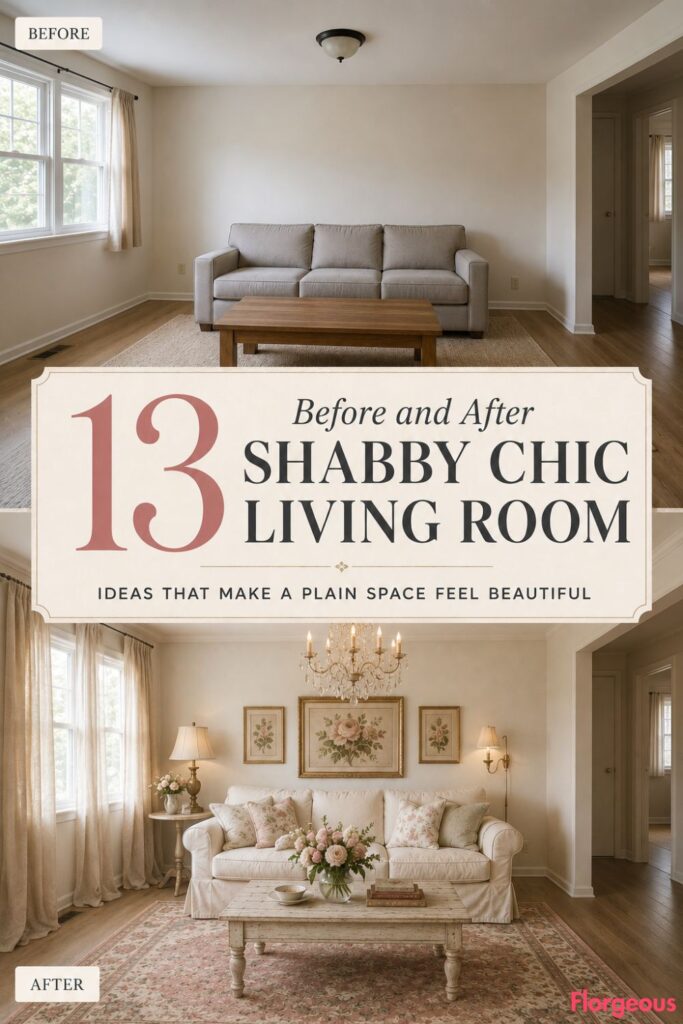
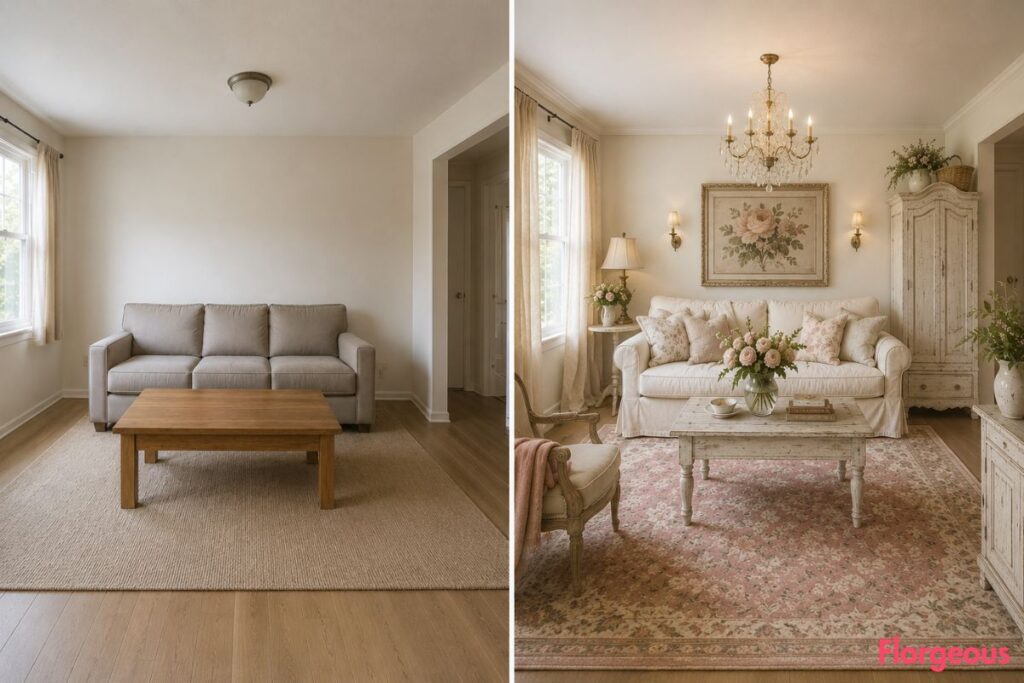
A neutral living room can be clean and functional yet still feel strangely unfinished. The basic sofa, blank walls, generic rug, and simple ceiling light provide a practical starting point, but they do not give the room warmth, history, or a memorable focal point.
These Shabby Chic Living Room ideas begin with that exact same plain space. Each makeover changes it through a completely different design strategy, from faded wallpaper and slipcovered seating to architectural molding, romantic lighting, vintage storage, and clever media concealment.
The secret is restraint. Rather than filling the room with every floral fabric and distressed accessory available, each design selects one strong feature and supports it with a few faded colors, tactile materials, and carefully edited vintage details.
1. Turn the Blank Sofa Wall Into a Faded Floral Backdrop
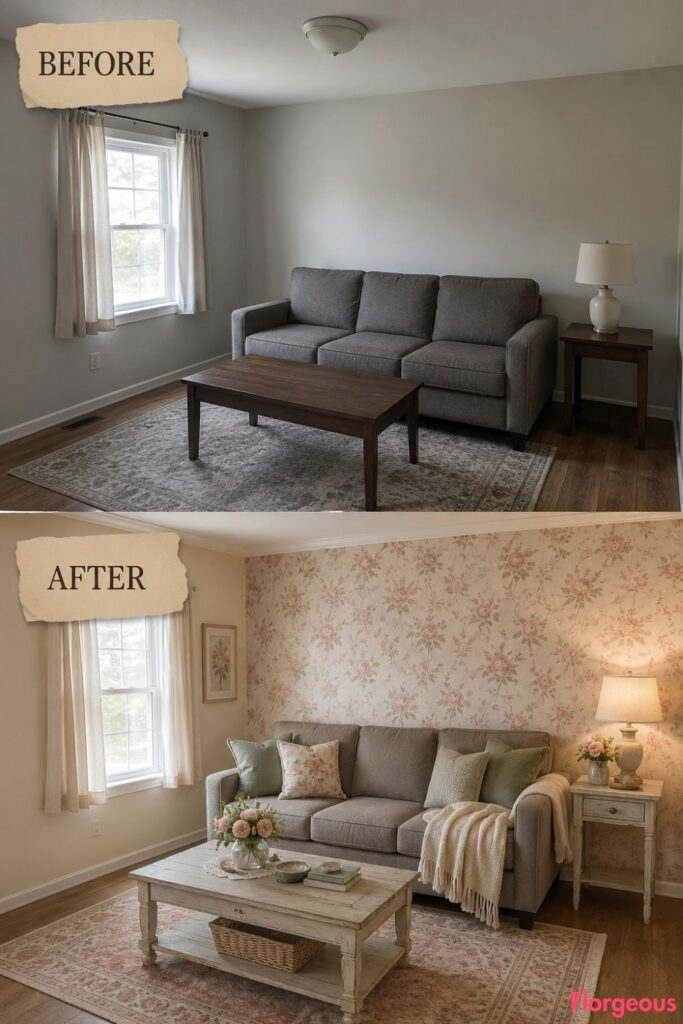
A wallpapered focal wall can establish a romantic mood before any furniture is replaced.
Before: The living room has neutral walls, a basic straight sofa, a bare rectangular coffee table, a generic rug, short basic curtains, flat builder-grade lighting, and minimal styling.
After: The wall behind the sofa is covered in faded rose wallpaper with a warm ivory background. The remaining walls stay quiet, while dusty sage cushions, a washed linen throw, and a small weathered side table draw out the softer tones in the pattern.
Why it works: Concentrating the pattern on one wall gives the room personality without making it feel busy or overly feminine.
Try this: Choose removable wallpaper if you rent or prefer to test the look before committing.
2. Replace the Straight Sofa Layout With a Relaxed Conversation Area
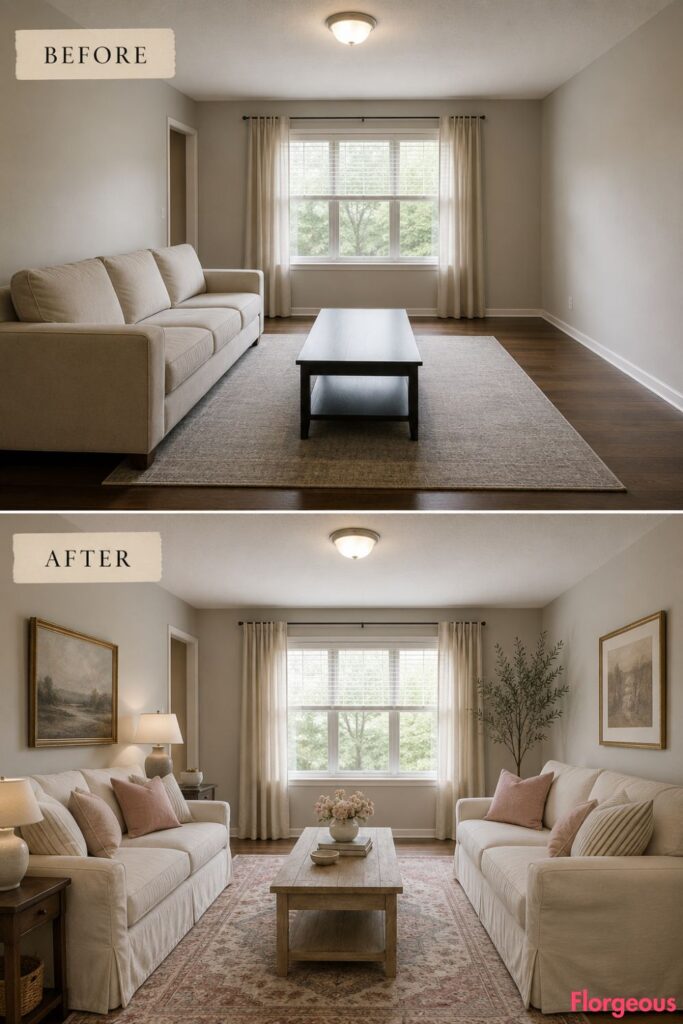
Changing the furniture arrangement can make the room feel more welcoming without relying on decorative clutter.
Before: The basic sofa faces one direction, leaving the room feeling flat and slightly formal despite its simple furnishings.
After: Two compact ivory slipcovered sofas face one another across a small weathered oak table. Faded blush cushions appear on one side, while pale ticking stripes appear on the other, creating balance without perfect matching.
Washable cotton or linen-blend slipcovers keep the pale upholstery practical for everyday living.
Designer Tip: Choose warm ivory rather than bright white. It looks softer beside aged wood, antique brass, and faded textiles.
3. Anchor the Empty Wall With a Weathered White Armoire
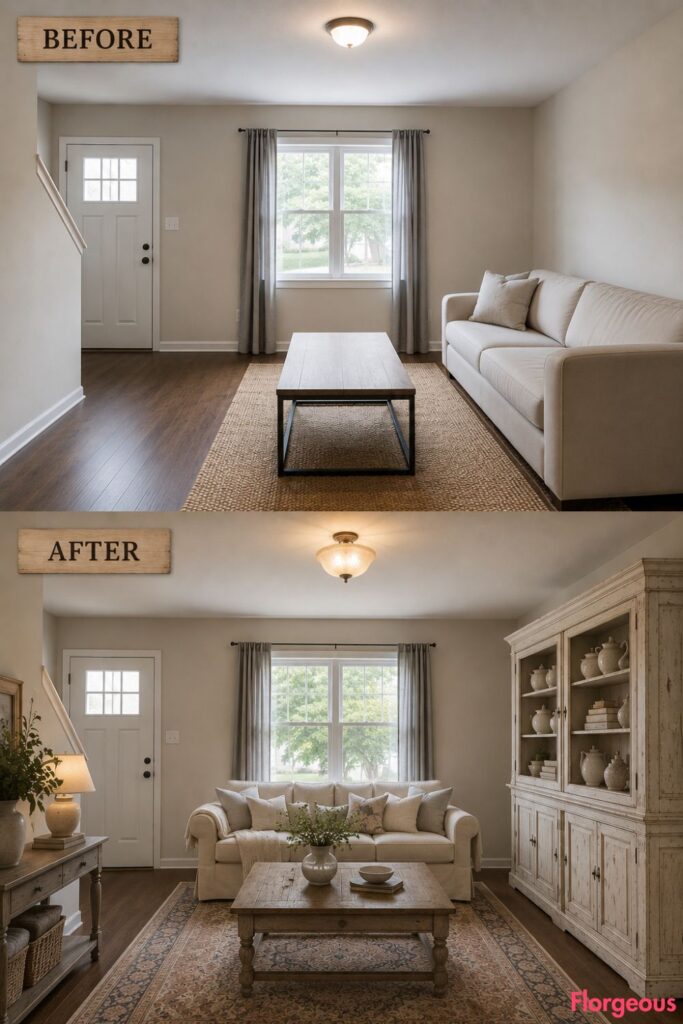
A tall vintage-style cabinet gives a blank room height, storage, and a sense of permanence.
Before: The room has no substantial focal piece, and books, electronics, or everyday objects have nowhere attractive to be stored.
After: A weathered white armoire with glass upper doors and solid lower cupboards fills the main wall. Inside, an edited collection of ironstone, old books, and pale handmade ceramics is arranged with generous breathing room.
The lower section conceals practical items, while porcelain knobs and lightly worn edges bring subtle age to the painted finish.
Try this: Refinish a secondhand cabinet with chalk-style paint. Distress only corners, handles, and edges where natural wear would realistically occur.
4. Create a Romantic Fireplace Focal Point Without Major Construction
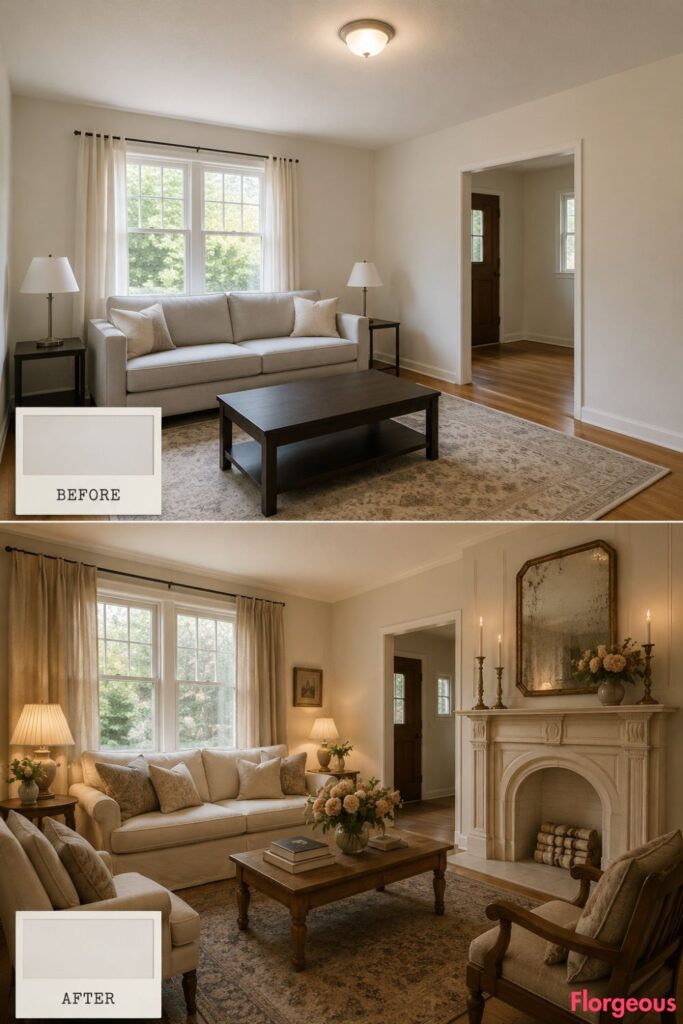
A decorative mantel can give a plain room architectural character even when a working fireplace is not possible.
Before: The room has no visual center, so the sofa, rug, and coffee table appear to float against bare walls.
After: A shallow carved mantel painted warm cream frames a simple plastered recess filled with stacked birch logs. A lightly foxed mirror hangs above it, accompanied by two antique-brass candlesticks and a low bowl of garden roses.
The arrangement is symmetrical enough to feel calm but not so formal that it loses its relaxed quality.
Budget Version: Build a lightweight surround from timber molding or use a reproduction mantel. Paint the wall recess a slightly deeper cream to create believable depth.
5. Replace Flat Ceiling Light With a Layered Crystal Glow
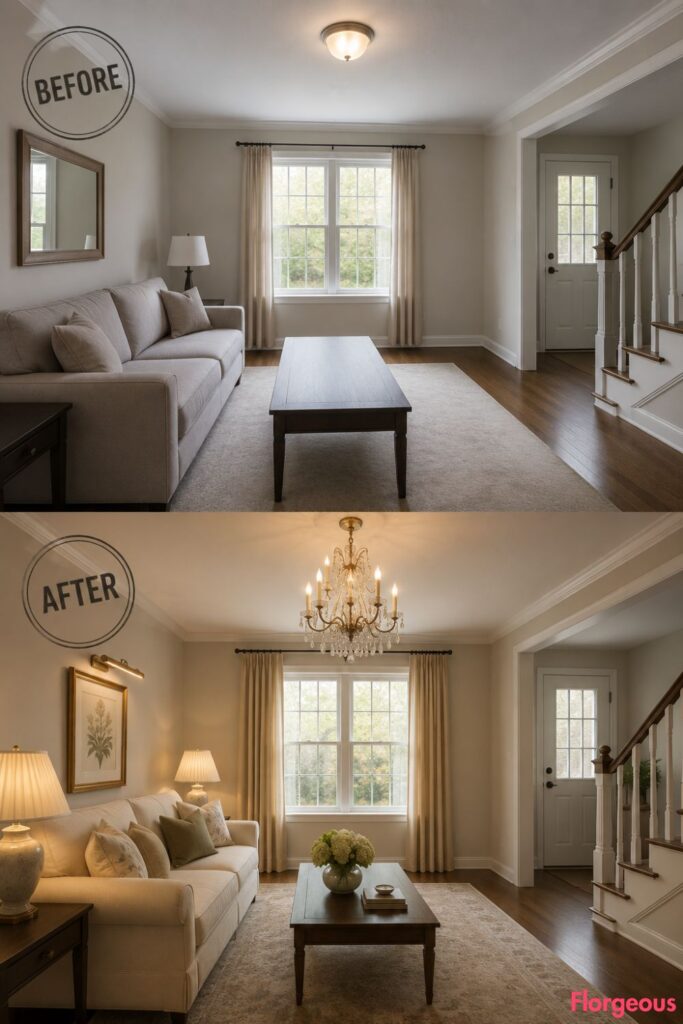
Lighting can introduce romance without changing the floor plan or adding another large piece of furniture.
Before: One builder-grade ceiling fixture washes the room in flat light and leaves the corners feeling cold.
After: A delicate glass chandelier with small crystal drops hangs above the coffee table. Two ceramic lamps with pleated linen shades create pools of light beside the sofa, while a slim antique-brass picture light illuminates a single botanical print.
The furniture and color palette stay quiet so the different sources of light become the main transformation.
Why it works: Several low, warm light sources reveal fabric texture, painted finishes, and reflective glass more beautifully than one bright ceiling fixture.
Try this: Use 2700K bulbs and add dimmers wherever possible.
6. Turn the Bare Wall Into an Edited Vintage Mirror Gallery
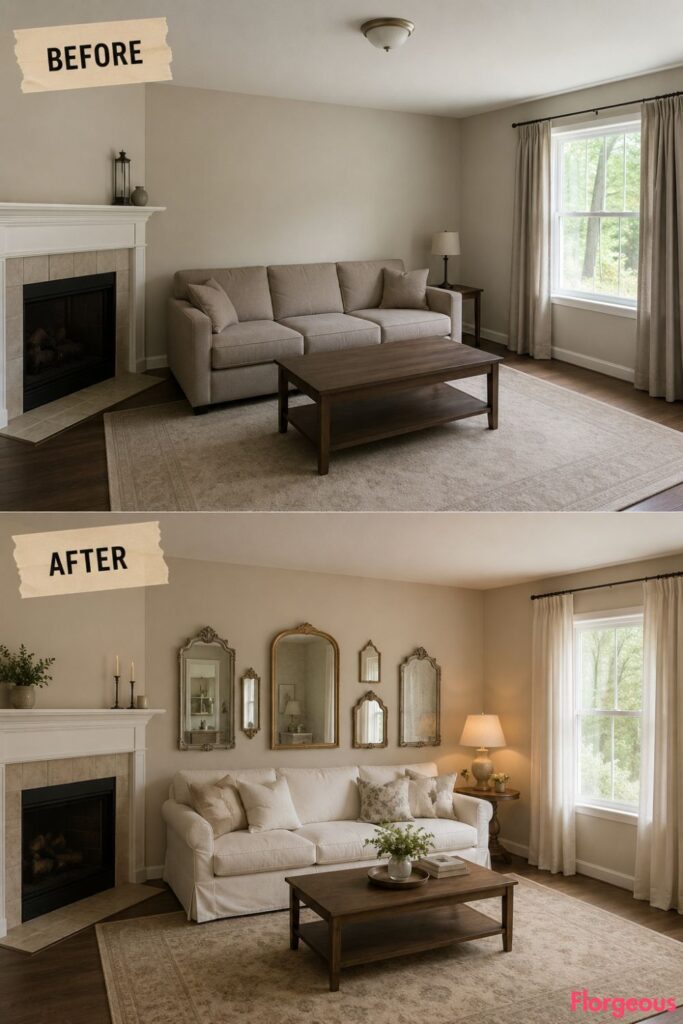
A small mirror collection can brighten the room and provide visual interest without taking up floor space.
Before: The wall above the sofa is completely empty, and daylight does not travel far beyond the window.
After: Five mirrors in varied shapes form a loose gallery above the sofa. Their frames combine aged silver, chalk-painted wood, and restrained soft gilding, but all share a faded finish.
The mirrors remain the only decorative feature on that wall. Simple cushions and an unpatterned rug prevent the room from becoming overly ornate.
Common Mistake: Avoid using too many tiny mirrors. A few medium pieces create a more confident composition and reflect more useful light.
7. Soften the Center of the Room With a Skirted Oval Table
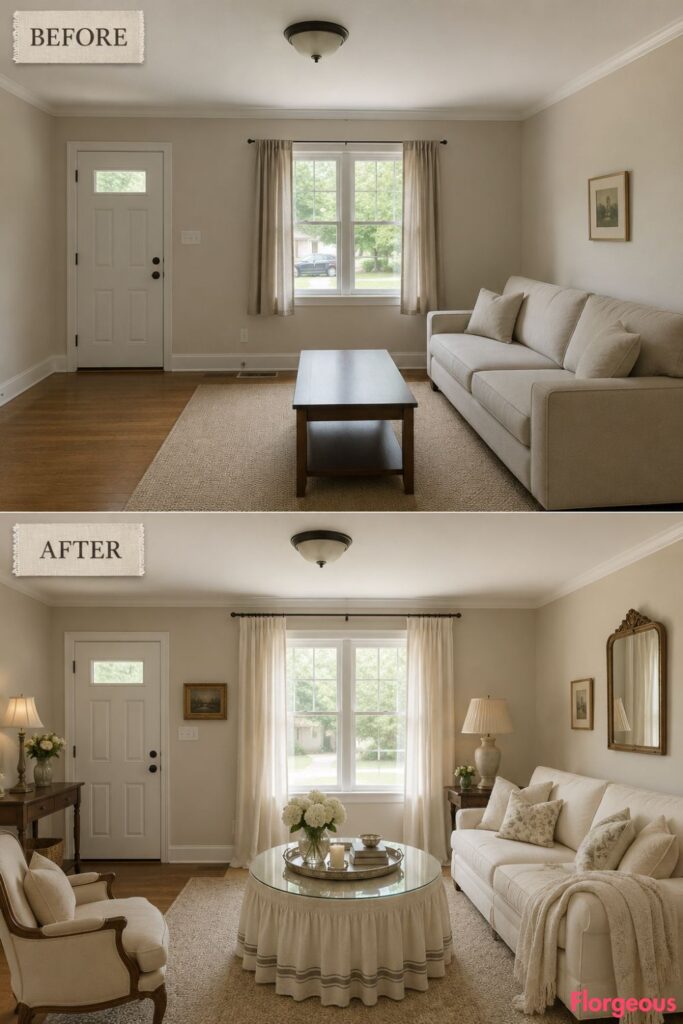
A skirted table offers a practical way to introduce fabric, curved lines, and hidden storage.
Before: The bare rectangular coffee table feels hard and generic beside the straight sofa and plain rug.
After: An oval table is covered in washed flax linen with a narrow faded ticking-stripe border. A fitted glass top protects the fabric from drinks, while baskets and board games remain hidden beneath the skirt.
A silvered tray and one handmade ceramic vase are the only objects on top, keeping the center of the room useful and uncluttered.
Small Space Tip: Let the fabric stop slightly above the floor. That narrow gap makes the table appear lighter and helps prevent dust from gathering along the hem.
8. Give the Room a Muted Sage Botanical Color Story
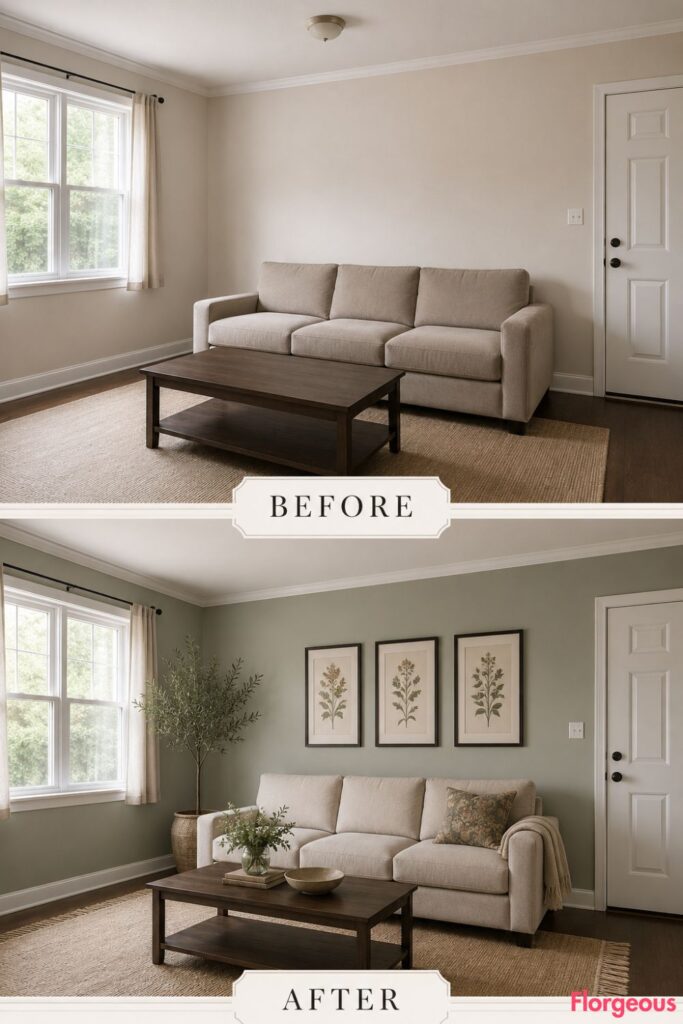
Shabby Chic does not need to depend on pink. A faded green palette creates a calmer, more grounded interpretation of the style.
Before: The neutral room feels disconnected from the garden and lacks a recognizable color direction.
After: The walls become muted sage, balanced by warm cream upholstery and a pale natural-fiber rug. Three antique botanical prints in narrow black frames hang above the sofa, while a small olive tree and handmade ceramic bowl repeat the garden theme.
A single faded floral cushion introduces softness without turning every surface into a pattern.
Color Story: Repeat the main shade in three places only, such as the walls, one cushion, and one ceramic object. This gives the palette continuity without making the room look overly coordinated.
9. Replace the Generic Coffee Table With a Weathered Steamer Trunk
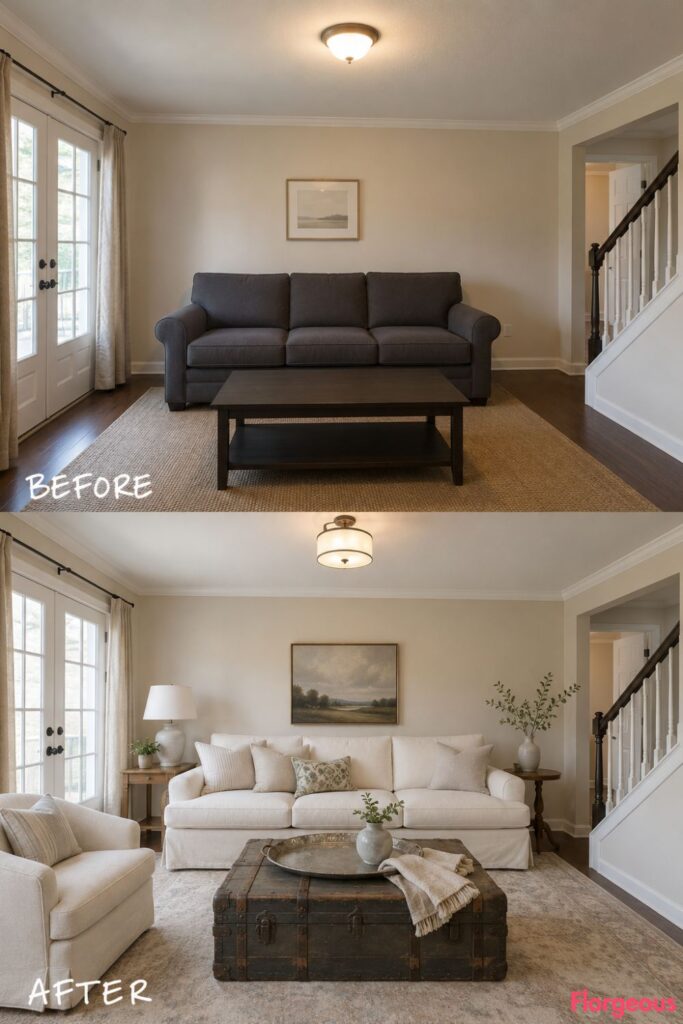
A vintage trunk gives the room storage, texture, and a strong sense of history in one practical piece.
Before: The plain rectangular coffee table provides a surface but contributes little character.
After: A low weathered trunk with softened corners and worn leather straps becomes the centerpiece. A large silvered tray creates a stable surface for drinks, while one folded linen throw and a small vase soften the heavier material.
The rest of the room remains pale, allowing the natural wood and leather to provide visual contrast.
Try this: Measure the sofa seat before buying a trunk. The top should sit near the same height or slightly lower.
10. Turn the Plain Window Into a Built-In Reading Seat
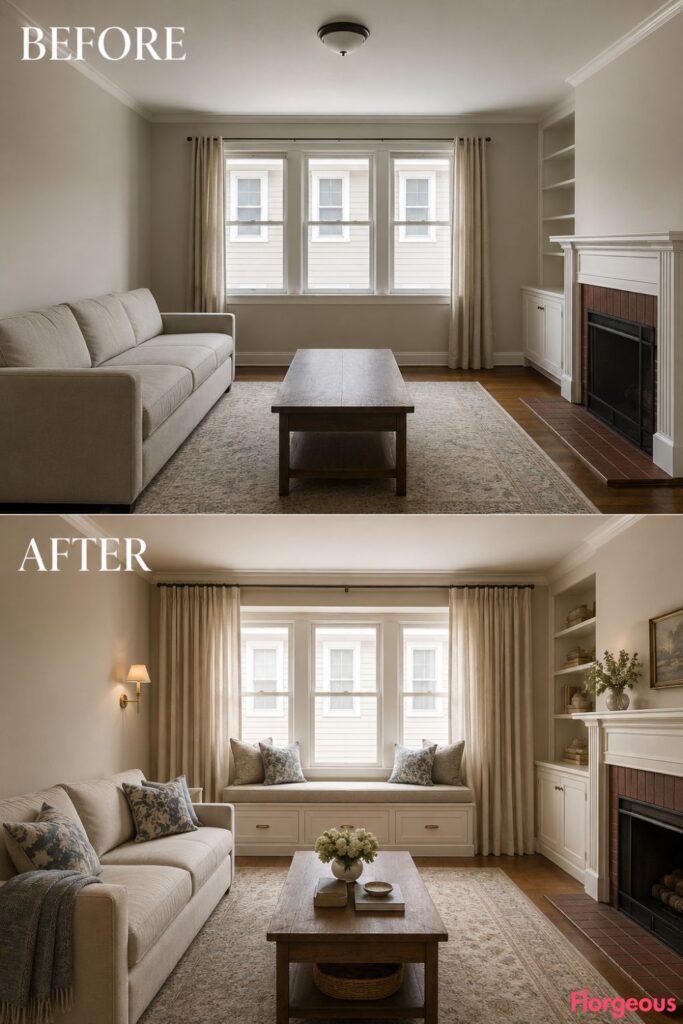
The unused area beneath a window can become seating, storage, and a focal point without changing the main furniture layout.
Before: Short curtains make the window appear small, and the empty space beneath it has no function.
After: A warm-white window seat fills the recess, with deep drawers underneath and an oatmeal cushion on top. Faded blue floral pillows add quiet pattern, while full-height linen curtains frame the entire composition.
A compact antique-brass wall lamp makes the seat useful after dark without taking up surface space.
Why it works: The makeover solves three needs at once: extra seating, hidden storage, and a stronger architectural feature.
11. Add Quiet Architecture With Chalky Wall Molding
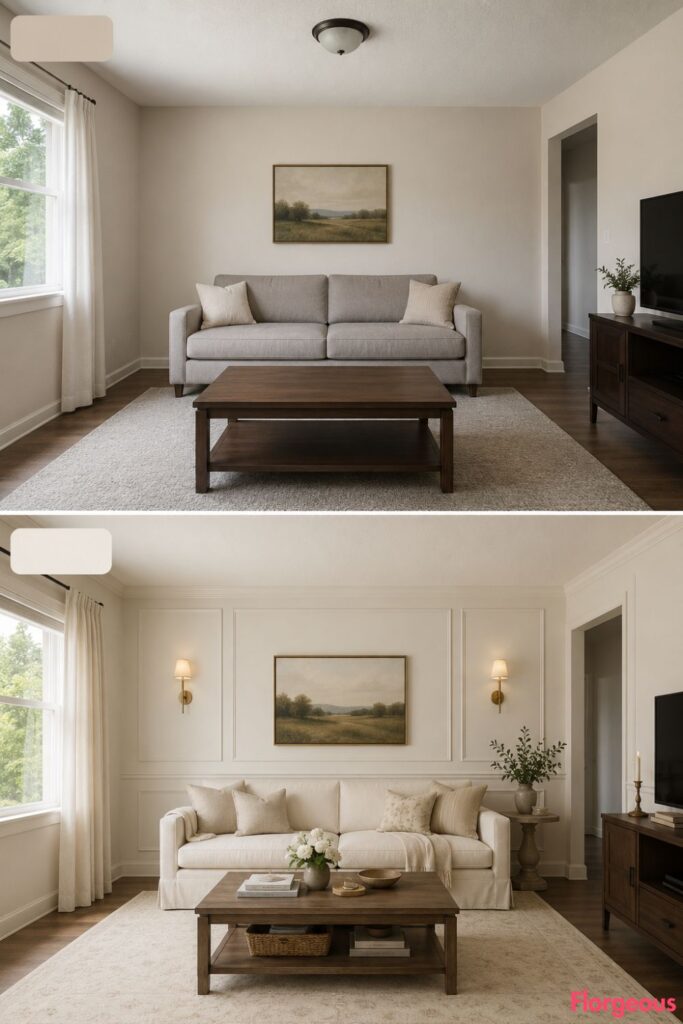
Slim molding can make a builder-grade room feel established without adding pattern, shelving, or heavy furniture.
Before: Flat neutral walls provide no rhythm, depth, or architectural identity.
After: Simple rectangular molding frames the walls and is painted in the same chalky warm-white finish as the background. A linen sofa, pale rug, and two aged-brass sconces allow the paneling to remain the defining element.
Carved or overly elaborate profiles are avoided so the room still feels relaxed rather than formal.
Budget Version: Create the frames from lightweight timber strips and paint the molding, walls, baseboards, and trim in one color.
12. Make the Window Feel Romantic With Linen and Lace Layers
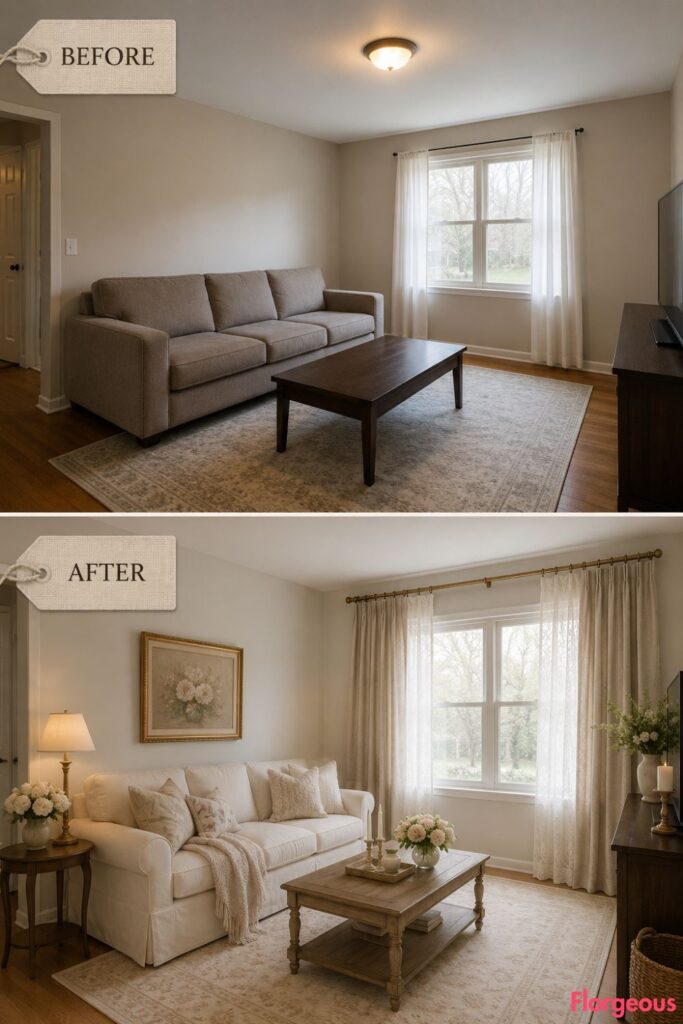
This makeover leaves the walls and main furniture almost untouched, proving that textiles alone can change the room’s proportions and atmosphere.
Before: Short basic curtains visually reduce the height of the room and leave the window looking unfinished.
After: Full-length flax-linen curtains hang close to the ceiling and extend beyond the sides of the window. Narrow lace panels filter the daylight, while an antique-brass rod and simple finials give the treatment a polished finish.
The lace is subtle and open rather than heavily patterned, keeping the room light and restrained.
Style Note: Combine no more than two window fabrics. Lace, ruffles, bows, floral valances, and tiebacks used together quickly make the design feel theatrical.
13. Conceal the Television Behind Painted Salvaged Shutters
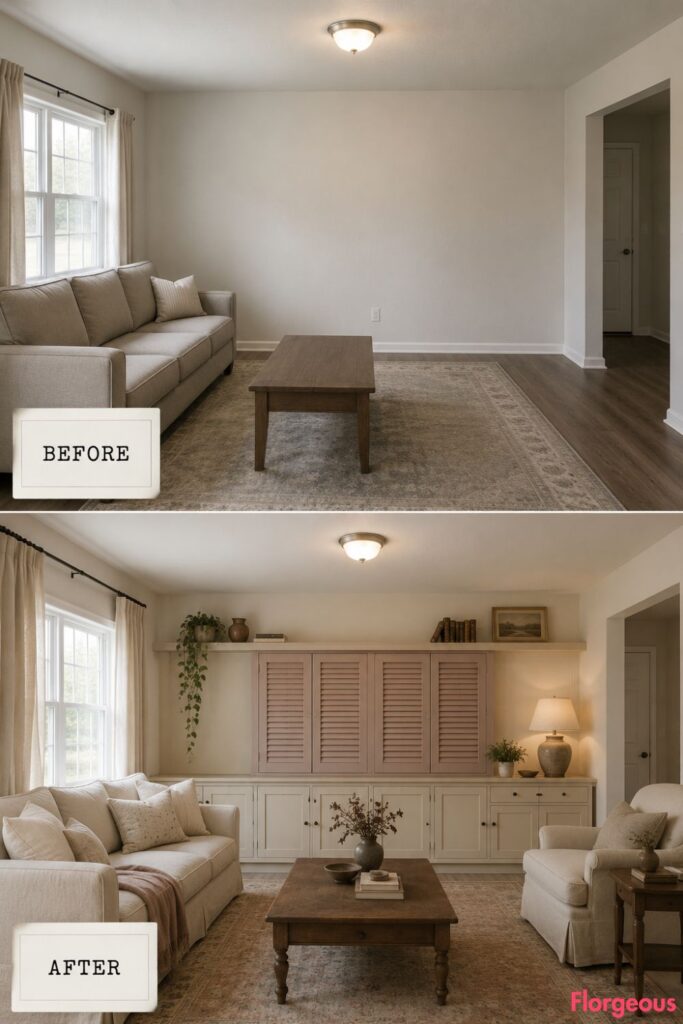
The final makeover solves a modern decorating challenge without sacrificing the soft, collected character of the room.
Before: The blank focal wall has no storage or architectural detail, and a visible television would dominate the simple room.
After: A shallow warm-cream media cabinet is framed by salvaged shutters painted muted blush-gray. The shutters close over the television when it is not in use, while simple cupboards beneath conceal cables, devices, and everyday clutter.
A narrow ledge above holds one trailing plant, a pair of old books, and a small ceramic lamp. The practical feature reads as part of the room rather than an obvious entertainment unit.
Try this: Use reproduction shutters if true salvage pieces are warped or too heavy. A restrained painted finish will still create the aged effect.
Choosing the Right Shabby Chic Look for Your Living Room
The most convincing transformations begin with one clear priority. Choose the feature that solves the room’s biggest weakness, whether that is the blank wall, poor lighting, awkward window, generic layout, lack of storage, or exposed television.
For a successful Shabby Chic Living Room, limit the main palette to two or three faded shades and balance them with warm ivory, natural wood, antique brass, or softly aged glass. One floral pattern usually feels more intentional than several competing prints.
Before buying furniture, collect paint chips, wallpaper samples, curtain fabric, and rug swatches. View them in the room during both daylight and evening hours. Begin with the largest surface or most useful focal point, then add vintage details slowly so the room remains comfortable, practical, and genuinely collected.