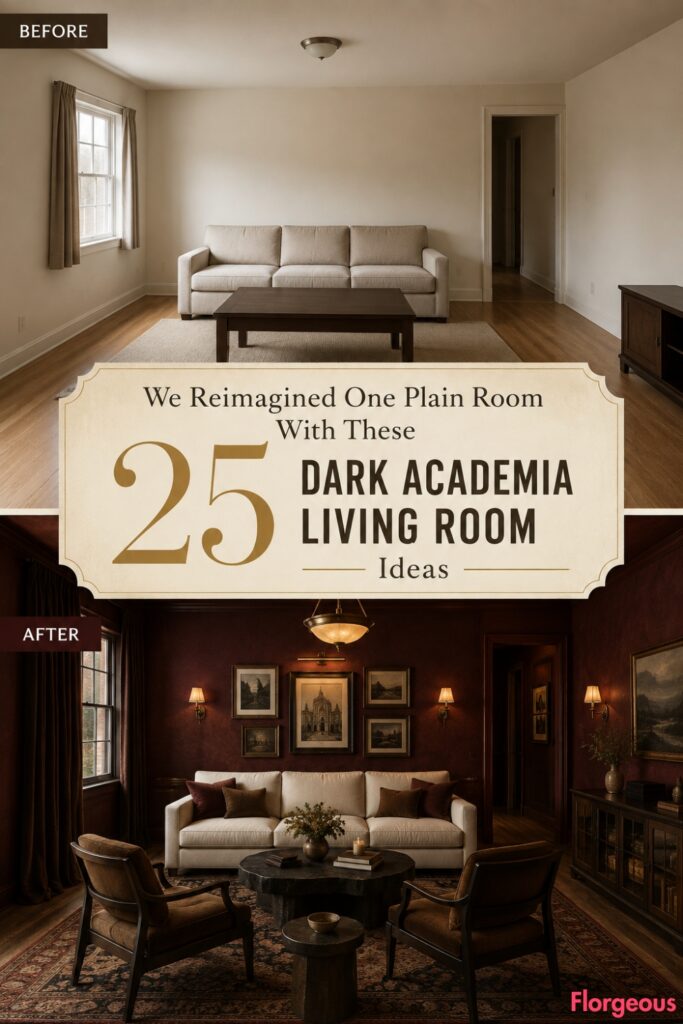
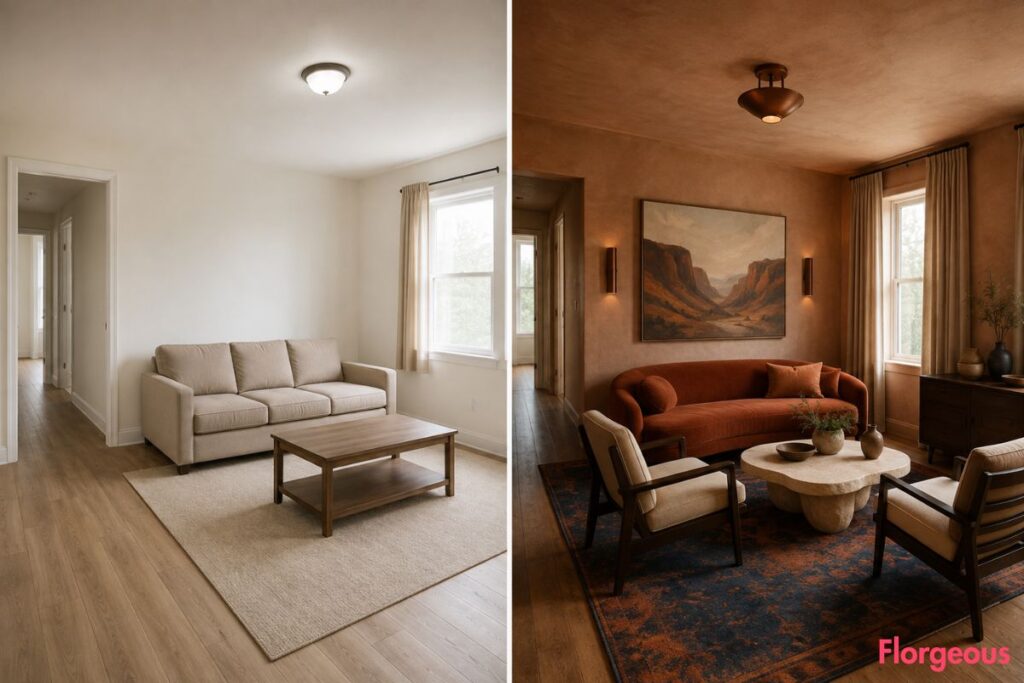
Our starting room is intentionally ordinary: warm off-white walls, a straight beige sofa against the main wall, a bare rectangular coffee table, a simple neutral rug, short plain curtains, a basic ceiling light, empty walls, and almost no personality.
That plain backdrop makes the experiment much more interesting. Instead of changing the architecture, we reimagined the exact same room 25 different ways to see how varied a Dark Academia Living Room can actually become.
Some versions are richly traditional. Others lean botanical, romantic, Gothic-inspired, contemporary, gallery-like, renter-friendly, architectural, or almost monastic. Every makeover keeps the same doorway, window, flooring footprint, ceiling height, proportions, and circulation route.
The difference comes entirely from color, furniture, materials, lighting, artwork, storage, and styling.
1. Turn It Into a Walnut and Oxblood Literary Salon
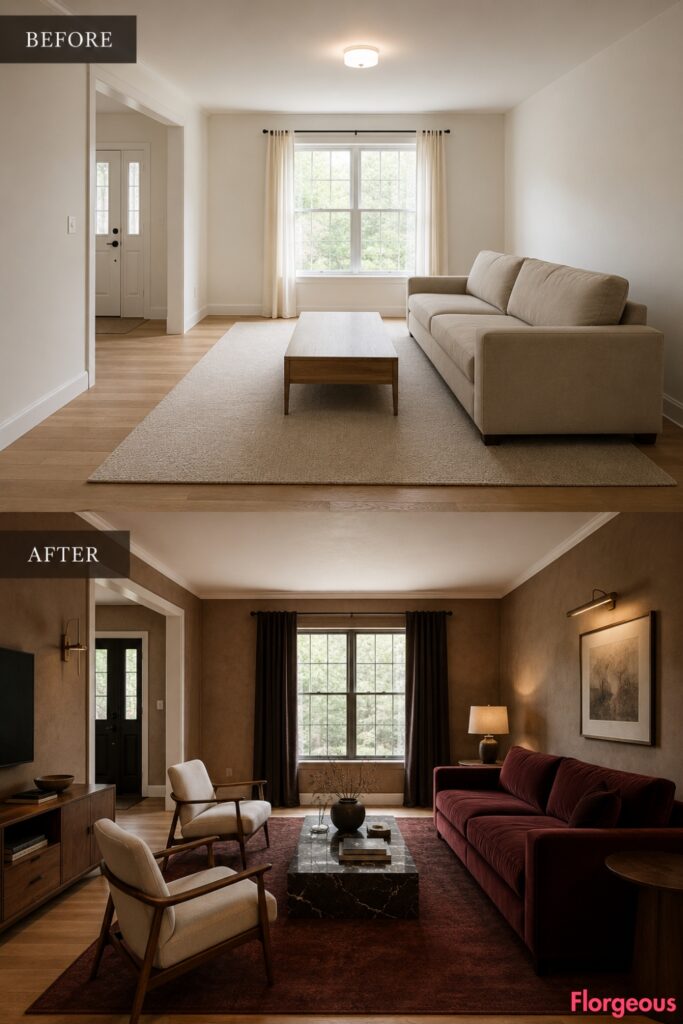
This first makeover embraces the warm, enveloping side of dark academia.
Before: Warm off-white walls leave the straight beige sofa feeling anonymous. The bare rectangular coffee table, neutral rug, short curtains, basic ceiling light, and empty wall give the room no visual anchor.
After: Tobacco Roman clay wraps the room in warmth, while an oxblood mohair sofa creates the main focal point. Walnut-framed chairs upholstered in cream wool face the sofa around a dark Emperador marble table. A faded burgundy rug, espresso curtains, bronze picture lights, and low walnut cabinetry finish the literary salon mood.
Designer Tip: Concentrate books on one cabinet or side table rather than turning every wall into shelving.
2. Rework the Room as a Moss-Green Botanical Study
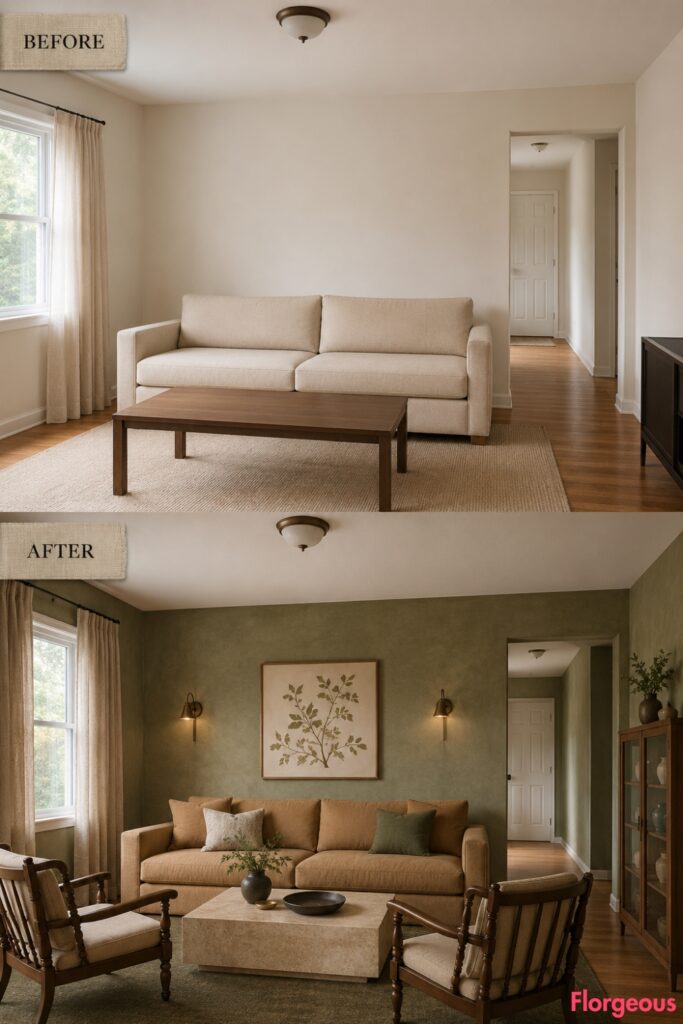
Dark academia feels completely different when scholarly brown is replaced with layered botanical green.
Before: The same plain room has warm off-white walls, beige seating, a bare table, simple rug, short curtains, and empty walls. Nothing creates depth or a sense of collection.
After: Moss-green mineral paint provides a soft historic backdrop for a camel linen sofa. Dark-oak spindle chairs with forest wool cushions introduce craftsmanship, while an aged limestone coffee table prevents the palette from becoming too woody. Olive textiles, botanical artwork, blackened-bronze sconces, and a slim glass-front oak cabinet create the feeling of a cultivated botanical study.
Try this: Botanical artwork gives an academic room character without relying on shelves full of books.
3. Create a Parchment and Dark-Oak Scholar’s Retreat
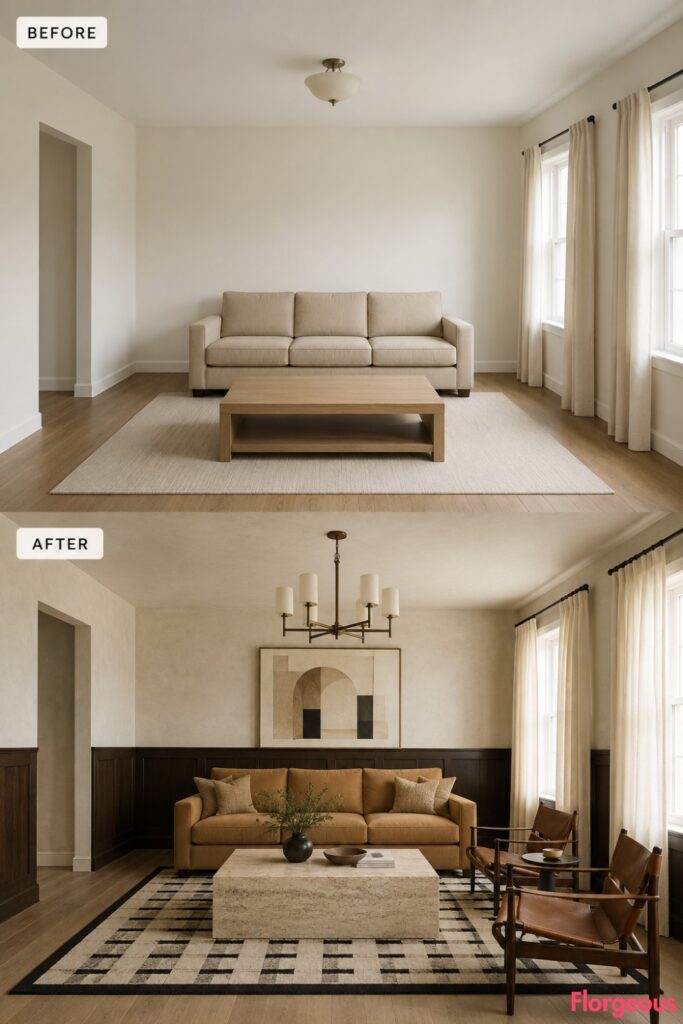
This transformation proves that dark academia does not require a dark envelope.
Before: Pale walls, plain furniture, short curtains, and a simple ceiling fixture make the original space bright but unfinished.
After: Parchment limewash keeps the walls luminous while dark-oak paneling stops at chair-rail height. A camel wool sofa, tobacco leather sling chairs, honed travertine table, black-and-cream rug, full ivory curtains, antique-bronze chandelier, and one oversized architectural drawing provide all the scholarly contrast the room needs.
Color Story: Dark furniture against aged-looking pale walls can feel just as atmospheric as charcoal paint.
4. Give It an Ink-Blue European Library Mood
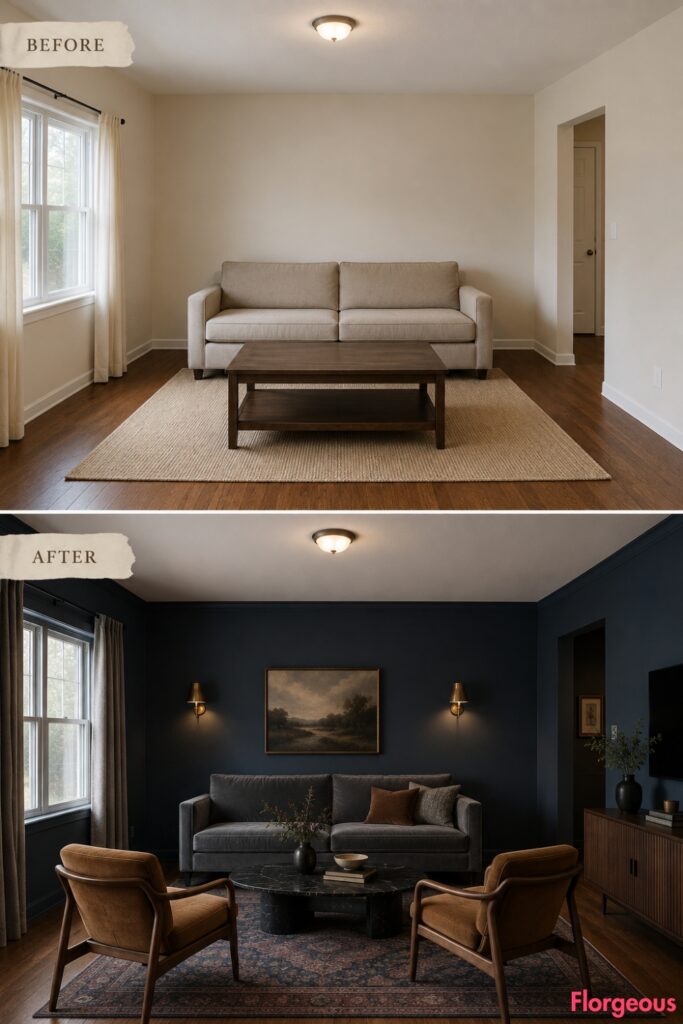
Blue shifts dark academia away from the usual chocolate and walnut palette.
Before: The neutral room feels flat and generic, with no architectural interest or substantial window treatment.
After: Ink-blue walls create an urbane backdrop for a smoke-gray velvet sofa and walnut bentwood chairs upholstered in muted camel. A black marble oval table sits over a faded blue-and-claret rug. Pewter-blue curtains, aged-brass wall lamps, and a fluted-walnut media cabinet suggest a sophisticated European apartment.
5. Build a Restrained Charcoal Academic Gallery
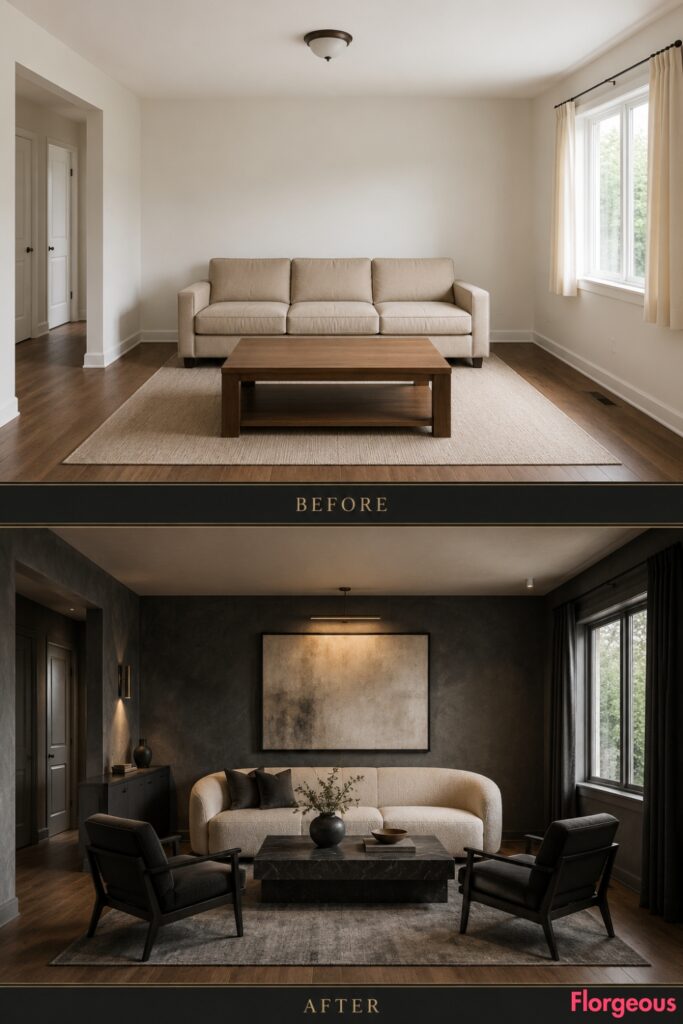
This version strips the style down to art, form, and texture.
Before: Empty off-white walls and generic furnishings create visual emptiness without intentional negative space.
After: Soft charcoal Venetian plaster turns that emptiness into atmosphere. A sculptural ivory sofa and ebonized ash chairs surround a rectangular soapstone table. Instead of crowded shelving, one oversized abstract canvas dominates the wall. Charcoal curtains, a plain stone rug, directional bronze lights, and flush black storage keep the space disciplined.
Common Mistake: Dark walls do not need to be filled. A restrained art arrangement often feels more sophisticated.
6. Make It an Aubergine Romantic Literary Salon
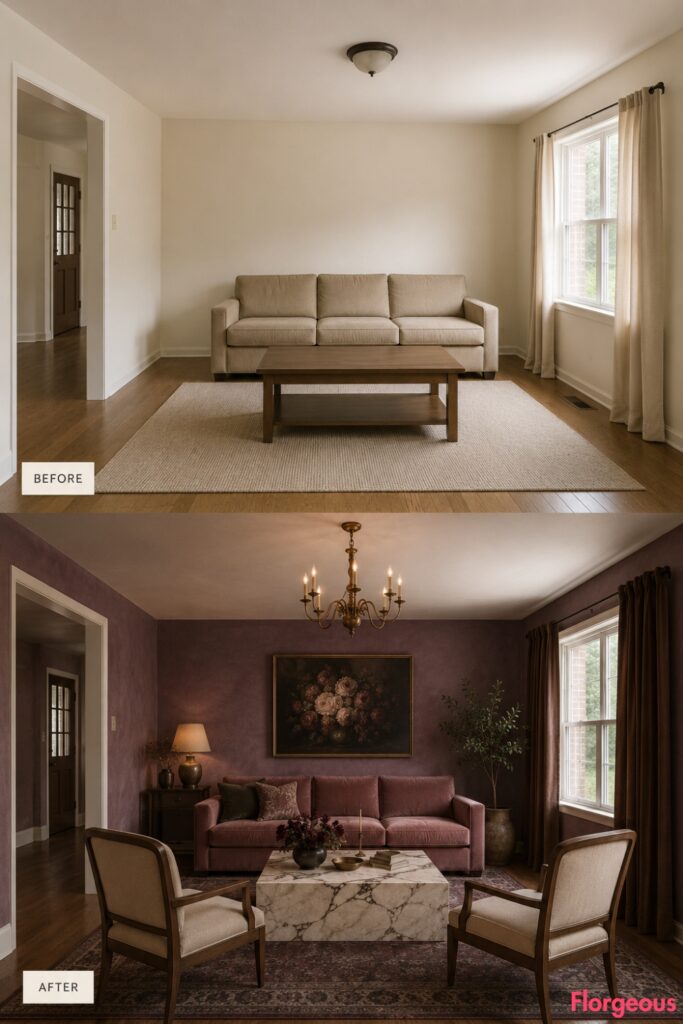
This interpretation brings plum, rose, and warm wood into the academic palette.
Before: Beige furniture and pale walls leave the room visually quiet but emotionally flat.
After: Dusty aubergine Roman clay adds richness without becoming nearly black. A muted rose velvet sofa is paired with rosewood slipper chairs upholstered in parchment linen. Cream marble, a plum-and-olive rug, cocoa curtains, aged-bronze lighting, and a shadowy floral painting create a romantic literary salon.
7. Create an Olive and Cognac Private-Club Lounge
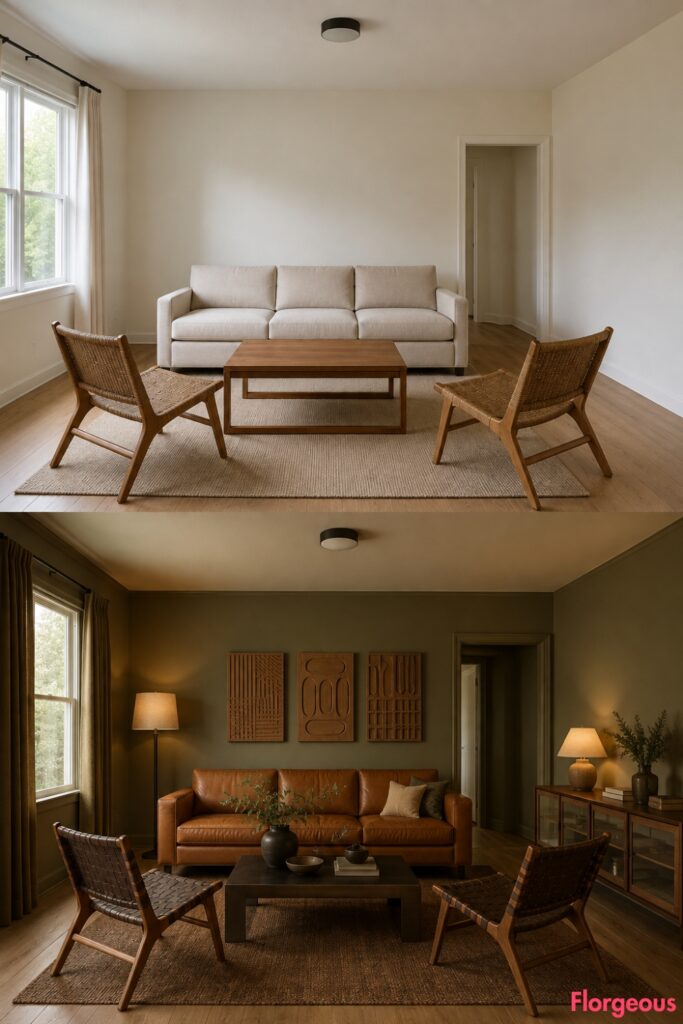
Here, dark academia becomes tailored rather than decorative.
Before: The straight beige sofa, generic rug, and sparse surfaces make the original living room feel temporary.
After: Deep olive walls set the tone for a clean-lined cognac leather sofa. Two oak chairs with woven leather seats face it across a dark bronze coffee table. A tobacco wool rug, olive-brown curtains, shaded floor lamps, and an oak credenza with antiqued-glass doors create the feeling of a refined private club.
8. Keep It Light With Warm Ivory and Mahogany
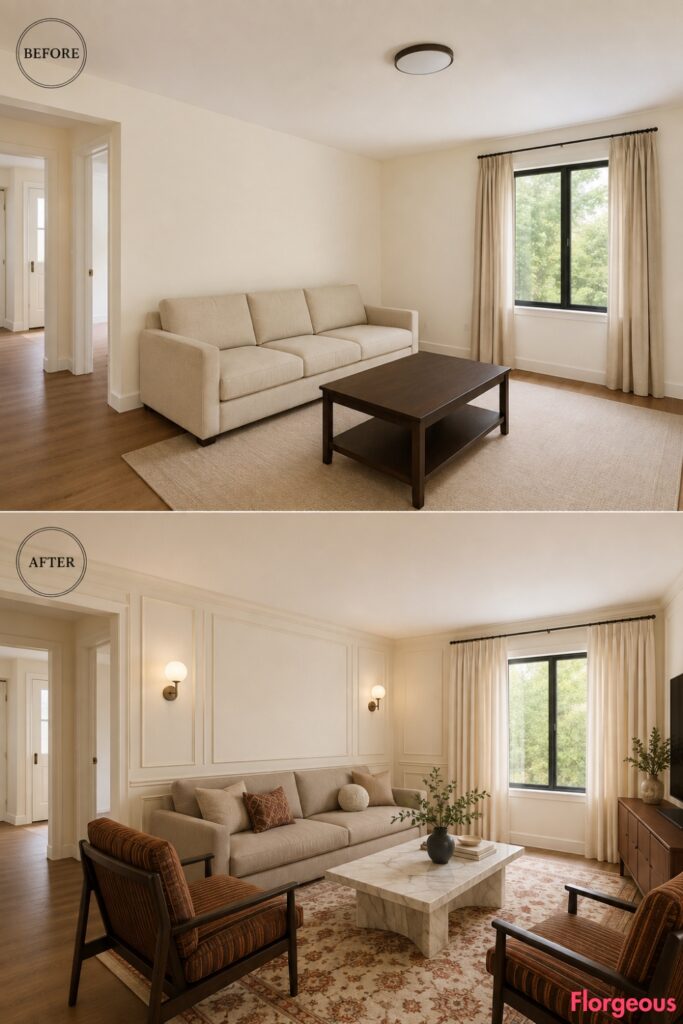
This makeover proves that the style can be bright, elegant, and still unmistakably scholarly.
Before: Warm off-white walls and minimal styling leave the room bright but bland.
After: Warm ivory walls receive shallow decorative molding. A mushroom linen sofa is paired with mahogany-framed chairs upholstered in striped wool. A honed marble table, cream-and-rust rug, full-length ivory drapes, opaline sconces, and a mahogany media console introduce historic weight without darkening the entire space.
Why it works: Dark academia needs depth and history more than it needs dark paint.
9. Go Graphic With Blackened Oak and Mineral Gray
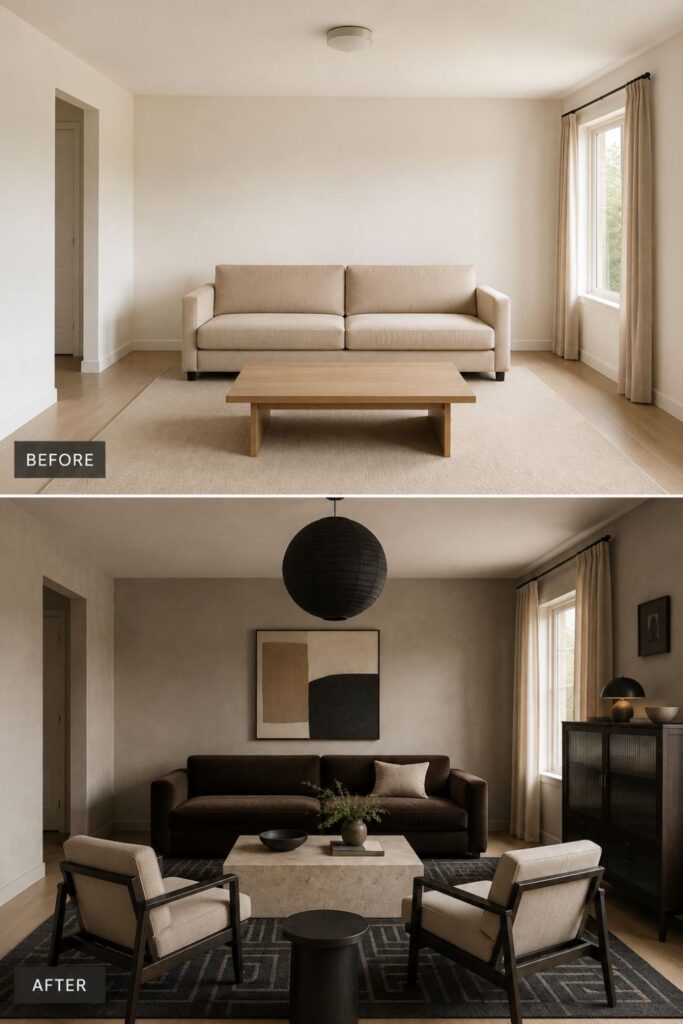
This version takes the academic mood into a contemporary architectural direction.
Before: The beige sofa and plain walls offer no contrast, while the lightweight furnishings lack presence.
After: Warm-gray mineral walls surround an espresso mohair sofa and blackened-oak lounge chairs with parchment cushions. A Jura limestone coffee table brings visual weight. The charcoal geometric rug, flax curtains, black paper pendant, and ribbed-glass dark-oak storage feel modern but still scholarly.
10. Create an Ochre Painter’s Reading Room
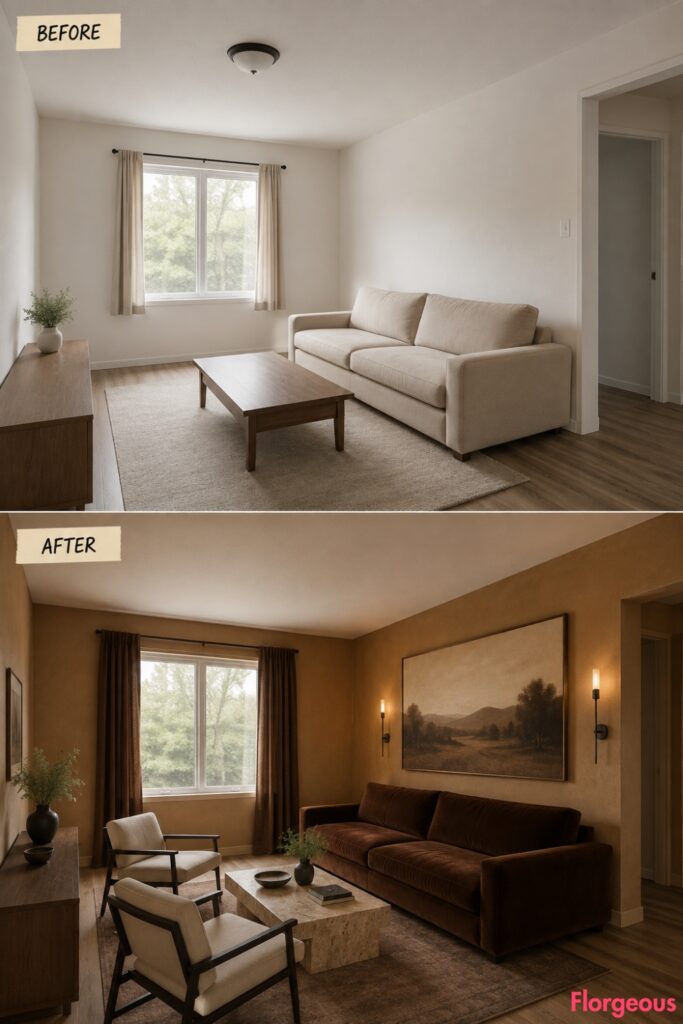
This makeover feels more like an artist’s home than a traditional library.
Before: The original room lacks art, layered materials, and anything that suggests a personal history.
After: Muted ochre plaster introduces an aged glow. A tobacco velvet sofa sits opposite black timber chairs upholstered in ivory wool. A rough travertine table, faded umber rug, chocolate curtains, iron wall lights, a large landscape painting, and a simple walnut display stand make the room feel creative and collected.
11. Add Restrained Gothic Architecture in Black-Green
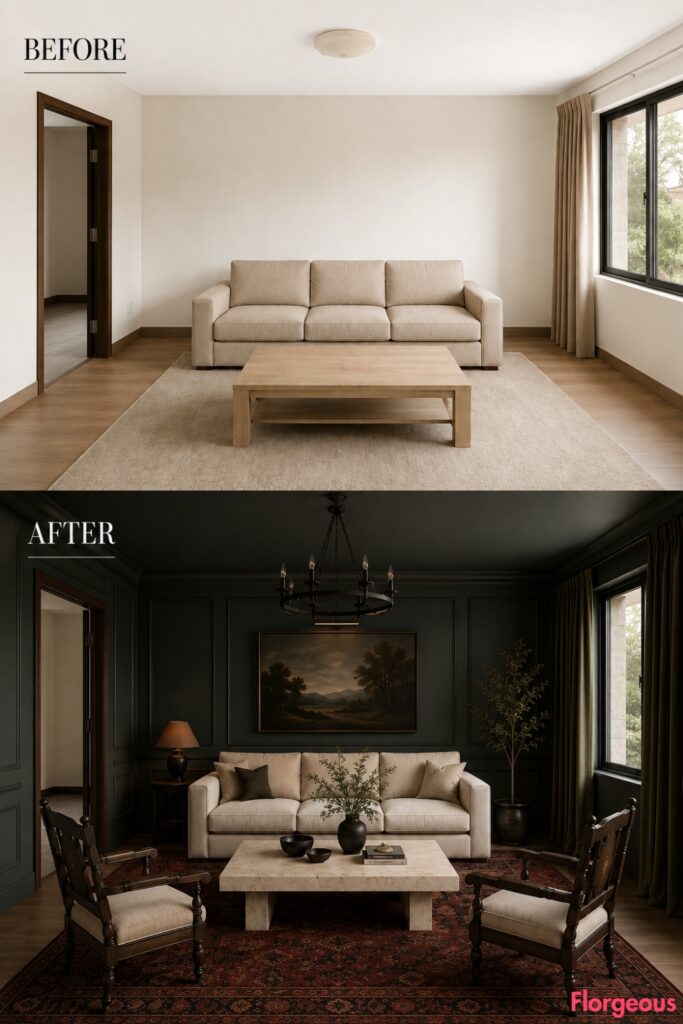
The Gothic reference here comes from silhouette and structure, not themed decor.
Before: Pale builder-grade walls and basic furniture provide almost no architectural character.
After: Black-green paint covers the walls and understated applied molding. A parchment linen sofa balances carved dark-oak chairs, a pale limestone table, oxblood rug, moss curtains, and a sculptural wrought-iron ceiling fixture. One dark landscape completes the room.
Style Note: Avoid skulls, fake medieval objects, and excessive candle styling. Architectural forms are enough.
12. Borrow the Palette of a Dutch Master Painting
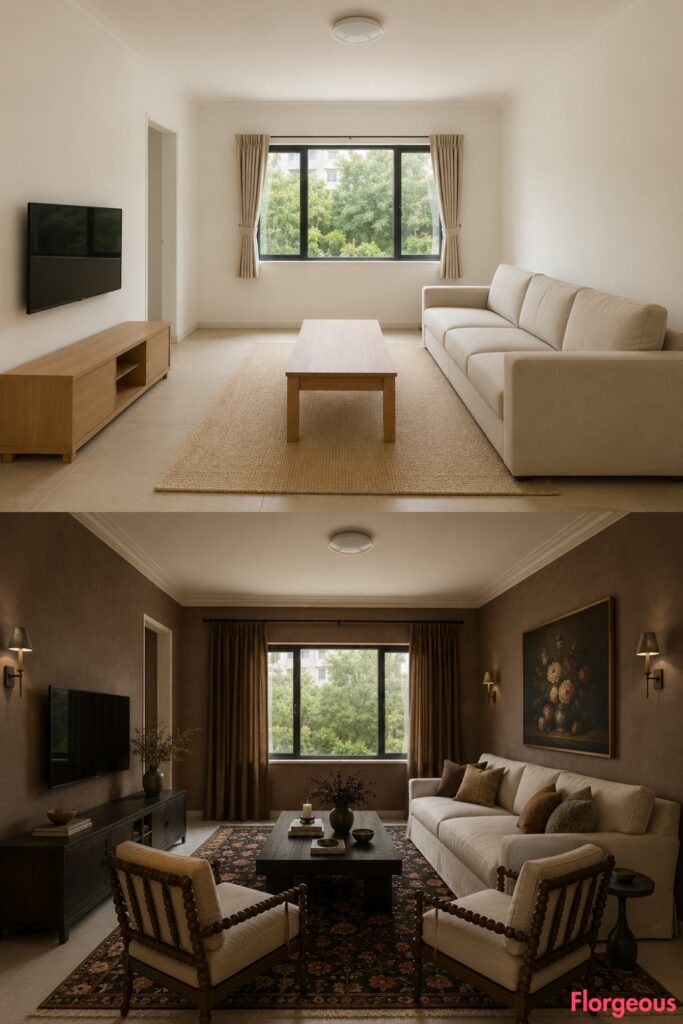
This transformation uses warm shadow, flax, cocoa, and old-world color.
Before: The standard beige-and-off-white room has light but no tonal complexity.
After: Cocoa limewash creates soft movement across the walls. A flax slipcovered sofa keeps the center light, while walnut bobbin chairs and a blackened timber table add historical shapes. A deep floral wool rug, tobacco curtains, pewter sconces, and one richly colored still-life painting complete the painterly atmosphere.
13. Capture an Antiquarian Bookshop Mood With Burl Wood
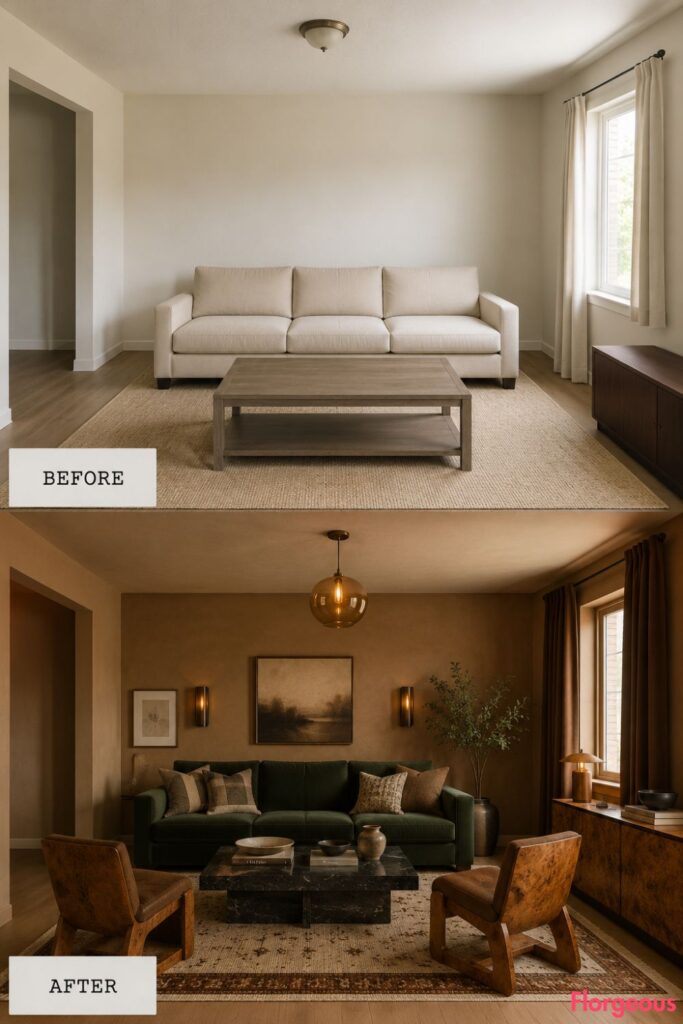
Rather than relying on dark walls, this room lets unusual timber become the visual story.
Before: The base room feels generic because every surface is visually quiet and mass-produced.
After: Muted camel walls warm the room around a deep forest wool sofa. Rounded burl-wood lounge chairs introduce striking grain, while a dark travertine table and cream-brown rug ground the arrangement. Tobacco curtains, an amber glass pendant, and low burl cabinetry evoke an intimate antiquarian bookshop.
14. Design a Compact Academic Apartment
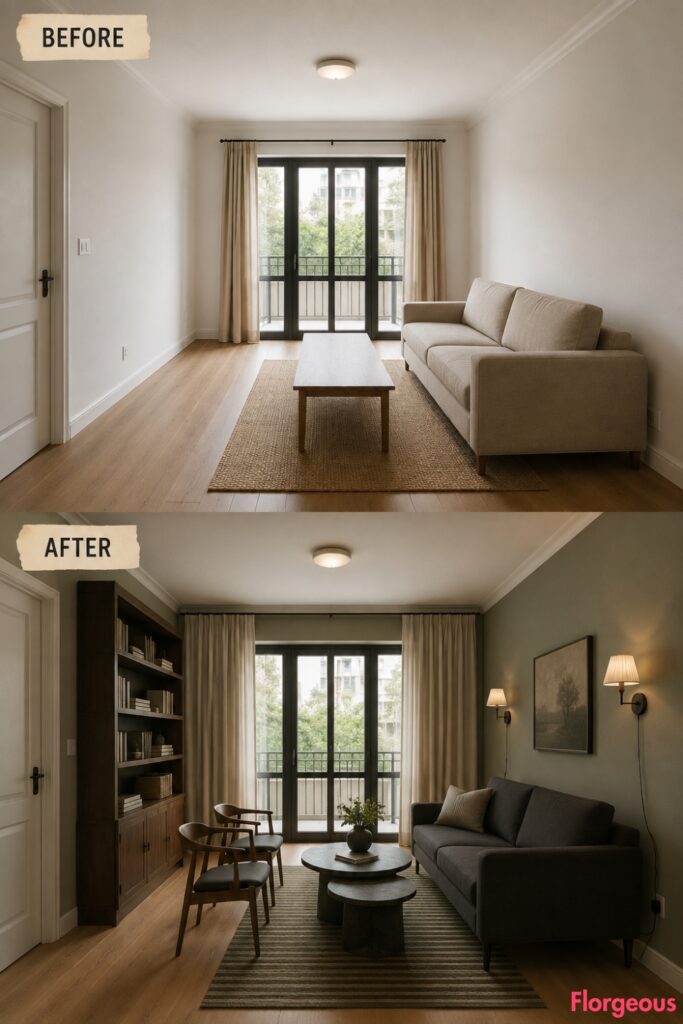
This one is built specifically around spatial efficiency.
Before: The same neutral room feels under-designed, but adding bulky dark furniture would quickly make it crowded.
After: Olive-gray walls create intimacy around a slim charcoal loveseat. Compact walnut chairs, nesting dark-stone tables, and a narrow striped rug keep the footprint light. Ceiling-height curtains, plug-in swing-arm sconces, and one tall freestanding bookcase provide atmosphere without sacrificing circulation.
Small Space Tip: Keep visible floor beneath chairs and tables so dark colors do not visually shrink the room.
15. Make the Entire Makeover Renter-Friendly
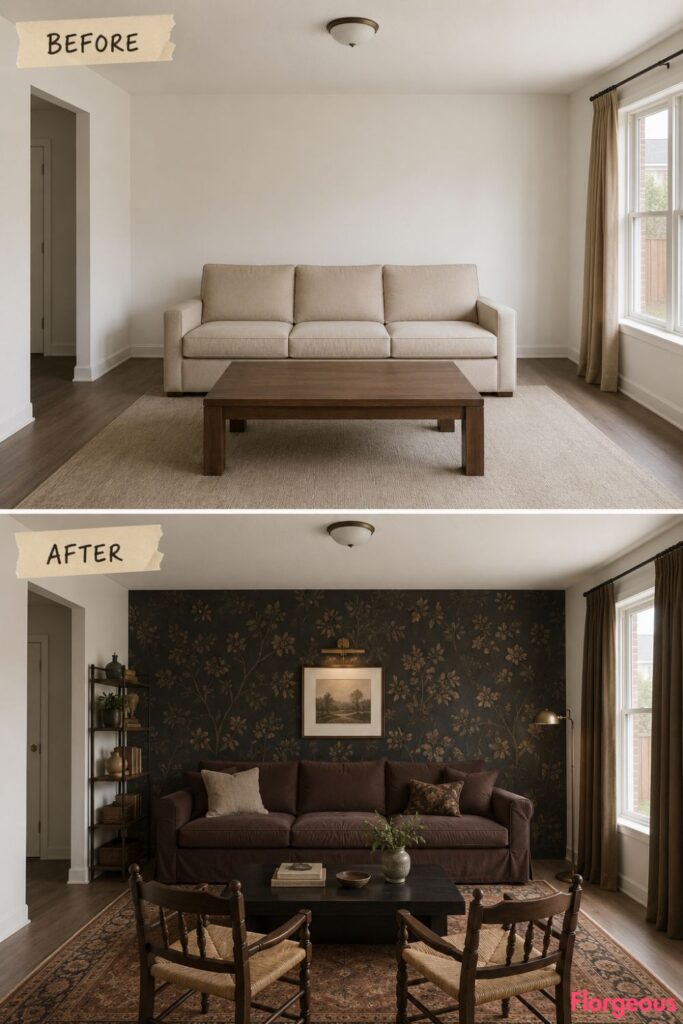
This transformation avoids built-ins, permanent paneling, and hardwired lighting.
Before: The original rental-style room has bland walls, short curtains, basic lighting, and furniture with little visual character.
After: The existing pale walls remain, but a removable charcoal botanical wallpaper panel creates the focal point. Add a chocolate slipcovered sofa, secondhand dark-wood chairs, a simple black coffee table, vintage-style rug, freestanding shelving, long ready-made curtains, a plug-in picture light, and an aged-brass floor lamp.
Budget Version: Deep paint on inexpensive secondhand shelving can imitate custom cabinetry at a fraction of the cost.
16. Make Dark Academia Work for a Family Room
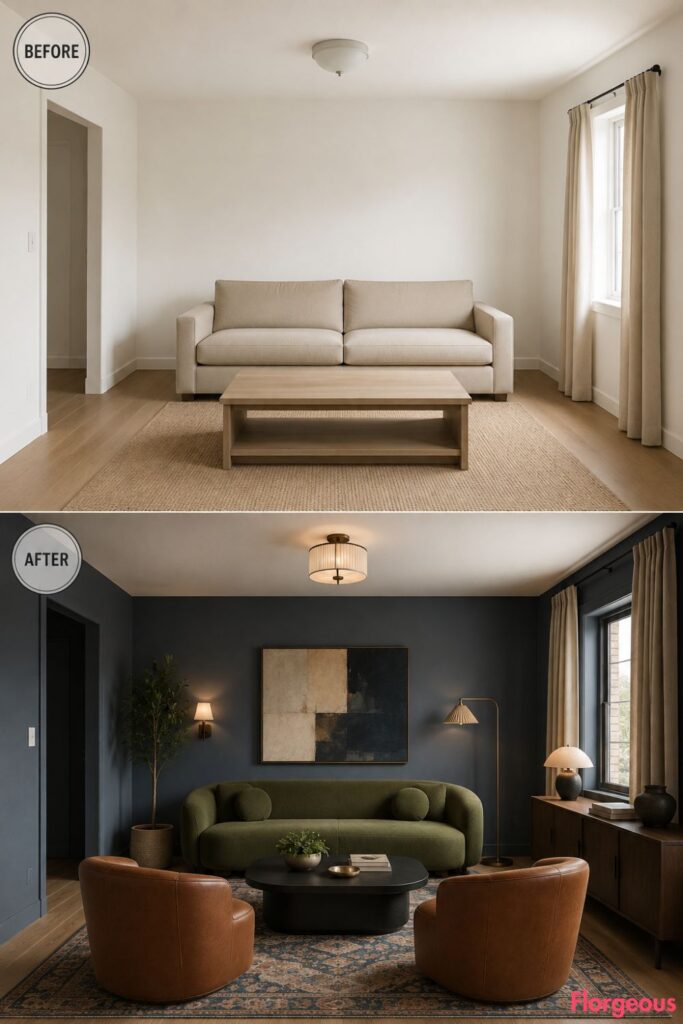
This version keeps the atmosphere while choosing practical materials.
Before: The beige sofa is functional but visually forgettable, while the open surfaces offer little useful storage.
After: Deep blue-gray washable walls frame a rounded olive performance sofa and cognac performance-fabric chairs. A softly rounded dark table and durable patterned rug make everyday use easier. Closed walnut cabinetry hides clutter, while lined curtains, cordless lamps, and one abstract canvas preserve the sophisticated atmosphere.
17. Try a Viennese Secession-Inspired Scholar’s Salon
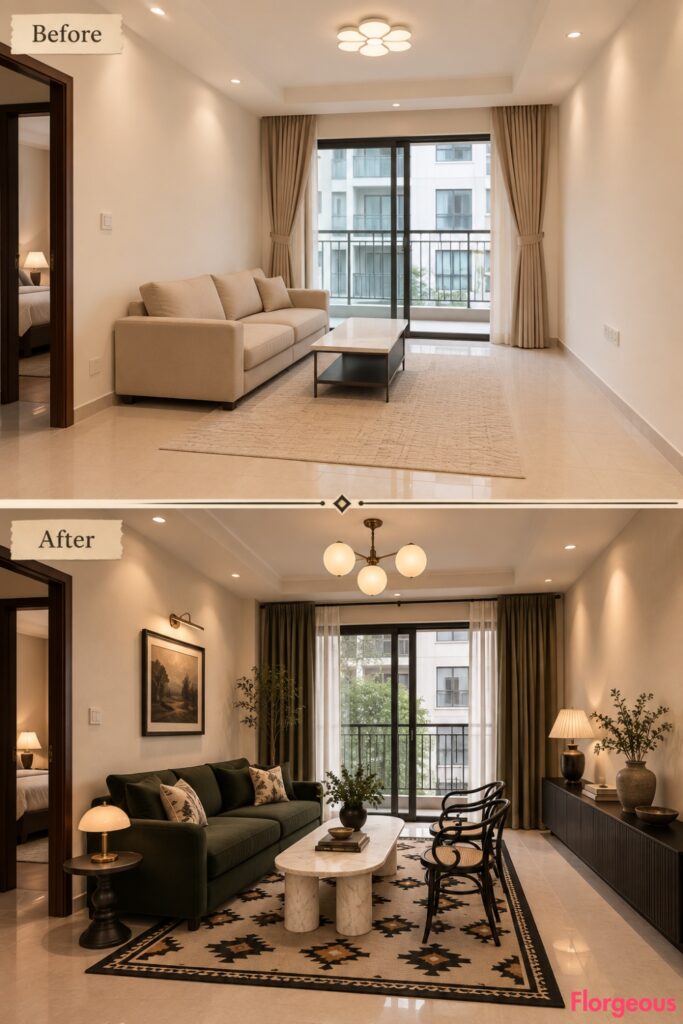
This direction introduces a lighter, geometric European elegance.
Before: The plain room has no strong shapes, decorative rhythm, or architectural detailing.
After: Cream mineral walls become the backdrop for an ebonized settee upholstered in bottle-green wool. Black bentwood chairs, a veined white marble table, geometric black-and-ochre rug, olive velvet curtains, aged-brass globe lighting, and streamlined black cabinetry create an academic room with early-modern European influence.
18. Reimagine It as a Quiet Museum Archive Lounge
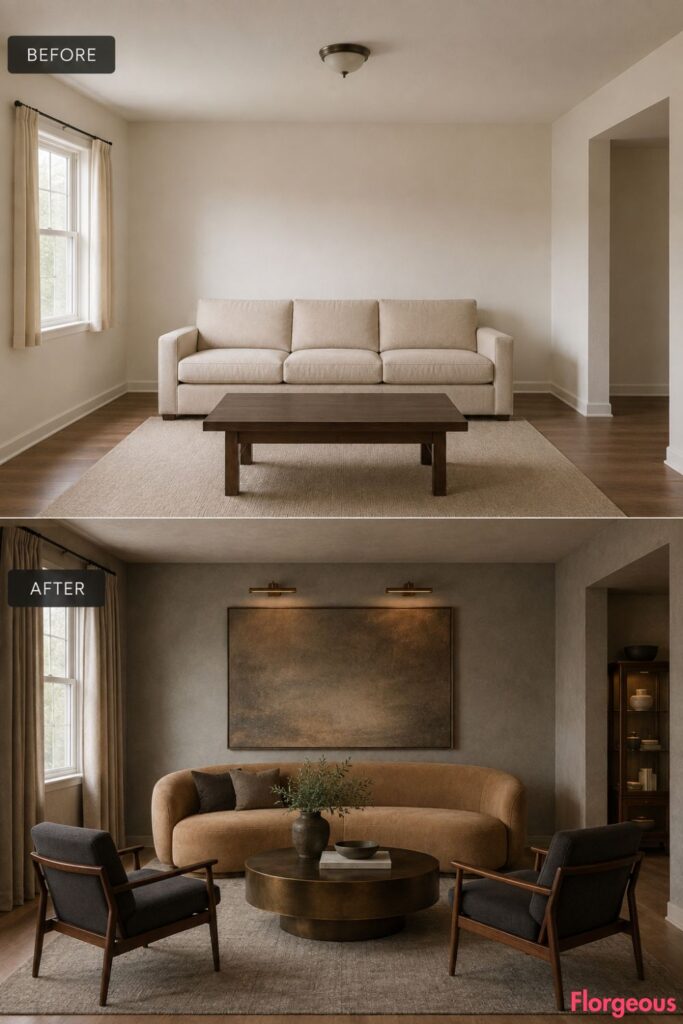
This room borrows from museum interiors instead of domestic libraries.
Before: Empty walls and minimal furniture make the room feel unfinished rather than intentionally quiet.
After: Stone-gray plaster creates a gallery-like shell around a curved camel sofa and dark walnut club chairs upholstered in charcoal wool. A bronze-clad low table, plain warm-gray rug, taupe curtains, oversized framed artwork, integrated picture lighting, and one illuminated glass-front display cabinet give the room museum-like restraint.
19. Go Midnight Navy With Pale Limestone
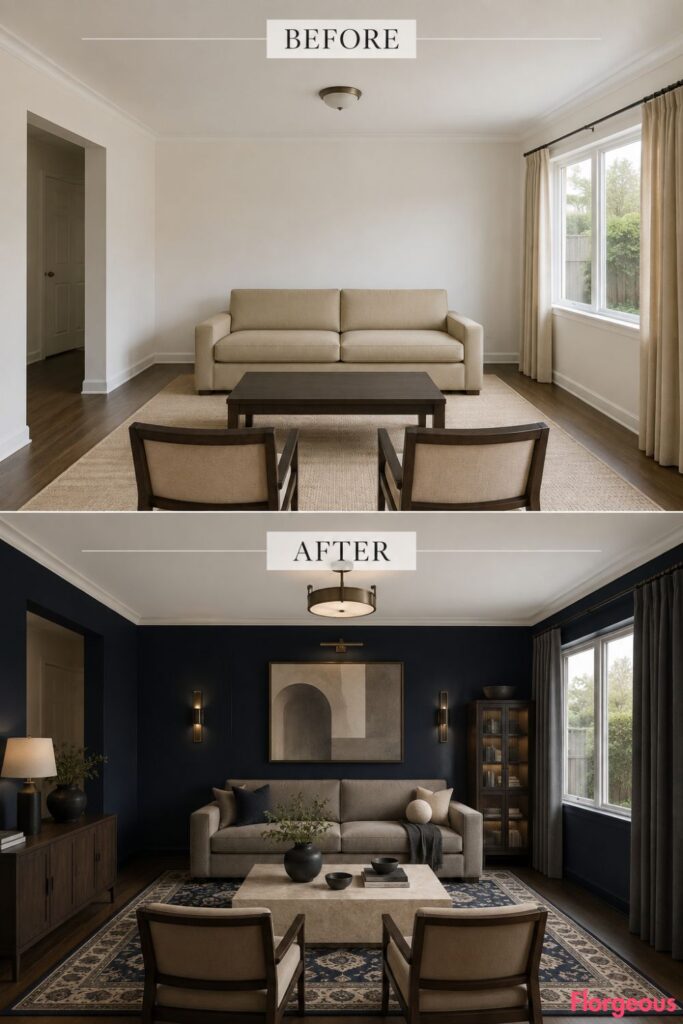
Here, deep color is balanced by chalky stone.
Before: The pale base room lacks contrast and has no visual center.
After: Midnight navy covers the walls while a warm-gray wool sofa introduces softness. Smoked-oak chairs upholstered in parchment leather face a blocky pale limestone table. A navy-and-cream rug, slate curtains, nickel-bronze lighting, architectural artwork, and smoked-oak cabinetry make the palette dark but crisp.
20. Create a Rust and Forest European Collector’s Room
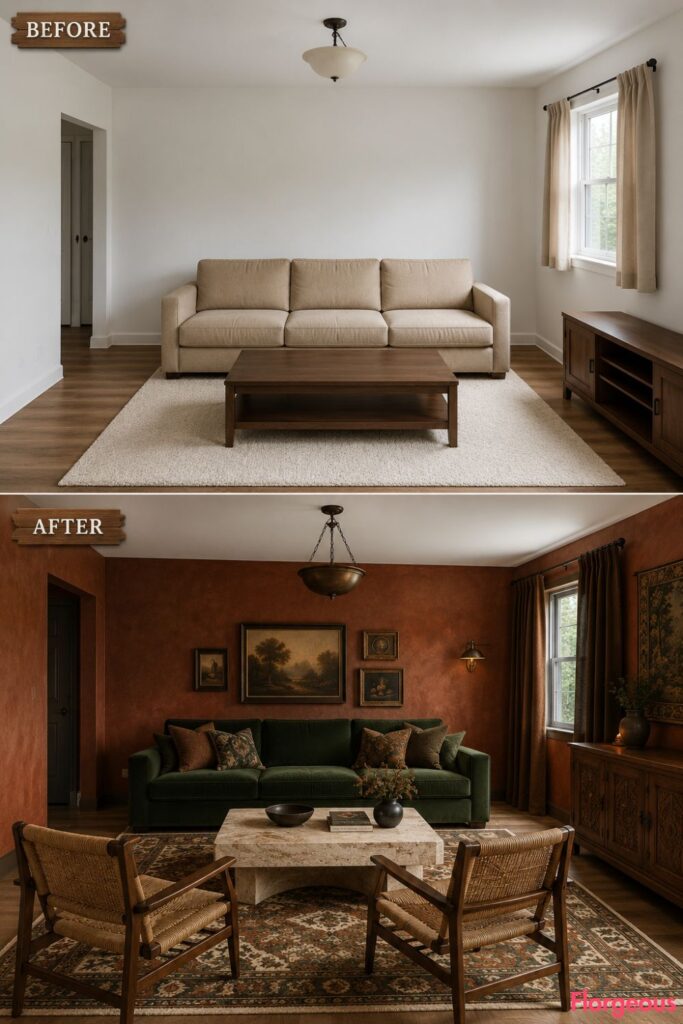
Earthy rust gives dark academia a warmer and more unusual personality.
Before: The original room contains almost no color, patina, or handcrafted character.
After: Burnt-rust mineral plaster surrounds a deep forest velvet sofa. Aged-walnut rush chairs introduce a handmade quality, while a cream travertine table prevents the room from becoming too heavy. A rust-and-green tapestry-inspired rug, brown linen curtains, antique-bronze pendant, and carved walnut cabinet complete the collected European mood.
Why it works: Rust provides historic warmth without repeating the usual chocolate-brown palette.
21. Turn It Into a Boutique-Hotel Academic Lounge
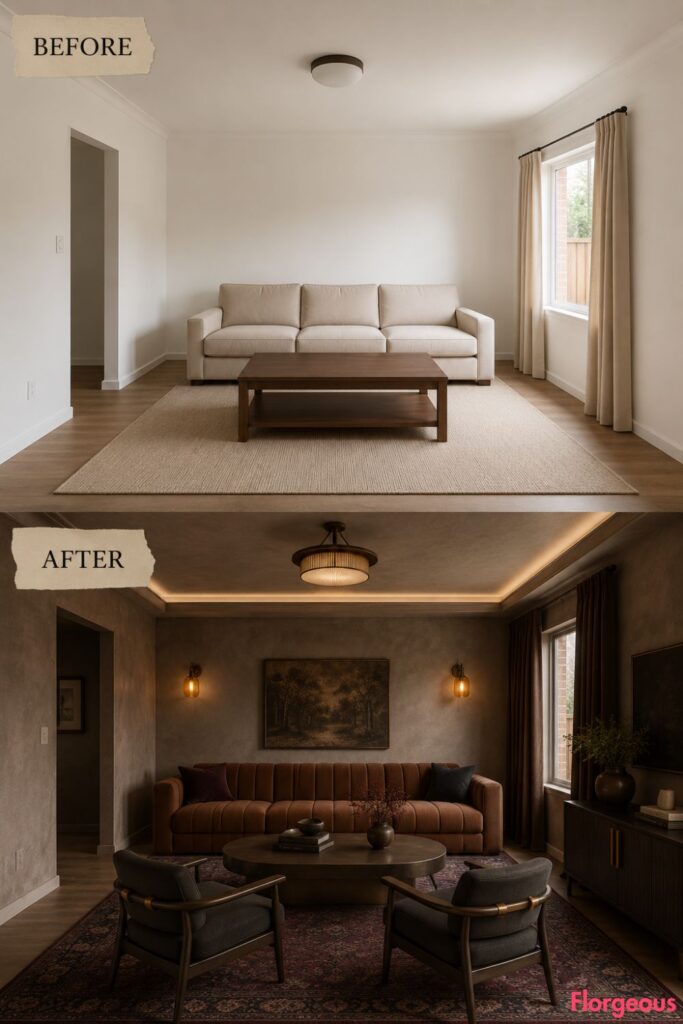
This interpretation is polished, tailored, and designed around evening light.
Before: The base room’s flat ceiling light and short curtains do nothing to shape the atmosphere after sunset.
After: Deep mushroom plaster wraps around a channel-tufted tobacco velvet sofa. Dark-ash chairs with ribbed-bronze frames face a bronze oval table. A burgundy-charcoal rug, espresso curtains, amber-glass sconces, layered ceiling lighting, and dark-ash cabinetry create the feeling of a sophisticated literary hotel lounge.
22. Make a Fluted-Glass Library Wall the Focal Point
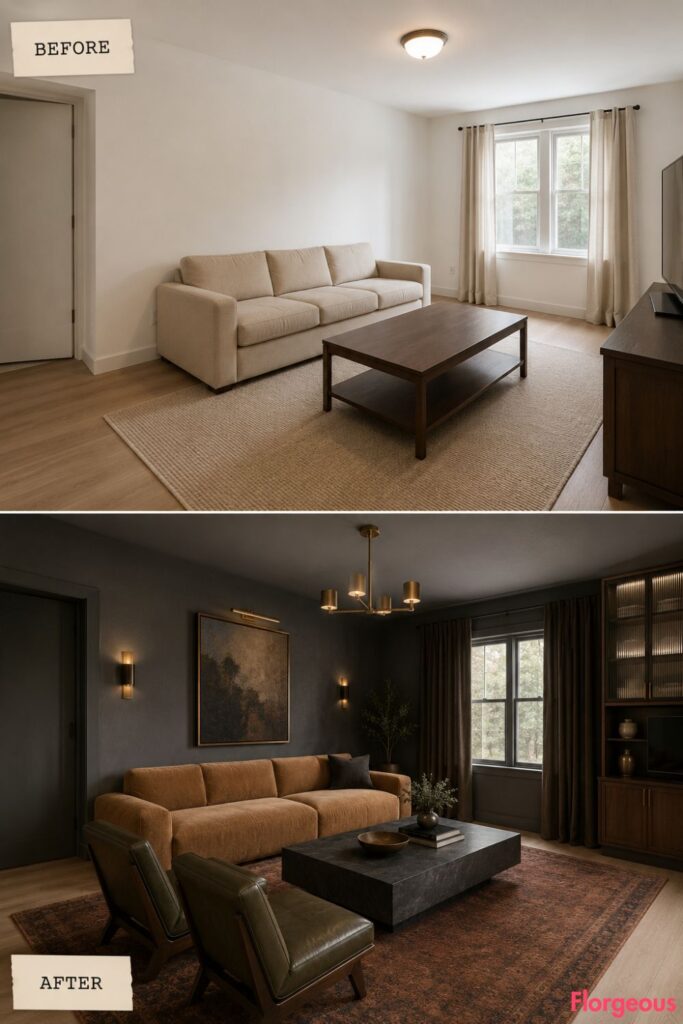
In this makeover, storage becomes the architecture.
Before: Empty walls provide no focal point, while basic freestanding furniture gives the room little permanence.
After: Warm charcoal walls frame a camel mohair sofa and low olive leather chairs. A honed black-stone table sits in the center, but the real feature is dark-walnut cabinetry combining solid lower cupboards with bronze-framed fluted-glass upper doors. Books and objects become softened silhouettes behind the textured glass.
Why it works: The cabinetry delivers academic richness while keeping visual clutter controlled.
23. Strip the Style Back to a Monastic Limestone Retreat
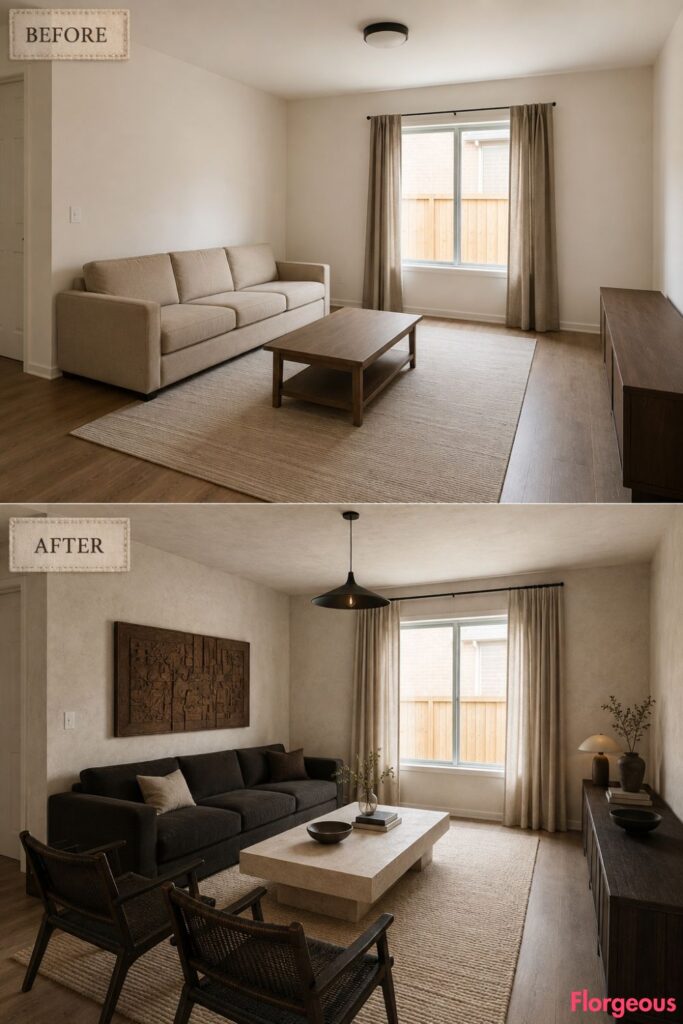
This is the most restrained interpretation in the collection.
Before: The original pale room already has simplicity, but it feels generic because the materials lack depth.
After: Pale limestone-colored plaster replaces builder-grade paint. A low charcoal linen sofa sits opposite severe blackened-oak chairs with woven seats. Add a monolithic limestone coffee table, undyed wool rug, natural flax curtains, simple iron pendant, carved timber relief, and long dark-oak cabinet. There are no stacked books or busy art arrangements.
24. Give It a Modernist Steel and Slate Edge
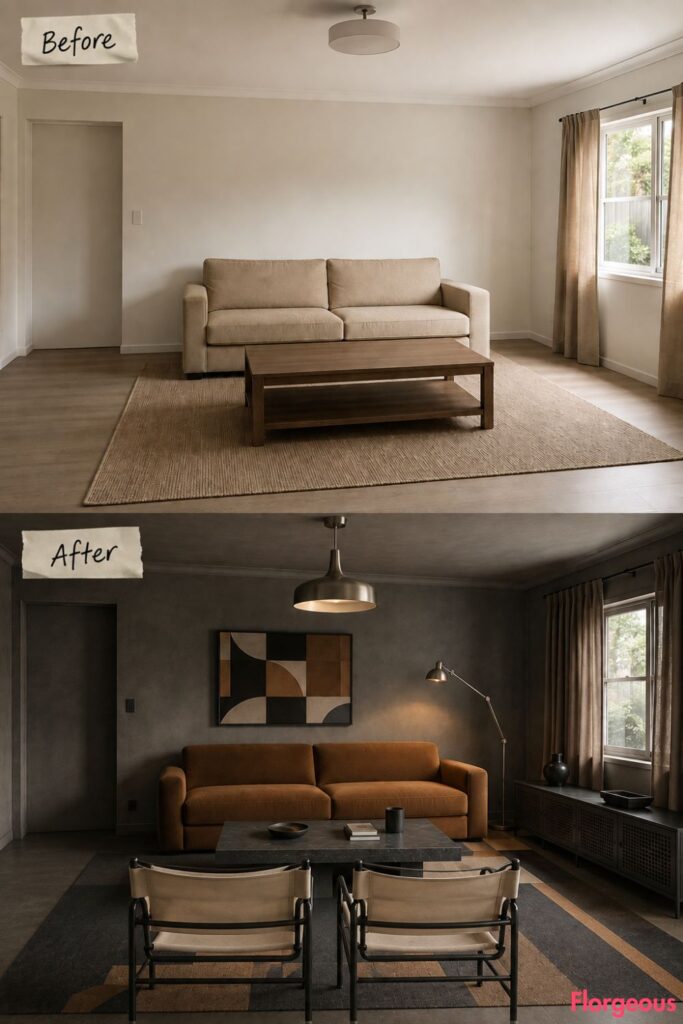
This version looks toward twentieth-century university buildings and architects’ studios.
Before: The beige room has conventional residential furniture and no strong material language.
After: Smoky gray microcement covers the walls behind a saddle-brown wool sofa. Tubular blackened-steel chairs upholstered in cream canvas face a honed slate table. A graphite-and-camel flatweave rug, taupe curtains, brushed-steel pendant, articulated floor lamp, geometric artwork, and perforated-metal storage create a sharper academic mood.
25. Finish With a Burgundy and Aged-Gold Collector’s Salon
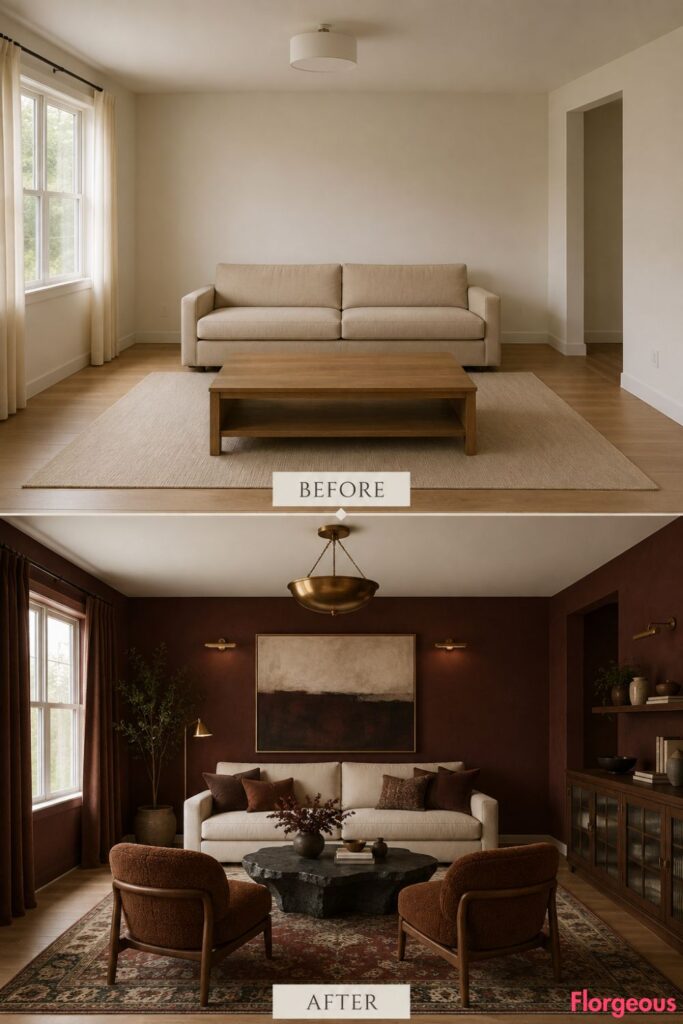
The final room is the most layered, but every element is carefully edited.
Before: The starting room remains exactly the same: warm off-white walls, beige sofa, bare rectangular table, neutral rug, short curtains, standard light, empty walls, and minimal styling.
After: Deep burgundy mineral walls surround an ivory linen sofa and sculptural walnut chairs upholstered in tobacco wool. An irregular dark limestone table sits over a moss-burgundy-parchment rug. Full chocolate curtains, aged-gold ceiling lighting, subtle bronze wall lights, a restrained salon-style art arrangement, antiqued-glass walnut cabinetry, handmade ceramics, and carefully placed books make the room feel collected over decades.
Common Mistake: Collected should never mean crowded. Leave visible breathing room around furniture, art, and decorative objects.
How to Choose the Right Dark Academia Direction for Your Room
These 25 transformations all begin with exactly the same plain living room, yet none of the finished spaces needs the same combination of brown walls, leather furniture, brass lamps, and bookcases.
For your own Dark Academia Living Room, begin by deciding how much darkness your natural light can comfortably support. A bright living room may handle burgundy, black-green, midnight navy, or charcoal beautifully. A darker room may look richer with parchment, limestone, camel, ivory, or muted ochre walls paired with deeper furniture.
Next, choose one element that defines the design. That might be moss mineral paint, an oxblood sofa, burl cabinetry, a sculptural limestone table, fluted glass, blackened steel, or a beautiful vintage-style rug.
Then establish the lighting. Full-height curtains, a good ceiling fixture, wall lights, picture lights, and one reading lamp will usually create more atmosphere than adding dozens of decorative accessories.
Finally, keep the room functional. Preserve clear circulation, provide closed storage for everyday clutter, keep chairs comfortably positioned for conversation, and resist filling every empty wall. The best dark academia interiors feel as believable during an ordinary afternoon as they do when every lamp is glowing at night.