Some bedrooms are difficult to decorate precisely because nothing is obviously wrong. The bed fits, the walls are neutral, and the room functions, yet it still feels flat, temporary, and without a clear point of view.
For this gallery, we kept one builder-grade bedroom completely locked and reworked only the design layered inside it. These Scandinavian Bedroom ideas move far beyond the predictable white-wall-and-pale-wood formula, exploring architecture, color, craftsmanship, clever storage, vintage influences, tactile materials, lighting, and small-space planning.
Every makeover begins with the same doorway, window, flooring footprint, proportions, ceiling height, camera angle, and circulation. That makes the differences between each AFTER much easier to see.
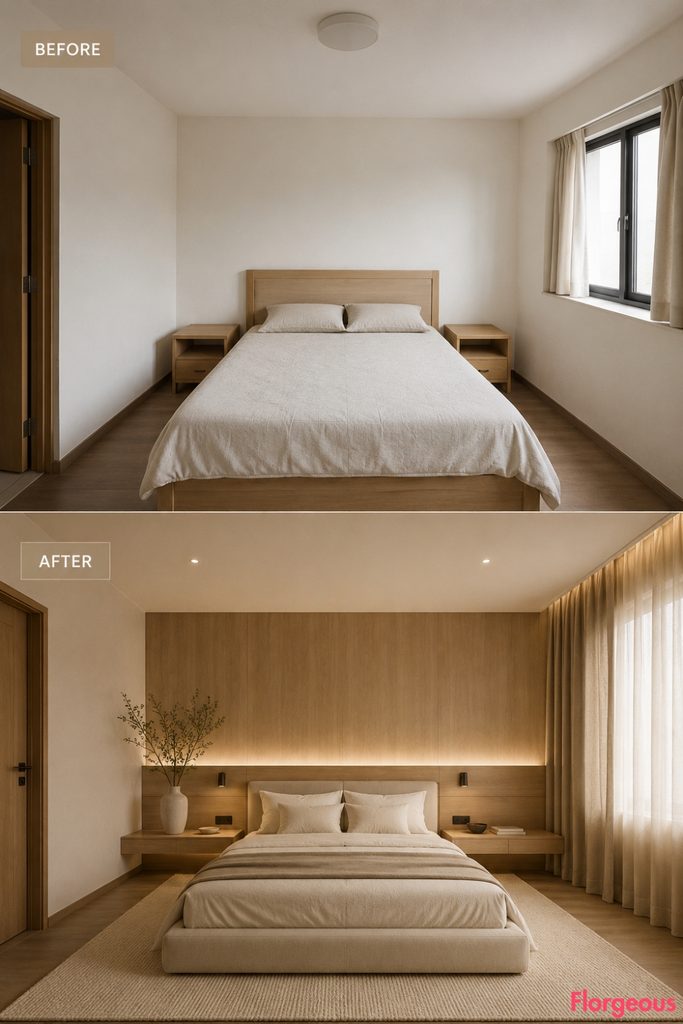
1. Stretch Pale Oak Across the Entire Bed Wall
A continuous timber gesture immediately makes the generic room feel intentional.
Before: The same locked bedroom with warm off-white walls, basic neutral bed, two bare nightstands, short curtains, basic ceiling light, plain flooring, minimal styling, and soft daylight.
After: A broad pale-oak headboard stretches wall to wall, integrating slim bedside ledges and warm recessed lights around a low oatmeal bed. Ivory linen and a cream wool rug keep the timber dominant.
Why it works: One continuous element visually widens the room.
2. Let Dusty Blue Become the Room’s Nordic Color Story
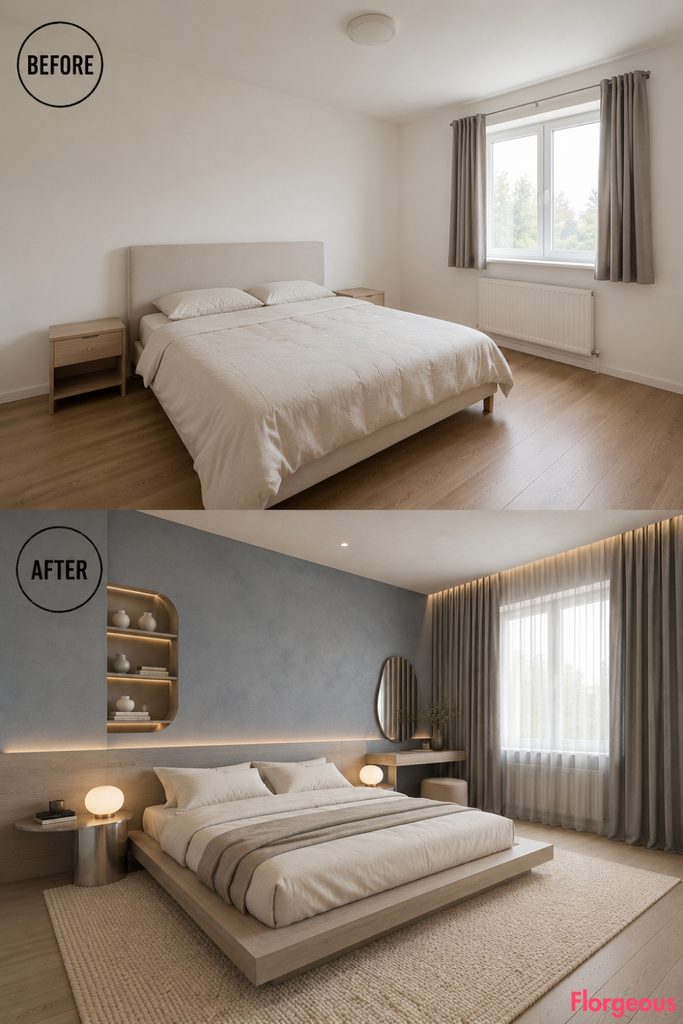
This version proves that Scandinavian interiors do not need to stay beige.
Before: The same locked neutral bedroom with basic furniture, bare surfaces, short curtains, flat lighting, and no focal point.
After: Dusty blue-gray mineral paint surrounds a pale ash bed, brushed-aluminum cylindrical tables, milky opal lights, ivory bedding, and a warm textured rug.
Try this: Choose a blue with noticeable gray undertones so it remains calm beside pale timber.
3. Soften the Headboard Wall With Tailored Wool Felt
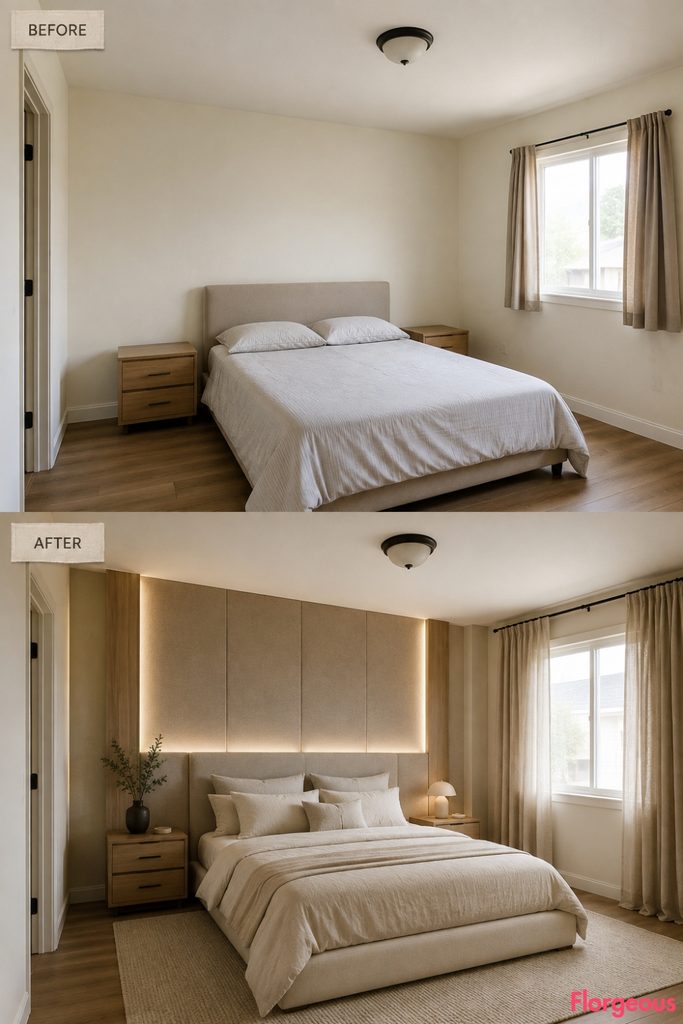
Instead of paint or timber, this makeover uses acoustics as decoration.
Before: The same plain bedroom with warm off-white walls, neutral bed, bare nightstands, short curtains, basic light, simple flooring, and minimal styling.
After: Broad mushroom wool-felt panels alternate with very narrow ash strips behind a low cream bed. Concealed perimeter lighting brings out the soft texture without making the wall look padded.
Designer Tip: Use fewer, wider felt panels for a more architectural result.
4. Move the Drama Up to a Charcoal Ceiling
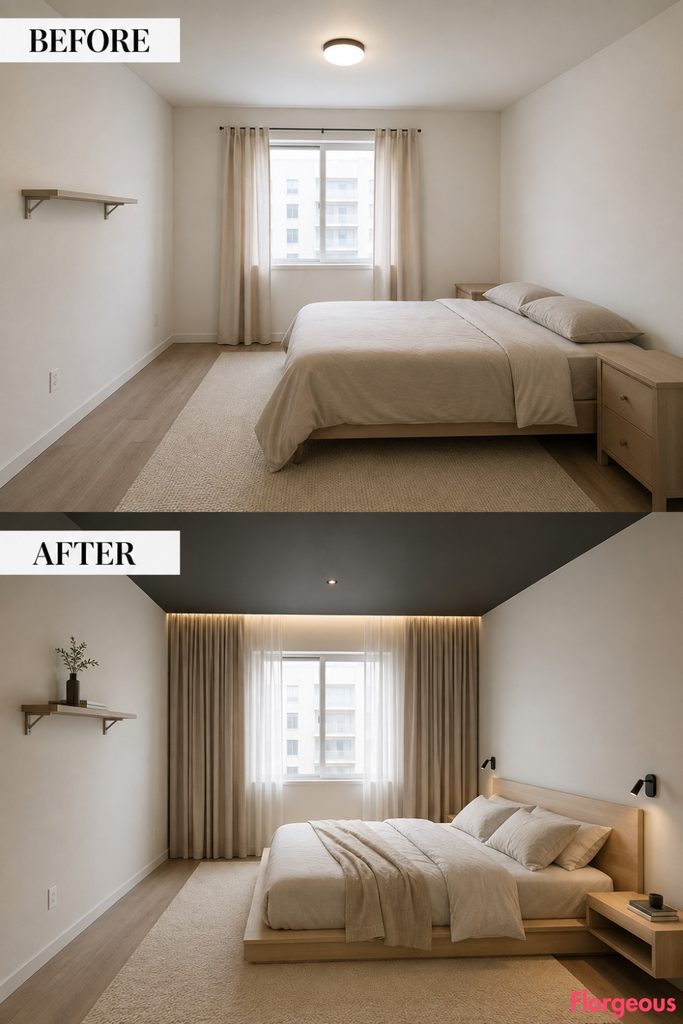
Here, the ceiling rather than the headboard becomes the defining feature.
Before: The identical simple bedroom remains visually flat, with warm off-white surfaces and a basic central ceiling fixture.
After: The walls stay warm white while the ceiling becomes deep charcoal. A low birch bed, pale textiles, tiny black wall lights, and a light rug prevent the overhead color from feeling heavy.
Why it works: A darker ceiling can make a boxy room feel more enveloping without shrinking the floor plan.
5. Bring In Danish Vintage With Sculptural Teak
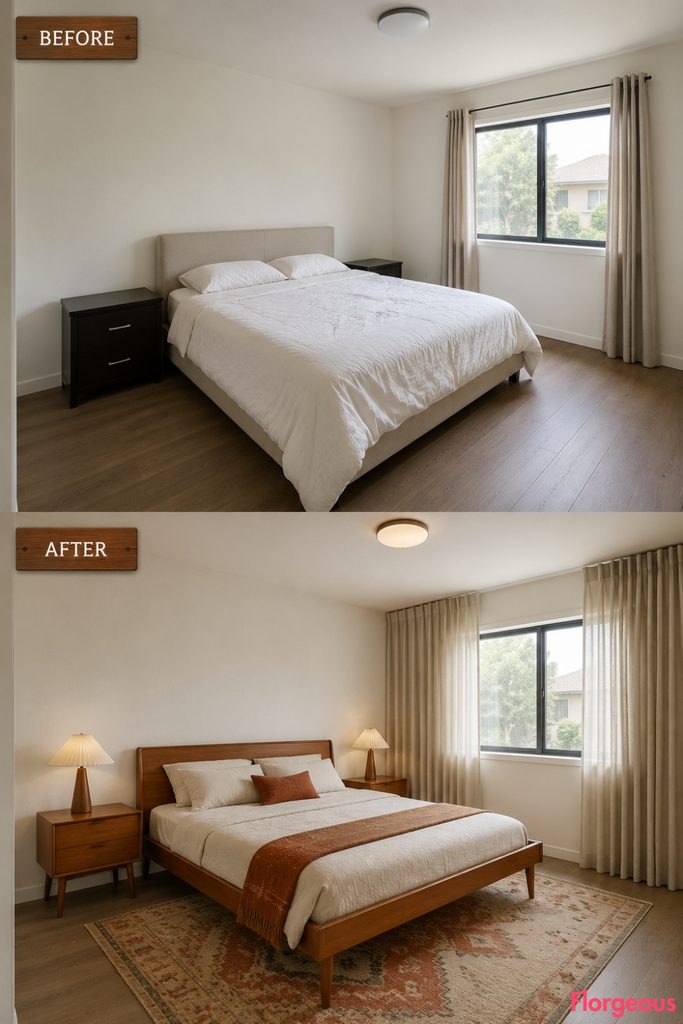
Furniture alone carries this makeover.
Before: The same builder-grade bedroom has generic furniture, bare walls, short curtains, and no distinctive material story.
After: A vintage-inspired teak bed with tapered legs anchors the room, joined by compact teak tables, pleated lamps, a faded geometric rug, cream linen, and restrained rust accents.
Keep the walls simple so the furniture can show its shape and grain.
6. Give the Room a Quiet Swedish Folk Influence
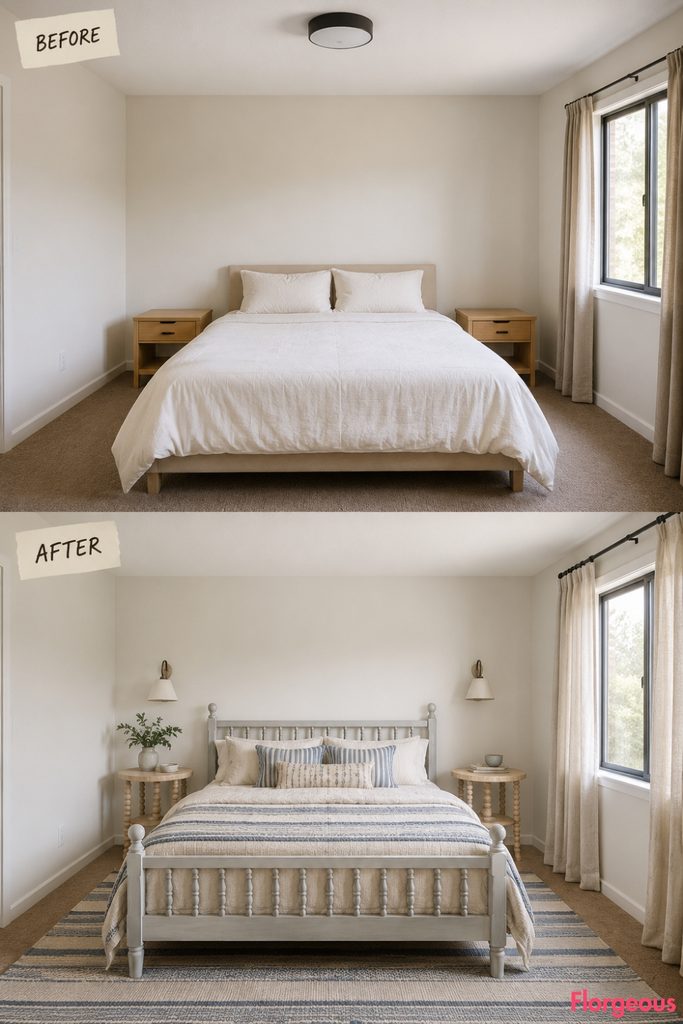
Nordic tradition appears here through craft rather than obvious motifs.
Before: The original bedroom remains plain and lightly unfinished, with neutral bedding and completely bare bedside surfaces.
After: A pale gray painted timber bed, spindle-legged tables, a blue-and-cream handwoven coverlet, striped flat-weave rug, and simple ceramic wall lamps bring gentle folk character.
Style Note: Keep ornament sparse. Craftsmanship should carry the look.
7. Build the Entire Room Around Hygge Texture
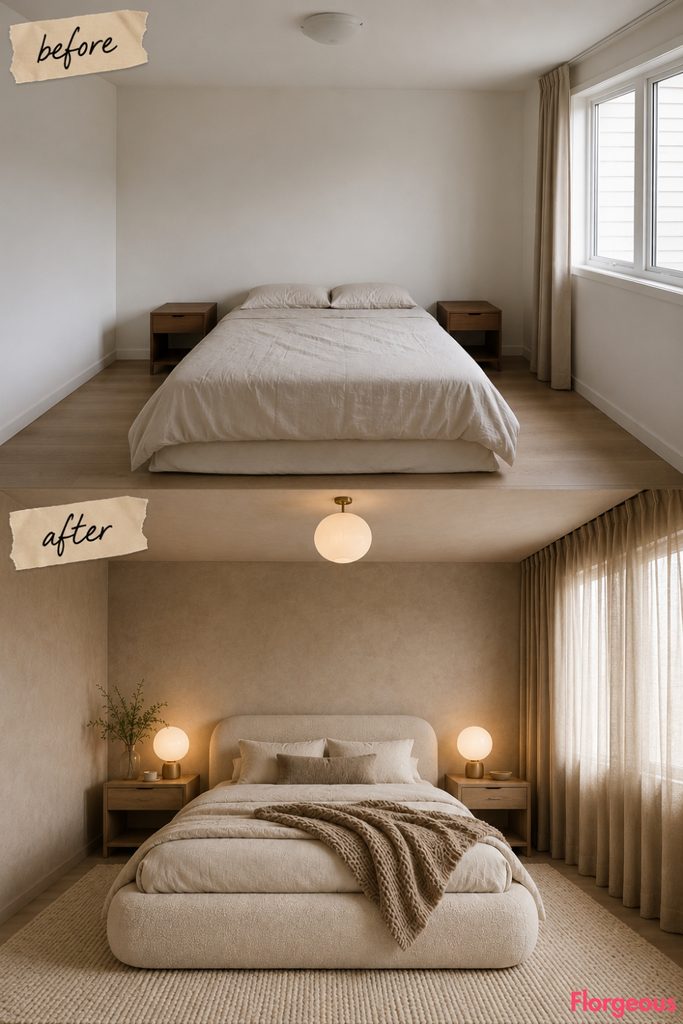
This makeover relies on touch rather than pattern.
Before: The identical bedroom feels thin and unfinished, with basic bedding, short curtains, hard surfaces, and flat lighting.
After: A rounded oatmeal bouclé bed sits against mushroom plaster, surrounded by chunky wool, washed linen, looped carpet texture, tiny oak tables, and warm globe lights.
The restrained palette allows every texture to register.
8. Turn the Same Room Into a Tailored Nordic Hotel Suite
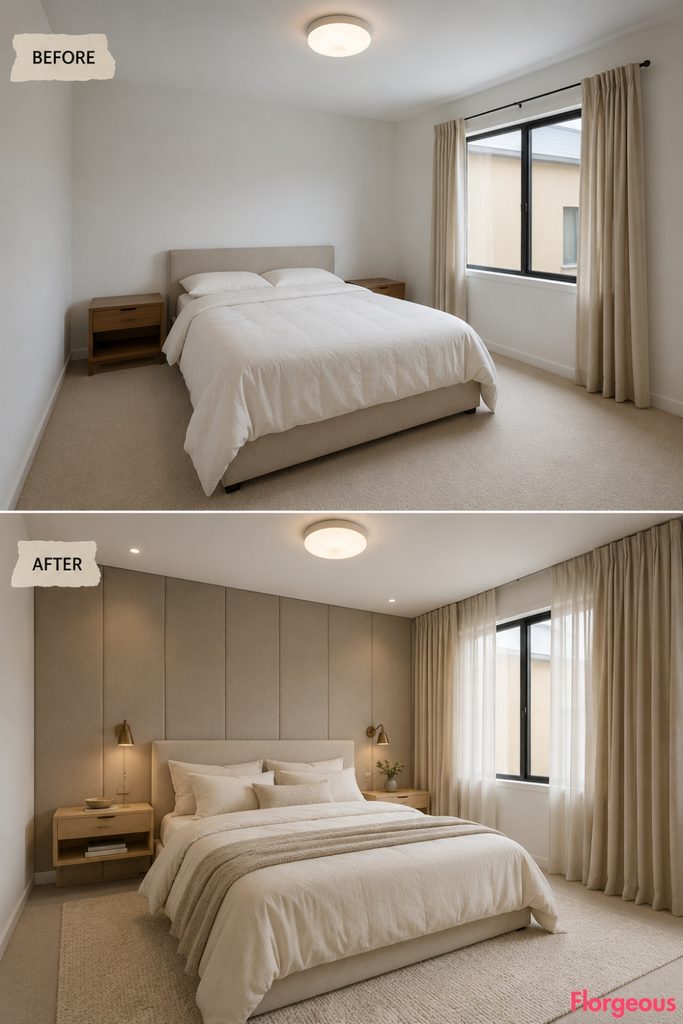
Clean detailing replaces casual hygge in this version.
Before: The same generic bedroom has no architectural focal point and uses ordinary freestanding bedside furniture.
After: A floor-to-ceiling mushroom upholstered wall frames an ivory bed. Narrow pale-oak ledges, compact aged-bronze reading lights, layered cream bedding, and tailored curtains create a quiet boutique-hotel effect.
Try this: Keep accessories nearly invisible to preserve the tailored mood.
9. Float the Bed in Front of a Freestanding Slatted Screen
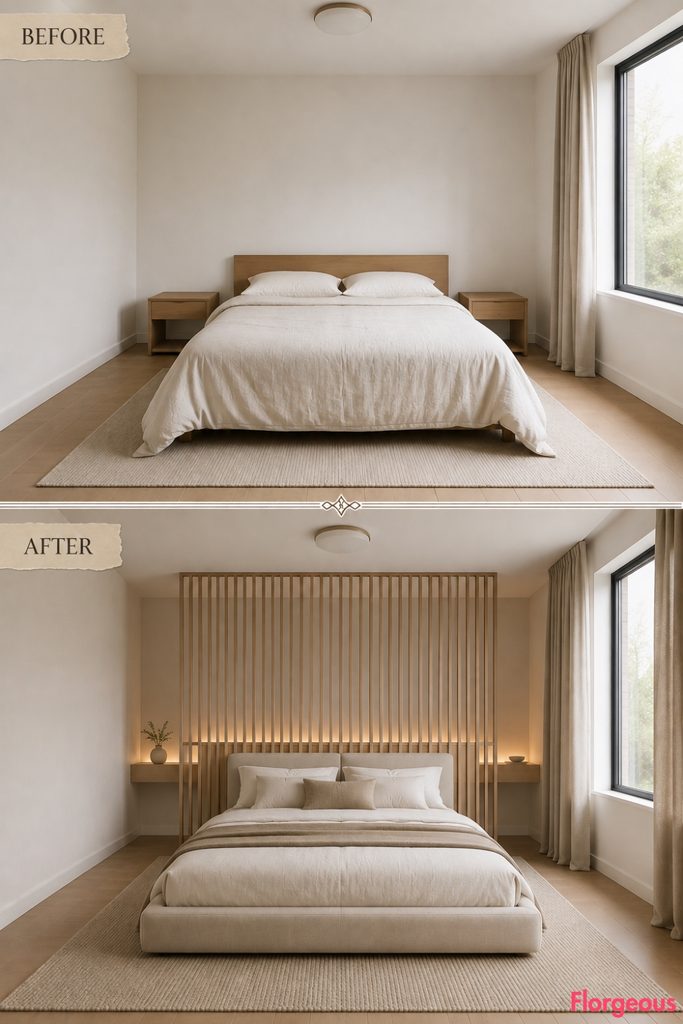
This is architecture without permanently altering the wall.
Before: The same bed sits conventionally against an empty warm off-white wall.
After: The bed moves slightly forward in front of a freestanding pale-ash slatted screen. A concealed shelf hidden behind the mattress provides charging, books, and indirect light.
The vertical gaps keep the installation visually light.
10. Carve a Rounded Plaster Niche Around the Bed
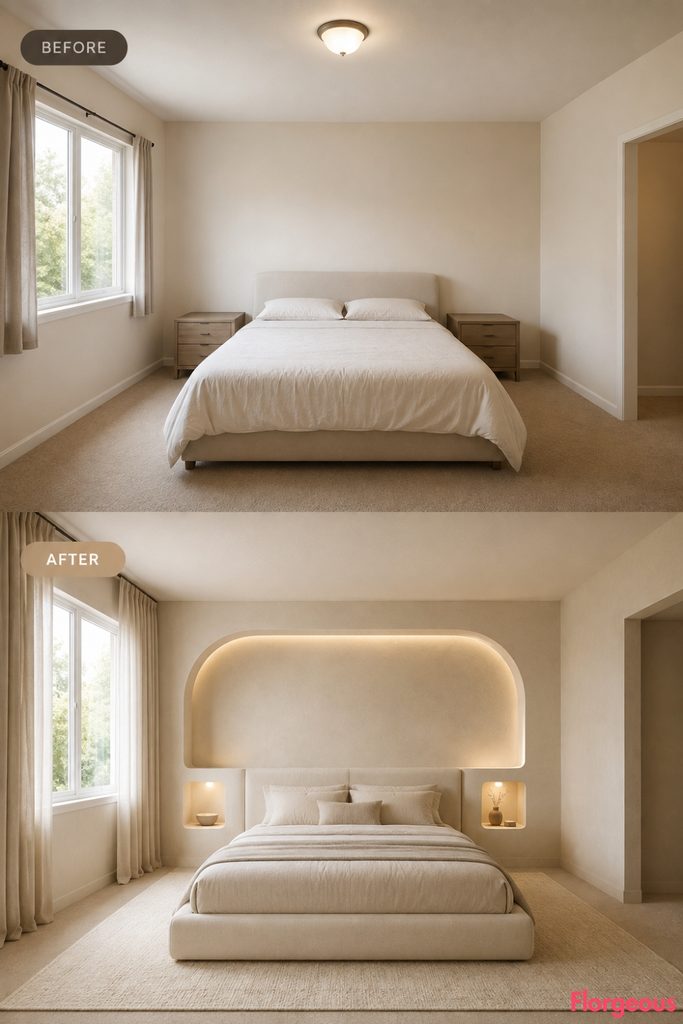
Instead of adding furniture, this design removes it.
Before: The locked bedroom has two basic nightstands against an entirely flat wall.
After: A broad bone-colored plaster niche frames the low bed, with recessed bedside pockets and tiny integrated lamps built into its curved edges.
The niche creates depth while leaving the floor noticeably clearer.
11. Wrap the Sleeping Zone in a Pale-Oak Portal
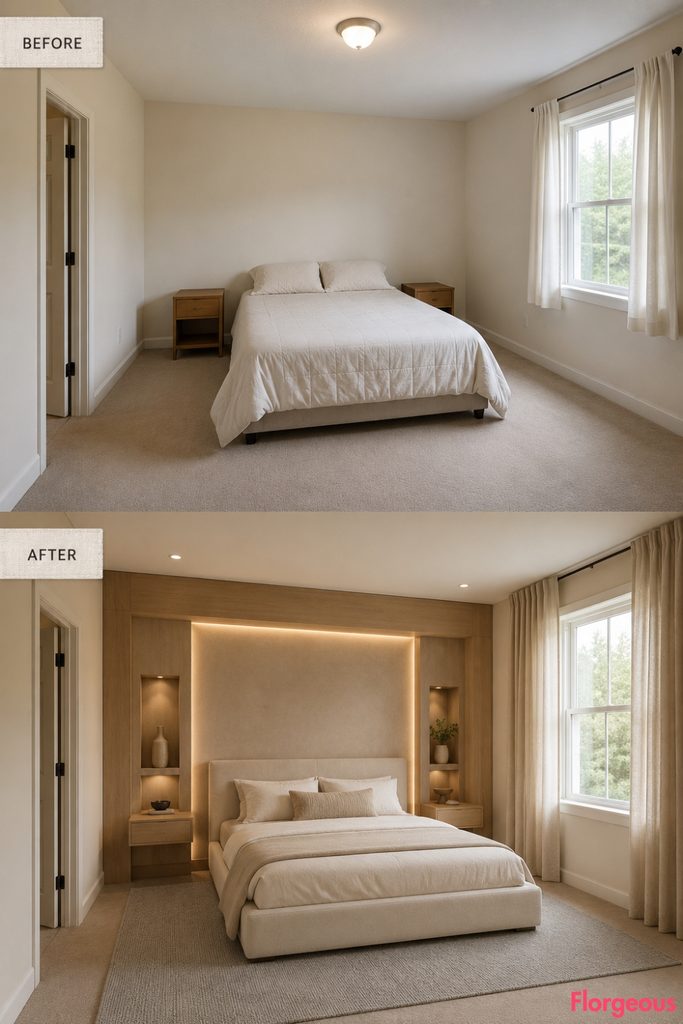
This concept gives the bed a stronger architectural boundary.
Before: The same generic bed sits loosely against the main wall with no visual frame.
After: A shallow floor-to-ceiling pale-oak portal wraps the head and outer edges of the sleeping zone. Warm plaster fills its center, while recessed niches and concealed edge lighting replace conventional bedside furniture.
Why it works: The frame creates a room-within-a-room effect without closing the space.
12. Turn the Bed Base Into Hidden Storage
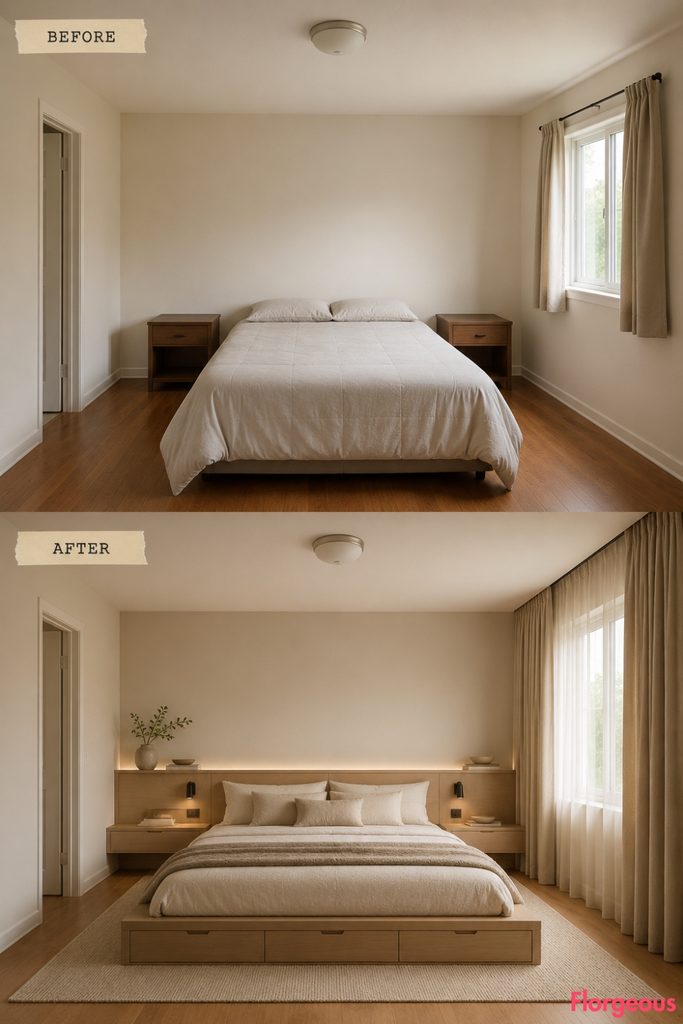
Here, the makeover starts at floor level.
Before: The identical room uses a normal bed frame and two separate nightstands.
After: A low ash platform contains flush concealed drawers along the base. A narrow rear shelf integrates charging and reading lights, eliminating both bedside tables.
Small Space Tip: Handleless fronts help the storage read as part of the bed rather than cabinetry.
13. Disappear Storage Into a Seamless Wardrobe Wall
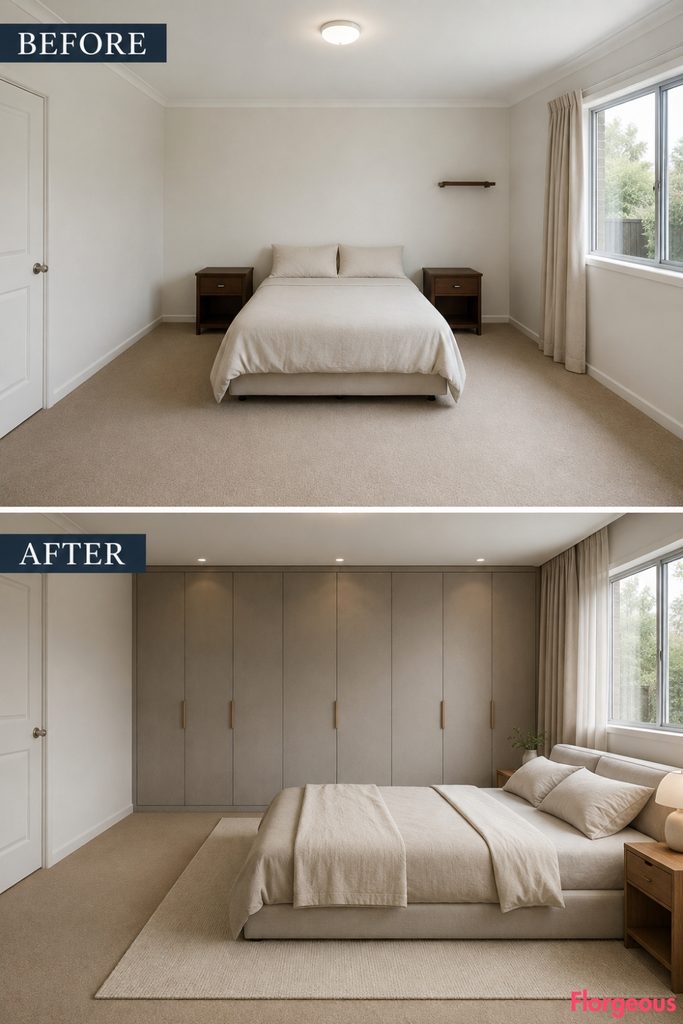
The focal point shifts away from the bed entirely.
Before: The same bedroom has empty wall surfaces and no meaningful storage architecture.
After: One safe wall becomes floor-to-ceiling warm-gray cabinetry with flush doors and tiny oak pulls. The bed stays intentionally simple so the storage volume visually recedes.
Common Mistake: Avoid contrasting handles that break the continuous surface into lots of small rectangles.
14. Turn the Window Into a Built-In Day Seat
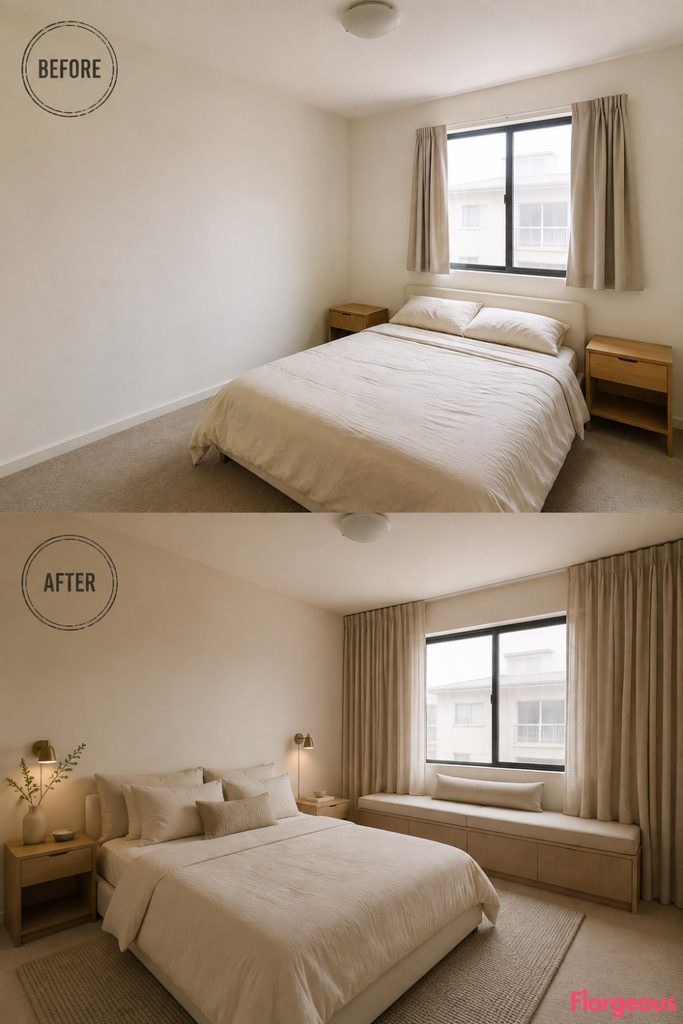
This makeover creates a new function without adding a freestanding chair.
Before: The unchanged room leaves the window area unused.
After: A shallow ash bench runs beneath the window, hiding drawers below a fitted wool cushion. Muted cream walls and a compact bed keep the window seat visually connected to the room.
Try this: Keep the bench shallow enough to preserve the main circulation path.
15. Add a Tiny Reading Corner Without Crowding the Window
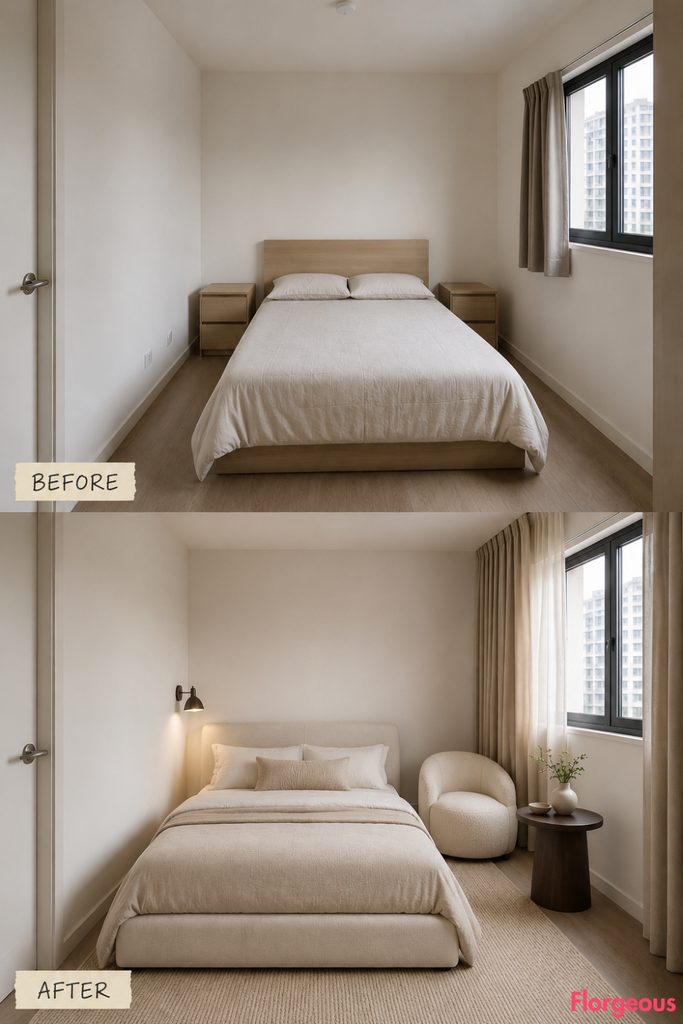
Unlike the built-in seat, this idea feels loose and movable.
Before: The same bedroom has no secondary activity zone.
After: A petite curved bouclé chair sits near the window beside a tiny dark-oak pedestal table and wall-mounted reading lamp. The main bed remains compact and lightly styled.
Why it works: Three small pieces create a complete vignette without requiring much floor area.
16. Define the Bed With a Pale Timber Ceiling Raft
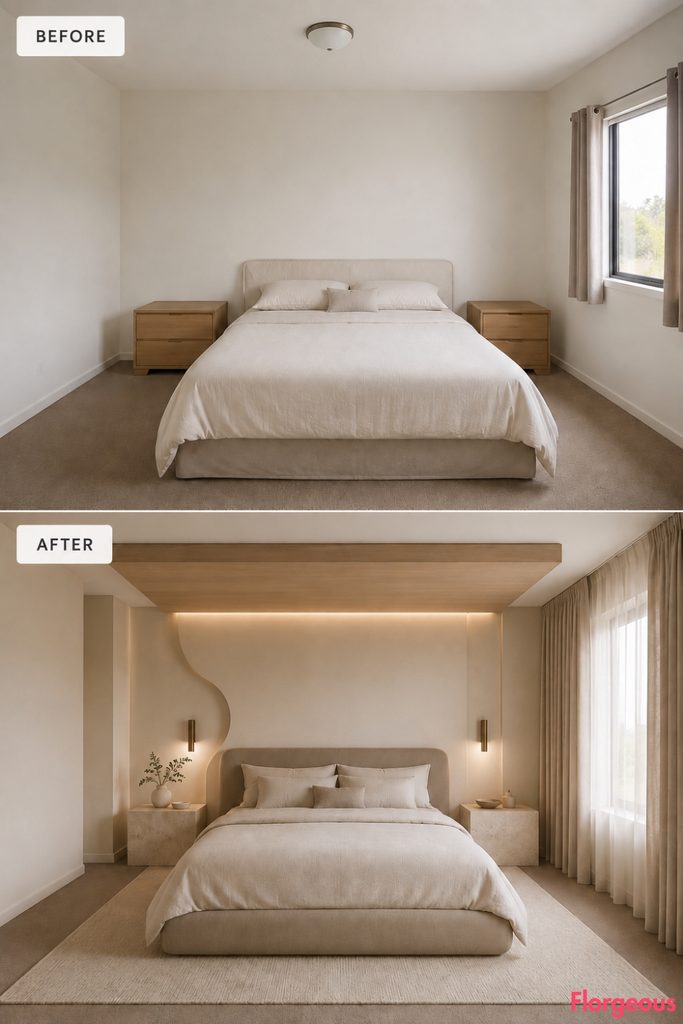
Nothing dramatic happens on the walls.
Before: The plain bedroom relies on one generic central ceiling fixture.
After: A shallow pale-oak raft occupies only the ceiling area above the bed, integrating slim warm linear light. Below it, a mushroom upholstered bed and limestone blocks keep the composition restrained.
Designer Tip: Stop the ceiling feature well inside the room perimeter so the original ceiling height remains legible.
17. Use a Barely There Scandinavian Four-Poster
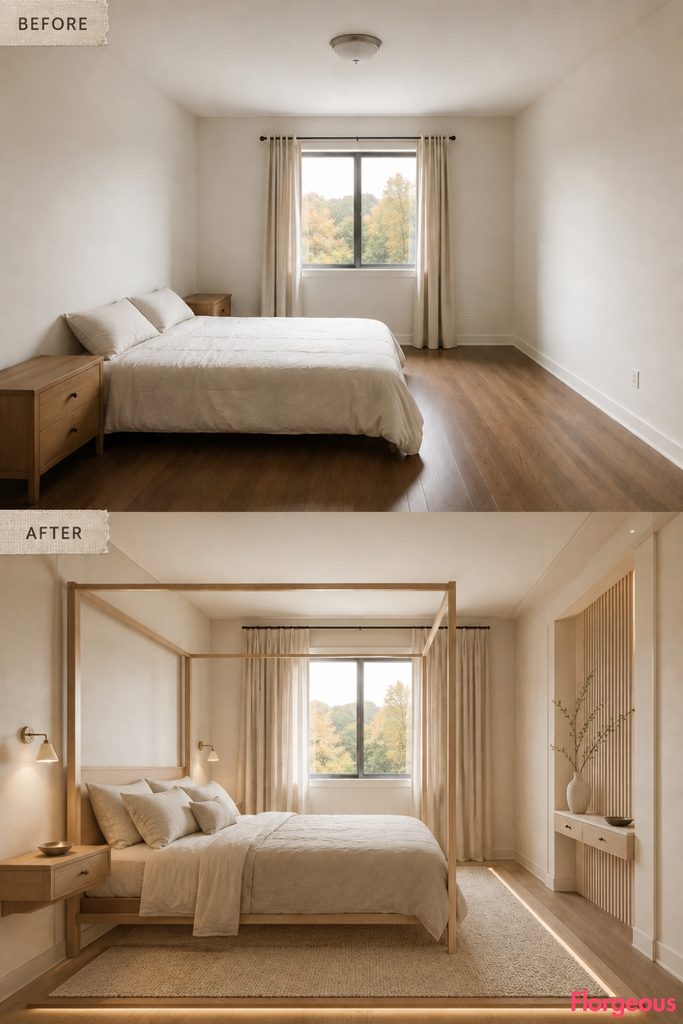
The bed itself becomes the room’s architecture.
Before: The same neutral bed has a low, generic silhouette.
After: A slender pale-ash four-poster rises toward the ceiling without draped fabric. Flax bedding, tiny wall lights, and an almost empty warm-white wall keep the frame crisp and contemporary.
No canopy textile is needed.
18. Break the Expected Symmetry With Gallery-Like Minimalism
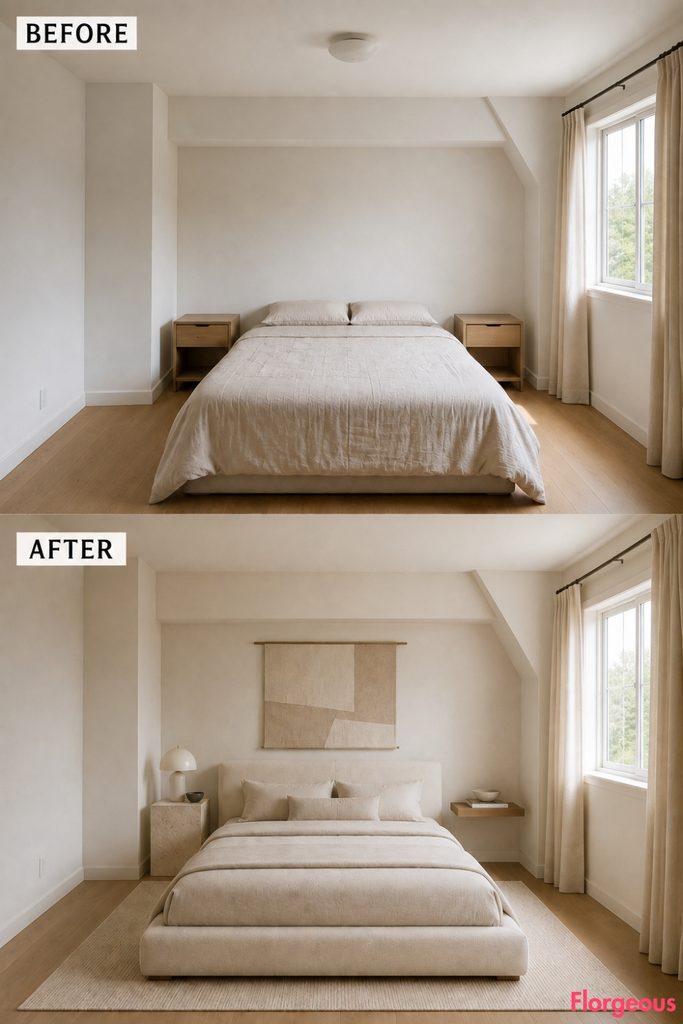
Matching bedside tables disappear completely.
Before: The unchanged bedroom has the usual bed centered between two identical bare nightstands.
After: A low bone bed pairs with one limestone plinth on the left and one floating ash shelf on the right. A single textile artwork balances the composition without mirroring it.
Why it works: Controlled asymmetry makes a minimalist room feel designed rather than staged.
19. Cover the Main Wall in Natural Cork
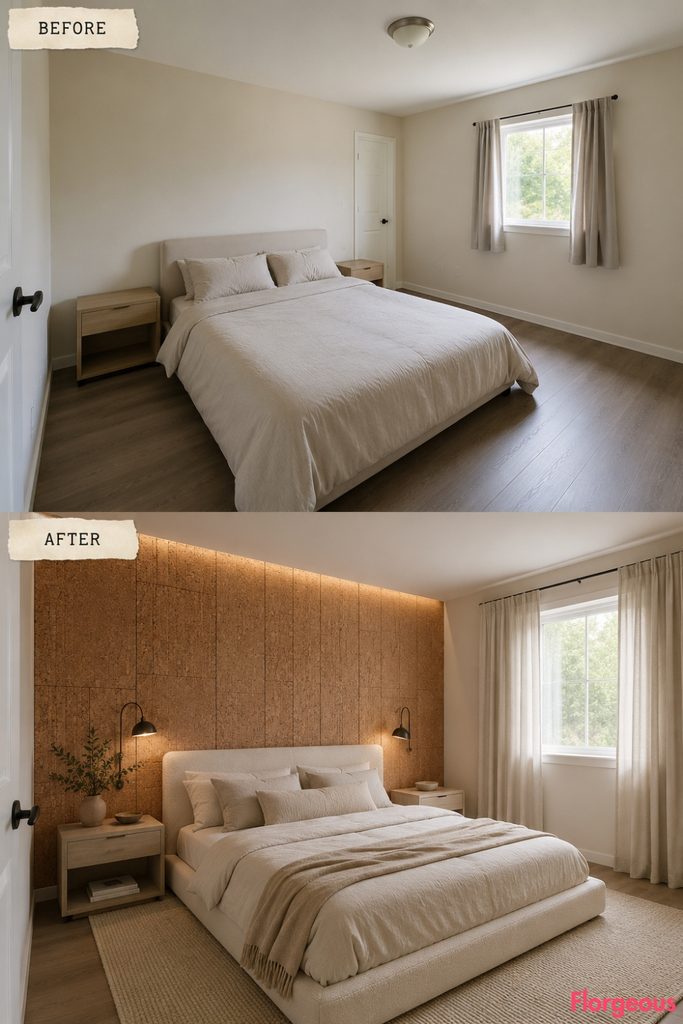
Cork gives the bedroom warmth without resembling conventional timber paneling.
Before: The same main wall is featureless and slightly cold.
After: Floor-to-ceiling natural cork creates a softly mottled backdrop for a cream bed, pale ash tables, and blackened-bronze reading lights.
Practical Note: Cork also helps soften sound, useful in apartments or shared homes.
20. Borrow the Warmth of a Nordic Cabin
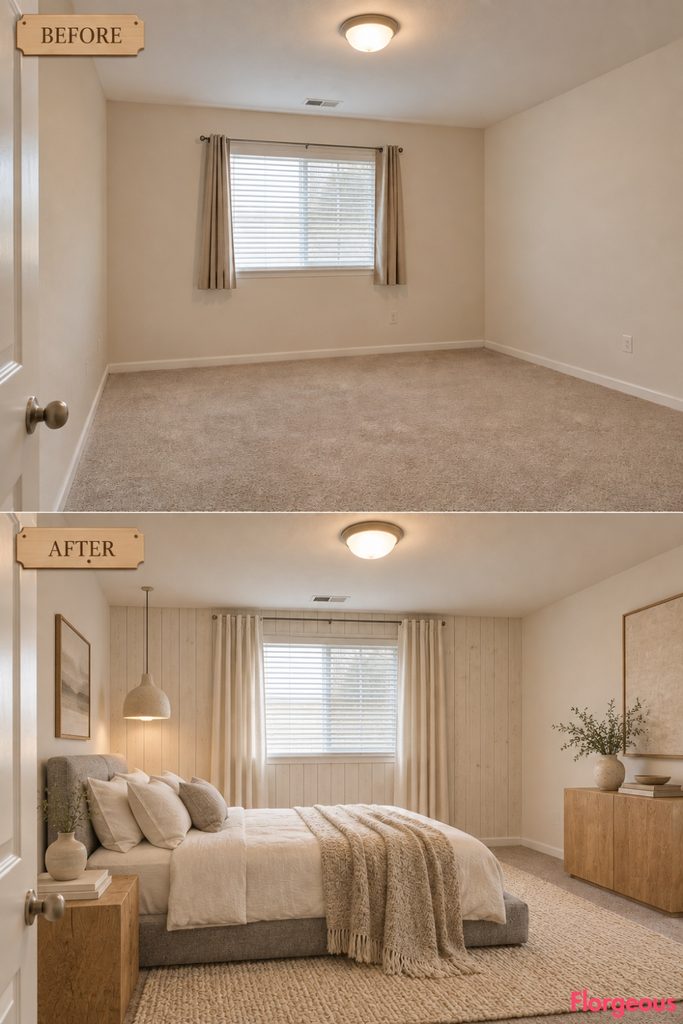
This room references Scandinavian cabins without becoming rustic.
Before: The same bedroom has smooth neutral walls and no visible grain.
After: Softly whitewashed vertical pine boards cover the bed wall, paired with a low gray wool bed, solid oak blocks, cream bedding, and one handmade ceramic light.
Avoid plaid, antlers, or decorative lodge clichés.
21. Make One Sculptural Plant the Only Botanical Statement
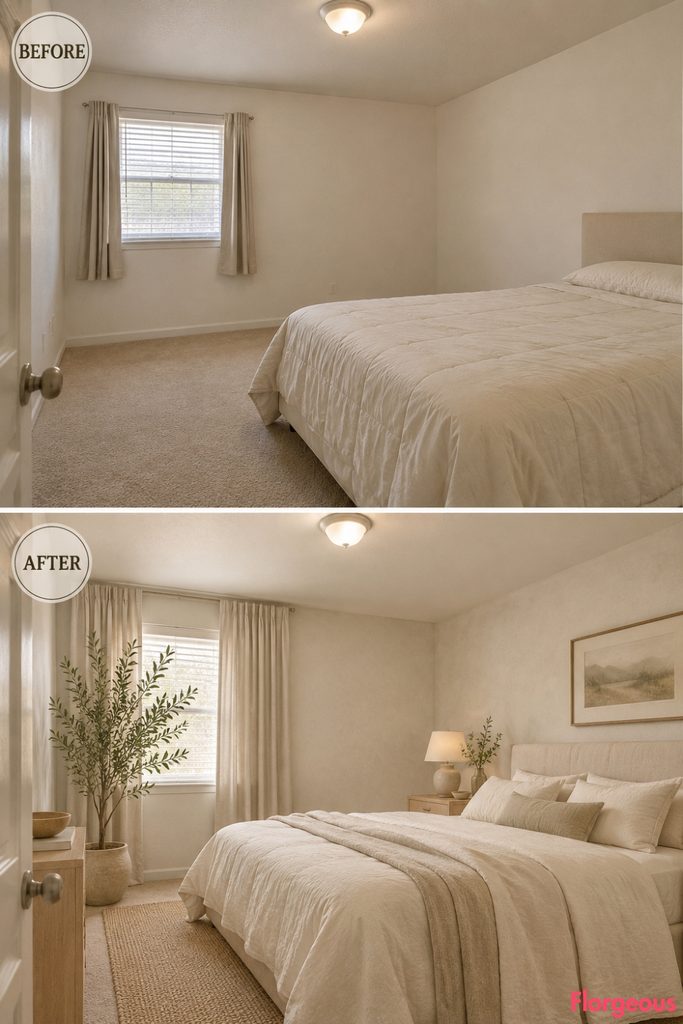
This version uses nature with restraint.
Before: The locked room has no greenery and little variation in height.
After: Pale mineral walls and a flax bed create a quiet backdrop for one tall sculptural plant positioned safely near the window. Light-oak furniture and a woven rug support the organic mood without turning the bedroom into an indoor jungle.
22. Extend the Bedside Ledge Into a Compact Workstation
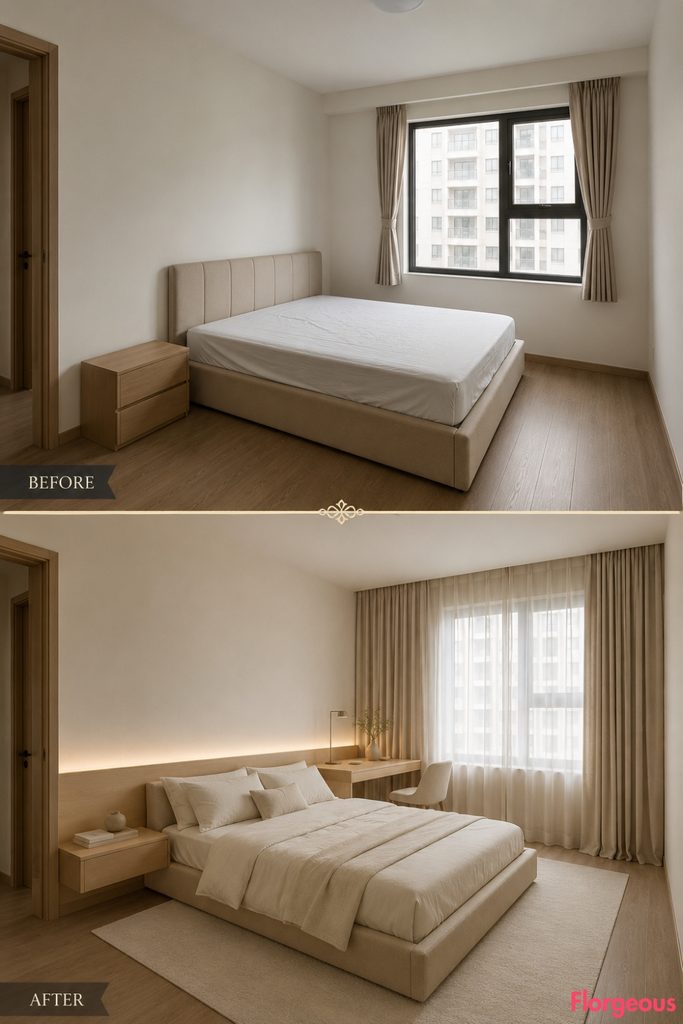
A home-office function is integrated rather than added.
Before: The same plain bedroom has empty wall space and two ordinary nightstands.
After: A birch plywood ledge begins beside the bed, runs along the wall, then widens into a shallow writing desk with a tuck-under chair and concealed task light.
Small Space Tip: Keeping desk and bedside surface at one height makes them read as one piece.
23. Make Nordic Minimalism Work for Everyday Family Life
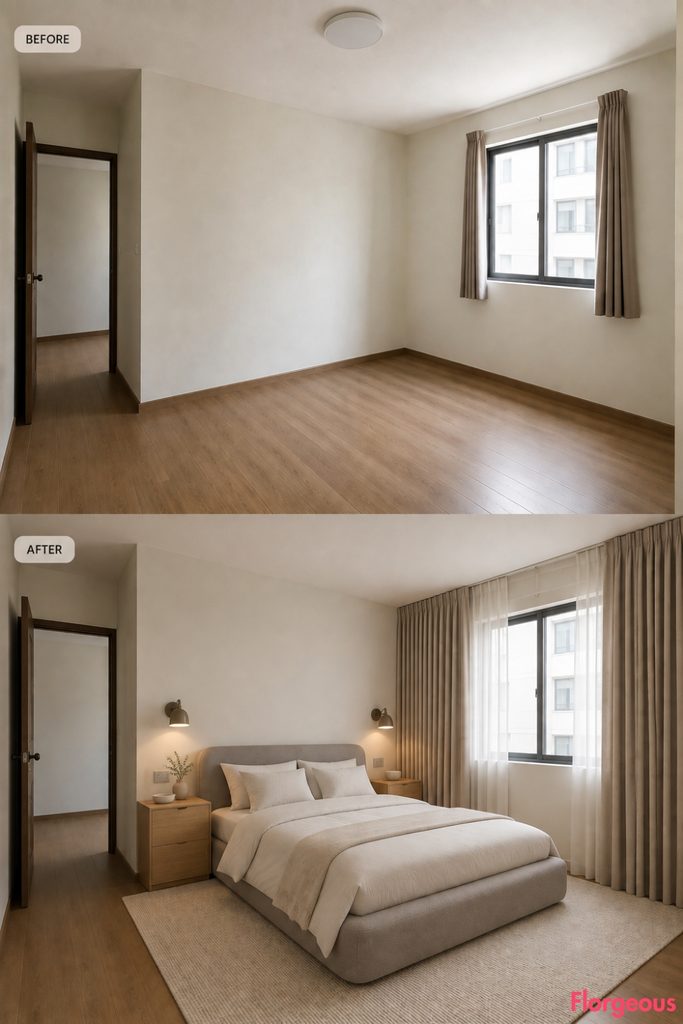
This makeover prioritizes durability over delicacy.
Before: The same room uses generic furniture without concealed organization.
After: A rounded warm-gray upholstered bed removes sharp corners, closed oak bedside cubes hide clutter, wall lights free the surfaces, and washable cotton bedding sits over a low-pile wool-blend rug.
The room remains calm because practical objects disappear behind doors.
24. Redesign the Bedroom Without Making a Single Permanent Change
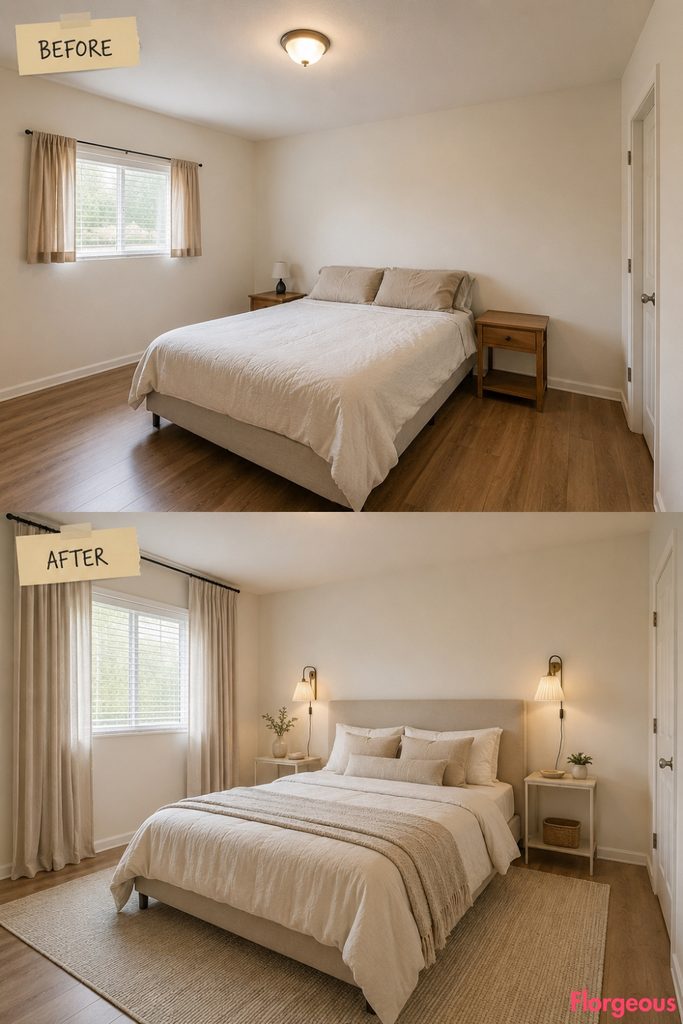
Renters can recreate this one almost entirely with movable pieces.
Before: The exact builder-grade bedroom remains unchanged structurally.
After: The existing bed gains a removable flax headboard, plug-in sconces, slim pale timber tables, an oversized rug, ceiling-height ready-made curtains, and layered cream bedding.
Budget Version: Prioritize curtains, rug, and lighting before buying decorative accessories.
25. Lower Everything for a Scandinavian-Japandi Bedroom
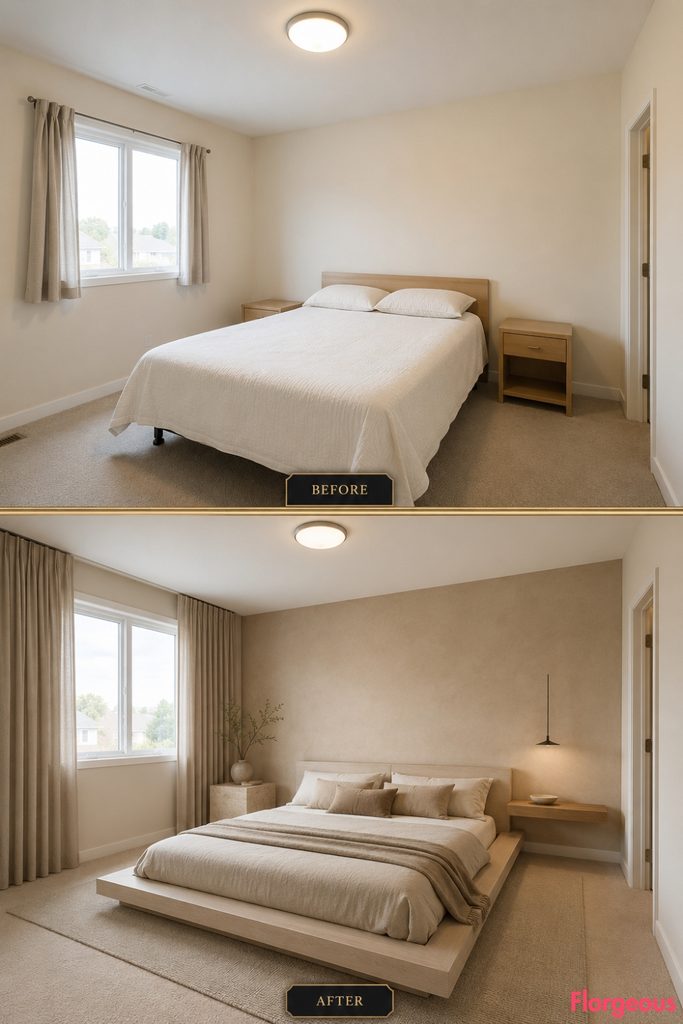
This interpretation changes the visual center of gravity.
Before: The ordinary bed sits at a standard height between two standard tables.
After: A broad pale-ash platform bed sits close to the floor with a single stone block, one thin timber ledge, warm mineral walls, flax bedding, and almost no decorative objects.
The room feels grounded, quiet, and deliberately horizontal.
26. Use Travertine to Create Quiet Scandinavian Luxury
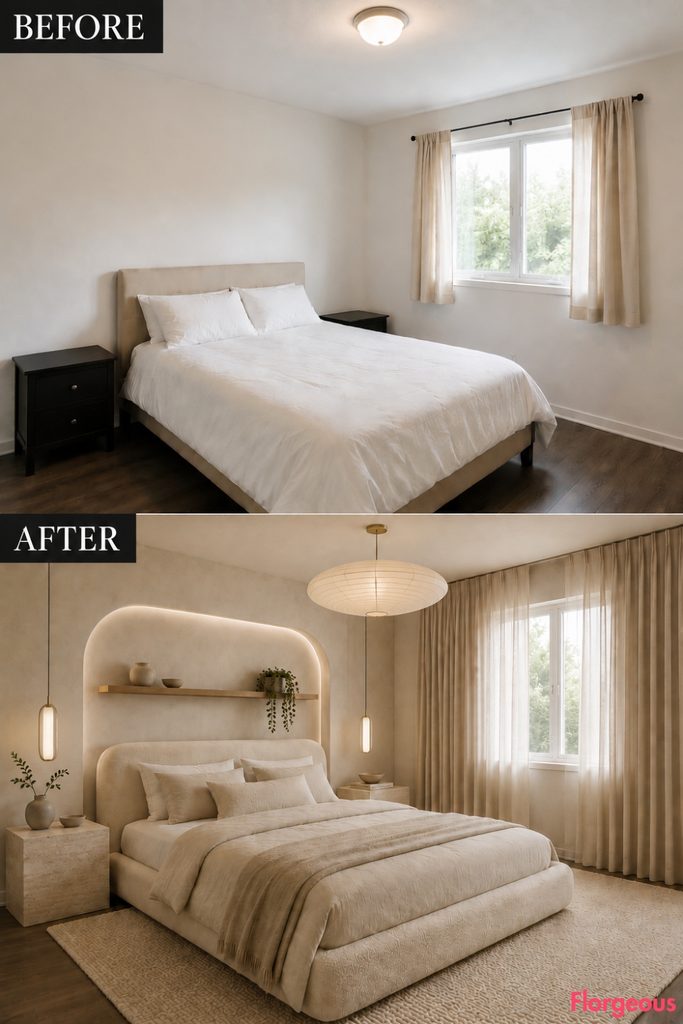
Luxury arrives through weight and texture rather than shine.
Before: The same room has lightweight generic nightstands and flat builder-grade finishes.
After: A low ivory wool-upholstered bed sits between honed travertine plinths. Soft plaster walls, an oversized paper pendant, oatmeal linen, and a dense wool rug balance the stone.
Common Mistake: Avoid glossy brass everywhere. The stone should remain the strongest material.
27. Add a Scandinavian Dressing Zone With One Oversized Mirror
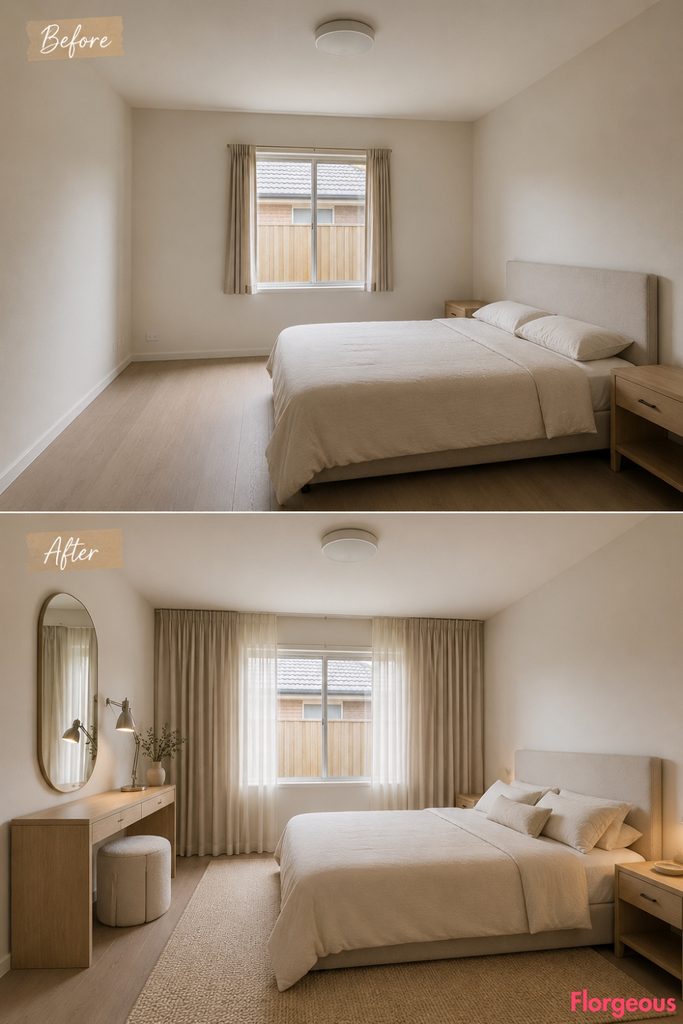
This idea uses the blank side wall rather than changing the bed.
Before: The same room leaves one wall completely unused.
After: A large frameless rounded mirror leans above a slim ash dressing console with shallow drawers and a tuck-under stool. The bed stays simple so the new dressing zone reads as a purposeful second function.
Try this: Keep the console shallow enough that the entrance path remains generous.
28. Let an Oversized Paper Lantern Become the Focal Point
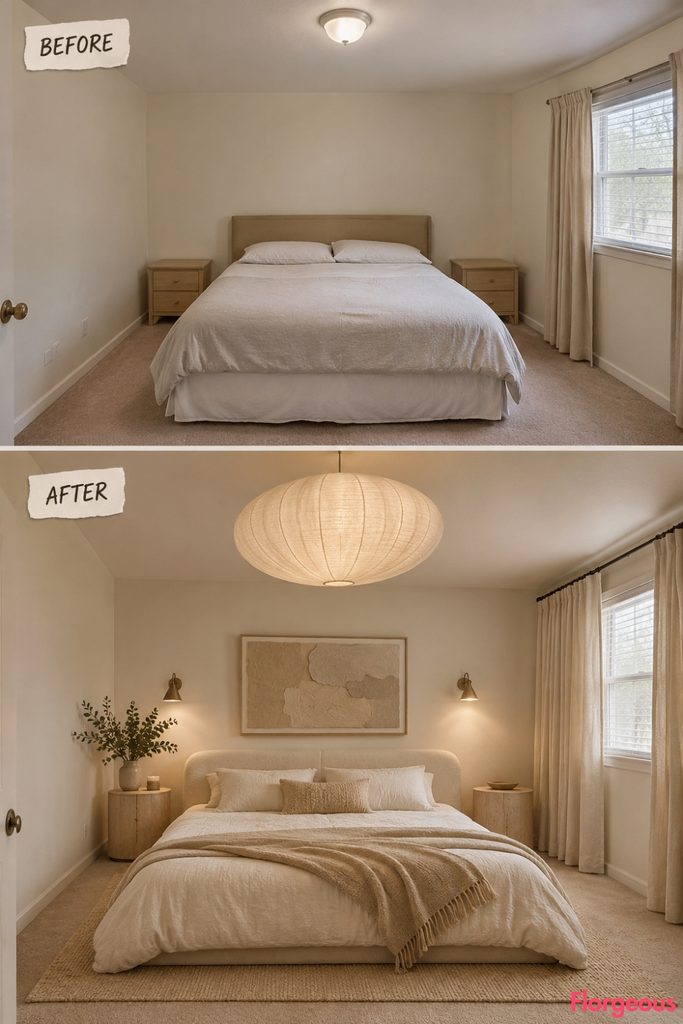
Lighting alone can dramatically change the hierarchy of the bedroom.
Before: The generic central ceiling fixture contributes almost nothing to the room.
After: A large softly irregular paper lantern hangs high over a low cream bed. Warm white walls, birch tables, linen bedding, and a plain wool rug stay intentionally quiet around it.
Why it works: One expressive light is stronger than several small decorative objects.
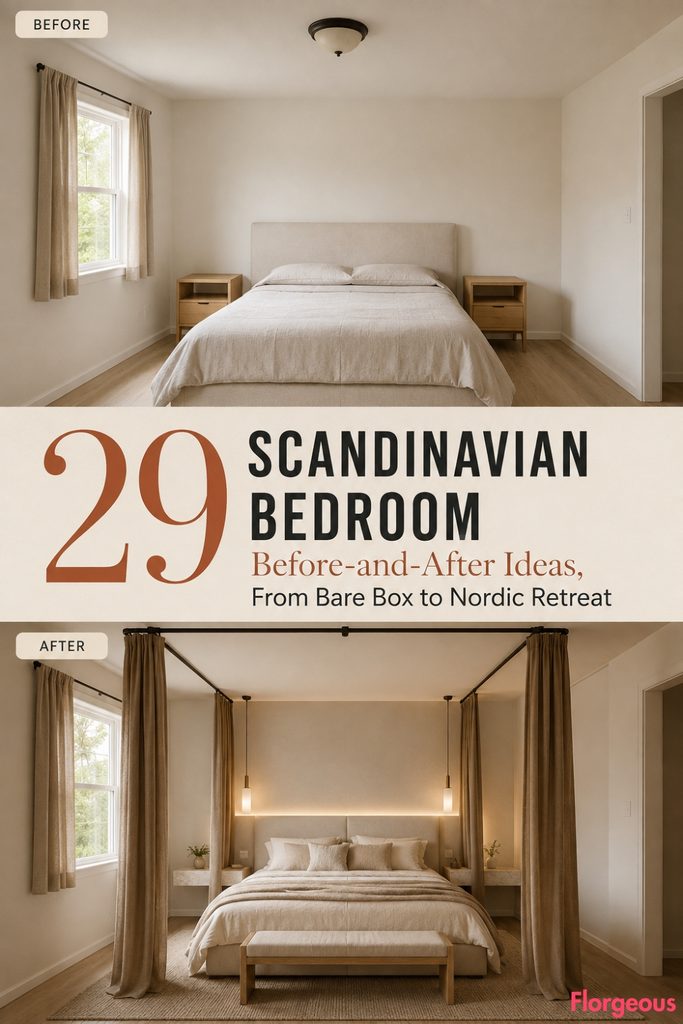
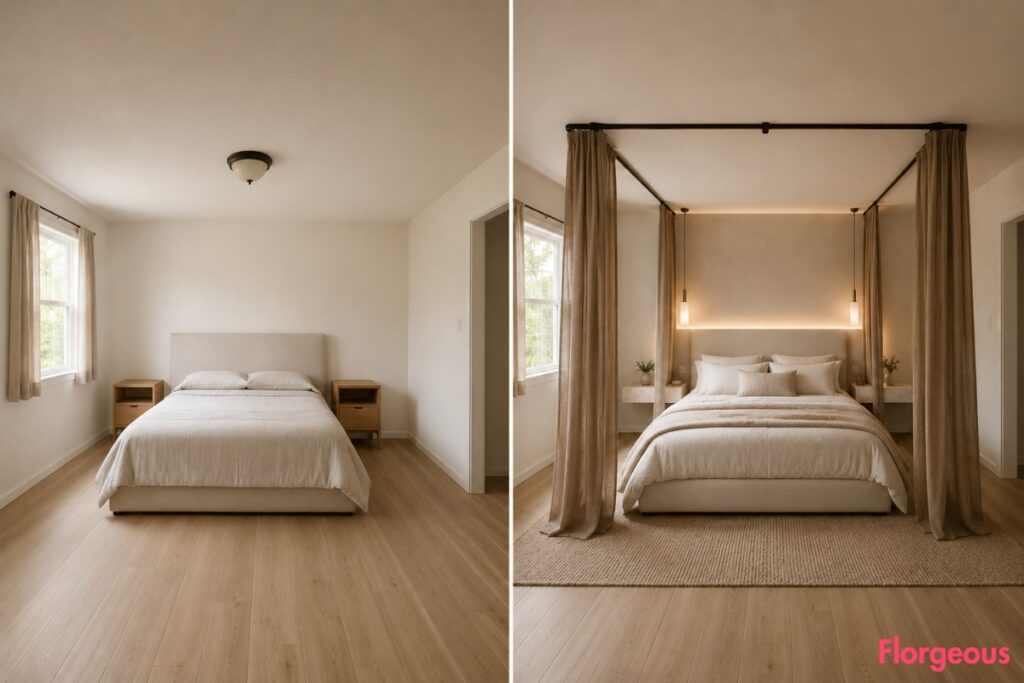
29. Build a Soft Curtain Cocoon Around Only the Bed Zone
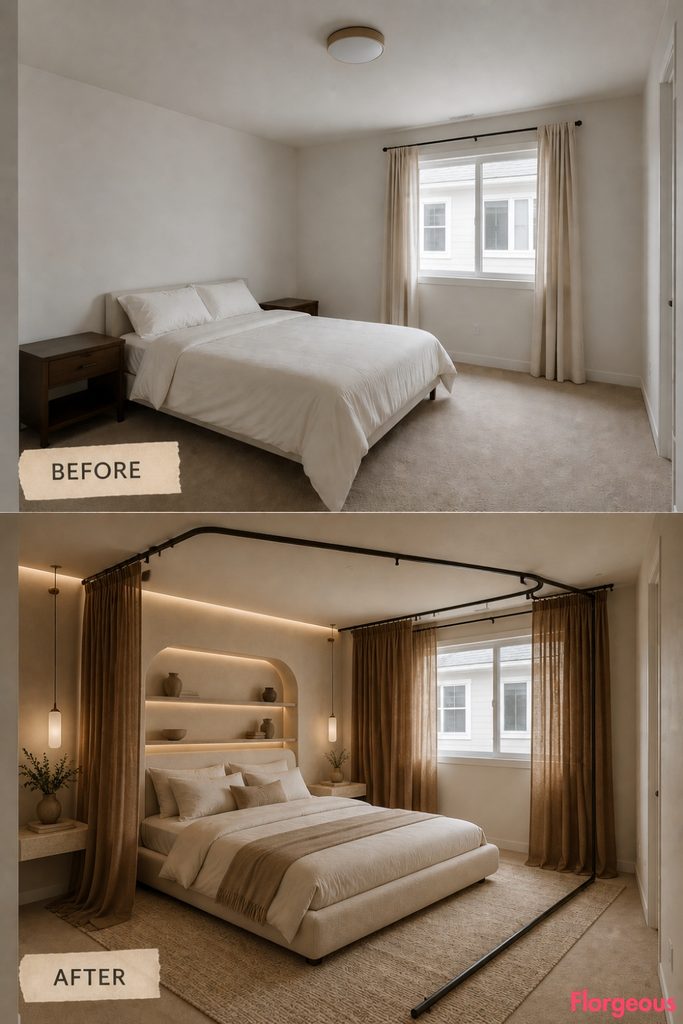
The final concept uses textile as temporary architecture.
Before: The same bed sits openly against the main wall with short window curtains and no sense of enclosure.
After: A dark-bronze ceiling track runs around the full bed zone, extending slightly beyond the foot. Heavy tobacco-flax curtains hang partially closed around the sleeping area while keeping both the window and circulation completely accessible. A pale upholstered bed and limestone shelves lighten the cocoon.
How to Choose the Right Scandinavian Bedroom Direction
The strongest Scandinavian Bedroom makeover starts with the room’s actual weakness, not with a shopping list.
If the space lacks identity, one architectural gesture such as a niche, portal, ceiling raft, or timber headboard may be enough. If the room feels cluttered, hidden storage deserves priority. A rental may need removable textiles and lighting, while a small bedroom can gain much more from multifunctional furniture than from extra decoration.
Choose one dominant move first. Then support it with a limited palette of two or three materials and one controlled accent. Pale timber, wool, linen, plaster, stone, muted color, and warm light all work beautifully, but they do not need to appear together.
Most importantly, preserve breathing room. Scandinavian interiors feel calm because every object has a reason to be there, and because empty space is treated as part of the design.