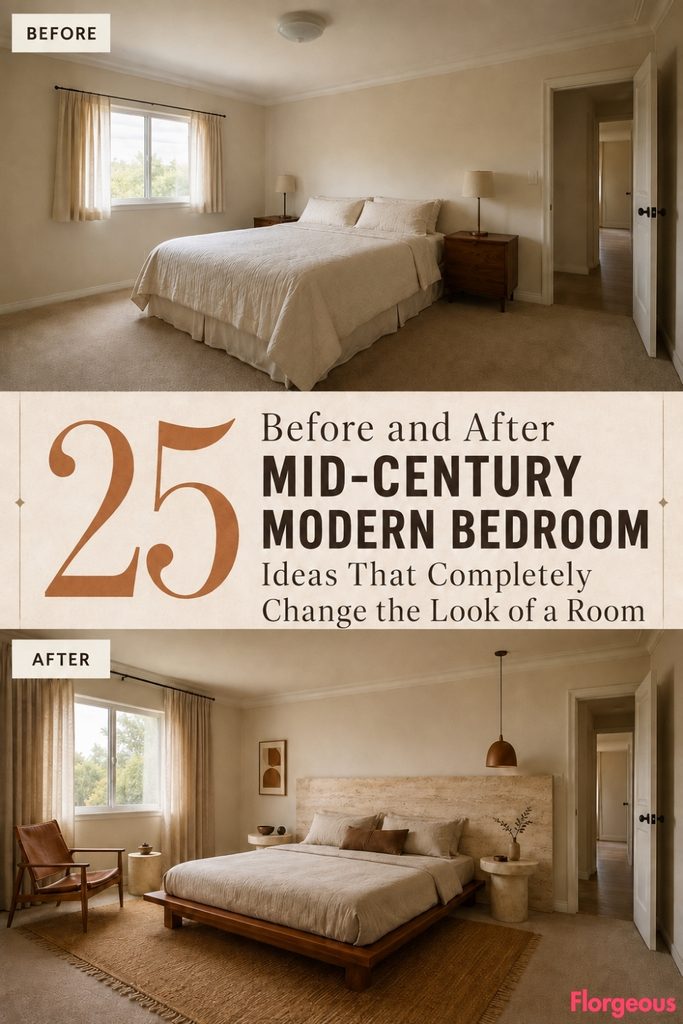
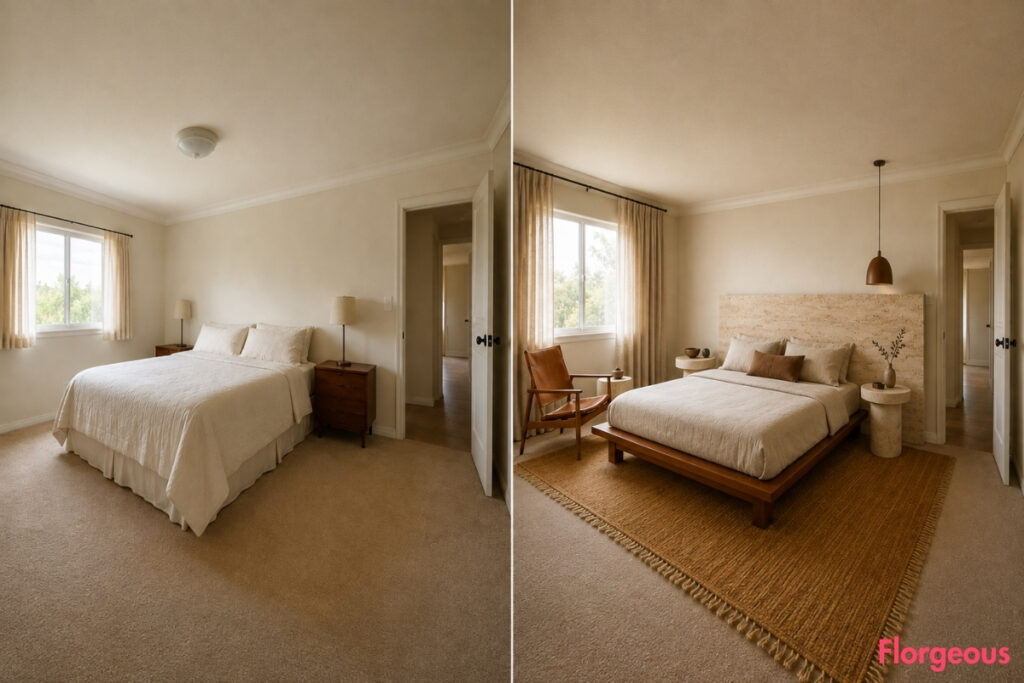
A plain builder-grade bedroom can feel clean, calm, and still completely forgettable. Neutral walls, a basic bed, short curtains, generic lighting, and bare surfaces give you function, but not much personality.
That is exactly why Mid-Century Modern Bedroom ideas work so well here. The style knows how to turn simple rooms into spaces with shape, warmth, and purpose.
For this gallery, every makeover begins with the same basic before feeling: builder-grade, neutral, lightly styled, and lacking a focal point. The difference is that each room solves that starting point in a completely different way. Some lean into stone and desert warmth, some into modular systems or low Japanese-inspired forms, and some into dramatic storage, art, or zoning ideas.
Keep scrolling for 25 before-and-after transformations that feel distinct, useful, and genuinely save-worthy.
1. Turn a Wide Bedroom Into a Floating Walnut Platform Landscape
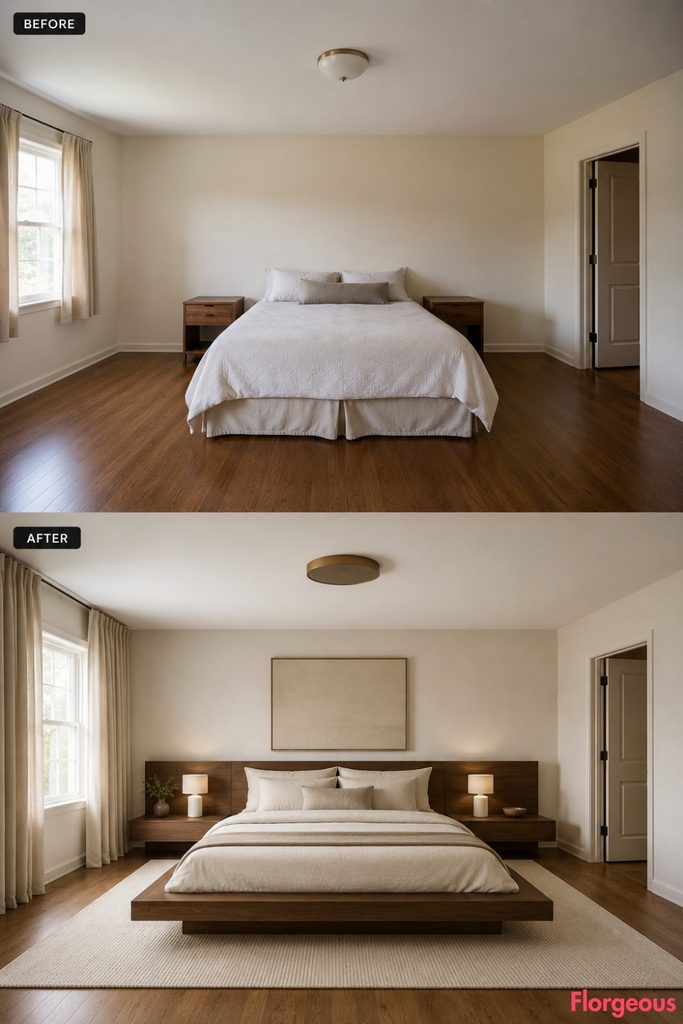
Before: A wide bedroom feels a little empty, with a basic bed floating awkwardly in the middle of too much unused floor.
After: One extra-wide walnut platform anchors the entire room, extending beyond the mattress to become integrated bedside surfaces. A cream rug, ivory linen, and full-height curtains keep the look clean and architectural.
Why it works: The bed becomes the room’s strongest piece of architecture.
Try this: If custom millwork is out of budget, use a low platform bed and two matching slab-like side tables for a similar effect.
2. Give a Compact Square Room a Sculpted Danish Modern Layout
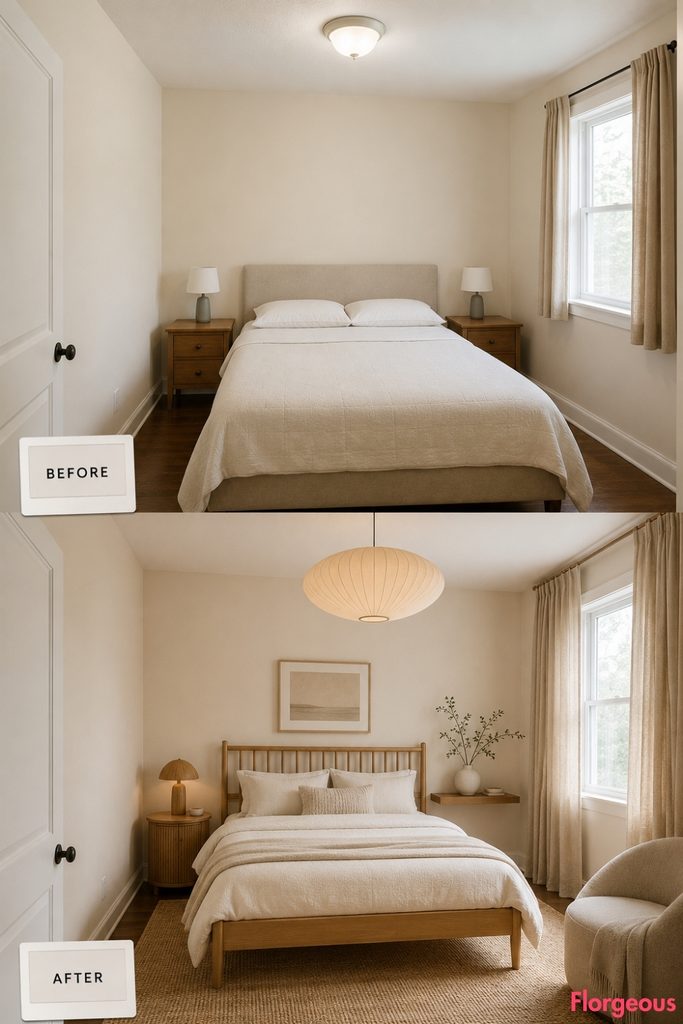
Before: A compact square bedroom feels boxed in by a standard bed and two generic tables.
After: A warm oak spindle bed, one rounded bedside table, one floating ledge, and a petite curved reading chair make the room feel more considered and less rigid. The soft shapes balance the square proportions beautifully.
Why it works: Sculpted furniture keeps a small room from feeling heavy.
3. Rework a Long Narrow Bedroom Around a Wall-Hugging Daybed
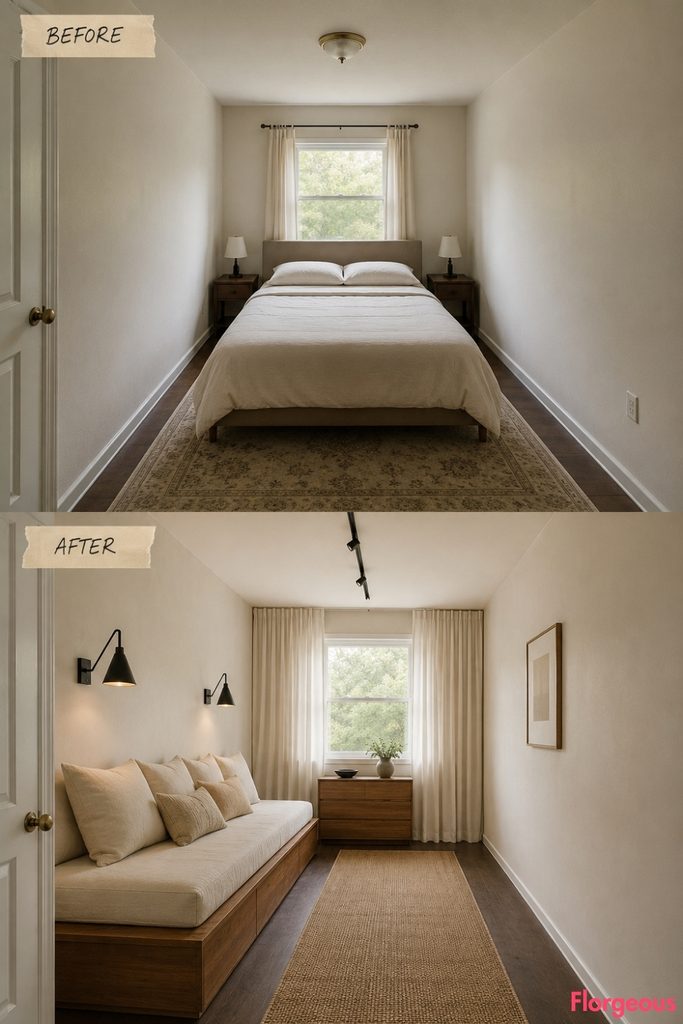
Before: A long narrow room feels cramped because a centered bed leaves two tight side clearances.
After: A teak daybed-style sleeping platform runs along one wall, leaving one uninterrupted walkway on the other side. A shallow dresser at the end of the room makes better use of the footprint.
Why it works: The whole room starts working with its shape instead of fighting it.
4. Build a Palm Springs Bedroom Around a Travertine Headboard
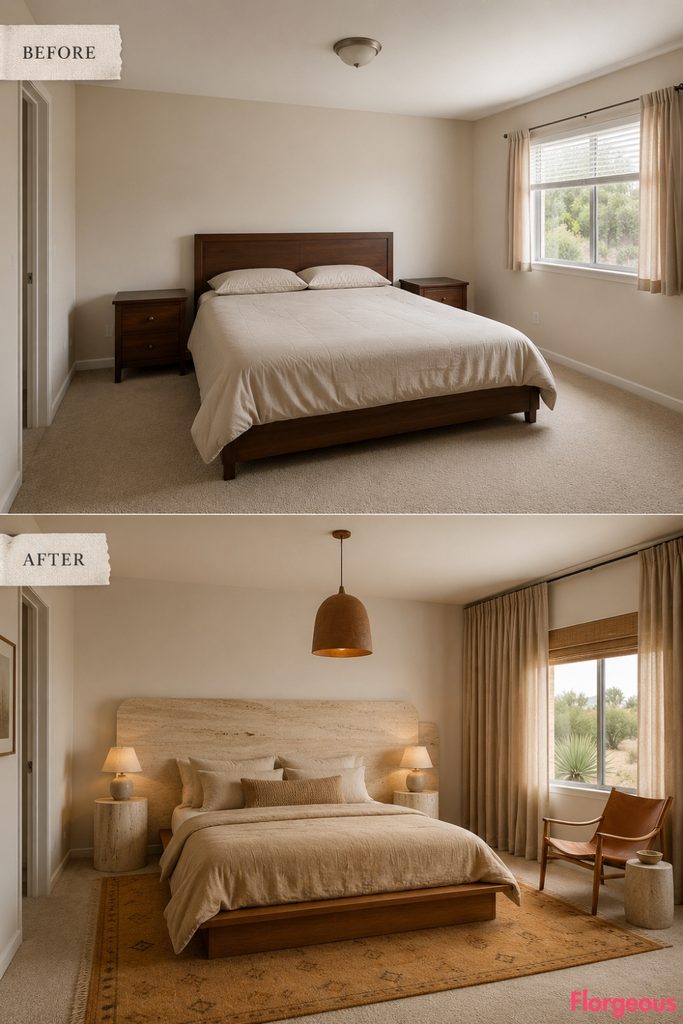
Before: A broad bedroom with a side window feels flat and unfinished.
After: A freestanding honed-travertine headboard slab, low teak bed, cylindrical pedestal tables, camel sling chair, and sandy linen create a Palm Springs mood that feels warm but still restrained.
Why it works: The stone slab gives the room an immediate focal point that looks far more elevated than a conventional headboard.
5. Turn an Existing Recess Into a Walnut Sleeping Alcove
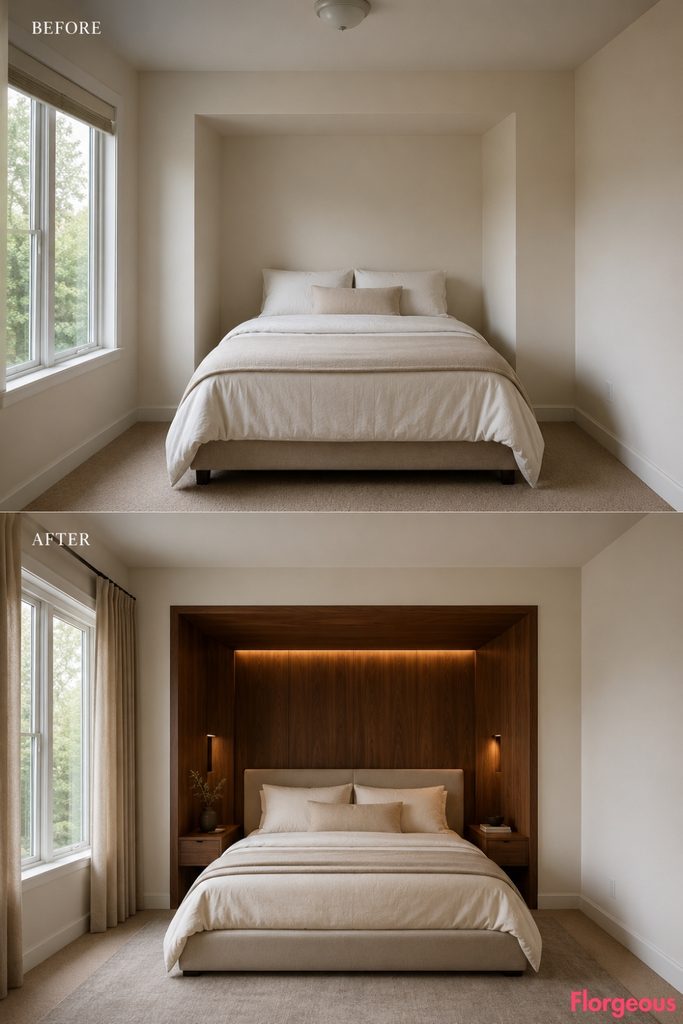
Before: A shallow wall recess makes the bed feel awkward rather than integrated.
After: The niche is lined in walnut and fitted with a low upholstered bed, integrated side storage, and soft concealed lighting. The rest of the room can stay calm and open.
Why it works: The alcove turns a problem wall into a purpose-built sleeping zone.
Designer Tip: Built-in niches feel best when the lighting is subtle and tucked away, not decorative.
6. Float the Bed Away From the Wall in a Large Square Bedroom
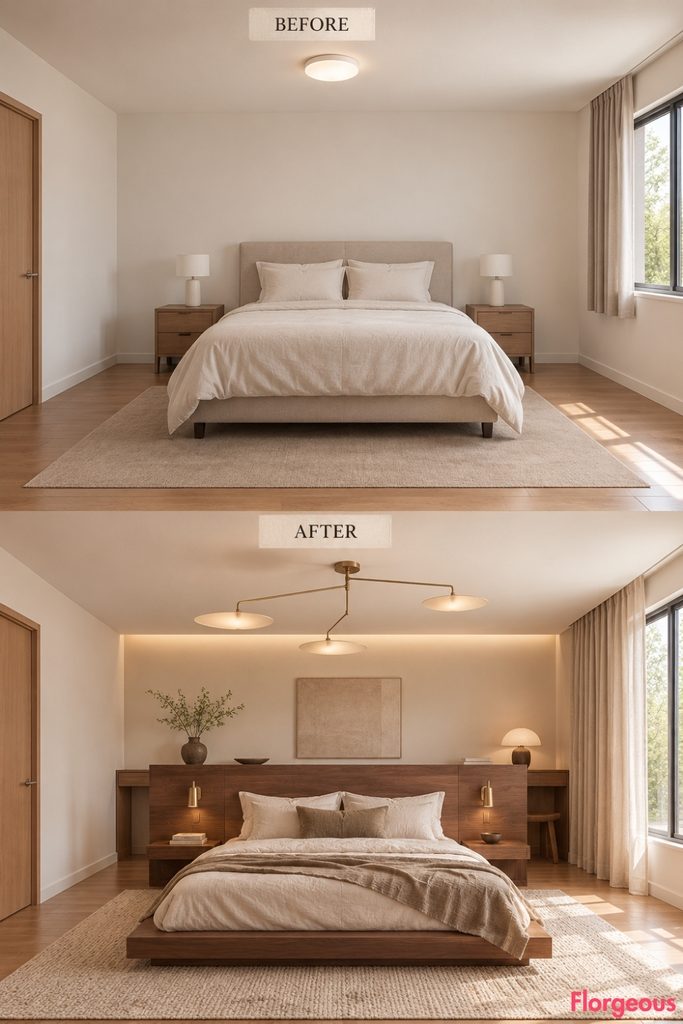
Before: A large square bedroom feels too centered and predictable.
After: A broad walnut headboard sits forward from the wall, with the bed attached to its front and a slim dressing console hidden behind. The room suddenly feels layered and more spatial.
Why it works: The headboard becomes a room divider instead of simple decoration.
7. Build a Case Study House Inspired Modular Bedroom
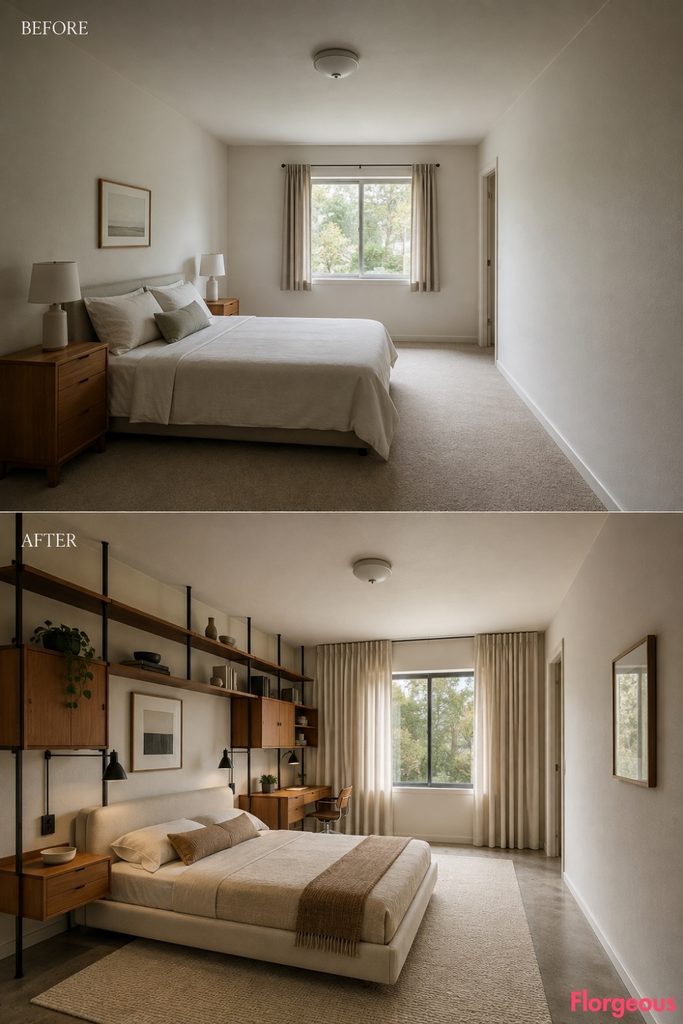
Before: A long bedroom has plenty of wall space, but the furniture feels generic and disconnected.
After: Black metal uprights support suspended teak cabinets, open shelving, a compact desk section, and integrated bedside surfaces. The low bed slots neatly into the modular composition.
Why it works: The whole wall becomes a system, not a collection of separate furniture pieces.
8. Give a Broad Bedroom a Brazilian Modernist Furniture Composition
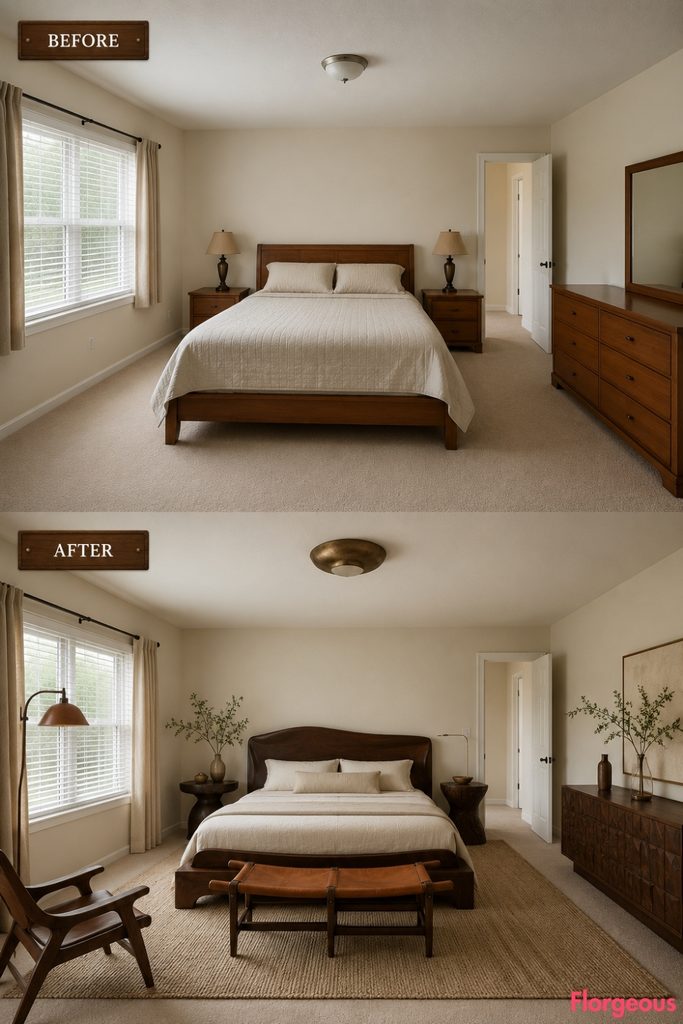
Before: A broad room has the space, but it lacks visual character.
After: A sculptural dark hardwood bed, two asymmetrical carved bedside pedestals, a saddle-leather bench, and a curved lounge chair make the room feel like a furniture gallery. The decor stays restrained so the craftsmanship leads the story.
Why it works: The pieces are strong enough that the room does not need much else.
9. Make a Tiny Rental Bedroom Feel Mid-Century Without Construction
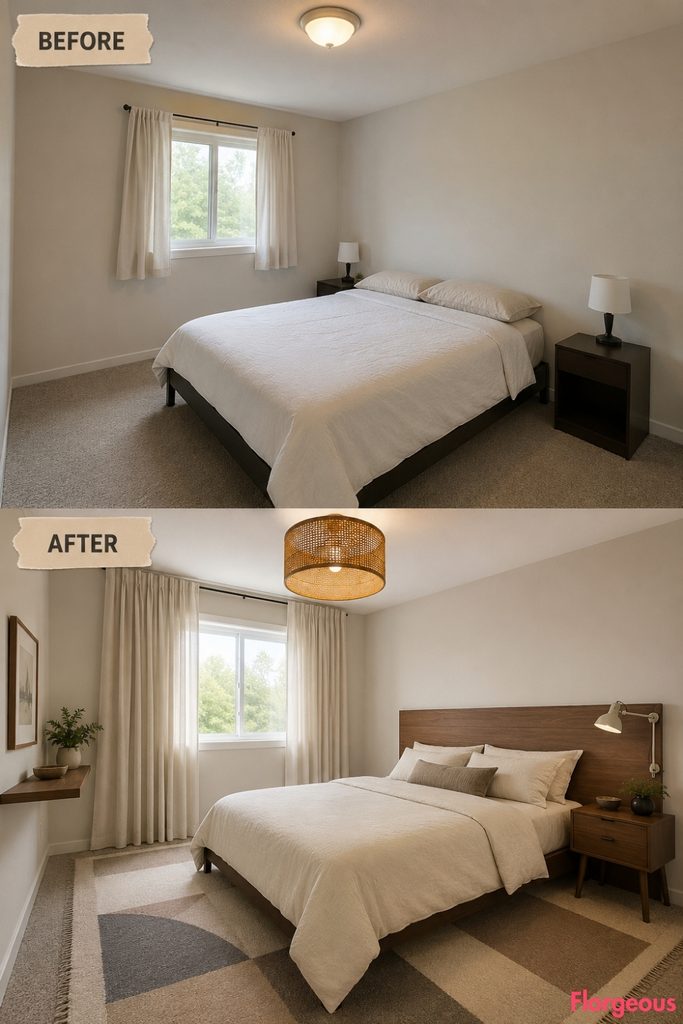
Before: A very small rental bedroom feels temporary and under-furnished.
After: The existing bed stays, but a freestanding walnut-look headboard, one tapered nightstand, one floating shelf, and an oversized geometric rug make the room feel intentional. Long curtains help stretch the height.
Why it works: It delivers style without asking renters to renovate.
Budget Version: Prioritize the rug, the headboard, and the lighting first. Those three changes do most of the visual work.
10. Use a Corner-Window Room for a Japanese-American Low Layout
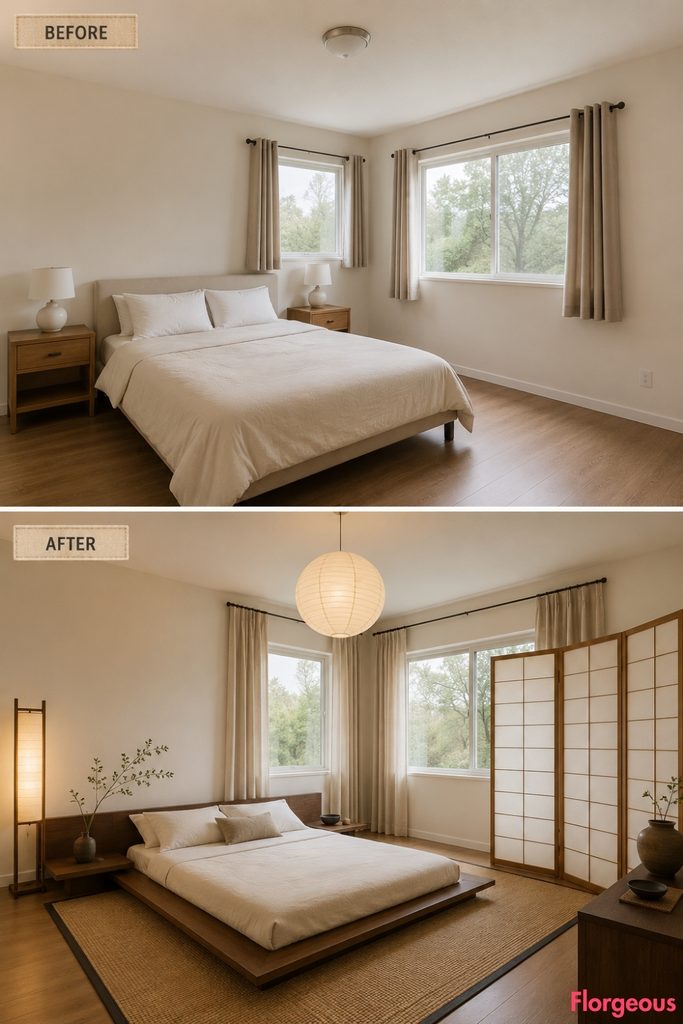
Before: A corner-window bedroom feels ordinary and visually top-heavy.
After: An ultra-low teak platform, broad rush mat, and freestanding timber-and-translucent-paper inspired screen keep the room grounded and airy. One paper lantern and one sculptural floor lamp add atmosphere without clutter.
Why it works: The low composition lets the windows stay visually dominant.
11. Make a Low-Ceiling Bedroom Feel Italian 1960s
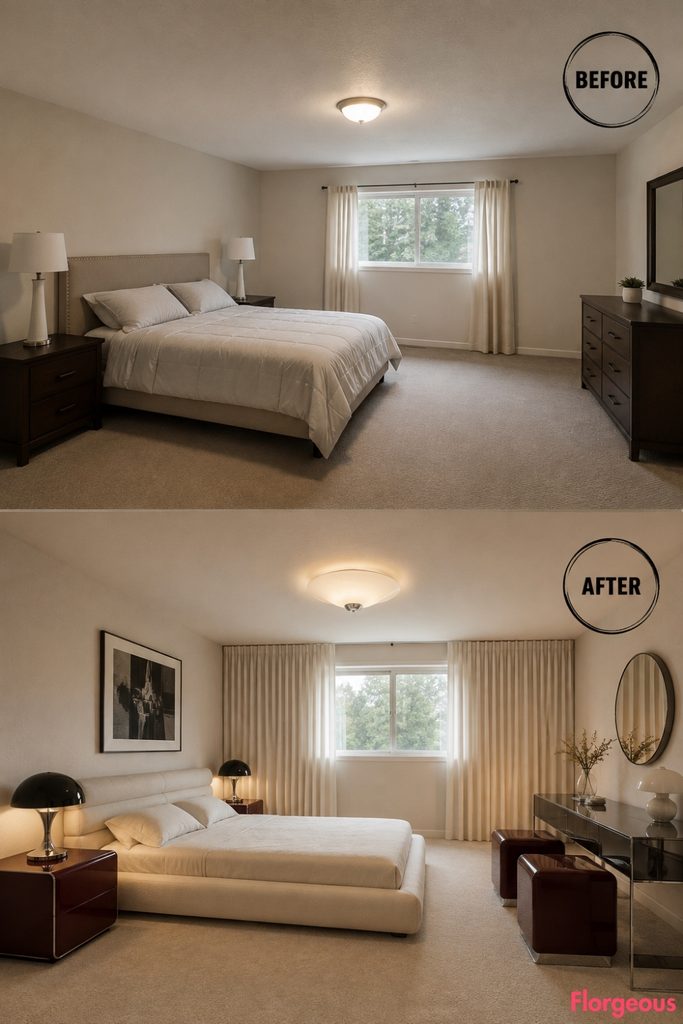
Before: A lower ceiling makes the room feel slightly compressed and plain.
After: A cream upholstered bed, glossy oxblood lacquer cubes, smoked-glass console, and polished chrome details give the room a sleek Italian 1960s personality. The tailored palette makes it feel refined, not loud.
Why it works: Low furniture proportions help the room feel wider and more elegant.
12. Push a Square Room Into Late-1960s Space Age Modernism
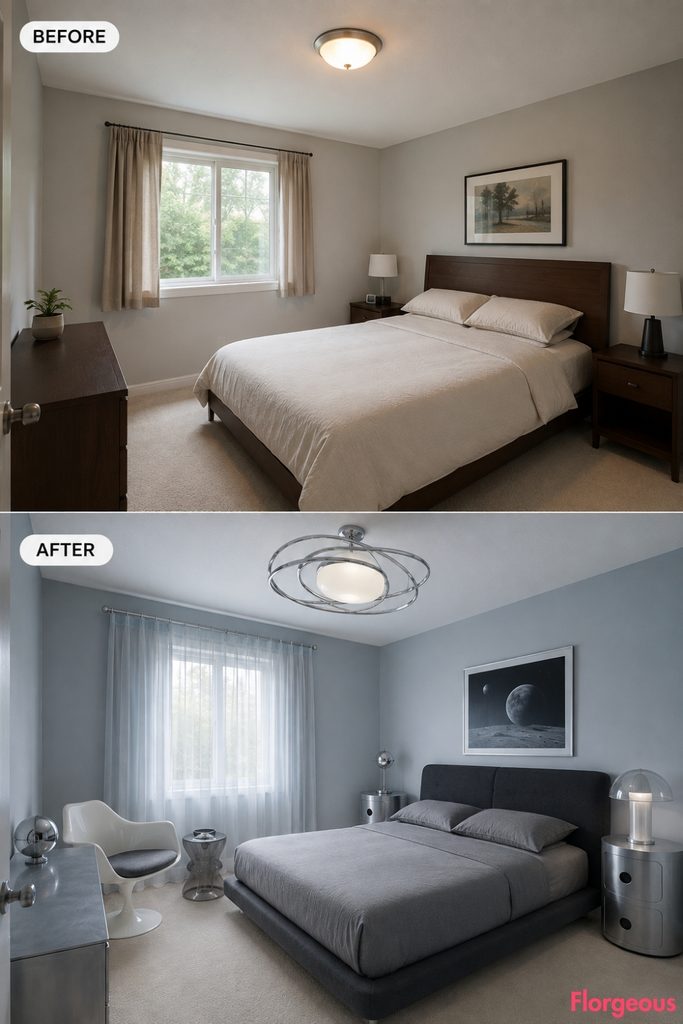
Before: A square bedroom feels safe, basic, and a little forgettable.
After: A graphite upholstered bed, brushed-aluminum cylindrical tables, a white shell chair, and smoked acrylic accents take the room in a much cooler direction. The pale blue-gray palette changes the whole mood.
Why it works: Space-age forms make the room feel instantly different from wood-heavy mid-century looks.
13. Turn a Recessed Side Wall Into a Dressing Gallery
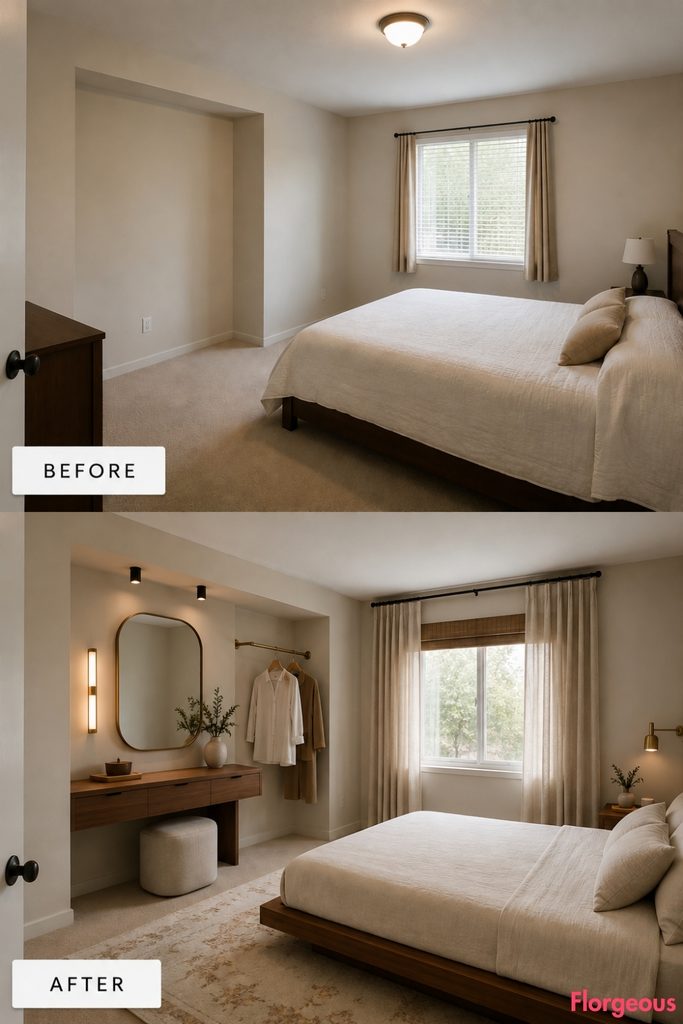
Before: A recessed side wall sits mostly unused.
After: A long floating walnut vanity, tall rounded mirror, slim brass garment rail, and tuck-under stool create a dedicated dressing zone. The bed area stays simple so both functions feel clear.
Why it works: It gives the room a new purpose without adding visual bulk.
14. Turn a Narrow Bedroom Into a Library-Sleeping Hybrid
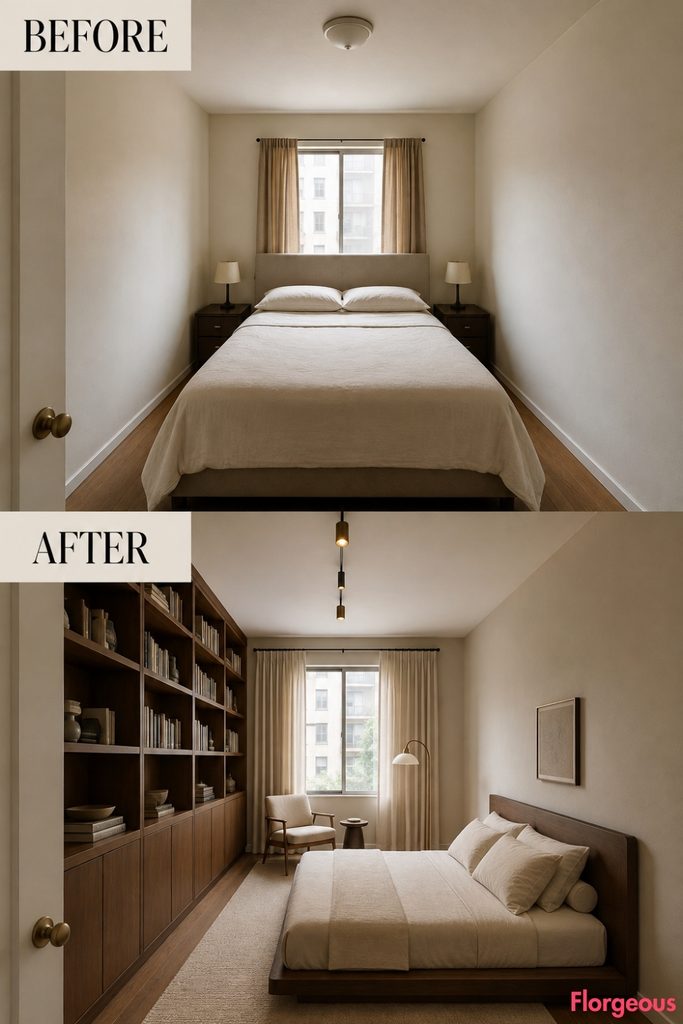
Before: A narrow room feels squeezed because the bed sits awkwardly in the middle.
After: The bed shifts toward one wall while a continuous low walnut library runs along the other. A compact reading chair at the far end gives the room a second personality.
Why it works: The room feels like a place to live in, not just sleep in.
15. Replan a Wide Guest Room With Twin Beds
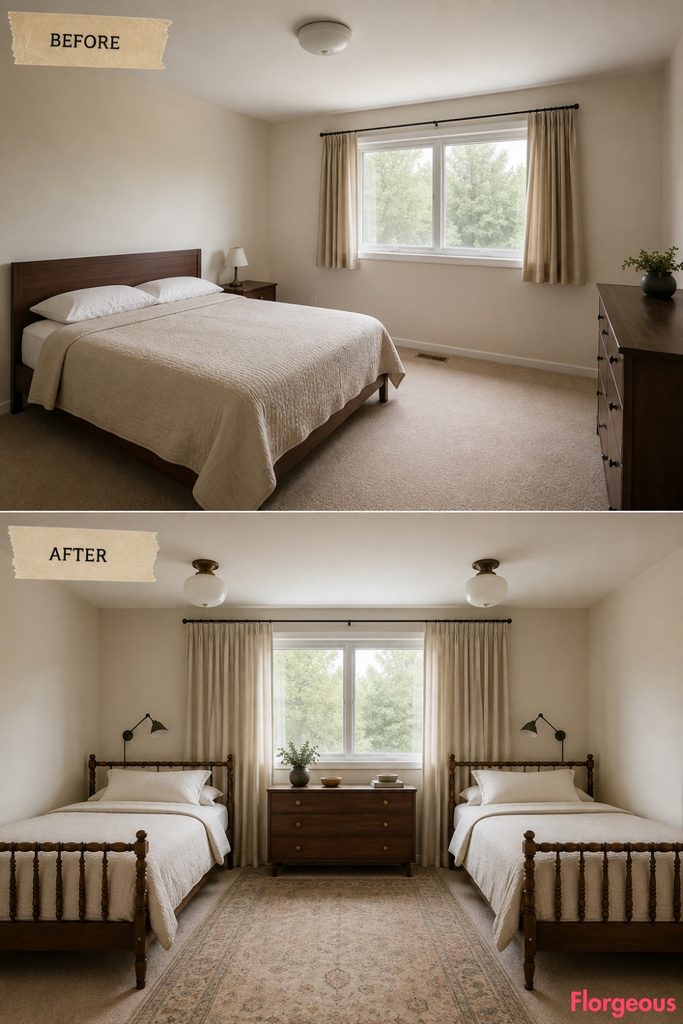
Before: A wide guest room has one basic bed and too much leftover emptiness.
After: Two slim walnut spindle beds and a shared central chest turn the room into a thoughtful guest suite. A long faded rug keeps both beds visually connected.
Why it works: Twin layouts can feel charming and highly practical in wider rooms.
16. Let Existing Ceiling Beams Define the Whole Room
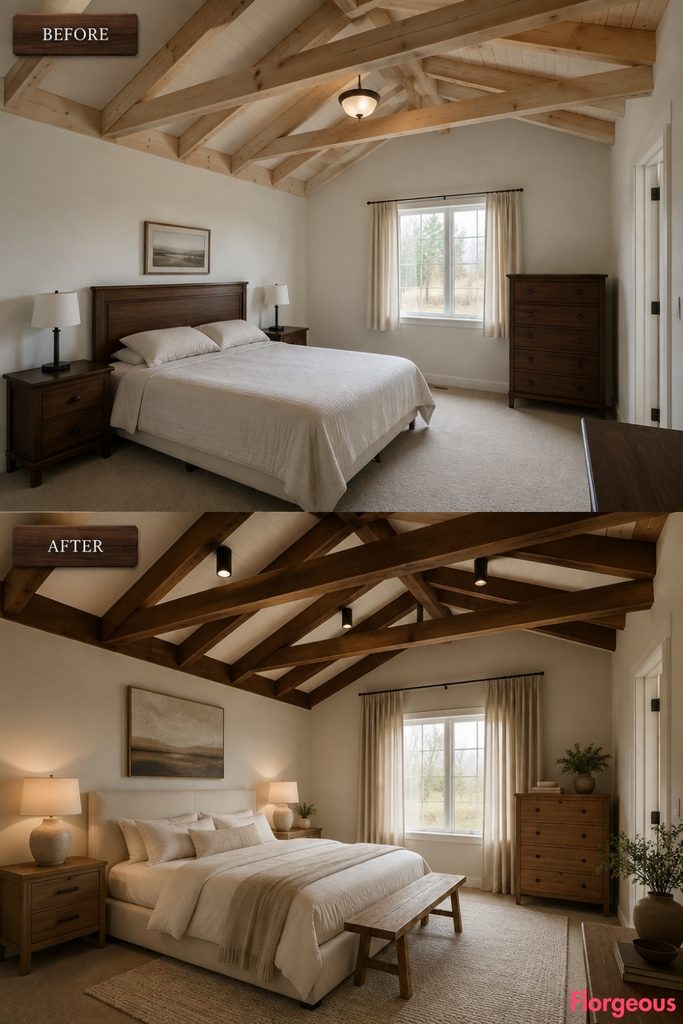
Before: Exposed beams feel unfinished rather than intentional.
After: Stained medium walnut, the beams become a strong design feature above a low cream bed, narrow timber bench, and simple wool rug. The rest of the room stays calm so the ceiling can lead.
Why it works: The architecture finally feels integrated into the design.
Color Story: Medium walnut beams, cream textiles, and warm natural linen feel grounded without getting heavy.
17. Organize a Full-Window-Wall Bedroom Around Built-In Seating
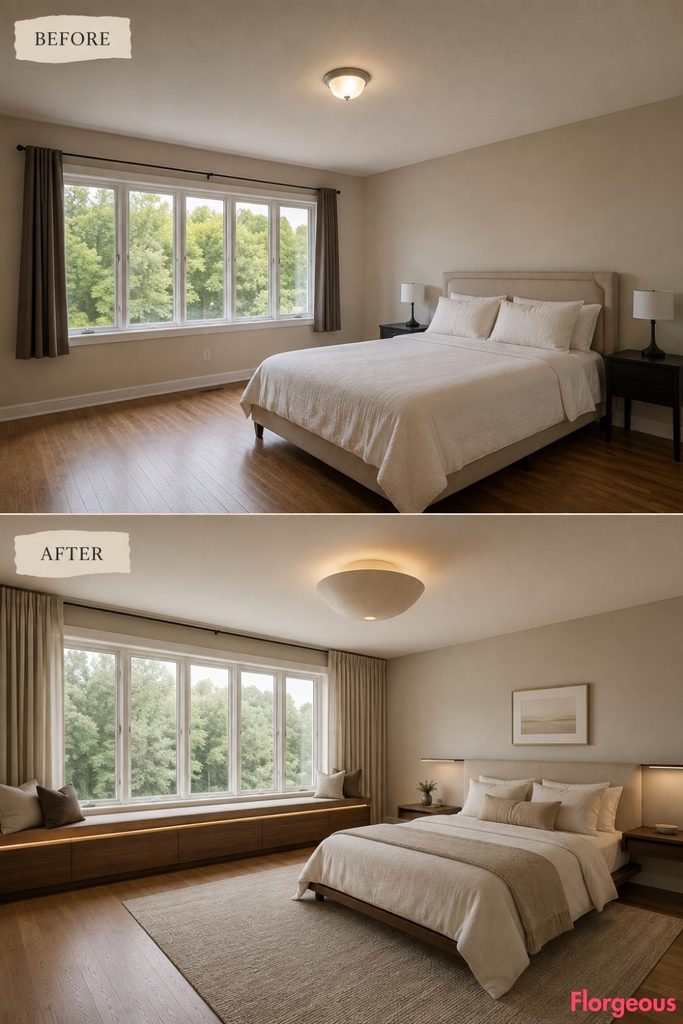
Before: A broad window wall looks underused and disconnected from the rest of the room.
After: A long low walnut bench with concealed drawers runs beneath the windows, while the bed moves to the adjacent wall. The room suddenly feels architectural and tailored.
Why it works: The bench gives the window wall a real job without blocking the light.
18. Divide an L-Shaped Bedroom Into Sleep and Dressing Zones
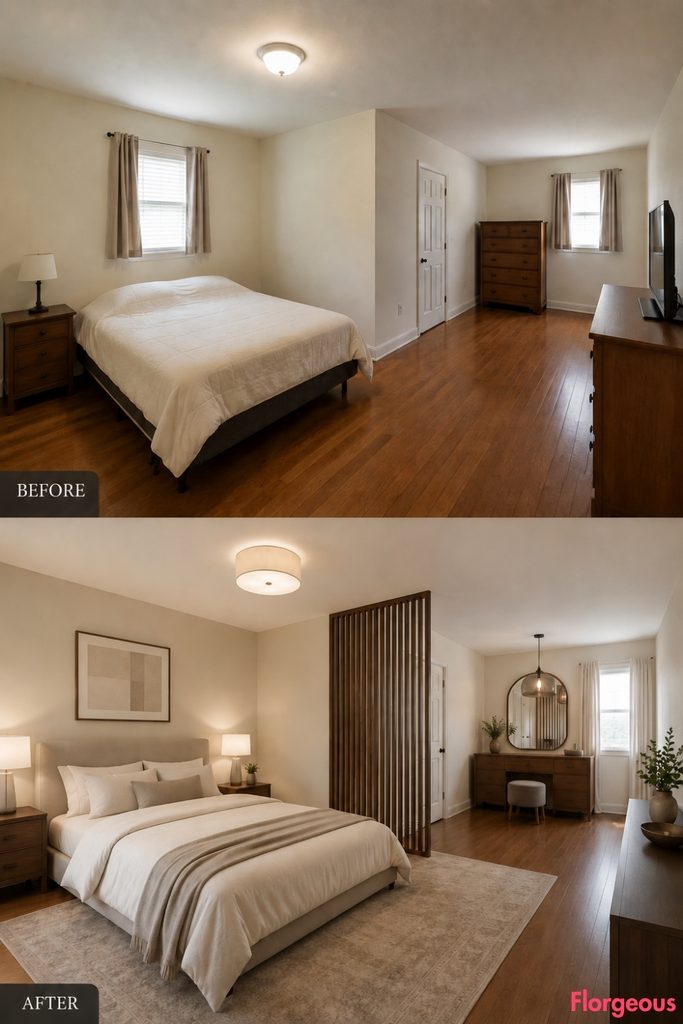
Before: An L-shaped bedroom feels awkward because the furniture is scattered without logic.
After: The sleeping area sits in the larger zone while a freestanding walnut slatted divider marks the transition to a compact dressing nook. The room finally feels intentional.
Why it works: L-shaped rooms often work best when you give each leg a purpose.
19. Make a Compact Spare Room Work With a Mid-Century Wall Bed
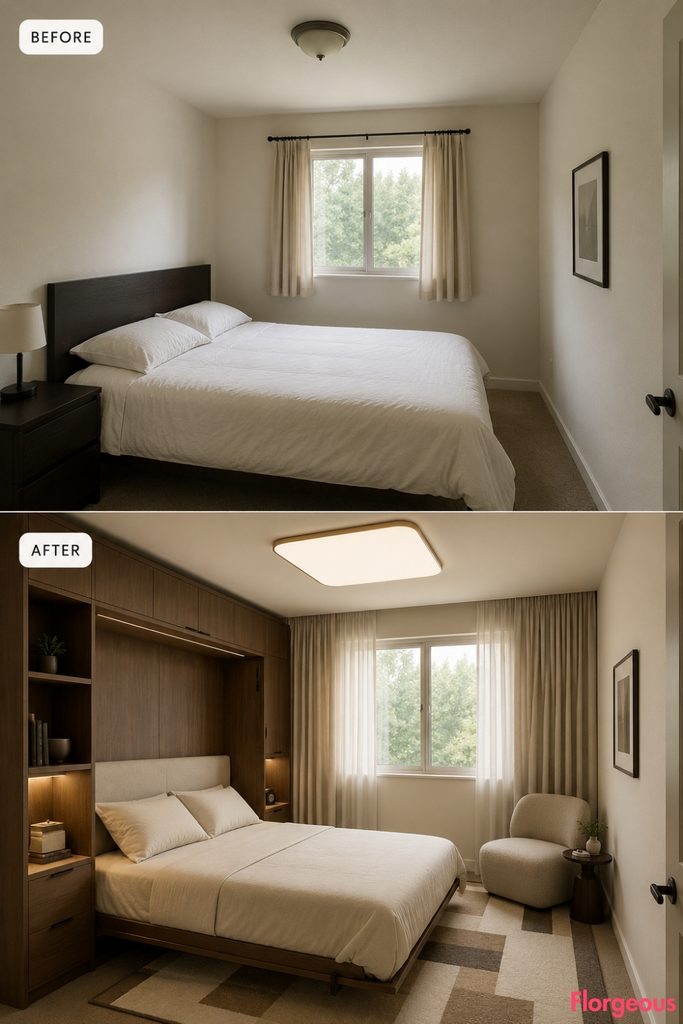
Before: A compact spare room feels swallowed by a bed that is only used occasionally.
After: A streamlined walnut wall-bed cabinet adds storage and lets the floor stay far more open. A small lounge chair makes the room feel flexible even when the bed is down.
Why it works: The room becomes multi-use without losing style.
20. Give a Long Bedroom a Strong Work-Sleep Axis
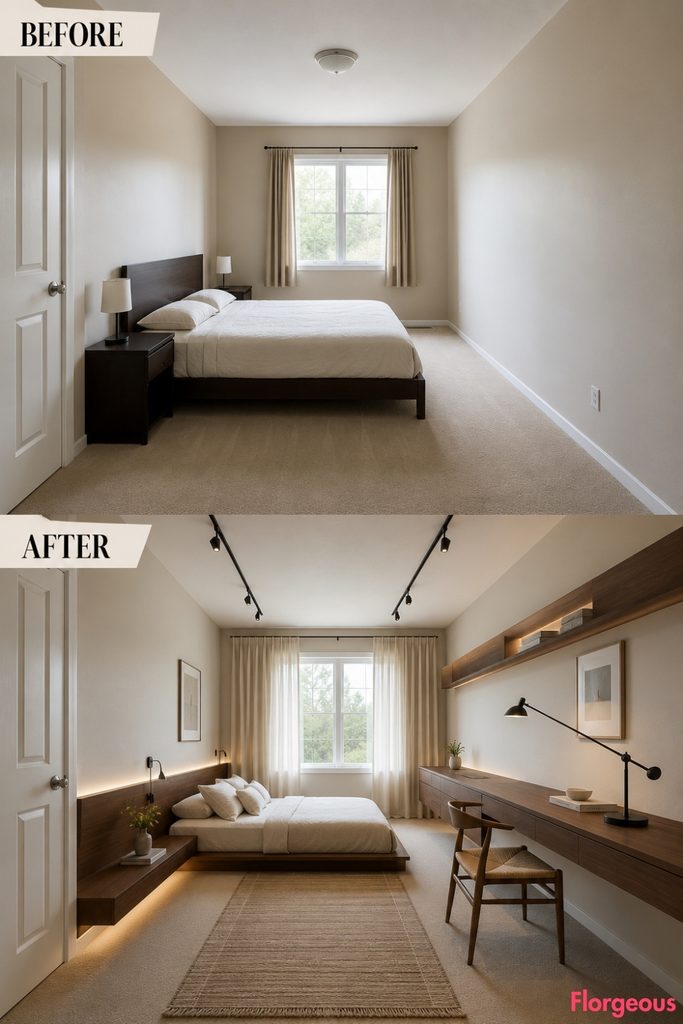
Before: A long bedroom has a blank wall that does nothing for the room.
After: The bed shifts toward one end while a long floating walnut desk runs along the opposite wall and continues into a slim storage ledge. It feels more like an integrated suite than a single-purpose bedroom.
Why it works: Long rooms benefit from linear planning.
21. Turn a Large Bedroom Into a Record-Listening Retreat
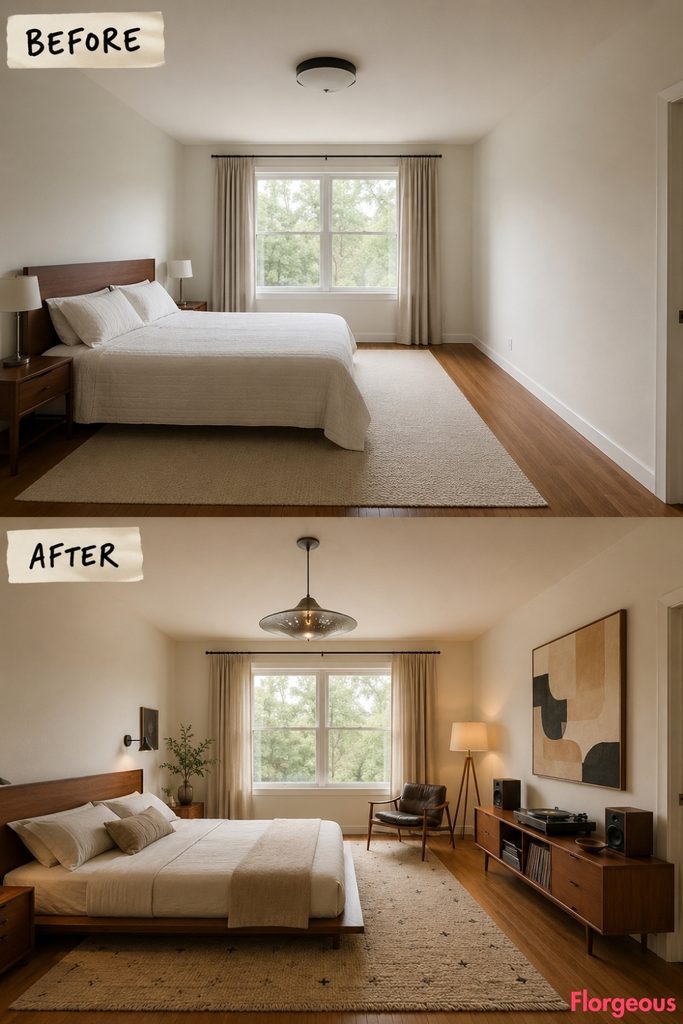
Before: A generous secondary wall feels empty and wasted.
After: A teak record console, compact speakers, low lounge chair, and abstract art create a listening zone that gives the room real personality. The sleeping area stays intentionally restrained.
Why it works: A strong secondary function makes a bedroom feel richer and more personal.
22. Use a Cork-Lined Recess for a Softer Modernist Niche
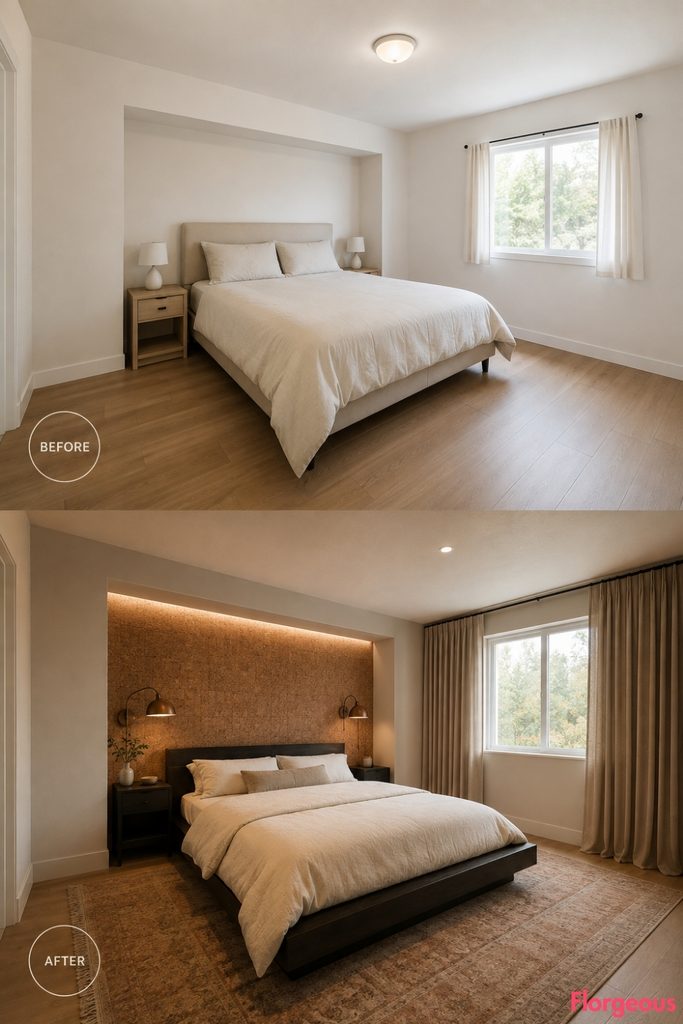
Before: A shallow recessed bed wall feels plain and unfinished.
After: Natural cork lines the recess, giving the bed area warmth and texture without looking heavy. A low black-oak bed and cream wool bedding keep the palette grounded.
Why it works: Cork changes the feel of the room in a subtle but very memorable way.
23. Make a Large Square Bedroom Feel Brutalist and Sculptural
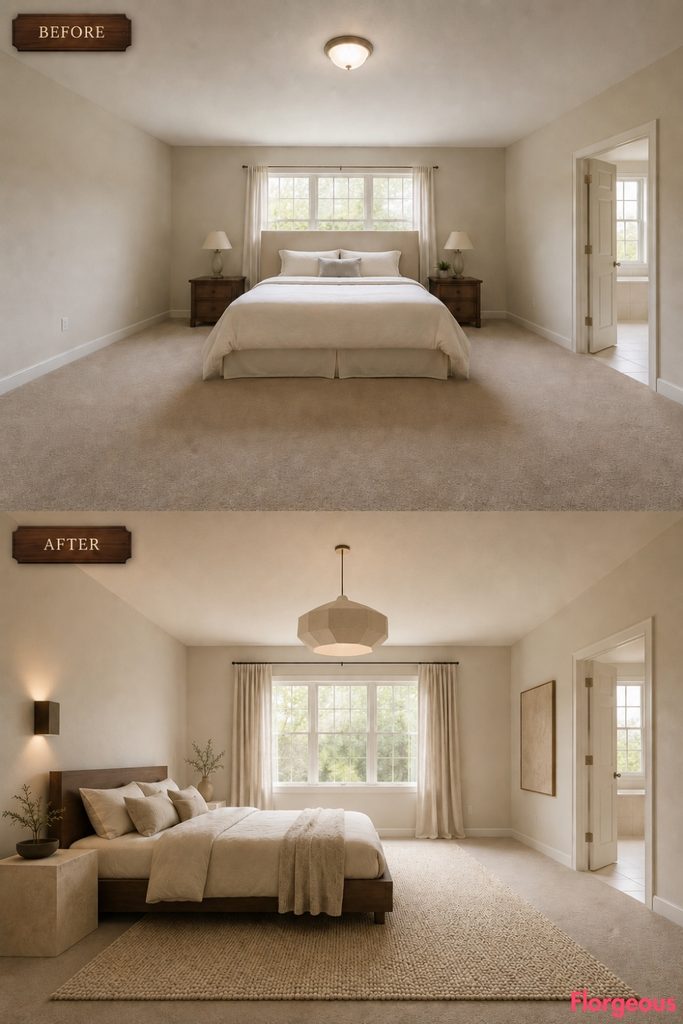
Before: A large square room looks overly safe with a typical centered setup.
After: A dark teak bed sits slightly off-center between two monolithic limestone blocks, with heavy linen, a thick rug, and a bold plaster pendant. The result feels grounded and architectural.
Why it works: Mass and negative space create drama without clutter.
24. Use a Sloped Ceiling for a Pale Scandinavian Modernist Room
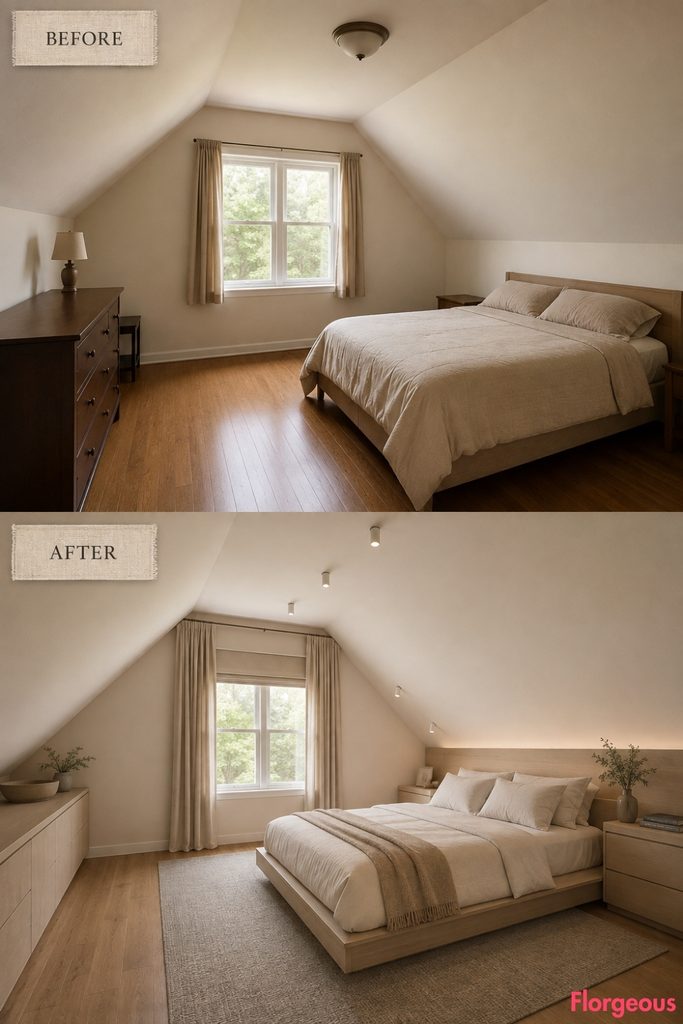
Before: An attic-like room feels awkward because ordinary furniture fights the roofline.
After: A pale ash platform bed sits low beneath the slope, with fitted storage boxes following the geometry of the ceiling. The room feels calm, bright, and tailored to its architecture.
Why it works: Low furniture makes sloped rooms feel intentional instead of compromised.
Small Space Tip: Under-slope storage is far more useful when it follows the roofline cleanly.
25. Finish With an Asymmetrical 1960s Collector’s Bedroom
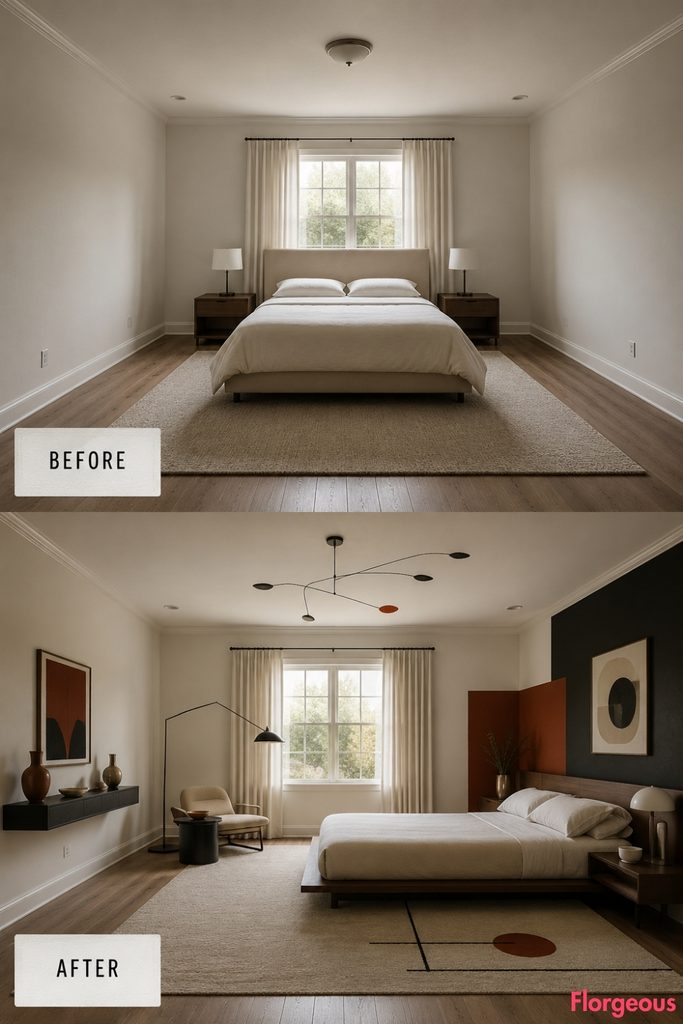
Before: A broad rectangular room feels predictable with a centered generic bed.
After: The bed shifts off-center, one side gets a lacquer cylinder table, the other a floating display shelf, and the wall behind becomes a composition of warm white, tobacco, muted blue, and black. It feels curated, graphic, and full of personality.
Why it works: Controlled asymmetry makes the room feel designed, not copied from a furniture set.
How to Choose the Right Mid-Century Modern Bedroom for Your Space
The best makeover is not always the one with the most furniture or the richest wood tone. It is the one that responds to the room you actually have.
A narrow room may need a daybed or a library wall. A wide room can handle a floating platform or twin beds. A recess might become a sleeping niche, while a corner window may look best with a low, quiet layout. Even lighting should follow the concept, not repeat the same pendant from room to room.
That is why a strong Mid-Century Modern Bedroom starts with three decisions: the room shape, the furniture strategy, and the lighting language. Once those are right, rugs, bedding, curtains, and styling become much easier to choose.
Start by identifying the most interesting thing about your bedroom, then design around it. That one move often matters far more than buying a full matching set.