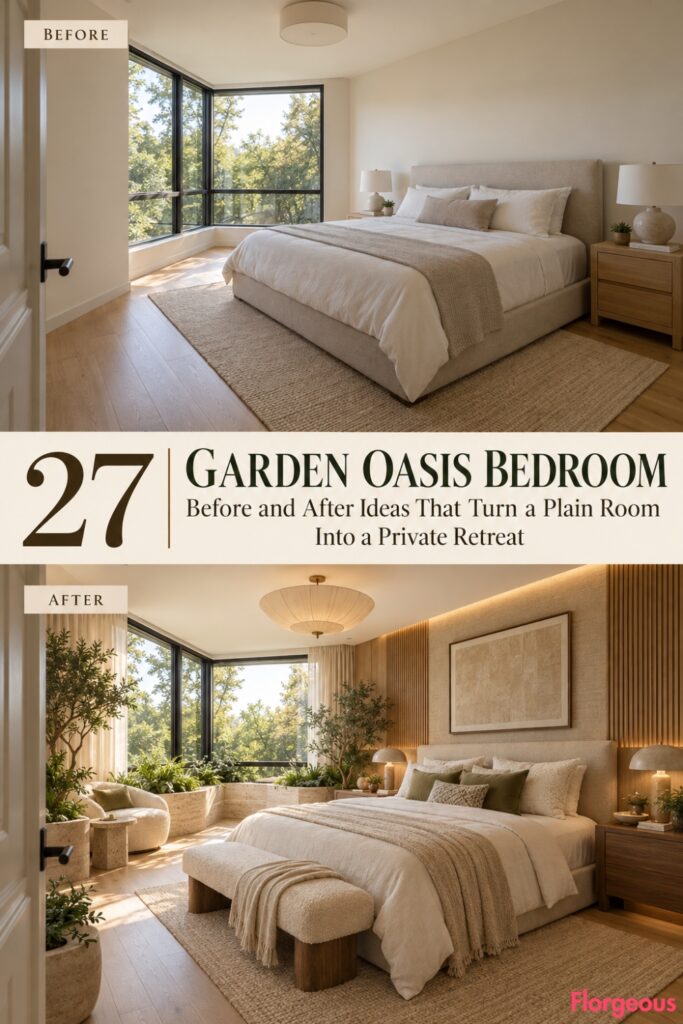
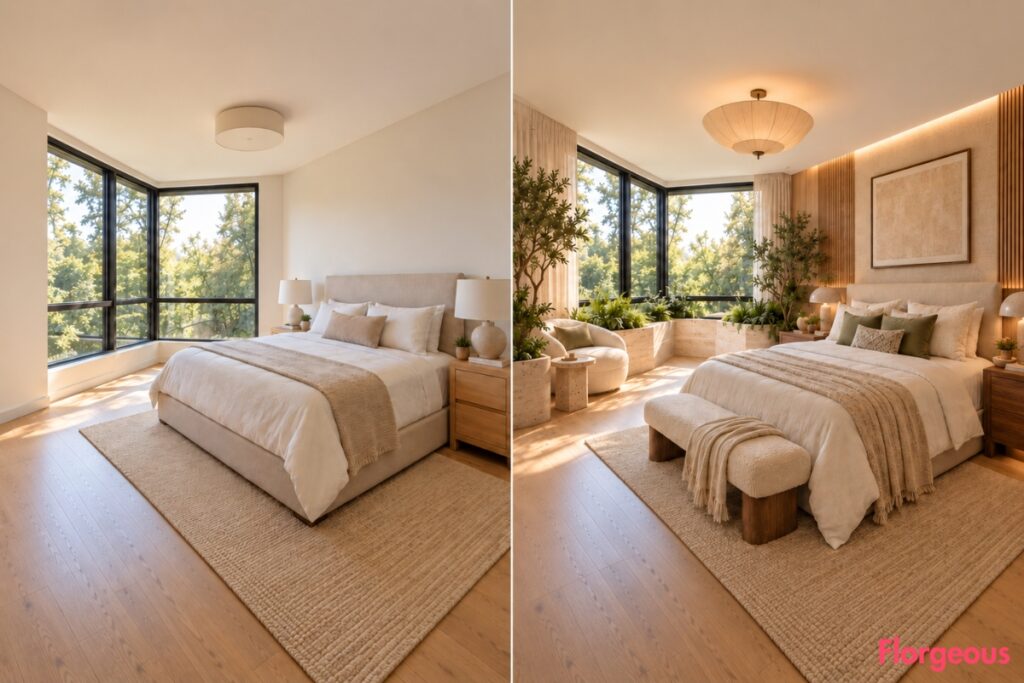
A Garden Oasis Bedroom should feel like stepping into a private retreat where the bedroom and garden seem to belong to the same space.
That feeling comes from much more than adding houseplants. Stone, timber, soft upholstery, layered planting, filtered daylight, sculptural furniture, and carefully integrated garden features all need to work together.
Every idea below begins with exactly the same Corner-Window Bedroom: a medium-wide rectangular room with a flat ceiling, continuous warm-oak flooring, a neutral upholstered bed positioned lengthwise against the solid right wall, fixed L-shaped glazing at the far-left corner, and a front-left entry. The BEFORE remains simple, neutral, and lightly styled.
The architecture never changes. Each AFTER simply finds a different way to turn that same bedroom into a refined Garden Oasis Bedroom.
1. Turn the Corner Glass Into a Quiet Resort Garden Loggia
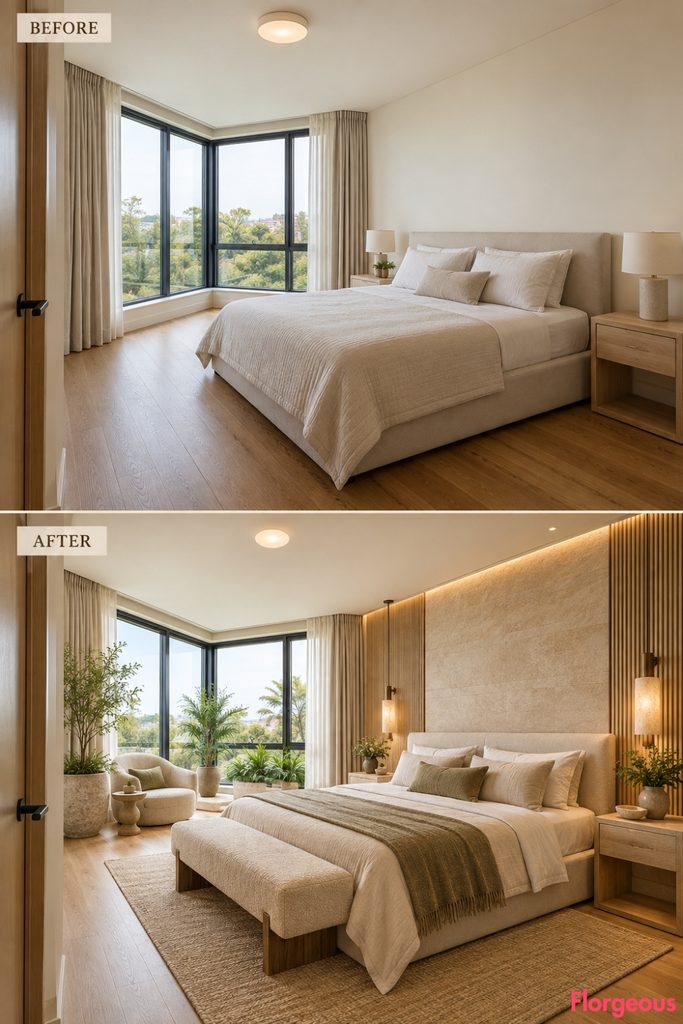
Before: From the front-left doorway, the room feels bright but unfinished. The L-shaped glazing is attractive, but the space beneath it has no purpose.
After: A long pale-limestone bench runs beneath the far window, combining a cream bouclé sitting zone with integrated stone planters. Ribbed light oak wraps the base, while restrained foliage frames the view without covering it. The bed gains ivory linen, tobacco accents, and sculptural oak bedside pieces.
Why it works: The garden becomes part of the room architecture instead of an accessory.
2. Wrap the Bed in a Private Garden Courtyard
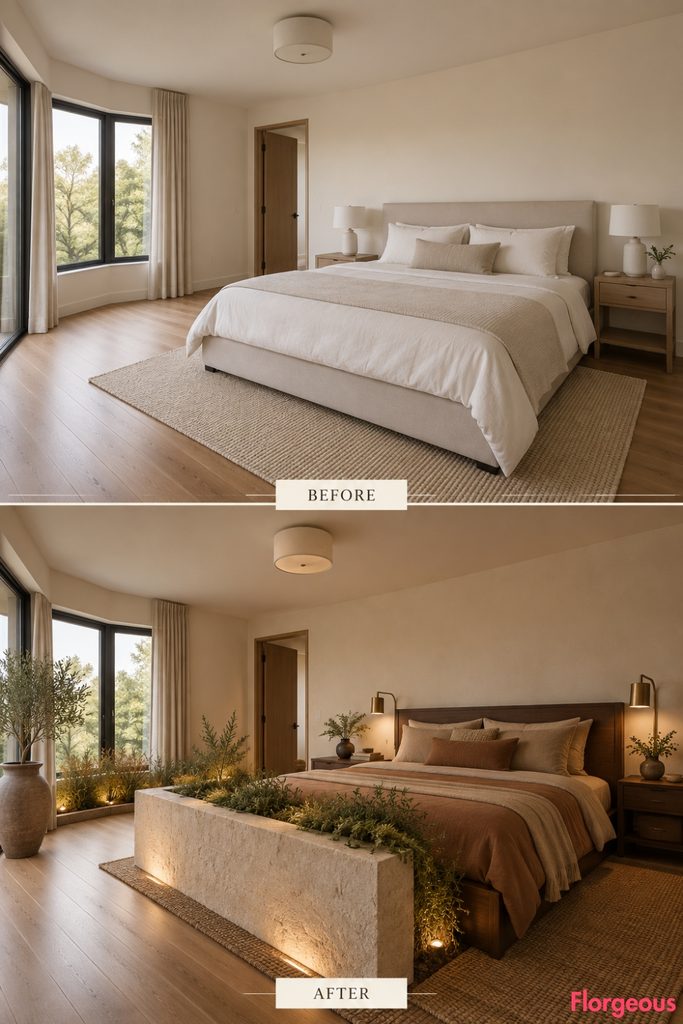
Before: From the far-left glazing looking back, the bed sits openly against the right wall with little sense of shelter.
After: A low freestanding limestone wall wraps behind the headboard and gently returns at one side. A slim outer planting border softens the stone. Dark walnut, clay-toned linen, and bronze reading lights create a more intimate resort atmosphere.
Why it works: The sleeping zone feels protected without closing the room.
3. Create a Layered Garden Terrace Behind the Headboard
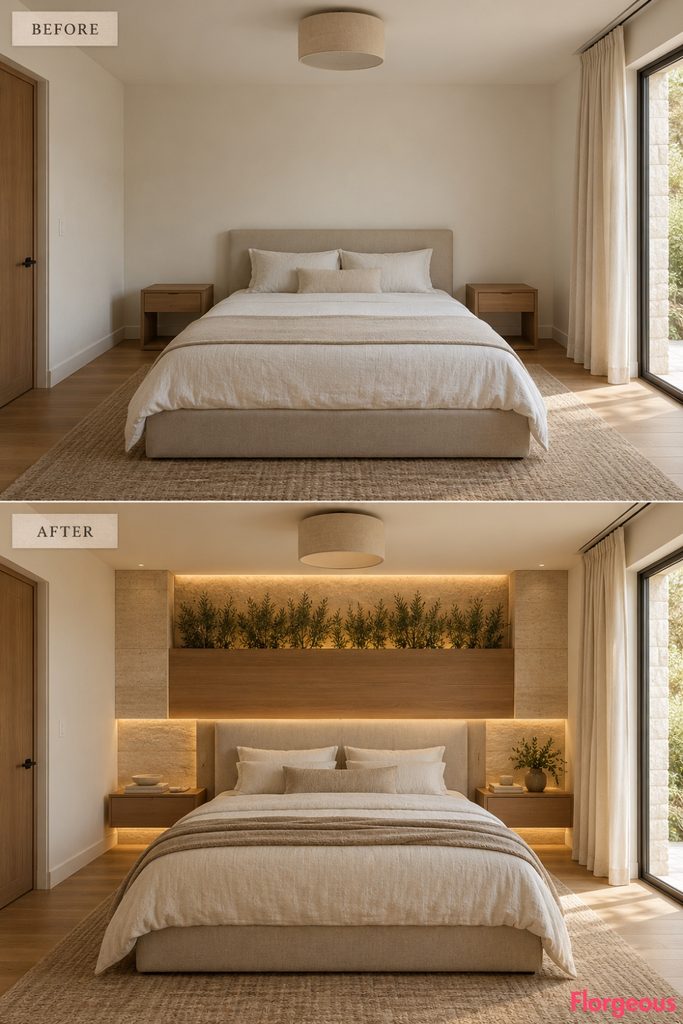
Before: From the foot of the bed, the solid right wall feels flat and visually disconnected from the corner windows.
After: Three shallow freestanding ledges rise behind the bed in limestone, warm oak, and softly textured plaster. Two levels remain decorative, while the upper terrace carries a controlled band of greenery. The low bed uses sand-colored linen and a wide upholstered headboard.
Why it works: The wall gains landscape-like depth without becoming a living wall.
4. Build a Light Garden Canopy Over the Sleeping Zone
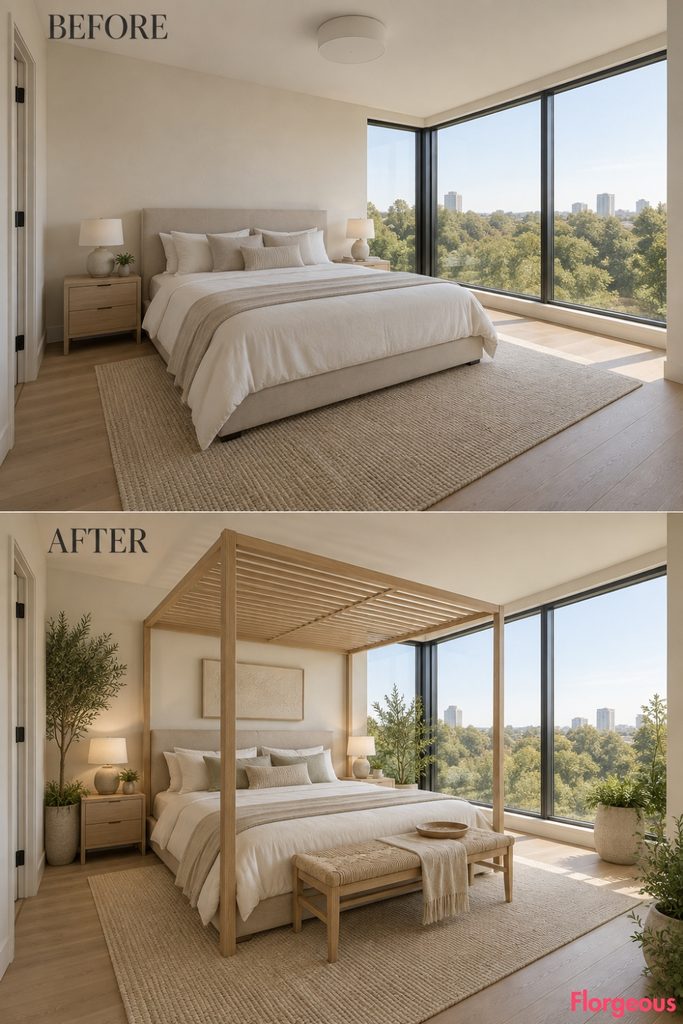
Before: From a rear-left diagonal, the flat ceiling and basic bed make the room feel ordinary.
After: A slim pale-oak freestanding structure rises around the bed and carries shallow timber slats overhead. Light filters through the gaps, while low garden planters sit safely outside the sleeping zone. Loose ivory linen and cream upholstery keep the room breezy.
Why it works: The canopy creates the feeling of sleeping beneath a garden pavilion.
5. Turn the Window Corner Into a Lush Reading Retreat
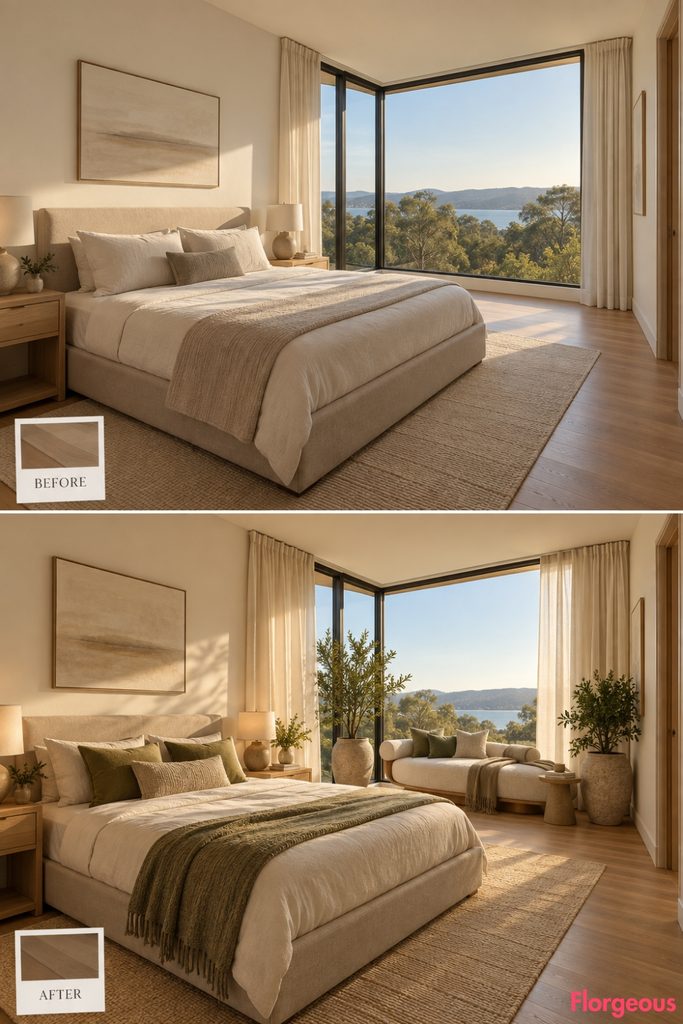
Before: From the right side of the room, the glazed corner looks bright but empty.
After: A curved oak daybed follows the edge of the window zone, upholstered in cream bouclé with moss and sand cushions. A pair of sculptural planters flank the seat, while tall but restrained greenery creates depth around the glass.
Why it works: The oasis expands beyond the bed and gives the room another purpose.
6. Turn the Open Zone Into a Garden Dressing Court
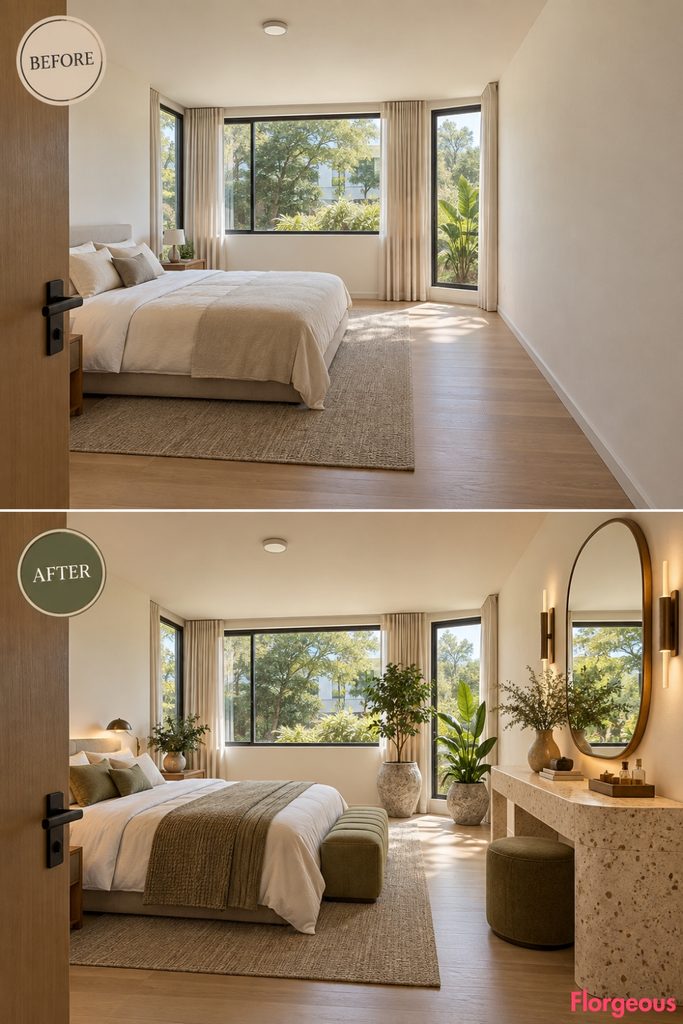
Use the open area near the entry as a refined garden-inspired dressing zone.
Before: The plain Corner-Window Bedroom has an unused open area between the entry and bed.
After: Add a creamy-terrazzo vanity, organic bronze mirror reflecting the corner greenery, two sculptural planters, a curved moss-wool stool, walnut details, and an oval rug.
Why it works: The mirror extends the garden feeling into the room without adding more plants.
Try this: Keep planting limited to two sculptural pieces.
7. Frame the Bed With Curved Oak Garden Screens
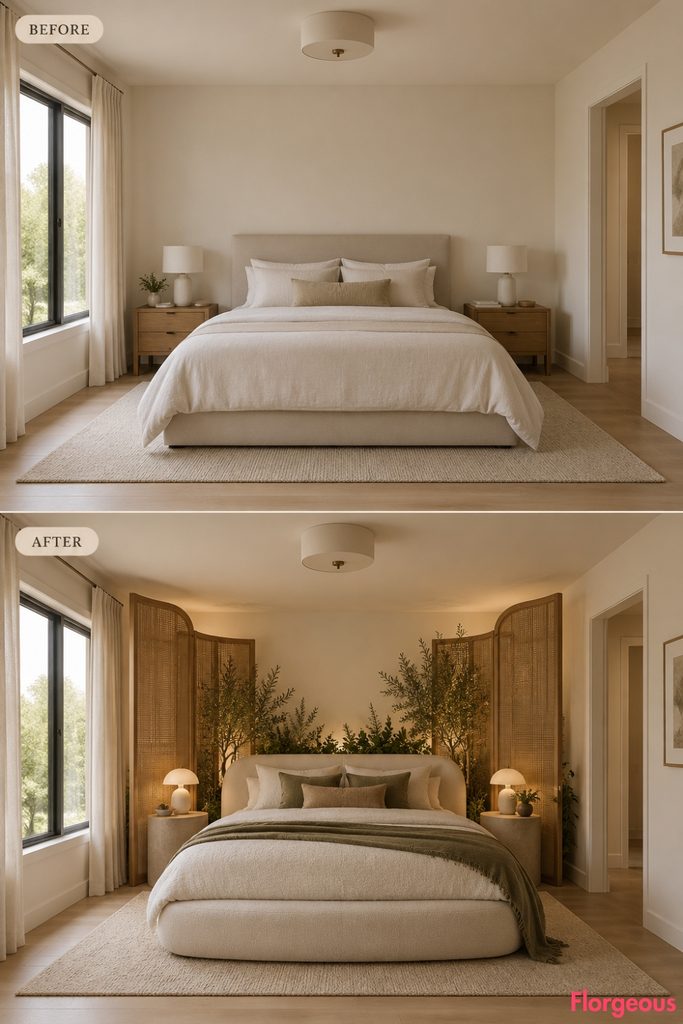
Before: From a window-side angle, the long right wall feels exposed.
After: Two shallow curved oak screens stand behind and beside the headboard, leaving narrow gaps where greenery appears softly from behind. The bed becomes rounded and upholstered, with creamy wool and olive-brown accents.
Why it works: The room gains privacy, depth, and a garden-layered silhouette.
8. Build a Soft Resort Cabana Around the Bed
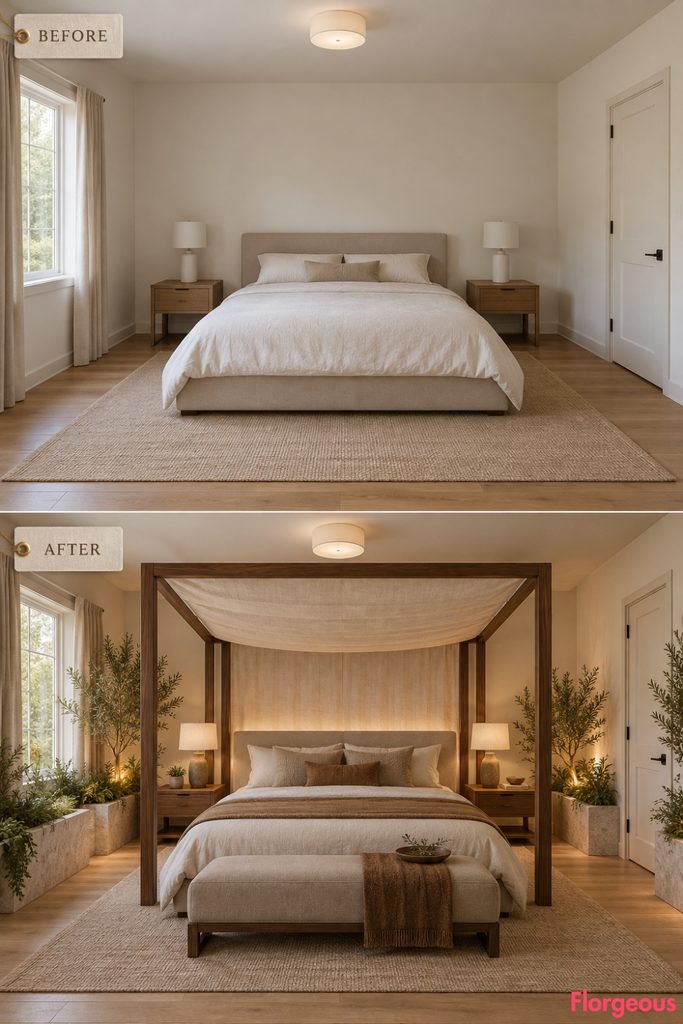
Before: From the front-center viewpoint, the bed has no special architectural identity.
After: A broad walnut cabana frame surrounds the sleeping zone, with loose flax panels suspended only at the rear corners and upper plane. Low stone planters sit outside the frame, while sand, tobacco, and ivory textiles add warmth.
Why it works: It feels luxurious and resort-like without becoming a conventional four-poster bedroom.
9. Float a Garden Halo Above the Foot of the Bed
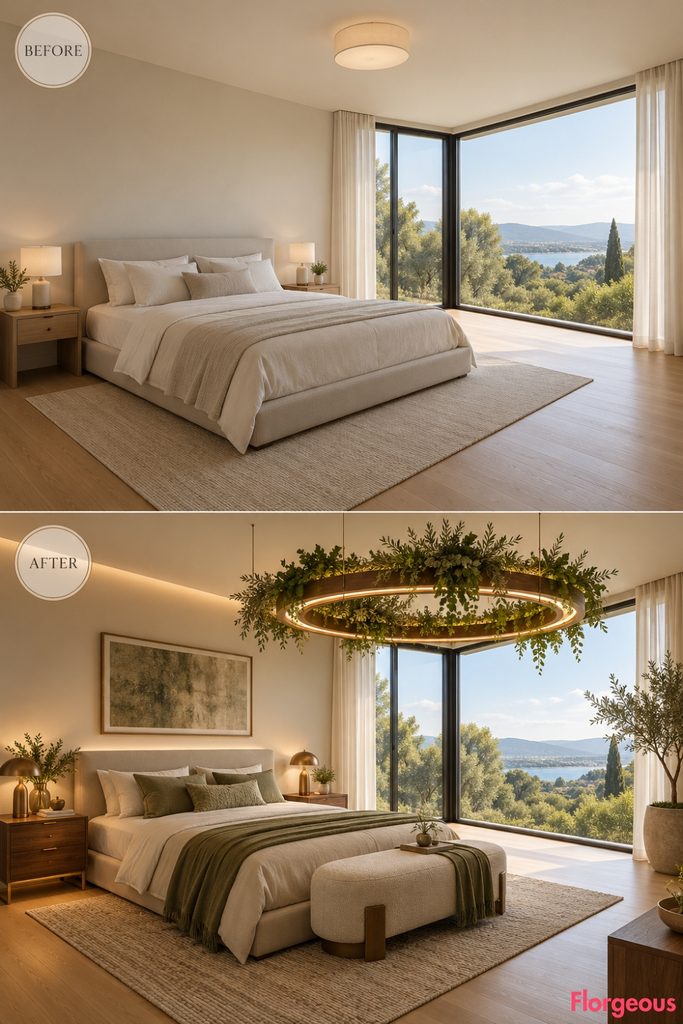
Create the oasis vertically instead of adding another planted corner.
Before: The plain bedroom has an empty upper zone and a basic ceiling light.
After: Suspend a large shallow oval oak-and-bronze halo above the foot-of-bed zone, with warm concealed light and a restrained outer planting edge. Keep the bed low in ivory upholstery with walnut and soft moss accents.
Why it works: The garden becomes a sculptural overhead focal point while the floor stays open.
Try this: Keep the planting light and position the feature beyond the sleeping area.
10. Add a Floating Garden Ledge Behind the Bed
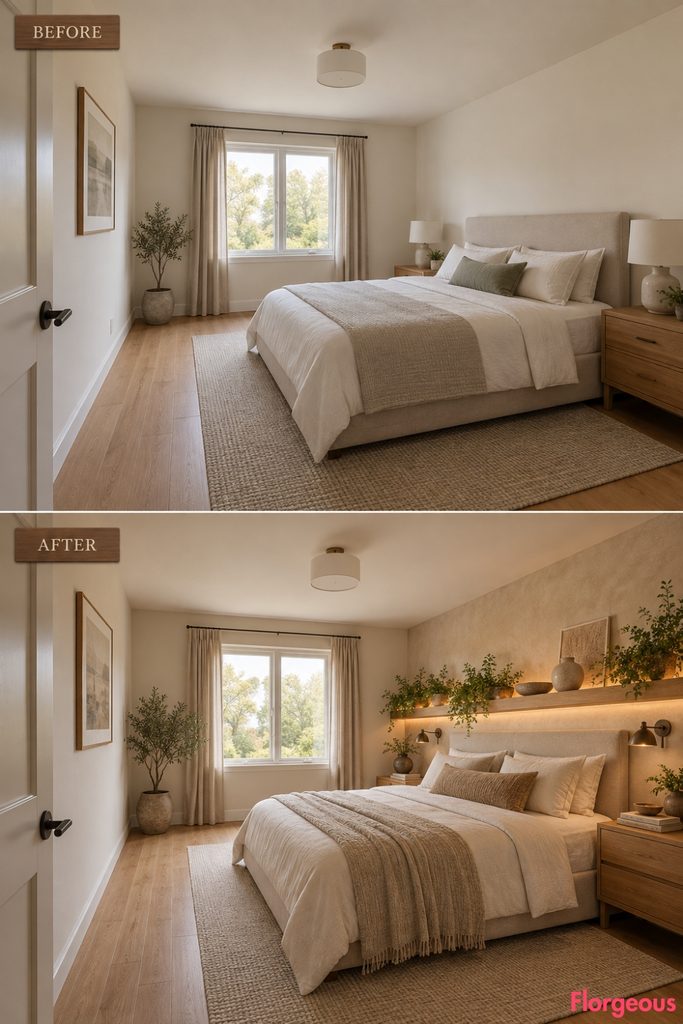
Before: From the left side facing the bed, the sleeping wall is featureless.
After: A long floating oak ledge sits above and behind the headboard, deep enough for a sequence of shallow planter trays and handmade ceramics. The planting stays low and horizontal. Bronze lights wash the wall beneath.
Why it works: It creates greenery without using a plant wall.
11. Create a Spa Garden Bedroom in Pale Stone
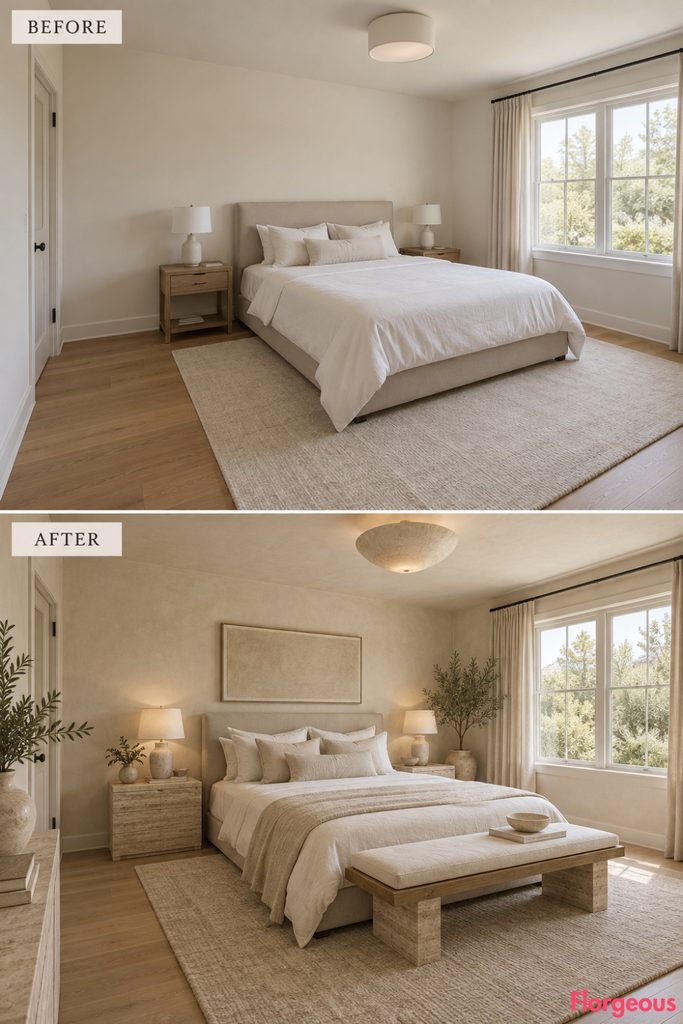
Before: From the far-left window corner, the room feels basic and slightly unfinished.
After: Pale travertine bedside blocks, a low upholstered bed, soft mineral plaster, linen curtains, and carefully grouped greenery create a quiet spa atmosphere. A long low bench at the foot of the bed adds structure.
Why it works: The room feels lush through calm material layering rather than plant density.
12. Bring the Garden Up Around the Window Bench
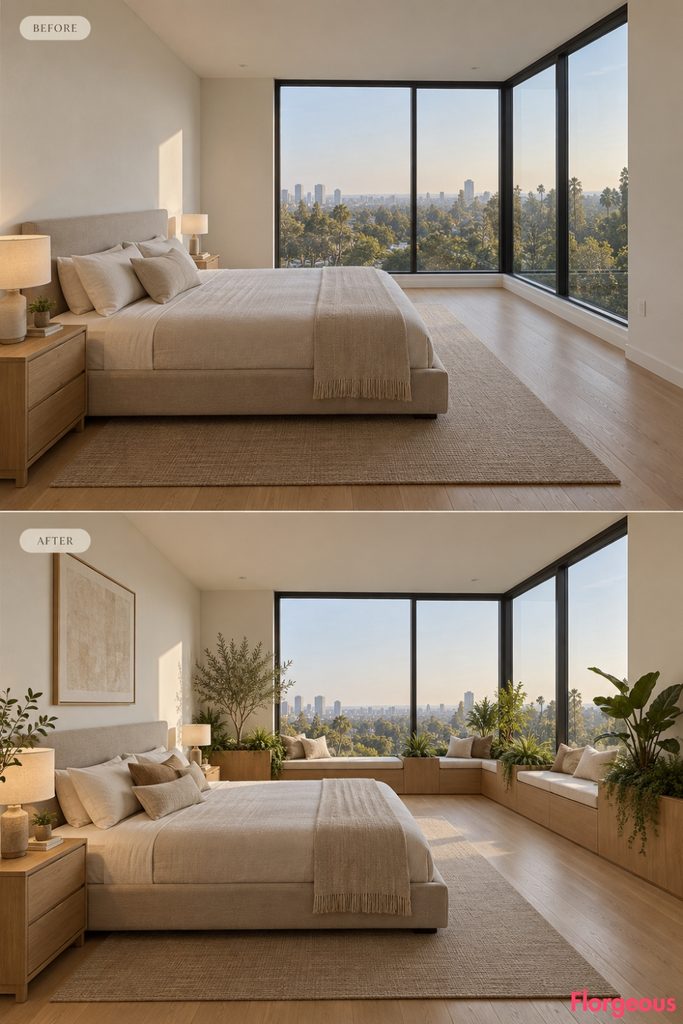
Before: From a long right-wall view, the L-shaped glazing is visually isolated.
After: A continuous low oak bench follows the far glazing and partially returns beneath the left-side window. Narrow planter pockets sit at selected points rather than forming one continuous trough. Cushioned sections make the feature usable.
Why it works: The garden wraps the corner naturally without blocking the view.
13. Create a Dark Tropical Luxury Oasis
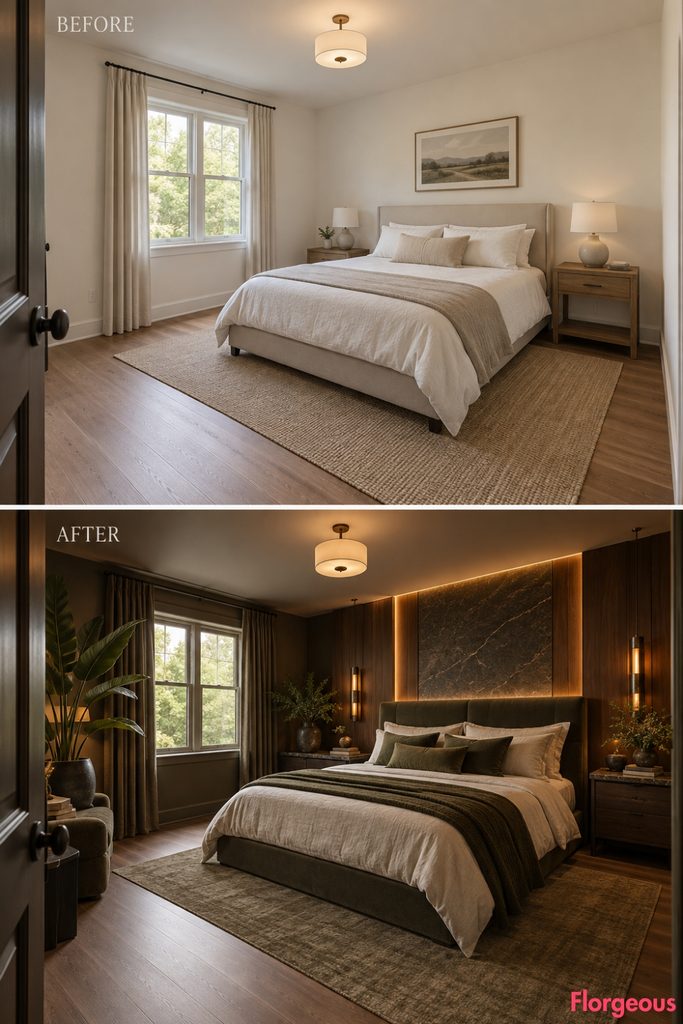
Before: From the doorway looking diagonally inward, the room feels bright but generic.
After: Smoked teak, charcoal stone, dark olive wool, and carefully positioned broad-leaf plants create a much moodier retreat. Soft amber lighting highlights the plants without turning the room into an indoor jungle.
Why it works: The dark palette makes greenery feel richer and more luxurious.
14. Make the Bed Wall Feel Like a Garden Terrace at Dawn
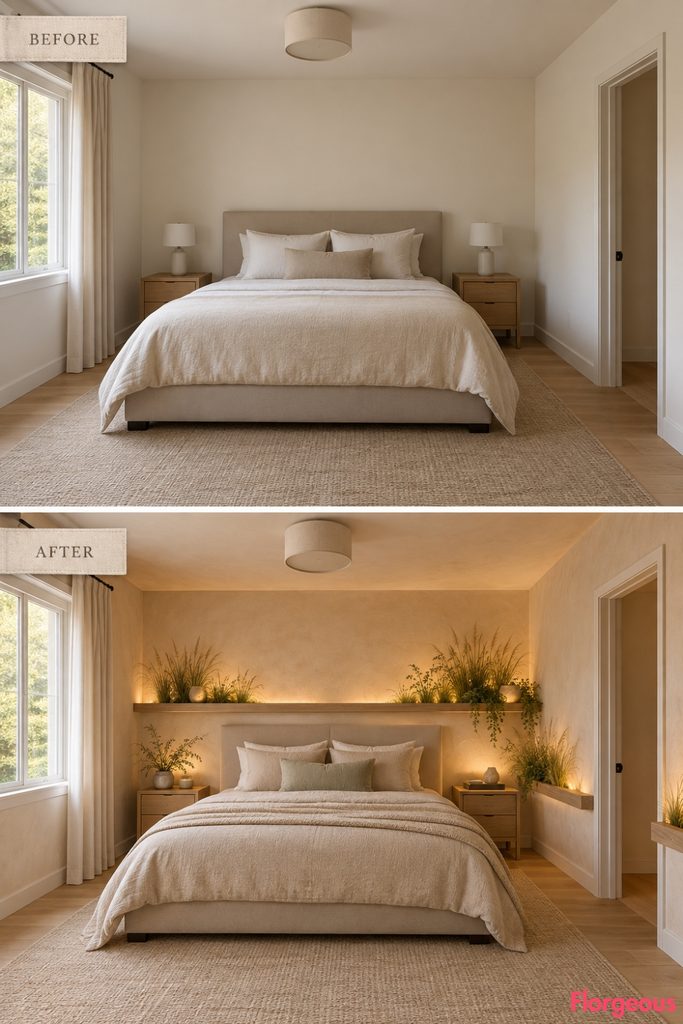
Before: From near the foot of the bed, the wall looks flat and heavy.
After: Pale clay plaster, light oak horizontal ledges, delicate grasses, and warm cream upholstery create an airy, sun-washed sleeping zone. Integrated light grazes upward from the lowest ledge.
Why it works: The room feels garden-connected without relying on dark greens.
15. Create a Woven Garden Pavilion With Cane and Oak
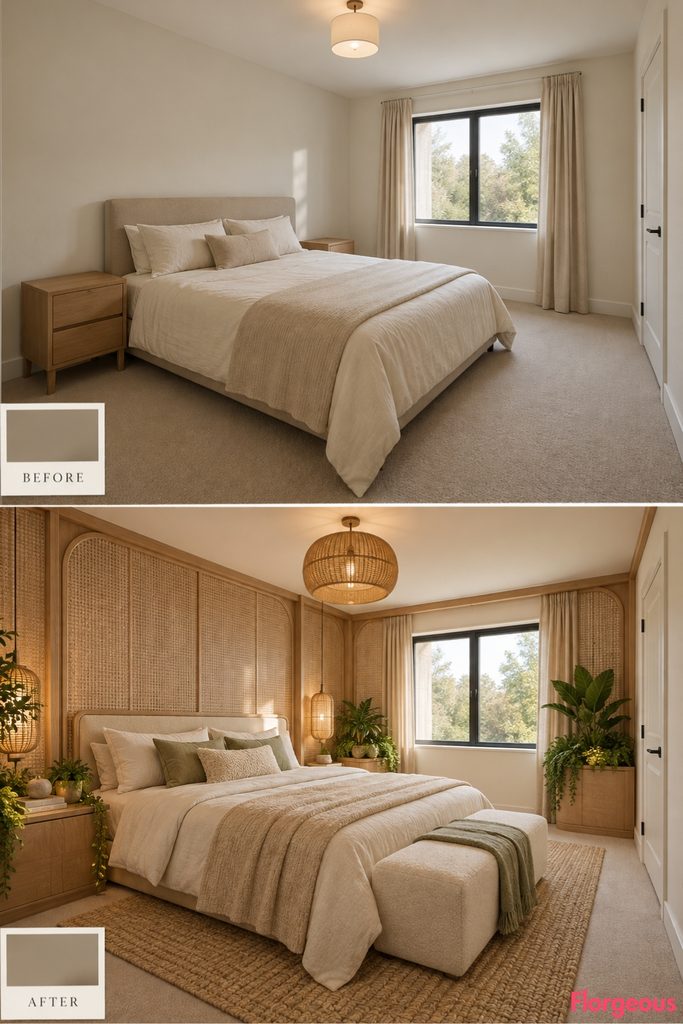
Before: From the rear-left corner, the bed lacks warmth and texture.
After: A freestanding pale-oak frame holds large woven cane panels behind the sleeping zone. Low greenery appears at the base, while linen, boucle, and a handwoven rug make the room tactile.
Why it works: Botanical atmosphere comes through crafted natural materials as much as planting.
16. Add a Curved Limestone Garden Island
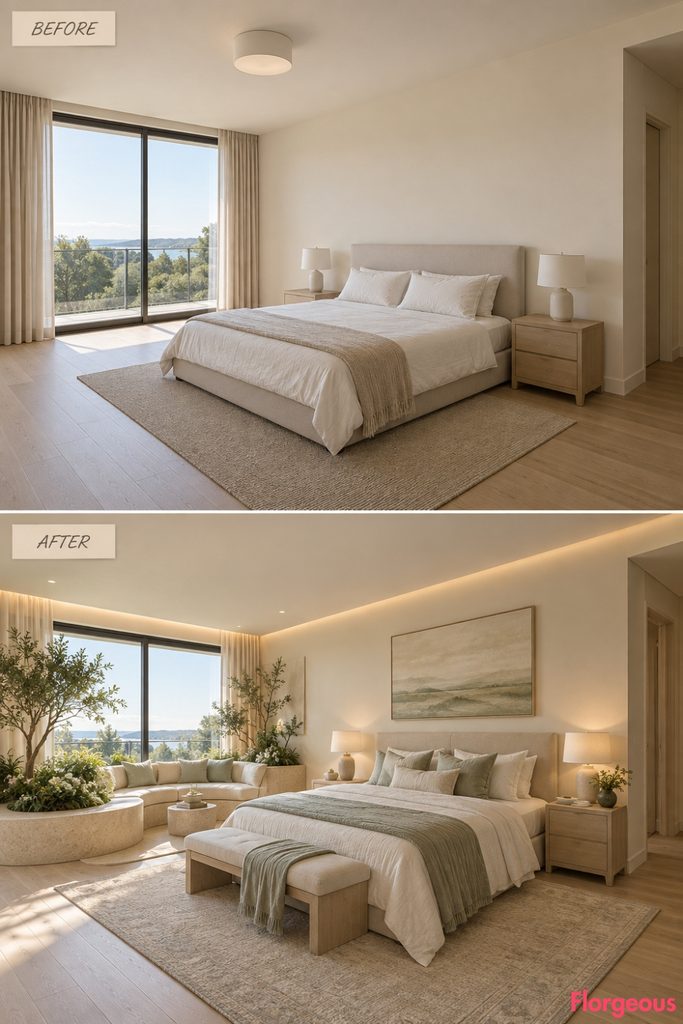
Before: From the right-front interior corner, the open floor near the glazing has little function.
After: A low curved limestone island sits near the windows, combining one planted section, one seating section, and one display surface. The bed uses pale ash wood and soft celadon-gray textiles.
Why it works: One sculptural object organizes the entire garden zone.
17. Turn the Window Zone Into a Soft Flower Garden
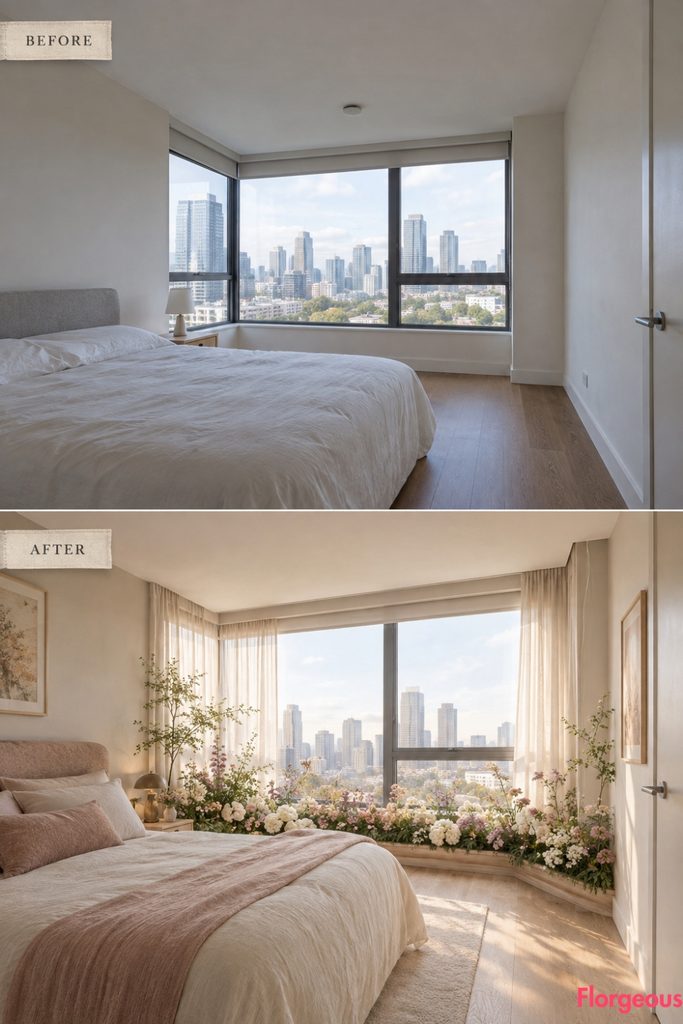
Before: From beside the bed, the glazing provides light but little atmosphere.
After: A low planter beneath the window contains restrained white, blush, and muted mauve flowers mixed with fine foliage. Pale oak, creamy linen, and soft rose-beige upholstery create a gentle garden suite rather than a floral-themed bedroom.
Why it works: Flowers become one controlled architectural border.
18. Create a Warm Stone and Olive Garden Retreat
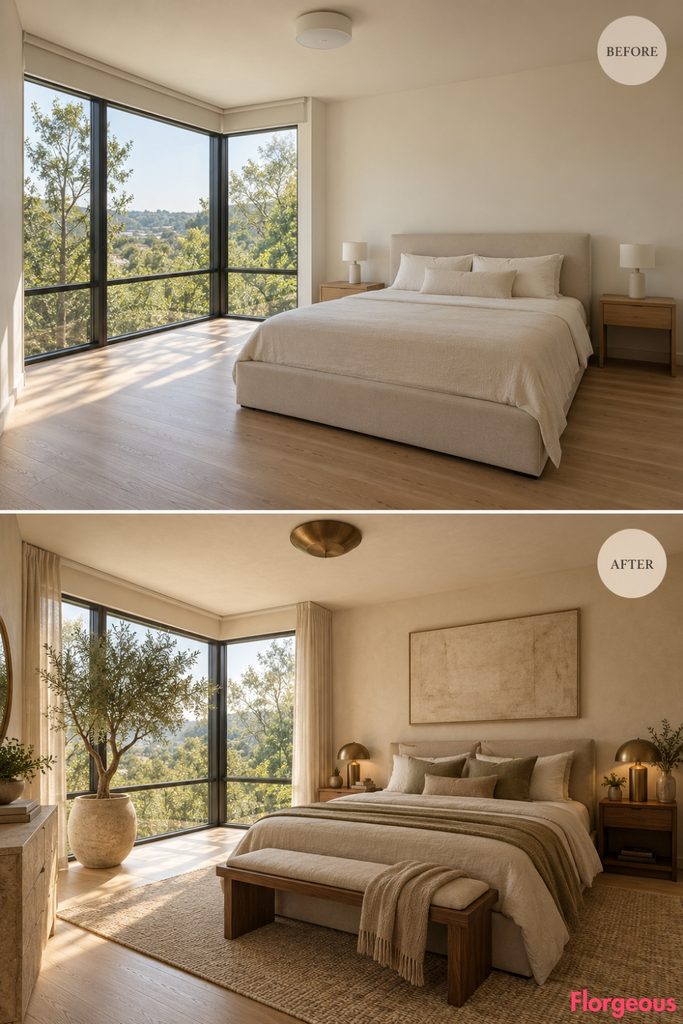
Before: From a front-right angle, the room feels neutral but anonymous.
After: Travertine, walnut, warm plaster, and one sculptural olive-like tree near the corner glass create a calm resort atmosphere. Smaller greenery stays minimal so the single tree remains dominant.
Why it works: One strong botanical focal point is more effective than many scattered plants.
19. Filter Daylight Through a Garden Screen
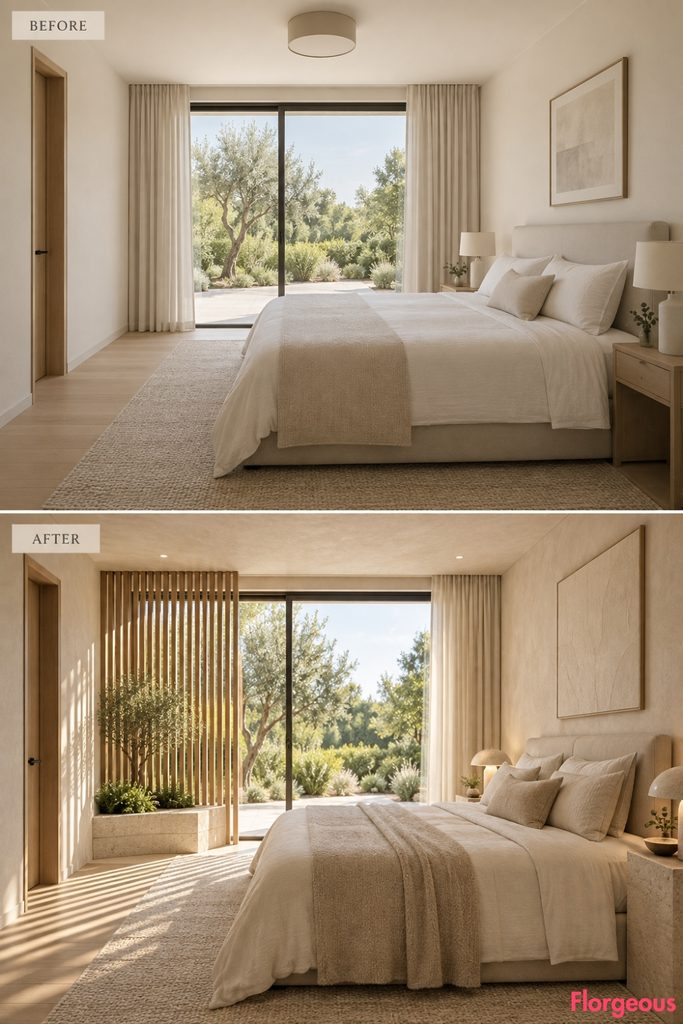
Before: From near the bed, daylight enters strongly through the corner windows.
After: A freestanding pale-oak screen with irregular vertical fins sits beside the glazing, never across it. Light produces shifting shadow patterns across the floor. One low planter at the base visually connects the screen to the garden concept.
Why it works: Sunlight becomes part of the oasis.
20. Build a Layered Garden Backdrop With Stone and Timber
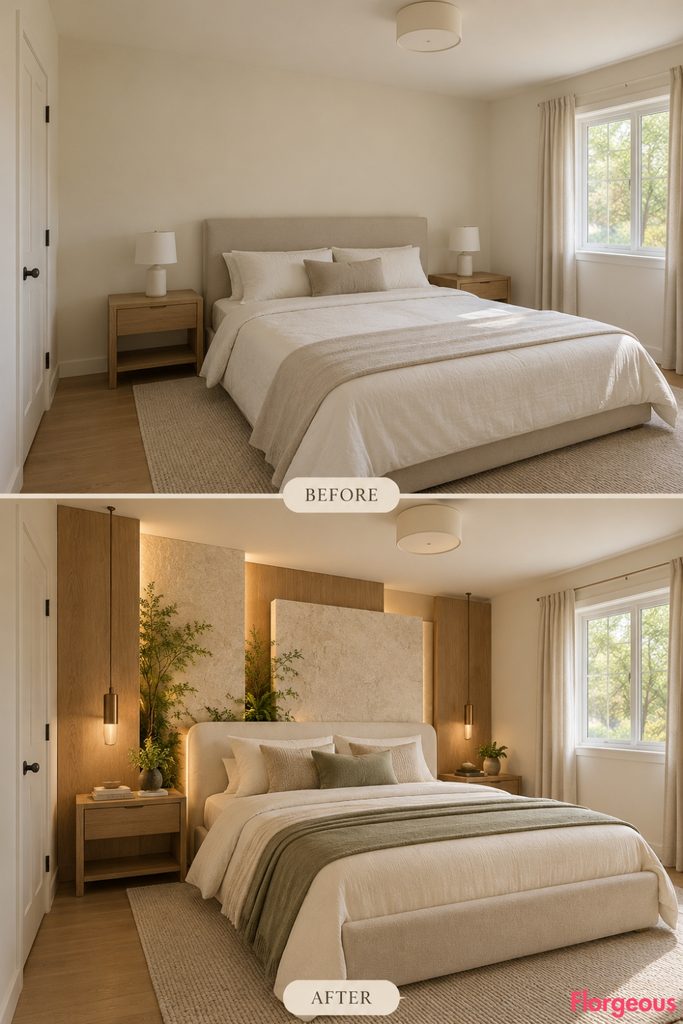
Before: From the left wall looking toward the bed, the right wall appears completely flat.
After: Two overlapping freestanding planes, one warm limestone and one vertical oak, create a layered backdrop behind the bed. A narrow planter sits between them so foliage appears from the architectural gap.
Why it works: The greenery feels embedded in the composition.
21. Create a Garden Colonnade Beside the Bed
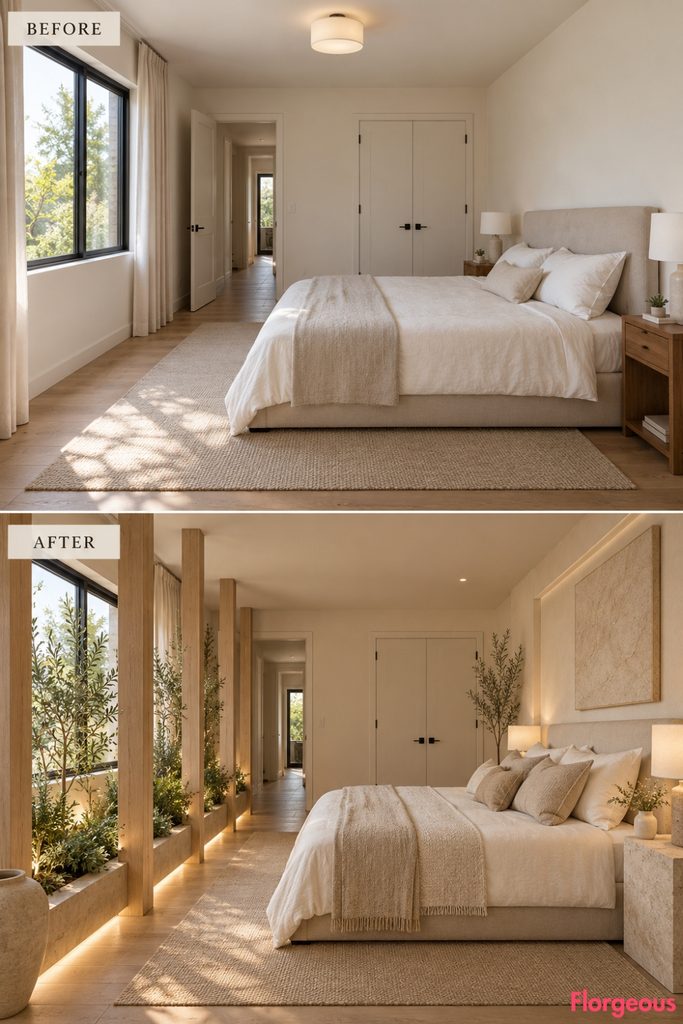
Before: From the far window looking back, the side of the bed feels undefined.
After: Slim pale-oak posts run parallel to the sleeping zone, with a narrow planted strip behind them. The greenery appears differently as the viewer moves through the room.
Why it works: The garden becomes spatial, not just decorative.
22. Make the Room Feel Like a Garden After Rain
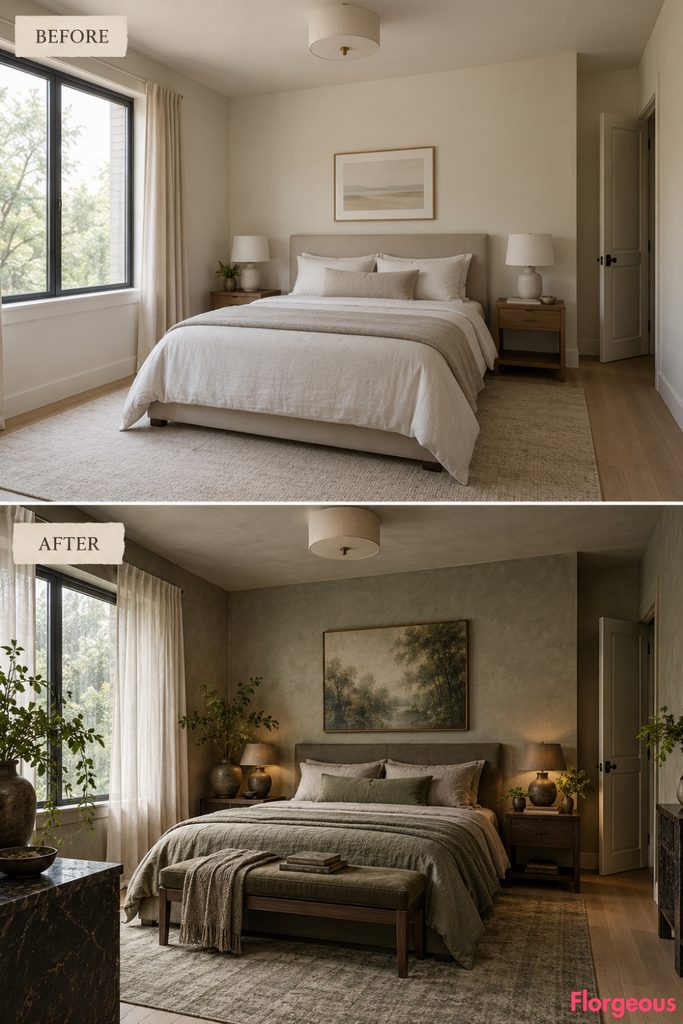
Before: From the window side, the room feels dry and visually flat.
After: Gray-green mineral plaster, dark wet-look stone used only on a low console, translucent curtains, smoked oak, and glossy ceramic planters create the atmosphere of a garden after rainfall. Greenery is fresh but restrained.
Why it works: The mood comes from texture and reflected light rather than an actual water feature.
23. Create an Artistic Garden Gallery Around the Bed
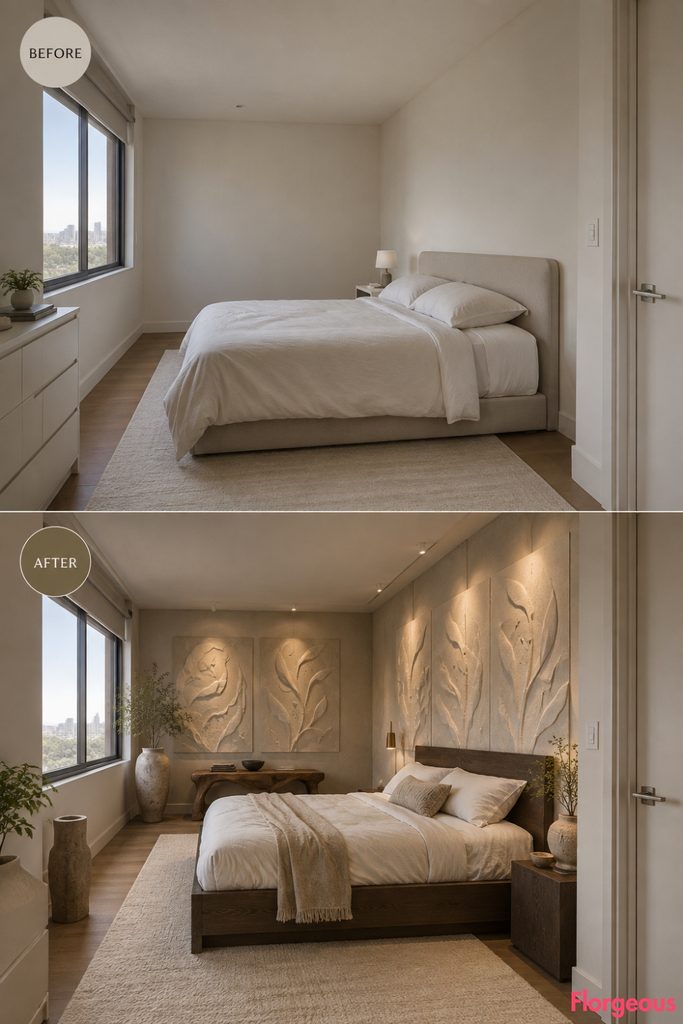
Before: From the centered side viewpoint, the bed wall has no focal composition.
After: Large abstract botanical relief panels in pale plaster sit behind the bed, balanced by sculptural ceramic planters and a carved timber bench. The relief remains abstract rather than depicting literal leaves.
Why it works: The garden concept becomes art and architecture.
24. Build a Warm Evening Garden Lounge
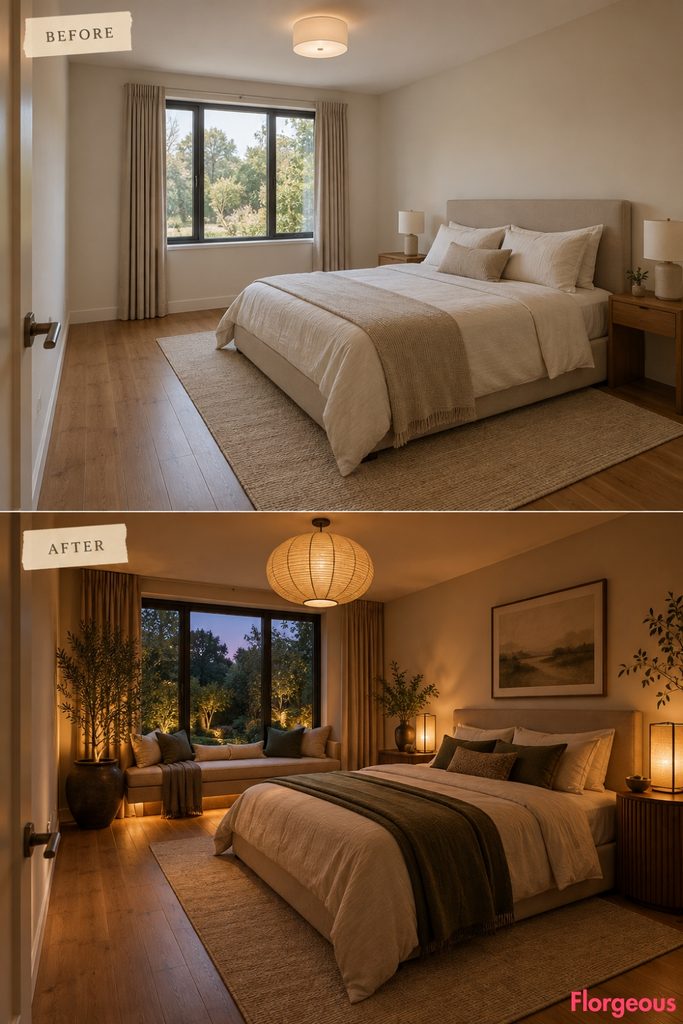
Before: From the doorway, the room relies on one basic ceiling light.
After: The window side becomes an evening garden lounge with a low upholstered bench, dark ceramic planters, smoked timber tables, and layered lantern-like lighting. Warm amber pools illuminate the foliage while the bed remains calm and luxurious.
Why it works: The oasis has a completely different identity after sunset.
25. Create a Dry Cascade Garden Wall
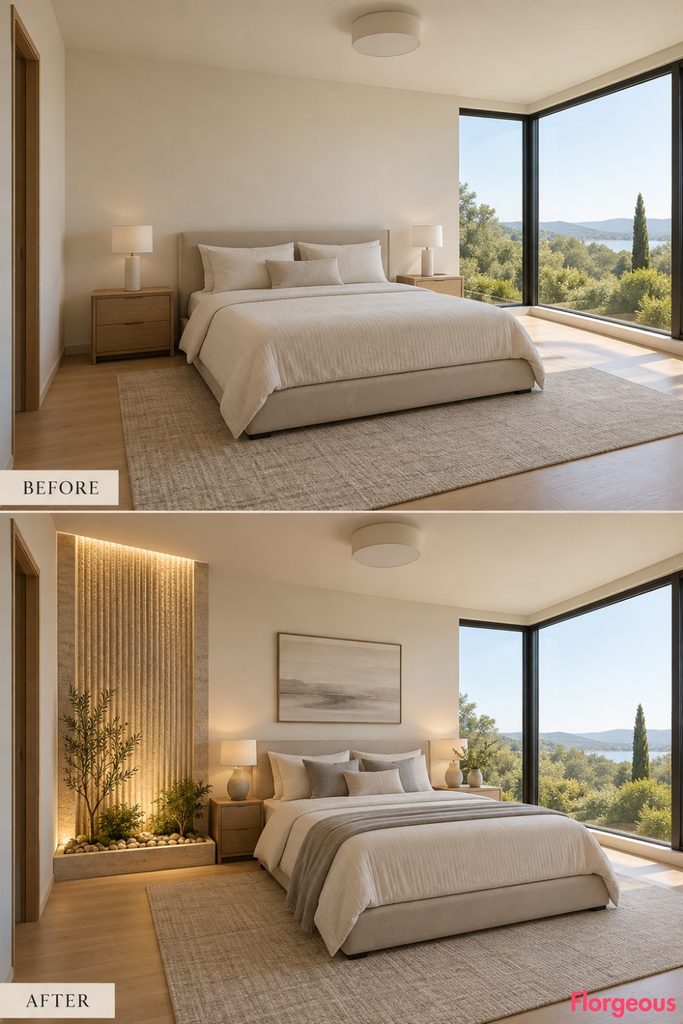
Bring the feeling of a garden waterfall indoors without using actual water.
Before: The plain right-wall bed zone feels flat and visually quiet.
After: Add a tall freestanding fluted limestone panel beside the bed, with concealed light grazing downward into a shallow dry pebble basin. Restrained greenery sits only at the base, paired with pale ash furniture, ivory linen, and soft mist-gray textiles.
Why it works: The room gains movement and a spa-like garden atmosphere without a real water feature.
Try this: Let light and texture suggest flowing water instead of adding a fountain.
26. Create a Floating Botanical Light Wall
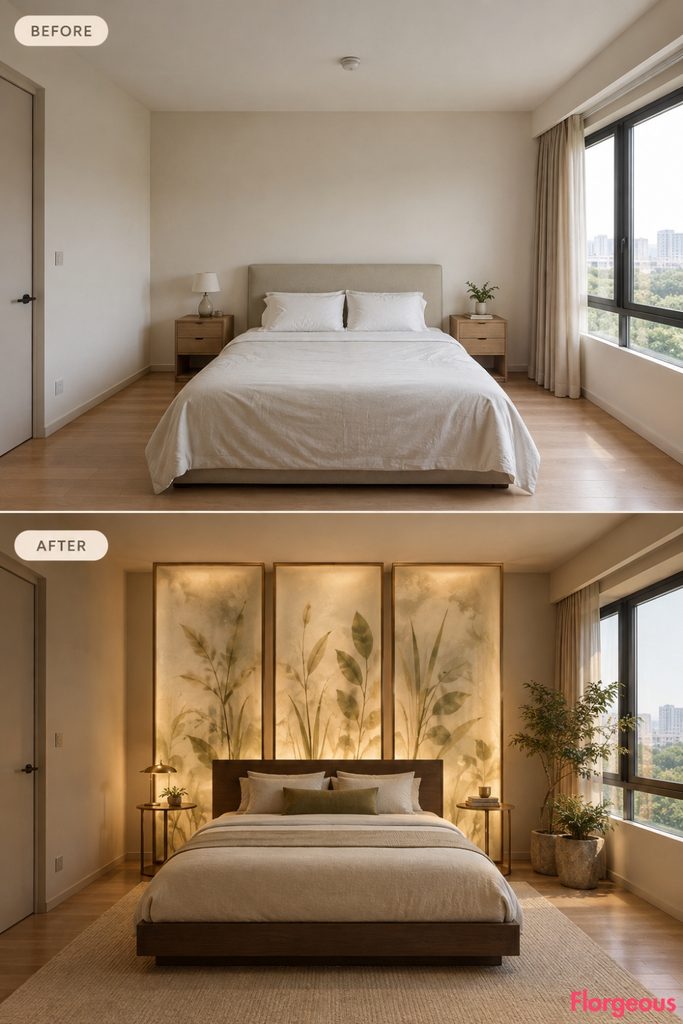
Use illuminated translucent material to make the garden feel weightless and luminous.
Before: The solid right wall behind the bed has no depth or atmosphere.
After: Place three freestanding translucent resin-glass panels behind the bed, each embedded with abstract botanical silhouettes and softly backlit from within. Pair them with a low dark-oak bed, cream wool, slim bronze furniture, and minimal greenery near the glazing.
Why it works: The garden becomes a glowing architectural artwork instead of another planter-based feature.
Try this: Keep the botanical pattern abstract so the room still feels sophisticated.
27. Finish With a Grand Contemporary Garden Pavilion
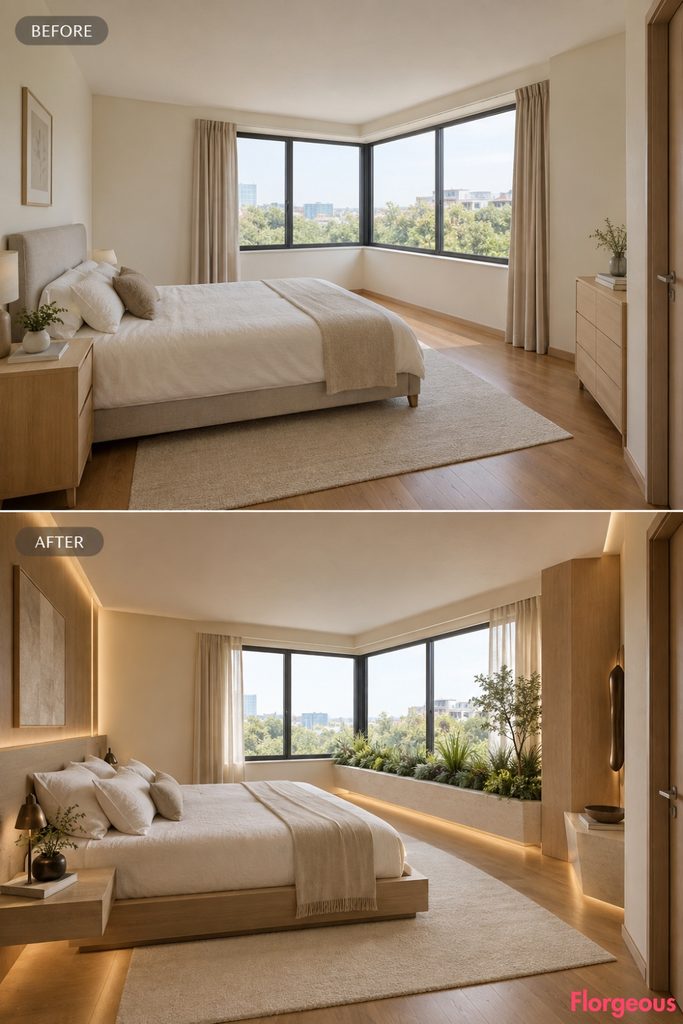
Before: From a wide rear-left viewpoint, the simple room shell is fully visible.
After: Broad offset pale-oak planes define the bed as a room within the room. One side becomes a floating limestone ledge, another becomes a long planted trough, and an open overhead frame completes the composition without blocking the ceiling.
The bed uses sculptural flax upholstery, layered cream wool, dark bronze details, and concealed lighting.
Why it works: Architecture, furniture, planting, and light become one cohesive oasis.
How to Create a Garden Oasis Bedroom Without Overdoing the Greenery
The strongest Garden Oasis Bedroom usually starts with one spatial idea. It might be a garden loggia, a sheltered bed courtyard, a planted terrace, a curved window retreat, or an architectural pavilion.
Once that feature is established, repeat its material language through the rest of the room. Pale limestone pairs naturally with light oak and cream bouclé. Dark walnut works beautifully with clay, bronze, and deeper garden tones. Smoked timber creates a stronger evening mood.
Then add plants selectively. Concentrating greenery into one or two designed zones usually feels more luxurious than scattering small pots around every surface.
The final test is simple: remove the plants mentally. If the room still feels calm, natural, resort-like, and connected to the outdoors through its materials, light, furniture, and architecture, the Garden Oasis Bedroom concept is working.