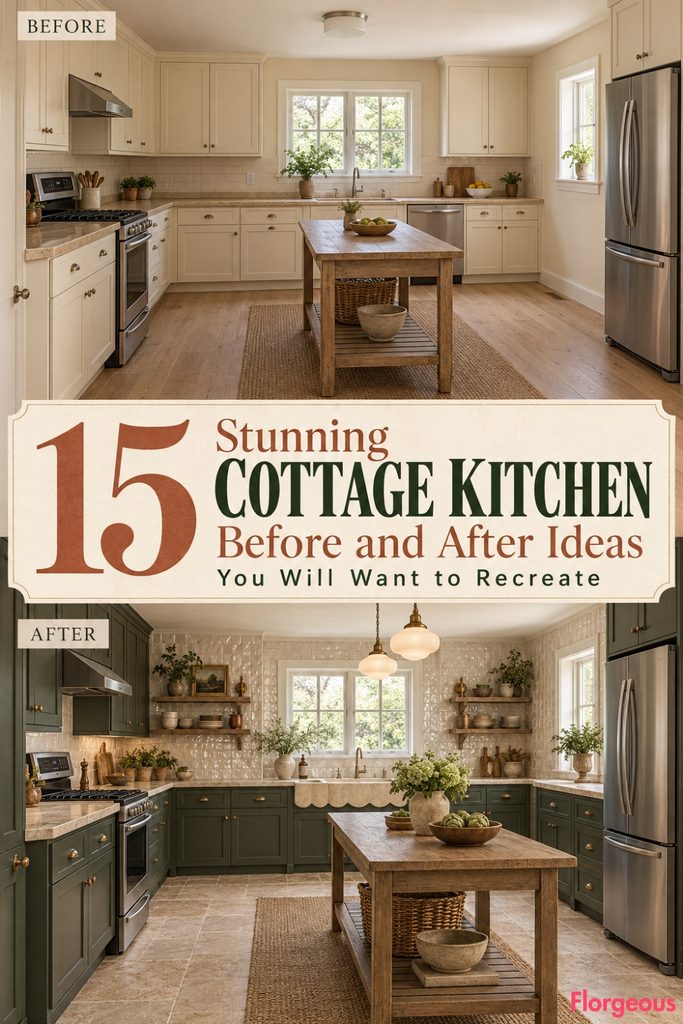
A plain kitchen can be perfectly functional and still feel surprisingly lifeless. Cream cabinets, beige countertops, basic lighting, and ordinary flooring provide the essentials, but very little personality.
Cottage interiors offer something different. Their charm comes from handcrafted details, regional traditions, natural materials, and furniture that feels as though it belongs to a real home rather than a showroom.
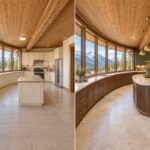
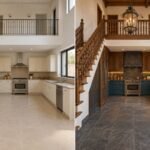
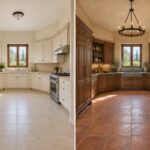
These 15 Cottage Kitchen before and after ideas reimagine the exact same builder-grade kitchen through completely different design approaches. The original walls, windows, doorway, ceiling, sink, cooking range, and refrigerator stay unchanged, but every AFTER introduces a substantial renovation.
Expect colorful cottage craftsmanship, beautifully unusual cabinetry, expressive flooring, traditional working furniture, and distinctive layouts. Each makeover has its own design identity, with an architectural camera angle chosen to highlight its strongest feature.
1. Create a Dorset Oyster Cottage With a Sculptural Ceramic Scullery
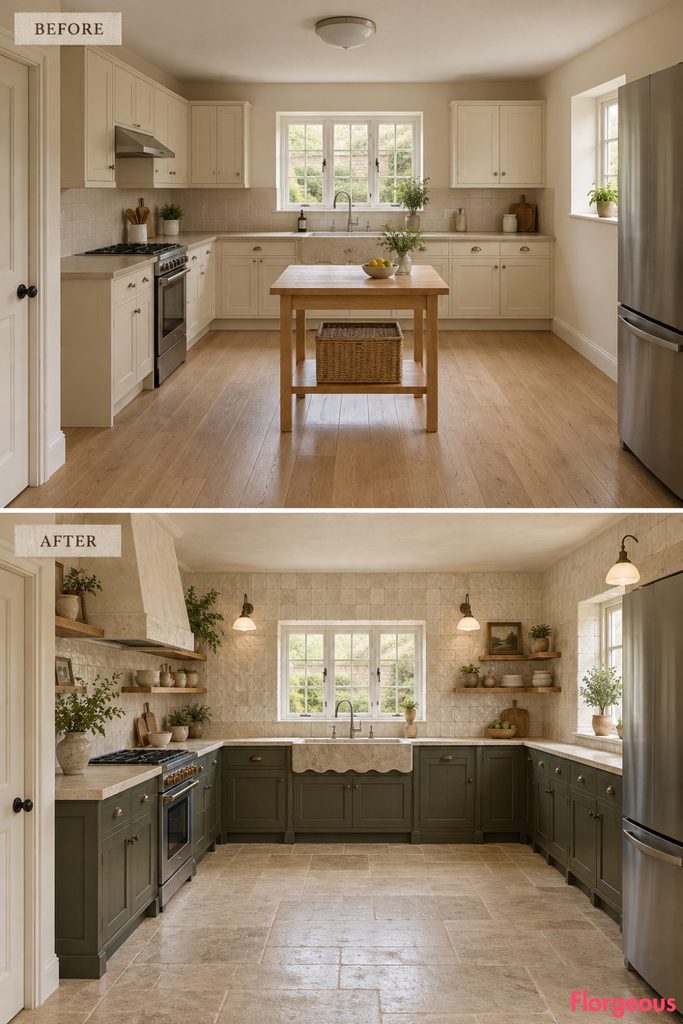
Inspired by traditional coastal washing rooms, this design turns the everyday sink area into an architectural centerpiece.
Before: Basic cream cabinets and beige countertops make the rear working wall feel ordinary.
After: A spectacular handcrafted ceramic scullery wraps the original sink with thick oyster-white glazed tiles, a sculptural scalloped counter apron, and deep seaweed-green cabinetry. Broad sandy limestone flooring, weathered timber shelves, and understated pewter fixtures transform the entire kitchen.
Why it works: The dramatic ceramic composition establishes a recognizable coastal-cottage identity without relying on nautical accessories.
Try this: Concentrate handcrafted ceramic details around the sink and use durable simpler surfaces elsewhere.
2. Give the Kitchen a New England Saltbox Makeover With Painted Louvered Cabinets
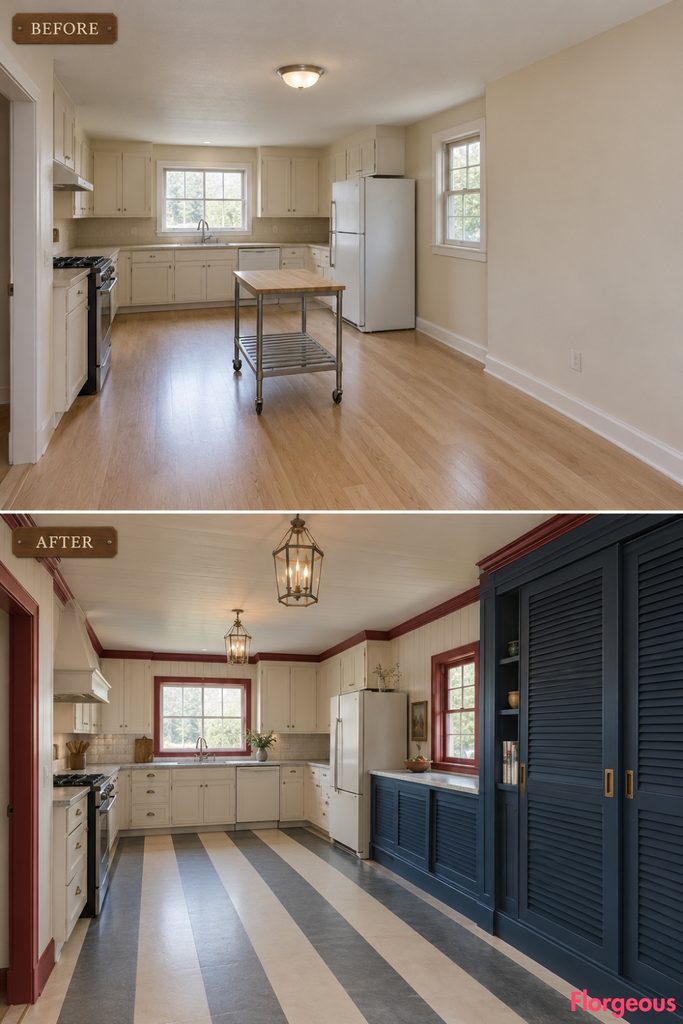
Classic coastal cottages often feature beautifully practical painted woodwork, which becomes the defining feature of this renovation.
Before: Flat stock cabinet fronts and a lightweight table create a forgettable fitted kitchen.
After: Tall sliding louvered cabinet fronts transform available right-side storage into a substantial navy-blue furniture composition. Chalk-white tongue-and-groove walls, cranberry-red trim, cream soapstone counters, and wide striped stone flooring give the room a bold traditional identity.
Why it works: The tall louvered joinery creates a distinctive cabinet silhouette while keeping the working areas clear.
Try this: Use sliding louvered doors on a deep pantry cupboard with sufficient clearance and ventilation.
3. Reimagine a Plain Kitchen as a Welsh Quiltmaker’s Cottage
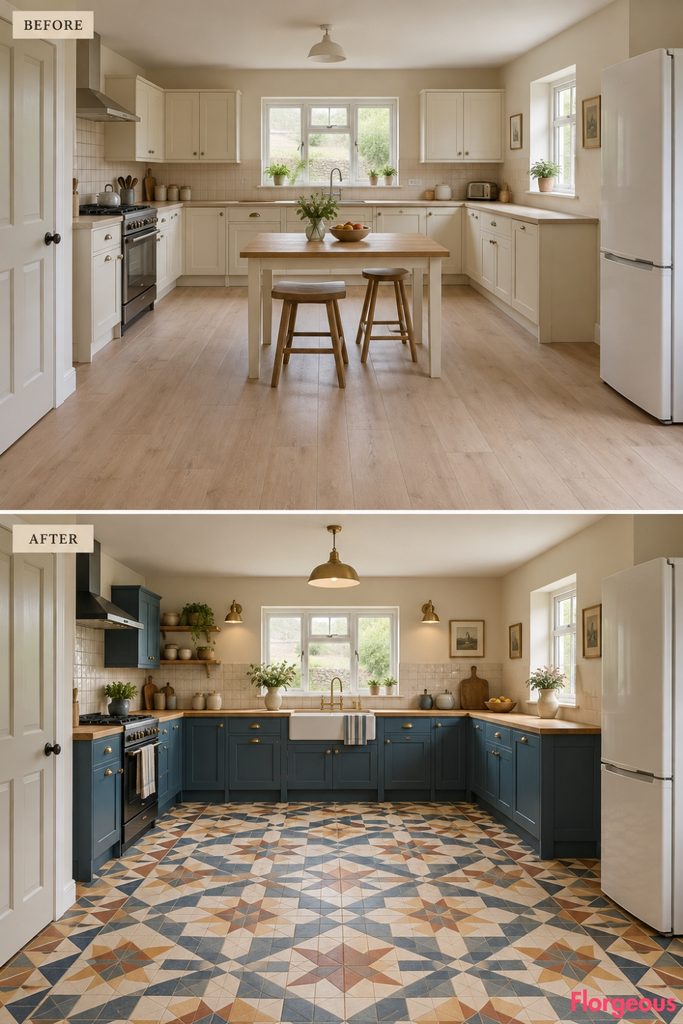
An heirloom quilt becomes the unexpected inspiration for this richly patterned country kitchen.
Before: Neutral oak flooring and uniform cream cupboards give the room little individuality.
After: Oversized quilt-block geometric floor tiles in faded indigo, ochre, cream, and muted rust establish a dramatic foundation. Deep blue painted cupboards, warm oak worktops, and simple framed storage create a calm contrast, allowing the extraordinary floor to dominate.
Why it works: The bold quilt-inspired floor creates an instantly recognizable artistic identity across the entire room.
Try this: Keep the cabinet fronts relatively simple when choosing a highly patterned floor.
Designer Tip: The scale of the floor pattern matters. Larger blocks feel deliberate and architectural, while very small patterns can make the kitchen visually busy.
4. Turn the Kitchen Into a Normandy Village Breadhouse
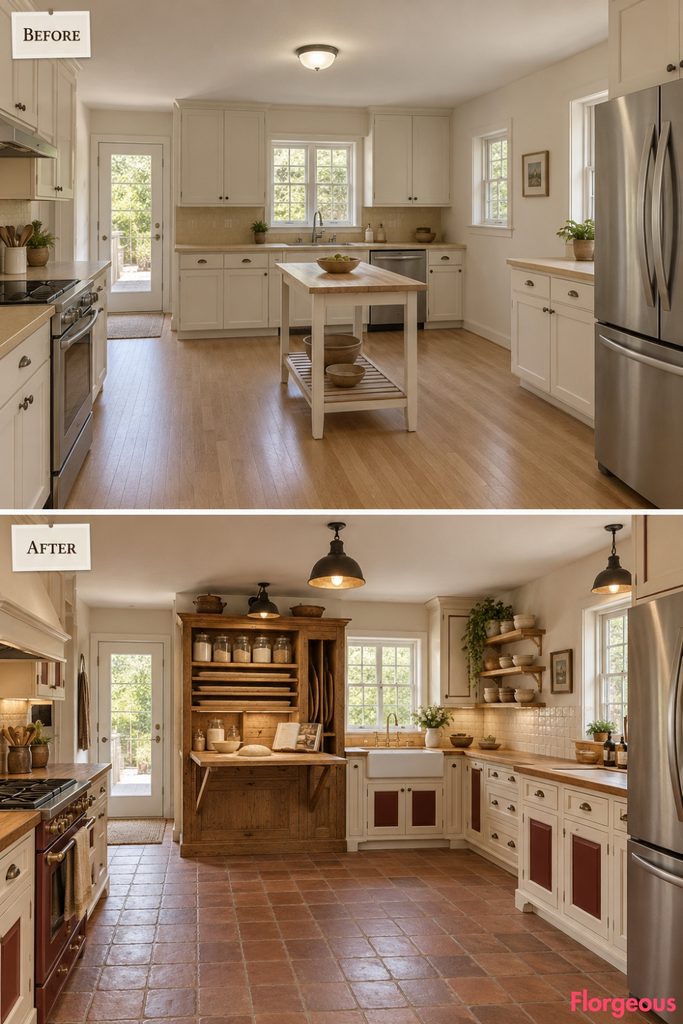
This French country makeover celebrates traditional breadmaking through beautifully crafted storage and preparation furniture.
Before: Beige countertops and basic drawers offer no specialized preparation space.
After: A remarkable oak baker’s cabinet includes stacked pull-out dough boards, flour storage, and a wide folding pastry counter along an available wall. Warm chalk-cream cabinetry, deep cherry-red details, honey-colored worktops, and rustic clay flooring create an authentic village-bakery atmosphere.
Why it works: Specialized baking furniture gives the kitchen a new functional arrangement and a strong design story.
Try this: Install a pull-out pastry board beneath an existing worktop for a smaller renovation.
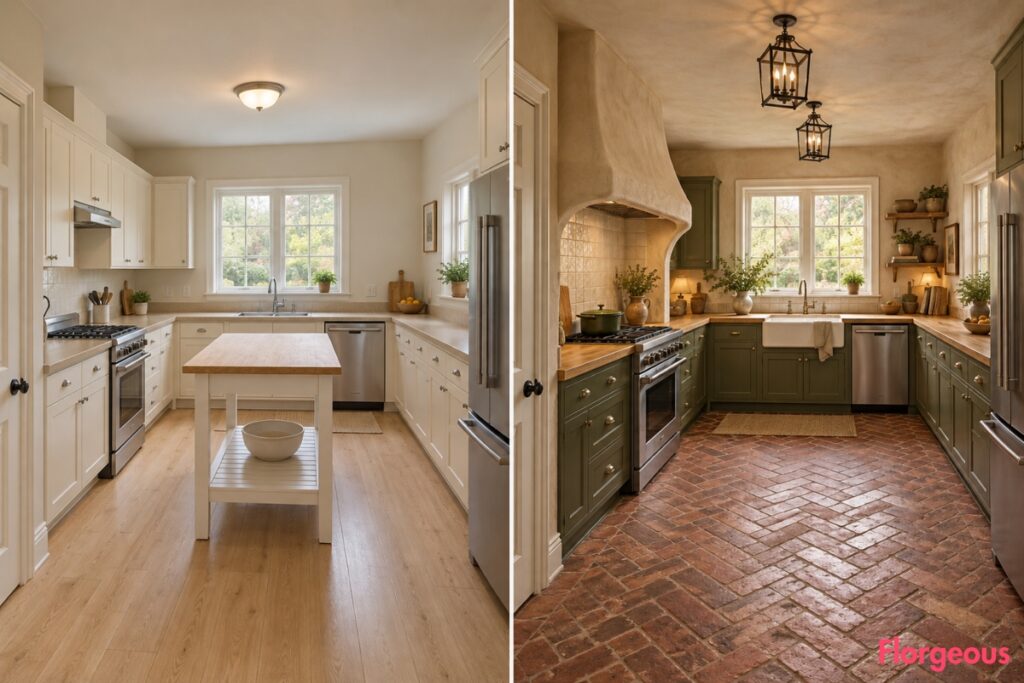
5. Make a Devon Cob Cottage With a Beautifully Sculpted Plaster Cooking Wall
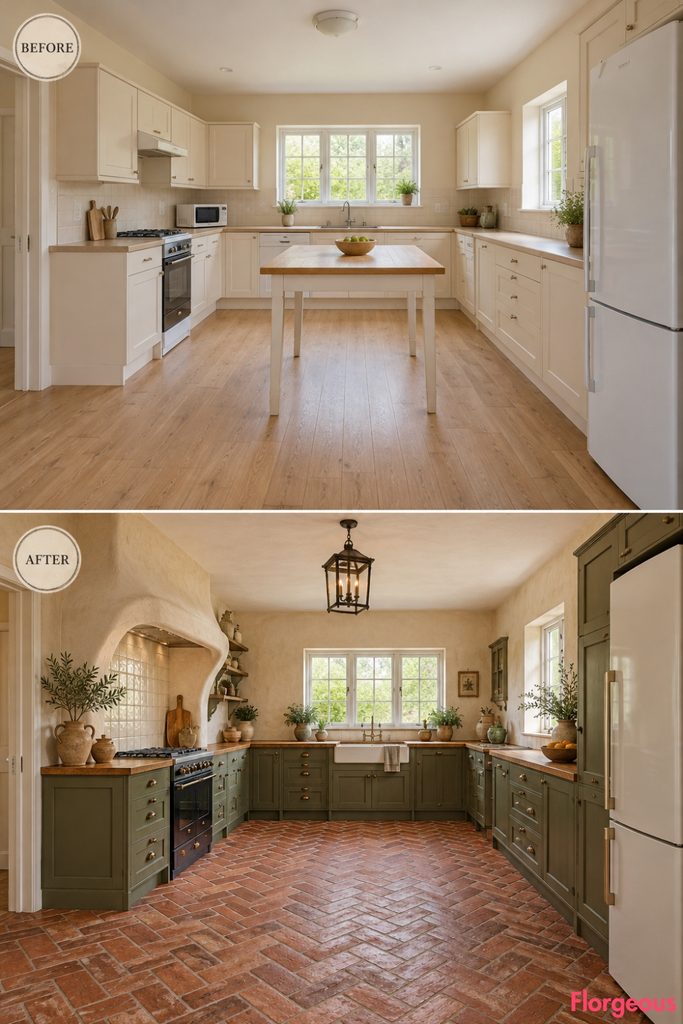
This renovation takes inspiration from the softly rounded craftsmanship of traditional Devon cottages.
Before: The existing range sits against a basic backsplash with ordinary stock cabinets.
After: A sweeping handcrafted lime-plaster range surround becomes the focal point, fitted against the existing left wall without adding a chimney or structural recess. Deep olive cabinetry, broad oak countertops, russet brick-herringbone flooring, and antique iron lighting create a warm, grounded interior.
Why it works: The plasterwork gives the cooking wall sculptural character, while rustic flooring and joinery complete the renovation.
Try this: Use an applied plaster-look cooking surround designed around the existing range and ventilation requirements.
6. Create an Alsatian Ciderhouse Cottage With a Traditional Oak Settle
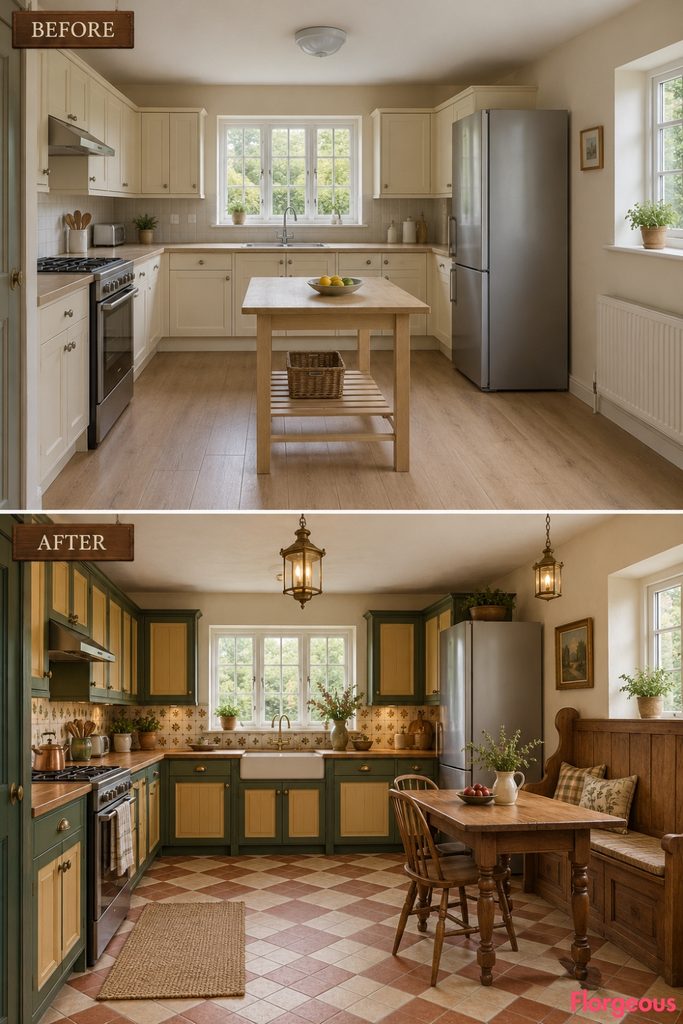
An intimate country dining arrangement gives this kitchen the feeling of a welcoming village inn.
Before: The lightweight utility table provides neither comfortable seating nor a distinctive focal point.
After: A beautiful high-backed oak settle defines a dining corner, paired with a compact rustic table and simple spindle chairs. Creamy mustard cupboards, deep forest-green accents, decorative terracotta flooring, and traditional brass lighting create a warm, collected atmosphere.
Why it works: The fitted seating creates a clearly defined gathering area without changing the room’s original architecture.
Try this: Choose a high-backed settle with useful concealed storage beneath the seat.
7. Create a Kent Hop-Grower’s Cottage With a Spectacular Timber Drying Gallery
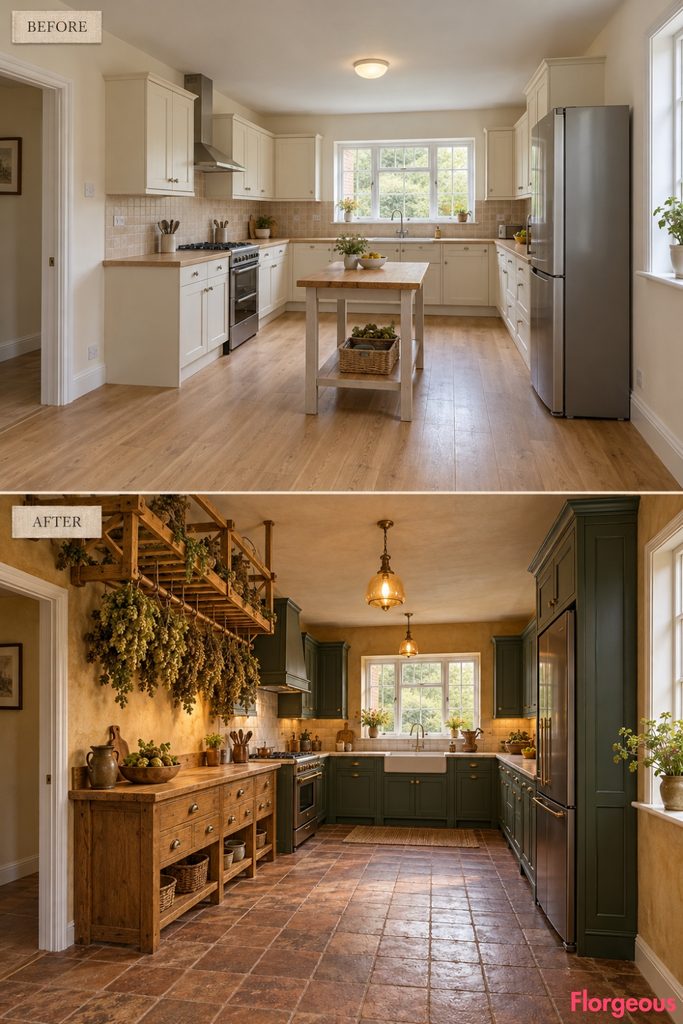
Inspired by traditional English hop-growing cottages, this makeover transforms practical country craftsmanship into a striking interior feature.
Before: Plain cream cupboards, beige countertops, and a lightweight utility table give the kitchen little character.
After: An impressive suspended oak drying gallery becomes the focal point, with beautifully arranged timber rails and restrained dried-hop decorations above a dedicated preparation counter. Deep bottle-green cabinetry, warm ochre plaster, richly textured clay flooring, and aged brass lighting create an atmospheric countryside kitchen.
Why it works: The overhead timber composition introduces a distinctive architectural rhythm while the redesigned working walls establish a practical country-kitchen layout.
Try this: Install a smaller timber drying rack over a dry preparation area, keeping it clear of cooking heat and circulation.
8. Build a Quebec Maple Sugarhouse Kitchen With Sculptural Maple Joinery
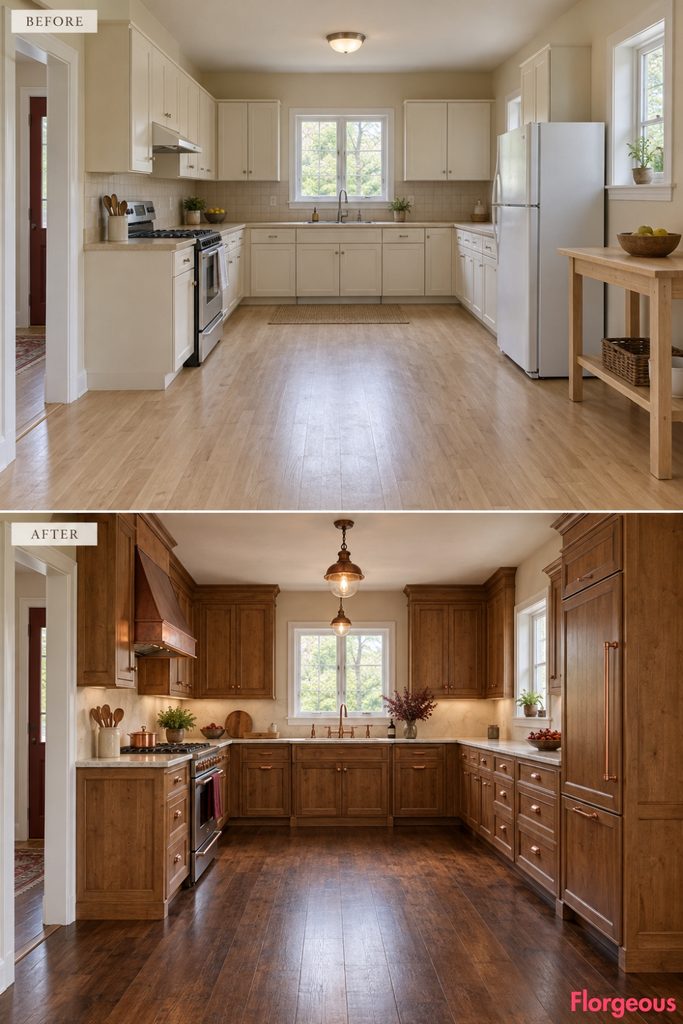
Warm maple craftsmanship gives this countryside kitchen a striking, distinctly North American personality.
Before: The ordinary cream cupboards lack any noticeable wood grain or design rhythm.
After: Rich amber-maple cabinets feature deep framed compartments and carefully stepped drawer fronts, creating a dramatic furniture-like working elevation. Burnished copper accents, cream soapstone counters, dark chestnut flooring, and soft cranberry details complete the warm sugarhouse-inspired look.
Why it works: The substantial cabinet geometry introduces a strong handmade character that extends beyond surface color.
Try this: Use richly grained maple on the most prominent cabinet faces and simpler matching doors elsewhere.
9. Create a Swedish Dalarna Cottage With Bold Folk-Painted Cabinetry
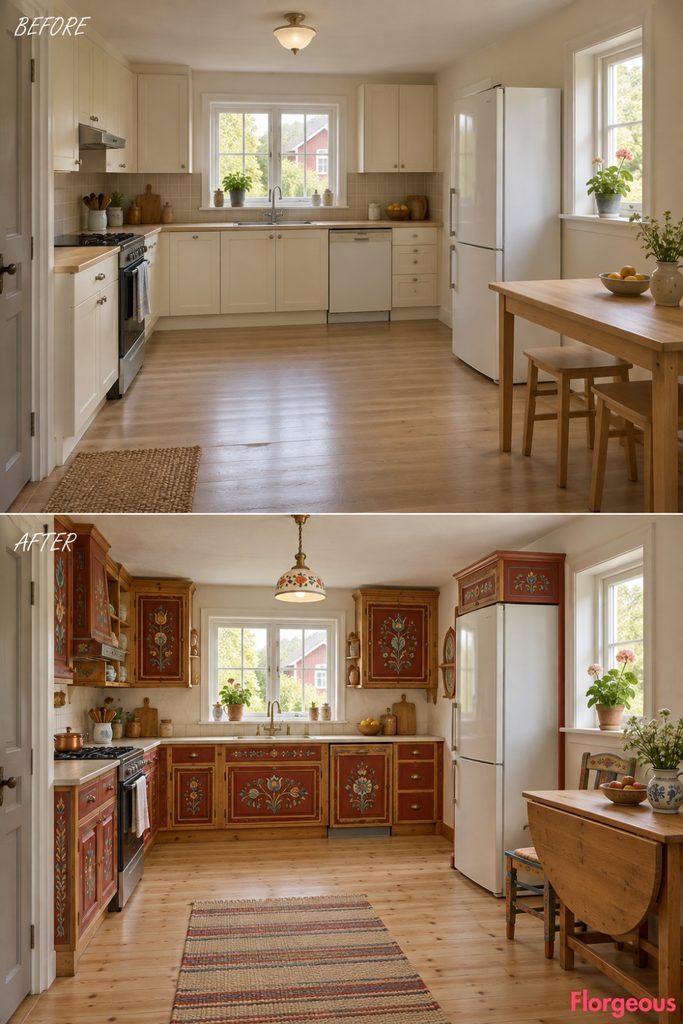
Traditional Swedish folk painting brings color and artistic energy into this otherwise ordinary kitchen.
Before: Pale cabinet fronts and bare walls make the kitchen feel visually anonymous.
After: Rich Falu-red cupboards feature carefully hand-painted blue, ivory, and ochre folk motifs framed by warm pine joinery. Pale stone counters, natural timber flooring, and a compact traditional drop-leaf serving table balance the colorful cabinetry.
Why it works: The painting becomes part of the kitchen’s craftsmanship rather than an isolated decorative accessory.
Try this: Select one strong folk-art pattern and repeat it consistently on a few prominent cabinet fronts.
10. Reimagine the Kitchen as a Northumberland Blacksmith’s Cottage
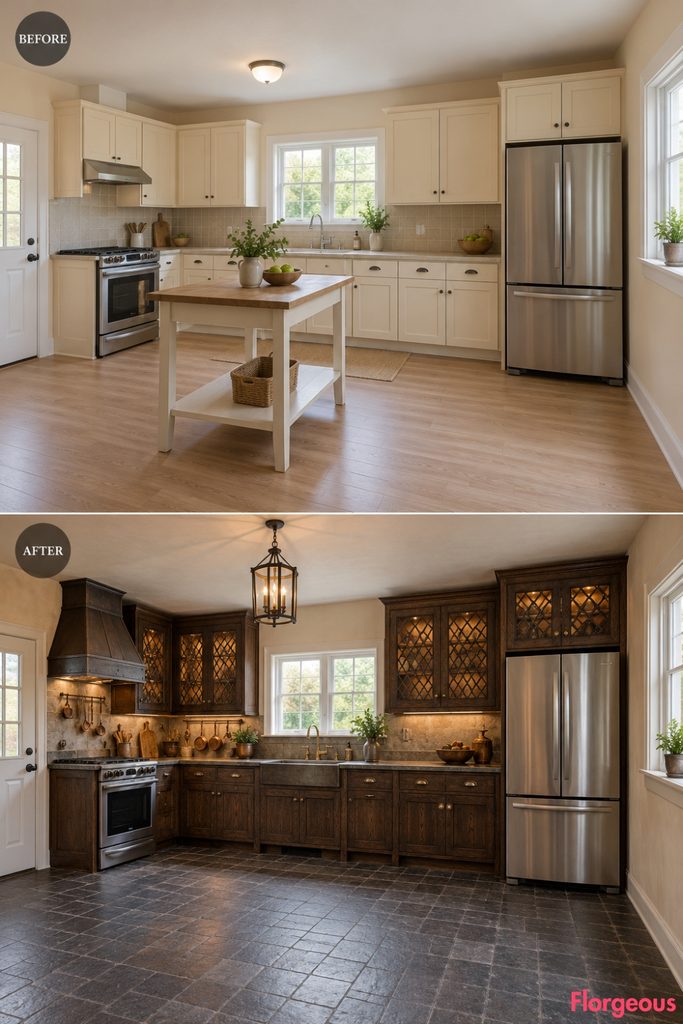
Traditional forged metalwork becomes a beautiful source of detail in this moody countryside design.
Before: The pale cabinets and basic neutral backsplash provide little material contrast.
After: Carefully crafted blackened-iron lattice cabinet fronts create a bold storage feature, backed by warm timber rather than exposed kitchen contents. Deep tobacco-brown cabinetry, hammered pewter surfaces, charcoal quarry flooring, and warm cream plaster balance the dramatic metalwork.
Why it works: The strong contrast between forged iron and natural timber gives the kitchen an unmistakable handcrafted identity.
Try this: Use decorative metal lattice on selected dry-storage cabinet doors, with practical solid doors elsewhere.
11. Give the Kitchen a Loire Country Cottage Makeover With a Ceramic Tile Tapestry
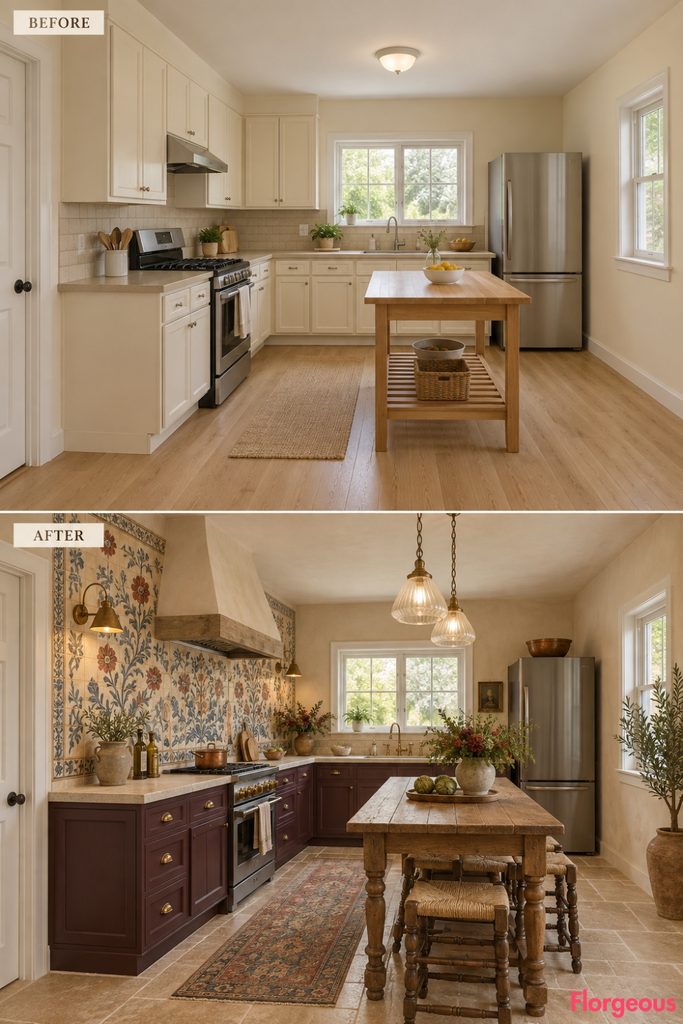
Traditional French ceramic artistry becomes the centerpiece of this expressive country kitchen.
Before: The neutral backsplash has no particular pattern or visual presence.
After: A large handcrafted tile tapestry spreads across a prominent solid working-wall section, combining warm cream, faded blue, and earthy red botanical motifs. Deep aubergine cabinetry, limestone worktops, honey-toned oak storage, and warm natural-stone flooring complement the decorative ceramic composition.
Why it works: A substantial ceramic artwork creates a clear focal point while remaining practical in a kitchen.
Try this: Frame a single large patterned-tile composition with simpler surrounding field tiles.
12. Create a Bavarian Marquetry Cottage With Extraordinary Timber Inlay
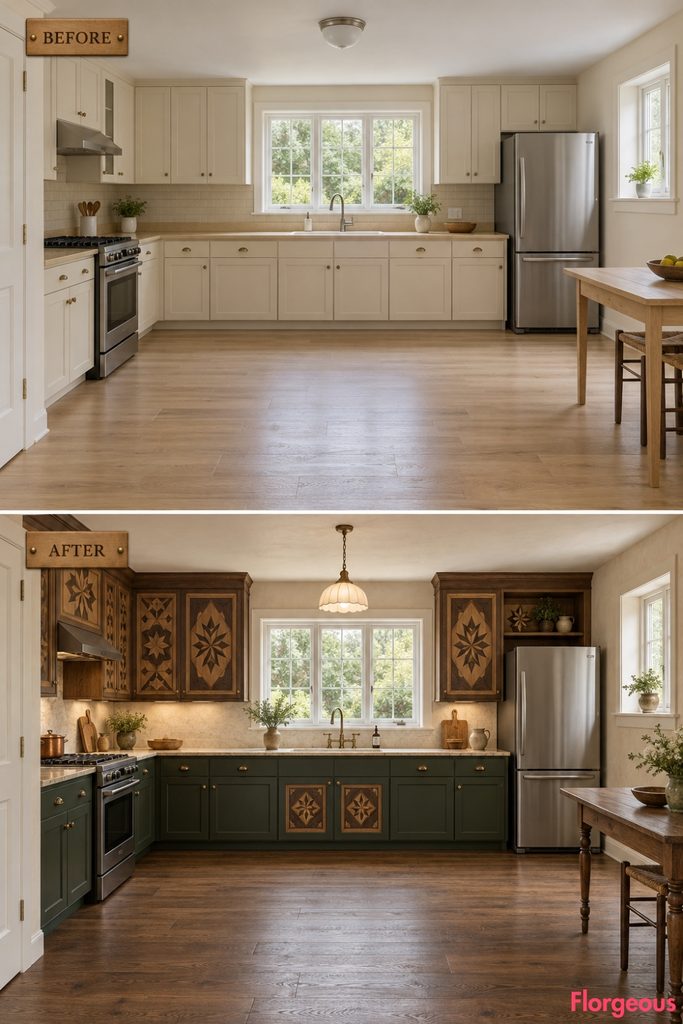
This Alpine-inspired kitchen celebrates intricate decorative woodworking without relying on heavy rustic beams.
Before: Flat stock cabinets and pale flooring give the kitchen little craftsmanship or visual detail.
After: Rich walnut and pale ash form geometric marquetry patterns across an impressive run of cabinet doors, creating a tapestry of fine timber inlay. Warm cream stone counters, deep spruce-green details, smoked-oak flooring, and bronze lighting complete the traditional cottage character.
Why it works: The decorative inlay turns functional cabinetry into the room’s primary artwork.
Try this: Feature marquetry on one major cabinet elevation and use restrained solid-color fronts elsewhere.
13. Create a Cotswold Miller’s Cottage With Traditional Grain-Bin Cabinetry
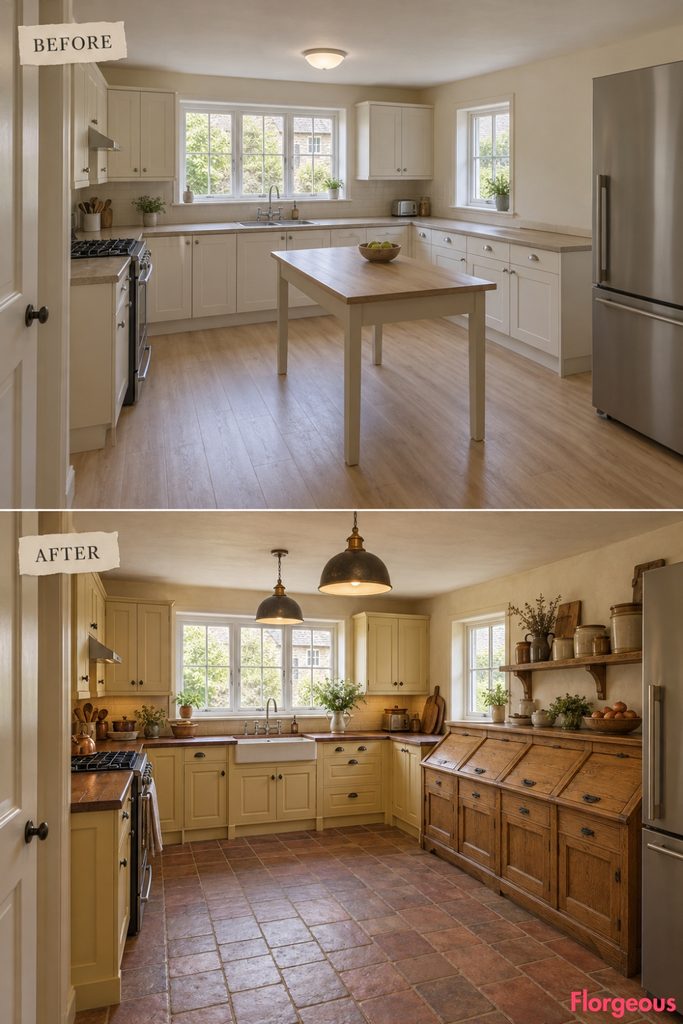
This makeover takes inspiration from old country mills, using practical grain storage to create an unusual cabinet composition.
Before: Basic cupboard doors and standard drawers provide conventional kitchen storage.
After: A substantial bank of sloped-front oak grain bins forms a distinctive working-wall feature, each compartment fitted with practical hinged lids. Muted butter-yellow cabinetry, deep russet worktops, dark terracotta flooring, and traditional iron fittings complete the miller’s cottage atmosphere.
Why it works: Sloping storage fronts introduce a new cabinet geometry with a practical purpose.
Try this: Adapt a compact set of angled grain-bin drawers into an existing pantry cabinet.
14. Transform the Kitchen Into a Sussex Tilemaker’s Cottage
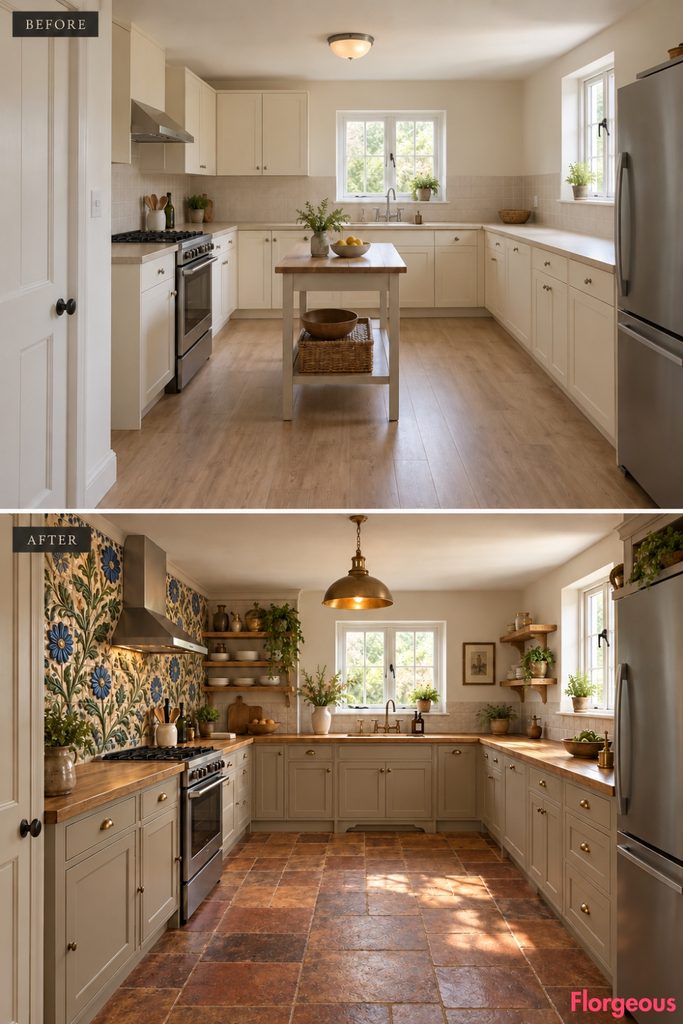
A richly textured wall of handmade ceramics gives this kitchen an unmistakable artisan identity.
Before: Standard neutral tiles and cream cabinets offer little visual interest or texture.
After: A dramatic pressed-leaf ceramic relief composition spreads across the principal backsplash, combining cream, moss-green, and deep blue glazes. Warm mushroom cabinetry, rust-colored stone flooring, natural oak shelving, and handmade brass lighting support the ceramic craftsmanship.
Why it works: The three-dimensional tiles create real depth and shadow, not just surface pattern.
Try this: Use relief tiles for a defined feature panel and smoother tiles where cleaning is more important.
Common Mistake: Excessive handmade texture on every surface can feel cluttered. Let one ceramic feature dominate while keeping surrounding finishes quieter.
15. Finish With an Arts and Crafts Cottage Full of Handcrafted Detail
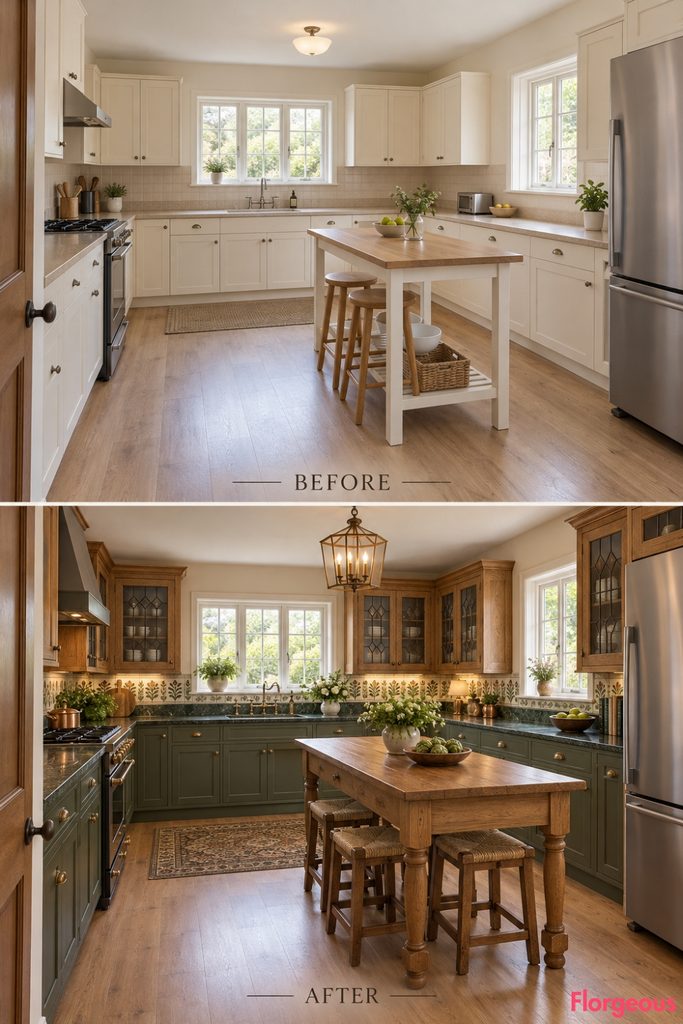
The final transformation embraces the honesty of traditional materials and the artistic spirit of the Arts and Crafts movement.
Before: Uniform stock cabinetry and basic finishes make the kitchen feel impersonal.
After: An exquisite oak-framed kitchen features broad handcrafted cabinet profiles, restrained leaded-glass upper cupboard doors, and beautifully coordinated floral ceramic borders. Deep olive lower cabinetry, dark green stone counters, warm oak flooring, and vintage-style lighting create a richly detailed but balanced interior.
Why it works: The craftsmanship connects every surface, giving the entire kitchen one recognizable artistic identity.
Try this: Begin with oak-framed cabinet doors and a carefully coordinated handmade tile border.
Finding the Right Cottage Style for Your Kitchen
The most memorable cottage kitchens are built around more than a beautiful color palette. Their character comes from craftsmanship, thoughtful furniture arrangements, distinctive materials, and details that feel connected to the home’s personality.
These 15 transformations show how differently one ordinary kitchen can look. A ceramic coastal scullery feels entirely different from a colorful Welsh quilt-inspired space, a Normandy breadhouse, or a richly detailed Arts and Crafts interior.
When choosing your Cottage Kitchen direction, start with the feature that appeals to you most. It might be a dramatic working wall, a practical bakery cupboard, expressive flooring, or beautifully crafted cabinet fronts.
Next, consider your daily cooking routine, storage needs, budget, and the amount of maintenance each material requires. Build a coordinated design around those decisions before selecting accessories.
A kitchen feels genuinely transformed when its layout, craftsmanship, materials, and decorative details all support the same idea.