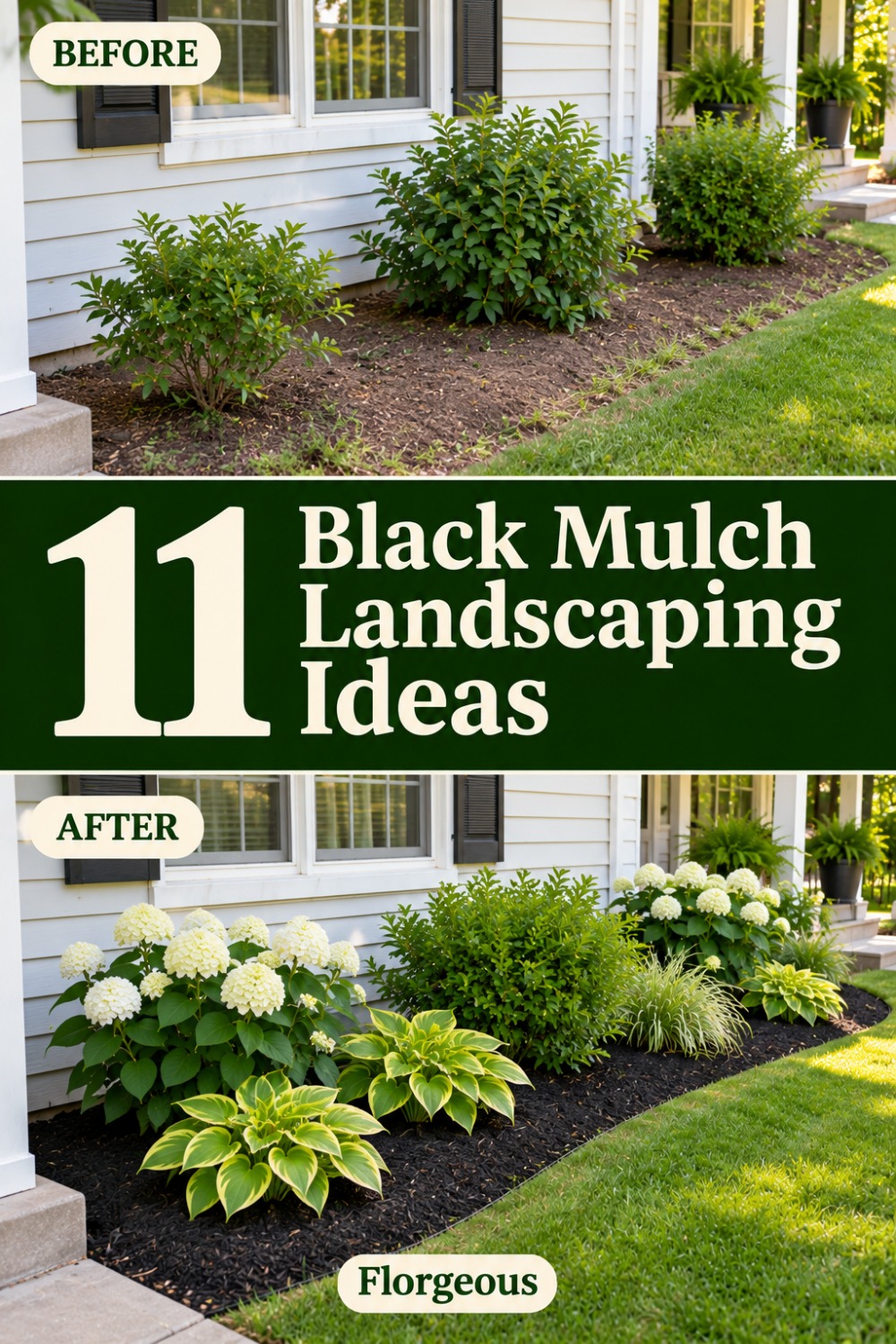
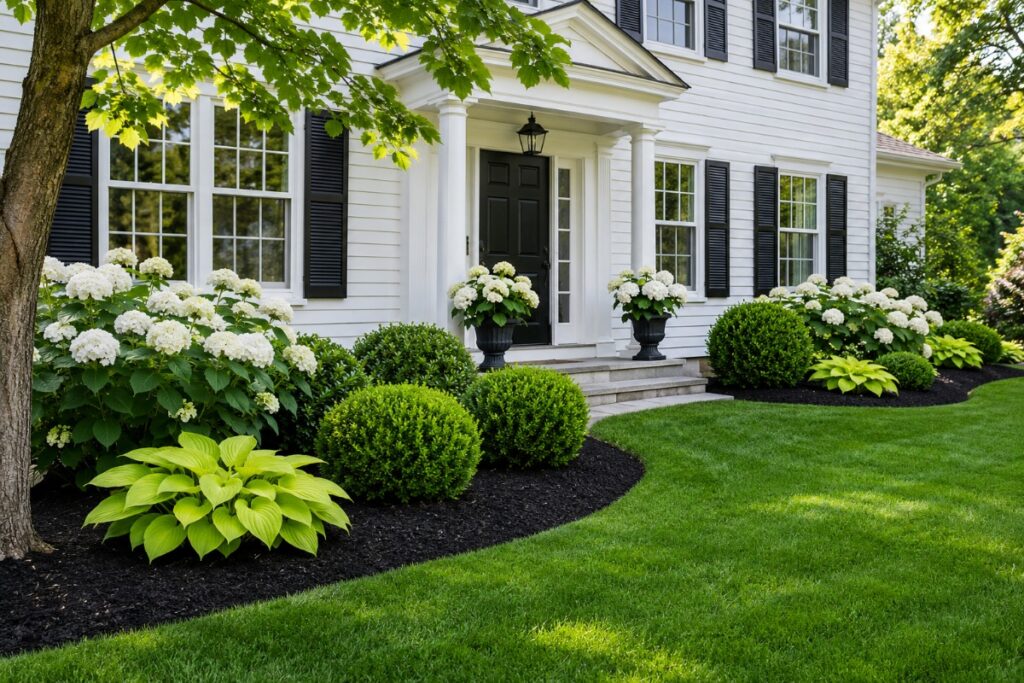
Fresh black mulch has a way of making a tired yard look freshly finished overnight.
Green leaves look greener against it, flowers look brighter and bed edges look sharp enough to draw with a ruler.
The secret to using black mulch well isn’t spreading more of it. It’s pairing it with the right plants, the right house colors and a clean edge.
These 11 black mulch landscaping ideas show you where it looks best, which plants glow against it and how to keep it safe and fresh all season.
Black Mulch Compared
| Mulch | Looks best with | Heat in full sun | Color lasts | Best for |
|---|---|---|---|---|
| Black dyed mulch | White, gray and modern homes, red brick, bright foliage | Warms up the most | Fades over a season or two; top up yearly | High-contrast beds and curb appeal |
| Brown dyed mulch | Tan, beige and earth-toned homes | Moderate | Fades over a season or two | A natural but tidy look |
| Red dyed mulch | Few houses; can clash with flowers | Moderate | Fades to pinkish orange | Rarely the best choice |
| Undyed shredded hardwood | Almost any style | Moderate | Weathers to silver-gray | Soil health and vegetable beds |
| Pine bark nuggets | Woodland and Southern gardens | Moderate | Holds color well | Shade beds and acid-loving shrubs |
1. Pair Black Mulch With a White or Light Gray House
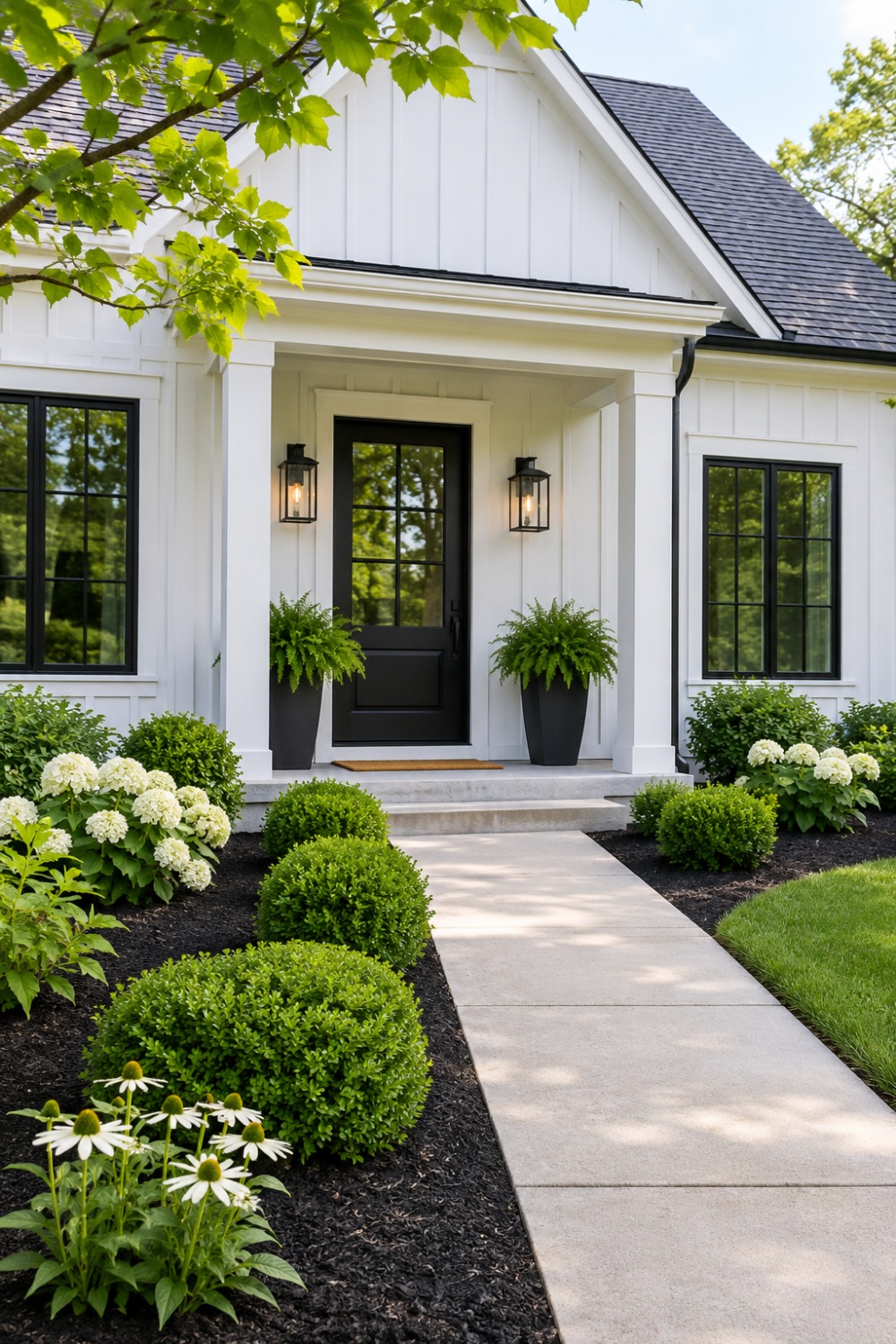
Black mulch looks its best in front of a pale house.
It picks up black shutters, a dark front door, black window frames or a black metal roof and repeats them at ground level, so the whole facade looks planned.
Keep the planting simple: rounded green shrubs, a few white flowers and maybe one small ornamental tree.
How to do it:
- Note every black or near-black detail on your house: door, shutters, lights, railings.
- Spread black mulch 2 to 3 inches deep in the beds closest to those details.
- Plant mostly green and white so the black and white contrast stays crisp.
Common mistake: mixing black mulch with bright red or orange accents on a white house. Keep the palette calm.
2. Make Chartreuse and Silver Foliage Glow
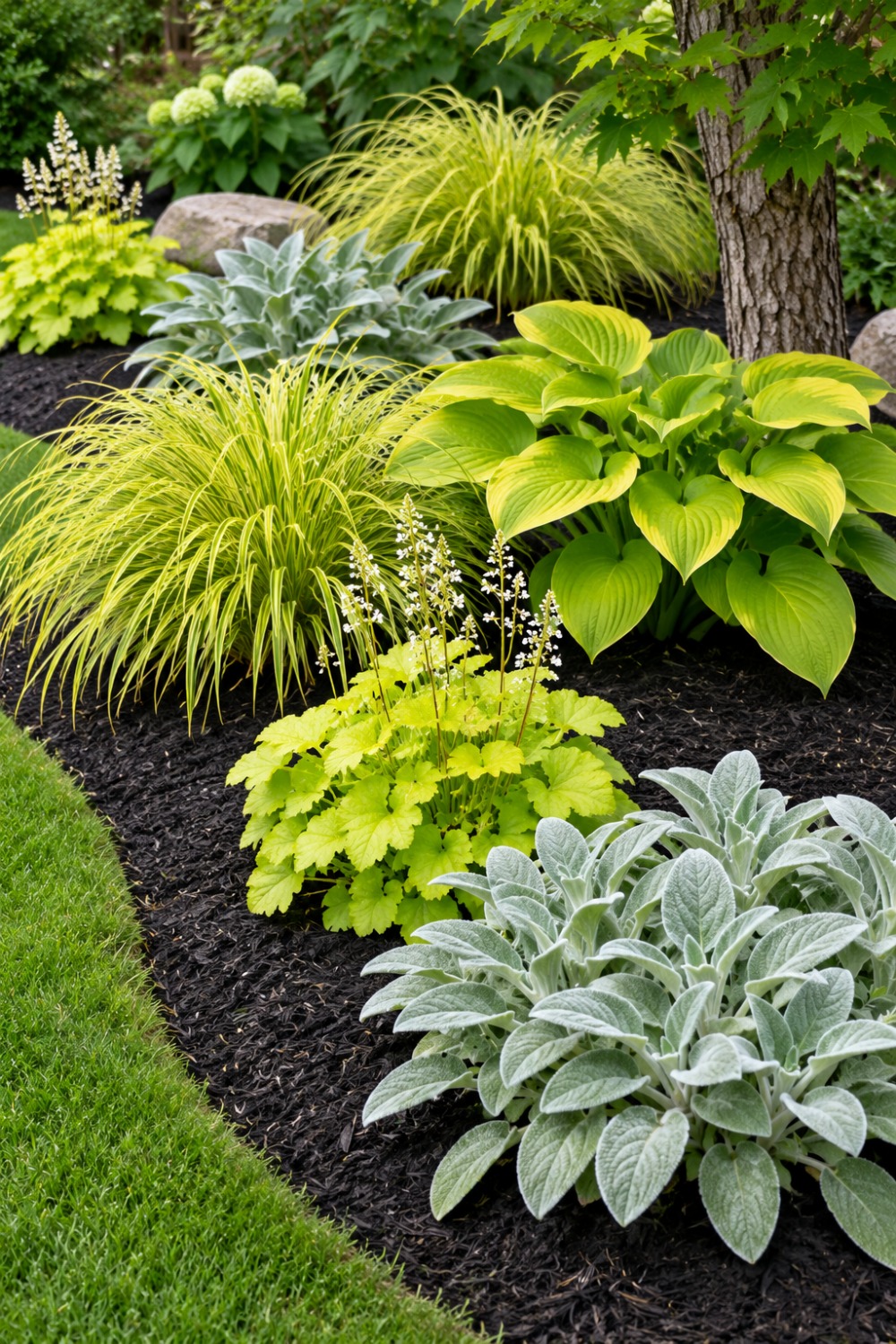
Light foliage is where black mulch really earns its place.
Lime green and silver leaves almost light up against a dark background, even on cloudy days.
For shade, try golden Japanese forest grass (Hakonechloa macra ‘Aureola’), chartreuse hostas and lime coral bells (Heuchera). For sun, use lamb’s ears (Stachys byzantina), ‘Silver Mound’ artemisia and golden sedum.
How to do it:
- Check how much sun the bed gets before choosing plants.
- Plant light-leaved perennials in groups of three or five so they read from the street.
- Leave a little dark mulch visible between clumps for contrast.
3. Let White and Pastel Flowers Stand Out
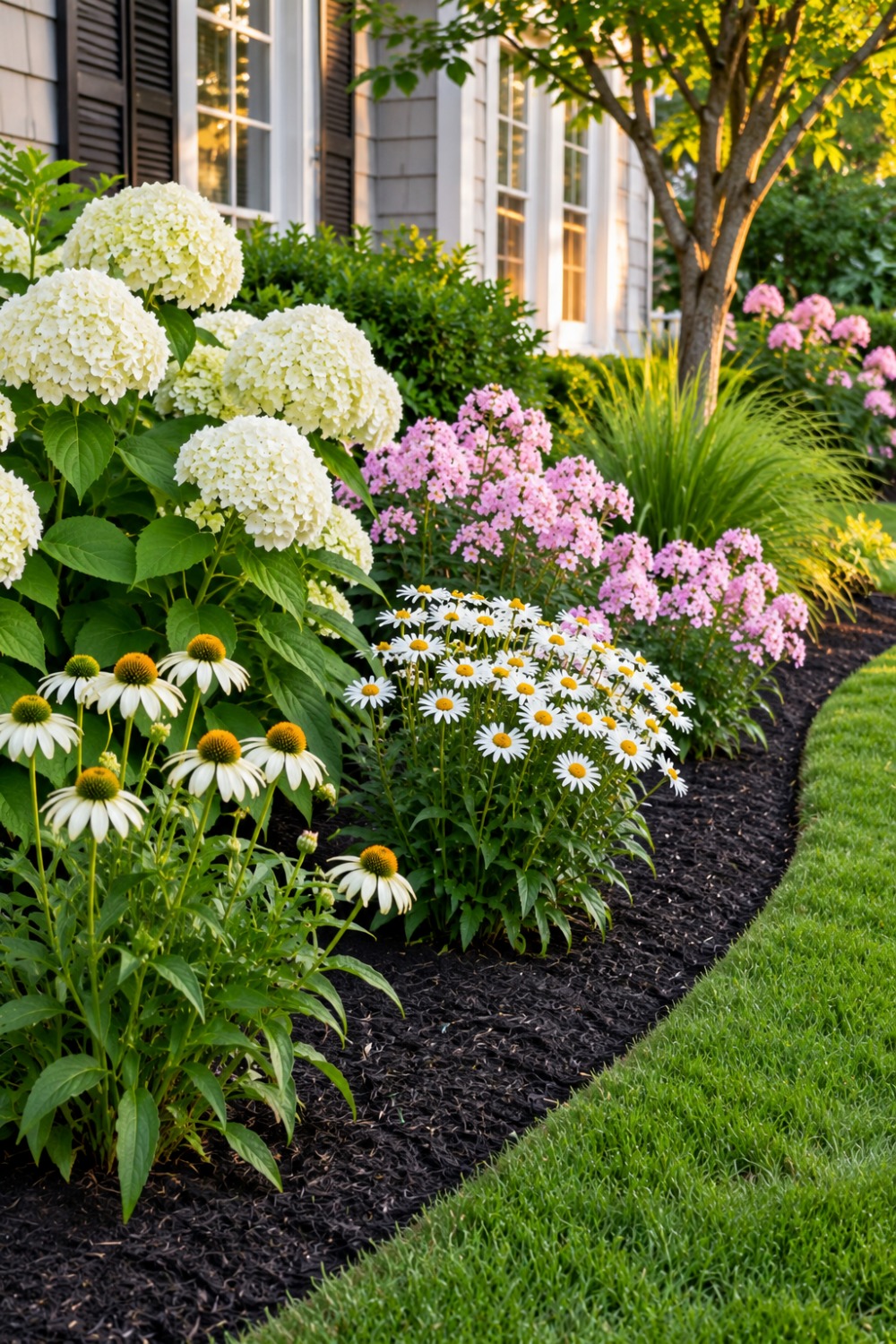
White and pastel flowers can look washed out against pale bark or bare soil.
Over black mulch, they look crisp and bright, especially at dusk.
Smooth hydrangea ‘Annabelle’ (Hydrangea arborescens), white coneflower, Shasta daisy and pale pink garden phlox are reliable choices for sun to part shade.
How to do it:
- Choose two or three flower colors that work together, like white, blush and soft lavender.
- Repeat each one at least twice along the bed.
- Keep mulch a couple of inches back from stems to avoid rot.
4. Edge Black Mulch Beds With a Crisp Border
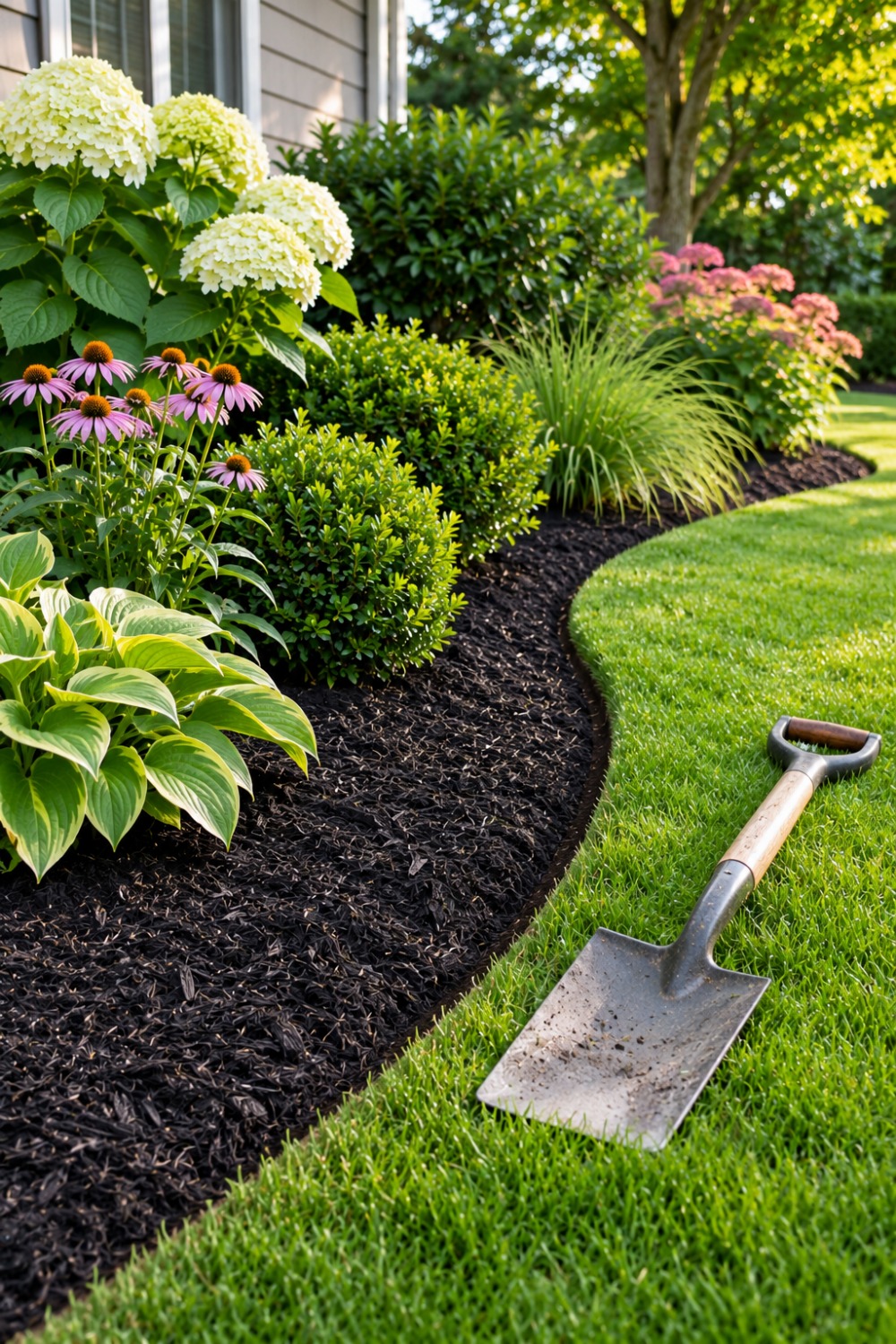
Black mulch shows every edge, so a clean border makes the biggest difference.
A sharp line between dark mulch and green lawn is the detail that makes a yard look professionally kept.
A hand-cut trench edge is free. Steel, brick or stone edging lasts longer and stops grass creeping in. Our front yard landscaping ideas show how a mowing strip finishes the look.
How to do it:
- Mark a smooth curve with a garden hose.
- Cut a vertical edge about 3 to 4 inches deep with a flat spade.
- Keep the mulch level just below the lawn so it doesn’t spill out.
5. Create a Modern Bed With Clipped Shapes and Grasses
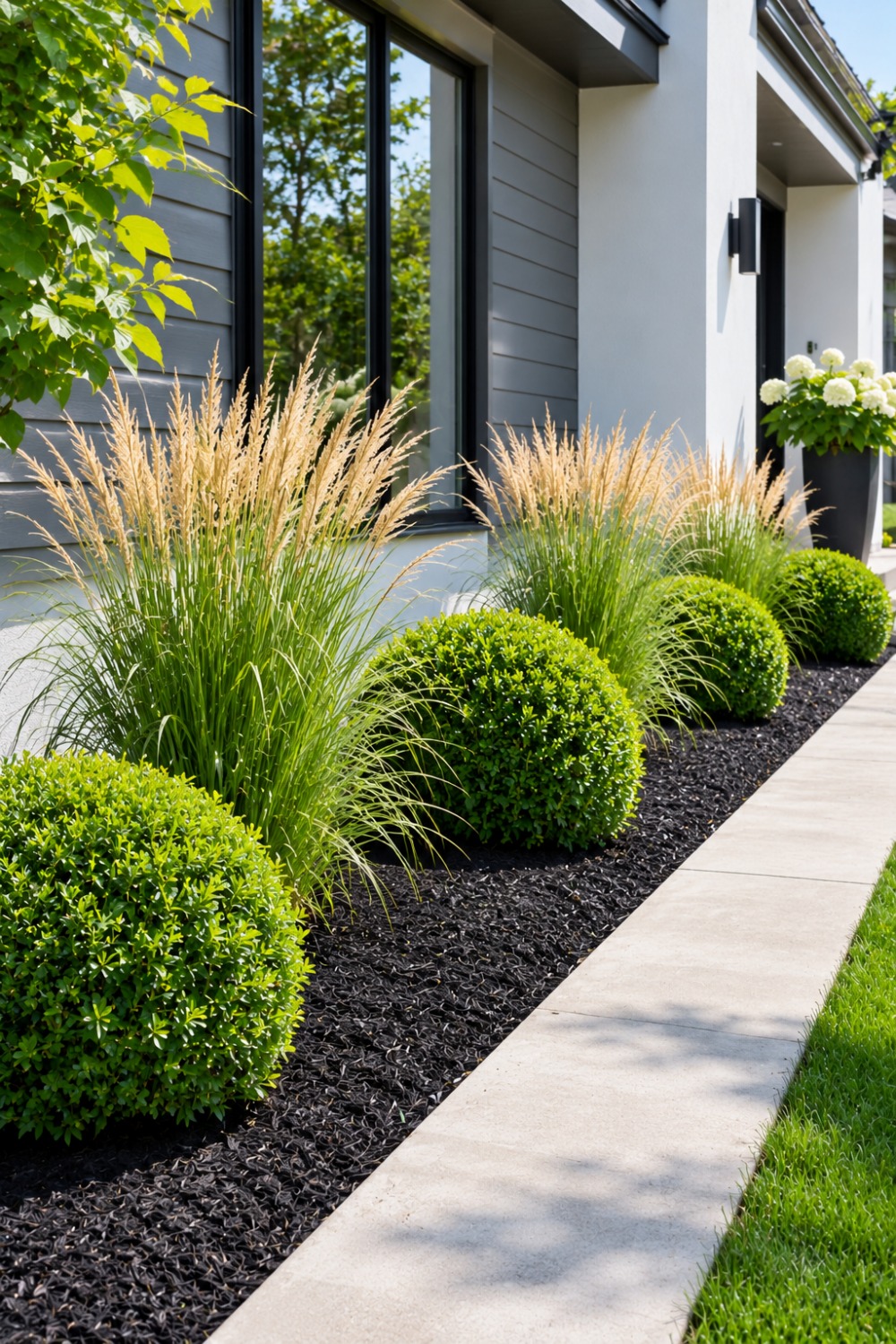
Black mulch suits a clean, modern planting style.
Rounded evergreens and upright grasses set on dark mulch look graphic, like a planting plan drawn in ink.
Try boxwood or dwarf yaupon holly (Ilex vomitoria ‘Nana’) for the rounded shapes, and feather reed grass (Calamagrostis × acutiflora ‘Karl Foerster’) for vertical lines.
How to do it:
- Lay out the shrubs in a simple repeating row or grid.
- Place grasses between them or in a straight line behind.
- Leave generous mulch space between plants so each shape stays distinct.
6. Ring Trees With a Wide, Flat Black Mulch Circle
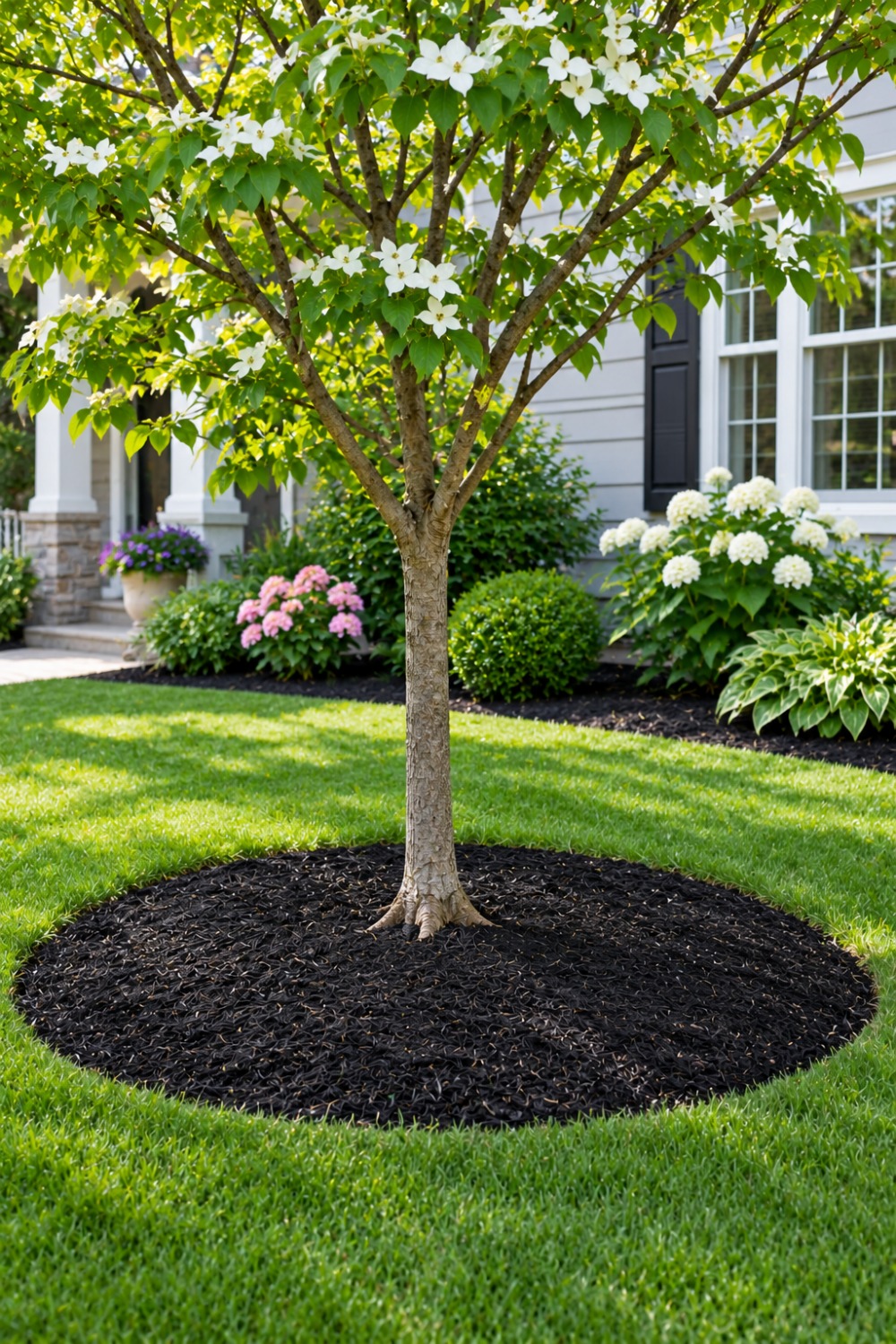
A dark mulch ring makes a lawn tree look tidy and protects it from mower and trimmer damage.
The key is width, not height. Spread it in a wide, flat circle and never pile it against the trunk.
Mulch volcanoes hold moisture against the bark and invite rot and pests. Aim for a ring at least 3 feet across, wider as the tree grows.
How to do it:
- Remove grass in a circle around the tree.
- Spread 2 to 3 inches of mulch, tapering to nothing near the trunk.
- Keep a few inches of bare ground around the base of the trunk.
7. Give Foundation Shrubs a Clean, Dark Base
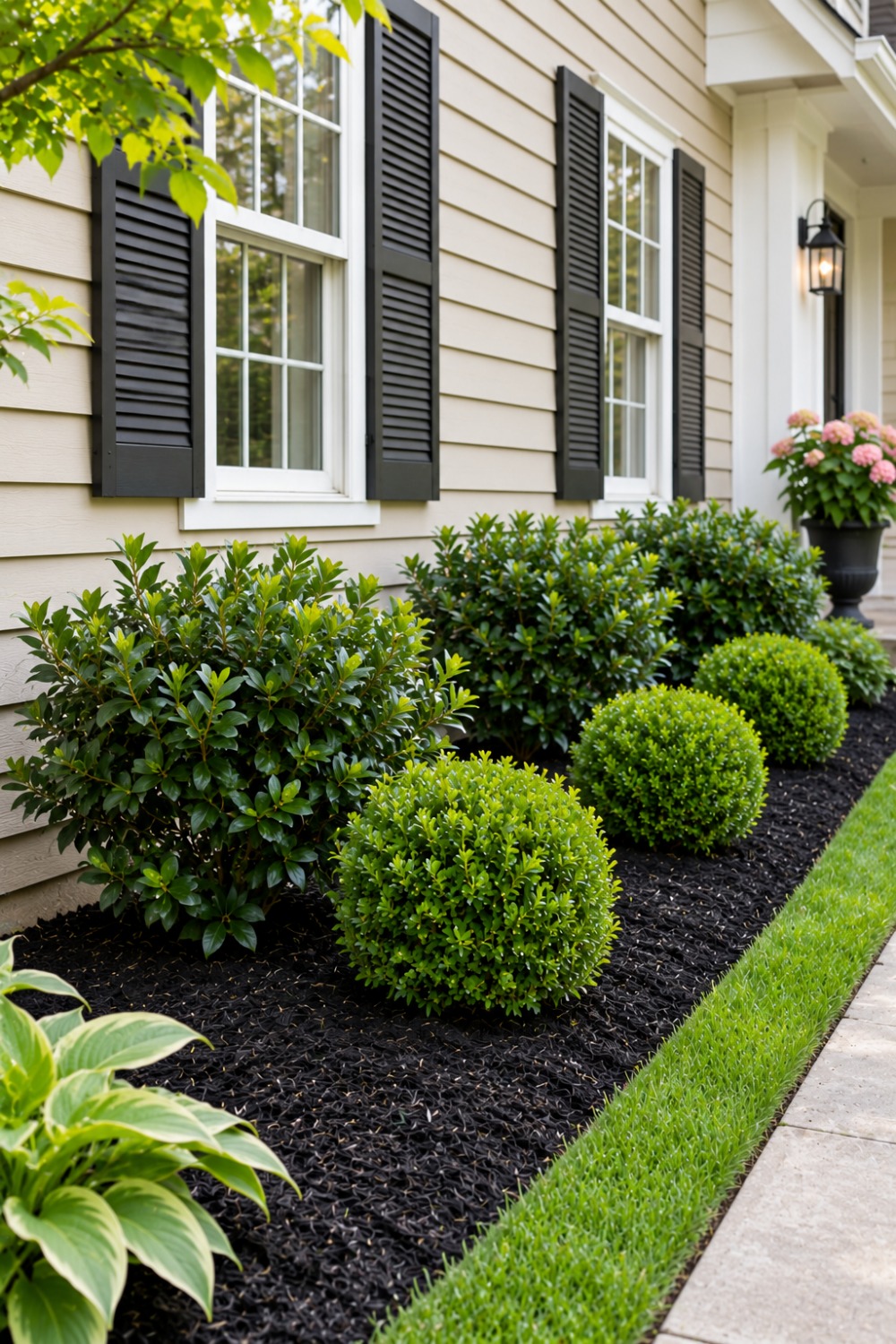
Foundation beds are often the first thing visitors see, and the hardest to keep looking neat.
A fresh layer of black mulch hides bare soil and makes even ordinary evergreens look intentional.
It works especially well with dark green shrubs like inkberry holly (Ilex glabra), dwarf boxwood and yew.
How to do it:
- Pull weeds and rake out old, compacted mulch.
- Keep mulch a few inches below siding and away from the house’s foundation vents.
- Top up to an even 2 to 3 inches each spring.
Common mistake: piling mulch against siding. It can wick moisture and give insects an easy path into the house.
8. Ground a Red Brick House With Black Mulch
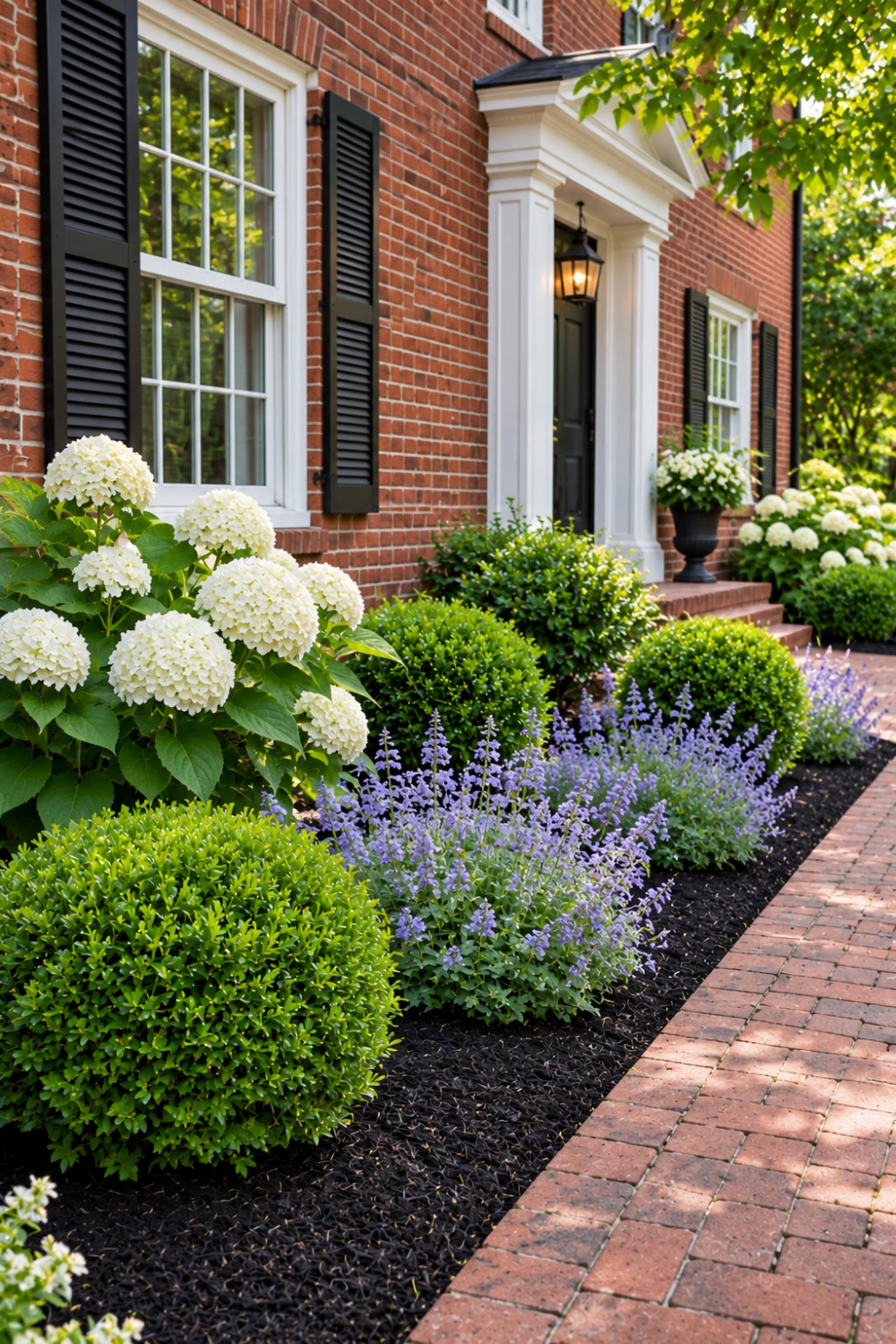
Red mulch next to red brick rarely works. Black mulch does.
The dark base makes warm brick look richer and stops the beds from blending into the walls.
Add white or blue flowers, such as white hydrangeas, blue catmint (Nepeta) or salvia, and dark green evergreens for a classic, traditional look.
How to do it:
- Choose cool or neutral flower colors that contrast with the brick.
- Use black mulch in every front bed so the look is consistent.
- Repeat one evergreen shrub along the foundation for structure.
9. Make a Shade Garden Feel Deeper and Cooler
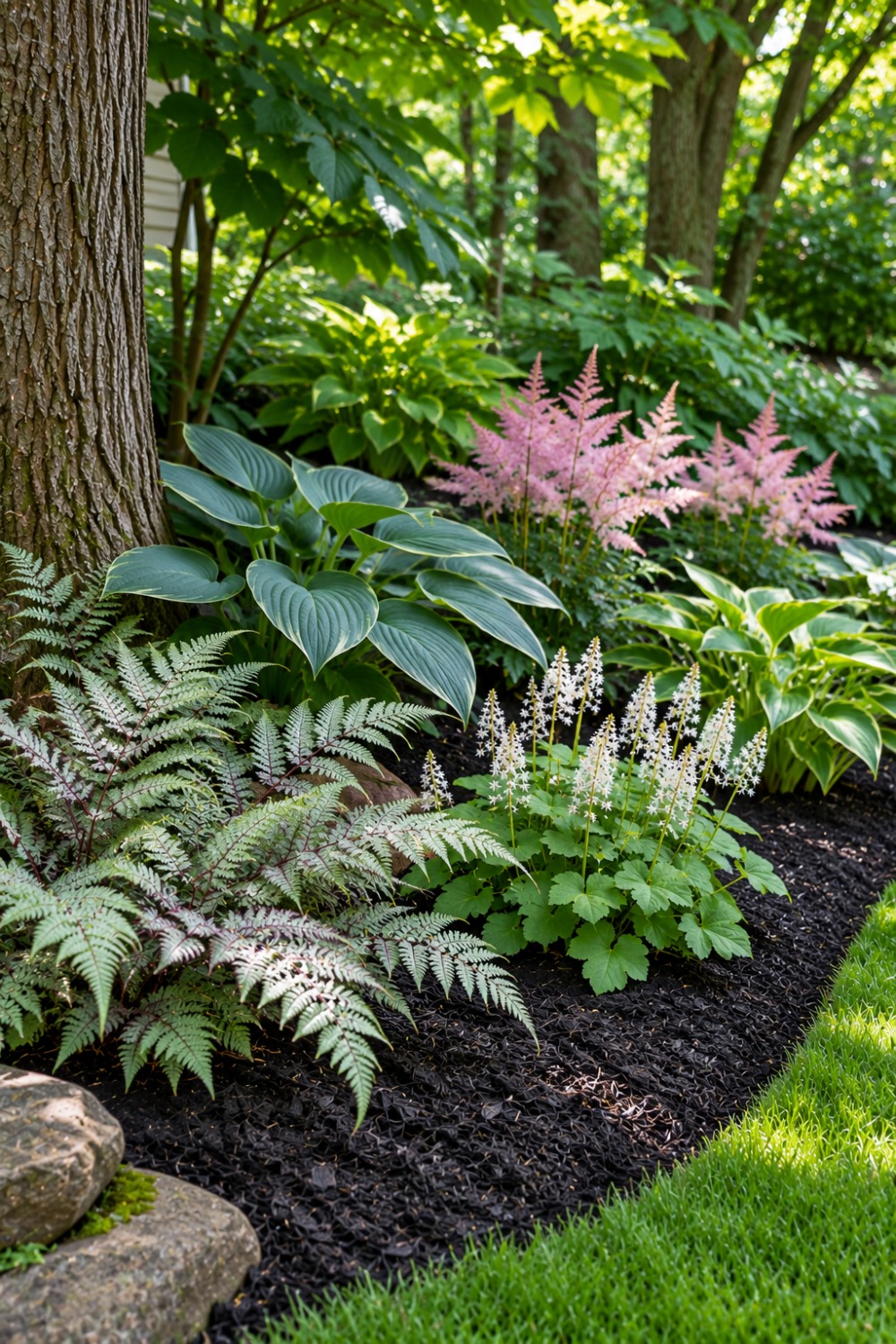
In shade, black mulch reads like rich woodland soil.
It sets off the soft greens of ferns and the pale plumes of astilbe, and makes a shady corner feel cool and lush.
Good partners include Japanese painted fern (Athyrium niponicum var. pictum), hostas, astilbe and foamflower (Tiarella cordifolia).
How to do it:
- Add compost to the soil before planting, since shade beds under trees are often dry.
- Plant in drifts of one variety rather than single specimens.
- Use a thinner layer, about 2 inches, near shallow tree roots.
10. Use Hot Flower Colors for High Contrast
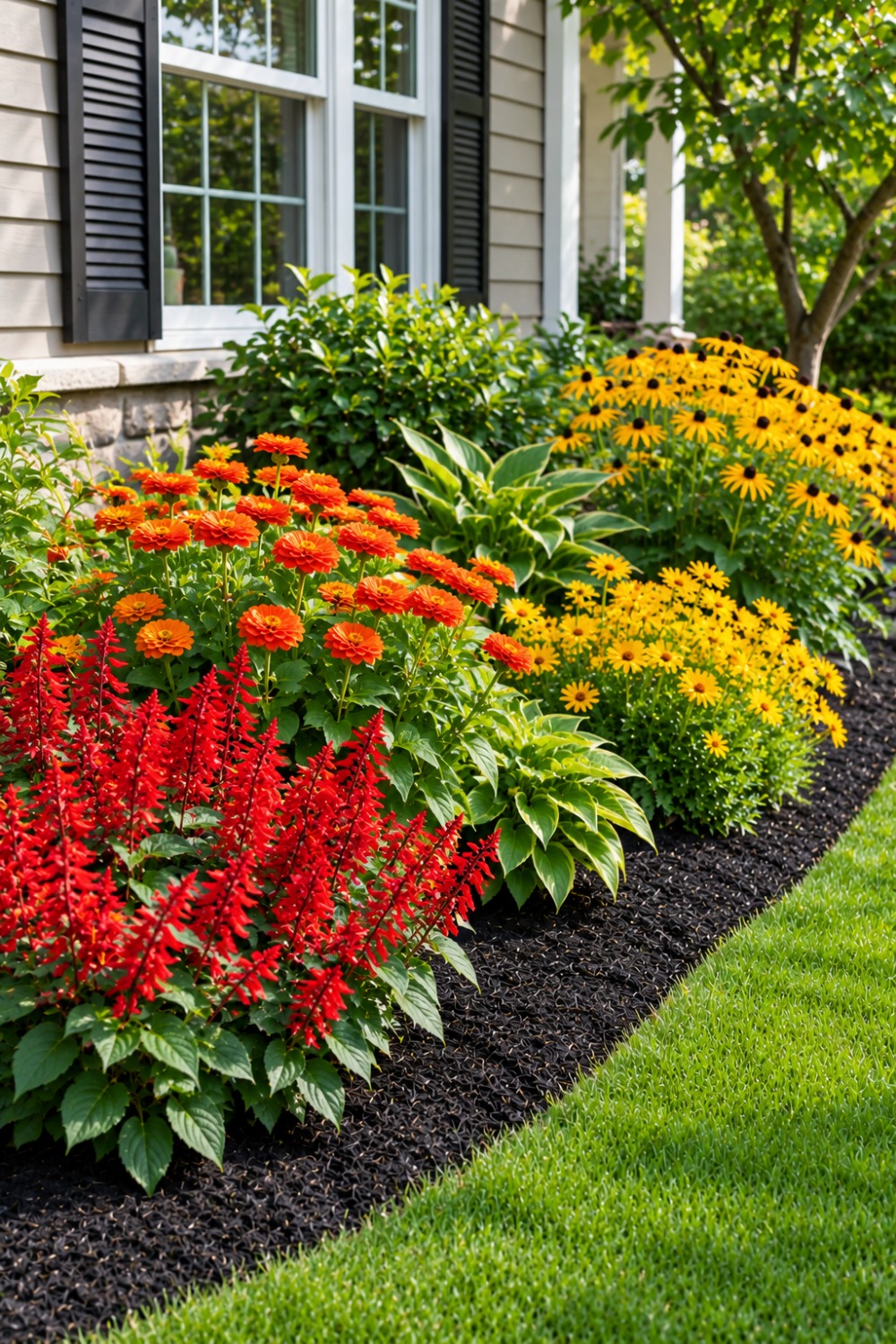
If you love bold color, black mulch is the perfect backdrop.
Red, orange and golden yellow flowers look almost neon against it, and the effect carries all the way to the street.
Try red salvia, orange zinnias, golden coreopsis and black-eyed Susan (Rudbeckia hirta) in a sunny bed.
How to do it:
- Pick one main hot color and one supporting color.
- Mass annuals in wide bands rather than dotting them around.
- Add a few green-leaved plants so the bed has somewhere for the eye to rest.
11. Choose Safe Black Mulch and Keep It Looking Fresh

The black color in most dyed mulch comes from carbon-based dyes, similar to those used in inks.
The bigger concern is the wood underneath. Some dyed mulch is made from recycled wood, which can include old treated lumber. Look for mulch certified by the Mulch and Soil Council, or ask your supplier where the wood comes from.
Dyed mulch also fades in strong sun, so plan to refresh it once a year.
How to do it:
- Buy certified or clearly sourced mulch, and use undyed mulch in vegetable beds.
- Spread 2 to 3 inches, never deeper than 4.
- Each spring, fluff the old layer with a rake and add a thin fresh top coat.
Frequently Asked Questions
Is black mulch safe for plants and pets?
The carbon-based dyes used for black mulch are generally considered safe. The risk comes from contaminated recycled wood, so choose certified mulch or mulch from known sources. Avoid cocoa bean mulch if you have dogs, since it can be toxic to them.
Does black mulch get too hot in summer?
Black mulch absorbs more heat than lighter mulch, so the surface can get warm in full sun. In very hot climates, use it in beds with some afternoon shade, keep it at 2 to 3 inches and water plants well in summer.
How long does black mulch keep its color?
Expect noticeable fading within a season or two in full sun. Beds in part shade hold the color longer. A thin top-up each spring keeps it looking fresh without building up too much depth.
Is black or brown mulch better for curb appeal?
Black mulch gives more contrast and suits white, gray, modern and red brick homes. Brown mulch looks softer and more natural with tan, beige and earth-toned houses. Pick the one that repeats a color already on your house.
Final Thoughts: Let the Mulch Make Your Plants the Star
Black mulch works best as a backdrop, not the main event.
Start by looking at your house. If it has black doors, shutters or trim, or a white, gray or red brick facade, black mulch will tie the yard together.
Then choose plants that shine against it: lime and silver foliage, white flowers or bold hot colors.
Give every bed a crisp edge, because black mulch shows the line between bed and lawn more than any other color.
Keep it at 2 to 3 inches, away from trunks and siding, and refresh it once a year.
Choose certified or clearly sourced mulch, and stick with undyed mulch where you grow food.
If you’re planning a bigger refresh, our cheap simple front yard landscaping ideas pair well with a new layer of mulch.
Start with your most visible bed this weekend. One afternoon of fresh black mulch can change how your whole yard looks.