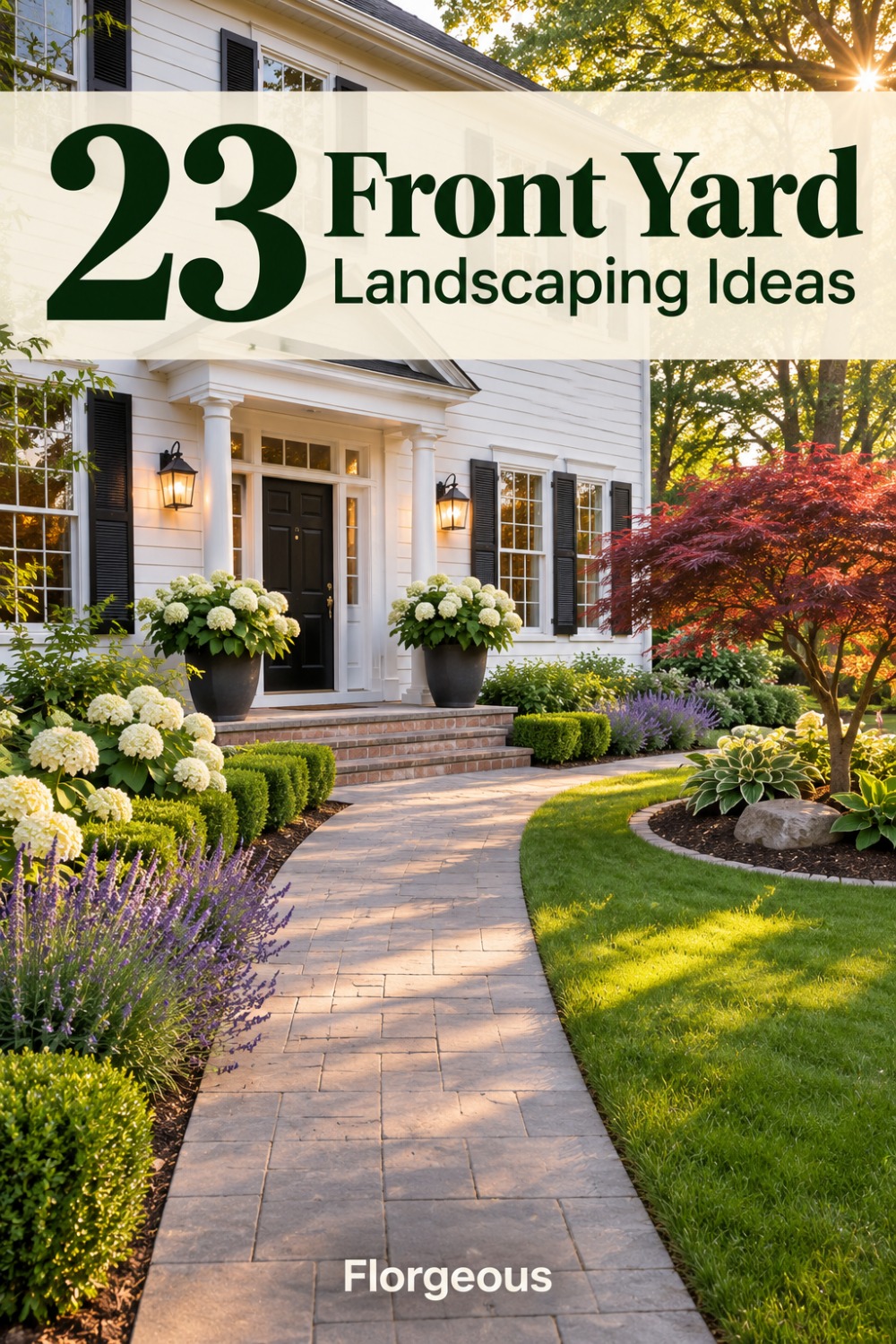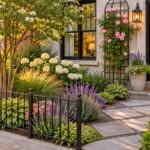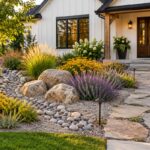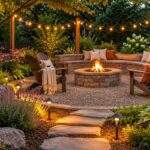
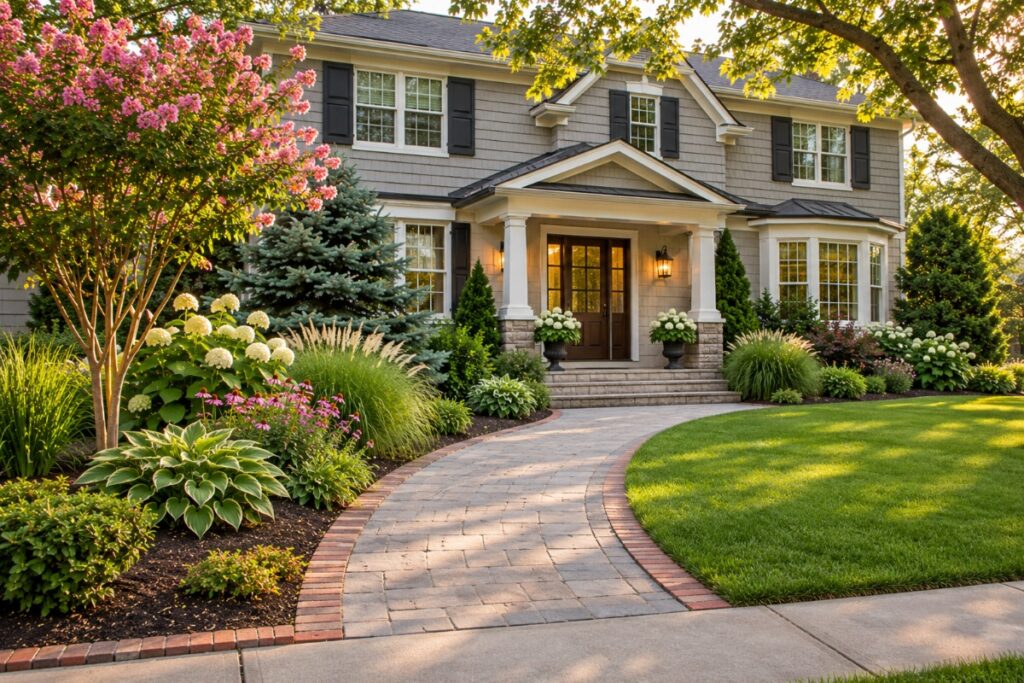
The front yard is the one part of your garden that everyone sees, from the neighbors to the delivery driver.
It sets the tone for the whole house before anyone reaches the door.
Great front yards rarely depend on rare plants or expensive features. They work because they have a clear path, a strong frame around the house and planting that looks good in every season.
These 23 front yard landscaping ideas focus on design: how to shape the space, choose a style that suits your home and add details that make it feel finished.
Working with a tight budget? Pair these ideas with our cheap simple front yard landscaping ideas.
Front Yard Ideas at a Glance
| Goal | Ideas to start with | Upkeep |
|---|---|---|
| A welcoming entry | Clear path, entry seating, lit house numbers | Low |
| Year-round structure | Evergreens, hedges, mowing strip | Low to medium |
| Color and personality | Door-color echoes, bulbs, flowering shrubs | Medium |
| Less lawn | Island beds, native meadow strip, rain garden | Low once established |
| Evening curb appeal | Uplighting, downlighting | Low |
1. Design the Yard Around a Clear Path to the Door
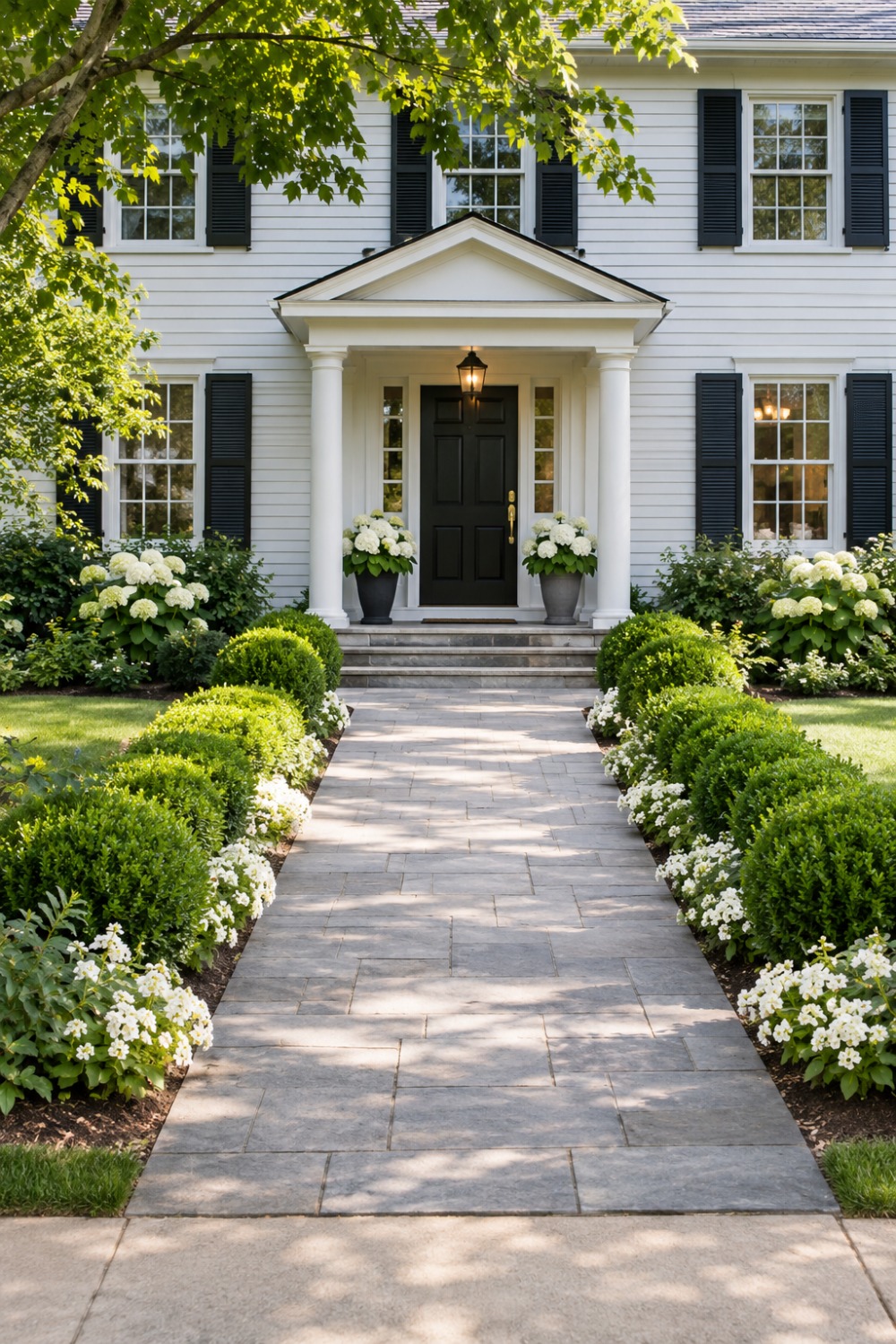
Start with how people arrive. A wide, direct path from the driveway or sidewalk to the front door makes the whole yard feel organized.
Aim for a walkway at least 4 feet wide so two people can walk side by side, and use a material that suits the house: brick for traditional homes, large concrete pavers for modern ones.
Once the path is set, every bed and plant can be arranged around it.
How to do it:
- Walk the route visitors actually take and mark it with stakes.
- Widen tight spots so the path is at least 4 feet across.
- Plant low edging along both sides so the line stays crisp.
Pro tip: a gentle curve feels more relaxed, but if the door is straight ahead, a straight path usually looks better.
2. Match the Planting Style to Your Home’s Architecture
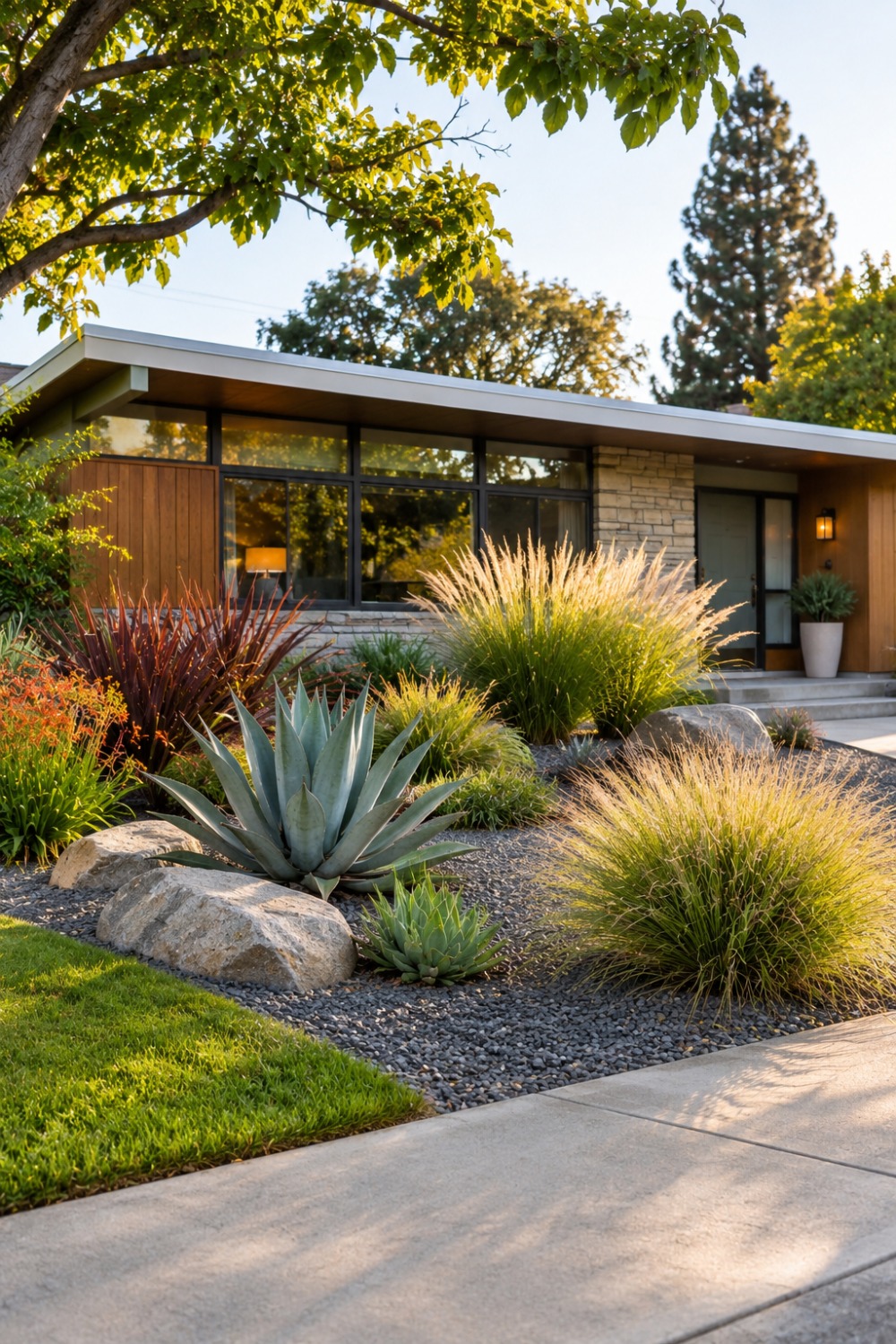
The most attractive front yards look like they belong to the house.
A craftsman bungalow suits a loose cottage mix, a mid-century home looks sharp with bold grasses and clean lines, and a colonial home pairs well with clipped shrubs and symmetry.
Choosing a style first also stops you buying random plants that don’t work together.
How to do it:
- Note your home’s style, materials and main colors.
- Collect photos of similar houses you admire.
- Pick five or six plants that fit that style and repeat them.
3. Repeat Your Front Door Color in the Flowers
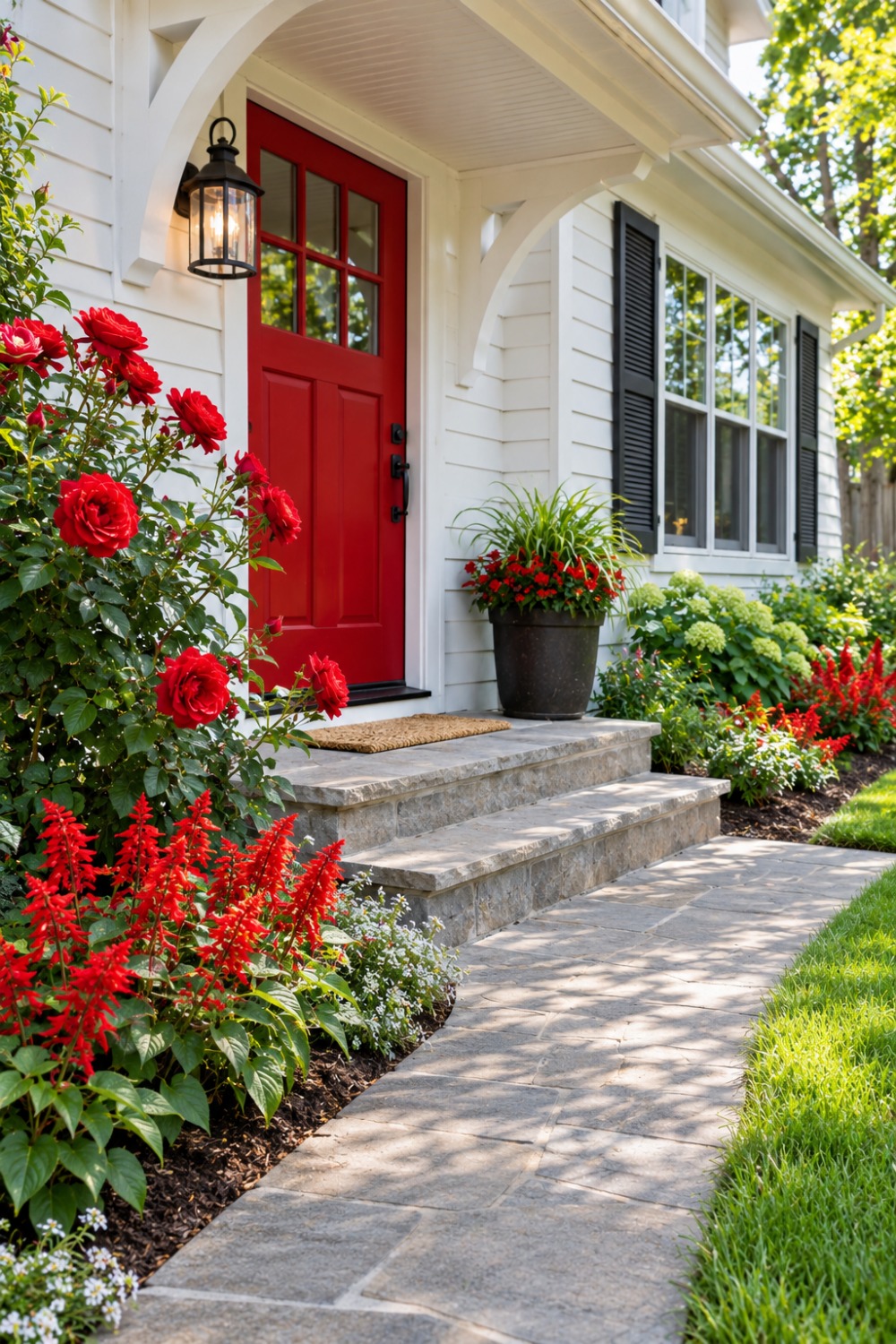
A simple trick designers use is echoing the front door color somewhere in the planting.
A red door looks great with red salvia or roses nearby. A navy door pairs well with blue and purple flowers, and a yellow door shines next to golden coreopsis.
The repetition ties the house and garden together and draws the eye straight to the entry.
How to do it:
- Pick one flower color that matches or complements the door.
- Plant it in two or three groups near the entry.
- Repeat a softer version of that color farther out in the yard.
4. Carve a Curved Island Bed Into a Plain Lawn
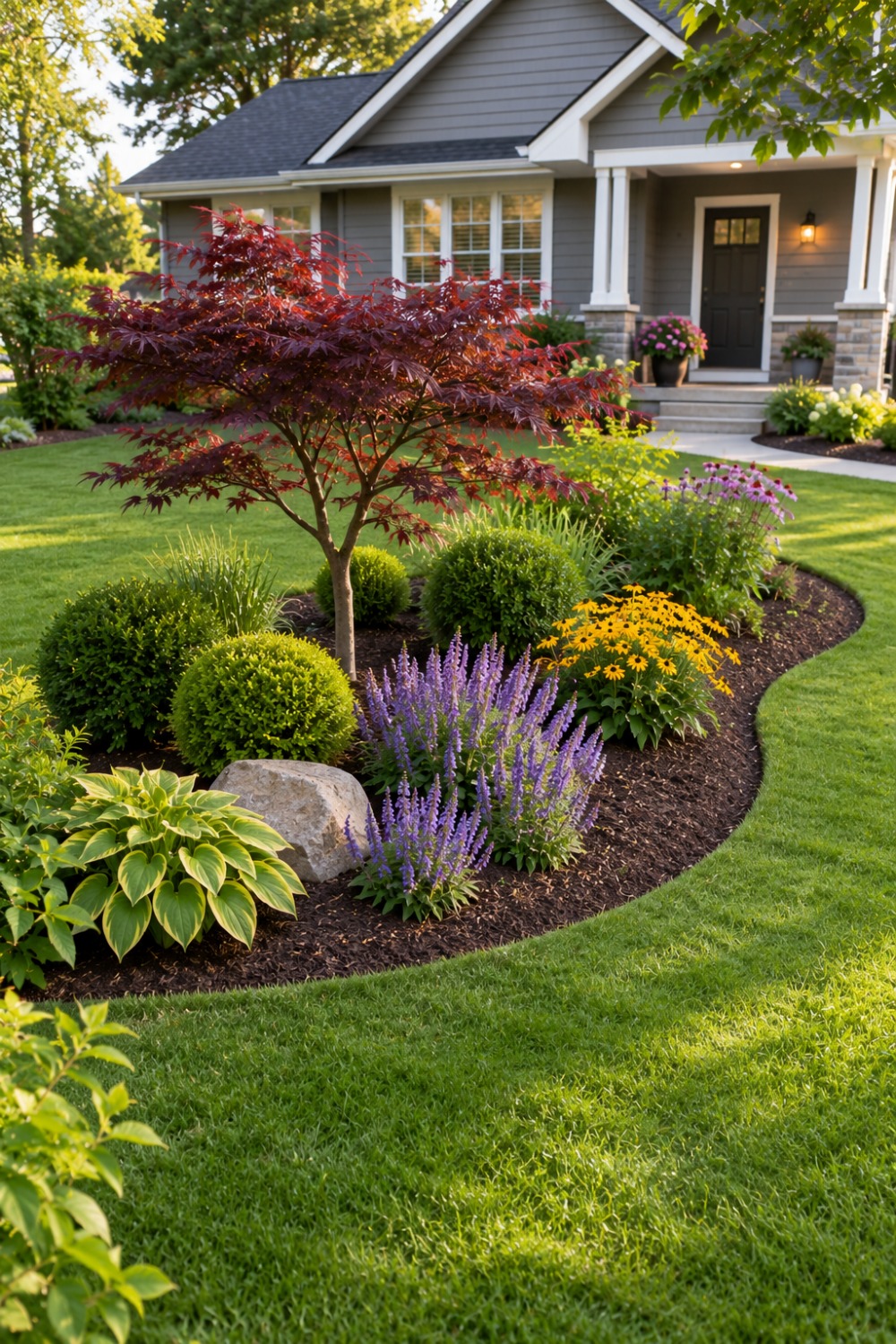
A large, flat lawn can make a house look bare. An island bed breaks it up and adds height in the middle of the yard.
Give the bed a gentle kidney or oval shape, and plant it with a small tree or tall shrub in the middle, medium plants around it and low edging at the rim.
It also reduces how much grass you need to mow and water.
How to do it:
- Outline the shape with a hose and view it from the street and the front windows.
- Remove the grass and loosen the soil.
- Plant in rings of height, tallest in the center.
Common mistake: making the island too small. It should be at least a third as long as the lawn is wide, or it looks lost.
5. Build Year-Round Structure With Evergreens
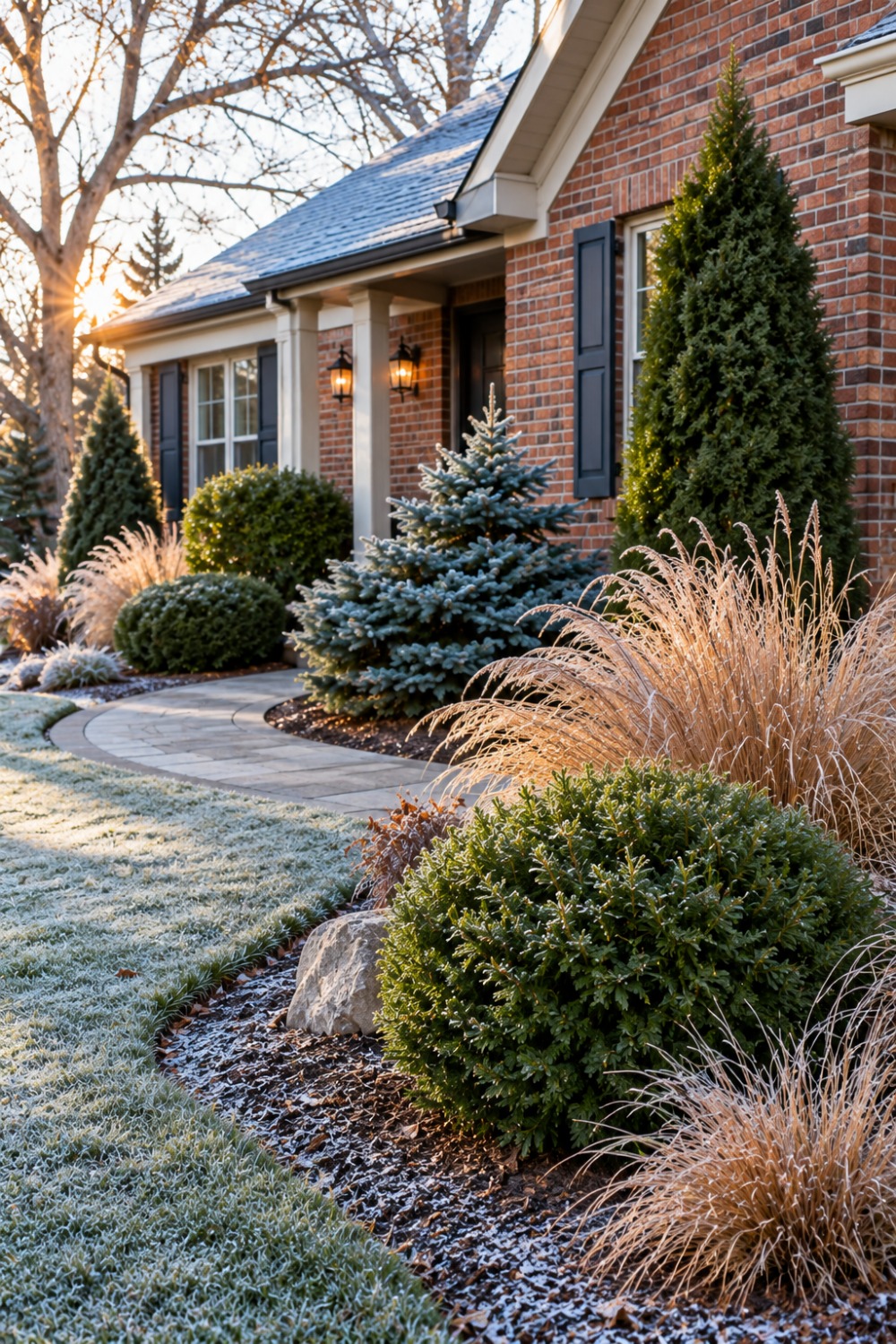
Flowers come and go, but evergreens keep the front yard looking finished in every month.
Use them as the backbone: dwarf conifers, hollies, inkberry or compact broadleaf evergreens at the corners of the house and along key edges.
Then fill in with seasonal color. If boxwood blight is a problem in your area, see our ideas for boxwood alternatives.
How to do it:
- Place evergreens first, at corners and either side of the entry.
- Choose dwarf varieties so they won’t block windows.
- Fill around them with perennials and bulbs.
6. Soften the Driveway With a Long Low Border
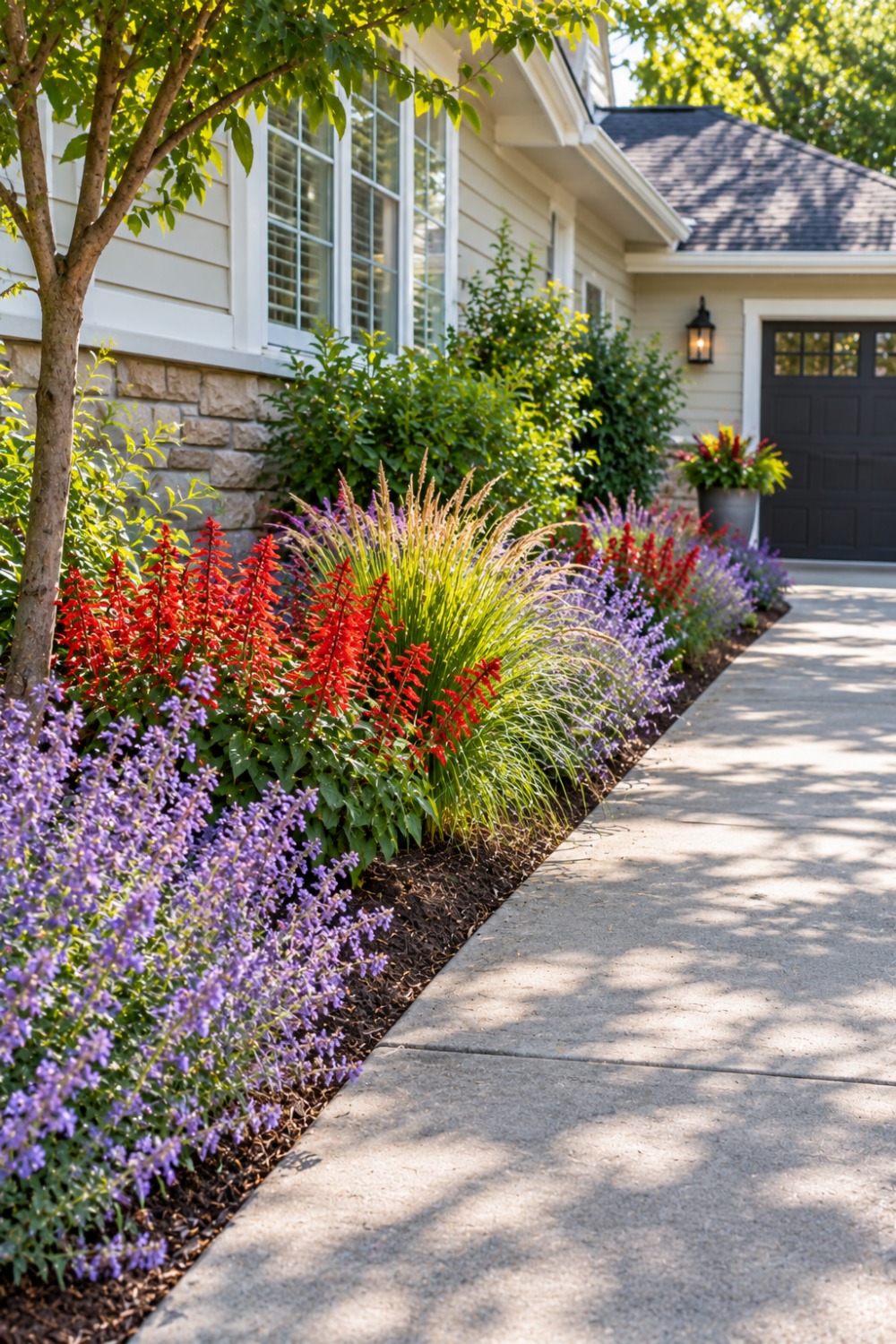
The driveway is often the biggest hard surface in the front yard, and a bare edge makes it look even bigger.
A long, low border along one side softens it without blocking car doors or sightlines.
Tough, low plants work best here: catmint, salvia, daylilies and small ornamental grasses that tolerate reflected heat.
How to do it:
- Leave at least a foot between the driveway edge and the first plants.
- Choose plants under 2 feet tall near the street for safe visibility.
- Repeat two or three plants along the full length.
7. Add a Low Fence With Cottage-Style Planting
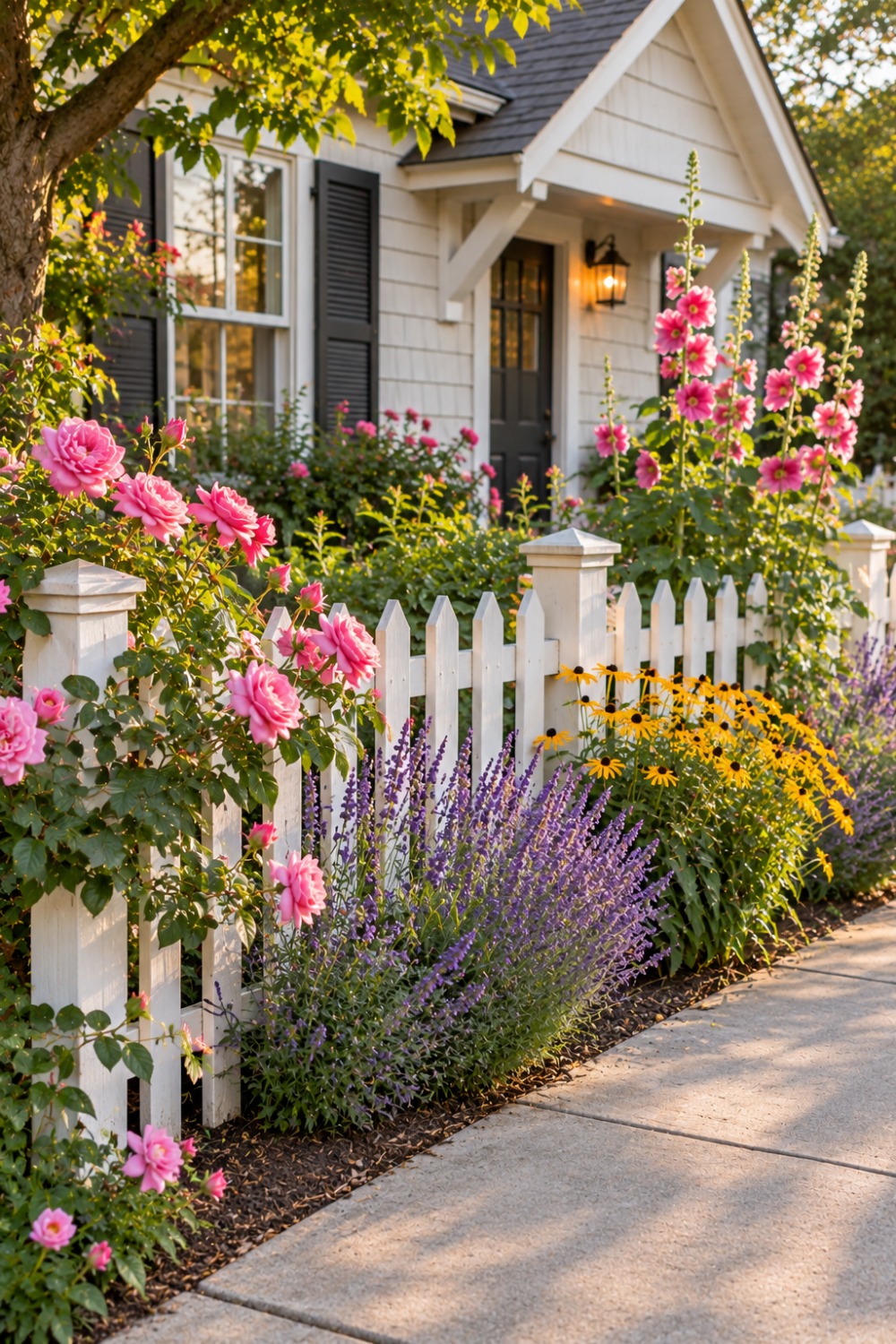
A low picket or split rail fence gives a front yard a sense of enclosure without hiding the house.
Plant roses, hollyhocks, black-eyed Susans or lavender along it so the flowers spill through and over the rails.
It’s especially charming on older homes and gives the yard a defined, cared-for edge.
How to do it:
- Check local rules and HOA guidelines on front fence height.
- Install the fence a foot or two inside the property line.
- Plant a mixed border on the inside of the fence.
8. Swap Part of the Lawn for a Native Meadow Strip
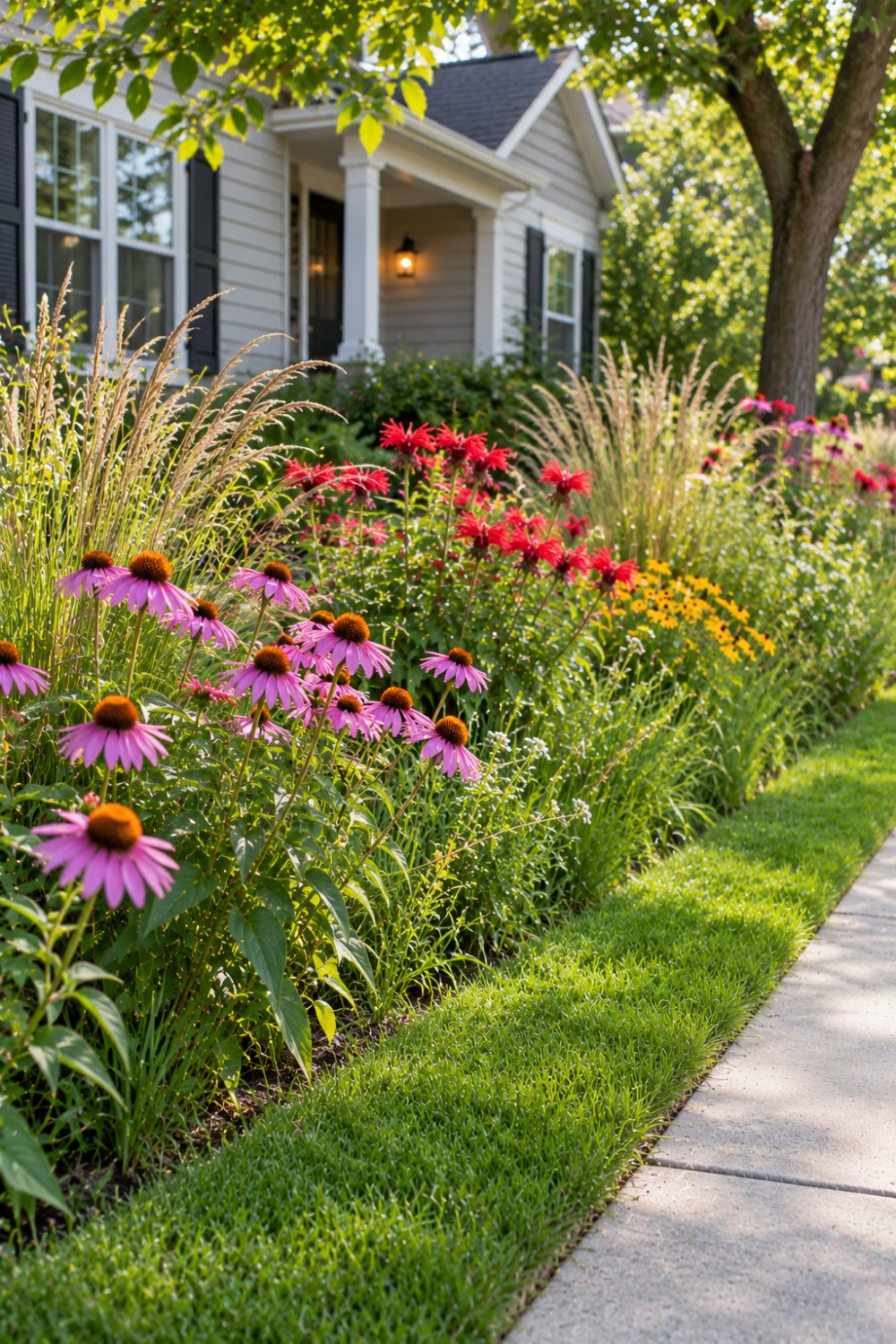
You don’t have to replace all the grass to make a big impact. A strip of native flowers and grasses along the street or front edge adds movement and color.
Mix flowers like coneflowers, bee balm and asters with native grasses such as little bluestem.
Keep a mown edge in front so it reads as intentional rather than overgrown.
How to do it:
- Choose a strip in full sun.
- Remove the grass and plant native plugs closely in drifts.
- Mow a clean border around the strip and cut it back once a year.
Good to know: some towns have rules about plant height in front yards, so check before you plant tall meadow species near the street.
9. Plant a Rain Garden in a Low Spot
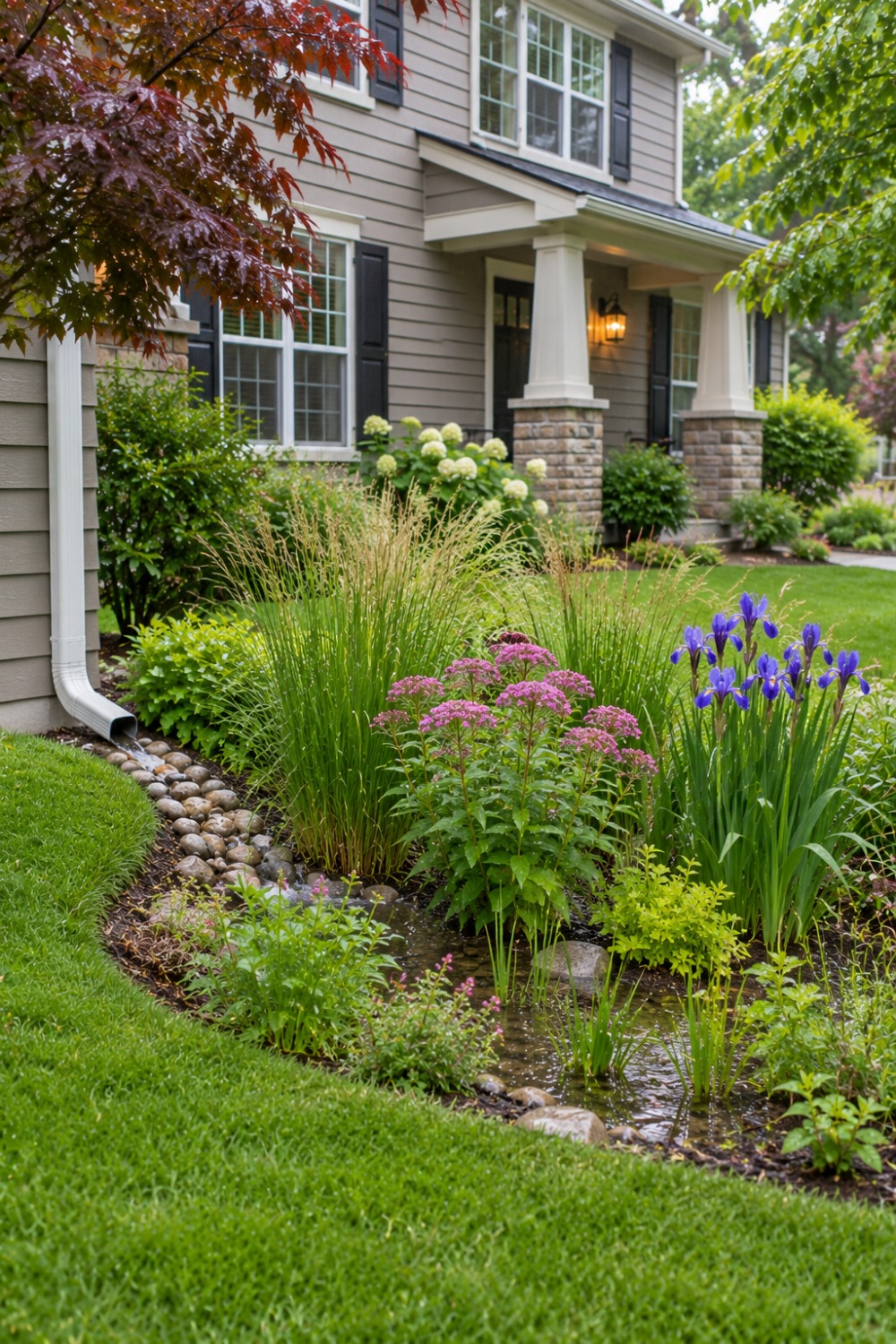
If one part of your front yard stays soggy after rain, turn it into a feature instead of a problem.
A rain garden is a shallow, planted dip that catches runoff from the roof or driveway and lets it soak in slowly.
Fill it with plants that handle both wet and dry spells, such as switchgrass, blue flag iris and swamp milkweed.
How to do it:
- Find the natural low point and keep it at least 10 feet from the house foundation.
- Dig a shallow basin a few inches deep with gently sloping sides.
- Plant moisture-tolerant natives and mulch between them.
10. Create Gentle Berms on a Flat Lot
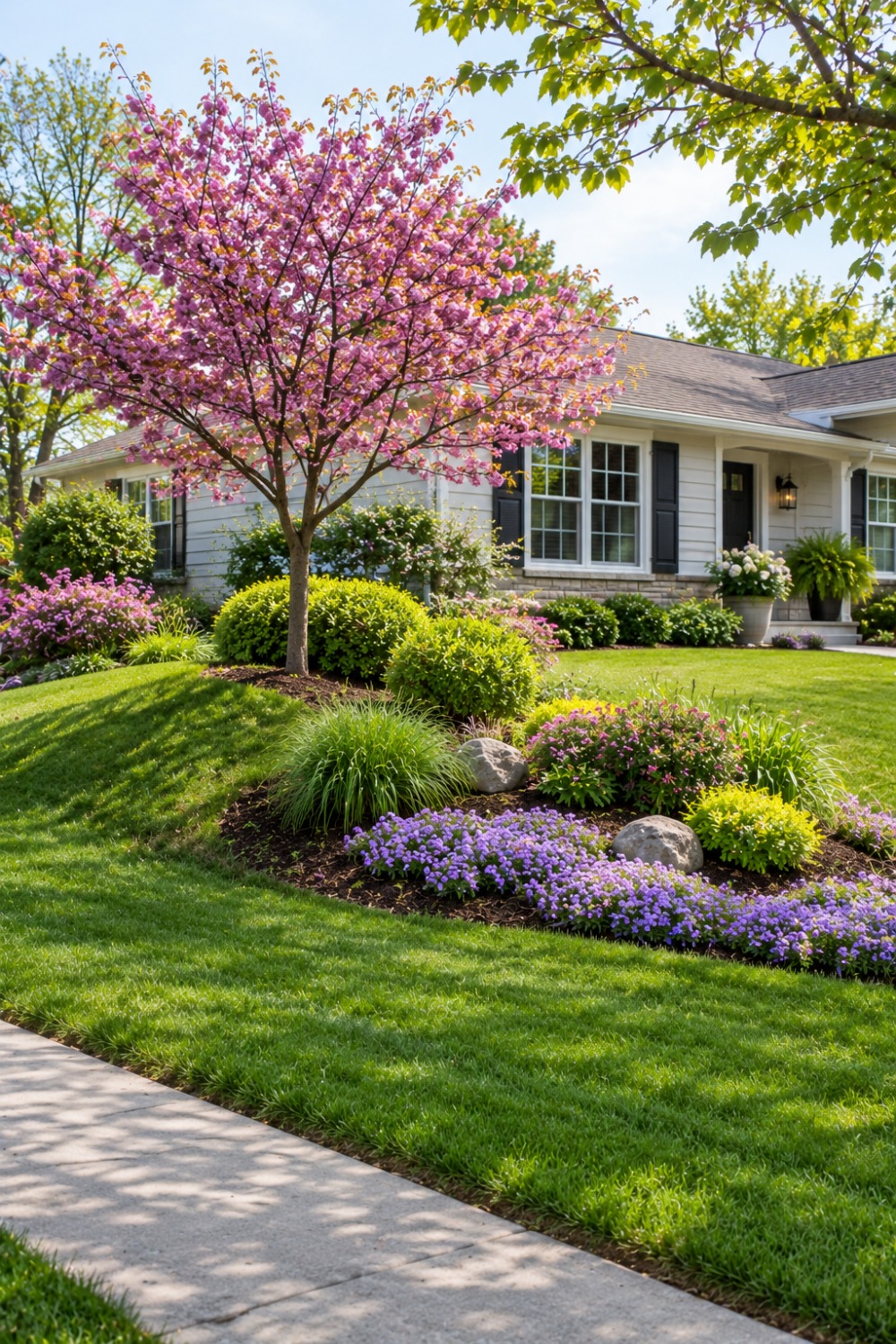
Completely flat yards can look plain from the street. A low, gently sloped mound of soil adds height and depth.
Keep berms wide and gradual, about four to six times as long as they are tall, so they look natural.
Plant the top with a small tree or shrub group and let lower plants spill down the sides.
How to do it:
- Mark an irregular oval shape off-center in the yard.
- Build it up with topsoil, firming it in layers.
- Plant and mulch right away to prevent erosion.
11. Light the House With Up- and Downlighting
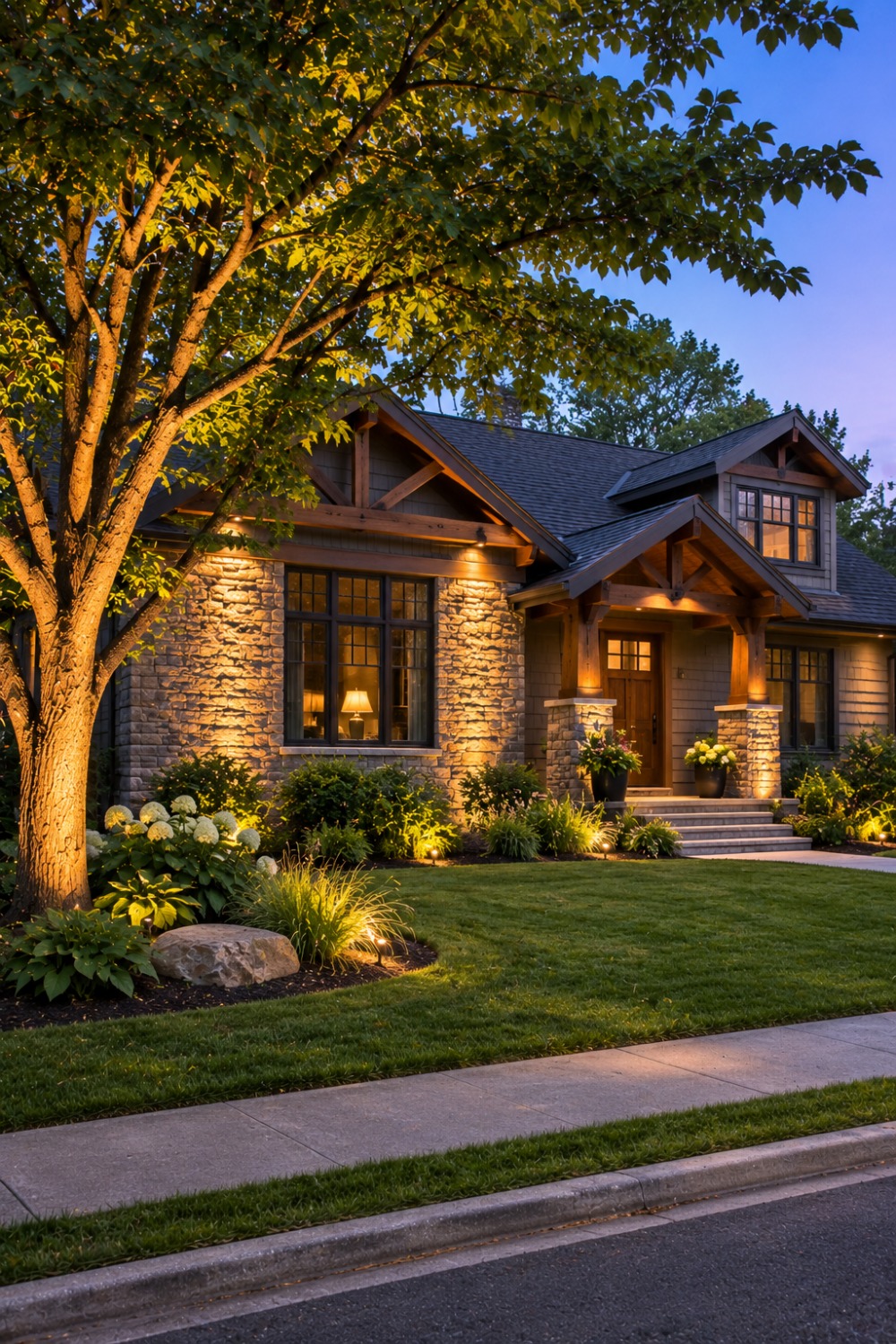
Good lighting makes a front yard look finished long after sunset.
Low-voltage uplights at the base of a tree or the corners of the house add drama, while a few downlights mounted high in a tree mimic soft moonlight.
Keep the light warm white and aim it at plants and textures, not into windows or the street.
How to do it:
- Pick two or three features worth lighting.
- Place uplights a foot or two from tree trunks and walls.
- Put lights on a timer or dusk sensor.
Pro tip: fewer, well-placed lights look more upscale than lots of small ones scattered around.
12. Make Room for a Bench Near the Entry
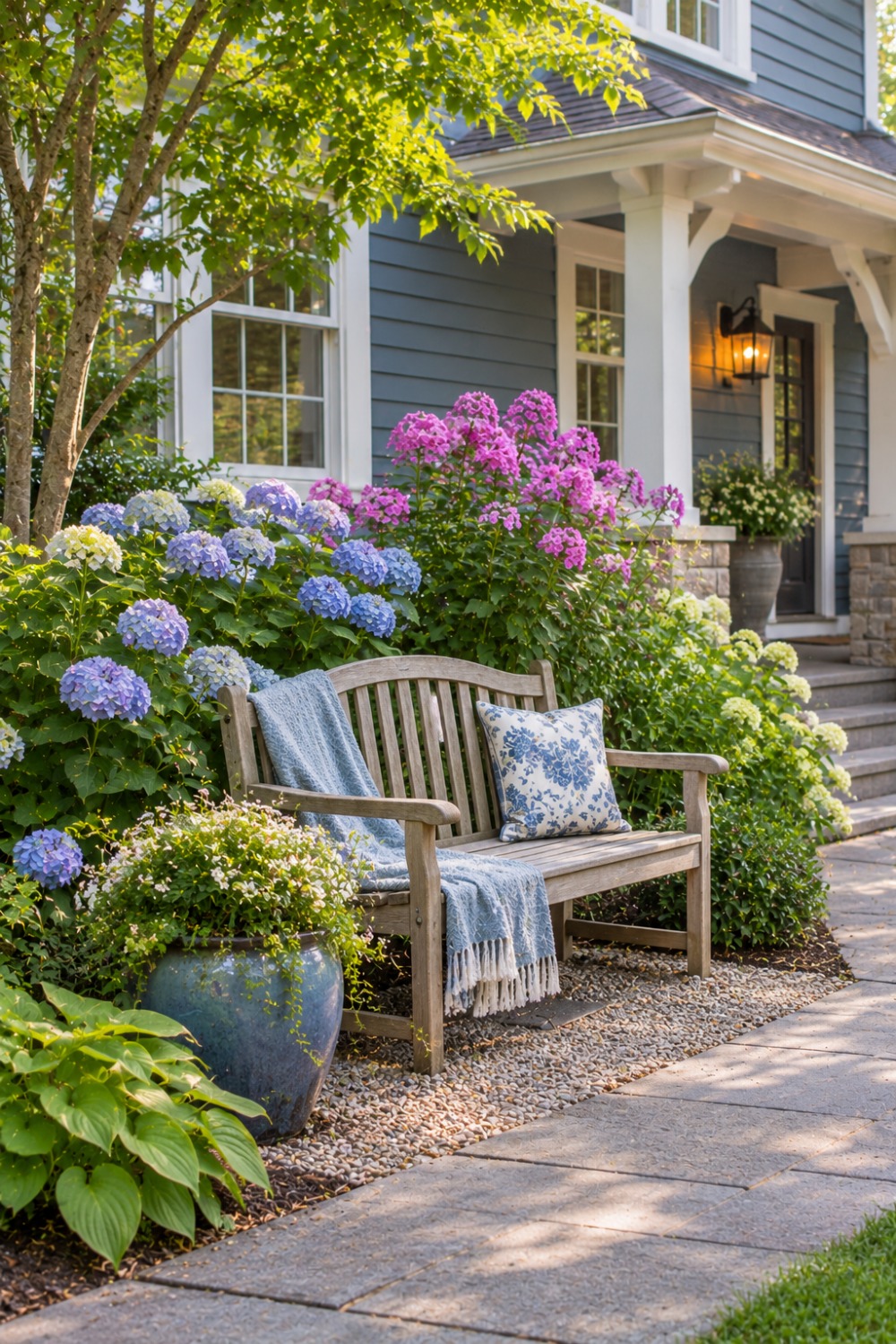
A small bench or a pair of chairs near the front door instantly makes a house feel welcoming.
It gives you a place to sit with morning coffee and makes the yard feel lived in rather than just looked at.
Tuck the seat into the planting, with shrubs or tall perennials behind it for a sense of shelter.
How to do it:
- Choose a spot near the entry with some shade.
- Set the bench on pavers or gravel so it stays level and dry.
- Plant fragrant flowers or herbs nearby.
13. Create a Courtyard Entry With Low Walls
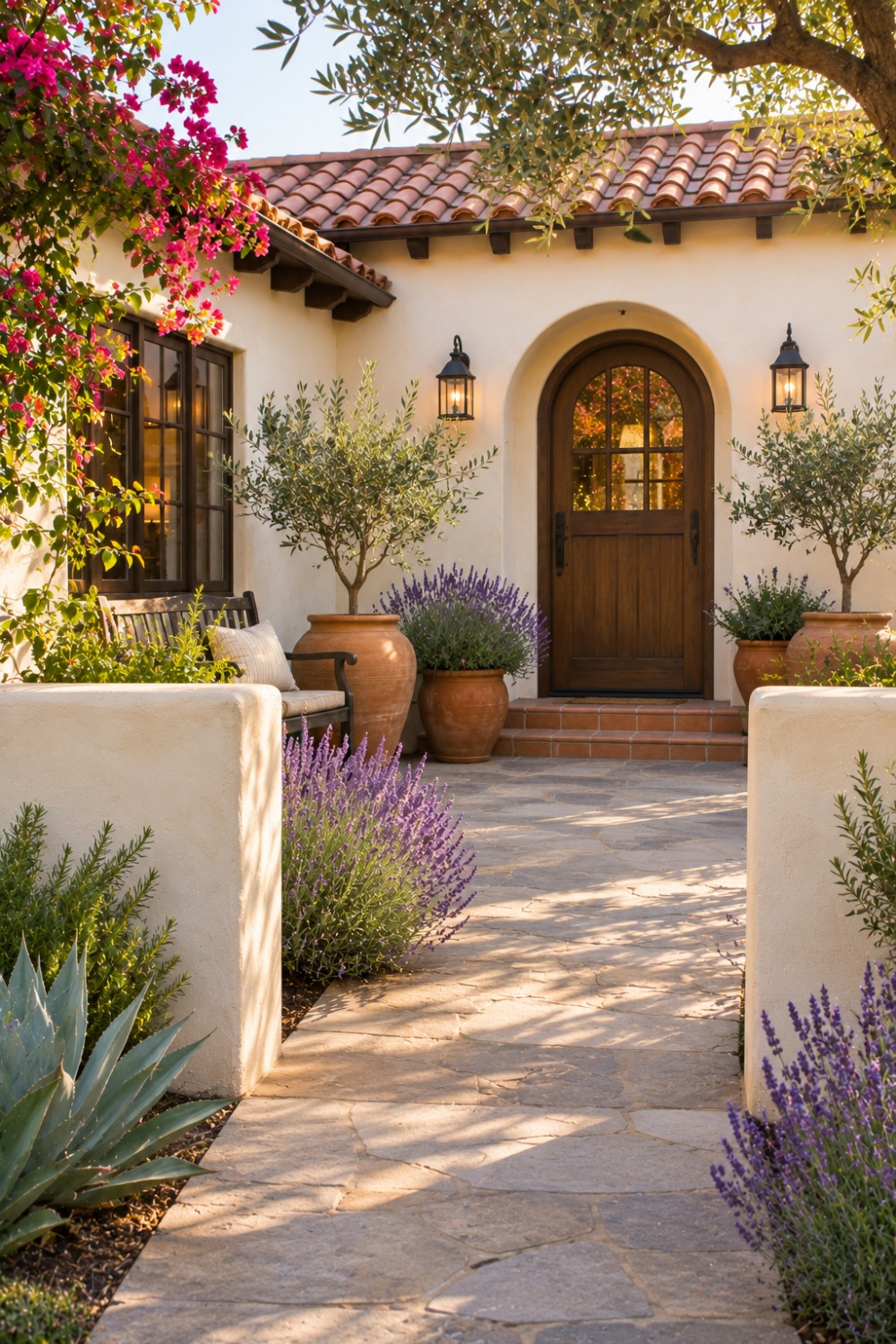
A low wall of stone, brick or stucco can turn the area in front of the door into a small courtyard.
It gives a sense of arrival, creates sheltered planting pockets and can double as extra seating.
This idea works especially well for Spanish, Mediterranean and modern homes.
How to do it:
- Keep walls between 18 and 30 inches tall so they don’t block the view.
- Leave a wide opening aligned with the front door.
- Plant the inside with containers, small trees or a simple water bowl.
14. Layer a Shade Garden Under Mature Trees
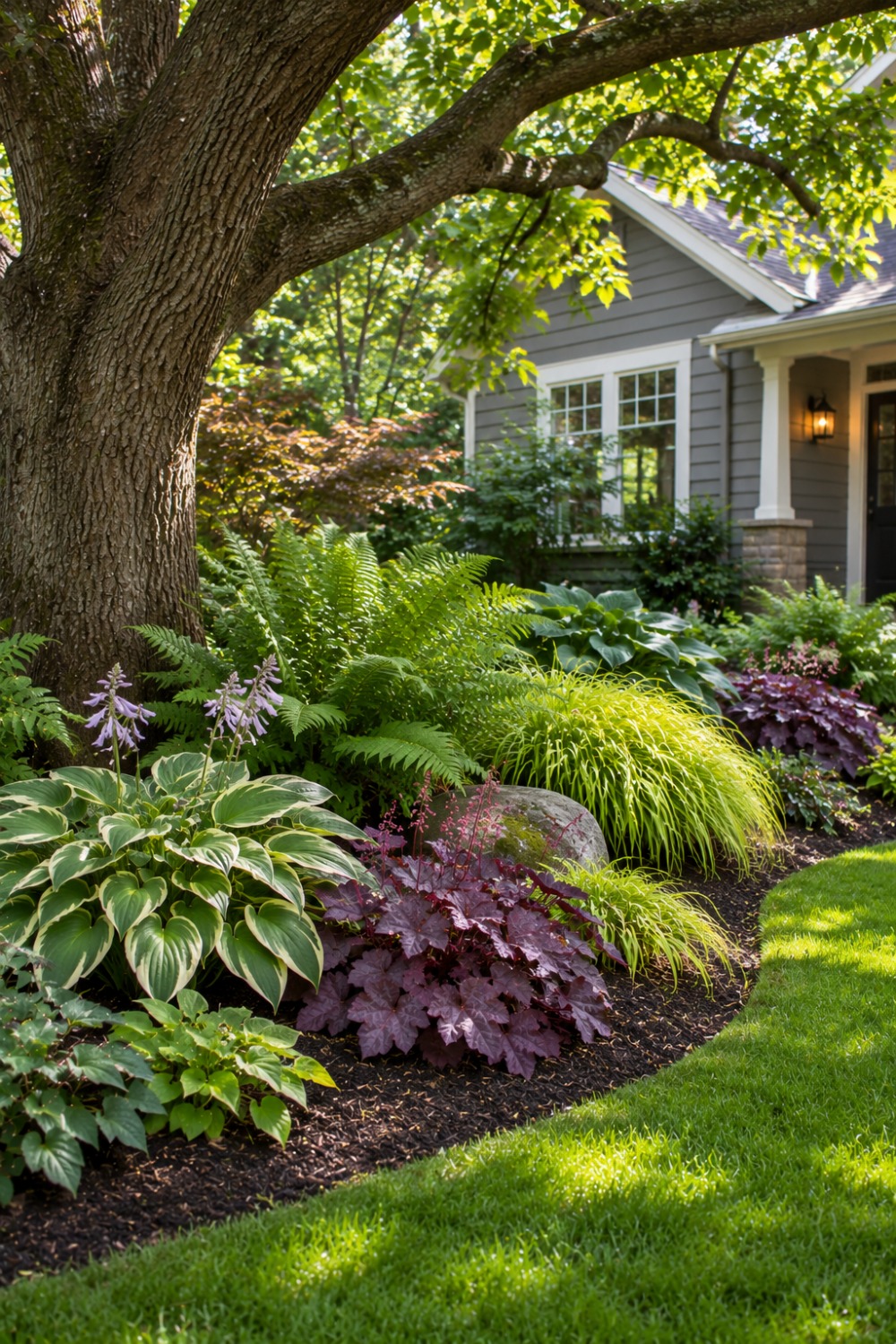
Grass rarely thrives under big front yard trees, but a shade garden will.
Combine hostas, ferns, heuchera, Japanese forest grass and spring-flowering bulbs for layers of leaf color and texture.
Add a curving bed edge and fresh mulch and the area under the tree becomes a feature instead of bare soil.
How to do it:
- Add only a thin layer of new soil over tree roots, never deep fill.
- Plant small plants between roots rather than cutting them.
- Water new plants regularly, as trees compete for moisture.
Common mistake: piling soil or mulch against the tree trunk. Keep it pulled back to protect the bark.
15. Fill Beds With Flowering Shrubs for Easy Color
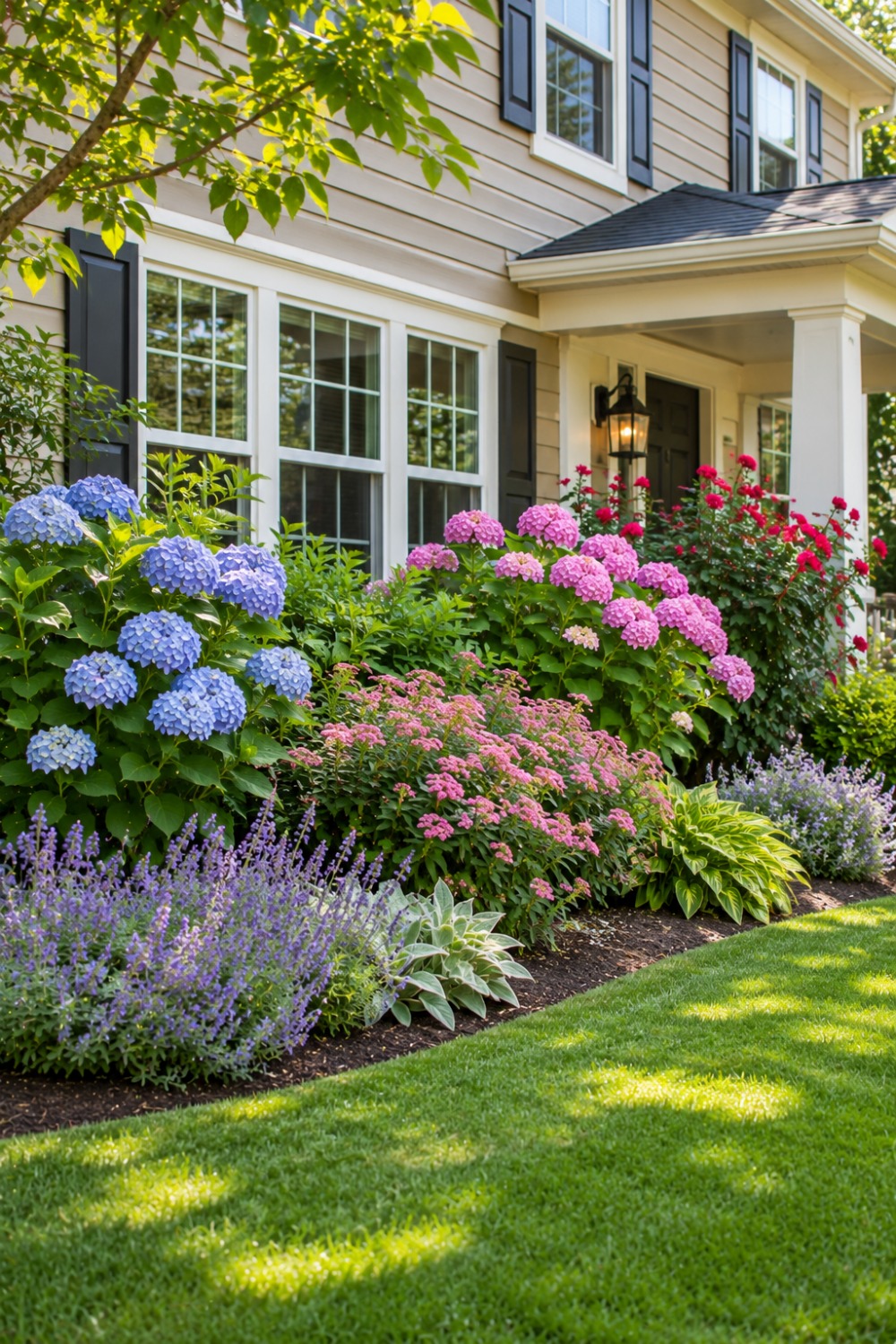
Flowering shrubs give months of color with far less work than annual flowers.
Reblooming hydrangeas, compact spirea, roses, weigela and abelia flower over long periods and need only an annual prune.
Mix spring, summer and fall bloomers so there’s always something happening.
How to do it:
- List shrubs that flower at different times of year.
- Space them for their mature width.
- Underplant with low perennials or ground covers.
16. Add a Small Bubbling Water Feature Near the Door
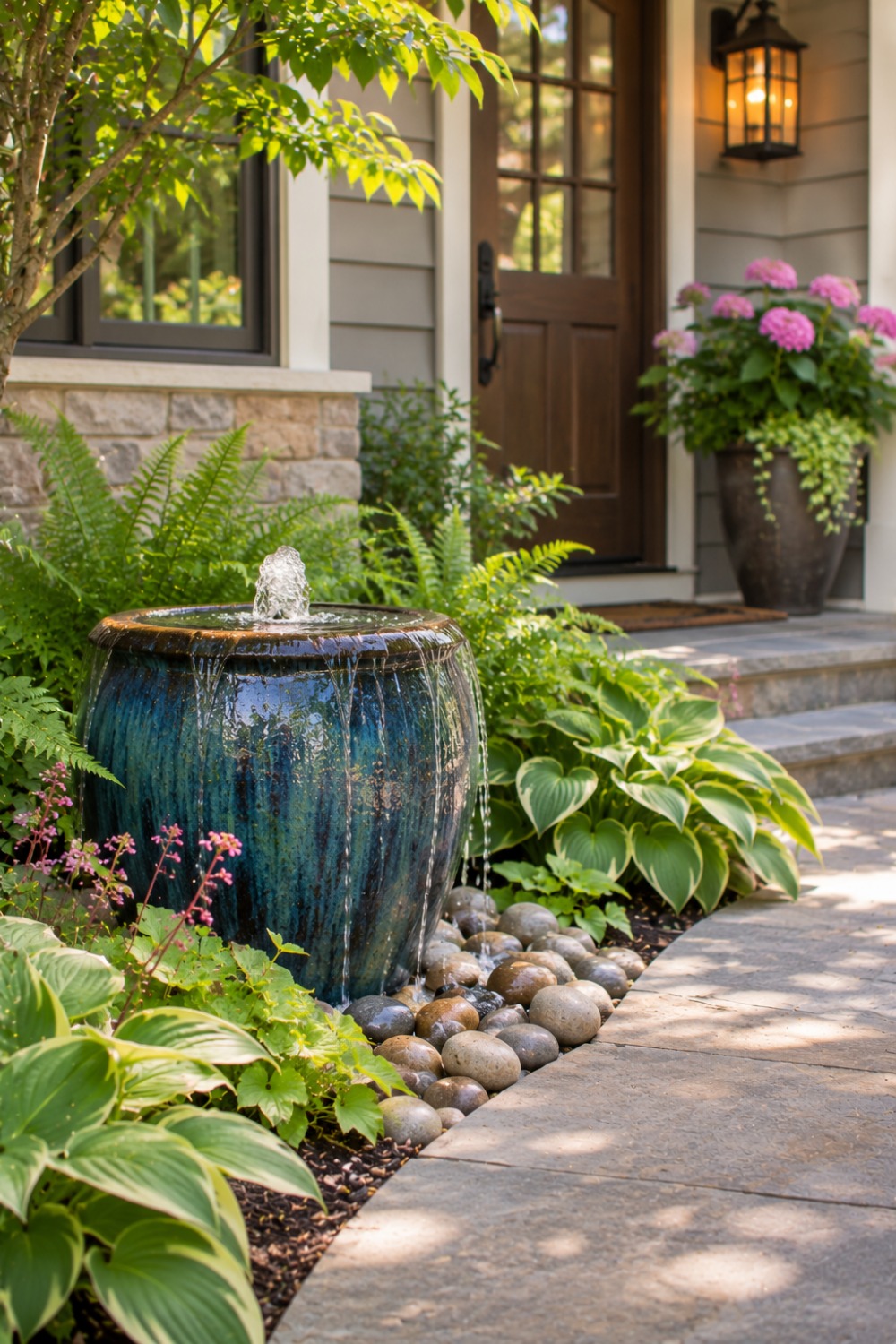
The sound of trickling water makes an entry feel calm and inviting.
A simple bubbling urn or basin set in a bed of stones is self-contained, safe for kids and easy to install.
Place it where you’ll hear it as you walk up, and surround it with soft, leafy plants.
How to do it:
- Choose a recirculating fountain with a hidden reservoir.
- Run power from an outdoor outlet with a ground-fault protected circuit.
- Top up the water regularly in hot weather.
17. Define the Front Boundary With a Hedge
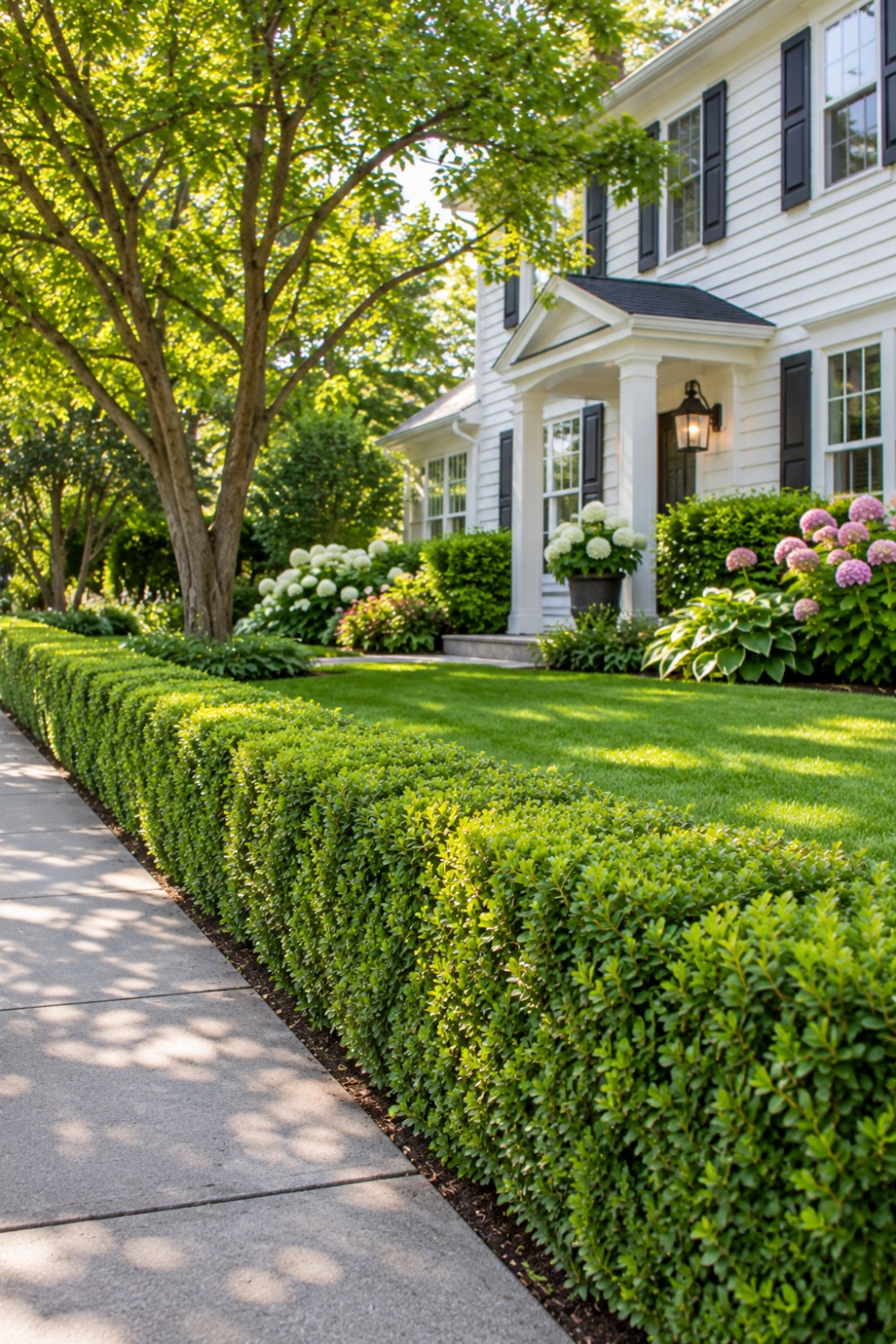
A hedge along the front edge gives the yard a clear frame and a little privacy from the street.
For a neat look, choose a compact evergreen that takes regular trimming. For a softer look, try a flowering hedge of roses, abelia or lavender.
Keep it low enough near driveways and corners so drivers can still see.
How to do it:
- Measure the full length and plan plant spacing for a solid hedge.
- Plant in a single straight trench for even growth.
- Trim lightly two or three times a year once it fills in.
18. Spotlight Your House Numbers With a Planted Address Bed
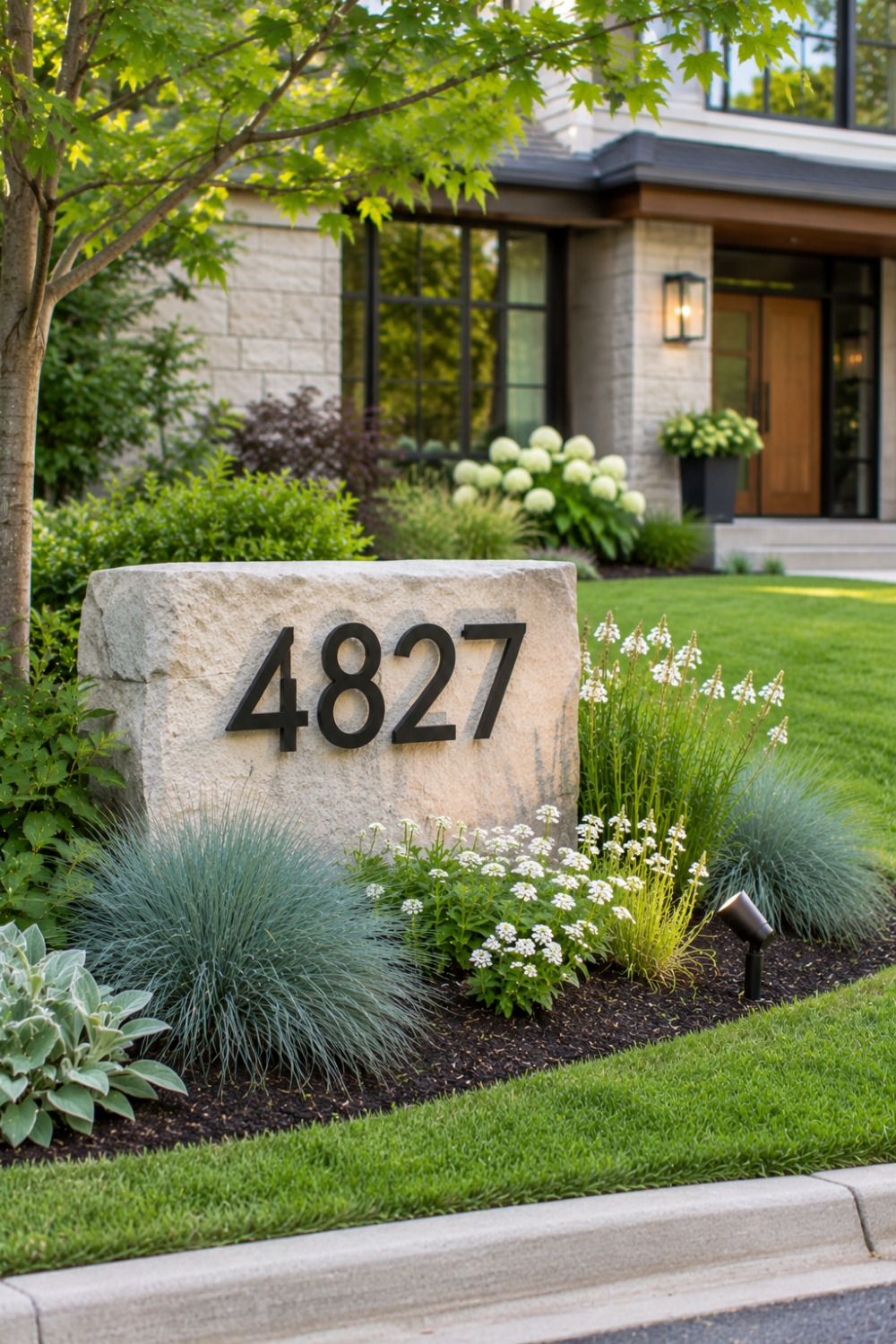
Clear, attractive house numbers help visitors find you and add a finishing touch.
Mount them on a low post, a stone or a small wall near the street, then plant a small bed around it.
Choose plants that stay low so the numbers are never hidden, and add a small light for night visibility.
How to do it:
- Pick a spot visible from the street in both directions.
- Use large, high-contrast numbers.
- Plant low perennials or ground covers around the base.
19. Grow Climbing Vines Over an Arbor or Trellis
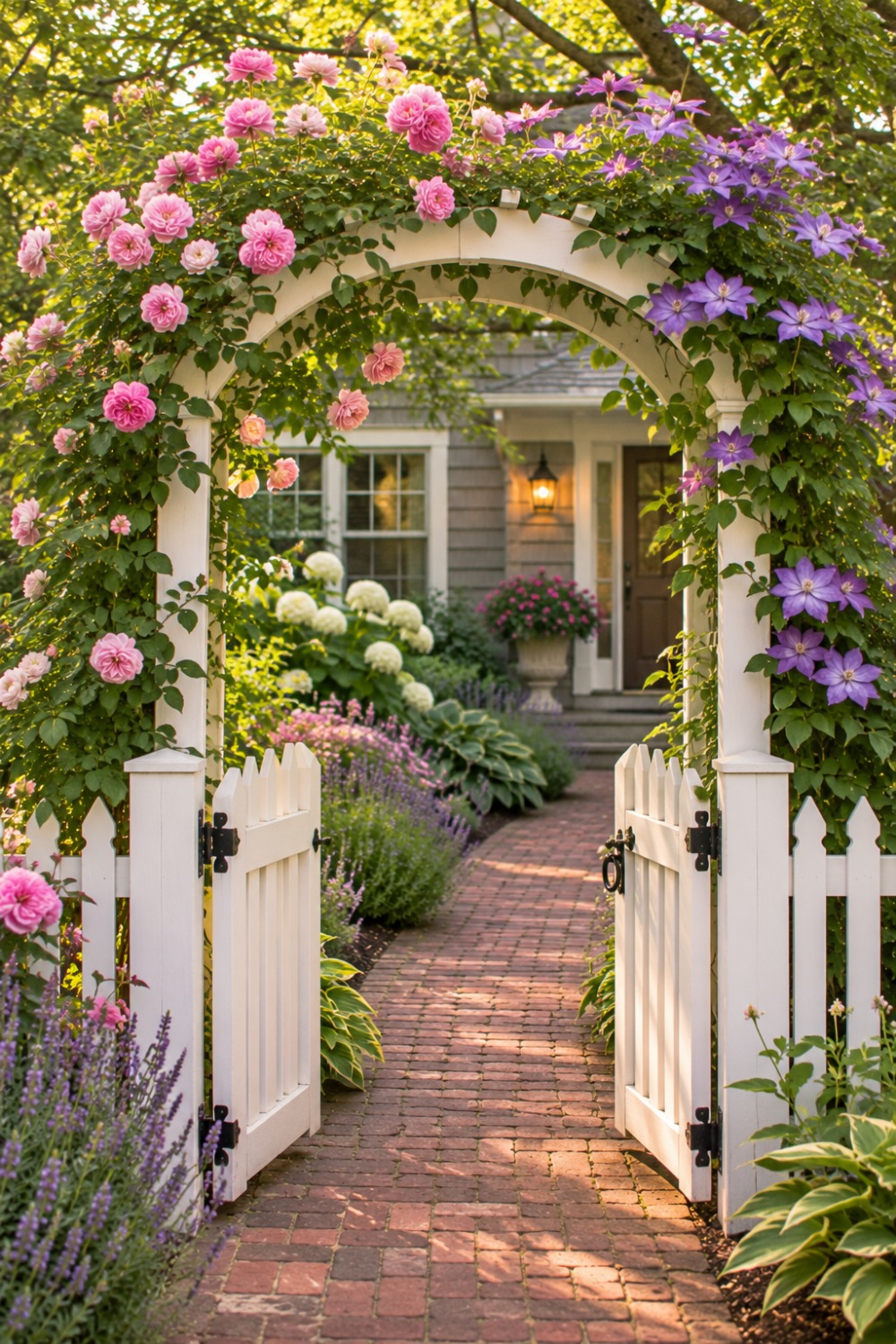
An arbor over the front gate or a trellis beside the door adds height and a sense of welcome.
Climbing roses, clematis and honeysuckle look beautiful and stay manageable. Avoid aggressive vines that can damage siding.
Even a single vine on a slim trellis can soften a blank wall beside the entry.
How to do it:
- Install a sturdy arbor or trellis before planting.
- Plant the vine at the base on the sunniest side.
- Tie in new stems loosely as they grow.
20. Stick to a Tight Color Palette for an Upscale Look
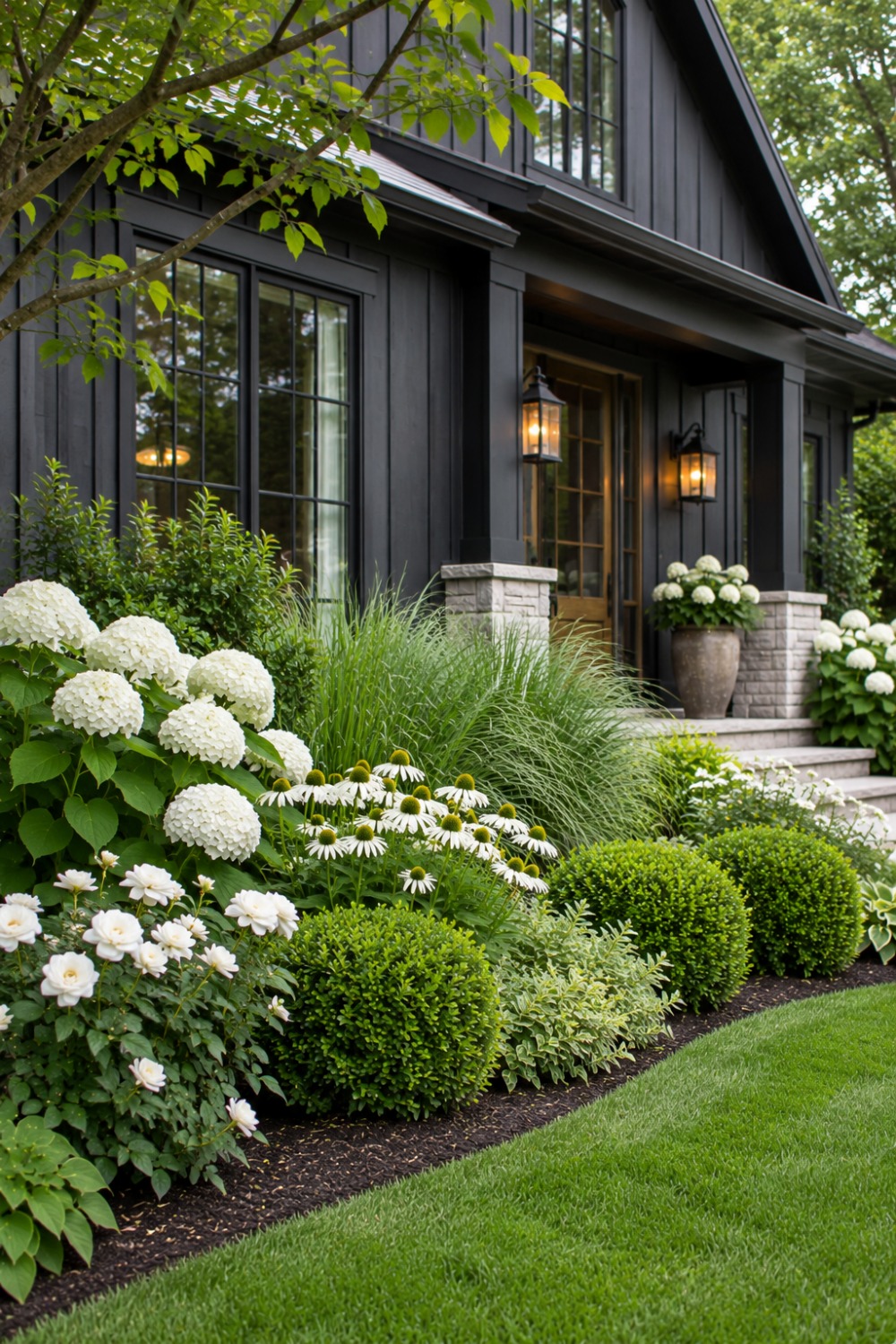
One of the easiest ways to make a front yard look high-end is to limit the colors.
A white garden with green foliage looks crisp against dark siding. Purple, blue and silver feels calm and modern, and warm oranges and rusts suit brick and stone.
Repeating just two or three colors makes even simple plants look designed.
How to do it:
- Choose a palette that works with your siding and roof.
- Pick plants in those colors for every season.
- Remove or move plants that clash.
21. Add a Mowing Strip Between Lawn and Beds
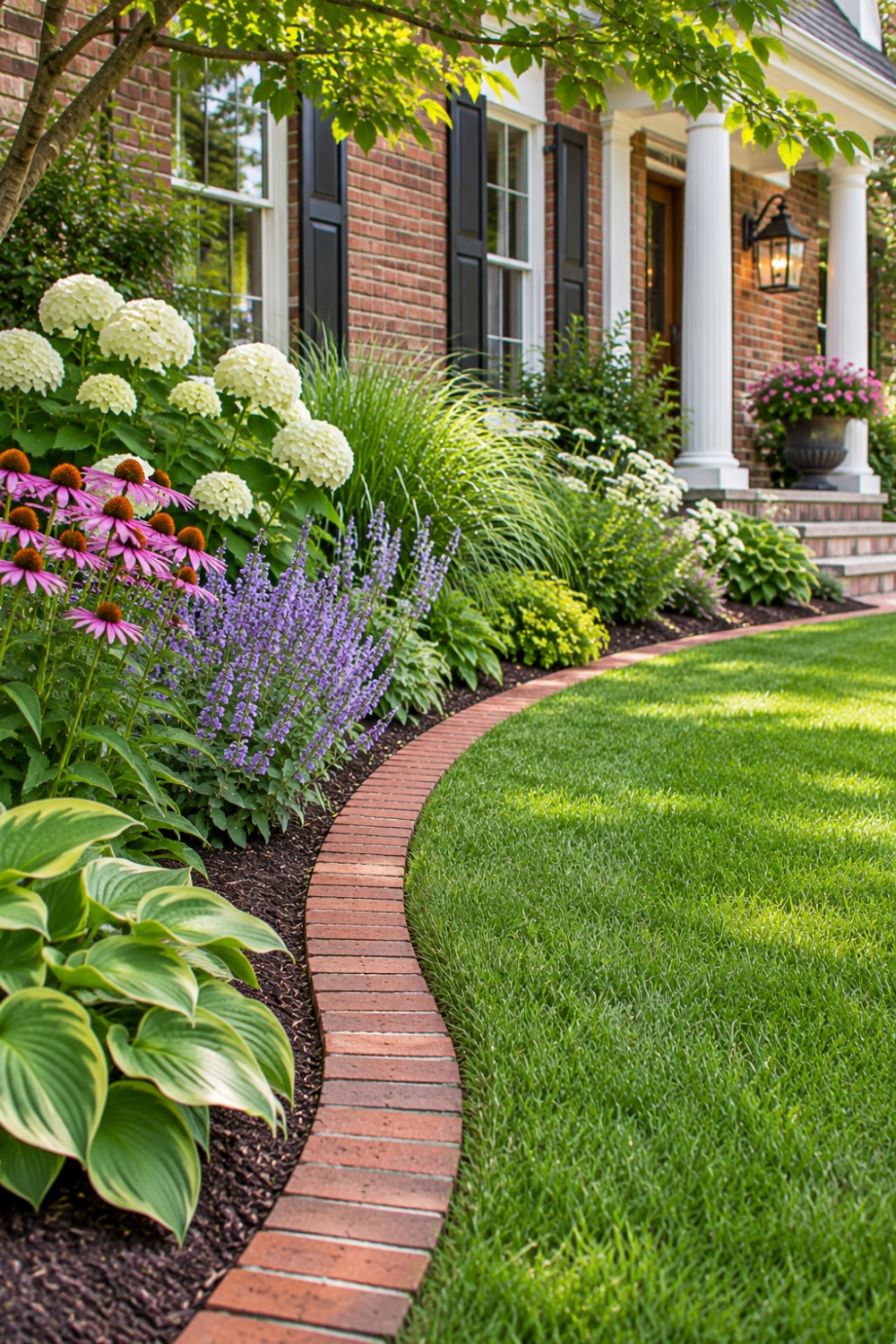
A flat band of brick or pavers set at ground level between lawn and beds keeps edges sharp with almost no trimming.
The mower wheel runs along it, so you skip the string trimmer and grass stops creeping into the beds.
It also adds a subtle, permanent line that makes the whole layout look crisp.
How to do it:
- Dig a shallow trench along the bed edge.
- Lay bricks or pavers on compacted sand, flush with the lawn.
- Run the mower with one wheel on the strip.
22. Plant Bulbs for an Early Spring Show
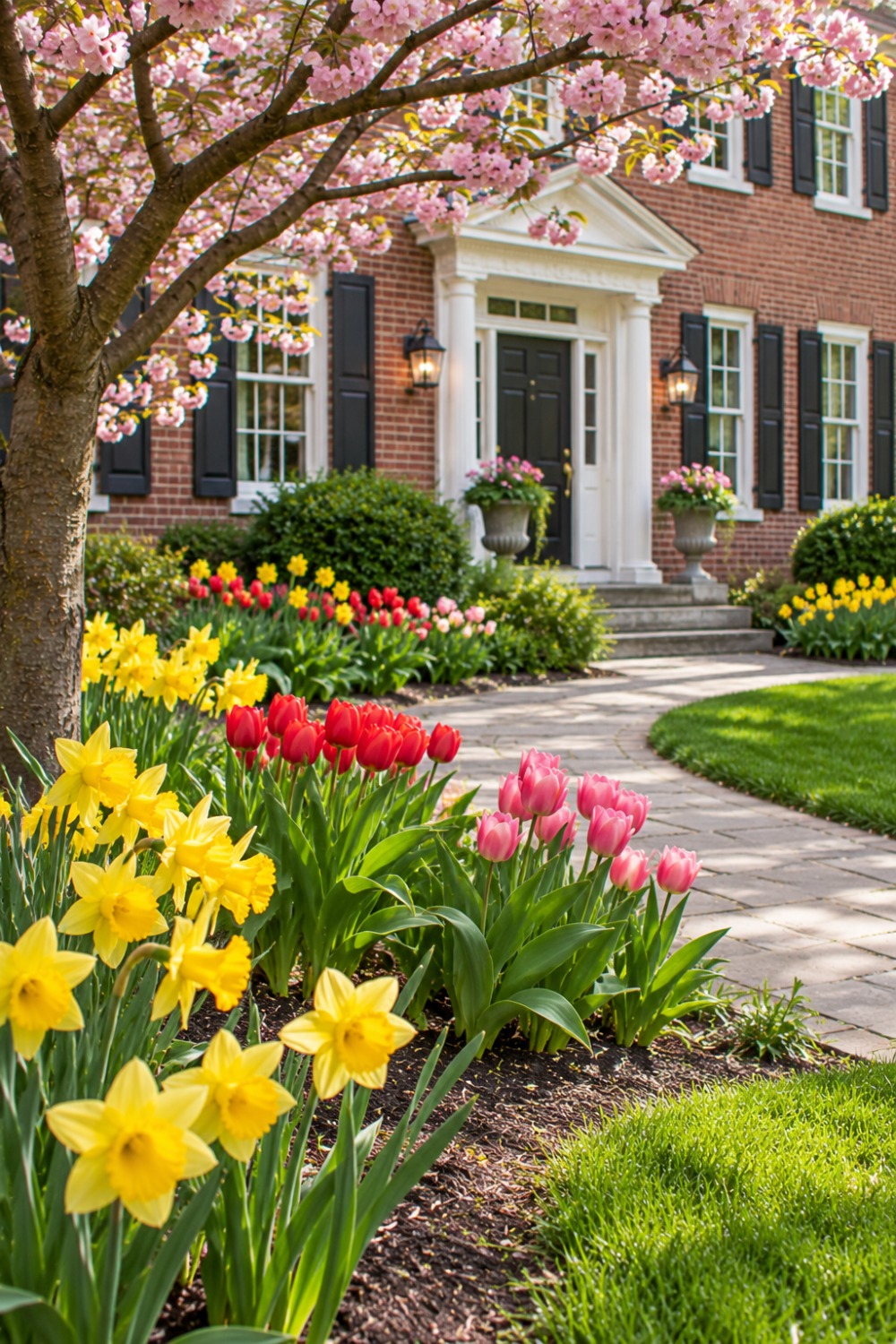
Spring bulbs bring color to the front yard weeks before most perennials wake up.
Plant drifts of daffodils, tulips, alliums and crocus in fall, tucking them between shrubs and perennials so their fading leaves are hidden later.
Daffodils are a reliable choice where deer or rodents are a problem.
How to do it:
- Plant bulbs in fall, at about three times their height deep.
- Group them in natural drifts, not single rows.
- Leave foliage to yellow before cutting it back.
23. Frame the View With Plants at the House Corners
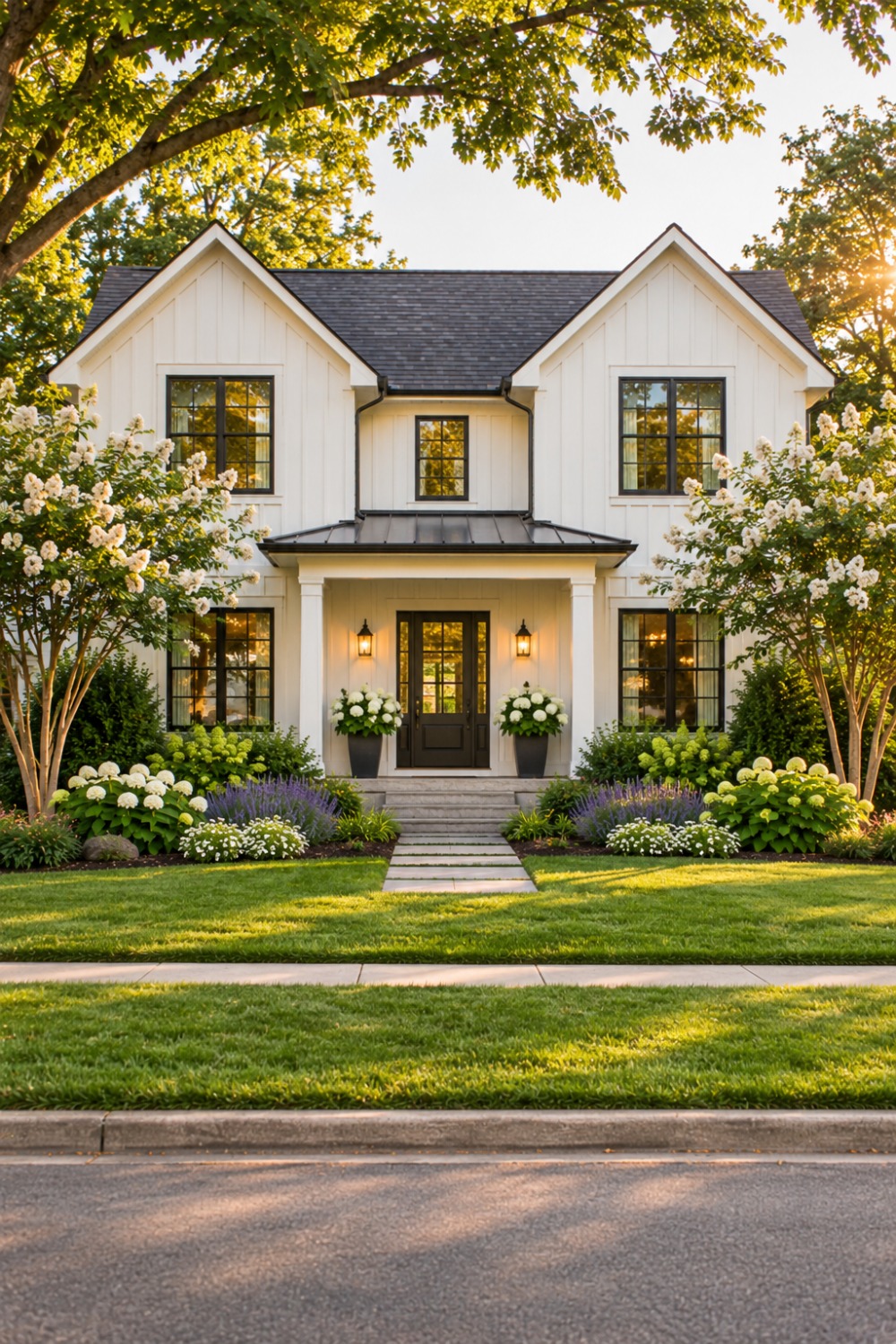
Strong corner plantings visually anchor a house to the ground and make it look wider and more settled.
Use an upright shrub or small multi-stem tree at each corner, then step the planting down toward the door.
This framing effect is one of the oldest landscape design tricks for boosting curb appeal.
How to do it:
- Choose plants that mature at about two-thirds the height of the eaves.
- Place them a few feet out from the corners, not tight against walls.
- Step down to lower plants as you move toward the entry.
Pro tip: stand across the street and squint. If the house looks like it’s floating, the corners need more weight.
Frequently Asked Questions
What is the best way to start landscaping a front yard?
Start with the path to the front door and the corners of the house. Once those are set, add beds, evergreens for structure and seasonal color. Take photos from the street as you go to check the overall balance.
How do I make my front yard look expensive?
Limit your color palette, repeat a few plants in groups, keep bed edges crisp and add warm, well-placed lighting. Good structure and maintenance matter more than costly plants.
What plants look good in front of a house all year?
Evergreen shrubs and dwarf conifers provide year-round structure, while ornamental grasses, flowering shrubs and bulbs add seasonal interest. Ask a local nursery which evergreens suit your zone.
How much of my front yard should be lawn?
There is no fixed rule. Many designers keep only as much lawn as you actually use and replace the rest with beds, ground covers or meadow strips that need less mowing and water.
Final Thoughts: Design a Front Yard That Welcomes You Home
The best front yards start with structure, not shopping.
Get the path, the corners of the house and the main bed shapes right, and the rest of the design falls into place.
Next, choose a style that suits your home and a short color palette, then repeat the same plants so everything feels connected.
Add evergreens for winter, bulbs and flowering shrubs for spring and summer, and grasses for fall texture so the yard looks good in every season.
Finally, think about how the yard feels after dark and up close: a bench by the door, warm lighting and clear house numbers make a big difference.
You don’t have to do everything at once. Tackle one area each season and the yard will steadily come together.