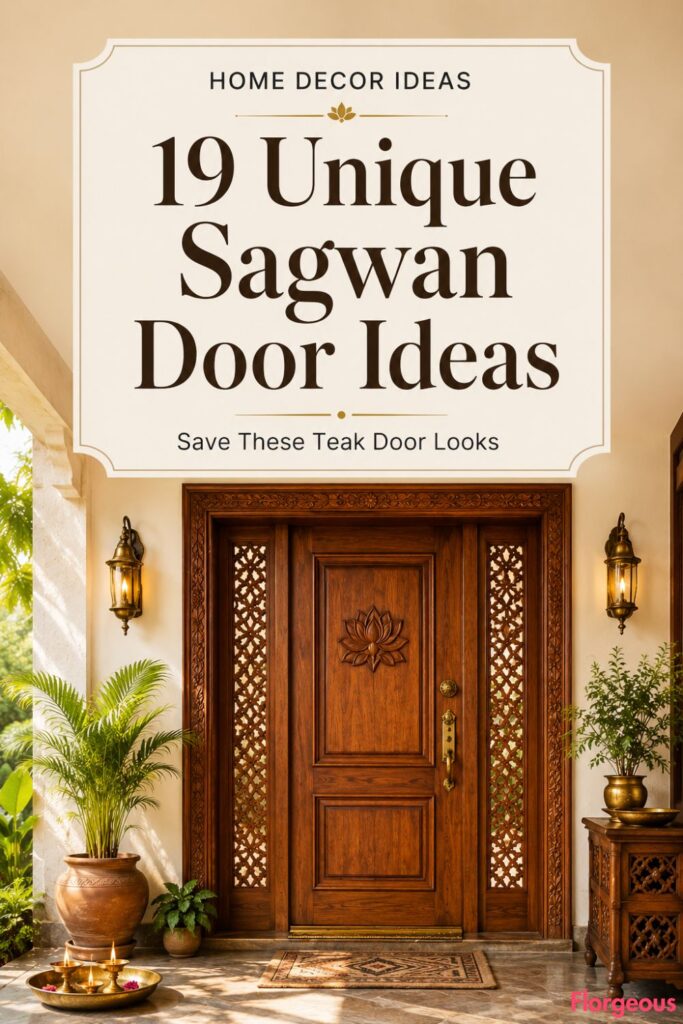
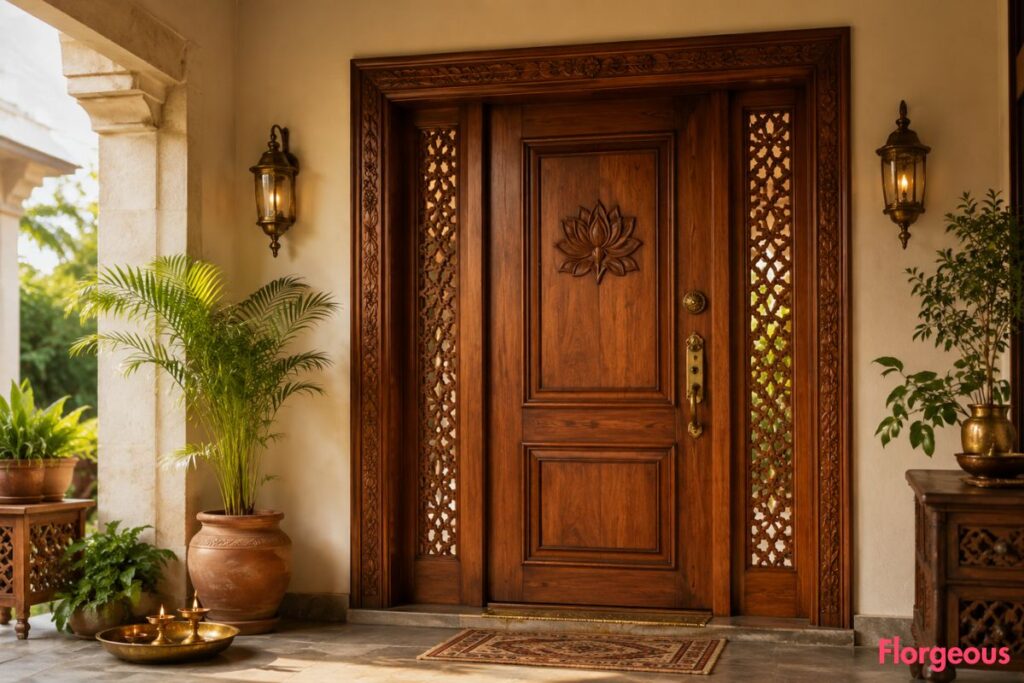
A sagwan door has a way of making a home feel grounded before you even notice the furniture, paint colors, or styling.
The beauty of teak is not just its strength. It is the warm grain, the deep polish, the carved details, and the way it can look equally at home in a traditional Indian house, a modern apartment, or a courtyard-style villa.
This list of sagwan door design ideas focuses on unique, less-common details inspired by Indian woodwork, temple architecture, havelis, jali patterns, brass craft, and modern handmade finishes.
If you want a door that feels personal instead of predictable, these ideas will give you plenty of fresh inspiration.
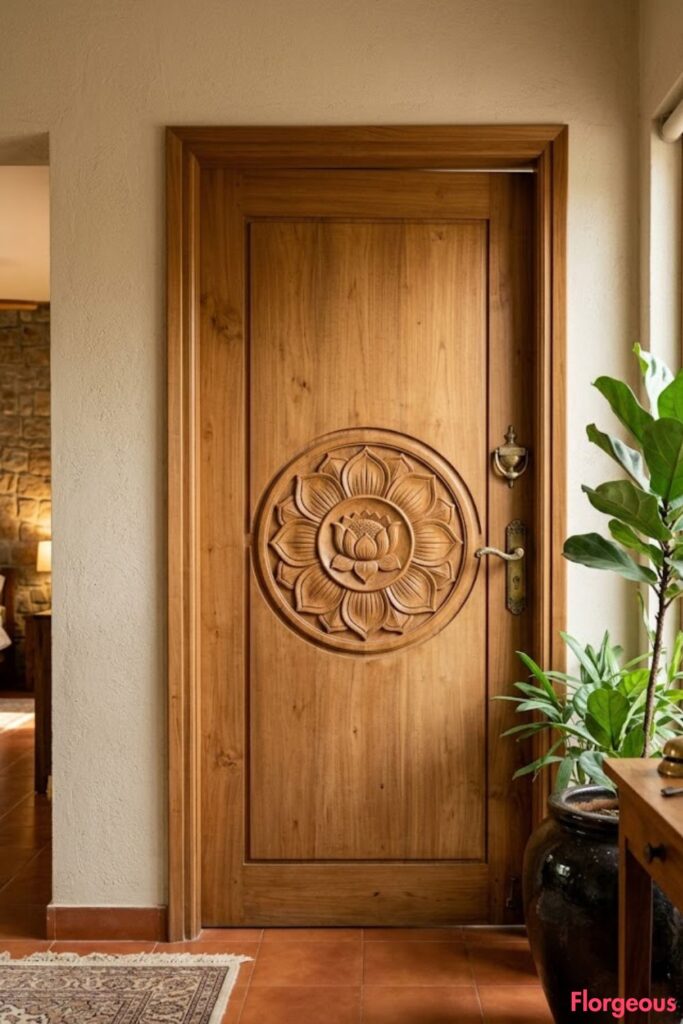
1. Sagwan Door With a Carved Lotus Medallion
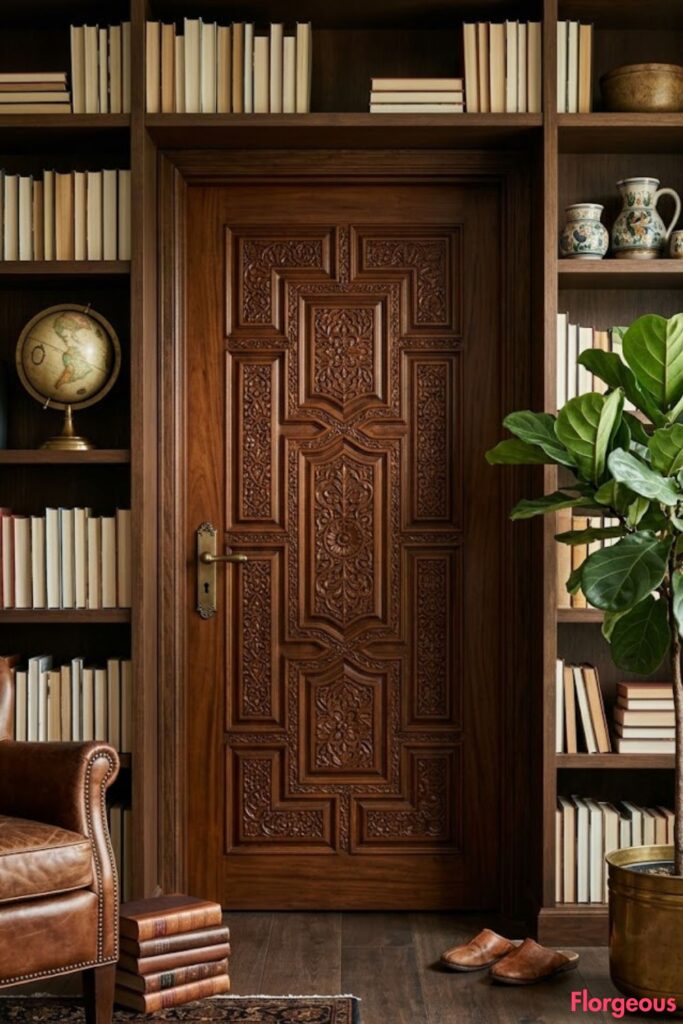
A single carved lotus medallion in the center of a sagwan door feels traditional without covering the whole surface in carving.
Keep the rest of the door clean with flat teak panels, then let the round lotus detail become the focal point. This works beautifully for main entrances, pooja room doors, or even a formal living room door.
Choose a satin polish so the carving catches light softly. Brass handles or a small round knocker will complete the look without making it feel crowded.
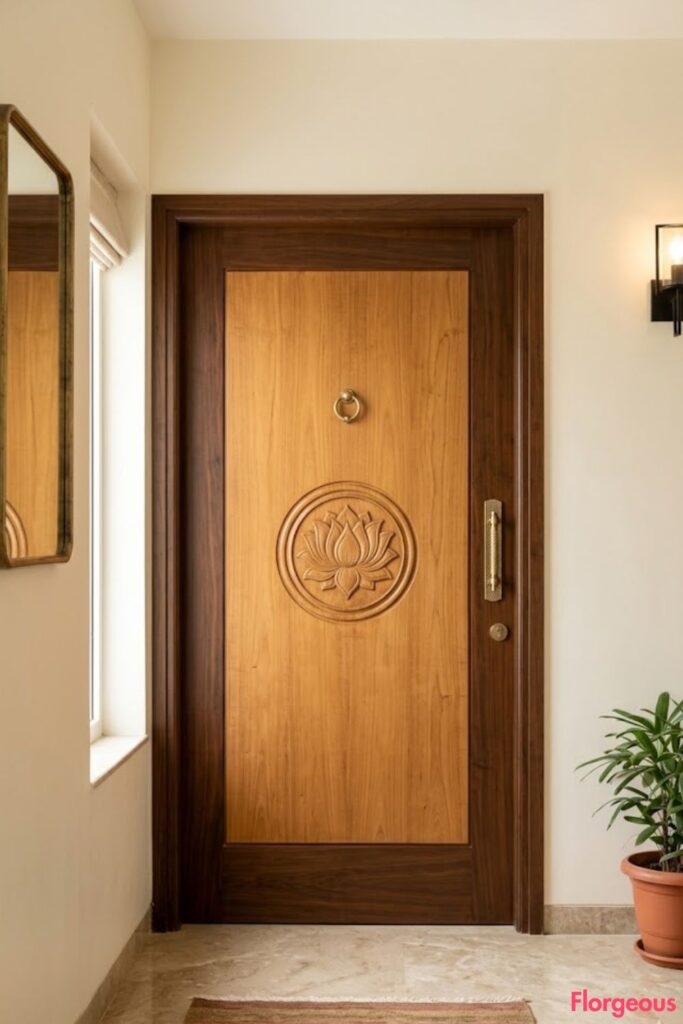
2. Split-Tone Sagwan Door Design
A split-tone sagwan door feels custom and designer-made.
Use natural honey teak for the main panels, then stain the border or frame in a deeper walnut shade. The contrast makes the door feel layered, rich, and more modern than a single-color polish.
This idea is perfect if you want a traditional Indian wood door, but you do not want heavy carving. It also pairs well with cream walls, stone flooring, matte black lighting, and brass hardware.
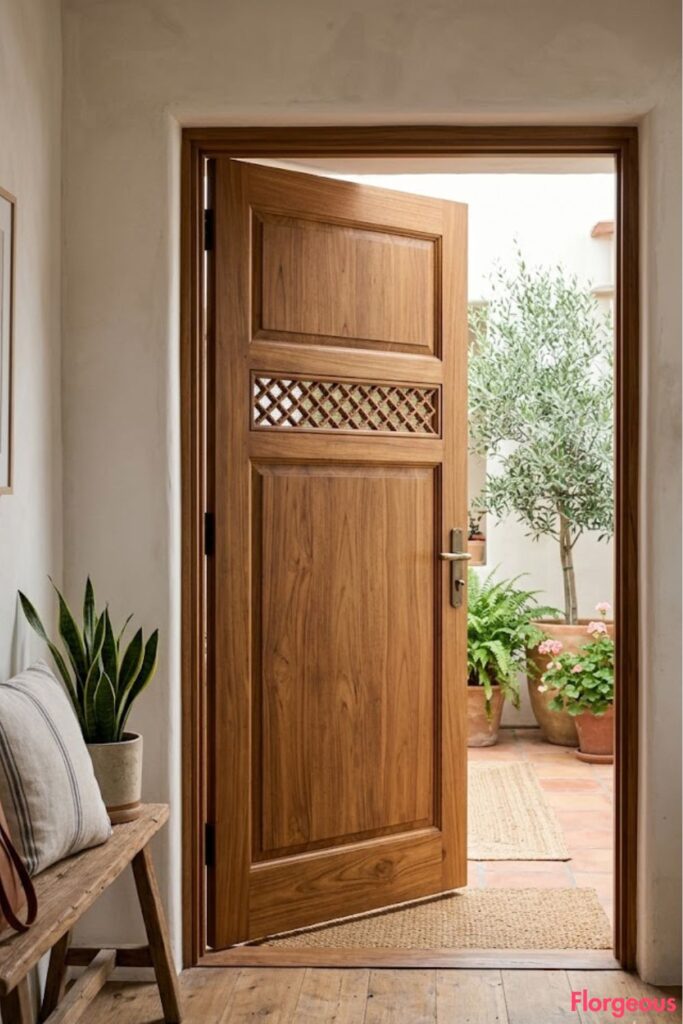
3. Sagwan Door With Hidden Jali Ventilation Strip
Instead of a large jali panel, add a slim carved jali strip near the top or along one side of the door.
This gives airflow, privacy, and texture while keeping the door mostly solid. It is a smart choice for kitchens, courtyards, utility entrances, balconies, and semi-outdoor areas.
Choose a diamond, lotus, or Mughal-inspired lattice pattern. For outdoor use, add mesh or glass behind the jali to keep dust and insects out.
4. Temple Bell Sagwan Door Design
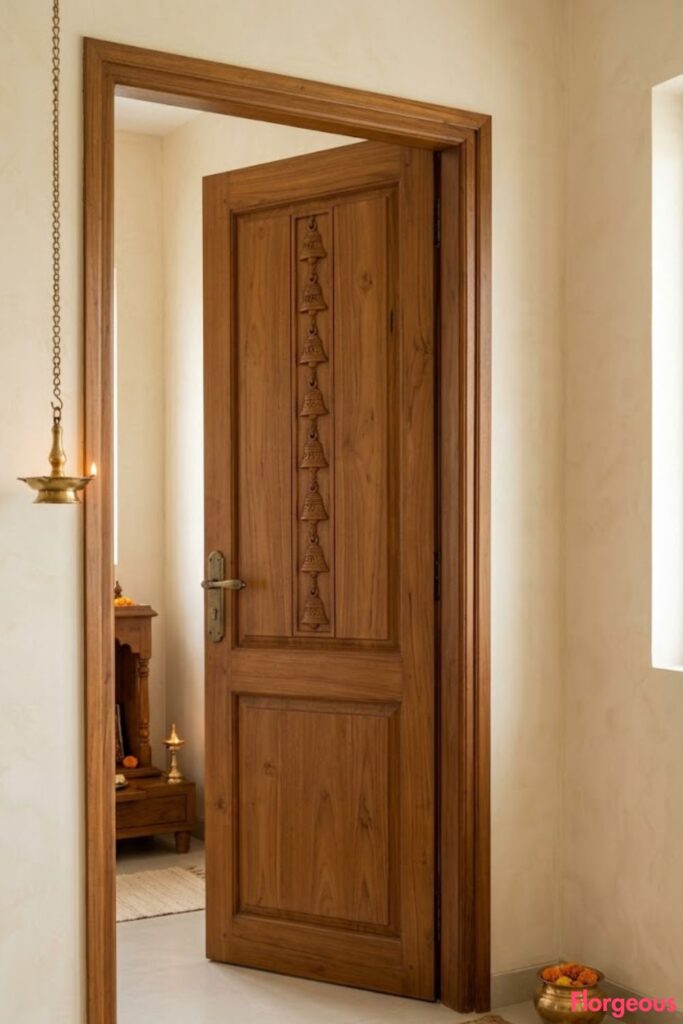
A sagwan door with small carved temple bell motifs feels peaceful and deeply Indian.
This design works especially well for pooja rooms, meditation corners, or the entrance to a traditional family home. The bells can be carved in a vertical line, placed along the border, or used as a small detail above the handle.
Keep the polish warm and natural. Too glossy a finish can make delicate carving look less graceful.
5. Sagwan Door With Brass Inlay Line Art
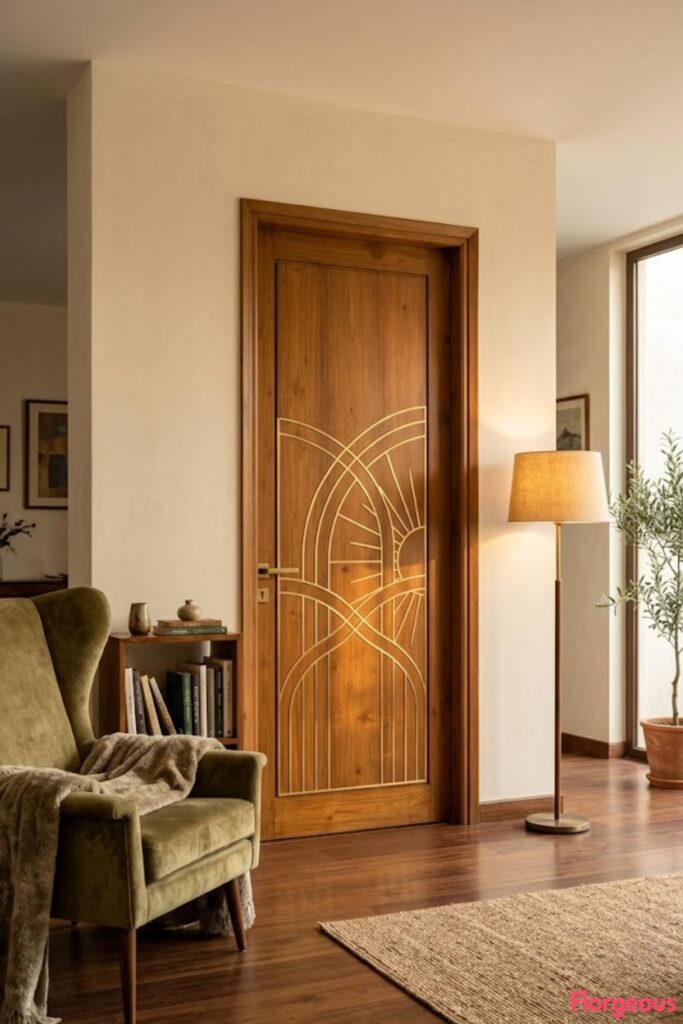
Brass inlay is a beautiful alternative to heavy metal studs.
Thin brass lines can be set into the teak to form arches, sunbursts, lotus outlines, peacock feathers, or geometric borders. The effect is subtle from far away, then beautifully detailed up close.
This sagwan door design suits modern Indian homes that want something festive, handcrafted, and elegant without looking too ornate.
6. Arched Haveli-Style Sagwan Door
An arched sagwan door instantly brings old haveli charm into a home.
Use a rounded top, carved borders, and a deep teak polish to create a heritage-inspired entrance. If you want a more dramatic look, add brass studs or an antique ring knocker.
This style looks beautiful with patterned tiles, limewashed walls, stone steps, lantern-style lighting, and plants in terracotta pots.
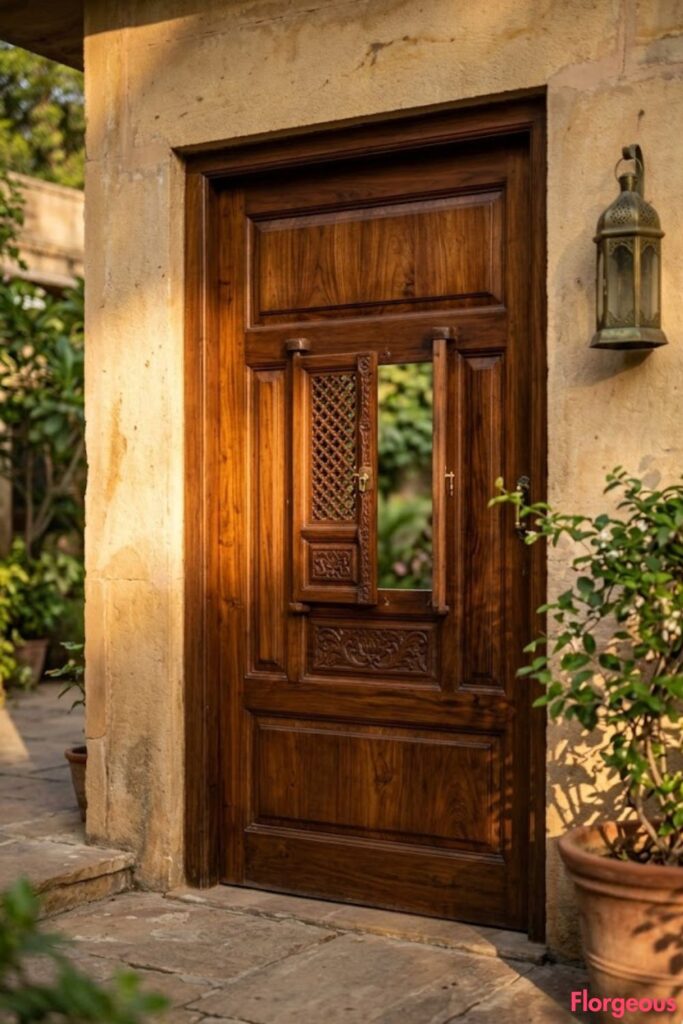
7. Sagwan Door With a Mini Courtyard Shutter
This is a unique idea inspired by old Indian courtyard homes.
Add a small inset shutter within the main door, almost like a decorative viewing window. The little shutter can have jali work, carving, or a tiny brass latch.
It gives the door personality and nostalgia while still feeling practical. Use it for a farmhouse, ancestral home renovation, garden entrance, or any space where you want an old-world Indian mood.
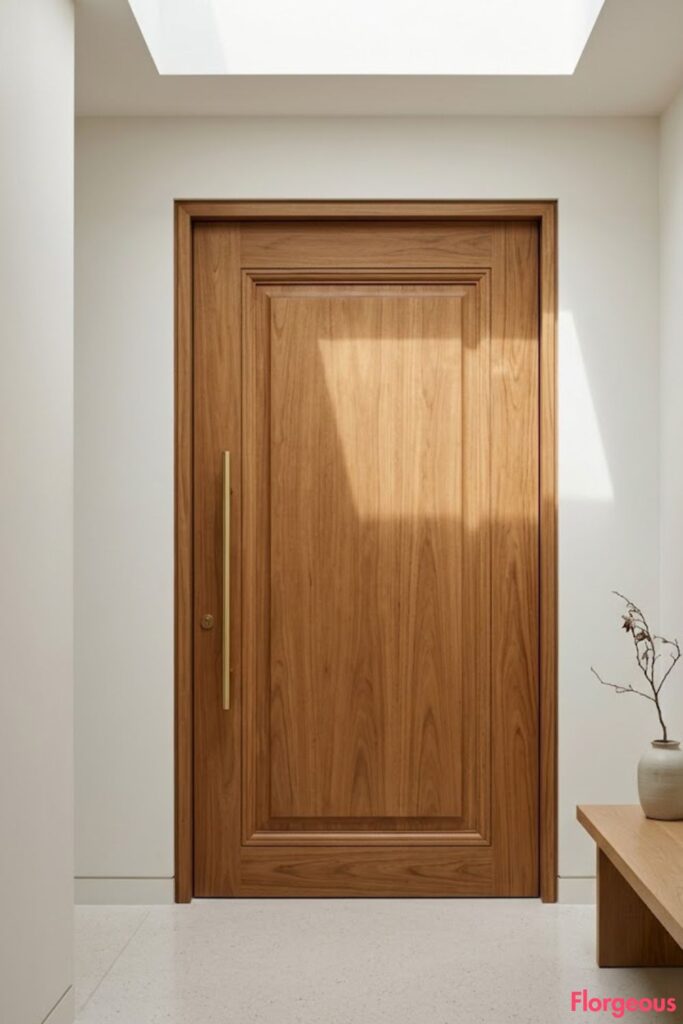
8. Floating Frame Sagwan Door Design
A floating frame design makes the center panel look slightly recessed inside a raised teak border.
This creates depth and shadow without needing too much decoration. Add a slim carved line around the raised frame for a traditional detail.
It is a great choice for homeowners who like clean doors but still want the richness of sagwan wood. Pair it with a long brass pull handle for a refined modern-traditional look.
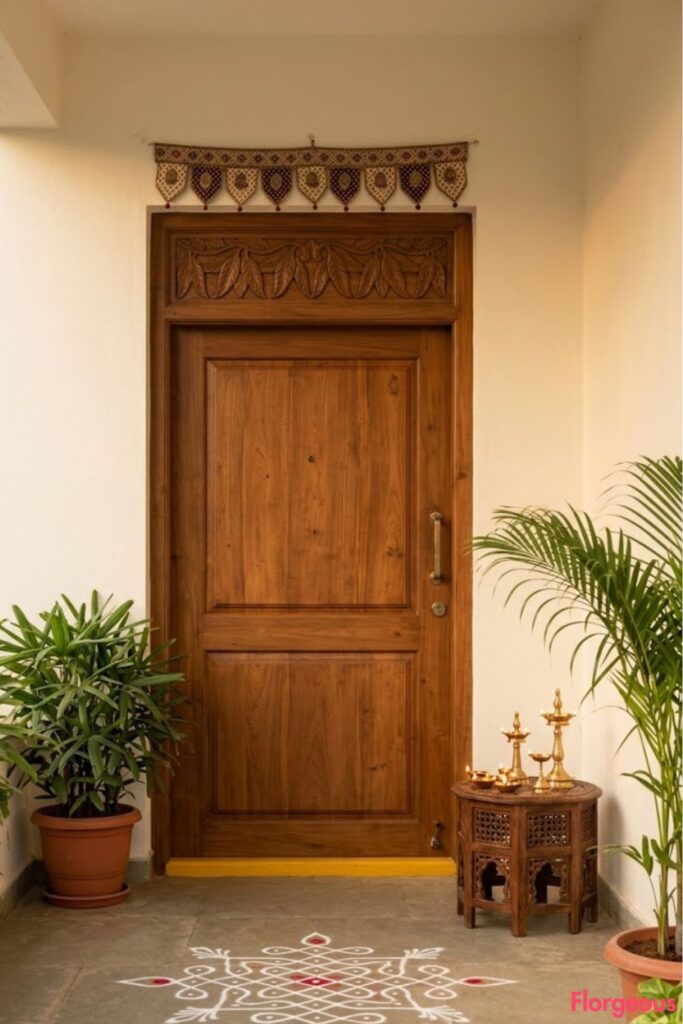
9. Sagwan Door With Carved Mango Leaf Border
Mango leaves are a beautiful traditional Indian symbol, and they look charming when carved into a door border.
Instead of placing the motif everywhere, use it only along the top or side frame. This keeps the design fresh, not overly decorative.
A mango leaf border works well for main doors, pooja rooms, and festive family homes. It looks especially lovely with warm white exterior walls and brass diyas near the entrance.
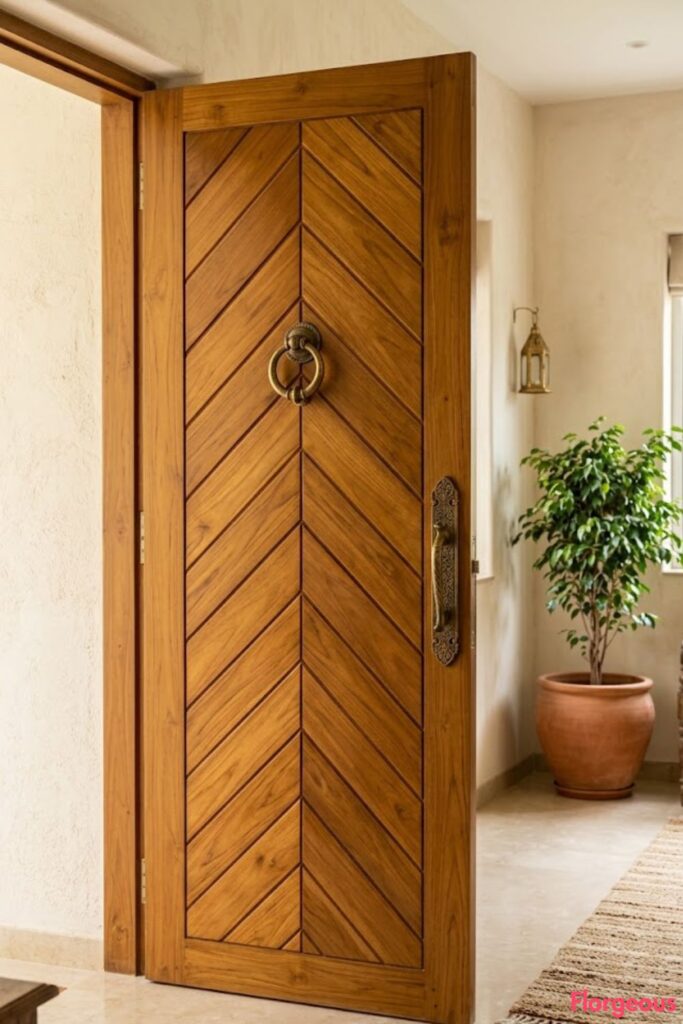
10. Chevron Sagwan Door With Traditional Hardware
Chevron woodwork gives sagwan a stylish, contemporary rhythm.
Use angled teak planks to form a V-shaped pattern across the door. Then balance the modern wood layout with traditional Indian hardware, such as a brass ring knocker or carved handle backplate.
This idea is perfect for people who want a fresh sagwan door design that still connects to Indian craftsmanship.
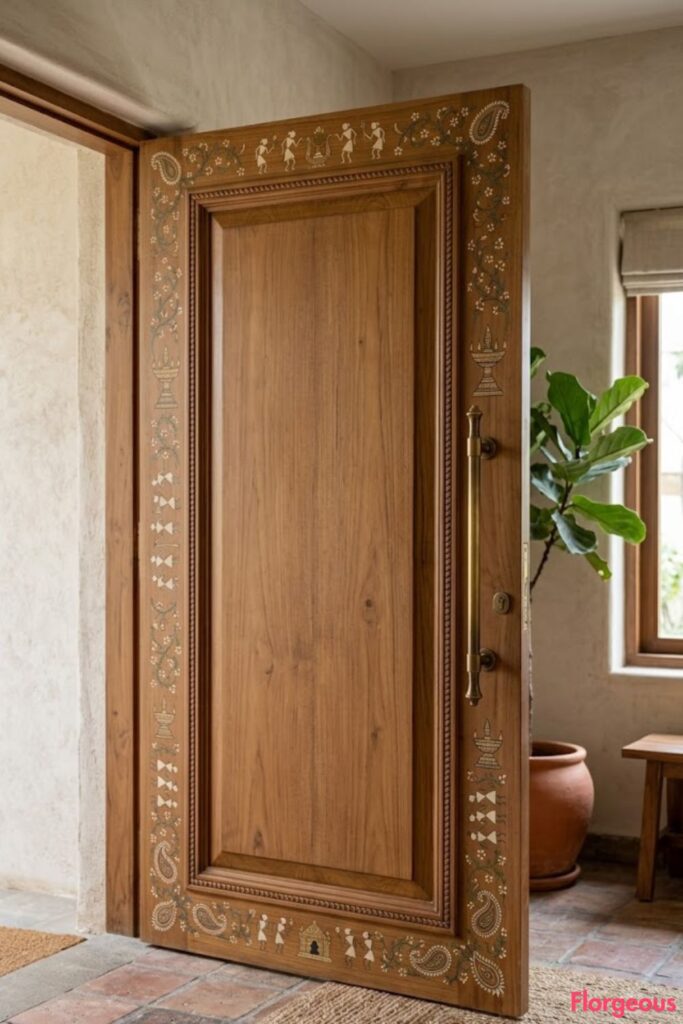
11. Sagwan Door With Hand-Painted Folk Art Border
A hand-painted border can make a sagwan door feel artistic and personal.
Use muted Warli figures, tiny floral vines, paisley shapes, temple lamps, or peacock-inspired details along the edge of the door. Keep the colors earthy: ivory, terracotta, antique gold, muted green, or charcoal.
This is also a budget-friendly way to refresh an older teak door without replacing it.
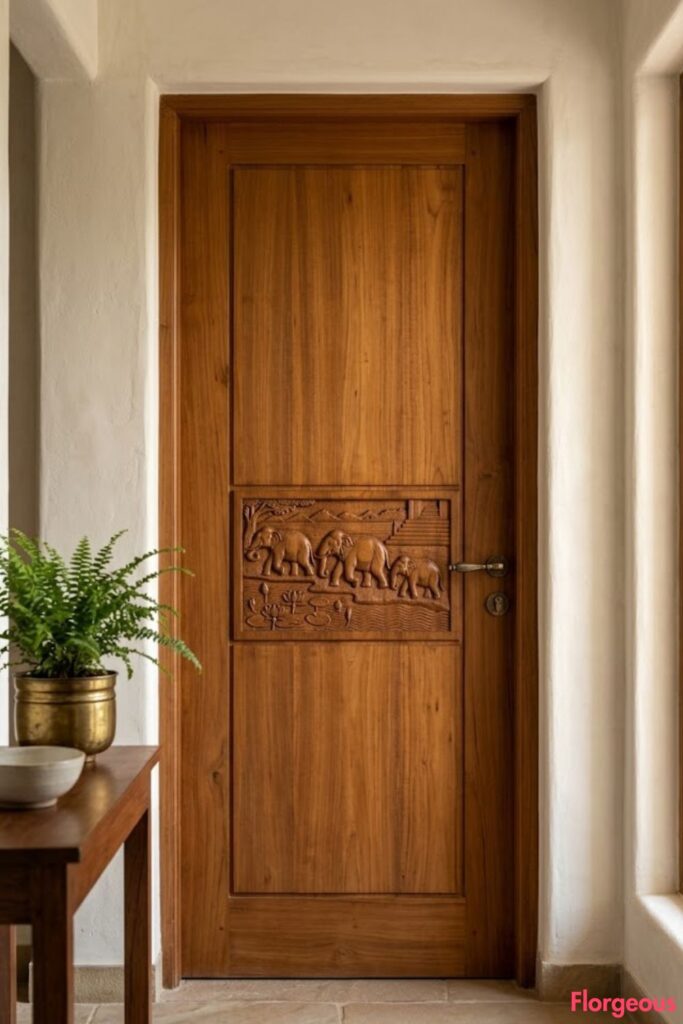
12. Sagwan Door With Carved Story Panel
Instead of carving the whole door, add one small story panel near the bottom or middle.
The panel could show river waves, lotus ponds, temple steps, elephants, parrots, or village doorway motifs. The rest of the door can remain plain, which makes the carved panel feel more special.
This design is ideal for a custom home where you want the entrance to feel meaningful, not mass-produced.
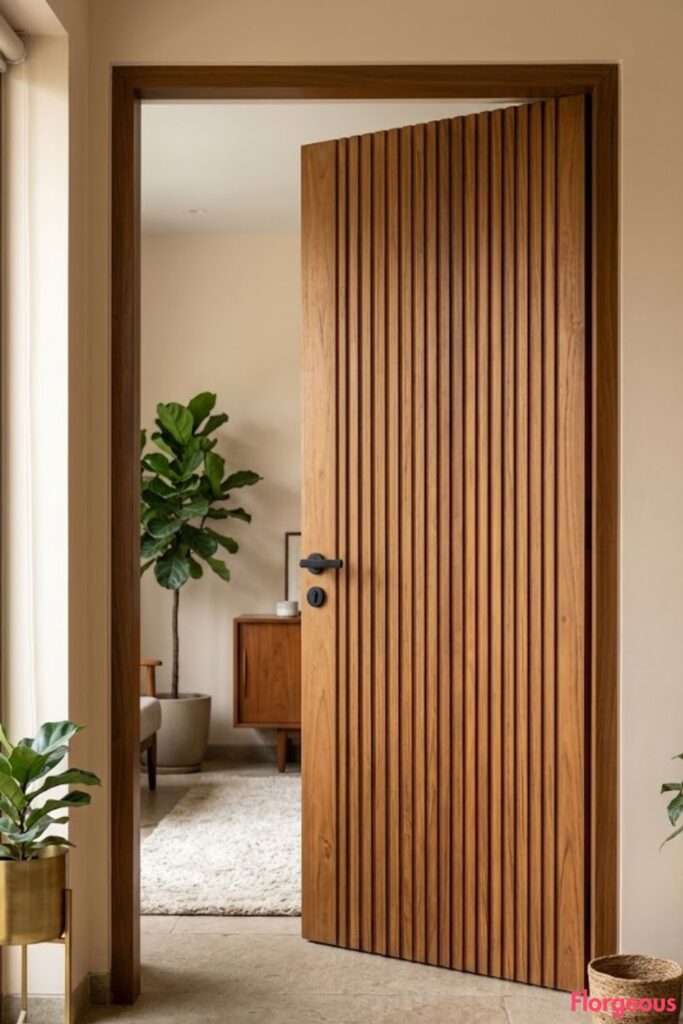
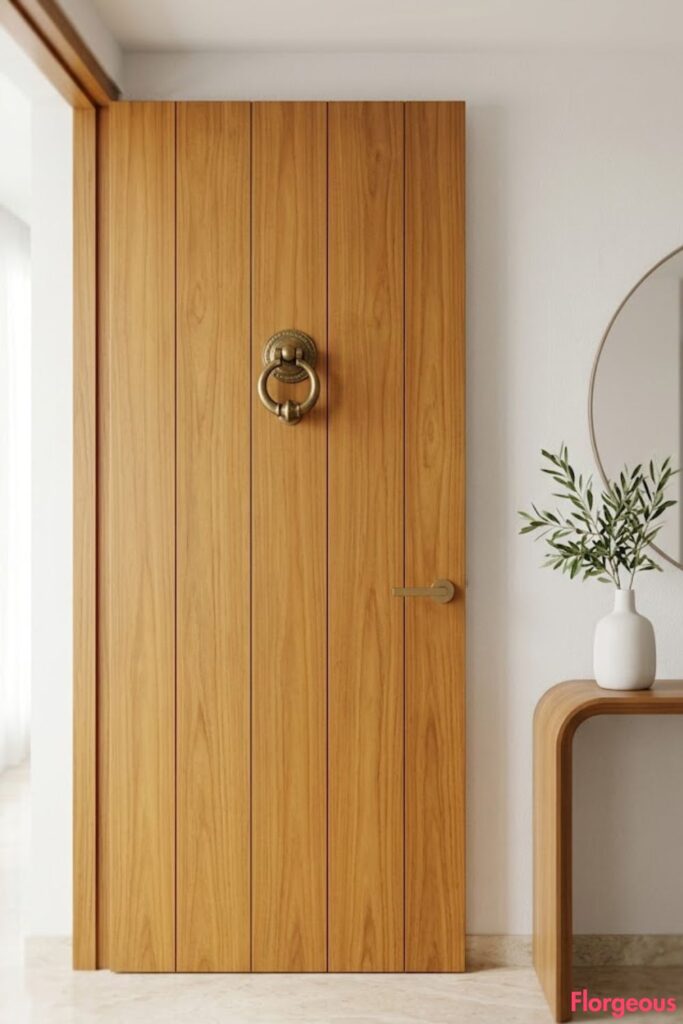
13. Sagwan Door With Vertical Reeded Wood Texture
Reeded wood is stylish, tactile, and surprisingly beautiful in sagwan.
Slim vertical grooves make the door feel taller and more architectural. The teak grain adds warmth, while the repeated lines keep the design clean.
This works well for apartment entrances, bedroom doors, home office doors, and modern Indian interiors. Use simple brass or matte black hardware so the texture remains the hero.
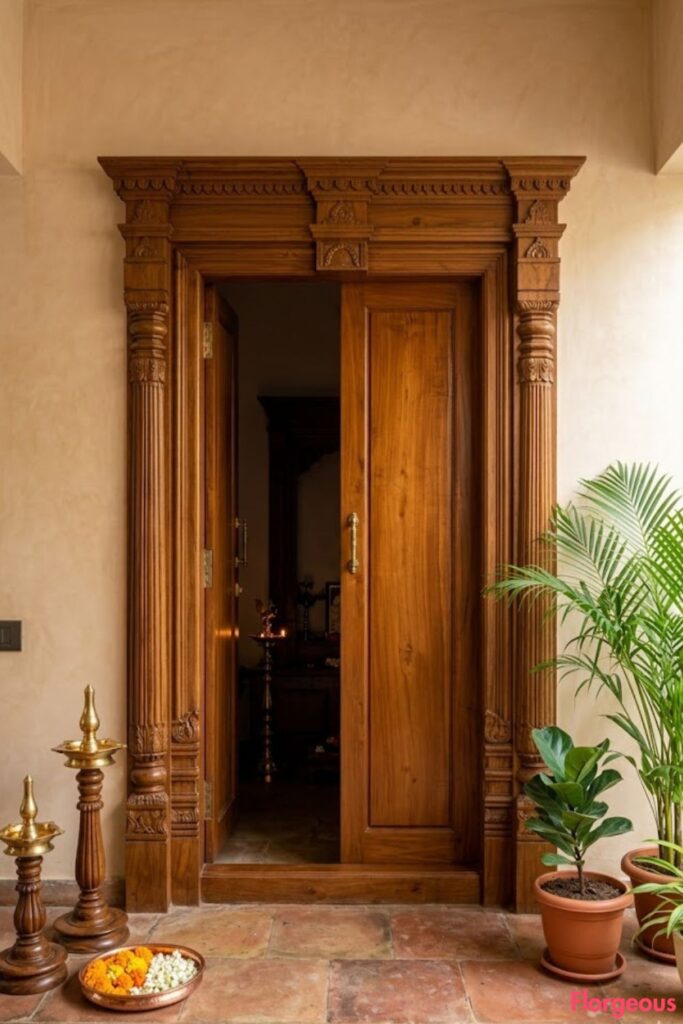
14. South Indian Frame With Simple Sagwan Door
Sometimes the frame matters more than the door panel.
Use a thick sagwan frame with carved column-like sides, layered borders, or temple-inspired top detailing. Then keep the actual door panel simple and polished.
This creates a traditional South Indian look without making the entire entrance too heavy. It is especially beautiful for pooja rooms and main entrances with stone or terracotta flooring.
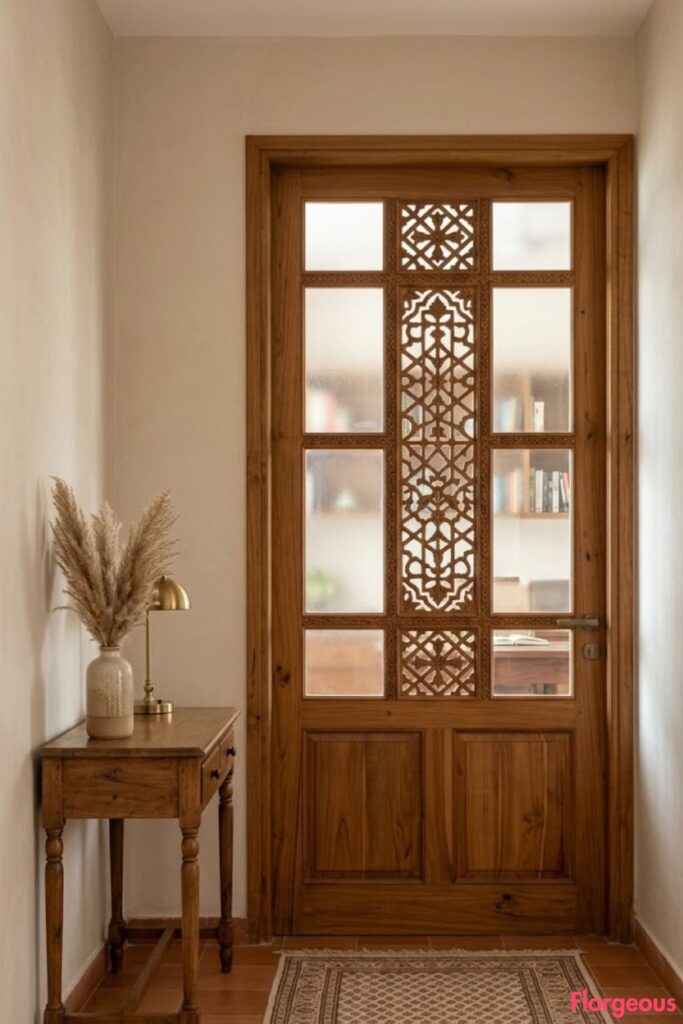
15. Sagwan Door With Frosted Glass and Carved Wood Grid
For homes that need more light, combine sagwan wood with frosted glass.
Instead of plain rectangular glass, divide the glass into a carved teak grid inspired by Indian jali shapes. The frosted glass keeps privacy, while the teak grid adds warmth and pattern.
This is a lovely option for dining rooms, internal courtyards, home offices, and apartment entrances that feel too dark.
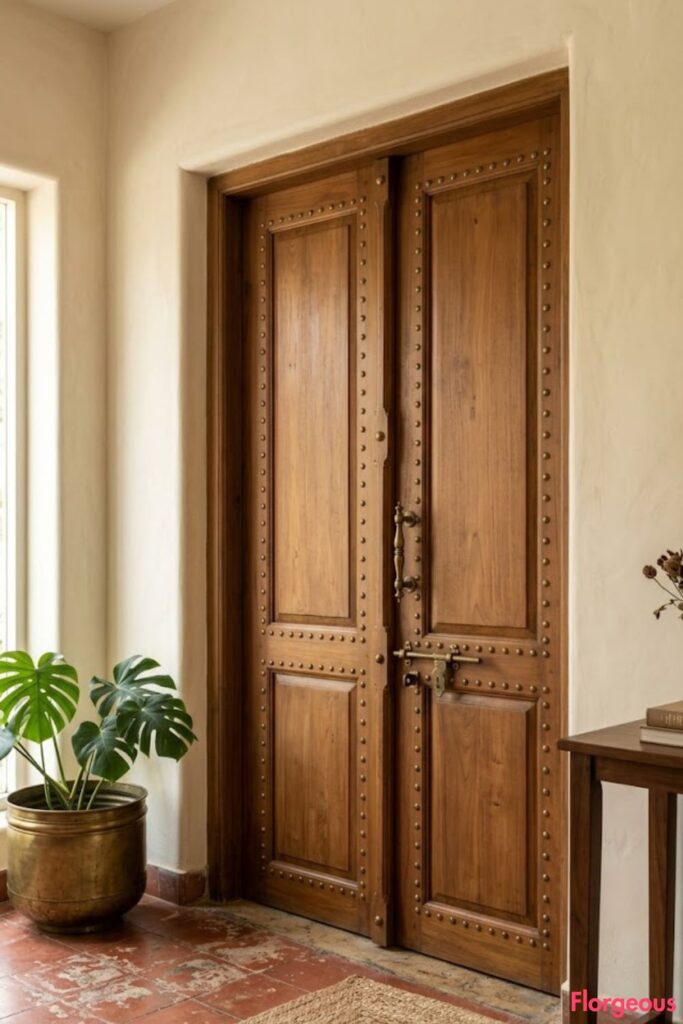
16. Antique Studded Sagwan Door With Soft Matte Finish
A studded sagwan door can look beautiful, but the secret is restraint.
Use smaller brass or antique bronze studs in neat rows around the border instead of covering the whole door. Pair them with a soft matte teak finish so the door feels aged and graceful.
This design is inspired by old palace and fort doors, but it can still work in modern homes if the proportions are clean.
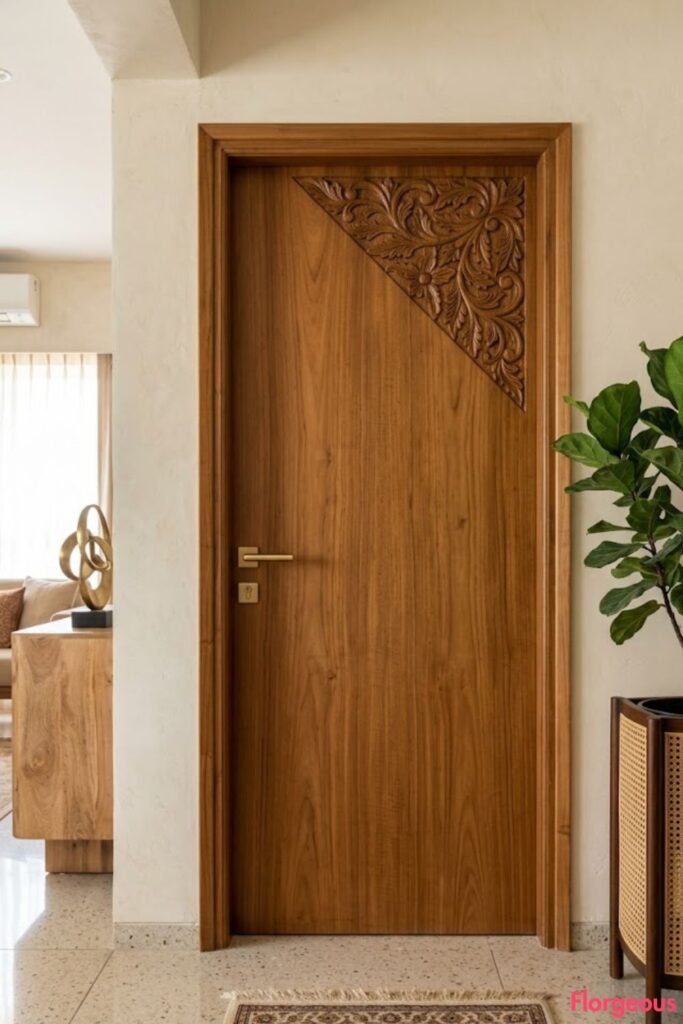
17. Sagwan Door With Diagonal Carved Corner Detail
This is a fresh way to use carving without making the door feel too traditional.
Keep most of the sagwan door plain, then add carved detail only in one diagonal corner. It could be floral, geometric, leafy, or inspired by temple stonework.
The asymmetry makes the design feel modern and unexpected. It is a great choice for homeowners who want something unique but still tasteful.
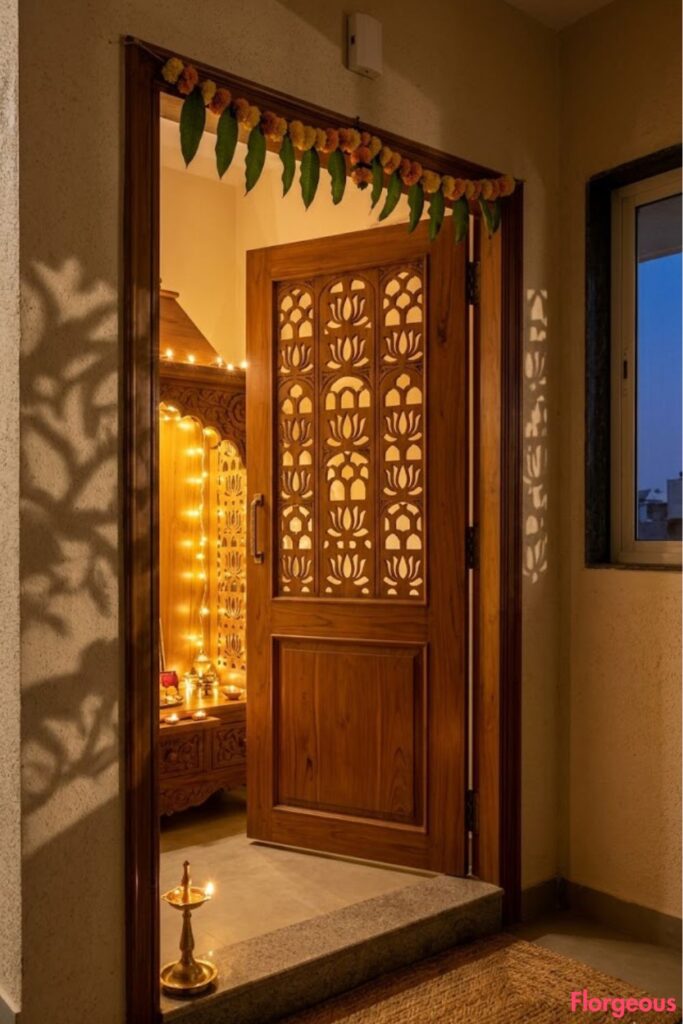
18. Pooja Room Sagwan Door With Half Jali Panels
A half-jali sagwan door is perfect for a pooja room because it allows light, shadow, and fragrance to move through the space.
Use solid wood on the lower half for privacy, then add carved jali panels on the upper half. Lotus, bell, arch, or diamond patterns all work beautifully.
For a softer look, place warm lighting inside the pooja room. At night, the jali pattern will glow gently through the doorway.
19. Modern Traditional Sagwan Door With One Signature Detail
A modern traditional sagwan door is ideal if you want heritage without a very ornate look.
Start with a clean teak panel door. Then choose one signature detail: a carved border, brass inlay, jali strip, arched frame, antique knocker, or reeded texture.
This keeps the door easy to maintain and visually calm. It also makes the design more flexible, especially for apartments, newly built homes, and interiors that mix Indian style with modern furniture.
Choosing the Right Sagwan Door Design for Your Home
The best sagwan door design is not always the most detailed one. It is the one that feels right for your home’s architecture, lighting, budget, and daily use.
For a grand entrance, choose an arched haveli-style door, a carved lotus medallion, or a studded antique design. For a modern apartment, try reeded teak, brass inlay, a split-tone finish, or a minimal door with one traditional border.
For pooja rooms, jali panels, temple bells, mango leaf borders, and carved frames feel especially meaningful.
Sagwan wood already has natural beauty, so let the grain breathe. Choose one strong feature, match the hardware carefully, and your door will feel warm, personal, and timeless.