Some doors quietly disappear into a room.
Others make you stop for a second and think, “That looks expensive.”
That is the charm of a well-chosen veneer door design. You get the warmth, movement, and natural beauty of real wood grain, but often at a more practical price than solid wood. And if you are comparing laminate vs. veneer, this is where veneer shines: it feels more organic, more custom, and more visually rich up close.
The best part? Veneer doors do not have to look basic. With the right grain direction, pattern, hardware, lighting, and placement, they can feel like a designer detail rather than a budget compromise.
1. Book-Matched Veneer Door Design for a Natural Statement
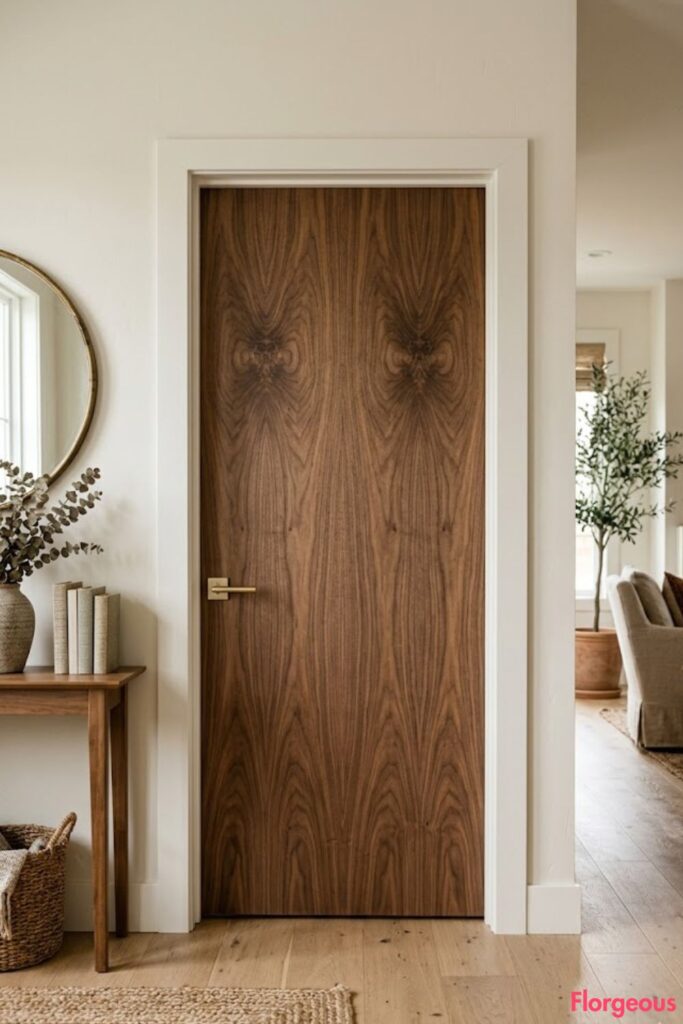
A book-matched veneer door feels quietly luxurious because the wood grain mirrors itself from the center.
The pattern looks almost like folded fabric or abstract art, especially with walnut, teak, or smoked oak veneer. It is perfect for a main bedroom, formal living room, home office, or any door you want to feel special.
This idea gives you the drama of premium wood without needing a thick solid wood slab. Keep the handle simple so the grain stays the star.
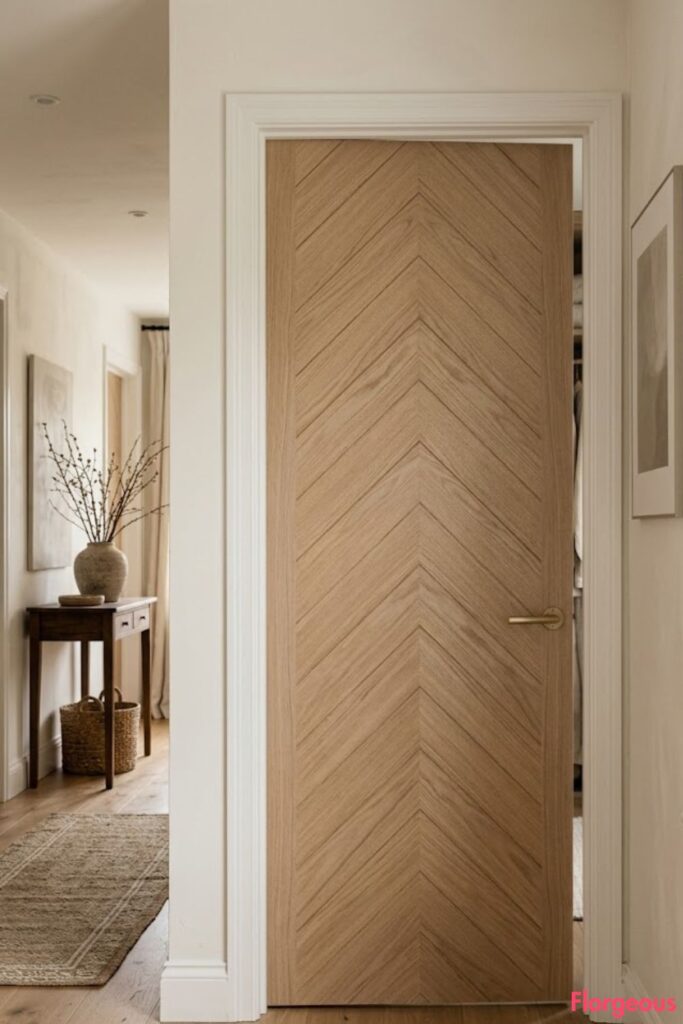
2. Chevron Veneer Door for a Soft Patterned Look
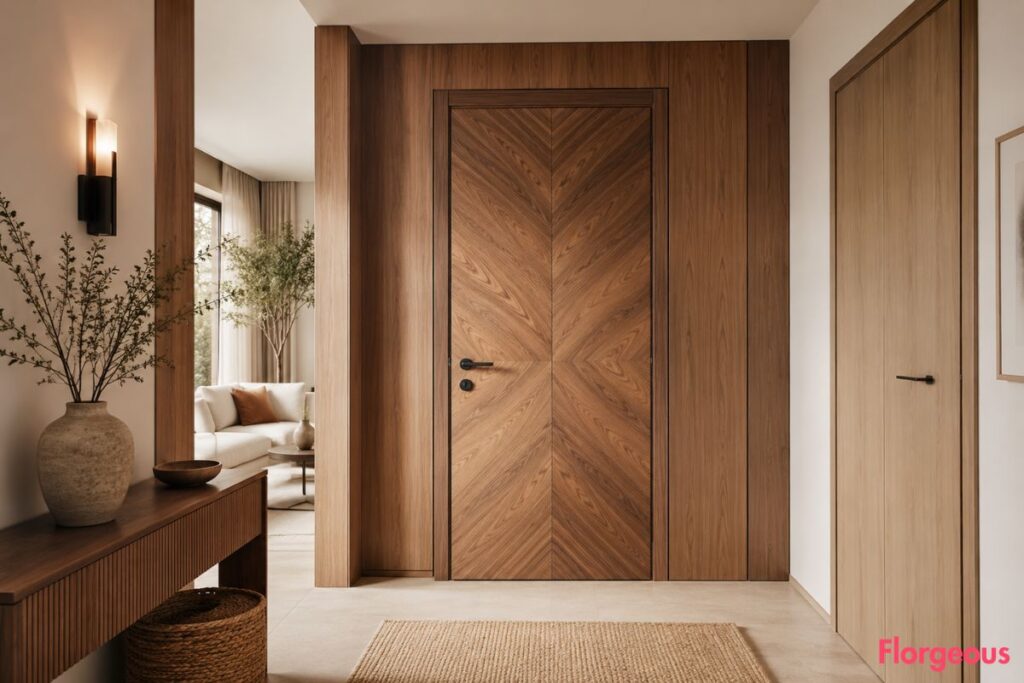
Chevron veneer is a beautiful way to make a door feel custom without using bright color or heavy carving.
The angled wood pieces create movement, but the natural grain keeps the look warm and refined. Light oak chevron feels modern and airy, while walnut chevron feels richer and more dramatic.
Use this veneer door design for an entry hallway, dressing room, powder room, or study. It is especially Pinterest-friendly because it photographs beautifully without looking too busy.
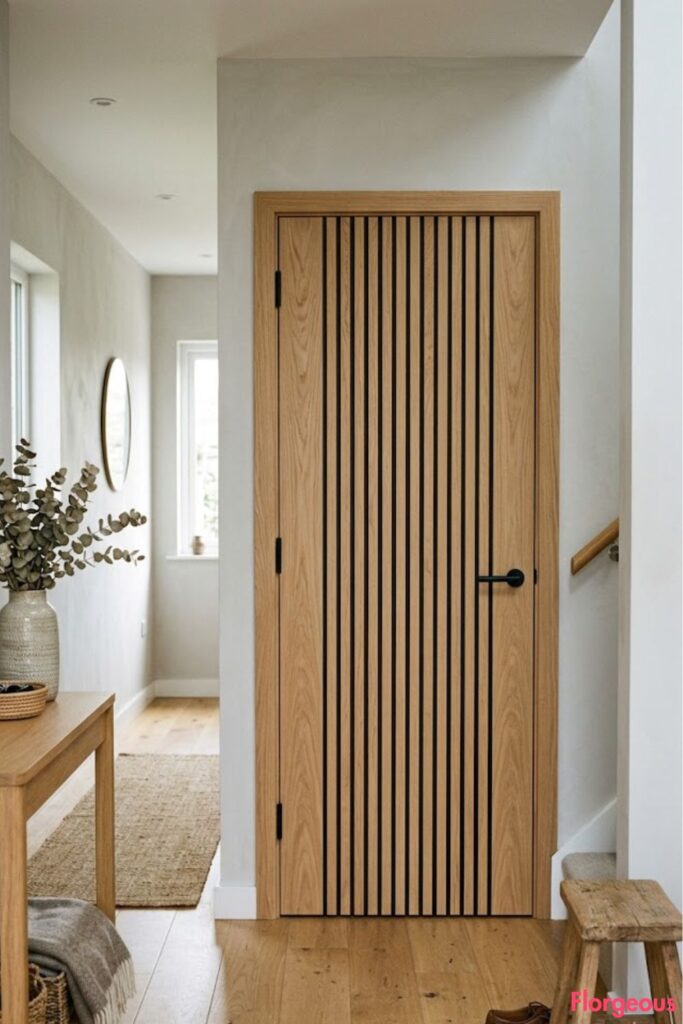
3. Vertical Slat Veneer Door With Shadow Gaps
Instead of a plain flat surface, try a veneer door with slim vertical slats and tiny shadow gaps.
This gives the door texture, rhythm, and depth while still keeping a clean wood look. It works beautifully in Japandi homes, modern apartments, warm minimal interiors, and hallway storage walls.
Choose oak, ash, or walnut veneer depending on the mood you want. For easy maintenance, keep the grooves shallow enough to wipe clean.
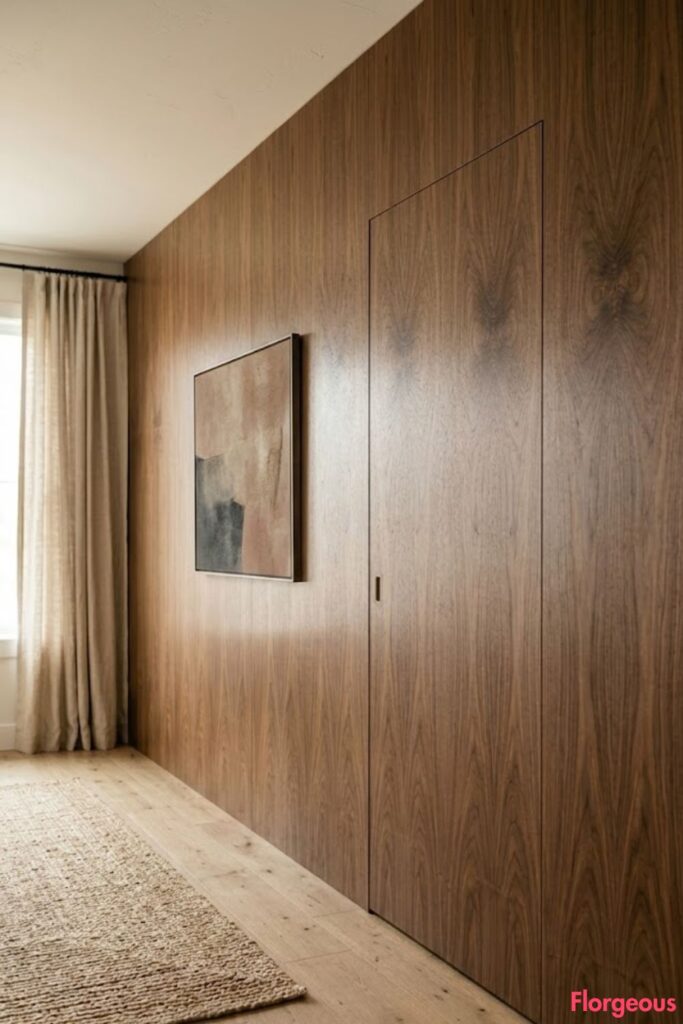
4. Hidden Veneer Door in a Matching Wood Wall
A hidden veneer door can make a hallway look incredibly sleek.
The trick is to cover both the door and surrounding wall panels in the same veneer, with the grain running in one continuous direction. The door almost disappears, leaving behind a calm wood feature wall.
This works well for powder rooms, storage closets, pantries, media rooms, and private offices. It feels high-end, but using veneer panels instead of solid wood cladding keeps the idea more realistic.
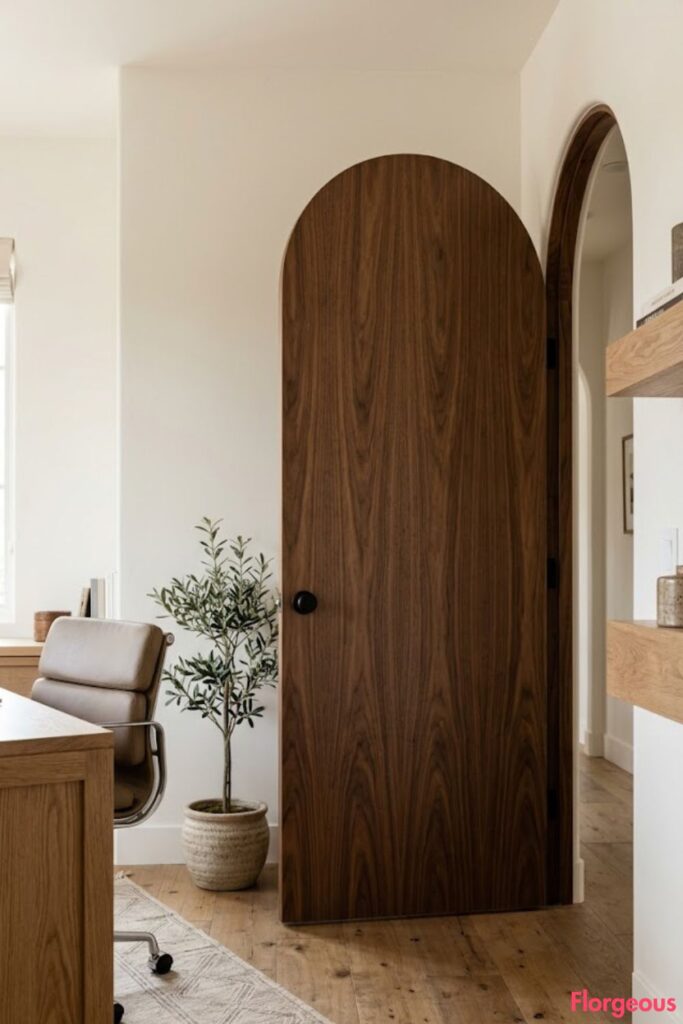
5. Curved Top Veneer Door for a Softer Architectural Shape
Most doors are rectangular, which is exactly why a curved top veneer door feels memorable.
An arched shape softens the wood finish and gives the room a more architectural feeling. Light oak veneer can feel Mediterranean and breezy. Dark walnut veneer can feel moody and old-world.
Use this idea for a pantry, hallway, bedroom suite, or home office. Pair it with a simple round knob or slim vertical handle so the shape does not compete with the grain.
6. Veneer Door With a Thin Brass Inlay
A thin brass inlay can make a veneer door look custom without making it flashy.
Try one slim vertical brass line near the handle, a delicate border around the panel, or two narrow horizontal strips across the lower third. The metal detail catches light and adds polish.
This works especially well with walnut, smoked oak, and teak veneer. It gives you a boutique hotel look while still staying cleaner and more timeless than ornate carving.
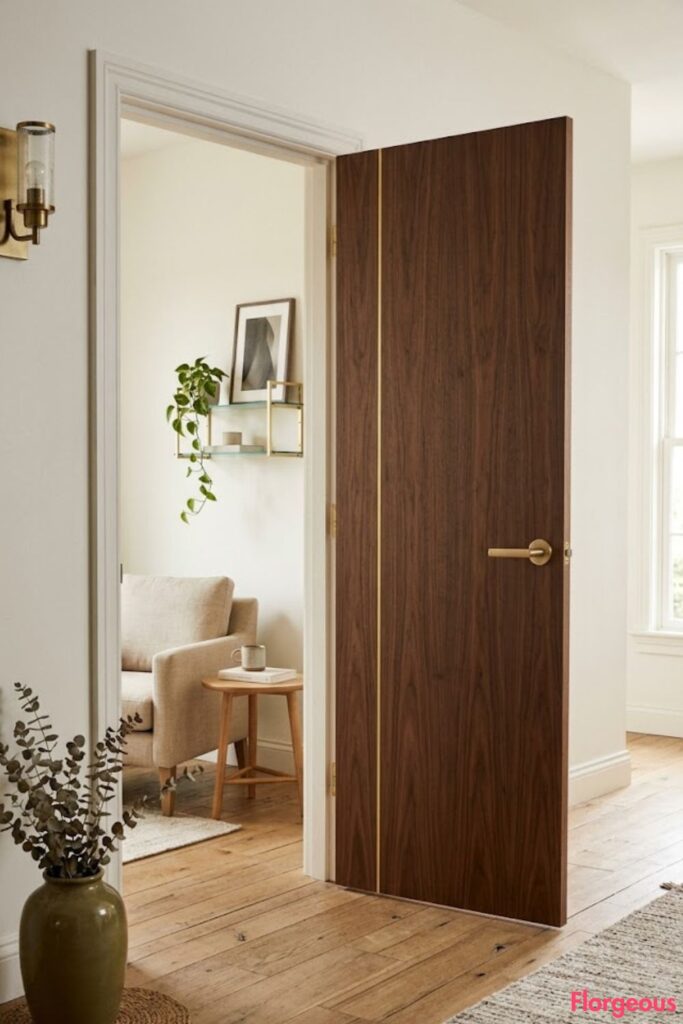
7. Mixed Grain Veneer Door With a Framed Center Panel
This idea uses two grain directions on one door.
The center panel can have vertical grain, while the border has horizontal grain. The effect is subtle, but it makes the door feel carefully designed rather than off-the-shelf.
It is a smart choice if you want something more interesting than a flat door but still quiet enough for bedrooms, hallways, and living areas. Use the same wood species for both sections so the contrast feels refined.
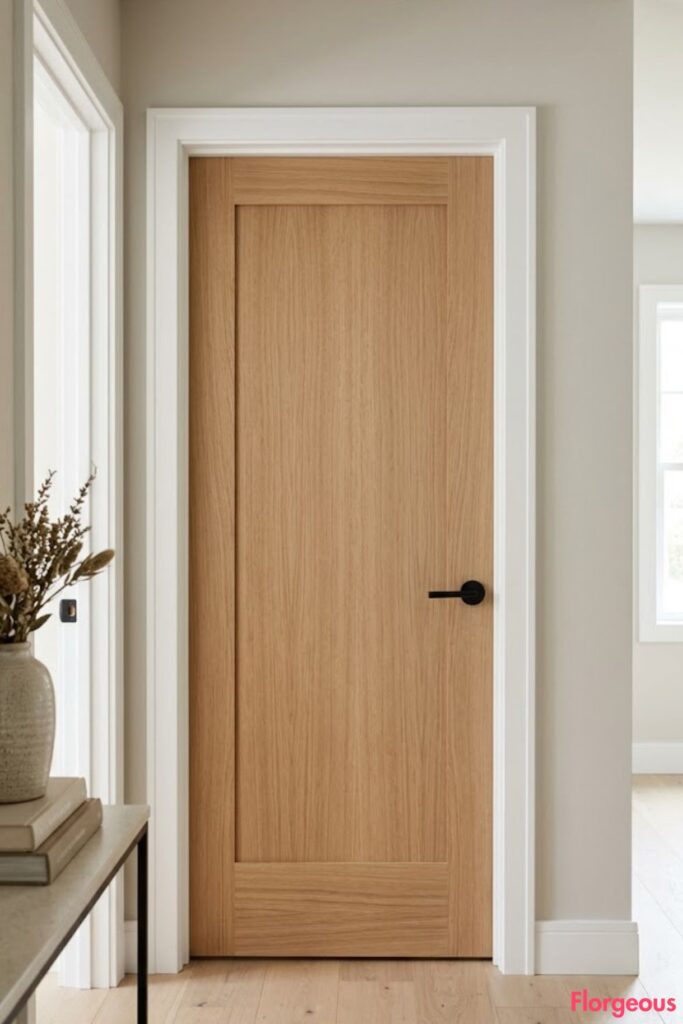
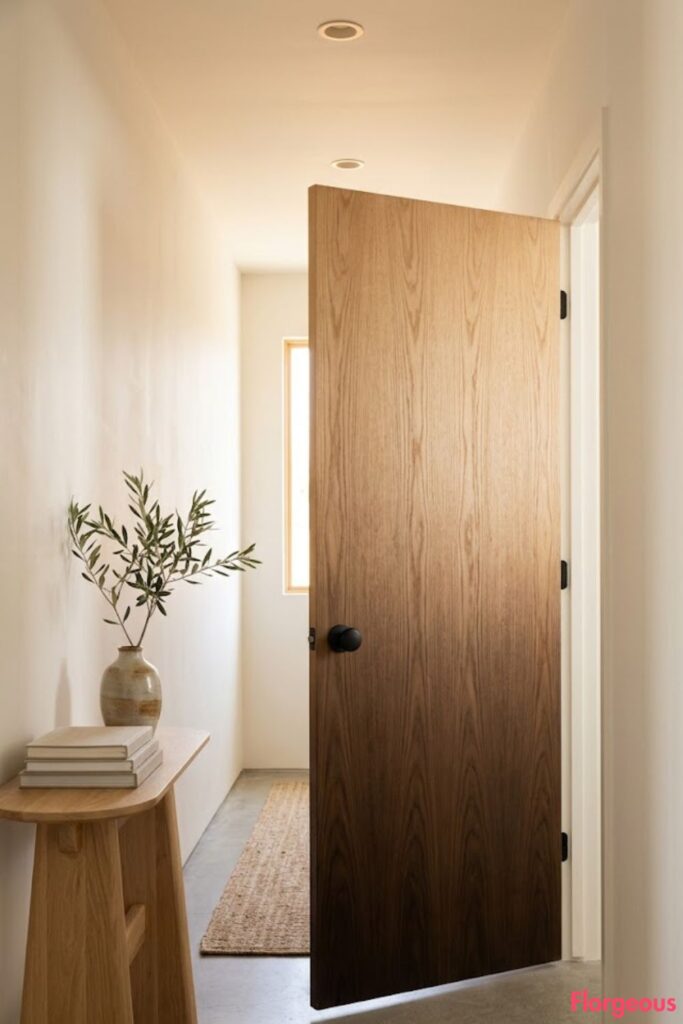
8. Ombre Stained Veneer Door for a Modern Designer Finish
An ombre veneer door fades gently from darker wood at the bottom to a lighter tone at the top.
It feels unusual, artistic, and modern, but still natural because the wood grain remains visible. This can look beautiful in a hallway, boutique-style bedroom, or creative studio.
Choose a soft brown fade for warmth or a smoky gray-brown fade for a more contemporary look. Keep surrounding walls simple so the gradient feels intentional.
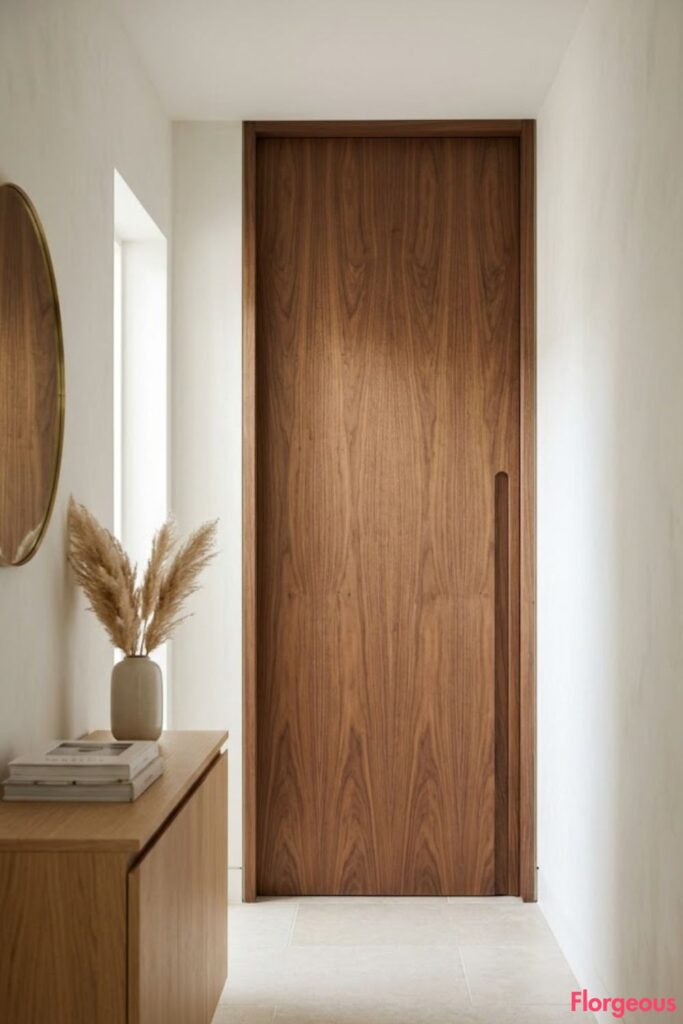
9. Veneer Door With a Recessed Vertical Pull Groove
A recessed pull groove keeps the door surface clean and uninterrupted.
Instead of adding a handle, the door has a slim carved channel along one edge. This works especially well on full-height veneer doors, wardrobe doors, pocket doors, and hidden storage panels.
The design feels minimal, architectural, and practical. It is also a great option if you want the wood grain to stay visually smooth from top to bottom.
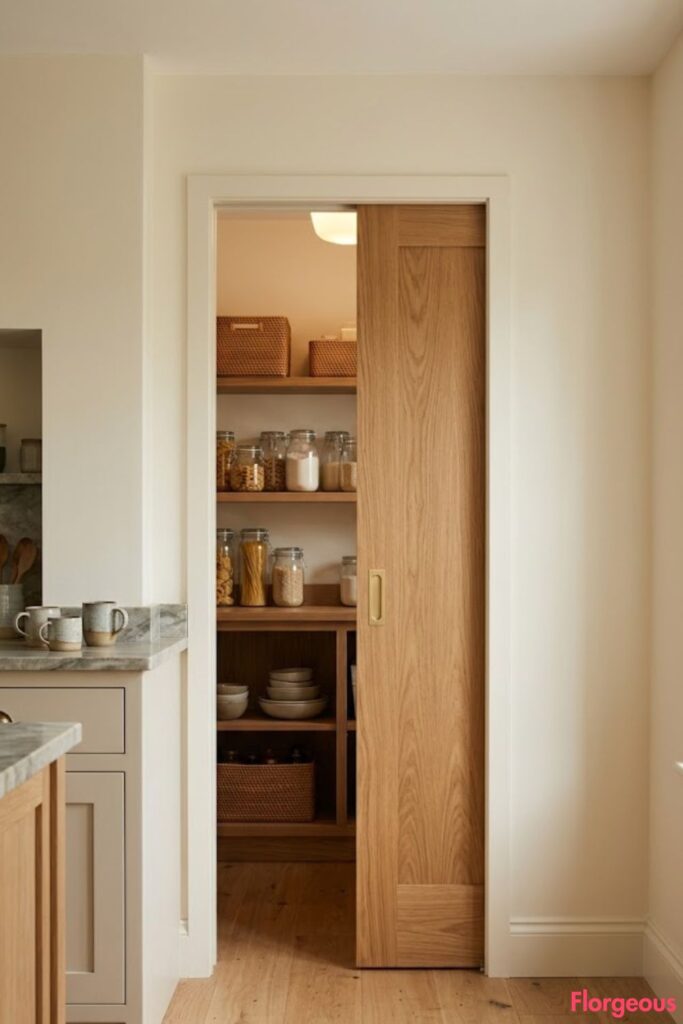
10. Veneer Pocket Door for a Hidden Pantry or Laundry Room
A pocket door slides into the wall, which makes it perfect for small homes and tight spaces.
When finished in veneer, it feels much warmer than a plain painted utility door. Use oak veneer for a light kitchen pantry, walnut veneer for a moody laundry nook, or ash veneer for a soft modern hallway.
Add a small recessed pull instead of bulky hardware. The result feels neat, space-saving, and surprisingly elegant.
11. Half Veneer, Half Reeded Glass Door
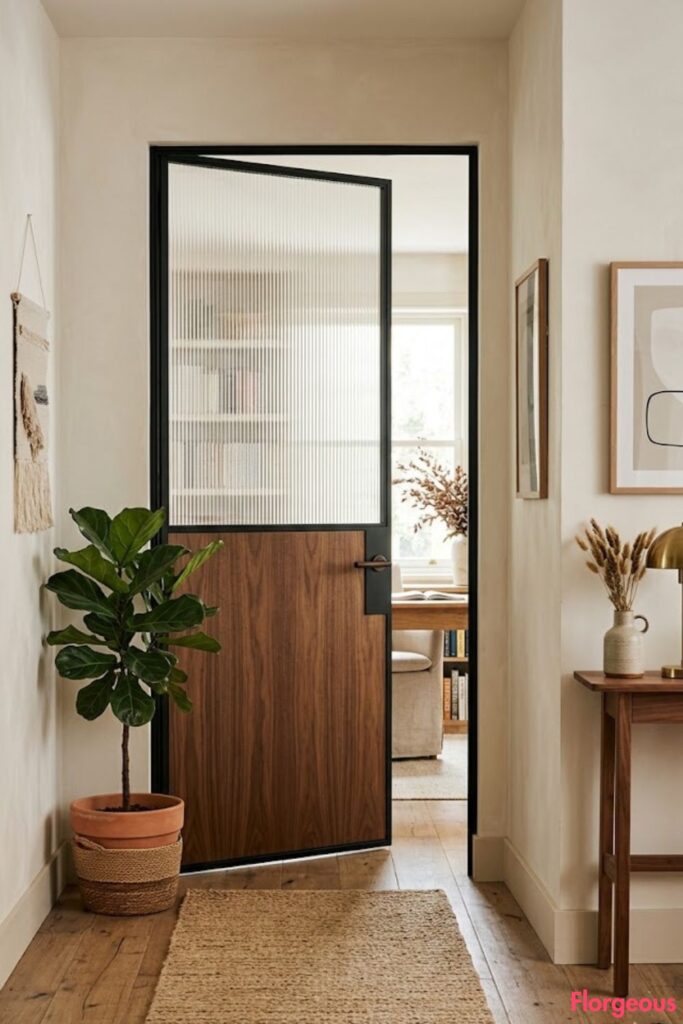
A half veneer, half reeded glass door gives you warmth and light at the same time.
The veneer panel keeps the lower half grounded, while the textured glass above lets light pass through without giving a completely clear view. This is ideal for home offices, kitchens, bathrooms, laundry rooms, and interior corridors.
Compared with a full laminate door, this design feels more layered and custom. Choose frosted or fluted glass if privacy matters.
12. Dark Smoked Veneer Door With Soft Wall Lighting
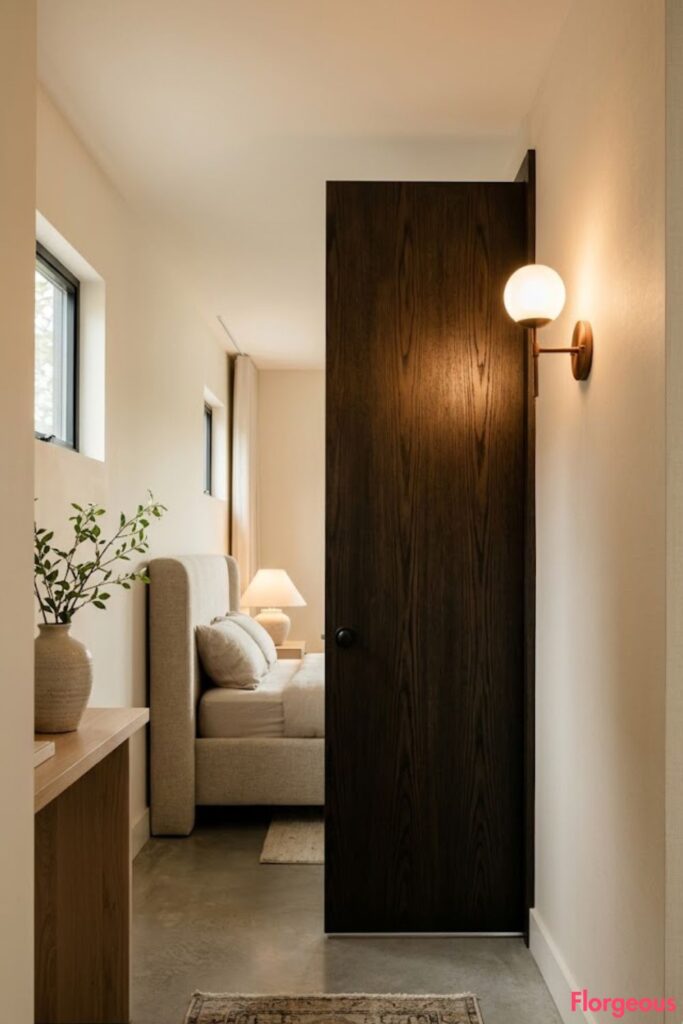
A smoked veneer door looks especially beautiful when paired with warm side lighting.
The darker wood grain catches the glow from a wall sconce, creating a cozy boutique-hotel feeling. Use it for bedroom entrances, walk-in wardrobes, media rooms, or ensuite doors.
Keep nearby walls in warm beige, taupe, cream, or soft stone tones. This prevents the dark door from feeling too heavy.
13. Veneer Sliding Door With a Picture-Frame Border
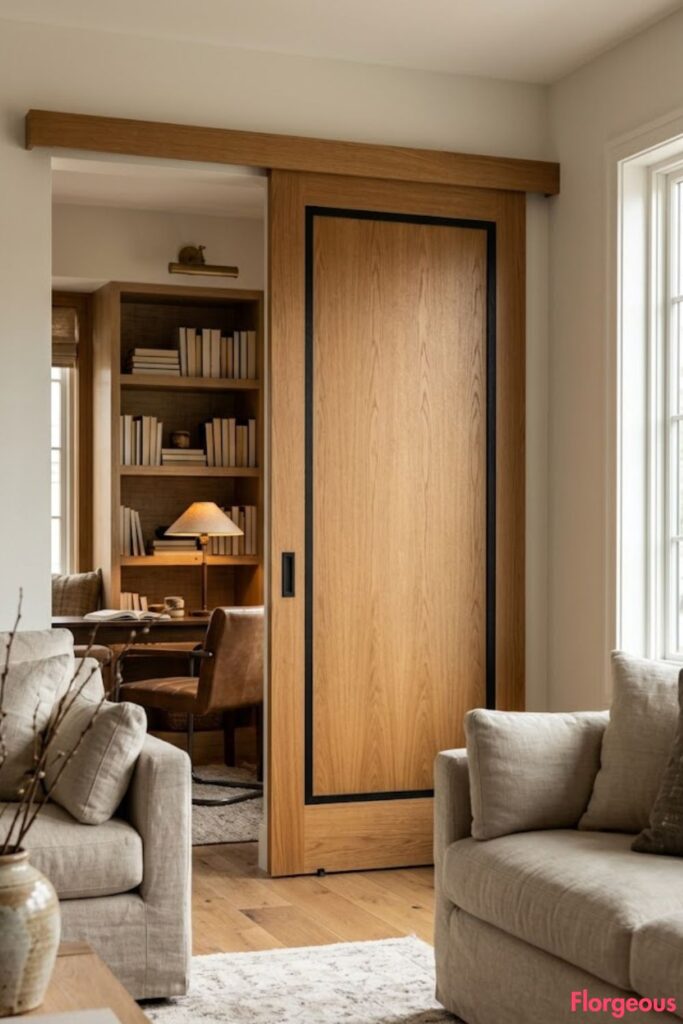
A veneer sliding door does not have to look flat or plain.
Add a narrow picture-frame border around the panel to give it structure. The frame can be in the same veneer for a subtle look, or in black-stained wood for contrast.
This works beautifully between a living room and study, bedroom and wardrobe, or kitchen and pantry. Use a concealed top track for a cleaner modern finish.
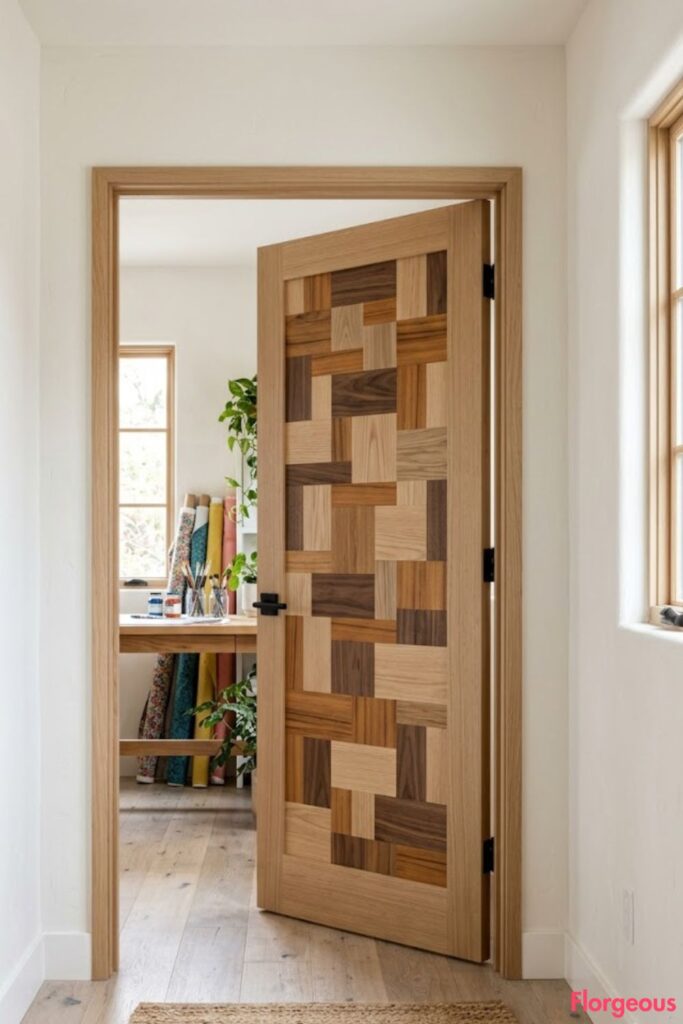
14. Patchwork Veneer Door Made From Mixed Wood Tones
A patchwork veneer door can feel creative, sustainable, and artistic.
Use small rectangular veneer sections in slightly different wood tones, such as oak, ash, walnut, and teak. Keep the shapes simple so the design feels sophisticated rather than chaotic.
This is a great idea for a creative studio, kids’ playroom, craft room, or eclectic hallway. It also makes the door feel like a custom feature while using veneer pieces efficiently.
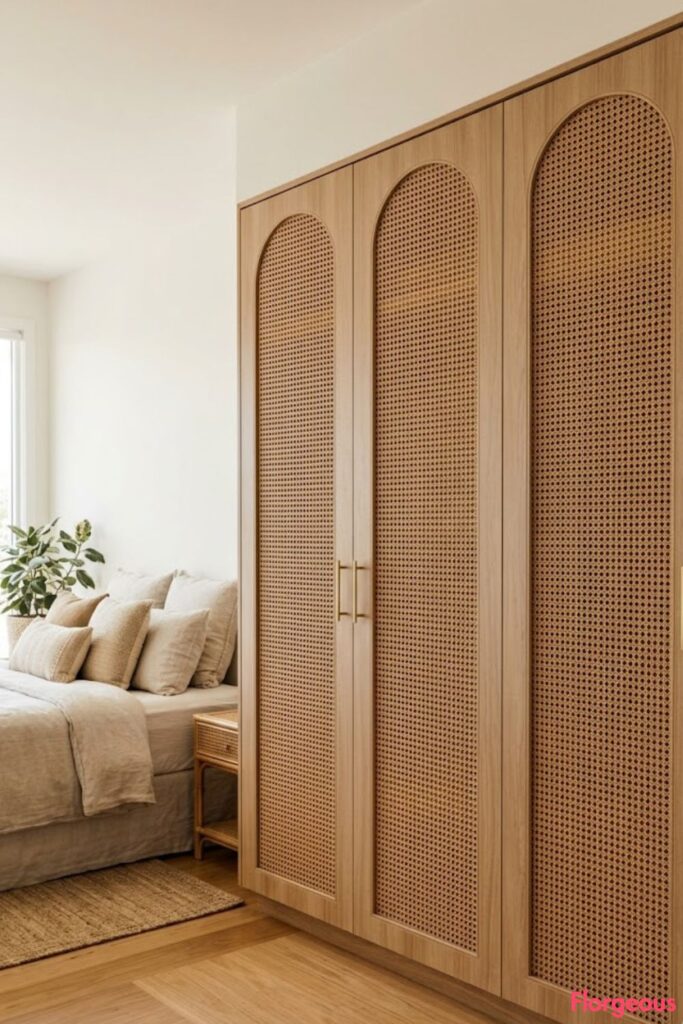
15. Veneer Door With Cane or Rattan Insert
Pairing veneer with cane or rattan creates a soft, natural look.
Use a wood veneer frame with a cane insert in the center or upper panel. This is lovely for wardrobes, linen closets, pantry doors, and relaxed bedroom spaces.
The woven texture gives airflow and warmth, while the veneer keeps the structure polished. It works especially well in coastal, bohemian, tropical, Japandi, and earthy modern interiors.
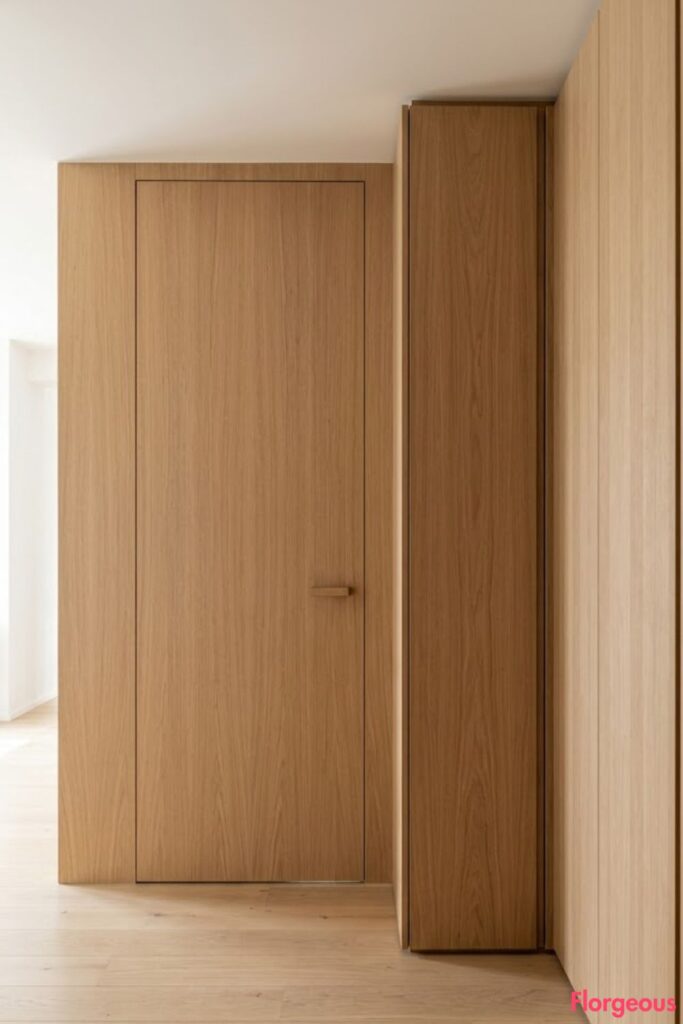
16. Full-Height Veneer Door That Blends With Tall Cabinets
A full-height veneer door can make a room feel taller and more built-in.
This idea works well when the door lines up with nearby cabinetry, wardrobe panels, or wall storage. Run the veneer grain vertically from floor to ceiling for the cleanest look.
Use it in bedrooms, hallways, mudrooms, or open-plan apartments. It is a clever way to make standard storage feel custom without paying for solid wood everywhere.
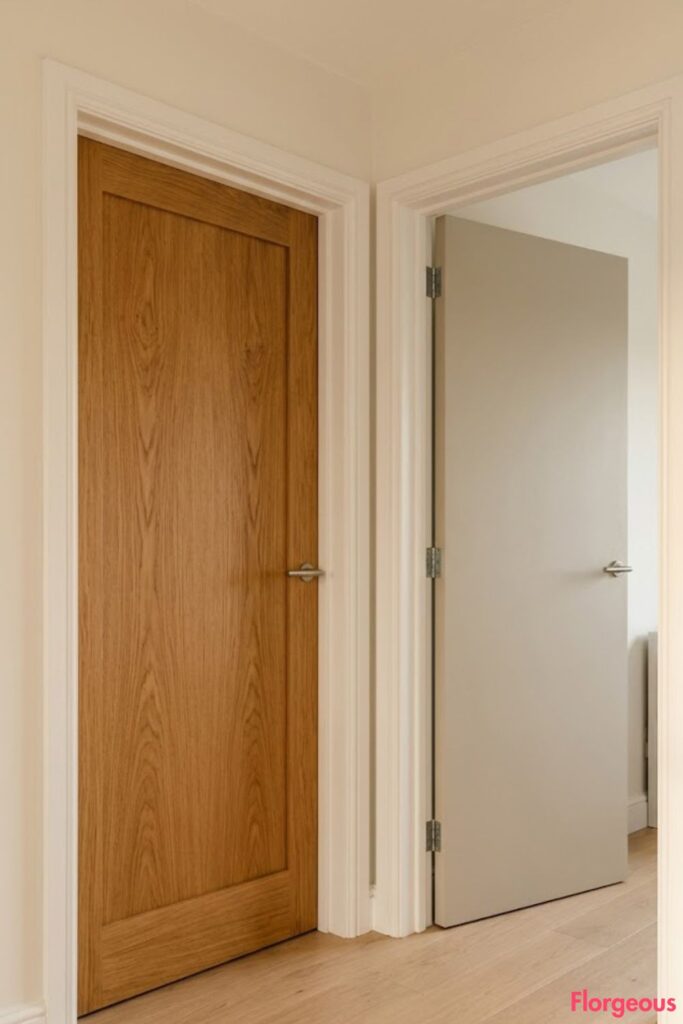
17. Veneer and Laminate Mix for a Smart Budget Plan
A stylish home does not need veneer on every door.
Use veneer where the look matters most: the main bedroom door, living room door, hallway feature door, wardrobe fronts, or entry-facing panels. Then use quality laminate in utility rooms, kids’ rooms, rentals, or areas with heavier wear.
Laminate is often easier to clean and more scratch-resistant. Veneer feels warmer, more natural, and more premium because it uses a real wood surface.
This balance gives you a cost-effective wood look without overspending. It also lets your most visible doors feel special while the practical rooms stay durable.
Final Thoughts on Veneer Door Design
A beautiful veneer door design can give your home warmth, texture, and a designer wood look without the full cost of solid timber.
The most unique ideas come from small decisions: mirrored grain, curved shapes, brass inlays, hidden pulls, mixed patterns, reeded glass, soft lighting, or matching wall panels. These details make veneer feel intentional rather than basic.
If you are choosing between laminate and veneer, think about both beauty and daily use. Veneer is ideal for visible spaces where natural grain matters. Laminate is useful for high-traffic areas where easy care is the priority.
Choose the door that fits your home, your budget, and the mood you want to feel every time you walk through the room.