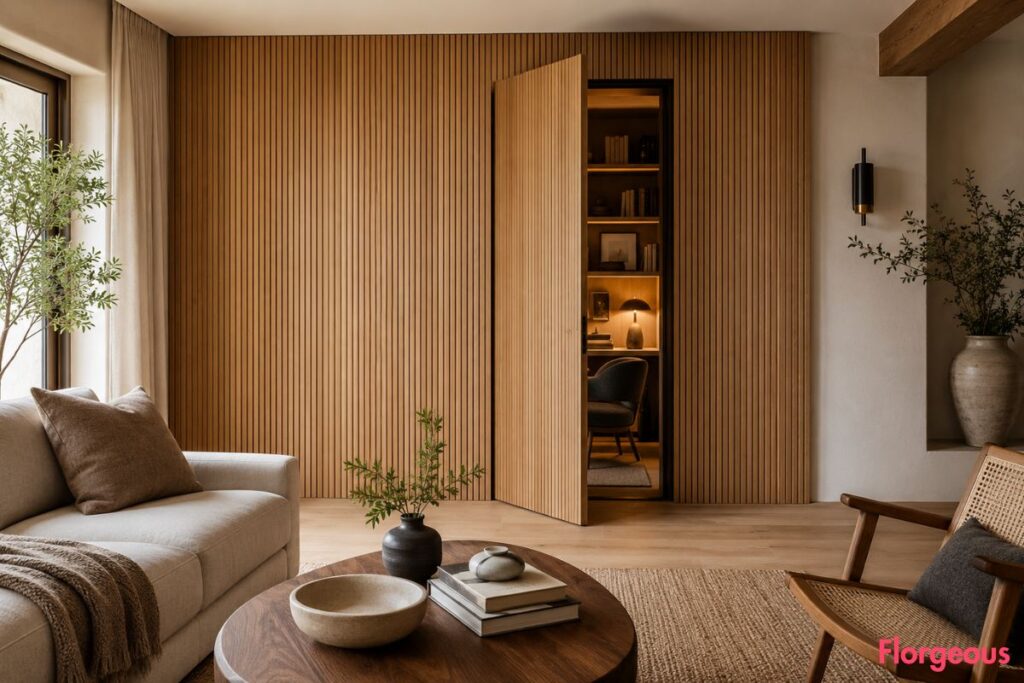
Some doors are meant to be noticed. Others are better when they quietly disappear.
That is what makes hidden door design so interesting. It can make a room feel cleaner, more mysterious, more custom, and sometimes much more practical.
A hidden door can conceal a pantry, laundry room, powder room, office, closet, storage wall, or even a secret reading nook. The trick is choosing a design that feels natural in your home, not like a movie prop.
These ideas go beyond the usual plain bookcase door. Each one has a specific look, purpose, material, and mood, so you can imagine how it would actually work in a real home.
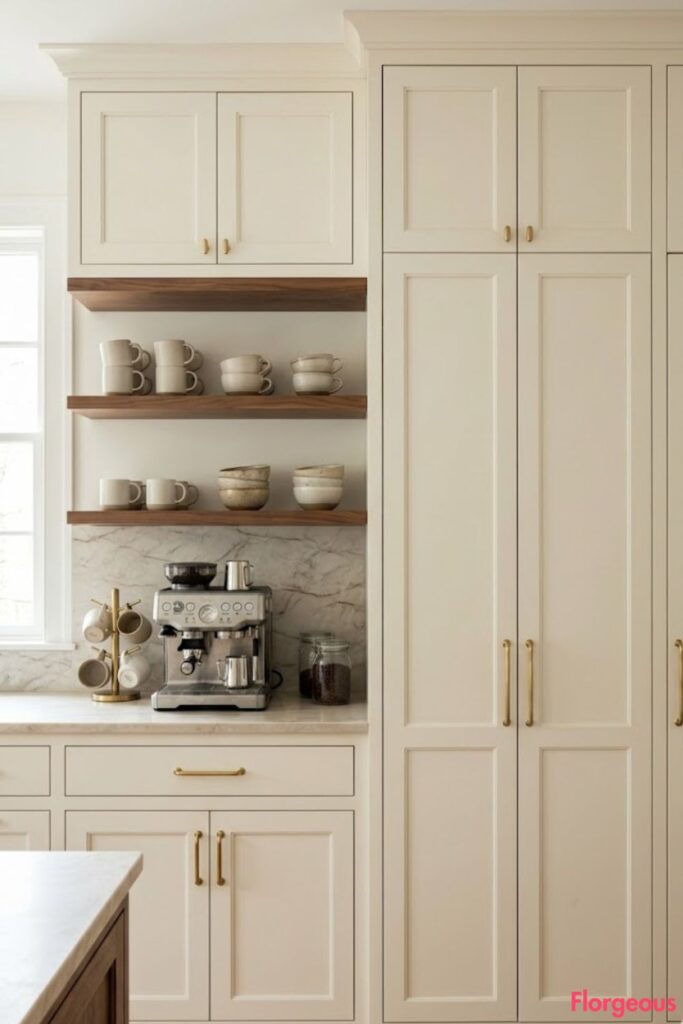
1. Hidden Door Behind a Full Coffee Bar Wall
A coffee bar hidden door feels fresh because it looks useful before anyone realizes it opens.
Create a built-in coffee station with a stone counter, floating shelves, mug storage, and tall cabinet doors on one side. One of those tall panels can secretly swing open into a walk-in pantry, appliance closet, or butler’s pantry.
This works beautifully in kitchens, breakfast rooms, and open dining areas.
Use warm white cabinetry, walnut shelves, unlacquered brass hardware, and a soft marble or quartz backsplash. The hidden door should match the cabinet rhythm exactly, so it looks like part of the storage wall.
2. Cane Webbing Hidden Door
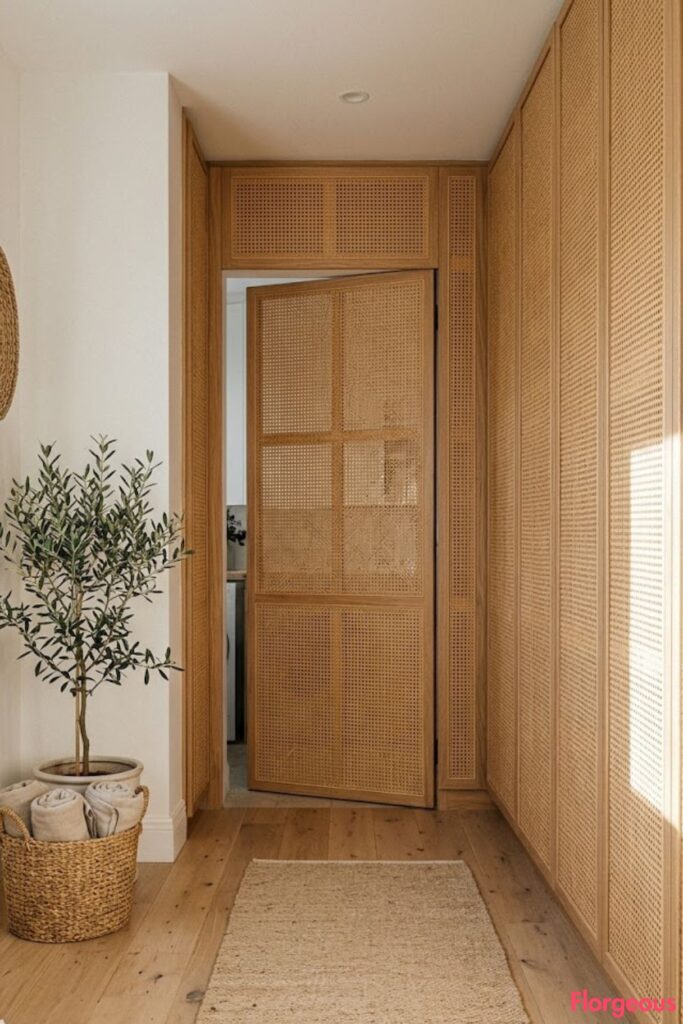
Cane webbing adds texture while naturally disguising seams.
A hidden door with cane panels can blend into a larger wall of cane-front cabinets, wardrobes, or storage panels. The woven texture distracts the eye, which makes the door outline harder to spot.
This is perfect for a laundry room, linen closet, powder room, or compact home office.
Natural cane feels relaxed and coastal. Black cane looks dramatic and modern. Honey-toned cane works well with vintage, Japandi, and boho interiors.
Keep the frame slim and clean so the cane remains the main feature.
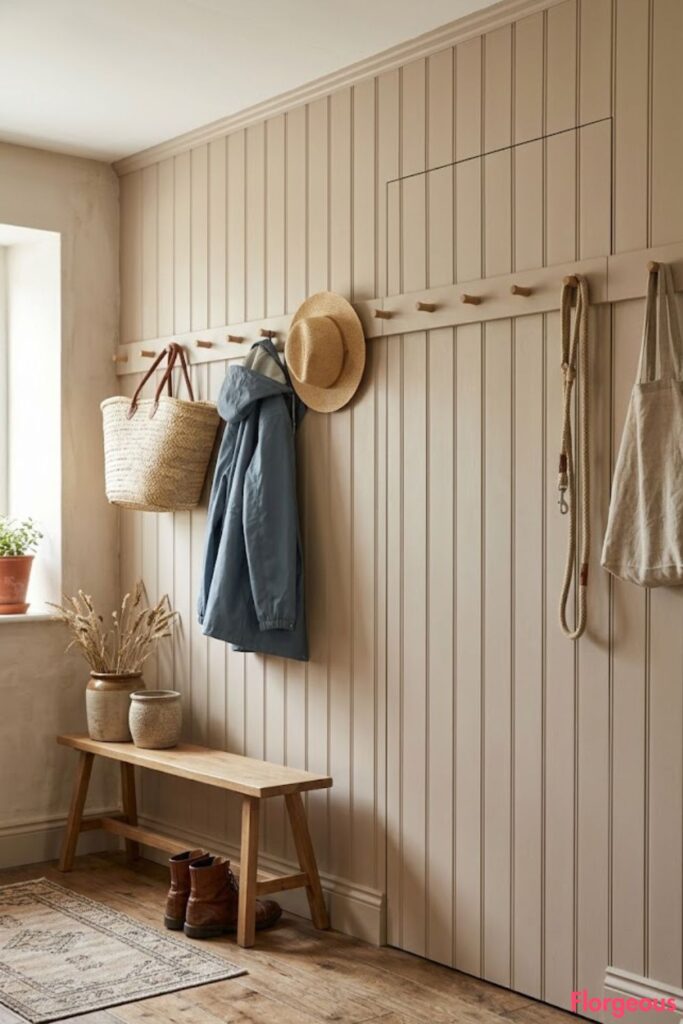
3. Hidden Door Inside a Peg Rail Wall
A peg rail wall is charming, practical, and surprisingly good at hiding a door.
Use it in an entryway, mudroom, cottage hallway, laundry room, or kids’ storage area. Continue the peg rail across the door and the surrounding wall so the horizontal line disguises the opening.
The pegs can hold coats, baskets, hats, aprons, dog leashes, or market bags. That practical layer makes the hidden door feel natural instead of overly designed.
Paint the whole wall in soft sage, cream, mushroom, dusty blue, or warm beige. For a more crafted look, use oak pegs against painted beadboard.
4. Hidden Door Behind a Fireplace Wood Storage Wall
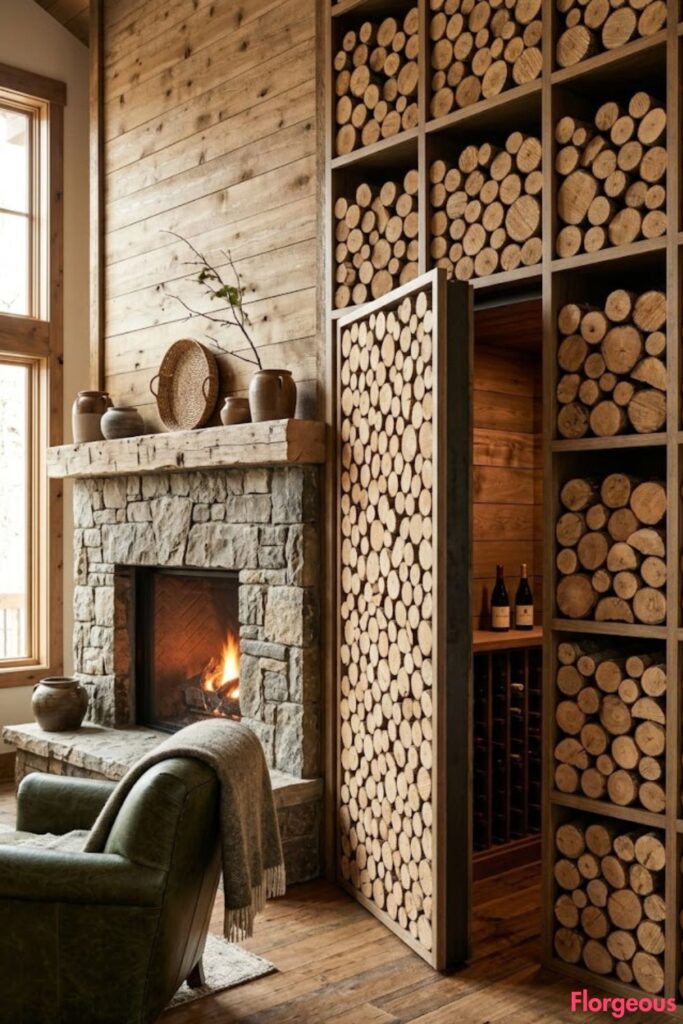
This is a beautiful idea for rustic, modern cabin, or mountain-inspired interiors.
Build a wall of firewood cubbies beside a fireplace, then disguise one section as a hidden door. The door can look like part of the wood storage grid, with shallow log fronts or vertical cubby divisions continuing across the panel.
It can lead to a storage room, utility closet, wine room, or small den.
To keep it realistic, avoid making the door too heavy. Use lightweight decorative log fronts or shallow stacked wood sections instead of deep, full-weight storage.
The result feels warm, sculptural, and unexpected.
5. Hidden Door Built Into a Banquette Nook
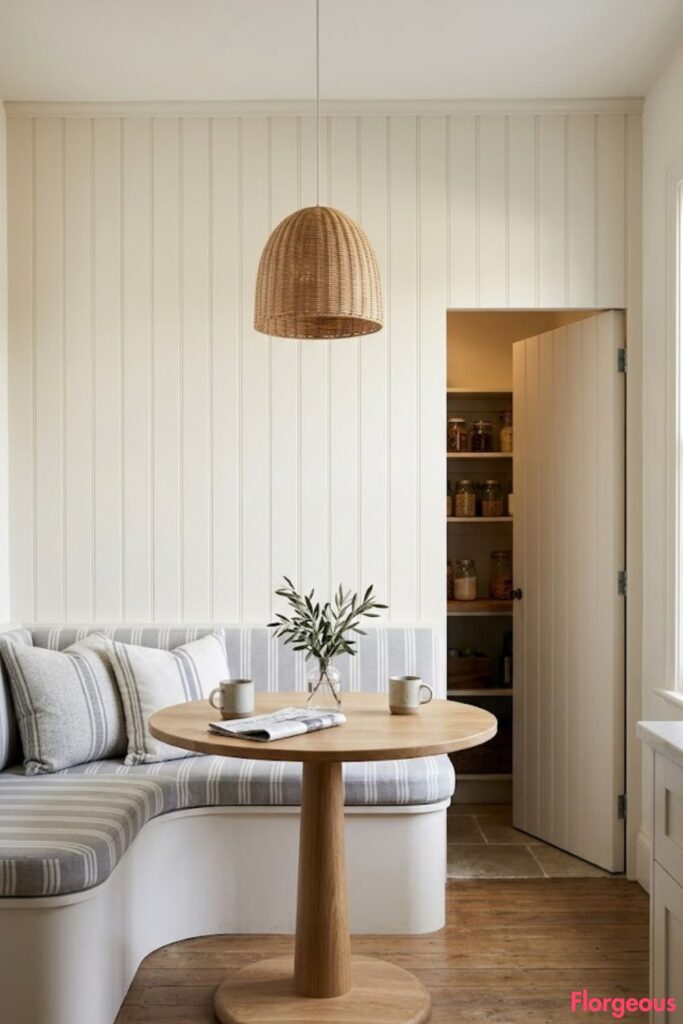
A dining nook is already cozy, so adding a hidden door makes it feel even more custom.
The door can be concealed in the paneled back wall behind a banquette, leading to a pantry, playroom, storage closet, or small home office. Use matching beadboard, vertical paneling, or upholstered wall panels to hide the opening.
This idea is especially useful in small homes where every corner needs to work harder.
A curved banquette, striped cushion, small round table, and pendant light can make the whole area feel intentional. The hidden door becomes part of the architecture, not an obvious secret entrance.
6. Reeded Glass Hidden Door That Looks Like a Decorative Panel
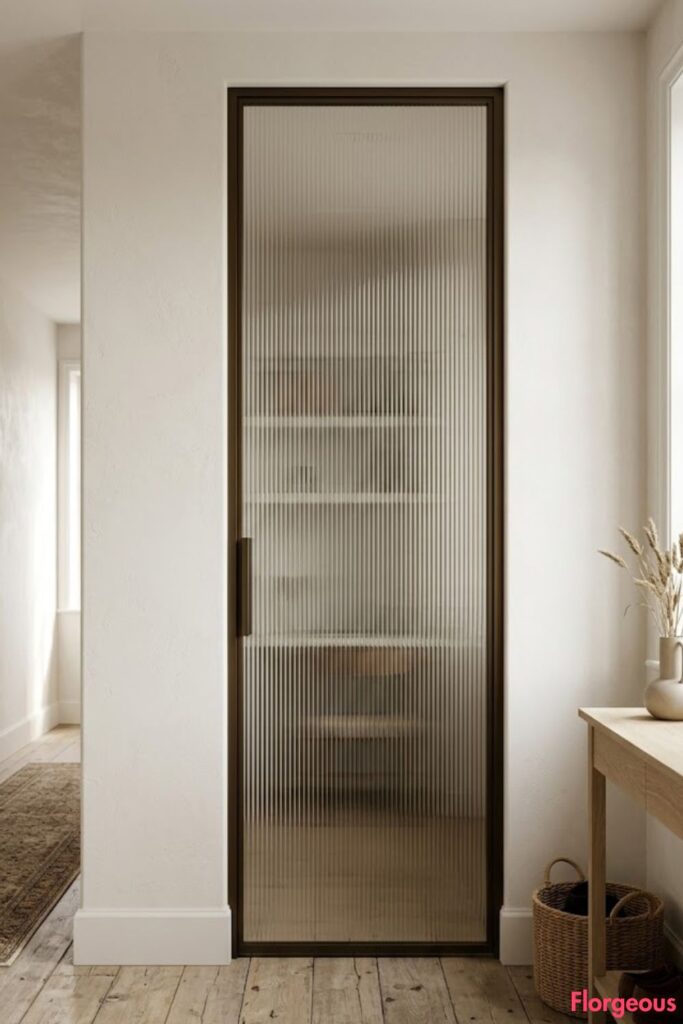
A hidden door does not always need to be completely invisible.
A full-height reeded glass panel can look like a decorative wall feature while quietly functioning as a door. The ribbed texture blurs the view behind it, giving privacy while still letting light pass through.
This is lovely for powder rooms, home offices, dressing rooms, and hallway closets.
Choose a slim bronze, black steel, or pale oak frame. Keep the handle minimal, such as a narrow vertical pull that blends with the frame.
It feels refined, airy, and more original than a standard solid concealed door.
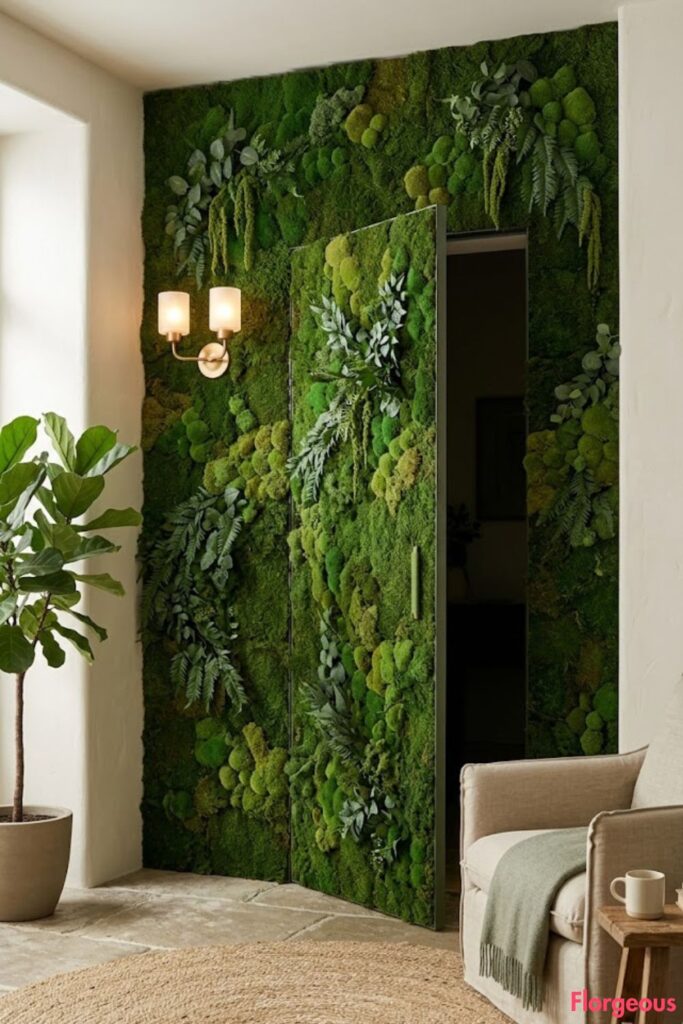
7. Hidden Door Behind a Vertical Garden Wall
A greenery-covered hidden door can feel magical when done in a polished way.
Use it for a garden room, covered patio, sunroom, plant-care closet, or outdoor storage area. The door can be covered with a framed moss panel, faux greenery grid, or trellis-style plant wall.
For interiors, preserved moss panels look cleaner than trailing vines. For outdoor spaces, climbing jasmine, ivy, or star jasmine can soften the entrance beautifully.
Add warm sconces nearby so the greenery looks intentional at night.
This hidden door design is perfect for homes with a natural, biophilic, or indoor-outdoor style.
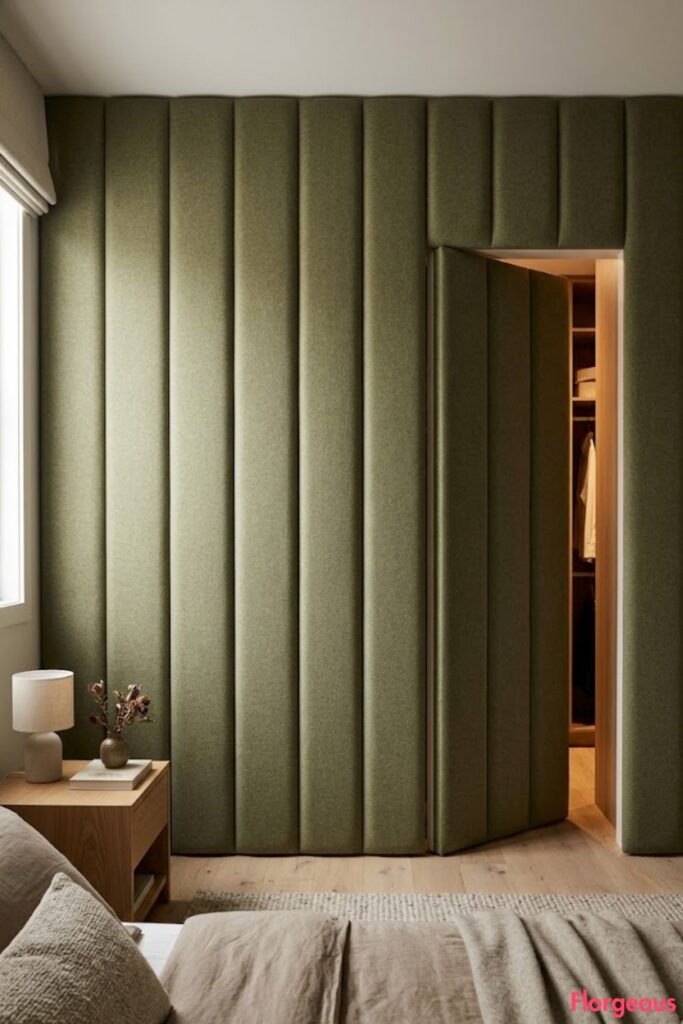
8. Hidden Door Disguised as a Tall Upholstered Wall Panel
An upholstered hidden door is soft, luxurious, and very unexpected.
Use padded fabric panels across a bedroom wall, dressing room, media room, or reading lounge. One panel can secretly open to reveal a closet, bathroom, or private office.
This works especially well with velvet, boucle, linen, suede-look fabric, or wool blend upholstery.
Try dusty rose, warm taupe, olive, slate blue, or charcoal for a cocoon-like mood. Keep the seams evenly spaced so the door looks like just another panel.
It also has a practical benefit: the fabric helps soften sound.
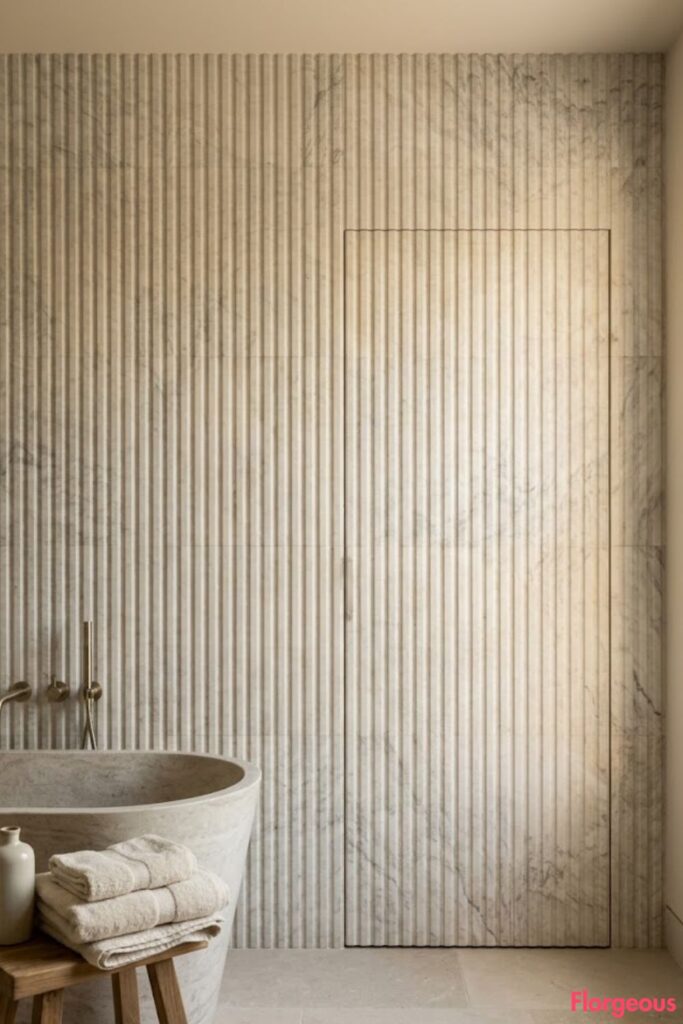
9. Hidden Door Inside a Fluted Stone or Tile Wall
For a bathroom, spa room, or modern hallway, a tiled hidden door can look incredibly custom.
Instead of stopping tile at a doorway, continue the tile across a concealed access panel or door. Fluted marble, zellige tile, ribbed ceramic, or slim vertical tiles can help hide the seam.
This is a beautiful way to conceal a linen closet, water heater cupboard, storage niche, or private toilet room.
Use push-latch hardware and waterproof backing if the area is humid. A hidden tile door needs careful installation, but the result can feel like a boutique hotel detail.
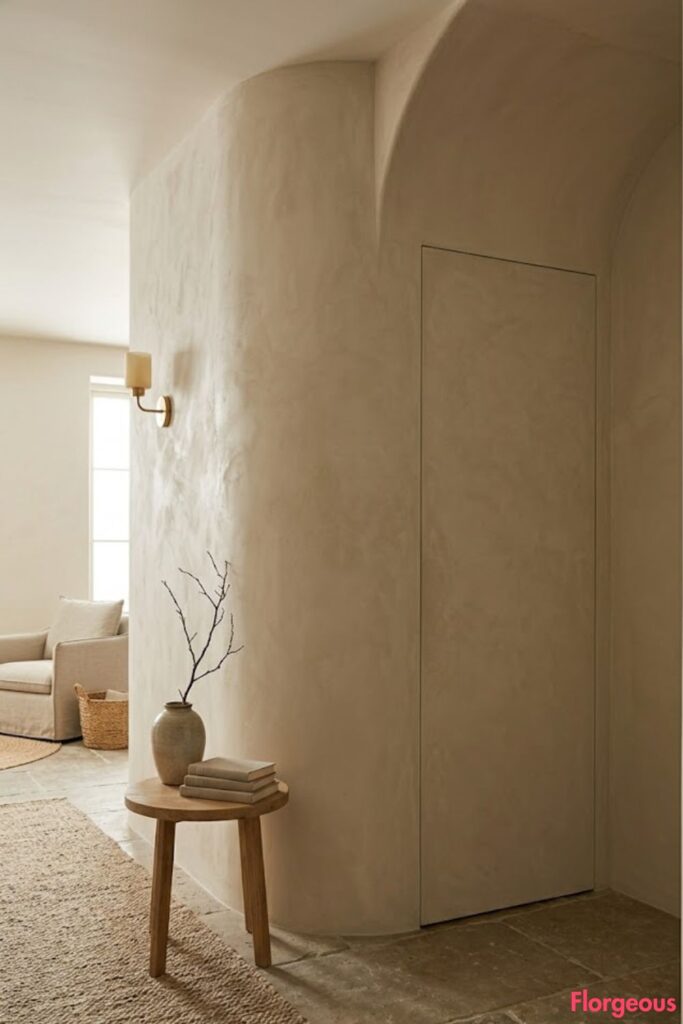
10. Hidden Door Behind a Curved Plaster Wall
A curved plaster wall already draws attention, which makes it a clever place to hide a door.
Create a softly rounded wall in a hallway, bedroom, or living room, then conceal the door within the curve using the same plaster finish. The door becomes part of the sculptural shape rather than a separate object.
This idea works beautifully in Mediterranean, organic modern, minimalist, and warm contemporary homes.
Choose limewash, Venetian plaster, clay plaster, or a plaster-effect paint in warm white, sand, putty, or soft terracotta.
The fewer visible details, the better. Use concealed hinges and a push-to-open latch.
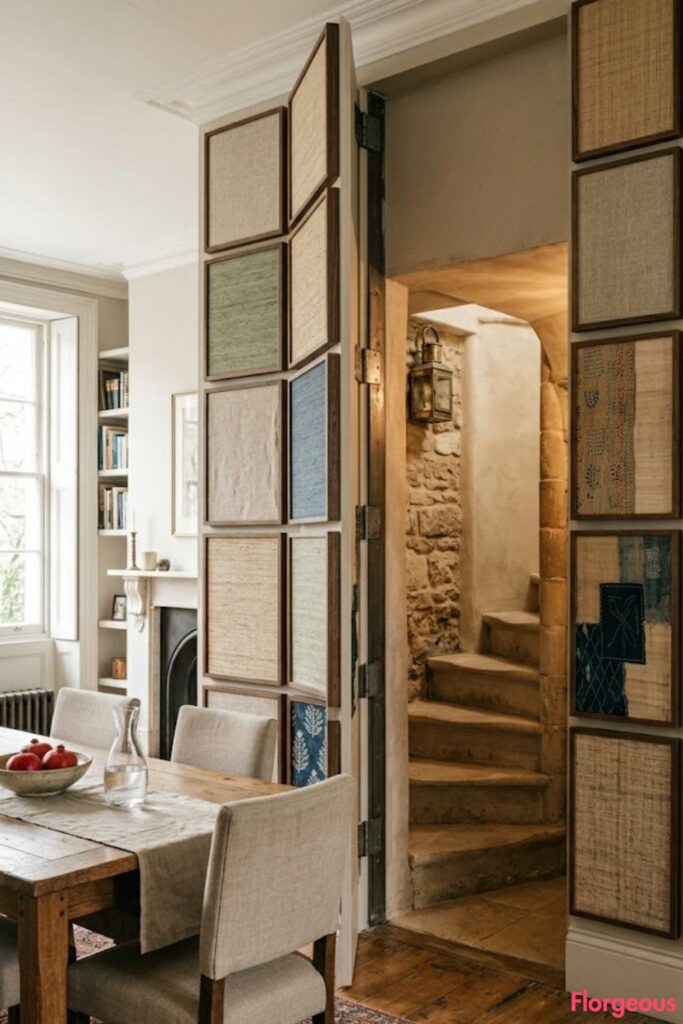
11. Hidden Door Behind a Wall of Framed Fabric Panels
This idea feels layered, artistic, and different from a typical gallery wall.
Create a series of framed fabric panels across a hallway, bedroom, or dining room wall. One of the framed panels can function as the hidden door.
Use linen, grasscloth, block print fabric, vintage textile fragments, or Japanese-inspired woven cloth. The texture gives the wall depth while hiding the practical opening.
This is a beautiful choice for hiding storage, a powder room, or a compact study.
Keep the frames slim and consistent. The secret works best when the full wall reads as one decorative composition.
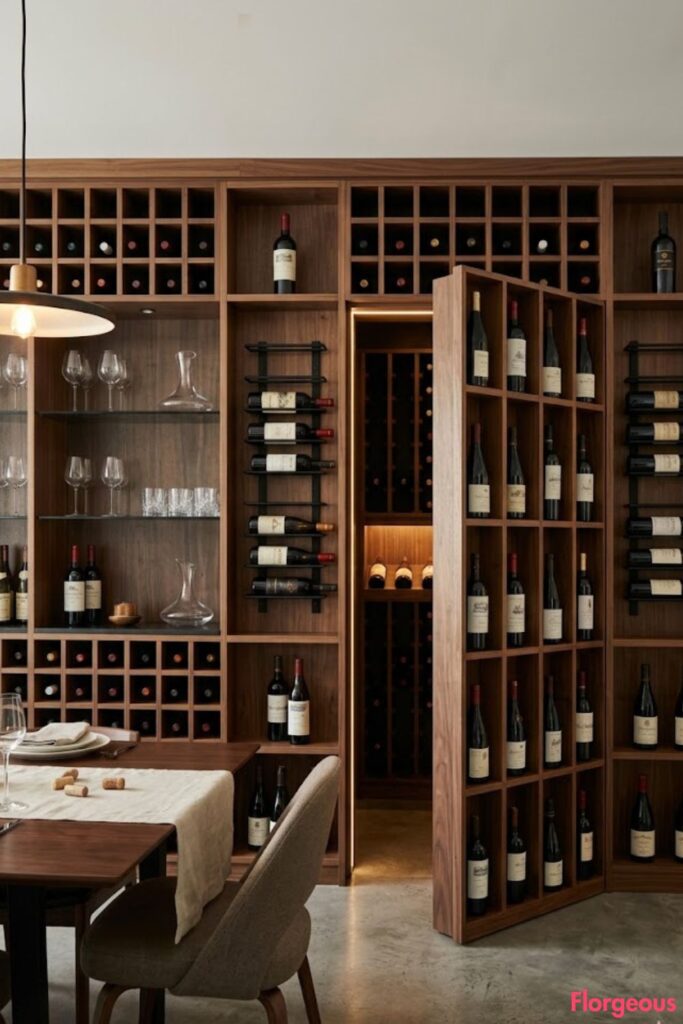
12. Hidden Door Within a Wine Display Wall
A wine display wall can make a hidden door feel stylish and purposeful.
Build a shallow grid of wine cubbies, glass shelving, or metal bottle racks across a dining room or basement wall. One section can open into a wine cellar, storage room, or tasting nook.
This design feels especially strong in homes with moody dining spaces, finished basements, or entertaining areas.
Use smoked glass, walnut, black metal, and warm LED strip lighting for a dramatic look. Just make sure the hidden section is lightweight enough to open smoothly.
The door should feel like part of the display, not like a heavy cabinet trying too hard.
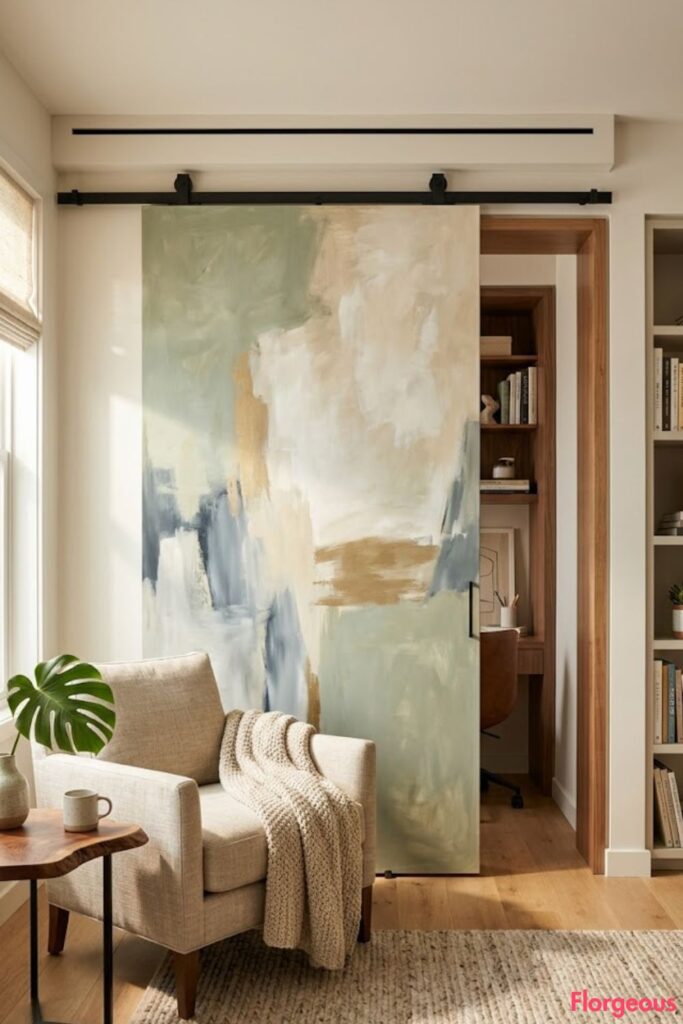
13. Hidden Door Behind a Giant Sliding Art Panel
Instead of hanging regular wall art, use one oversized sliding art panel to conceal a doorway.
The panel can slide sideways to reveal a closet, office, bathroom, or storage room. When closed, it looks like a large canvas, framed mural, textile art piece, or abstract wood panel.
This works well in apartments and narrow rooms because the door does not swing into the space.
Choose art that fits the room’s palette. A soft abstract painting suits modern interiors. A landscape mural feels romantic. A wood veneer panel feels warmer and more architectural.
Hide the track behind a slim top valance for a cleaner look.
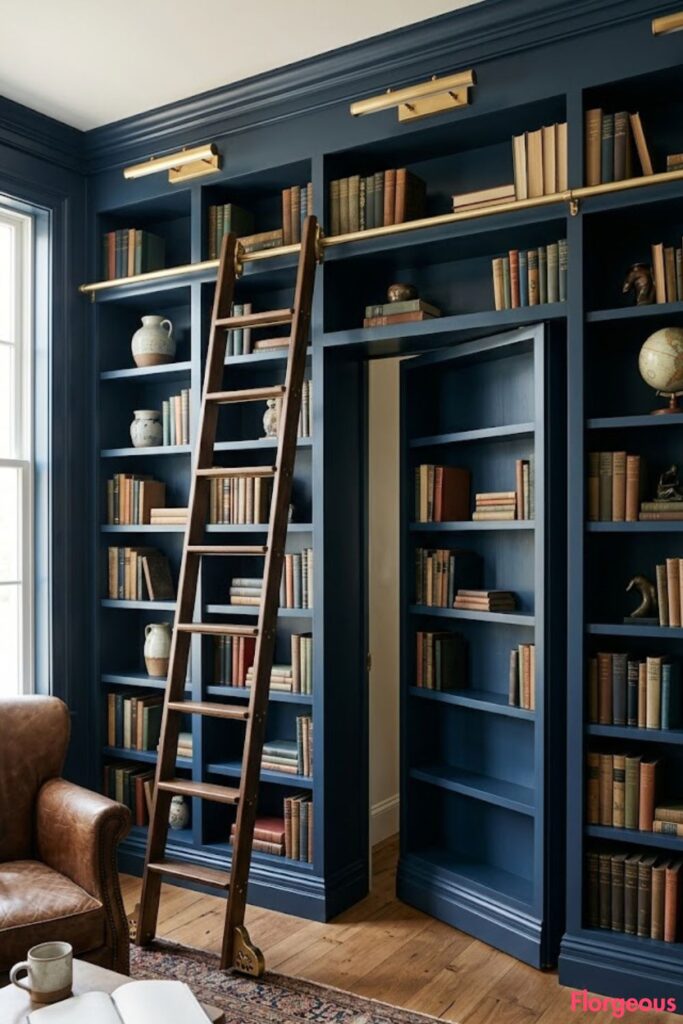
14. Hidden Door Behind Library Ladder Shelving
A library wall with a ladder already feels special. Adding a hidden door makes it even better.
The secret door can be built into one shelving bay, while the rolling ladder helps the entire wall feel like a functional library rather than a doorway.
This idea is perfect for home offices, living rooms, studies, or reading rooms.
Paint the shelving deep green, navy, black, or warm cream for a dramatic built-in look. Add brass rail hardware and picture lights to make it feel finished.
The hidden door should carry the same shelf depth, trim, and baseboard details as the rest of the wall.
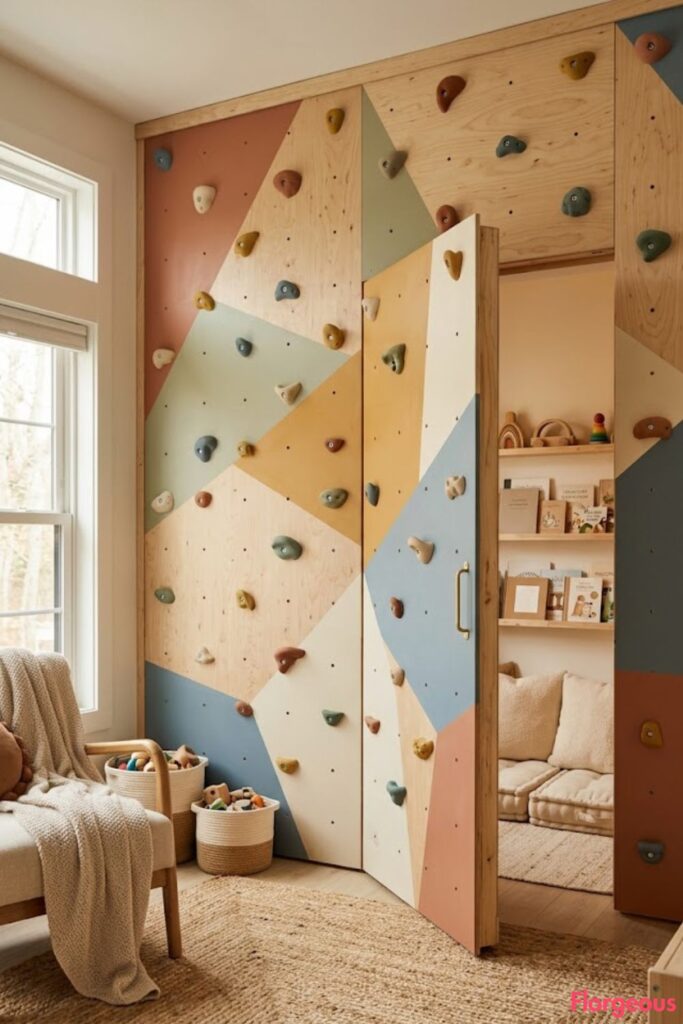
15. Hidden Door Inside a Kids’ Climbing Wall
For a playroom or family basement, a hidden door can become part of a kids’ climbing wall.
Cover the wall and door with plywood panels, climbing holds, and soft geometric color blocking. One section opens to a toy closet, craft storage room, or little reading hideaway.
This idea is playful but still practical.
Use muted colors like clay, cream, sage, ochre, and dusty blue so the design feels stylish rather than chaotic. Make sure the door hardware is child-safe and the door can open without blocked holds.
It is fun, imaginative, and genuinely useful for family homes.
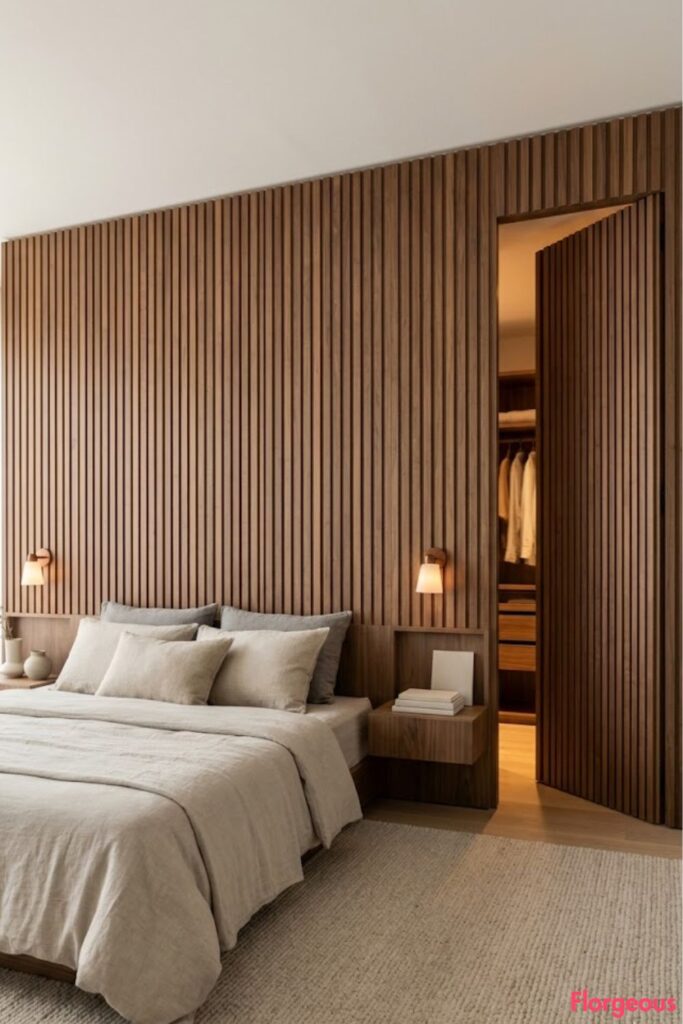
16. Hidden Door Behind a Headboard Wall
A headboard wall can secretly hide a walk-in closet, ensuite bathroom, or dressing area.
Build a full-width wall behind the bed using wood slats, upholstered panels, fluted MDF, or painted wall molding. A hidden side panel can open into the room behind it.
This hidden door design works especially well in primary bedrooms because it keeps the sleeping area calm and uncluttered.
For a hotel-inspired look, use warm walnut, soft linen upholstery, built-in nightstands, and small reading sconces.
The door should open away from the bed path if possible, so the layout still feels comfortable.
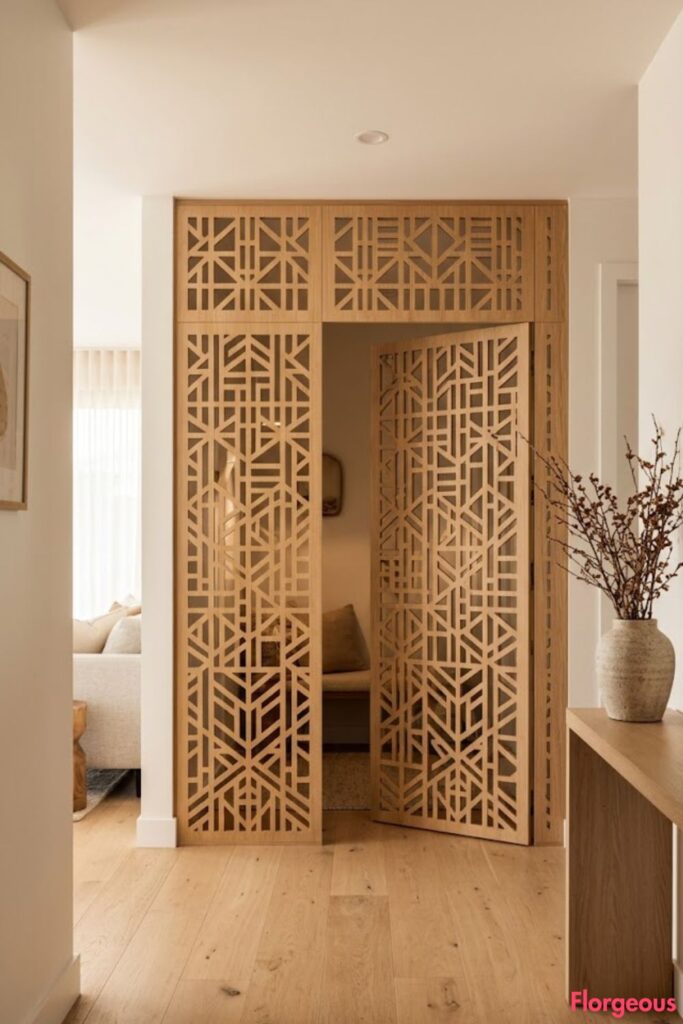
17. Hidden Door Disguised as a Decorative Screen Wall
A decorative screen wall can hide a door while adding pattern and shadow.
Use laser-cut wood, rattan panels, perforated metal, or carved MDF across a hallway, stair landing, or open-plan room. One section can open like a door, leading to storage, a powder room, or a private workspace.
This idea works beautifully in homes that need separation without a heavy wall.
A pale oak screen feels calm and natural. Black perforated metal feels graphic and modern. White carved panels can look breezy in coastal or Mediterranean homes.
Add soft backlighting if you want the pattern to glow in the evening.
Final Thoughts on Hidden Door Design
The best hidden door design feels like it belongs to the room first, then surprises you second.
It might look like a coffee bar, a cane cabinet, a peg rail wall, a garden panel, or a soft upholstered feature. That is what makes it feel unique, the door is not just hidden, it is part of the design story.
Choose the idea that fits your lifestyle, not just the one that looks dramatic online. A busy family might love a hidden mudroom door. A small apartment might need a sliding art panel. A cozy home might feel perfect with a banquette door or peg rail wall.
When the materials, colors, and hardware match the rest of your home, a hidden door stops feeling like a trick. It becomes one of those thoughtful details people remember.