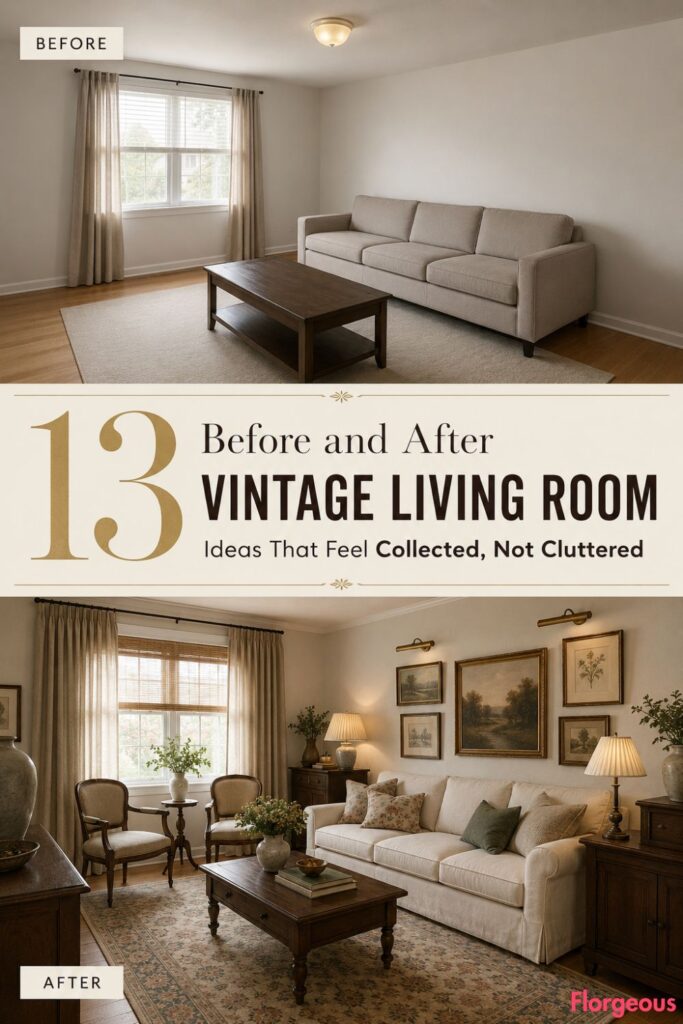
A plain living room can be comfortable and functional yet still feel as though something is missing. Neutral walls, generic furniture, flat lighting, and empty surfaces rarely tell a memorable design story.
Creating a Vintage Living Room does not require filling every corner with antiques. The most convincing spaces usually begin with one strong idea, such as a walnut portrait wall, an Art Deco drinks cabinet, a 1950s teak daybed, or an Arts and Crafts fireplace.
Each makeover below starts with the exact same neutral room. Only the after design changes, giving every concept its own historical influence, furniture arrangement, color story, materials, and purpose.
1. Create a Formal Vintage Living Room With Walnut and Portrait Art
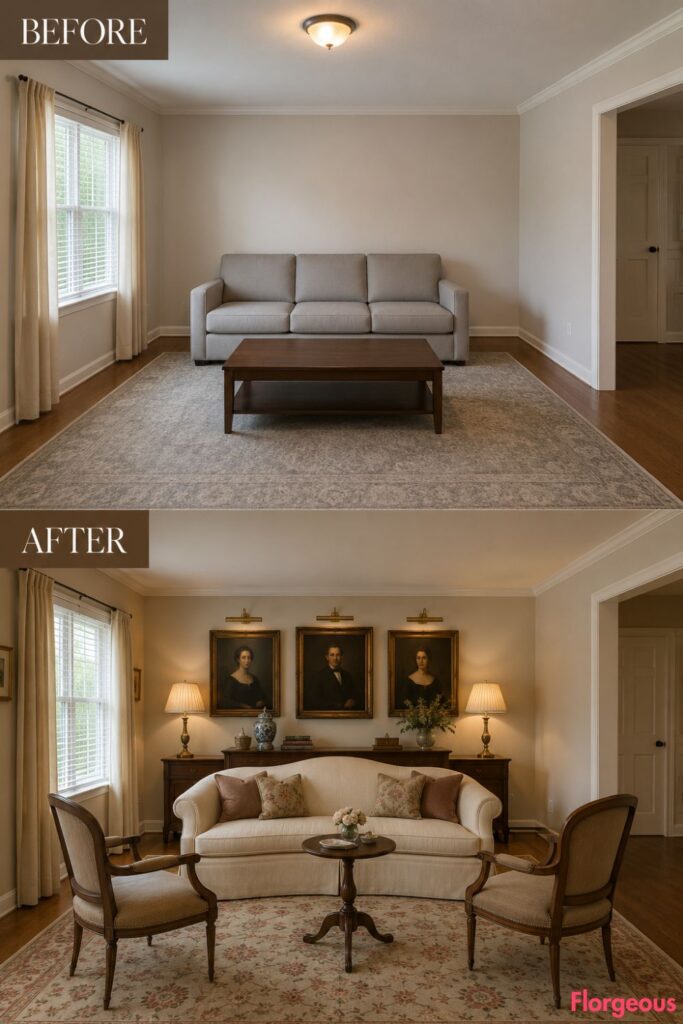
This transformation uses symmetry to make a basic room feel settled and architecturally balanced.
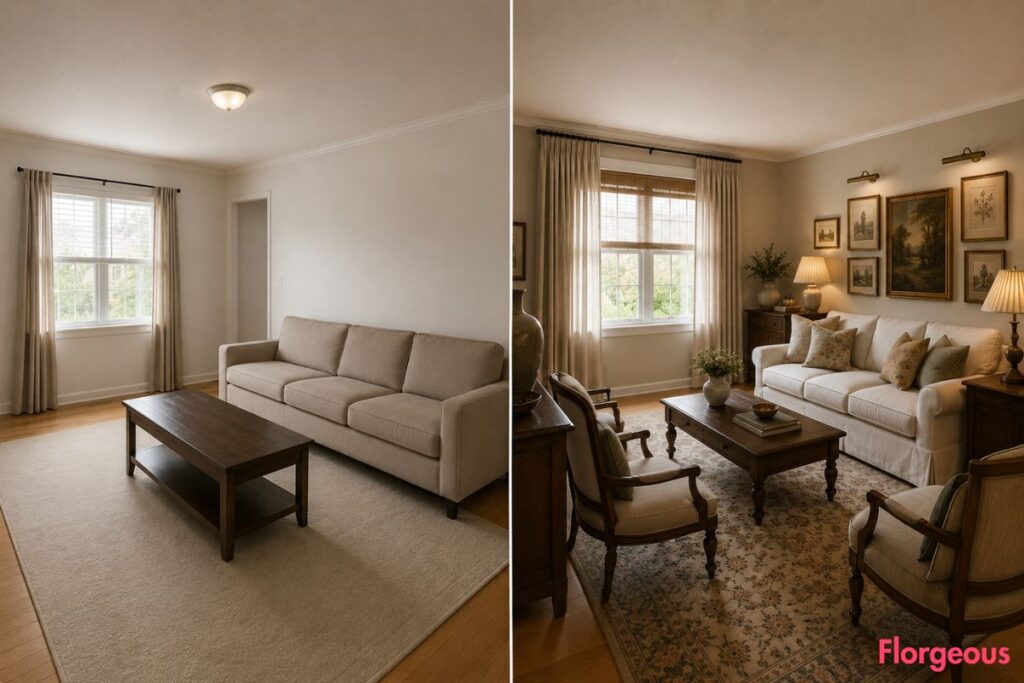
Before: A plain living room with neutral walls, a basic straight sofa, a bare rectangular coffee table, a generic rug, short curtains, builder-grade ceiling lighting, minimal styling, and no strong focal point.
After: A warm ivory camelback sofa sits opposite two compact walnut-framed armchairs. A mahogany console anchors the main wall beneath a carefully spaced trio of traditional portraits, while an Aubusson-style rug introduces faded blue, rose, and ochre.
A small pedestal table replaces the oversized coffee table, leaving a clearer path through the seating area. Pleated cream lampshades and antique-brass picture lights reinforce the composed, traditional character.
Designer Tip: Symmetry works best when the major furniture pieces are balanced, but the accessories are not perfectly matched.
2. Turn the Neutral Room Into a Bright Art Deco Cocktail Lounge
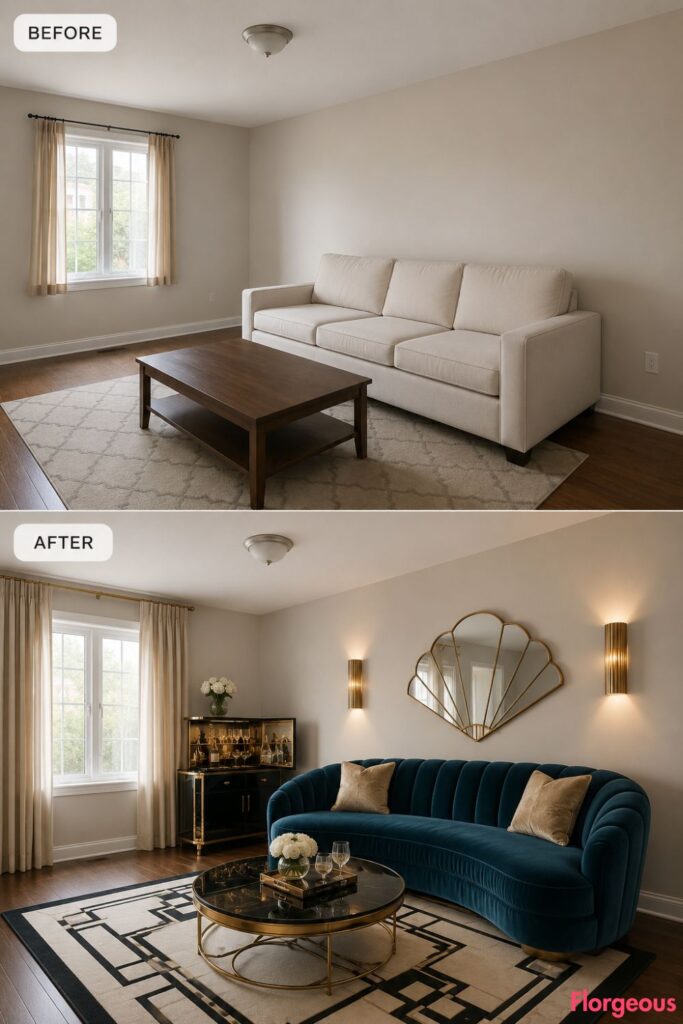
Rather than leaning on dark, theatrical decor, this makeover interprets Art Deco through polished shapes and a lighter palette.
Before: A plain living room with neutral walls, a basic straight sofa, a bare rectangular coffee table, a generic rug, short curtains, builder-grade ceiling lighting, minimal styling, and no strong focal point.
After: A peacock-blue channel-tufted sofa curves around a round black-glass table. A compact high-gloss drinks cabinet occupies one corner, paired with fluted brass sconces, a geometric cream-and-black rug, and champagne-colored velvet cushions.
One large fan-shaped mirror replaces a collection of small wall decorations. The room feels glamorous, but the restricted palette keeps it clean and contemporary.
Budget Version: Paint a secondhand cabinet in high-gloss black and add slim brass pulls instead of purchasing a specialist cocktail cabinet.
3. Build a 1940s Library Wall With Barrister Bookcases
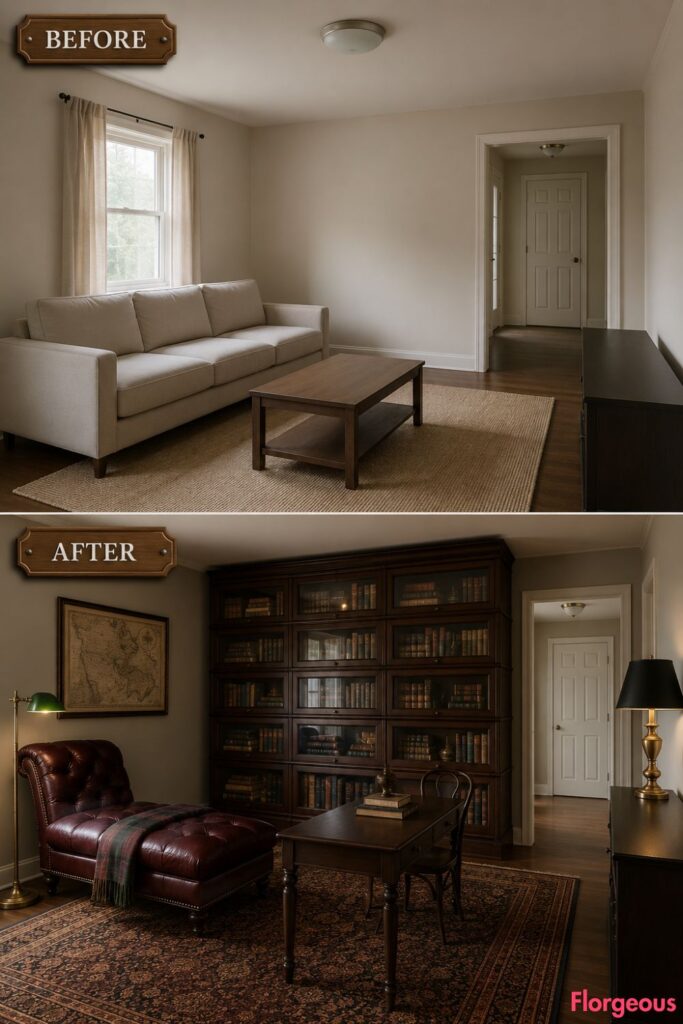
This idea changes the room through practical storage rather than decorative accessories.
Before: A plain living room with neutral walls, a basic straight sofa, a bare rectangular coffee table, a generic rug, short curtains, builder-grade ceiling lighting, minimal styling, and no strong focal point.
After: A row of dark oak barrister bookcases covers the previously empty focal wall. Their glass lift-up doors protect books while preventing the shelving from looking messy.
An oxblood leather chaise replaces one end of the basic sofa arrangement. A narrow library table, shaded green reading lamp, tobacco wool rug, and one framed map complete the scholarly atmosphere.
The closed glass fronts provide visual order, making this a useful option for readers who own many books but dislike busy open shelving.
Small Space Tip: Use two or three narrow matching cabinets instead of one oversized bookcase. The vertical divisions make the wall appear taller.
4. Open Up the Room With a 1950s Scandinavian Daybed Layout
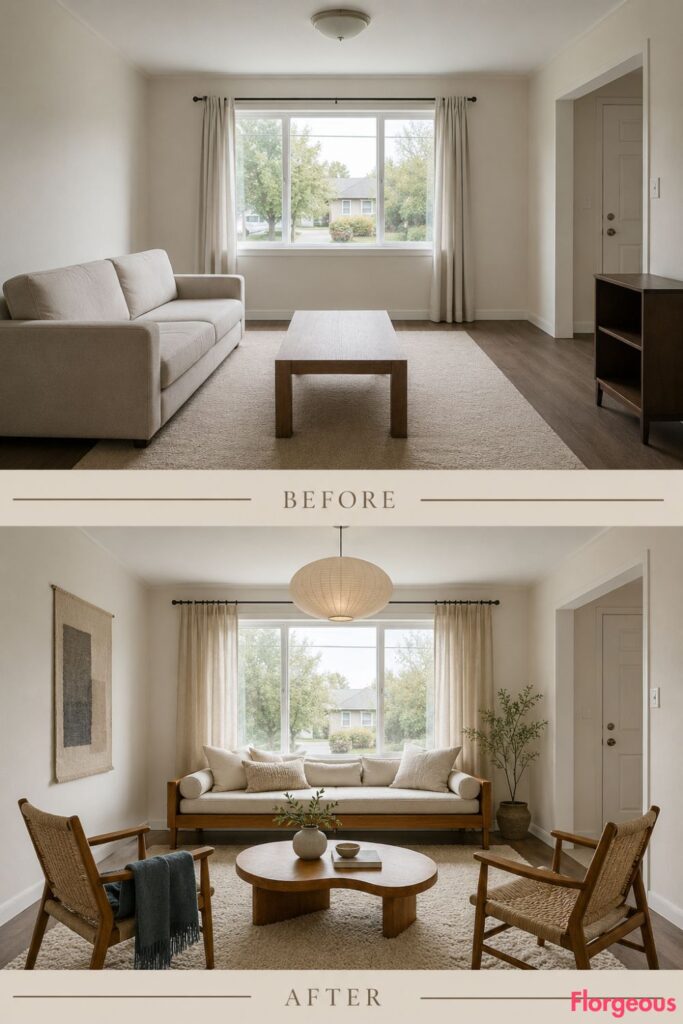
Pale wood and lightweight furniture give this makeover an airy character that contrasts completely with the library concept.
Before: A plain living room with neutral walls, a basic straight sofa, a bare rectangular coffee table, a generic rug, short curtains, builder-grade ceiling lighting, minimal styling, and no strong focal point.
After: A teak daybed with oatmeal cushions runs beneath the window, freeing the center of the room. Two paper-cord chairs face a kidney-shaped coffee table, creating a flexible arrangement for conversation or reading.
A cream rya rug, ceramic pendant, muted blue wool throw, and one graphic textile artwork keep the palette soft. Every major piece stands on visible legs, allowing light and flooring to flow underneath.
Why It Works: The daybed provides seating without creating the visual bulk of a conventional upholstered sofa.
5. Add Sculptural 1960s Italian Modern Furniture
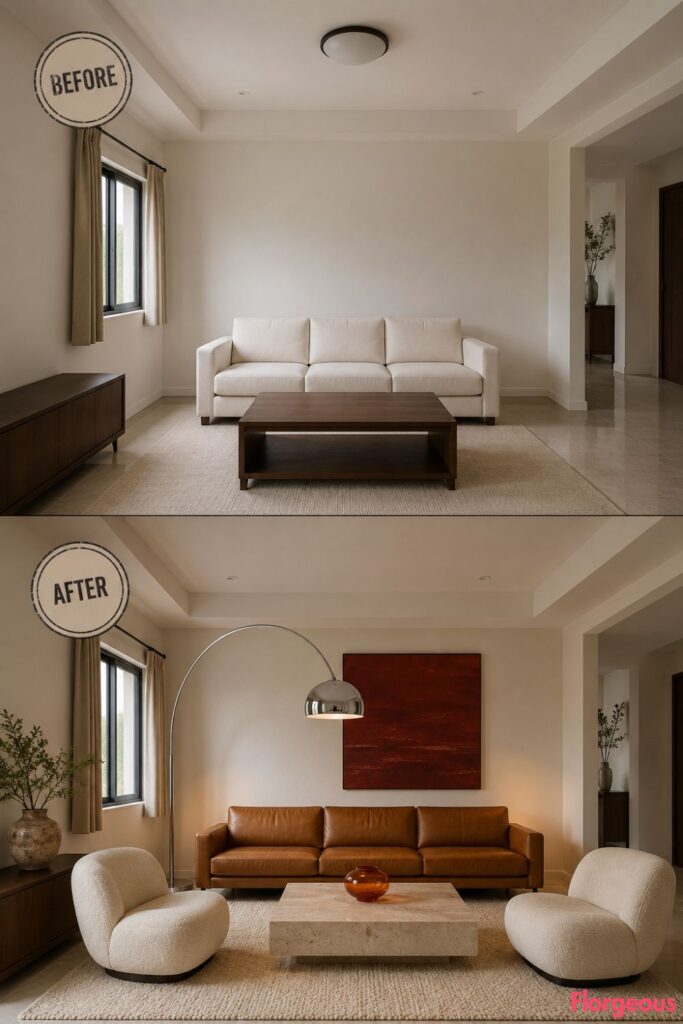
This makeover is driven by bold silhouettes rather than pattern, antiques, or traditional ornament.
Before: A plain living room with neutral walls, a basic straight sofa, a bare rectangular coffee table, a generic rug, short curtains, builder-grade ceiling lighting, minimal styling, and no strong focal point.
After: Two low cream sculptural lounge chairs face a long caramel leather sofa. A blocky travertine plinth table anchors the center, while an oversized chrome arc lamp introduces a clean metallic curve.
One burnt-orange glass vase and a deep red abstract canvas provide controlled color. The floor remains simple with a pale looped-wool rug, allowing the shapes of the furniture to remain the main attraction.
Style Note: Avoid filling a sculptural room with many small objects. Strong furniture needs open space around it to be appreciated.
6. Rework the Layout as a Low 1970s Listening Lounge
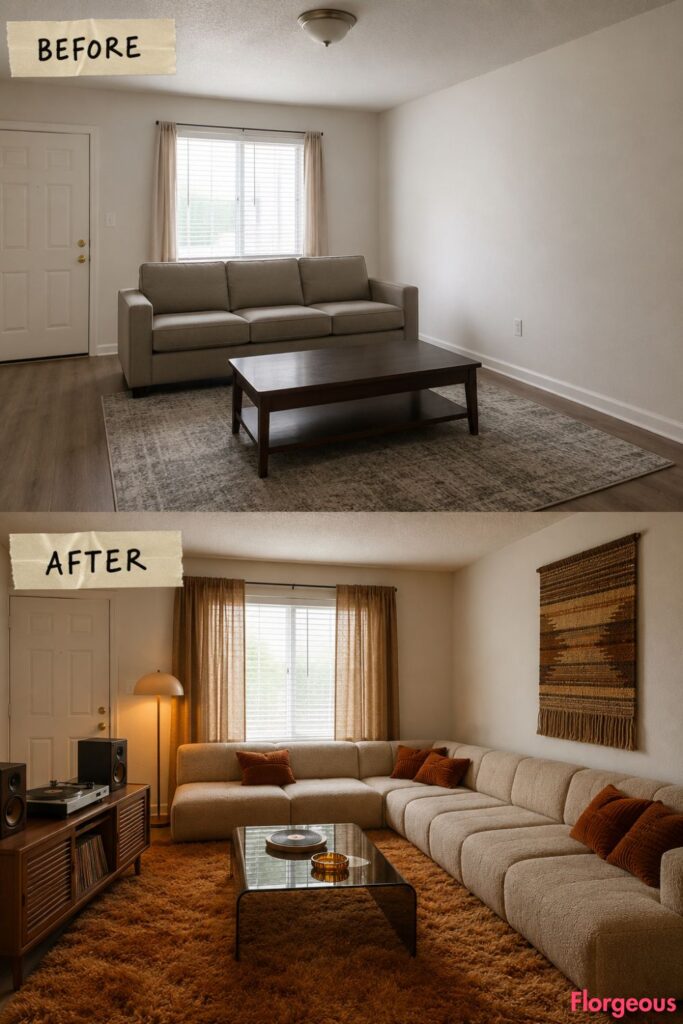
Music, comfort, and an informal furniture plan define this transformation.
Before: A plain living room with neutral walls, a basic straight sofa, a bare rectangular coffee table, a generic rug, short curtains, builder-grade ceiling lighting, minimal styling, and no strong focal point.
After: A low modular sofa in warm oatmeal wraps around two sides of the room. A teak record console sits against the focal wall with a turntable and compact speakers, while a smoked-glass table keeps the center visually light.
An amber shag rug, mushroom floor lamp, rust corduroy cushions, and one large woven wall piece complete the relaxed 1970s mood. Records remain stored inside the cabinet so the room does not become visually crowded.
Try this: Angle the speakers toward the central seating area and leave breathing room around them instead of pushing every item tightly against the wall.
7. Create an English Cottage Sitting Room With One Hero Floral
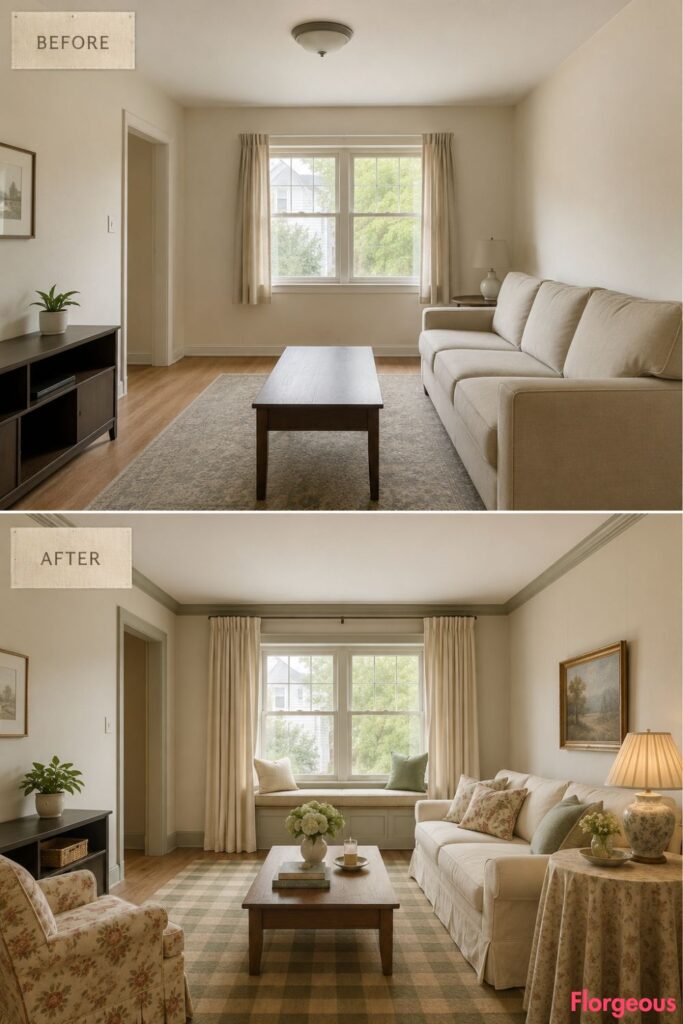
This concept uses faded pattern, but avoids repeating it across every surface.
Before: A plain living room with neutral walls, a basic straight sofa, a bare rectangular coffee table, a generic rug, short curtains, builder-grade ceiling lighting, minimal styling, and no strong focal point.
After: One generously upholstered armchair in faded rose-and-sage chintz becomes the hero piece. It sits beside a skirted round table with a ceramic lamp and gathered shade.
The remaining seating stays warm ivory, complemented by sage-painted trim, a flatwoven checked rug, full-length cream curtains, and a narrow oak bench under the window. A small needlepoint cushion and bowl of garden branches add character without competing with the floral chair.
Common Mistake: Repeating the same floral on curtains, cushions, and upholstery can make a room look like a coordinated showroom. Use it once, then support it with plains and checks.
8. Style a Paris Flea Market Room Around a Gilt Mirror
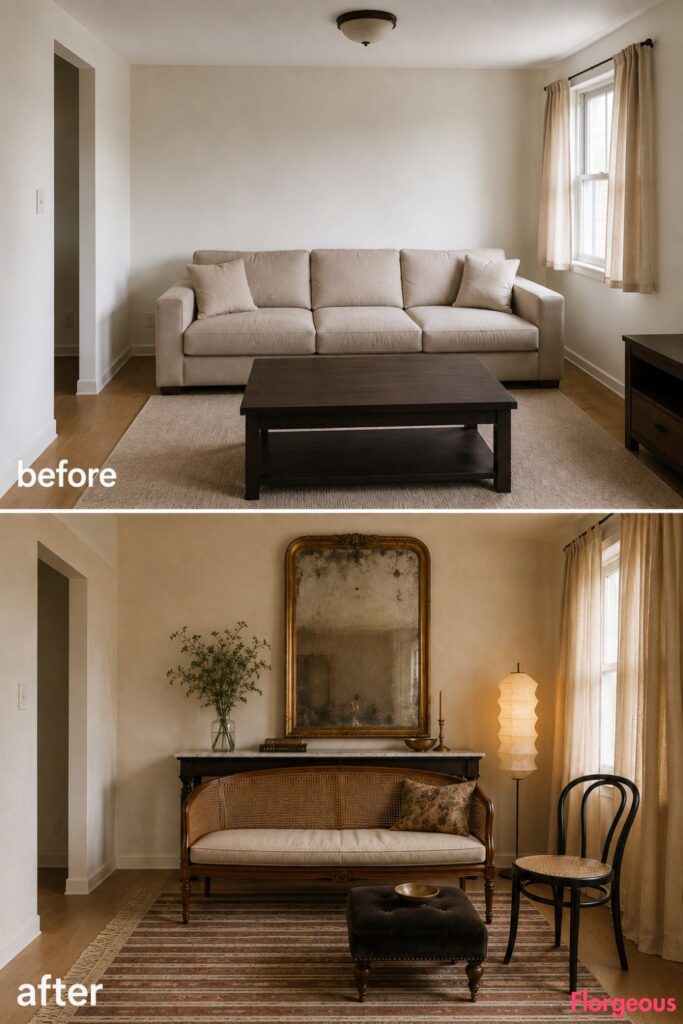
Here, one ornate object provides contrast against relaxed, imperfect furniture.
Before: A plain living room with neutral walls, a basic straight sofa, a bare rectangular coffee table, a generic rug, short curtains, builder-grade ceiling lighting, minimal styling, and no strong focal point.
After: An oversized foxed gilt mirror leans above a slim marble-topped console. A cane settee, black bentwood chair, small velvet footstool, and faded striped rug create a deliberately mismatched arrangement.
The walls shift to a soft plaster beige, while full-height flax curtains pool slightly at the floor. A pleated paper lamp introduces an informal detail that keeps the gilded mirror from making the space feel too formal.
Color Story: Cream, black, flax, weathered wood, and aged gold are enough to unite unrelated flea-market finds.
9. Introduce an Arts and Crafts Hearth Wall
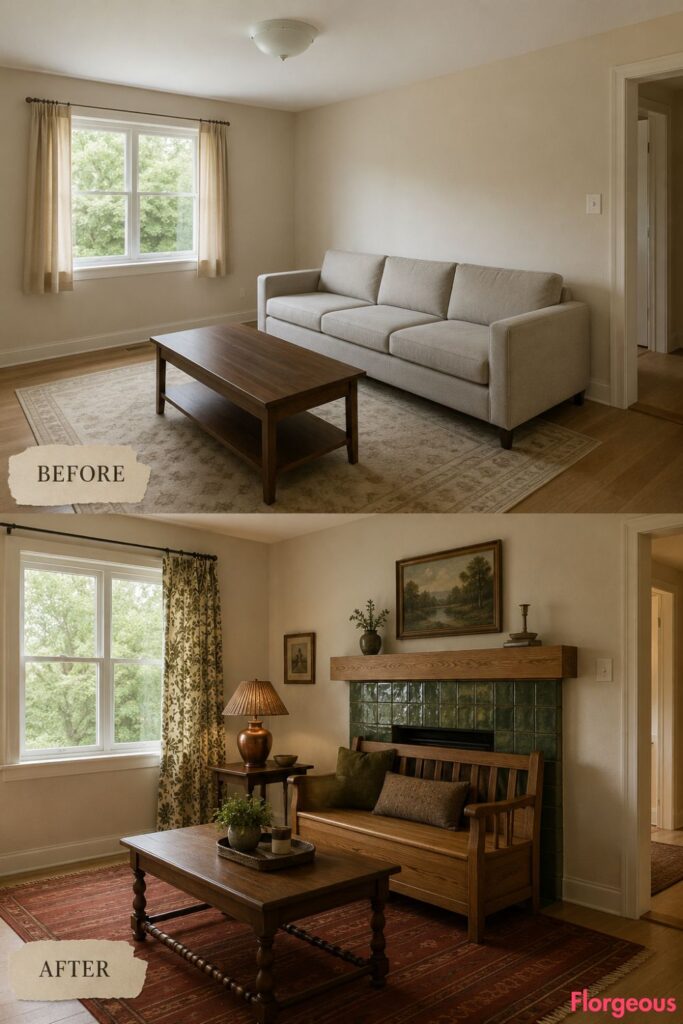
Unlike the previous concepts, this makeover changes the architecture by creating a handcrafted focal point.
Before: A plain living room with neutral walls, a basic straight sofa, a bare rectangular coffee table, a generic rug, short curtains, builder-grade ceiling lighting, minimal styling, and no strong focal point.
After: A shallow fireplace surround is built along the blank wall using matte green artisan-style tiles and a thick oak mantel. A compact oak settle sits nearby, paired with a spindle-leg table and hammered copper lamp.
A single vine-pattern curtain panel introduces historical pattern, while moss wool cushions and a rust flatweave rug bring warmth. Handmade joinery and honest materials shape the room more than decorative accessories.
Budget Version: Build a shallow non-working mantel and use tile-effect panels or removable decals inside the opening.
10. Warm the Space With a 1960s Mediterranean Material Palette
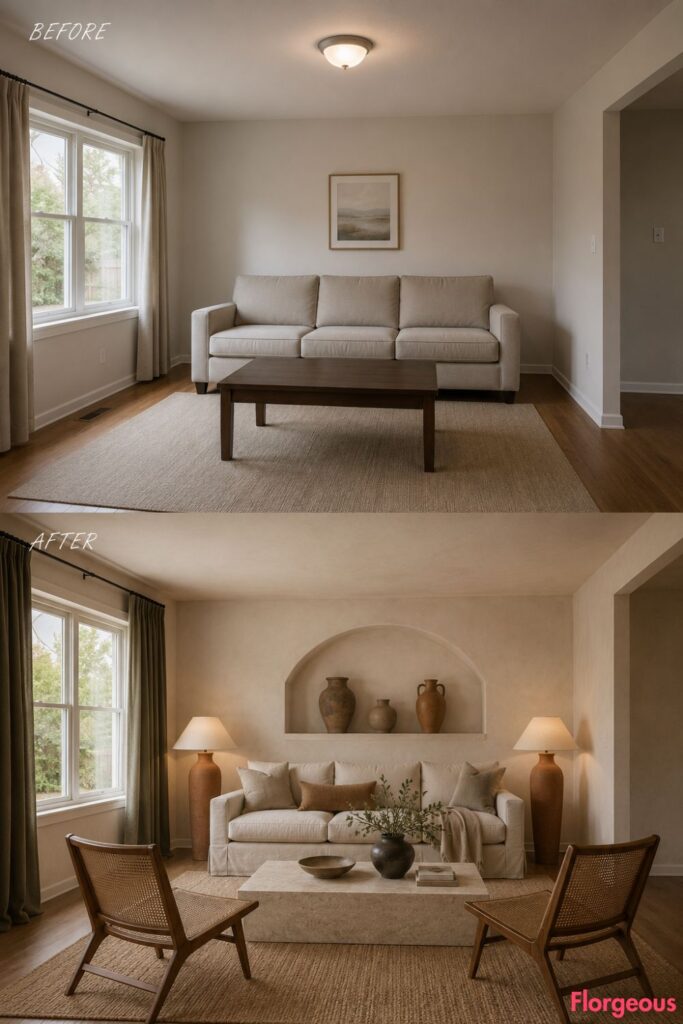
Sun-baked finishes give this room a relaxed vintage mood without relying on patterned fabric or ornate antiques.
Before: A plain living room with neutral walls, a basic straight sofa, a bare rectangular coffee table, a generic rug, short curtains, builder-grade ceiling lighting, minimal styling, and no strong focal point.
After: Limewashed cream walls surround a deep linen sofa and two low caned lounge chairs. A substantial travertine coffee table introduces a stone focal point, while terracotta floor lamps and olive curtains add earthy color.
A shallow arched niche holds three oversized ceramic vessels. The limited display keeps the architectural feature calm and sculptural rather than decorative.
Try this: Combine no more than three rough textures, such as limewash, cane, and stone. Too many heavily textured finishes can make a small room feel busy.
11. Bring In Primitive Americana Through Useful Folk Pieces
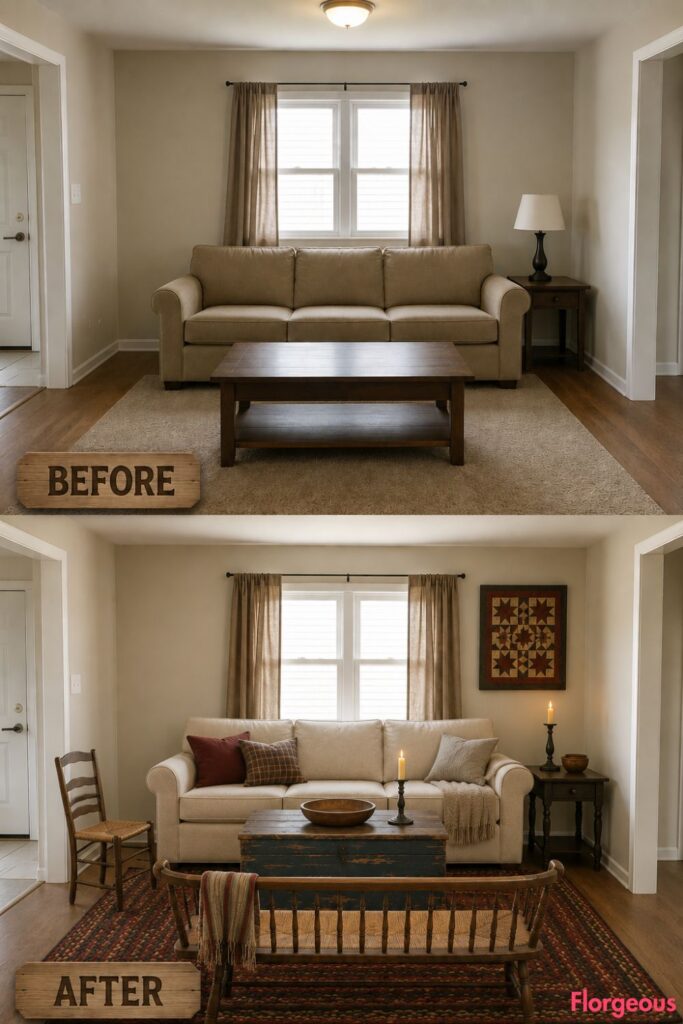
This room feels handmade and grounded, with almost every decorative object serving a practical function.
Before: A plain living room with neutral walls, a basic straight sofa, a bare rectangular coffee table, a generic rug, short curtains, builder-grade ceiling lighting, minimal styling, and no strong focal point.
After: A worn blue blanket chest becomes the coffee table and provides hidden storage. A spindle-back bench faces the oatmeal sofa, while a ladder-back chair fills an unused corner without adding visual bulk.
A hooked wool rug introduces barn red, charcoal, and faded cream. An iron candlestick lamp, turned wood bowl, handwoven throw, and one framed quilt fragment complete the room.
There are no novelty signs or reproduction farmhouse slogans. The character comes from construction, patina, and textile craft.
12. Design a Moody Old Cinema Evening Room
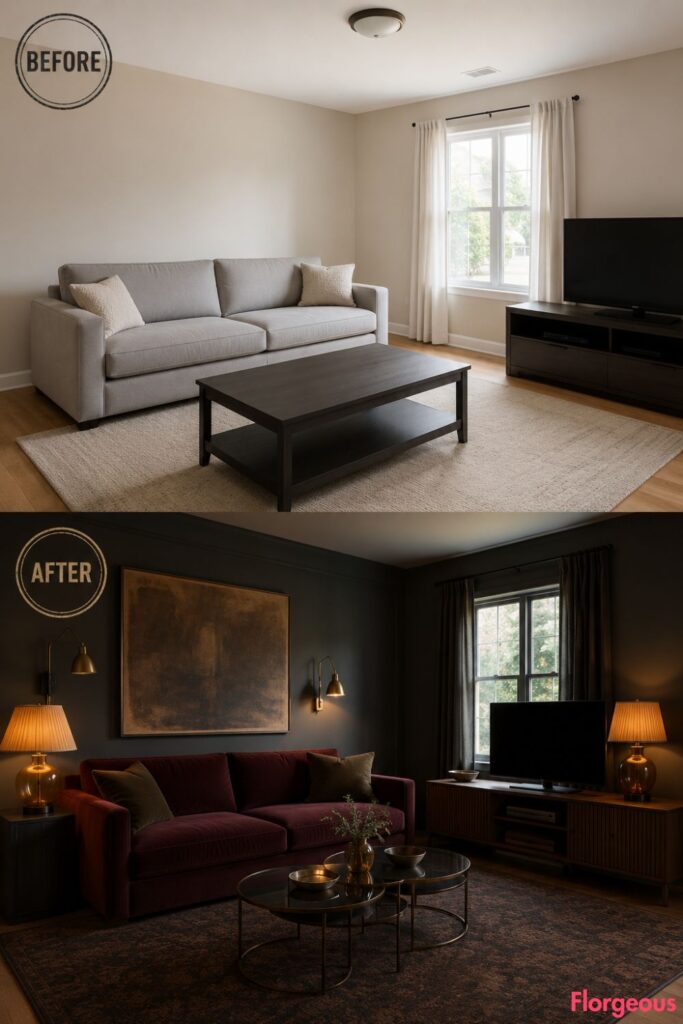
This concept is built specifically for nighttime use, films, and quiet conversation.
Before: A plain living room with neutral walls, a basic straight sofa, a bare rectangular coffee table, a generic rug, short curtains, builder-grade ceiling lighting, minimal styling, and no strong focal point.
After: A burgundy mohair sofa faces a low reeded-walnut media cabinet with concealed equipment. Charcoal walls and a dark wool rug create a cocooning backdrop, while amber glass table lamps and brass swing-arm sconces provide several low pools of light.
Instead of literal film posters, the room displays large sepia abstract artwork. Smoked-glass nesting tables can be moved easily when more floor space is needed.
Lighting Tip: Place light sources at different heights. A combination of sconces, table lamps, and one low floor lamp is more atmospheric than a bright central fixture.
13. Finish With a Vintage Architect’s Studio Living Room
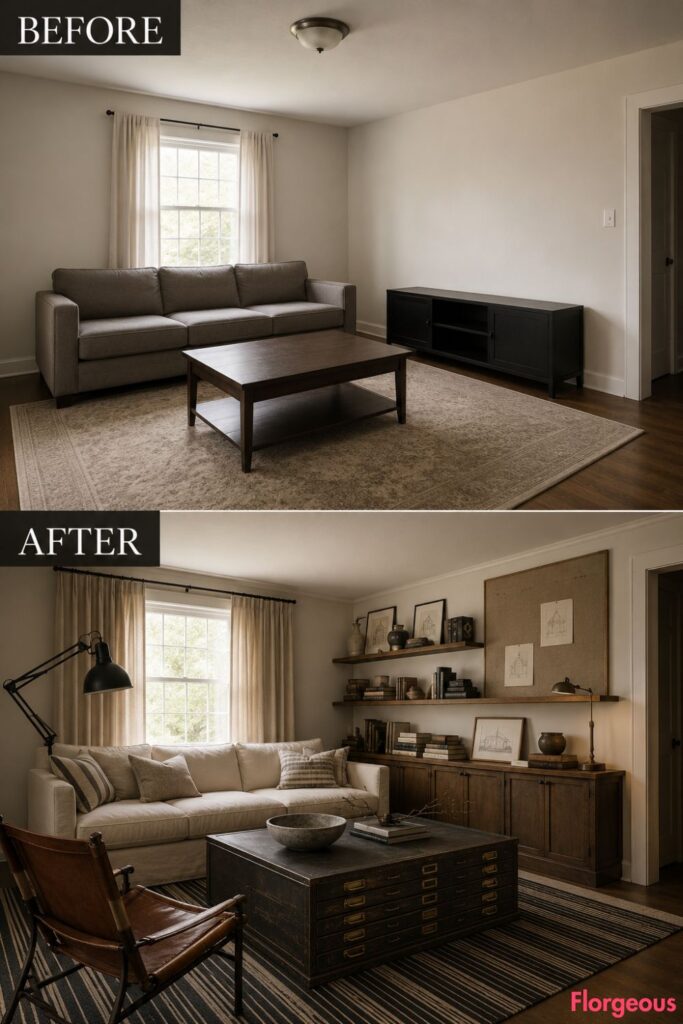
The last transformation combines relaxation, hidden storage, and a practical creative workspace.
Before: A plain living room with neutral walls, a basic straight sofa, a bare rectangular coffee table, a generic rug, short curtains, builder-grade ceiling lighting, minimal styling, and no strong focal point.
After: A restored flat-file cabinet becomes a broad coffee table with shallow drawers for papers, chargers, games, and art supplies. A leather sling chair and adjustable drafting lamp create a compact work corner beside narrow oak shelves.
The main wall holds framed architectural sketches and a large plain linen pinboard. A charcoal-striped rug and simple canvas sofa keep the palette functional and understated.
Only a stone bowl, scale model, and sculptural branch remain visible. Everything else is stored inside the flat file or closed shelf cabinets.
Why It Works: The vintage furniture supports a real activity, which makes the room feel personal rather than staged.
Choosing a Vintage Direction That Suits Your Home
Begin with the activity or atmosphere you want the room to support. A listening lounge needs a different layout from a library, cocktail room, creative studio, or formal conversation space.
Next, choose one defining feature. It could be a bookcase wall, fireplace, rug, sofa, drinks cabinet, flat-file table, or oversized mirror. Let that item guide the palette and materials instead of collecting unrelated vintage accessories first.
A successful Vintage Living Room does not need to represent every era. Choose one clear design story, leave open space around the strongest pieces, and add older objects gradually as you find items that are useful, beautiful, and genuinely suited to your home.