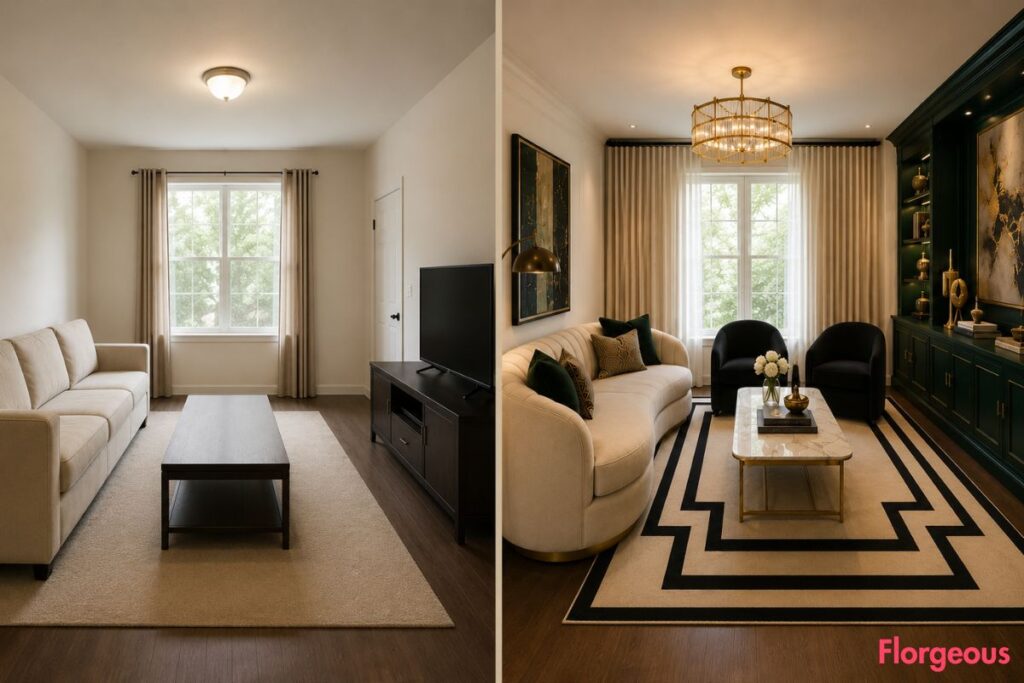
A basic living room can be perfectly functional and still feel completely forgettable. Off-white walls, short curtains, a generic sofa, and flat ceiling lighting create a clean starting point, but there is no focal point, visual rhythm, or sense of occasion.
These Hollywood Regency Living Room ideas begin with that exact same builder-grade space. Each makeover takes the room in a completely different direction through a new layout, color story, furniture silhouette, wall treatment, lighting strategy, and hero feature.
Some rooms rely on deep lacquer and tailored upholstery. Others use sculptural seating, theatrical ceilings, polished chrome, decorative screens, or one carefully controlled pattern. The goal is glamour with restraint, not a room crowded with shiny finishes and familiar design clichés.
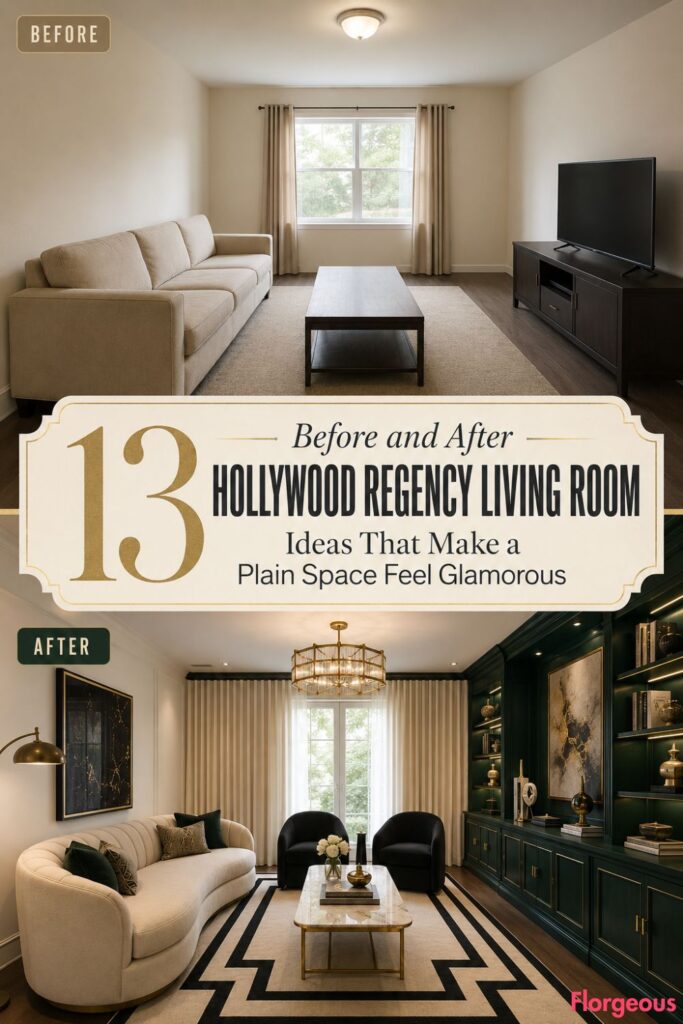
1. Create an Ivory, Black, and Brass Hollywood Regency Living Room
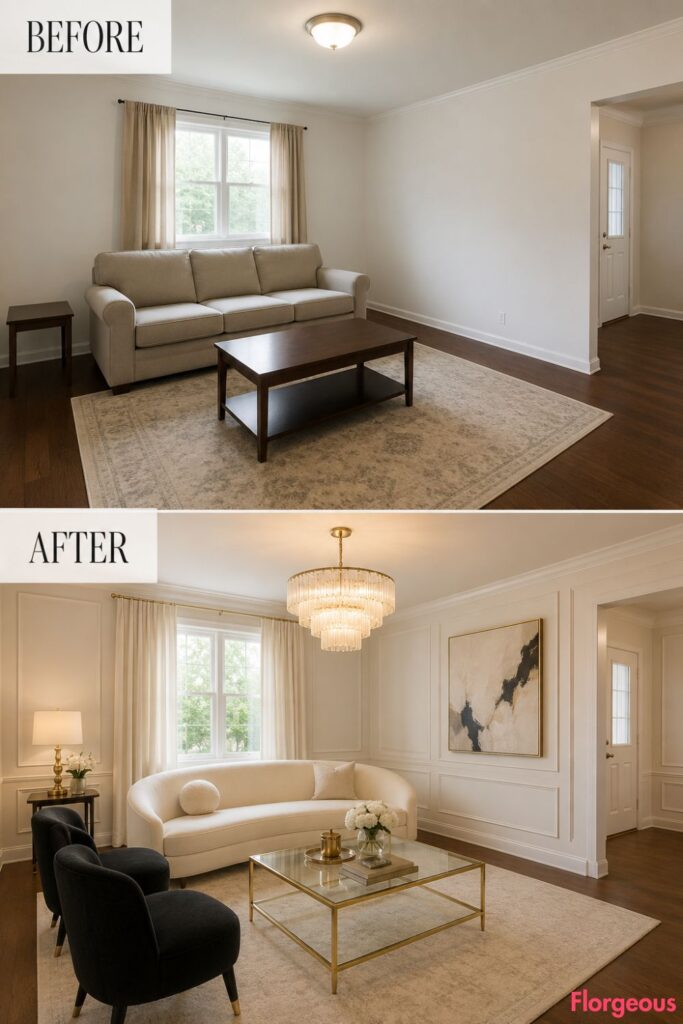
This approachable makeover uses a classic palette without covering every surface in gold.
Before: The room has off-white walls, a basic straight sofa, bare rectangular coffee table, generic neutral rug, short curtains, builder-grade ceiling light, and minimal styling.
After: A curved ivory sofa faces two slim black slipper chairs around a polished-brass and clear-glass cocktail table. Picture-frame molding adds quiet architecture, while full-height cream curtains and a tiered brass chandelier make the room feel taller.
One oversized abstract painting provides the only major decorative statement.
Why it works: The black elements sharpen the pale palette, while brass introduces warmth in a controlled way.
Designer Tip: Repeat the metal finish only three times, such as in the chandelier, table frame, and curtain rod.
2. Turn One Wall Into an Emerald Lacquer Cocktail Library
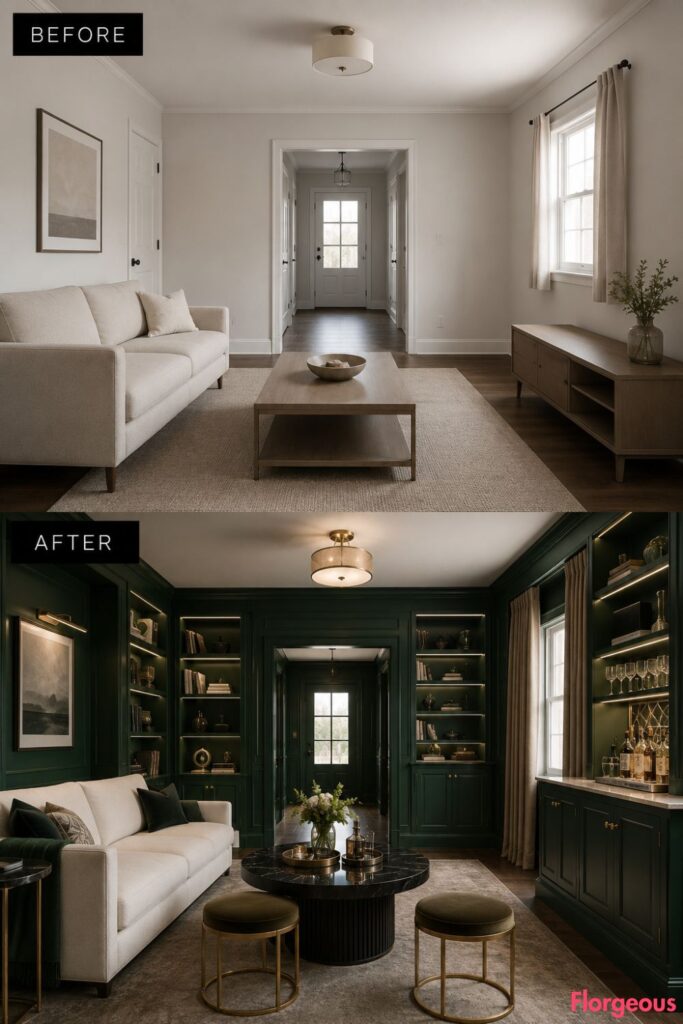
Instead of spreading bold color around the room, concentrate it on one hardworking wall.
Before: The same neutral room has no storage, no display space, and no obvious destination for the eye.
After: Floor-to-ceiling emerald lacquer cabinetry combines closed storage, glass-fronted shelves, and a small illuminated cocktail niche. A cream tuxedo sofa sits opposite the cabinetry, joined by a round black marble table and two compact brass-framed stools.
The remaining walls stay warm white, allowing the green focal point to look rich rather than overwhelming.
Budget Version: Paint a secondhand sideboard in high-gloss emerald and install two narrow glass shelves above it.
Common Mistake: Glossy paint reveals dents and uneven surfaces. Repair, sand, and prime furniture carefully before applying the finish.
3. Replace the Standard Sofa With a Blush Channel-Tufted Banquette
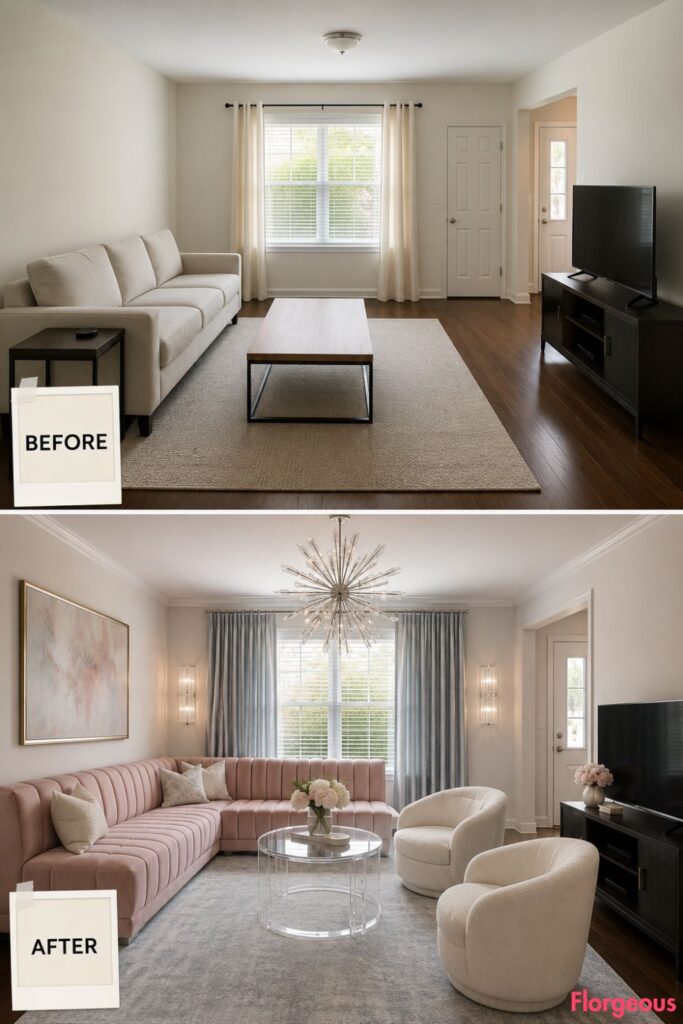
A tailored banquette changes both the appearance and the social function of the room.
Before: The straight sofa sits against the wall without creating a welcoming conversation arrangement.
After: A blush channel-tufted banquette wraps one corner, facing two ivory barrel chairs across a round clear acrylic table. A pale gray wool rug keeps the color palette calm, while a polished chrome starburst chandelier adds a single reflective moment overhead.
Silvery blue curtains soften the blush and prevent the room from feeling overly sweet.
Small Space Tip: A curved freestanding settee can imitate the banquette shape without custom construction.
Why it works: The corner seating opens more visible floor space and encourages guests to face one another.
4. Build a Chrome and Smoked-Glass Cocktail Lounge
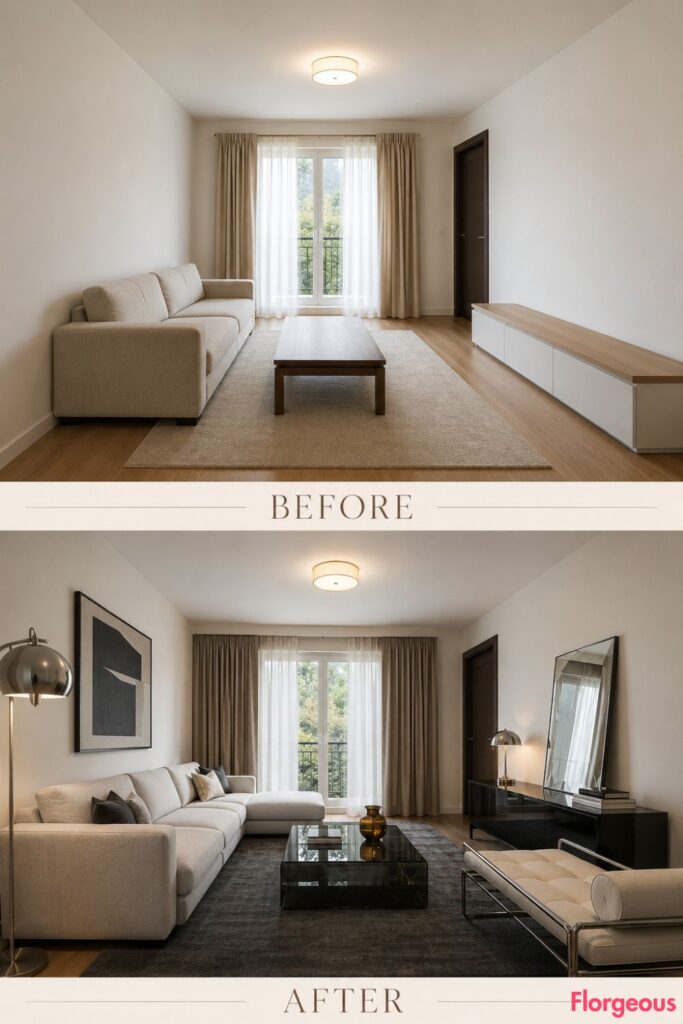
This version replaces warm metallic glamour with cooler, streamlined finishes.
Before: The room feels flat because every surface is opaque, neutral, and visually heavy.
After: A low ivory sectional anchors one side of the room. Opposite it, a chrome-framed daybed provides flexible seating without forming another solid wall of upholstery. A smoked-glass waterfall table, black lacquer console, charcoal rug, and aged silver floor lamp complete the composition.
One amber glass vase introduces warmth and keeps the space from feeling sterile.
Style Note: Reflective pieces look more luxurious when surrounded by matte textiles and dark wood.
5. Give the Room a Sapphire Library and Camel Velvet Chaise
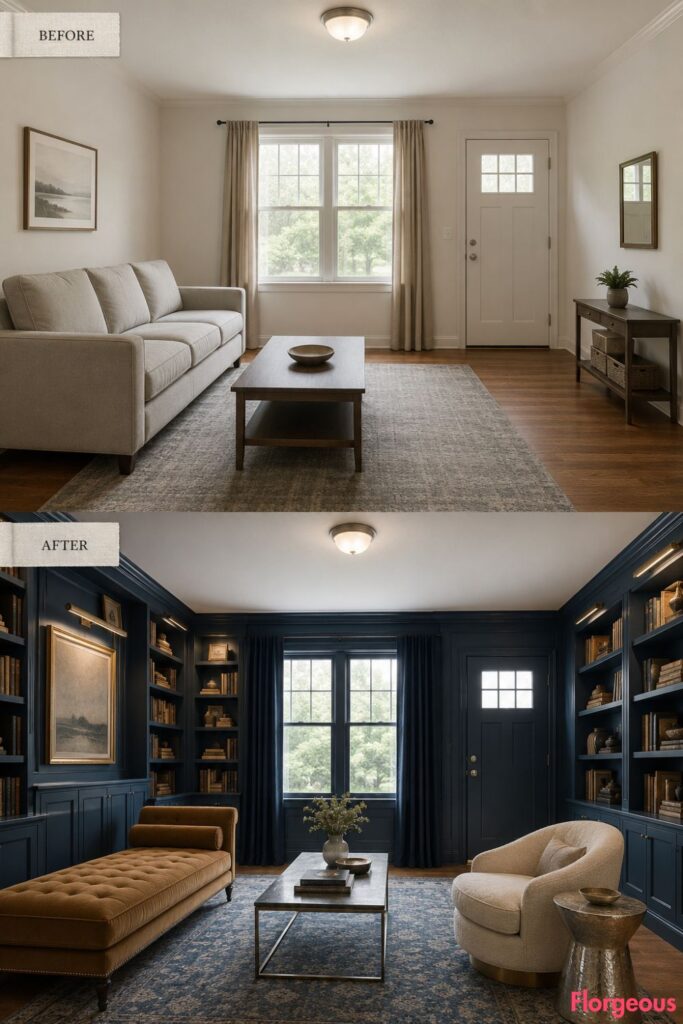
Deep blue cabinetry creates drama without using lacquer, mirrors, or a graphic black-and-white scheme.
Before: The undecorated wall looks empty, and the room has nowhere to store books or display collected objects.
After: Floor-to-ceiling sapphire bookcases frame a large parchment-toned artwork. A camel velvet chaise sits diagonally across from a sculptural cream chair, with a silver-leaf side table positioned between them.
A faded blue rug and slim polished-nickel picture lights make the room feel layered and established.
Try this: Paint ready-made bookcases and the wall behind them the same color. The continuous finish disguises small gaps and creates a built-in effect.
6. Make a Champagne Tented Ceiling the Main Focal Point
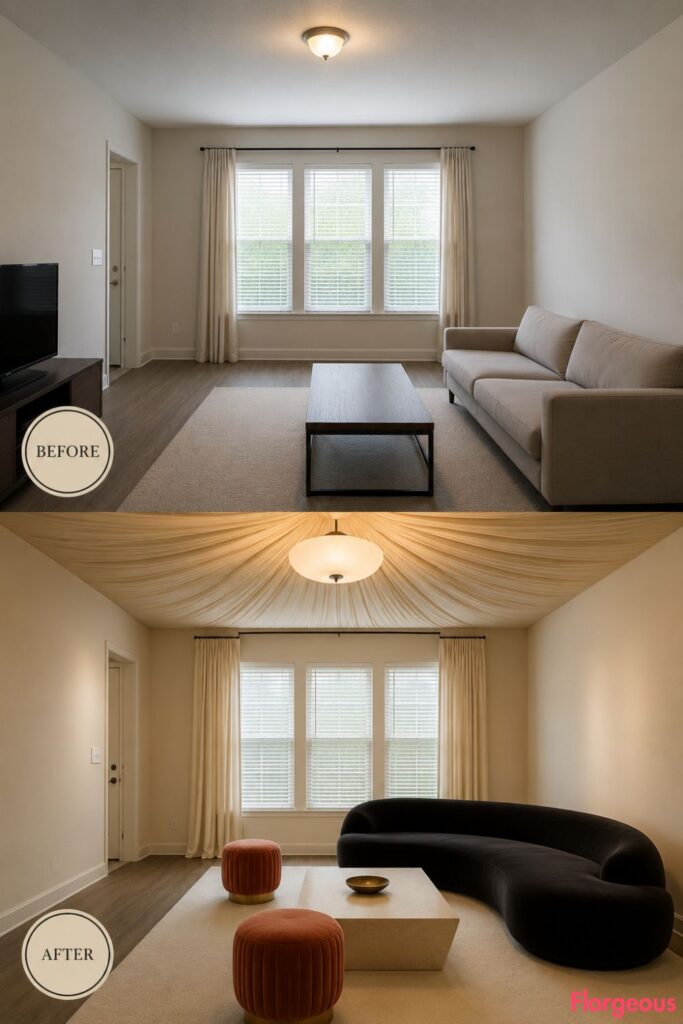
Instead of decorating every wall, move the drama overhead.
Before: The builder-grade ceiling light makes the upper half of the room feel ignored and visually low.
After: Soft champagne fabric radiates from a central ceiling medallion, creating a tailored tented effect. A sculptural black sofa sits beneath it, paired with two coral stools and a pale limestone coffee table.
The walls remain creamy and almost bare, allowing the ceiling to carry the design.
Budget Version: Paint wide tonal stripes from the room corners toward the ceiling light to suggest a tented shape without installing fabric.
Common Mistake: Avoid combining a tented ceiling with busy wallpaper, patterned curtains, and elaborate wall art. One theatrical surface is enough.
7. Frame a Slim Fireplace With Smoked Mirror and Walnut
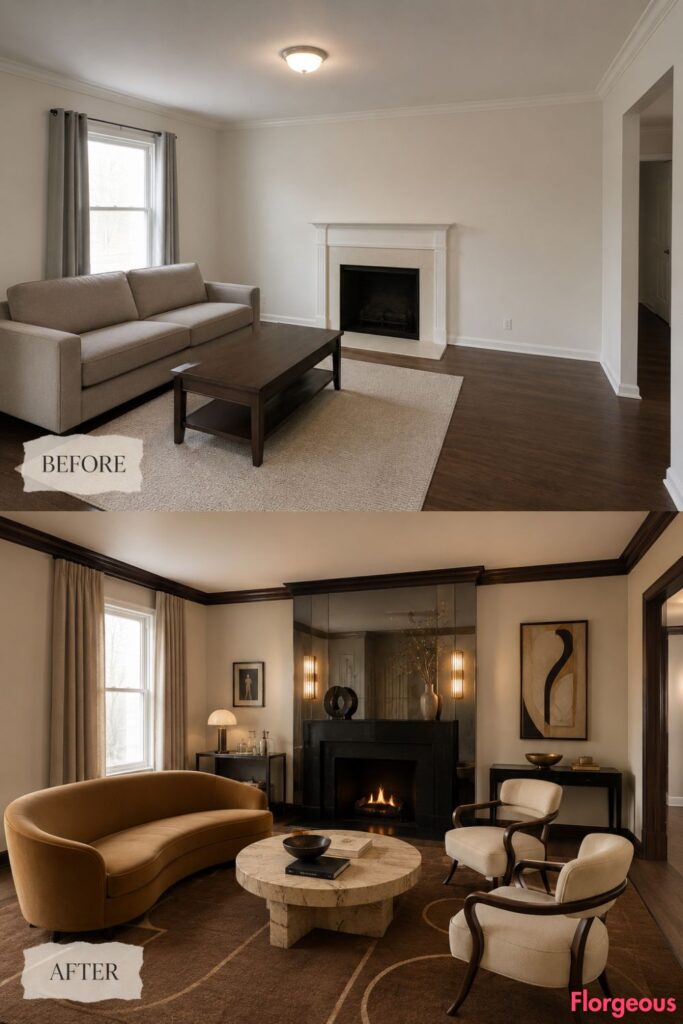
Smoked mirror can deepen a room without producing the bright reflections of conventional mirrored furniture.
Before: The basic room lacks a central architectural feature, so the furniture appears to float without purpose.
After: A narrow matte-black fireplace is surrounded by smoked-mirror panels and dark walnut trim. A camel crescent sofa faces the fireplace, accompanied by two compact ivory klismos chairs and a chunky rectangular travertine table.
A tobacco-colored wool rug adds warmth beneath the cooler mirrored surface.
Why it works: The mirror visually expands the focal wall, while walnut and travertine keep the room grounded.
8. Use Leopard Pattern on One Controlled Accent
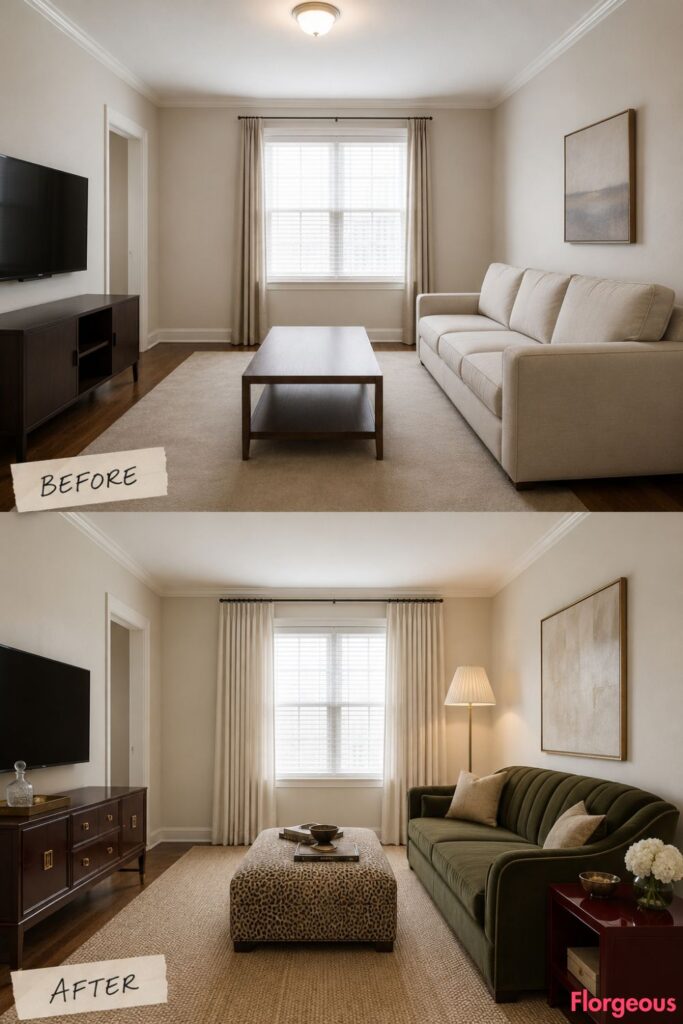
Animal-inspired pattern feels more sophisticated when it occupies a small percentage of the room.
Before: The neutral space needs personality, but several competing prints would make it feel cluttered.
After: A deep olive sofa provides a calm anchor. One leopard-patterned ottoman becomes the playful centerpiece, balanced by a plain natural-fiber rug, an oxblood lacquer side table, ivory curtains, and a tall pleated floor lamp.
The artwork remains abstract and tonal, so it does not compete with the ottoman.
Designer Tip: Treat animal pattern like a bright color. Use it once, then repeat one of its quieter tones elsewhere.
9. Introduce Greek Key Trim and a Square Marble Centerpiece
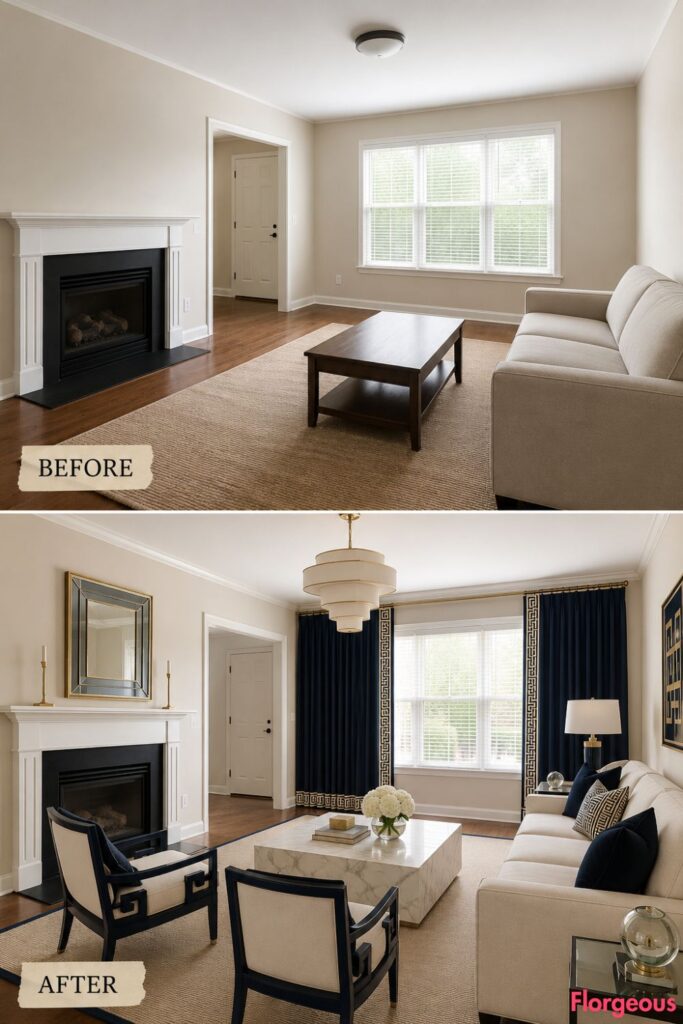
This transformation uses crisp geometry rather than curved seating or reflective cabinetry.
Before: Short curtains and an undersized rug make the room feel smaller and less finished.
After: Navy curtains edged with wide ivory Greek key trim hang from ceiling height. A tailored cream sofa faces two navy lacquer chairs around a square white marble cocktail table.
A sand-colored wool rug provides a quiet base, while a stepped white pendant repeats the room’s geometric language.
Try this: Add decorative tape trim to ready-made curtains, pillow covers, or a plain lampshade before investing in custom upholstery.
Why it works: Repeating one geometric motif creates cohesion without turning the room into a themed interior.
10. Place One Ruby-Red Chaise in a Sculptural White Room
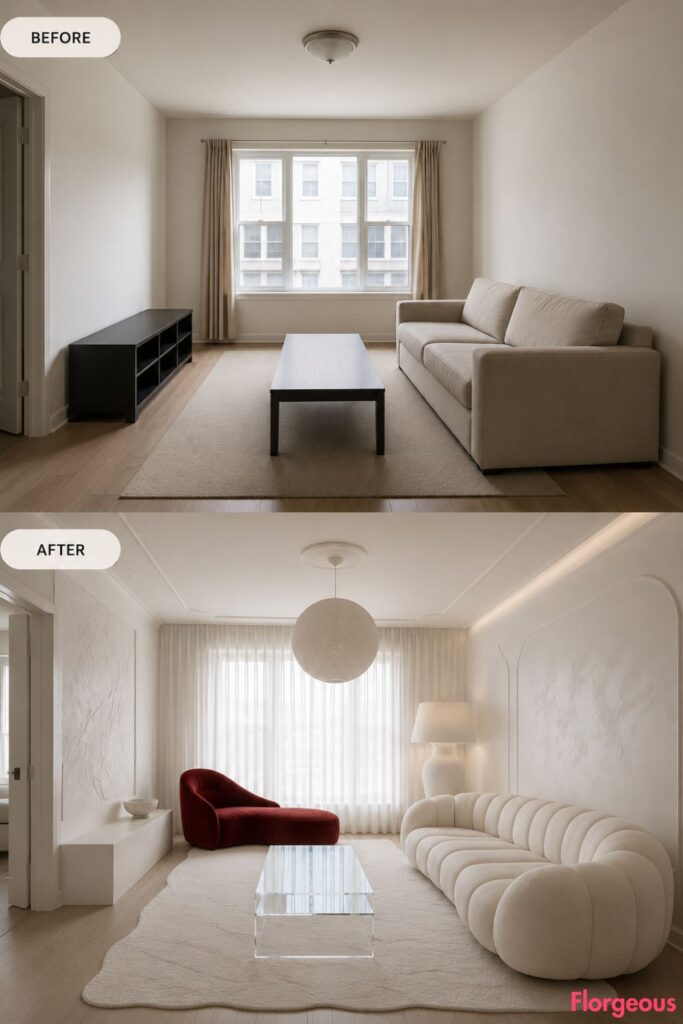
A single saturated furniture piece can create more drama than an entire room of decorative accessories.
Before: The pale room lacks contrast, shape, and any memorable color.
After: Textured white walls, an ivory scalloped sofa, and a chalky white rug create a sculptural monochromatic setting. A ruby-red chaise sits near the window at a slight angle, joined by a clear acrylic table and an oversized plaster floor lamp.
The red chaise functions as furniture, artwork, and focal point.
Color Story: Keep the room almost entirely neutral. Introducing several additional red objects would weaken the impact of the chaise.
11. Make a Hand-Painted Folding Screen the Hero Feature
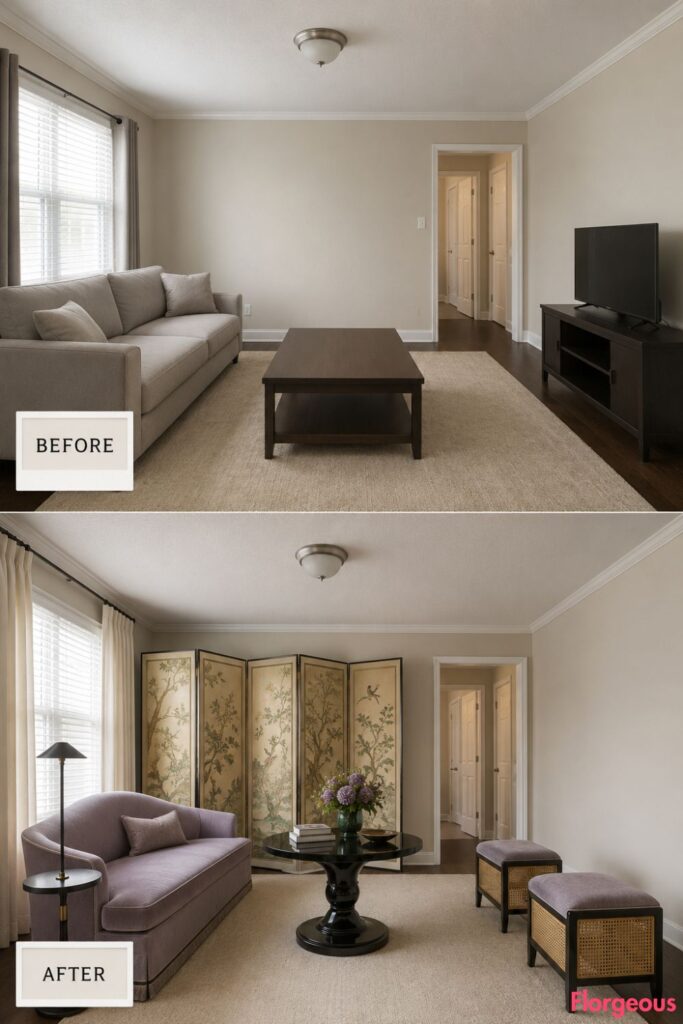
A decorative screen offers high visual impact without permanent construction.
Before: The wall behind the sofa is blank, and the room has no depth or sense of movement.
After: An angled hand-painted folding screen with abstract botanical forms stands behind a low lavender settee. Two cane-backed stools face the settee across a black lacquer pedestal table.
A cream wool rug and slim black floor lamp complete the asymmetric arrangement without covering the entrance.
Practical Note: A folding screen can also conceal outlets, cords, or a narrow storage area.
12. Create a Coral Tropical Regency Room With Dark Faux Bamboo
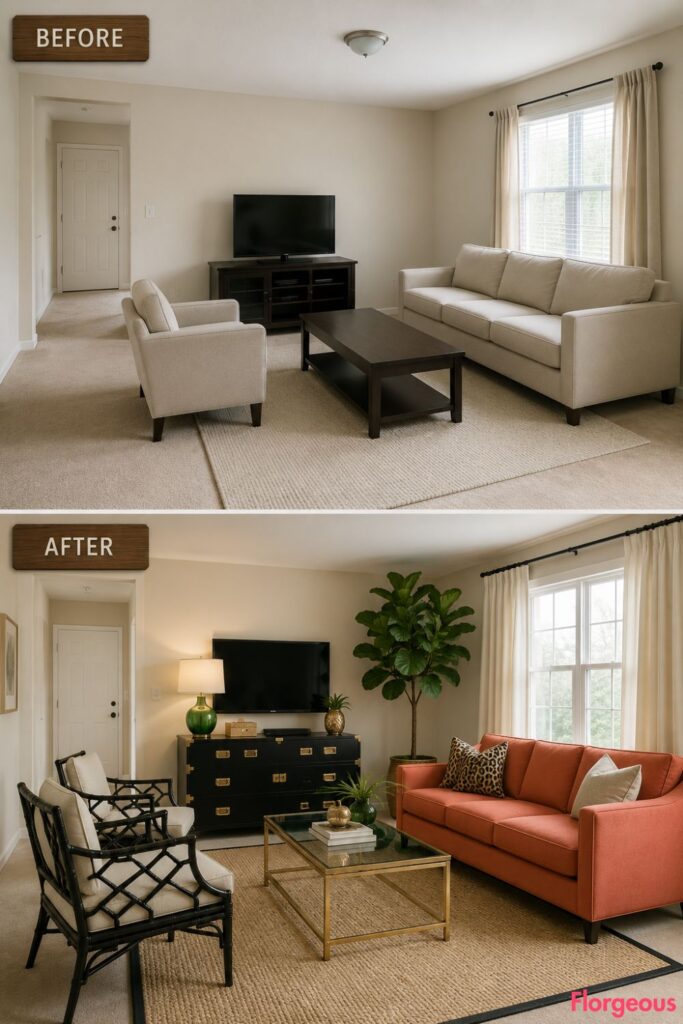
Tropical references can feel refined when they are expressed through furniture shape and controlled color rather than novelty prints.
Before: The neutral room feels disconnected from the natural light and lacks warmth.
After: A tailored coral sofa faces two dark wood faux-bamboo lounge chairs with ivory cushions. A black campaign chest becomes the media console, while a woven cream rug, green glass lamp, and one oversized ficus bring in softer natural texture.
Floor-length ivory curtains keep the room bright and prevent the darker furniture from feeling heavy.
Common Mistake: Avoid adding palm-print wallpaper, tropical artwork, several plants, and bamboo accessories at the same time. Suggest the theme rather than illustrating it literally.
13. Turn the Room Into a Four-Chair Cocktail Salon With a Cobalt Ceiling
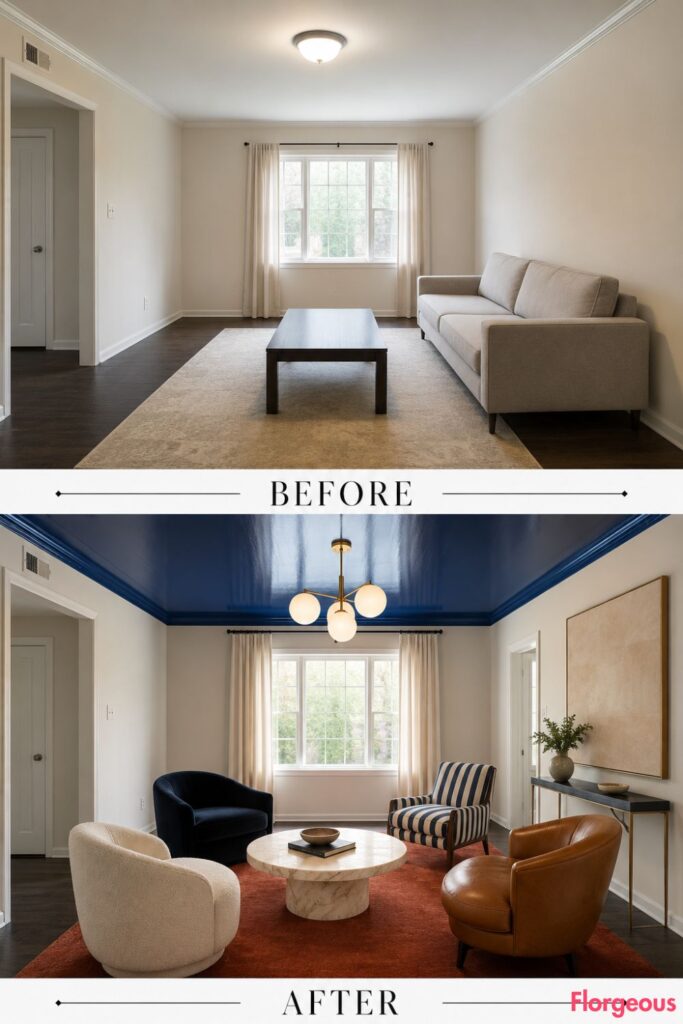
The final concept removes the sofa and gives the room a completely new social layout.
Before: The standard straight sofa controls the arrangement even though the room could support more flexible seating.
After: Four chairs form a loose circle around a round alabaster cocktail table. The group includes a black velvet chair, ivory bouclé chair, caramel leather chair, and restrained blue-striped slipper chair.
Above them, a glossy cobalt ceiling reflects a simple opal globe chandelier. A large plain rust rug grounds the mismatched seating and warms the blue overhead.
Why it works: The chairs have different colors and materials, but similar visual weight. The arrangement feels collected rather than random.
Small Space Tip: Choose armless or low-backed chairs so the circular layout remains open and easy to navigate.
How to Choose the Right Regency Makeover
Begin by choosing one hero feature, such as the emerald cabinet wall, tented ceiling, ruby chaise, decorative screen, or cobalt ceiling. That decision should guide the room’s colors, furniture shapes, lighting, and supporting materials.
Next, choose either brass or chrome as the dominant metal. Measure the main walking paths before changing the seating layout, hang curtains close to the ceiling, and introduce glossy or mirrored finishes gradually.
A successful Hollywood Regency Living Room does not need every recognizable motif. One theatrical move, comfortable furniture, practical storage, and plenty of visual breathing room will create a result that feels glamorous, polished, and genuinely livable.