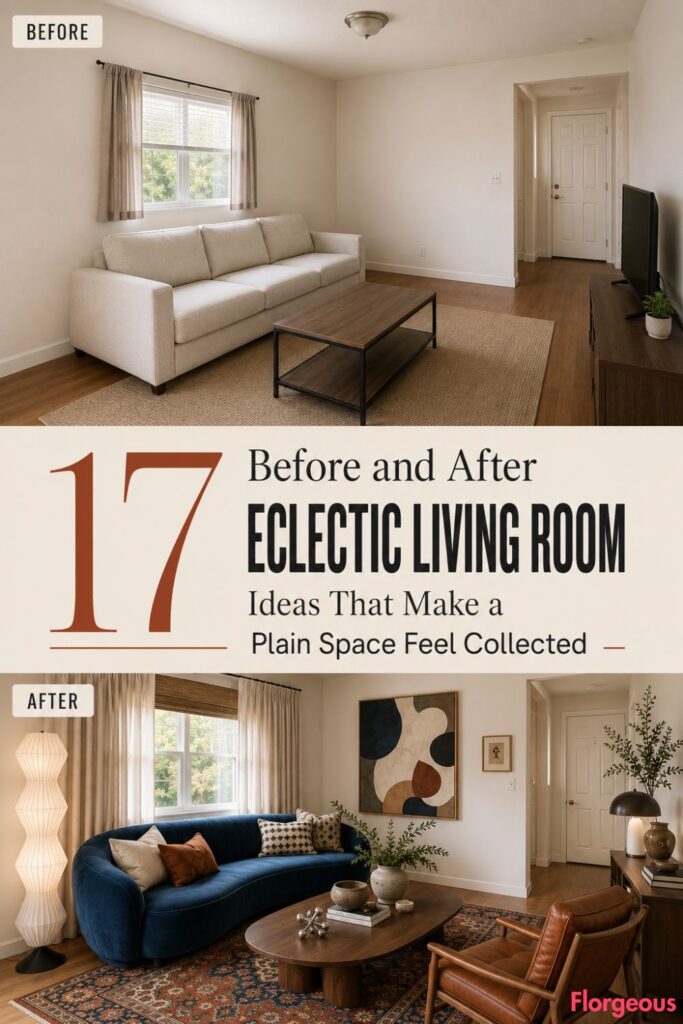
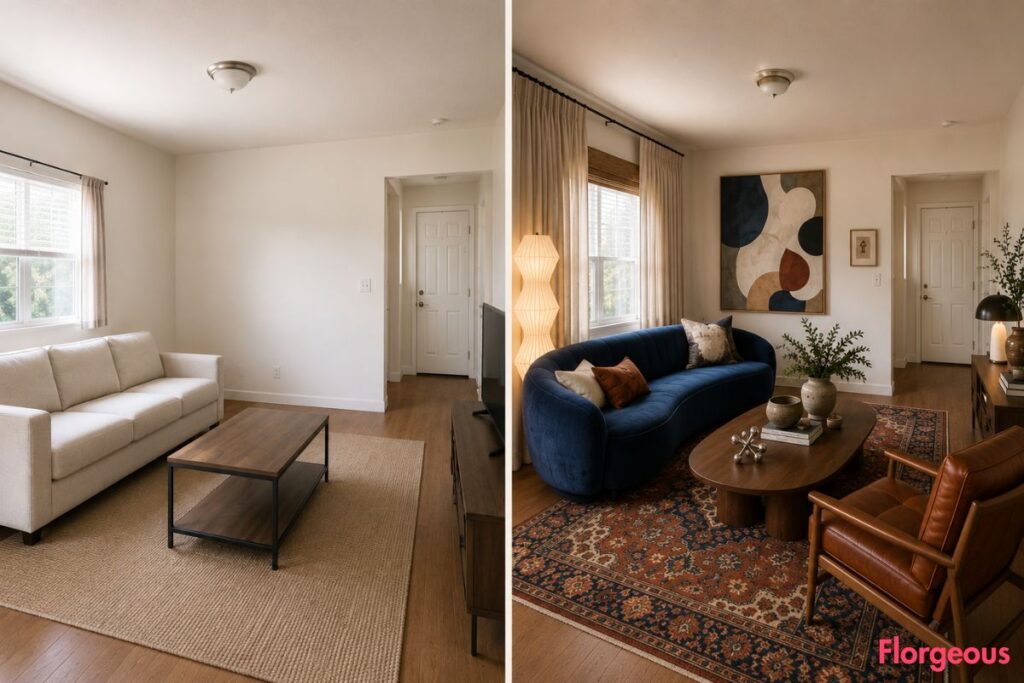
A living room can have all the necessary furniture and still feel strangely unfinished. The sofa fits, the walls are freshly painted, and the coffee table is in the right place, yet nothing reveals the personality of the people who live there.
These before-and-after transformations begin with exactly the same plain room. Each one turns that neutral starting point into a completely different Eclectic Living Room using art, furniture, color, texture, lighting, and collected objects.
Successful eclectic decorating is not about filling a room with unrelated finds. The strongest spaces repeat a color, shape, scale, or material so that contrasting pieces still feel connected. Keep scrolling to see how one ordinary living room can become 17 distinct, expressive, and practical interiors.
1. Turn the Plain Room Into a Primary-Color Modern Art Salon
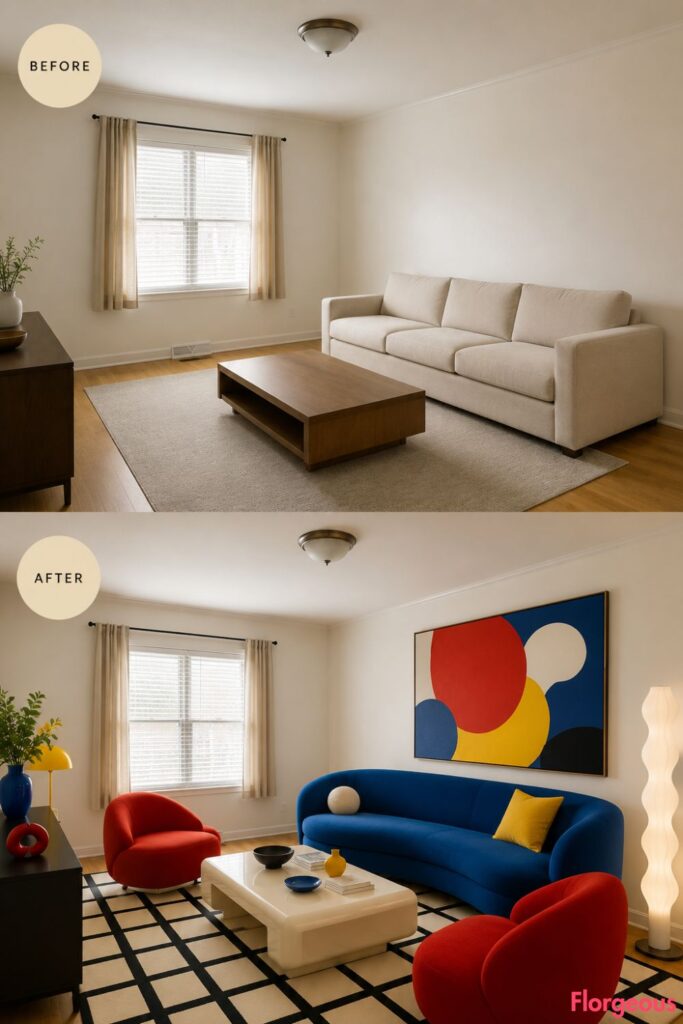
This makeover starts with one oversized abstract painting rather than a furniture style. The artwork establishes the room’s entire visual language.
Before: A plain neutral living room with off-white walls, a basic straight sofa, a bare rectangular coffee table, a generic rug, short curtains, builder-grade ceiling lighting, minimal styling, empty walls, and no focal point.
After: A curved cobalt sofa faces two low tomato-red lounge chairs across a glossy cream lacquer table. A black-and-ivory grid rug grounds the saturated colors, while one oversized abstract canvas repeats cobalt, red, cream, and charcoal.
Why it works: Every bold color can be traced back to the artwork, so the room feels composed rather than randomly colorful.
Try this: Choose the artwork first, then pull no more than three accent colors from it.
2. Build a Warm Collector’s Room Around an Antique Apothecary Cabinet
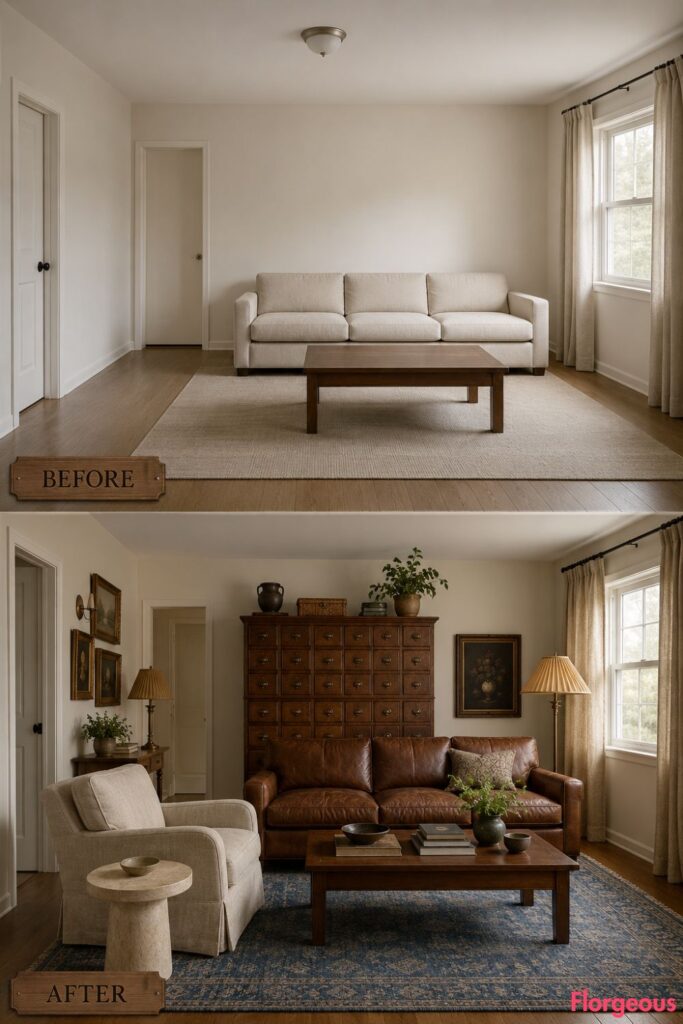
Instead of spreading antiques throughout the space, this room gives one substantial vintage piece the starring role.
Before: The same plain neutral living room feels clean but generic, with basic furniture, flat lighting, bare surfaces, and no memorable detail.
After: A tall walnut apothecary cabinet anchors the longest wall. A tobacco leather sofa, flax linen armchair, travertine side table, faded blue flatweave, and pleated brass lamp introduce different periods without competing with the cabinet.
The smaller furnishings remain simple, allowing the old wood and rows of drawers to provide most of the character.
Designer Tip: Limit visible collections to one wall and one tabletop. Empty space makes older pieces feel more valuable.
3. Create a Quiet Clay and Plaster Retreat
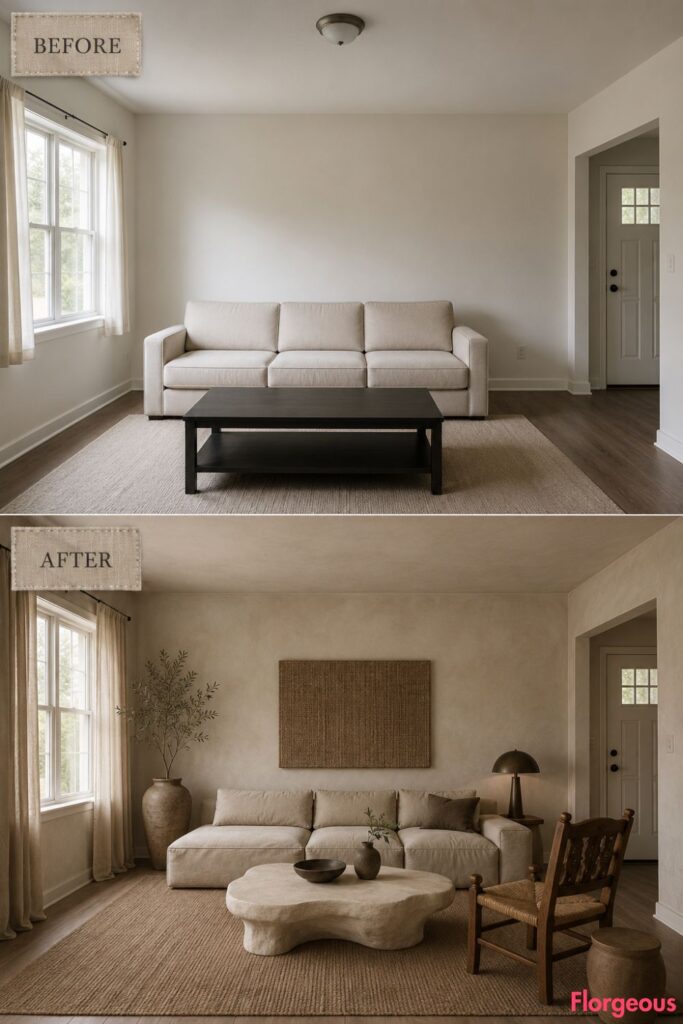
An eclectic interior does not need bright colors or numerous patterns. This version creates variety through handmade surfaces and sculptural forms.
Before: The neutral room contains the same straight sofa, rectangular table, short curtains, generic rug, and builder-grade light.
After: Chalky limewash walls surround a low oatmeal modular sofa, a carved oak chair, an irregular plaster coffee table, and a rust-colored clay side stool. A woven wall panel, oversized ceramic vessel, and dark bronze lamp introduce subtle contrast.
Why it works: Rounded silhouettes appear in the furniture, pottery, and lighting, creating a quiet connection between handmade and contemporary pieces.
Try this: Mix rough, woven, matte, and polished surfaces while keeping the palette restrained.
4. Pair Deep Plum Walls With Chrome and Weathered Elm
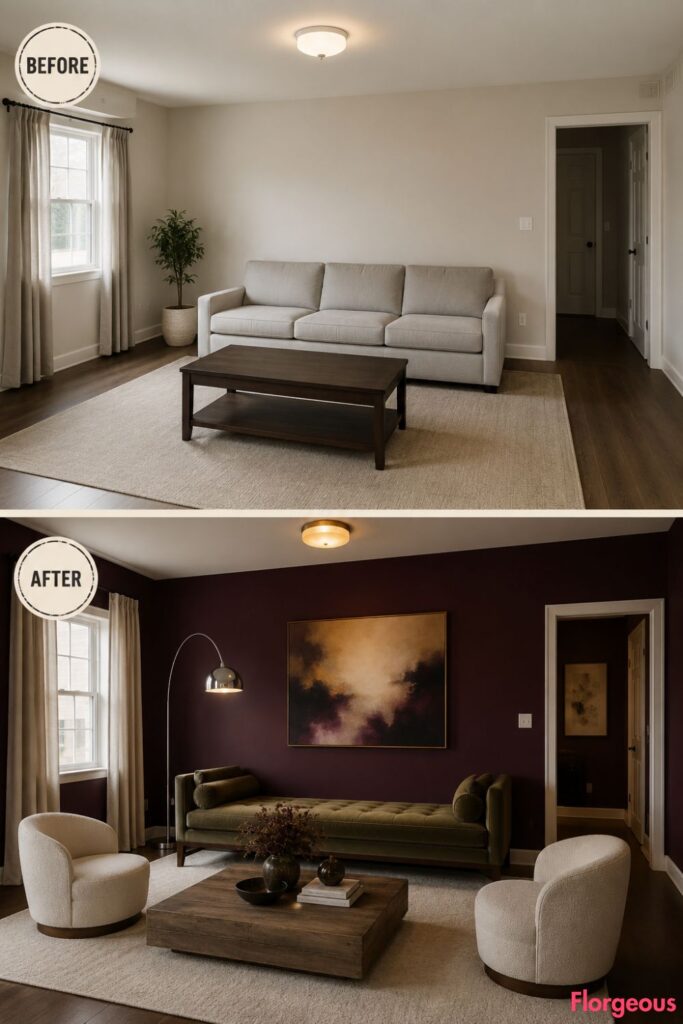
This transformation combines dark traditional color with reflective modern metal and visibly aged timber.
Before: The room begins with pale walls, generic furniture, flat finishes, and no strong visual contrast.
After: Deep plum walls frame an olive velvet daybed, two compact cream chairs, a weathered elm coffee table, and a polished chrome arc lamp. A pale wool rug keeps the floor light, while one luminous abstract painting prevents the room from feeling heavy.
Color Story: Plum and olive provide depth, cream softens the composition, and chrome introduces a cool reflective break.
Try this: Test the dark color on the wall behind the sofa before painting the entire room.
5. Give the Room a Relaxed Parisian Apartment Mood
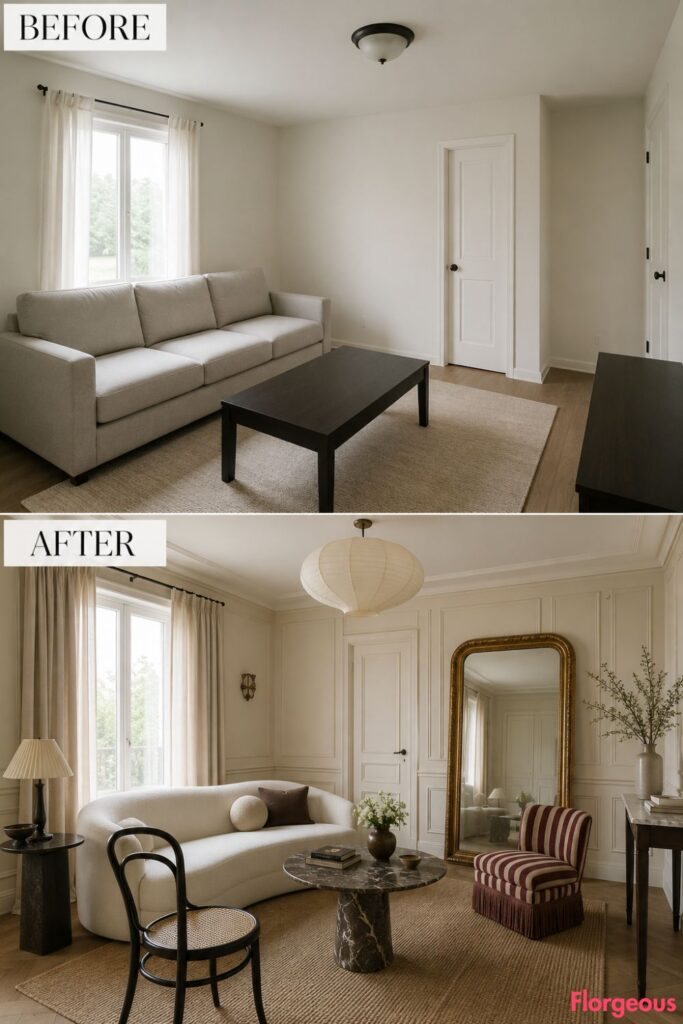
This room feels collected through delicate proportions rather than an abundance of decoration.
Before: The same basic living room has short curtains, empty walls, a standard sofa, and no architectural focal point.
After: Fine wall molding frames a curved ivory sofa, black bentwood chair, striped slipper chair, and small marble pedestal table. An oversized foxed gilt mirror creates age and reflection, while full-height flax curtains and a contemporary paper pendant keep the composition soft.
Why it works: The furnishings come from different periods, but they share slim legs, modest scale, and a cream, black, flax, and burgundy palette.
6. Turn One Corner Into a Dramatic Indoor Conservatory
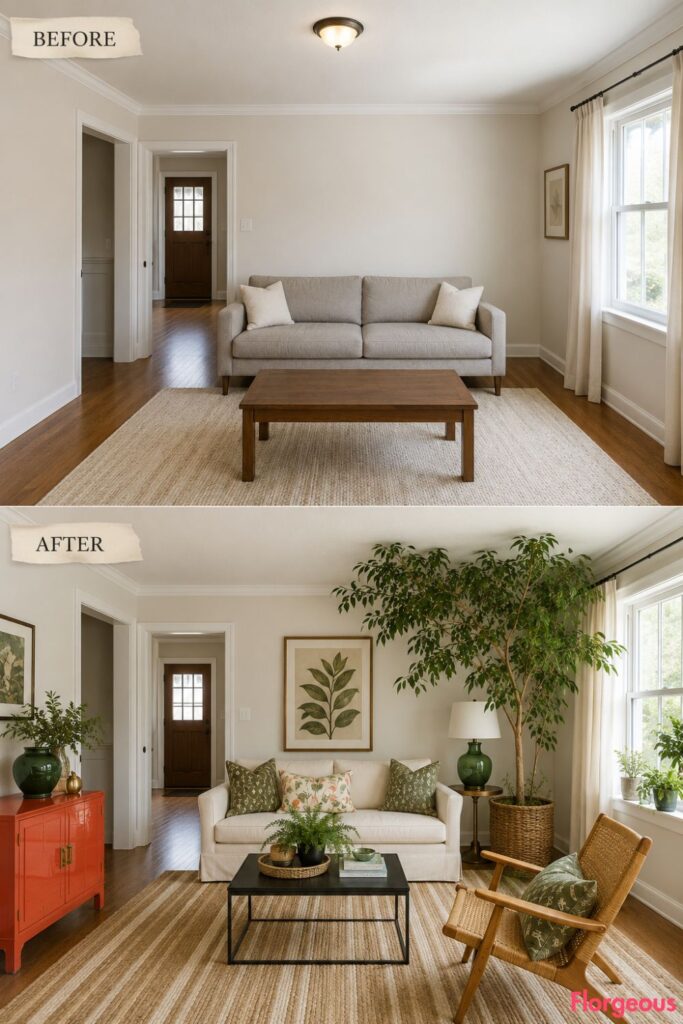
Rather than filling the room with small plants, this design uses one large tree as living architecture.
Before: The original room has bare corners, short curtains, plain walls, and no element tall enough to balance the window.
After: An oversized ficus fills the brightest corner beside a coral lacquer cabinet. A cream sofa, woven lounge chair, striped natural-fiber rug, black metal table, and green glass lamp complete the room.
Why it works: The ficus provides height and movement, while the coral cabinet balances its visual weight from the opposite side.
Common Mistake: Ten small plants often create more clutter than one large, healthy specimen.
7. Create a 1970s Record-Listening Lounge
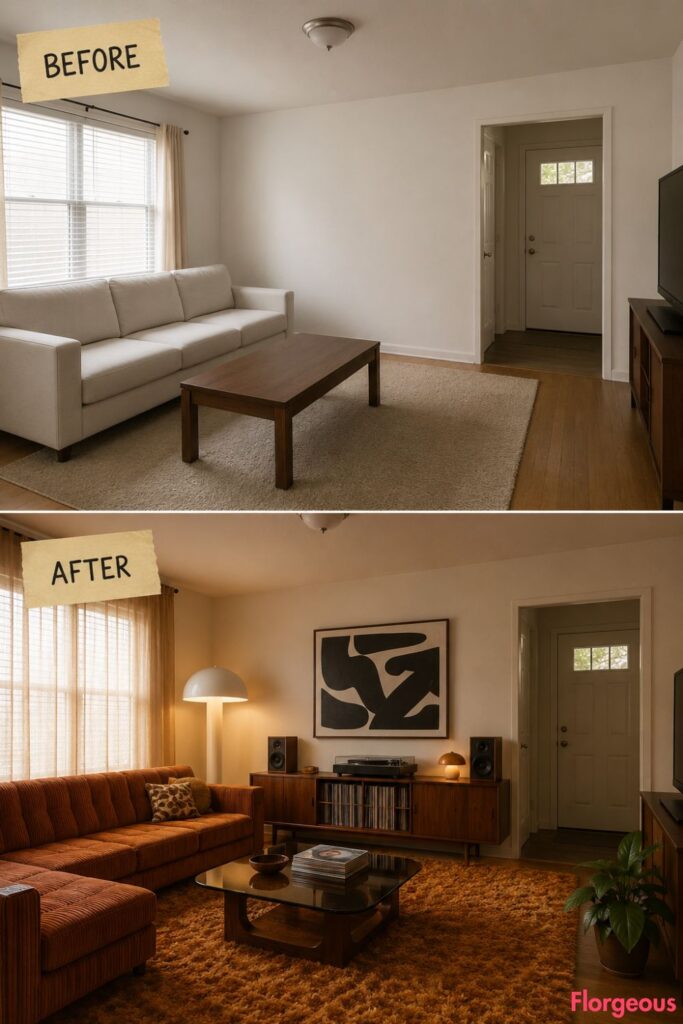
This concept gives the room a clear purpose, making the eclectic mix feel natural rather than decorative.
Before: The plain living room lacks a focal activity, with all furniture facing an empty wall.
After: A rust corduroy sectional wraps one corner opposite a low teak record console, turntable, and compact speakers. A smoked-glass coffee table, amber shag rug, mushroom floor lamp, and black-and-white contemporary canvas complete the setting.
The artwork keeps the room from becoming a literal period recreation.
Try this: Use retro silhouettes, but add at least one crisp contemporary element.
8. Turn the Longest Wall Into a Dark Collector’s Library
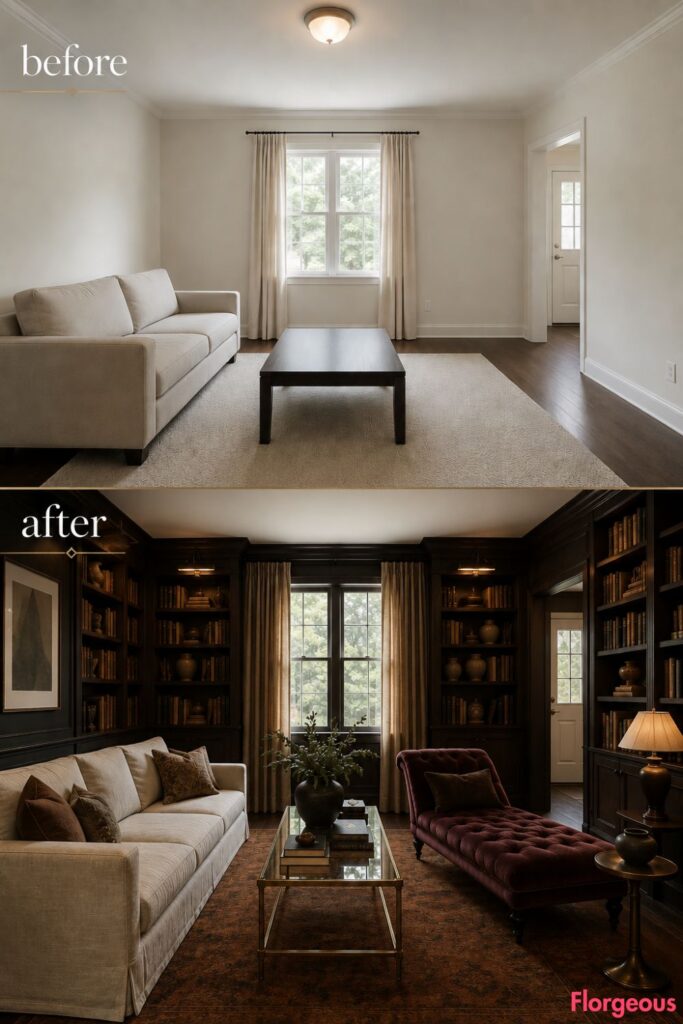
A single library wall provides generous display space while allowing the rest of the room to remain calm.
Before: The empty wall makes the standard sofa and basic table appear isolated and temporary.
After: Dark oak bookcases extend across the longest wall. A pale linen sofa faces an oxblood chaise across a narrow brass-and-glass table. Tobacco wool underfoot, aged pottery, framed art, and selectively arranged books soften the dark cabinetry.
Why it works: The collection is concentrated on one wall instead of spreading across every surface.
Small Space Tip: Leave roughly one quarter of the shelves empty to create visual pauses.
9. Center the Room on a Monumental Woven Textile
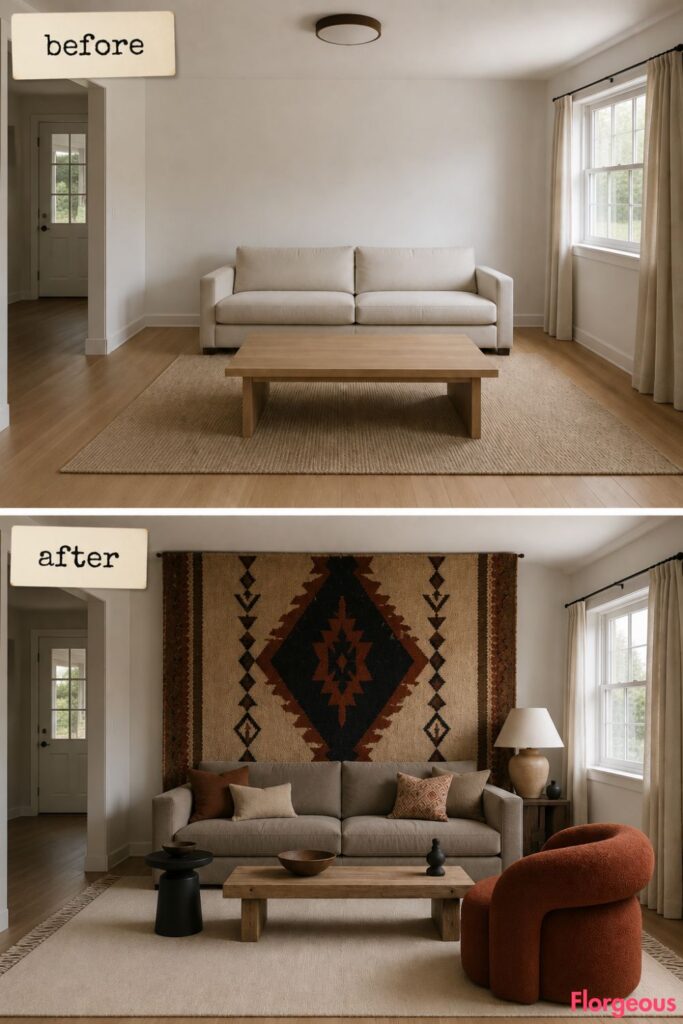
This renter-friendly makeover creates a powerful focal point without paint, paneling, or permanent construction.
Before: The same neutral room has one large empty wall and furnishings that do not relate to each other.
After: A monumental handwoven textile hangs behind a soft gray sofa. A sculptural brick-red chair, raw oak bench, black pedestal table, and simple cream rug echo its geometric shapes.
Why it works: The textile carries the room’s strongest pattern, allowing the remaining surfaces to stay quiet.
Try this: Choose a textile wide enough to visually connect with the sofa below it.
10. Mix Florals, Checks, and Stripes With a Strict Three-Color Rule
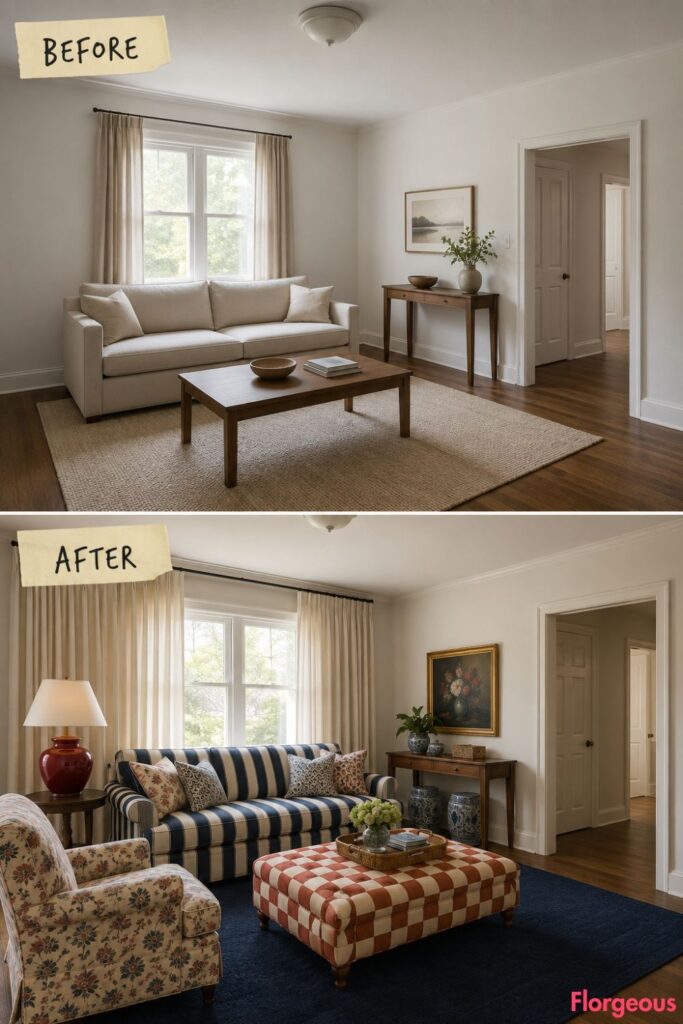
Pattern mixing works best when color is tightly controlled.
Before: The generic rug, bare sofa, and plain curtains make the room feel visually flat.
After: A navy-and-cream striped sofa sits opposite a faded floral chair. A rust checkerboard ottoman replaces the traditional coffee table, while a solid navy rug and full-length cream curtains quiet the surrounding surfaces.
A cherry-red ceramic lamp introduces a small, memorable accent.
Pattern-Mixing Rule: Combine one broad stripe, one medium floral, and one small geometric pattern. Do not use three patterns at the same scale.
11. Build a Low Global Lounge Around an Indigo Flatweave
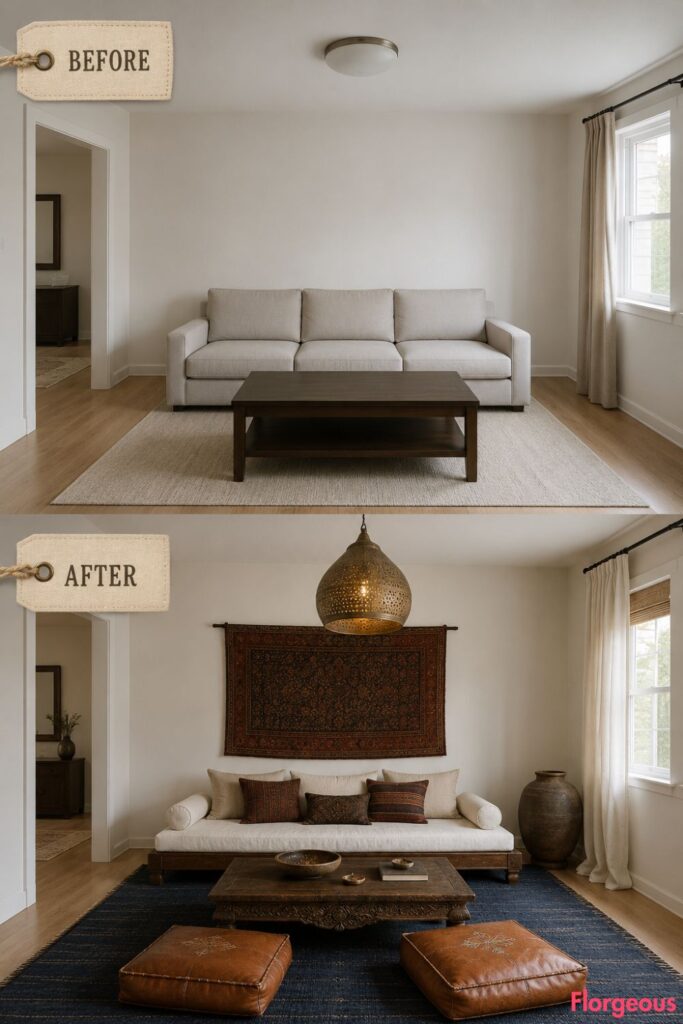
This room draws from several craft traditions without turning the space into a themed display.
Before: The basic sofa and table create a conventional layout with little texture or intimacy.
After: A low linen daybed sits beside two caramel leather floor cushions and a carved dark wood center table. An indigo flatweave anchors the seating, while one embroidered wall hanging, a hammered metal pendant, and a large clay vessel add depth.
Why it works: Indigo repeats in only three places, while the remaining materials stay earthy and restrained.
Try this: Choose fewer, larger handmade pieces instead of displaying numerous small souvenirs.
12. Create a Polished Mixed-Metal Cocktail Room
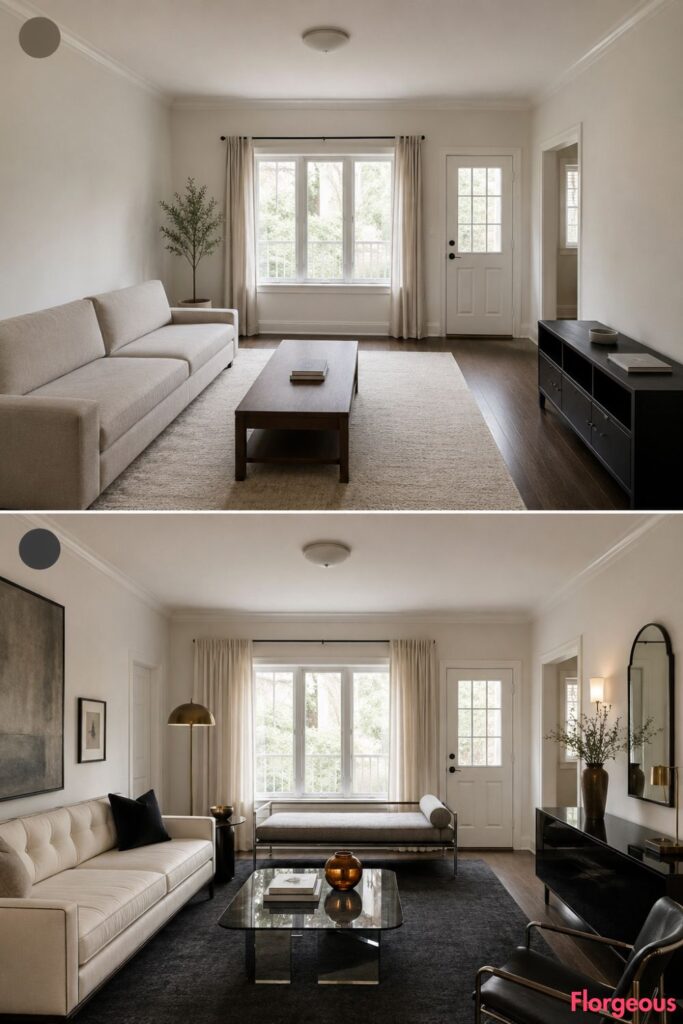
This concept feels glamorous without relying on ornate furniture or excessive decoration.
Before: Flat finishes and basic furniture make the original room look practical but forgettable.
After: A cream tuxedo sofa faces a slim chrome-framed daybed across a smoked-glass cocktail table. A black lacquer console grounds the wall, while an aged-brass floor lamp and one amber glass vase add warmth.
Why it works: Each finish has a specific role. Chrome defines the furniture, brass appears in lighting, and black lacquer creates visual weight.
Try this: Avoid repeating every metal on every surface.
13. Replace the Sofa With a Four-Chair Conversation Circle
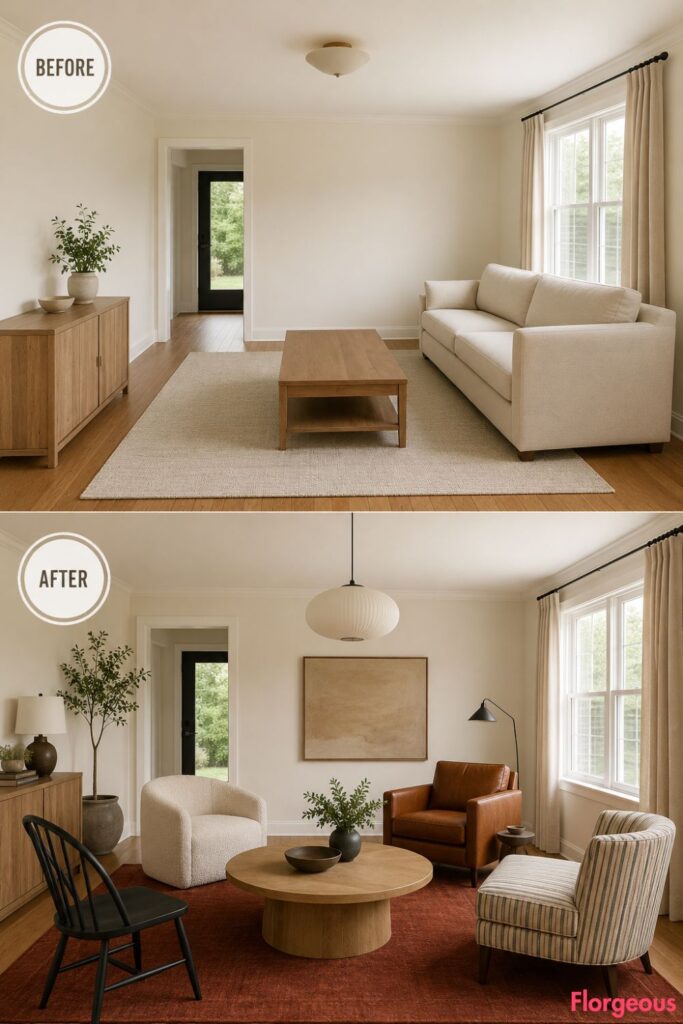
Removing the sofa completely creates a flexible layout that looks collected from every angle.
Before: The standard sofa faces forward, leaving the room with one rigid direction and an unused side wall.
After: Four distinct chairs circle a round oak table: a black spindle chair, cream bouclé chair, cognac leather chair, and striped slipper chair. A large plain rust rug connects the arrangement.
Why it works: The chairs differ in style and material but share similar seat heights and compact proportions.
Small Space Tip: Leave the widest gap in the circle facing the doorway.
14. Make a Terracotta Ceiling the Unexpected Focal Point
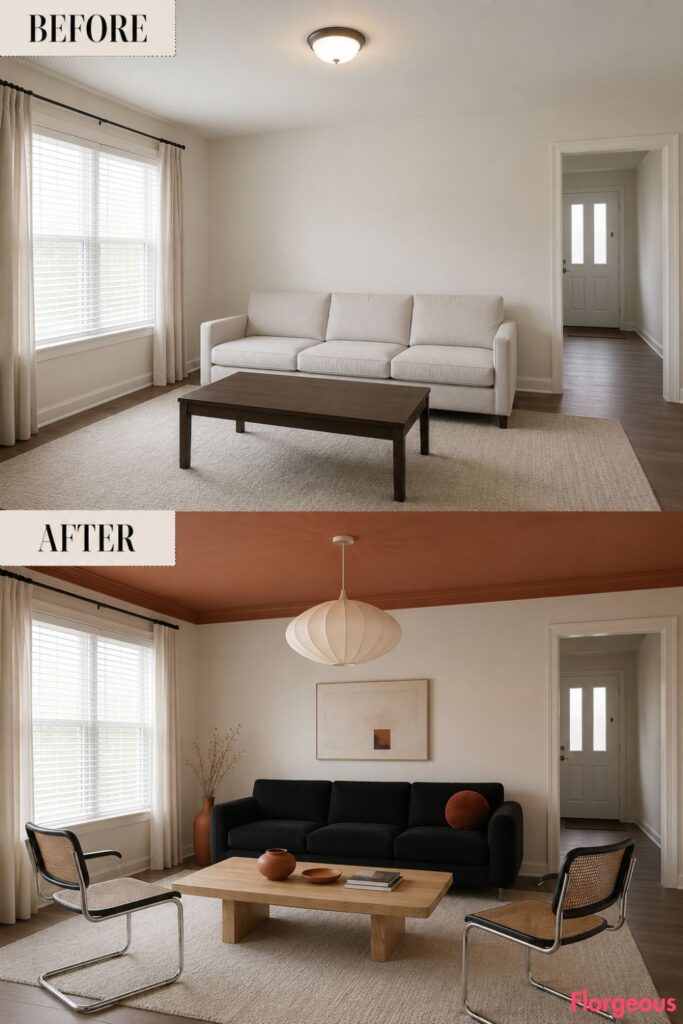
Placing the strongest color overhead creates drama without sacrificing calm walls or floors.
Before: The builder-grade ceiling light and pale ceiling contribute to the room’s flat, unfinished appearance.
After: A muted terracotta ceiling crowns cream walls, a black sofa, pale oak coffee table, and two vintage cane-and-steel chairs. A sculptural white pendant draws attention upward, while an ivory rug keeps the lower half of the room quiet.
Why it works: Terracotta is repeated sparingly in two cushions and one ceramic bowl.
Budget Version: Paint the ceiling and replace the light before purchasing new furniture.
15. Use a Hand-Painted Folding Screen as Movable Architecture
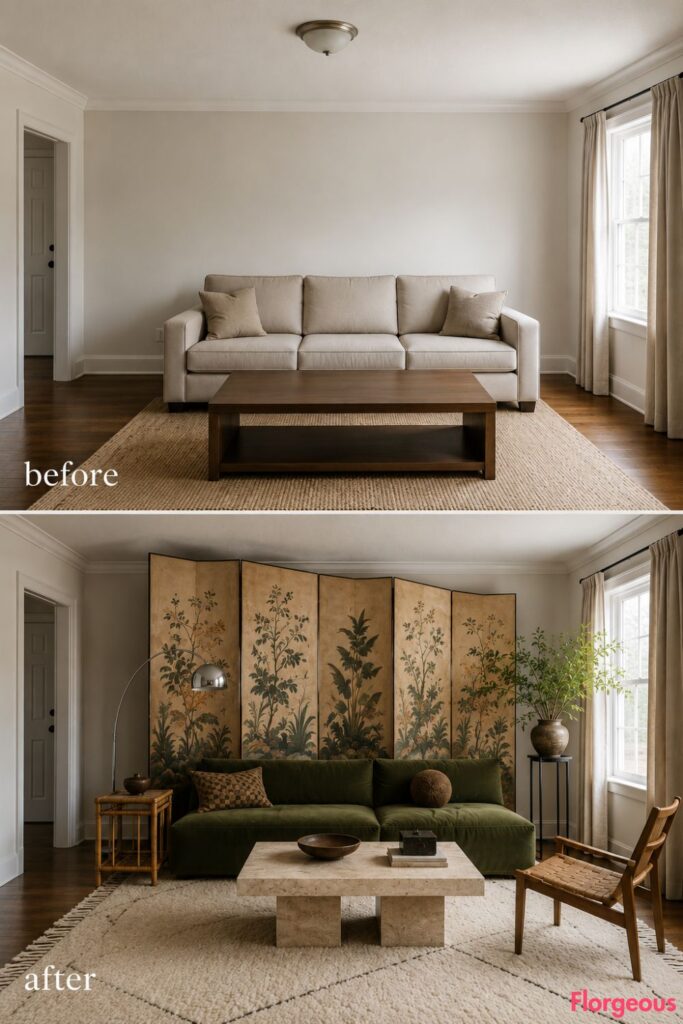
A folding screen can provide art, pattern, height, and depth without altering the room permanently.
Before: The empty wall behind the sofa makes the furniture appear small and disconnected.
After: A hand-painted folding screen stands at a slight angle behind a low moss-green sofa. A bamboo side table, polished steel lamp, cream wool rug, and chunky travertine coffee table mix decorative, natural, and modern influences.
Why it works: The screen’s curved botanical lines reappear in the sofa and rounded table edges.
Try this: Angle the screen instead of pressing it flat against the wall. The shadow line makes the room feel deeper.
16. Anchor the Room With a Graphic Black Fireplace
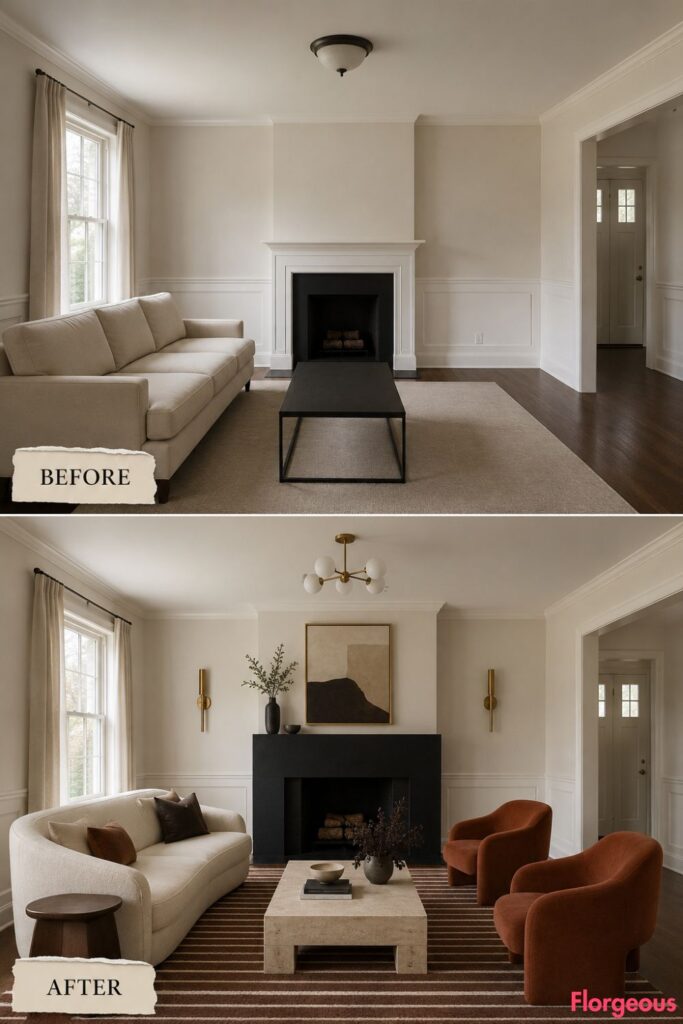
A strong architectural feature can organize furniture and decor from several different styles.
Before: The plain room has no visual center, so the sofa, rug, and coffee table appear to float independently.
After: A slim matte-black fireplace surround centers the main wall. A cream sofa and two sculptural rust chairs face a pale stone table, while a striped brown rug, walnut stool, and brushed-brass sconces soften the contrast.
Why it works: Black repeats in the fireplace, artwork frame, chair legs, and lamp details, guiding the eye around the room.
17. Contrast Faded Floral Wallpaper With Sharp Modern Lighting
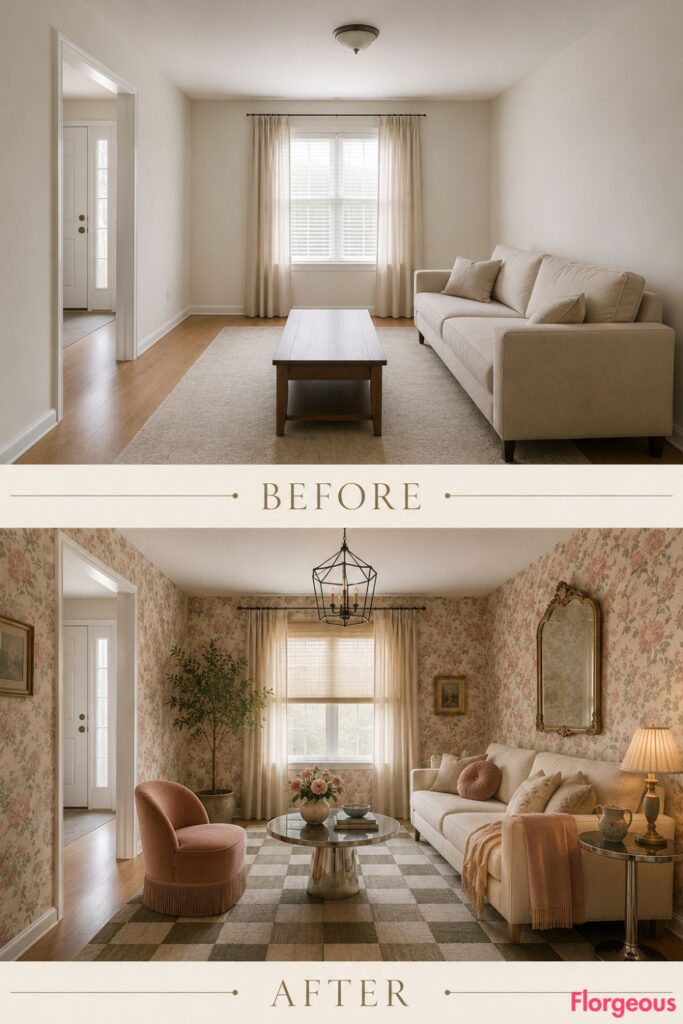
The final makeover mixes romantic surfaces with crisp contemporary geometry.
Before: The off-white walls, short curtains, and empty surfaces make the room feel impersonal.
After: One wall is covered in faded rose-and-sage floral wallpaper behind a warm ivory sofa. A blush velvet slipper chair, chrome pedestal table, black geometric pendant, antique mirror, and checked flatweave rug create contrast without overwhelming the room.
Why it works: The wallpaper introduces softness, while black and chrome prevent the room from feeling overly traditional.
Collector’s Tip: Add personal objects gradually. A collected room should appear to have evolved over time.
How to Build an Eclectic Living Room That Still Feels Cohesive
Each of these transformations succeeds because it begins with one dominant decision. The room might revolve around a monumental textile, an antique cabinet, a painted ceiling, a library wall, or an unusual seating arrangement.
Before changing your own Eclectic Living Room, photograph it from the doorway and identify the biggest visual gap. The space may need a focal point, a stronger layout, more texture, better lighting, or one piece with genuine character.
Choose that anchor first. Repeat one of its colors, materials, or shapes two or three times, then remove anything that competes with it. Keep entrances clear, allow some walls and surfaces to remain quiet, and avoid buying an entire collection at once.
A practical first step is to select one element you already own and genuinely love. Use that piece to guide the palette and mood before adding anything new.