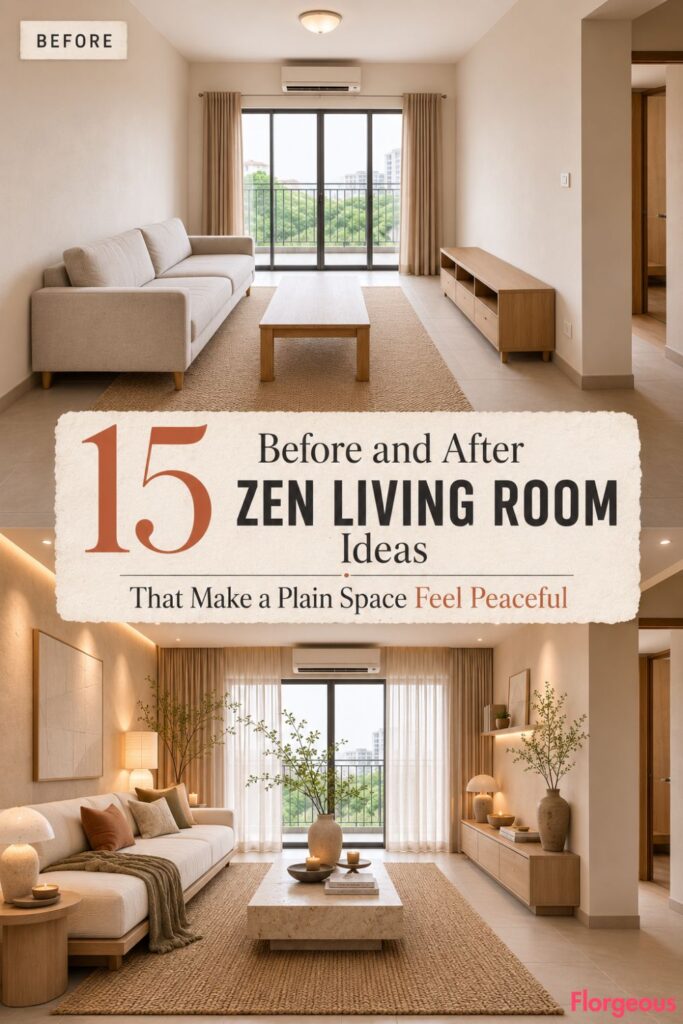
A living room can be clean, neutral, and perfectly functional yet still feel strangely unsettled. The furniture sits in the expected places, the surfaces are almost empty, and nothing is technically wrong, but the room lacks warmth, rhythm, and a reason to slow down.
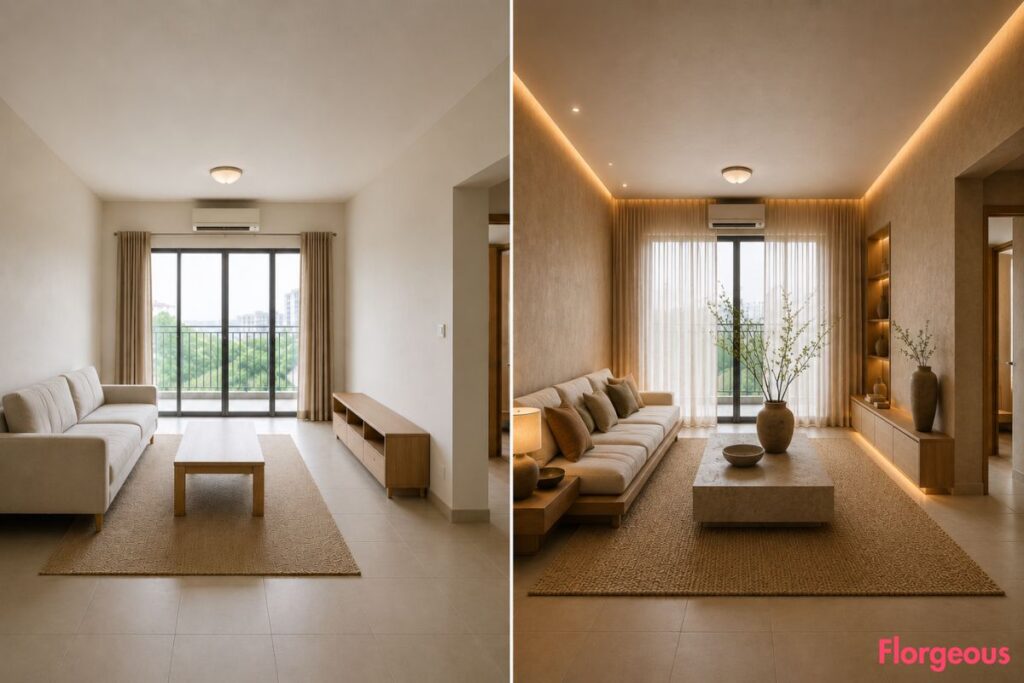
Each makeover below begins with the same builder-grade space: warm off-white walls, a basic straight neutral sofa, a bare rectangular coffee table, a simple beige rug, short curtains, a basic ceiling light, minimal styling, and no meaningful focal point.
The after spaces explore 15 completely different interpretations of a Zen Living Room. Some create calm through grounded furniture and natural texture, while others rely on filtered light, concealed technology, acoustic softness, darker wood, indoor planting, or a more purposeful layout.
1. Ground the Zen Living Room With a Pale Oak Platform Sofa
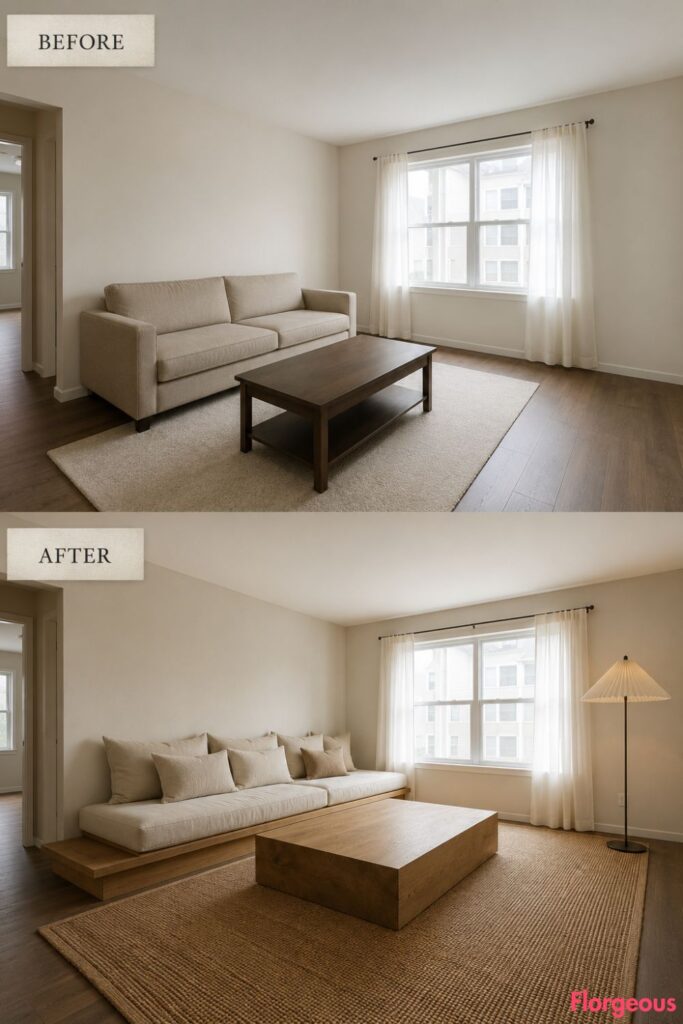
The first makeover lowers the room’s visual center and makes everything feel more settled.
Before: The upright sofa, undersized rug, and bare coffee table appear disconnected from one another.
After: A pale oak platform sofa runs along one wall, topped with loose flax cushions. A large woven rush mat grounds the seating, while a solid oak block table and one pleated linen floor lamp complete the composition.
Why it works: Low furniture creates a stronger relationship with the floor and makes the ceiling appear taller.
Try this: Remove tall side tables and excess cushions before replacing the main sofa. A simpler silhouette can change the room’s proportions immediately.
2. Shape a Wabi-Sabi Retreat With Clay-Plaster Walls
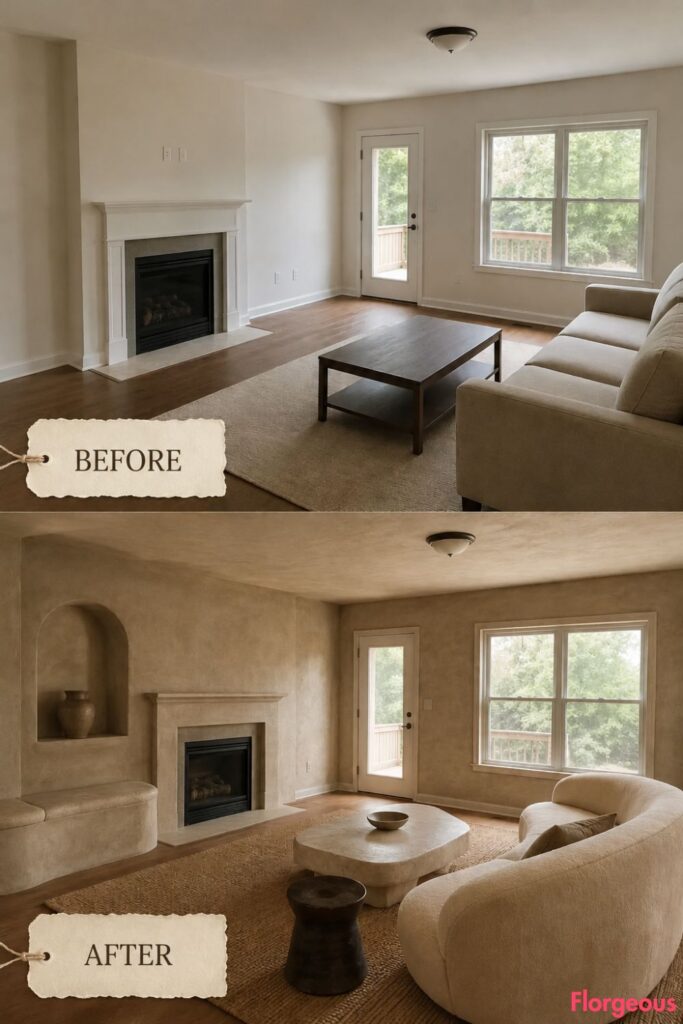
This version makes the walls the room’s most expressive feature.
Warm mushroom clay plaster replaces the flat paint, creating subtle movement as daylight crosses the surface. A curved oatmeal sofa sits opposite an irregular plaster bench built into the wall, while a dark ceramic side table provides one controlled contrast.
Instead of conventional artwork, a shallow arched niche holds a single handmade vessel.
Budget Version: Use limewash-effect paint and a freestanding plaster-look bench instead of applying real clay plaster or building a niche.
3. Create a Tea-Focused Conversation Salon
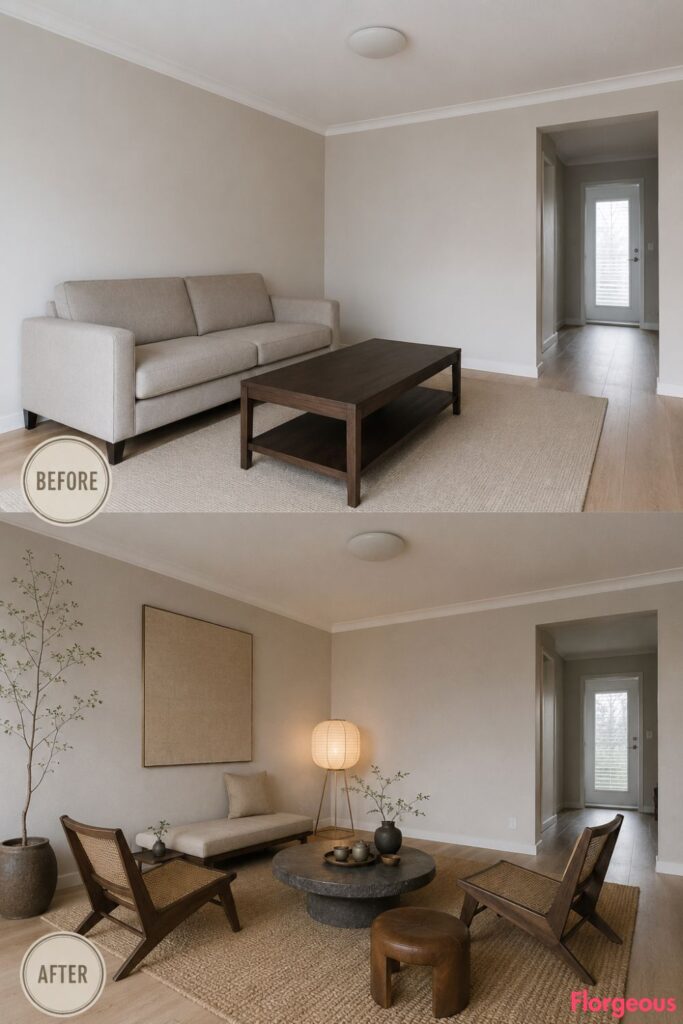
Rather than organizing the furniture around a television, this makeover gives the room a slower social purpose.
Two low-backed timber chairs, a compact upholstered bench, and one small leather stool form an open circle around a round soapstone tea table. A square woven mat defines the gathering area without filling the entire floor.
The palette combines toasted rice, black tea brown, soft clay, and muted bronze.
Zen Principle: A room often feels calmer when it supports one clear activity instead of several competing ones.
4. Soften the Window With a Shoji-Inspired Light Screen
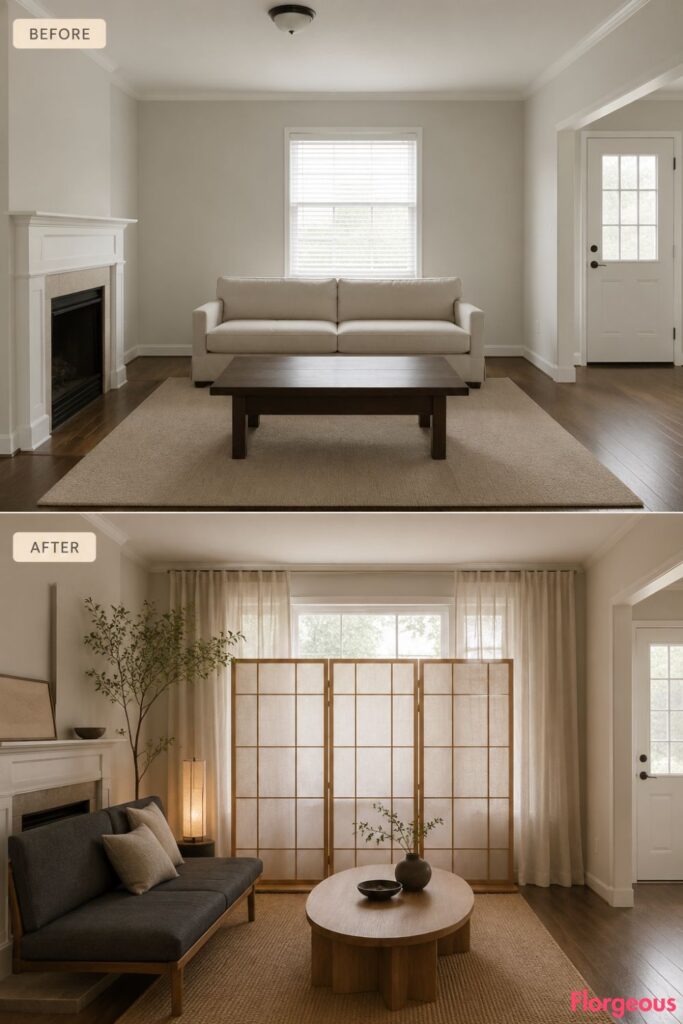
The original short curtains make the window feel small and expose every hard edge. This after creates a softer transition between indoors and outdoors.
A freestanding pale timber screen with translucent handmade-paper panels sits slightly in front of the glass. Full-height sheer linen curtains frame it without hiding its structure.
A slim charcoal settee and oval oak table keep the window wall open and uncluttered.
Try this: Renters can use a folding screen or tension-mounted translucent panels without altering the window frame.
5. Turn the Room Into a Dark Walnut Reading Sanctuary
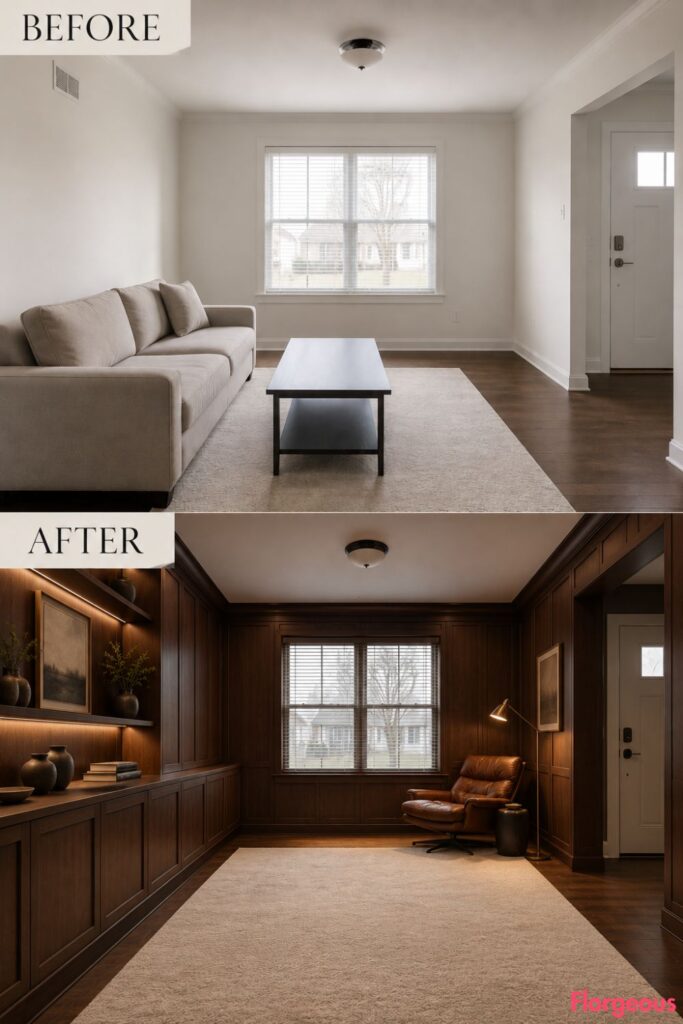
Zen-inspired design does not need to rely on pale beige interiors. This makeover uses dark wood to create a quiet, cocooning reading room.
A wall-length walnut cabinet combines closed storage below with shallow display ledges above. A tobacco-colored lounge chair sits near the window beside a narrow bronze reading lamp.
The center of the room remains open, making the darker finishes feel composed rather than heavy.
Color Story: Walnut feels especially restful beside warm cream, tobacco leather, aged bronze, and low amber lighting.
6. Conceal the Television Behind Charred-Timber Panels
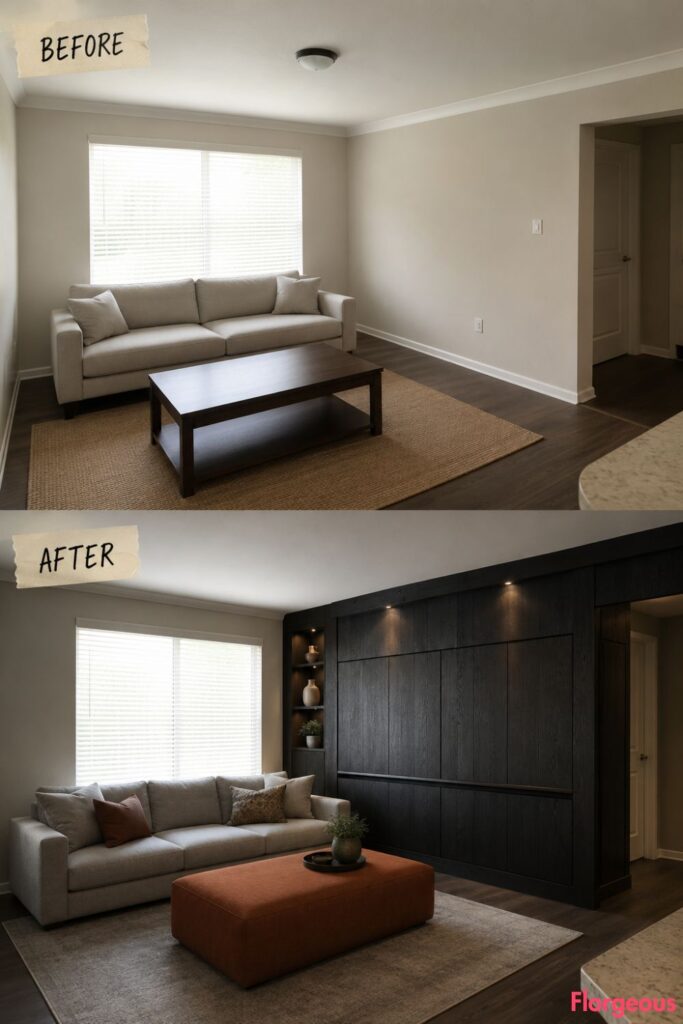
A large black screen can dominate even the most carefully edited room. Here, the television disappears when it is not being used.
Blackened timber panels slide across a full-height media wall containing hidden speakers, shallow drawers, and ventilation. A pale gray sofa and rust-colored wool ottoman prevent the dark wall from feeling severe.
One narrow recessed shelf holds a single unglazed ceramic object.
Common Mistake: Covering every wall in dark wood can make the room feel enclosed. Keep the charred finish to one controlled architectural surface.
7. Build Sensory Calm With Moss-Green Acoustic Wool
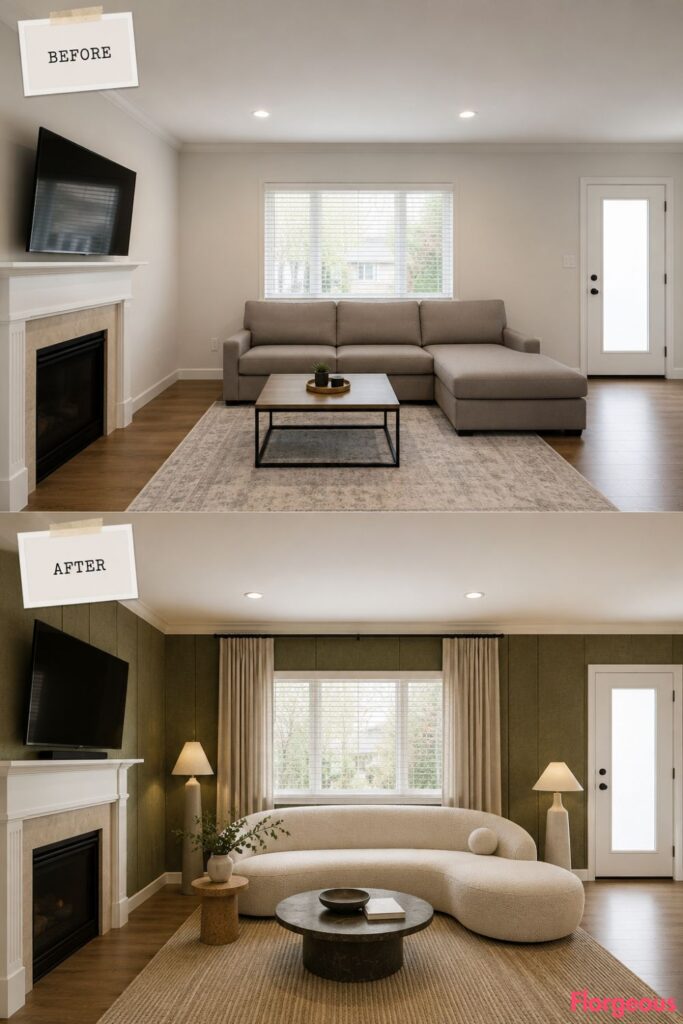
This design focuses on how the room sounds as much as how it looks.
Wide moss-green wool panels cover one wall, absorbing echoes while introducing a deep natural color. A cream crescent sofa faces the panels, accompanied by a cork side table and two compact floor lamps with dark ceramic bases.
Heavy linen curtains add another layer of acoustic softness.
Designer Tip: Removable upholstered panels can be installed like oversized artwork, making them suitable for rentals and rooms with hard floors.
8. Replace Loose Furniture With a Limestone Window Bench
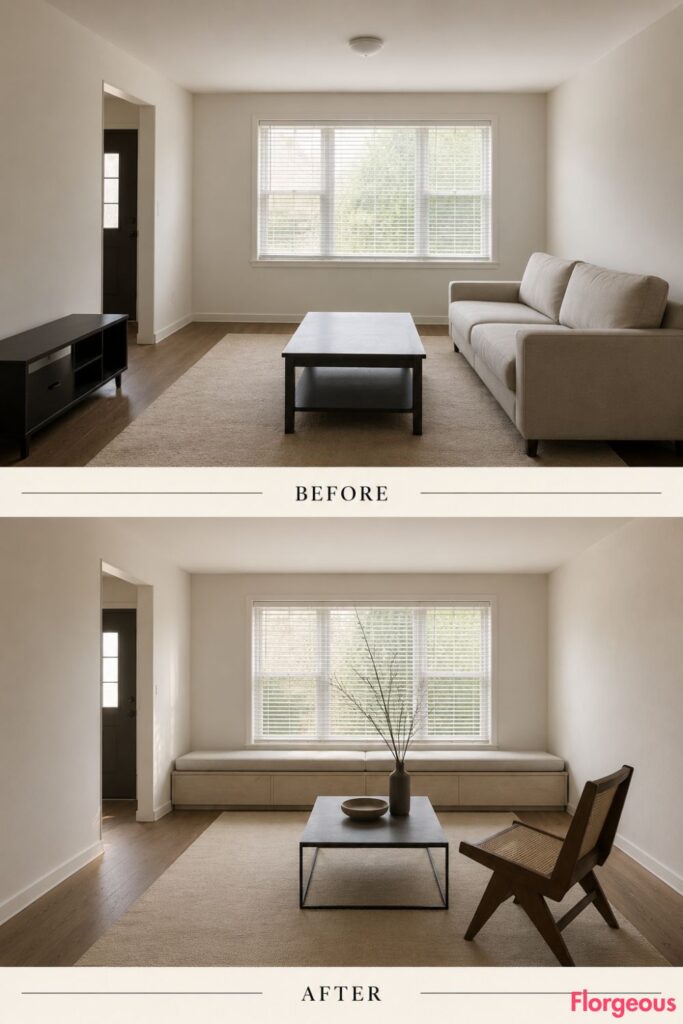
This makeover creates calm by reducing the number of individual furniture pieces.
A long limestone-toned bench stretches beneath the window and contains concealed drawers. One thick hemp cushion makes it comfortable for reading or casual seating.
Across from the bench, a sculptural timber chair and a thin blackened-steel table create an intentionally asymmetrical arrangement. One tall branch provides height without adding multiple plants.
Small Space Tip: Build the bench from plywood and finish it with mineral paint for a convincing stone effect at a lower cost.
9. Connect the Living Room to a Concentrated Indoor Garden
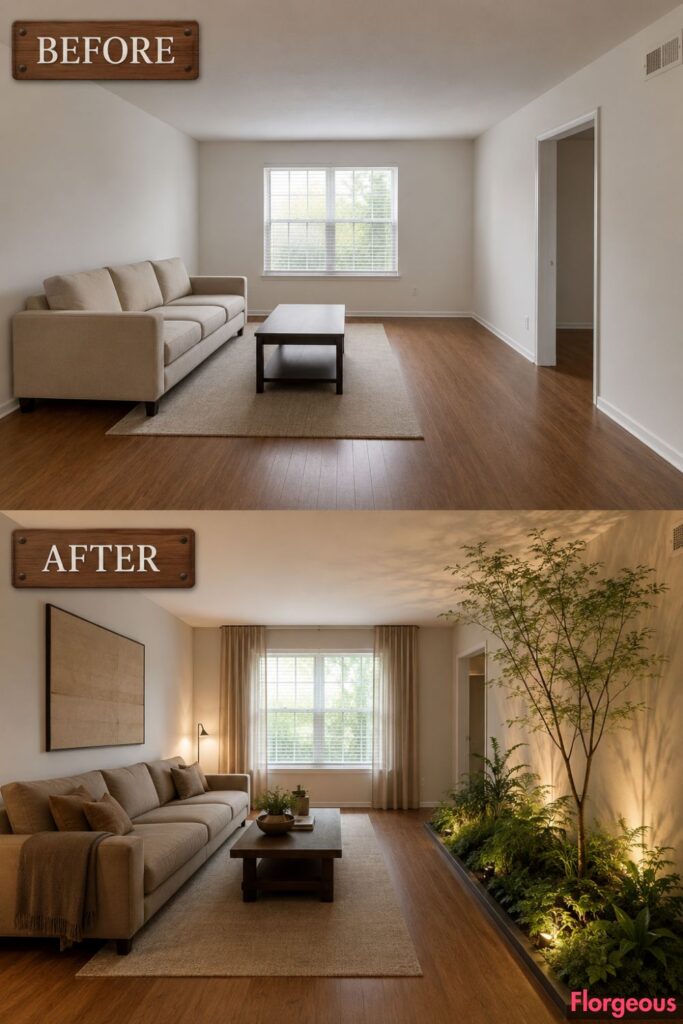
Instead of scattering small pots around the room, this concept creates one deliberate green zone.
A narrow raised planter runs along the side wall, filled with soft ferns, low groundcover, and one slender sculptural tree. Concealed lighting beneath the foliage creates gentle shadows after sunset.
The seating moves slightly toward the center so the garden becomes a continuous living backdrop rather than an accessory.
Why It Works: Concentrating greenery in one place creates stronger visual impact while keeping the rest of the room open.
10. Form a Soft Room Within the Room Using Linen Panels
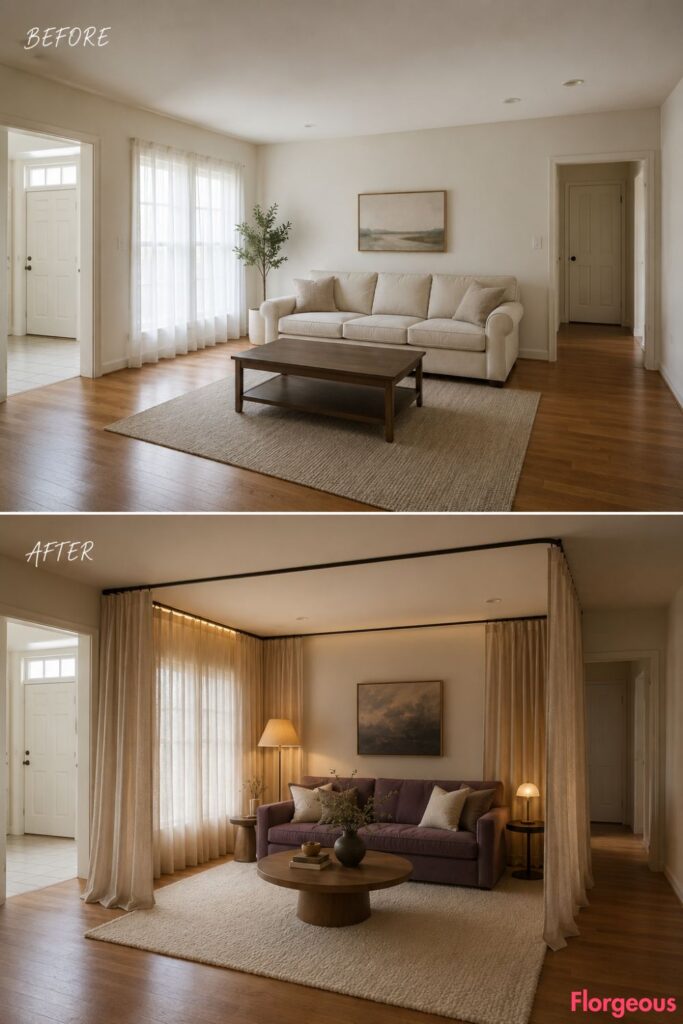
This makeover uses fabric as architecture rather than decoration.
Ceiling-mounted linen panels frame the seating area on two sides, creating a soft enclosure that can be opened during the day and partially closed in the evening.
Inside, a compact muted-plum sofa, ivory wool rug, and round timber pedestal table form a cocooning retreat. The stronger sofa color prevents the room from becoming another pale neutral scheme.
Try this: Standard ceiling curtain tracks can create the effect without custom construction.
11. Balance an Asymmetrical Olive Chaise Layout
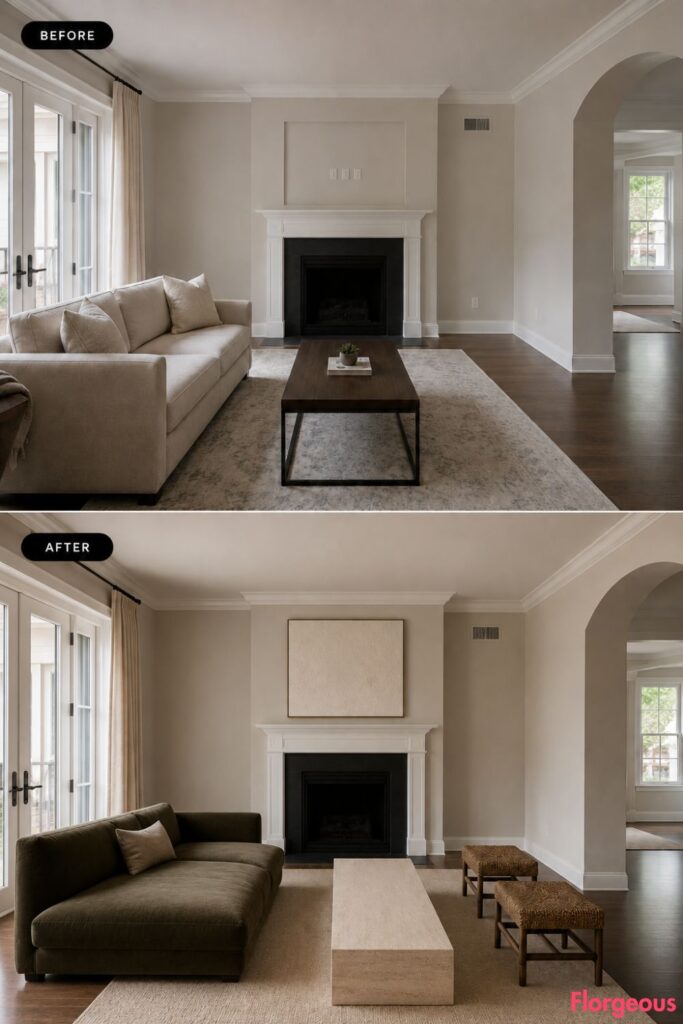
Perfect symmetry can feel formal and static. This transformation uses unequal objects that still carry similar visual weight.
A deep olive chaise sits on one side of the room, while two woven stools occupy the opposite side. A long travertine plinth table is deliberately positioned off-center.
One large handmade-paper artwork hangs above the chaise, leaving the remaining wall intentionally blank.
Zen Principle: Visual balance comes from the relationship between mass, shape, color, and empty space, not from matching every object.
12. Create a Sunken-Lounge Feeling Without Renovating
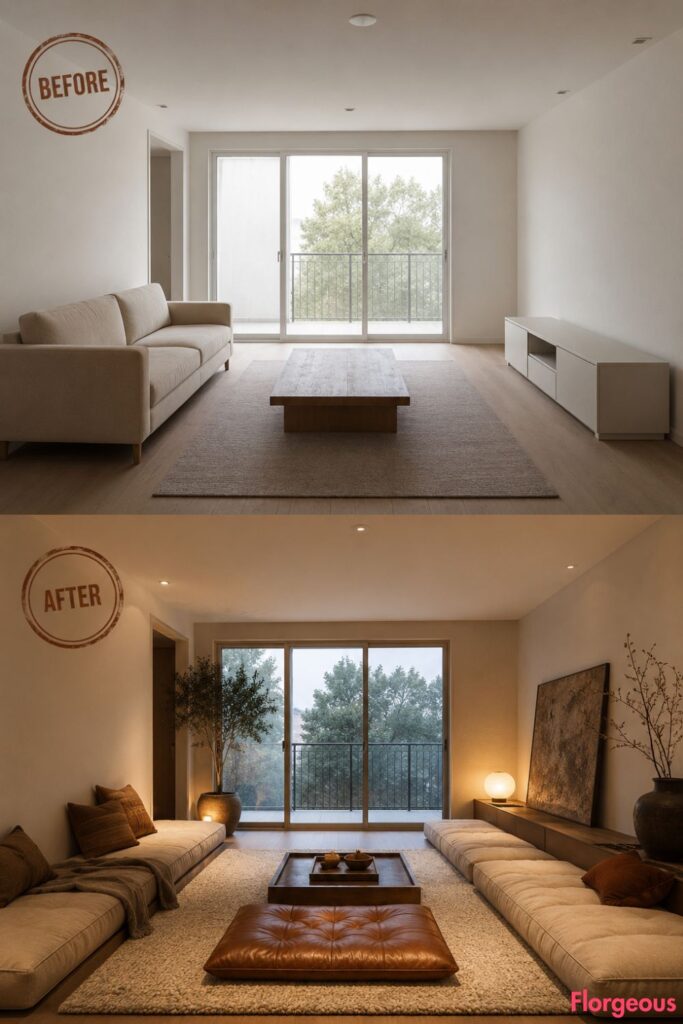
A conversation pit usually requires major construction, but furniture and textiles can suggest the same grounded feeling.
An oversized thick wool rug acts as a visual platform. Modular backless seats line two sides, while a broad cognac leather floor cushion forms the third edge.
A square bronze tray table sits in the middle, creating a relaxed gathering place that remains easy to rearrange.
Budget Version: Layer two dense rugs in the same color and use simple upholstered bench modules instead of a custom sunken floor.
13. Introduce Water Through a Slim Architectural Rill
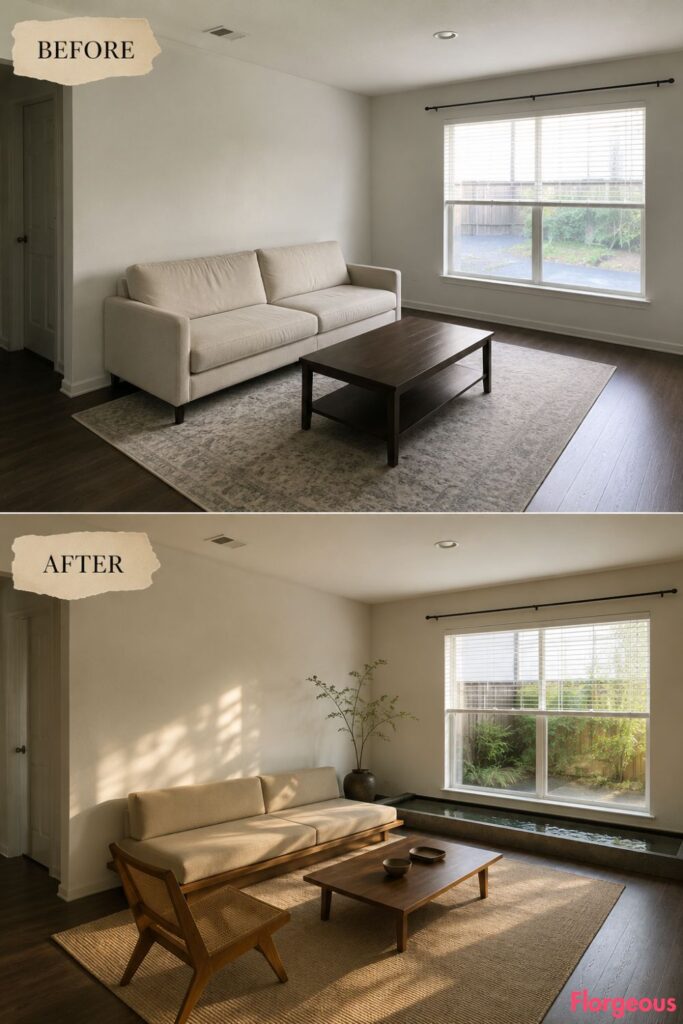
Water can make a room feel more sensory, but the feature should remain subtle.
A narrow dark-stone rill runs along the window ledge, creating barely visible movement and a gentle reflective surface. A sand-colored settee, one angular timber chair, and a flat-weave rug keep the rest of the room restrained.
The water element feels integrated into the architecture rather than added as decoration.
Common Mistake: Avoid visible pumps, stacked stones, dramatic waterfalls, or colored lighting. Quiet movement is enough.
14. Turn the Window Corner Into a Meditation Alcove
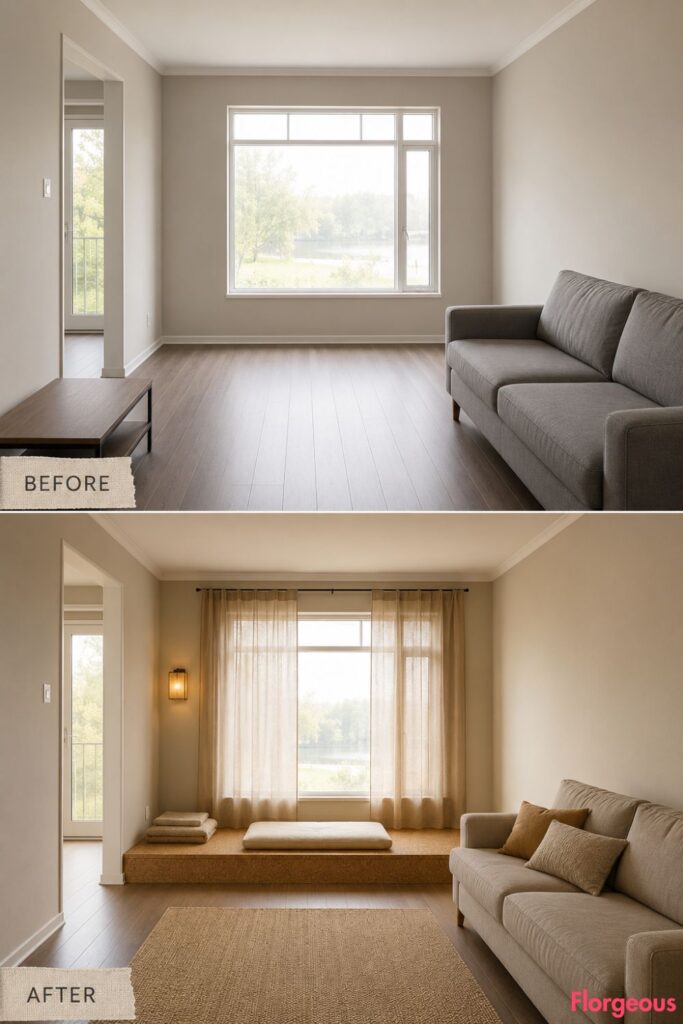
This concept adds a dedicated quiet zone without sacrificing comfortable everyday seating.
A raised cork platform fits beneath the window with one firm wool cushion, a folded hemp blanket, and a small wall-mounted light. A translucent curtain can separate the alcove when privacy is needed.
The main sofa remains upright and practical, so the room still supports guests, reading, and daily relaxation.
Small Space Tip: A low storage bench can replace the custom platform and hold blankets or exercise accessories inside.
15. Design a Terracotta Evening Retreat With Upward Light
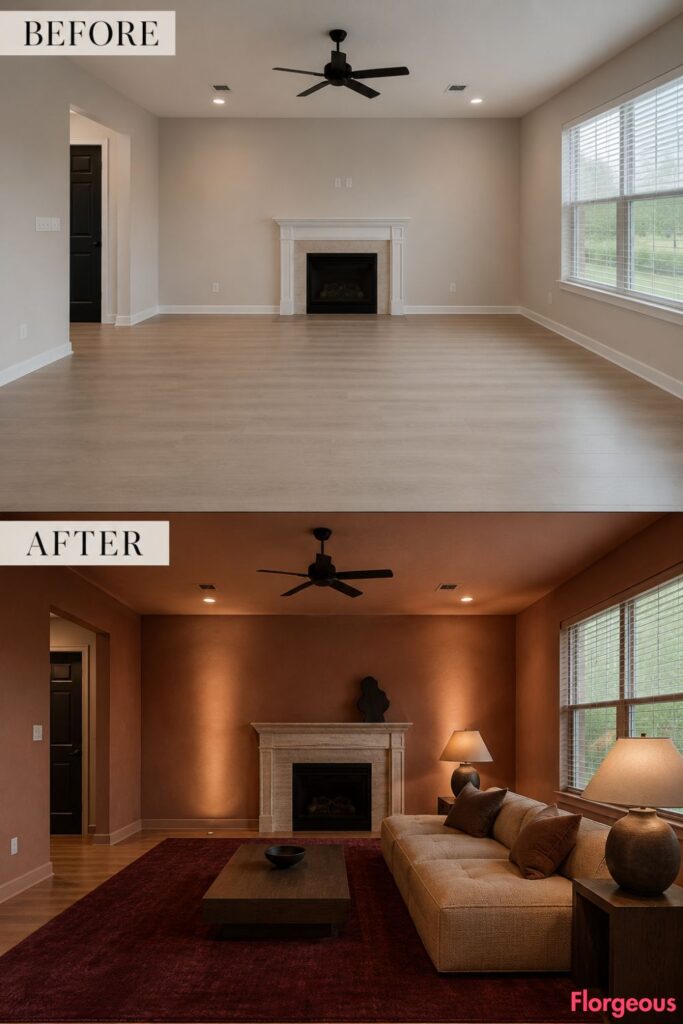
The final transformation is designed around the mood of the room after sunset.
Muted terracotta walls surround a low hemp sofa, while a dark garnet wool rug anchors the floor. Two smoky ceramic lamps provide low pools of light, and discreet wall sconces wash the ceiling instead of shining directly into the room.
A dark walnut side table and one blackened metal sculpture add controlled contrast.
Color Story: Clay tones feel calmer when they are paired with coarse natural fibers, dark wood, and very little bright white.
How to Choose the Right Kind of Calm
The most successful Zen Living Room is not automatically the palest or emptiest one. It is the room where the layout, lighting, materials, storage, and daily activities stop competing for attention.
Start by identifying the source of visual noise. It might be an exposed television, undersized rug, harsh overhead light, excess furniture, uncovered storage, or a layout that pushes everything against the walls.
Then choose one dominant direction. Ground the room with low furniture, soften it with filtered light, create depth with clay plaster, improve comfort with acoustic textiles, or make nature the focal point through one concentrated garden feature.
Test the new arrangement before purchasing large pieces. Clear one wall, reposition the sofa, mark out a platform or bench with painter’s tape, and live with the extra negative space for several days. The best room will support your actual routines while still giving your eyes and mind somewhere to rest.