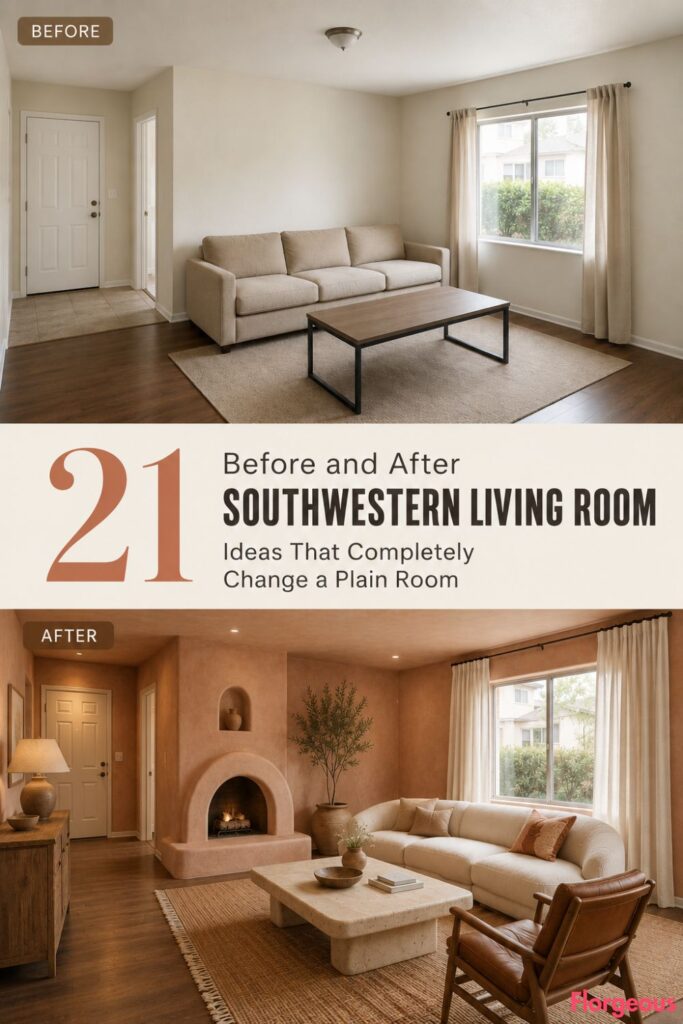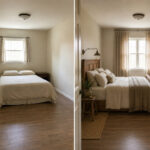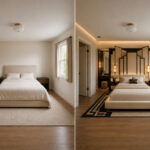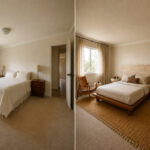
A builder-grade living room can be perfectly functional and still feel unfinished. Neutral walls, generic furniture, short curtains, and flat lighting create a blank starting point, but they offer few clues about what the room could become.
These 21 Southwestern Living Room ideas begin with the exact same plain space. Each makeover takes a different approach, from soft adobe minimalism and contemporary Santa Fe curves to dark mesquite, Spanish Colonial warmth, sculptural stone, and indoor desert planting.
The room dimensions never change. Instead, every transformation uses a new layout, architectural feature, material combination, lighting plan, rug, palette, and focal point.
1. Turn the Plain Room Into a Soft Adobe Retreat
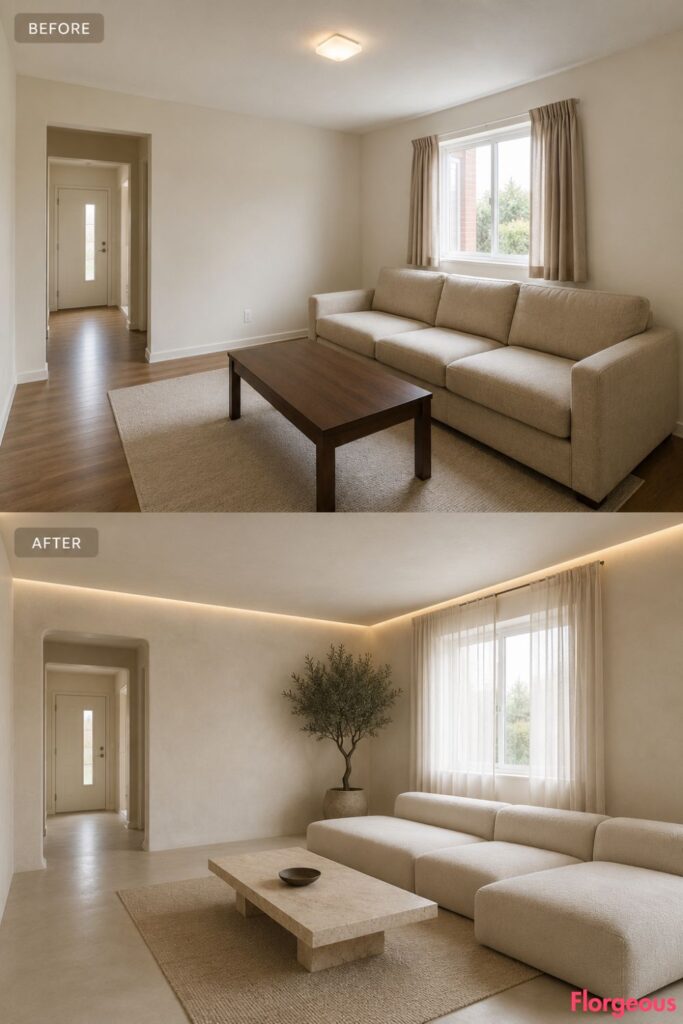
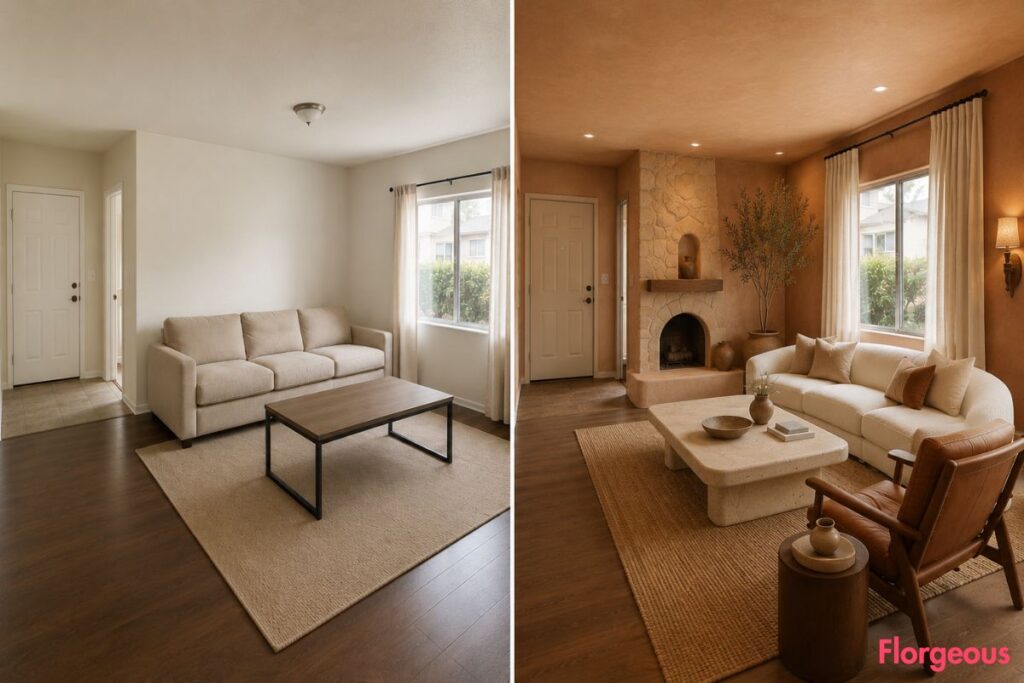
Before: Warm off-white walls, a straight beige sofa, bare rectangular table, generic rug, short curtains, standard lighting, and empty surfaces.
After: Warm ivory limewashed plaster softens the walls and rounded corners frame a low cream modular sofa. A pale travertine table sits on sand-toned microcement, while ceiling-track sheers and concealed cove lighting keep the space calm. One olive tree fills the far corner without interrupting the entrance.
Designer Tip: Skip the rug when the floor already has a warm, tactile finish.
2. Add Contemporary Santa Fe Curves and Dusty Rose
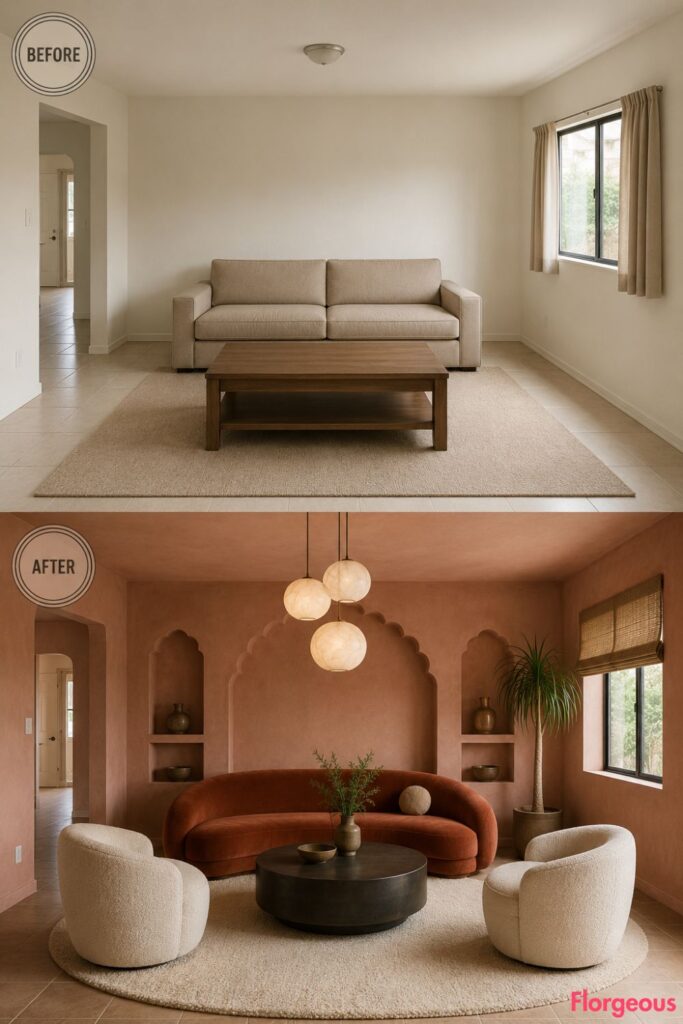
Before: The same plain neutral living room has no focal point or visual rhythm.
After: Dusty rose clay plaster wraps a wall of shallow scalloped niches. A curved rust sofa faces two compact ivory barrel chairs around a circular blackened-steel table. An oval cream bouclé rug, linen Roman shades, twin alabaster globe pendants, and a ponytail palm create a softer, more social room.
Why it works: Repeating curves makes the stronger palette feel intentional.
3. Give the Room a Crisp Sonoran Modern Edge
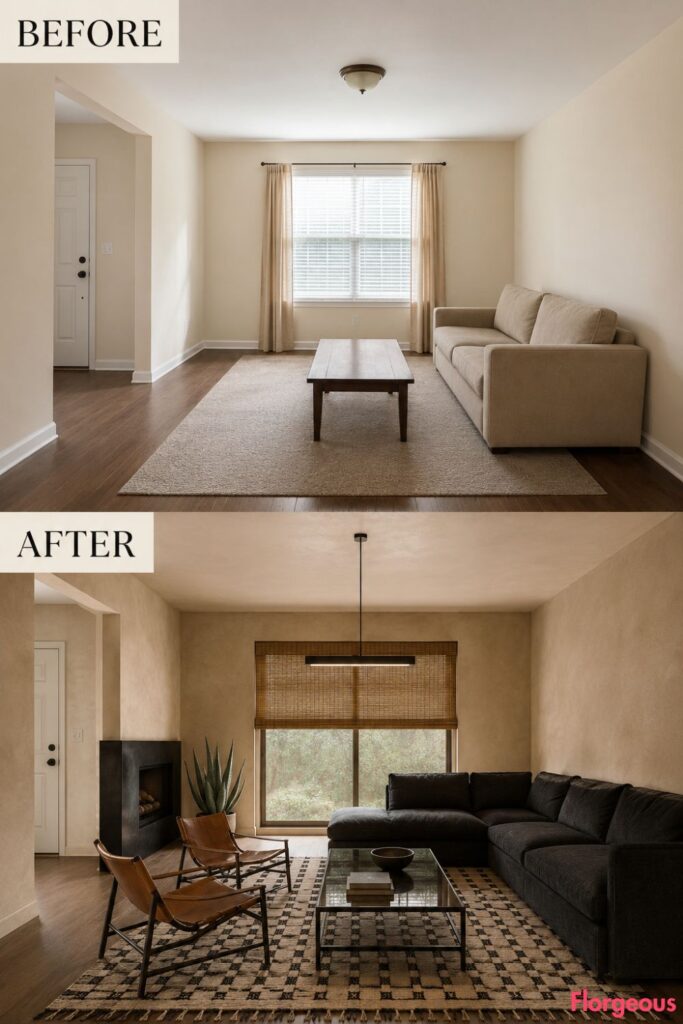
Before: Generic furniture and flat overhead light make the room feel visually weightless.
After: Pale sand mineral walls surround a charcoal sectional placed tightly against the longest uninterrupted wall. Two saddle-leather sling chairs angle toward a smoked-glass table, while a black-and-cream grid dhurrie defines the seating zone. A blackened-steel fireplace, bamboo blinds, linear pendant, and sculptural agave introduce sharper desert-modern contrast.
Try this: Repeat black in only three places to keep the room balanced.
4. Create a Refined High-Desert Ranch Gathering Room
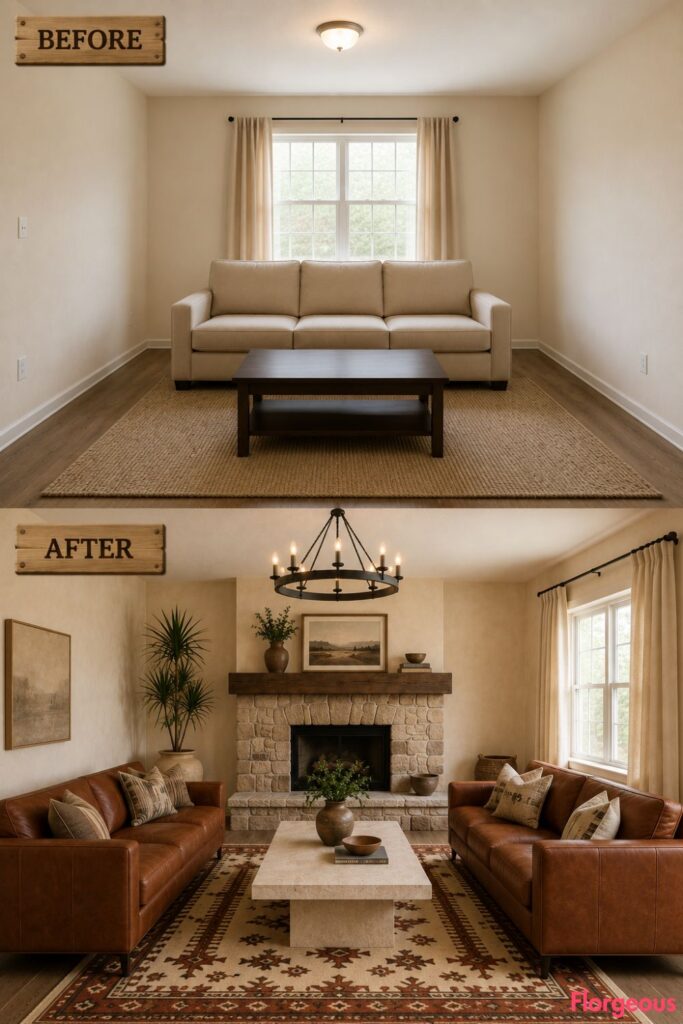
Before: The unchanged beige sofa sits without a strong relationship to the rest of the room.
After: Two compact saddle-leather sofas face each other across a pale limestone table. A rust-banded wool rug softens the floor, while warm cream walls, a low flagstone hearth, mesquite mantel, cotton-canvas curtains, and iron ring chandelier give the room a grounded ranch character. A single yucca cane stands beside the window.
Common Mistake: Do not surround leather seating with novelty Western accessories.
5. Replace Empty Walls With Rounded Plaster Niches
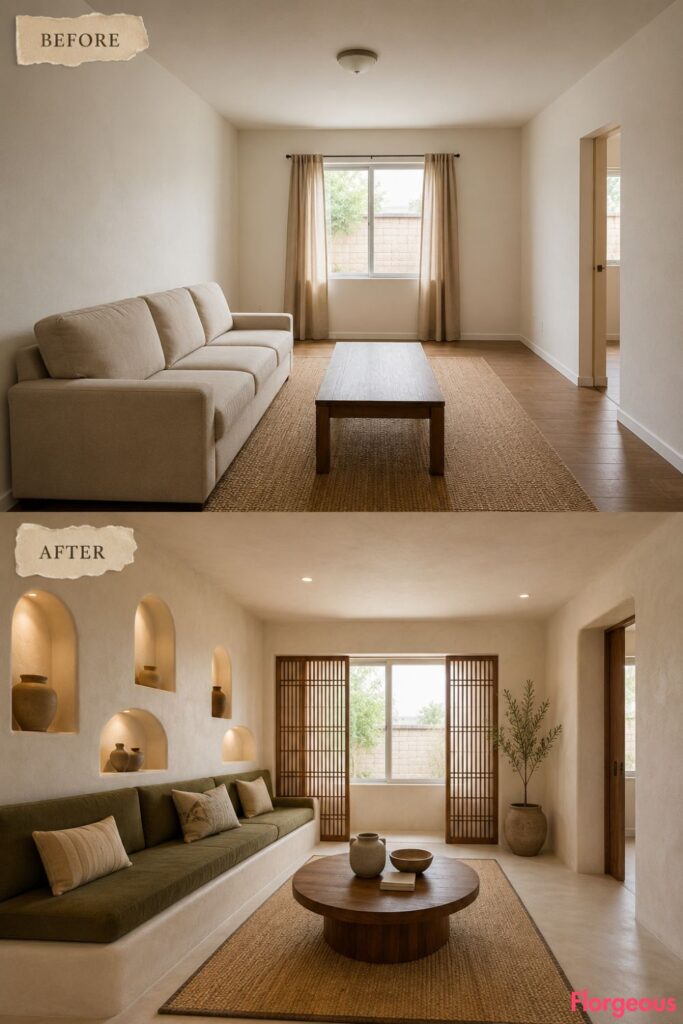
Before: Bare walls leave the basic furniture looking temporary and disconnected.
After: Chalky white adobe-inspired plaster forms a bank of rounded niches and a built-in bench along one wall. Olive cushions, a round walnut table, woven rush mat, filtered timber screens, recessed niche lighting, handmade non-symbolic ceramics, and a potted desert spoon create a calm media-free gathering space.
Budget Version: Create one shallow MDF arch and finish it with mineral paint.
6. Bring In Spanish Colonial Southwestern Warmth
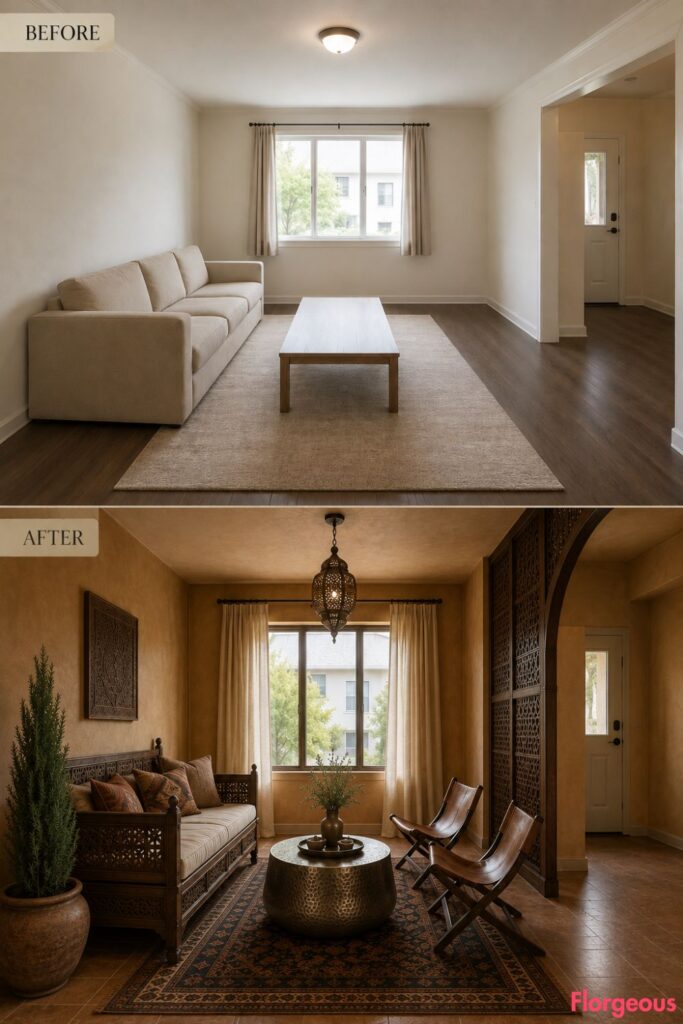
Before: The plain room lacks contrast, craftsmanship, and architectural character.
After: Smooth ochre plaster surrounds a softly arched dark-walnut divider. A carved walnut settee sits perpendicular to the window, facing two leather X-frame chairs and a hammered bronze table. A deep brown bordered rug, natural linen curtains, pierced bronze lantern, and rosemary topiary complete the restrained arrangement.
Cultural Care: Use architectural references and documented craftsmanship rather than unrelated cultural objects.
7. Build a Four-Chair Room Around Saltillo-Style Flooring
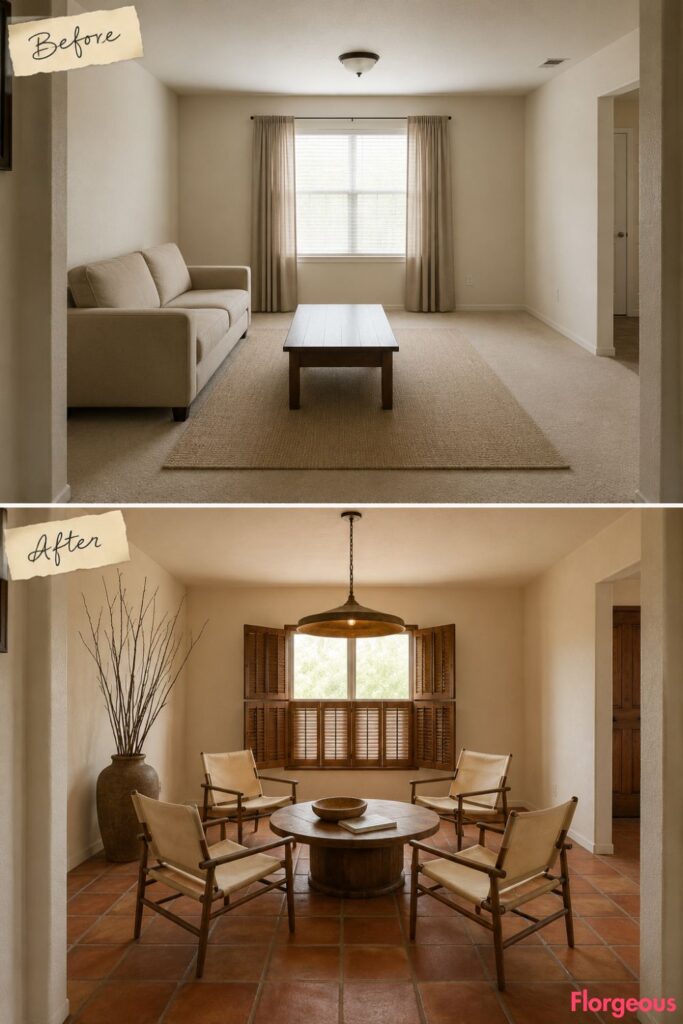
Before: The basic sofa creates a predictable layout and leaves the room’s center underused.
After: Saltillo-style terracotta tile becomes the main visual feature. Four canvas sling chairs circle a round mesquite table, leaving generous space behind them. Pale cream walls, interior wood shutters, an aged-brass disc pendant, and tall ocotillo branches keep the composition spare and sculptural.
Why it works: The expressive floor supplies enough pattern, so no rug is necessary.
8. Reorient the Layout Toward a Flagstone Fireplace
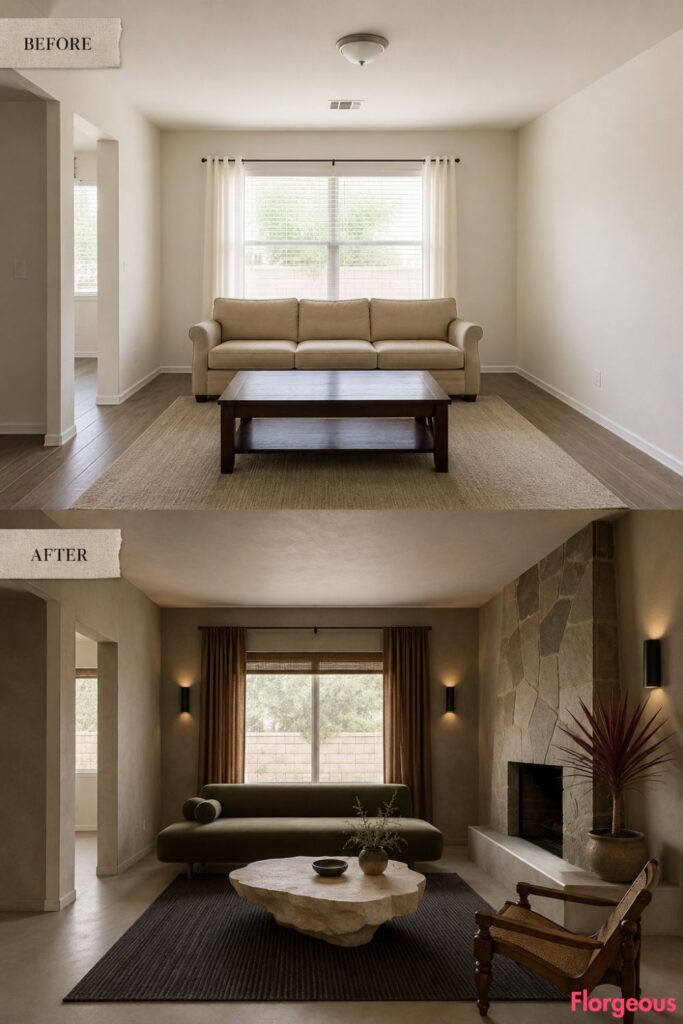
Before: The original furniture floats without a visual destination.
After: An asymmetrical flagstone fireplace rises against taupe microcement. A deep olive sofa floats centrally facing it, with one carved-wood chair angled beside an irregular limestone table. A charcoal ribbed rug, tobacco wool curtains, compact black sconces, and one red yucca reinforce the strong focal wall.
Try this: Thin stone veneer can create the look with less structural weight.
9. Soften the Space With Sage and Warm Ivory
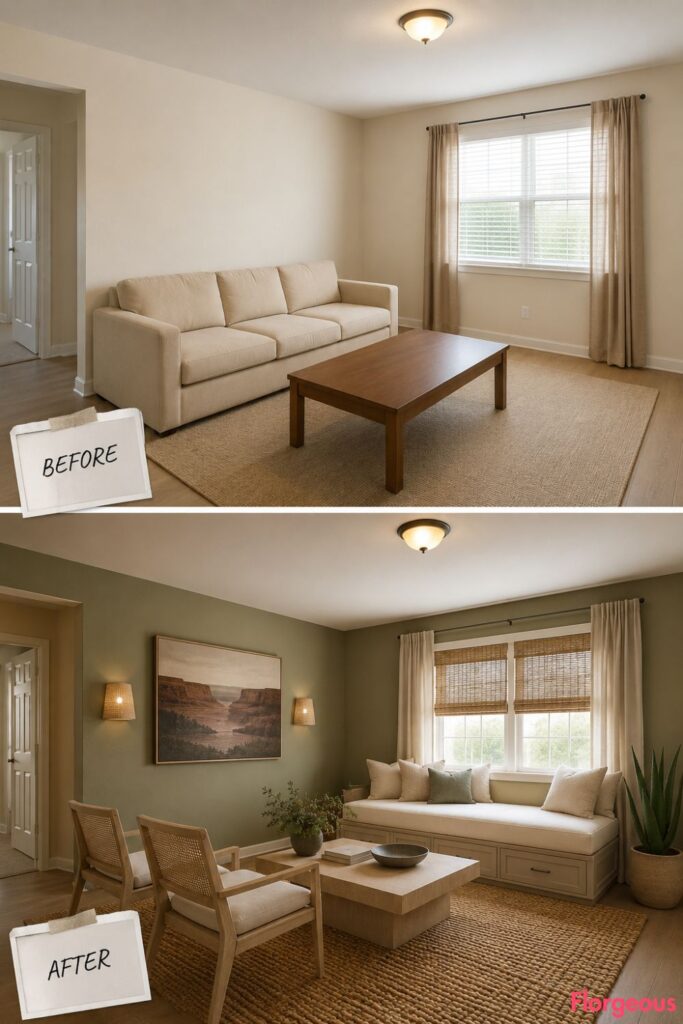
Before: Beige furniture blends into the neutral walls without creating depth.
After: Muted sage walls frame an ivory window daybed with concealed storage. Two pale cane chairs face a square bleached-oak table on a basketweave seagrass rug. Woven grass shades, adjustable ceramic wall lights, one potted aloe, and a large canyon-inspired abstract artwork complete the quiet palette.
Small Space Tip: A daybed combines seating, storage, and occasional guest use.
10. Go Moody With Night-Sky Blue and Dark Mesquite
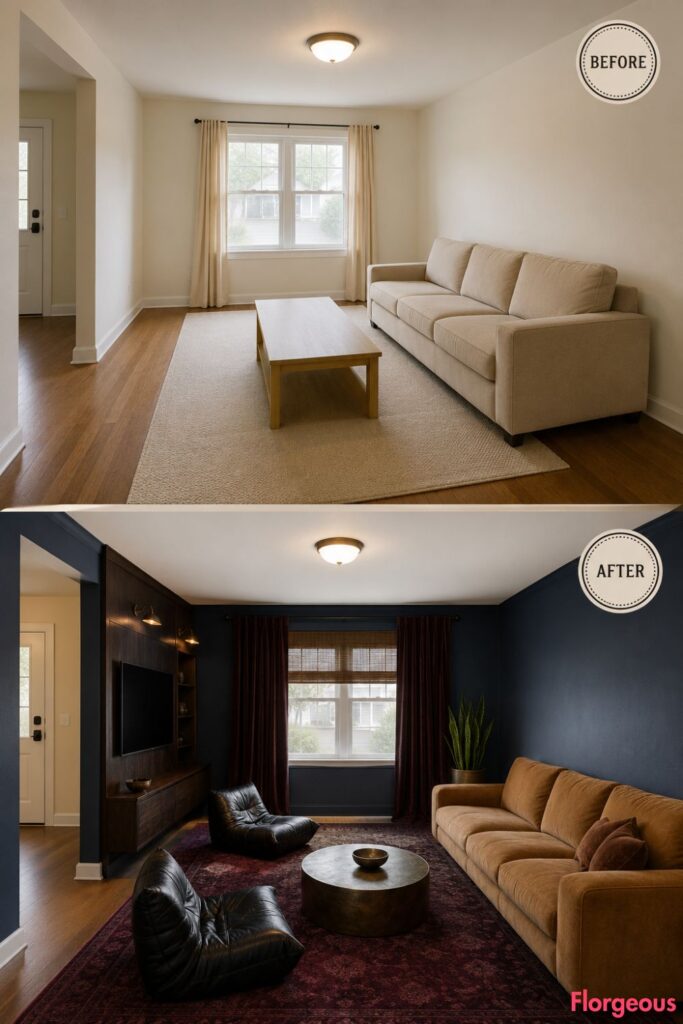
Before: The light neutral room has no evening atmosphere.
After: Deep night-sky blue surrounds a dark mesquite media wall. A low camel mohair sofa faces the cabinetry, accompanied by two compact black leather floor seats and a bronze drum table. A plum cut-pile rug, dark bronze velvet curtains, aged-bronze picture lights, and one tall snake plant add depth.
Color Story: Choose a dusty blue rather than a bright jewel tone.
11. Wash the Room in Sun-Faded Canyon Color
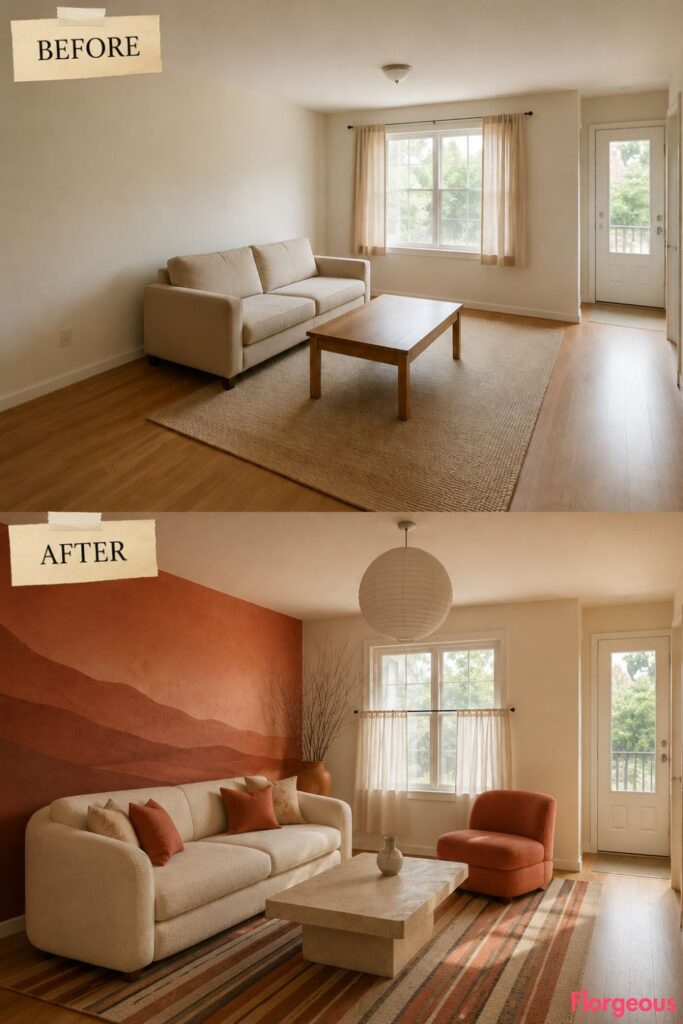
Before: The empty wall does nothing to support the basic sofa.
After: A canyon-red color-washed mural without text or symbols stretches across the main wall. An oatmeal sofa sits perpendicular to the window, paired with one muted coral lounge chair, pale stone table, and cream-and-coral striped cotton rug. Café curtains, a paper pendant, and creosote branches keep the look airy.
Try this: Blend two mineral paints with a broad brush for a softer transition.
12. Mix Texas Desert Leather With Pale Limestone
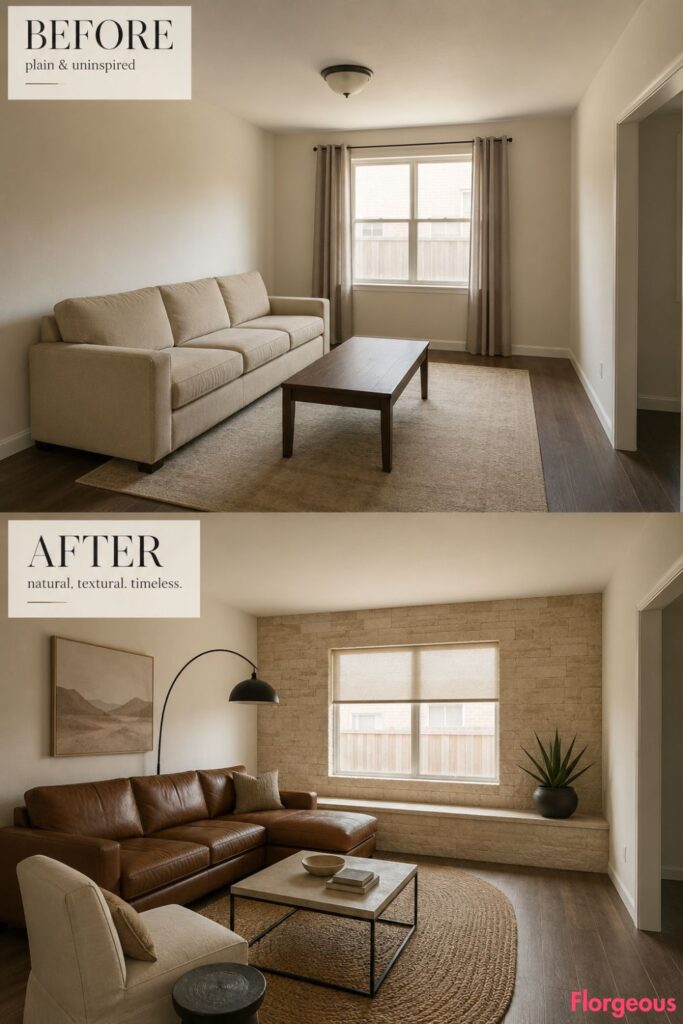
Before: Generic furniture gives the room little contrast or permanence.
After: A long pale limestone feature wall incorporates a low bench and hidden storage. A compact tobacco leather sectional occupies one corner, facing a linen slipper chair and square steel-and-limestone table. A small braided rawhide mat, unbleached roller shades, black iron arc lamp, and one potted sotol complete the room.
Common Mistake: Use rawhide as a restrained texture, not the room’s theme.
13. Create a Renter-Friendly Southwestern Layered Look
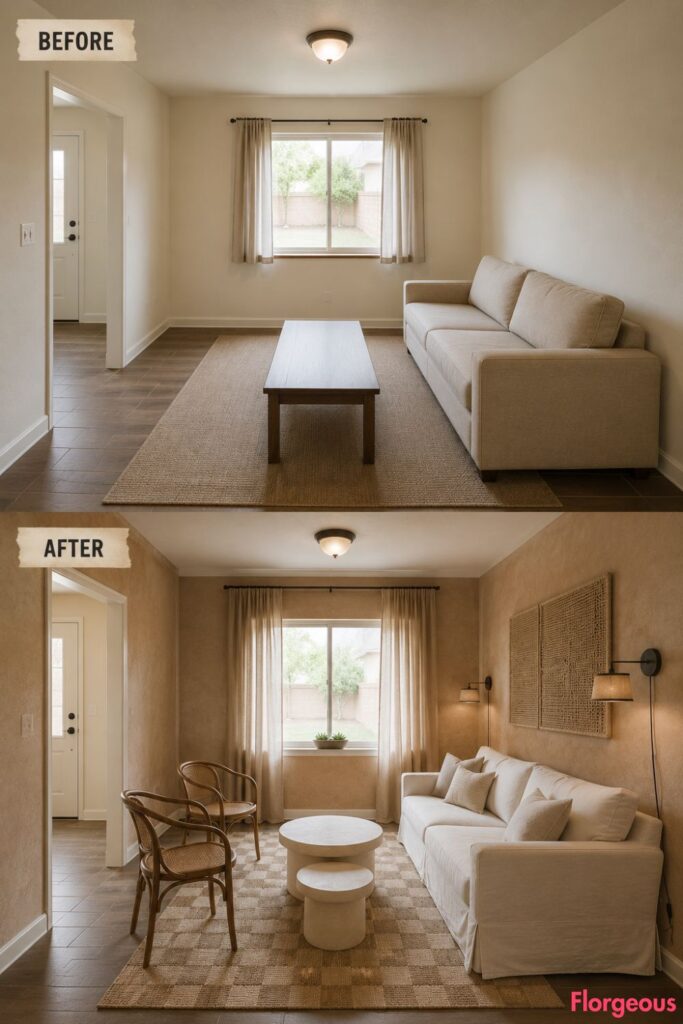
Before: The unchanged neutral room feels temporary and under-decorated.
After: Removable clay-texture wallpaper defines the wall behind a flax slipcovered sofa. Two stackable bentwood chairs, nesting ceramic tables, a cream-and-clay checkerweave rug, tension-rod cotton panels, plug-in swing-arm sconces, a non-symbolic woven panel, and small echeveria plants add depth without construction.
Budget Version: Begin with the rug, curtains, and lamp finish.
14. Form a Circular Desert Conversation Salon
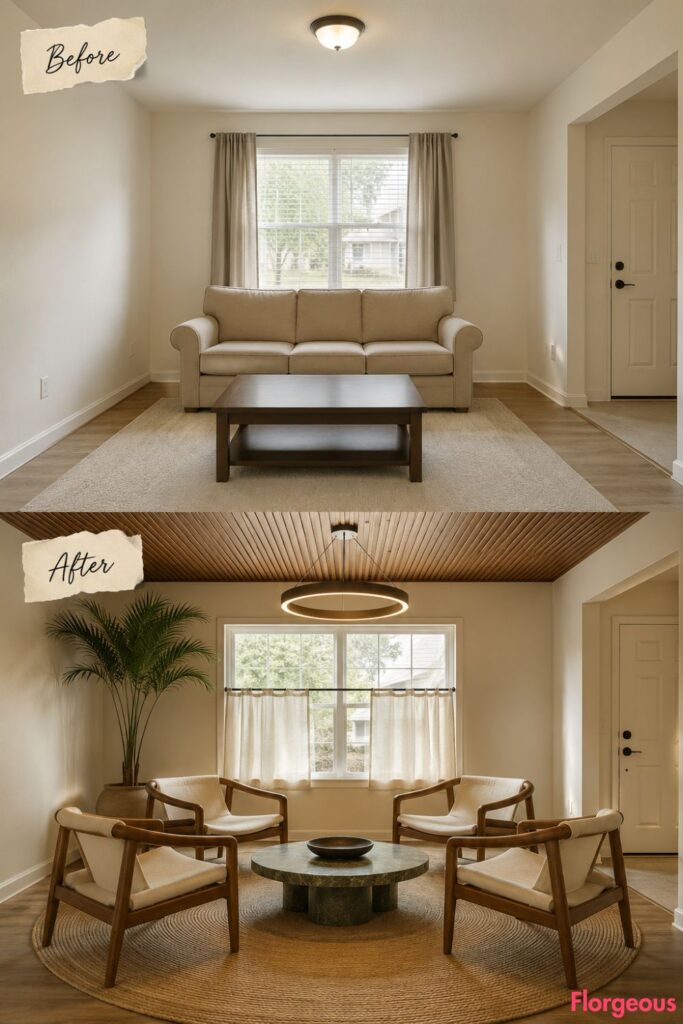
Before: The sofa points toward an empty wall while the room’s corners remain disconnected.
After: Four curved walnut-and-canvas chairs form a circle around a green travertine table. A thick circular jute rug mirrors the furniture arrangement, while warm white walls and a slatted timber ceiling provide structure. Sheer half-panels, a flush bronze ring light, and an elephant-foot palm soften the geometry.
Why it works: Repeating one shape at several scales creates cohesion.
15. Open the Living Room to a Desert Courtyard
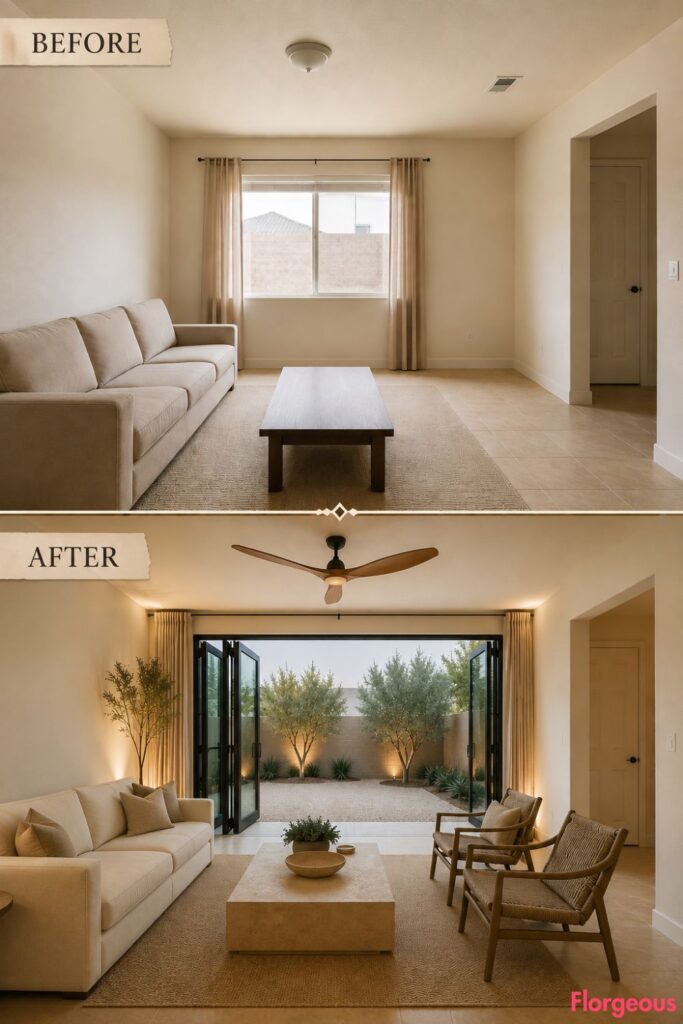
Before: Short curtains make the room feel closed and visually smaller.
After: Folding glazed doors open to a gravel courtyard with a dwarf olive tree. Continuous pale limestone flooring connects both areas. A weather-resistant cream sofa, two woven rope chairs, and a broad stone table face the opening, while a timber-blade fan and discreet floor uplights support indoor-outdoor living.
Designer Tip: Repeating one flooring tone across a threshold visually enlarges both spaces.
16. Build a Dark Mesquite Reading Sanctuary
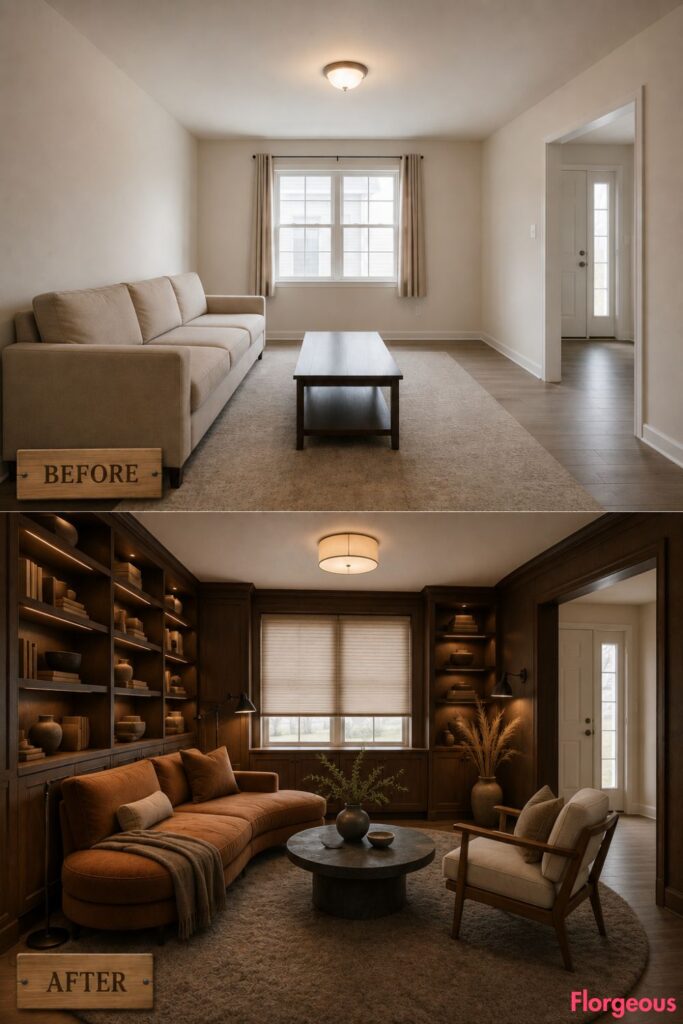
Before: Bare walls and standard lighting provide no reason to linger.
After: Dark mesquite cabinetry surrounds a deep reading recess with unreadable book spines and simple pottery. A caramel chaise sits beside an upright linen chair and round soapstone table. A mushroom felted-wool rug, pleated fabric shades, adjustable reading lamps, concealed shelf lighting, and potted bear grass create a focused retreat.
Sourcing Note: Choose documented regional pottery or neutral handmade ceramics without copied ceremonial forms.
17. Pair Terracotta Microcement With Olive Seating
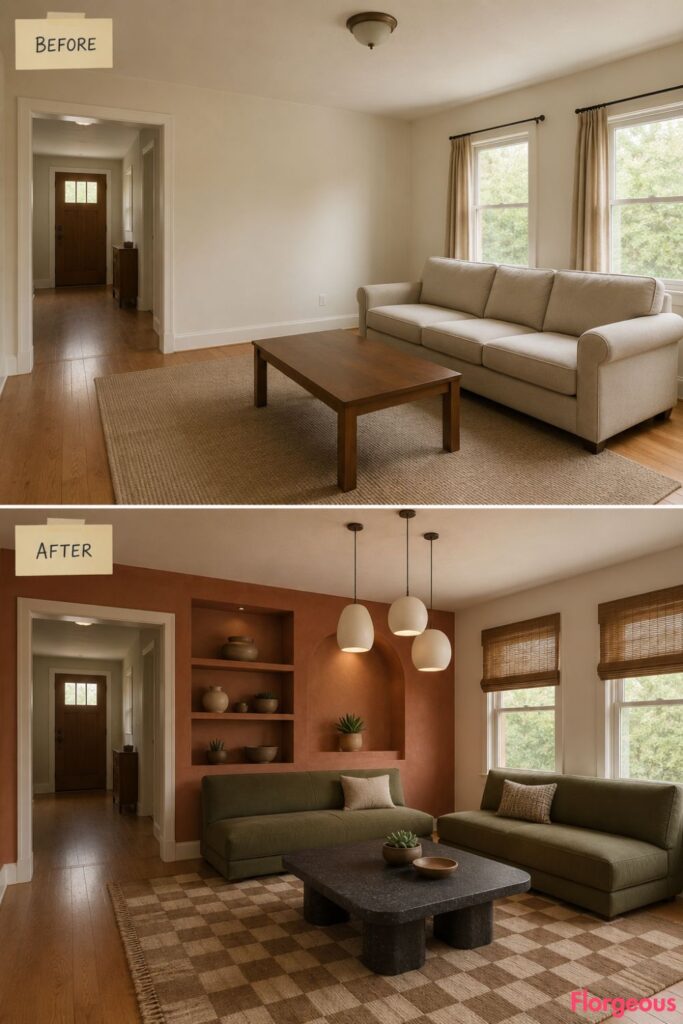
Before: The beige sofa and plain table create a flat, one-note composition.
After: Terracotta microcement forms a shallow sculpted shelf wall. Two olive armless settees meet at a controlled right angle, stopping well before the entrance. A low black lava-stone table rests on an undyed checker-wool rug. Reed blinds, three ceramic pendants, and grouped haworthia planters finish the room.
Try this: Mark furniture dimensions with painter’s tape before ordering.
18. Create a Chalky White Desert Gallery Room
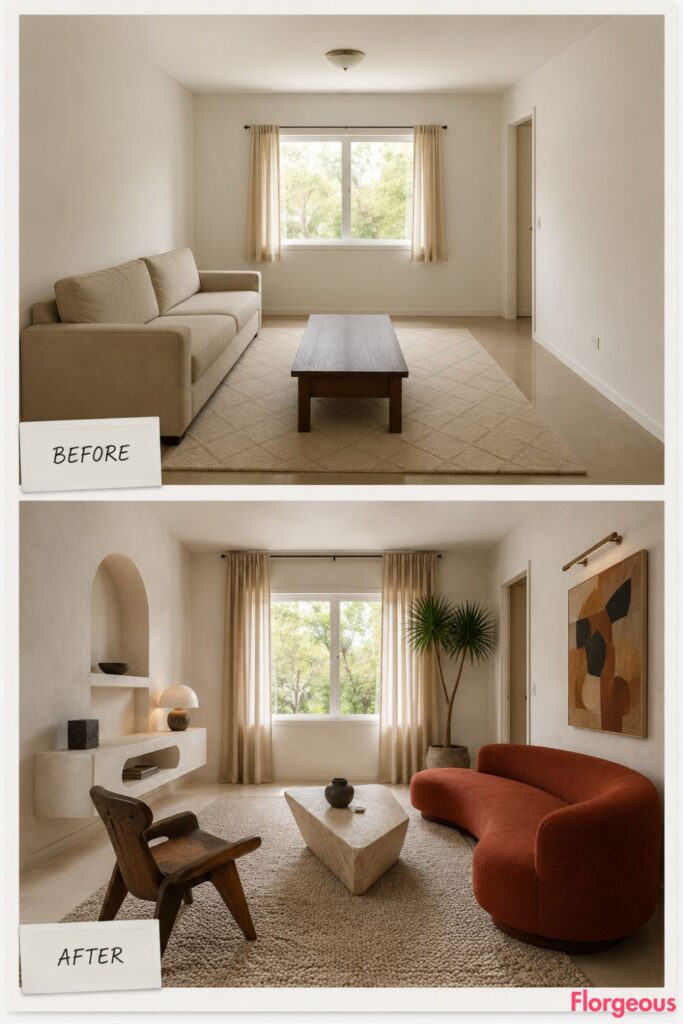
Before: Empty walls make the room feel unfinished rather than intentionally minimal.
After: Chalky whitewashed walls hold a carefully spaced group of documented regional abstract artworks without readable text or sacred imagery. A curved rust sofa floats centrally beside one carved walnut chair and a triangular pale-stone table. An oatmeal hand-knotted rug, high linen curtains, slim picture light, and one dragon tree complete the gallery setting.
Cultural Care: Purchase regional artwork directly from recognized artists, galleries, or cooperatives.
19. Add a Viga-Ceiling Desert Lodge Atmosphere
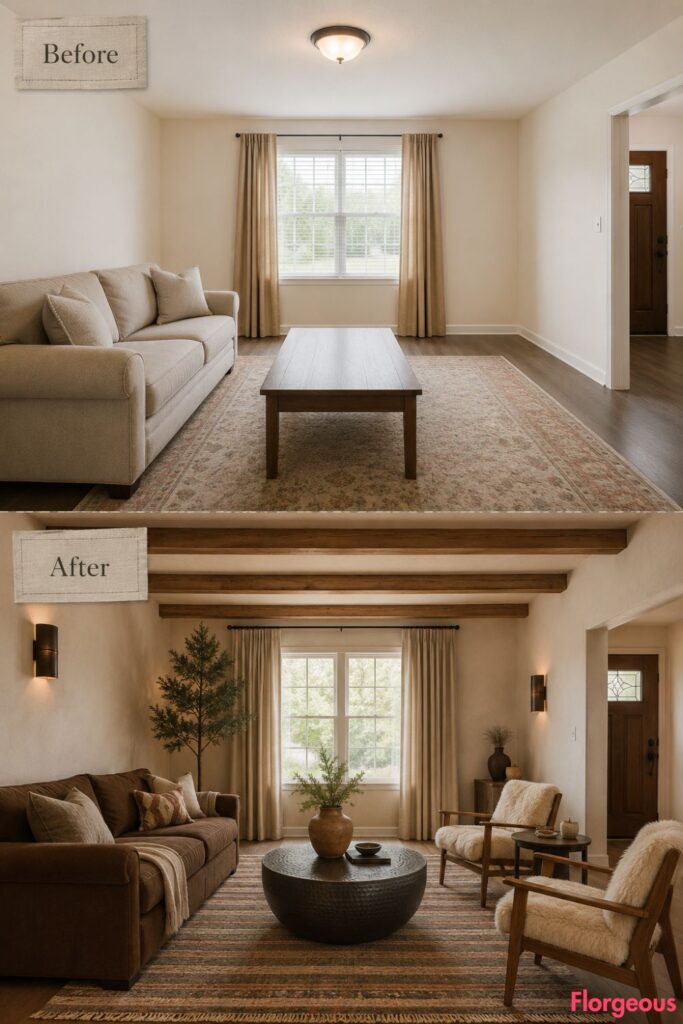
Before: The builder-grade ceiling light makes the room feel flat from above.
After: Simplified warm-oak vigas cross a pale clay ceiling, becoming the room’s dominant feature. A deep tobacco canvas sofa faces two compact shearling-lined oak chairs around a hammered iron table. A plain striped wool rug, floor-to-ceiling canvas curtains, ceramic torch sconces, and one potted piñon pine create a refined lodge feeling.
Style Note: Keep the beams slim enough for the room’s actual ceiling height.
20. Shape an Adobe-Rose Architectural Salon
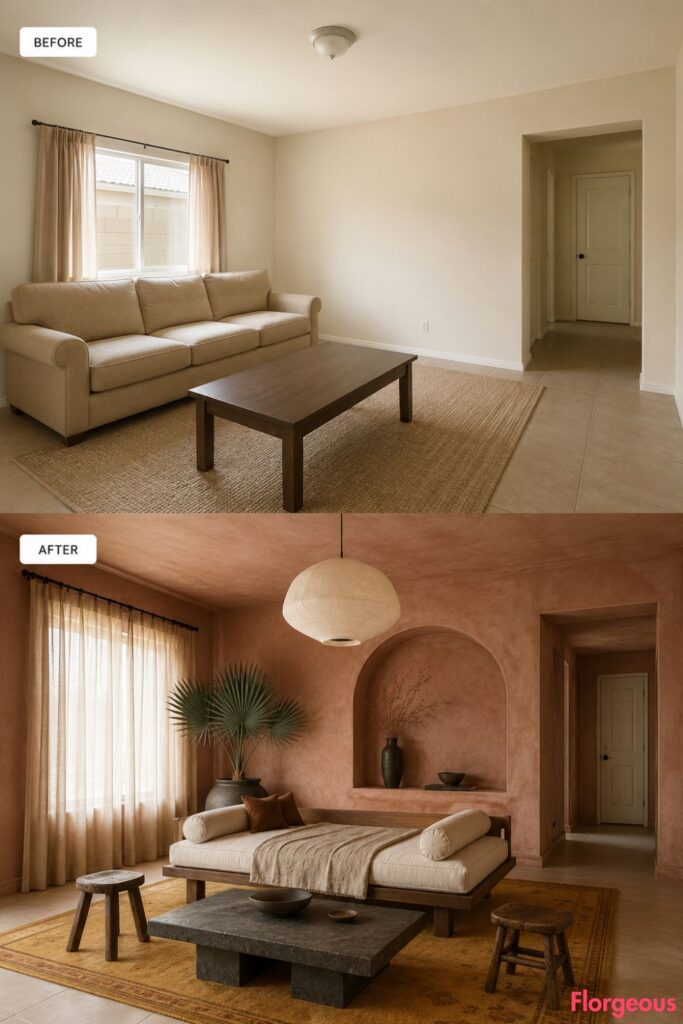
Before: The unchanged rectangular room has no hierarchy or memorable architectural moment.
After: Hand-burnished adobe-rose plaster wraps a deep arched recess and continues across the ceiling. A double-sided linen daybed floats in the center, allowing seating on both sides. Two mesquite stools, a blackened-limestone plinth table, saffron silk-wool rug, layered gauze curtains, oversized plaster pendant, and one blue hesper palm create a dramatic salon.
21. Create an Indoor Desert Garden Living Room
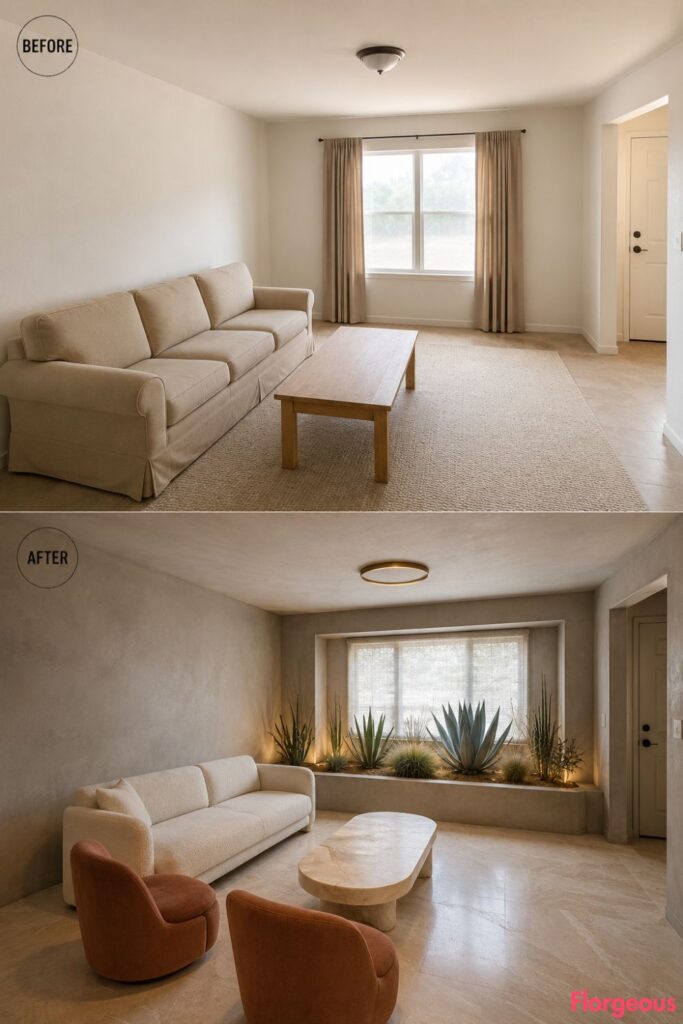
Before: The plain neutral room has no connection to the landscape or natural focal point.
After: Warm gray hand-troweled plaster surrounds a recessed planting bed running beneath the window. A compact cream sofa faces the greenery, while two low clay-colored lounge chairs sit at a gentle angle around an elongated onyx table. Honed limestone replaces the rug, concealed grow lights wash the planter, and a slim bronze ceiling fixture illuminates blue agave, bear grass, and desert spoon.
Why it works: The planting bed becomes living architecture rather than decorative clutter.
Choosing the Right Southwestern Direction for Your Living Room
These transformations work because each one begins with a focused design idea. The strongest rooms do not combine adobe plaster, terracotta, leather, carved wood, stone, turquoise, beams, and rustic accessories all at once.
For a lighter Southwestern Living Room, start with warm ivory, linen, pale stone, and one sculptural plant. For a richer look, consider leather and limestone, terracotta and olive, night-sky blue with dark mesquite, or adobe rose with blackened stone.
Before purchasing furniture, measure the entrance, window clearance, and main walking route. Then collect three material or paint samples and view them in both morning and evening light. Choose one focal feature and build the remaining palette around it.