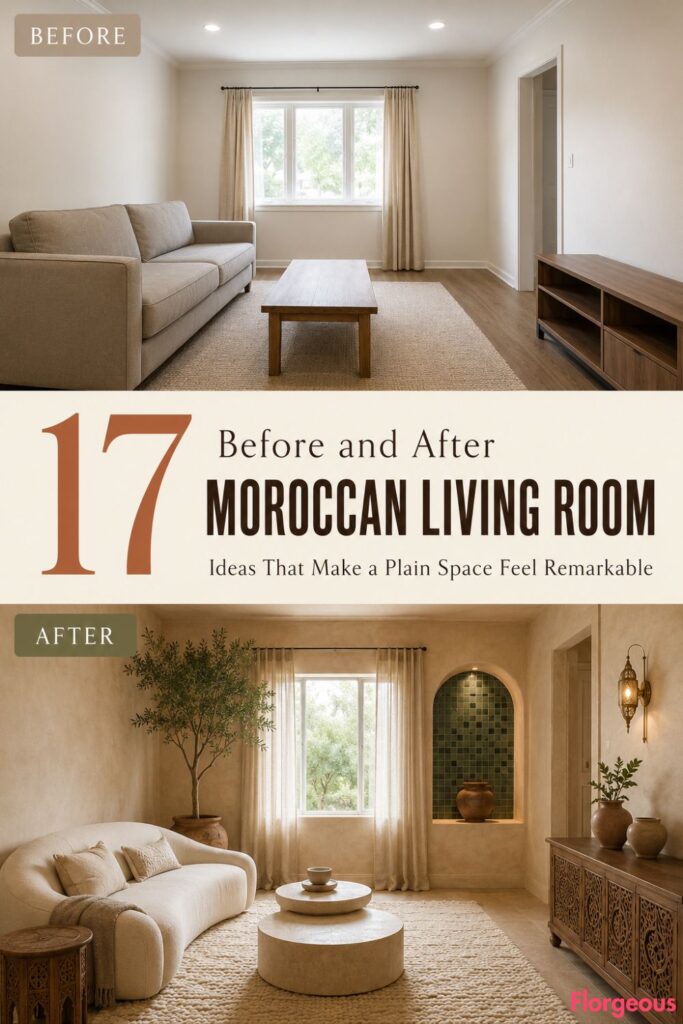
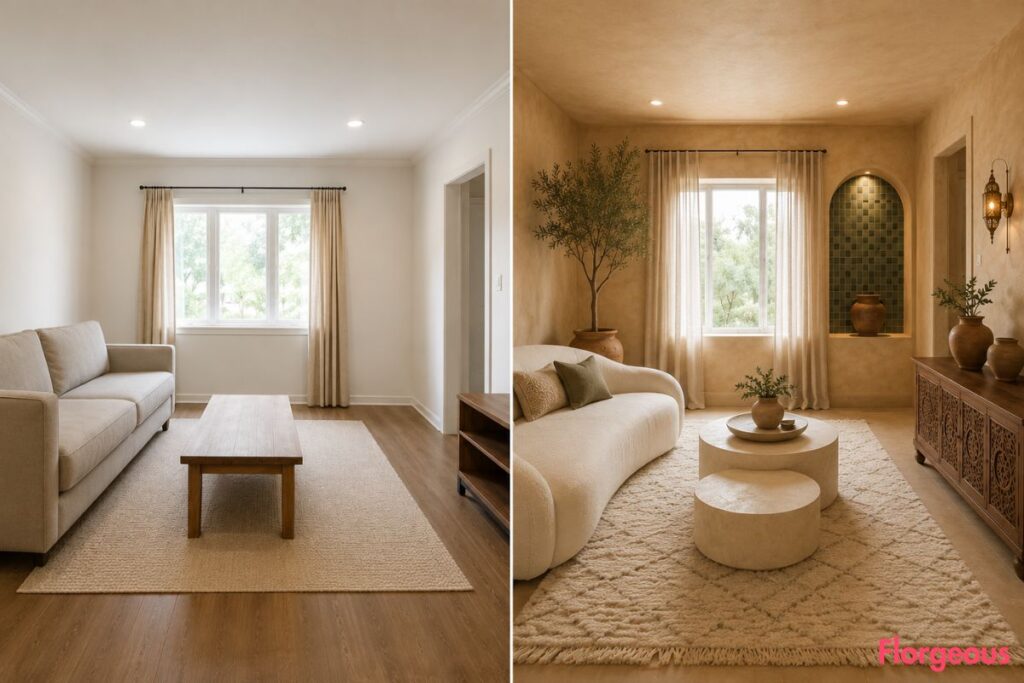
A living room can be clean and functional yet still feel unfinished. Neutral walls, a basic sofa, short curtains, and a generic rug provide a starting point, but they do not create much atmosphere or visual identity.
These Moroccan Living Room makeovers begin with that same builder-grade space and reimagine it 17 different ways. Each transformation uses a separate furniture plan, color story, focal point, lighting treatment, floor finish, and combination of Moroccan materials.
Some rooms rely on softly polished plaster and pale desert tones. Others introduce zellige, carved cedar, saturated pigments, terracotta floors, sociable seating, or contemporary interpretations of traditional craftsmanship. The variety shows how specific one room can feel without becoming crowded or overly themed.
1. Turn a Plain Room Into a Warm Tadelakt-Plaster Retreat
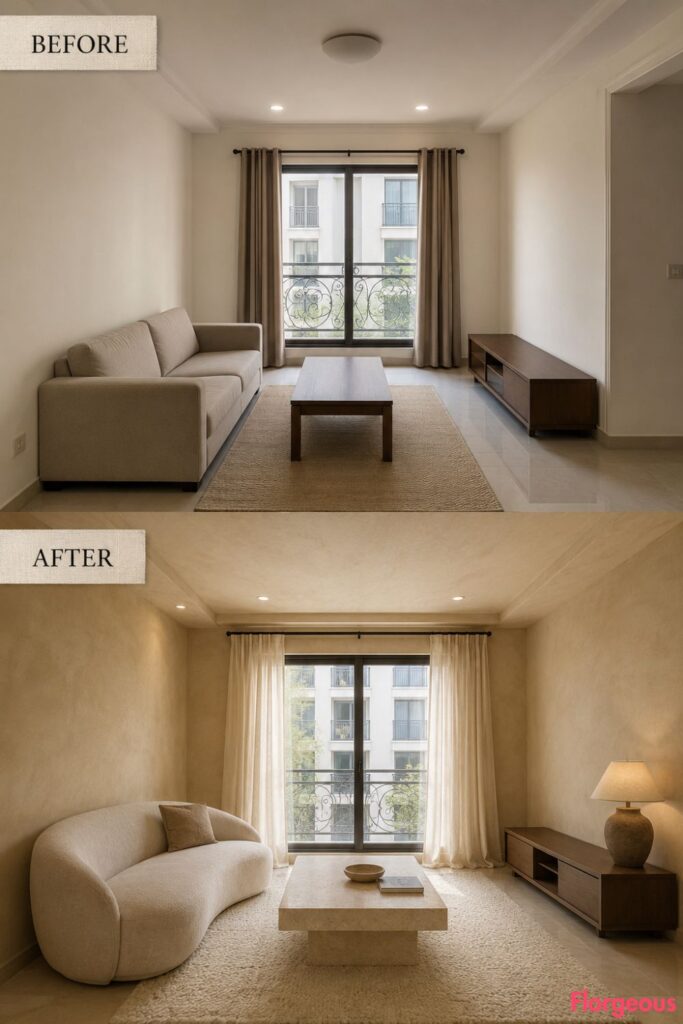
Softly mottled sand walls replace the flat neutral paint, immediately giving the room depth. A crescent-shaped oatmeal sofa faces a low limestone table, while an ivory wool rug and flax curtains keep the atmosphere quiet.
Why it works: Curved furniture complements the subtle movement of the plaster without adding unnecessary pattern.
Budget Version: Use mineral paint and a wide masonry brush to suggest the cloudy variation of polished tadelakt.
2. Build the Room Around a Cobalt Zellige Fireplace
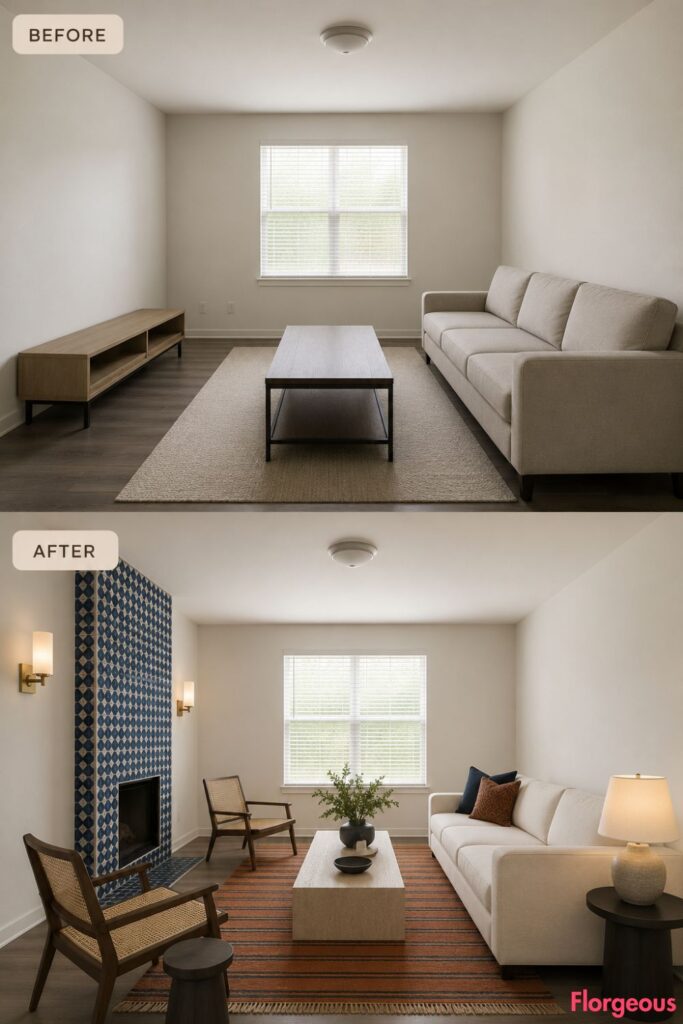
A slender fireplace faced in irregular cobalt and chalk-white zellige becomes the only patterned architectural feature. An ivory sofa sits perpendicular to it, paired with two compact cane-backed chairs and a rust-striped flatweave.
The limited tile area makes the design dramatic but achievable. A tiled fireplace surround or removable hearth panel can create a similar effect without covering an entire wall.
3. Give a Bare Wall the Depth of a Carved Cedar Library
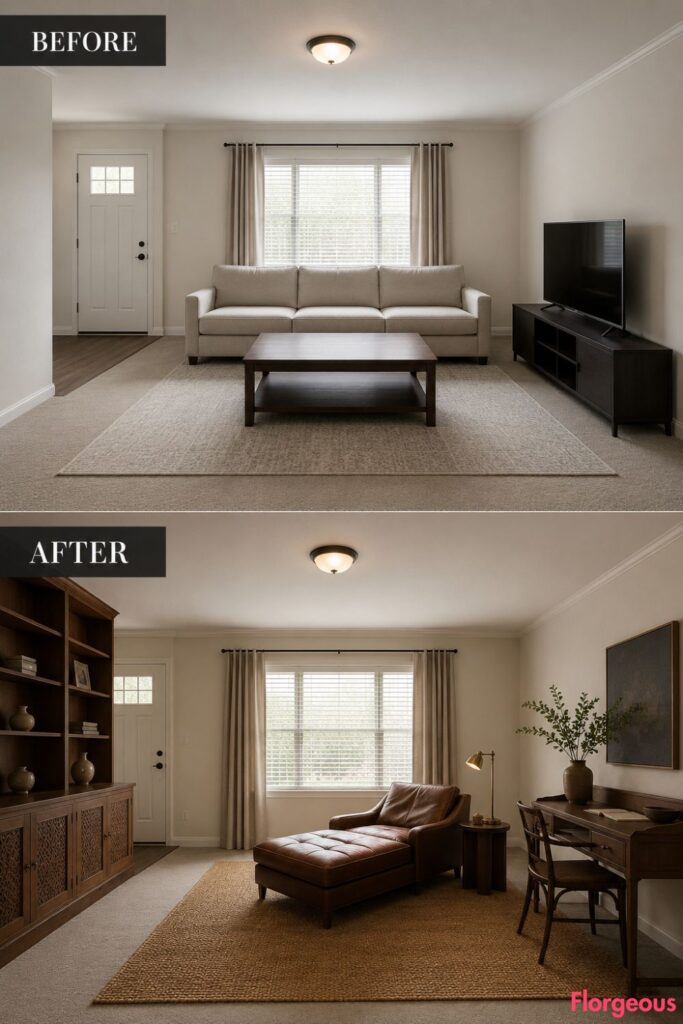
Wall-length cedar cabinetry replaces the empty focal wall. Closed cupboards conceal everyday items, while a few shallow shelves display handmade ceramics and books without readable titles.
A tobacco leather chaise and slim writing desk create a quieter reading layout. One hammered-brass floor lamp supplies focused light without turning the room into a lantern display.
4. Create a Desert-Neutral Lounge With Sculptural Furniture
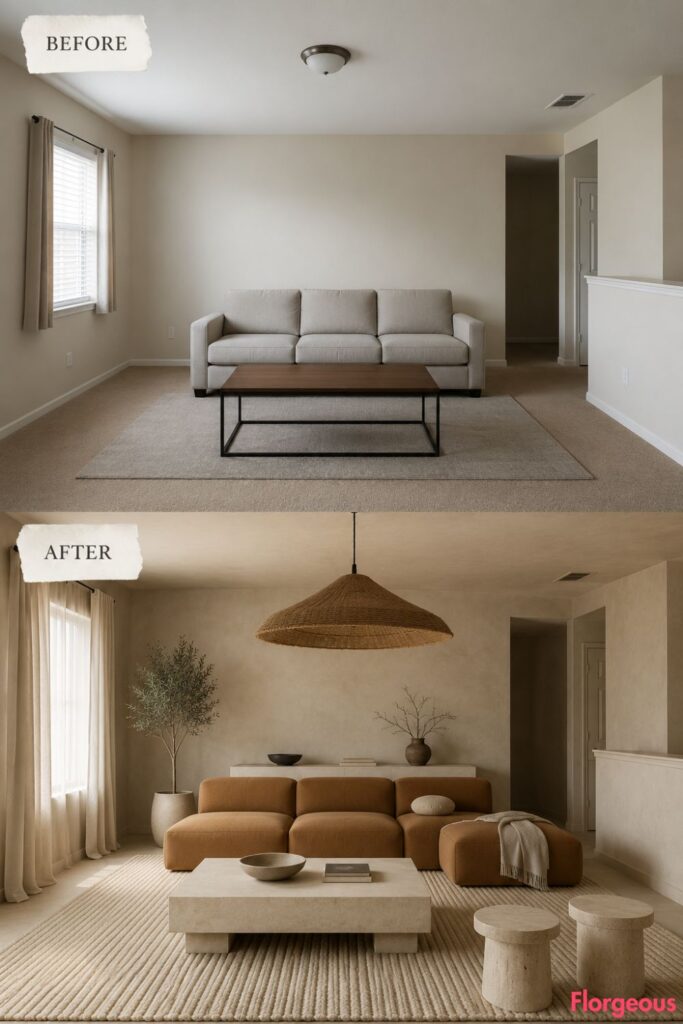
This restrained room uses camel, chalk, pale oak, and warm stone instead of saturated color. A floating modular sofa faces a long plaster plinth, with two small stone stools placed near the window.
A ribbed sand-colored rug and broad woven pendant give the simple palette enough texture. Every piece has a strong silhouette, but nothing competes for attention.
5. Arrange a Saffron and Terracotta Twin-Settee Salon
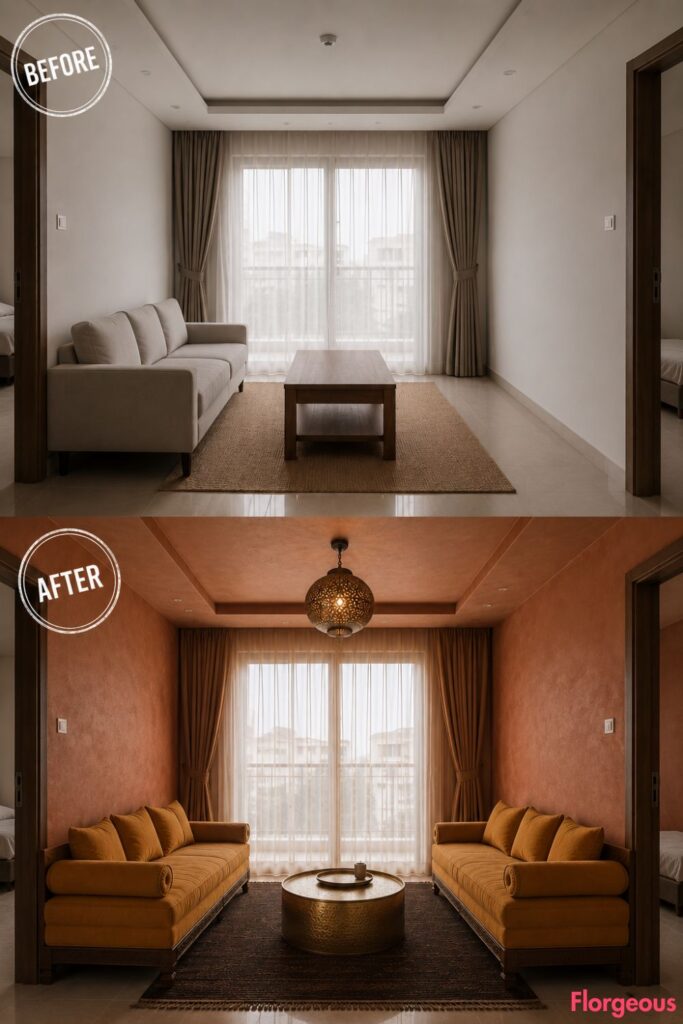
Two compact saffron settees face each other across a round hammered-brass table. Terracotta limewash wraps the walls, while a dark chocolate flatweave creates a grounded center beneath the seating.
This symmetrical arrangement feels sociable and polished without relying on a conventional sofa-and-chair combination.
Color Story: Keep the walls earthy and slightly muted so the brighter upholstery feels rich rather than overpowering.
6. Shape a Dusty Rose Marrakech-Inspired Sitting Room
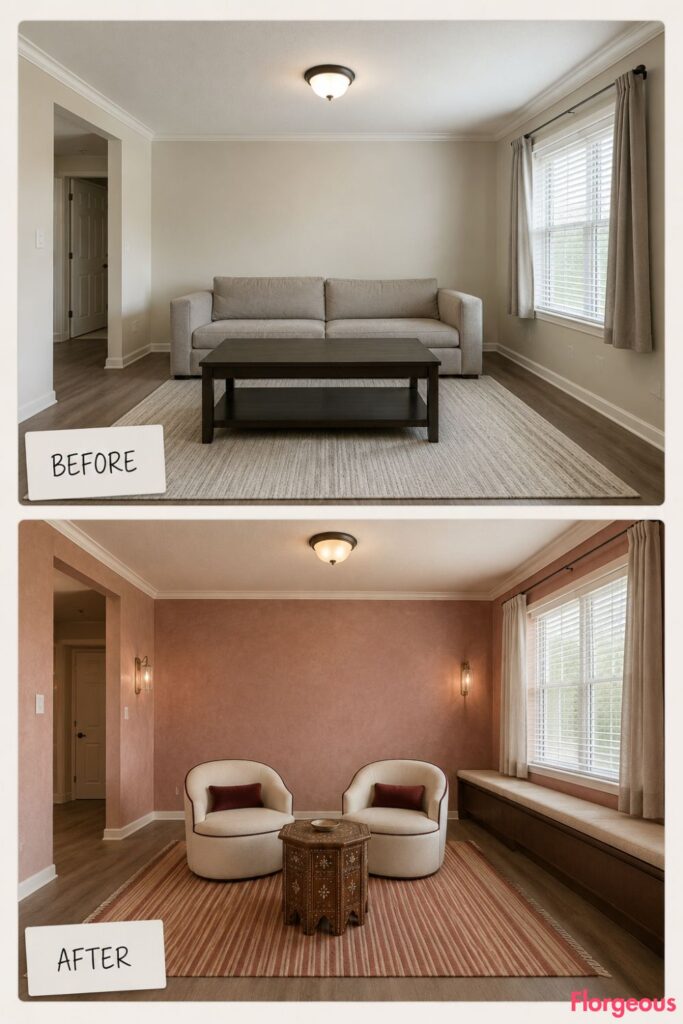
Dusty rose plaster gives this version a soft, enveloping mood. Two cream slipper chairs with burgundy piping sit beside an octagonal inlaid table, while a tailored window bench provides additional seating.
A narrow wine-and-cream striped rug visually connects the chairs to the window without covering the entire floor.
7. Make Black-and-Ivory Geometry Feel Calm
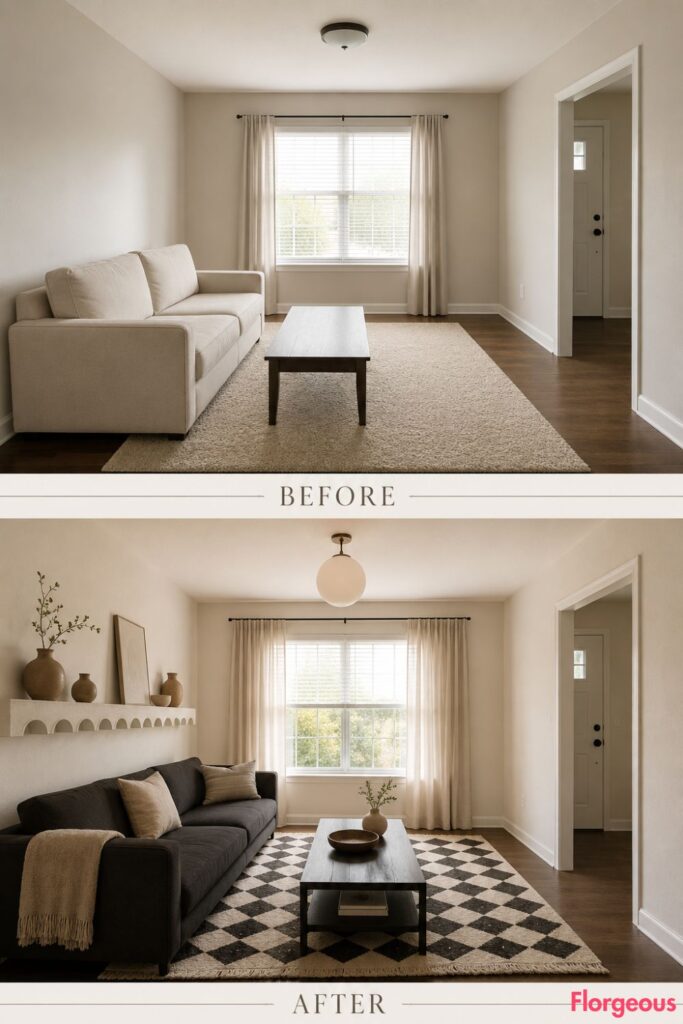
Warm ivory walls create a quiet background for a charcoal linear sofa and a single black-and-cream diamond flatweave. A slim ebonized table maintains the graphic direction without introducing another strong pattern.
The focal wall contains one scalloped plaster shelf with a few matte vessels. An opal ceiling globe softens the sharp contrast.
Common Mistake: Avoid repeating geometric motifs across the rug, cushions, walls, and accessories. One patterned surface is enough.
8. Bring a Courtyard Planting Bed Indoors
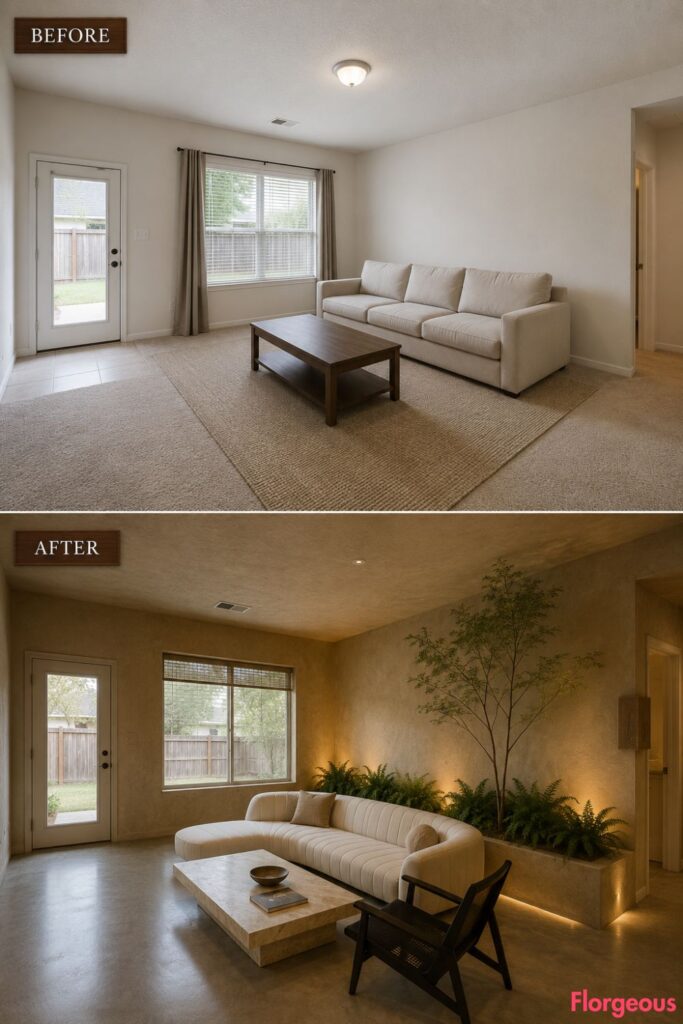
A narrow integrated planting bed runs along one side wall, introducing ferns, low groundcover, and one slender indoor tree. An armless cream sofa sits at an angle toward the greenery, accompanied by a single blackened-timber chair.
Ochre limewash, polished concrete, and concealed uplighting create the feeling of a sheltered courtyard while leaving the center of the room open.
9. Replace the Standard Sofa With a Low Conversation Circle
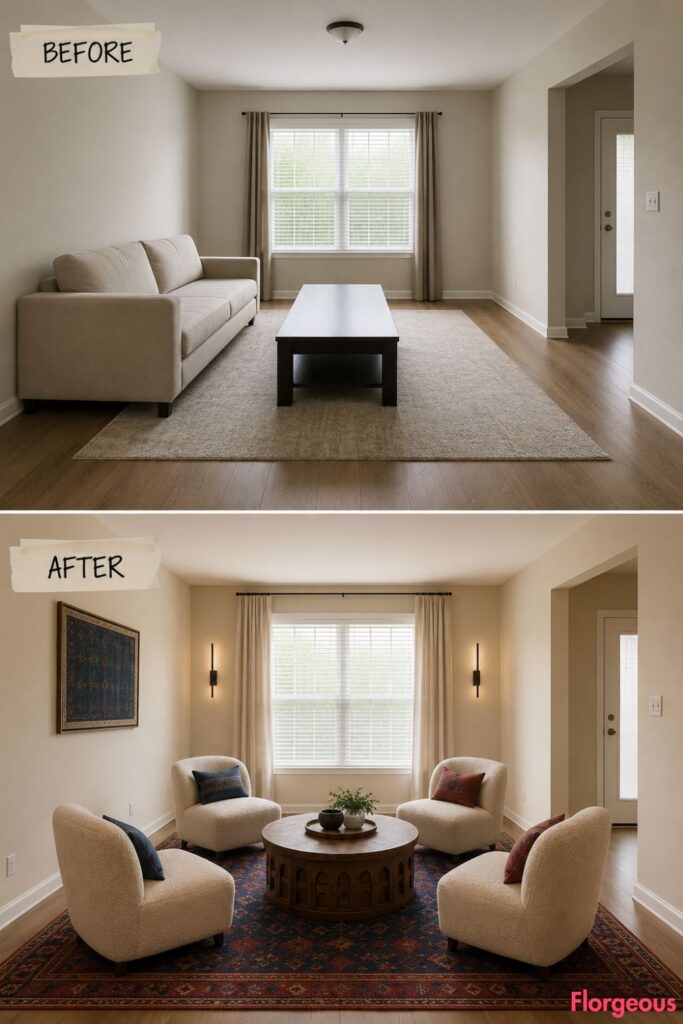
Four low upholstered seats form a loose circle around a round cedar tea table. The arrangement changes the room from a television-facing layout into a setting designed for conversation.
An indigo, garnet, and faded-cream flatweave gives the center definition. Slim wall lamps leave the ceiling and floor visually clear.
10. Wrap the Room in a Continuous Plaster Bench
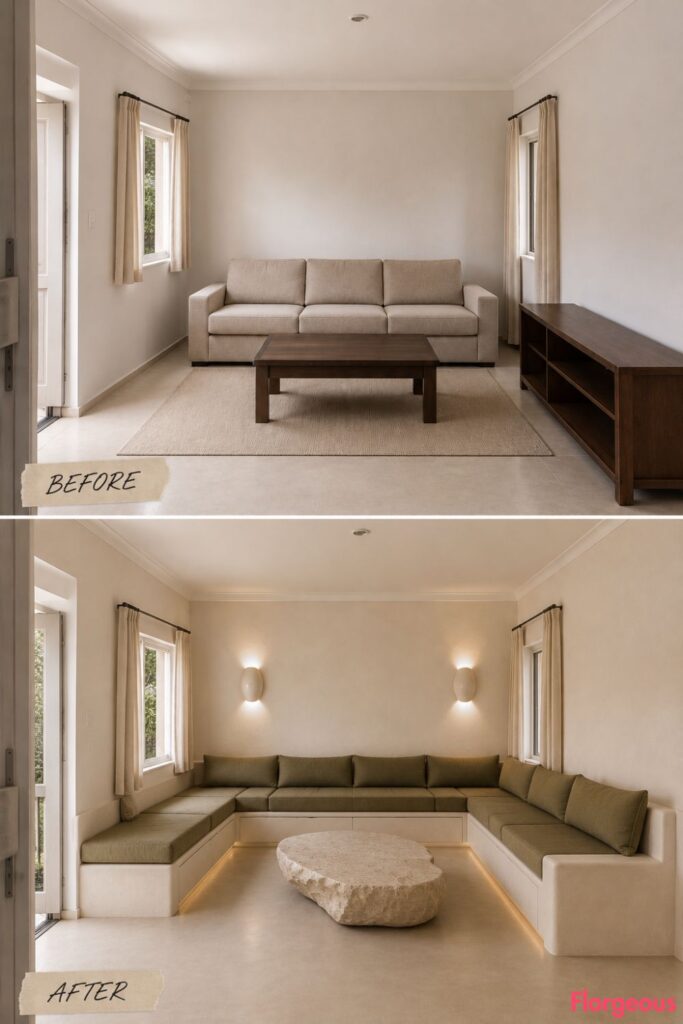
A sculptural U-shaped bench replaces all freestanding seating. Smooth off-white plaster forms the base, while tailored olive cushions make it comfortable enough for everyday use.
Warm microcement flooring remains uncovered, and one irregular stone table sits in the center. Small ceramic sconces provide evening light without interrupting the architecture.
11. Define the Entry With a Pierced Cedar Screen
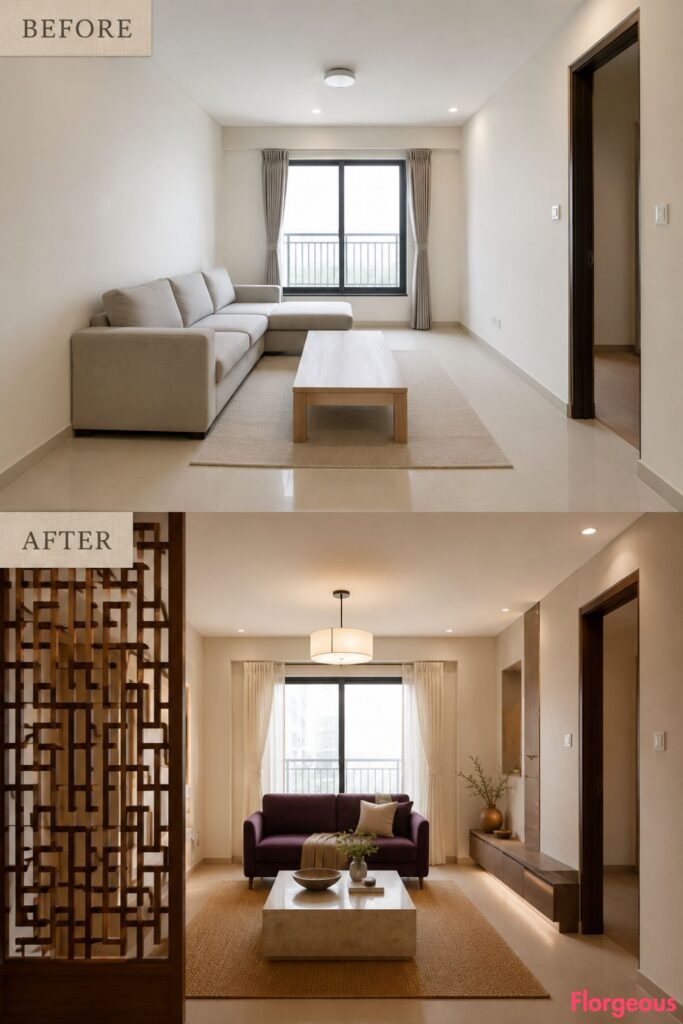
A floor-to-ceiling pierced cedar screen separates the entrance from the living area while allowing daylight to pass through. The screen introduces craftsmanship and solves a practical zoning problem at the same time.
A muted aubergine loveseat faces the window, paired with a square travertine table and tightly woven palm mat.
Small Space Tip: Choose a screen with generous openings so it defines the room without making the entry feel narrow.
12. Turn the Center Into a Contemporary Tea Salon
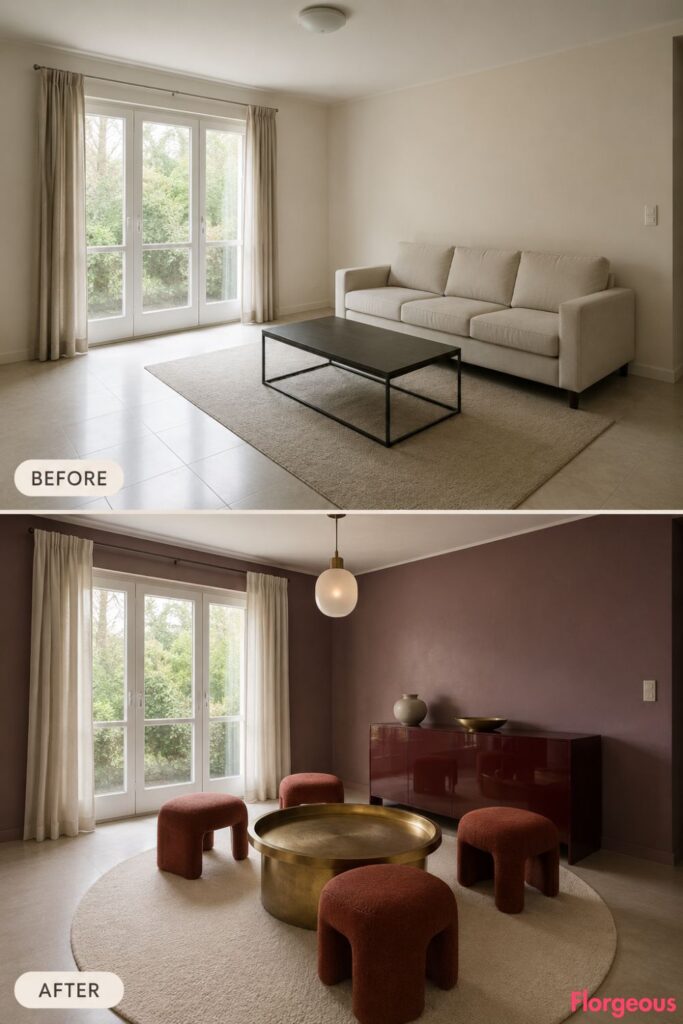
This makeover removes the conventional sofa altogether. Four upholstered stools surround a broad brass tray table, while a tall lacquered console provides storage and a surface for handmade ceramics.
Smoky mauve walls and a frosted-glass pendant create an intimate evening atmosphere. A small circular wool rug keeps the grouping visually contained.
13. Create a Dark Lounge With Restrained Brass Light
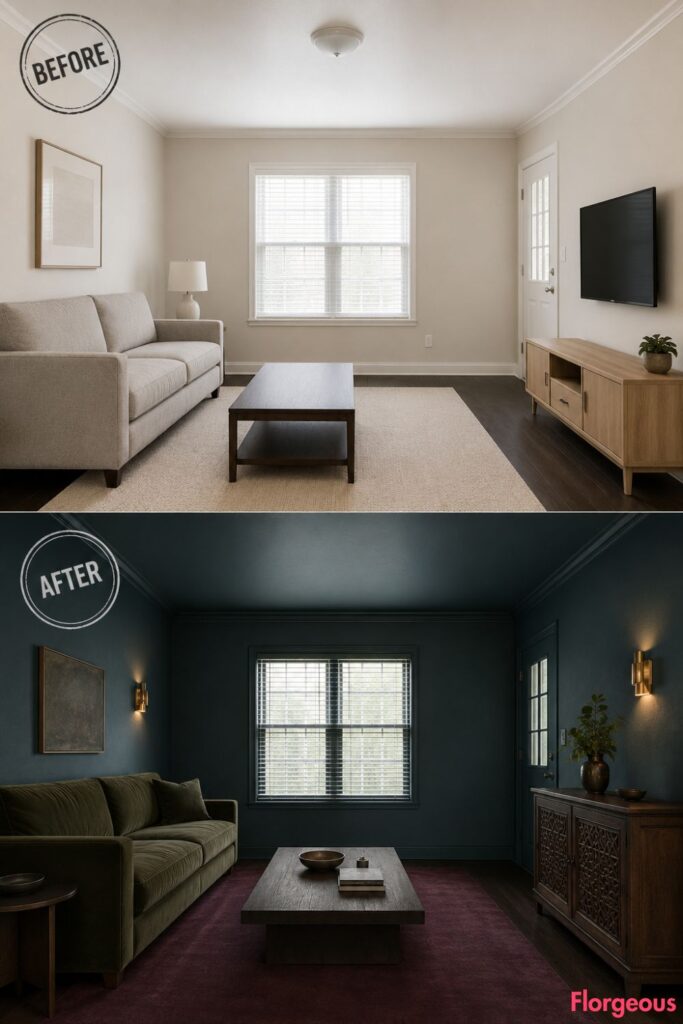
Deep petrol walls and ceiling make this room feel intimate without relying on heavy ornament. A moss mohair sofa sits beneath two compact hammered-brass wall lights, while a smoked-oak table adds a matte contrast.
A plain aubergine wool rug covers the floor. One carved cabinet provides visual detail, leaving the remaining surfaces calm.
14. Introduce an Airy Essaouira-Inspired Coastal Palette
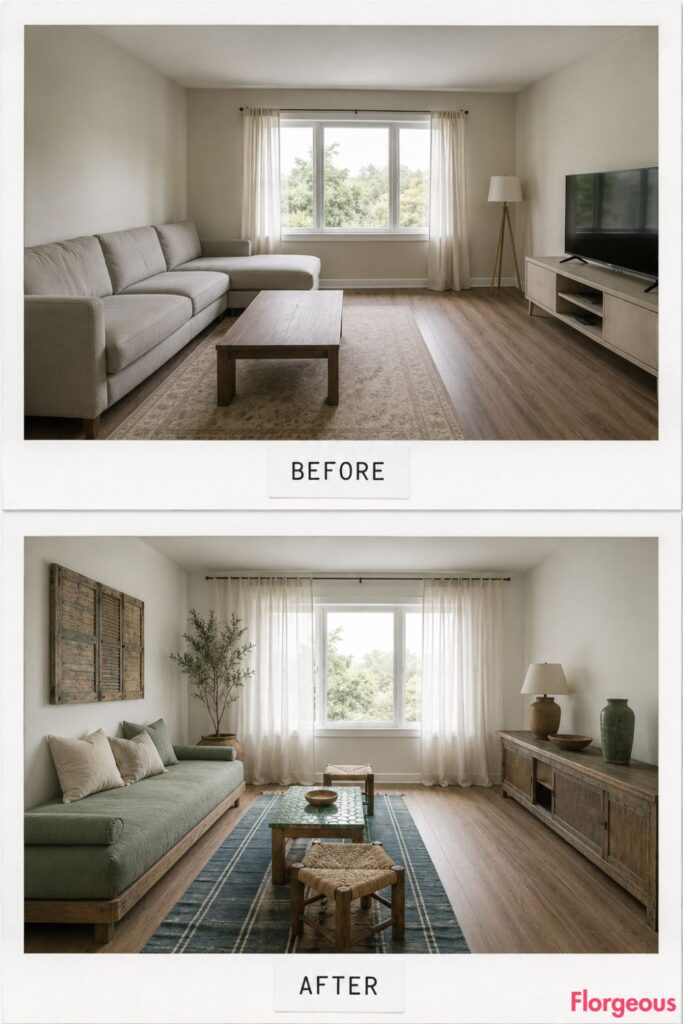
Chalk-white walls bounce natural light through the space, while sea-green linen, faded indigo, and weathered timber introduce a gentle coastal character.
A long upholstered daybed sits against one side wall. Two woven stools and a small green zellige-topped table keep the center flexible, while a striped runner draws the eye toward the window.
15. Let Herringbone Bejmat Tile Lead the Design
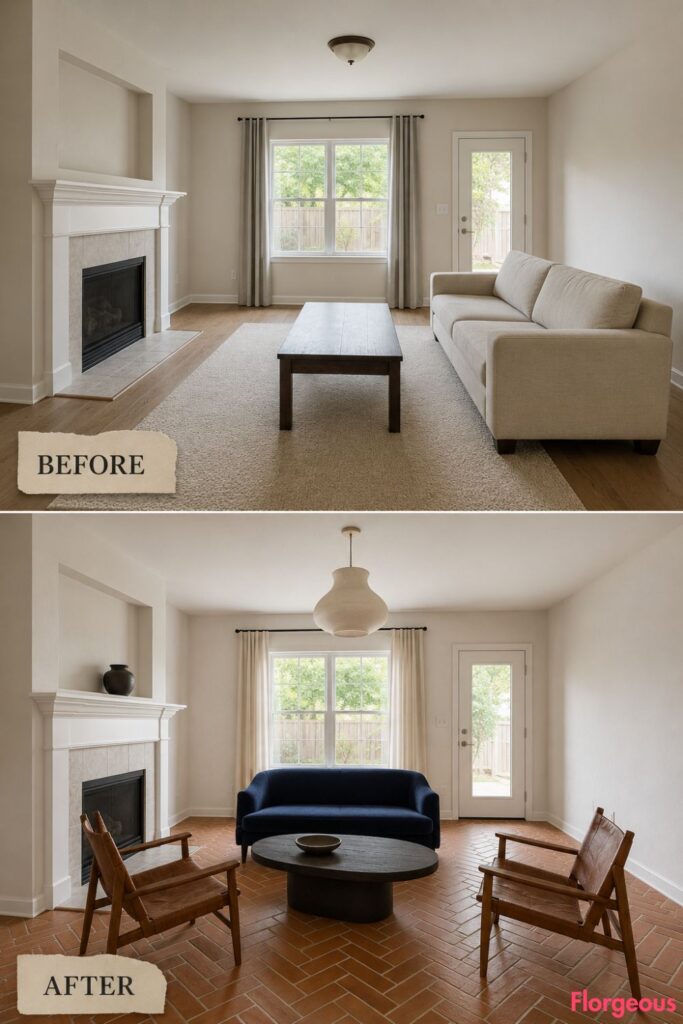
Instead of using a rug as the main floor feature, this room introduces handmade terracotta bejmat tiles laid in a herringbone pattern. Their warm variation gives the entire room movement.
A compact navy settee and two saddle-leather chairs form an open triangular arrangement around an oval blackened-timber table. The walls stay pale chalk, and a plaster pendant keeps the lighting understated.
16. Turn a Painted Cedar Ceiling Into the Artwork
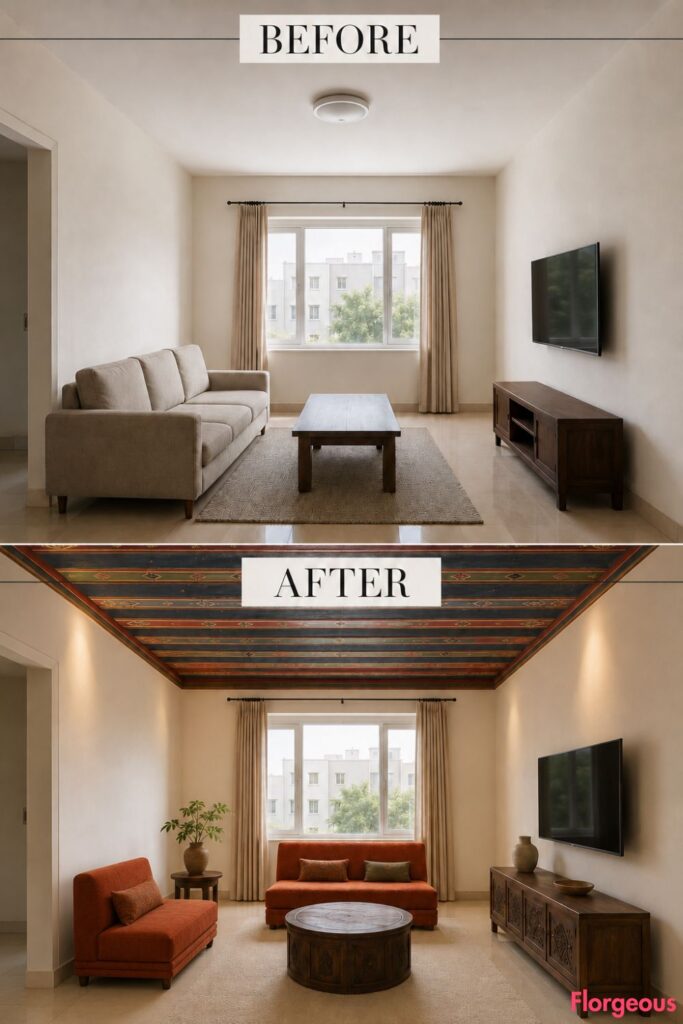
The strongest feature in this makeover is overhead. A hand-painted cedar ceiling introduces restrained brick red, muted indigo, soft green, and natural timber while the walls remain warm white.
Two paprika armless settees meet at a right angle beneath the ceiling. A dark cedar drum table and plain cream rug keep the lower half of the room visually grounded.
Designer Tip: If a decorative ceiling is not practical, paint a framed ceiling panel or install a shallow patterned timber inset over the seating area.
17. Refine a Moroccan Living Room With Minimal Forms
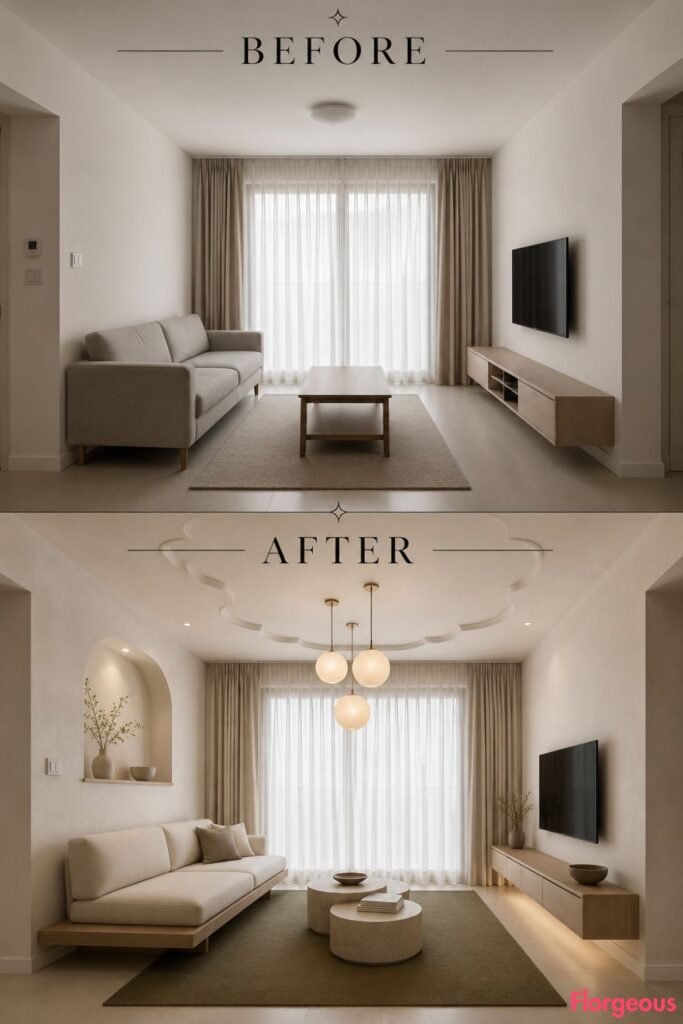
The final room reduces the design to a few carefully selected elements. A shallow plaster niche forms the focal point, while a pale walnut sofa floats in the center rather than sitting against a wall.
A moss wool rug, two nesting stone tables, and three small alabaster globes add color and light. Subtle carved-plaster ceiling relief references Moroccan craftsmanship without making the room feel heavily decorated.
How to Choose the Right Moroccan Design Direction
The strongest Moroccan Living Room does not contain every possible craft, pattern, or decorative reference. It begins with one clear focal point and supports that feature with a controlled selection of colors and materials.
Decide first whether your room will be driven by architecture, furniture arrangement, surface texture, craftsmanship, flooring, lighting, or color. A carved screen needs space around it. A patterned floor works best with quieter walls. A rich plaster finish may require only simple furniture and one handmade light.
Measure entrances and walking routes before introducing low seating, broad tables, or built-in benches. Then choose one or two well-made craft pieces rather than filling the room with themed accessories. Calm negative space will make those details feel far more special.