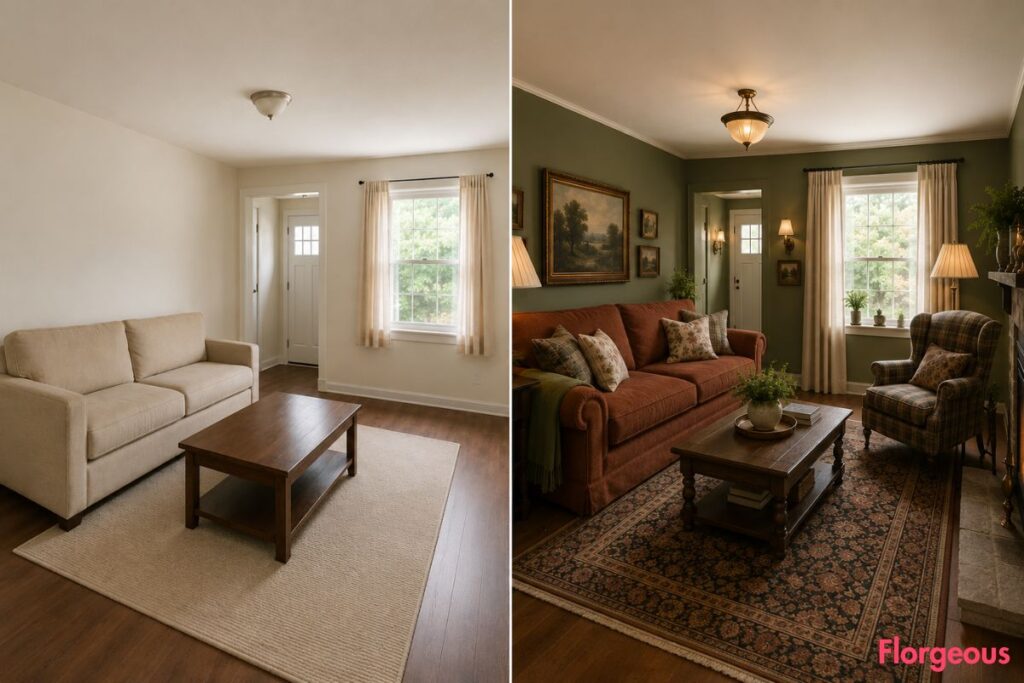
A builder-grade living room can be perfectly functional and still feel strangely forgettable. Neutral walls, a basic beige sofa, short curtains, and an empty coffee table create a clean starting point, but they rarely give the room a sense of history, comfort, or personality.
These Cottage Living Room ideas begin with that exact same plain space, photographed from the same viewpoint each time. The doorway, window, flooring, proportions, and circulation never change. Only the decorating direction is different.
Keep scrolling to see how paint, furniture, pattern, lighting, and natural materials can push one ordinary room toward 15 completely distinct cottage styles. Some feel collected and traditional, while others are bright, pared back, colorful, compact, or quietly luxurious.
1. Turn the Plain Room Into an English Cottage Retreat With Heritage Color
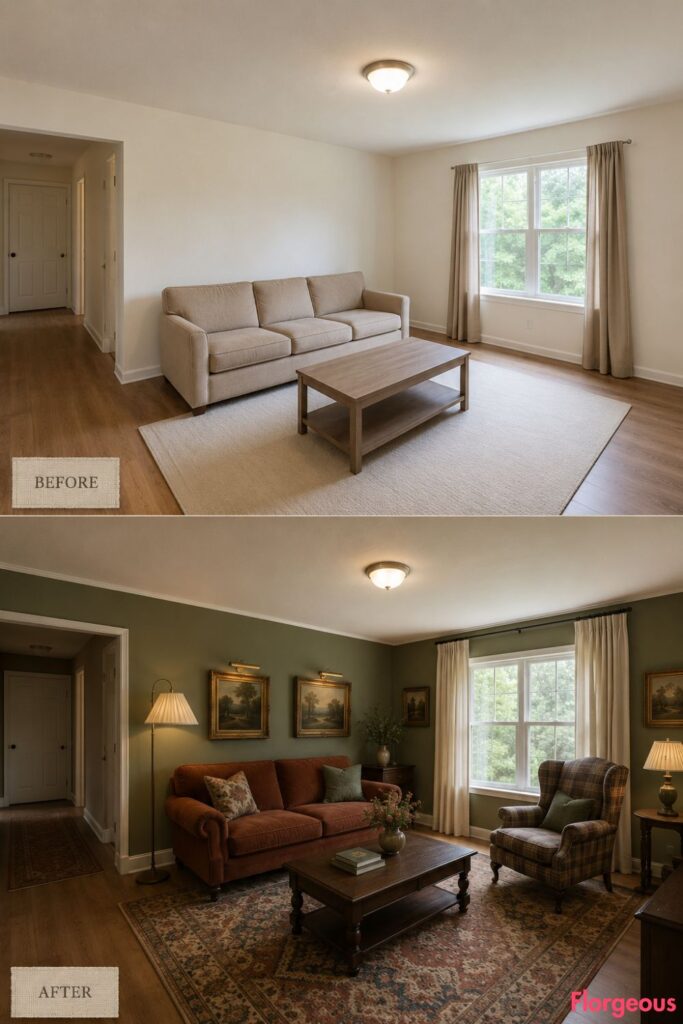
The first makeover leans into the snug, layered character of a traditional English sitting room.
Before: Warm off-white walls, a straight beige sofa, a bare coffee table, short curtains, a simple rug, and no focal point leave the room feeling flat.
After: Moss-green walls create an enveloping backdrop for a russet rolled-arm sofa and a faded plaid wing chair. A dark oak coffee table, muted Persian-style rug, pleated lampshades, and a small arrangement of antique landscapes give the room a collected look without filling every surface.
The deeper colors make the room feel intimate rather than small. Keeping the doorway open and placing the wing chair at an angle also preserves a comfortable path through the seating area.
Designer Tip: Limit the heritage palette to three dominant tones, such as moss, rust, and aged cream. This keeps traditional pattern from becoming visually busy.
2. Give the Builder-Grade Room a Calm Modern Cottage Makeover
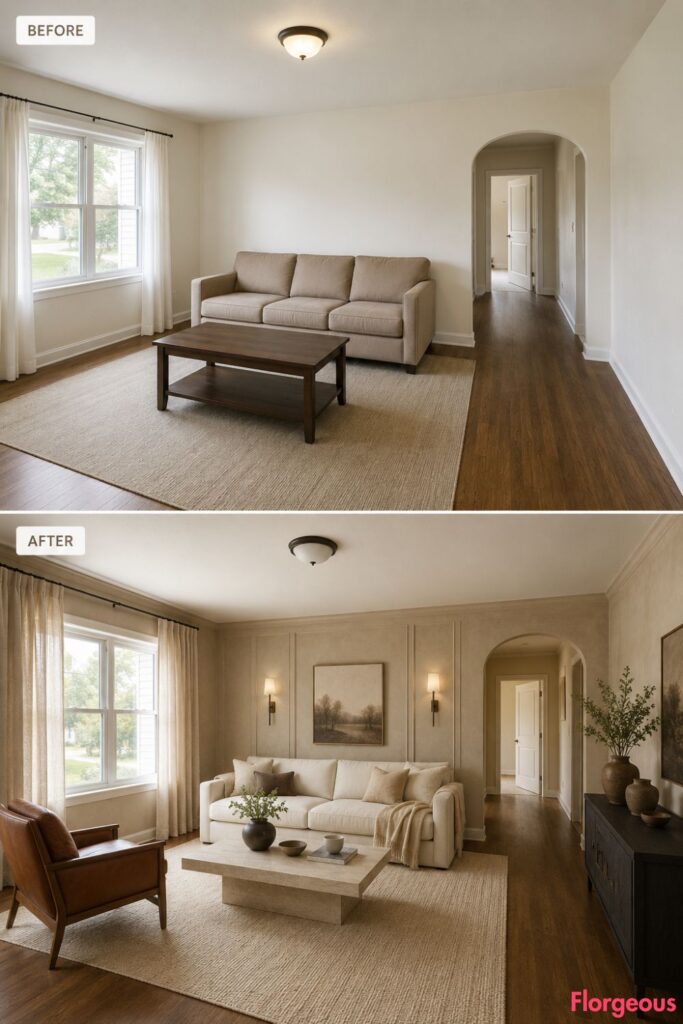
Modern cottage style removes visual fuss while keeping the warmth that makes cottage interiors inviting.
The beige sofa is replaced with a low ivory sofa in textured linen. Soft mushroom plaster walls, restrained vertical paneling, and a simple blackened-oak console add quiet structure. A chalky limestone coffee table becomes the focal point, paired with a cream flatweave rug and a single cognac leather lounge chair.
Unlike the English cottage room, this makeover uses very little pattern. Interest comes from curved shapes, hand-finished surfaces, and a contrast between pale upholstery and dark wood.
Try this: Paint simple timber battens the same color as the wall to create affordable cottage paneling without installing full custom joinery.
3. Create a Rustic Country Room With Stone, Oak, and Woven Texture
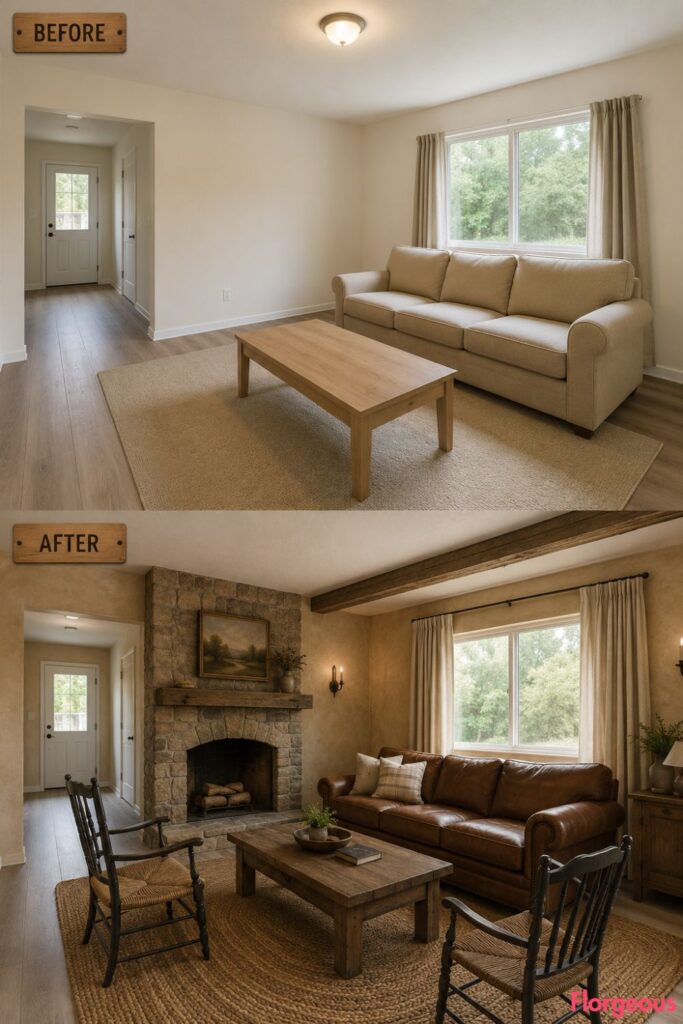
This version gives the room the solid, practical character of a rural cottage.
A rough stone fireplace surround becomes the new focal point, while clay-toned limewash warms the walls. A deep brown leather sofa replaces the beige one, joined by two sturdy spindle-back chairs with woven seats. The coffee table is made from thick reclaimed oak, and a braided wool rug adds softness without looking precious.
The materials do most of the decorative work. Stone, leather, oak, iron, and wool create depth even though the accessories remain restrained.
Budget Version: Use realistic stone-effect panels around a portable mantel and install lightweight faux beams instead of altering the structure.
4. Reimagine the Neutral Space as a Soft French Country Salon
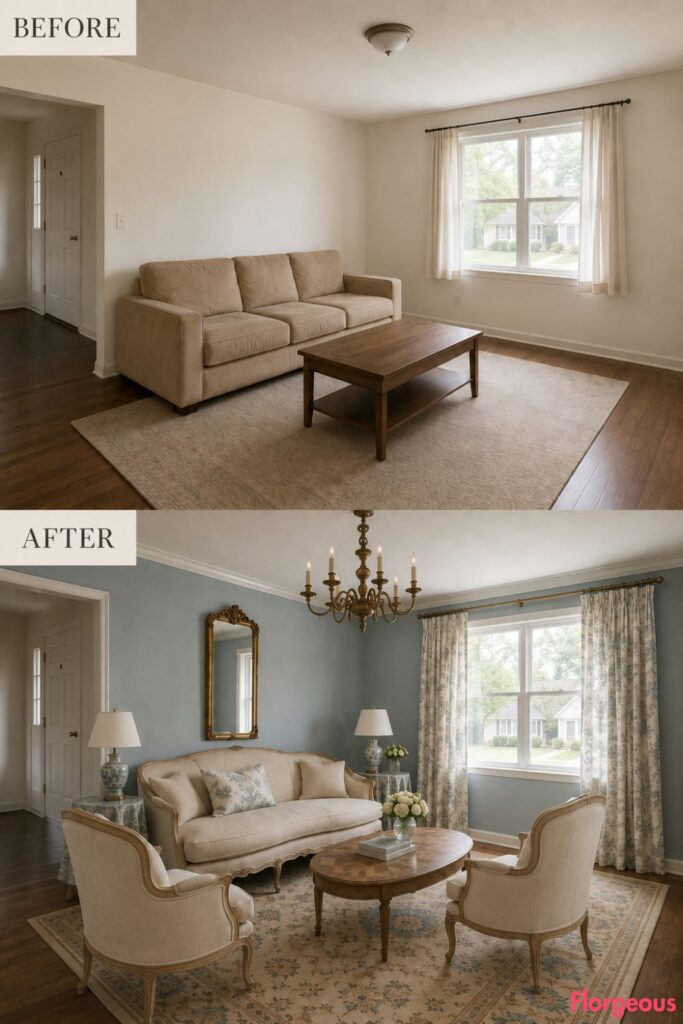
French country cottage style brings a lighter, more graceful rhythm to the same rectangular room.
Faded blue-gray walls set off a curved flax-linen settee and two petite bergère chairs in soft cream. An oval parquet coffee table gives the seating arrangement a gentler flow than the original rectangular table. Toile curtains, an aged brass chandelier, and a washed Aubusson-style rug introduce pattern without making the room overly formal.
Curved furniture is especially helpful here because it softens the builder-grade lines while keeping the entrance route clear.
Style Note: Choose furniture with visible wood frames and subtle carving, then keep the upholstery quiet so the room feels relaxed rather than ceremonial.
5. Brighten the Room With a Sun-Washed Coastal Cottage Look
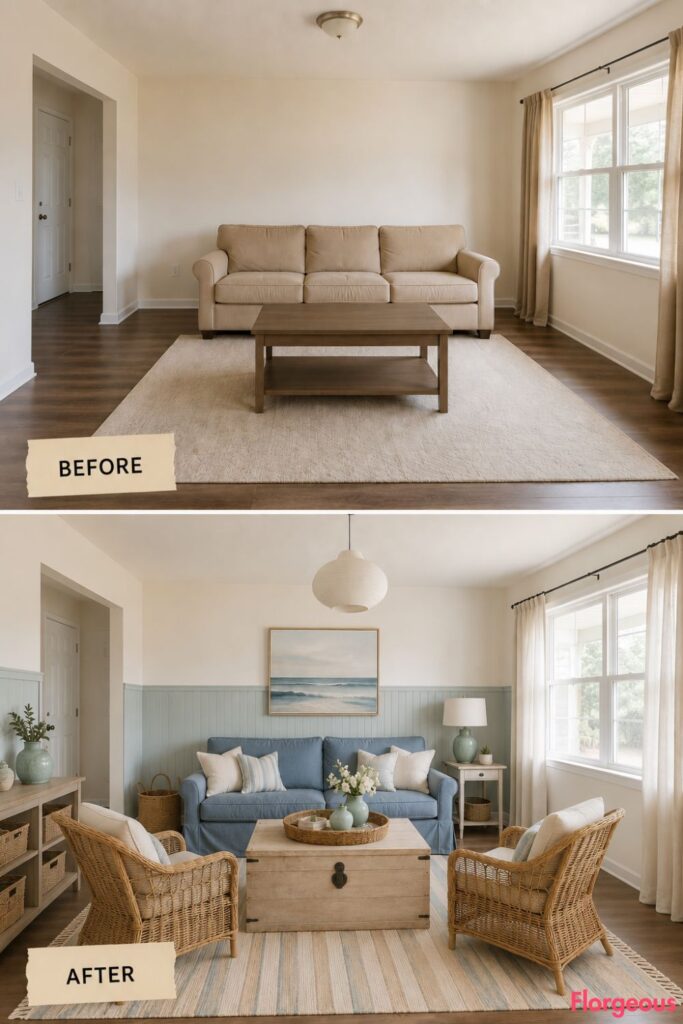
Coastal cottage style can feel fresh and relaxed without using anchors, shells, or obvious nautical decor.
The walls become chalk white with pale blue beadboard below the chair rail. A washed denim slipcovered sofa is paired with two natural rattan armchairs and a bleached-oak trunk used as a coffee table. Airy linen curtains, a sand-colored striped dhurrie, and sea-glass green ceramics bring in gentle coastal color.
The mix feels bright because the heaviest furniture sits low and the window remains visually open.
Common Mistake: Avoid using too many blue-and-white stripes. One striped textile is enough when woven materials and sun-bleached wood already support the coastal mood.
6. Add Nostalgic Character With a Cheerful Vintage Cottage Mix
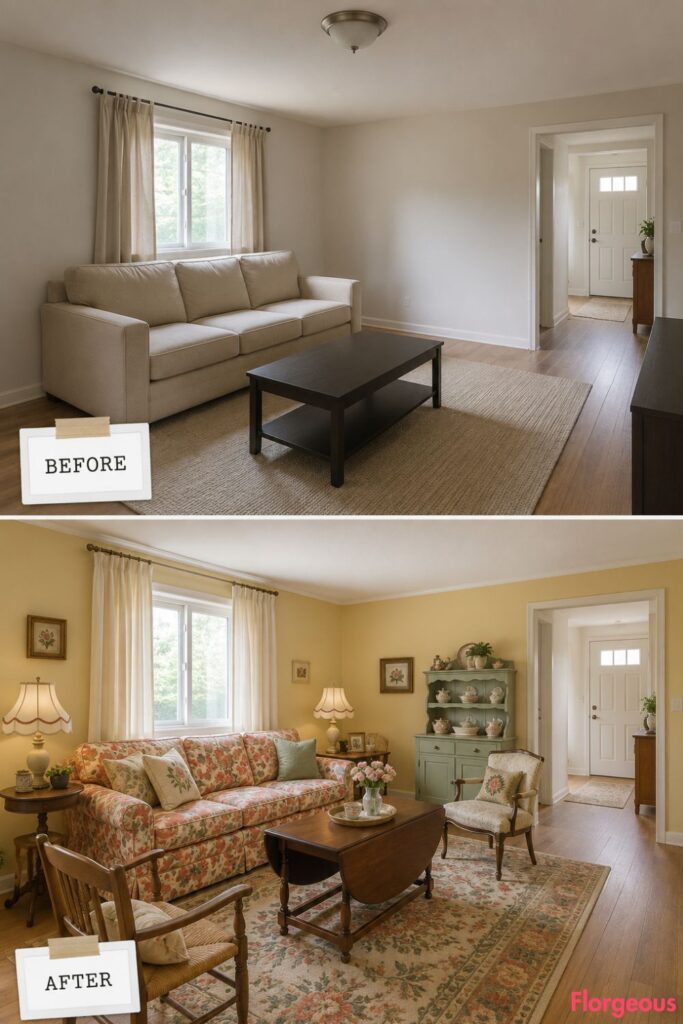
This makeover feels as though it evolved slowly through flea-market finds and inherited pieces.
Butter-yellow walls create a cheerful background for a small floral sofa in muted coral, green, and cream. A walnut drop-leaf table replaces the standard coffee table, while two mismatched side chairs bring different shapes into the room. A faded hooked rug, scalloped lampshades, framed needlework, and a painted green cabinet complete the nostalgic mood.
The secret is editing. A few visibly aged pieces feel personal, while too many would make the room look like a shop display.
Try this: Start with one vintage textile and repeat two of its colors elsewhere through paint, lamps, or cushions.
7. Make the Same Space Feel Practical With Farmhouse Cottage Warmth
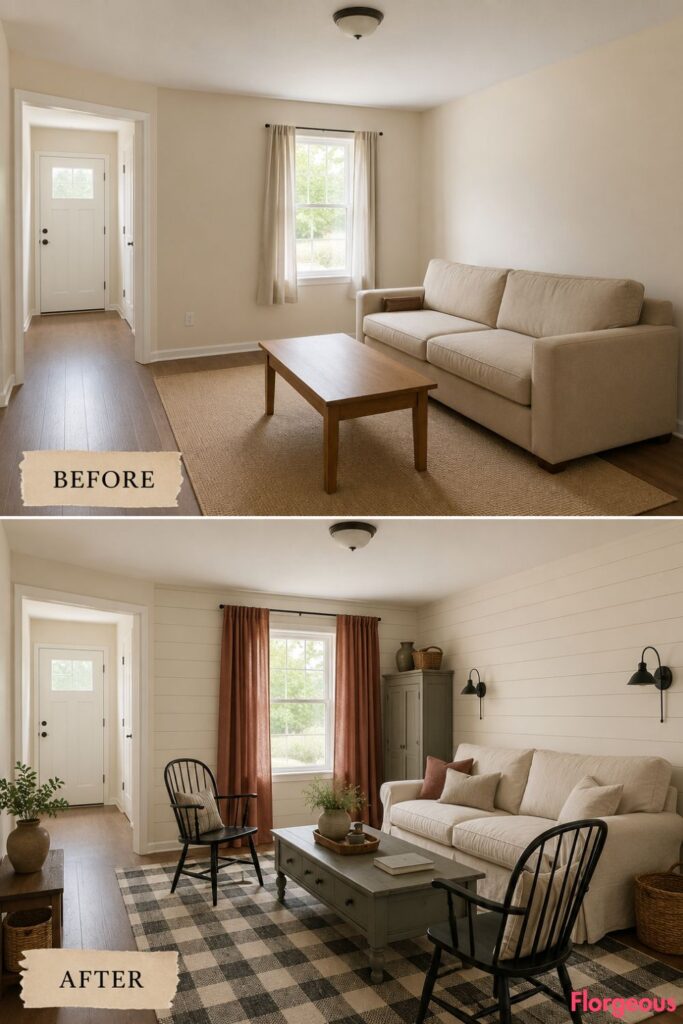
Farmhouse cottage style works best when it prioritizes comfort and useful storage over decorative slogans.
Warm white tongue-and-groove walls establish a clean backdrop. A relaxed oatmeal slipcovered sofa faces a long painted coffee table with drawers, while black Windsor chairs add contrast without taking up much visual space. A large checked wool rug, rust curtains, woven baskets, and a practical wall cabinet make the room feel ready for everyday family life.
The storage pieces are important. They allow the layered room to remain tidy and keep the walking route free.
8. Build a Garden-Inspired Botanical Cottage Interior
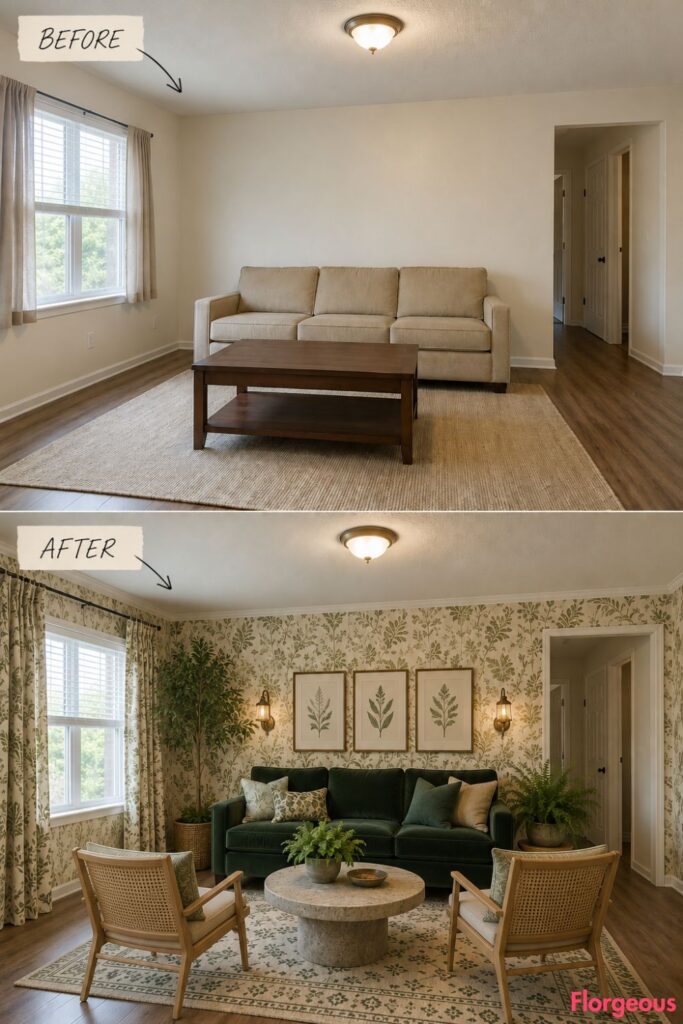
Instead of treating plants as accessories, this room uses garden color and pattern as its entire design language.
Leafy wallpaper in olive, fern, and parchment wraps the walls. A deep forest-green velvet settee creates a strong center, balanced by pale cane chairs and a round weathered stone table. Botanical prints, a patterned flatweave rug, block-printed curtains, and a few healthy plants reinforce the garden connection.
The room feels lush, but it remains controlled because the larger furniture is simple and the plant collection is limited to three well-placed specimens.
Color Story: Pair several greens with warm parchment, aged brass, and dark brown. These neutrals prevent botanical rooms from feeling overly bright.
9. Layer Ivory, Oatmeal, and Flax for a Quiet Neutral Cottage
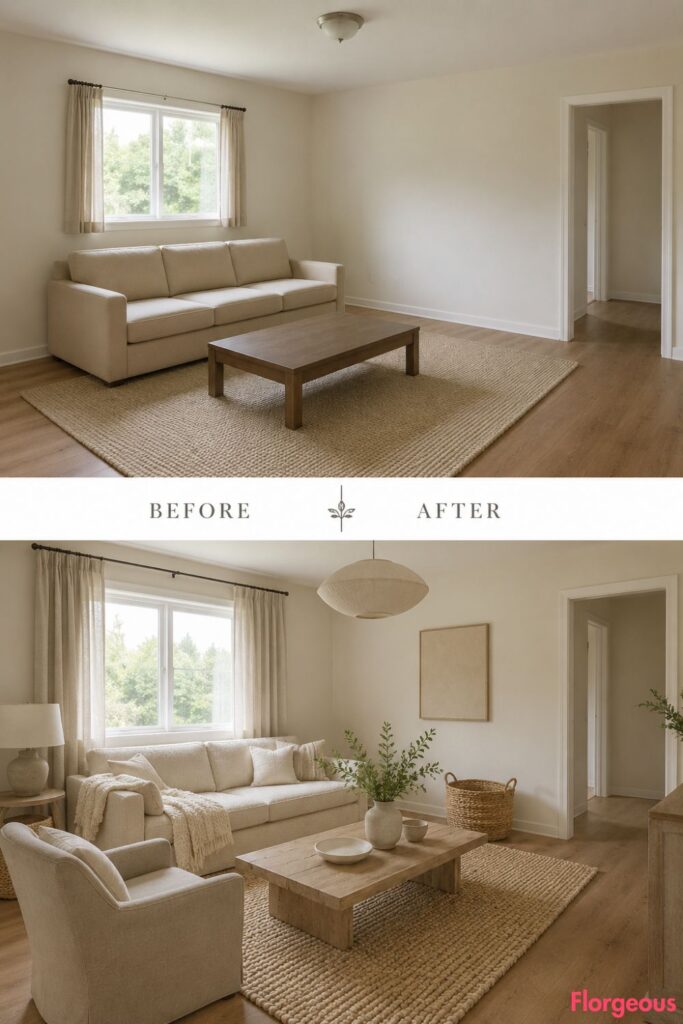
A neutral cottage room does not need to look pale and unfinished. The difference comes from texture and tonal variation.
Chalky ivory walls are paired with an oatmeal bouclé sofa, a flax-linen armchair, and a low scrubbed-pine coffee table. A thick undyed wool rug grounds the room, while soft full-length curtains, a knitted throw, rush baskets, and handmade cream ceramics build subtle depth.
No single piece dominates. The finished effect is restful because every surface contributes a slightly different texture.
Try this: Before buying more decor, place samples of linen, wool, wood, and paint together. If they all have the same undertone, the room will look layered rather than mismatched.
10. Bring in Confident Color With a Floral Cottage Makeover
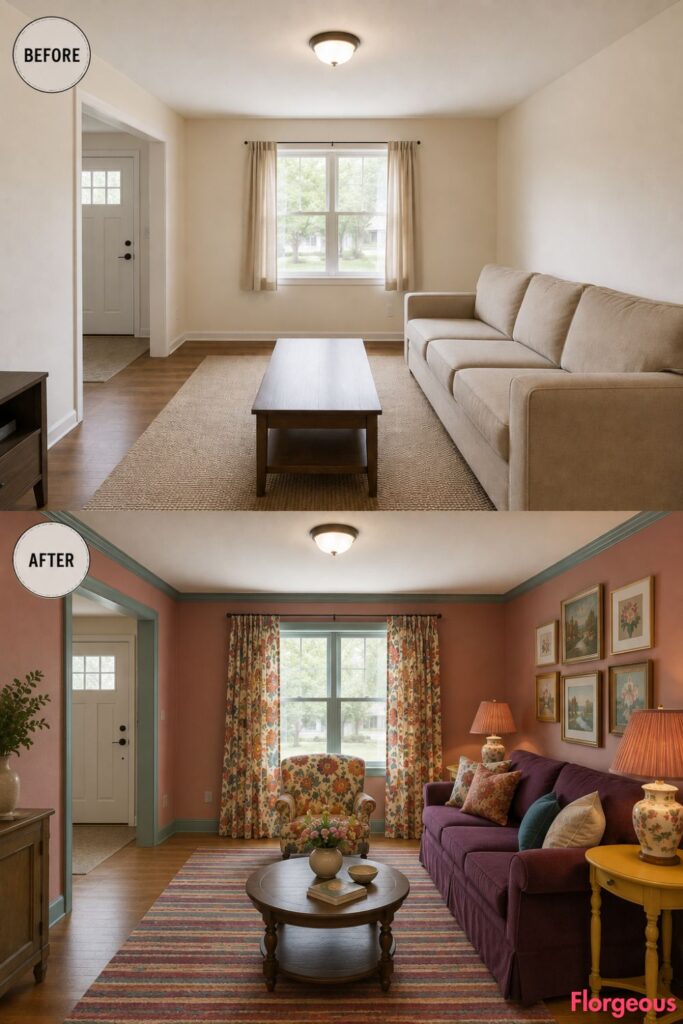
This version proves that cottage decor can be lively without becoming chaotic.
Dusty rose walls and muted teal trim form a confident shell. A plum-colored sofa anchors the space, while a floral armchair introduces coral, mustard, green, and blue. A painted mustard side table, dark round coffee table, striped rug, and patterned curtains create a playful mix.
The color works because the floral fabric acts as a guide. Every major hue in the room appears somewhere in that one pattern.
Common Mistake: Do not use several unrelated floral prints at the same scale. Combine one large floral with a stripe, check, or tiny repeat.
11. Solve a Small Room With Compact Cottage Furniture and Wall Storage
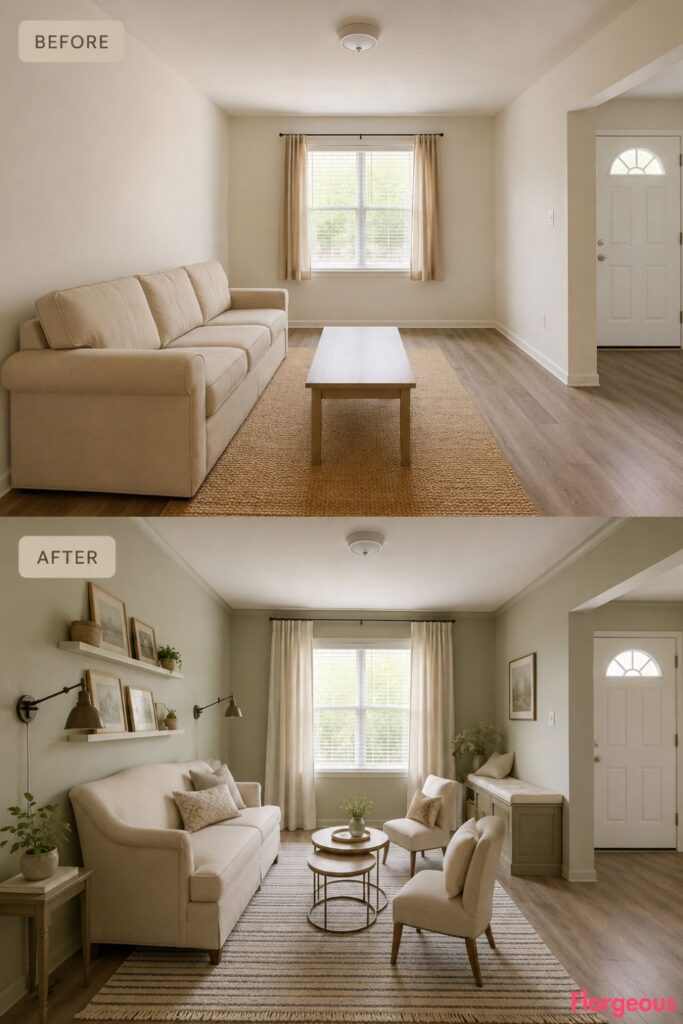
The same builder-grade room can feel larger without stripping away its cottage personality.
A compact camelback loveseat replaces the bulky straight sofa. Two armless slipper chairs provide extra seating while remaining easy to move. Nesting tables take the place of the large coffee table, and shallow wall-mounted book ledges add storage without consuming floor space.
Pale sage walls, a narrow striped rug, and ceiling-height curtains draw the eye upward. A window-side storage bench stops well before the doorway, keeping the entrance completely clear.
Small Space Tip: Choose furniture with visible legs and avoid deep arms. The extra floor visibility makes a compact arrangement feel lighter.
12. Create a Collected Antique Cottage Room With Dark Wood and Patina
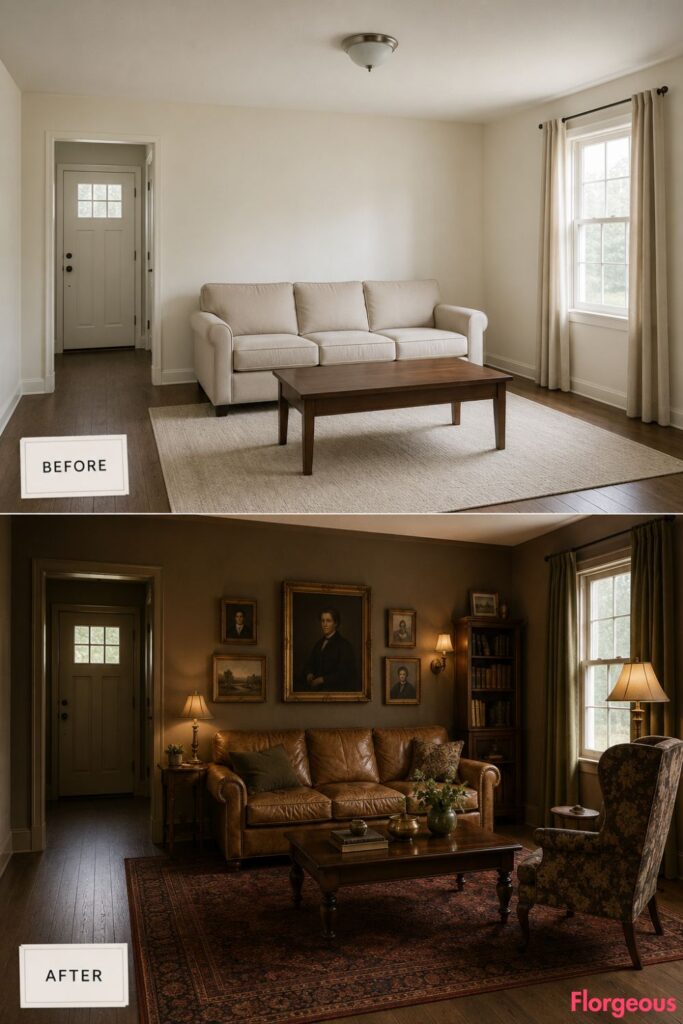
This makeover has a richer, more historic mood than the playful vintage room.
Deep tobacco walls create a gallery-like background for a worn camel leather sofa and a high-backed tapestry chair. A polished mahogany table, faded burgundy rug, dark bookcase, and antique brass lamps bring weight and patina. A restrained arrangement of portrait-style paintings makes the room feel inherited rather than newly decorated.
The key is leaving breathing room between objects. Dark antique furniture becomes far more effective when every wall and corner is not filled.
13. Use Pale Timber and Folk Details for a Scandinavian Cottage Look
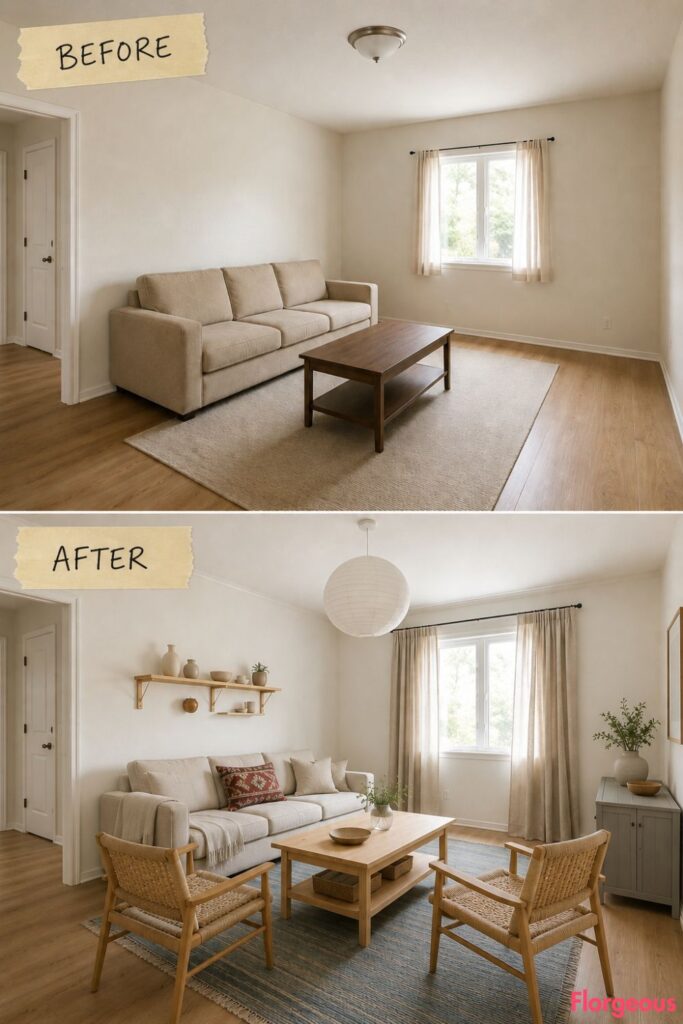
Scandinavian cottage style feels simpler and more practical than the neutral layered room.
Soft white walls and pale pine flooring tones create brightness, while a compact oatmeal sofa and two light timber lounge chairs keep the layout open. A rectangular pine table, flatwoven blue-gray rug, linen curtains, and one red folk-pattern cushion provide gentle contrast.
Storage is clean and functional. A low painted cabinet hides clutter, while a small wall shelf displays only a few handmade objects.
Style Note: Scandinavian cottage interiors feel warm because of wood, wool, and handmade details, not because every surface is heavily decorated.
14. Give the Plain Room a Storybook Cottage Fireplace and Window Nook
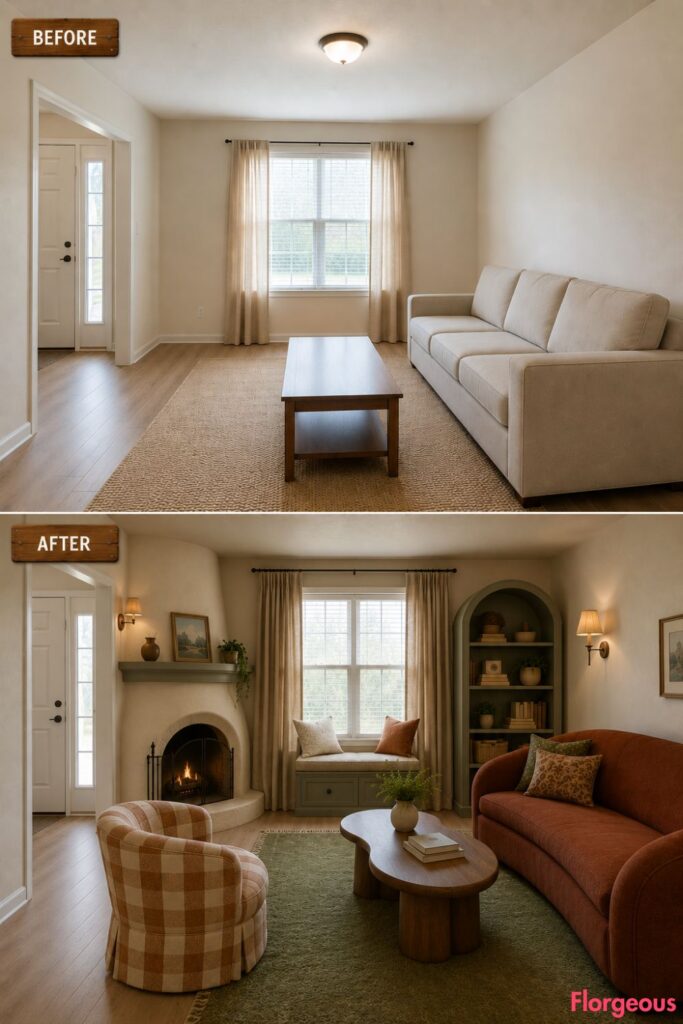
This is the most whimsical transformation, but it remains grounded in believable furniture and usable circulation.
Soft mushroom walls frame a rounded plaster fireplace with a deep sage mantel. An arched bookcase creates a storybook focal point without changing the actual doorway. A curved cinnamon sofa, compact checked chair, irregular oak table, and mossy wool rug make the seating area feel intimate.
A cushioned window nook adds charm, but it remains shallow and ends before the main walking route.
Budget Version: Paint an arch behind an existing bookcase and add a removable rounded mantel surround to suggest custom architecture.
15. Finish With a Refined Cottage Room in Stone, Walnut, and Tailored Linen
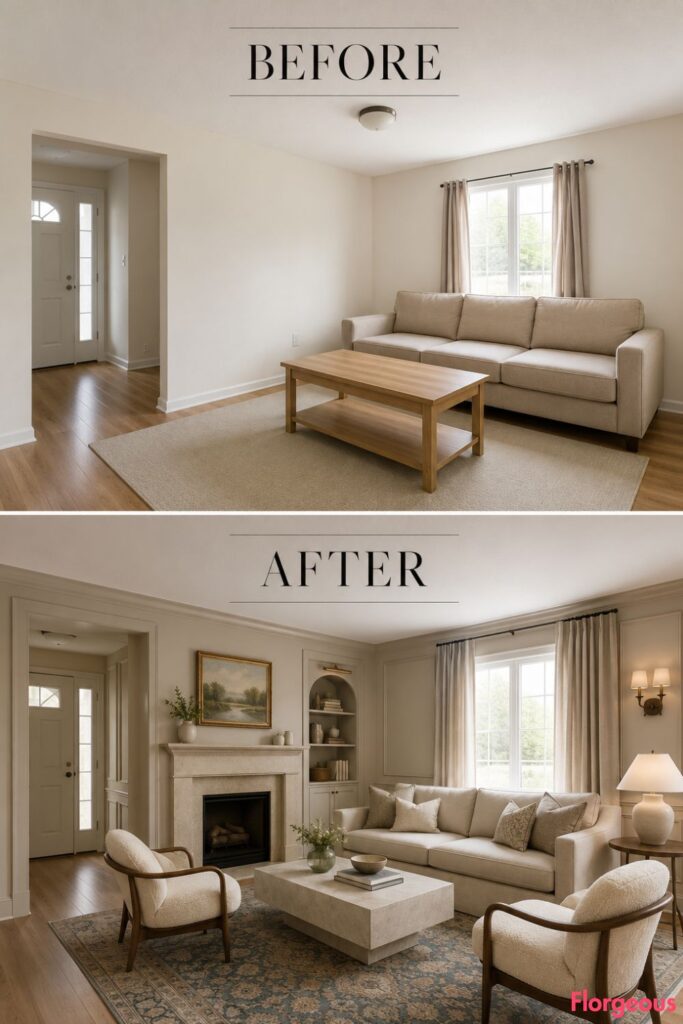
The final makeover keeps cottage comfort but gives it a more polished, architectural finish.
Warm greige walls with hand-finished picture molding frame a tailored flax sofa and two rounded walnut chairs upholstered in soft cream wool. A honed limestone coffee table adds quiet weight, while a finely patterned rug introduces muted blue, sand, and brown.
Floor-length linen curtains, aged bronze lighting, hand-finished built-ins, and a restrained stone mantel make the room feel luxurious without becoming formal or glossy.
Why It Works: Luxury comes from the quality and proportion of a few materials. Keeping the palette restrained allows the joinery, stone, timber, and upholstery to stand out.
Choose Your Cottage Direction Before You Start Decorating
These makeovers work because each one commits to a clear color story, material palette, furniture shape, and decorative mood. The architecture stays the same, yet the finished rooms feel completely different.
Before planning your own Cottage Living Room, photograph the space from one fixed viewpoint and identify what feels weakest. It may be the flat lighting, short curtains, generic furniture, bare walls, or lack of a focal point.
Then choose one cottage direction and build a limited palette around it. Start with the changes that affect the largest visual areas, usually wall color, curtains, rug, sofa, and lighting. Reuse at least one existing piece, keep the doorway clear, and add collected details gradually so the finished room feels personal rather than staged.