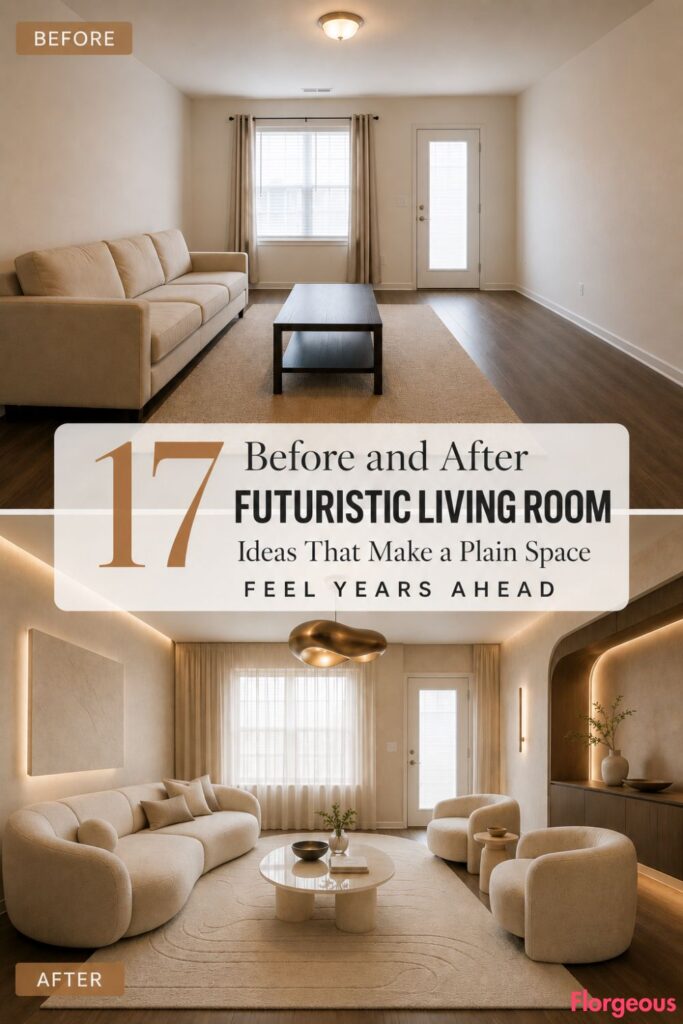
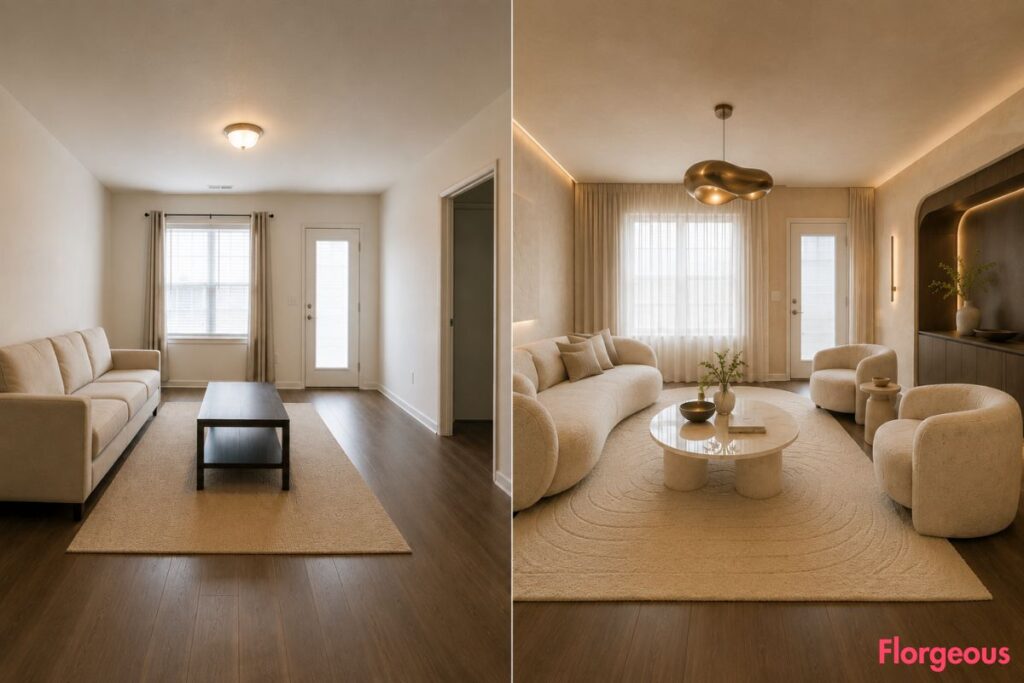
A builder-grade living room can be perfectly functional and still feel anonymous. Beige seating, blank walls, a basic ceiling light, and an empty coffee table create a clean starting point, but there is little personality or visual direction.
That simple room becomes far more interesting when it is treated as a controlled design experiment. These 17 makeovers reimagine the exact same space through completely different furniture silhouettes, materials, lighting strategies, color palettes, and practical functions.
The strongest Futuristic Living Room ideas do not depend on robots, glowing control panels, or spaceship props. They feel advanced because every detail has been considered, from flexible layouts and concealed technology to sustainable surfaces and sculptural lighting.
1. Turn the Plain Room Into a Soft Organic Future Retreat
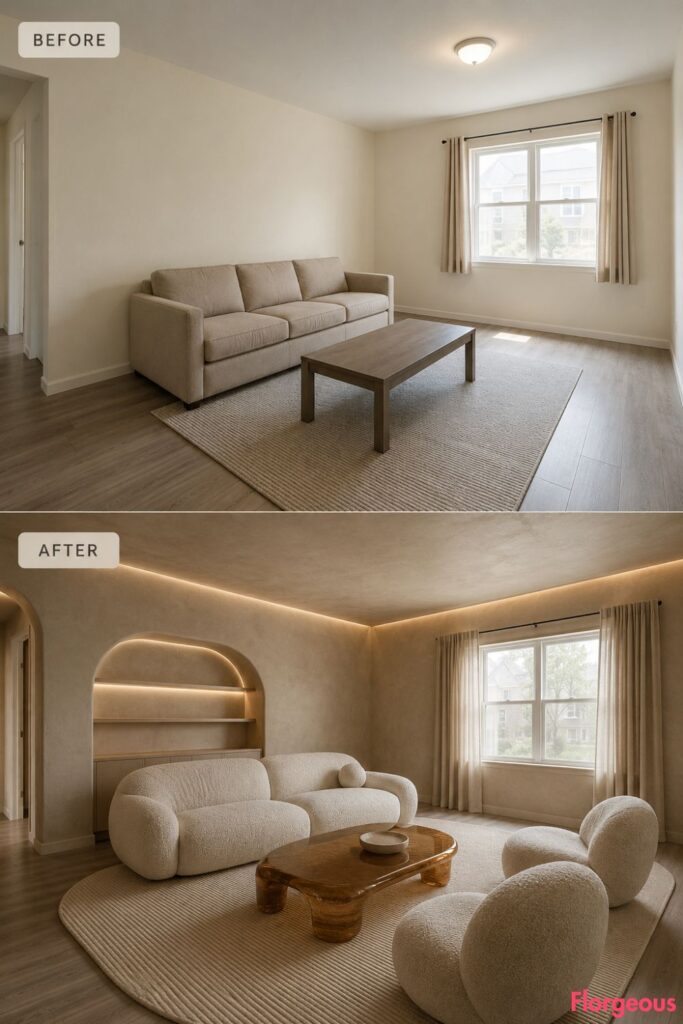
This gentle interpretation of futurism replaces hard mechanical shapes with rounded furniture, tactile finishes, and warm natural colors.
Before: The unchanged room has warm off-white walls, a straight beige sofa, a bare rectangular table, a simple neutral rug, short curtains, and a builder-grade ceiling light.
After: Mushroom plaster wraps the walls behind an oatmeal cloud sofa and two pebble-shaped wool chairs. A translucent amber resin table, ribbed cream rug, and softly illuminated plaster niche create a calm focal point.
Why it works: Rounded forms make unfamiliar materials feel welcoming and residential.
Designer Tip: Use no more than three strongly curved pieces. Too many competing shapes can make the room feel visually crowded.
2. Give the Neutral Room a Cinematic Space-Age Makeover
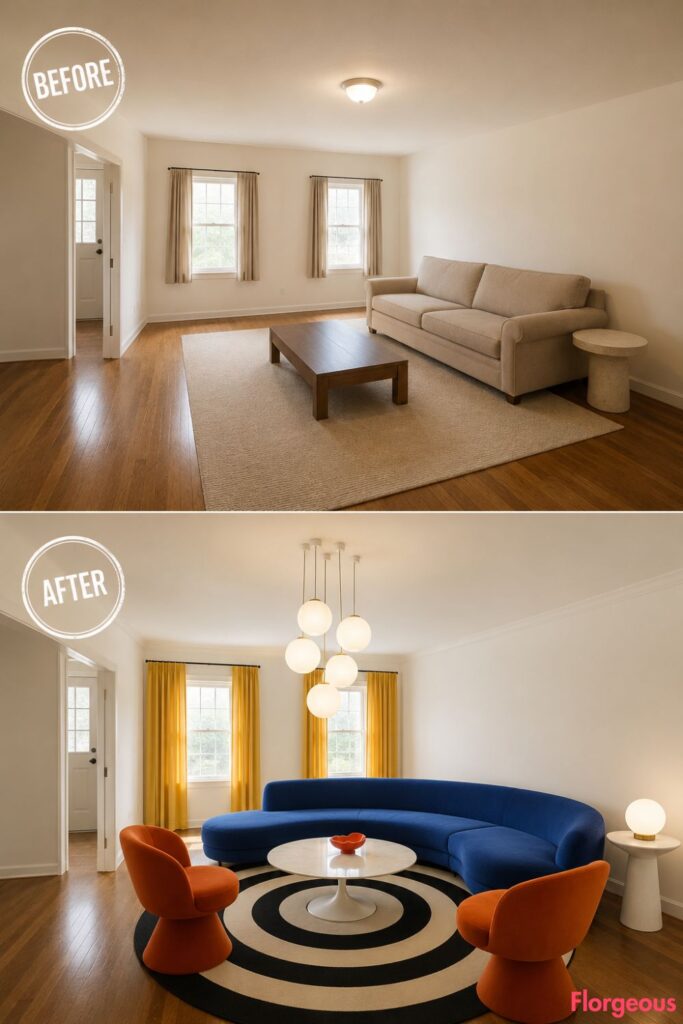
A bold space-age room can feel playful and polished without resembling a literal spacecraft.
Before: The beige sofa, plain walls, short curtains, and basic light leave the room visually flat.
After: Crisp ivory walls frame a low cobalt crescent sofa and two orange pedestal chairs. A white tulip table rests on a black-and-cream target rug, while yellow curtains and clustered opal globe lights create a graphic finish.
The limited furniture count keeps the dramatic shapes from overwhelming the room.
Try this: Introduce one pedestal chair or globe pendant before committing to a complete space-age scheme.
3. Hide Smart Technology Inside a Seamless Living Space
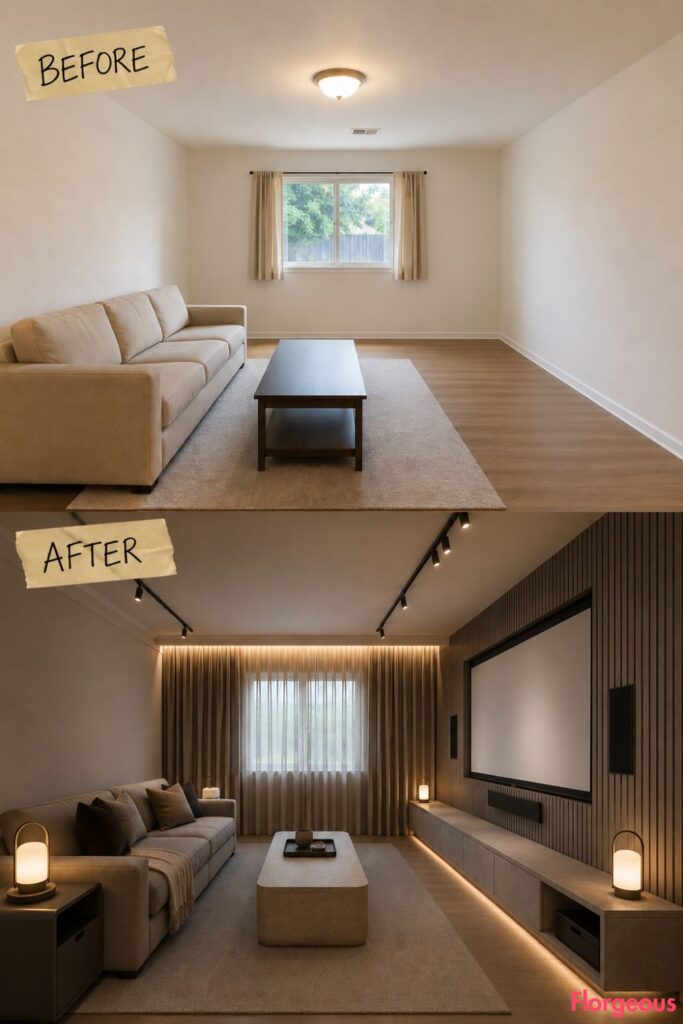
A genuinely smart room feels calm because the technology supports everyday life without dominating the view.
Before: Flat lighting and generic furniture provide only one setting for every activity.
After: A greige acoustic-slat wall conceals a retractable projection screen, speakers, charging drawers, and cable channels. A tailored warm-gray sofa faces a slim stone console, while motorized curtains and dimmable ceiling tracks create separate scenes for reading, conversation, and films.
Technology Tip: Plan outlets, Wi-Fi coverage, ventilation, and cable access before ordering fitted cabinetry.
A simpler version can use paintable cable covers, smart bulbs, and a freestanding media console.
4. Turn the Empty Wall Into a Biophilic Future Feature
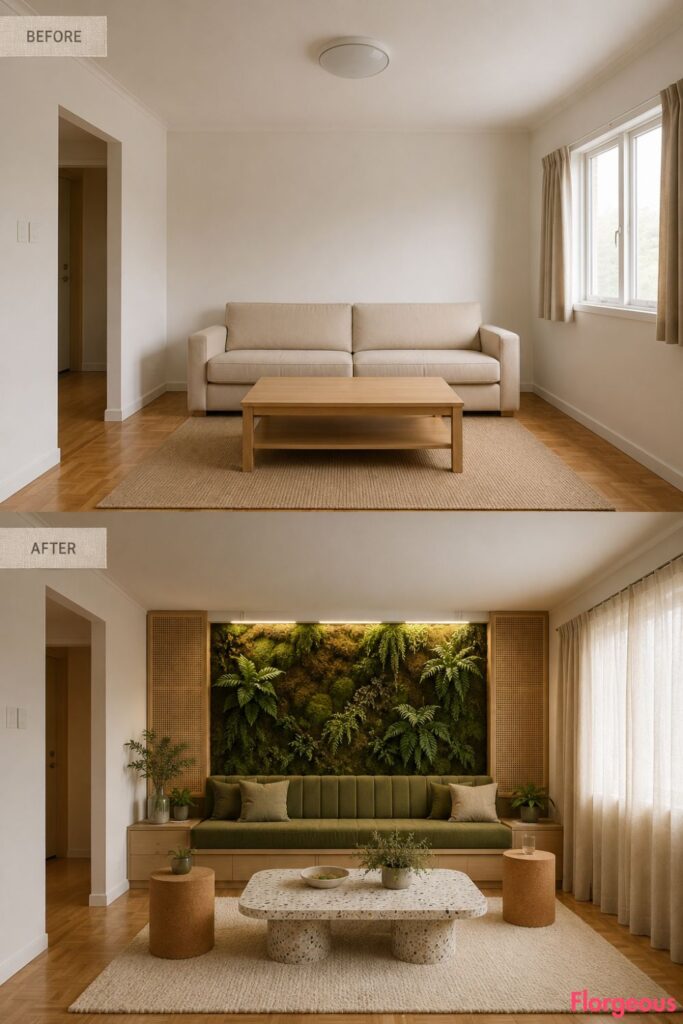
This concept imagines a healthier future shaped by greenery, renewable materials, and improved acoustic comfort.
Before: Blank walls and basic finishes make the room feel disconnected and unfinished.
After: A moss-and-fern installation becomes the focal point behind a structured olive banquette. Cork side tables, a recycled terrazzo coffee table, woven acoustic panels, flax curtains, and a cream wool rug create an earthy but progressive interior.
Discreet grow lights are integrated into a narrow ceiling rail rather than displayed as technical equipment.
Budget Version: Replace a living wall with preserved moss panels, hanging planters, or a tall freestanding plant screen.
5. Create a Serene Japandi Future Lounge
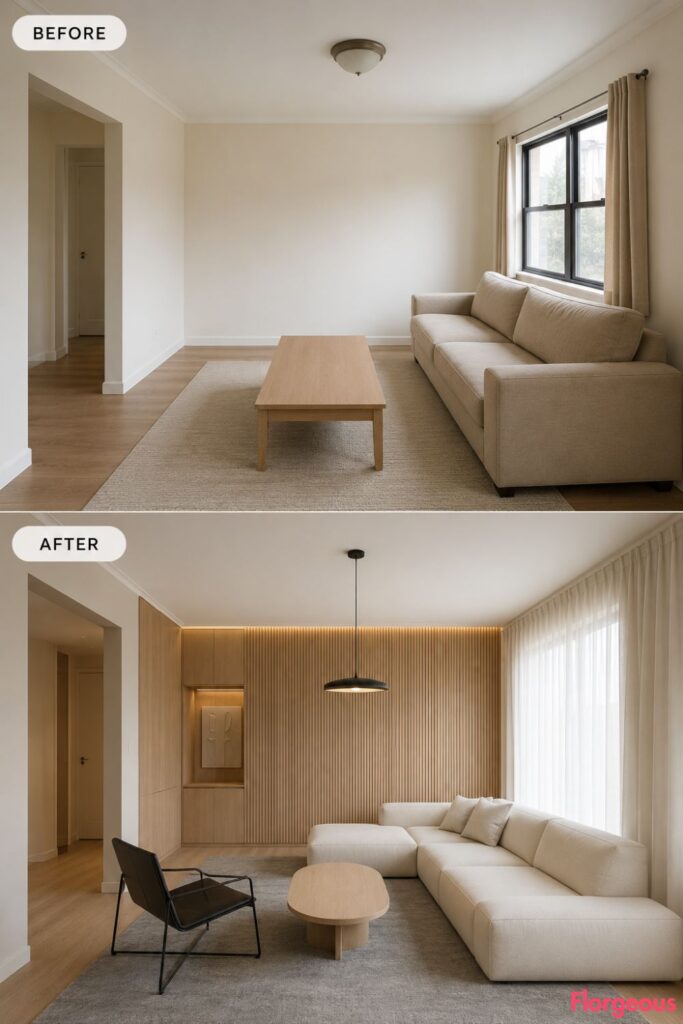
Japandi futurism relies on precision, quiet materials, and beautifully resolved storage rather than decorative technology.
Before: The furniture and lighting have no clear relationship, leaving the neutral room feeling temporary.
After: Pale-oak slats organize one wall around a flush storage console. A cream modular sofa, black steel lounge chair, oval ash table, fog-gray rug, and full-length white curtains form a restrained composition.
A slim black pendant and monochrome relief artwork provide controlled contrast.
Why it works: The room feels advanced because every line, junction, and storage detail appears intentional.
6. Shape a Monochrome White Interior With Deep Texture
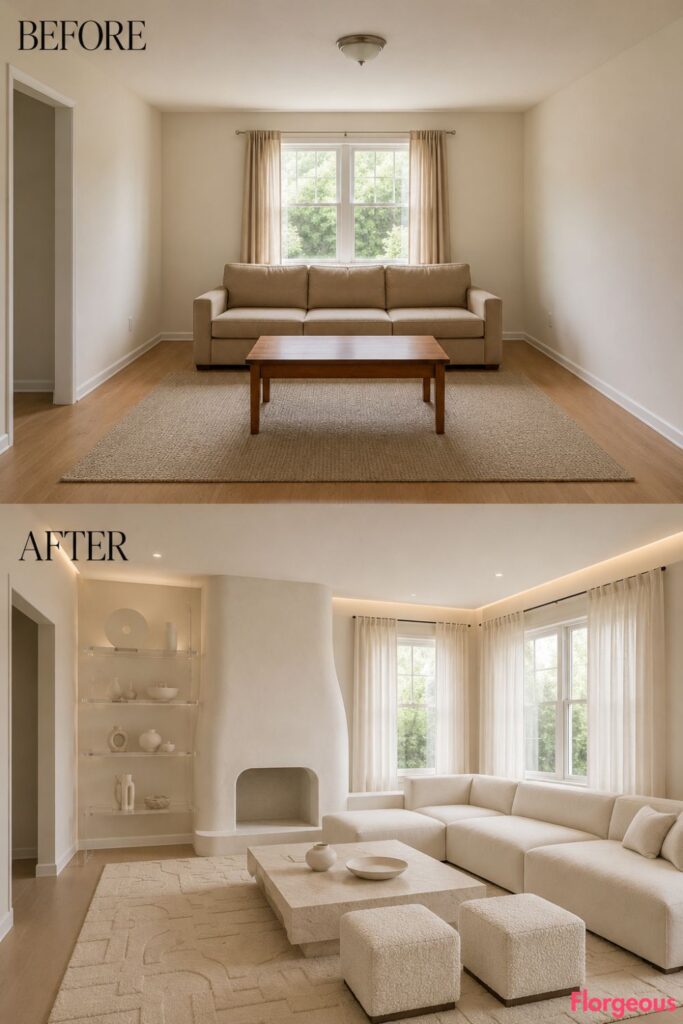
An all-white room can feel richly layered when every surface responds differently to light.
Before: Warm off-white walls and generic beige furniture provide little depth or definition.
After: A sculptural plaster chimney breast anchors an angular ivory sectional, chalky limestone table, and bouclé cube stools. An embossed wool rug and translucent acrylic shelving add texture without introducing a strong color.
Concealed ceiling washes emphasize the curves and material changes.
Common Mistake: Avoid glossy white on every surface. Combine matte plaster, woven wool, cloudy stone, and translucent finishes.
7. Build a Dark Cosmic Room With Jewel-Toned Depth
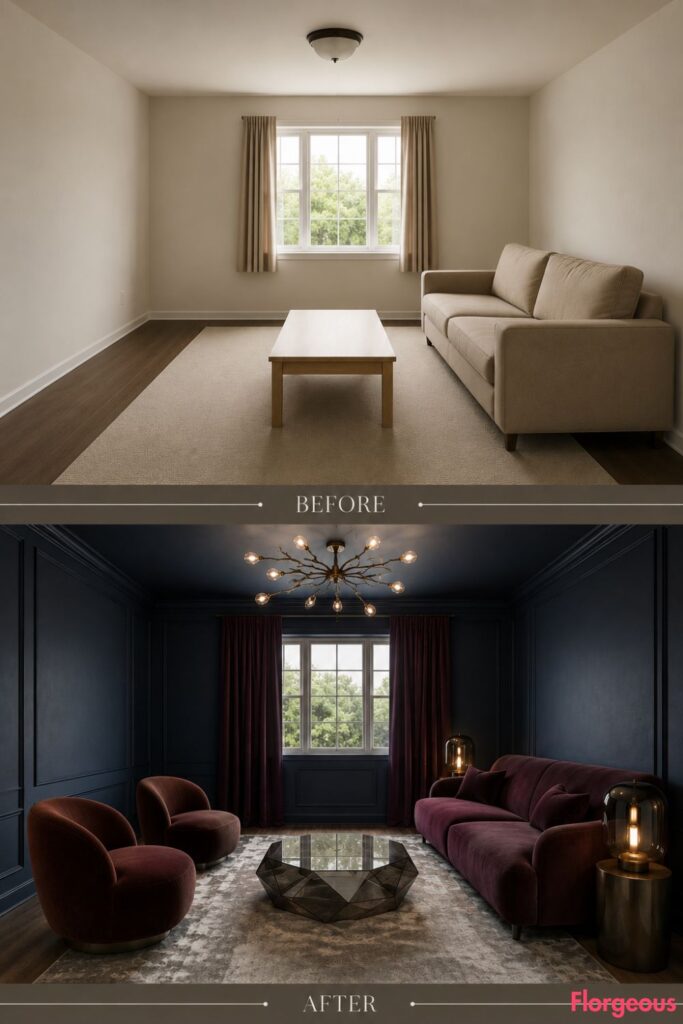
A dark future-inspired interior can feel luxurious rather than theatrical when it uses rich fabrics and carefully controlled pools of light.
Before: The neutral space feels bright but visually weightless.
After: Midnight-blue walls surround a plum mohair sofa and low oxblood lounge chairs. A faceted smoked-glass table, silver silk-wool rug, aubergine curtains, bronze branching chandelier, and smoky glass lamps build a deep atmospheric palette.
There are no stars, planets, or glowing control panels. The cosmic mood comes from reflection, color, and shadow.
8. Use Cyberpunk Color as a Controlled Design Layer
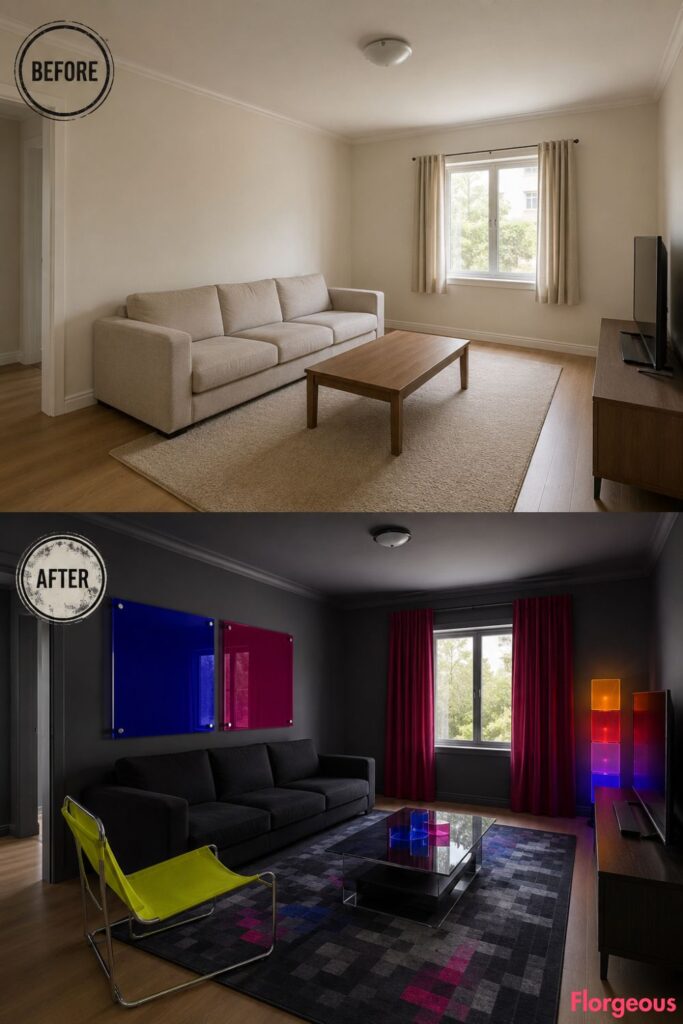
Cyberpunk styling becomes more livable when saturated color is concentrated in removable surfaces and a few compact accents.
Before: The room has soft daylight but no contrast, rhythm, or visual energy.
After: Charcoal walls frame a straight black sofa, acid-lime sling chair, and smoked acrylic table. Overlapping cobalt and magenta translucent panels define the seating wall, while a restrained pixel-pattern rug and sculptural corner lamp introduce color.
Deep fuchsia curtains complete the scheme without adding extra furniture.
Color Story: Keep the main sofa and flooring dark, then restrict vivid color to three accents.
9. Give the Room Futuristic Hotel Elegance
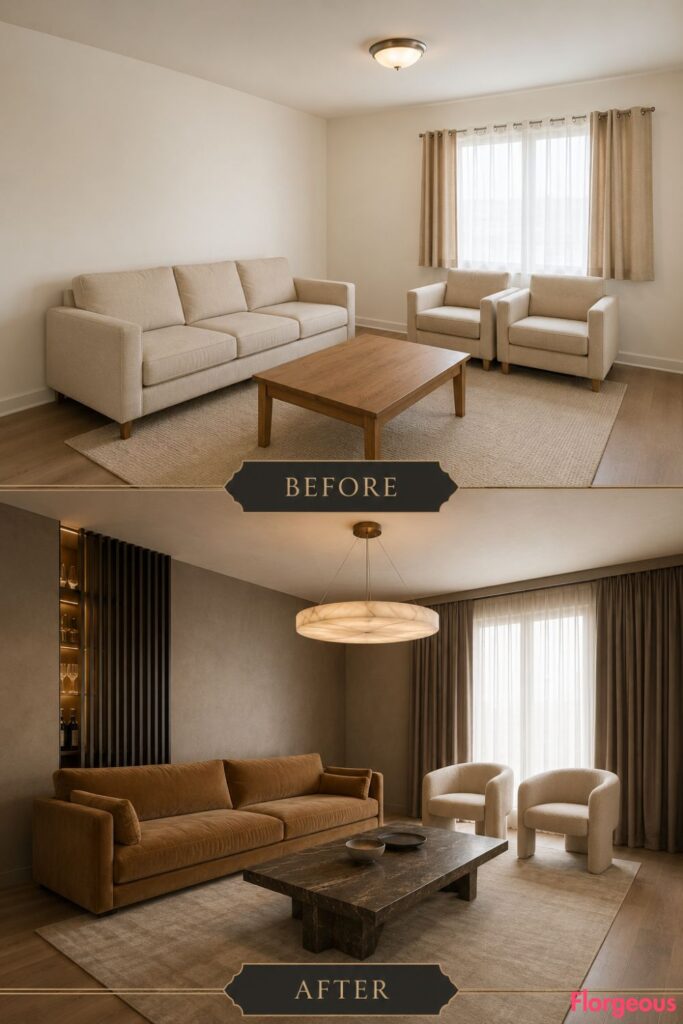
This polished look borrows from an advanced boutique hotel, using refined materials and hidden functions instead of obvious gadgets.
Before: Short curtains, flat lighting, and bare walls make the room feel temporary.
After: Taupe microcement surrounds a camel mohair sofa, pale stone lounge chairs, and a dark travertine table. Bronze wall fins conceal a slim drinks cabinet, while floor-to-ceiling drapes and an alabaster halo pendant soften the architecture.
Try this: A shallow freestanding cabinet painted to match the wall can imitate the built-in effect.
10. Make the Layout Adapt With Modular Furniture
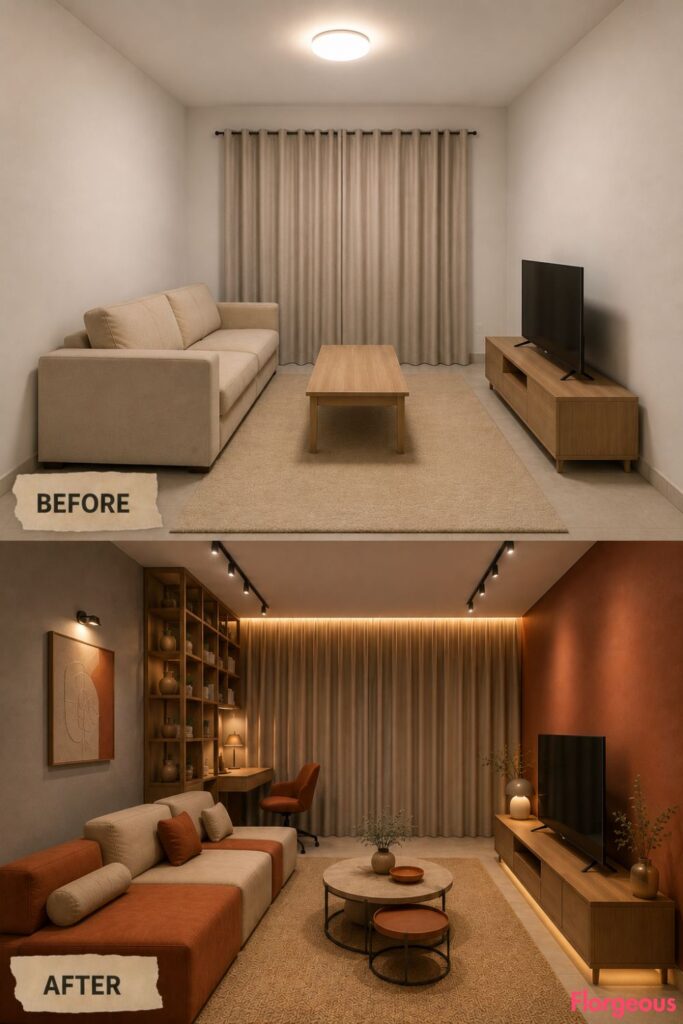
A future-ready room should adjust easily for conversations, work sessions, films, and entertaining.
Before: The fixed sofa and rectangular table support only one furniture arrangement.
After: Sand and rust block seating can become separate chairs, a chaise, or one long sofa. Lightweight nesting tables move between zones, while a pivoting open shelf screens a compact work surface.
A ceiling-mounted curtain track creates temporary separation without changing the room shell.
Small Space Tip: Select modules that fit through the doorway individually and include storage inside at least one piece.
11. Design a Sustainable Circular-Future Interior
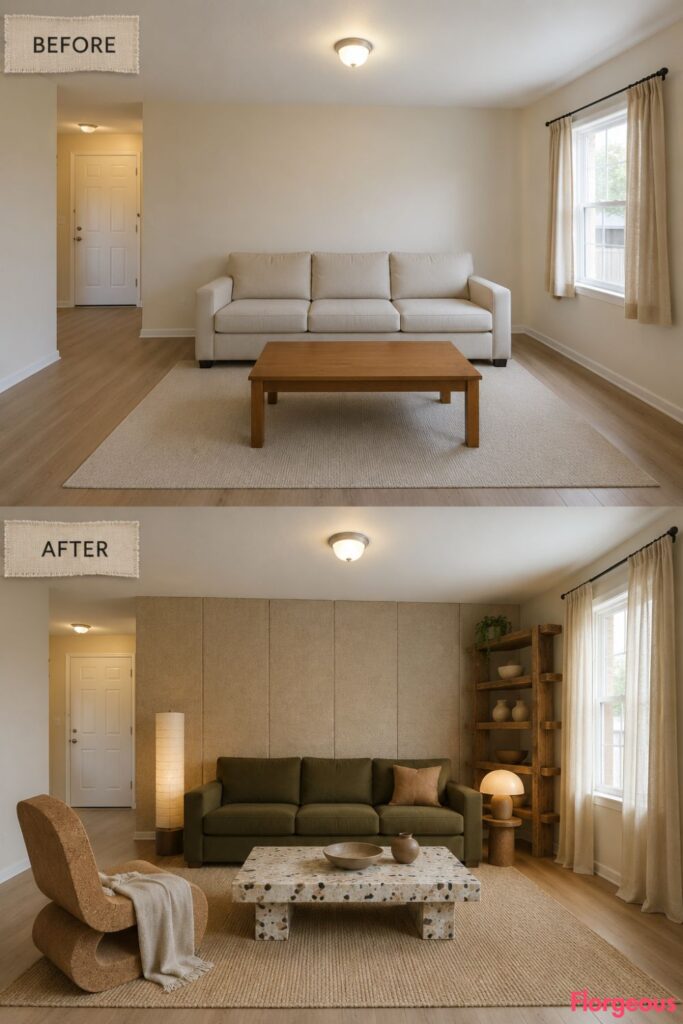
This direction imagines future living through repairable furniture, renewable resources, and products made to be reused.
Before: The generic room contains basic pieces with no visible material story.
After: Recycled-paper acoustic panels line one wall behind an olive hemp sofa. A molded cork chair, recycled-plastic terrazzo table, undyed wool rug, and salvaged timber shelving create a warm, grounded palette.
Replaceable upholstery covers and visible mechanical fixings make the furniture easier to repair.
The result feels progressive without relying on electronic features.
12. Create a Warm Desert-Planet Living Room
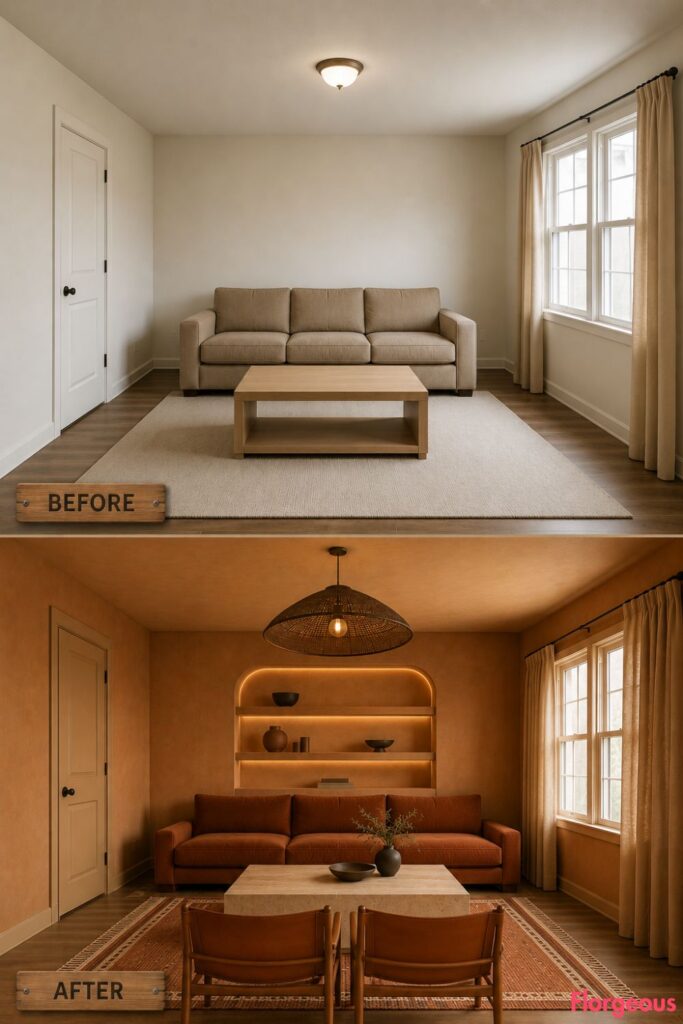
Mineral colors and low furniture silhouettes suggest a distant landscape while remaining familiar and comfortable.
Before: The neutral palette lacks depth and a strong central story.
After: Burnished clay walls surround a cinnamon low-profile sofa and saddle-leather sling chairs. A monolithic sandstone table rests on a rust-and-cream woven rug, while bronze mesh lighting and flax curtains soften the composition.
A single sculpted wall niche provides display space and gentle illumination.
Why it works: Earth colors make futuristic furniture forms feel timeless rather than artificial.
13. Build a Fluid Underwater-Inspired Interior
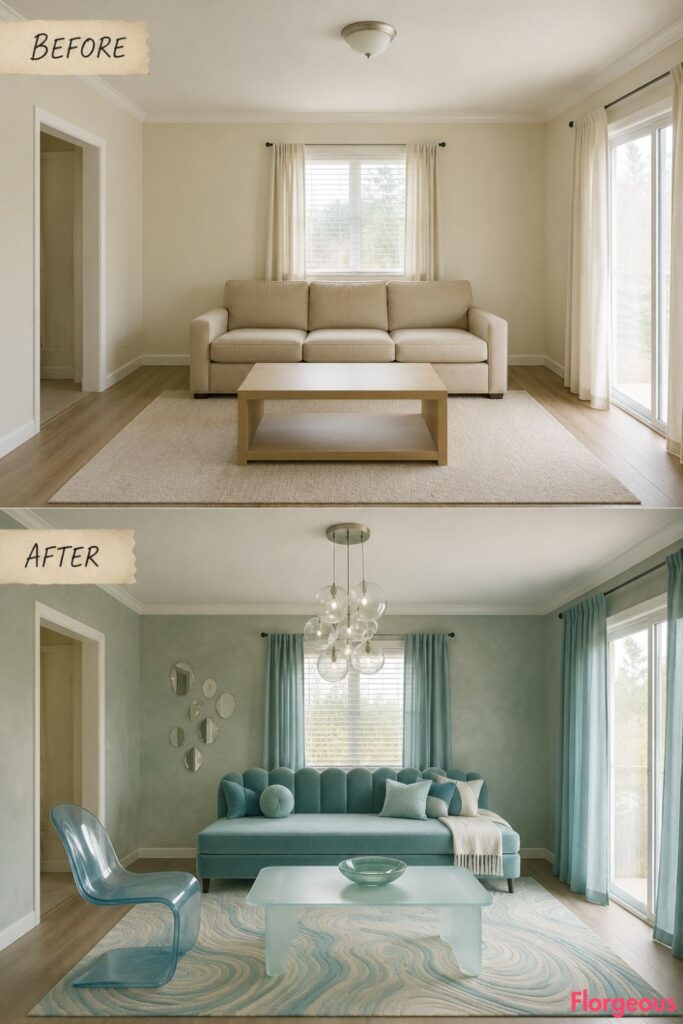
This room takes inspiration from water through rippling forms and sea-glass tones, without relying on literal shells or novelty decor.
Before: Straight furniture, blank walls, and basic lighting make the room feel static.
After: Sea-glass limewash surrounds a scalloped teal daybed and pale-blue acrylic lounge chair. A frosted-glass table, ripple-pattern rug, bubble-glass pendant, and blue-green curtains create visual movement.
Small mirrored wall discs reflect daylight like light moving across water.
Try this: Use one sea-glass accessory and a softly patterned rug for a quieter interpretation.
14. Turn the Room Into a Sculptural Future Gallery
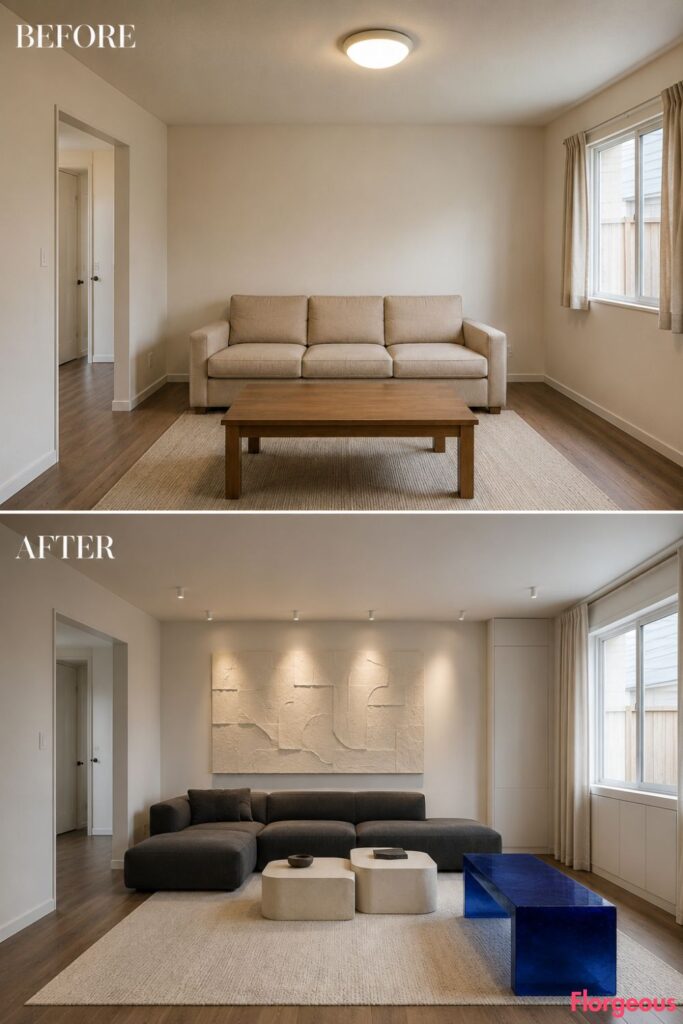
A gallery-like living room gives expressive furniture room to breathe while hiding everyday clutter behind seamless storage.
Before: The empty walls have no composition, visual hierarchy, or focal point.
After: Warm-white gallery walls frame an asymmetrical charcoal sofa, cobalt resin bench, and three low plaster plinth tables. An oversized abstract relief occupies the main wall, illuminated by precise ceiling spots.
A flush cabinet hides media equipment and household storage.
Style Note: Leave generous negative space around unusual furniture. Crowding sculptural pieces makes them look accidental.
15. Create an Advanced Media and Gaming Lounge
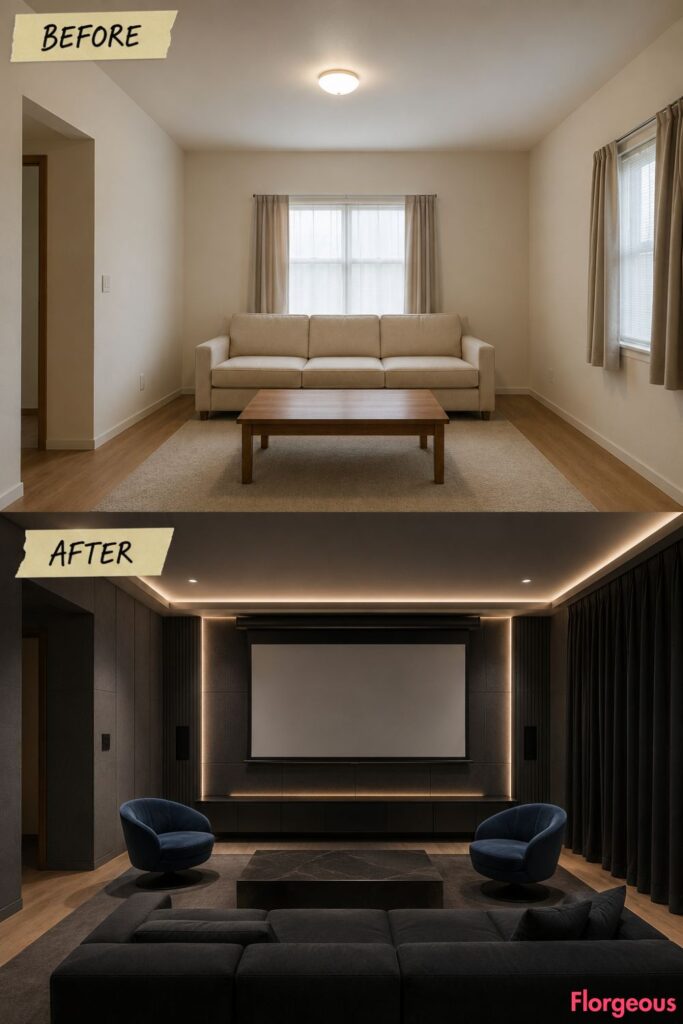
A high-performance entertainment room can still look polished when screens, speakers, lighting, and cables are carefully controlled.
Before: The basic room has no acoustic treatment, media focus, or adaptable seating.
After: Deep graphite acoustic panels surround a retractable projection surface. A low black modular sofa faces two cobalt swivel chairs and a dark mineral table. Concealed speakers, cable channels, blackout curtains, and dimmable bias lighting support films and gaming without advertising the equipment.
Technology Tip: Improve the rug, curtains, and wall softness before purchasing costly sound hardware. Acoustic comfort starts with surfaces.
16. Make Future-Inspired Style Work in a Rental
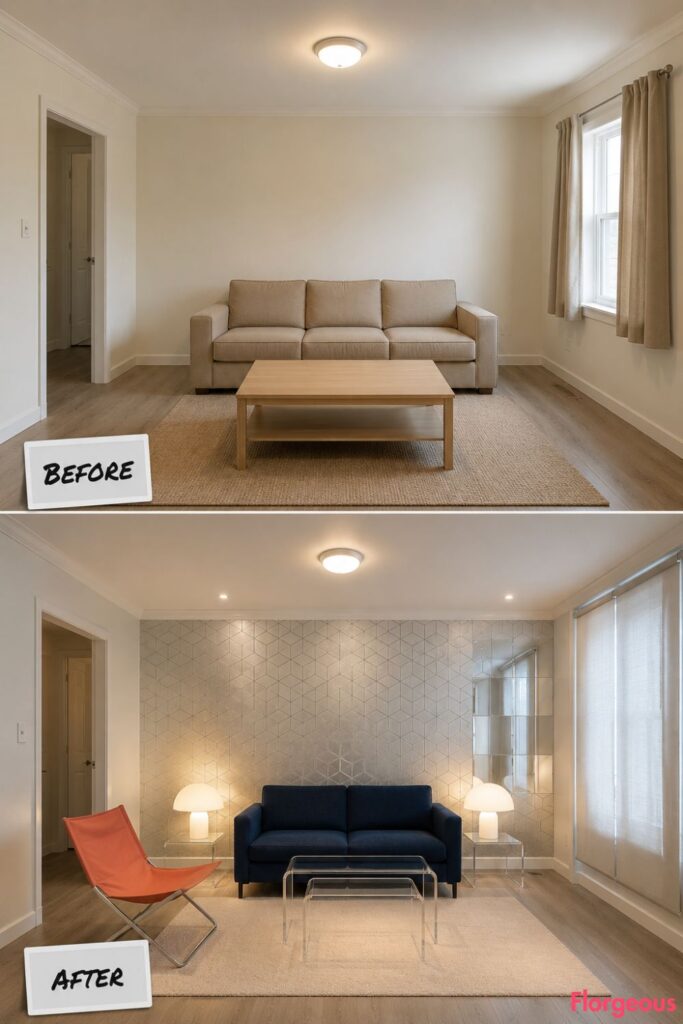
A rental can feel bold and advanced through removable wall treatments, portable lighting, and compact furniture with distinctive silhouettes.
Before: The clean but generic room feels temporary and impersonal.
After: Removable silver geometric wallpaper defines one wall behind a compact navy loveseat. A coral folding chair, clear nesting tables, peel-and-stick mirror tiles, plug-in mushroom lamps, smart bulbs, and full-length roller curtains create a strong transformation.
Paintable cable covers keep the technology tidy, and every major element can move to the next home.
17. Finish With Refined Contemporary Future Luxury
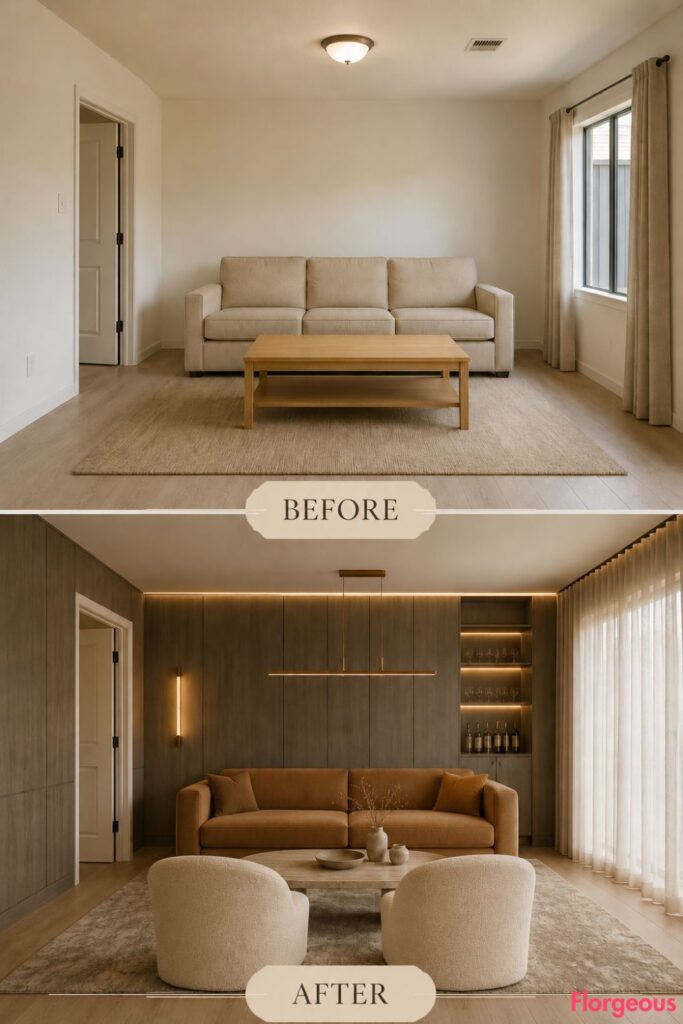
The final makeover blends subtle innovation with enduring materials, creating a room that feels advanced without following an obvious theme.
Before: The builder-grade space has simple furniture, flat lighting, and no architectural emphasis.
After: Smoked-eucalyptus panels conceal storage and a compact bar. A camel mohair sofa faces two sculptural cream lounge chairs across an oval travertine table. A silk-wool rug, bronze linear pendant, motorized sheer curtains, and integrated wall lighting complete the composition.
The futuristic character is expressed through precision, concealed functions, and carefully controlled proportions rather than visual effects.
Choosing the Right Future-Forward Direction
A successful Futuristic Living Room does not need every advanced material or smart feature available. One memorable focal point, such as a sculptural sofa, concealed media wall, unusual pendant, or planted installation, can establish the direction.
Begin by deciding whether the room should feel organic, minimal, dark, colorful, flexible, sustainable, or technology-led. Measure the main circulation routes before purchasing unusual furniture, and map electrical access before adding automated curtains, integrated lighting, or concealed media equipment.
Balance hard, reflective surfaces with rugs, curtains, timber, and upholstered seating. The most convincing future-inspired rooms still support ordinary life through comfortable furniture, useful storage, flattering light, and enough flexibility to adapt as routines change.