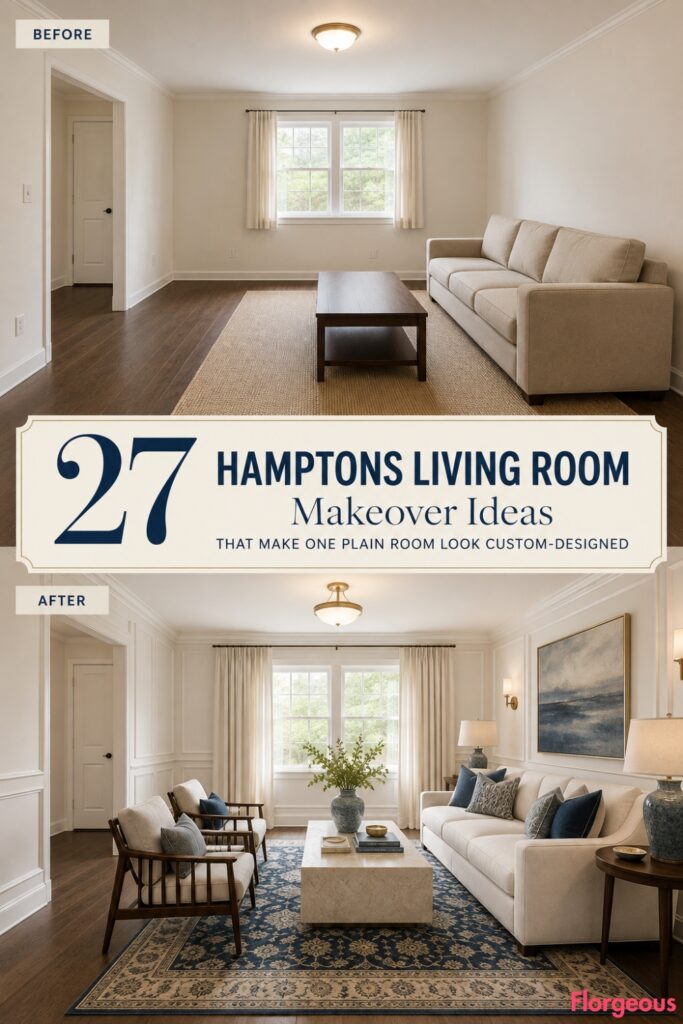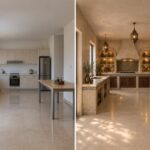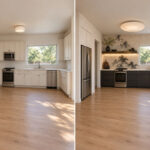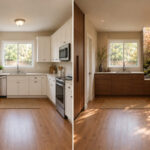
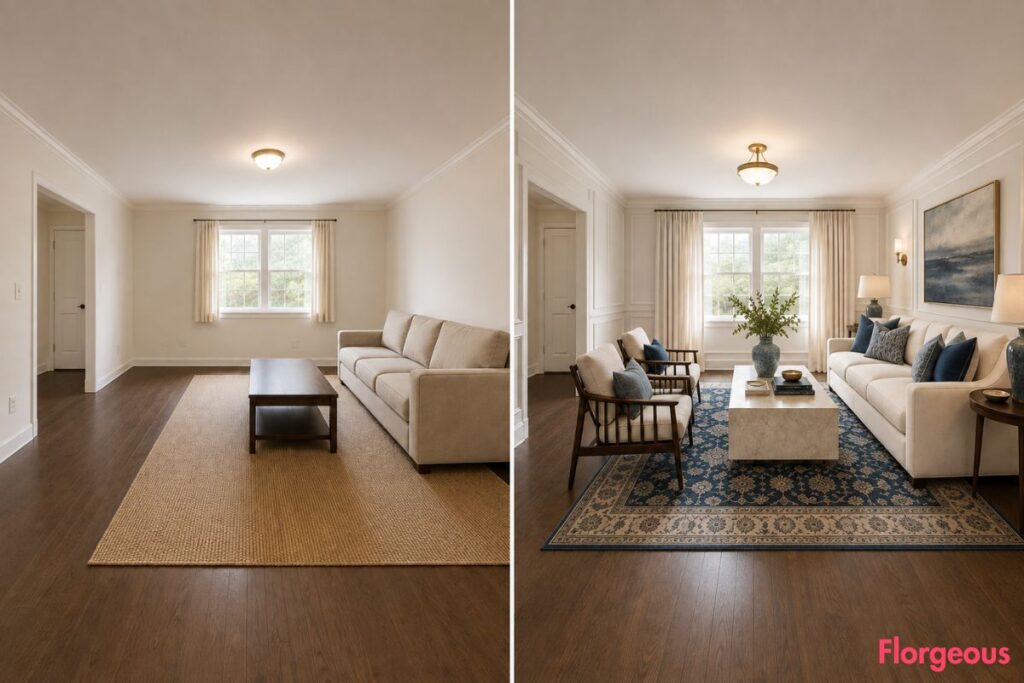
Some living rooms are not bad, they are simply unfinished. Our starting room has warm off-white walls, a basic beige sofa, a bare rectangular coffee table, a neutral rug, short curtains, a builder-grade ceiling light, and almost no decoration.
Instead of changing the architecture, we kept that exact room locked in place and redesigned only what happens inside it. The doorway, window, ceiling height, flooring footprint, proportions, camera position, furniture scale, and main circulation stay consistent from one idea to the next.
The result is 27 interpretations of a Hamptons Living Room, ranging from crisp blue-and-white rooms to warm timber schemes, contemporary stone interiors, renter-friendly updates, family spaces, and unexpected collected looks. They prove that Hamptons style can feel polished and coastal without relying on anchors, shells, signs, or other seaside clichés.
1. Build a Classic Hamptons Living Room Around Blue, White, and Oak
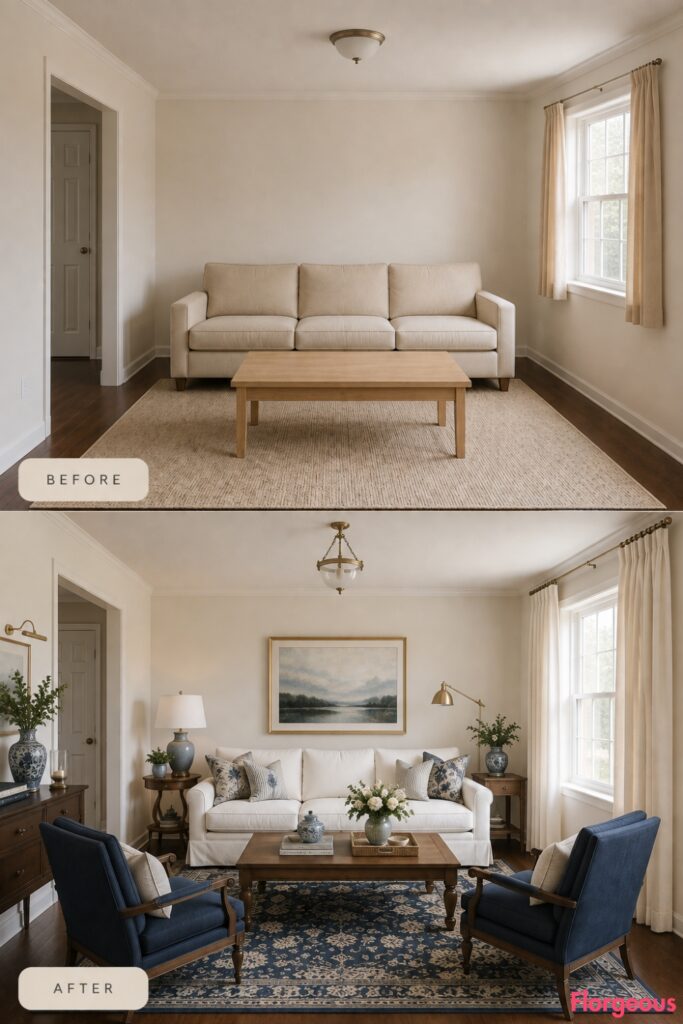
This is the clearest expression of the style, but the restraint is what keeps it sophisticated.
Before: Warm off-white walls, beige sofa, bare rectangular table, neutral rug, short curtains, basic ceiling light, empty walls, and soft daylight.
After: A tailored ivory linen sofa sits opposite two navy armchairs, with a substantial warm-oak coffee table, navy-and-cream wool rug, full-height ivory curtains, blue-gray ceramics, and aged-brass lamps.
Why it works: Strong symmetry gives the relaxed palette structure.
2. Trade Coastal Blue for Flax, Oatmeal, and Honey Oak
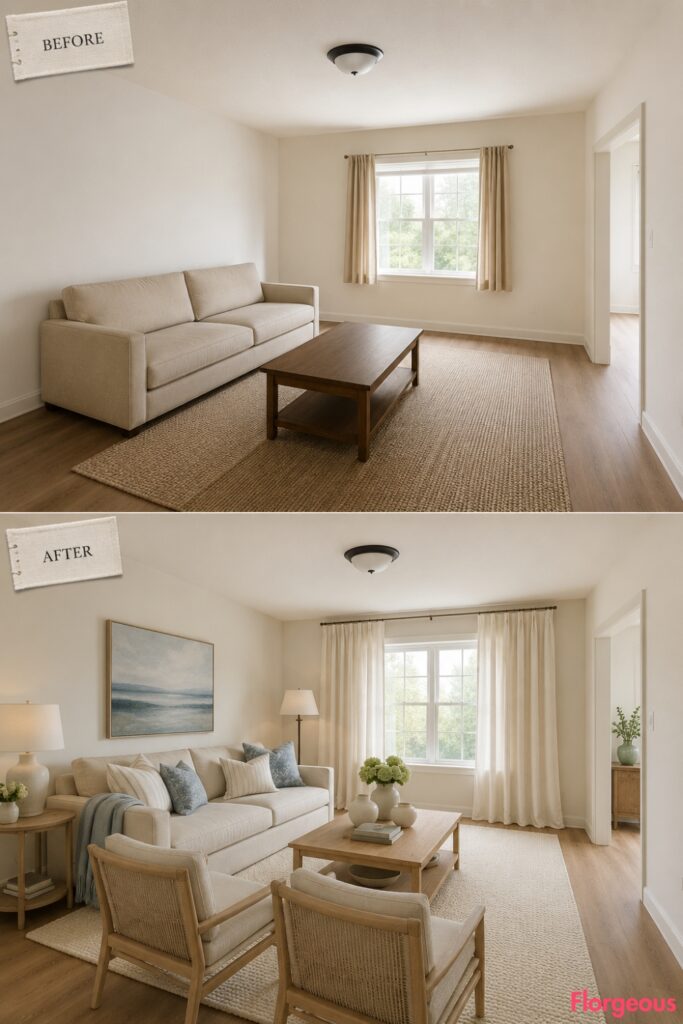
A warm Hamptons palette can feel quieter and more natural than the expected blue-and-white combination.
Before: The same neutral builder-grade room remains unchanged.
After: Layer a flax linen sofa, oatmeal armchairs, honey-oak table, cream wool rug, natural canvas curtains, chalky ceramic lamps, and just two faded-blue cushions.
The effect is sun-washed rather than nautical.
3. Make White Wall Paneling the Main Design Feature
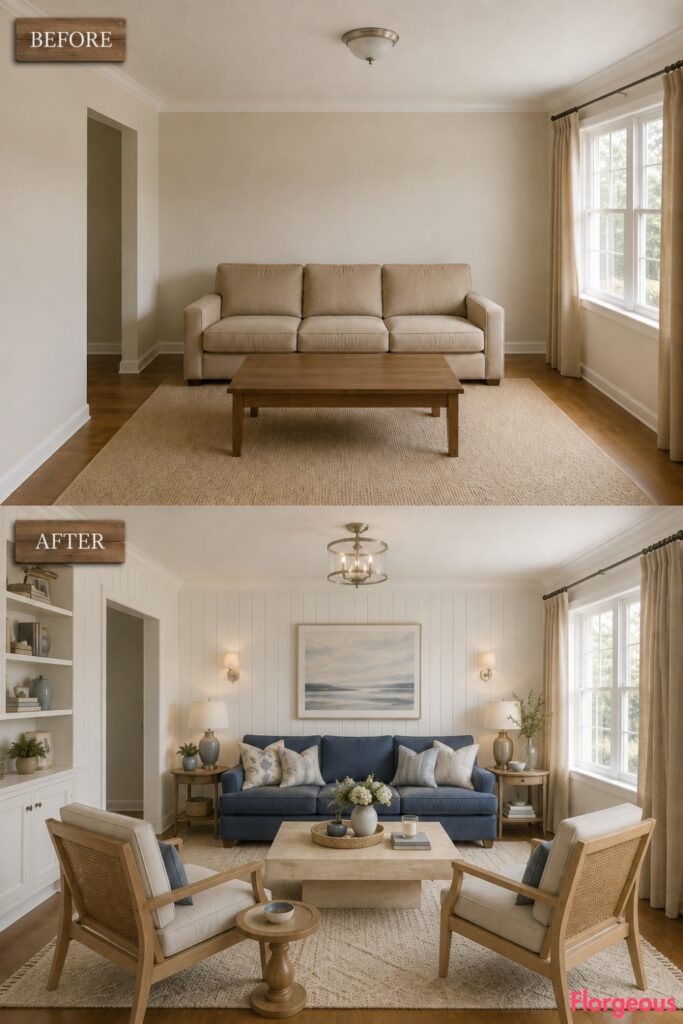
Instead of filling a blank wall with decor, give it architectural rhythm.
Before: Plain walls make the room feel visually unfinished.
After: Add simple white-painted vertical paneling behind a soft denim-blue sofa, then introduce pale-oak chairs, a limestone table, flax curtains, and polished-nickel lighting.
Keep the panel profile clean rather than ornate.
Designer Tip: If real paneling is outside the budget, shallow timber battens or paintable panel-effect wallpaper can create a similar visual rhythm.
4. Turn One Wall Inky Navy for a Tailored Club-Room Mood
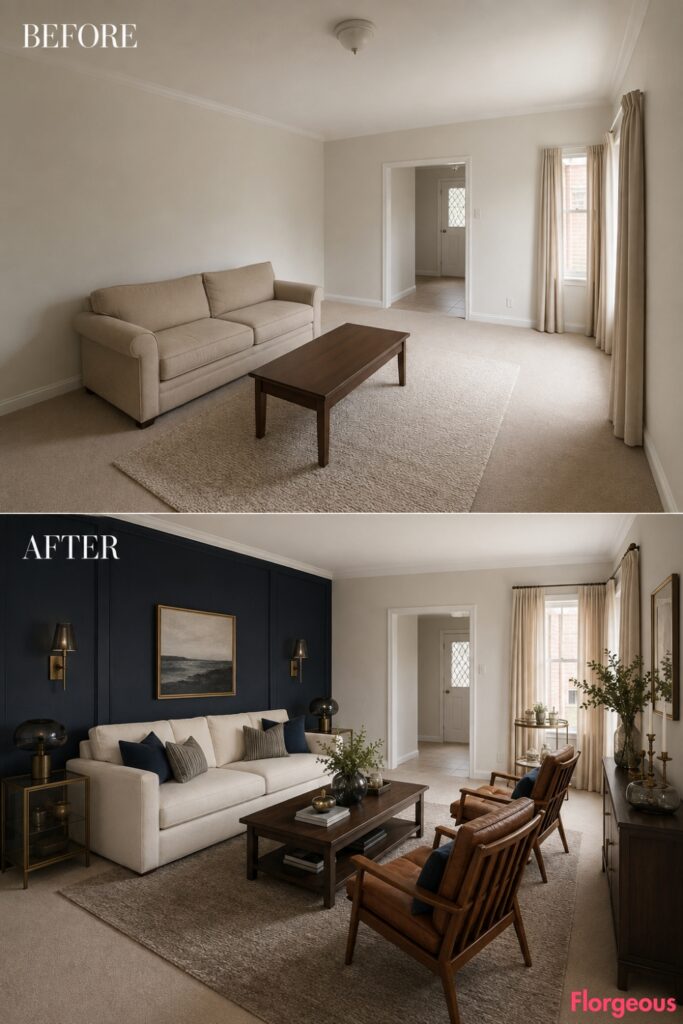
This interpretation feels more East Coast townhouse than breezy beach house.
Before: The standard beige room lacks contrast.
After: An inky navy wall frames an ivory sofa, cognac leather-and-oak chairs, a dark walnut coffee table, mushroom wool rug, parchment curtains, smoky glass, and antique-brass lighting.
The darker elements make the room feel enveloping without sacrificing the Hamptons restraint.
5. Soften Everything With Powder Blue and Pale Ash
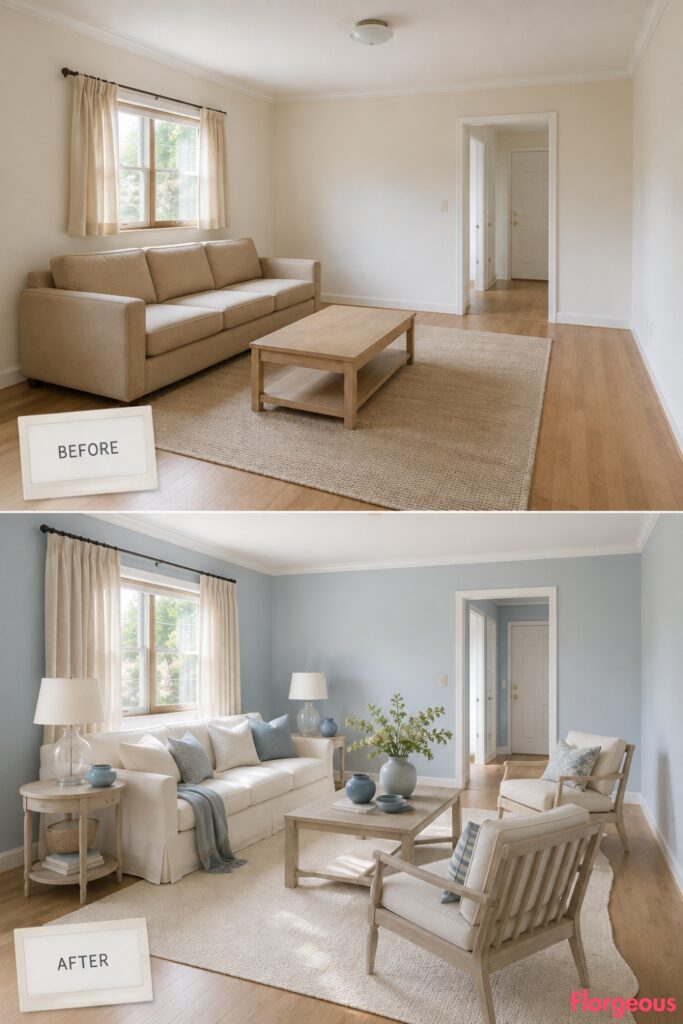
Here, the visual weight comes almost entirely from lightness.
Before: The same generic off-white room serves as the fixed starting point.
After: Powder-blue walls meet an ivory sofa, pale-ash spindle chairs, bleached-oak table, warm-white flatweave, sheer flax curtains, clear-glass lamps, and a small collection of blue-gray pottery.
Try this: Choose gray-based powder blue rather than a bright pastel.
6. Create a Sun-Washed Hamptons Room With Limed Oak and Sisal
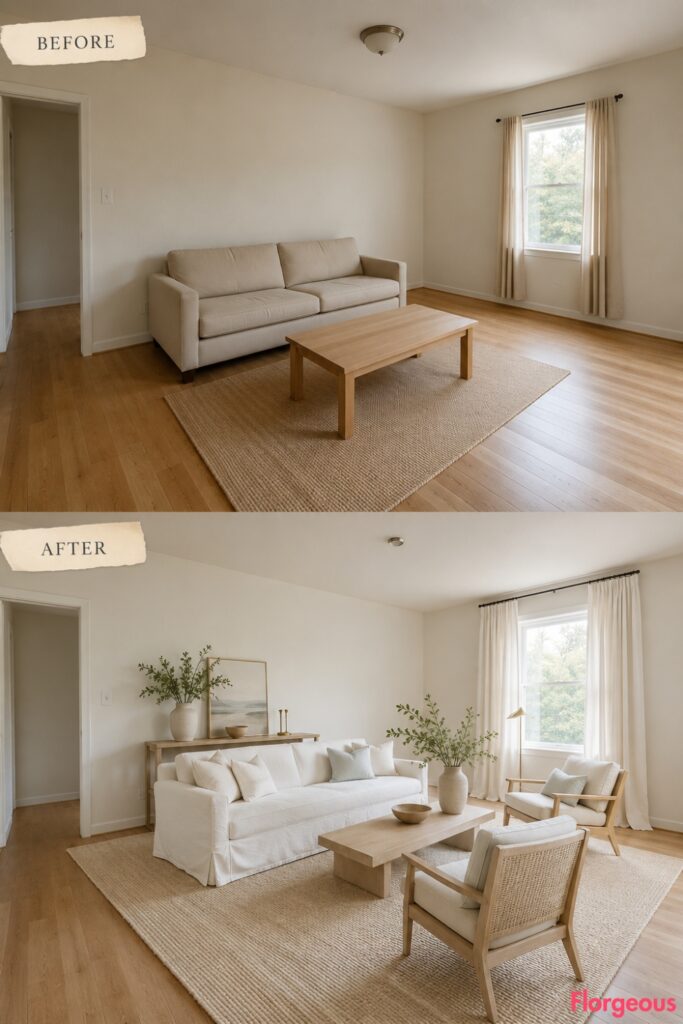
This version draws its character from texture rather than contrast.
Before: Beige furniture and short curtains make the room feel generic.
After: Use a white slipcovered sofa, limed-oak lounge chairs, a chunky bleached timber table, pale sisal-wool rug, loose off-white linen curtains, unglazed ceramics, and simple brushed-brass lamps.
The finished room feels relaxed, matte, and naturally weathered.
7. Anchor the Room With Dark Walnut Instead of Painted Furniture
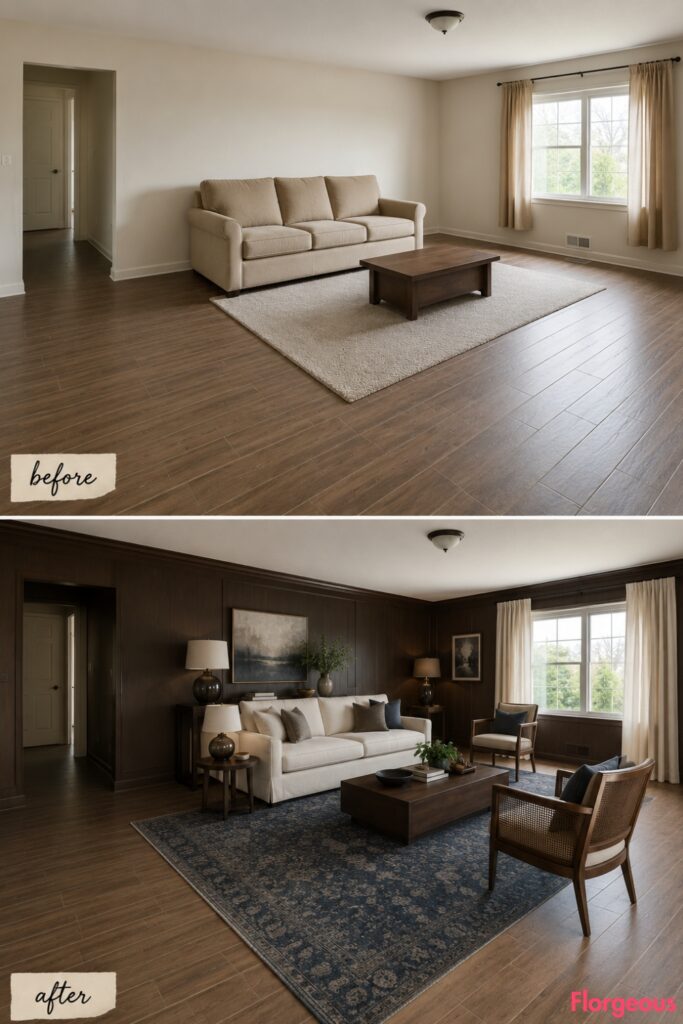
Dark timber makes pale upholstery feel richer and less predictable.
Before: The fixed room has little material depth.
After: A parchment sofa is joined by sculptural walnut chairs, a broad walnut table, faded indigo rug, ivory curtains, smoky glass lamps, and restrained bronze details.
Nothing is overtly coastal, yet the proportions and palette still read clearly as Hamptons.
8. Layer an Almost All-White Room Through Texture Alone
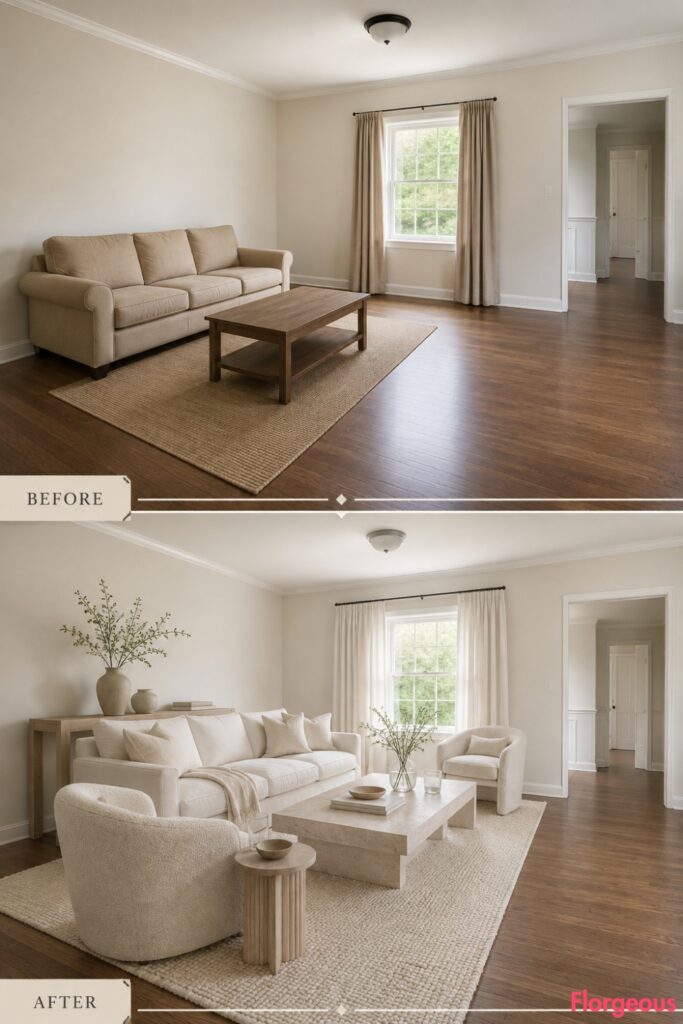
White-on-white succeeds when every surface behaves differently.
Before: The original room is pale but flat.
After: Combine warm-white linen, bouclé accent chairs, a honed limestone table, thick looped-wool rug, ivory drapery, whitewashed oak, chalky ceramics, and subtle clear glass.
There is almost no strong color, but the room no longer feels empty.
Color Story: In a pale room, vary undertones. Mix warm white, ivory, parchment, oatmeal, and natural timber instead of repeating one stark white everywhere.
9. Use One Precise Ticking Stripe Instead of a Nautical Theme
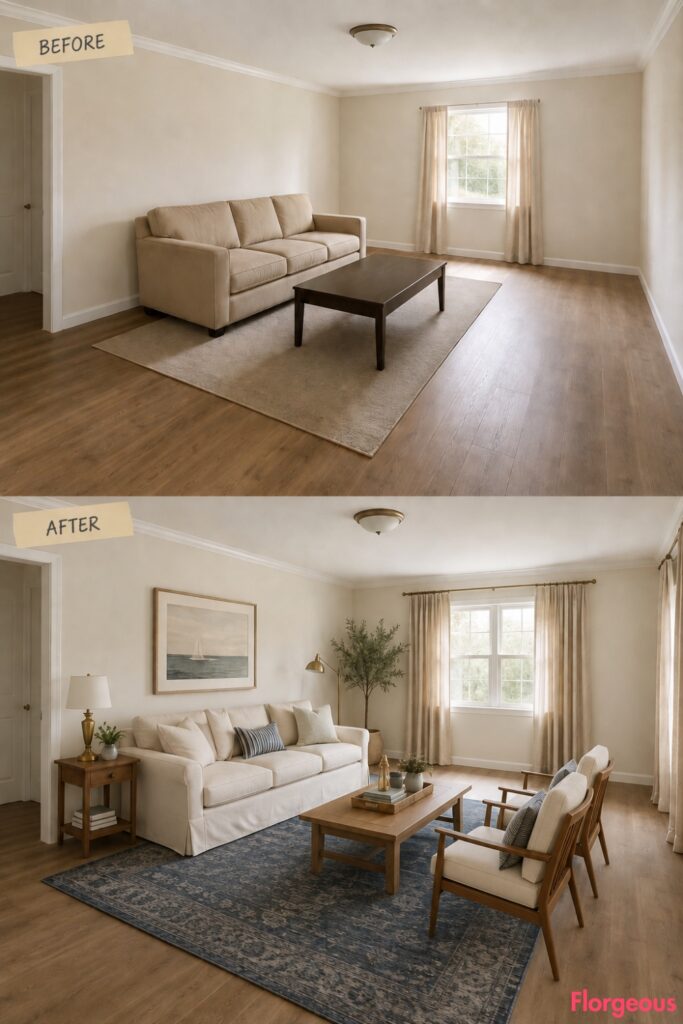
Pattern can suggest coastal heritage without becoming costume-like.
Before: The basic room has no visual detail.
After: Keep upholstery mostly solid, then use narrow navy ticking on two cushions and the seat of a small footstool. Pair it with a cream sofa, teak-framed chairs, medium oak, antique brass, and a washed indigo rug.
10. Pair Limestone With Blackened Oak for Contemporary Hamptons Style
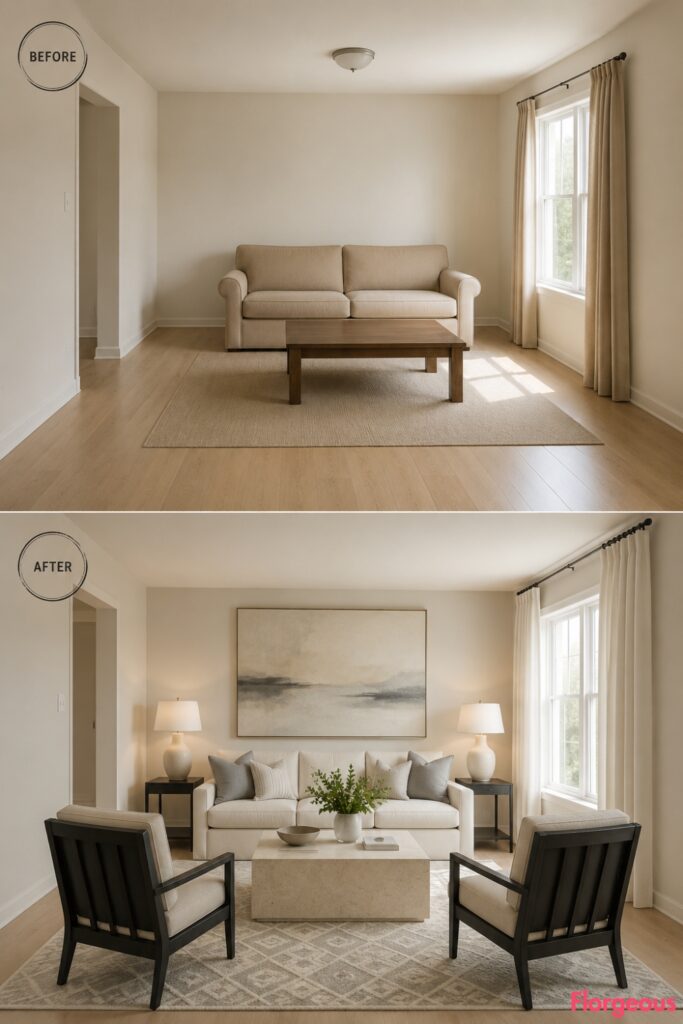
The look becomes sharper when pale stone meets a darker furniture silhouette.
Before: Builder-grade finishes give the room little definition.
After: An oatmeal sofa sits with blackened-oak chairs, a monolithic limestone table, cream-gray geometric rug, tailored ivory curtains, sculptural ceramic lighting, and a single oversized blue-gray abstract.
11. Let Cane Appear in Just Two Carefully Chosen Places
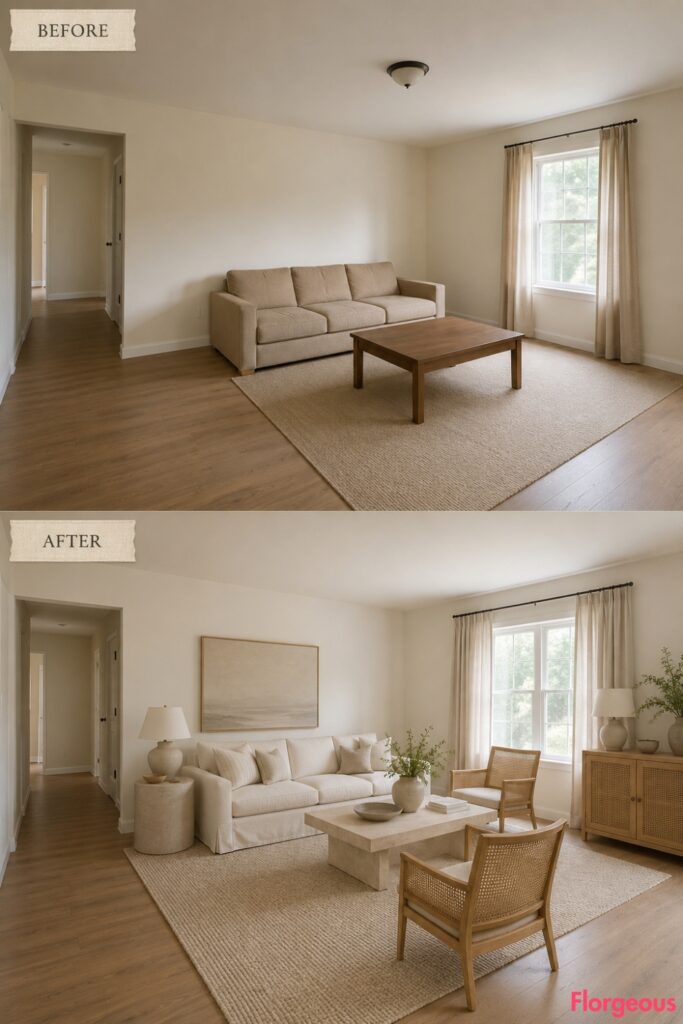
Woven material is most effective when it is treated as an accent.
Before: The room feels smooth and one-dimensional.
After: Choose white-oak armchairs with refined cane backs and a small cane-front side cabinet, then balance them with an ivory sofa, pale stone table, wool rug, linen drapes, and ceramic lamps.
12. Give the Room Heritage Character With Mahogany and a Faded Rug
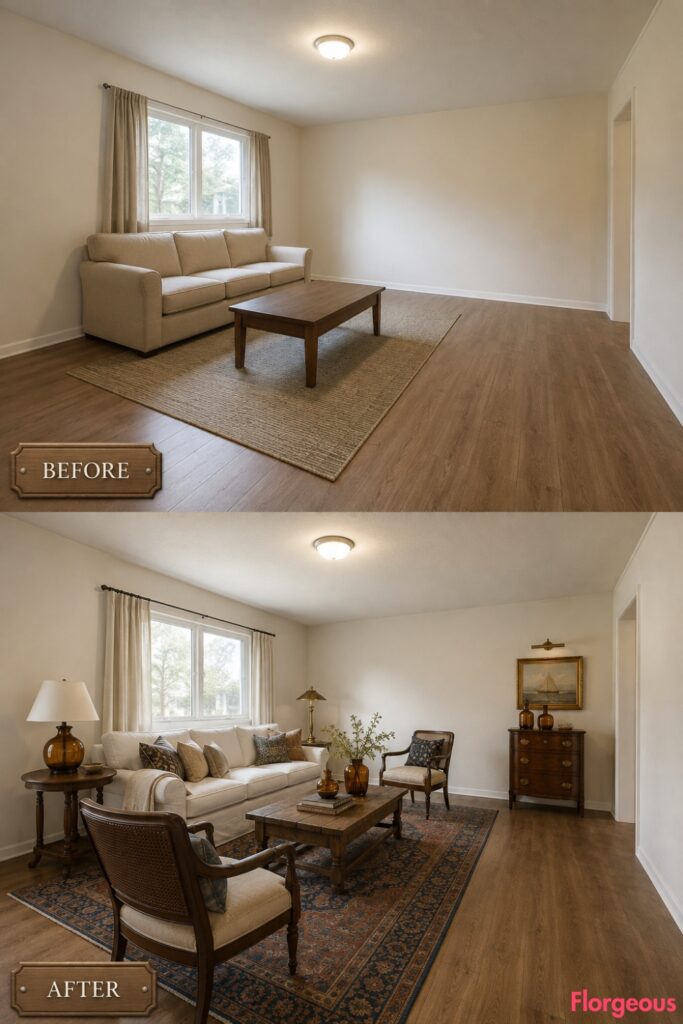
Older-looking furniture introduces history without turning the room rustic.
Before: The matching neutral basics feel newly installed and anonymous.
After: Add a cream slipcovered sofa, restrained mahogany chairs, aged timber table, faded navy-rust rug, ivory curtains, amber glass, antique-brass lighting, and one narrow vintage-style chest.
Common Mistake: Avoid matching every timber tone. A collected Hamptons room looks more convincing when pale oak, walnut, or mahogany appear in controlled layers.
13. Shift the Entire Palette Toward Mushroom and Travertine
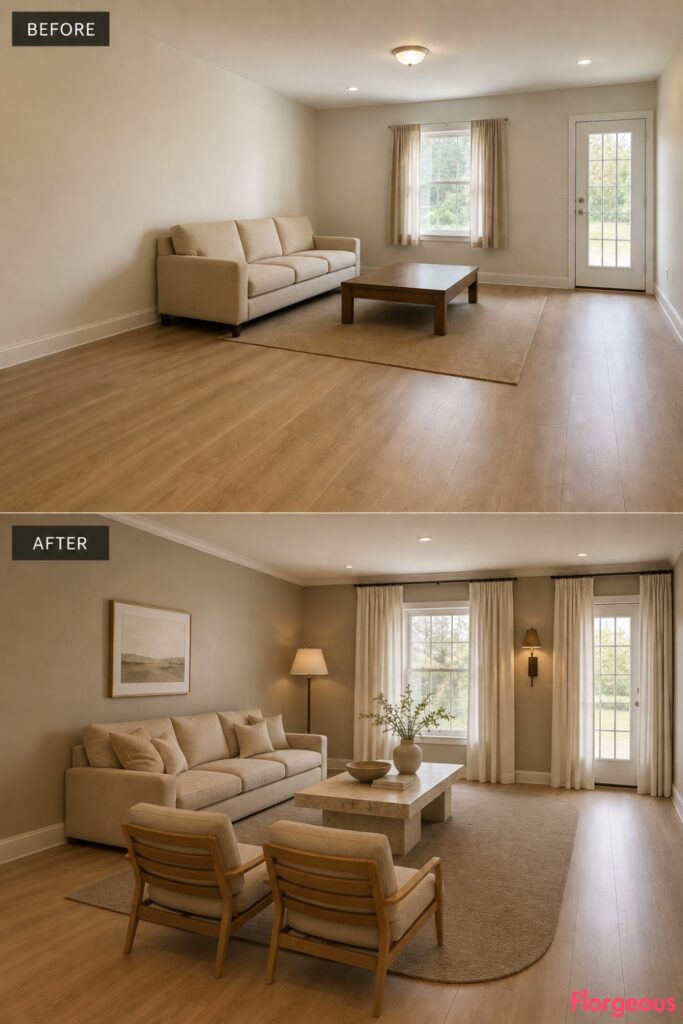
This room feels coastal because of its softness and natural materials, not because of blue.
Before: The original beige space looks accidental rather than intentionally neutral.
After: Mushroom walls, a sand linen sofa, white-oak chairs, honed travertine coffee table, taupe wool rug, ivory curtains, warm bronze lighting, and matte cream ceramics create a tonal, grounded version of the style.
14. Scale Hamptons Style Down for a Compact Living Room
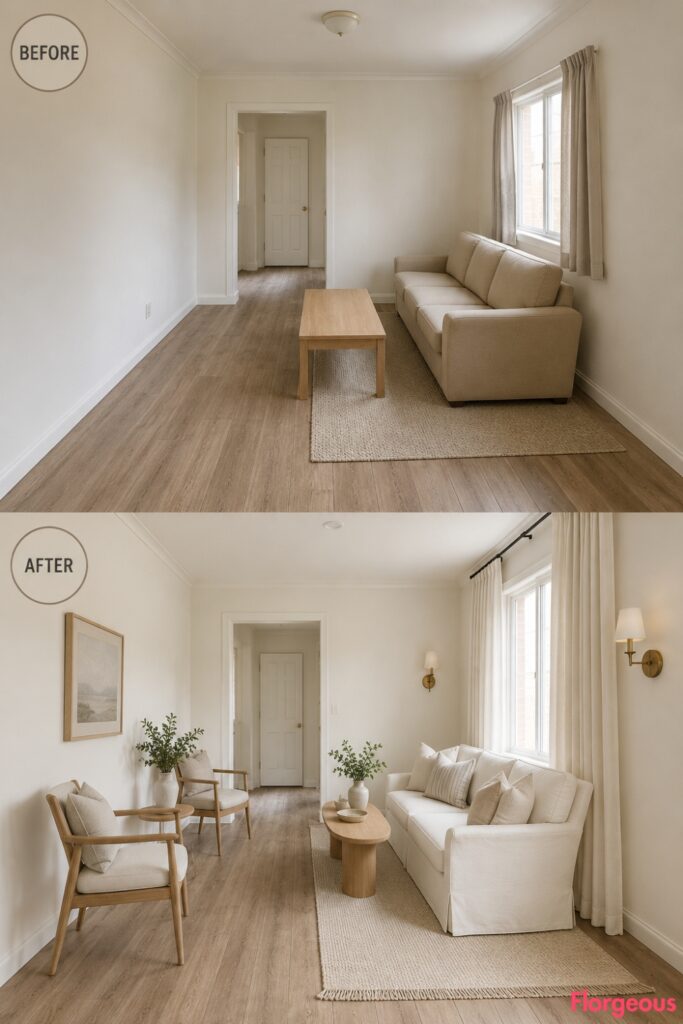
The look does not require oversized furniture.
Before: The standard room feels empty, but filling it with bulky pieces would interrupt circulation.
After: Use a compact ivory settee, slim spindle-back oak chairs, a narrow oval table, pale flatweave, high-hung curtains, and wall-mounted brass lights to preserve usable floor space.
Small Space Tip: An oval coffee table and chairs with visible legs allow the eye to travel farther through a compact room.
15. Make the Makeover Entirely Renter-Friendly
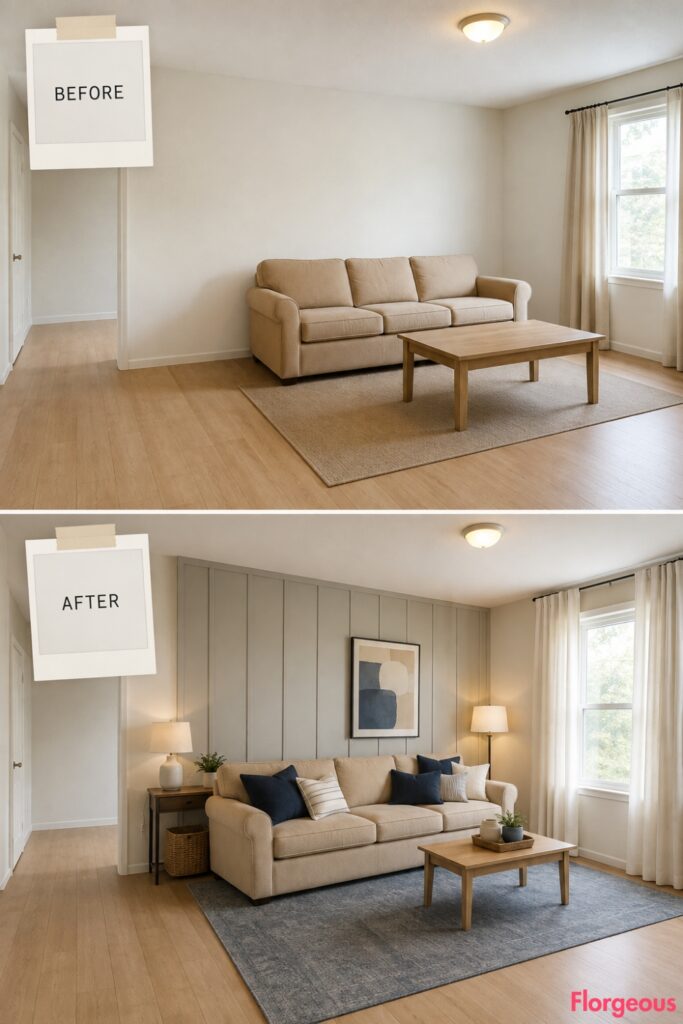
Permanent joinery and custom curtains are optional.
Before: Keep the original beige sofa, walls, and room shell untouched.
After: Add removable white panel-effect wallpaper, navy and flax cushions, ready-made ivory curtains hung high, washable blue-gray flatweave, a compact oak table, removable abstract artwork, and plug-in ceramic sconces.
Everything can leave with the renter.
16. Design a Family Room Around Washable Surfaces and Rounded Edges
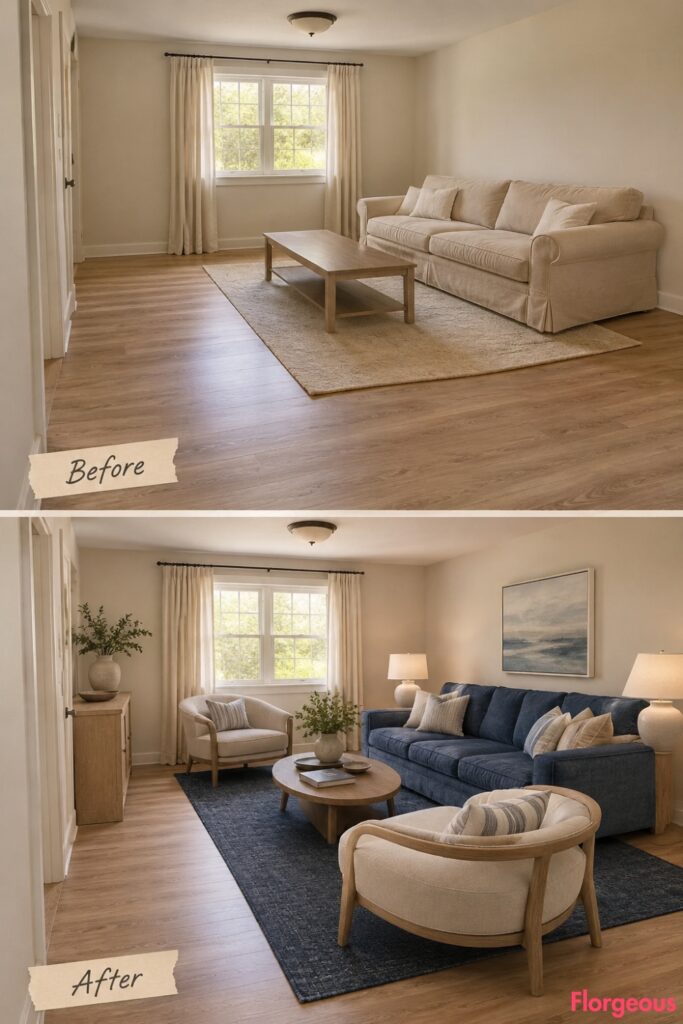
This version prioritizes everyday durability without losing polish.
Before: The plain room has basic furniture but little practical storage.
After: Bring in a washable denim-blue slipcovered sofa, rounded white-oak chairs, oval oak table, low-pile navy flatweave, cotton curtains, closed woven-front storage positioned away from circulation, and robust ceramic lamps.
17. Keep the Beige Sofa and Spend the Budget Somewhere Smarter
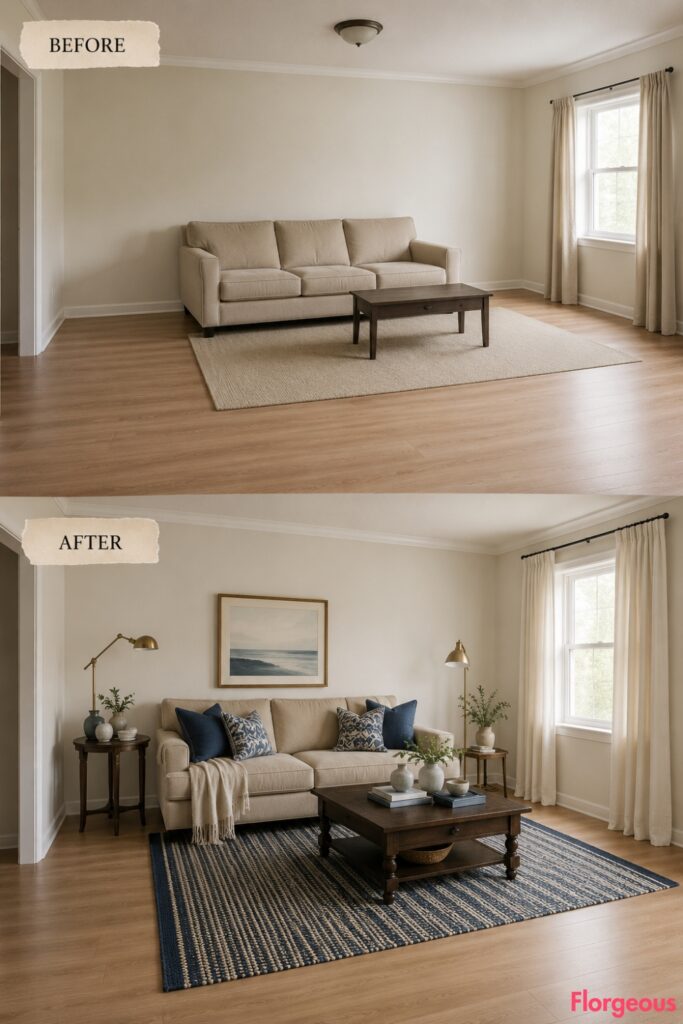
A convincing makeover can happen without replacing the largest piece.
Before: The original beige sofa and builder-grade finishes remain.
After: Add high-hung ivory curtains, a properly scaled navy-and-cream rug, secondhand dark timber table, indigo cushions, washed linen throw, thrifted ceramics, and affordable warm brass-colored lamps.
The sofa suddenly looks intentional.
Budget Version: Prioritize a larger rug, longer curtains, and better lighting before buying decorative accessories. Those changes correct the room’s proportions first.
18. Use Mineral Blue-Gray for a Calm Transitional Room
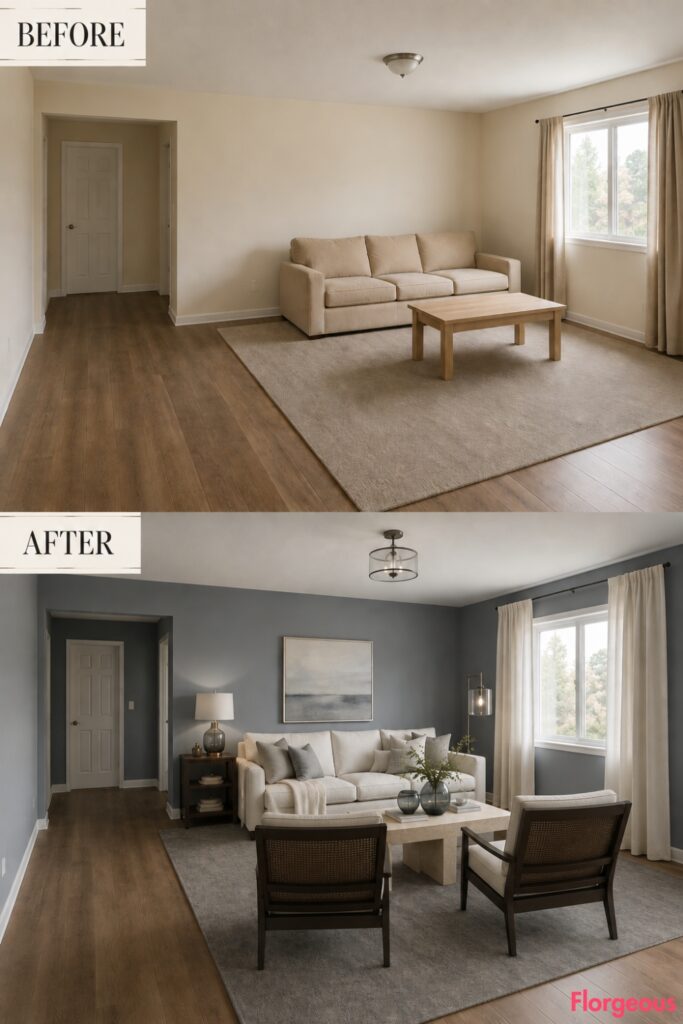
Blue-gray bridges traditional Hamptons furniture and cleaner contemporary finishes.
Before: Warm off-white walls leave the basic furniture visually disconnected.
After: Paint the walls a chalky mineral blue-gray, then add a parchment sofa, dark-oak lounge chairs, cream stone table, soft-gray wool rug, crisp ivory curtains, brushed nickel, and smoky glass.
19. Turn the Room Into a Moody Evening Retreat
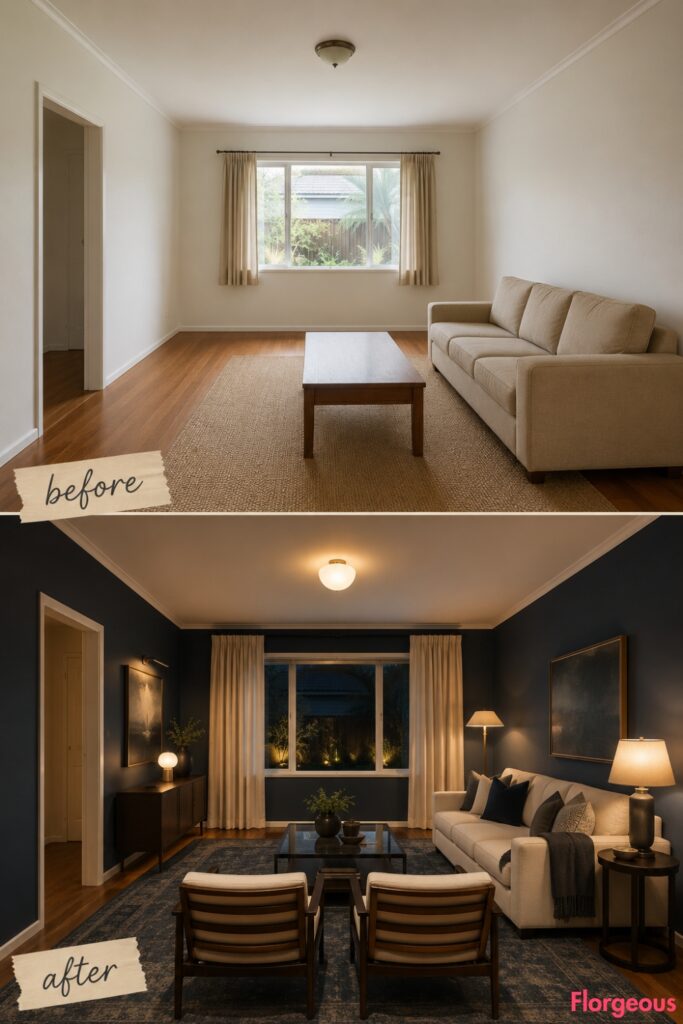
Hamptons interiors can work after sunset too.
Before: The canonical room is lit by soft daytime light with no layered illumination.
After: Charcoal-blue walls, ivory upholstery, dark-walnut chairs, smoked-glass table, faded indigo rug, parchment curtains, bronze table lamps, and opaline accent lighting create a warmer nighttime mood.
20. Strip the Look Back to Black, Ivory, and Pale Oak
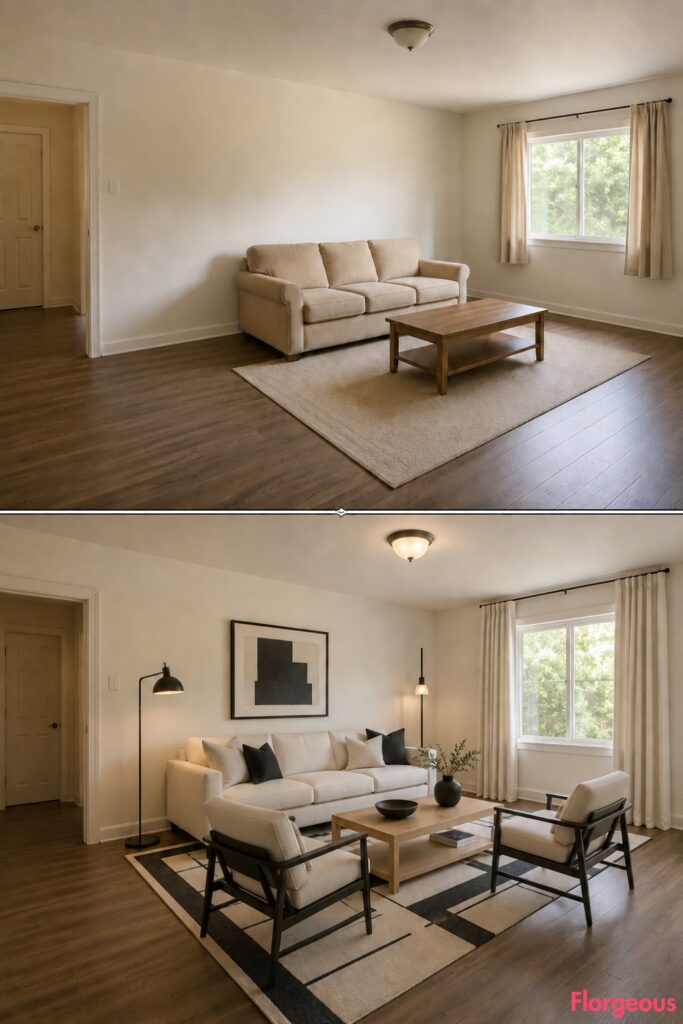
This graphic interpretation removes most traditional coastal color.
Before: The original room is soft but lacks definition.
After: Use an ivory sofa, black-framed linen chairs, pale-oak slab table, cream-and-charcoal geometric rug, tailored ivory curtains, blackened-metal lights, and a single monochrome abstract.
The result reads modern while retaining Hamptons scale and calm.
21. Use Custom Materials for a Quiet Luxury Interpretation
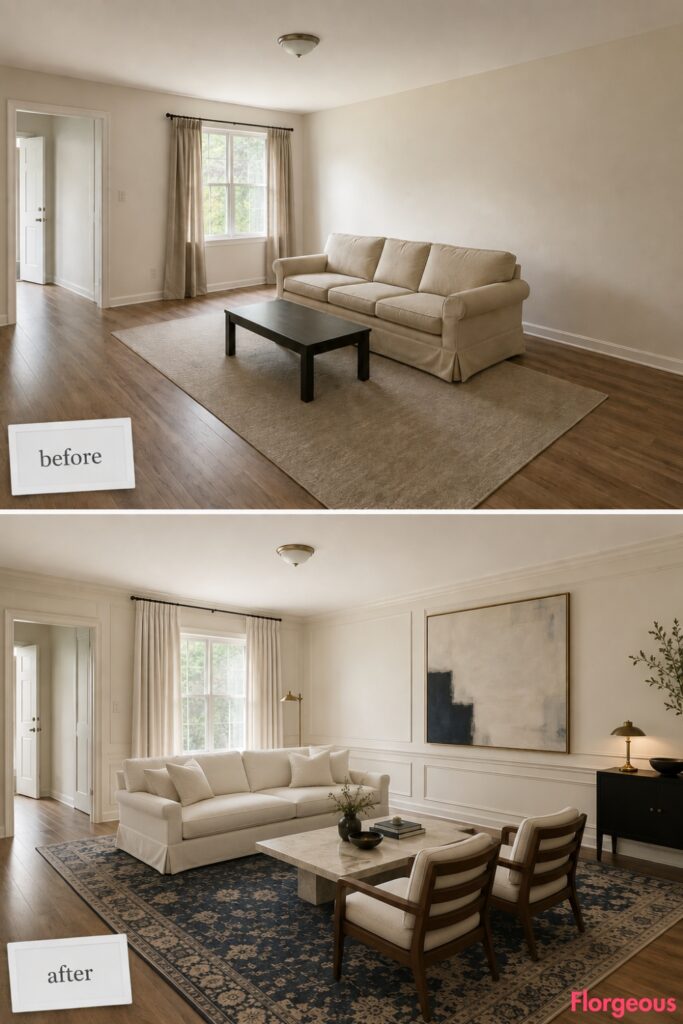
Here, quality does the visual work.
Before: The same plain room stays architecturally untouched.
After: Specify an ivory wool-linen sofa, sculptural walnut chairs, honed cream marble table, hand-knotted parchment-and-navy rug, full-height tailored drapery, refined wall molding, antique-brass lighting, and large-scale abstract art.
Decoration stays sparse so each finish can register.
22. Turn the Blank Wall Into a Refined Media Library
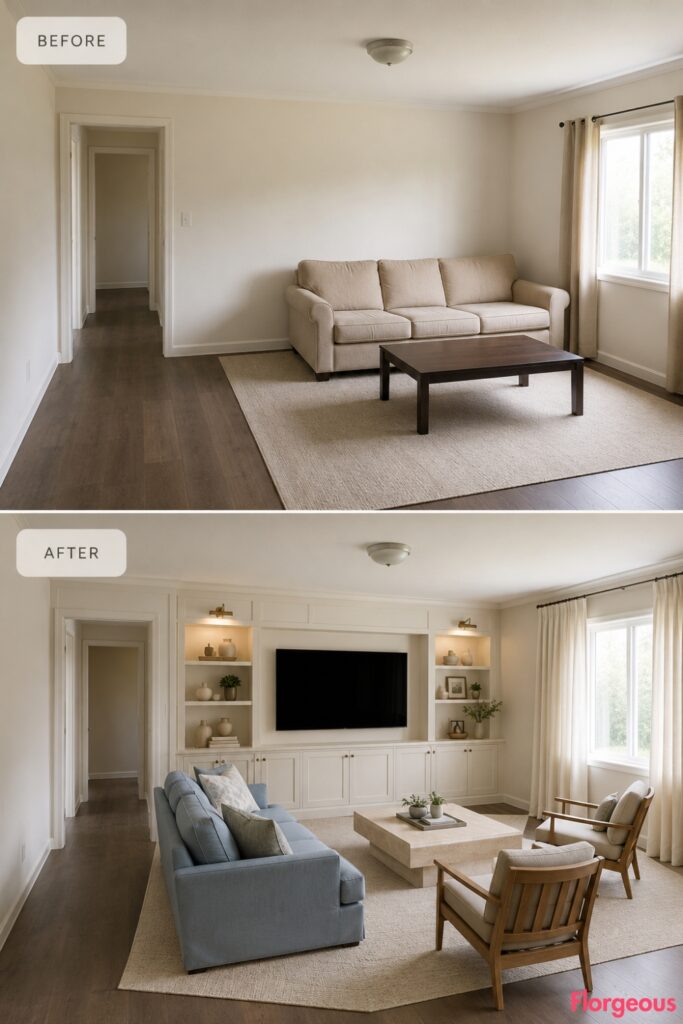
A television can belong in a polished room without becoming the entire design.
Before: The main wall is empty and the room has no storage.
After: Install shallow warm-white cabinetry with closed lower storage and restrained open shelves around a dark television screen, then pair it with a pale-blue sofa, oak chairs, limestone table, and understated picture lighting.
Keep the cabinetry clear of the doorway.
23. Bring in a Garden-Hamptons Palette of Sage and Ivory
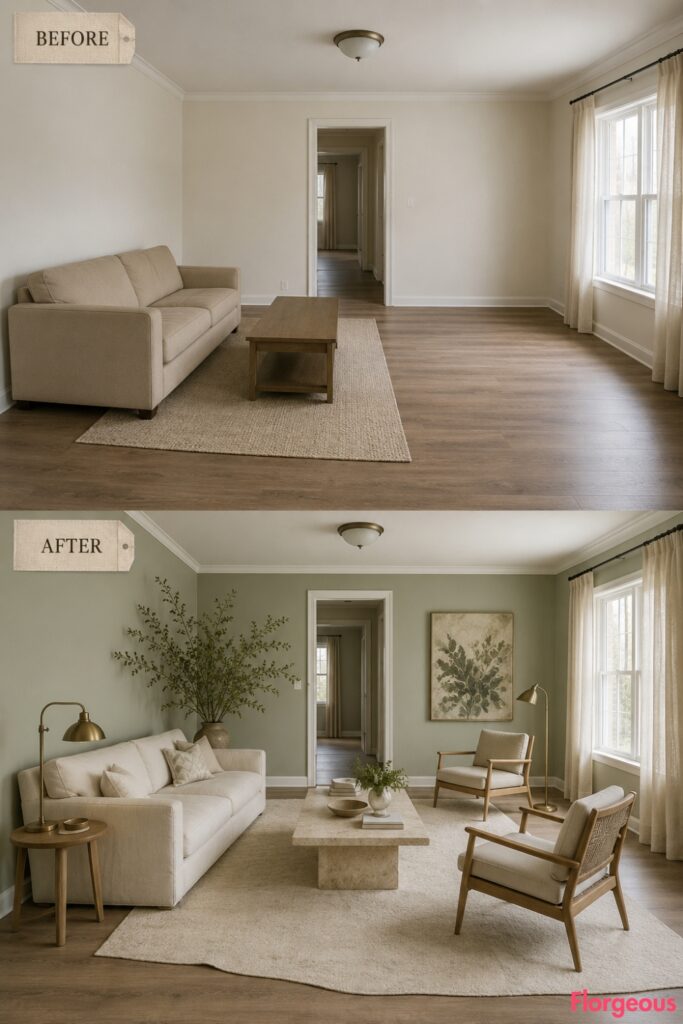
The Hamptons landscape can inspire more than blue.
Before: The neutral room has no relationship to the outdoors.
After: Choose soft sage walls, an ivory sofa, pale walnut chairs, limestone table, parchment rug, natural linen curtains, aged-brass lamps, leafy branches, and one large muted botanical abstract.
This feels like a relaxed country-house version of the style.
24. Make the Room Work for Entertaining With Movable Pieces
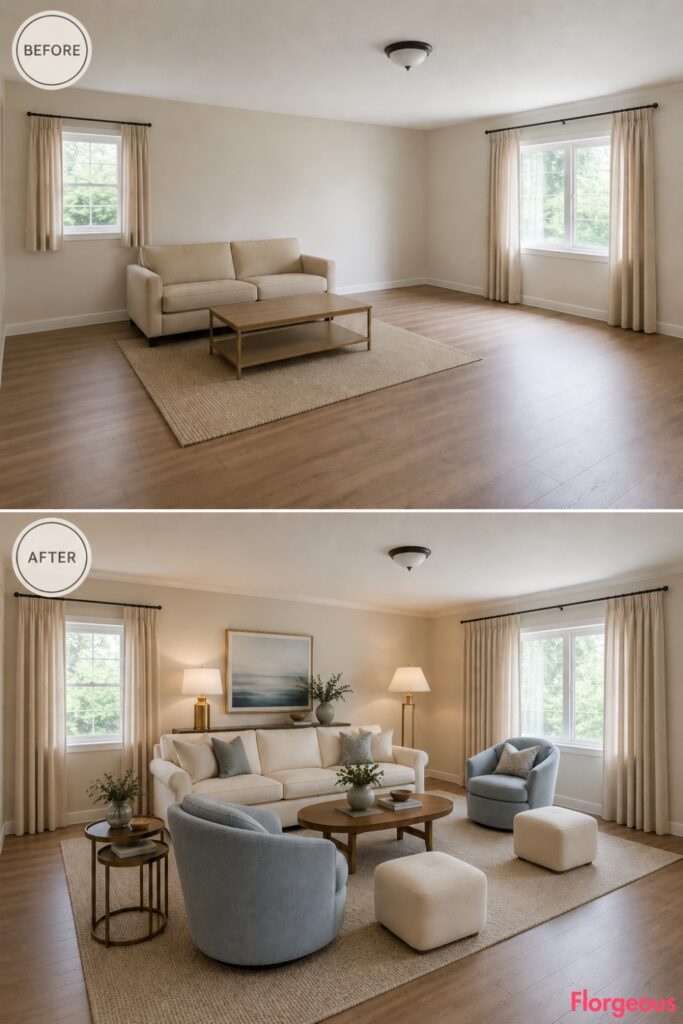
A formal-looking living room can still adapt when guests arrive.
Before: The basic seating layout provides little flexibility.
After: Keep a broad cream sofa, add two swivel chairs opposite it, a pair of upholstered cube ottomans, lightweight nesting side tables, an oval oak coffee table, and a large low-pile rug that visually contains everything.
Try this: Keep the central route open even when the ottomans are pulled into use.
25. Add Grasscloth for a More Textural, Tailored Backdrop
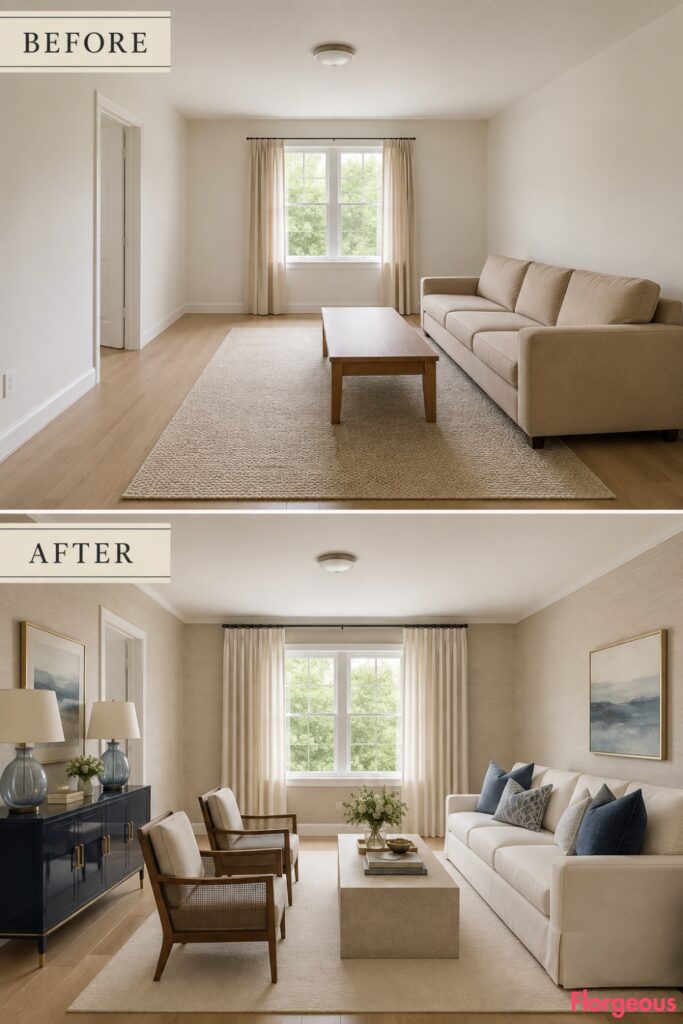
Grasscloth changes the walls without relying on paneling or paint.
Before: Smooth off-white walls give the room little depth.
After: Cover the main wall in pale flax grasscloth, then add an ivory sofa, navy lacquered side console, walnut chairs, honed stone table, cream rug, blue-gray glass lamps, and tailored curtains.
The contrast between grasscloth and lacquer keeps the scheme crisp.
26. Introduce a Grandmillennial Note With Soft Pattern and Pleated Lamps
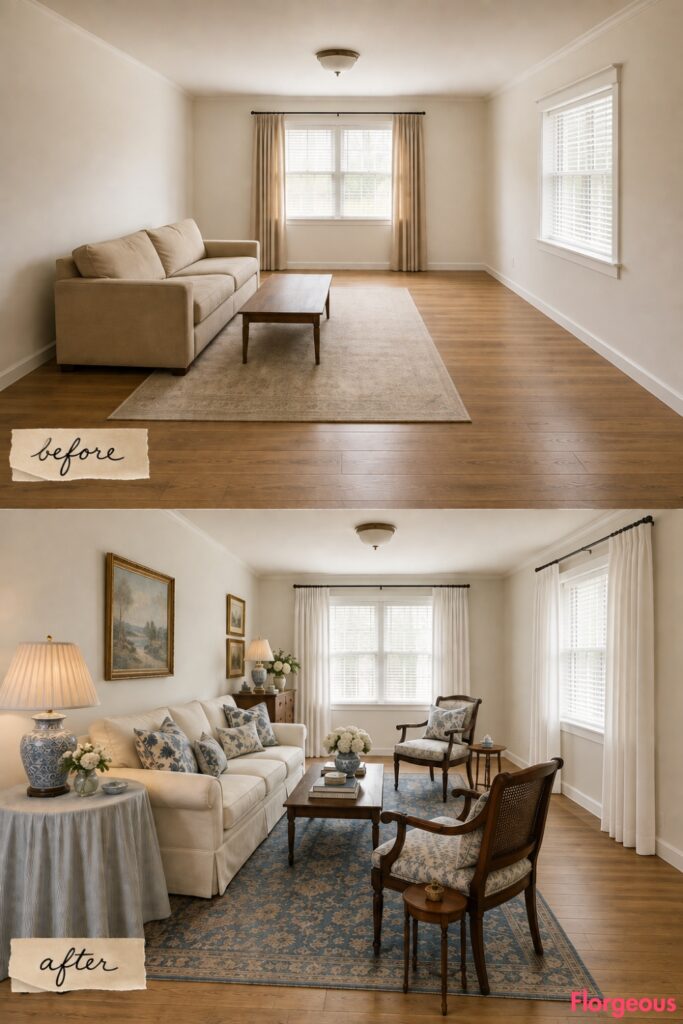
A little pattern can make Hamptons style feel more personal and collected.
Before: The plain room contains no pattern at all.
After: Start with a cream sofa and mahogany chairs, then introduce one pale-blue botanical block-print cushion group, a faded blue rug, skirted side table, pleated ceramic lamps, white curtains, and restrained antique-brass accents.
Keep the patterns small in number so the room remains tailored.
27. Replace the Sofa With a Four-Chair Conversation Salon
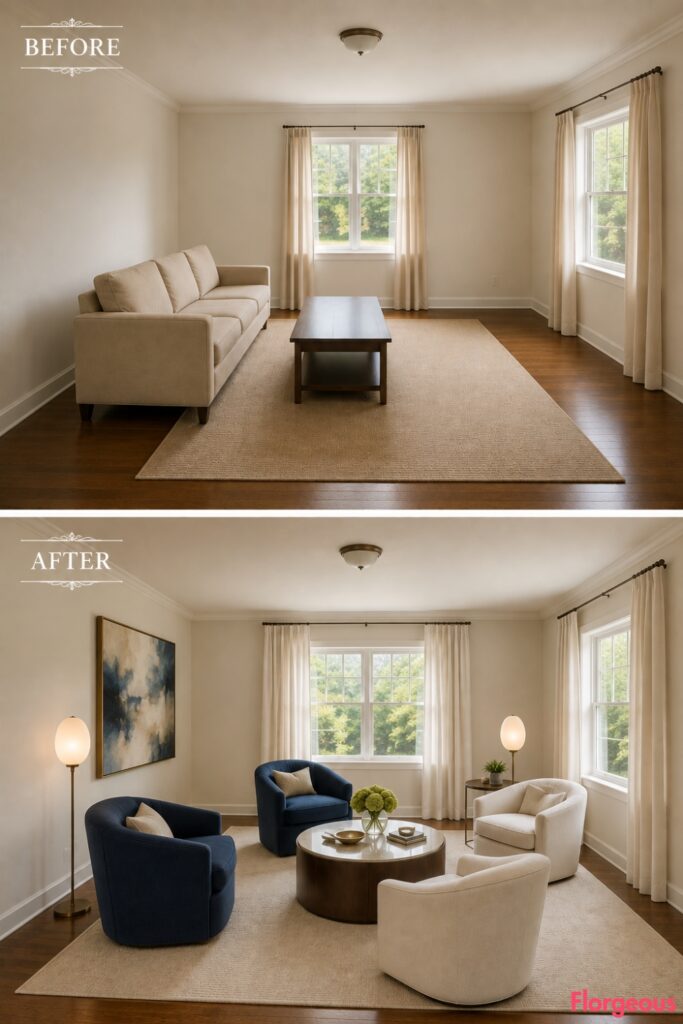
The final idea changes the furniture formula completely while keeping the room itself untouched.
Before: The canonical beige sofa faces an otherwise generic seating area.
After: Remove the sofa and arrange four substantial upholstered club chairs around a large round walnut-and-stone table. Use two ivory chairs and two muted navy chairs, a broad parchment rug, full-height curtains, opaline lamps, and one large abstract artwork.
This turns the room into a dedicated conversation space with an unexpectedly polished Hamptons identity.
How to Choose the Hamptons Direction That Fits Your Home
The strongest Hamptons rooms are rarely the ones with the most coastal decoration. They work because the furniture has generous proportions, the curtains reach the floor, natural materials are repeated thoughtfully, and the palette feels controlled.
For your own Hamptons Living Room, begin by deciding which element should lead. If you love classic interiors, start with blue-and-white upholstery and warm timber. If you prefer contemporary rooms, let limestone, blackened oak, or simplified furniture shapes do more of the work. For a warmer home, flax, mushroom, walnut, travertine, and parchment can provide the same relaxed polish without relying on blue.
Before replacing everything, correct the scale of the rug, raise the curtains, improve the lighting, and establish a clear furniture conversation area. Those four decisions often make a bigger difference than a collection of decorative accessories, and they help keep the finished room comfortable, practical, and unmistakably Hamptons without drifting into a themed beach house.