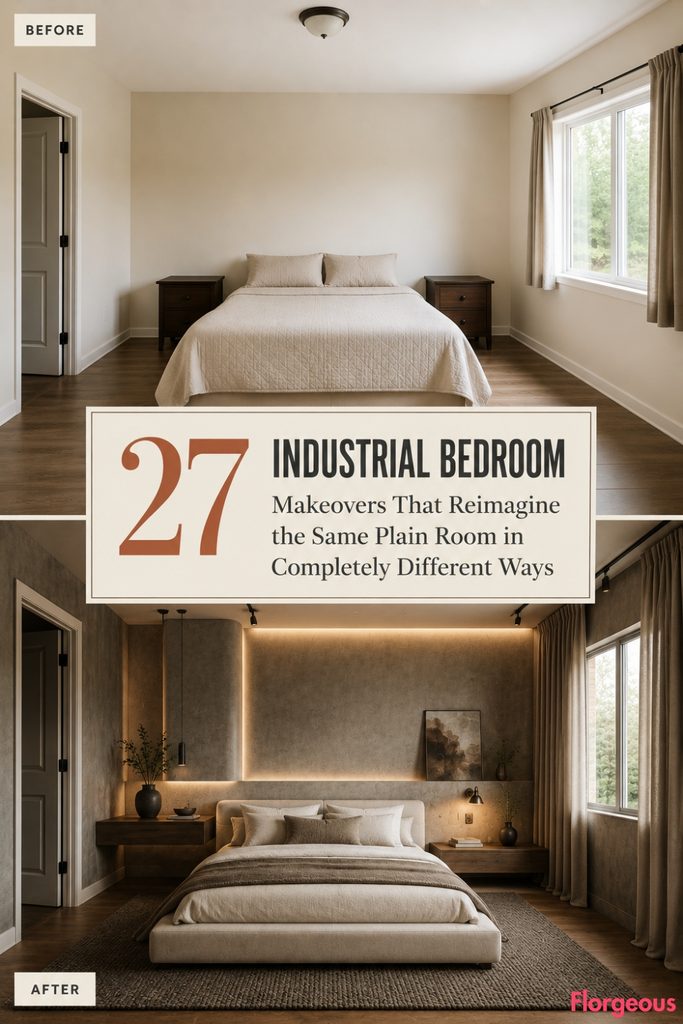
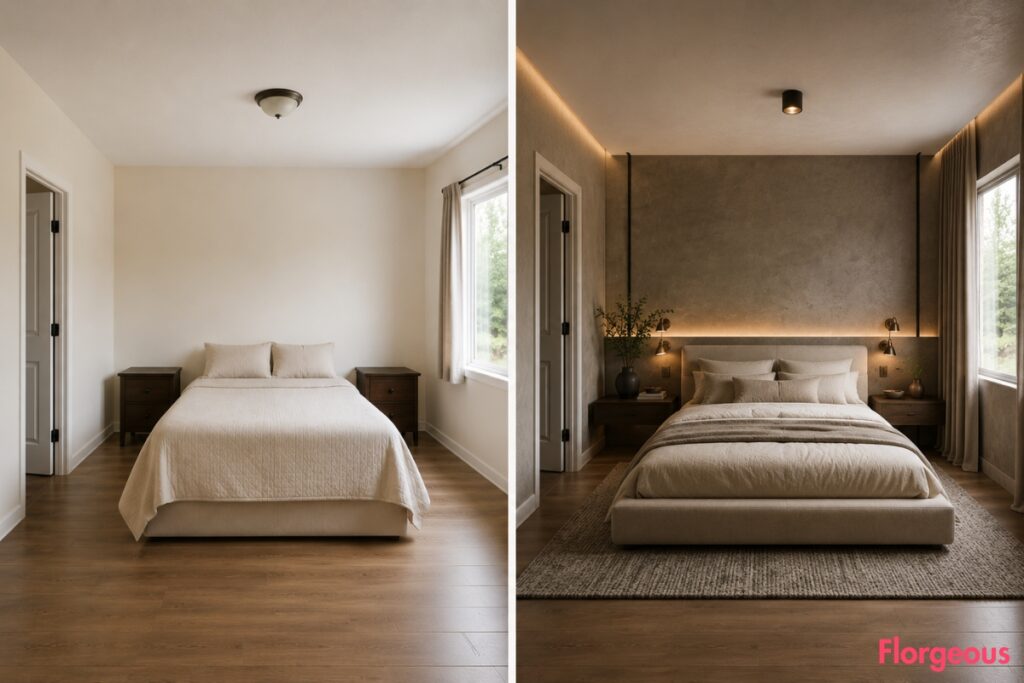
The starting bedroom is intentionally forgettable: warm off-white walls, a basic bed with neutral bedding, two bare nightstands, short curtains, simple flooring, a basic ceiling light, and almost no styling.
We kept that exact room, architecture, window, doorway, flooring, proportions, camera angle, and circulation locked. Then we reimagined it 27 different ways to see just how broad an Industrial Bedroom can actually be.
Some versions use brick or concrete, but many move well beyond those familiar cues. There is fluted glass, zinc, limestone, smoked timber, perforated metal, acoustic felt, oxide plaster, sculptural steel, warm neutrals, renter-friendly details, and even a softer textile-led approach.
The constant before room makes the differences much easier to see. Only the after changes.
1. Warm the Room With Brick and Dark Walnut
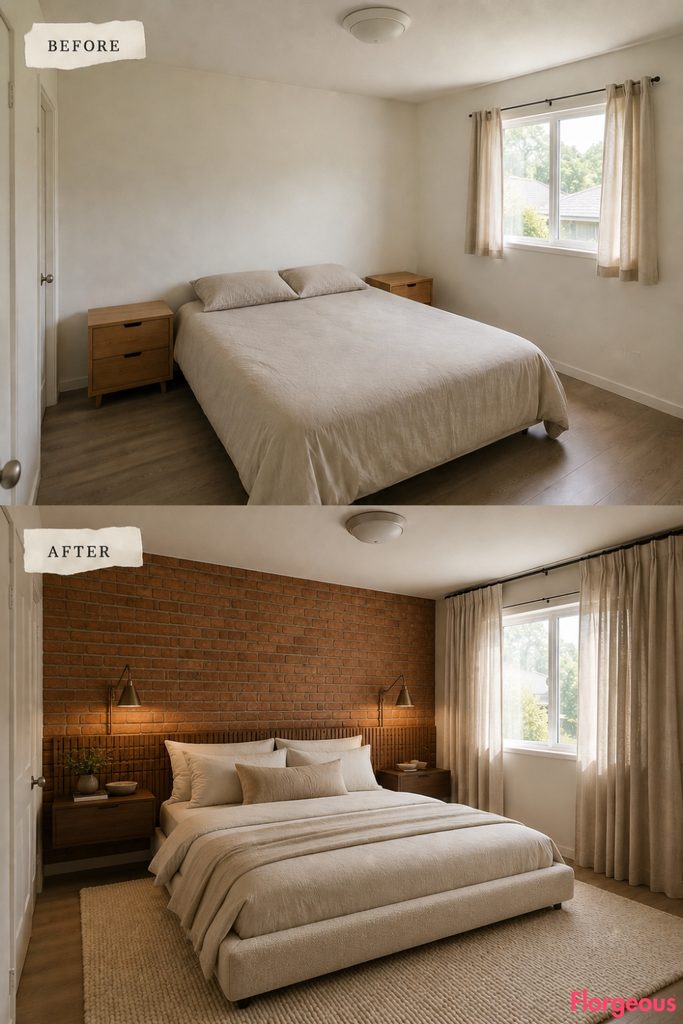
The first makeover uses the most recognizable industrial material, but keeps it disciplined. Warm red brick appears only behind the bed, balanced by a low oatmeal upholstered frame, dark walnut nightstands, bronze reading lights, ivory linen, and full-height flax curtains.
Designer Tip: One brick surface usually feels more convincing than wrapping the entire bedroom.
2. Replace the Feature Wall With a Microcement Monolith
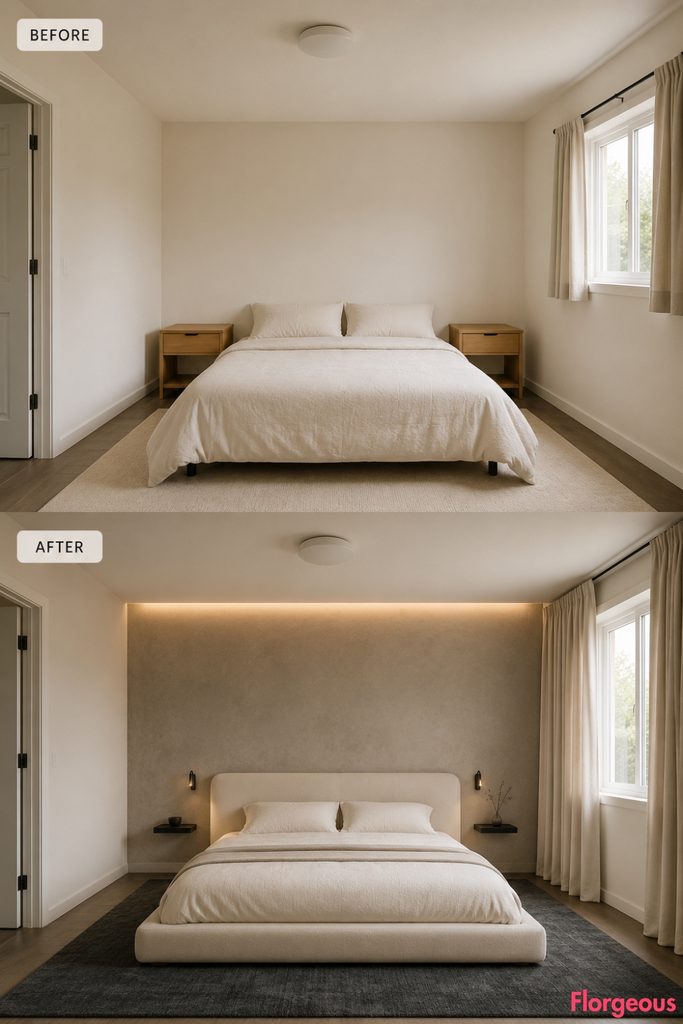
Here the visual weight comes from one seamless architectural surface rather than brick.
Warm-gray microcement wraps the central bed zone, with subtle projecting returns that make the headboard feel carved from the room itself. A low cream bed and tiny blackened-steel ledges keep the composition sharp but quiet.
3. Turn One Wall Into Fluted-Glass Storage
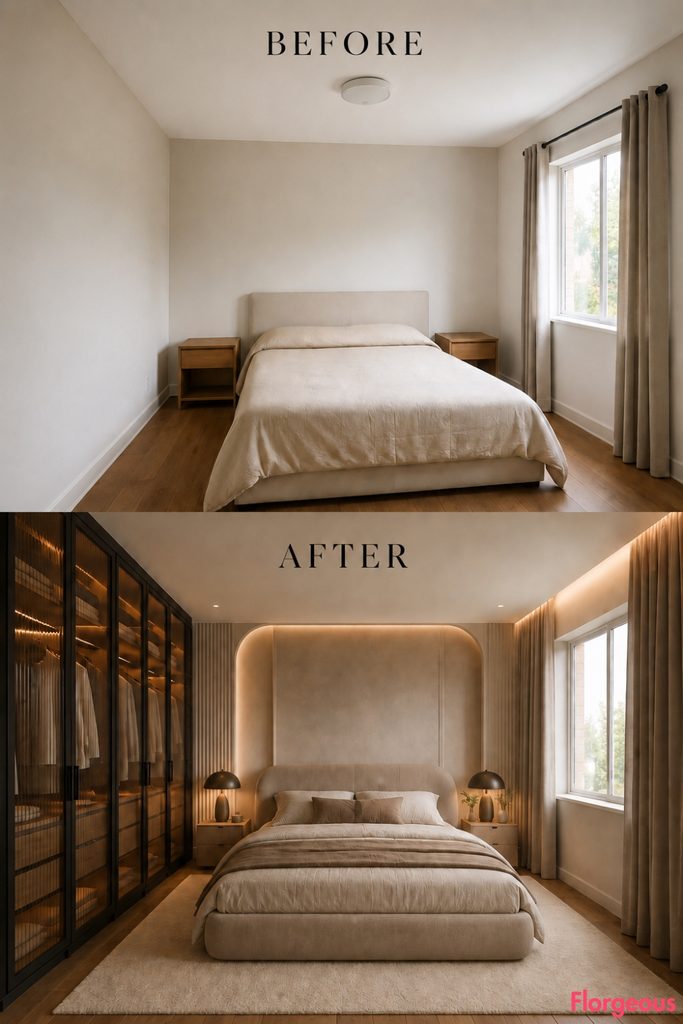
Instead of emphasizing the bed, make storage the industrial statement.
A floor-to-ceiling wardrobe combines slender dark-steel frames with warm fluted glass. Soft internal light makes the cabinetry glow, while a mushroom upholstered bed and pale rug keep the room restful.
4. Float a Smoked-Oak Platform Bed
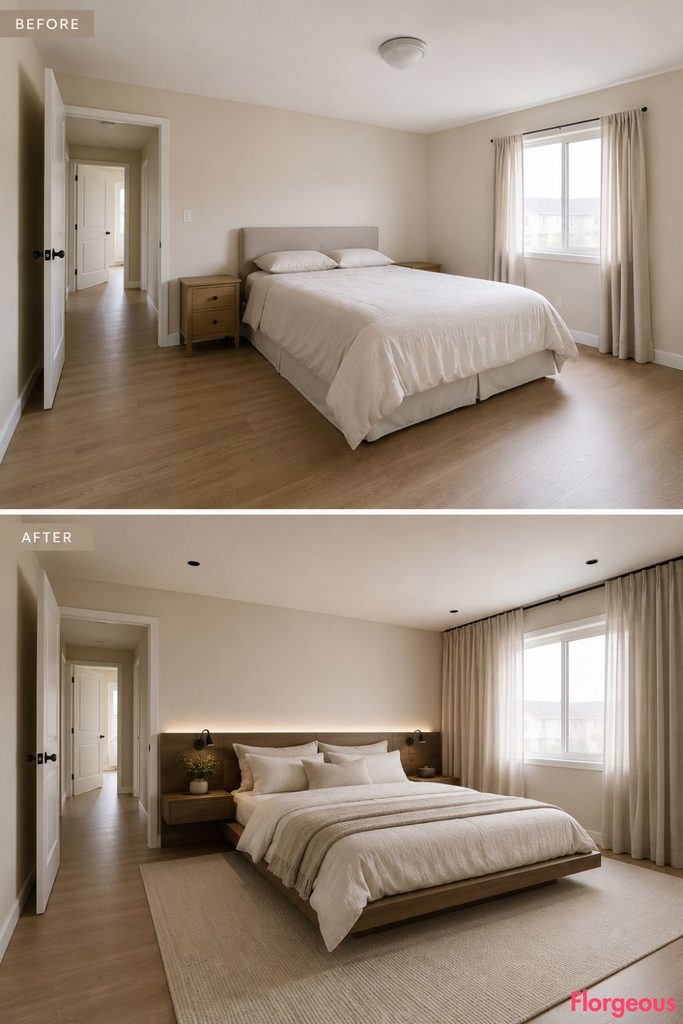
This transformation lets furniture create the industrial character.
A low smoked-oak platform extends beyond the mattress to form integrated bedside wings. A narrow blackened-steel shadow reveal behind the headboard makes the bed appear inserted into the wall.
Parchment bedding keeps the darker timber from dominating.
5. Try a Soft Beige Industrial Palette
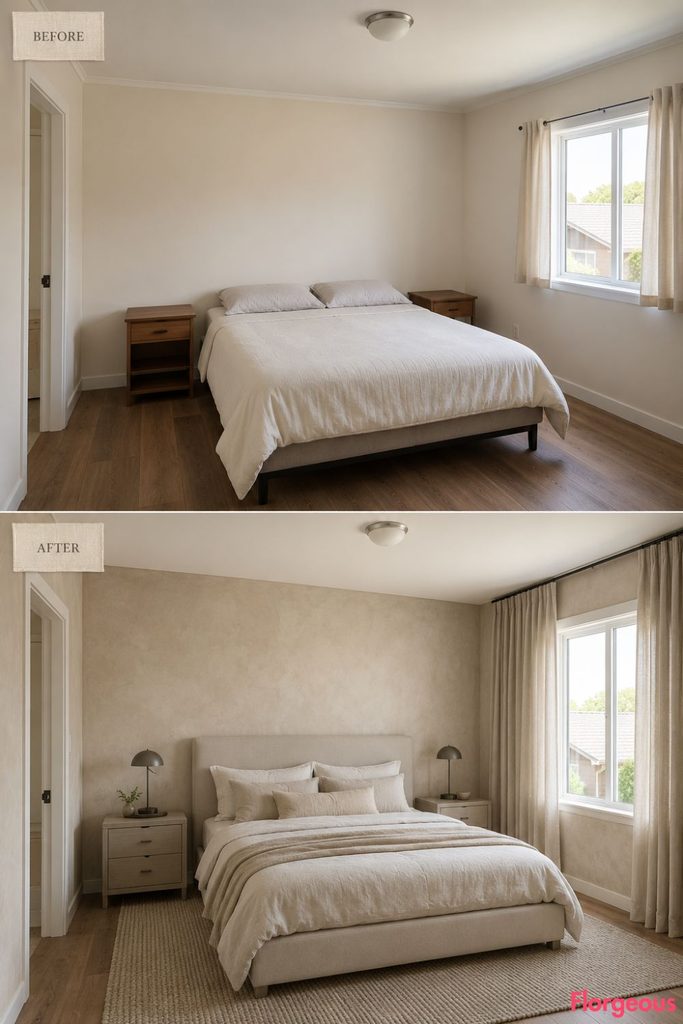
Industrial materials do not require a dark scheme.
Sandy mineral-plaster walls, oatmeal upholstery, pale ash tables, pewter hardware, woven wool, and flax bedding create a light interpretation. A slim gunmetal curtain track supplies just enough mechanical contrast.
Color Story: Pewter and weathered zinc feel gentler than solid black against pale neutrals.
6. Create a Dark Industrial Hotel Room
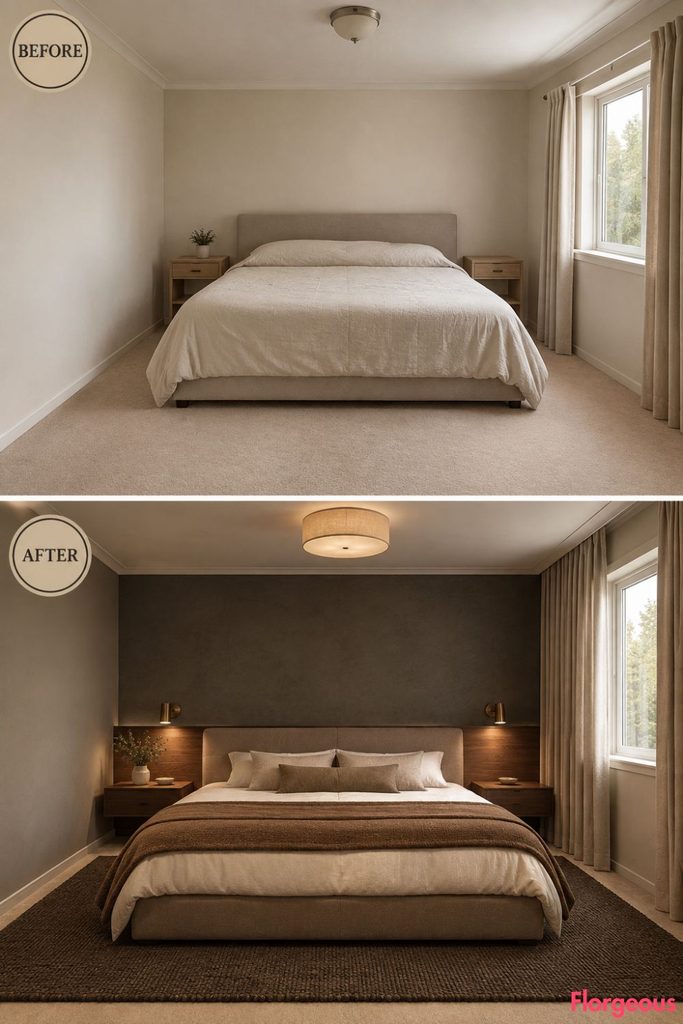
The dark version works through layering rather than painting everything black.
Charcoal plaster sits behind the bed, dark walnut forms a low horizontal band, and deep taupe covers the surrounding walls. A broad upholstered headboard, bronze reading lamps, ivory sheets, and tobacco textiles introduce warmth.
7. Put Reclaimed Timber on the Ceiling
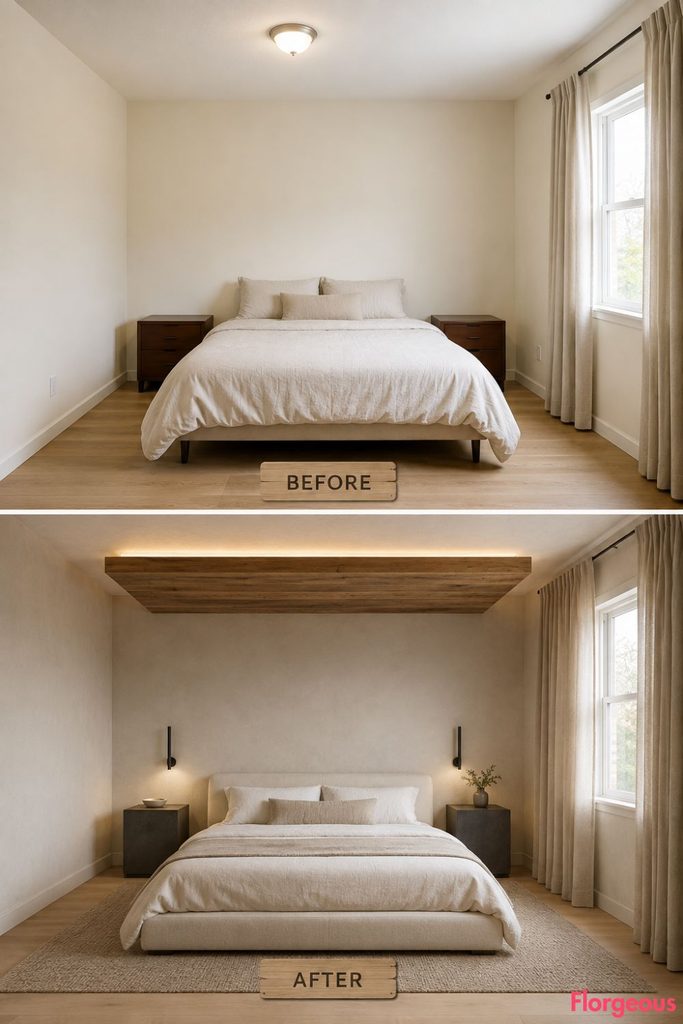
Rather than adding another feature wall, shift attention upward.
A shallow reclaimed-oak ceiling raft sits only over the bed zone, with integrated linear lighting underneath. The rest of the ceiling remains unchanged, so the room gains definition without feeling lower.
Common Mistake: Avoid covering an entire compact bedroom ceiling with dark timber.
8. Frame the Bed With a Steel Storage Portal
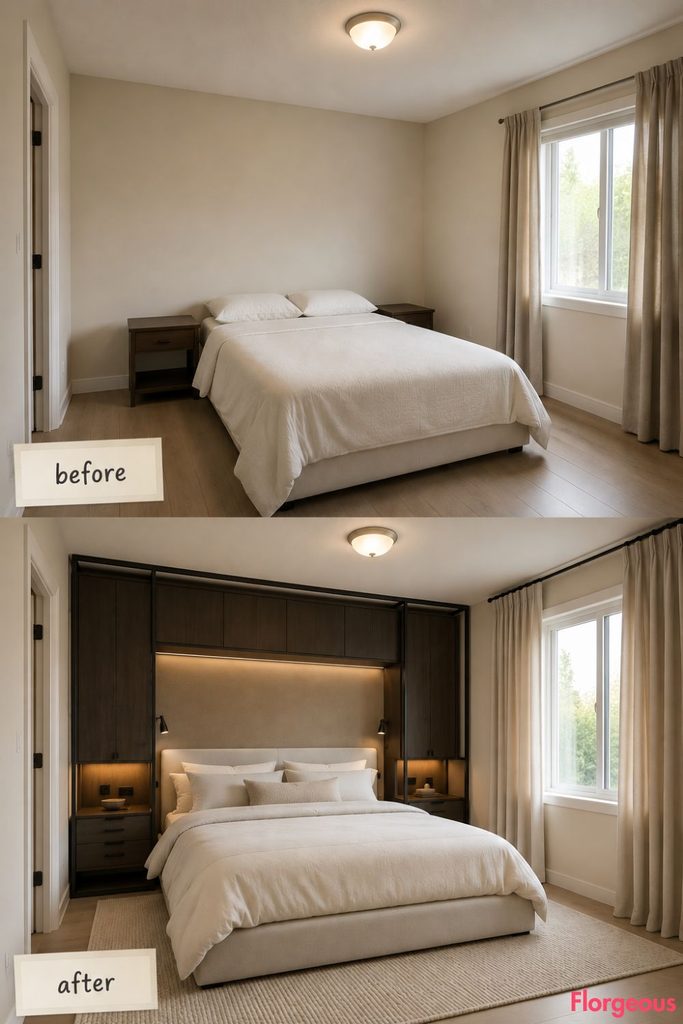
Here storage becomes architecture.
A slim blackened-steel portal surrounds the bed, supporting closed smoked-oak cabinetry above and beside it. Recessed bedside niches provide practical surfaces without adding freestanding furniture.
9. Lighten Brick With Chalky Limewash
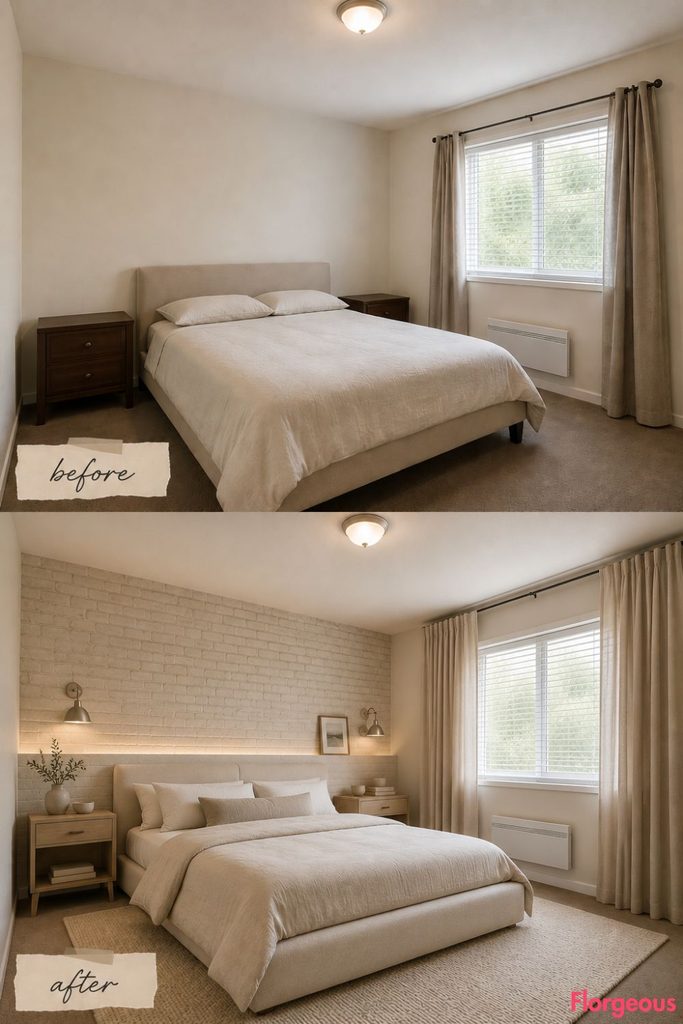
This version keeps masonry texture but removes most of the visual heaviness.
Pale limewashed brick behind the bed is paired with ash furniture, oatmeal upholstery, brushed-nickel sconces, cream linen, and an undyed wool rug.
The industrial reference is clear, but the room feels almost airy.
10. Use Oxide Red Instead of Gray
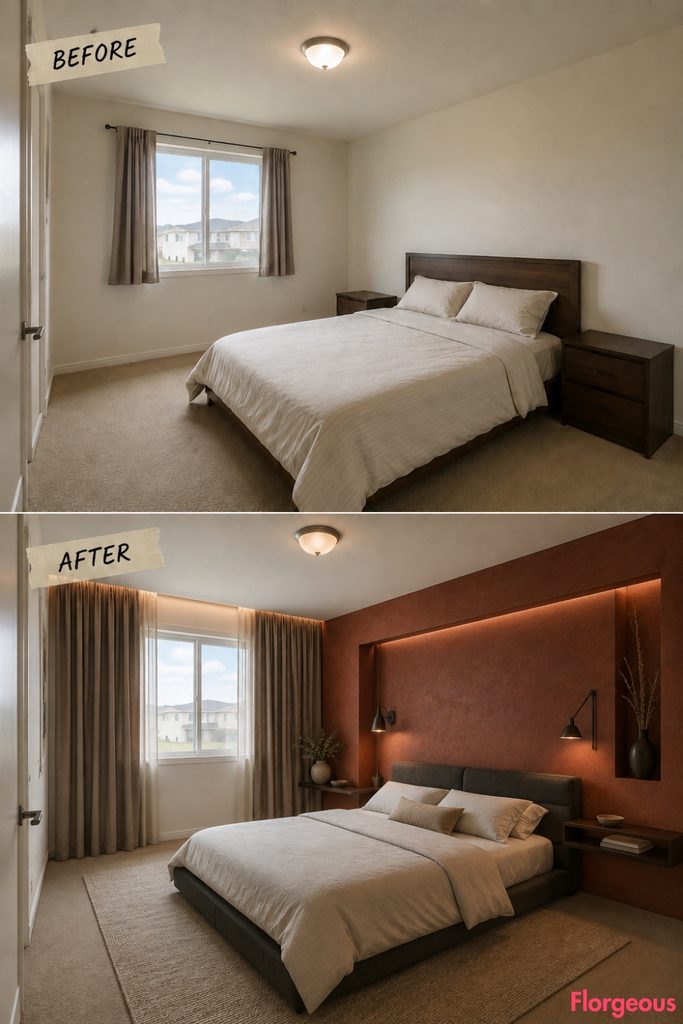
Industrial color can come from oxidized metal tones rather than literal metal.
An oxide-red mineral-plaster bed wall becomes the focal point, balanced by a charcoal upholstered bed, dark timber ledges, aged-metal reading lamps, bone bedding, and muted taupe curtains.
11. Carve Bedside Niches Into a Concrete-Look Wall
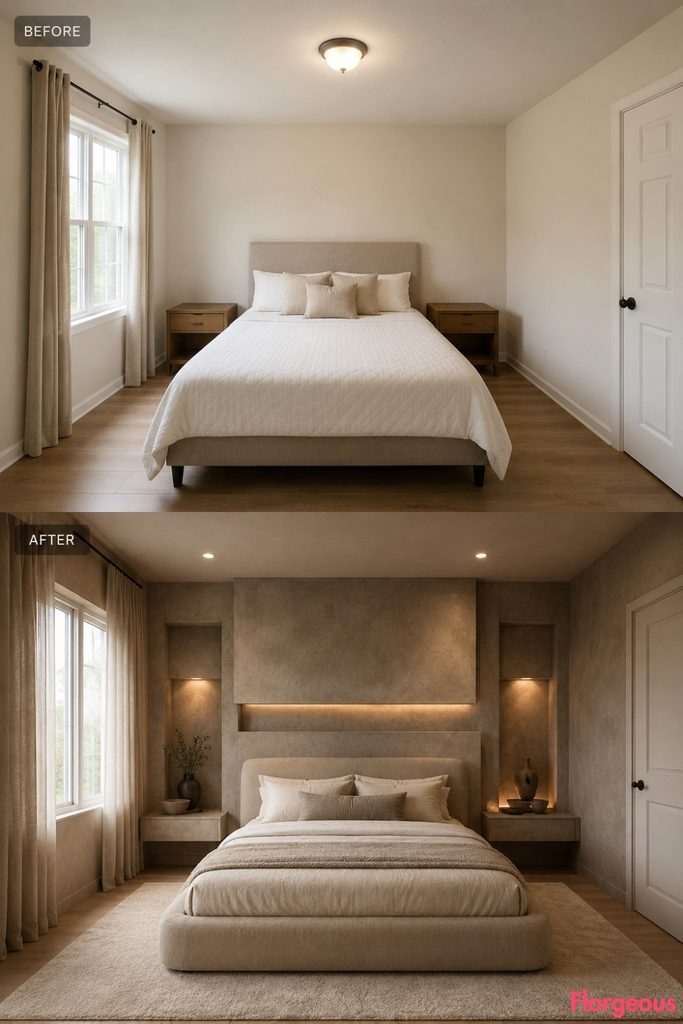
Conventional nightstands disappear entirely in this design.
A warm concrete-look wall contains two rectangular recessed niches at mattress height. Each niche has concealed illumination and enough room for a phone, book, and water.
A stone-colored upholstered bed softens the architecture.
Small Space Tip: Shallow surface-built niches can mimic this look without cutting deeply into an existing wall.
12. Make the Entire Makeover Renter-Friendly
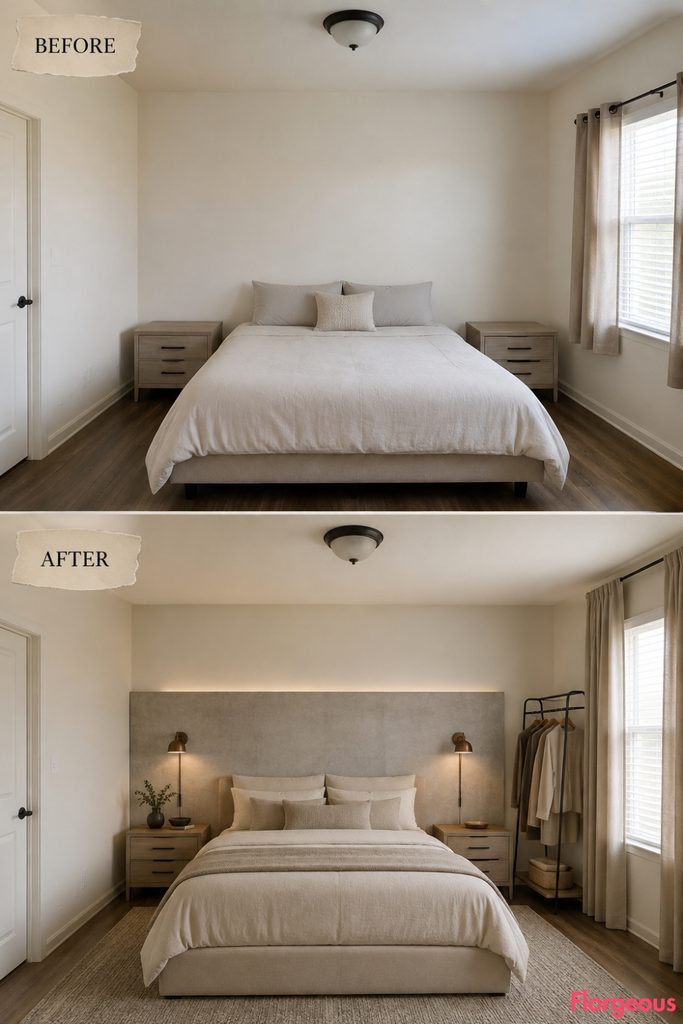
Nothing permanent is required here.
A removable concrete-effect panel sits behind the existing bed zone, plug-in bronze sconces replace rewiring, and a slim freestanding metal garment rail fits against a blank wall. Ceiling-height ready-made curtains create most of the architectural impact.
13. Replace Two Nightstands With One Long Rail
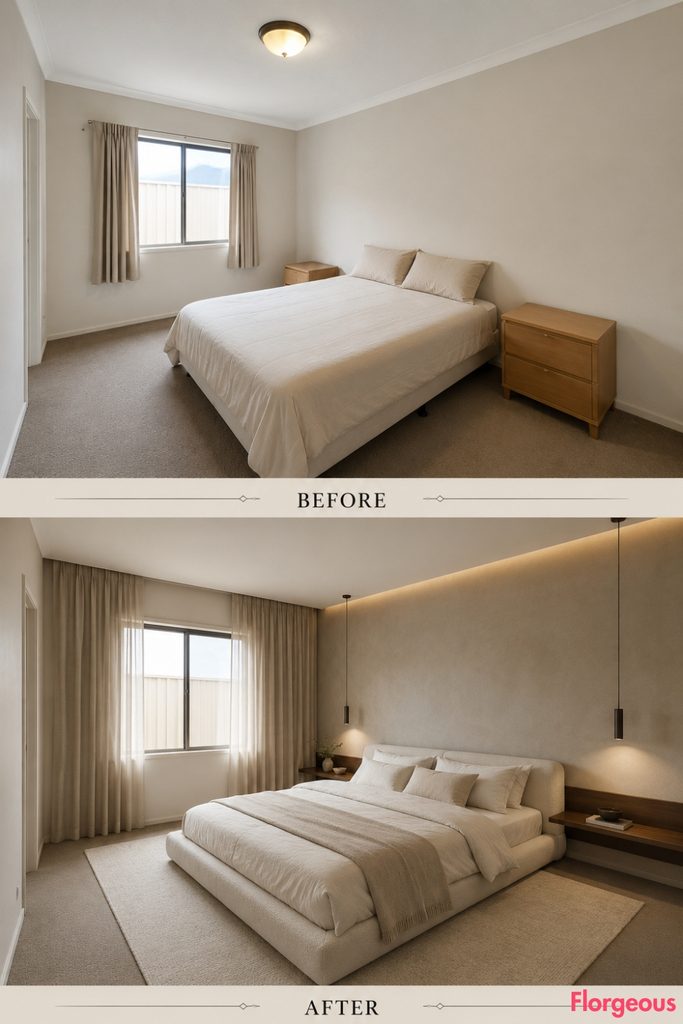
This compact design reduces visual clutter.
A slim smoked-oak shelf runs continuously behind the bed, acting as both bedside surfaces and display ledge. Two carefully positioned gunmetal ceiling-drop lights free even more floor space.
Lighting Tip: Keep pendant drops away from the pillow zone and high enough to avoid head contact.
14. Use a Steel-Grid Mirror Instead of a Fake Factory Window
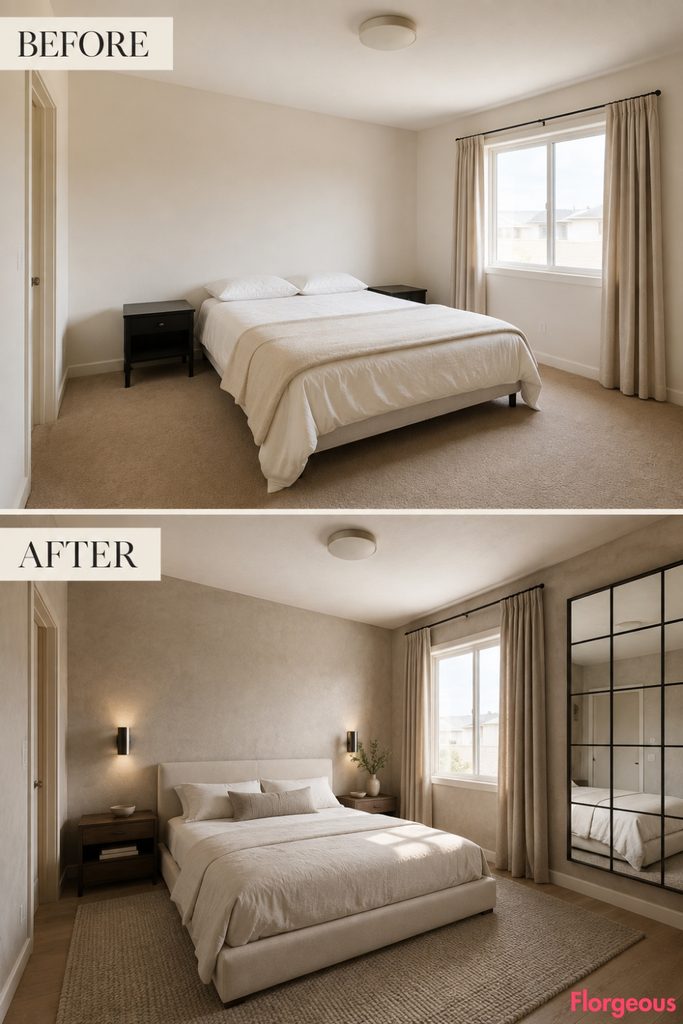
A large steel-grid mirror brings industrial geometry into the room without pretending there is another architectural opening.
Place it on one blank wall where it can bounce real daylight. Muted plaster, dark oak, and simple canvas upholstery complete the composition.
15. Mix Walnut Cabinetry With Perforated Bronze
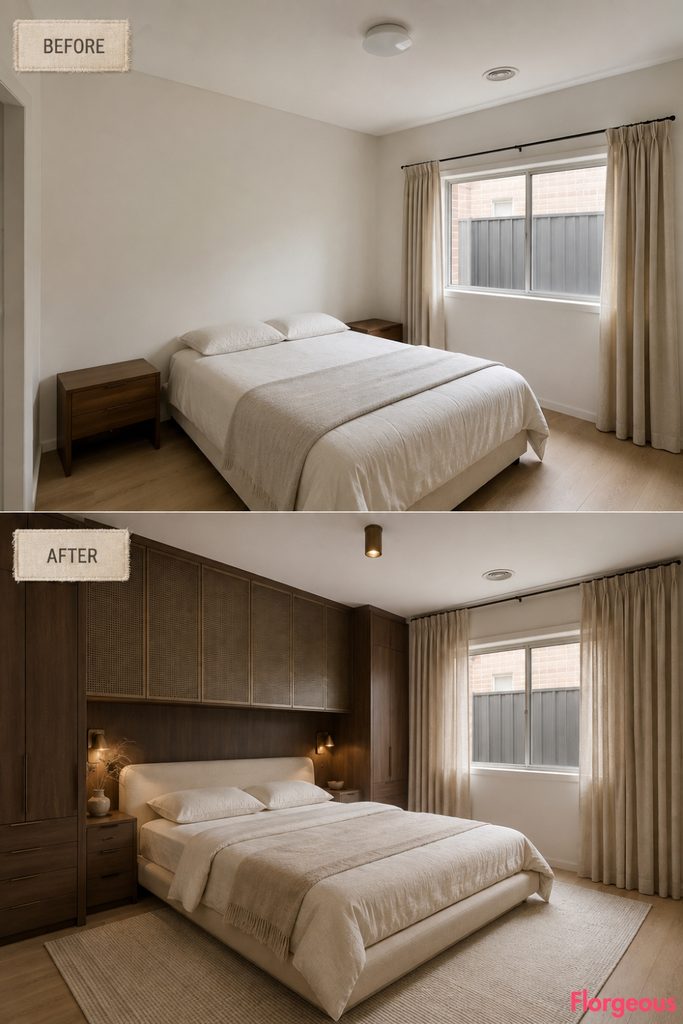
Perforated metal brings workshop character without the heaviness of solid steel.
Dark-walnut cabinetry incorporates fine bronze-metal perforated fronts. A cream bed, flax bedding, and pale rug prevent the storage wall from overwhelming the sleeping area.
16. Put a Curved Bed Against Hard Mineral Surfaces
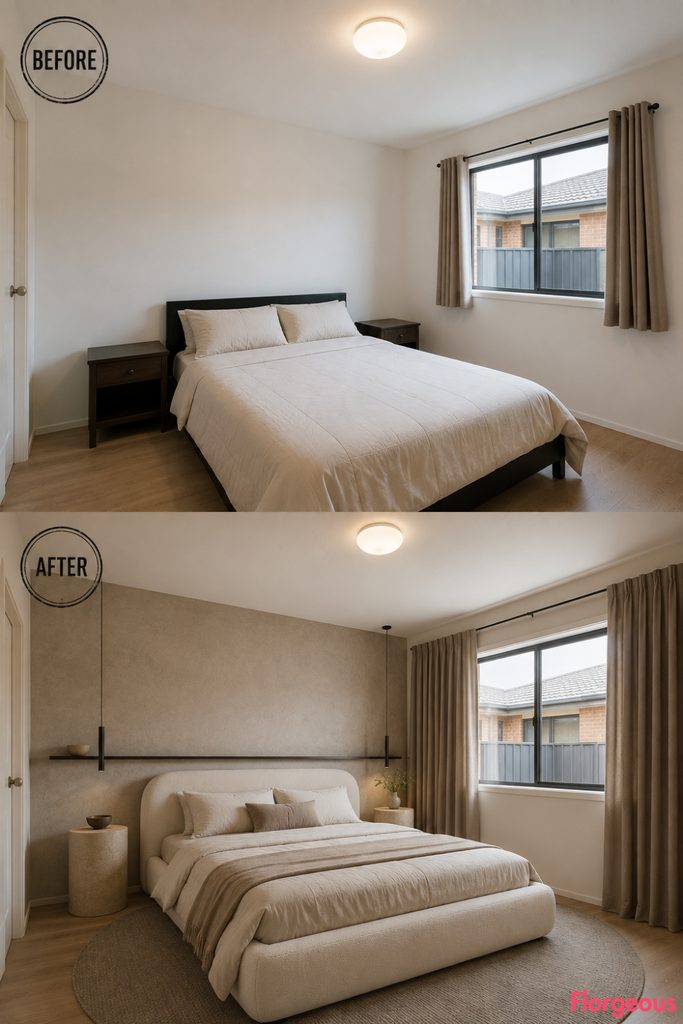
One rounded silhouette completely changes the mood.
A bone-colored bed with a curved upholstered headboard sits against warm-gray textured render. Cylindrical cast-stone bedside plinths continue the sculptural language, while one narrow metal ledge adds a precise industrial line.
17. Make Industrial Style Feel Luxurious With Limestone
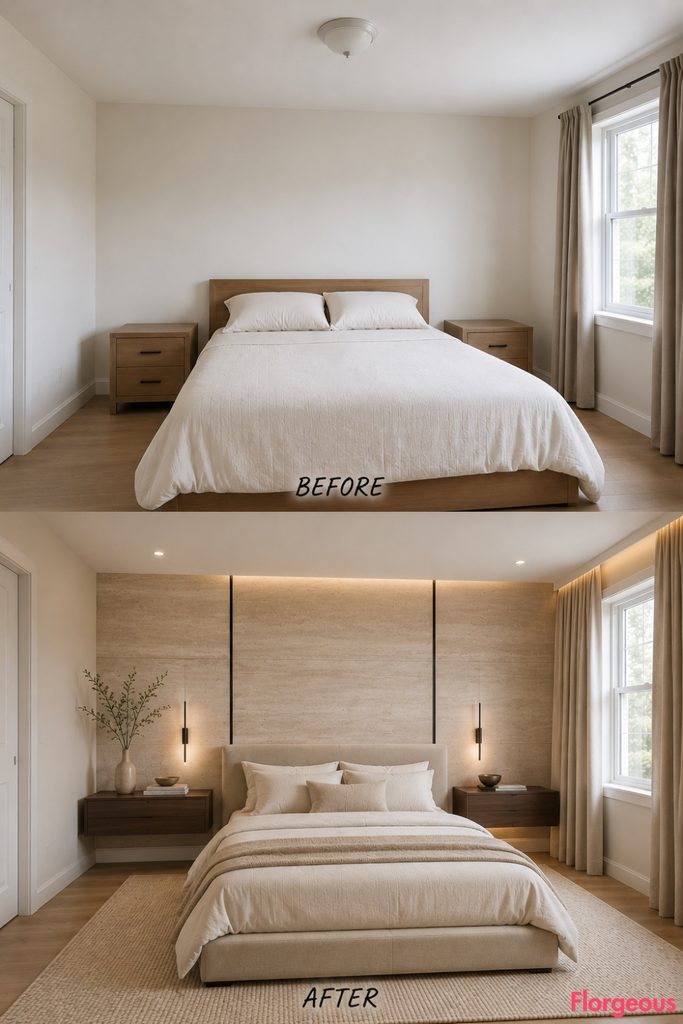
This room replaces distressed materials with precision.
A broad honed-limestone headboard wall is edged by two slender blackened-steel reveals. Floating dark-walnut drawers, an oatmeal bed, warm recessed lighting, and layered ivory bedding give the design a restrained hotel quality.
18. Refine the Vintage Factory Look
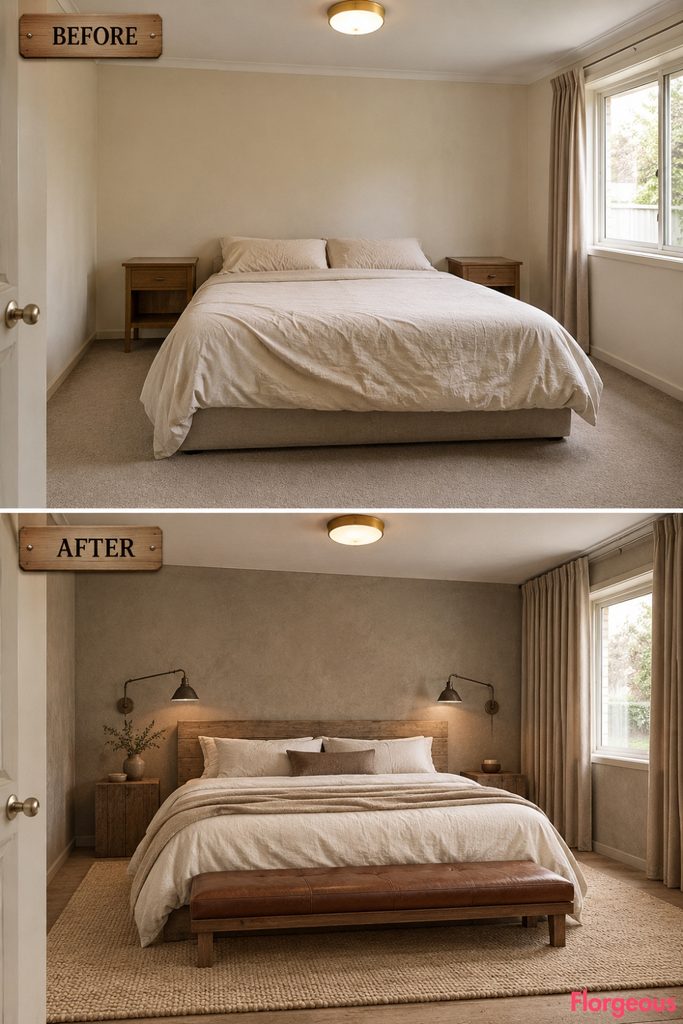
Vintage industrial can work without signs, gears, or decorative machinery.
Use an understated weathered-timber bed, aged-iron swing-arm reading lights, one tobacco leather bench, and muted gray plaster. Linen curtains and a broad wool rug keep the room grounded and comfortable.
19. Build an Ultra-Slim Steel Canopy
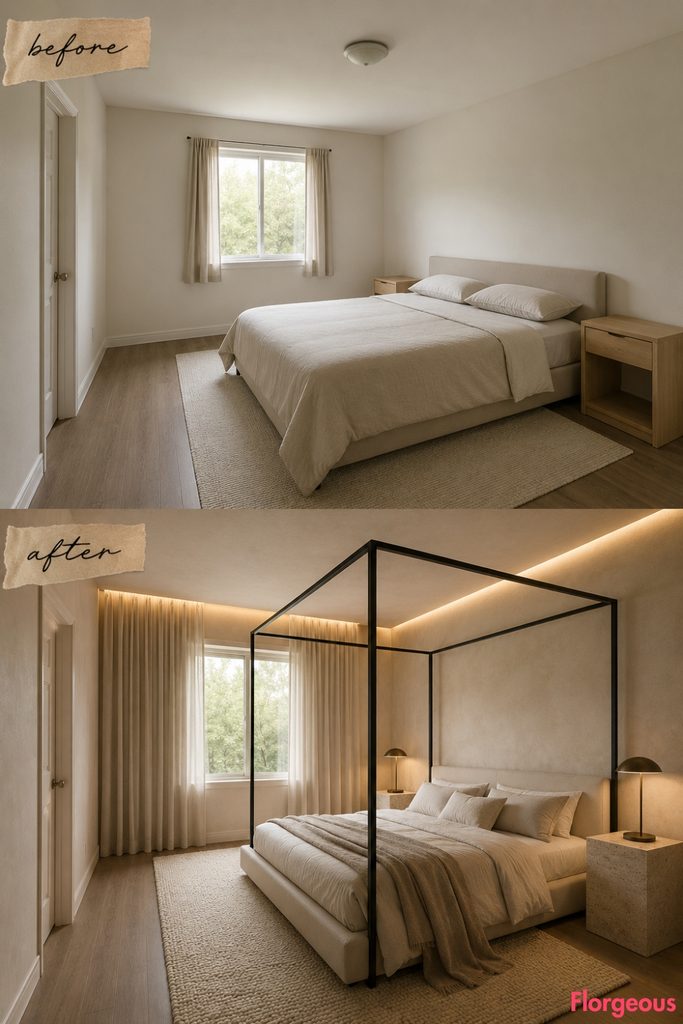
Metal becomes three-dimensional architecture in this makeover.
A very slender blackened-steel canopy outlines the bed without curtains or ornate decoration. Putty plaster walls, limestone bedside pedestals, oatmeal bedding, and soft uplighting keep the structure from feeling heavy.
20. Add a Zinc-Lined Horizontal Datum
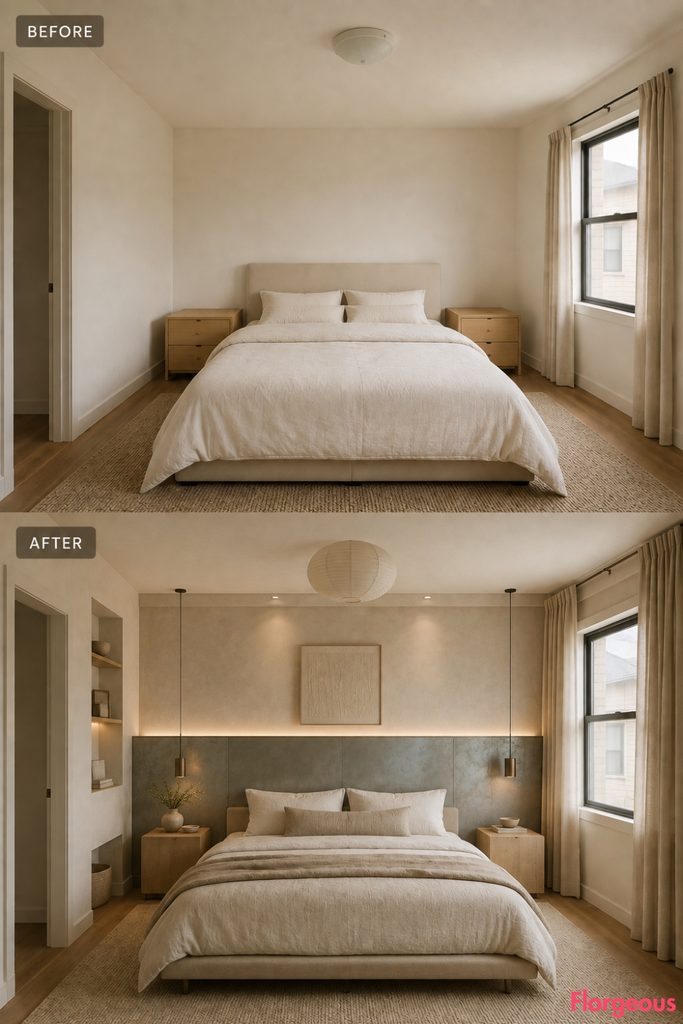
Instead of covering a whole wall, introduce metal as a lower architectural band.
Softly patinated zinc panels run behind the bed to roughly headboard height, with pale mineral plaster above. A flax upholstered bed and light oak furniture keep the finish from becoming too cold.
Material Note: Matte zinc should show subtle tonal variation, not a shiny chrome-like reflection.
21. Use Acoustic Felt as the Industrial Wall Treatment
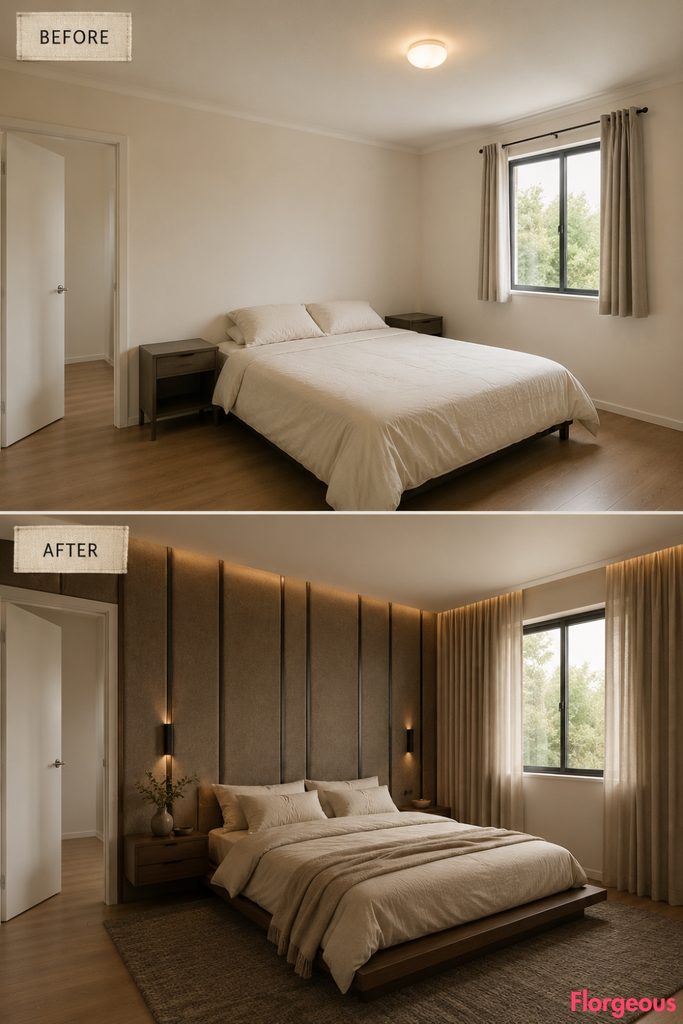
This direction is built around sound and texture rather than masonry.
Deep taupe wool-felt panels alternate with narrow blackened-steel strips behind the bed. The result has the rhythm of industrial acoustic architecture while remaining soft enough for sleeping.
A low walnut bed and diffuse warm lighting complete the scheme.
22. Build a Workshop-Inspired Dressing Station
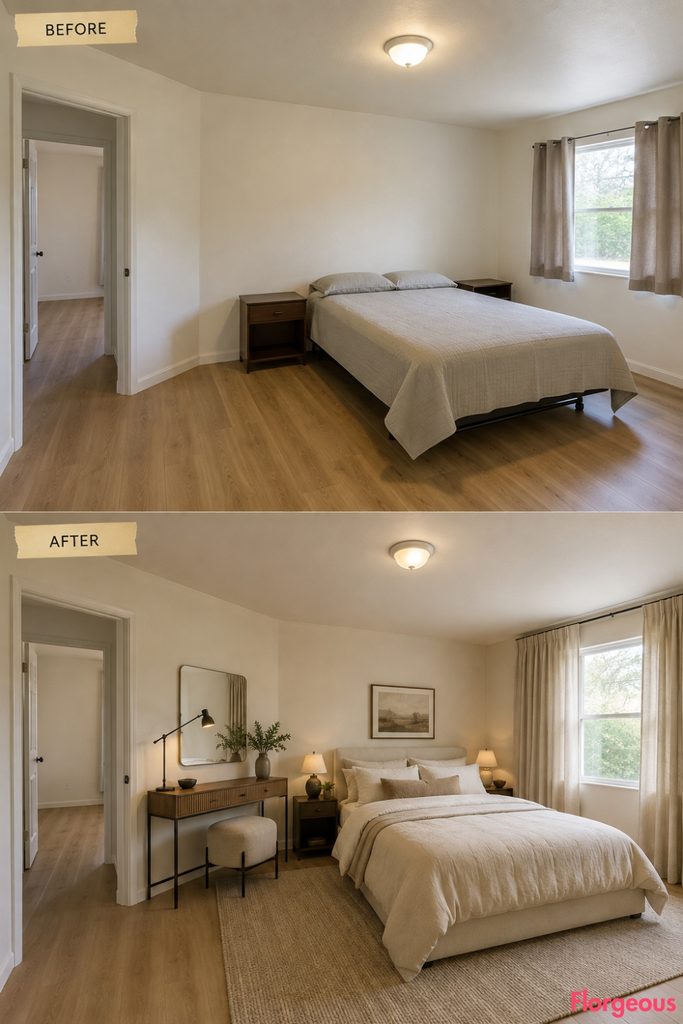
Here the industrial focal point moves away from the bed.
A slim steel-framed oak dressing console occupies one blank wall, with shallow ribbed-metal drawers, a frameless mirror, compact stool, and articulated task light. The bed remains simple so the workstation reads as one purposeful composition.
23. Try a Deep Olive Foundry Palette
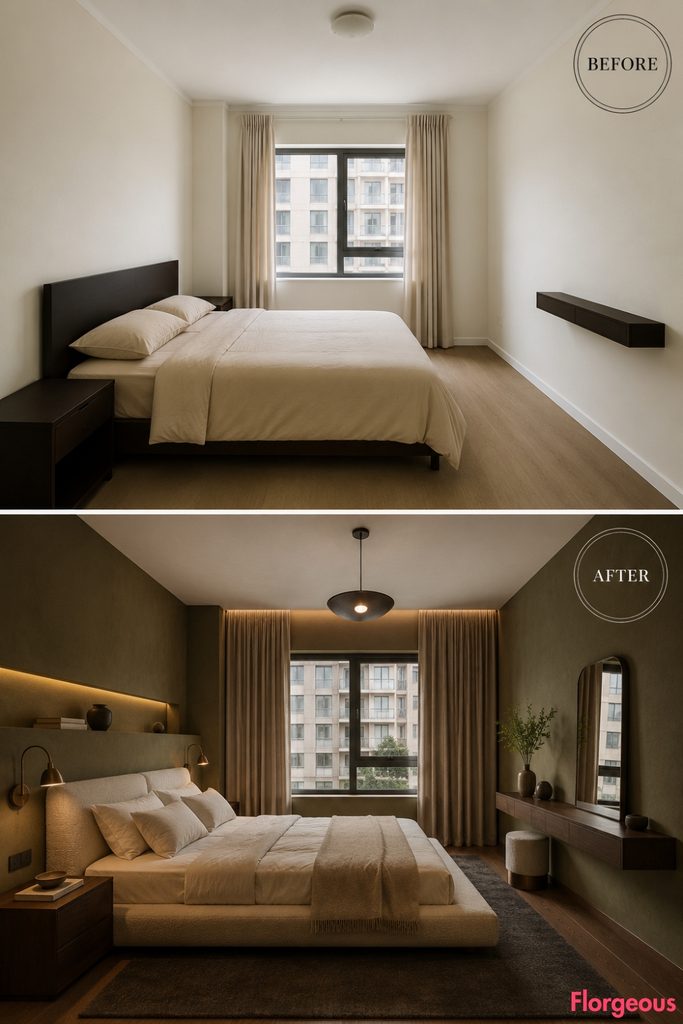
Industrial rooms do not need to stay within gray, rust, and brown.
Deep olive mineral plaster creates a moody backdrop, paired with patinated bronze lighting, smoked glass, dark walnut, and parchment bedding. The muted green references old painted metal without relying on literal factory props.
24. Make a Ceiling Gantry the Main Feature
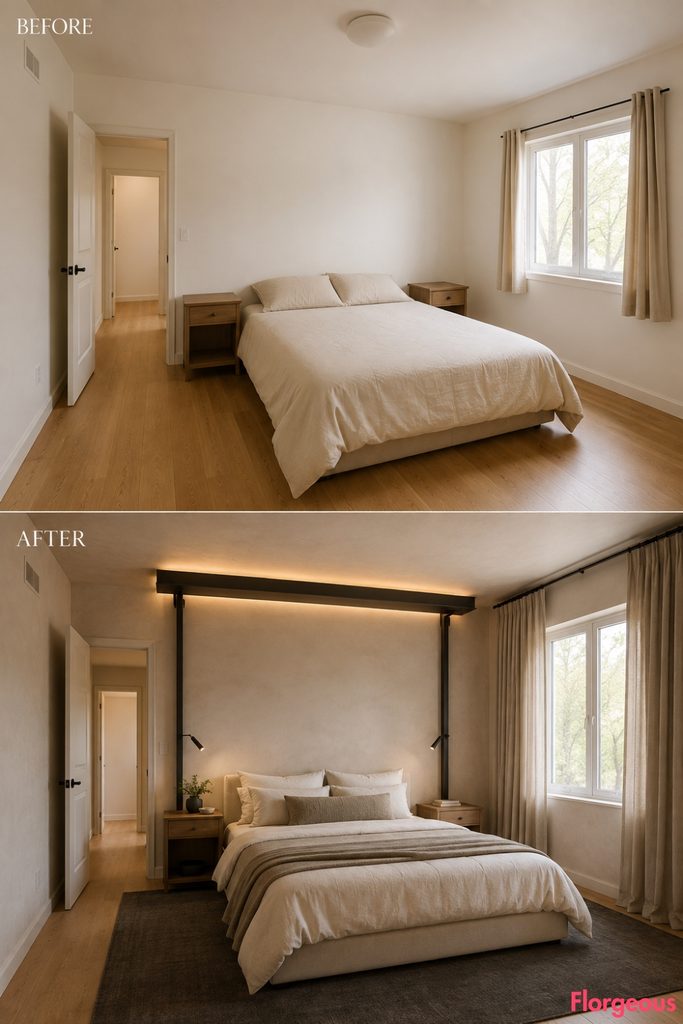
Lighting becomes architecture in this concept.
A narrow blackened-steel gantry runs above the bed, supporting two adjustable reading lights and one indirect uplight. The walls stay pale and restrained so the overhead structure remains the unmistakable industrial gesture.
It feels technical without becoming theatrical.
25. Conceal Storage Behind an Expanded-Metal Screen
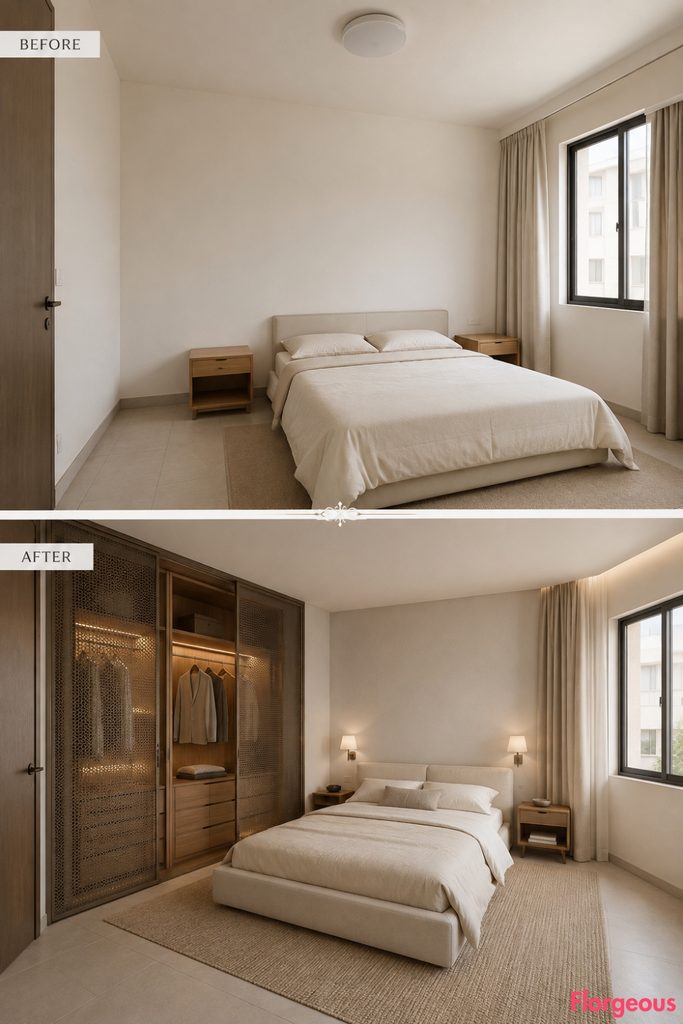
This design uses industrial mesh in a functional way.
A slim sliding screen of fine expanded metal conceals a shallow wardrobe along one wall. Warm oak inside the storage creates contrast when viewed through the perforations.
The bed stays low and neutral, preventing the screen from competing with too many other features.
26. Create a Headboard From Board-Formed Concrete Fins
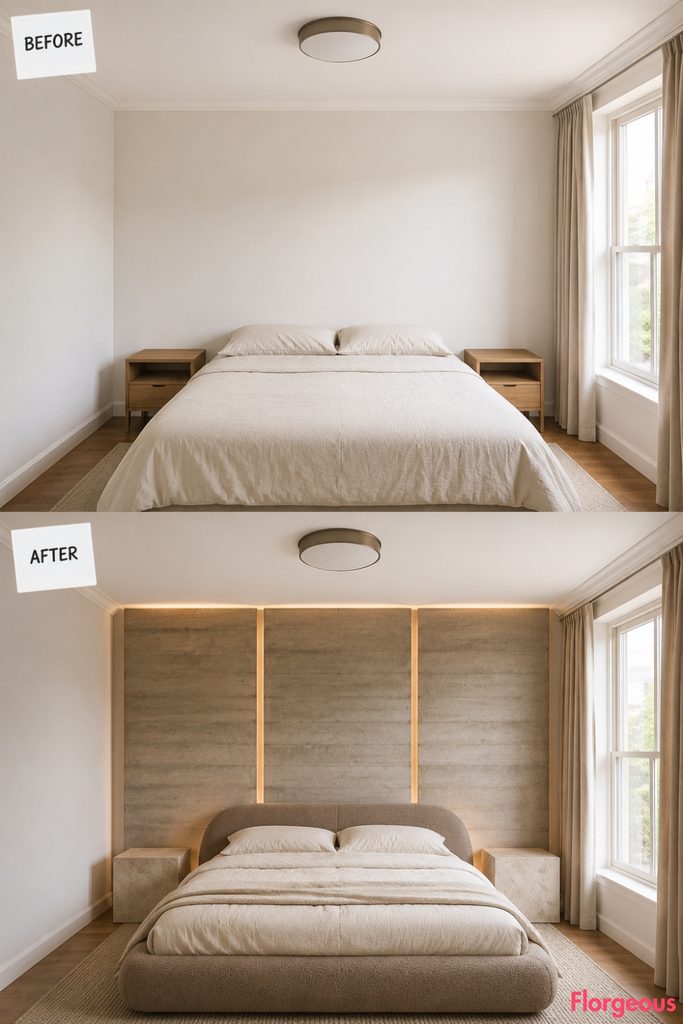
Rather than one continuous concrete wall, this makeover uses sculptural depth.
Three broad board-formed concrete fins sit behind the bed with narrow shadow gaps between them. Concealed light catches the texture, while the low upholstered bed remains soft and quiet.
The result feels almost like industrial sculpture.
27. Finish With a Textile-Wrapped Soft Industrial Cocoon
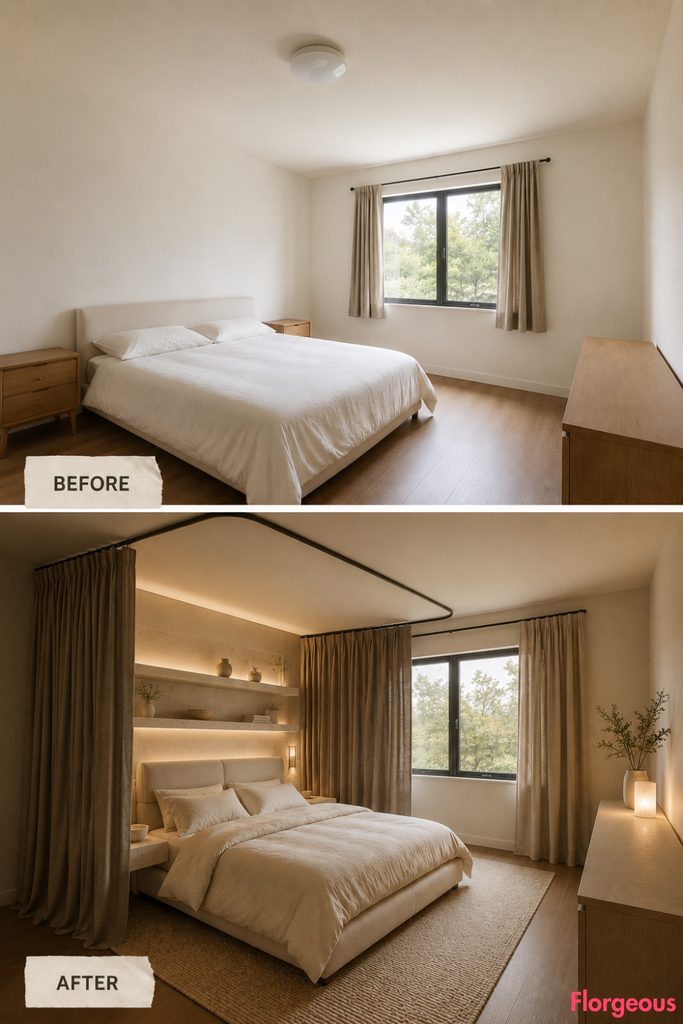
The last version deliberately flips the expectation that industrial bedrooms should showcase hard surfaces.
A visible dark-bronze ceiling track wraps only the bed zone, carrying heavy tobacco-flax curtains that can partially cocoon the headboard without blocking the window. Inside sits a pale upholstered bed, limestone side shelves, and very soft indirect lighting.
The exposed track provides the industrial structure. The fabric supplies the comfort.
Choosing an Industrial Look That Will Actually Work in Your Bedroom
The biggest lesson across these 27 rooms is that industrial design becomes more convincing when one idea leads the scheme. Brick, zinc, fluted glass, concrete, steel, walnut, acoustic felt, or an architectural lighting structure can each provide enough character on its own.
Start with the room itself. Smaller bedrooms usually respond well to pale plaster, limewashed brick, lighter timber, integrated bedside surfaces, and reflective glass. Generous daylight gives you more freedom to use charcoal, olive, walnut, oxide red, or heavier metal detailing.
Rental restrictions do not rule the style out either. Removable panels, plug-in lighting, ready-made curtains, freestanding rails, mirrors, hardware, and furniture can create a strong industrial mood without rebuilding the shell.
For any Industrial Bedroom, choose the dominant hard material first. Then soften it deliberately with bedding, upholstery, curtains, rugs, and warm light. If the bed remains comfortable, the route through the room stays clear, and the window still works properly, the result is far more likely to feel like a bedroom rather than a themed set.