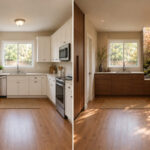
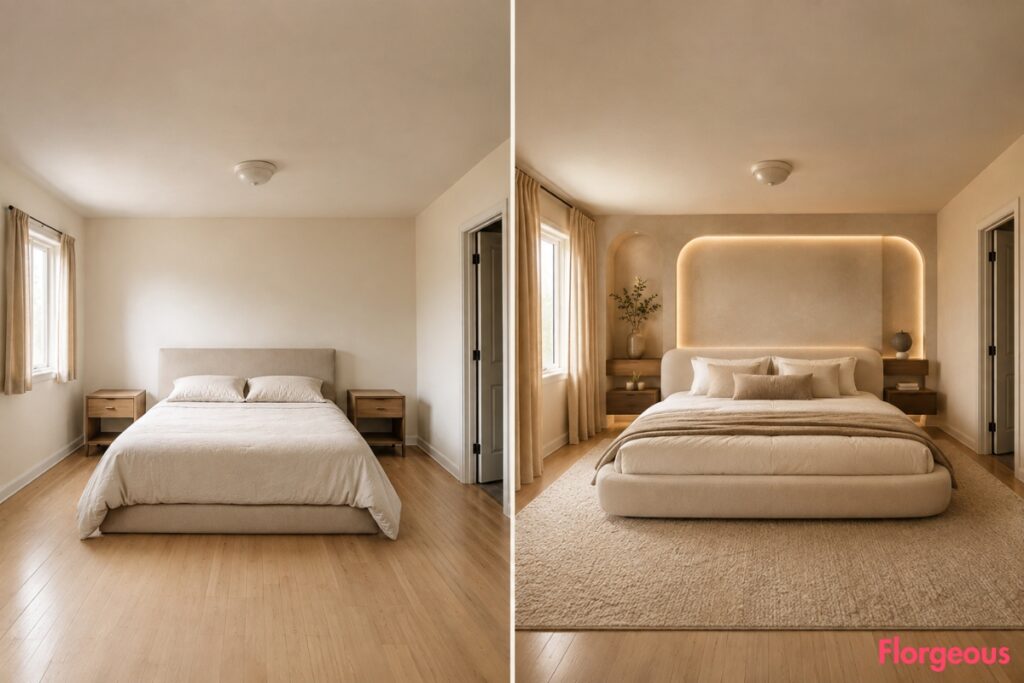
A builder-grade bedroom can have everything it technically needs and still feel unresolved. A basic bed, two nightstands, neutral walls, short curtains, and a ceiling light create a usable room, but not necessarily one you remember.
So we kept that exact ordinary bedroom as our starting point and reimagined it 27 completely different ways. These Contemporary Bedroom ideas show how dramatically one fixed space can change through proportion, layout, color, material, lighting, storage, and architectural detail.
The bedroom shell never changes. The doorway, window, flooring footprint, ceiling height, room dimensions, and practical circulation stay intact. Only the design direction changes, making it easier to see which ideas could work in a real home.
1. Build the Bed Into a Broad Smoked-Walnut Composition
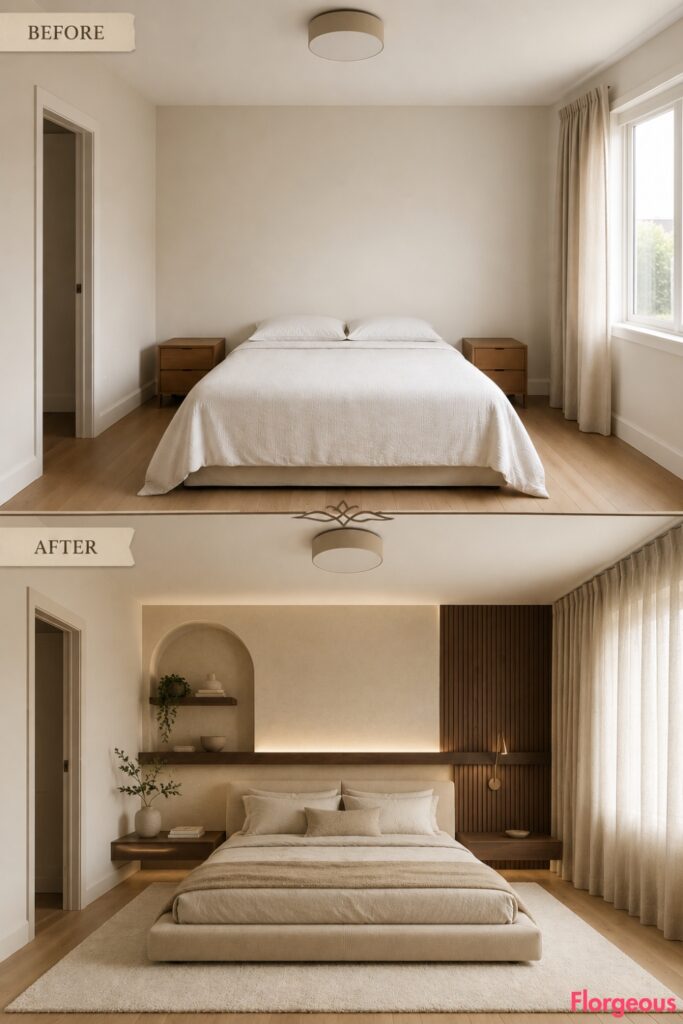
Start with one strong horizontal gesture.
Before: Warm off-white walls, basic neutral bed, bare nightstands, short curtains, basic ceiling light, simple flooring, and minimal styling.
After: A low oatmeal bed sits against an extra-wide smoked-walnut headboard panel with floating bedside ledges and narrow bronze reading lights. An ivory wool rug and full-height flax curtains soften the timber.
Why it works: One continuous surface makes separate furniture pieces read as architecture.
2. Create a Quiet Boutique-Hotel Bedroom
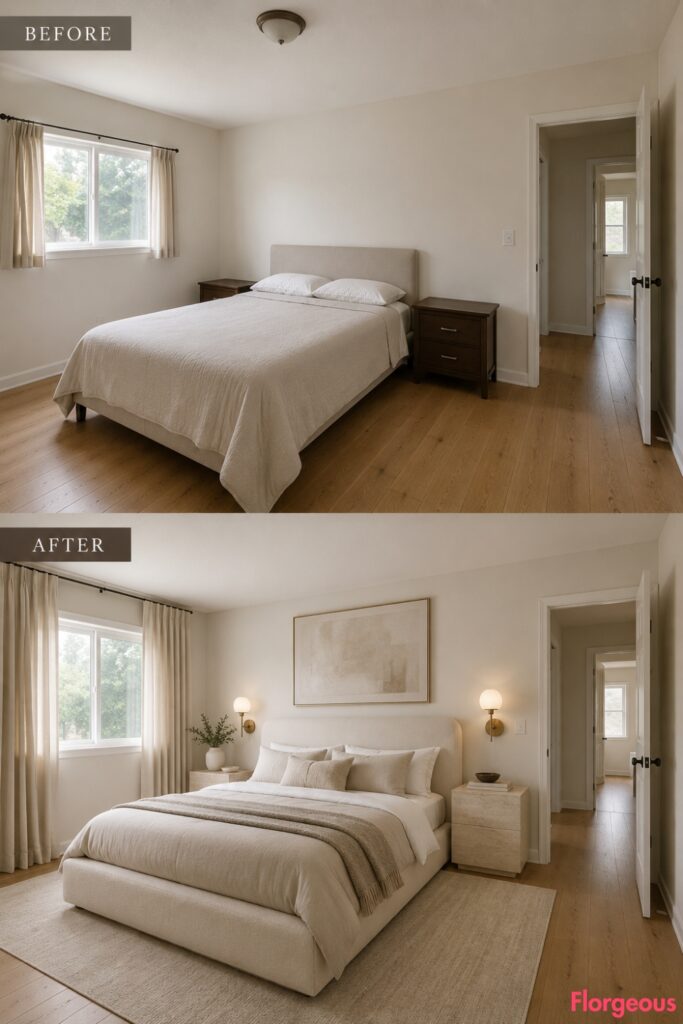
This version relies on symmetry rather than dramatic architecture.
The same plain room becomes calmer with a broad cream upholstered bed, two pale stone nightstands, matching opal-glass wall lights, crisp ivory bedding, an oatmeal coverlet, and generous floor-to-ceiling curtains.
A single large tonal artwork finishes the bed wall without making it busy.
Designer Tip: Keep bedside lighting slightly below eye level when sitting in bed to create a softer hotel effect.
3. Make the Bedroom Low, Linear, and Architectural
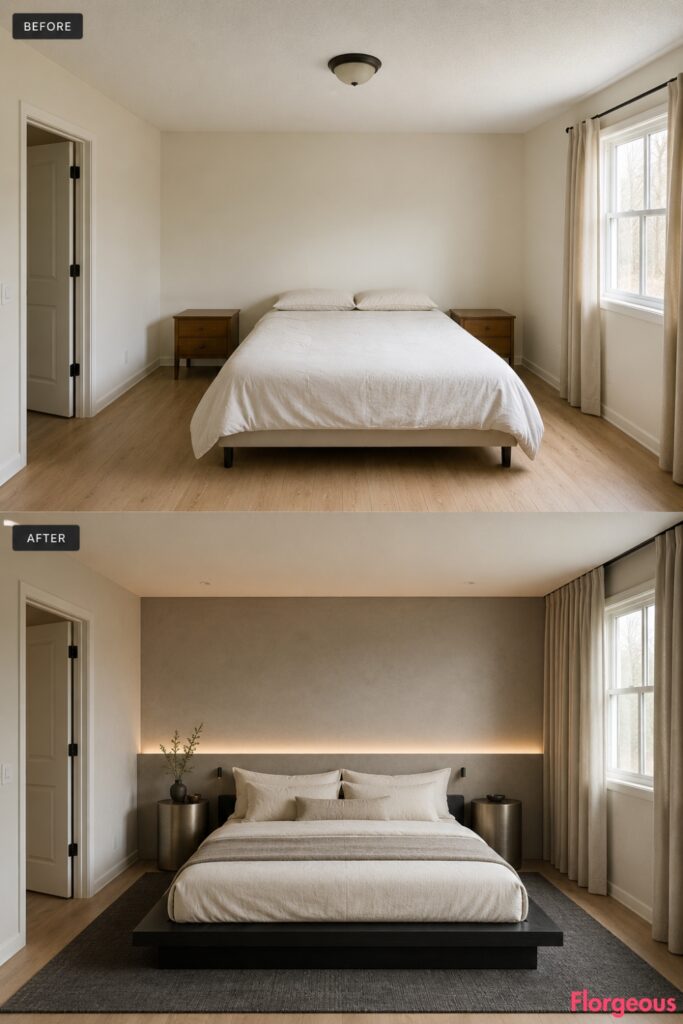
Instead of adding softness everywhere, emphasize clean horizontal lines.
Replace the original furniture with a low black-oak platform bed, cylindrical brushed-metal nightstands, a warm-gray microcement bed wall, and one restrained recessed linear light.
Crisp white bedding and a charcoal rug give the composition sharper contrast.
4. Let Tobacco Curtains Become the Focal Point
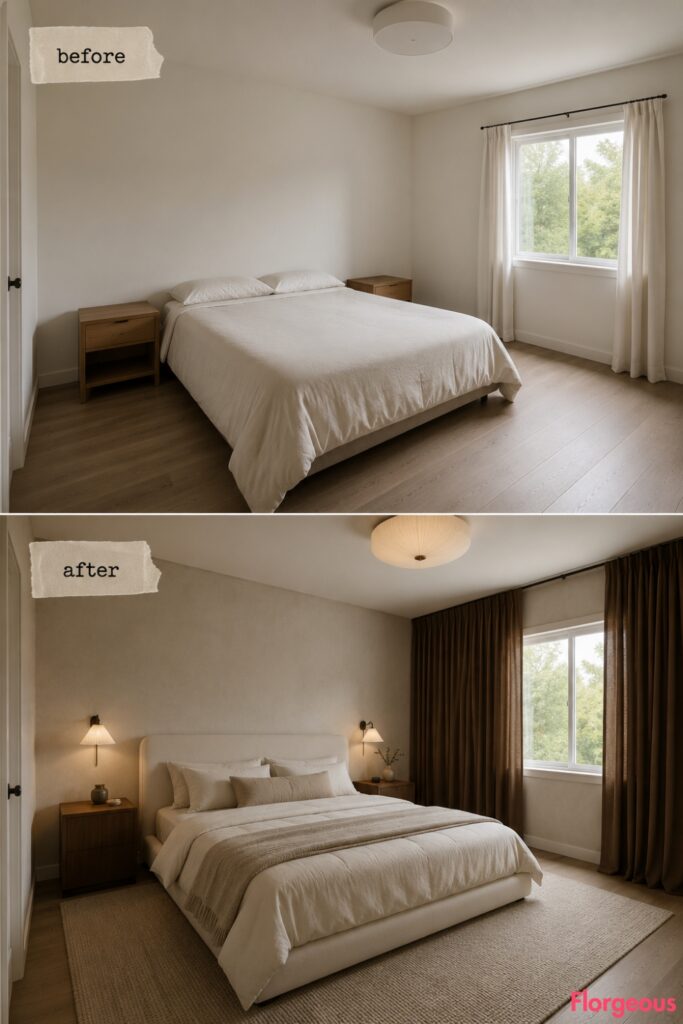
The strongest feature does not always have to sit behind the bed.
In this makeover, tall tobacco-colored curtains frame the existing window from ceiling to floor. A pale upholstered bed, chalky walls, compact walnut cubes, and creamy bedding stay visually quiet so the fabric carries the room.
Budget Version: Buy ready-made curtains in extra-long lengths and mount the track as close to the ceiling as possible.
5. Wrap the Bed in Seamless Mushroom Storage
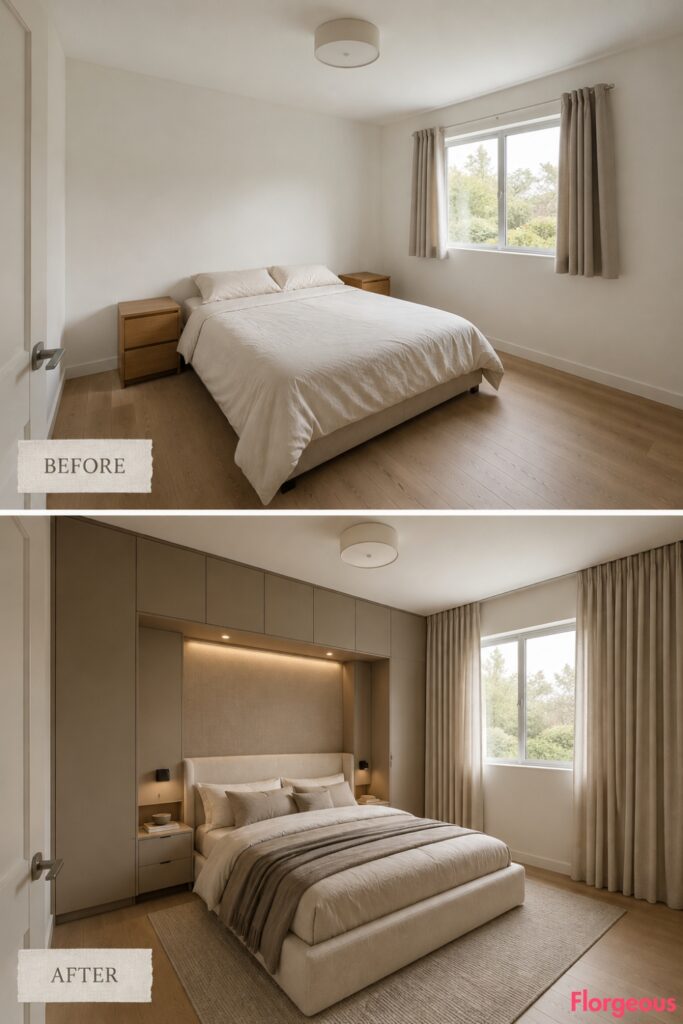
Storage becomes the architecture here.
Full-height matte mushroom cabinetry occupies one safe wall and wraps around a recessed bed niche. The niche is lined in warm taupe upholstery, with integrated ledges and concealed bedside lighting.
The room feels organized because freestanding storage disappears.
Small Space Tip: Modular wardrobes painted to match the wall can create a similar effect without fully custom joinery.
6. Introduce Eucalyptus Green With Pale Oak
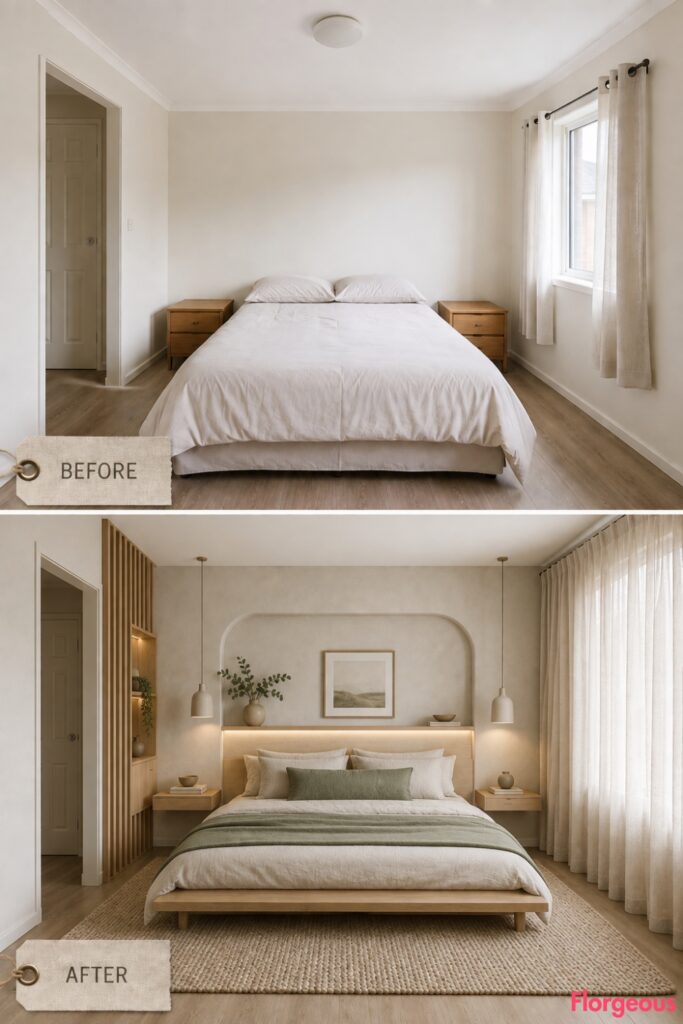
Contemporary design does not need to mean an all-beige palette.
Use a slim pale-oak bed, pale mineral walls, eucalyptus-green bedding accents, floating oak bedside shelves, and softly textured ceramic lights. A woven wool rug and translucent flax curtains keep the atmosphere natural.
The green is muted enough to behave almost like a neutral.
7. Replace Straight Lines With Sculptural Curves
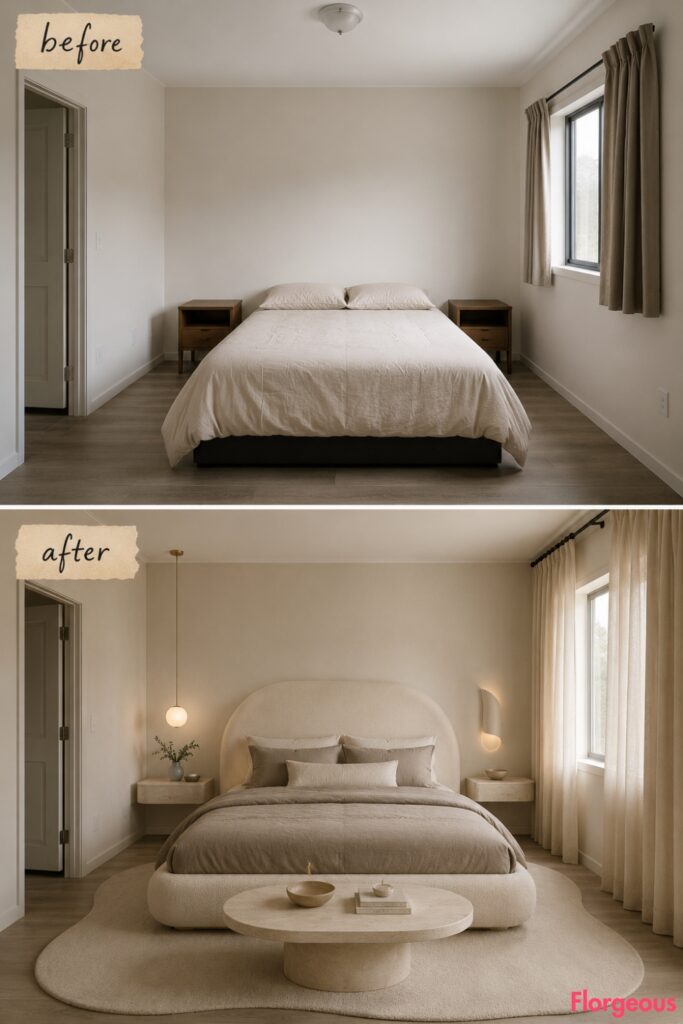
This makeover changes the room through shape rather than color.
A rounded mushroom bed sits against a softly arched upholstered headboard. One oval limestone pedestal balances a curved floating shelf on the opposite side, while a plaster wall light and compact globe pendant create deliberate asymmetry.
A soft-edged rug reinforces the rounded geometry.
8. Build a Stone-Led Bedroom With Travertine
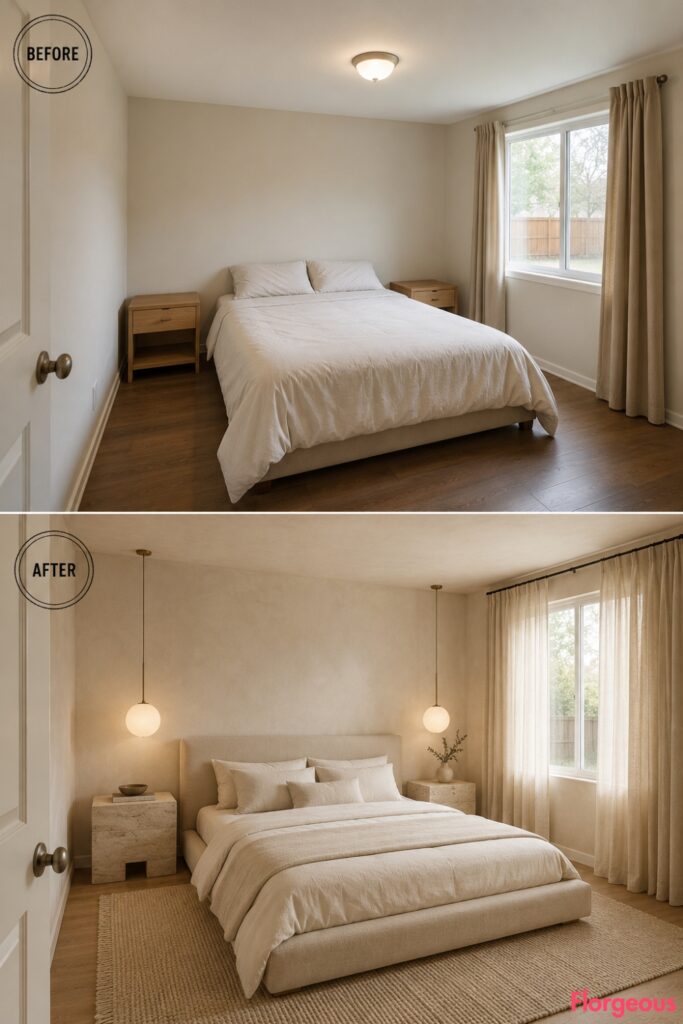
Here, stone provides the visual weight normally supplied by wood.
Chunky travertine bedside blocks flank a low flax bed against pale hand-troweled plaster. Small glowing globe lights soften the stone, while undyed wool and cream linen prevent the palette from feeling cold.
Try this: Stone-look side tables can provide the same visual effect at a lower cost and weight.
9. Color-Drench the Entire Room in Mushroom
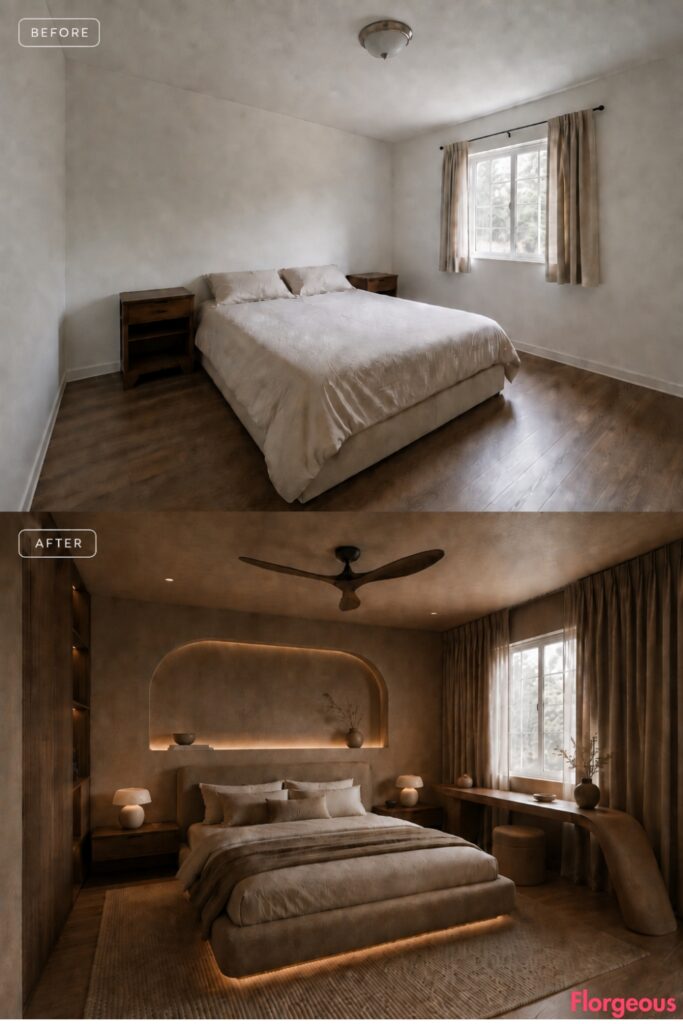
Instead of creating an accent wall, treat walls and ceiling as one continuous envelope.
Paint the room a soft mushroom tone, then use a tonal upholstered bed, darker timber tables, plaster lamps, and slightly deeper taupe curtains. Cream bedding prevents the scheme from becoming flat.
Color Story: The variation comes from texture and value, not multiple competing hues.
10. Take the Room Into Deep Charcoal
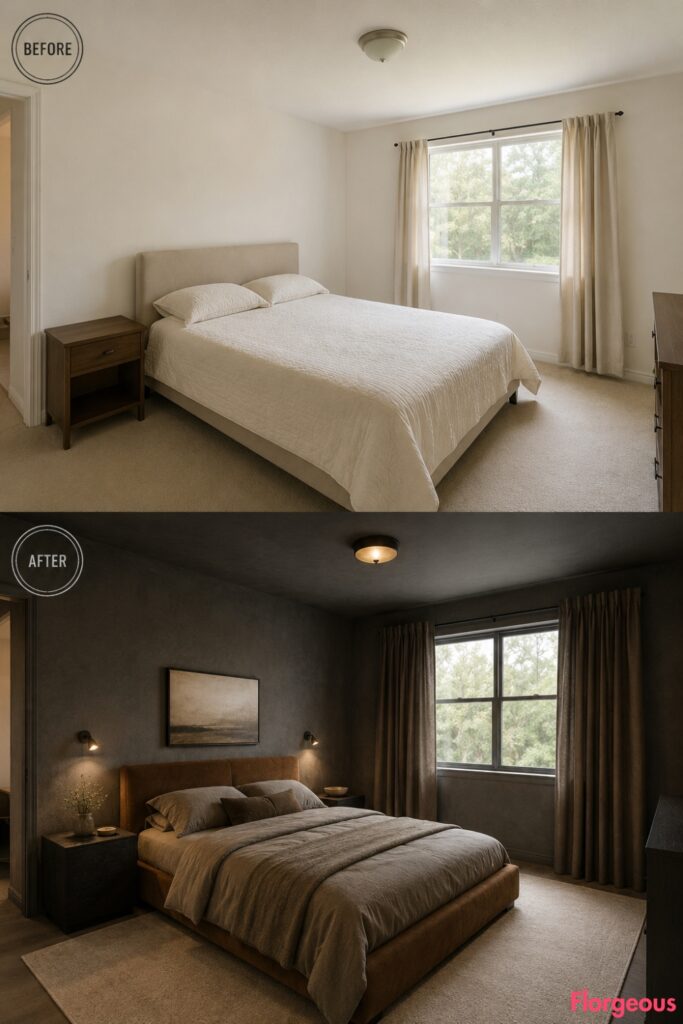
A darker contemporary bedroom can still feel sophisticated rather than heavy.
Use charcoal mineral walls, a deeper graphite ceiling, a tobacco upholstered bed, mushroom bedding, blackened-oak block tables, and a pale wool rug. Low warm reading lights keep the dark surfaces from turning flat.
11. Add a Slim Contemporary Canopy
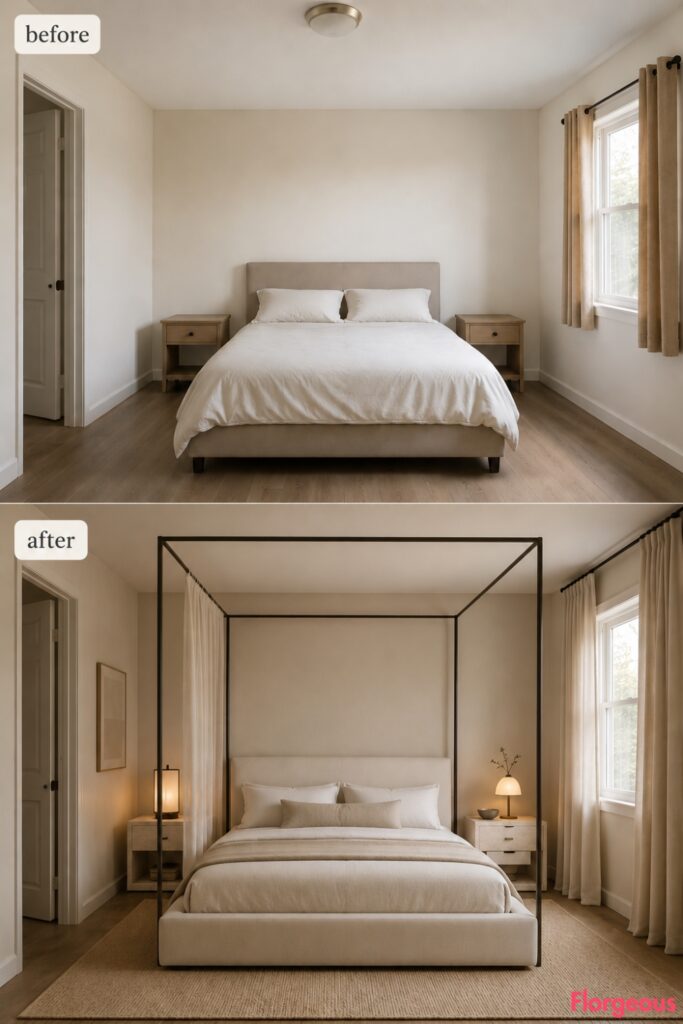
A canopy bed can feel extremely modern when stripped of decorative detail.
Choose a slender dark-bronze frame around a low ivory upholstered bed. One translucent linen panel crosses the upper frame instead of enclosing the entire bed.
Pale stone nightstands and sand-colored textiles keep the composition lightweight.
Common Mistake: Avoid bulky posts and excessive fabric in a compact room.
12. Turn One Bedside Into a Floating Workspace
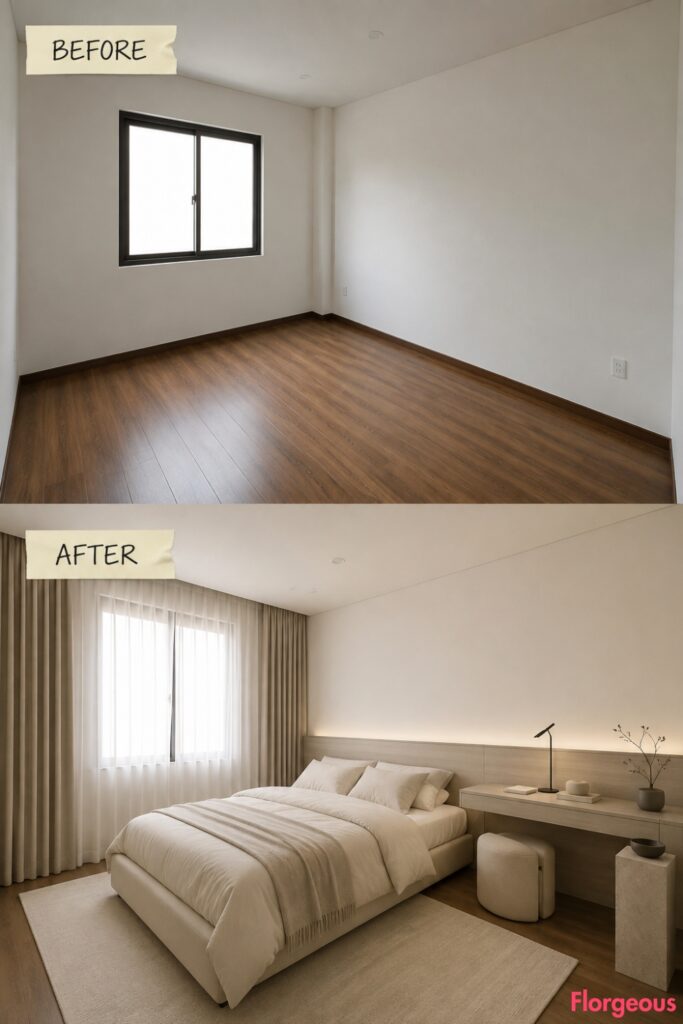
Perfect symmetry gives way to useful asymmetry.
A simple cream bed keeps one compact stone pedestal on one side. On the other, a pale-ash headboard extends into a narrow floating desk along a free wall, with a stool tucked completely beneath it.
The center route remains open.
13. Turn Upholstery Into Wall Architecture
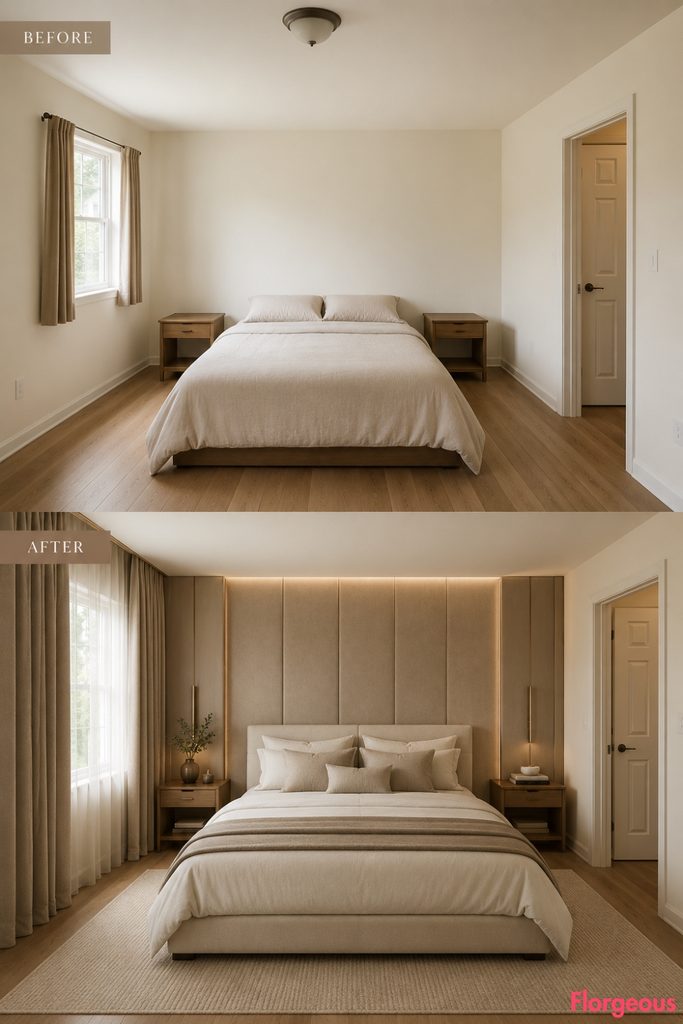
This room exchanges hard joinery for a softer built-in effect.
A floor-to-ceiling taupe upholstered wall sits behind a streamlined ivory bed. Narrow integrated bedside ledges and concealed warm lighting nearly disappear into the composition.
The result feels tailored, quiet, and acoustically softer.
14. Design a Gallery-Like Black and Ivory Bedroom
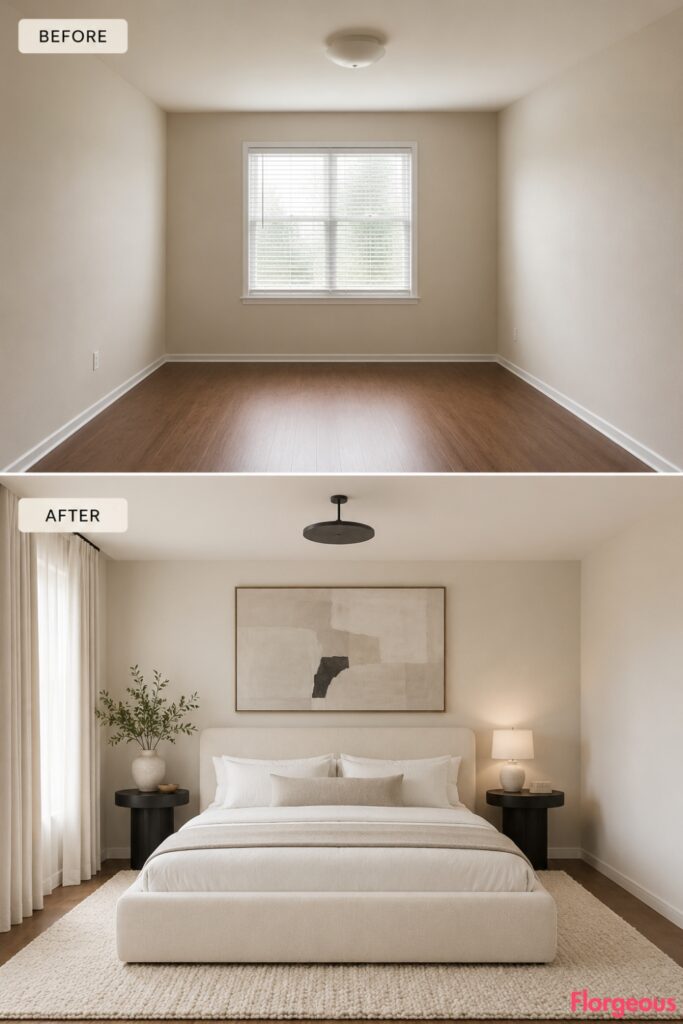
Remove most decorative objects and create impact through contrast.
An ivory bed sits between blackened-wood pedestal nightstands. One oversized abstract tonal artwork dominates the wall, while a slim charcoal ceiling fixture adds definition overhead.
A thick cream rug prevents the look from becoming severe.
15. Hide Technology Inside the Headboard Wall
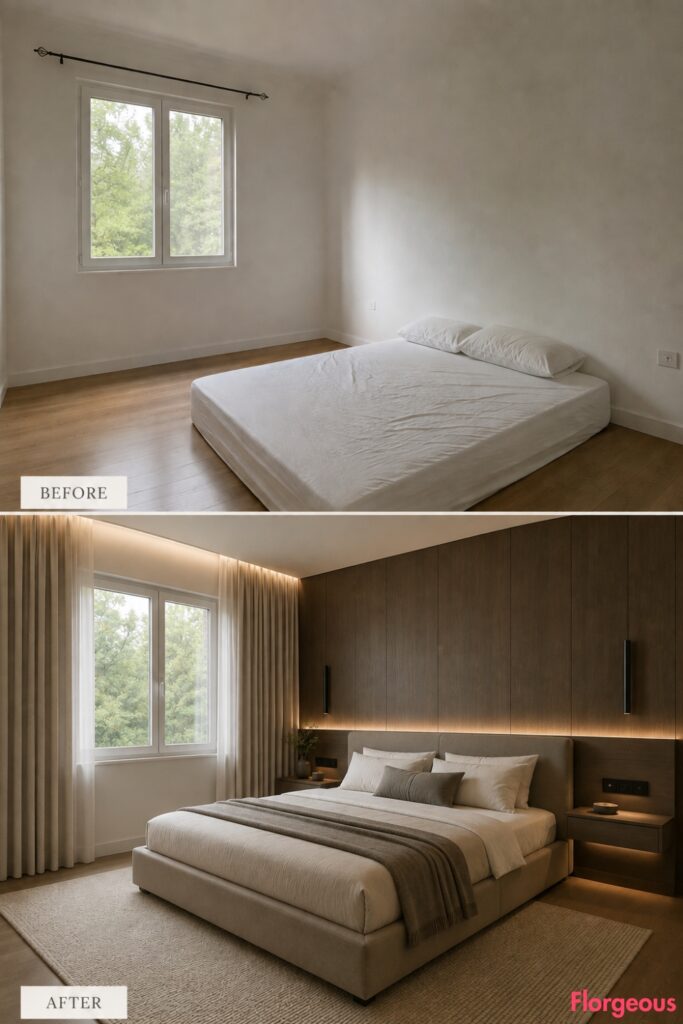
This makeover is contemporary because the technology is almost invisible.
A smoked-oak headboard structure integrates bedside charging, cable routes, hidden speakers, lighting controls, and warm indirect illumination. A tailored neutral bed and slim ledges complete the wall without adding visible screens.
Why It Works: Convenience improves while visual noise decreases.
16. Add a Proper Reading Corner Without Losing Circulation
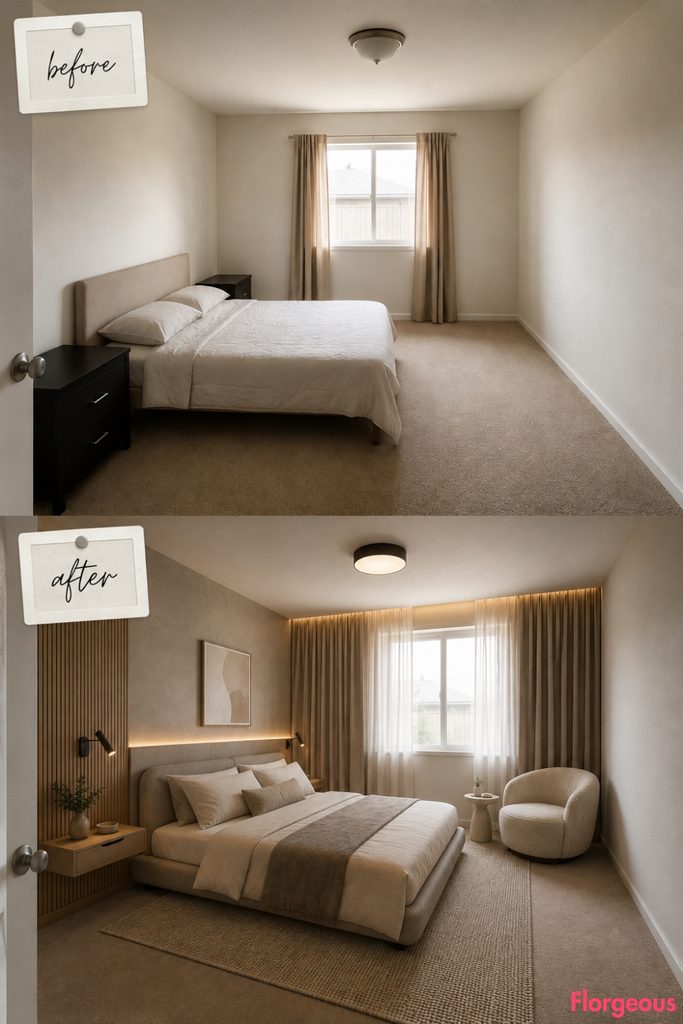
Bedrooms can support a second function without becoming crowded.
Use a compact warm-gray bed with one floating bedside shelf. Near the window, place a petite curved reading chair, tiny pedestal table, and wall-mounted reading lamp, all outside the main path.
Small Space Tip: Mark the chair footprint on the floor before buying it.
17. Make the Entire Makeover Renter-Friendly
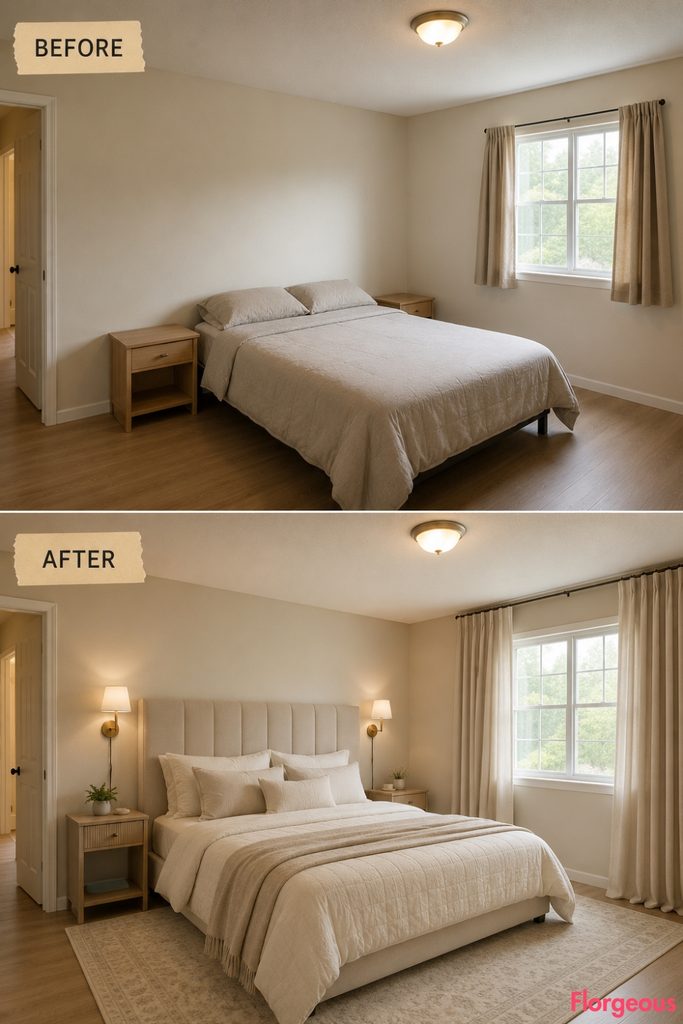
Nothing here requires permanent construction.
Keep the basic bed and add a removable wide upholstered headboard, plug-in sconces, slim matching bedside tables, layered cream bedding, an oversized neutral rug, and ready-made floor-to-ceiling curtains.
The transformation comes from scale and coordination rather than renovation.
18. Introduce Soft Clay Instead of Beige
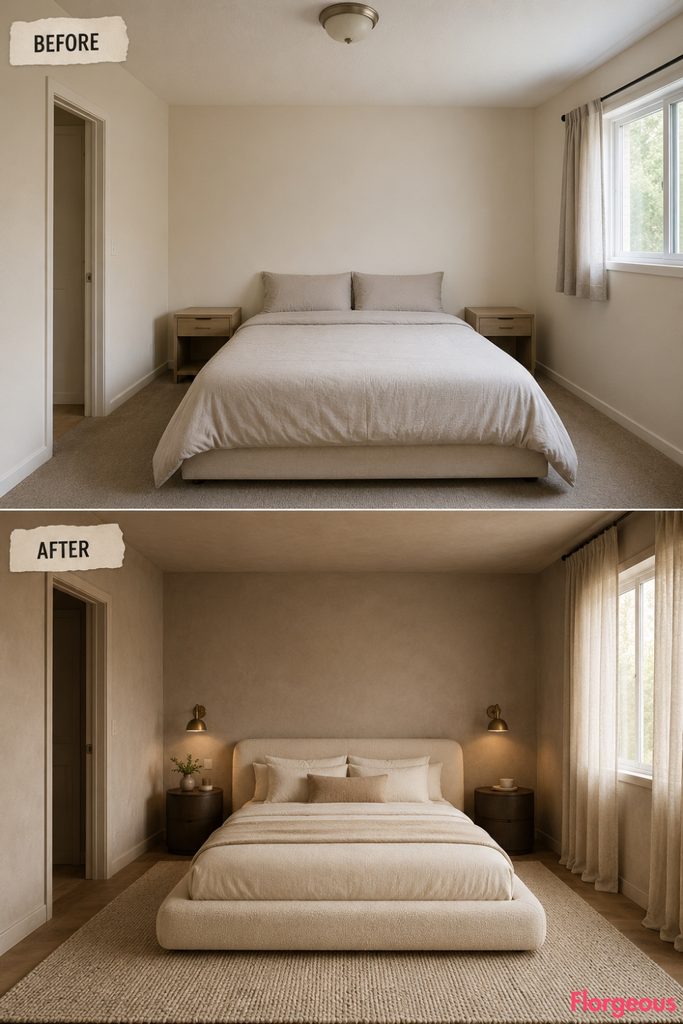
This direction brings warmth through mineral color.
Use muted clay limewash behind a low parchment upholstered bed. Pair it with dark chocolate cylindrical side tables, a sand rug, cream bedding, and small aged-bronze lights.
The clay wall gives the bedroom character without relying on decorative accessories.
19. Create a Fluted-Glass Wardrobe Feature
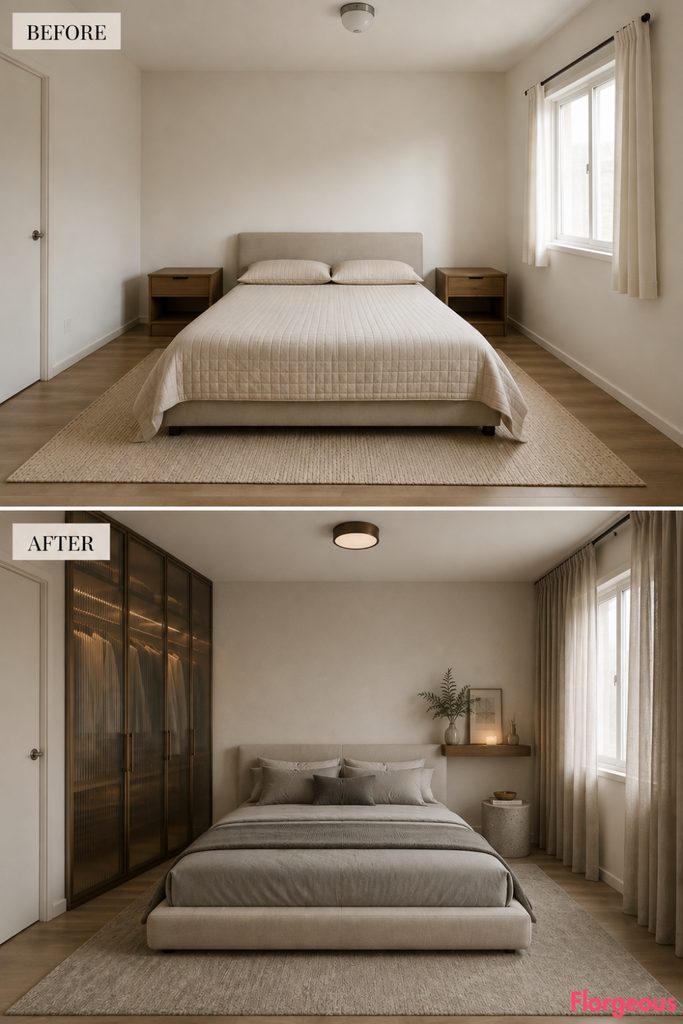
Storage can become lighter when solid doors are replaced by translucent texture.
Add one full-height wardrobe on a safe side wall with ribbed smoked-glass fronts and slim dark-bronze frames. Keep the bed low and pale, with one floating bedside shelf and a compact stone table.
The glass creates depth without exposing visual clutter.
20. Carve a Shallow Plaster Niche Behind the Bed
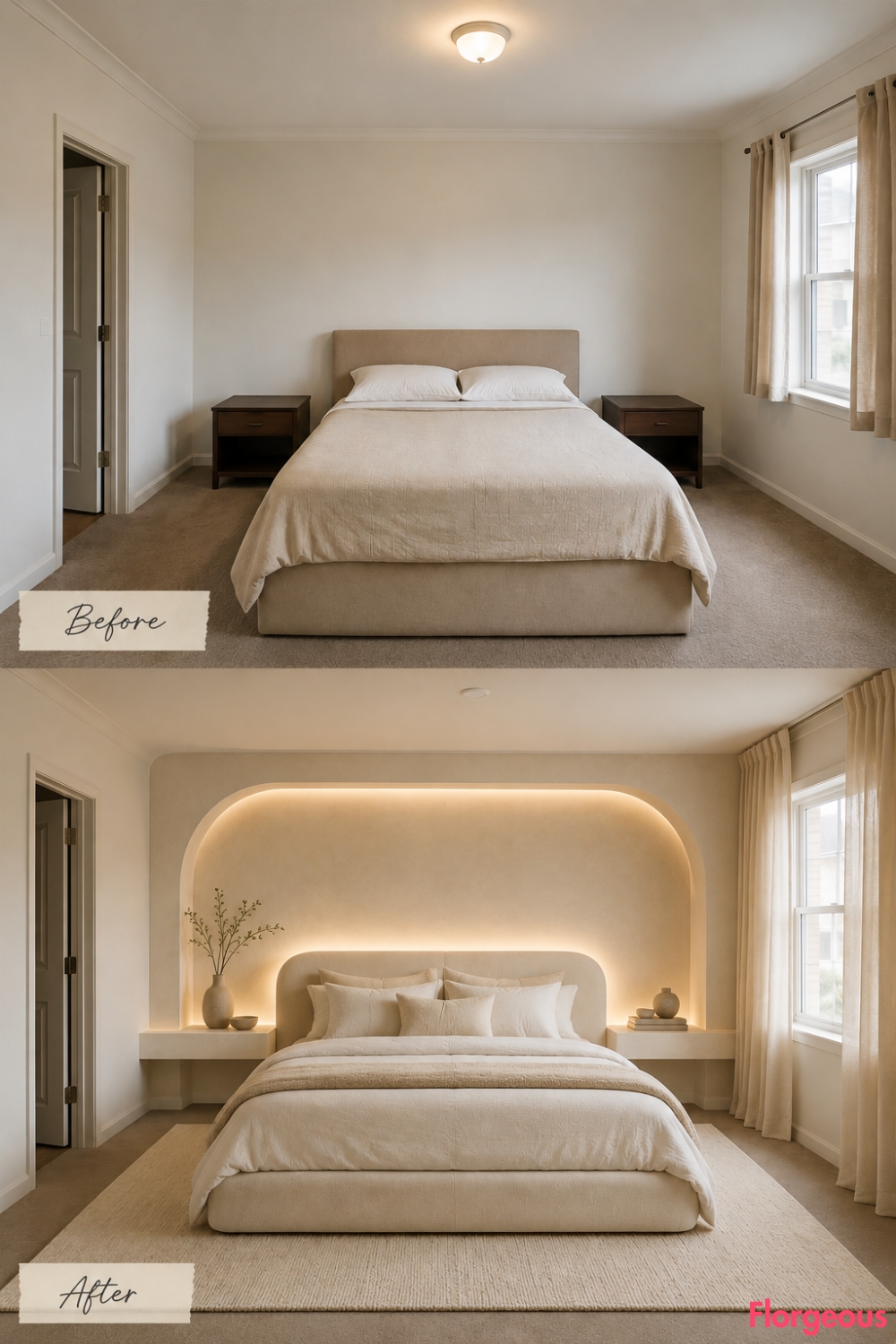
Rather than adding furniture to the wall, subtract visually from it.
Create a broad shallow rounded niche centered behind an oatmeal bed. Integrate tiny ledges into the niche and wash the curved plaster surface with warm concealed light.
Everything else stays simple so the recess reads as the focal point.
21. Use a Freestanding Bed to Break the Usual Layout
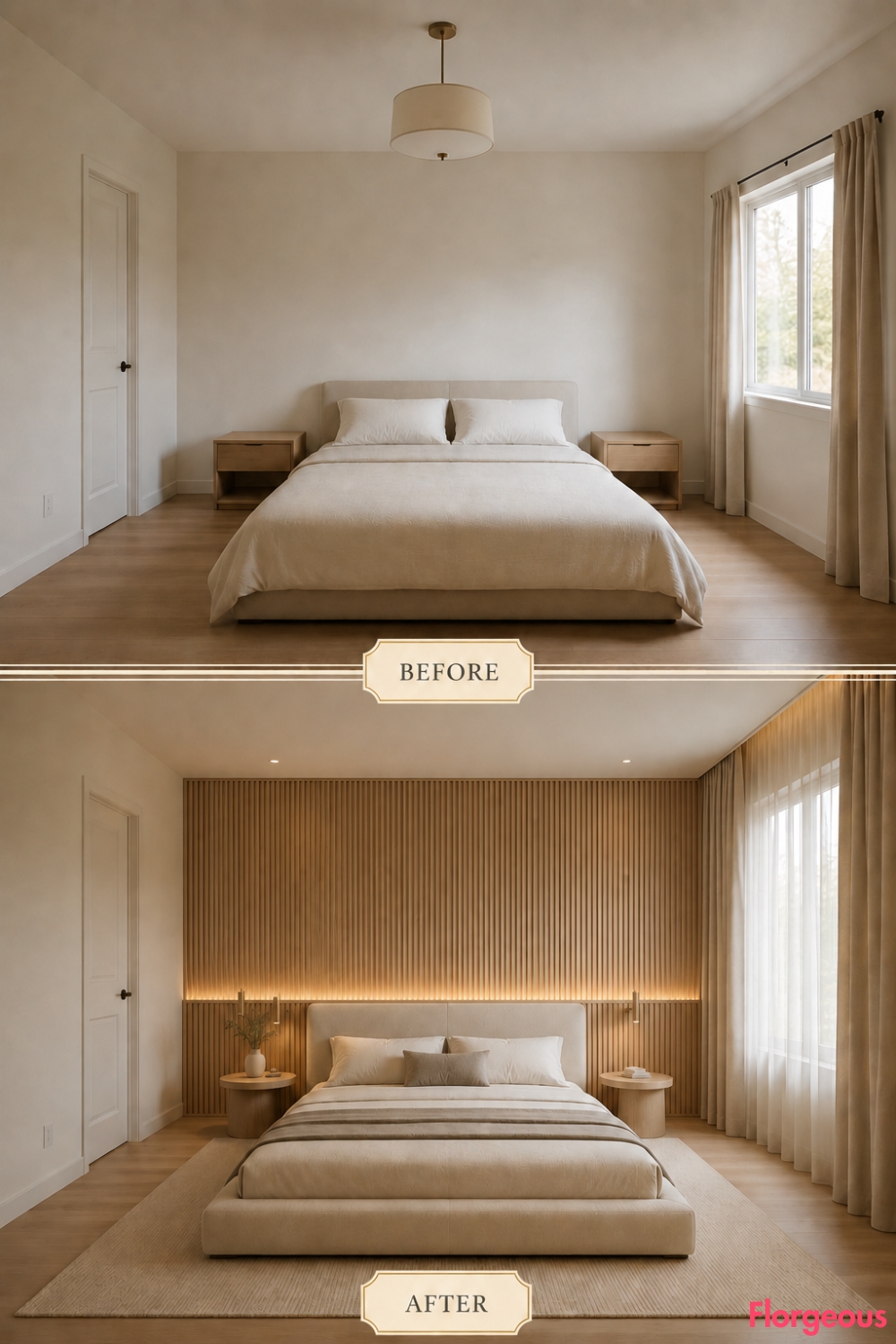
Most bedrooms automatically push the bed tightly against a wall. This concept creates a more architectural composition.
Float a low upholstered bed slightly forward from the main wall and place a slim freestanding timber screen behind it. The screen becomes a shallow headboard and conceals a narrow ledge for lighting and charging.
Keep adequate clearance behind and beside the bed.
22. Add a Bench-Led Dressing Zone at the Foot of the Bed
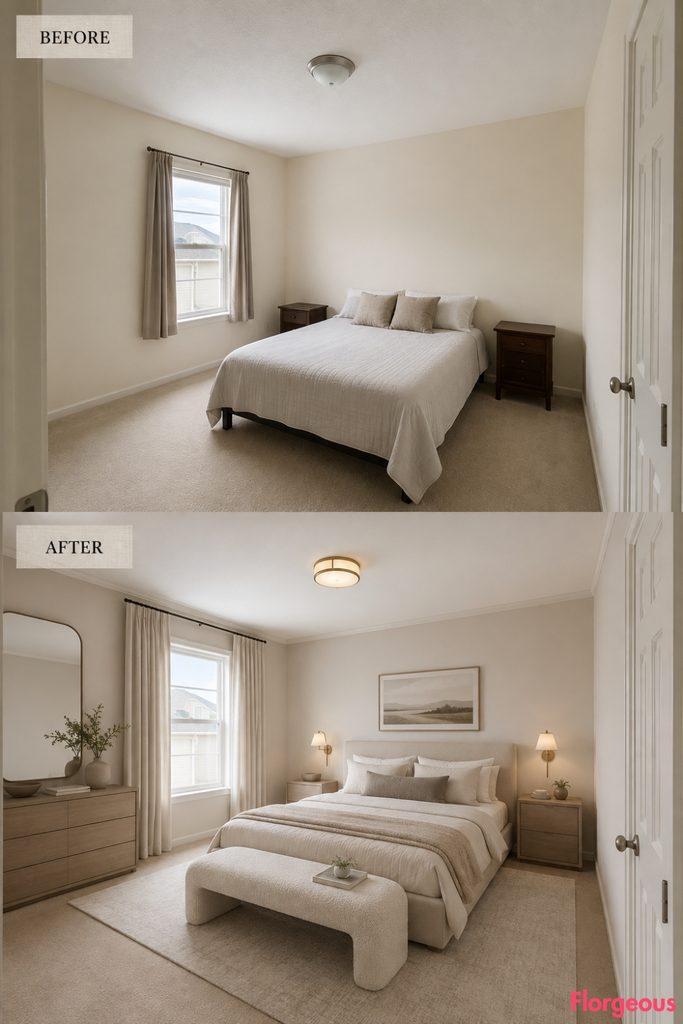
This makeover shifts attention away from the headboard.
Use a restrained low bed and place one sculptural upholstered bench at its foot, leaving enough clearance for circulation. A shallow wall-hugging dresser sits outside the entry route, topped with one large frameless mirror.
The bedroom gains a practical dressing function without becoming furniture-heavy.
23. Mix Soft Blue-Gray With Brushed Metal
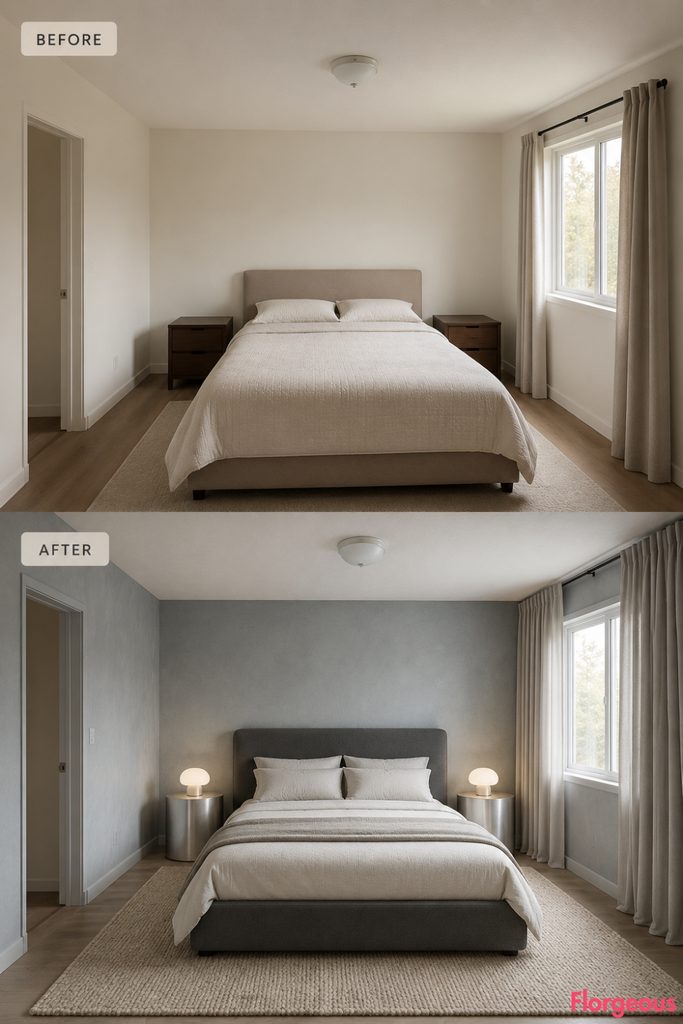
Contemporary bedrooms can also lean cooler without feeling sterile.
Use pale blue-gray mineral walls, a graphite upholstered bed, brushed-aluminum bedside cylinders, and milky opal lighting. Soft ivory bedding and a warm wool rug balance the cooler palette.
This is visually distinct from the warmer oak, walnut, and clay schemes.
Color Story: Keep metals matte or brushed so the room does not become glossy.
24. Create a Contemporary Bed Platform With Integrated Steps
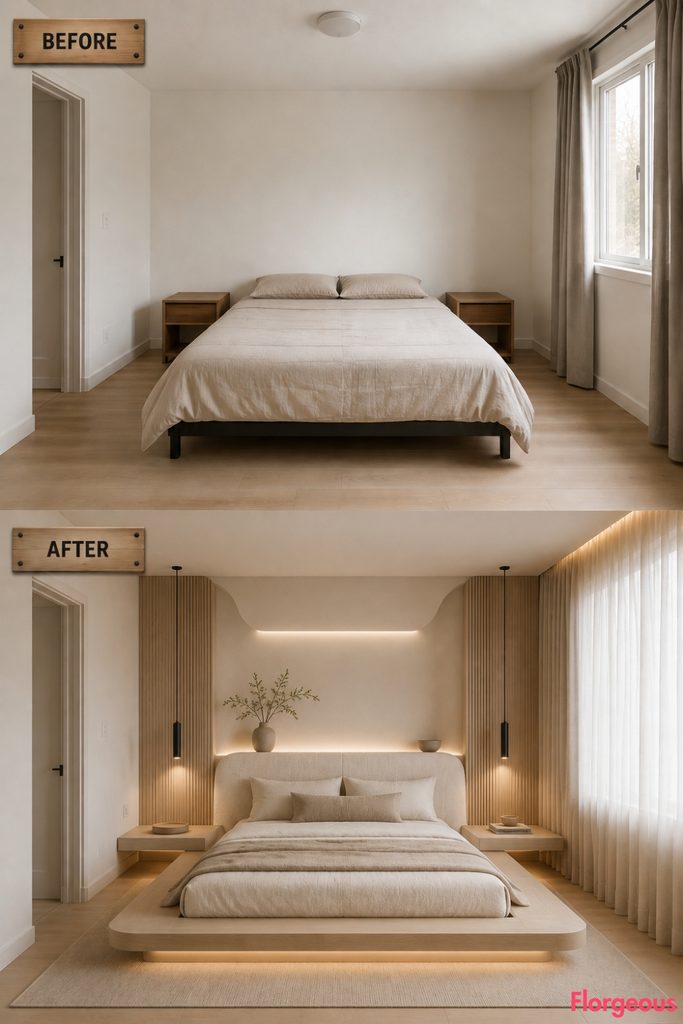
Here the bed itself becomes the furniture system.
Place the mattress on a broad low pale-ash platform that extends beyond it to form integrated bedside surfaces. Keep the platform shallow and circulation-friendly, avoiding any oversized podium effect.
Suspended reading lights free the surfaces entirely.
25. Turn the Ceiling Into the Quiet Statement
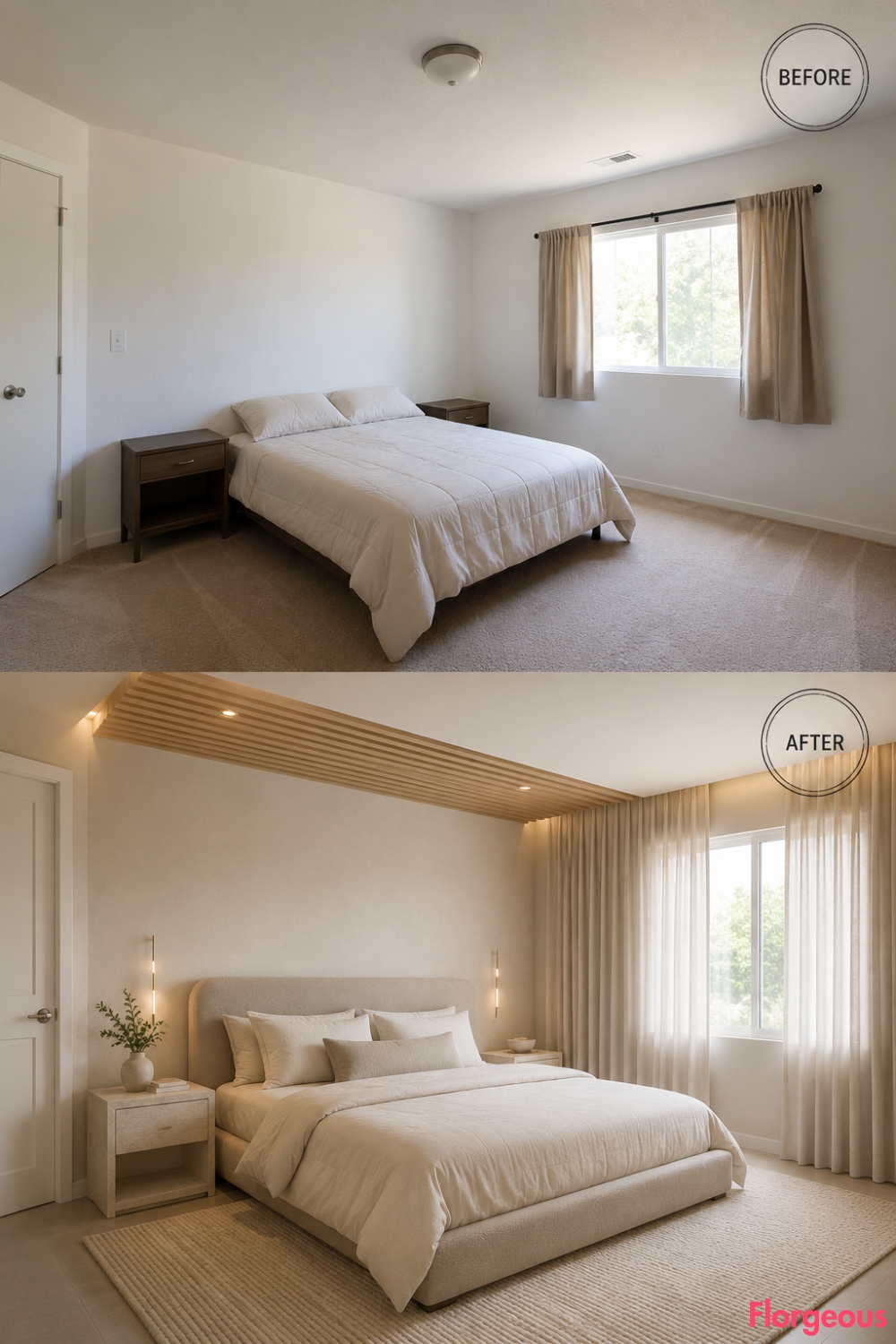
Most bedroom makeovers ignore the ceiling. This one gives it a controlled architectural role.
Keep the walls pale and the bed simple, then apply shallow pale-oak battens across a defined ceiling zone above the bed. Integrate tiny warm downlights between the battens instead of hanging a large pendant.
A mushroom bed and limestone nightstands ground the composition.
26. Create a Soft Resort Bedroom With Pale Oak and Paper Light
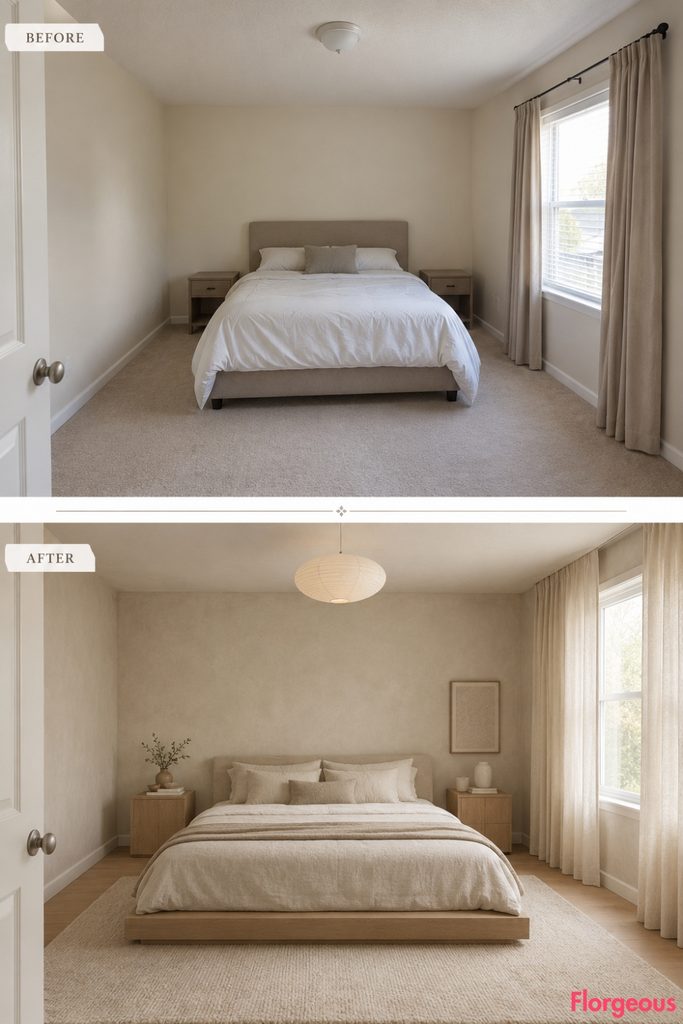
This concept is lighter, quieter, and more relaxed.
A low pale-oak platform bed sits between solid oak block tables. Flax bedding, a broad pale wool rug, softly mineral walls, handmade ceramics, and natural curtains keep the room tactile.
Overhead, use a small oval paper-inspired lantern hung high enough to maintain visual space.
27. Finish With a Monolithic Plaster Bed Wall and Concealed Light
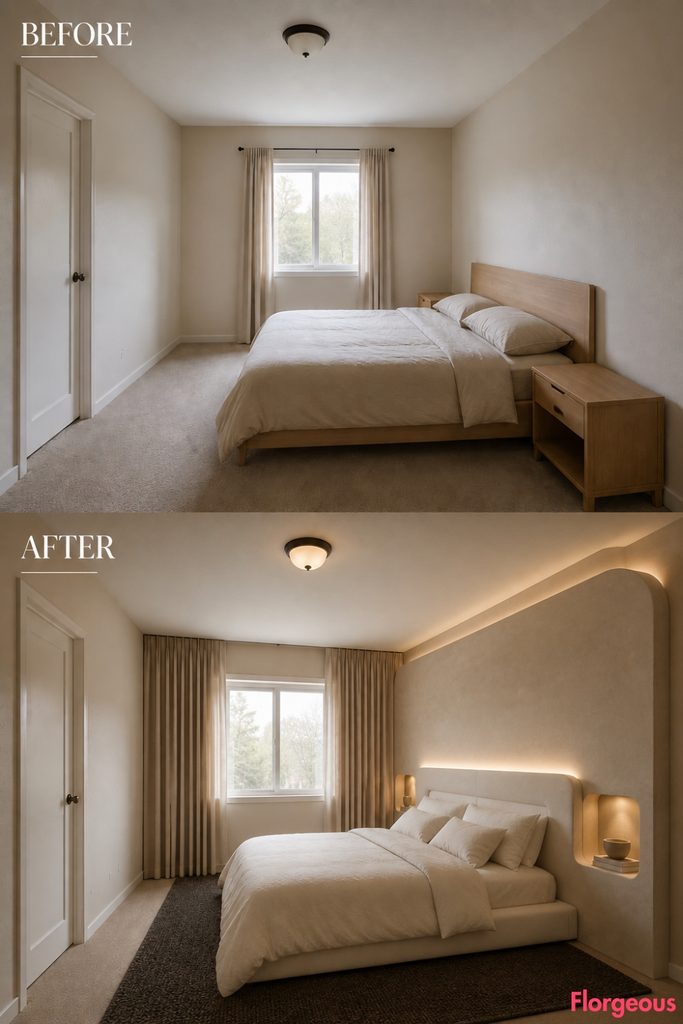
The final concept strips the room down to one bold architectural gesture.
Build a thick-looking plaster headboard wall with rounded edges and narrow recessed shelves carved into each side. A low ivory bed appears almost embedded into the feature.
Concealed lighting washes the wall from behind, while the rest of the room stays quiet with bone-colored bedding, one dark rug, and simple curtains.
How to Choose the Right Contemporary Bedroom Direction
The strongest transformations above work because each room has one clear idea. Walnut becomes architecture, curtains become the focal point, storage disappears into a wall, stone replaces timber, color wraps the ceiling, or the bed itself changes the layout.
For your own Contemporary Bedroom, decide on that main move before shopping for smaller decor. Start with circulation, confirm the bed size, check that the doorway and window stay usable, then choose the bed wall, lighting, rug, and curtains in that order.
If the budget is limited, you do not need custom joinery to create a convincing change. Full-height curtains, a wider removable headboard, plug-in lighting, mineral-effect paint, a larger rug, or better-scaled bedside furniture can dramatically improve the same plain room.
The best next step is to pick the one concept whose layout suits how you actually use your bedroom, then borrow only the materials and details that strengthen that idea. A contemporary room usually feels more finished when fewer decisions are allowed to speak more clearly.