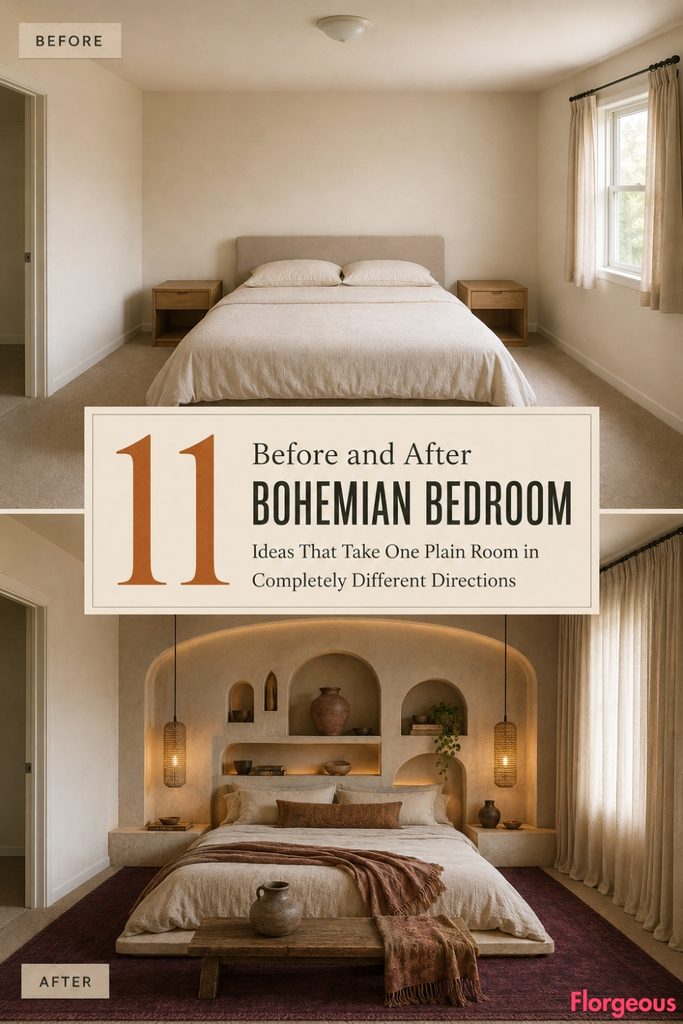
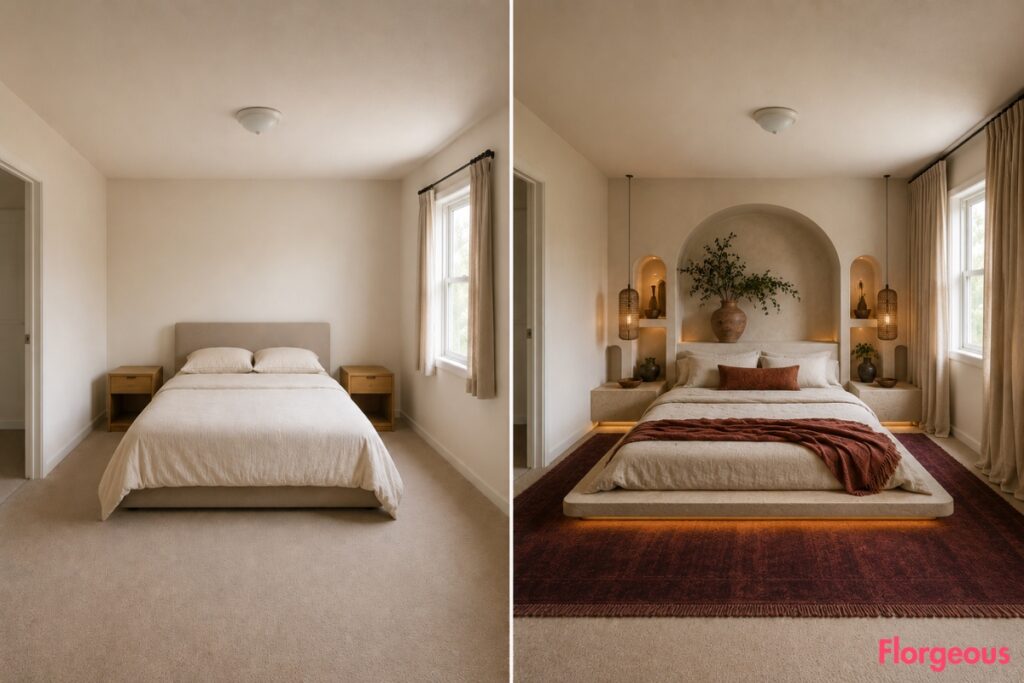
The starting bedroom could belong to almost anyone. Warm off-white walls, a basic neutral bed, two bare nightstands, short curtains, a simple ceiling light, and enough empty space to make the room feel unfinished rather than intentionally minimal.
What makes this experiment interesting is that we never change the architecture. The doorway stays put. The window stays put. The floor footprint, ceiling height, proportions, and viewing angle stay exactly the same.
Instead, these 11 Bohemian Bedroom makeovers show how one ordinary shell can develop completely different personalities through color, furniture, textiles, craft, lighting, art, and clever spatial moves.
There is no repeating beige-bed-plus-rattan-table formula here. One room becomes moody and cocooning, another feels like a 1970s collector’s retreat, another turns the ceiling into the focal point, and another hides practical storage behind an unexpectedly beautiful screen.
1. Clay Walls, Walnut, and One Monumental Ceramic Light
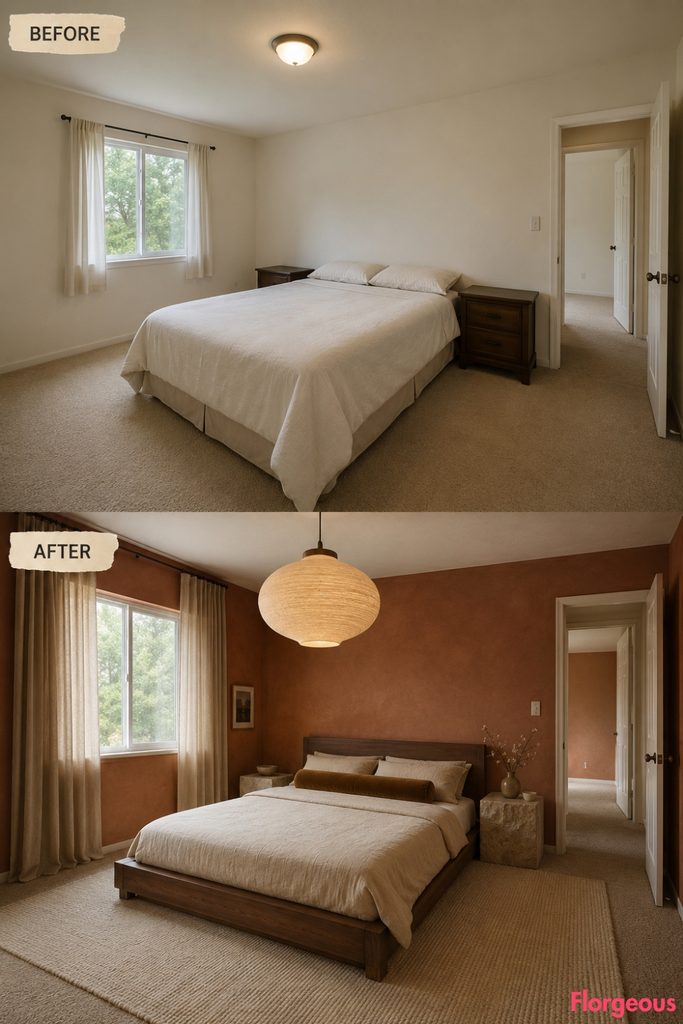
The first makeover is about color saturation rather than decorative accumulation.
Before: A plain builder-grade bedroom with warm off-white neutral walls, a basic bed with simple neutral bedding positioned against the main wall, two bare nightstands, short plain curtains, a basic ceiling light, minimal styling, bare surfaces, soft natural daylight, no bold decor features, and a clean but slightly unfinished feeling.
After: Muted burnt-clay mineral paint wraps every wall while the ceiling stays warm ivory. A low walnut bed replaces the generic frame, with oatmeal linen, a tobacco velvet bolster, and two chunky stone bedside blocks. Instead of several small boho lamps, one oversized handmade ceramic pendant hangs high enough to keep the bed zone open.
A pale wool rug prevents all the warm tones from becoming muddy, while floor-length flax curtains soften the window.
Why it works: The bohemian character comes from material irregularity, handmade form, and earthy color rather than lots of accessories.
Designer Tip: If the wall color is strong, give the eye at least one large quiet surface such as pale bedding or a simple rug.
2. What Happens When the Bed Becomes a Linen Cocoon?
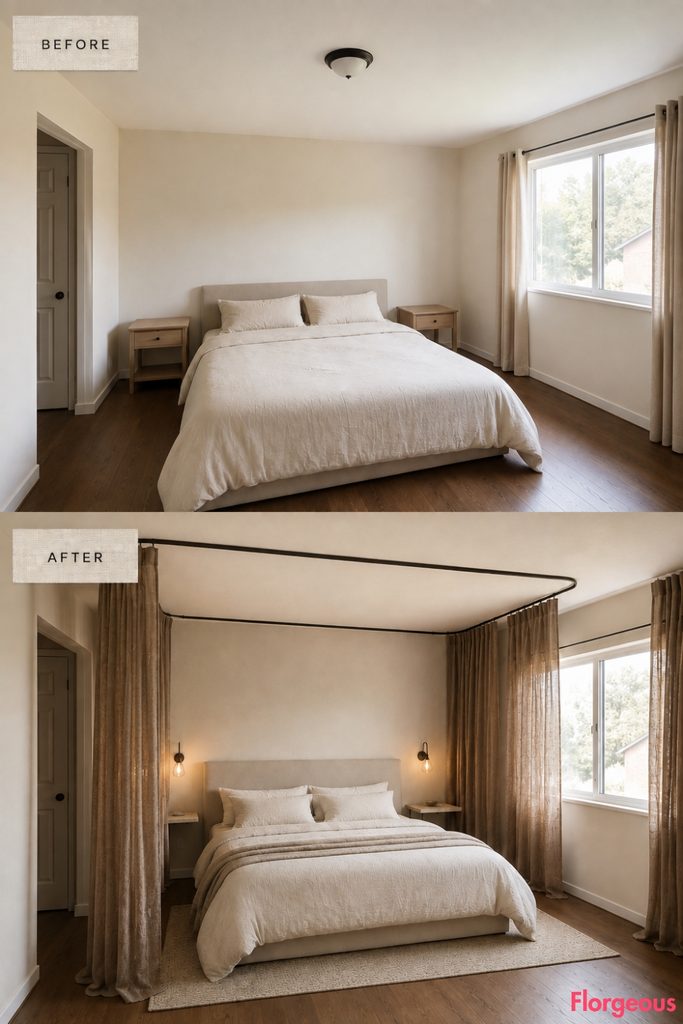
This version changes the room through something almost weightless.
Before: A plain builder-grade bedroom with warm off-white neutral walls, a basic bed with simple neutral bedding positioned against the main wall, two bare nightstands, short plain curtains, a basic ceiling light, minimal styling, bare surfaces, soft natural daylight, no bold decor features, and a clean but slightly unfinished feeling.
After: A slender dark-bronze ceiling track frames the entire sleeping zone, beginning behind the headboard and extending about 40 centimeters beyond the foot of the bed. Loose tobacco-flax drapery hangs from the track and remains partially open rather than enclosing the bed completely.
Inside sits a pale upholstered bed with chalky linen, slim limestone shelves, and tiny amber reading lights. The curtain architecture becomes the focal point, so the floor stays largely undecorated except for a narrow wool rug.
The cocoon feels intimate without interrupting the route to either the doorway or window.
Common Mistake: Do not stop a bed canopy track halfway along the mattress. The frame should visually encompass the entire bed.
3. A 1970s Teak Bedroom Built Around Asymmetry
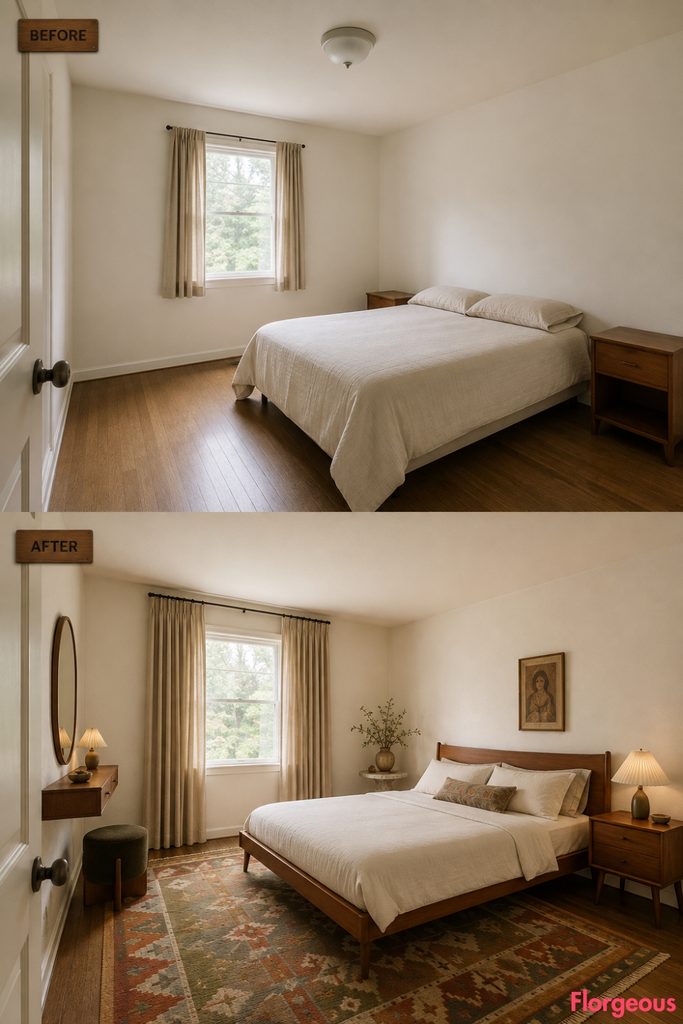
Instead of adding an accent wall, this makeover changes how the furniture relates to the room.
Before: A plain builder-grade bedroom with warm off-white neutral walls, a basic bed with simple neutral bedding positioned against the main wall, two bare nightstands, short plain curtains, a basic ceiling light, minimal styling, bare surfaces, soft natural daylight, no bold decor features, and a clean but slightly unfinished feeling.
After: A vintage teak bed with tapered legs anchors the sleeping area. One side receives a compact teak nightstand and pleated lamp, while the opposite side uses a tiny marble pedestal to avoid matching-set stiffness.
An unused wall becomes a shallow floating dressing ledge with a rounded vintage mirror and tuck-under stool. A faded geometric wool rug introduces olive, rust, cream, and muted blue beneath otherwise simple linen bedding.
Nothing is centered simply for symmetry’s sake, yet the walking route remains clear.
Try this: Combining one genuine vintage piece with simpler secondhand furniture often looks more collected than buying an entire matching retro suite.
4. Carve Out a Mediterranean-Style Plaster Bed Alcove
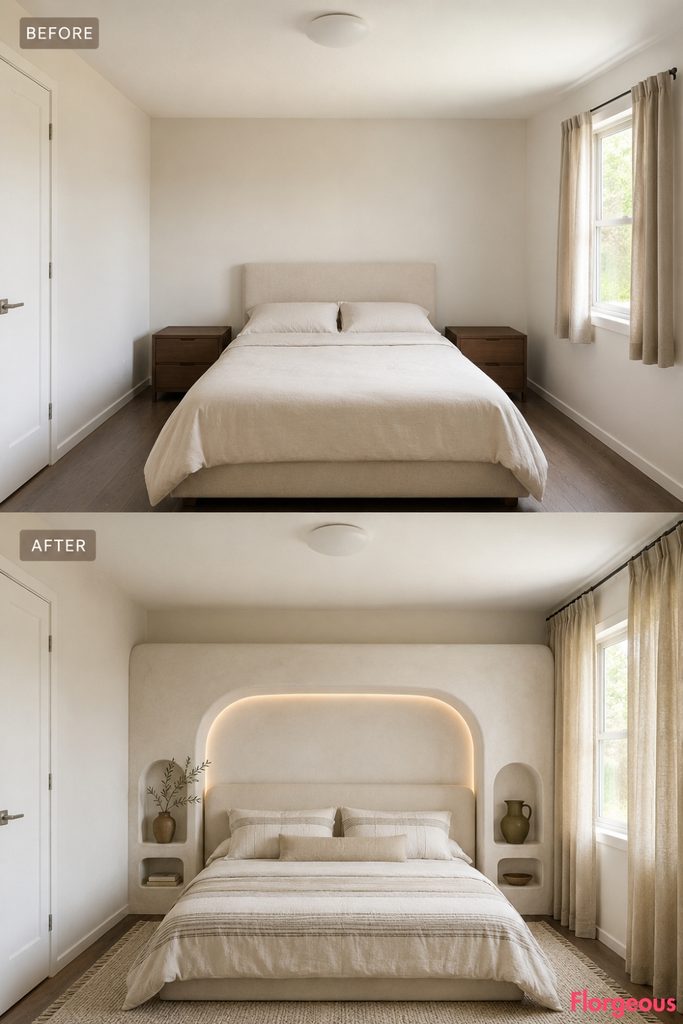
Here, the makeover reads almost like architecture, yet it remains fitted inside the existing shell.
Before: A plain builder-grade bedroom with warm off-white neutral walls, a basic bed with simple neutral bedding positioned against the main wall, two bare nightstands, short plain curtains, a basic ceiling light, minimal styling, bare surfaces, soft natural daylight, no bold decor features, and a clean but slightly unfinished feeling.
After: A broad bone-colored plaster surround fits against the existing bed wall, forming a softly rounded recess rather than altering the actual architecture. Shallow bedside pockets are carved into the façade, eliminating conventional nightstands entirely.
A low ivory bed sits inside the recess with striped natural linen, olive ceramics, and discreet concealed lighting tracing the upper curve. A pale flatweave rug and simple flax curtains leave the composition airy.
Budget Version: A removable timber or MDF façade finished with textured plaster-effect paint can create a similar visual impression without rebuilding the wall.
5. Let an Unruly Salon Wall Do All the Talking
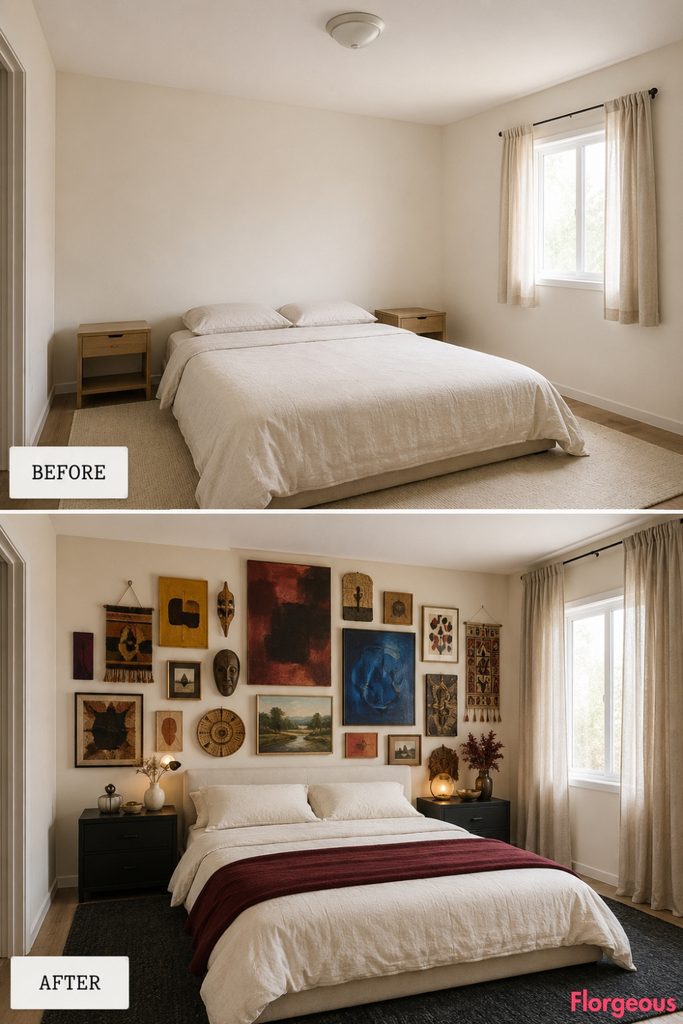
Maximalism works better here because the rest of the room knows when to stay quiet.
Before: A plain builder-grade bedroom with warm off-white neutral walls, a basic bed with simple neutral bedding positioned against the main wall, two bare nightstands, short plain curtains, a basic ceiling light, minimal styling, bare surfaces, soft natural daylight, no bold decor features, and a clean but slightly unfinished feeling.
After: A low cream headboard is surrounded by a dense but intentional salon arrangement of abstract paintings, vintage landscapes, woven fragments, small sketches, and sculptural wall pieces. Burgundy, cobalt, saffron, olive, black, and dusty rose repeat throughout the collection.
The furniture goes in the opposite direction: blackened timber nightstands, plain ivory sheets, one burgundy throw, and a nearly solid charcoal rug.
The room feels expressive because art is concentrated in one zone instead of scattered everywhere.
Designer Tip: Before hanging a gallery wall, establish three or four recurring colors. Repetition is what keeps an eclectic collection from looking accidental.
6. Turn the Window Into a Botanical Daybed Corner
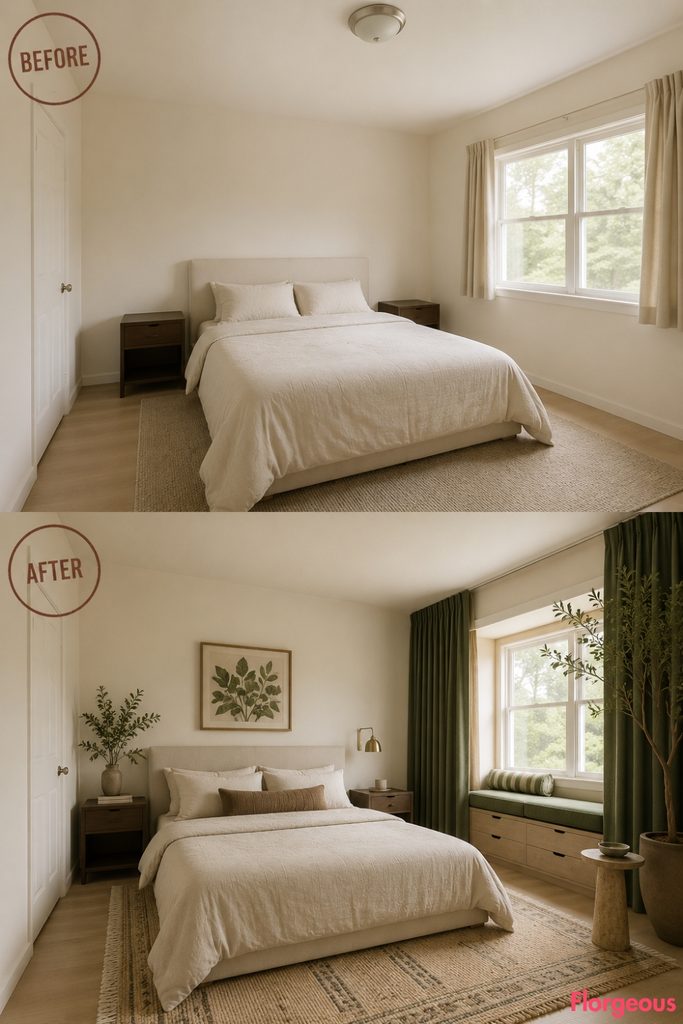
This transformation deliberately moves attention away from the headboard wall.
Before: A plain builder-grade bedroom with warm off-white neutral walls, a basic bed with simple neutral bedding positioned against the main wall, two bare nightstands, short plain curtains, a basic ceiling light, minimal styling, bare surfaces, soft natural daylight, no bold decor features, and a clean but slightly unfinished feeling.
After: The bed remains understated while a shallow window bench becomes the star. Concealed drawers sit beneath a fitted moss-green wool cushion, with one striped bolster and a tiny aged-brass reading light.
A single tall indoor tree stands beside the window rather than in front of it. Smaller plants are avoided. Deep green curtains frame the view, and a compact pedestal table turns the bench into somewhere you could actually read or drink coffee.
Small Space Tip: One substantial plant generally gives a cleaner result than distributing small pots across every available surface.
7. Use Handmade Tile Like an Oversized Headboard
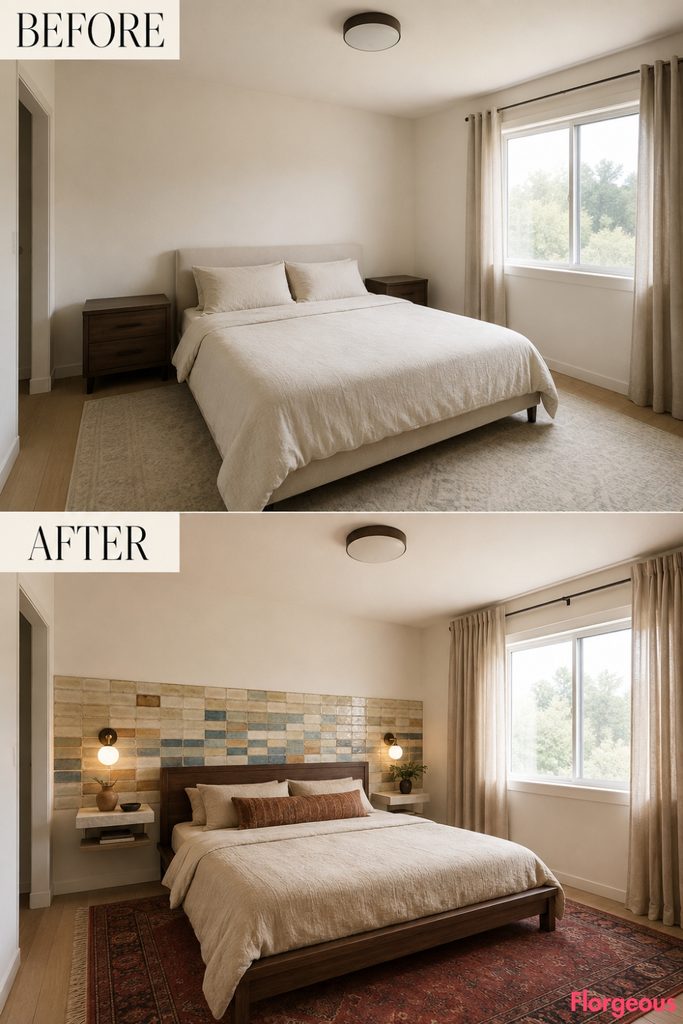
Tile in a bedroom is unexpected, which is exactly why this idea feels memorable.
Before: A plain builder-grade bedroom with warm off-white neutral walls, a basic bed with simple neutral bedding positioned against the main wall, two bare nightstands, short plain curtains, a basic ceiling light, minimal styling, bare surfaces, soft natural daylight, no bold decor features, and a clean but slightly unfinished feeling.
After: A wide horizontal ribbon of imperfect glazed tile runs behind the bed from nightstand height to just above the headboard. The colors shift between chalk, dusty blue, muted ochre, and soft brown, creating a handcrafted focal plane without covering the entire wall.
A simple dark-oak bed, floating plaster bedside shelves, opal globe lights, and plain flax bedding keep the material mix balanced. A faded red runner at the foot of the bed gives the room one extra jolt of color.
Style Note: The tile should look handmade and irregular, not glossy like a bathroom backsplash.
8. Look Up: Give the Ceiling the Entire Pattern Story
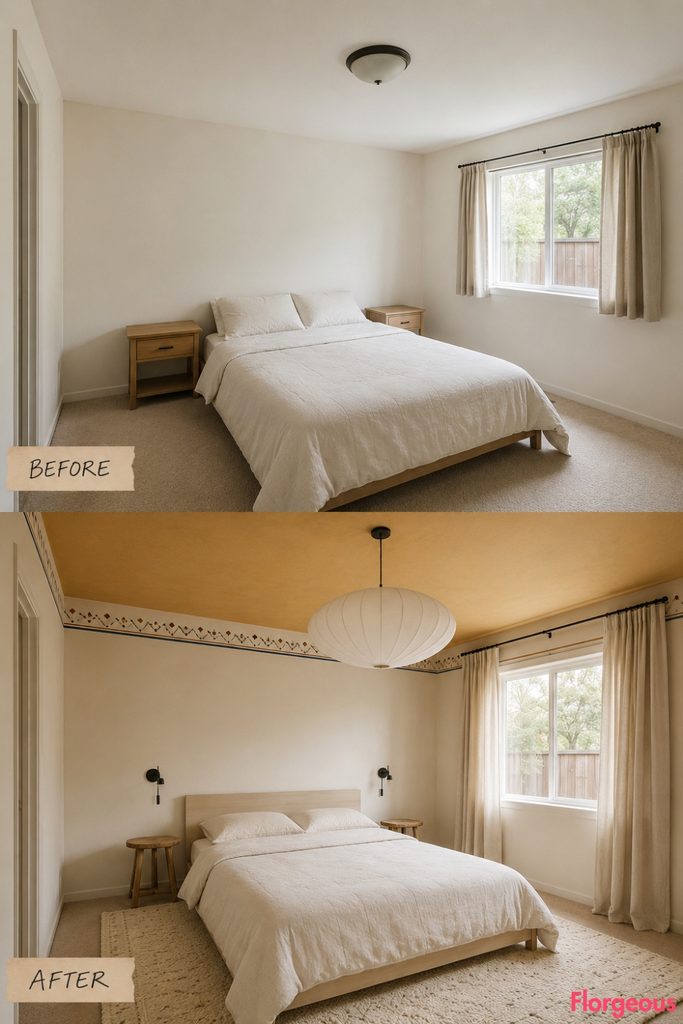
This is the makeover that leaves the bed wall almost untouched.
Before: A plain builder-grade bedroom with warm off-white neutral walls, a basic bed with simple neutral bedding positioned against the main wall, two bare nightstands, short plain curtains, a basic ceiling light, minimal styling, bare surfaces, soft natural daylight, no bold decor features, and a clean but slightly unfinished feeling.
After: The walls stay creamy white while the ceiling becomes muted saffron, edged with a loose hand-stenciled geometric border in charcoal and dusty blue. A large sculptural paper pendant replaces the builder light.
Below it, the bedroom becomes intentionally restrained: pale birch bed, ivory linen, two tiny black wall lights, simple timber stools, and a light wool rug.
The contrast makes the ceiling feel more dramatic without lowering it physically.
9. Hide the Practical Stuff Behind Bronze Mesh
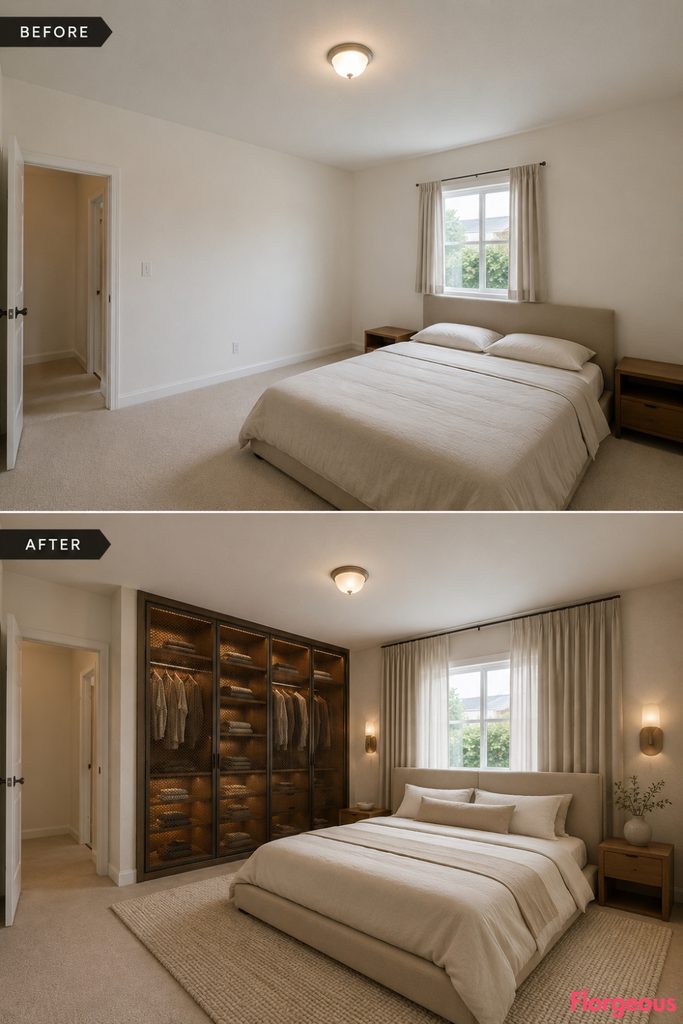
Bohemian rooms still need somewhere to put clothes. This version makes storage part of the visual identity.
Before: A plain builder-grade bedroom with warm off-white neutral walls, a basic bed with simple neutral bedding positioned against the main wall, two bare nightstands, short plain curtains, a basic ceiling light, minimal styling, bare surfaces, soft natural daylight, no bold decor features, and a clean but slightly unfinished feeling.
After: A shallow wardrobe occupies only an unobstructed wall and disappears behind sliding expanded-metal panels finished in dark bronze. Warm oak interiors remain faintly visible through the fine mesh.
The bed is low and neutral, with ivory linen and handmade ceramic sconces. A dense oatmeal rug and ceiling-height curtains counter the harder metal surface.
There are almost no accessories because the screened wardrobe already gives the room enough visual texture.
Why it works: Mixing one industrial material with warm timber, wool, linen, and ceramics prevents bohemian styling from becoming predictable.
10. Trade the Traditional Headboard for a Patchwork Sculpture
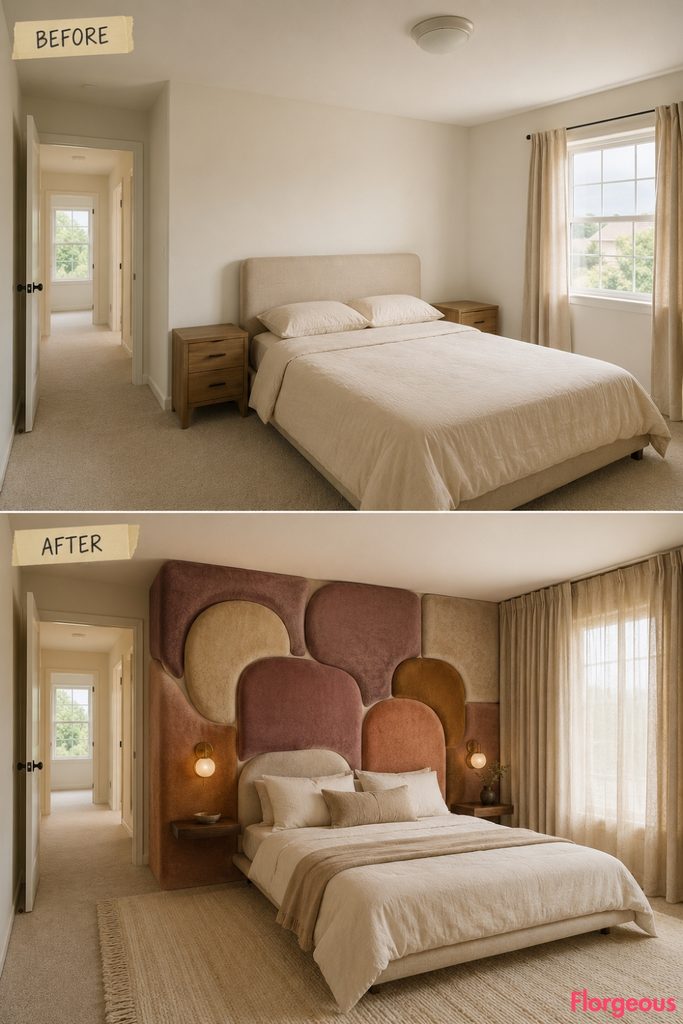
This concept uses upholstery as wall art rather than simply covering the headboard in fabric.
Before: A plain builder-grade bedroom with warm off-white neutral walls, a basic bed with simple neutral bedding positioned against the main wall, two bare nightstands, short plain curtains, a basic ceiling light, minimal styling, bare surfaces, soft natural daylight, no bold decor features, and a clean but slightly unfinished feeling.
After: Oversized upholstered forms interlock behind the bed in mushroom, dusty plum, ochre, faded rose, and oatmeal. Some are rounded, others rectangular, with narrow wall gaps creating a deliberate collage.
A frameless low bed nearly disappears beneath solid ivory linen. Tiny walnut ledges replace nightstands, and two small bronze globe lights keep attention on the sculptural textile composition.
A plain pale rug is all the floor needs.
Budget Version: Create large padded panels individually and mount them with removable French cleats rather than upholstering the wall itself.
11. Finish With a Bed Floating in Front of a Carved Timber Screen
The final room feels the most collected, but its focal point is still a single decisive object.
Before: A plain builder-grade bedroom with warm off-white neutral walls, a basic bed with simple neutral bedding positioned against the main wall, two bare nightstands, short plain curtains, a basic ceiling light, minimal styling, bare surfaces, soft natural daylight, no bold decor features, and a clean but slightly unfinished feeling.
After: The bed shifts forward just enough to sit in front of a freestanding dark timber screen composed of large abstract carved panels. The carving creates shadow and depth without covering the wall or changing the architecture.
A concealed rear ledge casts warm light through the open pattern. The bed itself stays simple in washed cream linen, flanked by two low limestone blocks. A deep aubergine wool rug provides rich color at floor level, while warm oatmeal curtains keep the window quiet.
One sculptural ceramic vessel is enough decoration.
This version captures the best part of Bohemian Bedroom design: personality comes from material, craft, and composition rather than filling every surface.
Which Bohemian Direction Should You Try First?
The easiest way to choose among these makeovers is to decide what you want to notice first when you enter the bedroom.
If color is the priority, start with clay walls or the saffron ceiling. If you prefer architecture, the plaster alcove or carved freestanding screen gives the room stronger structure. For collectors, vintage teak or a concentrated salon wall provides personality without requiring every object to match.
Rooms that need function can benefit from the window bench or screened wardrobe. Renters can get much of the same effect through removable textile panels, freestanding screens, oversized upholstered pieces, plug-in lighting, or paint rather than permanent construction.
Before shopping for small decor, choose one dominant move. Then pick two supporting materials, one restrained secondary color, and a lighting strategy. That sequence keeps a Bohemian Bedroom layered and personal while protecting the negative space that makes every special piece easier to appreciate.