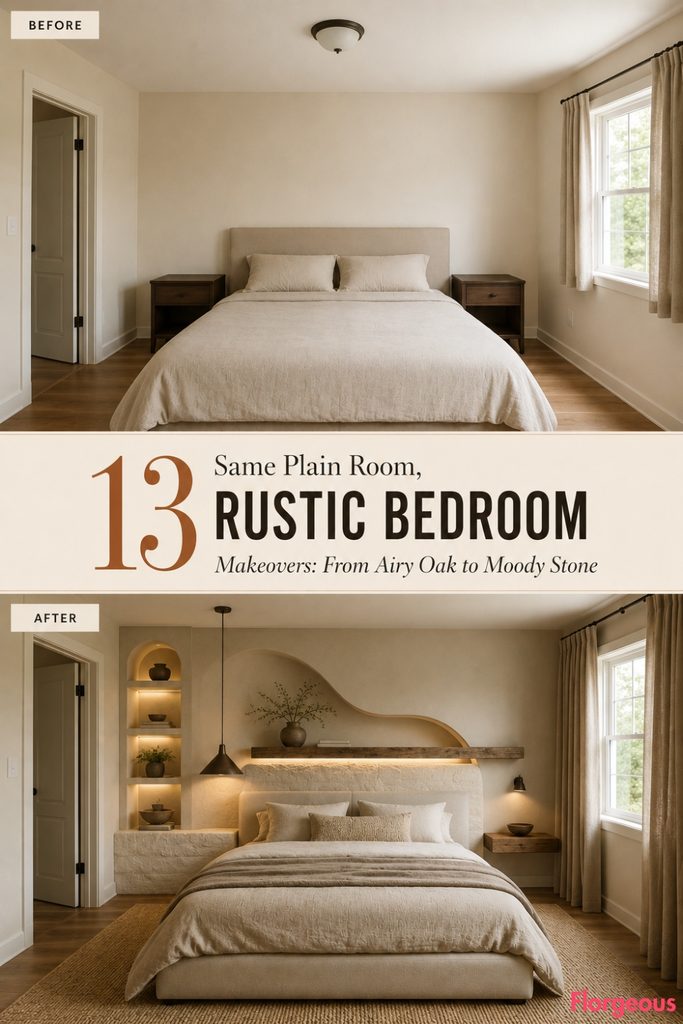
At first glance, there is almost nothing wrong with this bedroom. Warm off-white walls, a basic neutral bed, two plain nightstands, short curtains, and a generic ceiling light make it perfectly usable. They also make it completely forgettable.
So we kept the room itself locked. The camera, doorway, window, flooring, ceiling height, wall proportions, and circulation never change. Instead, we reimagined that exact builder-grade shell through 13 very different Rustic Bedroom ideas.
The interesting part is seeing how dramatically the mood shifts when the focal material changes. Pale ash feels airy and contemporary. Fieldstone pushes the room toward mountain lodge territory. Clay plaster introduces desert warmth. Antique timber creates an entirely different story again.
Most importantly, these are not thirteen versions of the same beige bedroom. Each makeover uses a different architectural move, furniture language, palette, lighting strategy, and level of decoration.
1. A Pale Ash Platform Bed Sets a Quiet Modern-Rustic Tone
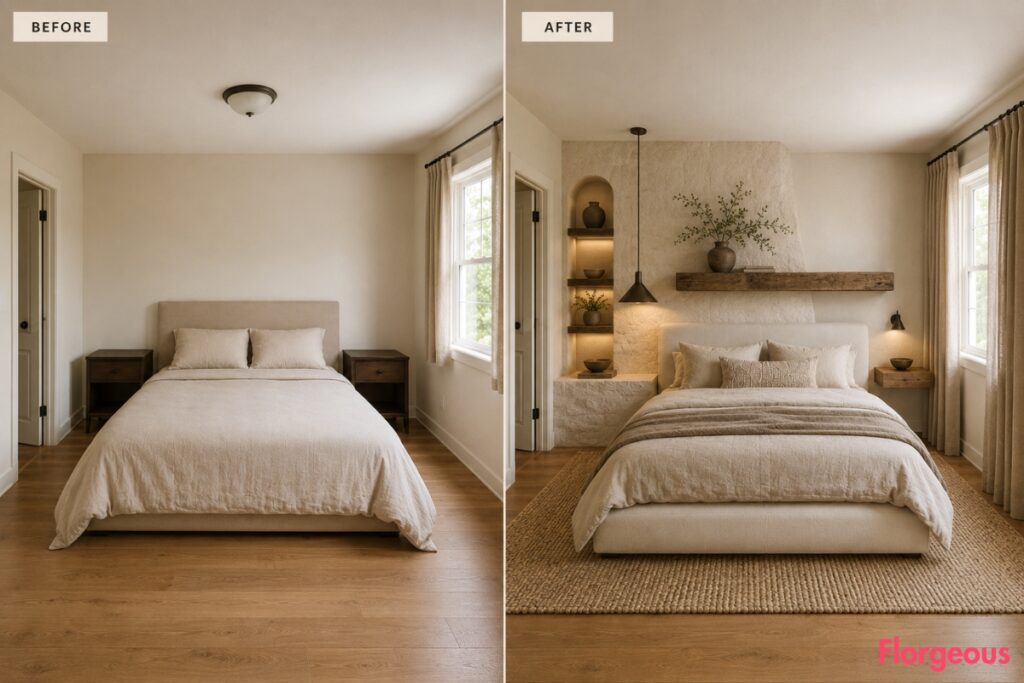
Our first version strips rustic design back to texture and craftsmanship rather than decoration.
Before: The locked builder-grade bedroom has warm off-white walls, a basic neutral bed centered against the main wall, two bare nightstands, short plain curtains, a generic ceiling fixture, and soft daylight.
After: A very low pale-ash platform bed replaces the basic frame. The wall behind it receives a soft mushroom mineral finish, while one limestone block and one narrow floating ash ledge deliberately replace matching bedside tables. Flax bedding, a thin undyed wool rug, and softly gathered full-height curtains complete the room.
A small handmade ceramic ceiling pendant brings in craft without demanding attention.
Why it works: The grain of the ash and slight variation in the mineral wall provide enough character that the room does not need conventional rustic accessories.
Try this: If a custom platform bed is beyond budget, use a simple low bed and introduce pale ash through an oversized freestanding headboard and one bedside ledge.
2. Limewash, Iron, and Antique Timber Give the Same Room a European Past
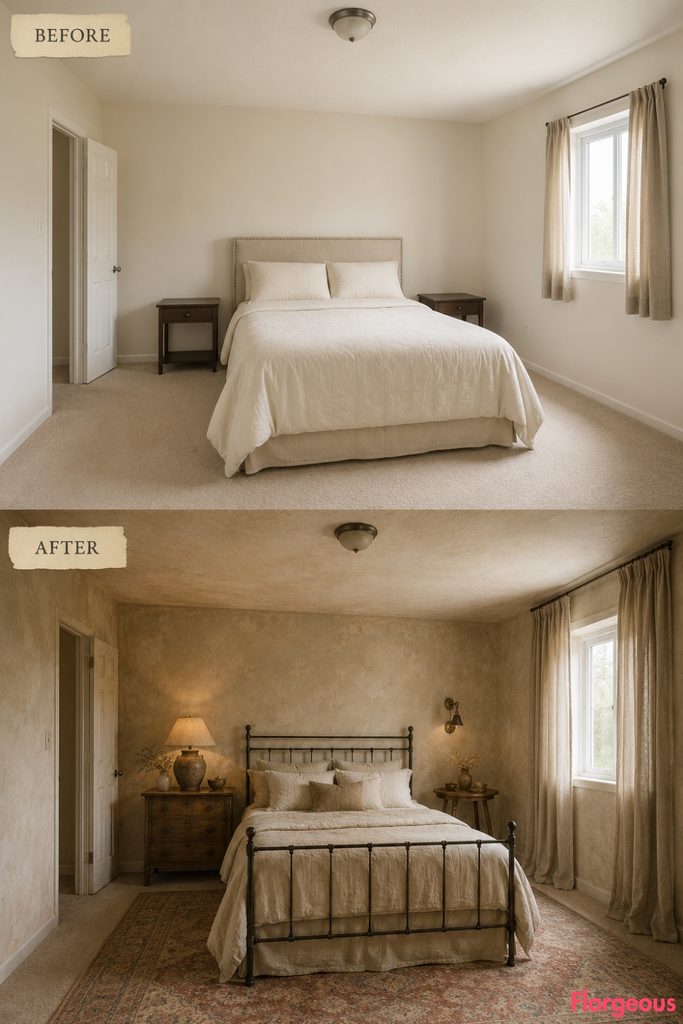
Instead of clean contemporary joinery, this makeover leans into furniture that looks as though it has lived several lives.
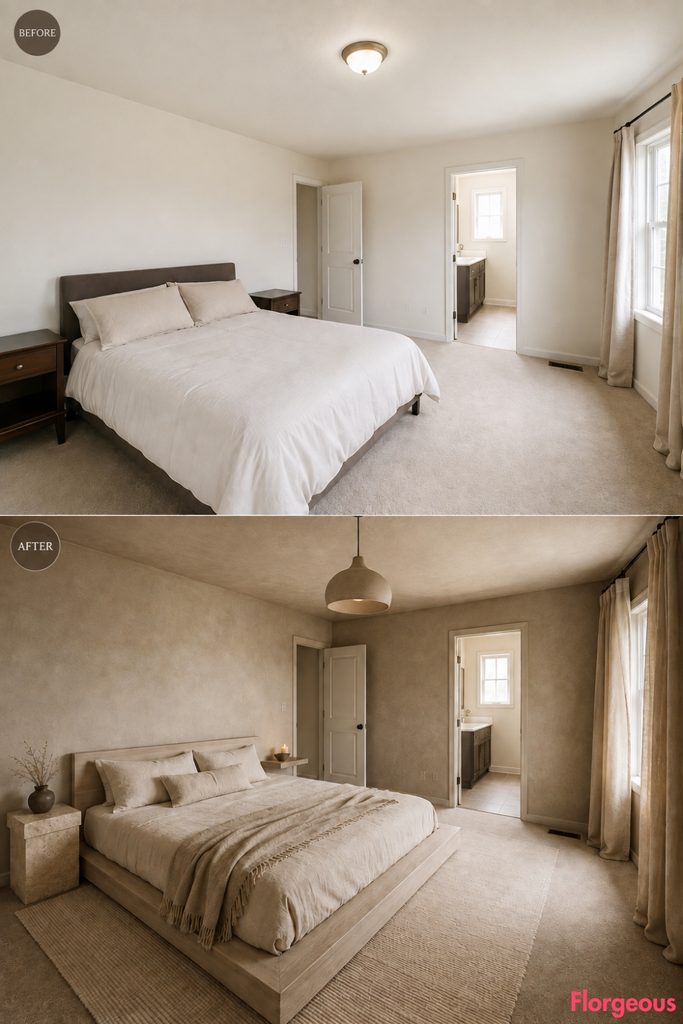
The walls become cloudy warm-beige limewash. A slender black iron bed sits between two deliberately different antique timber pieces, one small chest and one three-legged side table. A muted antique-style rug introduces faded red and tobacco tones, while cream linen and softly wrinkled flax keep the bed relaxed.
Before: The same plain room remains architecturally untouched.
After: Uneven wall tone, aged timber, worn textiles, and iron make the bedroom feel collected instead of newly decorated.
Style Note: Mismatched bedside furniture works best when the heights remain reasonably close. The shapes can differ without making the bed feel visually unbalanced.
3. Fieldstone and Dark Walnut Push the Bedroom Into Mountain-Lodge Territory
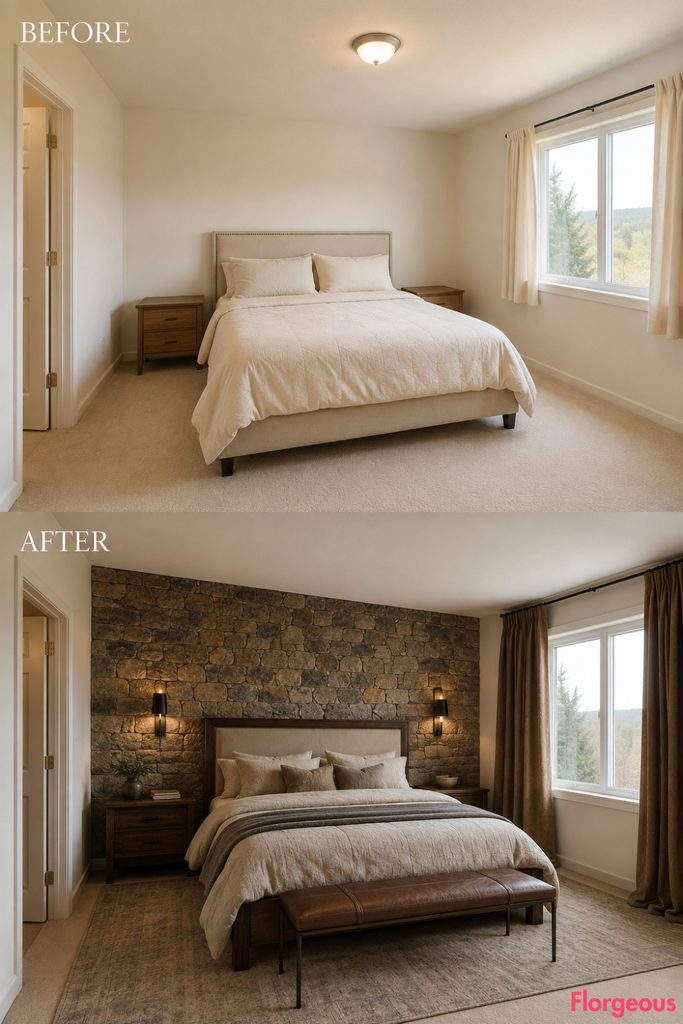
This is the most rugged transformation in the group, but the materials are controlled carefully.
A broad fieldstone panel occupies the central bed wall without extending into the surrounding corners. Against it sits a deep walnut bed with a simple upholstered inset. Blackened-bronze sconces, oatmeal wool bedding, a narrow leather bench, and tobacco curtains soften the stone.
Rather than covering the whole room in timber, the remaining walls stay quiet and warm.
Common Mistake: Stone, dark wood, heavy curtains, and oversized furniture all at once can make a normal bedroom feel compressed. Here, the stone does the architectural work while everything else stays comparatively simple.
4. A Rounded Plaster Alcove Creates Mediterranean Rustic Softness
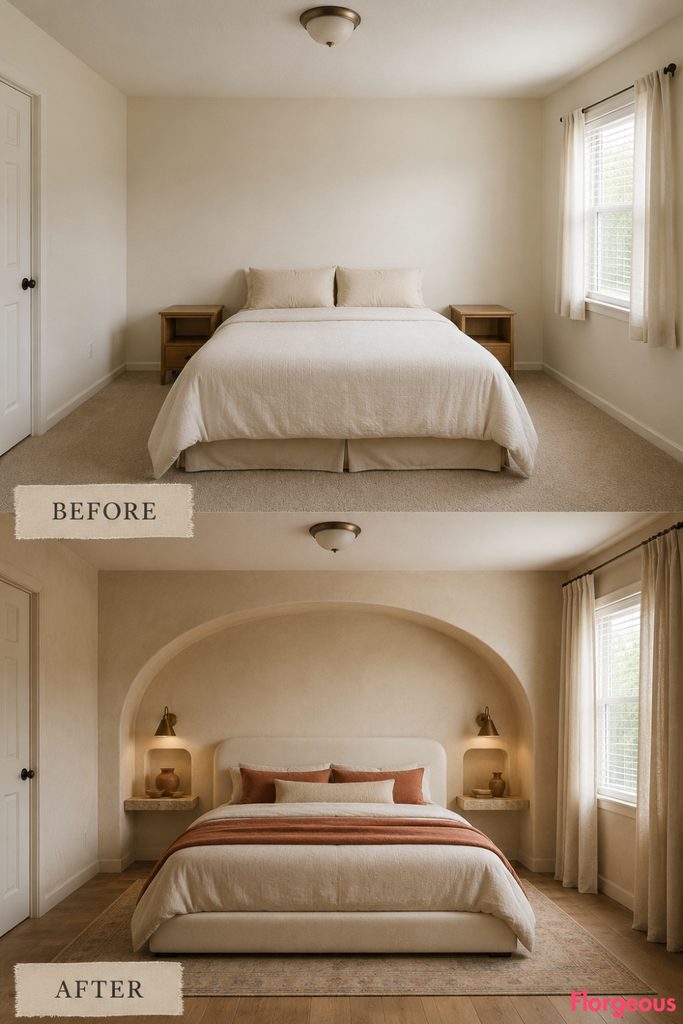
The fourth makeover barely relies on visible timber at all.
A broad shallow plaster alcove grows out of the original flat bed wall, with softly rounded corners and two recessed bedside pockets. The low ivory upholstered bed sits neatly within it. Terracotta linen, travertine shelves, aged-brass reading lights, and a faded sand-colored rug bring warmth without adding visual clutter.
The finish is chalky rather than perfectly smooth, which keeps the architecture feeling handcrafted.
Budget Version: Recreate the silhouette with curved MDF sections and mineral-effect paint instead of building a full masonry surround.
5. Whitewashed Pine Makes Rustic Feel Almost Weightless
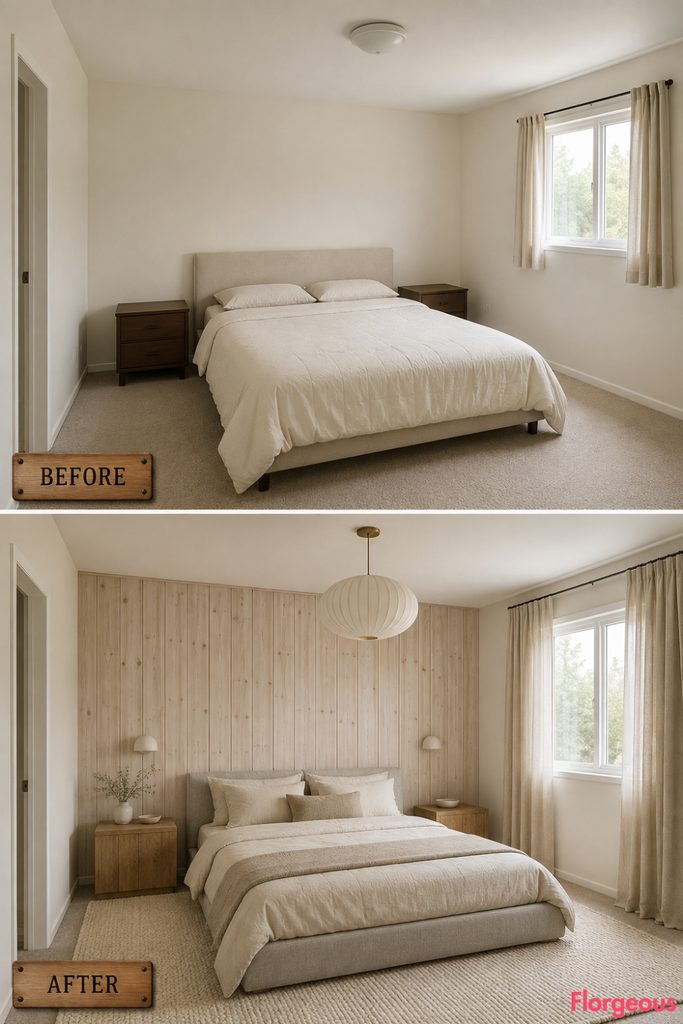
Rustic design can be pale enough to feel Scandinavian without losing its tactile edge.
The focal wall is clad in whitewashed vertical pine, with enough grain and knot variation left visible to prevent it from reading as polished paneling. A low gray wool bed provides gentle contrast. Solid oak blocks act as nightstands, while cream bedding and an off-white woven rug keep the palette restrained.
A softly irregular paper-inspired pendant introduces one sculptural shape above the bed.
Material Note: Avoid cool gray stains on pine. A warm diluted white finish works better beside linen, oak, and cream textiles.
6. Clay Walls and Saddle Leather Bring in a Desert-Rustic Palette
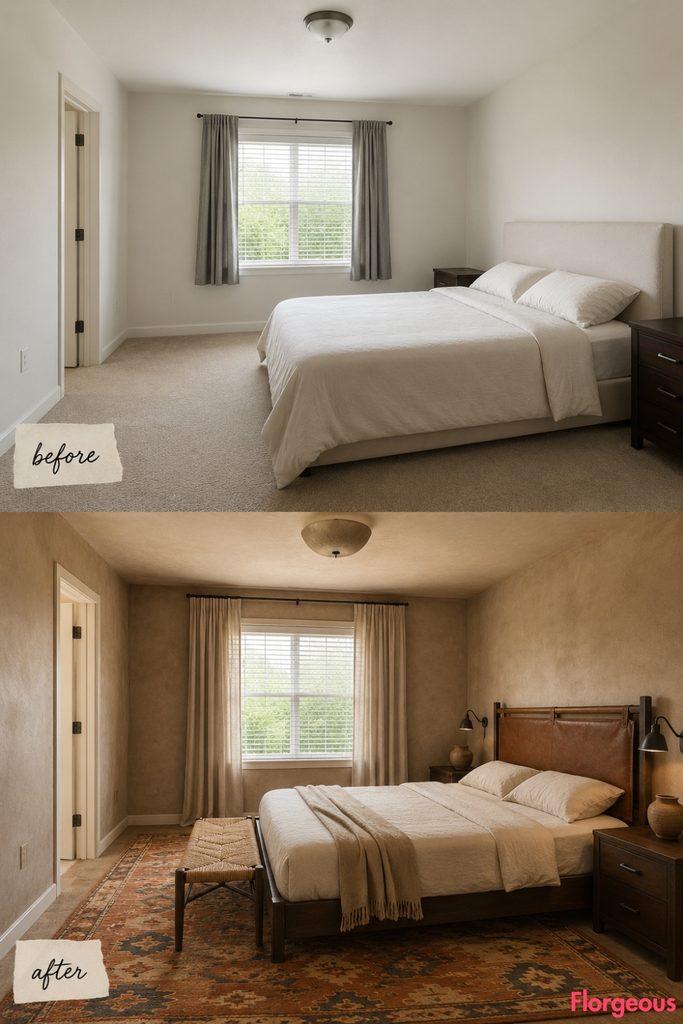
This room steps away from pale European neutrals and into dry, earthy color.
Muted clay mineral paint covers the walls. A simple dark timber bed gains a restrained saddle-leather headboard panel rather than a thick upholstered one. A low woven bench sits at the foot, and a single geometric wool rug uses faded ochre, black, rust, and cream.
Hand-thrown pottery is limited to two pieces, while dark iron reading lights sharpen the softer colors.
Color Story: Clay works especially well when paired with cream and dark brown. Too many additional desert colors can make the scheme feel themed.
7. Hand-Hewn Furniture Gives the Bedroom a Primitive, Sculptural Character
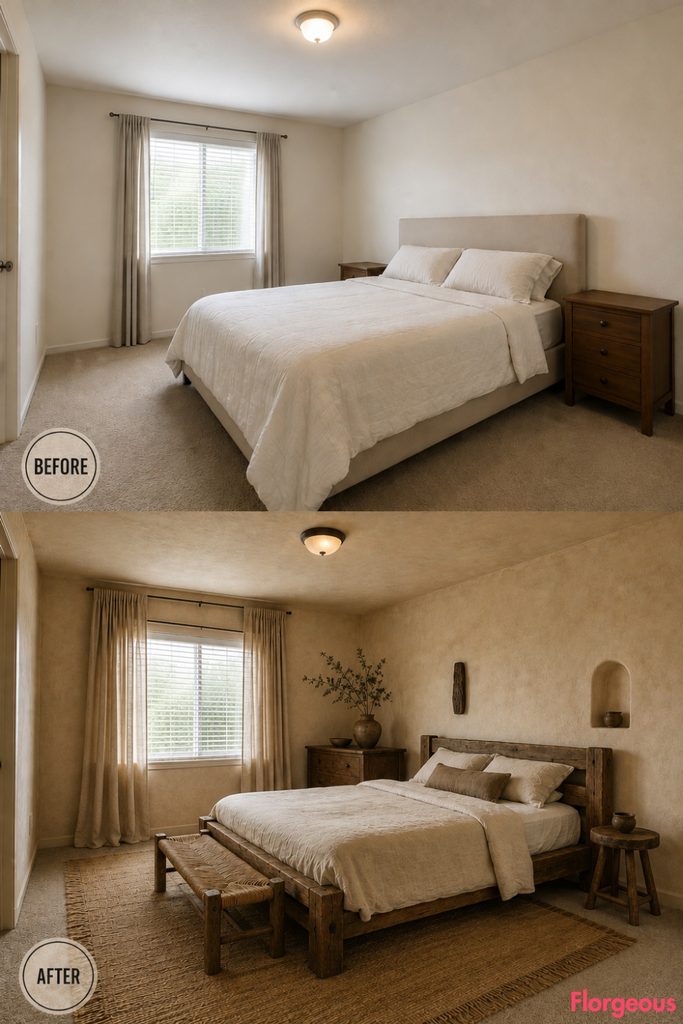
Here, the interest comes from furniture silhouette rather than a feature wall.
The original walls remain a softly imperfect warm plaster. A chunky hand-hewn timber bed becomes the dominant object, paired with one three-legged stool and one compact antique chest. A low rush-seat bench, rough linen, and a flatwoven floor textile add texture.
There is very little decorative styling. The irregular edges of the furniture are enough.
Why it works: Rustic materials feel more powerful when their shape is clearly visible. Leaving negative space around handcrafted pieces lets them read almost like sculpture.
8. Smoked Oak and Travertine Turn Rustic Into a Refined Hotel Retreat
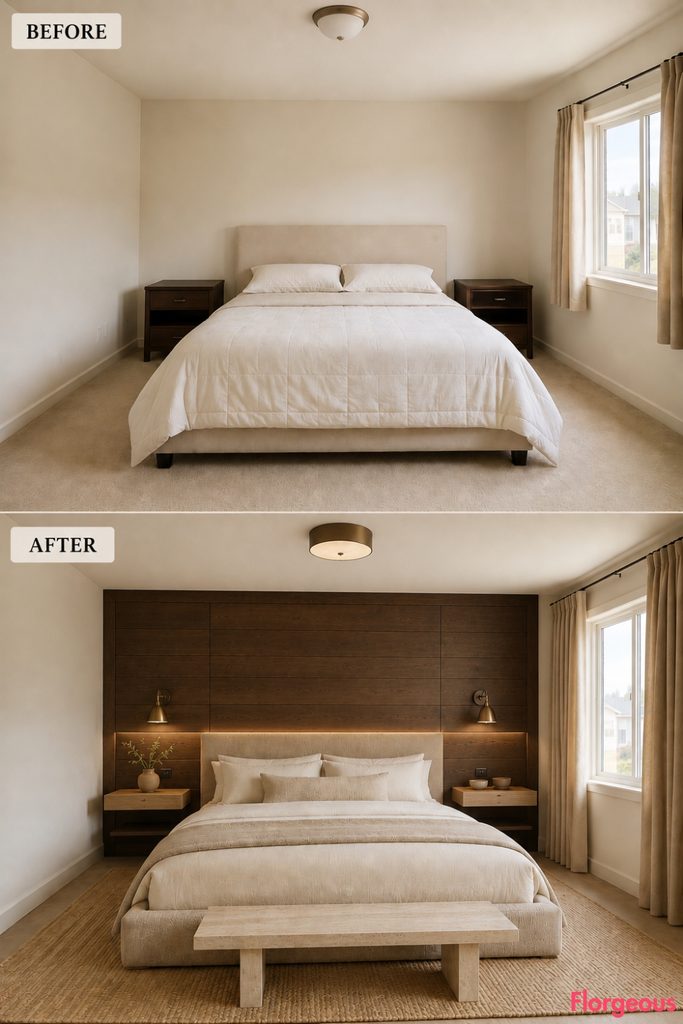
This version keeps the material honesty of rustic design but introduces much cleaner lines.
A wide smoked-oak panel stretches behind an oatmeal upholstered bed and integrates two slim floating bedside shelves. Honed travertine appears only in a low bench at the foot of the bed. Bronze reading lights, a dense wool rug, layered cream bedding, and ceiling-height curtains give the space a quiet hotel atmosphere.
No deliberately distressed finishes are needed.
Designer Tip: Honed stone works better than polished stone in this setting because the matte surface sits naturally beside wool and oak.
9. Painted Timber and a Faded Quilt Create a Soft Cottage Story
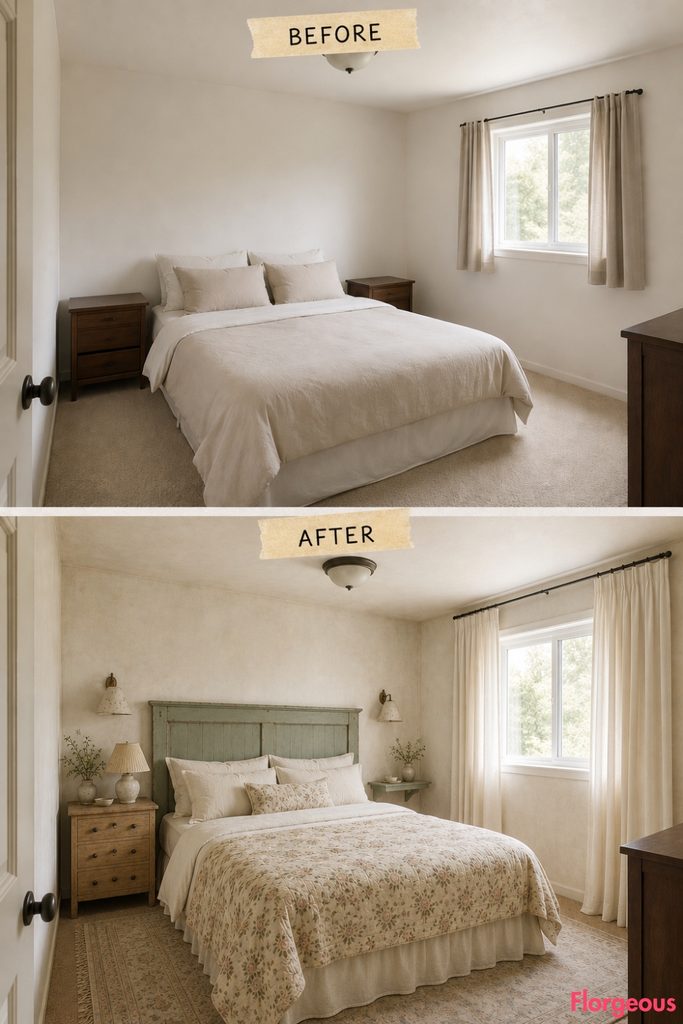
Not every rustic room needs exposed natural wood.
For this after, the bed receives a broad muted-sage painted timber headboard with simple visible joinery. One scrubbed-pine chest acts as a nightstand, while the opposite side gets a tiny wall-mounted ledge. A faded floral quilt appears over otherwise plain cream bedding.
Soft ivory walls and simple ceramic lights keep the pattern from feeling overly sweet.
Try this: If vintage floral bedding feels too traditional, fold a patterned quilt only across the lower third of the bed and keep the pillows solid.
10. A Removable Flax Headboard Proves Renters Can Do Rustic Too
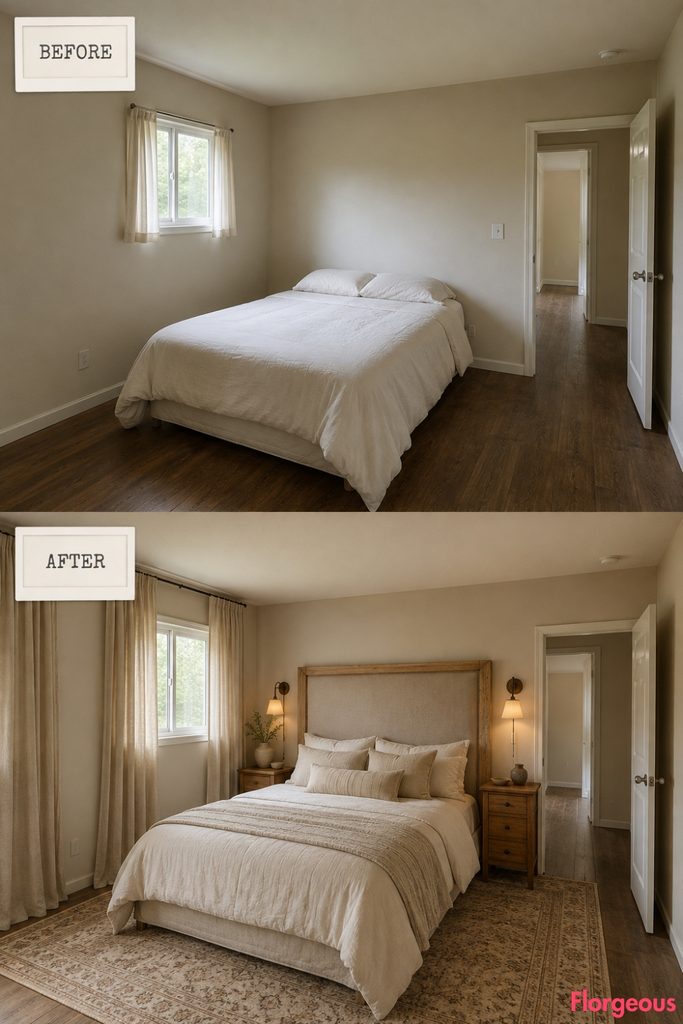
Permanent wall treatments are not essential.
The existing bed remains in place, but a freestanding extra-wide flax headboard framed in pale reclaimed timber sits behind it. Plug-in bronze sconces avoid electrical work. Secondhand pine tables, a large vintage-style neutral rug, layered ivory bedding, and ready-made curtains hung close to the ceiling change the proportions dramatically.
Nothing is built into the room.
Budget Version: Spend on the rug and curtains first. Those two elements cover a large visual area and can make inexpensive furniture feel much more intentional.
11. Concealed Storage Turns a Small Bedroom Into a Rustic Window Retreat
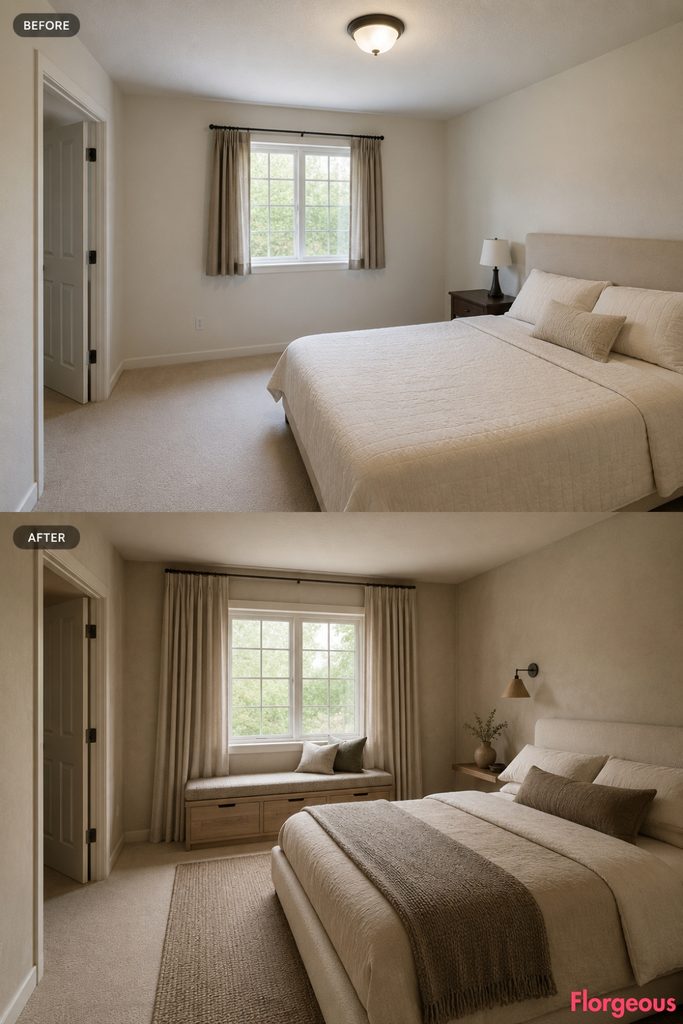
This makeover approaches rustic design through function rather than a dramatic bed wall.
A shallow pale-oak window seat fits beneath the existing window without changing its size. Concealed drawers provide storage, while a thick woven-wool cushion creates a useful reading perch. The bed stays compact and receives a simple oatmeal linen headboard.
The opposite wall remains deliberately empty, protecting the entrance route and preventing the smaller room from becoming crowded.
Small Space Tip: In a compact bedroom, one built-in-style feature is usually enough. Avoid combining a storage bed, window bench, large wardrobe, and oversized bedside pieces in the same footprint.
12. Float the Bed in Front of a Freestanding Oak Screen
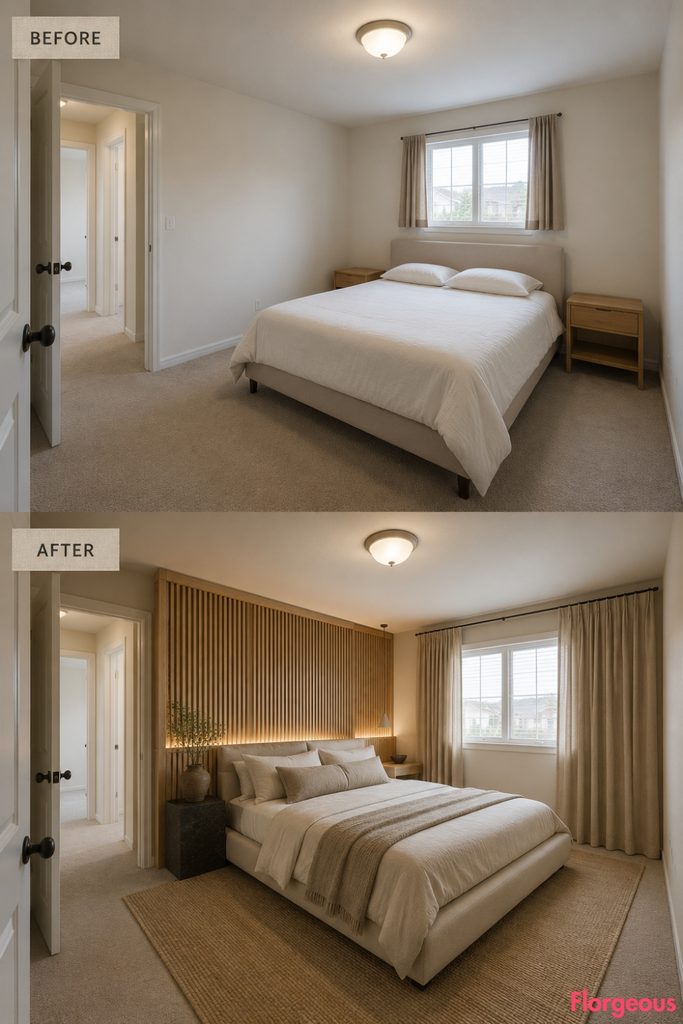
Rather than treating the wall itself, this concept introduces a new layer inside the room.
The oatmeal bed moves forward only slightly. Behind it stands a freestanding pale-oak slatted screen, with a concealed narrow shelf and warm linear light tucked behind the slats. The original wall remains untouched.
One dark stone pedestal creates contrast, and natural curtains plus a simple wool rug keep the rest of the composition calm.
Why it works: The screen creates architectural depth without changing the permanent architecture, making it useful for both rentals and rooms where a built-in headboard would be too costly.
13. Finish With an Asymmetrical Stone Plinth and Rough-Sawn Oak Shelf
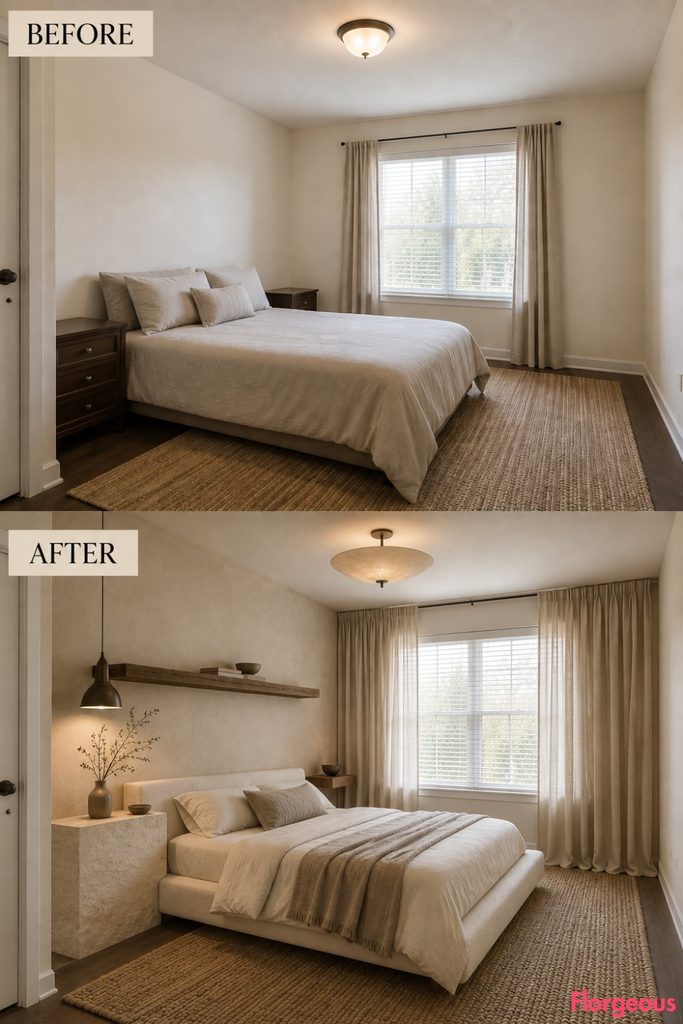
The final transformation is deliberately less predictable.
A low bone-colored bed sits against a composition of two very different materials. On one side, a pale limestone plinth rises from the floor and partially behind the bed. Above it, a thick rough-sawn oak shelf crosses only part of the wall instead of stretching symmetrically from side to side.
One dark bronze pendant hangs over the stone side, while the opposite side remains deliberately lighter with a small oak ledge. Flax curtains, woven wool, and one sculptural branch arrangement finish the room.
There is no farmhouse vocabulary here, yet the imperfect stone, visible wood grain, linen, wool, and handmade quality keep the design unmistakably rustic.
How to Pick a Rustic Direction Without Making the Room Feel Themed
The biggest difference between these makeovers is not how many rustic objects they contain. It is the decision to build each room around one clear material or architectural idea.
For a light room, start with pale ash, whitewashed pine, flax, or warm limewash. If you prefer something moodier, dark walnut, charcoal mineral paint, bronze, wool, and stone can handle more visual weight. Smaller bedrooms generally benefit from one strong feature, such as the window bench or freestanding screen, rather than several competing focal points.
Before committing to permanent work, put samples of your chosen timber, stone, wall finish, and textiles next to the existing floor. View them in morning and evening light. Warm undertones that look subtle online can become surprisingly orange or yellow once several natural materials sit together.
For a renter or anyone working in stages, start with curtains, bedding, lighting, a large rug, and one distinctive piece of timber furniture. Those changes can establish a convincing Rustic Bedroom without touching the architecture.
The goal is not to make everything look old. Choose the version that suits your home’s proportions and your tolerance for texture, then let one or two authentic materials provide the character.