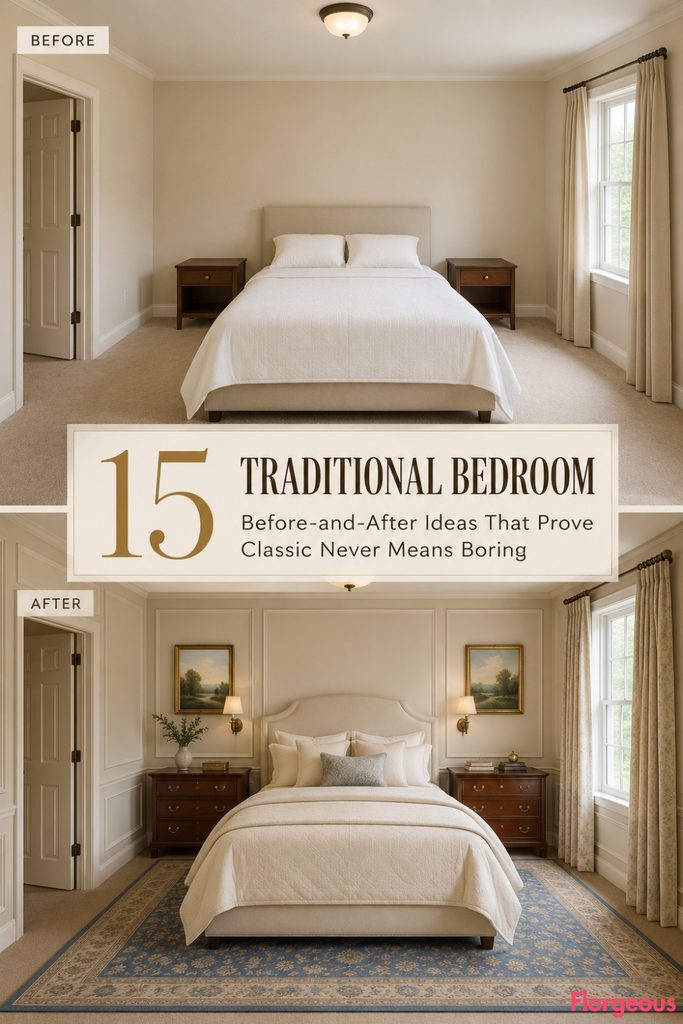
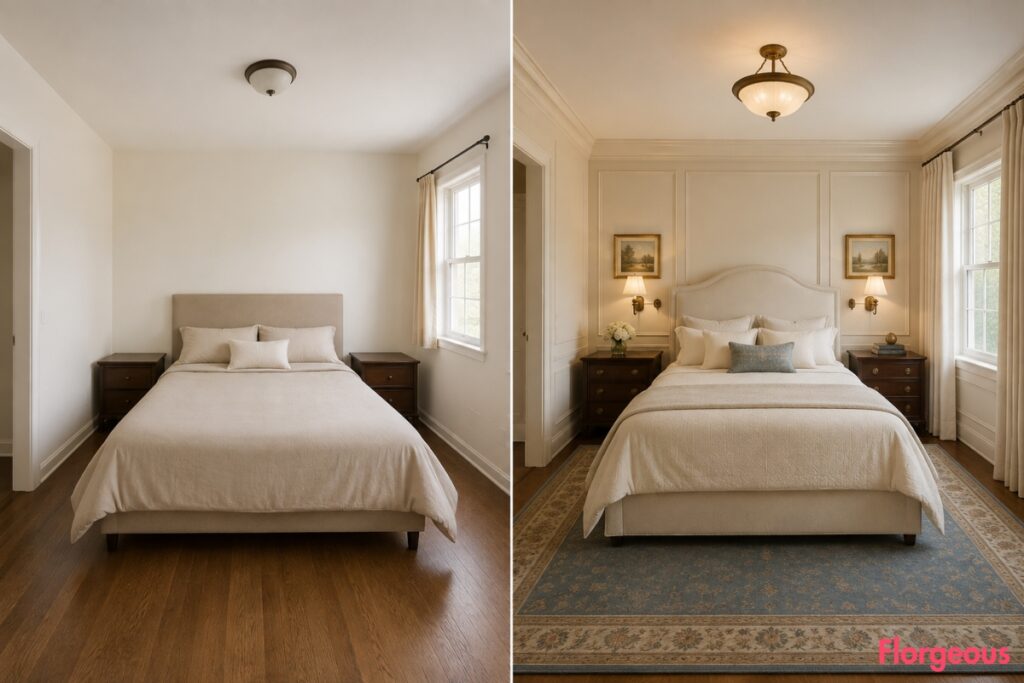
The starting room is the kind of bedroom most people would barely notice. Warm off-white walls, a basic neutral bed, two bare nightstands, short curtains, a generic ceiling light, and plenty of empty surface area make it practical, but unfinished.
That neutral shell is exactly what makes the experiment useful. We kept the doorway, window, flooring footprint, ceiling height, proportions, furniture orientation, daylight direction, and camera position locked, then changed only the design decisions inside it.
These Traditional Bedroom makeovers show just how many personalities classic decorating can have. The same room moves from relaxed English country to disciplined Georgian symmetry, dark library richness, romantic French detailing, Arts and Crafts warmth, tailored coastal style, and even a renter-friendly scheme with no permanent construction.
1. English Country, but Lighter and Less Fussy
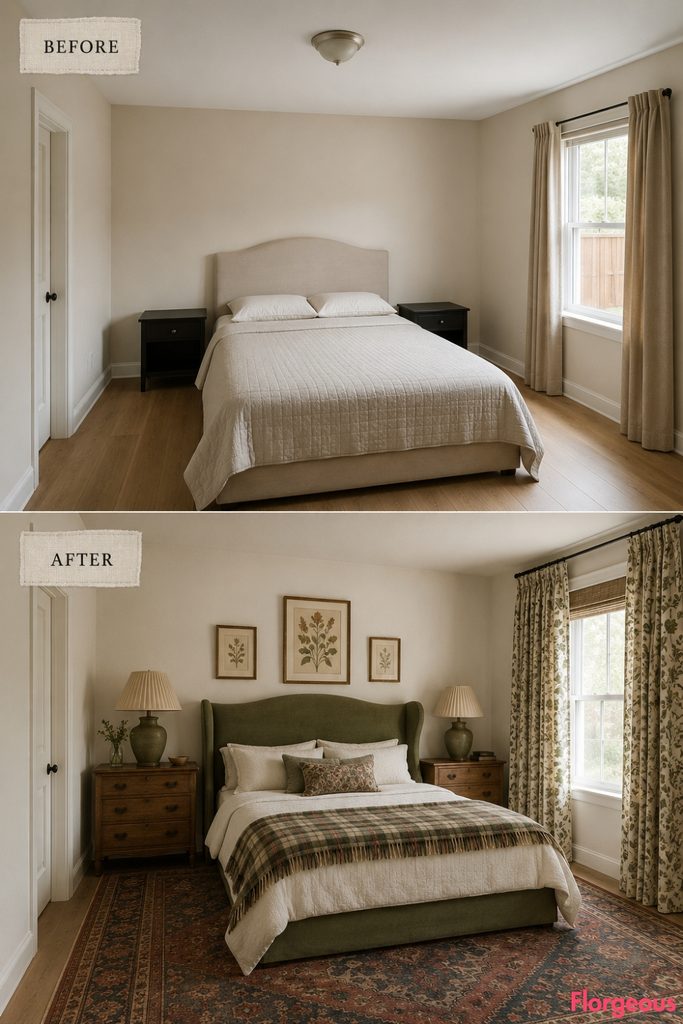
The first version leans into English country character without filling every surface. A moss-green linen wingback bed replaces the generic frame, while antique-oak bedside chests add warmth and useful storage.
Full-height block-print curtains introduce a soft botanical pattern. A faded red-and-blue wool rug, ivory linen bedding, pleated ceramic lamps, and a small group of vintage-style botanical pictures finish the room.
Before: Warm off-white walls, neutral bed, bare nightstands, short curtains, generic ceiling light.
After: Soft green upholstery, aged oak, traditional print, layered wool and linen, and a much stronger focal point.
Designer Tip: Pair one botanical with one small check or stripe. More patterns are not automatically more traditional.
2. A Georgian Bed Wall Brings Order to the Entire Room
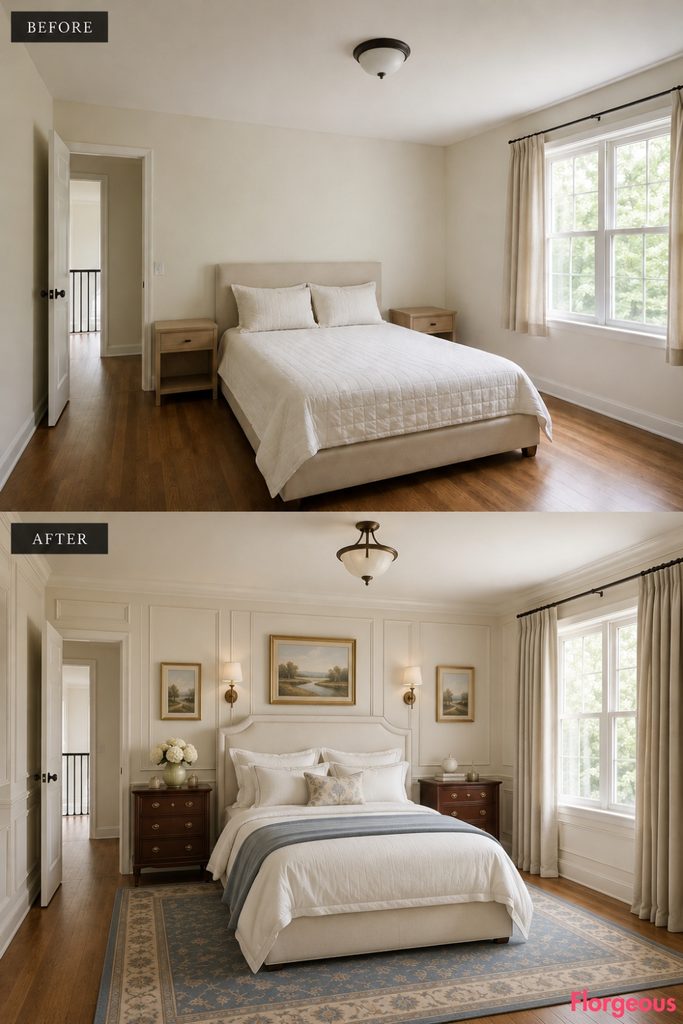
This makeover starts with architecture rather than accessories. Cream picture-frame molding divides the main wall into balanced panels around a tall ivory upholstered bed.
Matching mahogany bedside commodes and shaded bronze sconces strengthen the symmetry. Muted blue enters through a bordered wool rug and two traditional landscapes, preventing all that cream and wood from becoming too formal.
Try this: Paint inexpensive applied molding the same color as the wall. The shadow lines provide most of the effect.
3. Why a Painted Pencil-Post Bed Changes the Mood Completely
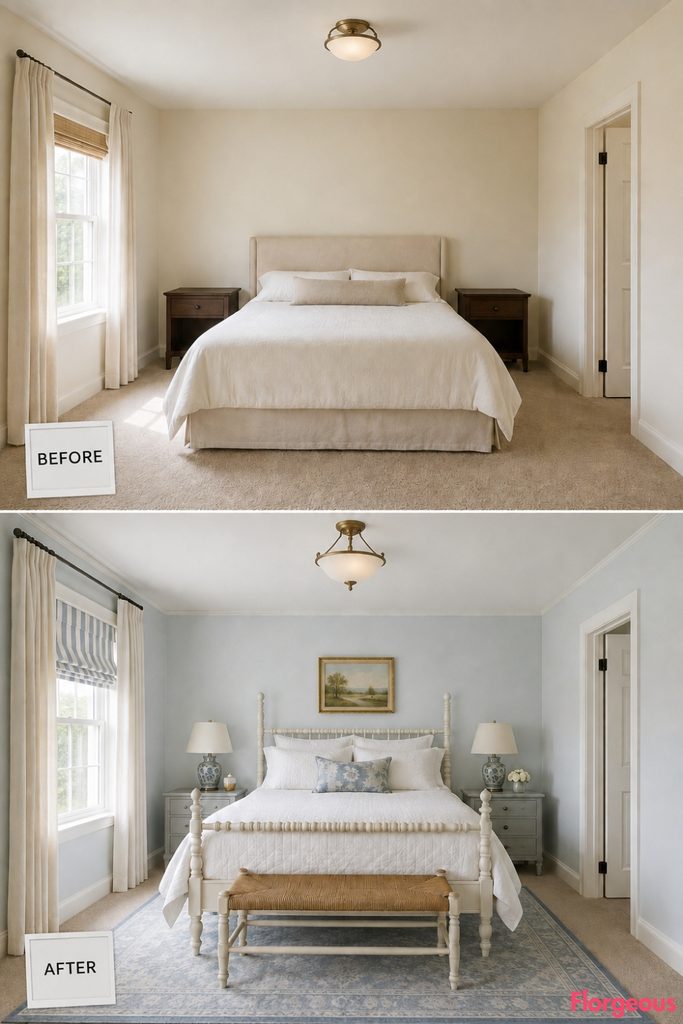
Traditional furniture does not have to be dark. A slender pencil-post bed painted warm bone creates height and structure while keeping the bedroom visually light.
Pale powder-blue walls, white matelassé bedding and simple painted bedside tables make the room feel closer to an airy American country house. A rush bench adds texture, while a striped Roman shade sits beneath plain cream curtains.
The result feels classic without looking formal.
4. Pattern Takes the Lead in This Blue-and-White Room
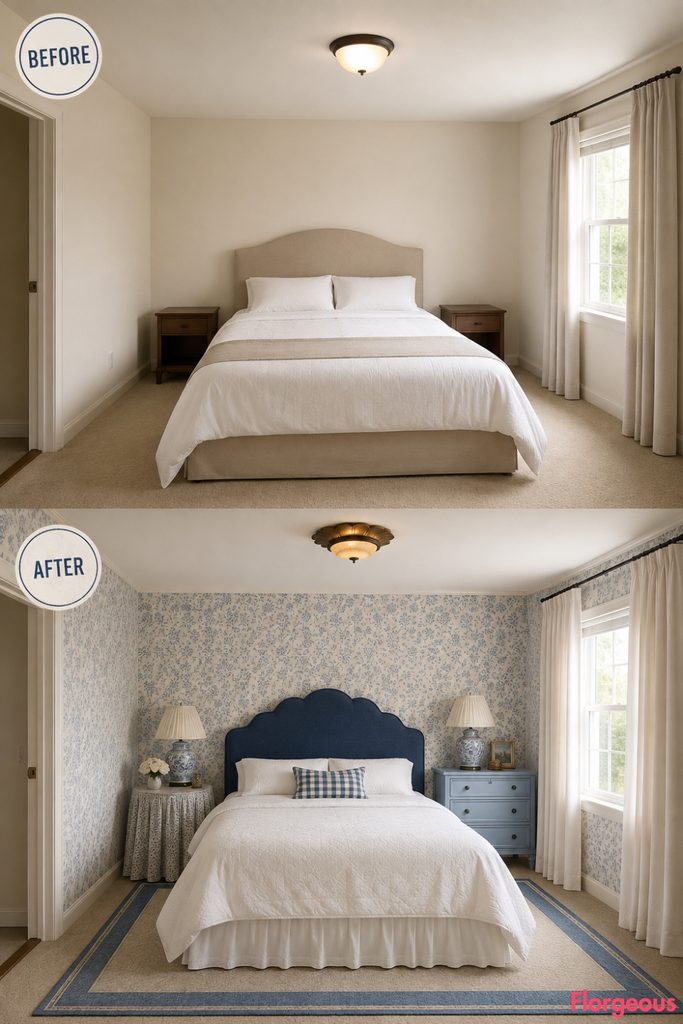
Here, the wall treatment becomes the main event. Small-scale blue botanical wallpaper wraps the room, giving the previously blank shell instant depth.
A navy scalloped headboard anchors the pattern. Instead of matching nightstands, one side uses a skirted round table and the other a petite painted chest. White bedding, gathered lampshades, a blue-bordered rug, and one checked cushion keep the palette disciplined.
Color Story: Stick to two or three closely related blues. Pattern feels calmer when the color range is limited.
5. French Curves Do the Work Instead of Heavy Decoration
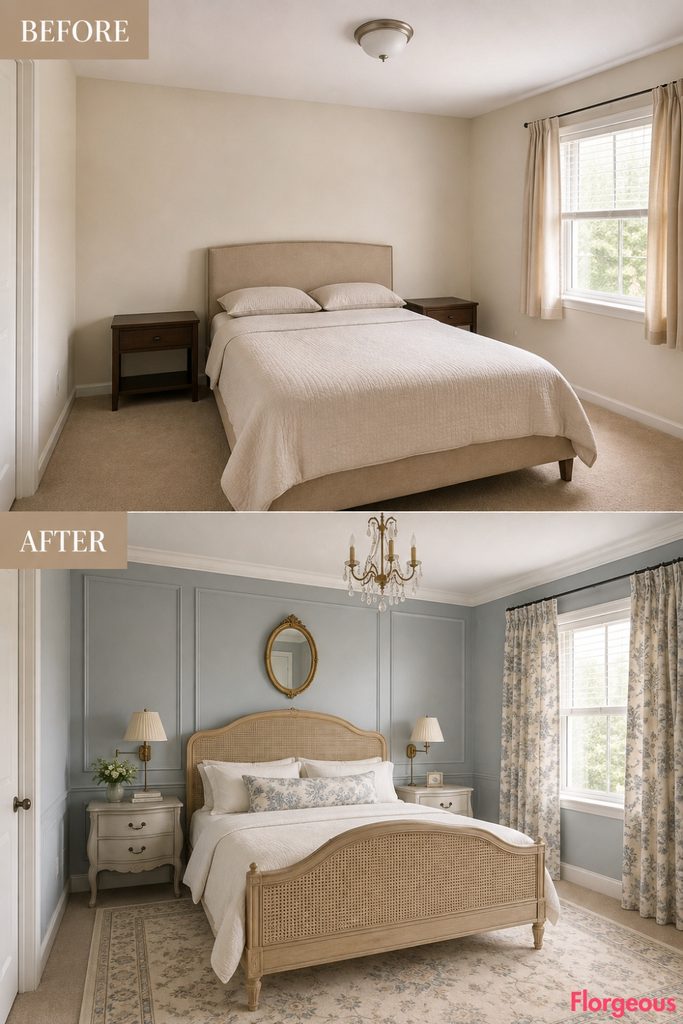
This room gets its character from shape. A pale oak-and-cane bed with a gently arched headboard replaces the plain frame, while curved painted bedside tables repeat that softness.
Muted blue-gray walls receive delicate molding rather than wallpaper. Faded toile curtains, a gilt oval mirror, ivory bedding, a pale Aubusson-inspired rug, and a compact bronze-and-crystal chandelier complete the composition.
Common Mistake: Too many ornate pieces can turn French-inspired design into a theme. Keep the bedding simple and let silhouette carry the room.
6. The Darkest Makeover Feels Like a Private Library
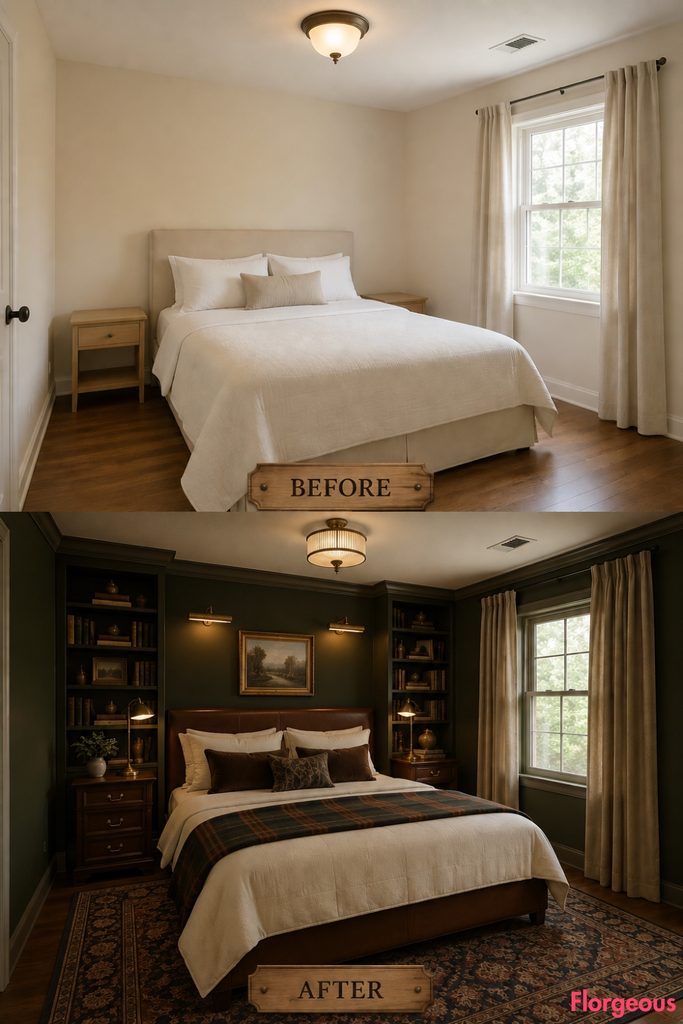
Deep olive changes the character of the room more dramatically than any neutral paint could. Shallow mahogany shelving frames the sleeping area, stopping well clear of the doorway and window.
A low saddle-brown leather headboard keeps the center of the room visually grounded. Bronze library lights, tobacco velvet cushions, cream sheets, a muted tartan throw, and a densely patterned rug provide warmth against the dark walls.
Why It Works: Cream fabric and warm metal are essential here. Without them, deep green and mahogany could look flat rather than enveloping.
7. Brass Bed, Blue Ticking, Summer-House Energy
This coastal interpretation avoids predictable nautical decoration completely. The focal point is an antique-style brass bed with a fine, aged finish.
Faded blue ticking appears sparingly on the bedding, balanced by blue-gray painted bedside tables and white linen curtains. A woven rush chest at the foot of the bed and a muted flatweave rug make the room feel relaxed and established.
8. No Wallpaper Needed: One Tapestry Becomes the Architecture
Instead of remodeling the wall, this version gives it a single oversized focal point. A tapestry-inspired textile hangs behind a carved oak bed, instantly adding age, pattern, and visual weight.
Warm plaster-colored walls stay intentionally quiet. An antique blanket chest, iron candle-style sconces, heavy flax-and-wool curtains, and a faded rust rug support the old-world mood without filling the bedroom with decorative objects.
Budget Version: Hang a reproduction textile from a discreet rod rather than investing in a permanently upholstered feature wall.
9. Leather, Oak and Herringbone Create an Equestrian Bedroom
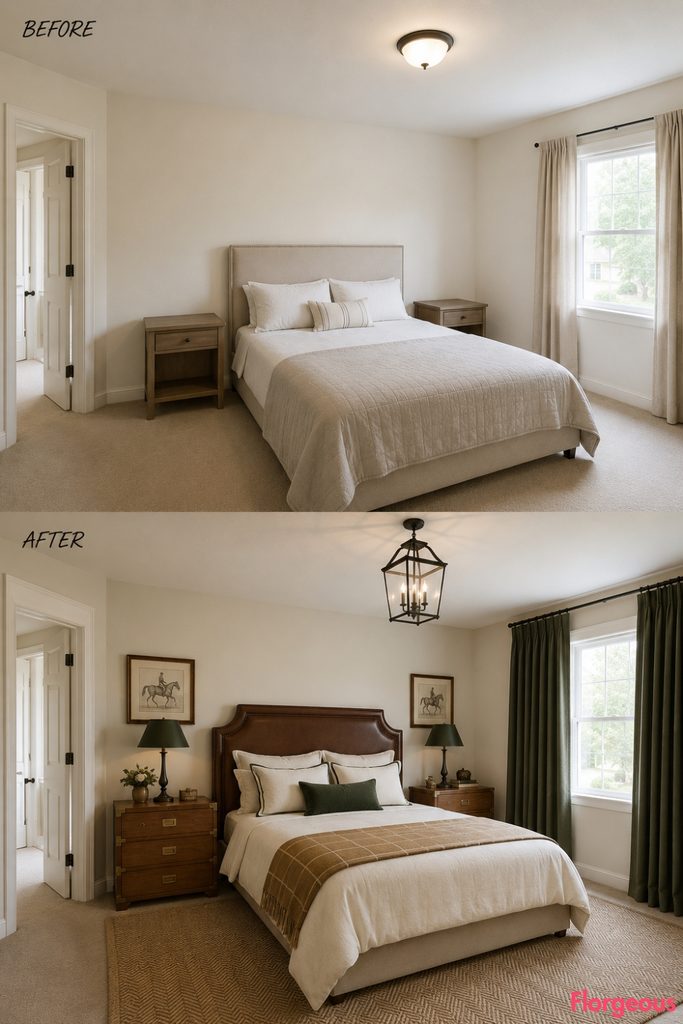
Florals disappear entirely in this interpretation. A broad saddle-leather headboard sets a tailored tone, paired with medium-oak campaign-style bedside chests.
Forest-green accents, a camel windowpane throw and a structured herringbone wool rug give the room pattern without softness becoming the main story. Blackened-bronze lighting sharpens the palette.
10. Tailoring, Not Trinkets, Creates a Traditional Hotel Suite
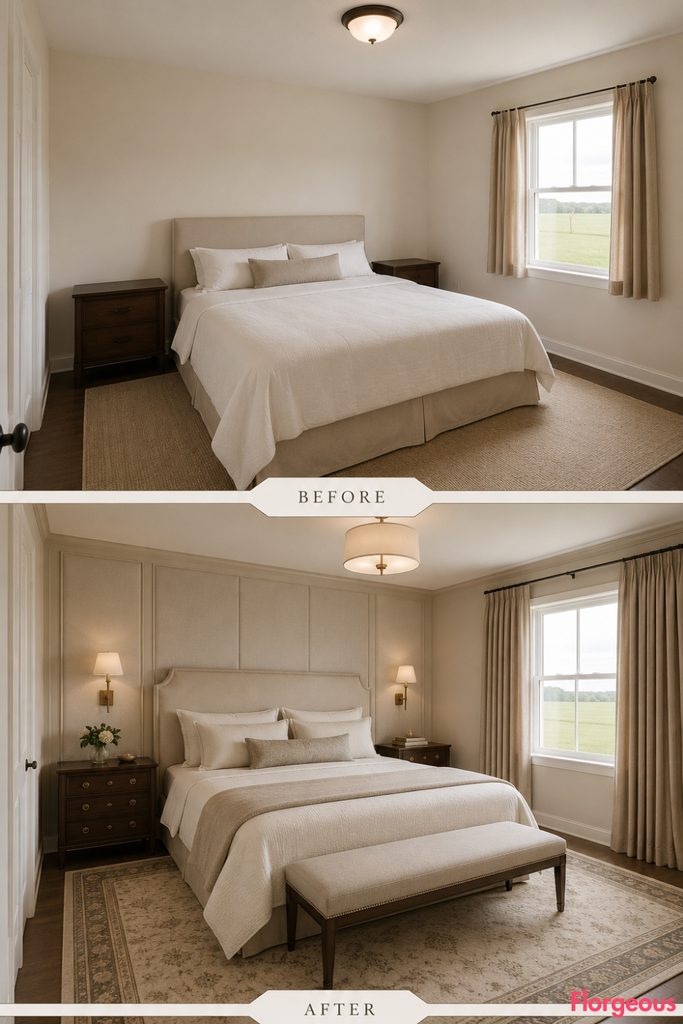
Everything in this room is based on alignment. A tall oatmeal upholstered bed sits between narrow padded wall panels and matched walnut bedside chests.
Small shaded bronze sconces replace table lamps, keeping the nightstand surfaces clear. Mushroom-edged curtains, a thick bordered wool rug and a long upholstered bench complete the sleeping zone.
The room looks finished because every major element relates to the bed, not because it contains more decor.
Small Space Tip: Reduce the nightstand width before shrinking the bed. Narrow traditional chests can maintain the tailored effect while protecting circulation.
11. Above the Bed, a Fabric Corona Adds Controlled Drama
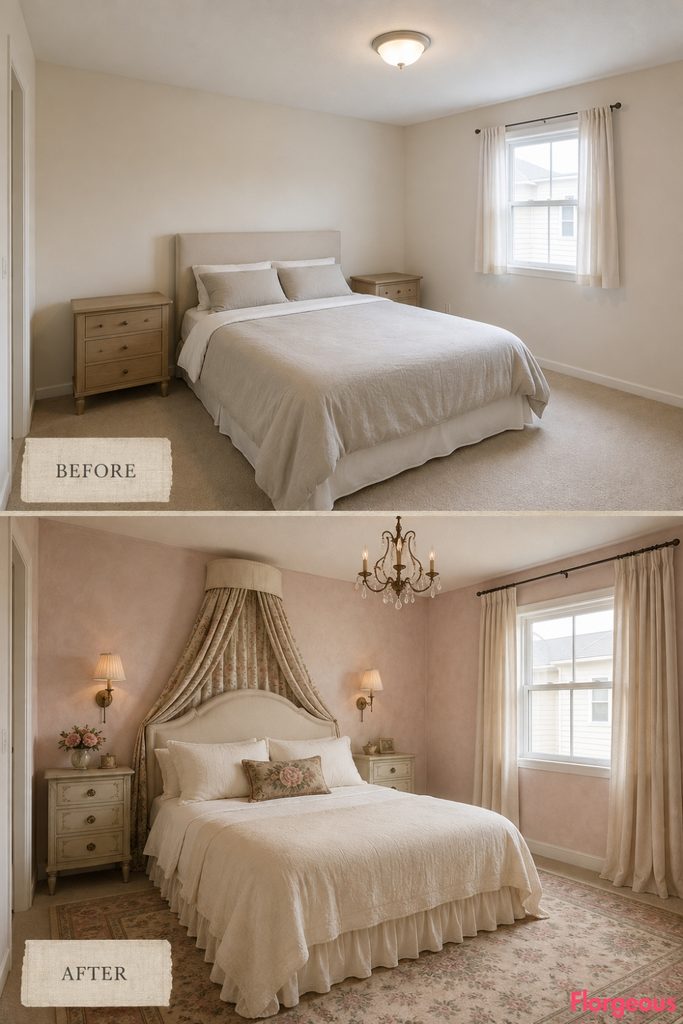
Rather than using a full canopy frame, this bedroom draws attention upward with a compact upholstered corona mounted high over the headboard.
Two faded rose-and-sage fabric panels descend behind the bedside zone, never crossing the window or entrance. A curved cream bed, blush plaster walls, pale bedside cabinets and a faded floral rug create a romantic result without overwhelming the room.
12. Perfect Pairs Are Gone in This Collected Antique Room
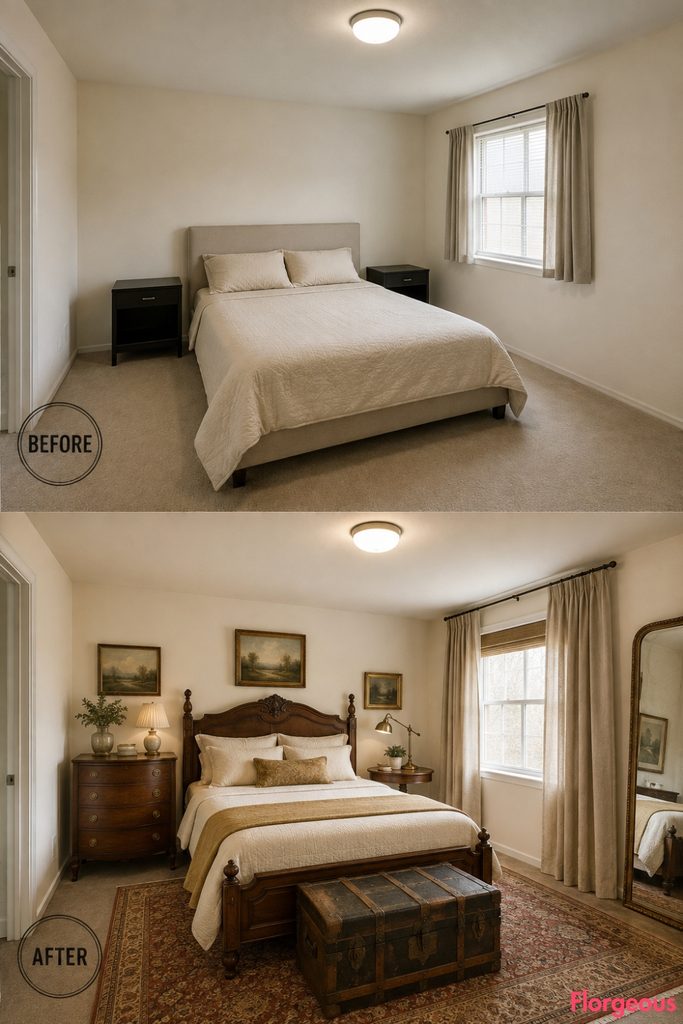
This version deliberately abandons symmetry. A carved walnut bed sits between a bow-front chest on one side and a round pedestal table on the other.
The wall receives an irregular arrangement of vintage-style landscapes instead of matched art. A tall aged mirror, old trunk, relaxed flax curtains, worn Persian-style rug and muted ochre accents make the room feel assembled slowly over time.
The restraint comes from the palette. Warm walnut, cream, ochre and aged brass connect objects that do not match.
13. Craftsman Warmth Changes the Room Without Making It Rustic
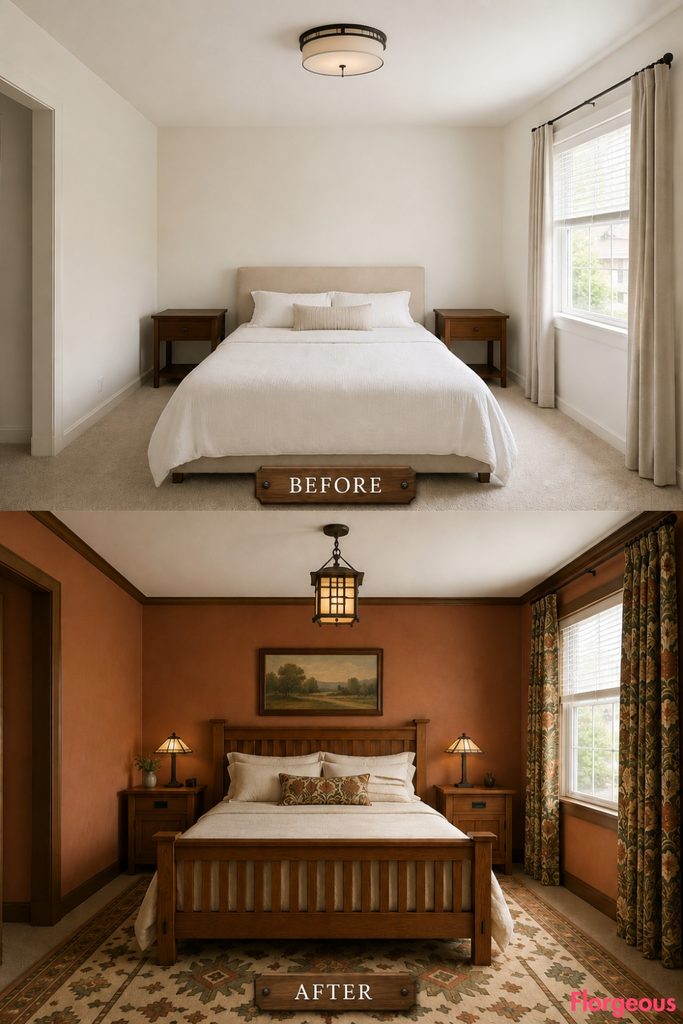
Quarter-sawn oak becomes the defining material here. A substantial slatted bed and low Craftsman bedside cabinets bring visible joinery and handmade character into the previously generic room.
Warm clay walls support a stylized heritage botanical curtain fabric. A geometric wool rug and hammered bronze hardware keep the design grounded, while plain cream linen prevents the woodwork from becoming too visually dense.
14. Black and Ivory Strip Traditional Style Back to Its Classical Bones
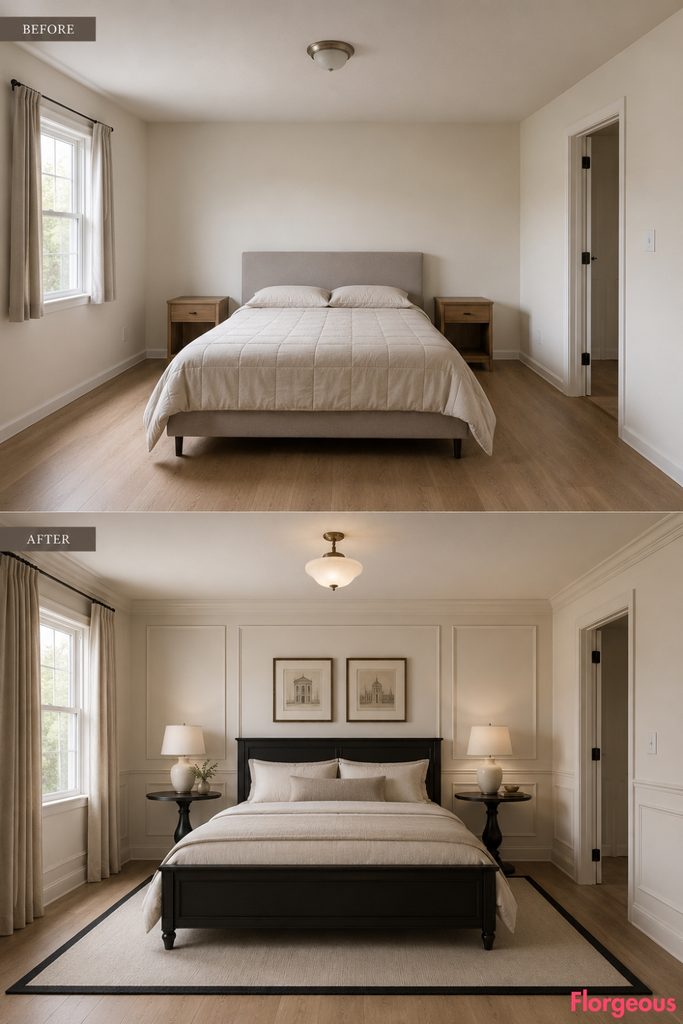
This is the most graphic room in the gallery. Warm ivory walls receive a shallow chair rail and restrained rectangular molding, but there is no wallpaper or floral fabric.
A black-painted classical bed becomes the focal point, flanked by small pedestal tables. An ivory rug with a narrow black border, plain flax curtains and sculptural ceramic lamps continue the controlled palette.
A few framed architectural studies finish the wall without turning it into a gallery.
Style Note: Strong contrast can make traditional design feel crisp and deliberate without pushing it into contemporary territory.
15. Traditional Style, No Renovation Required
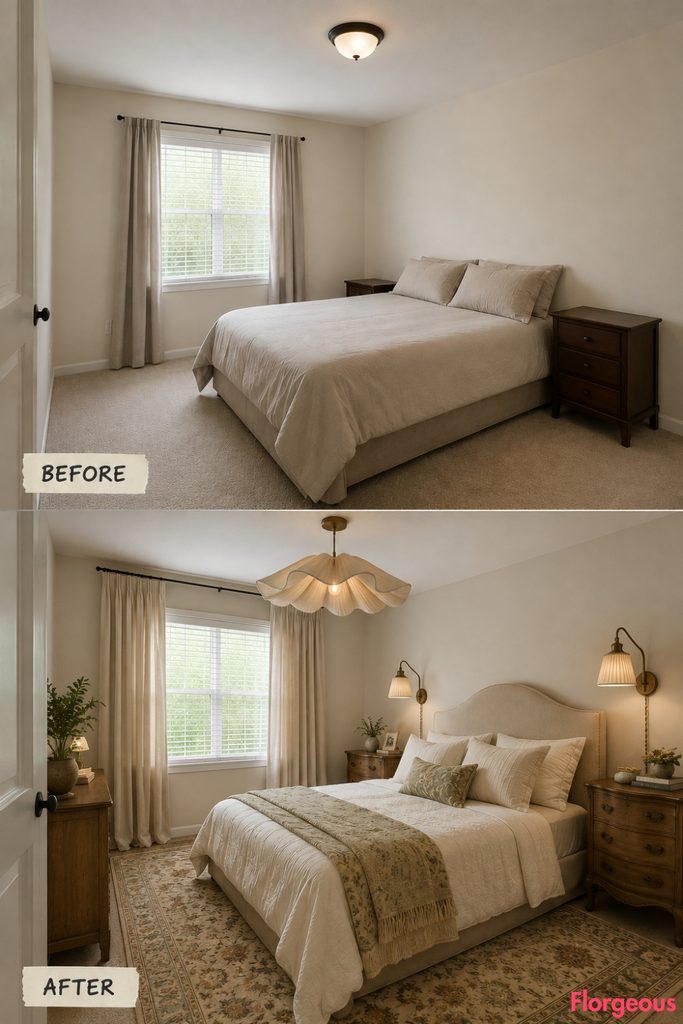
The final room is designed specifically for renters or anyone who does not want to install molding, shelving, wallpaper or built-ins.
A removable camelback linen headboard creates the classic silhouette. Two freestanding vintage-style bedside chests replace the basic tables, while plug-in bronze sconces provide a more architectural lighting effect without electrical work.
Ready-made curtains are mounted high and wide, and an oversized traditional-pattern rug covers enough floor to visually anchor the bed. Cream bedding, pleated shades and removable framed landscapes complete the scheme.
Try this: If the room still feels generic, strengthen the silhouette before adding accessories. A shaped headboard often changes more than five small decorative purchases.
Choose the Focal Point Before You Choose the Accessories
The most useful thing these rooms have in common is not a particular color, furniture period or fabric. Each makeover chooses one dominant idea and lets everything else support it.
For your own Traditional Bedroom, that focal point might be a four-poster bed, architectural molding, a patterned wall, beautiful curtains, a tapestry, strong timber furniture or one exceptional antique. Decide on that first, then choose lighting, bedside pieces, rugs and bedding that strengthen the same story.
If you are starting with a builder-grade bedroom, begin with one strong silhouette and one large-scale finishing element. A shaped headboard plus floor-length curtains, or a carved timber bed plus a substantial rug, will usually create more character than filling the room with small decorative objects.