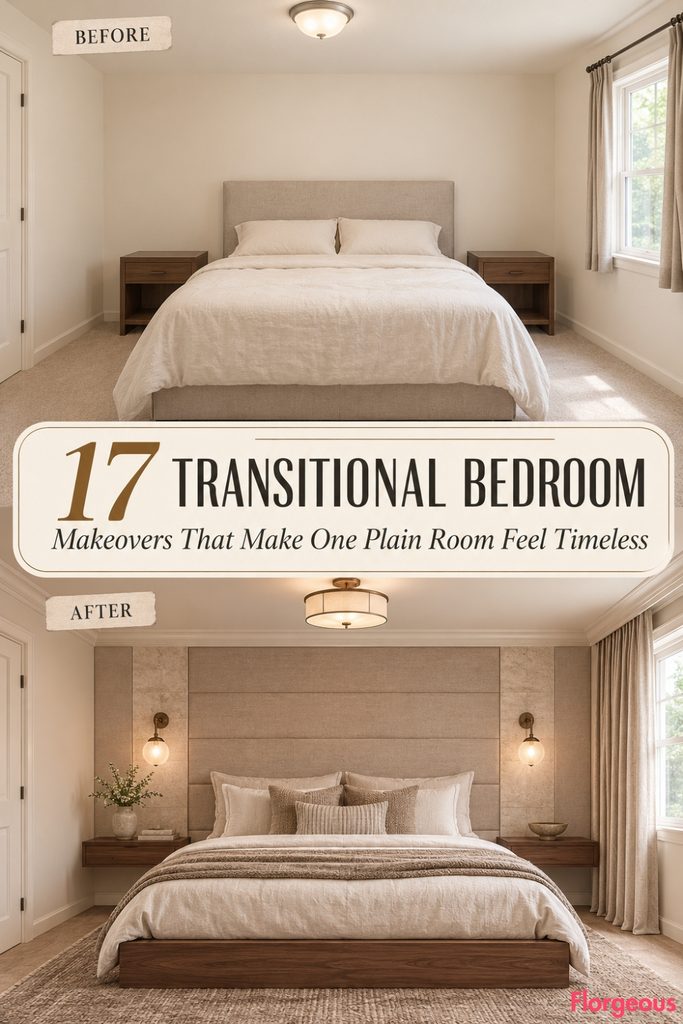
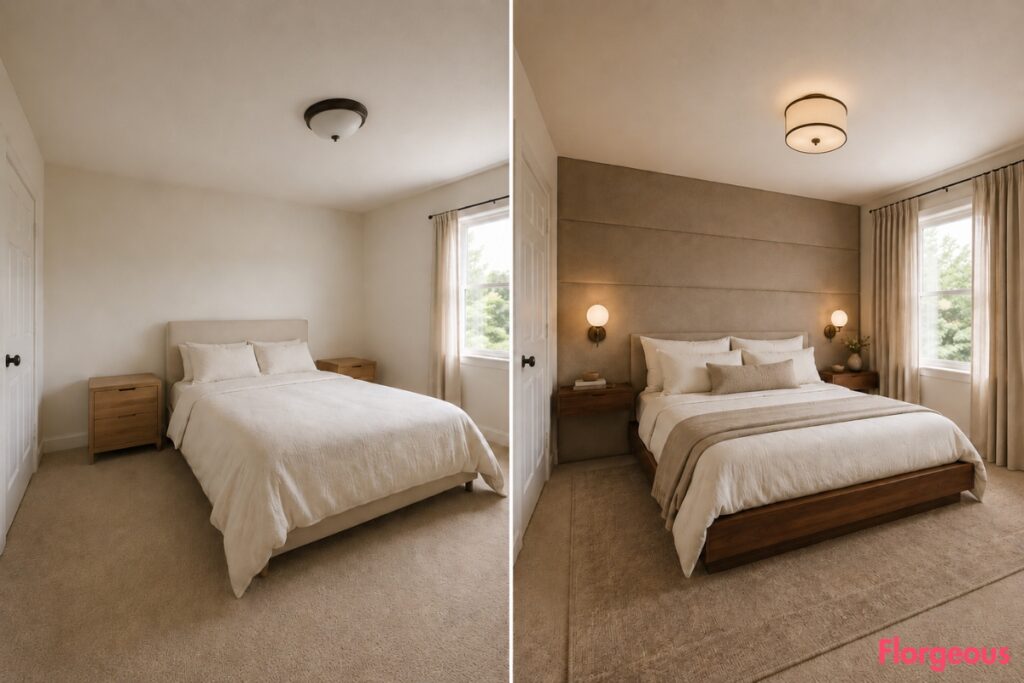
There is nothing particularly wrong with our starting bedroom. It has warm off-white walls, a neutral bed, two basic nightstands, short curtains, simple lighting, and plenty of daylight. Yet everything feels slightly temporary, as though the room was furnished just enough to function and then forgotten.
We kept that exact bedroom shell intact and reimagined it 17 different ways. Every doorway, window, floor line, ceiling height, camera angle, and circulation path stays exactly where it began.
The interesting part is how differently a Transitional Bedroom can feel depending on what creates the focal point. One version relies on upholstery, another on molding, another on stone, wallpaper, vintage furniture, pattern, storage, lighting, or a more sculptural bed.
The goal is not to make the room more traditional or more modern. It is to find that useful middle ground where familiar proportions and warm materials meet simpler contemporary lines.
1. Create a Transitional Bedroom Around One Tailored Upholstered Wall
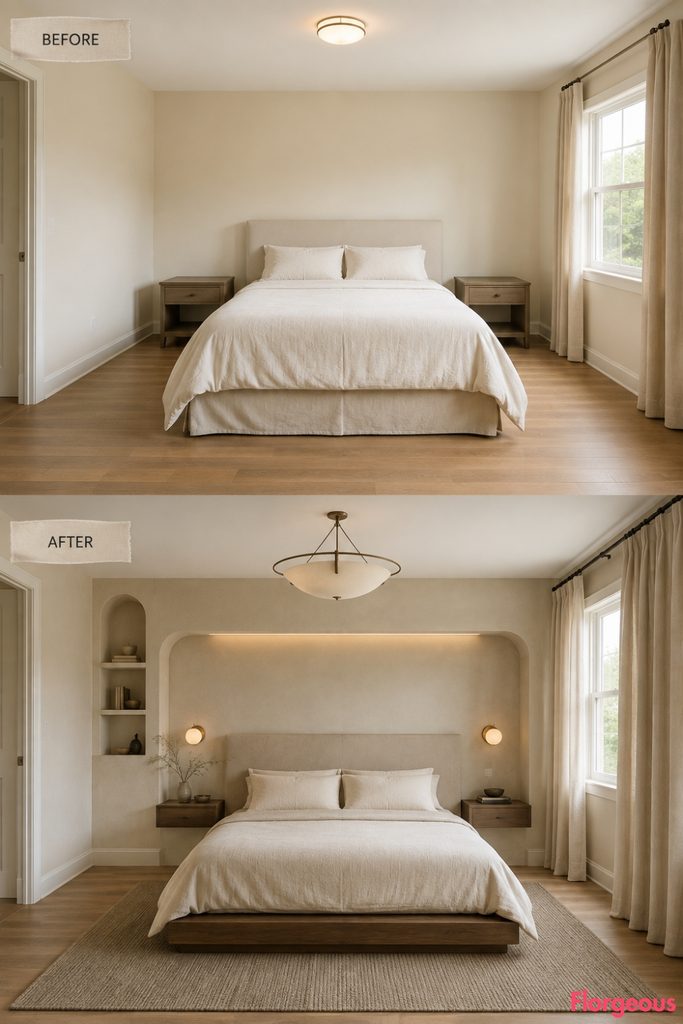
The first makeover solves the room’s biggest problem immediately: there is nothing anchoring the bed.
Instead of adding a conventional headboard, a broad mushroom-colored upholstered panel stretches almost the full width of the bed wall. A low walnut bed sits in front, flanked by tiny floating ledges rather than bulky nightstands.
Bronze globe sconces, ivory linen, a pale taupe wool rug, and ceiling-height oatmeal curtains complete the composition.
Why it works: Upholstery supplies the softness associated with classic bedrooms, while the uninterrupted geometry keeps the room current.
Designer Tip: Skip deep button tufting. A smooth or lightly seamed surface feels more transitional.
2. Give the Blank Walls Structure With Fine Picture-Frame Molding
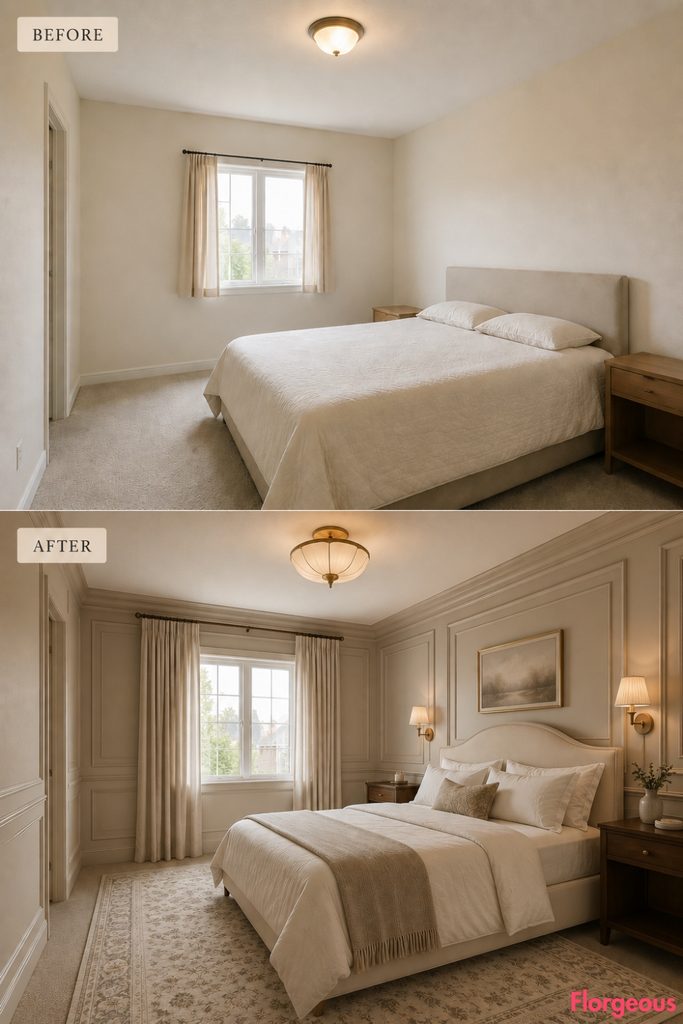
Here the furniture remains deliberately simple because the architecture becomes the decoration.
Slim applied molding forms a restrained grid across the bed wall and adjoining surfaces. Everything is painted one warm greige so the detail reads through shadow rather than contrast.
A cream upholstered bed, compact dark-oak tables, shaded bronze sconces, and a quietly patterned rug stop the room from becoming formal.
Budget Version: Lightweight applied molding can create this effect without rebuilding the wall.
3. Make a Slim Four-Poster Bed the Main Architectural Gesture
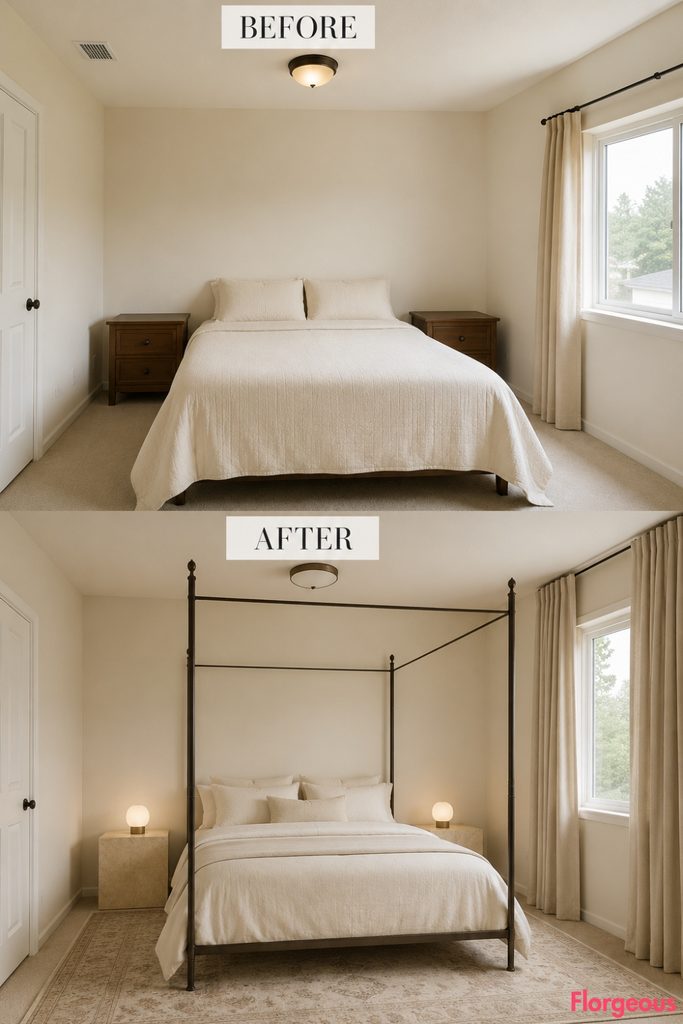
This version gets all its character from one piece of furniture.
A slender dark-bronze four-poster replaces the ordinary bed. There are no carved posts, finials, or canopy fabric. Its familiar outline gives a subtle nod to traditional bedrooms, but the detailing is almost graphic.
Low limestone bedside cubes, cream linen, tiny opal lamps, and a faded sand rug soften the strong frame.
Style Note: Once the four-poster becomes the focal point, let the surrounding furniture become quieter.
4. Let Muted Botanical Wallpaper Carry the Traditional Side
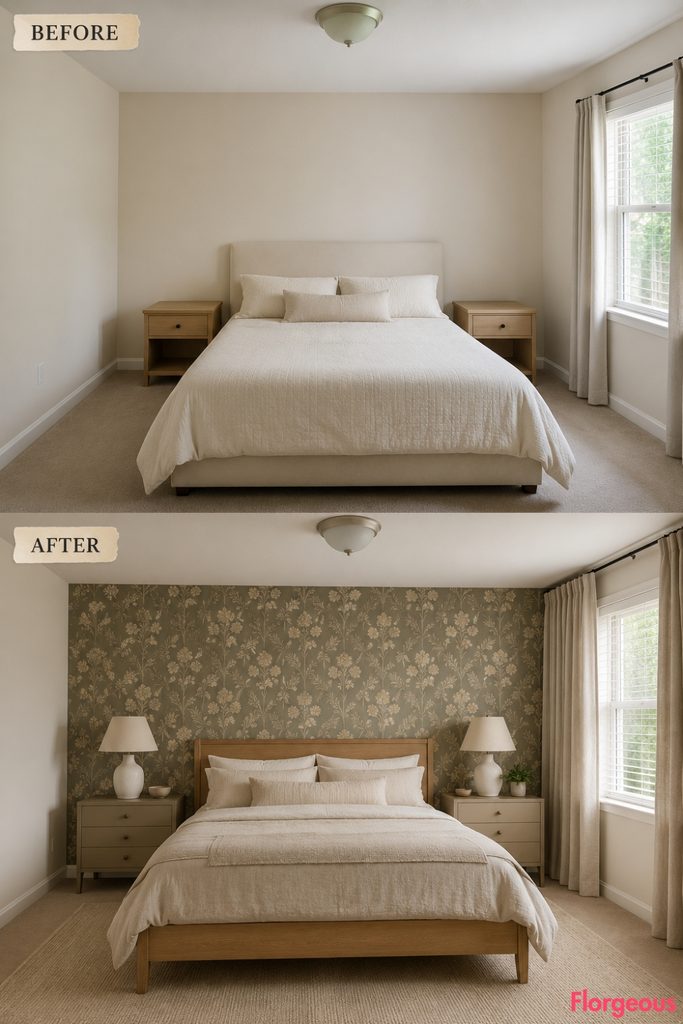
Wallpaper can do the historical work so the furniture does not have to.
A dusty olive, mushroom, and parchment botanical pattern covers only the bed wall. In front sits a plain medium-oak bed with compact lacquered taupe nightstands and sculptural ceramic lamps.
The bedding remains almost completely solid, and the rug is a quiet oatmeal wool rather than another pattern.
The room feels collected without becoming nostalgic.
5. Turn the Bedroom Into a Soft Charcoal Cocoon
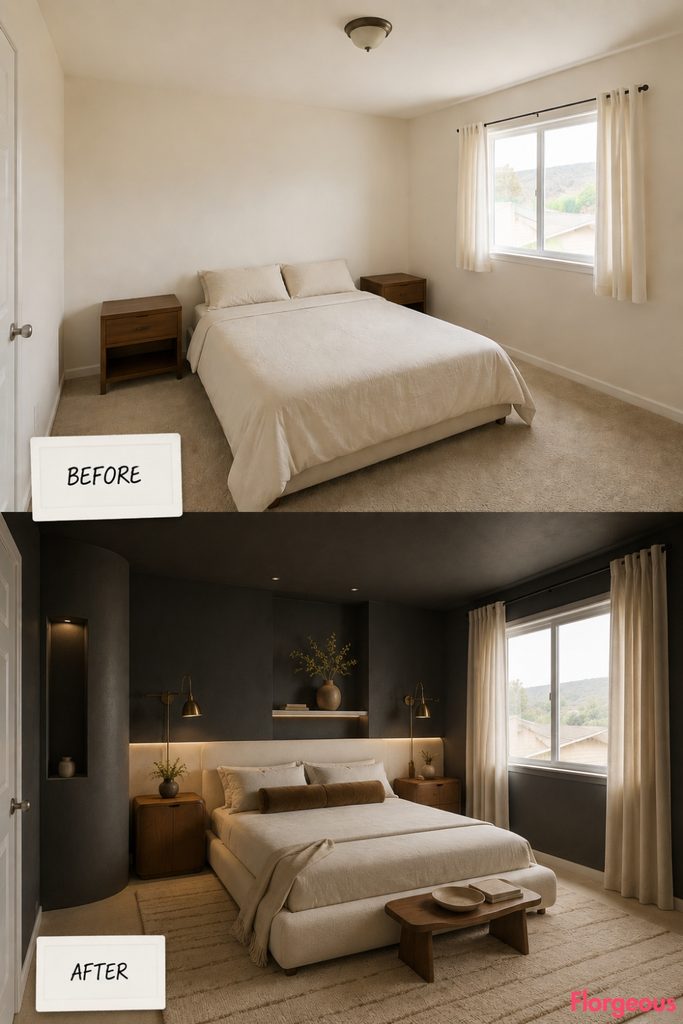
Transitional rooms do not need to be pale.
This makeover color-drenches the walls and ceiling in a softened charcoal, then introduces one generous ivory upholstered bed as the visual relief.
Walnut bedside tables, aged-bronze swing-arm lights, tobacco velvet, and a sand-colored rug warm the darker shell. There is almost no decorative clutter.
Color Story: Choose a brown-based charcoal rather than a cold blue-black. It works far better with walnut, bronze, cream, and natural linen.
6. Wrap the Sleeping Zone in a Light Ceiling-Mounted Canopy
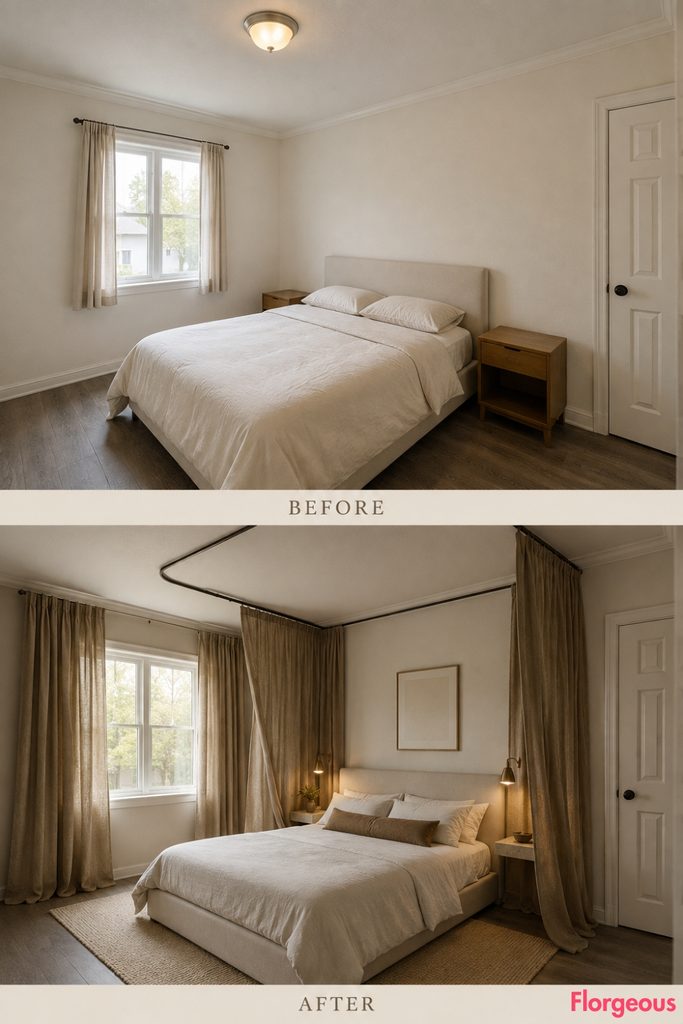
Instead of changing the walls, this room creates architecture with fabric.
A narrow bronze track is mounted above the complete bed zone. Loose tobacco-flax curtains hang around three sides but remain partially open, forming a soft sleeping enclosure rather than a heavy traditional canopy.
Inside, a pale bed, chalk linen, narrow stone bedside shelves, and tiny amber reading lights keep everything understated.
7. Turn the Window Into a Tailored Reading Nook
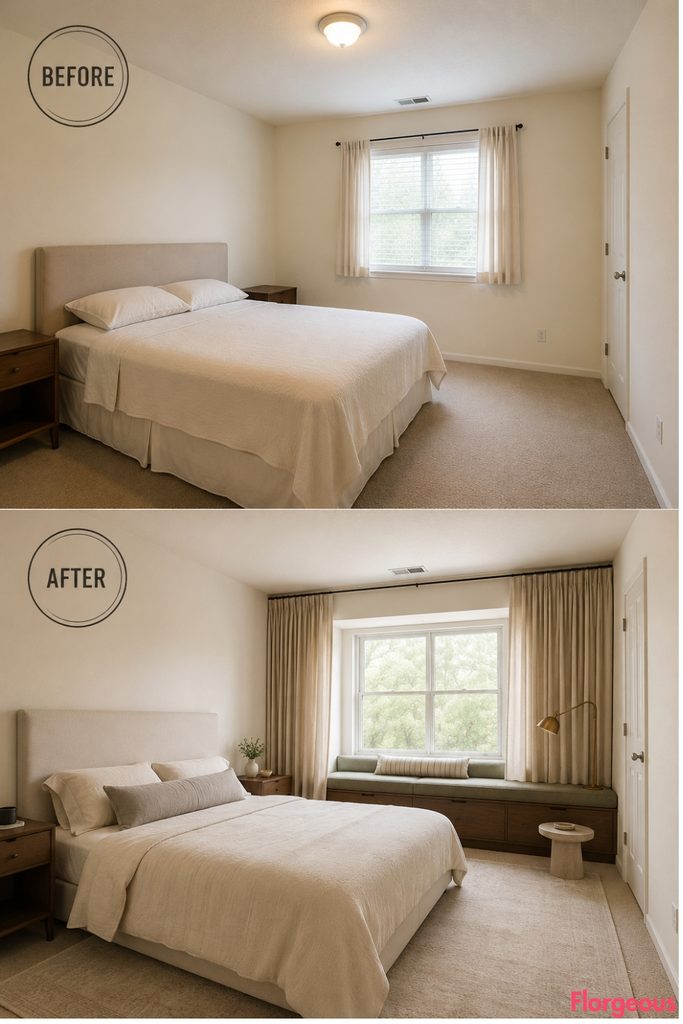
For this makeover, the bed intentionally stops being the only destination in the room.
A shallow window bench with concealed drawers sits beneath the existing window. It gets a fitted moss-gray wool cushion, one narrow striped bolster, a tiny aged-brass reading light, and a compact pedestal table.
The bed remains cream and understated, allowing the new reading corner to bring function and personality without obstructing circulation.
Small Space Tip: Keep the bench shallow enough that curtains can fall naturally and the route to the window stays clear.
8. Introduce History With One Beautiful Vintage Chest
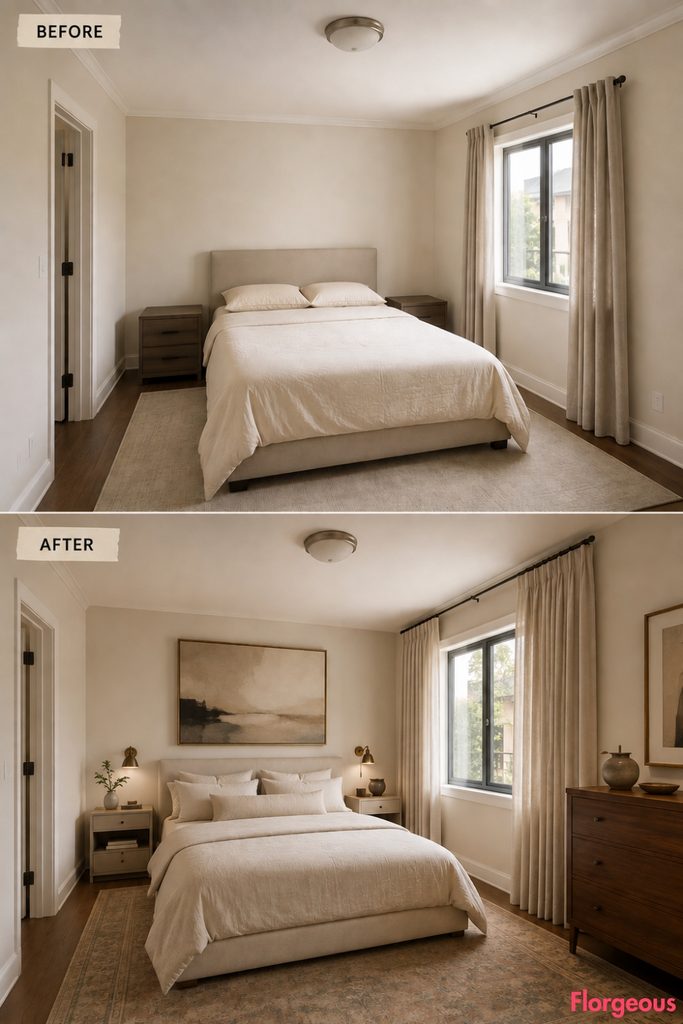
A transitional room rarely needs an entire collection of traditional furniture.
Here, one vintage-inspired walnut chest becomes the historic reference. It sits on an unobstructed side wall beneath one oversized contemporary abstract artwork.
The bed is streamlined and oatmeal-colored, the bedside tables are simple, and the lighting is modern bronze. Because the vintage influence appears only once, it feels deliberate rather than themed.
Common Mistake: Avoid adding antique bedside tables, an antique bench, ornate lamps, and vintage art at the same time. One convincing piece is usually enough.
9. Make a Heritage-Style Rug the Only Strong Pattern
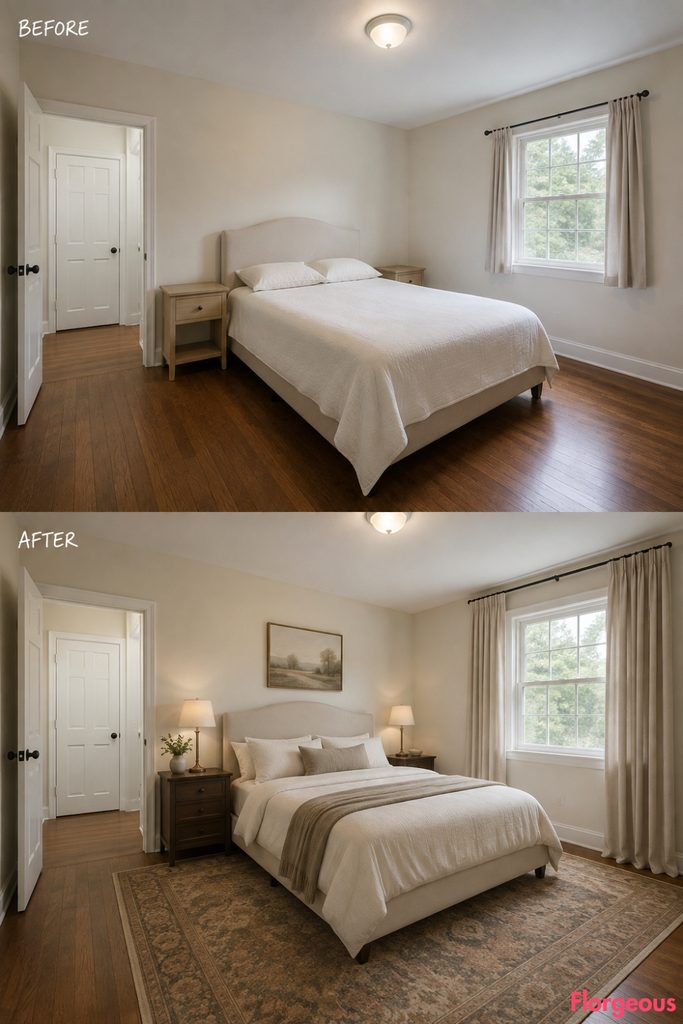
Instead of putting pattern on the wall or bed, this version brings it entirely to the floor.
A large low-pile rug with a simplified Persian-inspired layout uses faded camel, charcoal, parchment, and muted olive. Above it, the furniture becomes extremely calm: an ivory bed, dark walnut nightstands, plain linen, and simple bronze lamps.
The rug gives the room age and depth without making the architecture decorative.
Why It Works: Pattern is most effective here because it has a single visual job. Nothing else competes with it.
10. Ground the Bed on a Low Travertine-Look Plinth
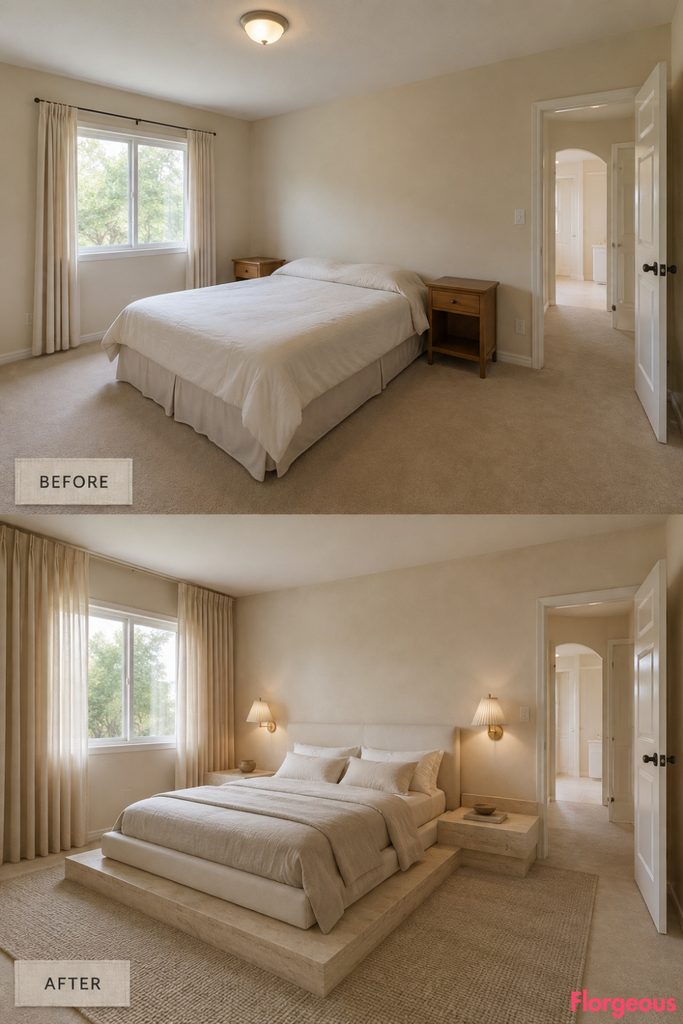
This transformation approaches transitional style from the floor upward.
A low warm-stone plinth extends slightly beyond the upholstered bed, creating integrated bedside surfaces without using conventional tables. The bed itself stays soft and familiar, while the stone introduces contemporary weight.
Small pleated fabric wall lights and a fine wool rug prevent the composition from becoming too architectural.
11. Frame the Bed With a Soft Rounded Plaster Surround
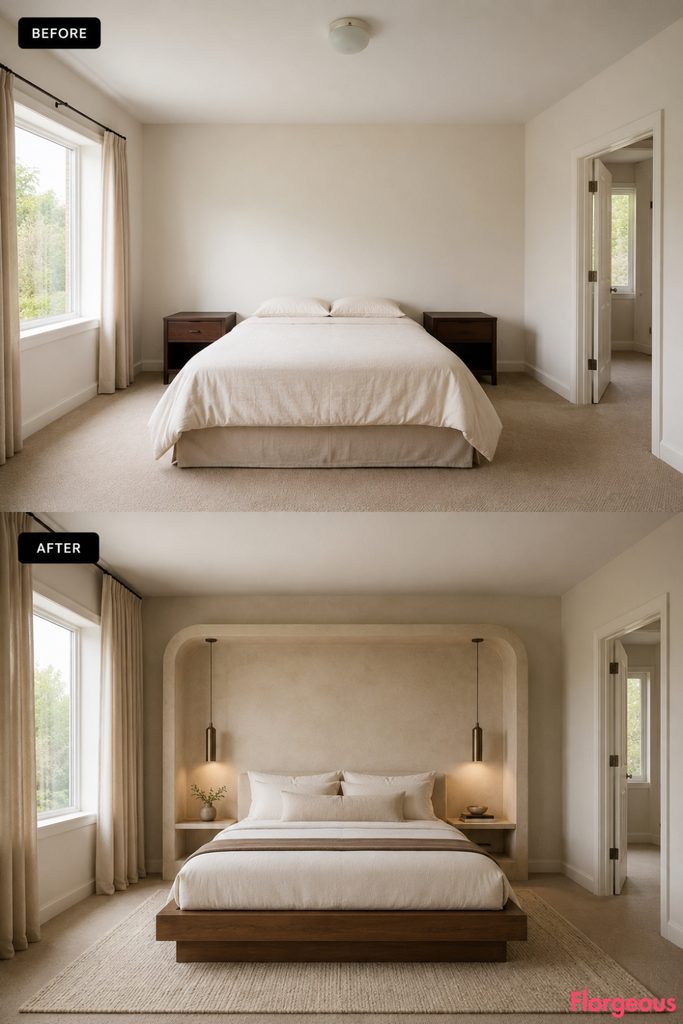
This makeover introduces curves without turning the bedroom whimsical.
A removable warm-plaster surround sits against the existing bed wall. Its broad rectangular form has gently rounded upper corners and shallow bedside pockets, creating the feeling of a custom architectural niche without changing the actual shell.
A low walnut bed and dark-bronze capsule pendants sharpen the softer plaster shape.
12. Create a Hotel-Like Composition With Continuous Walnut Joinery
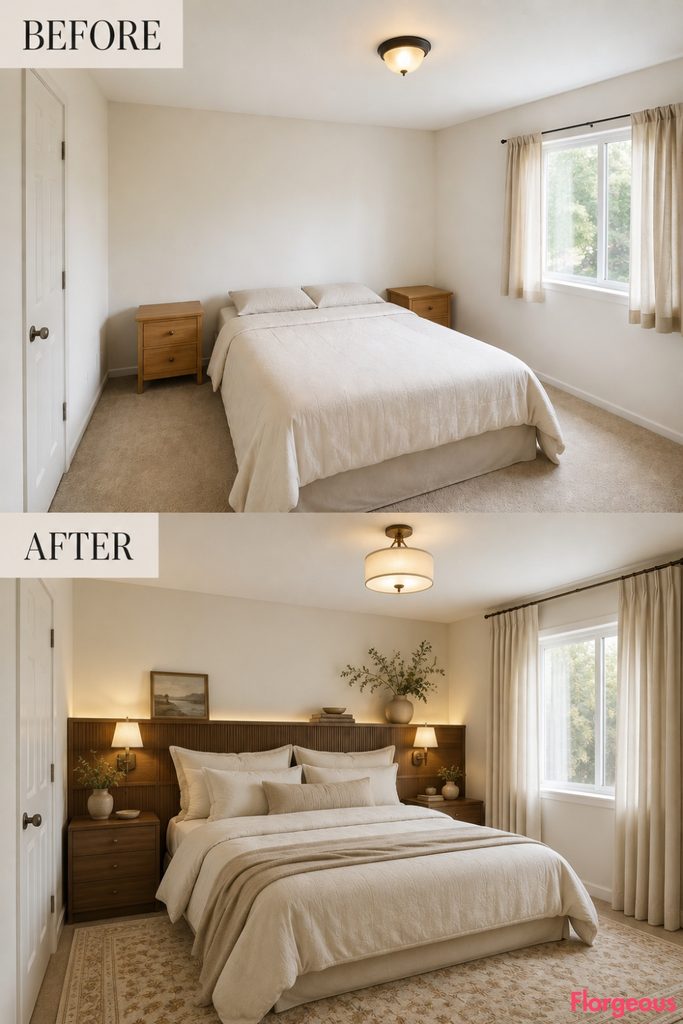
This version is less about decoration and more about horizontal organization.
A long freestanding walnut rail runs behind the bed and connects two compact bedside cabinets. It visually widens the sleeping zone and makes separate furniture pieces feel like one coordinated installation.
A generous linen bed, shaded sconces, crisp bedding, and tailored curtains add comfort without distracting from the strong horizontal line.
13. Reinterpret the Classic Sleigh Bed With Cleaner Curves
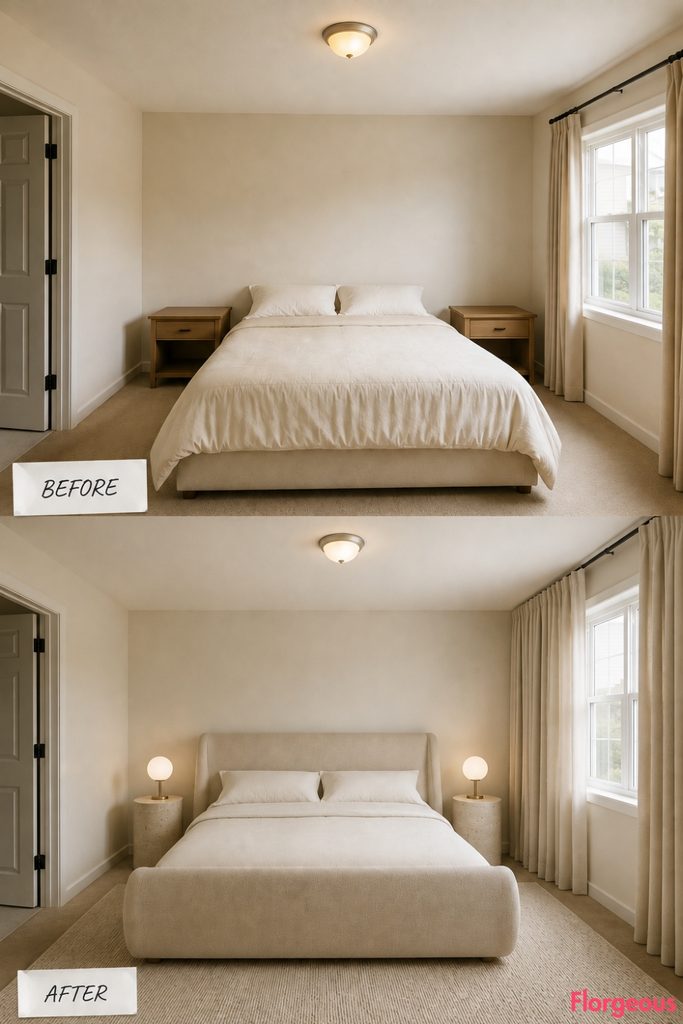
Rather than decorating the room with traditional accessories, this concept puts the classic reference directly into the bed silhouette.
The replacement bed has a gently curved upholstered head and foot, inspired by a sleigh bed but stripped of carving, rolled wood, and heavy ornament.
Petite cylindrical stone nightstands, modern globe lights, an ivory rug, and plain bedding make the updated silhouette feel intentional.
Style Note: This works best when the curve is broad and simple. Excessive scrollwork immediately shifts the room toward traditional styling.
14. Float the Bed in Front of a Freestanding Walnut Screen
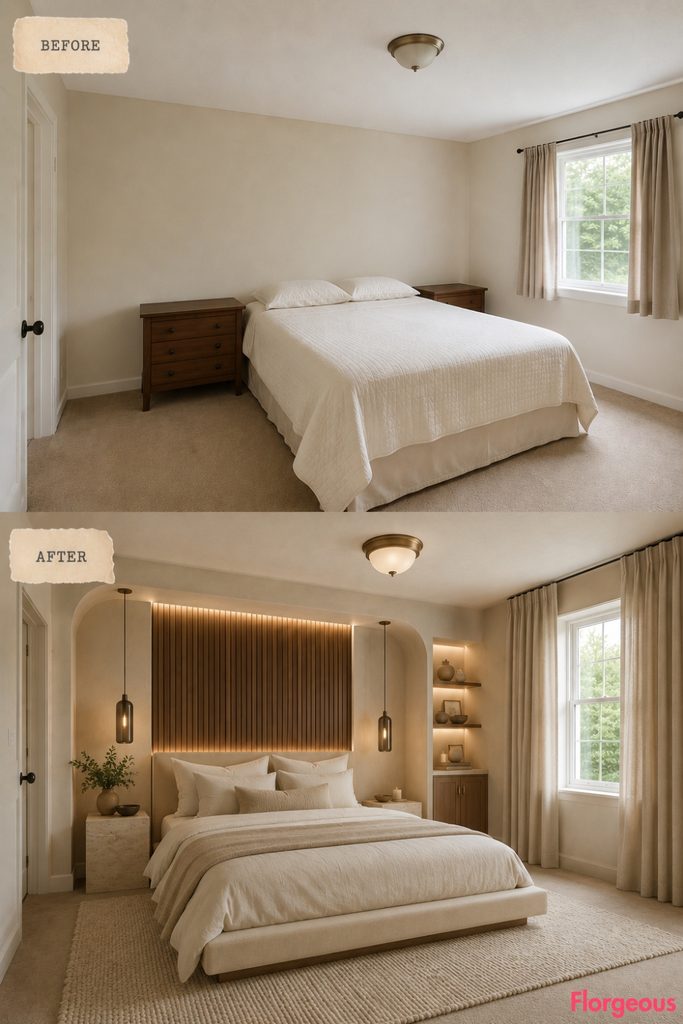
Here, a furniture-scale screen creates the focal point without pretending to be permanent architecture.
Broad walnut panels stand behind a low cream bed and stop well clear of the doorway and window. Fine inset bronze lines add subtle traditional refinement, while concealed rear lighting produces a contemporary glow around the structure.
Low limestone bedside blocks keep the screen visually dominant.
15. Color-Drench Everything in Warm Mushroom
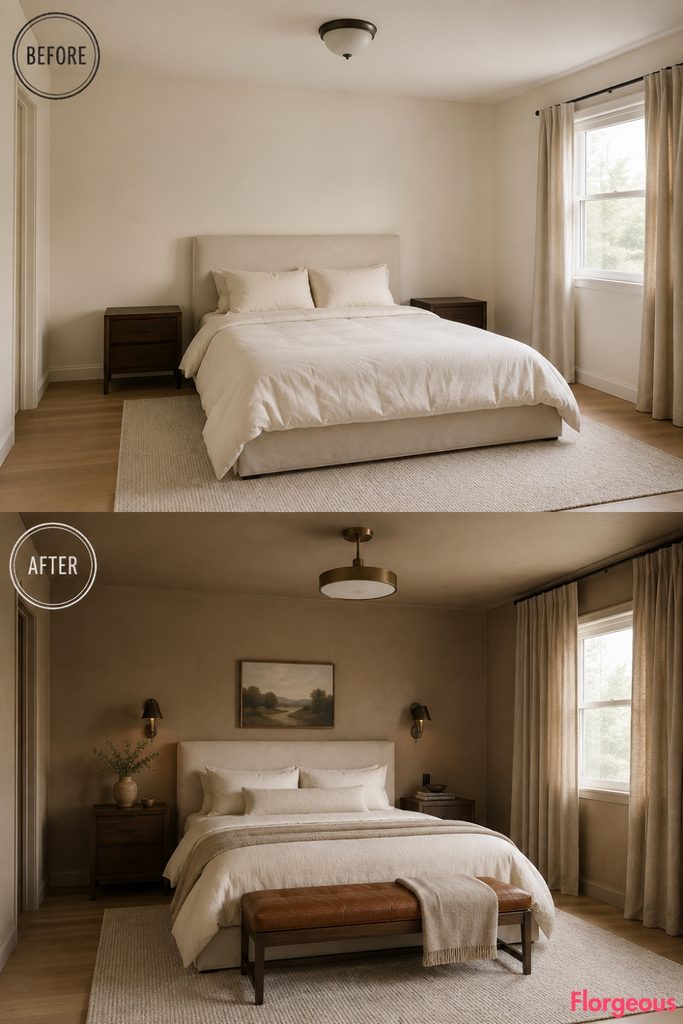
Unlike the charcoal room, this palette creates depth through softness rather than contrast.
Walls, ceiling, trim, and shallow applied details all shift to the same warm mushroom tone. An oatmeal bed nearly blends into the shell, while dark-walnut tables, a slim bronze ceiling light, and one cognac leather bench provide just enough definition.
The room feels enveloping, but the limited palette keeps it contemporary.
16. Add a Shallow Furniture-Style Storage Wall
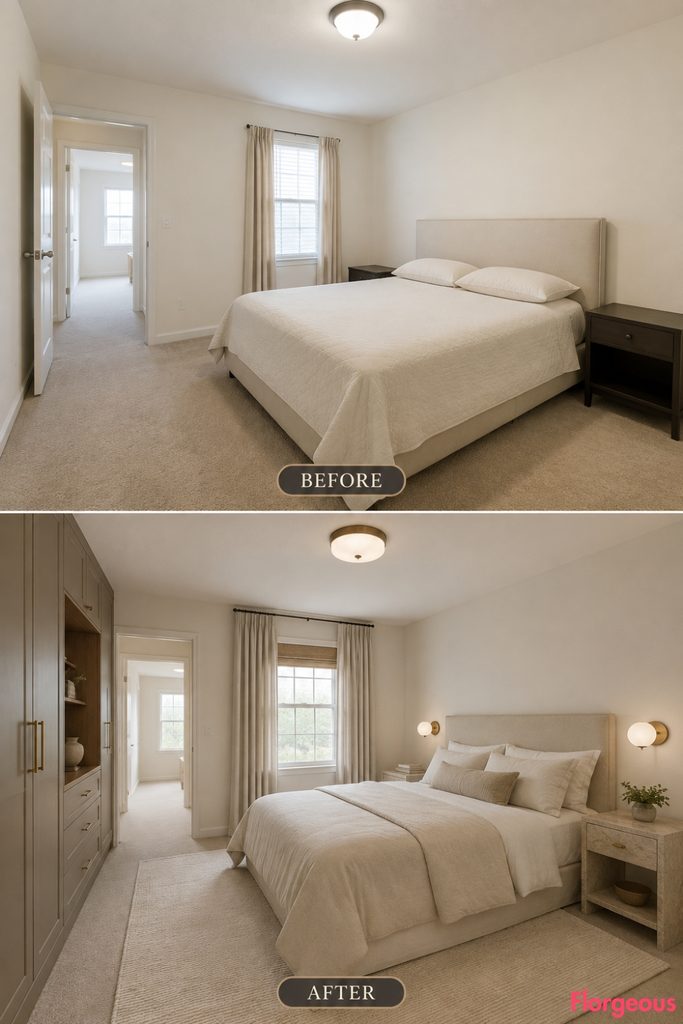
Storage becomes the main design feature in this bedroom, but it does not look like generic built-in cabinetry.
A shallow freestanding unit sits only on an unobstructed side wall. Warm taupe doors are broken by one walnut-lined niche, while tiny aged-bronze pulls give the piece a more furniture-like quality.
The bed wall stays deliberately restrained with linen upholstery, small stone tables, and soft globe sconces.
Try this: Keeping the storage shallower than a full wardrobe can preserve circulation while still handling folded clothes, linens, and smaller bedroom items.
17. Hang an Oversized Framed Textile as the Unexpected Focal Point
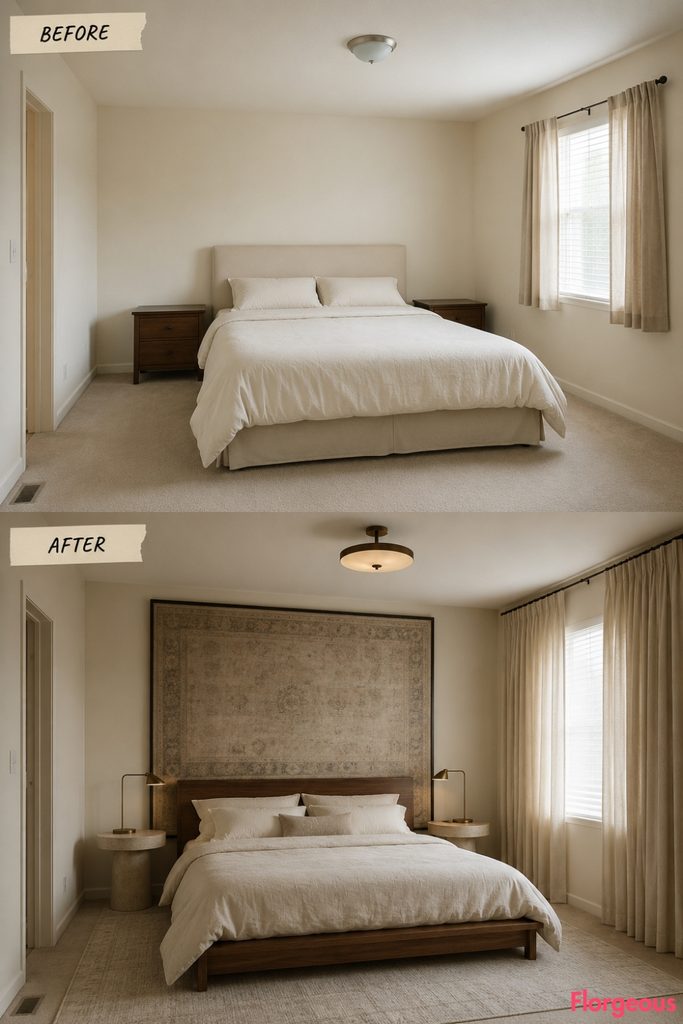
The final makeover uses neither molding nor a built-in feature.
Instead, one enormous framed textile hangs behind the bed. Its faded abstract pattern references an old woven tapestry, but the oversized scale and simple dark frame make it feel like contemporary art.
A low walnut bed, small round limestone tables, clean bronze reading lights, ivory linen, and restrained curtains allow the textile to carry all the decorative weight.
It is perhaps the clearest example of what transitional decorating does well: taking something familiar and presenting it in a cleaner, less predictable way.
How to Choose the Right Direction for Your Bedroom
These 17 rooms work for different reasons, but they all rely on the same principle: decide where the traditional character will come from, then keep the rest of the composition cleaner.
If you love classic architecture, molding may be enough. If your bedroom is already contemporary, a heritage rug, four-poster silhouette, vintage chest, wallpaper, or framed textile can introduce warmth without forcing you to replace everything.
For your own Transitional Bedroom, begin with one dominant move rather than several small decorative changes. Choose the upholstered wall, the canopy, the stone plinth, the wallpaper, the storage piece, or whichever element best fits the room and your budget.
Then build around it with a restrained palette and two or three supporting materials. Warm wood, soft upholstery, bronze, stone, linen, and wool are easy to combine because they create interest through texture rather than visual clutter.
Most importantly, resist the urge to make every element “transitional.” The most convincing rooms usually contain a few clearly classic references, a few distinctly contemporary ones, and enough visual breathing room for the contrast to be noticeable.