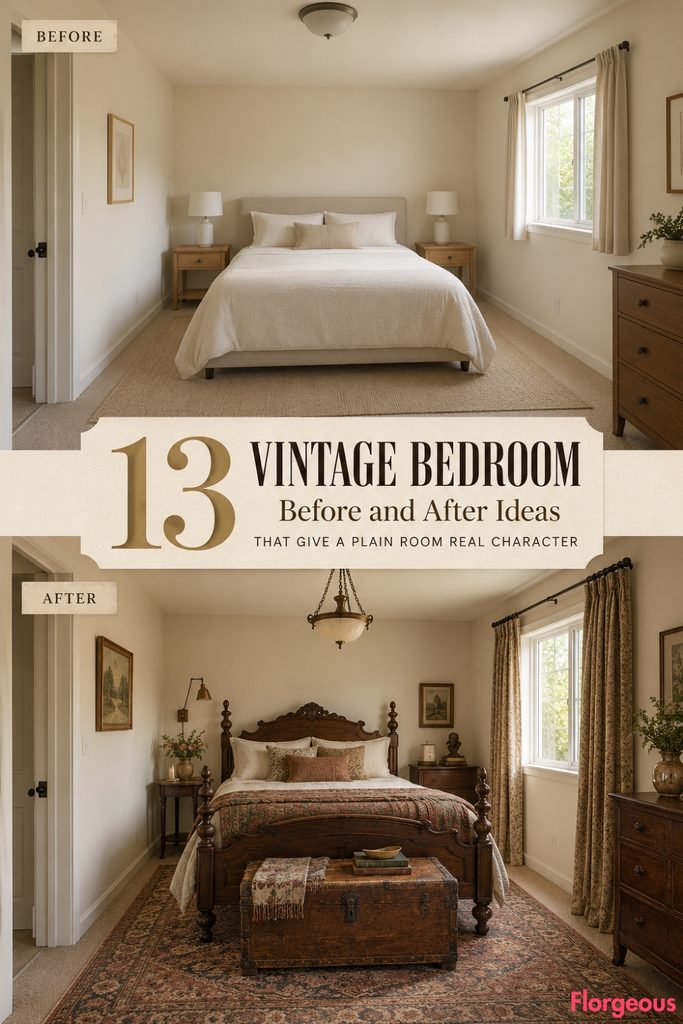
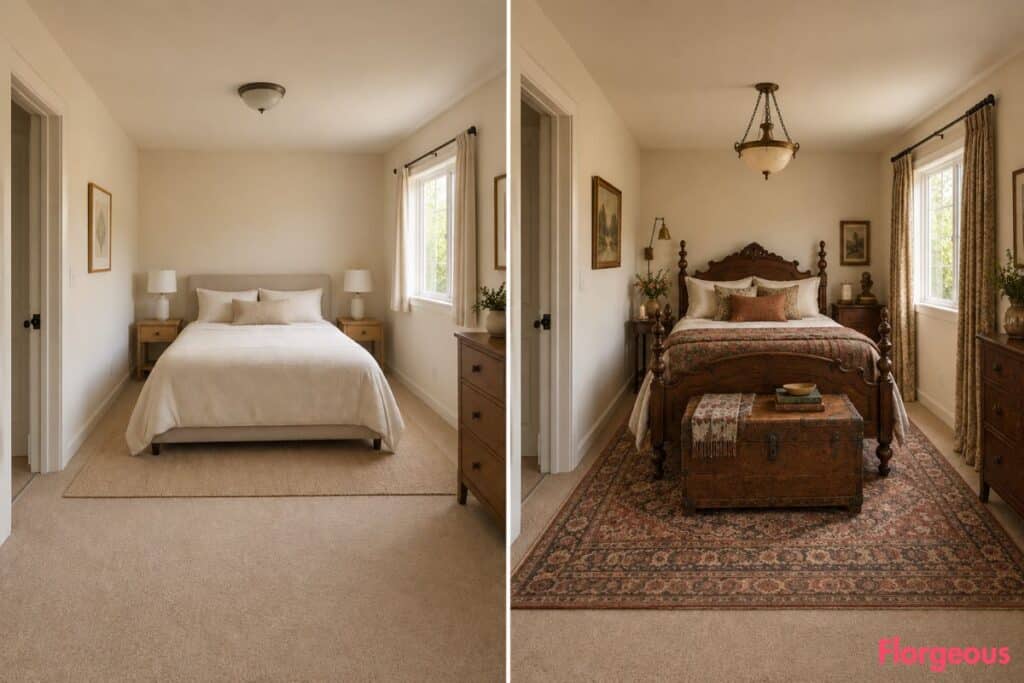
A basic bedroom can be comfortable and still feel as though it has no story. Neutral walls, a simple bed, cream bedding, empty furniture, short curtains, and builder-grade lighting create a useful starting point, but little visual character.
A Vintage Bedroom works differently. The best examples do not depend on covering every surface with antiques. They borrow distinctive furniture proportions, craftsmanship, materials, colors, and objects from the past, then give those elements enough space to matter.
These 13 makeovers use the same plain visual starting point, but every concept has a different room geometry, historical direction, furniture composition, focal mechanism, BEFORE light, and AFTER lighting system. Within each individual transformation, the shell, camera, openings, dimensions, and circulation remain completely unchanged.
1. Give a Long Side-Window Room an Eastlake Spindlework Identity
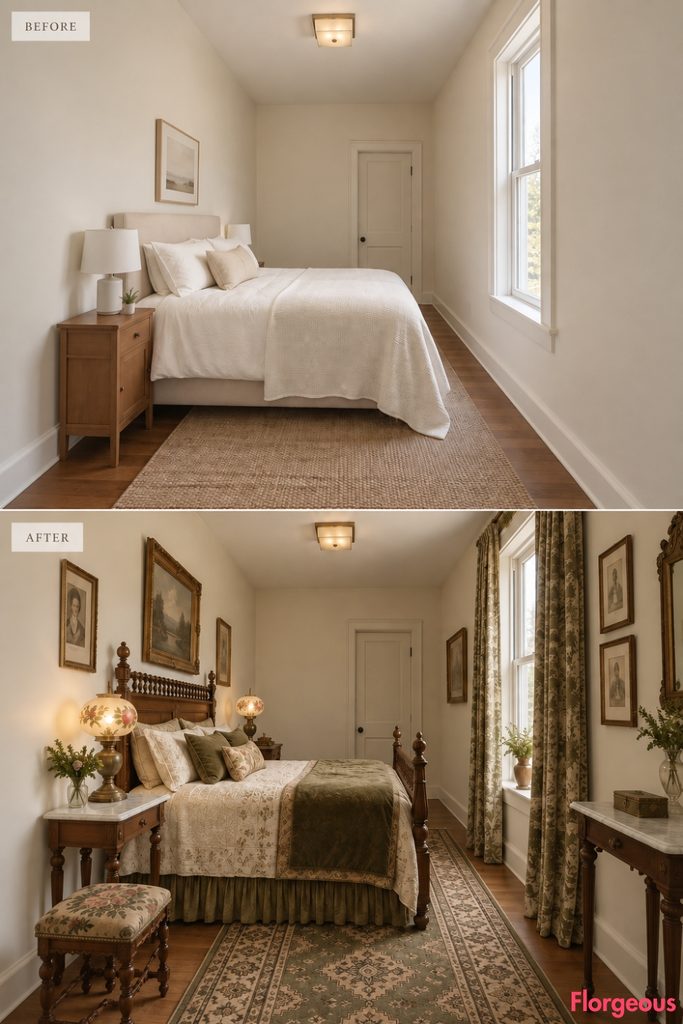
This long bedroom has one tall window midway along a side wall and an uninterrupted wall opposite it.
Before: A neutral bed sits on the long solid wall with cream bedding and basic furniture. A shallow square waffle-glass flush light gives the room flat overhead illumination.
After: Introduce a walnut Eastlake bed with incised carving and a restrained spindle crest. At the far end, a narrow marble-topped washstand and needlepoint stool create a useful destination without narrowing the central route.
Tobacco walnut, faded olive, ivory linen, and a narrow geometric rug reinforce the late-19th-century character.
Instead of overhead lighting, use two reverse-painted glass urn lamps with bronze bases at separate points in the room.
Why it works: The craftsmanship establishes the vintage identity before accessories are even added.
2. Turn a Shallow Wide Bedroom Into a Vienna Jugendstil Composition
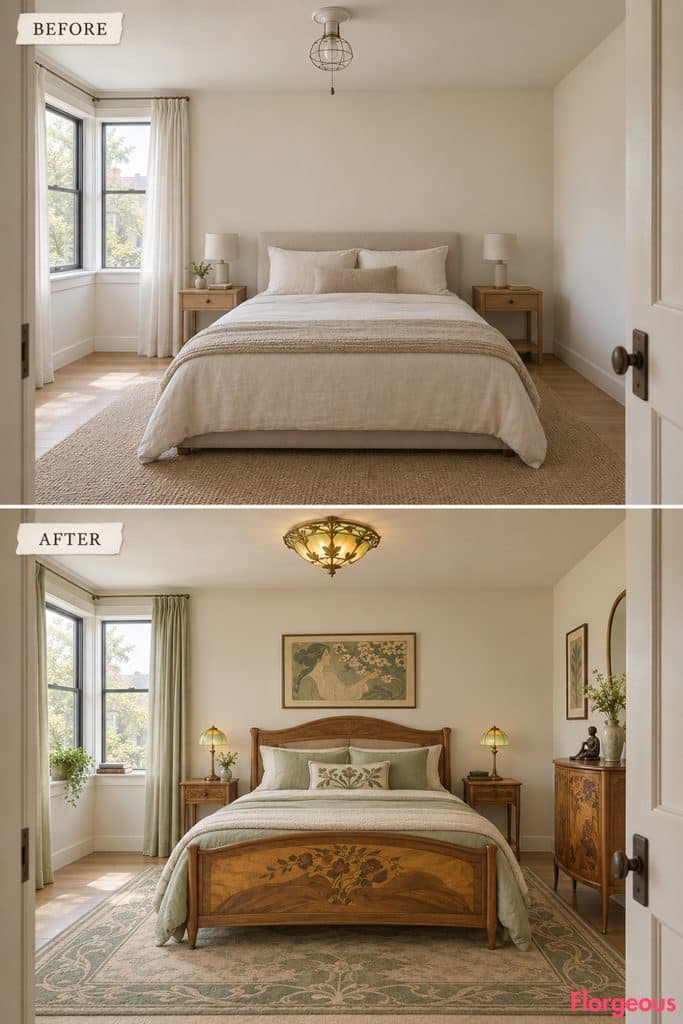
A wide but shallow shell calls for a composition that does not depend on conventional symmetry.
Before: One corner window, plain warm walls, a centered neutral bed, bare nightstands, and a porcelain pull-chain ceiling lampholder protected by a simple wire guard.
After: Shift the bed slightly along the broad wall and use a low ash frame with a gently bowed marquetry panel. Across the room, a narrow kidney-shaped cabinet repeats the curved language without becoming a dressing station.
Celadon, old ivory, ash, and fine black lines keep the palette controlled.
A low stained-glass turtleback ceiling fixture in amber, pale green, and smoky cream becomes the sole lighting centerpiece.
3. Make a Nearly Square Room Feel Relaxed Regency
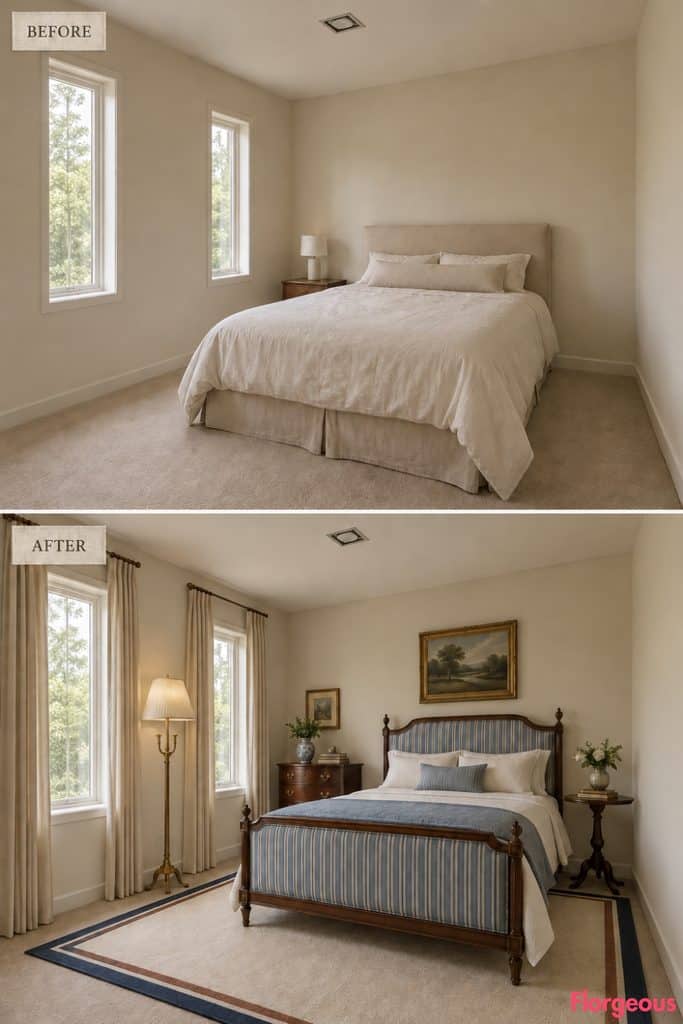
This bedroom is almost square, with two narrow windows grouped along one side wall.
Before: The simple beige bed faces the camera from the back wall. Cream bedding and empty furniture keep the space generic, while one recessed square louvered downlight provides basic illumination.
After: Replace the bed with a low reeded mahogany frame upholstered in faded blue stripe. Pair a small bow-front chest with a narrow round guéridon rather than matching nightstands.
A cream flatweave edged in navy and rust keeps the floor quiet.
Between the paired windows, place one polished brass harp floor standard with a shallow parchment reflector.
Designer Tip: Regency influence feels more convincing through proportion, reeding, polished wood, and restrained brass than through excessive ornament.
4. Use a Clipped Corner for a Swedish Folk Washstand
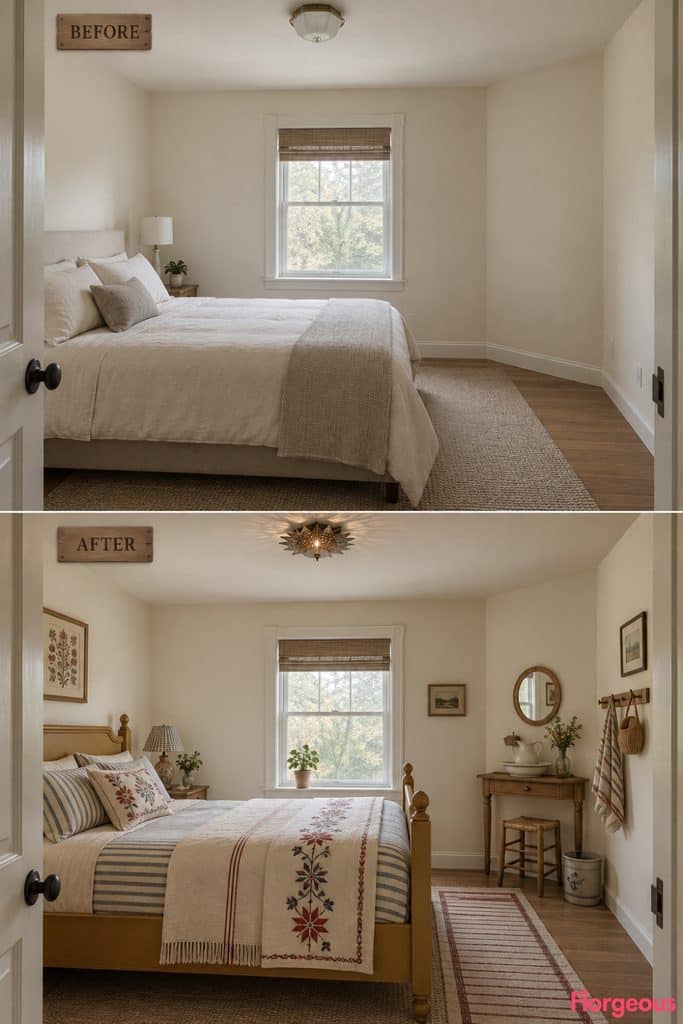
This room has a diagonal clipped corner and a centered window on the far wall.
Before: The plain bed occupies the longest wall. The awkward corner remains empty, and a frosted octagonal builder-grade ceiling light creates uniform illumination.
After: Add a muted-ochre painted pine bed with delicate hand-painted floral lines.
Fit the awkward corner with a freestanding triangular pine washstand, tiny round mirror, and woven stool. A short peg rail beside it holds only a robe and woven bag.
Cream ticking, indigo embroidery, faded red checks, and a narrow woven runner make the room cheerful without becoming cottage-themed.
A pierced-tin starburst fixture fitted close to the ceiling throws small warm patterns onto the upper walls.
5. Make a Recessed-End Room Feel Like an American Colonial Revival Bedroom
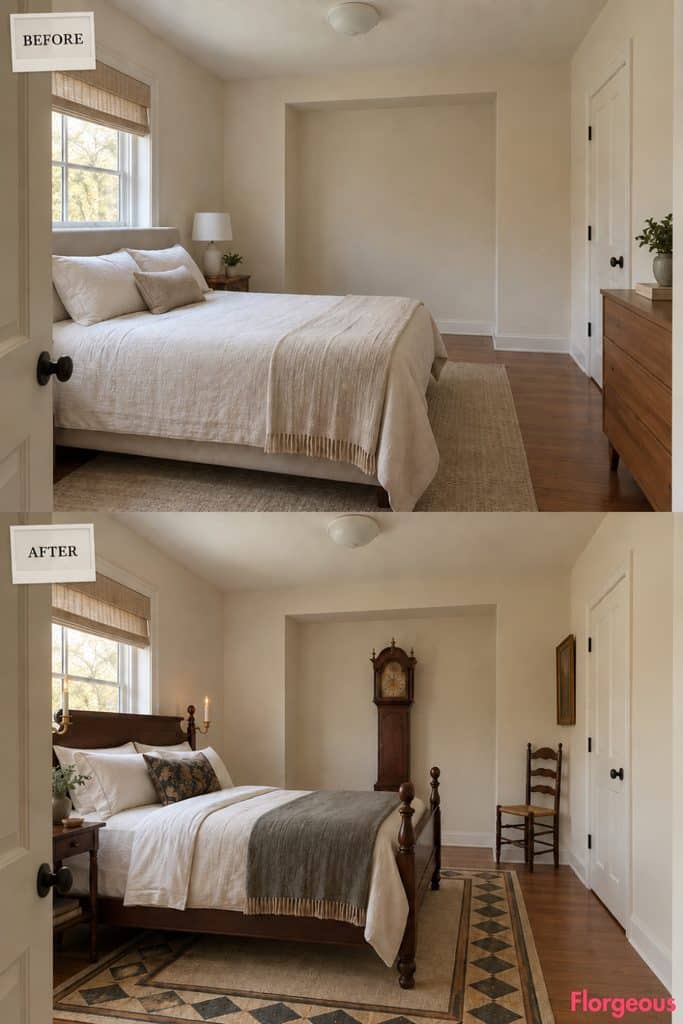
A shallow recess at the end of this bedroom is too small for another furniture zone, which makes it ideal for a single historical focal object.
Before: The neutral bed remains against the main wall. The recess is completely empty, and a shallow ribbed-plastic ceiling diffuser gives the space an anonymous builder-grade feel.
After: Use a simple dark maple bed with turned corner details and crisp white linen.
Inside the recess, place one slender mahogany longcase clock, allowing generous empty space around it. Instead of adding furniture around the clock, introduce character underfoot with a hand-painted canvas floorcloth featuring a faded black, ochre, and cream diamond border.
A rush-bottom chair occupies the opposite corner, keeping the furniture plan sparse.
For evening light, attach two tiny electrified candle cups to separate removable brass brackets fixed to the bed’s head rail. Their light stays localized and visually connected to the furniture.
Why it works: The clock and painted floorcloth create historical character without another built-in, dressing zone, screen, storage wall, or architectural headboard.
6. Rework a Low Dormer Bedroom With Swedish Empire Restraint
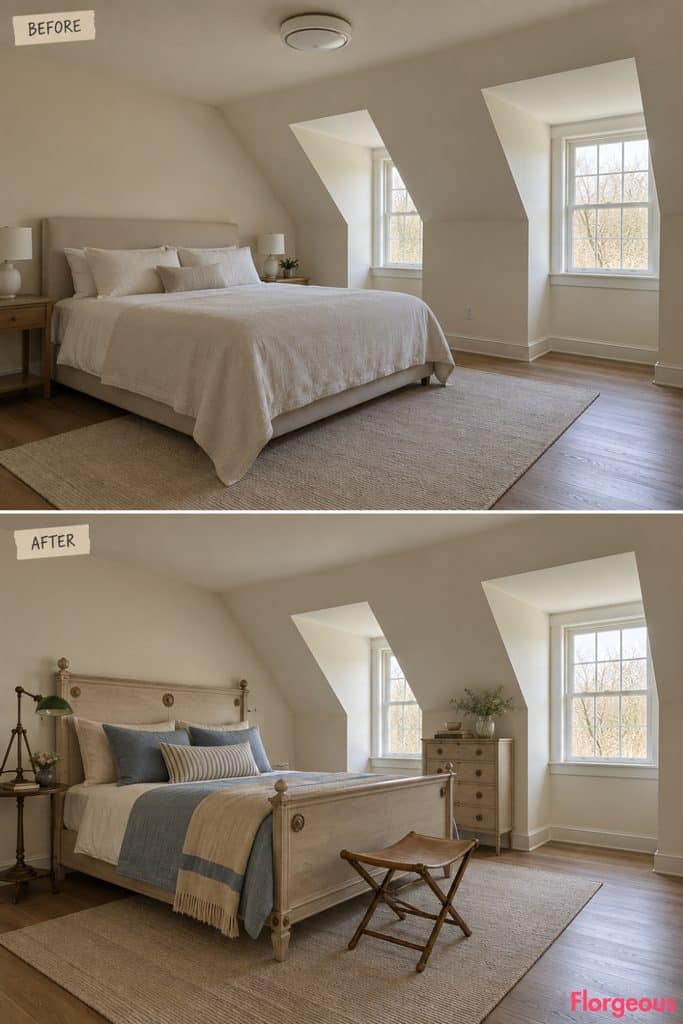
Two low dormer windows define this attic-like shell.
Before: A simple bed occupies the only full-height wall. The dormers remain empty, while a low acrylic ring fixture with a visible center cap sits overhead.
After: Introduce a pale birch bed with a rectangular upholstered inset and tiny dark-bronze rosettes.
Leave both dormer pockets completely empty. A slim chest fits between them, paired with one folding stool.
Pale straw, cornflower blue, birch, and cream keep the room light.
A bronze tripod table lamp with an adjustable green glass visor sits on the central chest. The AFTER uses no decorative ceiling fixture.
Small Space Tip: Empty space can be a design feature, especially where low roof geometry already creates visual complexity.
7. Give a Tall Bedroom a Viennese Ceramic-Stove Focal Point
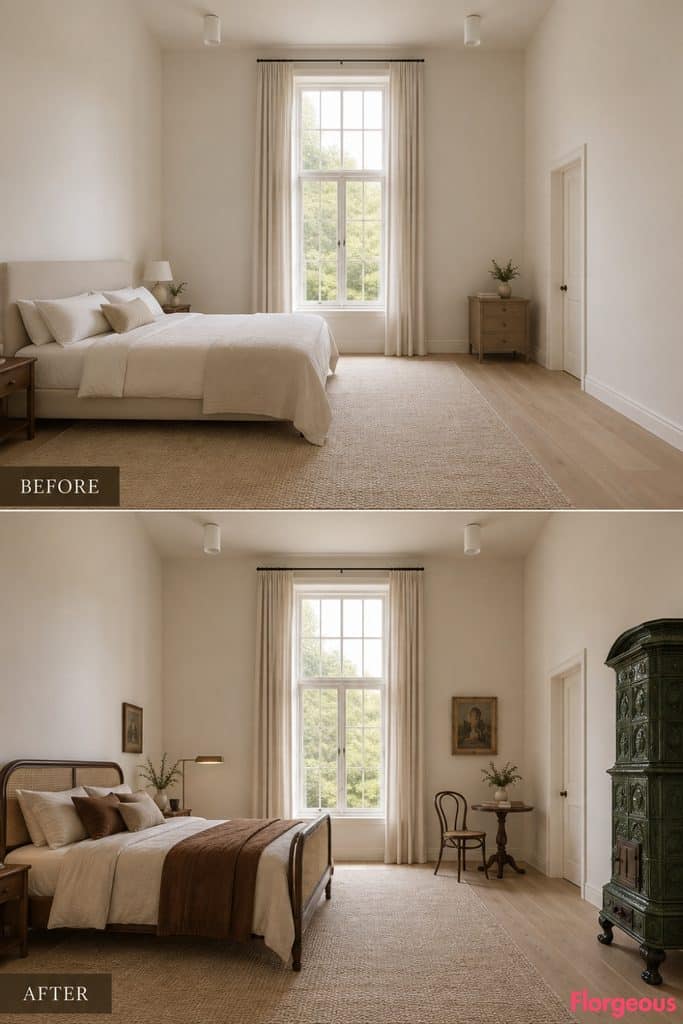
A very tall centered window dominates this room, so the makeover avoids competing with it.
Before: The neutral bed sits against the left wall. Sparse furniture and two plain white surface-mounted cylinder lights make the tall shell feel unfinished.
After: Replace the bed with a dark bent-beech frame containing a woven cane center panel.
On the blank wall opposite it, introduce one freestanding bottle-green ceramic stove as a decorative historical object. It is not presented as an active heater.
A slender pedestal table and one curved chair finish the composition, while the window wall remains empty.
Lighting comes from a nickel reading standard with a horizontal silk-wrapped shade positioned beside the chair.
8. Wrap a Two-Window Bedroom in a Portuguese Revival Tile Band
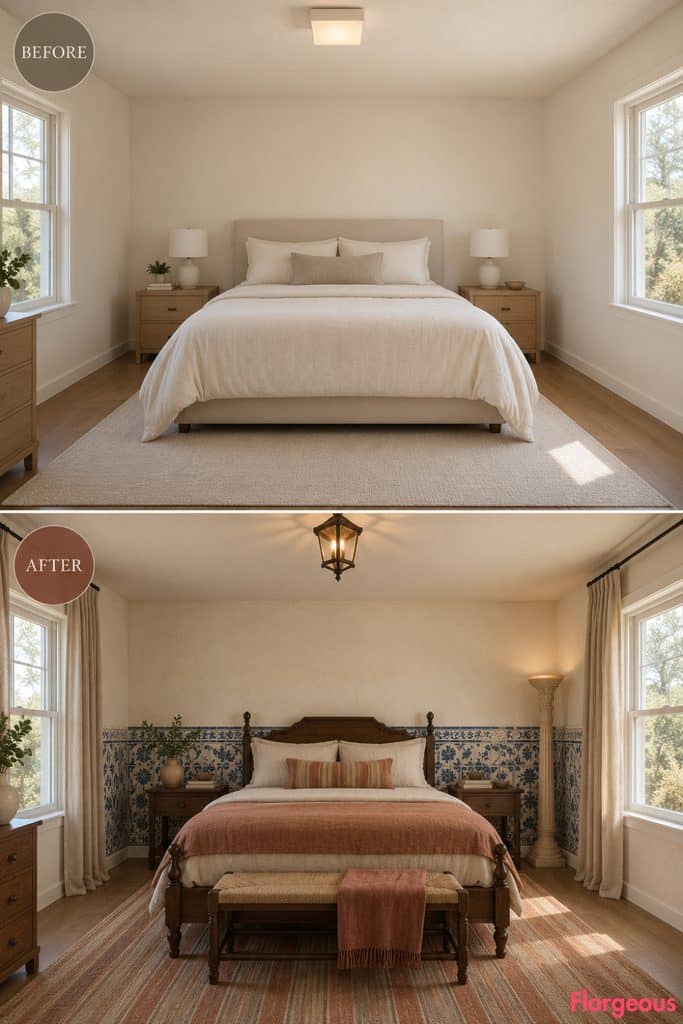
This room has windows on opposing side walls, leaving the far wall completely uninterrupted.
Before: A basic bed sits on the solid wall. A rectangular prismatic ceiling box provides flat general lighting while both side windows remain simply curtained.
After: Keep the bed on the far wall, but use a compact dark chestnut frame with restrained turned details.
The core idea is a waist-high band of hand-painted cobalt and warm-white azulejo-style tiles across only the solid bed wall. Keep the remaining walls plain so the pattern reads as intentional architecture rather than decoration everywhere.
Pair the tile with flax linen, muted terracotta, dark chestnut, and a faded striped wool rug.
Instead of adding bedside lighting, position one tall carved alabaster pedestal uplighter in the far corner. Its indirect glow washes the ceiling while leaving the tile wall visually uninterrupted.
Why it works: The historical identity comes from surface craft rather than another storage composition or furniture-heavy vignette.
9. Use a High Window for a Chinoiserie Revival Composition
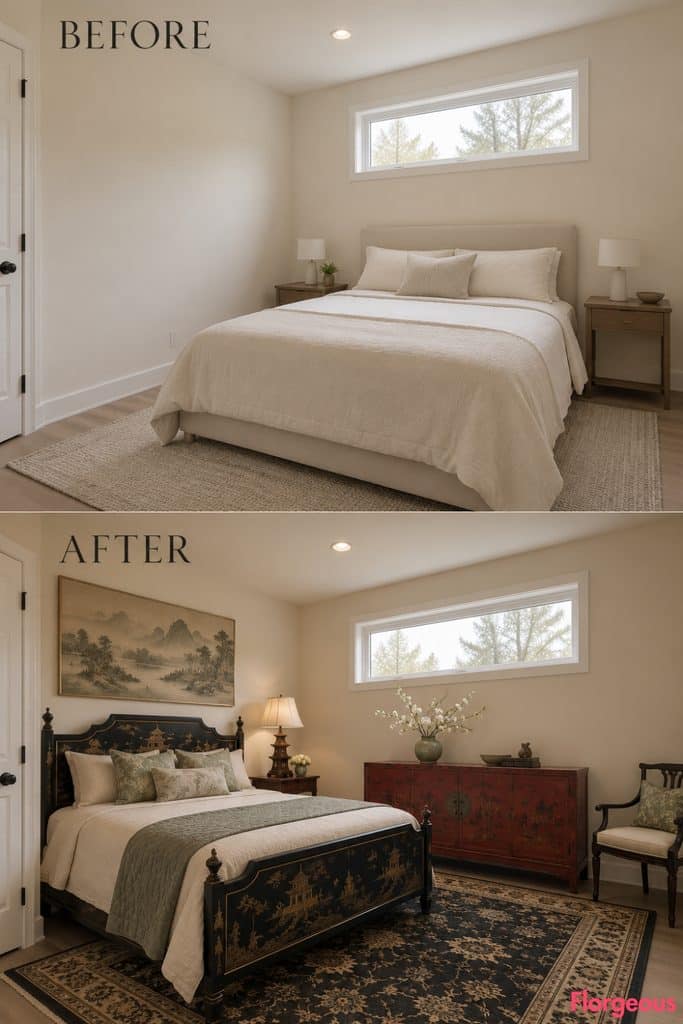
A high horizontal window creates unusually generous uninterrupted wall area.
Before: The basic bed sits beneath the high window with plain furniture and one recessed adjustable eyeball light.
After: Move the bed onto the adjacent solid wall and use a black lacquer frame with a low hand-painted landscape panel containing no readable writing.
Beneath the high window, position one long narrow cinnabar chest. Keep its surface almost empty except for a porcelain vessel and folded textile.
Parchment, faded jade, cinnabar, and black create the palette.
A carved-wood pagoda-form table lamp with a warm silk shade becomes the single decorative light.
Common Mistake: Chinoiserie becomes theatrical when every object carries a motif. Let lacquer, color, and one painted surface do most of the work.
10. Give a Deep-Sill Room a Tailored Directoire Look
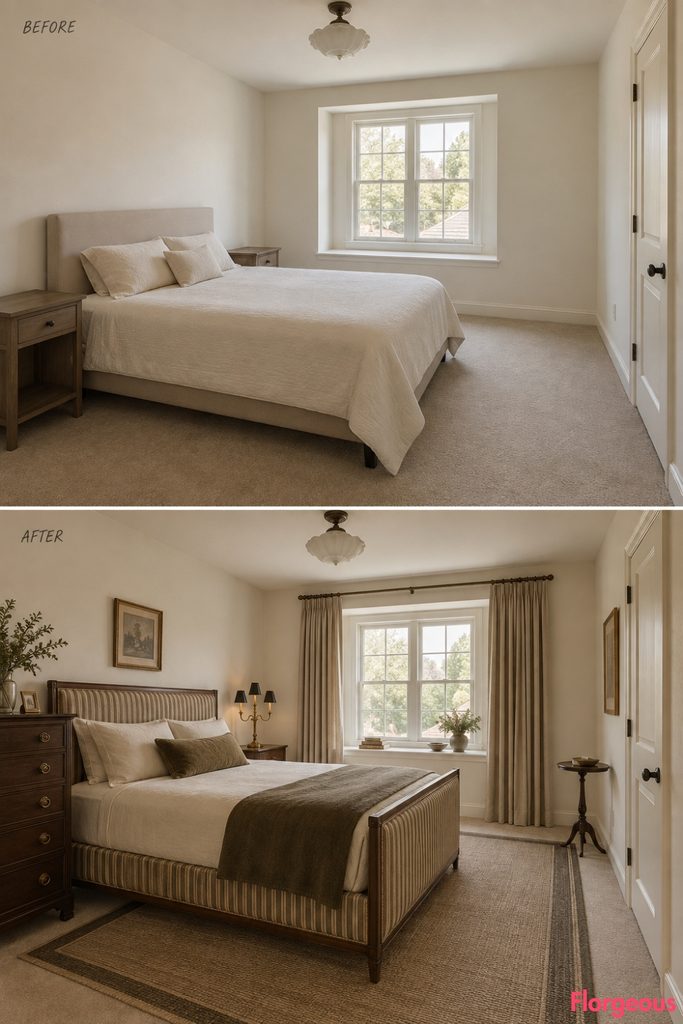
This room widens slightly near a centered window with a deep existing sill.
Before: A basic neutral bed, bare nightstands, empty sill, cream bedding, and a scalloped frosted-glass builder nipple fixture create the plain starting point.
After: Use a straight-sided Directoire-inspired bed upholstered in muted tobacco stripe with fine dark timber edging.
Keep the deep sill visibly architectural rather than turning it into seating. Style it with only one plaster vessel and a folded textile.
Use a three-legged guéridon beside the bed and a taller drawer pedestal opposite.
A blackened-brass table candelabrum with three tiny shaded electric lights sits on the taller pedestal.
11. Turn an Offset-Door Bedroom Into an Antiquarian Map Room
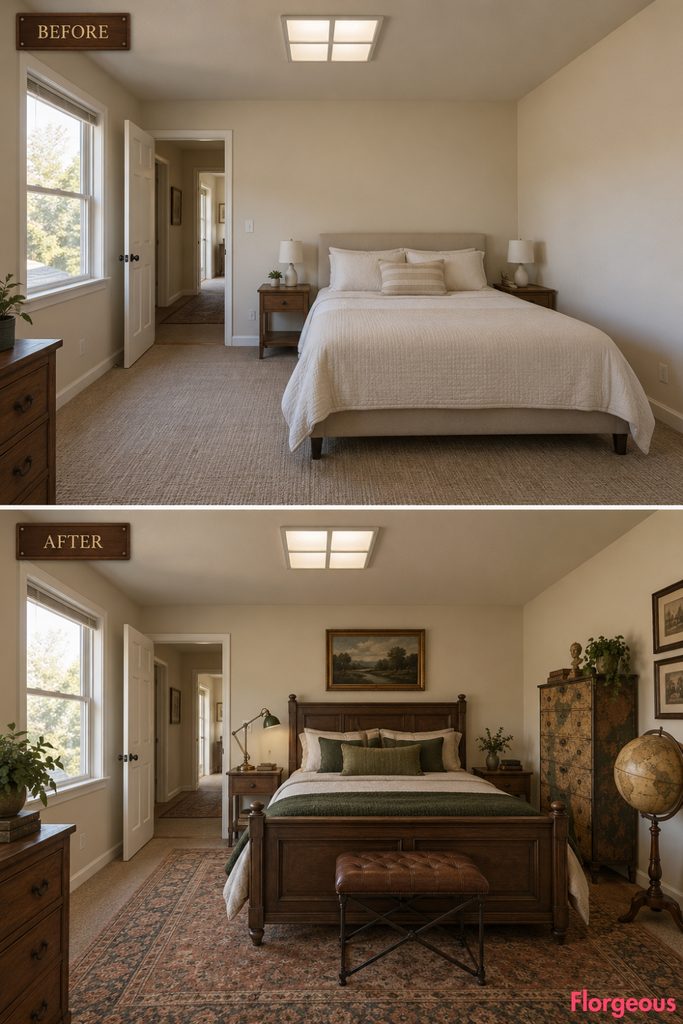
An offset doorway and adjacent window create a long uninterrupted corner in this room.
Before: The plain bed occupies the central wall. A four-cell square fluorescent ceiling fixture emphasizes the builder-grade character.
After: Keep the bedroom function simple with a dark-oak panel bed and parchment bedding.
Use the long corner for one narrow antique map chest. Place a freestanding terrestrial globe with no readable labels on top, then slide a leather writing stool beneath.
A faded rust rug and restrained dark-green accents add depth without converting the room into a library or office.
Lighting comes from one compact brass counterweight desk lamp with a shallow green metal shade placed on the map chest.
Why it works: One unusual working object can create a more believable collected room than a wall full of generic vintage accessories.
12. Turn a Gable-End Bedroom Into a Czech Cubist Experiment
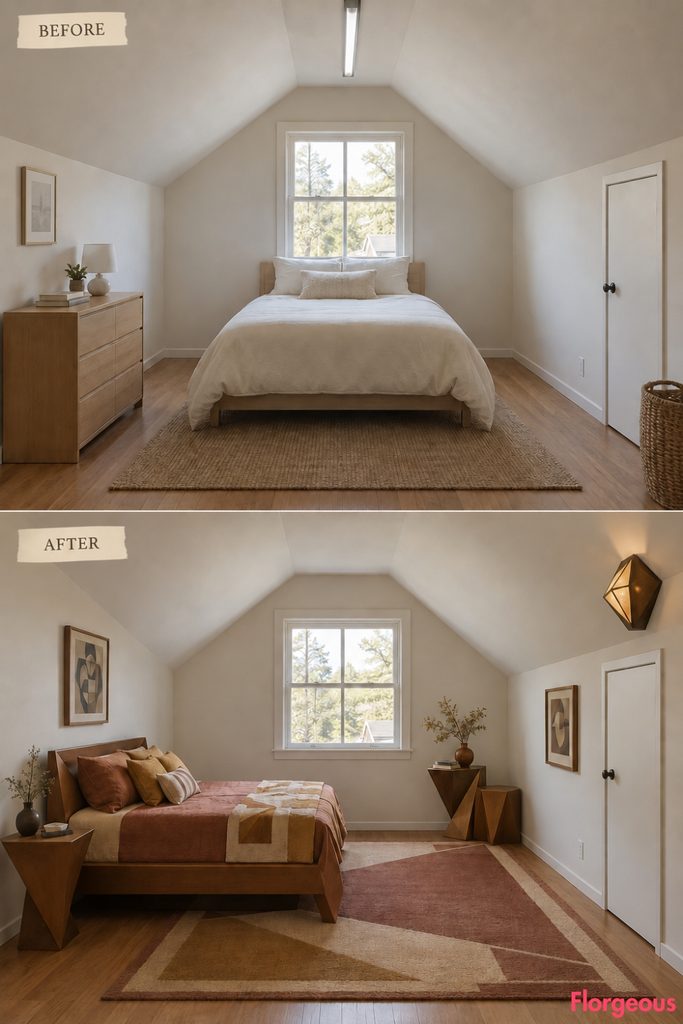
This compact room has a centered window within the gable and usable full-height walls on either side.
Before: The neutral bed sits beneath the gable window with cream bedding and minimal furniture. A white linear fluorescent builder batten runs across the flat ceiling section.
After: Move the bed to the longer side wall so the gable window becomes fully visible.
Use a Czech Cubist-inspired stained-beech bed with faceted side rails and a shallow angular head panel. Add one small triangular pedestal table and a low polygonal stool rather than conventional matching bedroom furniture.
Keep the palette historic rather than futuristic: dark beech, dusty brick, parchment, muted mustard, and black.
A small faceted bronze-and-frosted-glass wall prism mounted high on the opposite wall casts broken light across the sloping gable plane.
Style Note: Czech Cubism works because ordinary objects are treated as angular compositions. It should feel handcrafted and early-20th-century, not like contemporary geometric furniture.
13. Make an Irregular Five-Sided Room Feel Wiener Werkstätte
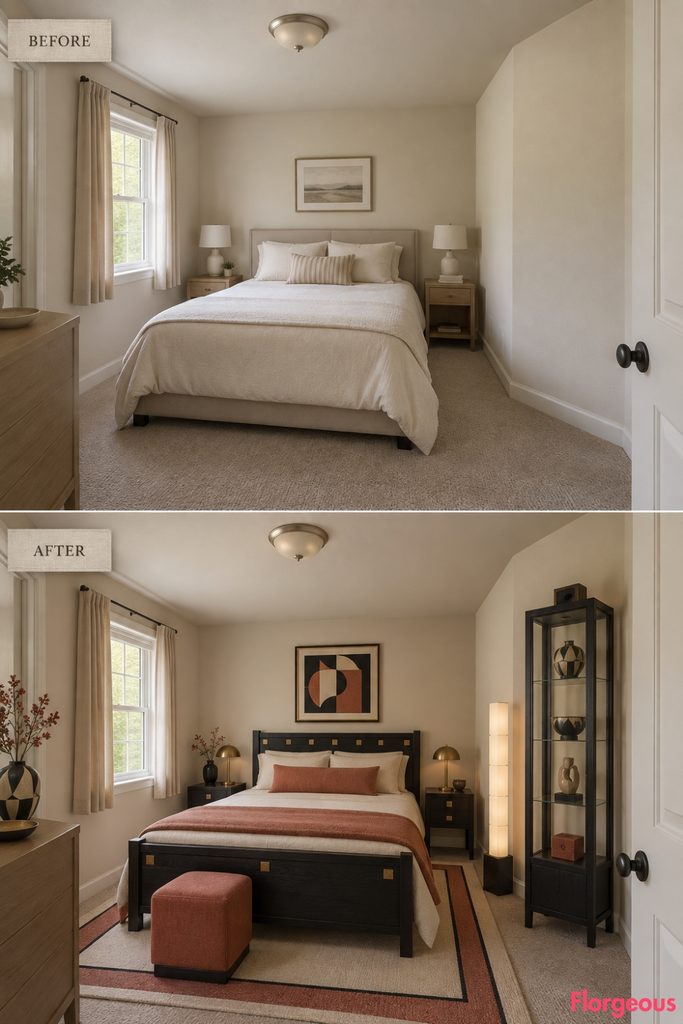
The final bedroom has a five-sided footprint and one short diagonal wall, so symmetry is impossible from the start.
Before: A neutral bed occupies the longest wall. Plain bedside pieces, short curtains, minimal styling, and a cream metal saucer flush light leave the irregular shell unresolved.
After: Keep the bed on the same longest wall but replace it with a black-stained oak frame punctuated by small square brass insets.
Near the diagonal wall, place one narrow freestanding vitrine without attaching it to the architecture. Allow visible space around all four sides.
Inside, display only a few geometric ceramics and boxes with no readable markings. Add one compact upholstered cube stool nearby and leave the opposite corner empty.
Black oak, parchment, muted coral, dull brass, and a square-bordered rug reinforce the Wiener Werkstätte vocabulary.
Lighting comes from one freestanding milk-glass luminous column rising directly from a dark square plinth.
How to Choose a Vintage Direction That Actually Fits the Room
A convincing Vintage Bedroom starts with the room geometry before it starts with shopping.
Look at where the windows sit, which wall is longest, whether a corner or recess is awkward, how high the ceiling feels, and which route must stay open between the entrance, bed, and window. Those conditions can suggest the concept instead of becoming problems to hide.
Then choose one historical language and limit yourself to a few recognizable ingredients. Eastlake might mean incised walnut and spindlework. Swedish folk style can come through painted pine and woven textiles. Directoire can be communicated through straight lines, dark edging, and disciplined furniture proportions. Czech Cubism needs angular forms, but not a room full of them.
Lighting should be treated the same way. Do not automatically repeat matching bedside lamps, a pendant, or a pair of sconces. A floor reflector, table candelabrum, stained-glass ceiling fixture, pedestal uplighter, luminous column, or focused task lamp creates a completely different relationship between the furniture and the room.
Most importantly, leave some empty space. Vintage character becomes stronger when one unusual object has room to be noticed.
Choose the historical reference that suits your architecture first, protect circulation second, then build outward from one genuinely characterful piece.