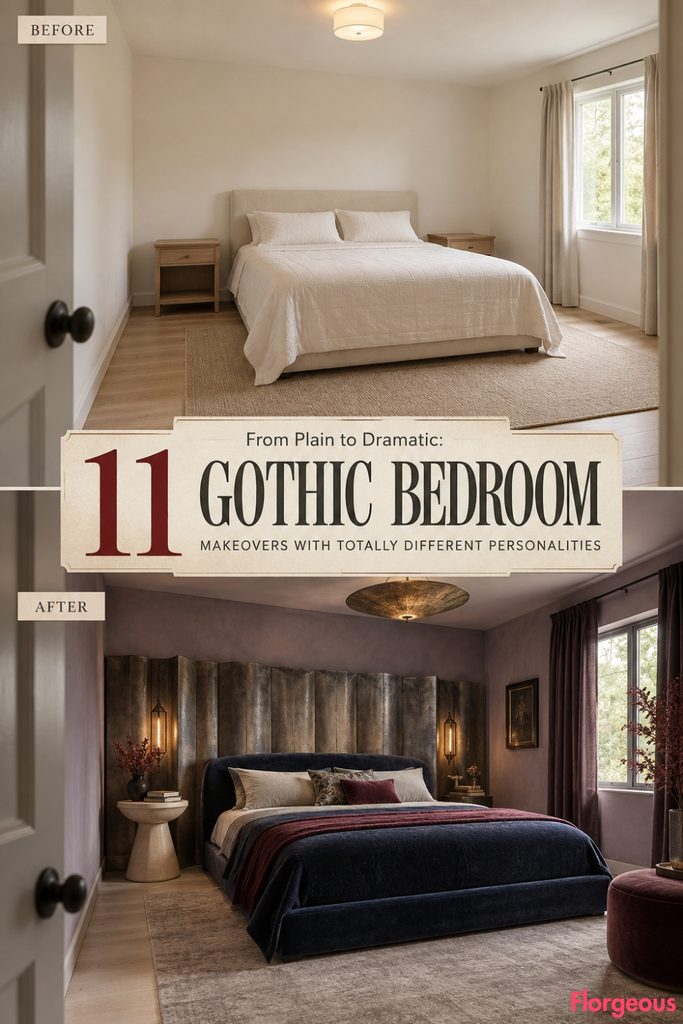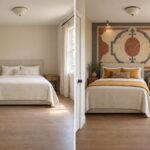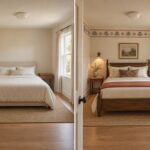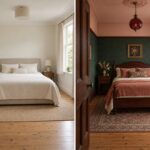
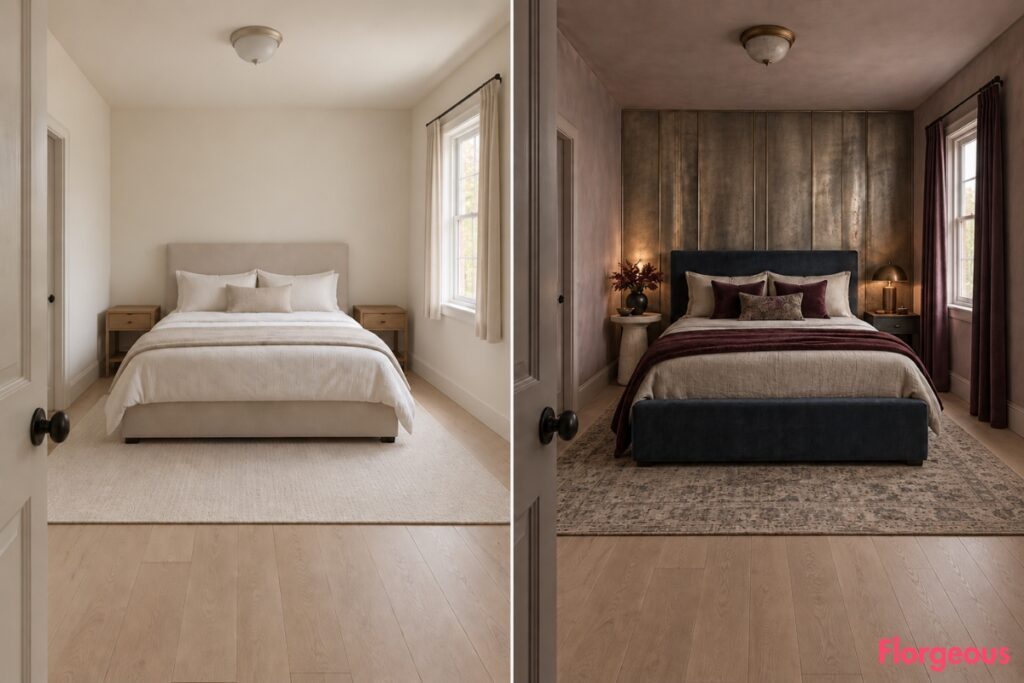
The starting bedroom is intentionally ordinary. Warm off-white walls surround a centered basic cream bed, two bare nightstands, short plain curtains at the right-side window, light timber flooring, and one generic ceiling fixture. It is clean and usable, but there is no real focal point.
That makes it an ideal room for seeing how broad Gothic Bedroom design can actually be. Instead of repeating dark walls, red velvet, carved wood, and dramatic antiques, these makeovers change the room through layout, unusual materials, furniture silhouettes, floor treatments, window detailing, relief work, and carefully controlled lighting.
The before room stays identical every time. Only the after changes, so each transformation has to earn its personality through a genuinely different design idea.
1. Turn the Window Into the Main Gothic Feature
The easiest place to begin is somewhere other than the bed wall.
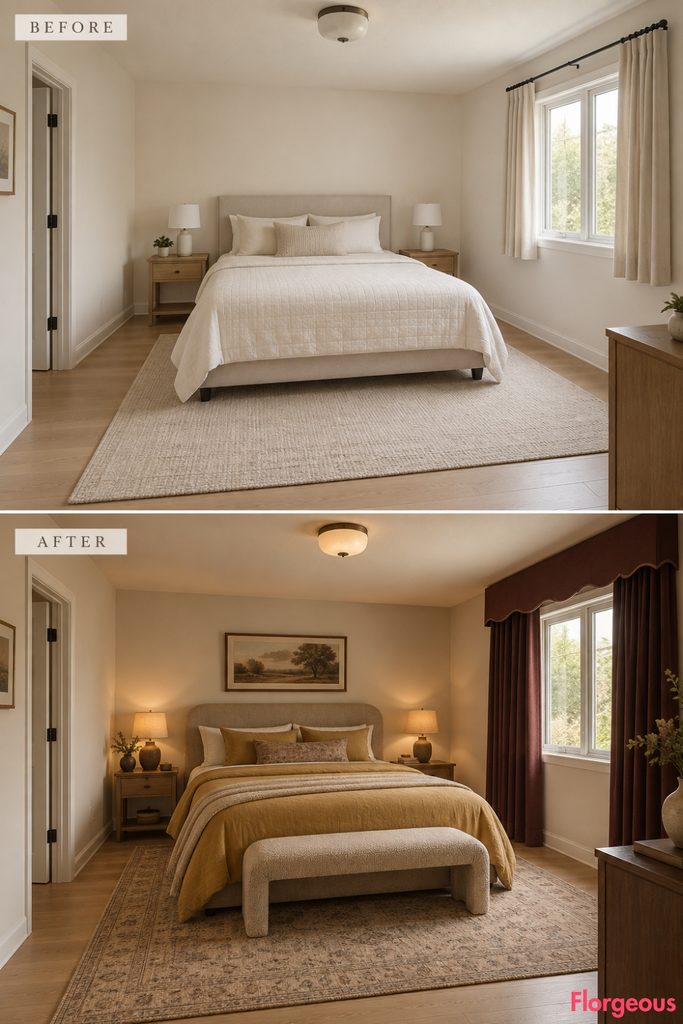
Before: Warm off-white walls, centered basic cream bed, two bare nightstands, short plain curtains on the right-side window, light timber floor, generic central ceiling light, bare surfaces, minimal styling, and soft natural daylight.
After: The ordinary window receives a high chalky-burgundy pelmet shaped with a shallow ogee curve. Full-height midnight wool curtains drop beneath it in straight, heavy folds.
The bed stays simple but moves slightly deeper toward the rear-left corner. Mushroom upholstery and a pale mustard quilt keep the room warm rather than theatrical.
The surrounding walls remain almost undecorated, giving the window treatment enough space to read as architecture.
Designer Tip: Once the window becomes the focal point, keep the headboard restrained. Two competing architectural features will make a small bedroom feel overloaded.
2. Build the Room Around Bobbin-Turned Furniture and Textural Upholstery
This makeover uses furniture form rather than architectural construction.
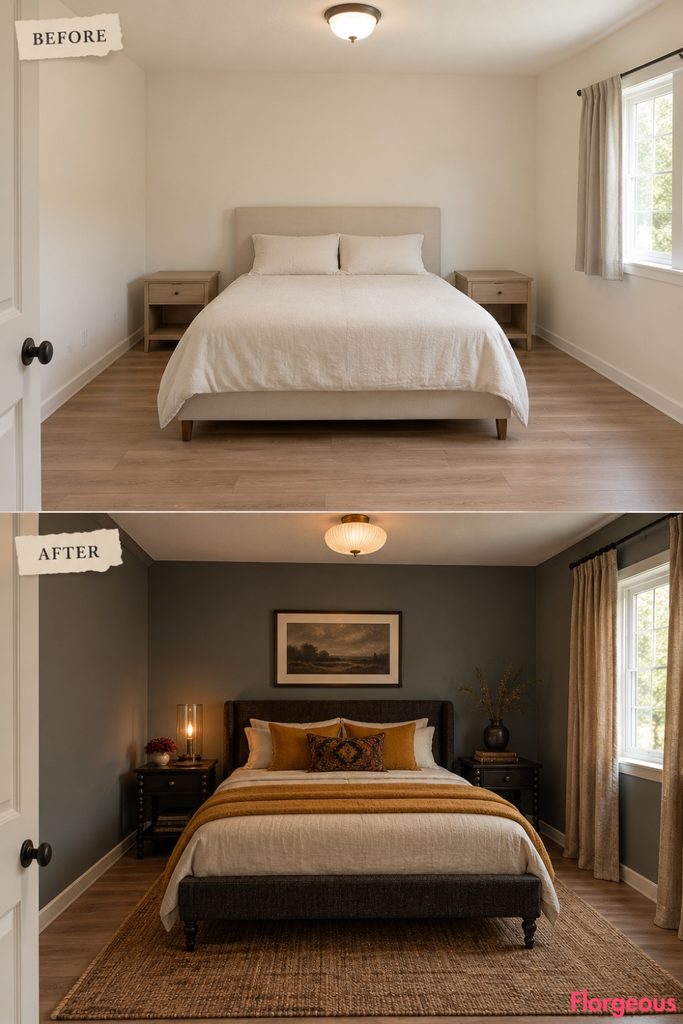
Before: The same plain bedroom with warm off-white walls, centered cream bed, two bare nightstands, short right-window curtains, light timber flooring, generic ceiling light, minimal styling, and soft daylight.
After: A compact bed upholstered in dark horsehair-look fabric becomes the visual anchor. Two substantial bobbin-turned side tables give the room an old-world rhythm without relying on tracery or elaborate carving.
Ink-gray walls create depth, while saffron wool and warm cream linen break up the darker tones. A short cylindrical glass lamp appears on only one side.
Horsehair-look textile is a practical substitute for genuine horsehair, giving the coarse woven character without specialist sourcing or maintenance.
3. Split the Bedroom Into a Collegiate Twin-Bed Arrangement
A completely different furniture plan changes the room before color even enters the picture.
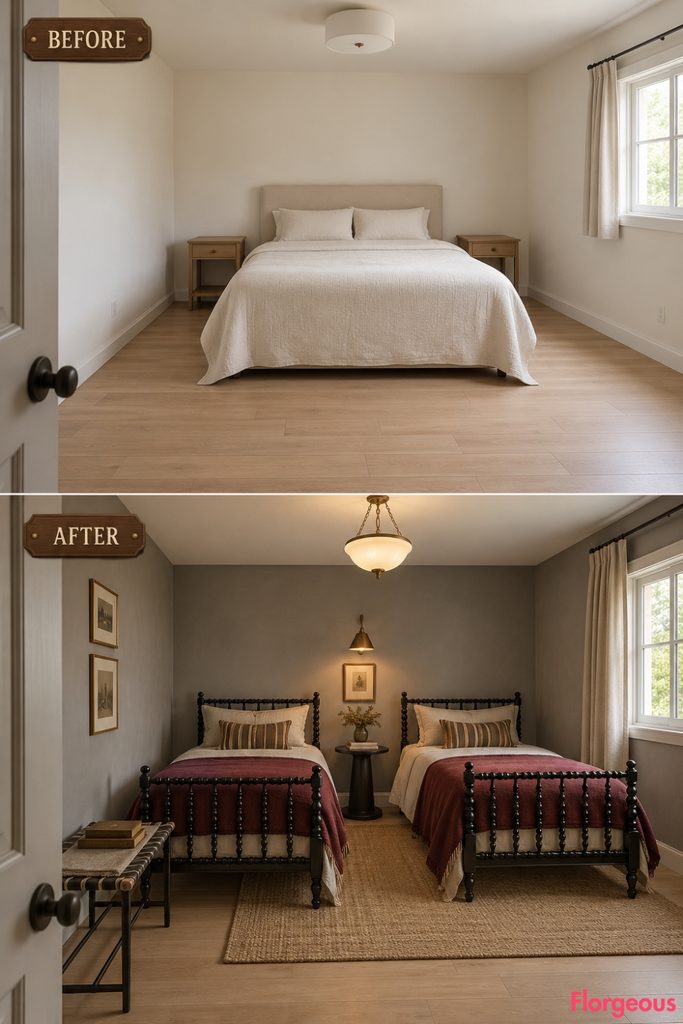
Before: The same neutral bedroom with one centered cream bed and two bare nightstands.
After: Two narrow blackened-beech beds run parallel along the rear wall, with a slim shared pedestal between them. Closely spaced turned spindles give the bedsteads a disciplined Gothic rhythm without making them ornate.
Claret wool blankets, oatmeal sheets, tobacco-striped cushions, and chalk-gray walls create the atmosphere of an old collegiate room.
A narrow luggage bench stays tight to the opposite wall, preserving a generous route through the middle.
This is especially practical for a guest room, where the twin arrangement can serve more combinations of visitors than one large bed.
4. Turn the Bed Sideways Into a Long Gothic Daybed
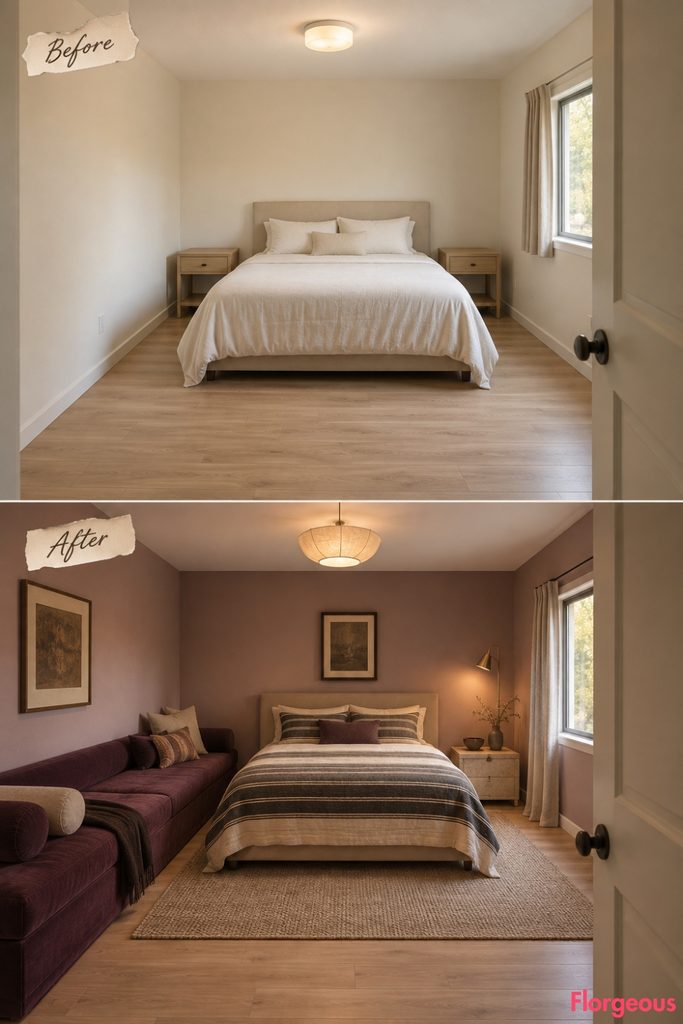
This makeover removes the familiar centered-bed composition altogether.
Before: The same plain room with the bed centered against the rear wall.
After: A long deep-mulberry upholstered daybed runs lengthwise against the left wall. A tall continuous back and two asymmetrical cylindrical bolsters give it the presence of a private chamber rather than a standard bedroom.
Muted clay-lilac walls, charcoal-and-cream striped bedding, and a parchment-colored chest bring contrast without adding more ornament.
The opposite side of the room remains deliberately sparse, making the center feel unusually open.
Small Space Tip: A side-wall daybed can free more continuous floor area than a conventional bed projecting into the center of a narrow bedroom.
5. Make One Giant Quatrefoil the Entire Floor Design
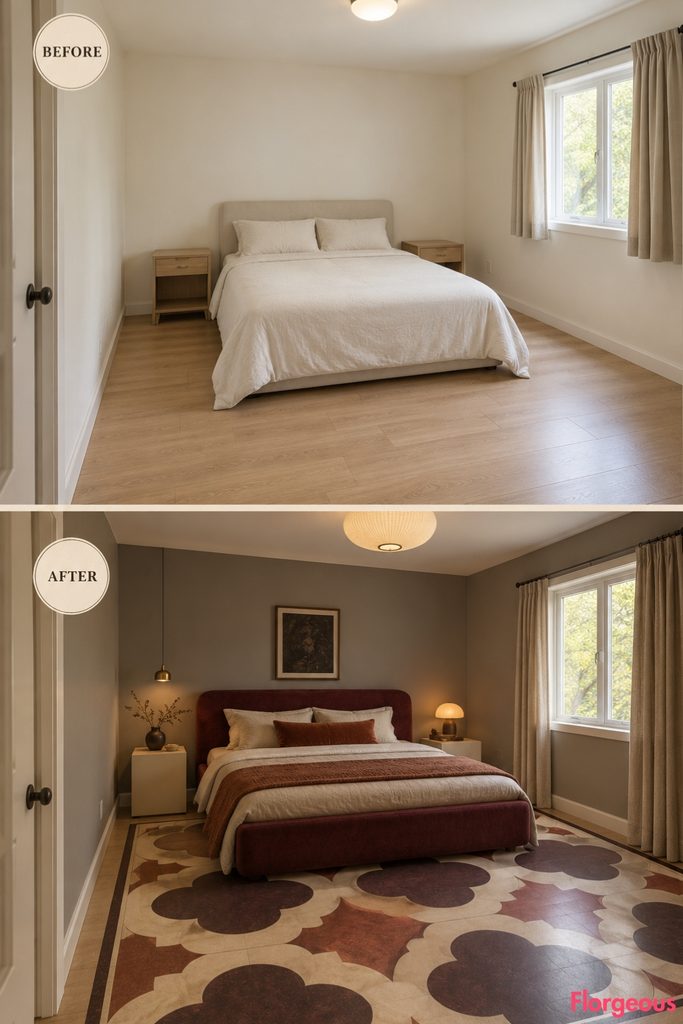
Instead of decorating the walls, put the Gothic reference directly underfoot.
Before: The same basic neutral bedroom with light timber flooring.
After: The floor becomes a matte composition dominated by one oversized quatrefoil stretching through most of the room. Bone, black-plum, and muted rust define the four-lobed geometry.
A low burgundy bed sits toward the rear, while warm-gray walls and one cream lacquer bedside cube deliberately stay quiet.
No rug is added because the floor itself is the statement.
A renter could approximate the idea with a large custom-cut vinyl floor cloth rather than replacing the existing surface.
6. Sculpt the Bed Wall in Matte White Gesso Relief
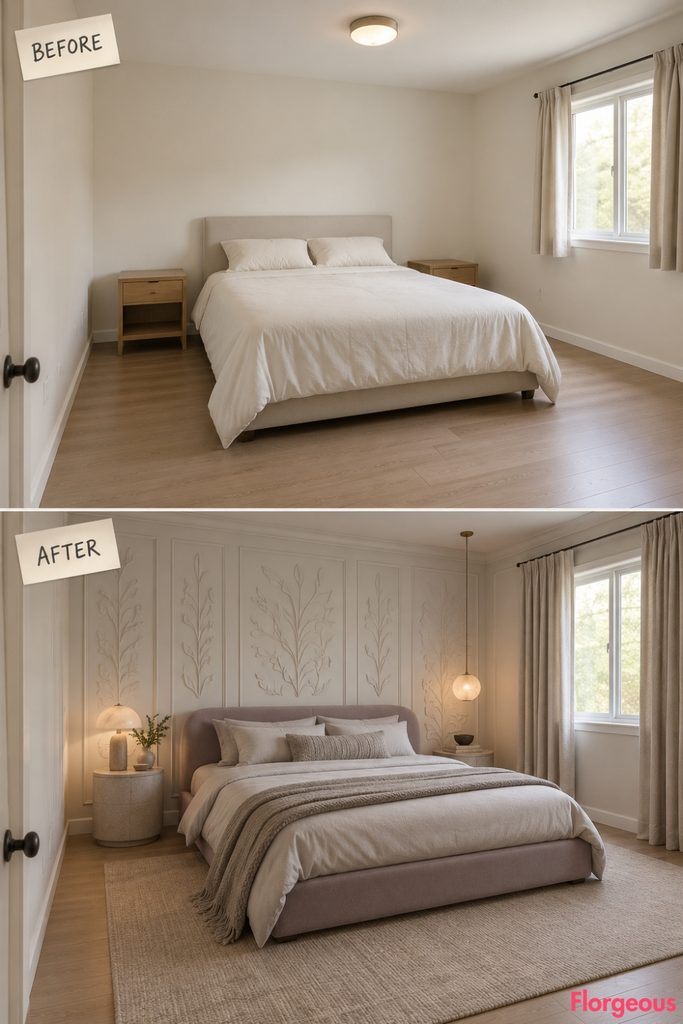
This room gets its personality from shadow instead of strong color.
Before: The same plain neutral bedroom with flat walls and no focal feature.
After: Large matte-white gesso panels cover the rear wall with shallow elongated foliate forms. The design references Gothic naturalism through leaves and upward movement, but avoids tracery, wallpaper, carved timber, and pointed arches.
A low smoke-lilac bed sits quietly against the relief, paired with pearl-gray, chalk, and mushroom textiles.
Broad reflected light skims across the raised surface and reveals the texture gradually.
Budget Version: Lightweight paintable relief panels or dimensional wallpaper can reproduce the shadow effect without commissioning hand-finished plasterwork.
7. Make a Gothic Bedroom Glow Through Smoky Cast Glass
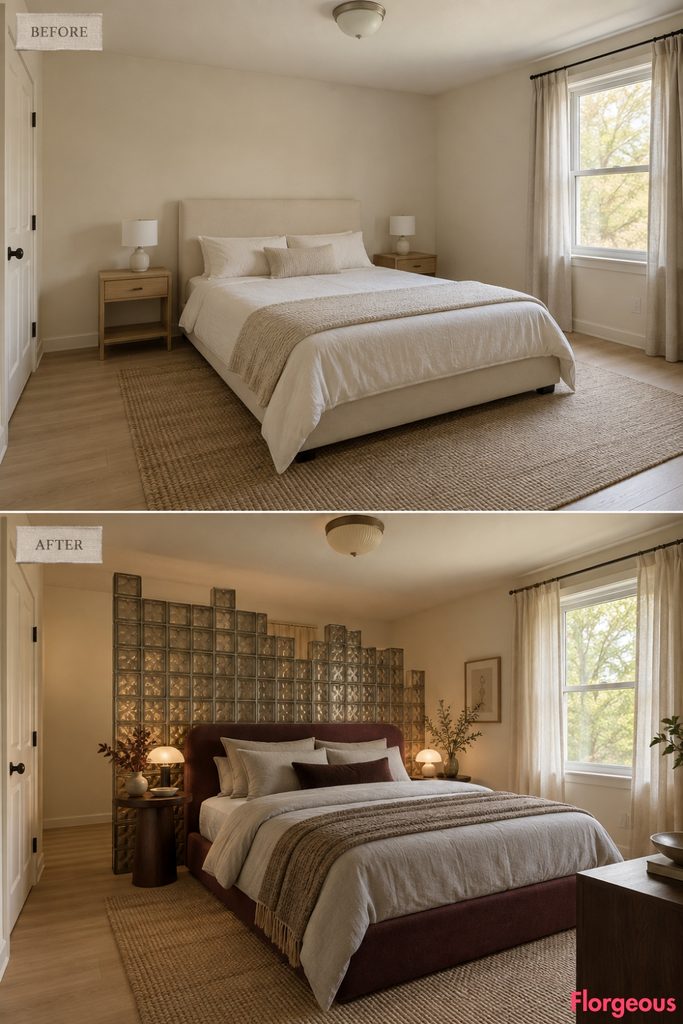
The next transformation introduces translucency instead of pattern or carving.
Before: The same plain bedroom with the same basic furniture and right-side window.
After: A freestanding partition of thick smoky cast-glass blocks rises several inches behind a low aubergine bed. Each block has an uneven handmade surface that softly distorts daylight.
The top line forms a restrained sequence of narrow peaks, creating a Gothic cadence without copying a traditional church window.
Warm ivory walls, pale gray linen, and one dark cherry table keep the rest subdued.
A simpler version can use textured acrylic panels in a freestanding frame if genuine cast glass is impractical.
8. Replace the Headboard With Folded Patinated Pewter
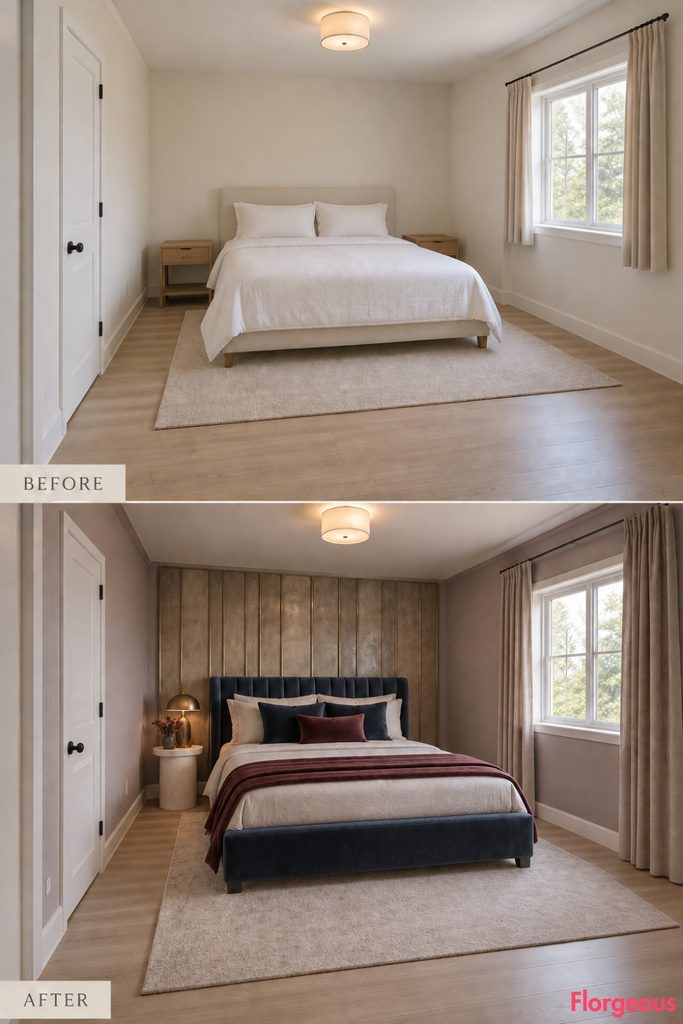
This interpretation uses reflective metal without becoming industrial.
Before: The same neutral bedroom with its generic bed and flat wall.
After: A wide patinated-pewter panel rises behind an ink-blue mohair bed. The metal is gently folded into shallow vertical ridges so changing light creates the decoration.
Cloudy mauve-gray walls and pale flooring soften the colder material. A single cream pedestal table prevents the room from becoming heavy.
One reflected light is aimed toward the pewter rather than concealed inside it, so the material catches light realistically instead of glowing.
Why It Works: The vertical folds create drama and height while avoiding every familiar Gothic shortcut.
9. Hide the Bed Inside a Full Linenfold Wall
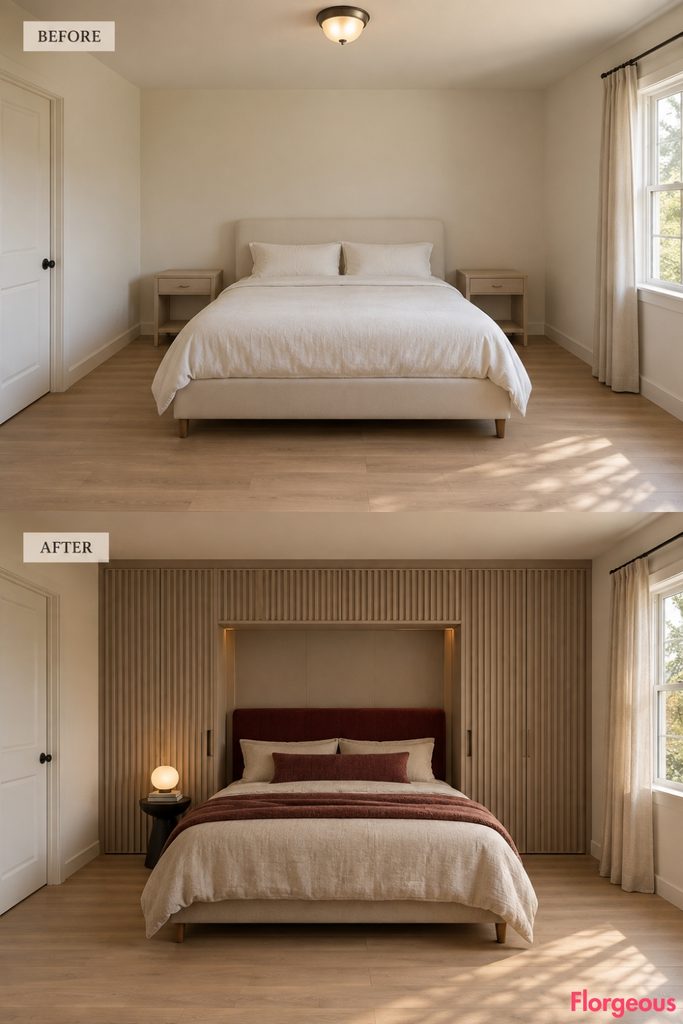
Here, the strongest Gothic feature also solves a functional problem.
Before: The same plain bedroom with a permanently visible centered bed.
After: A full-width mushroom-colored wall appears to be made from tall linenfold panels. The central portion folds down into a bed, while slim side sections conceal practical storage.
The relief stays shallow and geometric, referencing folded fabric rather than carved arches. When open, the bed reveals a burgundy upholstered headboard face and simple cream linen.
One black lacquer stool and a compact opal lamp complete the room.
For a more achievable version, shallow decorative panels can frame a standard wall bed rather than forming part of a fully bespoke installation.
10. Give the Bed a Polychrome Scagliola Frame
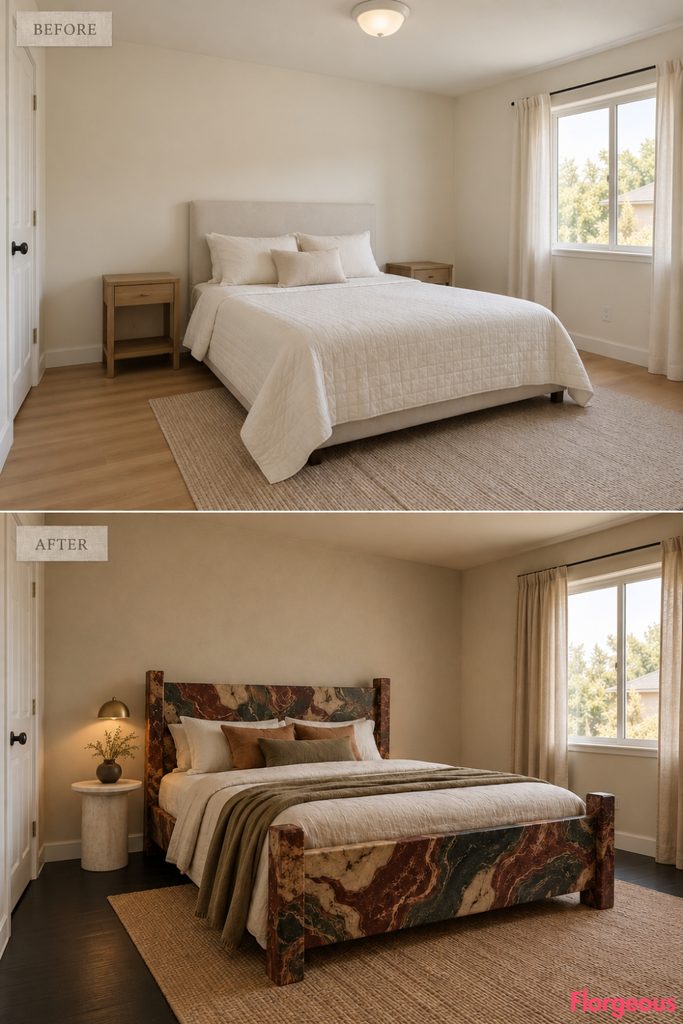
The tenth room uses faux marble craft where upholstery or timber would normally appear.
Before: The same plain bedroom with neutral finishes and generic furniture.
After: The bed frame becomes the decorative object. Its substantial outer rails and low head structure are finished in scagliola with broad irregular swirls of burgundy, cream, smoke green, and black.
Pale putty walls, natural linen, a matte black floor, and one small cream table allow the patterned frame to dominate.
The effect is luxurious, but it does not require an actual stone bed. A specialist faux-marble finish on a timber structure can recreate the appearance at a fraction of the weight.
Common Mistake: Avoid tiny, perfectly repeated marble veining. The finish looks more convincing when the pattern is broad and irregular.
11. Finish With a High-Back Conversation Bed
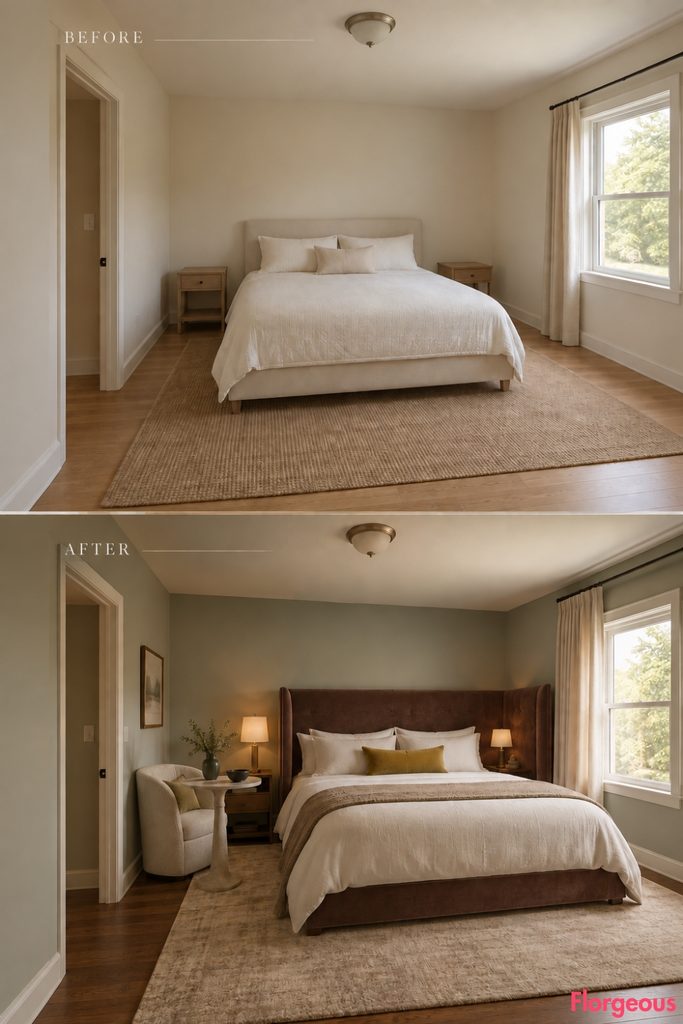
The final makeover changes how the bedroom is used as much as how it looks.
Before: The same plain room with one standard bed centered against the rear wall.
After: A wide bed shifts slightly right and gains an exceptionally tall tobacco-plum mohair back that continues around one short side, creating a partial sofa-like enclosure.
At the open end, a small round table and compact high-backed chair create a place for reading or morning coffee without forming a completely separate furniture zone.
Pale celadon-gray walls, warm brown flooring, ivory bedding, and one citron cushion prevent the dark upholstery from taking over the room.
A single high wall light reflects illumination toward the bed rather than hanging directly above it.
This finale feels Gothic through height, enclosure, proportion, and intimacy rather than through repeated historical ornament.
How to Choose a Gothic Direction That Still Feels Like Your Home
A convincing Gothic Bedroom does not need every recognizable feature of the style in one place. The strongest rooms usually begin with one idea that changes how the space feels, then allow quieter materials and furniture to support it.
That feature could be the window, floor, furniture arrangement, sculptural wall relief, cast glass, folded metal, or an unusual bed construction. Once you choose it, resist the temptation to add another equally loud focal point beside it.
Renters can start with furniture orientation, textiles, removable floor graphics, freestanding partitions, and temporary wall panels. Homeowners can consider specialist finishes, transformable furniture, substantial window treatments, and more permanent relief work.
Before buying anything, decide what you want someone to notice first when they enter. Build outward from that single decision, keep the circulation comfortable, and the result will feel designed rather than themed.