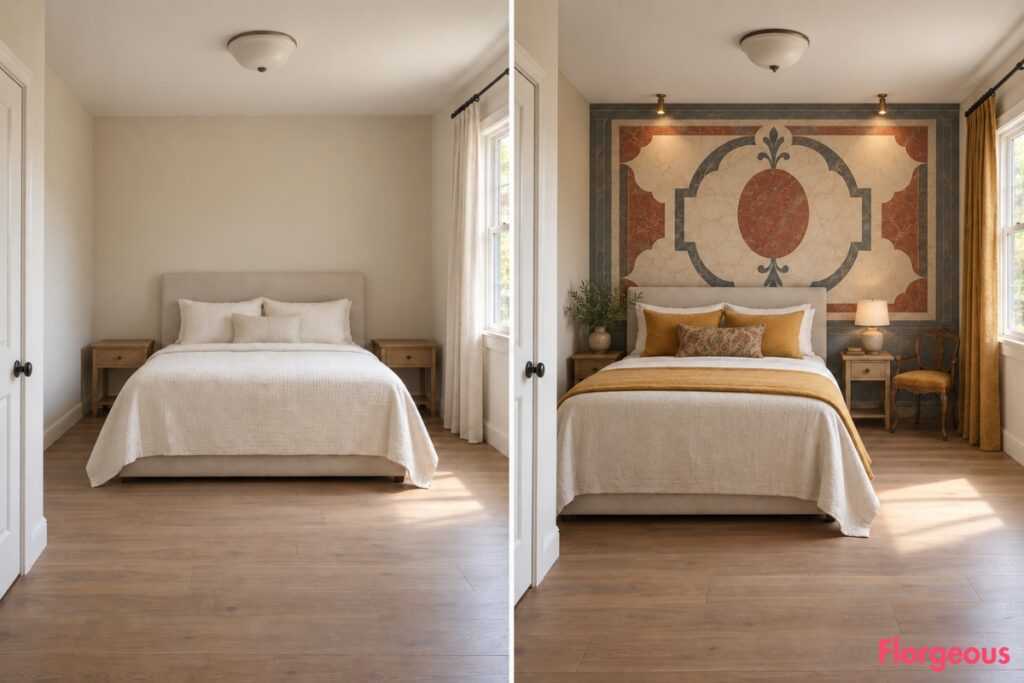
The starting bedroom is deliberately ordinary: warm neutral walls, a basic centered bed with simple cream bedding, two bare nightstands, short plain curtains at the right-side window, ordinary flooring, a generic ceiling light, minimal styling, and soft natural daylight.
Now keep that exact physical bedroom and change only the after. These 15 Tuscan Bedroom makeovers explore Florentine craft, regional stone, decorative plaster, furniture traditions, ceramics, textiles, color, and lighting without repeating the familiar beige walls, dark beams, iron bed, and terracotta-everywhere formula.
The room itself remains consistent across the series, including its rectangular shell, front-left doorway, right-side window, ceiling height, and footprint. The photography does not. Each concept is viewed from a genuinely different place inside the room, while the BEFORE and AFTER within each individual pair always use the exact same camera position, lens, framing, architecture, and daylight direction.
1. Scagliola Turns the Bed Wall Into Ivory, Oxblood, and Charcoal Art
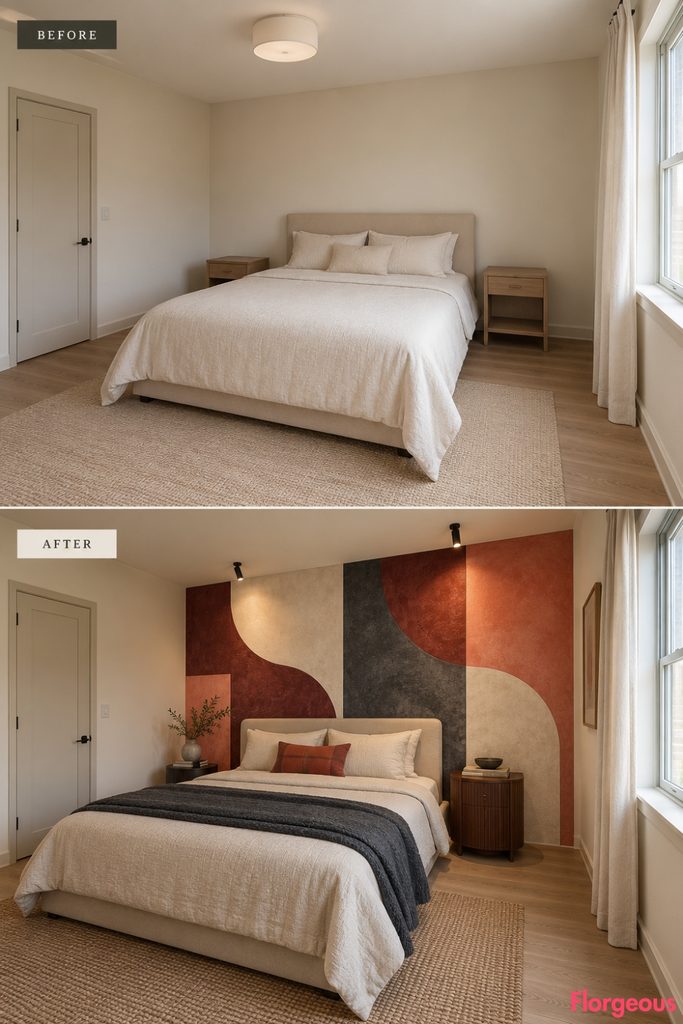
A single craft surface supplies almost all the decoration.
Before: The plain neutral bedroom feels clean but has no memorable focal point.
After: A matte scagliola panel mixes ivory, oxblood, charcoal, and muted coral behind a cream bed shifted slightly left. Pale oak and charcoal wool keep the stronger colors grounded. Two tiny ceiling spots graze only the panel.
Designer Tip: Keep scagliola matte and softly imperfect. Too much shine can make it resemble synthetic marble.
2. Cocciopesto Wraps the Room in Dusty Peach and Aubergine
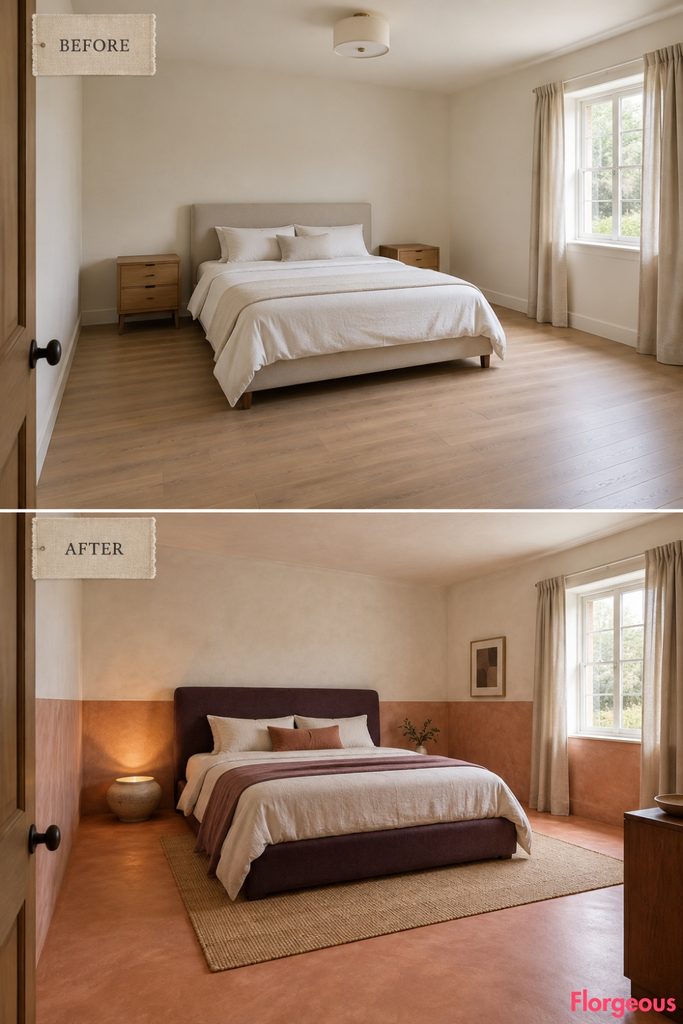
Here, the transformation begins at floor level rather than behind the bed.
Before: The same neutral room has ordinary flooring and smooth builder-grade finishes.
After: Dusty peach cocciopesto covers the floor and rises partway up the walls. Chalk-white plaster sits above it, while a deep aubergine bed creates a strong central contrast. One low ceramic uplight throws light gently across the mineral surface.
3. Pietra Serena Meets a Shot of Saffron
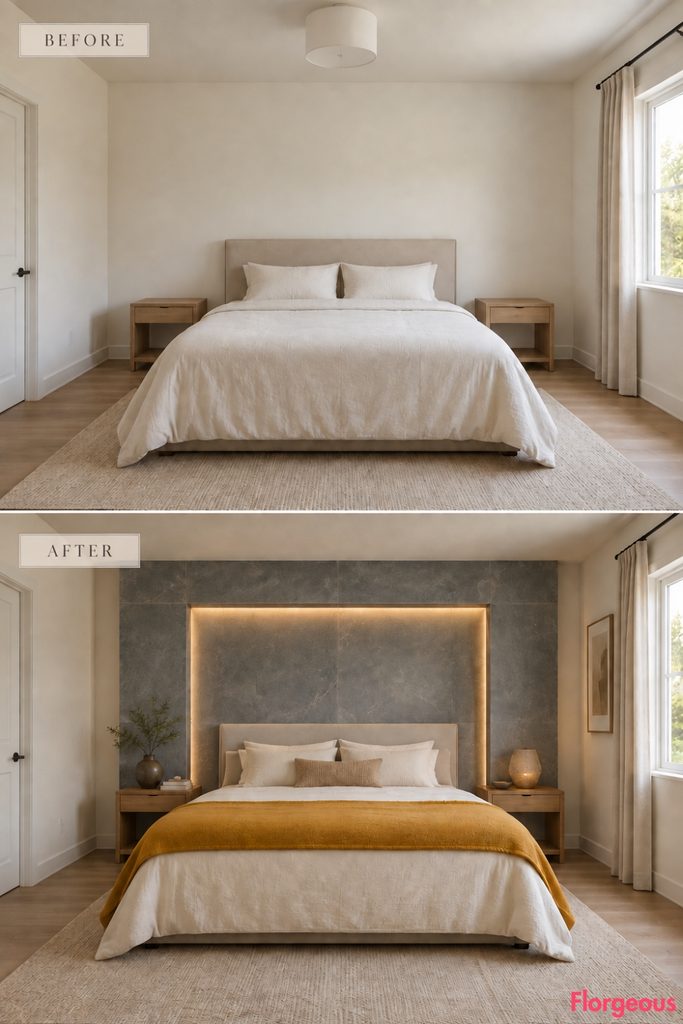
This makeover uses cool Florentine stone rather than another warm timber focal point.
Before: The same bedroom has a flat, undefined wall behind the bed.
After: Blue-gray pietra serena forms a crisp rectangular portal around a warm cream bed. A saturated saffron wool coverlet warms the stone. One concealed light seam inside the frame grazes its edge.
4. Florentine Intarsia Makes the Wardrobe the Main Event
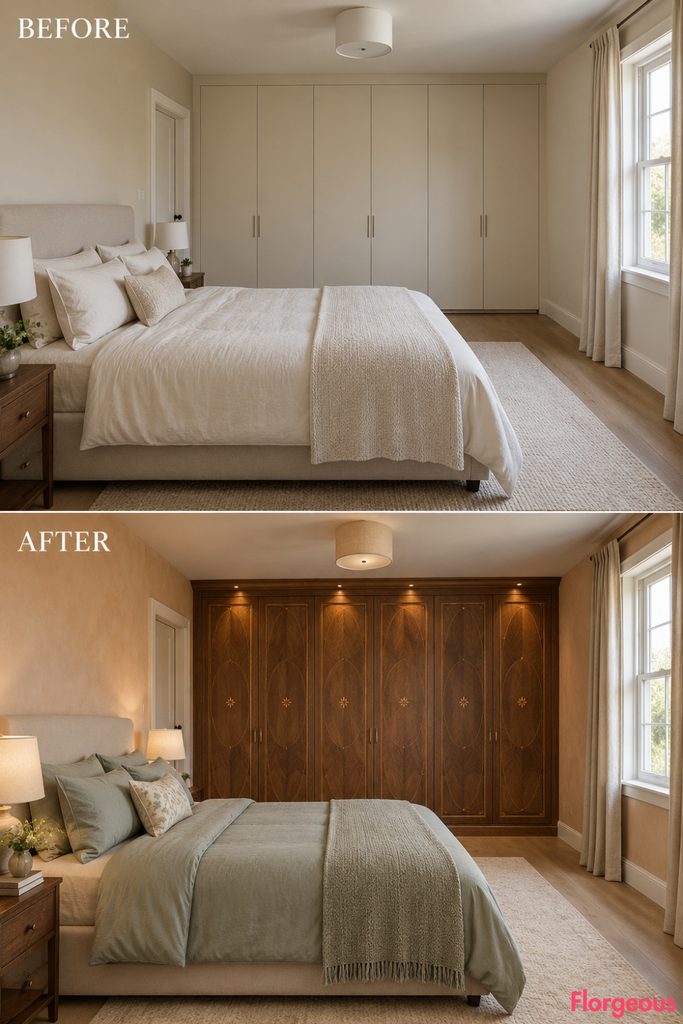
The visual hierarchy flips completely in this room.
Before: The same plain bedroom has little meaningful storage or craftsmanship.
After: A walnut wardrobe with geometric light-and-dark intarsia fills one side wall. The bed moves opposite it, dressed in celadon against pale apricot plaster. A concealed cabinet-top wash reveals the marquetry pattern.
Budget Version: Simple veneer strips on flat wardrobe fronts can suggest intarsia at a much lower cost.
5. Bargello Gives the Room a Controlled Burst of Color
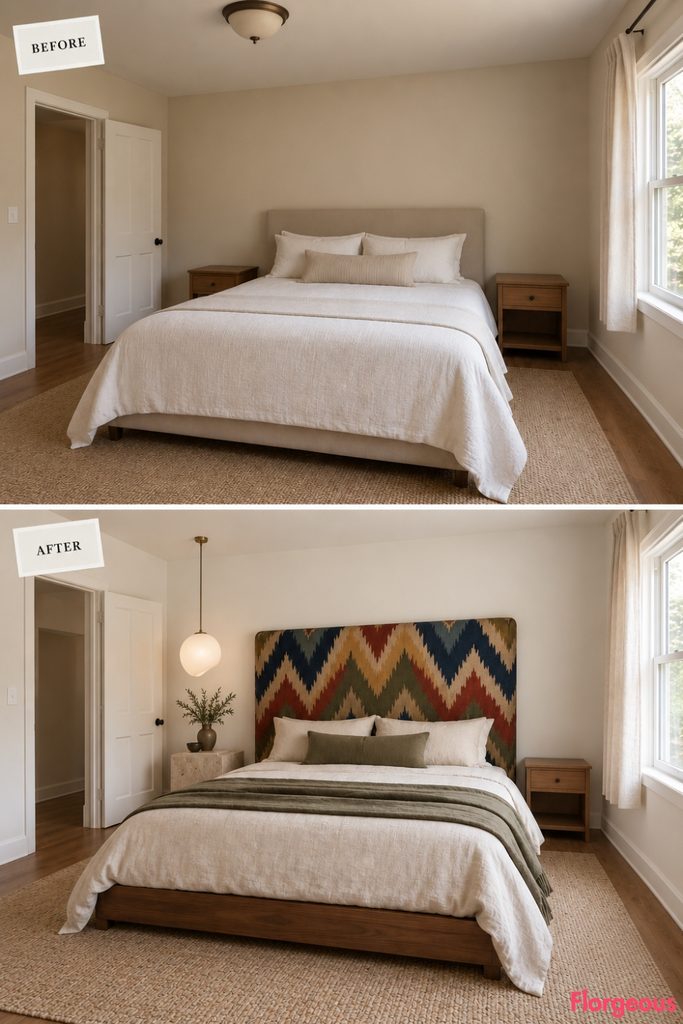
The pattern here comes entirely from textile craft.
Before: The same plain room has neutral bedding and almost no pattern.
After: An oversized Bargello-inspired headboard combines cobalt, brick red, mustard, olive, and parchment. Chalk-white walls and a low walnut bed keep the palette from spreading everywhere. One opaline globe hangs asymmetrically on a single bedside.
Color Story: A multicolor focal point works best when the rest of the room is allowed to stay quiet.
6. Sage Sgraffito Reveals Burnt Sienna Beneath the Plaster
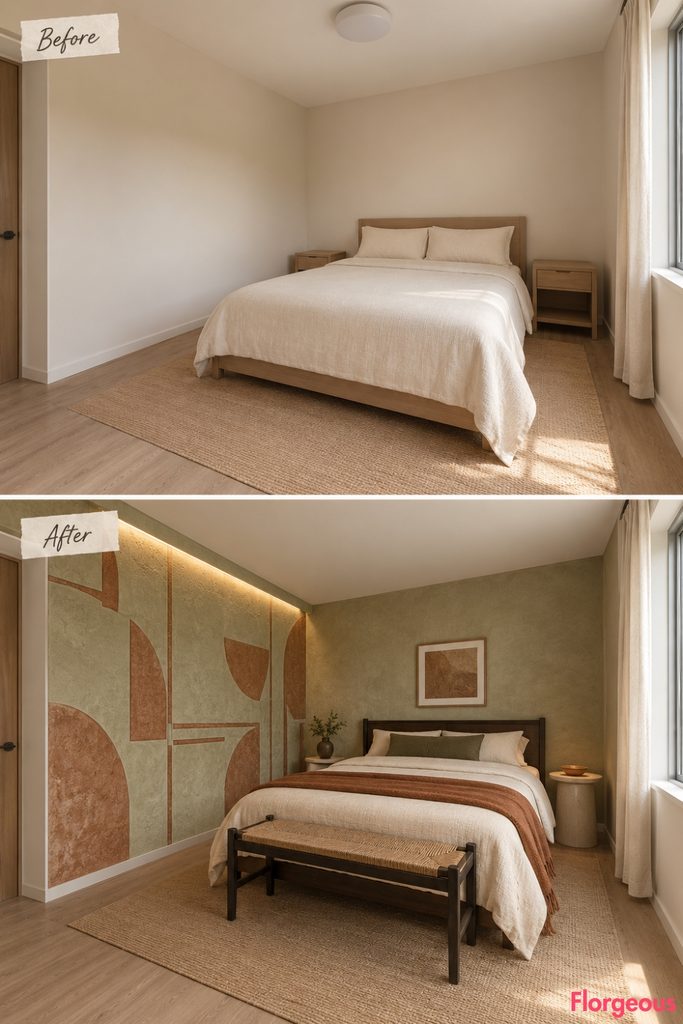
The wall gains pattern through subtraction rather than added decoration.
Before: The same smooth neutral bedroom has featureless painted walls.
After: Pale sage plaster is scratched through to reveal burnt sienna in a restrained geometric sgraffito band. A black-brown bed and cream linen sharpen the contrast. A slim linear grazer skims across the textured surface.
7. A Powder-Blue Groin Vault Changes Everything Above Eye Level
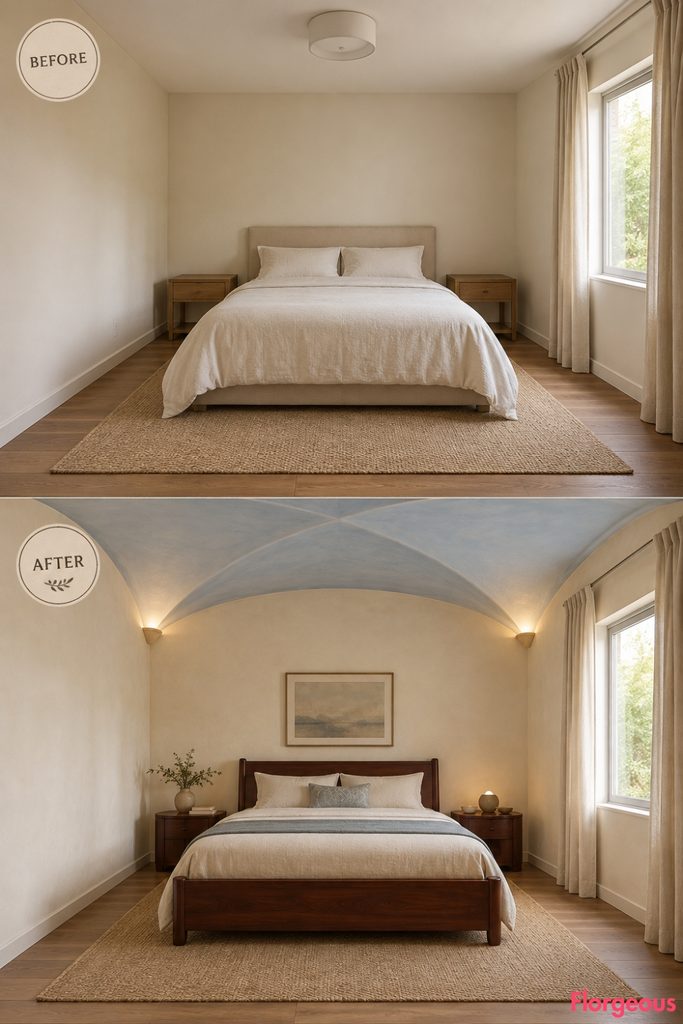
The strongest design move appears overhead.
Before: The same bedroom has a flat ceiling and generic central fixture.
After: A shallow groin vault in muted powder blue floats above creamy walls and a dark cherry bed. Four tiny uplights at the spring points illuminate the intersecting curves while the furniture below remains deliberately low.
8. A Montelupo-Inspired Rail Lines the Bed Wall in Cobalt and Emerald
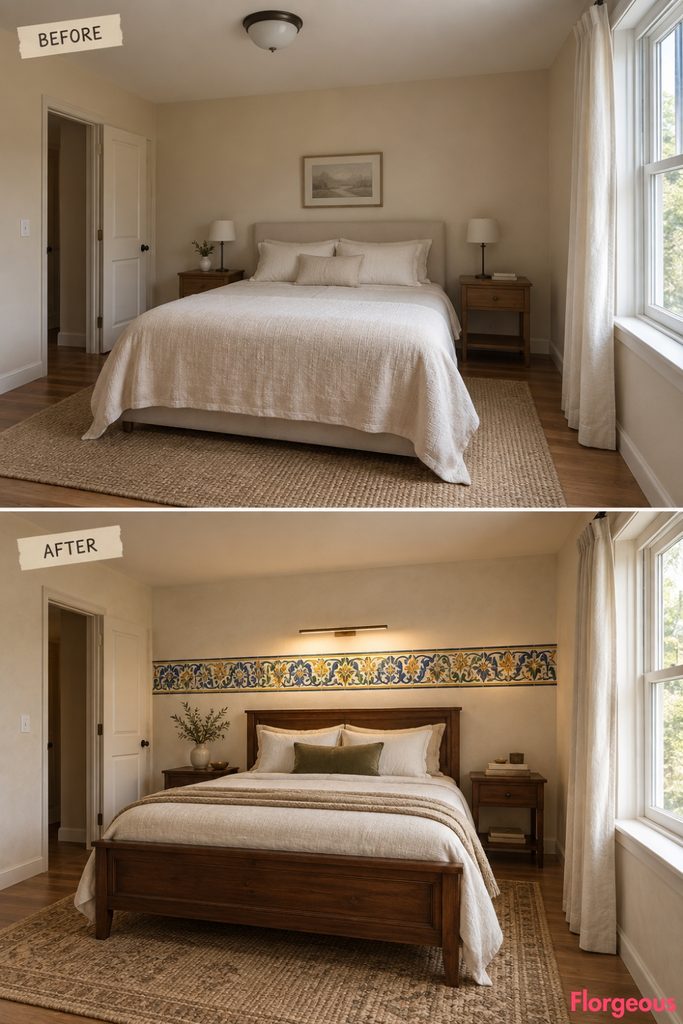
A narrow strip of ceramic supplies all the ornament.
Before: The same plain bed wall has no pattern or focal detail.
After: A slim maiolica rail mixes cobalt, emerald, lemon ochre, and warm white above a chestnut bed. One narrow directional light runs parallel to the rail, revealing the glazed surface without illuminating the entire wall.
9. Dusty Rose Bugnato Gives Deep Plum Something to Push Against
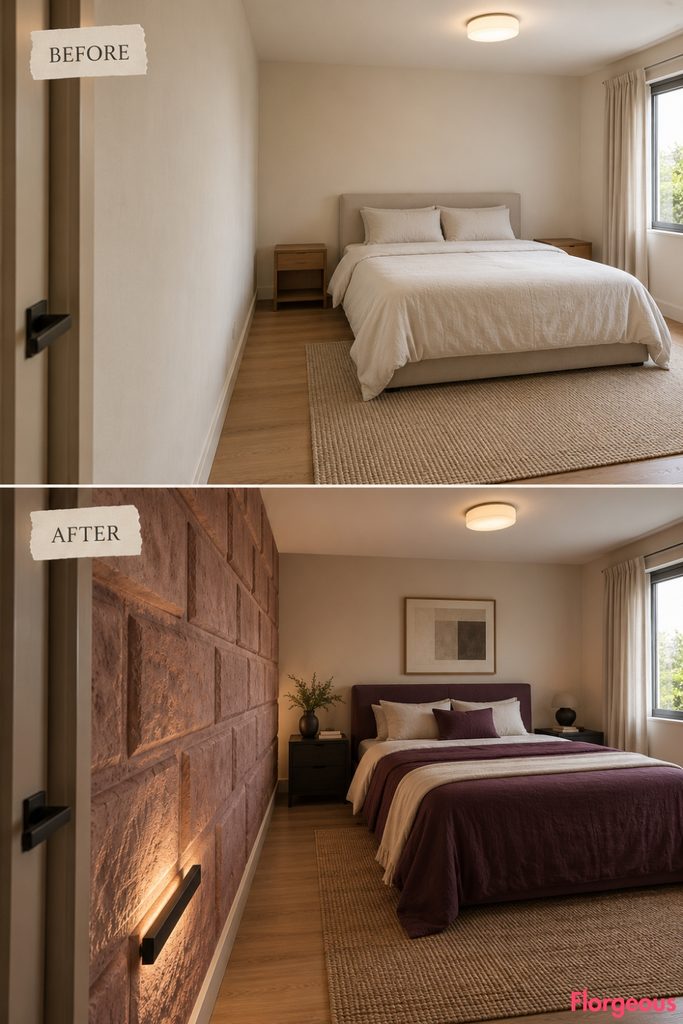
This concept depends on depth and shadow rather than surface pattern.
Before: The same bedroom has flat, smooth walls.
After: Shallow bugnato-inspired blocks cover one wall in dusty rose. A deep plum bed sits against the texture with bone-colored linen and blackened timber details. One low raking light exaggerates the joints and relief.
10. Forest Green Turns a Savonarola Chair Into the Destination
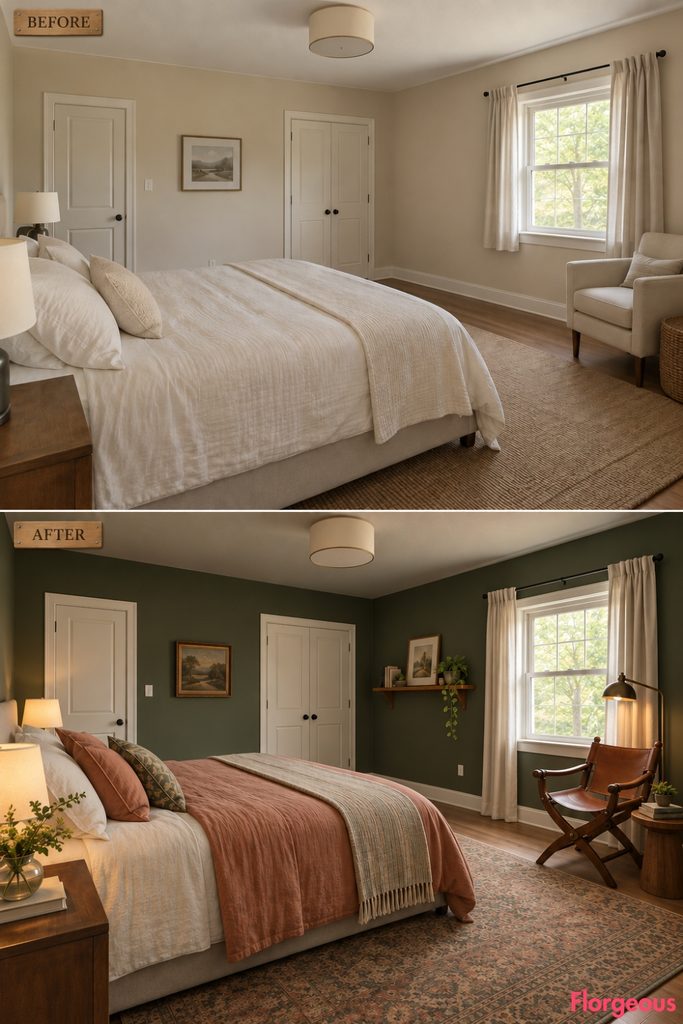
This makeover is led by furniture rather than architecture.
Before: The same room has an empty side corner with no purpose.
After: The bed moves deeper into the room, freeing a corner for a walnut Savonarola-style chair with cognac leather. Forest-green walls and faded coral bedding create a stronger palette. A focused bronze reading lamp serves only the chair.
Common Mistake: One historical silhouette is enough. Several carved antiques would compete with one another.
11. Florentine Marbled Paper Hides Inside a Severe Walnut Armoire
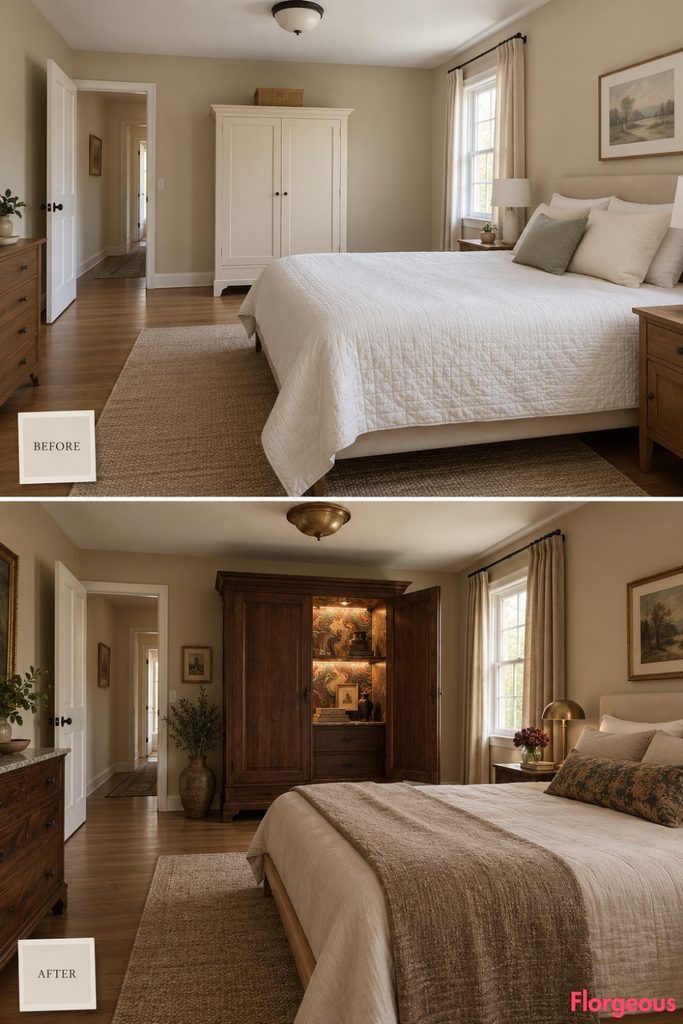
The room saves its most colorful feature for a closer look.
Before: The same neutral bedroom has generic storage and little visual surprise.
After: A dark walnut armoire opens to reveal marbled paper in teal, burgundy, ochre, and cream. The pale maple bed and mushroom bedding remain restrained. Concealed internal lighting activates only the colorful cabinet interior.
12. Tomato Red and Turquoise Wake Up Glazed Terracotta Reliefs
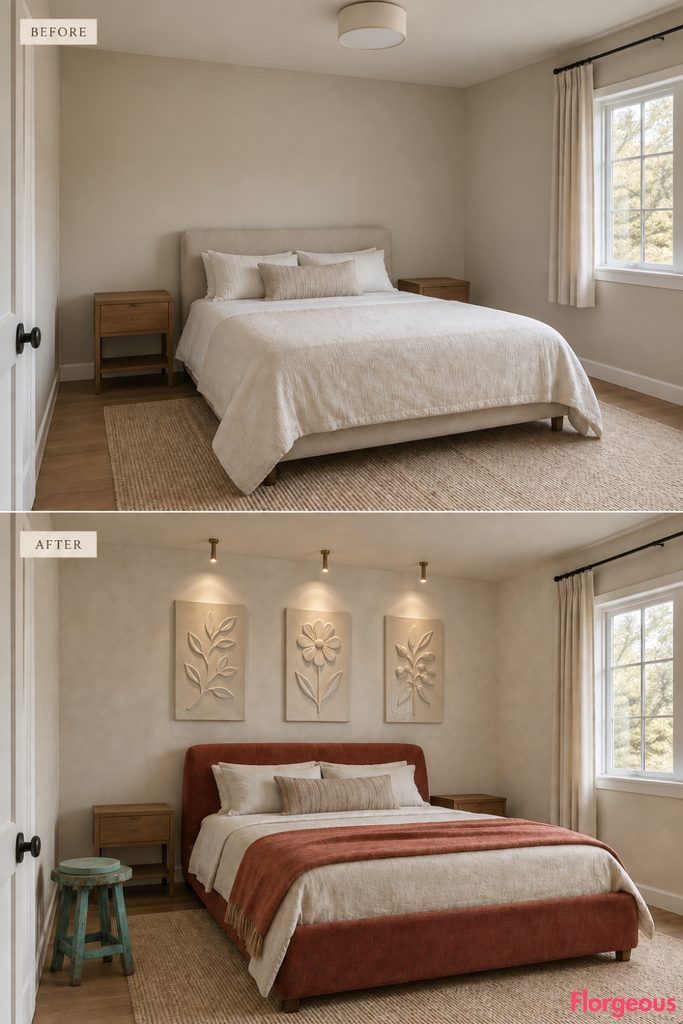
Tuscan ceramics become architectural art rather than shelf decor.
Before: The same blank wall above the bed has no focal feature.
After: Three ivory glazed terracotta relief panels sit across a chalk wall. A tomato-red upholstered bed and faded turquoise stool provide strong color below. Three tiny ceiling pin lights target the reliefs individually.
13. Smoky Blue Makes a Spezieria Drawer Wall Feel Lighter
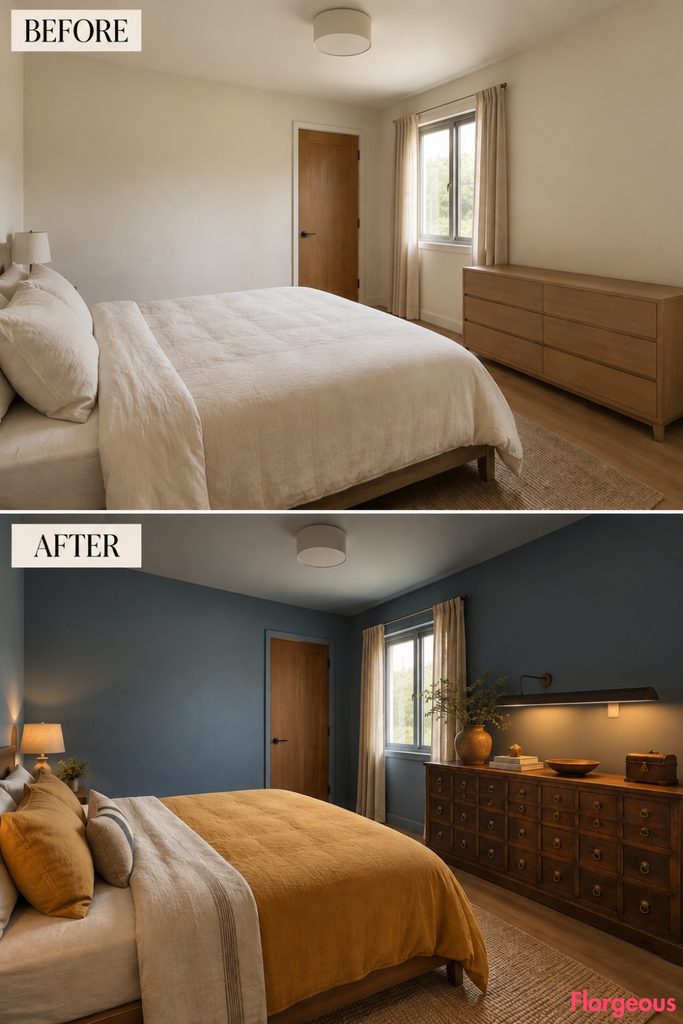
Storage provides rhythm without turning the room into a dark timber box.
Before: The same bedroom has almost no meaningful storage.
After: A long chestnut cabinet with many spezieria-inspired drawer fronts follows one wall. Smoky blue walls cool the wood while saffron bedding adds warmth. A long shaded task light washes the cabinet rather than the bed.
Small Space Tip: False small drawer fronts can conceal larger practical drawers behind them.
14. A Faded Fresco Drifts Across the Wall in Sky Blue and Clay Red
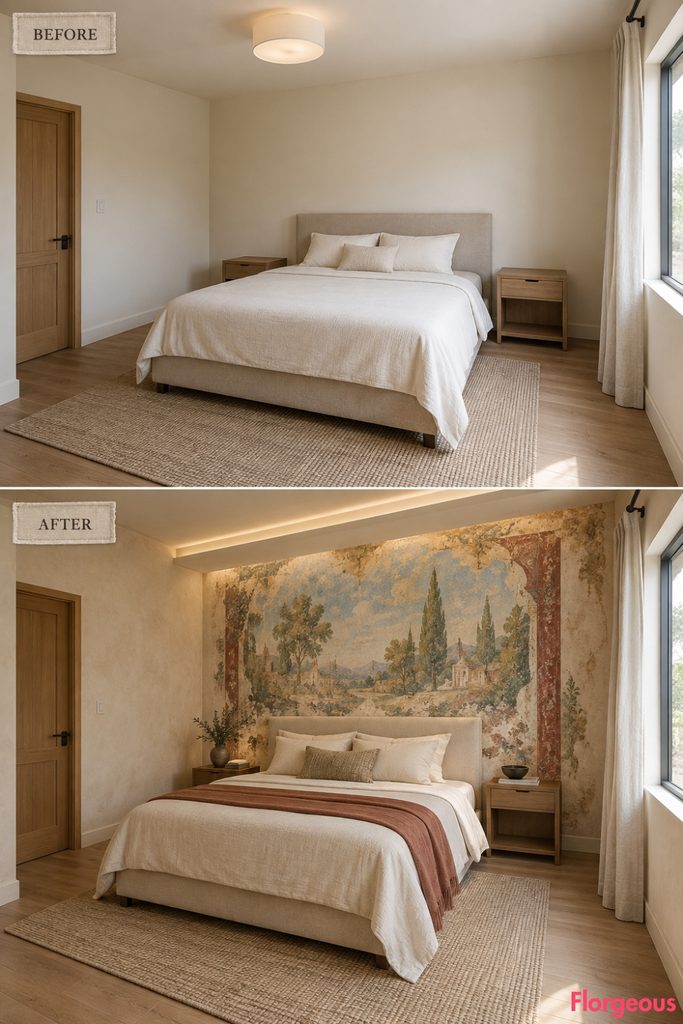
This room embraces an intentionally incomplete decorative surface.
Before: The same bedroom has no wall art or architectural focal point.
After: A weathered secular fresco fragment uses sky blue, clay red, sage, parchment, and muted gold, fading into bare limewash. A diffuse concealed ceiling reflector illuminates the painting without adding a decorative fixture.
15. Pietra Dura Ends the Series Like a Piece of Jewelry
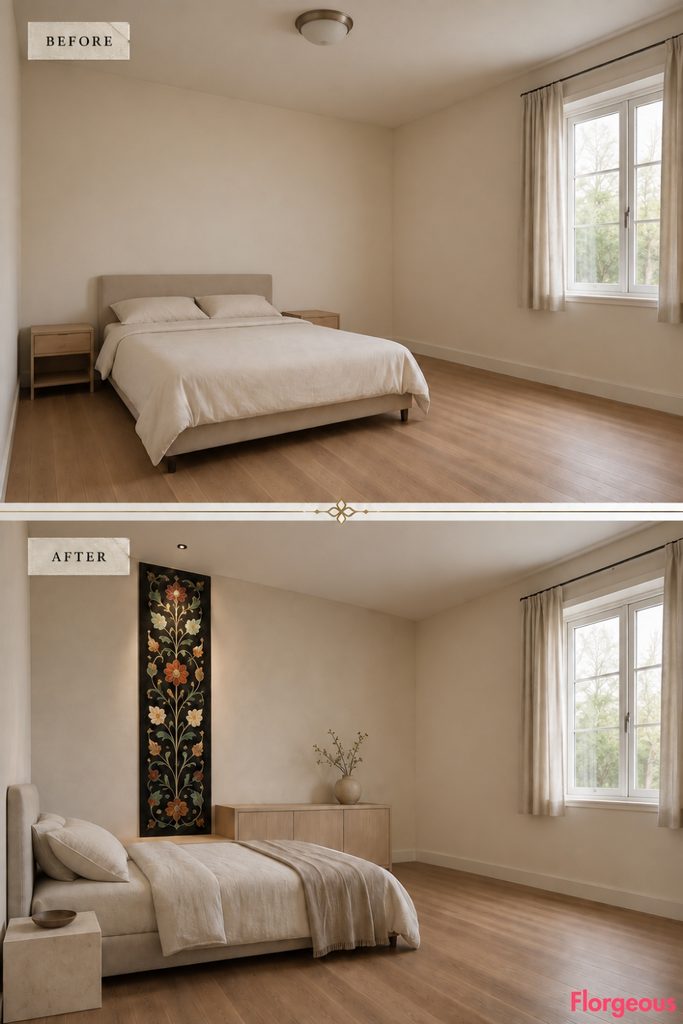
The smallest focal point receives the richest material treatment.
Before: The same plain room has generic furnishings and featureless walls.
After: The bed moves along a side wall beside a narrow black stone panel inlaid with jade, ruby red, ivory, and rust-colored stone. Pale plaster and raw linen keep the composition quiet. A tiny focused pin light illuminates only the inlay.
Choosing the Tuscan Direction That Fits Your Own Bedroom
The most convincing rooms here have a clear hierarchy. One room is about stone, another about textiles, another about cabinetry, ceramics, color, furniture, or plaster. The lighting also changes according to the material instead of being copied from one makeover to the next.
The same logic applies to layout and photography. A room can feel dramatically different when you stop evaluating every design from the doorway. Looking from beside the window reveals the bed wall differently. A side-wall angle emphasizes cabinetry. A rear-corner view makes flooring more important. A foot-of-bed composition gives architectural headboards much more presence.
For your own Tuscan Bedroom, decide what should lead first. Then choose the palette, lighting, furniture position, and supporting materials around that single idea. Restraint will usually create a more believable Tuscan interior than piling several familiar motifs into one room.