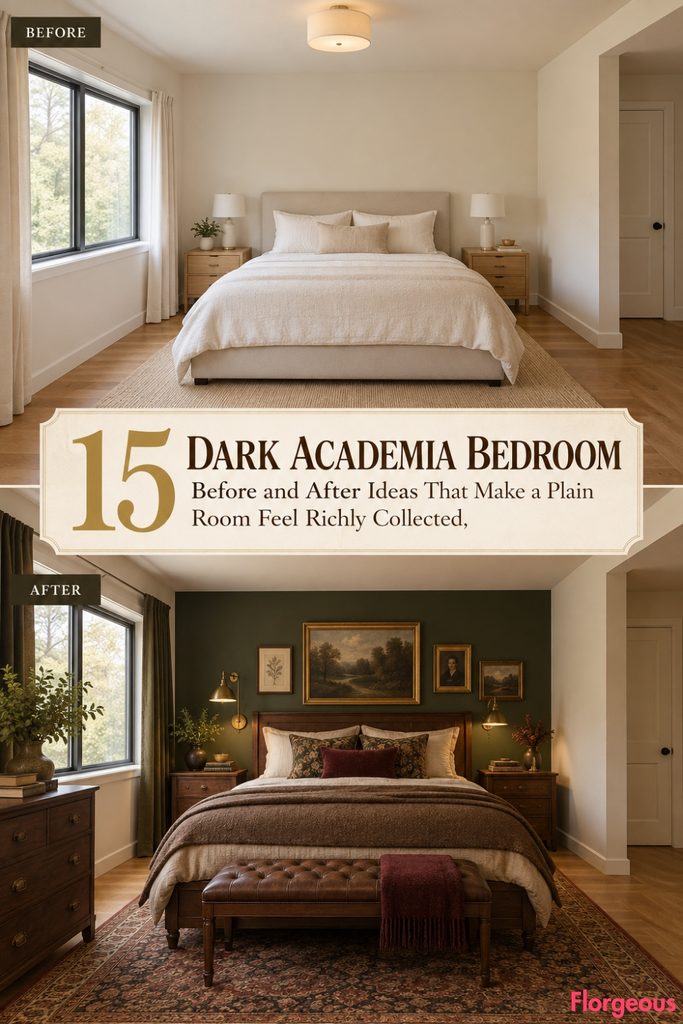
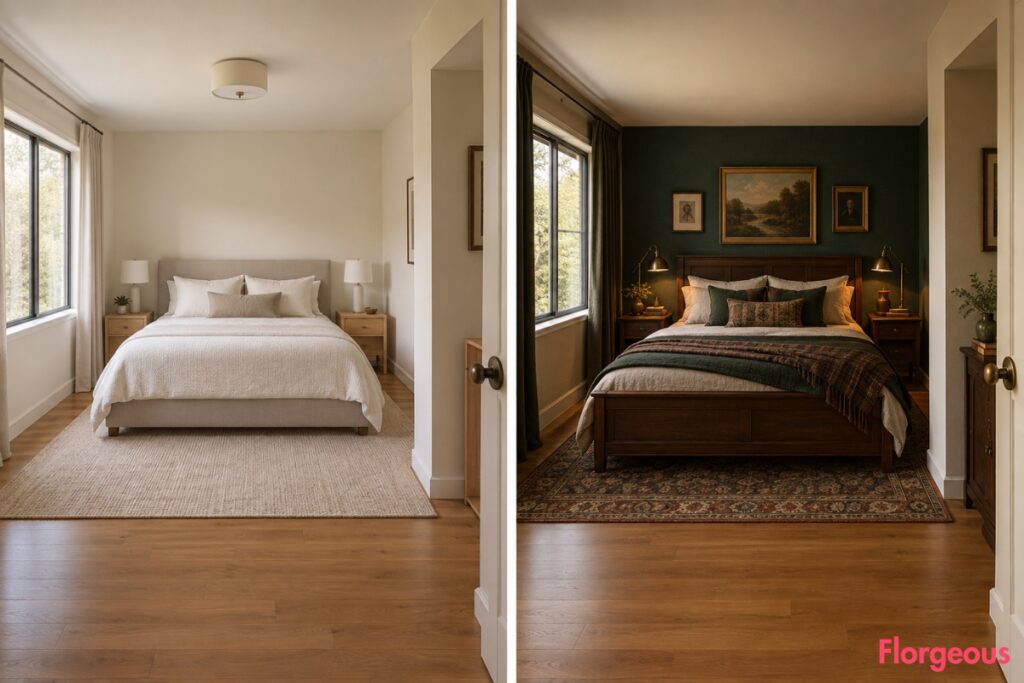
A bedroom does not need carved bookcases, antique clutter or nearly black walls to feel convincingly Dark Academia. Often, the mood comes from a much tighter combination of scholarly color, substantial furniture, tactile materials and low, purposeful lighting.
These 15 Dark Academia Bedroom makeovers all begin with exactly the same plain room, then take it in clearly different directions. One transformation concentrates on bookcloth, another changes the bed silhouette, another works through window tailoring, artwork, ceiling color, lighting or textiles.
The architecture remains locked throughout: a medium-size rectangular bedroom with a completely flat rear bed wall, a large horizontal window centered on the left wall, a shallow front-right dog-leg entry vestibule, standard flat ceiling and continuous warm natural-oak flooring. Camera viewpoints change from section to section, but the BEFORE and AFTER within every pair use the exact same camera, lens, framing, architecture, openings, floor and daylight direction.
1. Wrap the Bed Wall in Bottle-Green Bookcloth
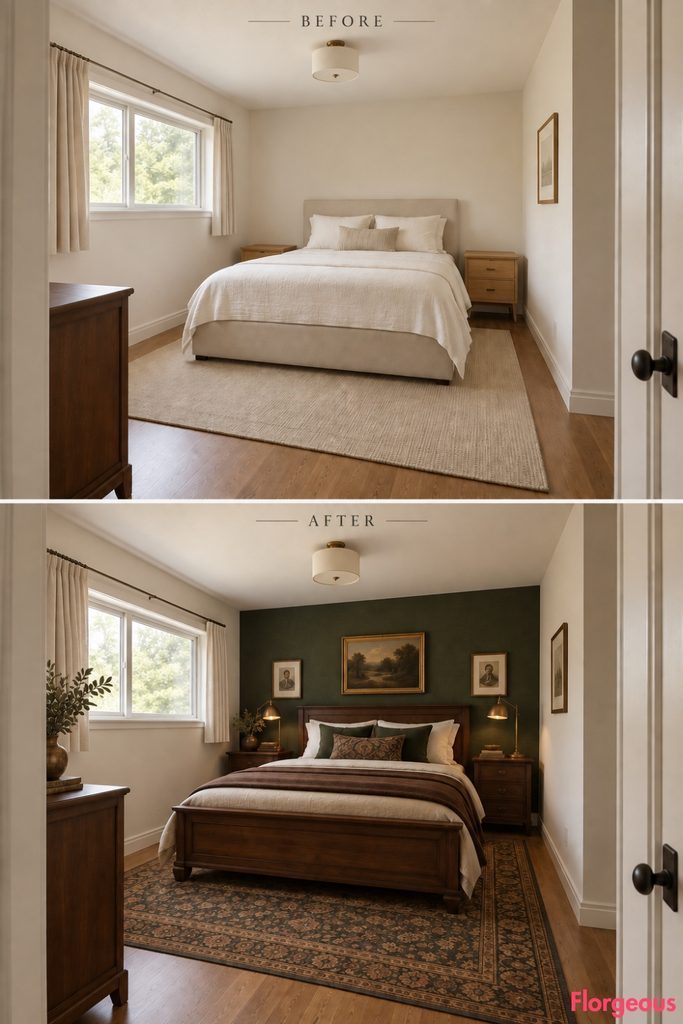
The first makeover borrows its texture from traditional bound volumes rather than conventional wallpaper.
Before: Warm off-white walls surround a basic neutral upholstered bed, cream bedding, two bare light-oak nightstands and almost no decoration.
After: Matte bottle-green bookcloth covers only the existing flat rear wall. A substantial walnut bed sits against it with parchment linen, tobacco wool, dark bedside pedestals and compact aged-brass reading lights.
The woven wall texture absorbs just enough light to make the bed feel enclosed without physically reducing the room.
Designer Tip: Keep the adjacent walls parchment-toned so the green reads as a deliberate focal surface.
2. Center the Room on a Mahogany Bobbin Bed
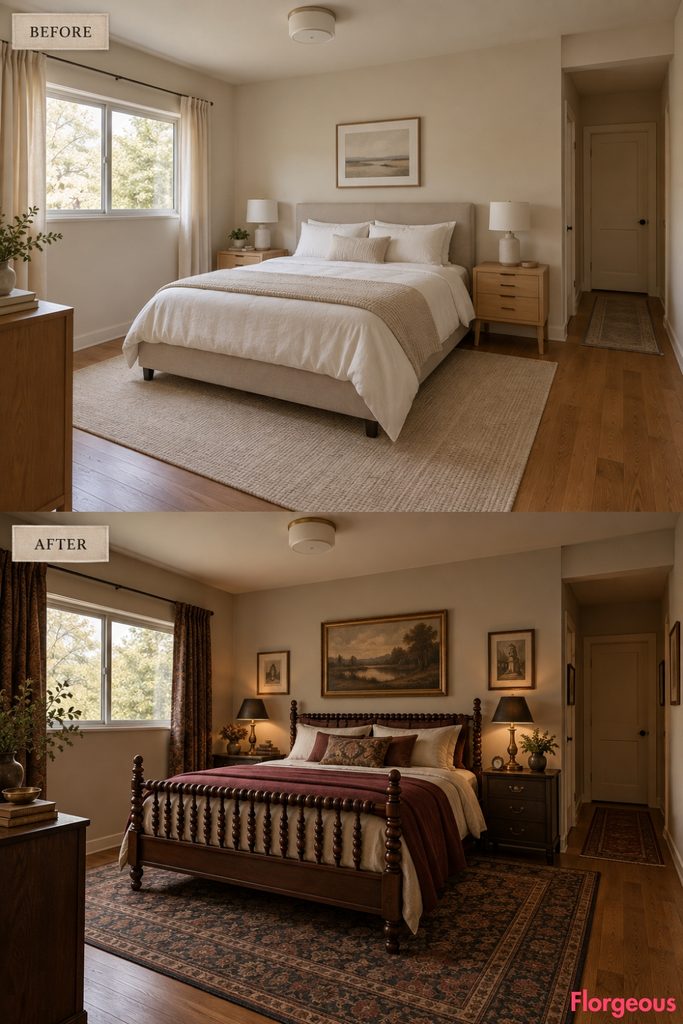
Instead of a dramatic wall treatment, this transformation gives the bed itself a recognizable historical silhouette.
A deep mahogany bobbin bed uses closely spaced turned rails rather than carving or an oversized upholstered headboard.
Before: The neutral upholstered bed feels visually anonymous.
After: The bobbin frame is paired with flax bedding, muted claret wool, a charcoal-brown bedside chest and one shaded bronze lamp on each side. Parchment walls keep the elaborate timber turning from becoming heavy.
Why It Works: Bobbin furniture introduces historical character through craftsmanship rather than theatrical ornament.
3. Tailor the Window With a Parchment Roman Shade
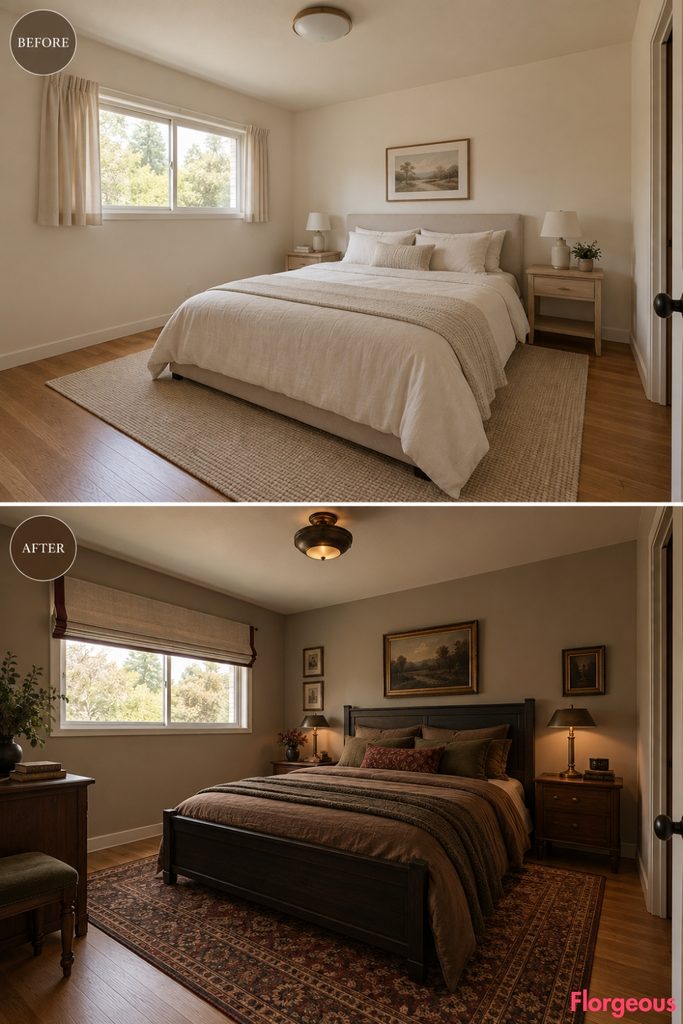
This makeover makes the existing horizontal window feel much more formal without using another set of full curtains or shutters.
Before: Short plain curtains make the window feel temporary.
After: A precisely fitted parchment linen Roman shade sits inside the existing window opening, finished with narrow oxblood edge tape and a slim dark-bronze bottom bar. The shade is raised high enough to leave most glass exposed.
A blackened-oak bed, tobacco linen and walnut nightstands repeat the window’s dark detailing.
Small Space Tip: Keep the Roman shade within the existing opening. Bulky external valances can visually shrink a modest bedroom.
4. Hang Art From Traditional Brass Picture Rods
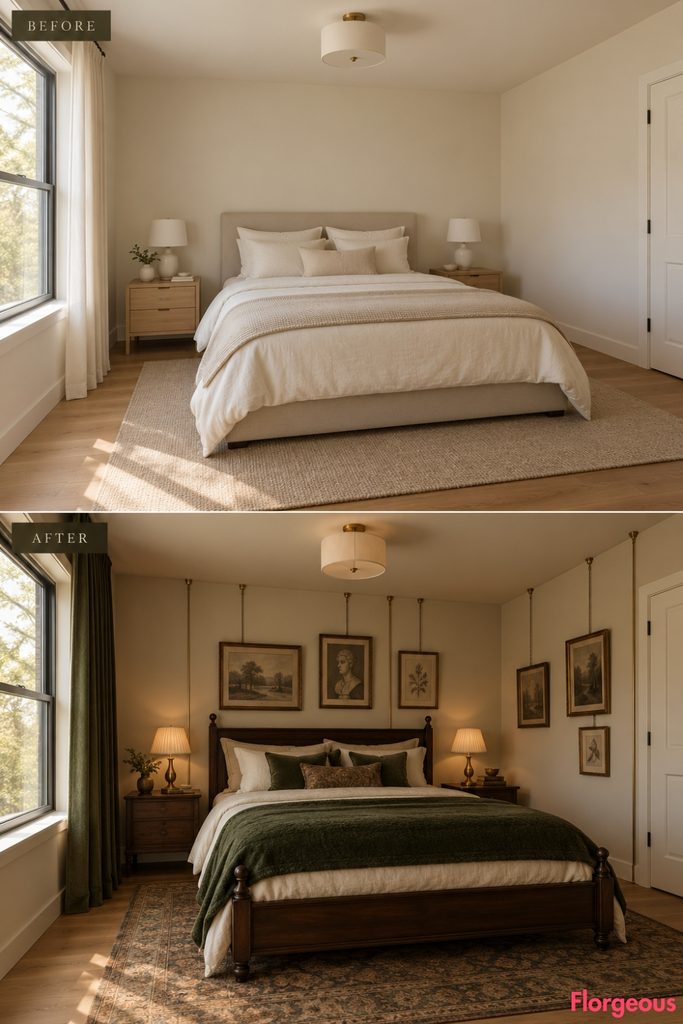
Instead of filling the wall with permanently placed frames, this room uses a formal hanging system.
Before: The plain walls have no visual hierarchy.
After: Slender aged-brass picture rods descend from a narrow existing-height cornice line, carrying a restrained group of sepia drawings and monochrome studies on fine chains. No readable words appear in the artwork.
A dark walnut bed, ivory bedding and forest-green wool make the bedroom feel collected without becoming cluttered.
Style Note: Leave generous gaps between artworks. The hanging mechanism should remain visible.
5. Use a Black Japanned Iron Bed Against Parchment Walls
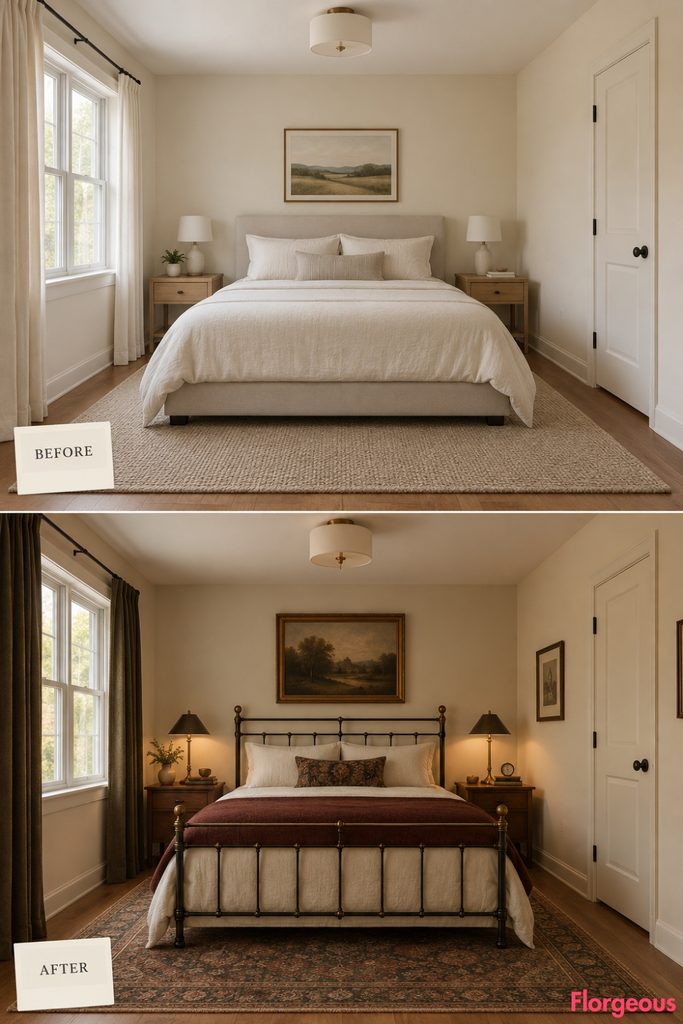
Dark Academia can feel lighter when its darkest object is furniture rather than paint.
The after bedroom uses a black japanned iron bed with restrained vertical rails and small aged-brass junction details.
Parchment walls, oxblood wool and warm walnut bedside tables soften the black frame.
Before: The upholstered bed disappears into the pale room.
After: The crisp dark silhouette gives the room structure while still exposing plenty of wall and floor.
6. Make the True Ceiling Deep Ink Black
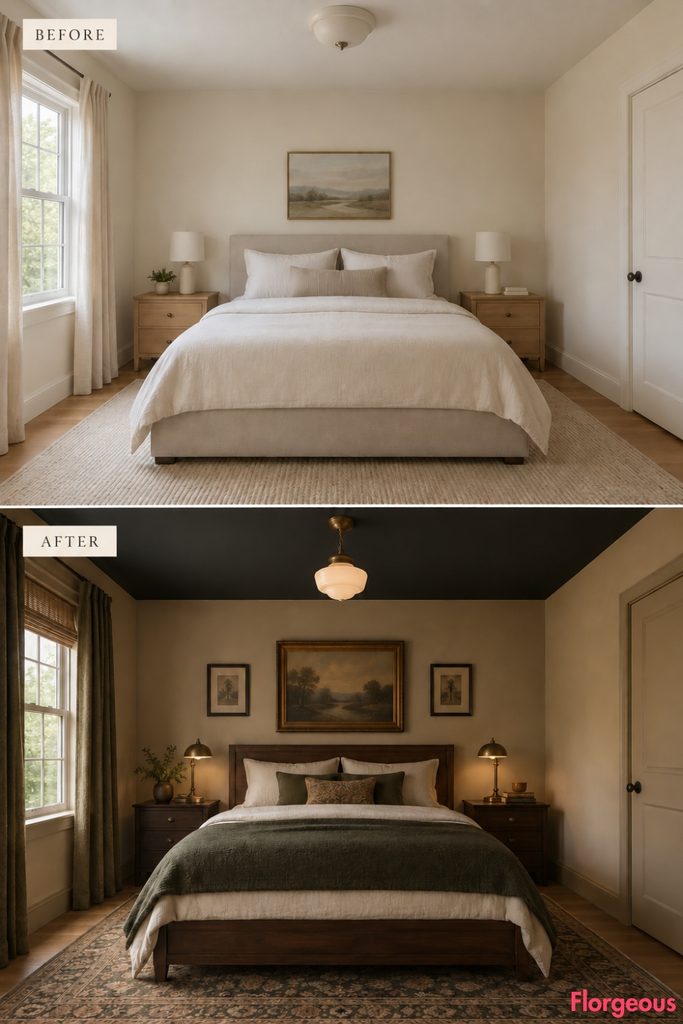
The sixth makeover shifts the visual weight overhead rather than adding furniture.
Before: The plain white ceiling and generic central fitting make the room feel evenly lit and unfinished.
After: The existing flat ceiling is painted a deep ink black while the walls remain warm parchment. A compact opaline schoolhouse pendant sits at the center.
Below it, a walnut bed, cream linen and dark olive wool create a softer counterweight.
Color Story: Keeping the walls pale allows the ceiling to feel enveloping rather than oppressive.
7. Build the Sleeping Area Around Cordovan Leather
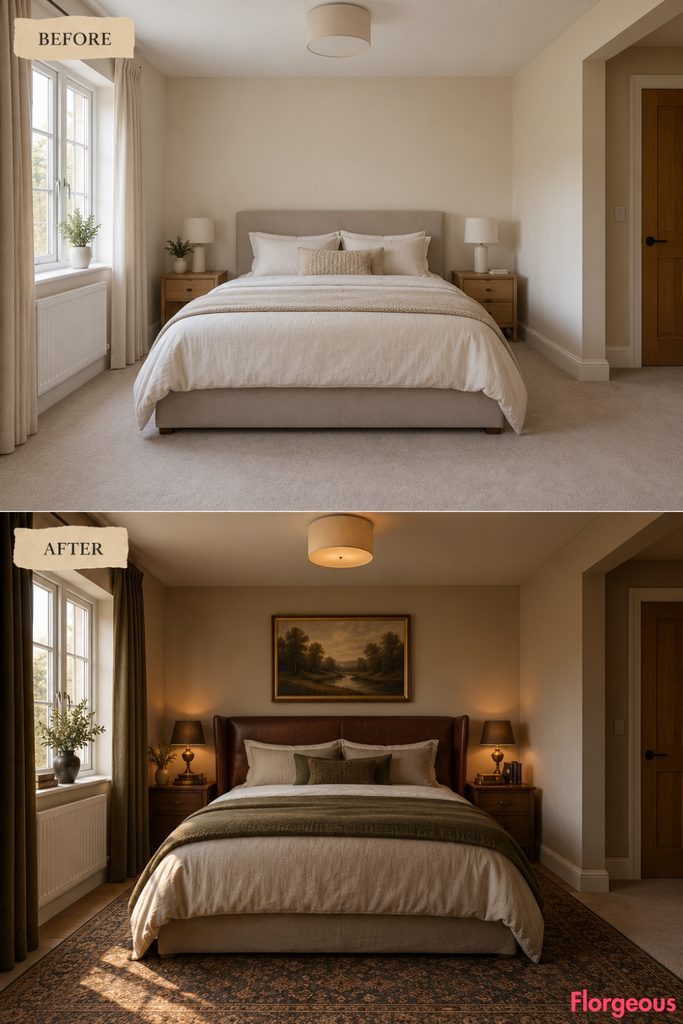
This room uses leather as a warm reading material rather than an ornamental accent.
A broad but low cordovan leather headboard has a matte surface, restrained saddle stitching and short walnut returns that angle slightly toward the sleeper.
Before: The generic upholstered headboard offers little identity.
After: Parchment bedding, olive wool, dark oak and bronze reading lights build around the warm reddish-brown leather.
The finished bedroom feels like a quiet reading room while remaining unmistakably a sleeping space.
8. Add One Green-Baize Writing Surface Beside the Window
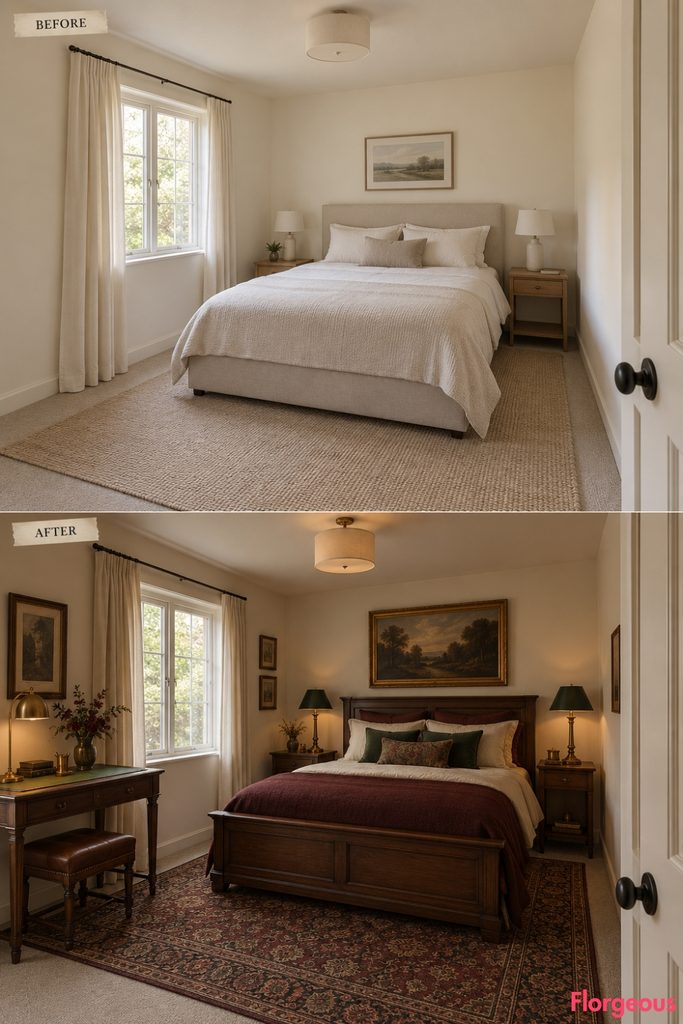
A modest study function gives this version its academic character.
The writing surface is intentionally small: a narrow dark-walnut shelf against the solid portion of wall beside the horizontal window, topped with traditional deep-green baize.
Before: That stretch of wall contributes nothing to the bedroom.
After: One compact tobacco-leather stool stores completely beneath the writing shelf. The bed remains the dominant element with walnut timber, parchment bedding and claret wool.
9. Use a Low Mahogany Map Chest Beneath the Window
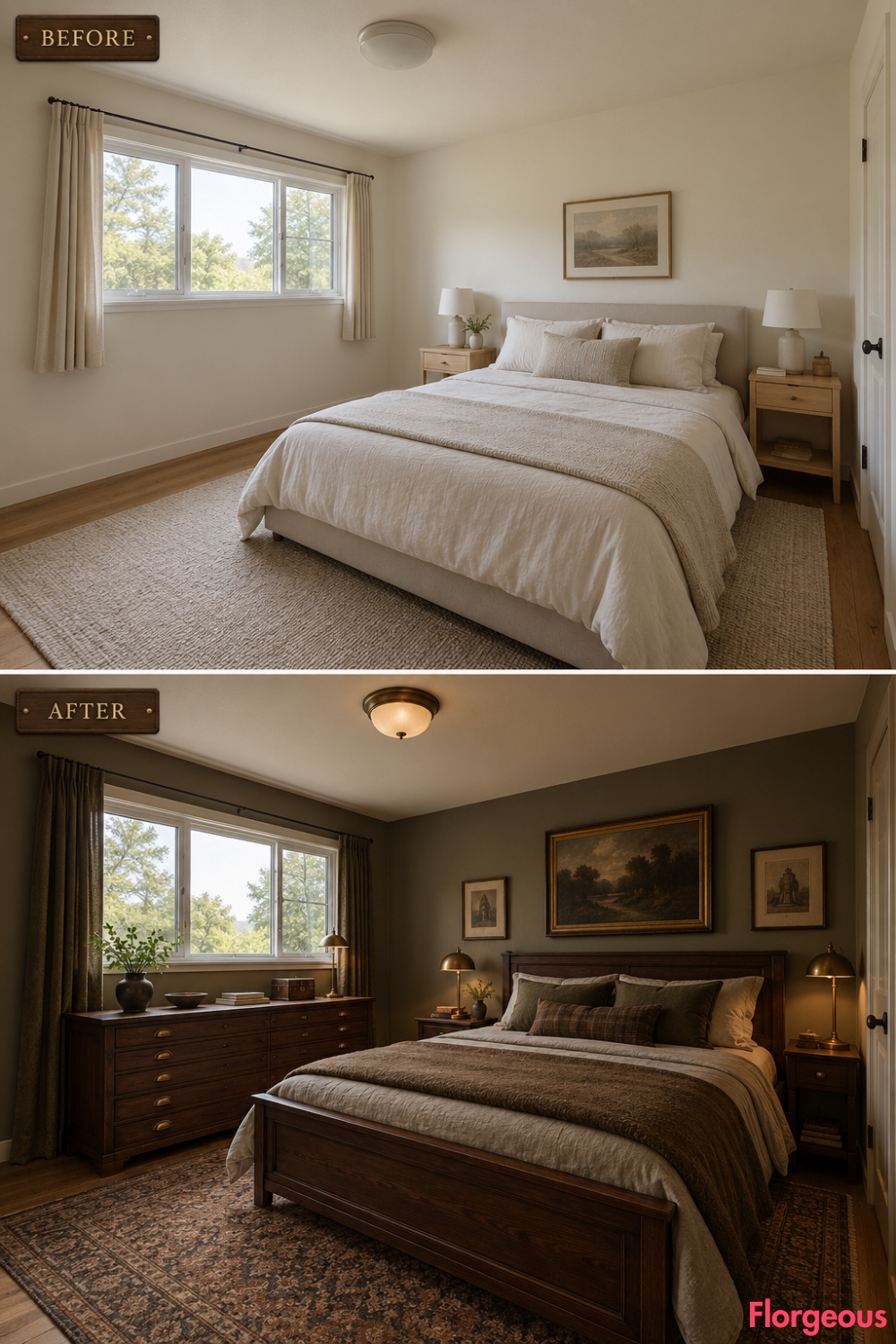
This is a storage-led makeover, but it avoids another wardrobe or tall cabinet.
Before: The space beneath the horizontal window remains unused.
After: A broad, low mahogany map-chest-inspired dresser fits below the sill. Wide shallow drawer fronts create a scholarly rhythm, while the actual drawer interiors are sized for folded clothes and bedroom linens.
A low dark-oak bed, stone linen and one tobacco blanket complete the palette.
Practical Detail: The top of the chest stays below the window sill and every drawer can open without touching the bed.
10. Turn the Bed Into a Forest-Green Upholstered Alcove Without Changing the Wall
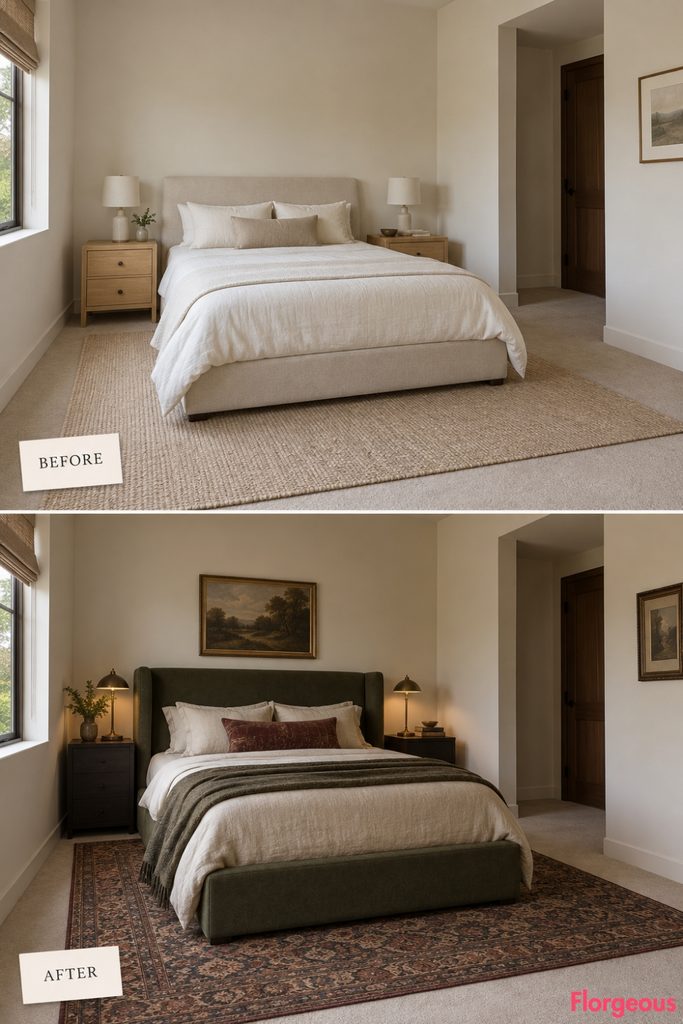
This makeover creates a cocooning Dark Academia sleeping zone without adding built-ins, niches or recessed architecture.
Before: The same plain bedroom has a basic neutral bed centered against the flat rear wall, cream bedding and no strong focal point.
After: A substantial freestanding bed is upholstered in deep forest-green wool across the headboard and short side wings, creating a compact reading alcove around the mattress while remaining clearly separate from the wall. The bed is paired with parchment linen, one muted oxblood lumbar cushion, blackened-oak bedside pedestals and small shaded bronze reading lamps.
The walls stay warm parchment and completely flat, which makes the deep green bed read as furniture rather than architecture.
Why It Works: The Dark Academia mood comes from the dense wool, scholarly green, dark timber and warm bronze lighting, but the room still reads immediately as a bedroom rather than a study or library.
11. Add a Raised Lincrusta Frieze Above the Bed Zone
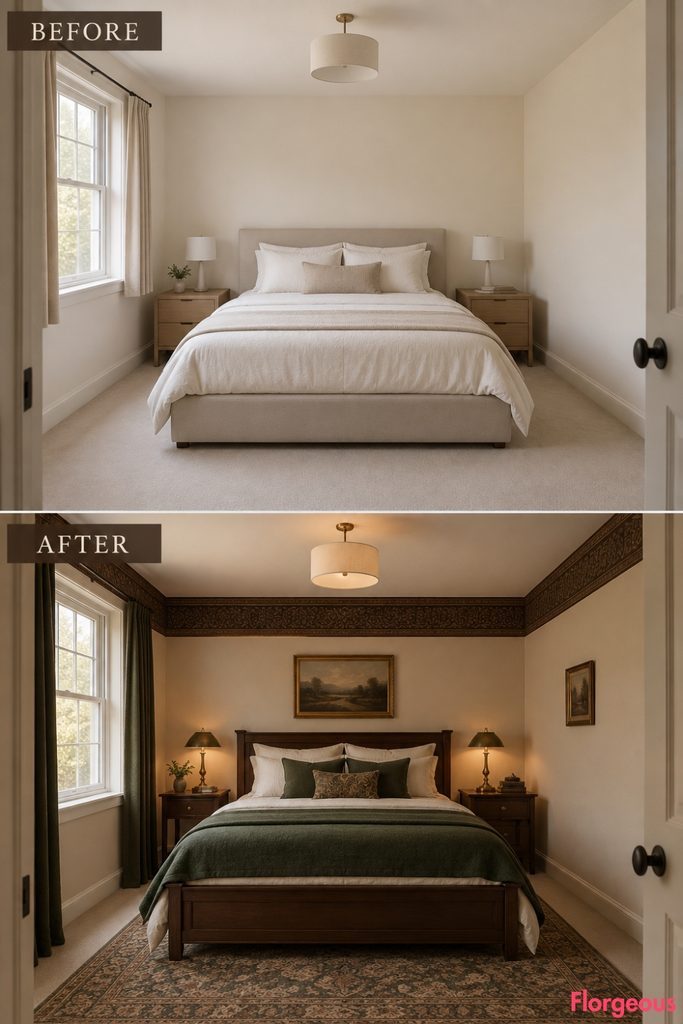
This idea brings ornament into the room without relying on carved furniture or traditional wall paneling.
A narrow band of embossed Lincrusta-style wall covering runs around the upper portion of the room, finished in deep tobacco brown. Below it, the walls remain parchment.
The bed is simple dark oak with ivory linen and forest-green wool.
Why It Works: Keeping the embossed pattern high on the wall gives the room historic texture without overwhelming the sleeping area.
12. Create a Calm Art-History Wall With One Continuous Picture Ledge
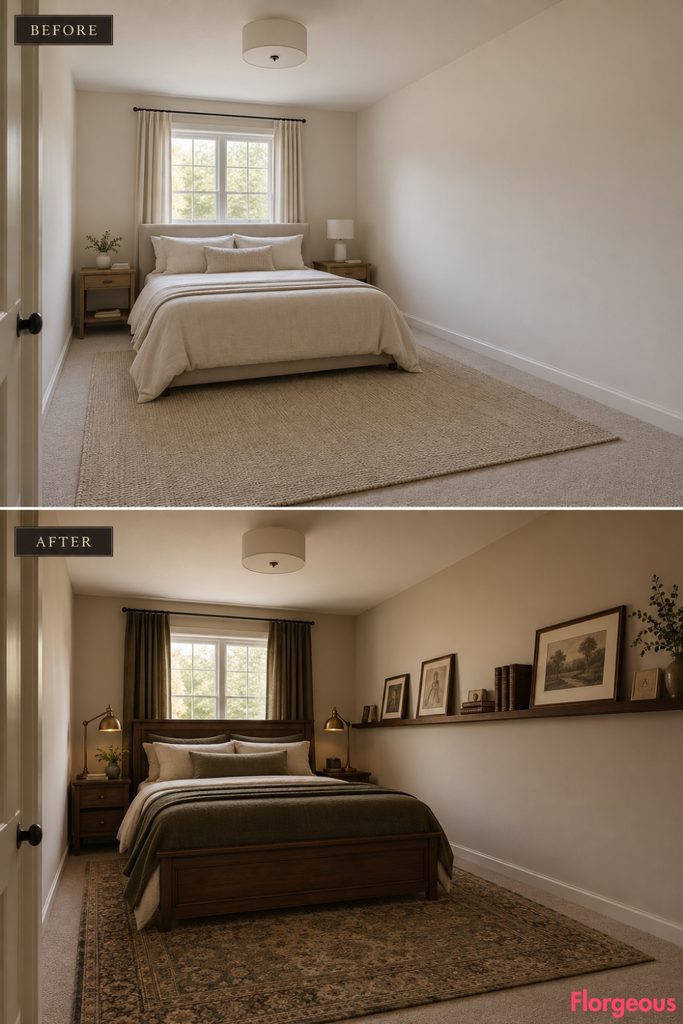
This makeover uses art differently from the hanging-rod concept.
A single long dark-walnut ledge runs along the solid right wall at approximately shoulder height. Only a few framed monochrome studies lean against the wall, mixed with two or three closed books whose covers contain no readable text.
Before: The side wall is completely empty.
After: A deep-brown timber bed, stone linen, olive wool and low bronze lamps tie the display back to the sleeping zone.
13. Ground the Entire Bedroom With a Claret Wool Room Rug
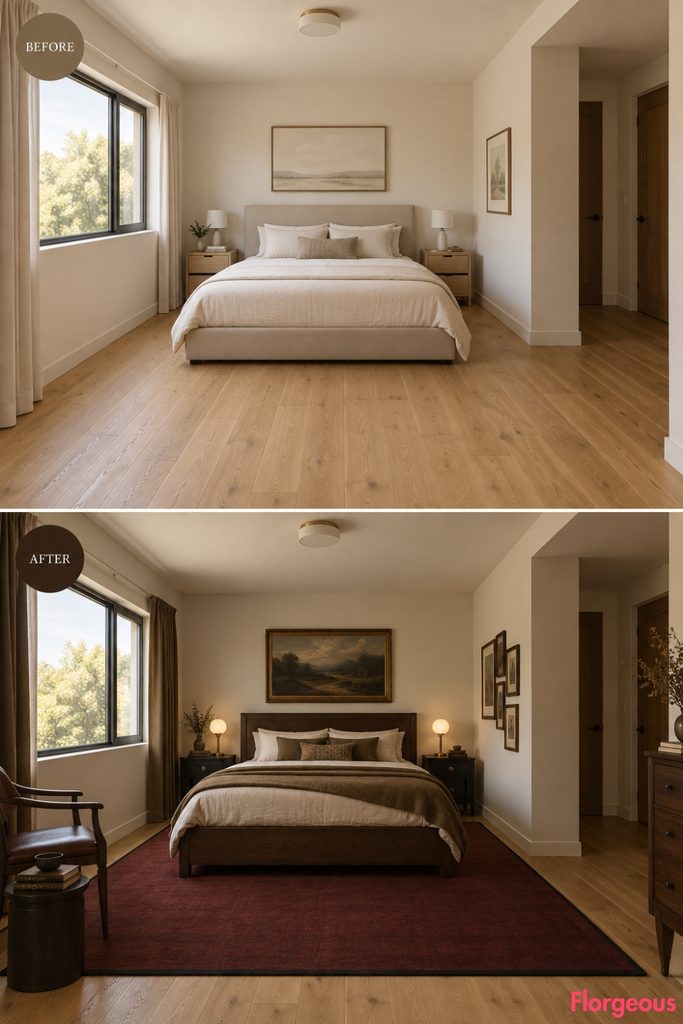
This transformation puts almost all of its visual weight at floor level, creating a noticeably different Dark Academia Bedroom without another feature wall, statement headboard or storage unit.
Before: The natural-oak floor runs continuously through the plain bedroom, leaving the neutral bed visually disconnected from the room around it.
After: A very large room-size wool rug in deep muted claret extends beneath the bed and most of the usable bedroom area, stopping far enough from the walls to leave a deliberate border of the original oak visible. A narrow woven black edge gives the rug a tailored, library-like finish.
Above it, the room stays controlled: a simple dark-walnut bed, parchment linen, one tobacco wool blanket, blackened-oak bedside pedestals and small opaline lamps with aged-brass stems.
The broad field of claret completely changes how the room feels without covering the existing floor permanently or introducing another patterned vintage rug.
Why It Works: Dark Academia often relies on deep color at eye level. Moving that color to the floor creates the same enveloping mood while keeping the walls and bed composition unusually quiet.
Practical Tip: Leave enough exposed oak at the doorway and around the perimeter that the rug reads as a large removable furnishing rather than wall-to-wall carpet.
14. Frame the Entry With an Olive-Wool Portière
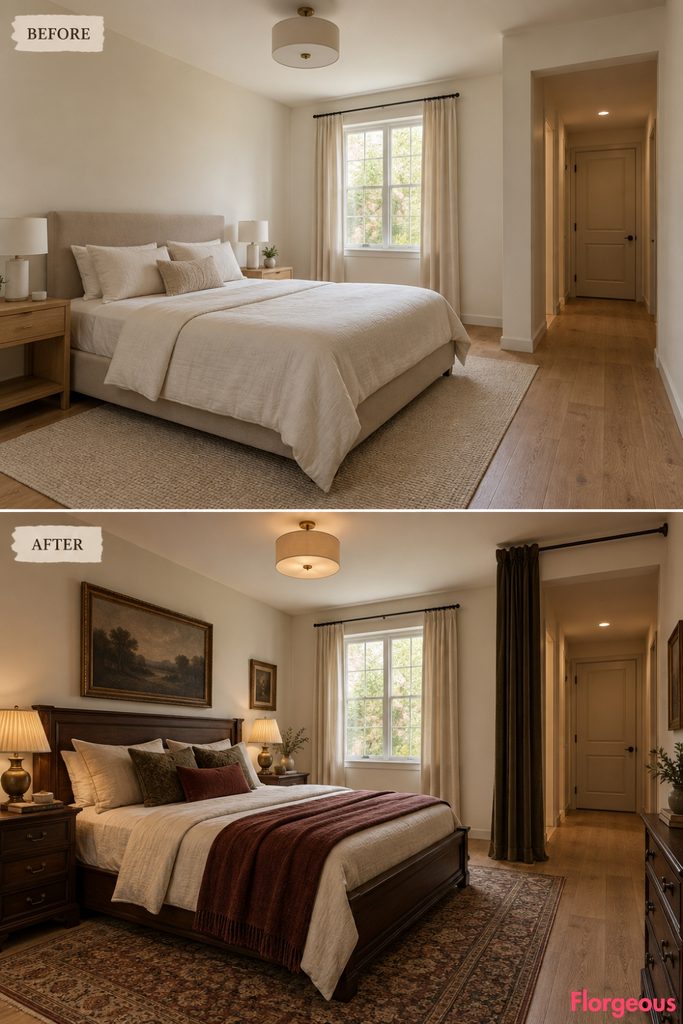
Instead of concentrating another treatment around the bed or window, this makeover shifts the atmospheric moment to the entrance of the bedroom.
Before: From inside the room, the front-right dog-leg vestibule feels plain and architecturally disconnected from the sleeping area.
After: A heavy olive-brown wool portière hangs on a dark-bronze swing rod at the bedroom side of the vestibule opening. During the day it folds completely against one solid wall, leaving the doorway fully open. When drawn, it gives the room the cocooned quality of an old private study or university room.
The sleeping zone remains deliberately simple with a broad walnut bed, parchment bedding, a restrained oxblood throw, dark timber bedside furniture and softly shaded brass lamps.
A single textile treatment at the threshold changes the room’s atmosphere without adding another feature wall, curtain treatment at the window or architectural enclosure around the bed.
Style Note: Choose dense plain wool rather than velvet or decorative brocade. That keeps the portière scholarly and restrained rather than theatrical.
15. Finish With a Bronze Reading-Light Rail
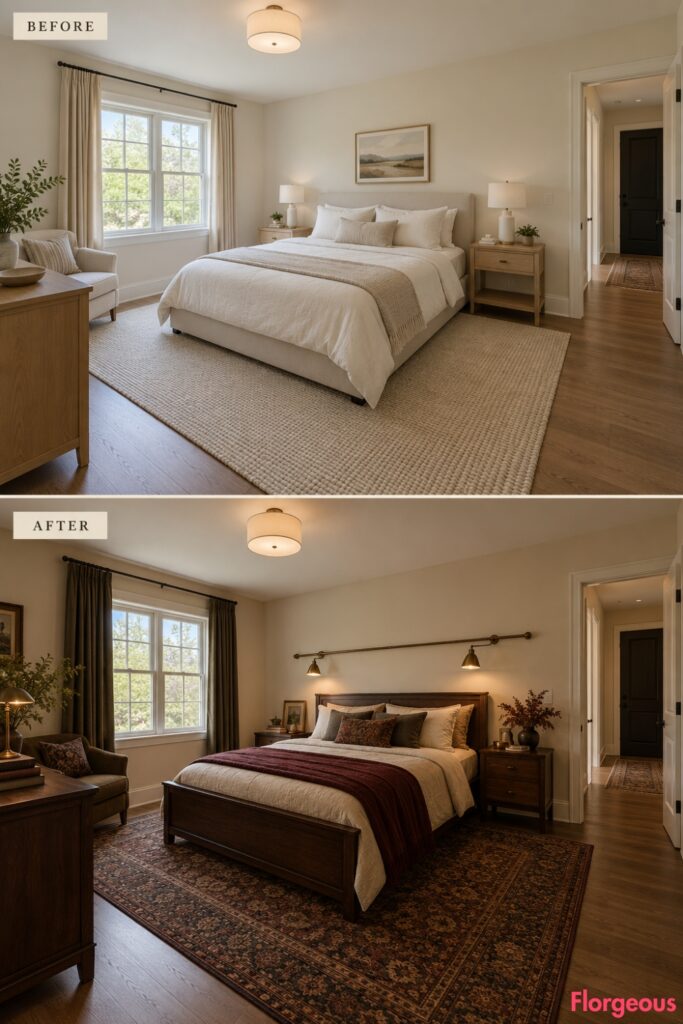
The last makeover allows lighting to define the bedroom.
A slim aged-bronze rail is surface-mounted horizontally across the flat bed wall, clearly visible as an applied element rather than a recess. Two small adjustable reading lamps slide along the rail so their positions can change.
Before: One generic ceiling fitting provides flat illumination.
After: A dark walnut bed, parchment linen, oxblood wool and the warm movable reading lights create an intimate scholarly atmosphere after sunset.
How to Choose the Right Dark Academia Bedroom Direction
The key is to make the room feel academically influenced without turning it into a stage set. The bed should still read as the primary piece of furniture, the route from the entry to the window should remain obvious, and practical bedroom storage should still work.
Start with one dominant move. Bottle-green bookcloth creates a different room from a bobbin bed, an ink-black ceiling, a map chest or a brass lighting rail. Trying to combine all five usually weakens the effect.
Then repeat two or three supporting materials. Walnut, parchment, tobacco wool, oxblood, forest green and aged bronze work particularly well because they create depth without requiring piles of decorative objects.
For a successful Dark Academia Bedroom, leave some surfaces quiet. The contrast between an atmospheric focal point and a simpler surrounding room is what makes the richer material choices feel intentional rather than cluttered.