A bedroom can have pleasant proportions, warm daylight, and perfectly acceptable furniture yet still feel like the decorating stopped halfway. That is exactly where this makeover series begins.
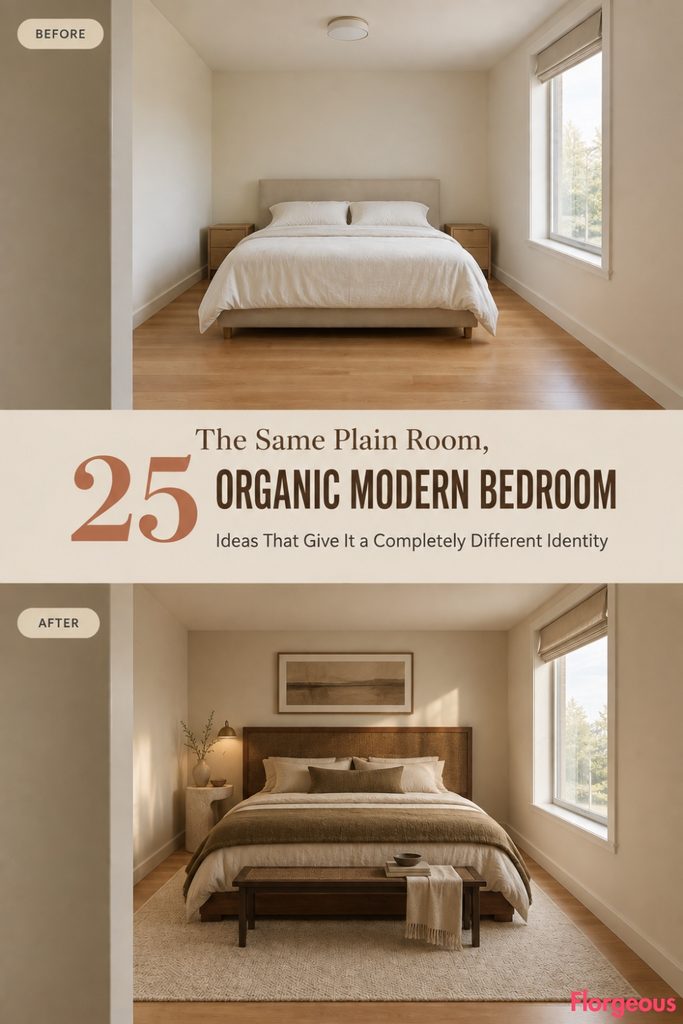
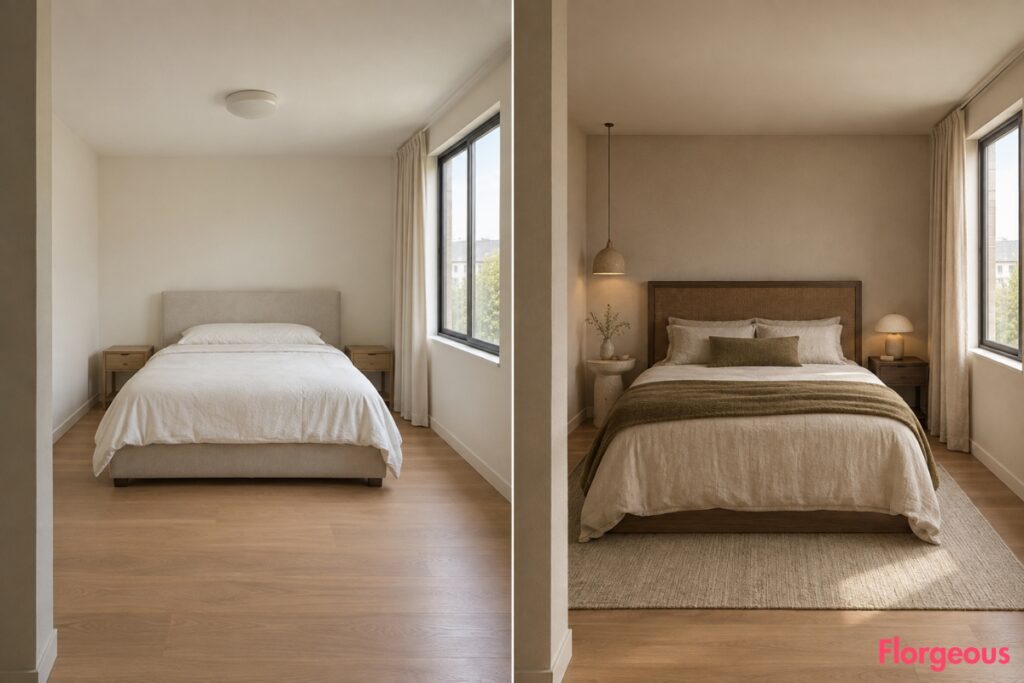
The starting room is intentionally simple: warm off-white walls, continuous warm oak flooring, a basic neutral upholstered bed against the solid rear wall, two bare nightstands, uncomplicated cream bedding, a compact ceiling light, and one tall window on the right. An offset entry vestibule creates the wall edge you see in the foreground, adding depth without adding decorative architecture.
The room shell never changes. Instead, these Organic Modern Bedroom ideas explore what happens when material, proportion, furniture design, texture, lighting, and color become more intentional.
The camera changes from one makeover to another so the gallery never feels repetitive. Within each individual BEFORE and AFTER pair, however, the camera position, lens, framing, architecture, floor, window, doorway, ceiling, and natural light direction remain exactly the same.
1. Frame the Bed With Handwoven Horsehair
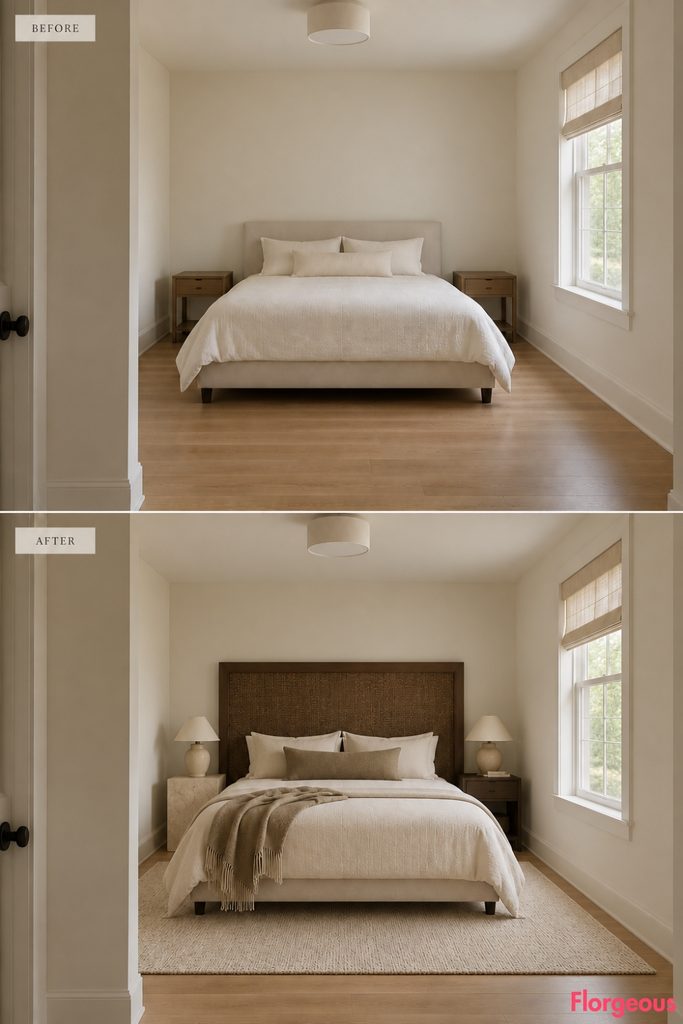
A broad dark-oak headboard frame holds a tightly woven horsehair panel in tobacco brown. The material brings subtle movement and depth without pattern, tufting, or decorative carving.
Before: A basic neutral upholstered bed sits against the plain rear wall with two empty nightstands, simple cream bedding, and no meaningful focal point.
After: The dark-oak and horsehair headboard becomes the room’s anchor, paired with flax bedding, one pale honed-stone bedside table, one smaller dark-timber table, and an oatmeal wool rug.
Designer Tip: Keep the surrounding wall quiet. Horsehair looks richest when the weave has space around it.
2. Turn Storage Into an Amber Mica Cabinet
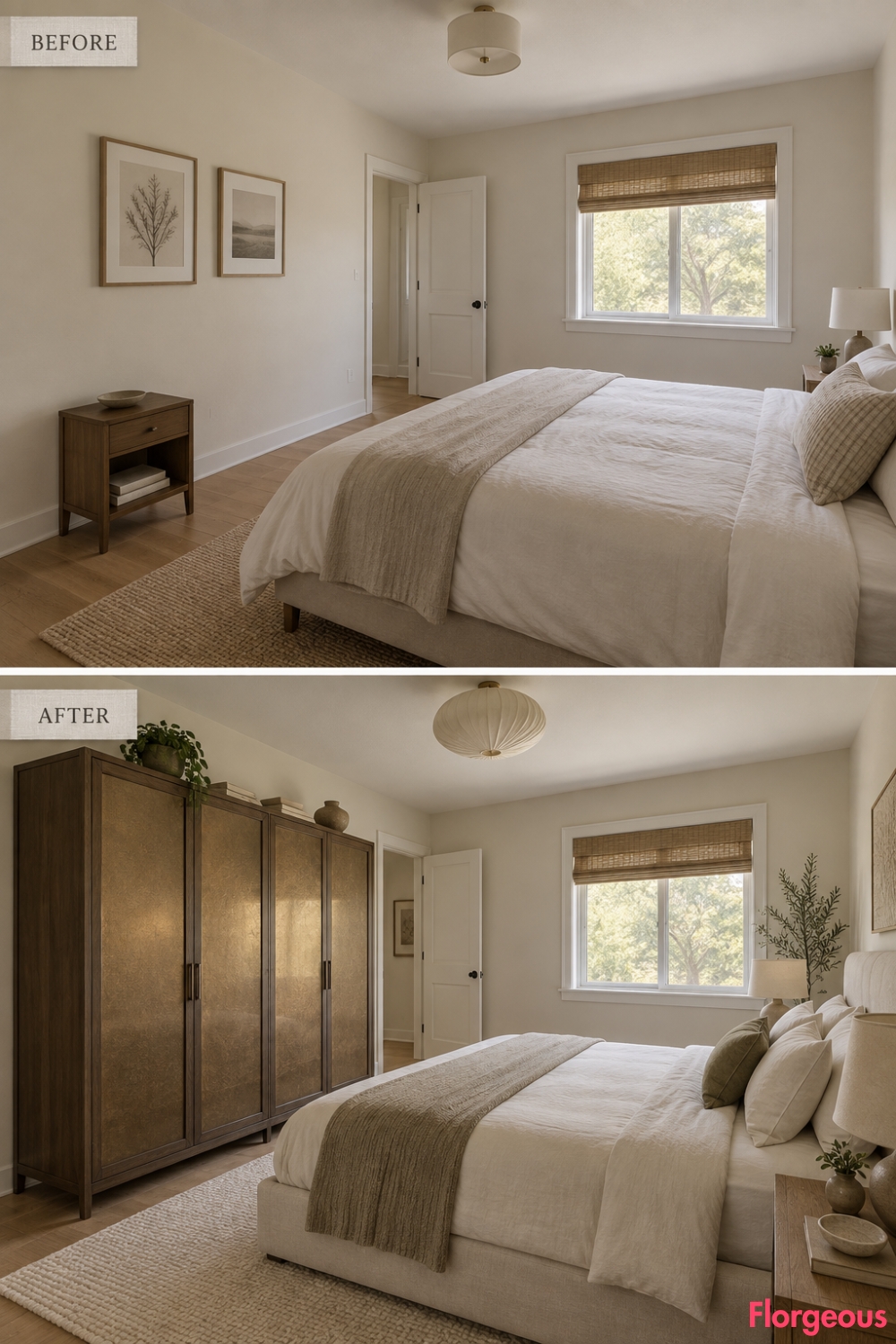
Instead of another oak wardrobe, this version introduces a softly translucent natural material.
Before: The long wall is mostly empty, leaving the basic bed and two nightstands to carry the entire room.
After: A full-depth smoked-oak wardrobe with inset amber mica panels occupies the long wall. The mica catches daylight softly while keeping the cabinet calm and opaque enough for bedroom storage.
Simple bone bedding and an undyed wool rug stop the unusual material from feeling experimental.
3. Introduce a Pearwood Tambour Credenza
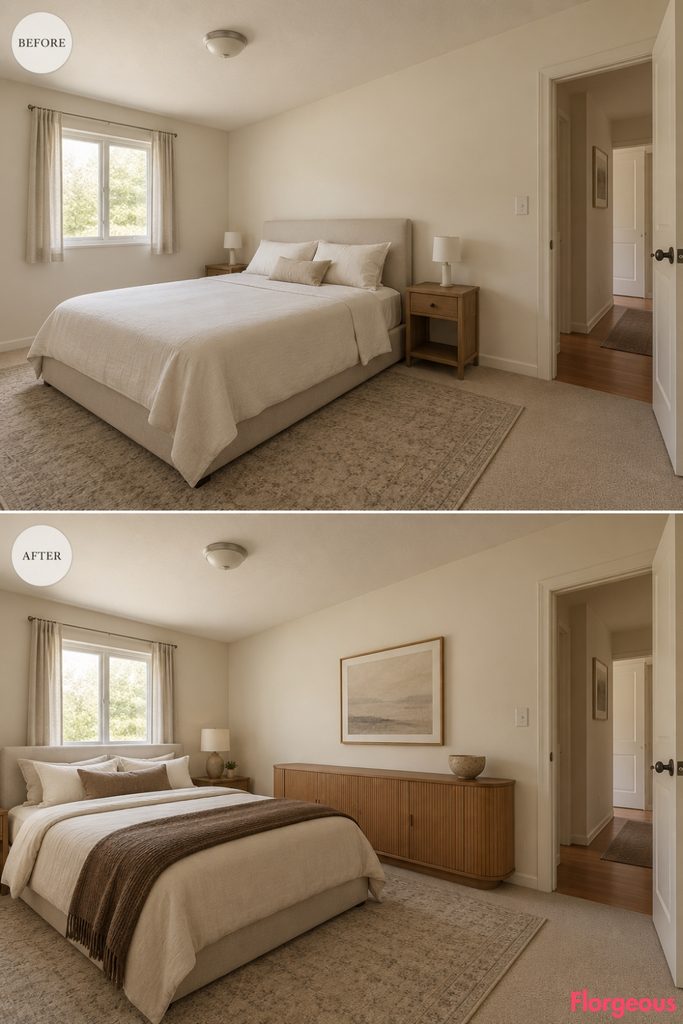
A storage piece can add rhythm without turning the whole wall into paneling.
Before: The side wall remains blank and the room feels lightly furnished rather than fully considered.
After: A long pearwood credenza introduces warm grain and tightly fitted tambour doors. Its rounded outer corners soften the rectangular bedroom while its sliding doors avoid narrowing the walkway.
Why it works: The furniture provides texture and function at the same time.
4. Define the Sleeping Chamber With Natural Sisal
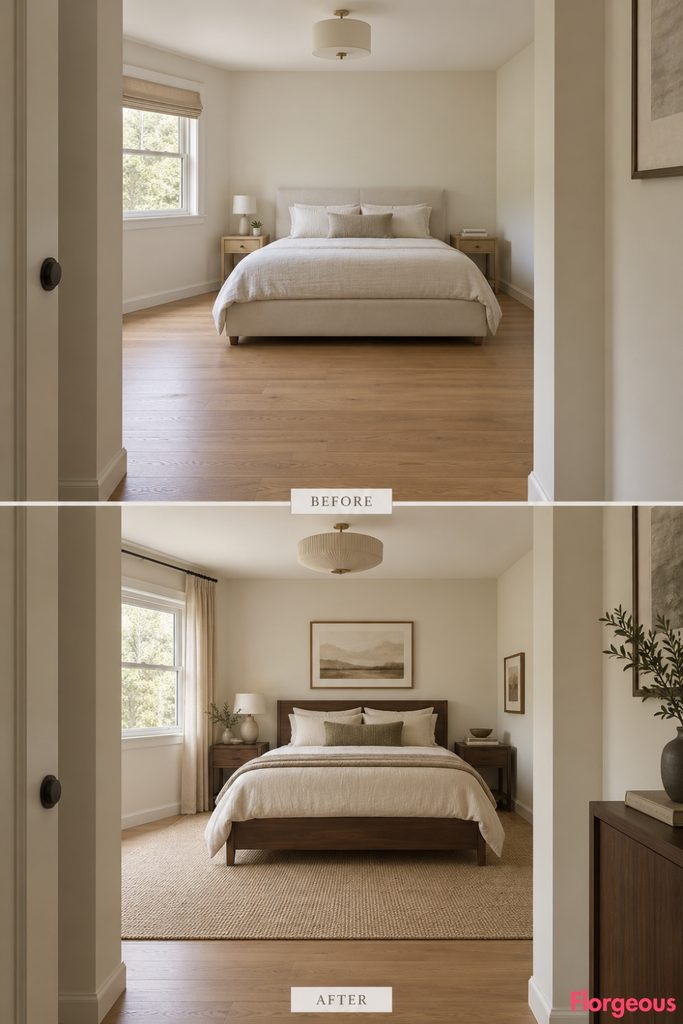
This makeover uses the unusual vestibule layout rather than covering it up.
Before: Warm oak flooring runs continuously through the vestibule and sleeping chamber, making the two areas visually merge.
After: The vestibule keeps its original oak while a precisely fitted natural sisal floor field begins where the sleeping chamber opens up. Dark walnut furniture prevents the sisal from reading coastal.
The transition creates zoning without a raised floor, border, or architectural change.
5. Shift the Ceiling Focus With a Raw-Silk Oval Lantern
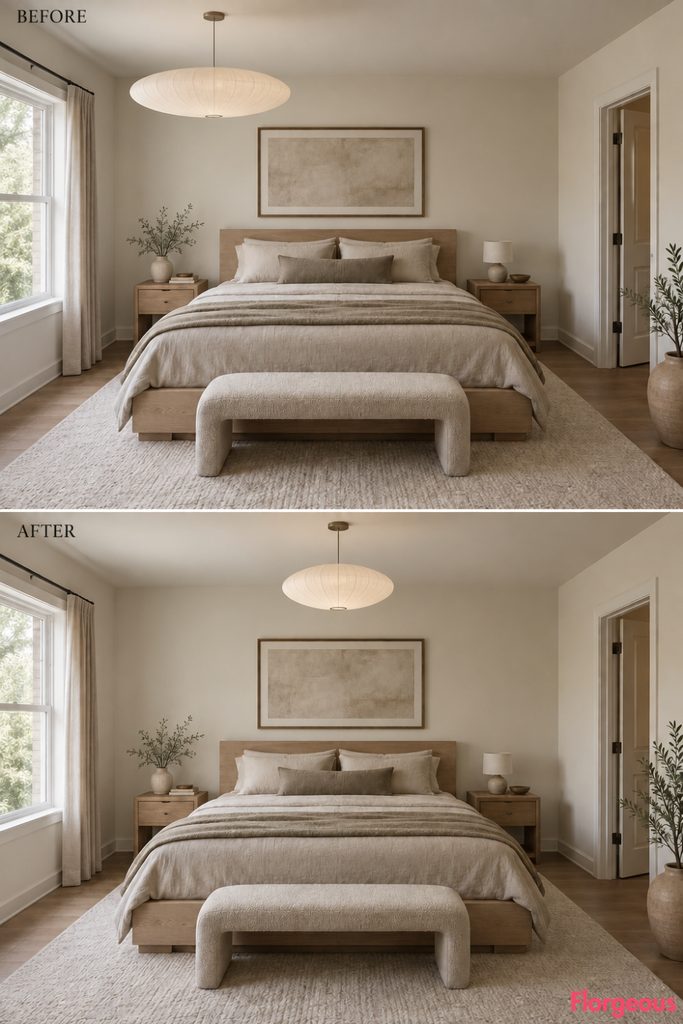
The bed does not have to be the only feature in the room.
Before: A compact generic ceiling light sits in the middle of an otherwise plain ceiling.
After: A flattened oval raw-silk lantern hangs slightly toward the window side, working with the naturally asymmetric entry. Below it, the bedroom stays quiet with a pale oak bed and mushroom textiles.
Try this: Offset a ceiling fixture only when its position still feels logical in relation to the furniture below.
6. Anchor a Dressing Mirror in Soapstone
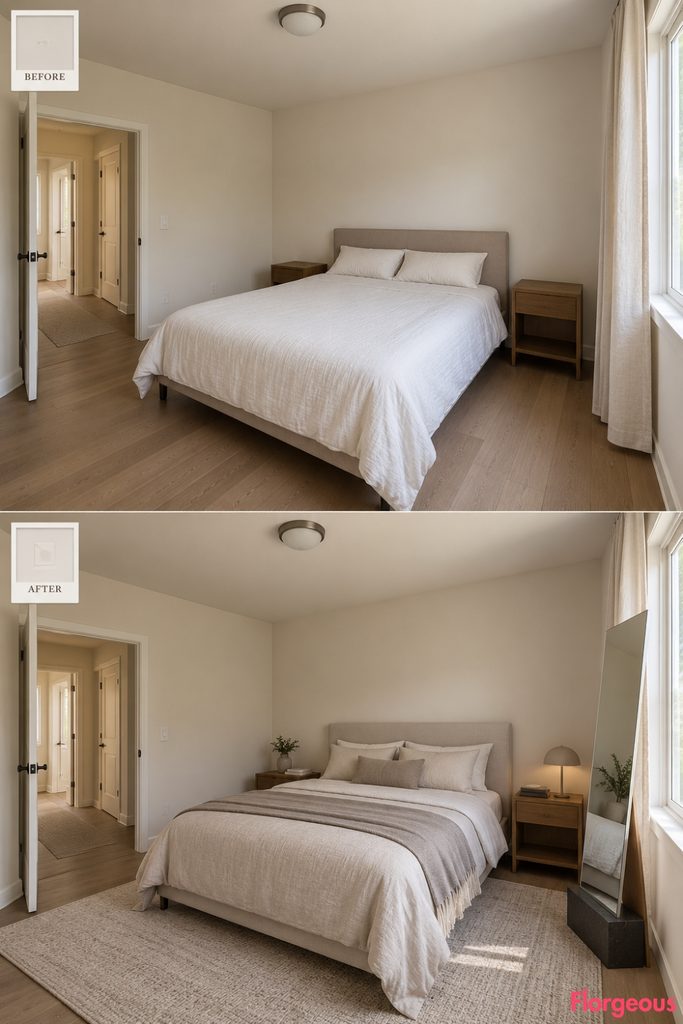
This concept creates a dressing area without adding another desk.
Before: One wall near the vestibule has no real function and remains mostly empty.
After: A tall frameless mirror stands securely in a broad honed-soapstone plinth with a discreet pale-oak brace behind it. The plinth is deep enough for a small jewelry tray but not large enough to become cluttered.
The result feels like furniture rather than wall decor.
7. Soften an Oak Tallboy With Vellum Drawer Fronts
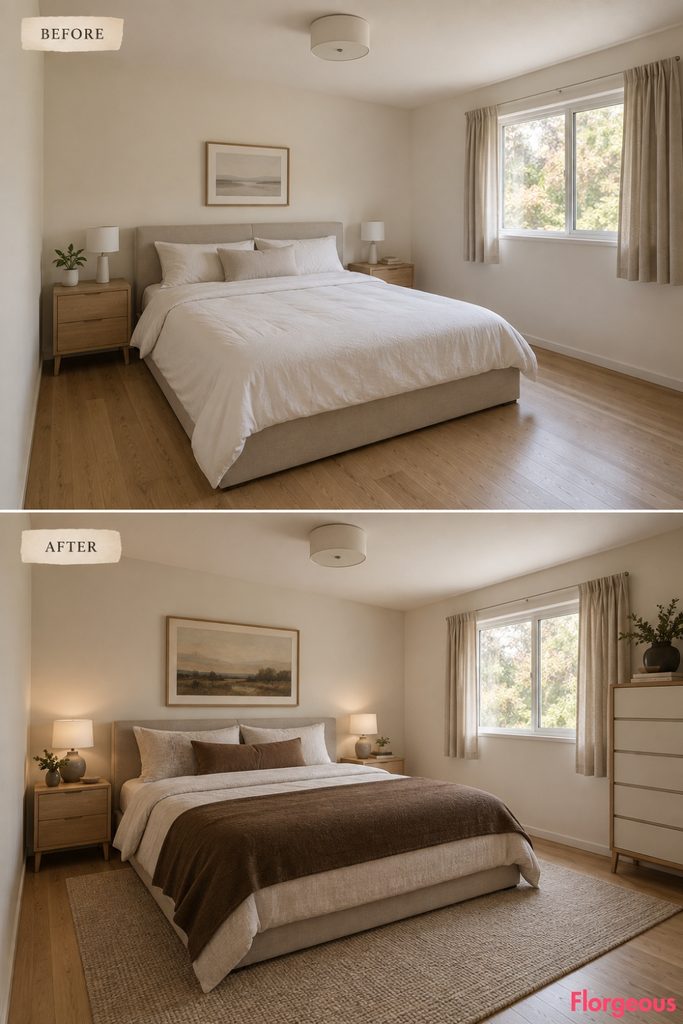
Natural materials can be subtle rather than obviously rustic.
Before: The room has almost no closed storage and relies on the basic bedside pieces.
After: A full-depth oak tallboy uses smooth warm-ivory vellum across its broad drawer faces. Thin timber borders prevent the surface from becoming visually flat.
A tobacco wool blanket adds a darker note without introducing another competing material.
8. Replace Matching Nightstands With Tufa Pedestals
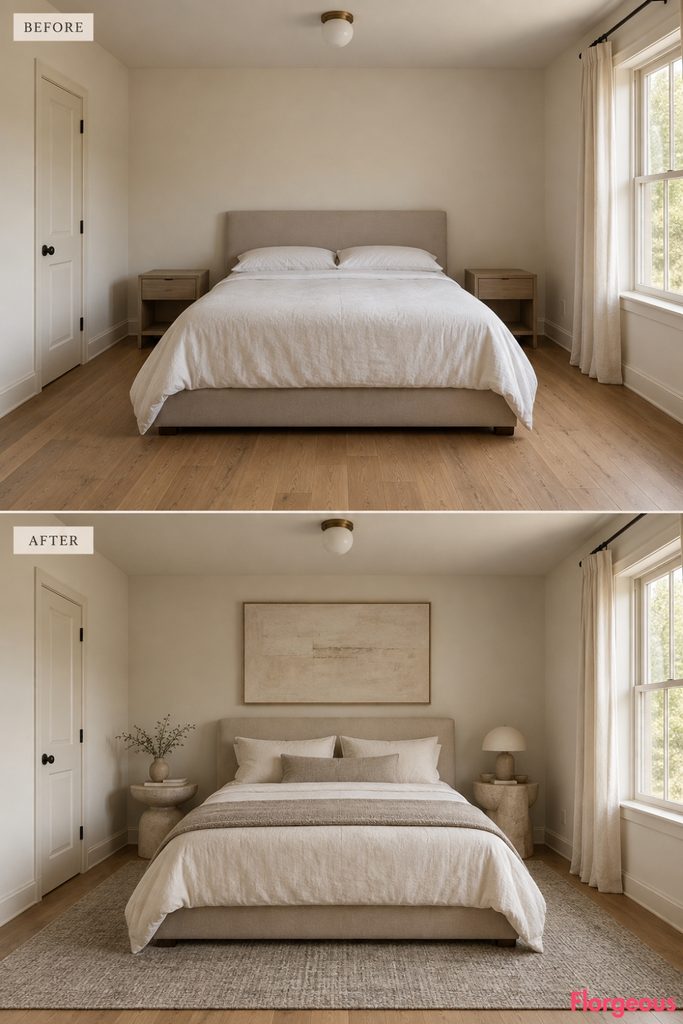
Stone can feel much softer than a polished rectangular block.
Before: Two matching bare nightstands create a predictable symmetrical bed wall.
After: Two different tufa-stone pedestals sit beside the bed, each with a hand-finished rounded profile and naturally porous texture. One is slightly taller and narrower than the other.
A simple flax bed lets the natural stone remain the focus.
9. Let Moss-Brown Mohair Carry the Color
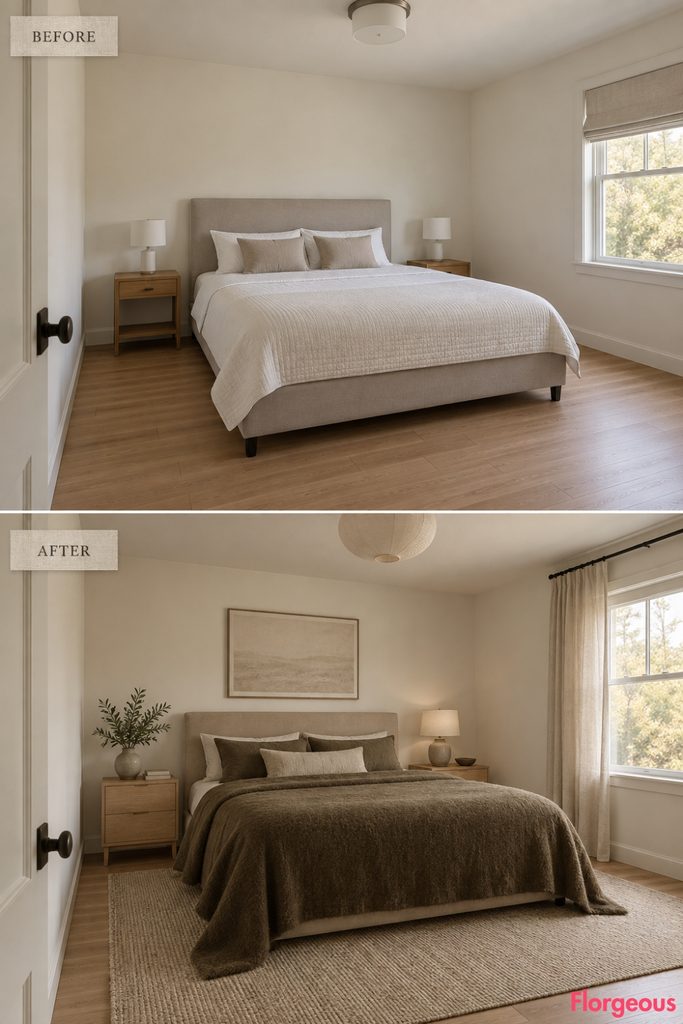
Organic modern does not have to mean an entirely pale room.
Before: Cream bedding blends almost completely into the warm neutral walls.
After: An oversized brushed mohair bedspread in a deep moss-brown covers most of the low bed. The changing nap creates subtle highlights and shadow without a printed pattern.
Pale oak furniture and a quiet rug allow that one color field to dominate.
Color Story: A brownish olive feels more grounded than a bright botanical green.
10. Make the Existing Door Part of the Palette
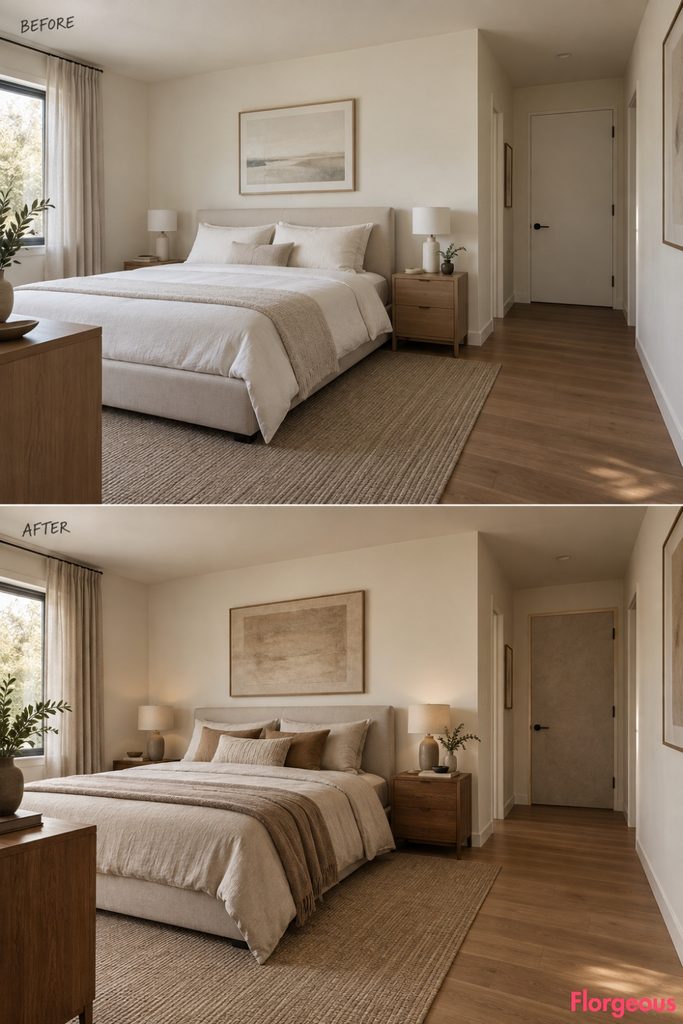
Sometimes the most effective change is already in the room.
Before: The standard painted entry door reads as a purely functional surface.
After: The exact same door leaf is wrapped in smooth mushroom suede and finished with a narrow natural-ash edge. Its original size, swing, handle, hinges, and position remain untouched.
From the bed, the vestibule now feels connected to the material palette.
11. Give the Walls a Deep Oak Shadow Base
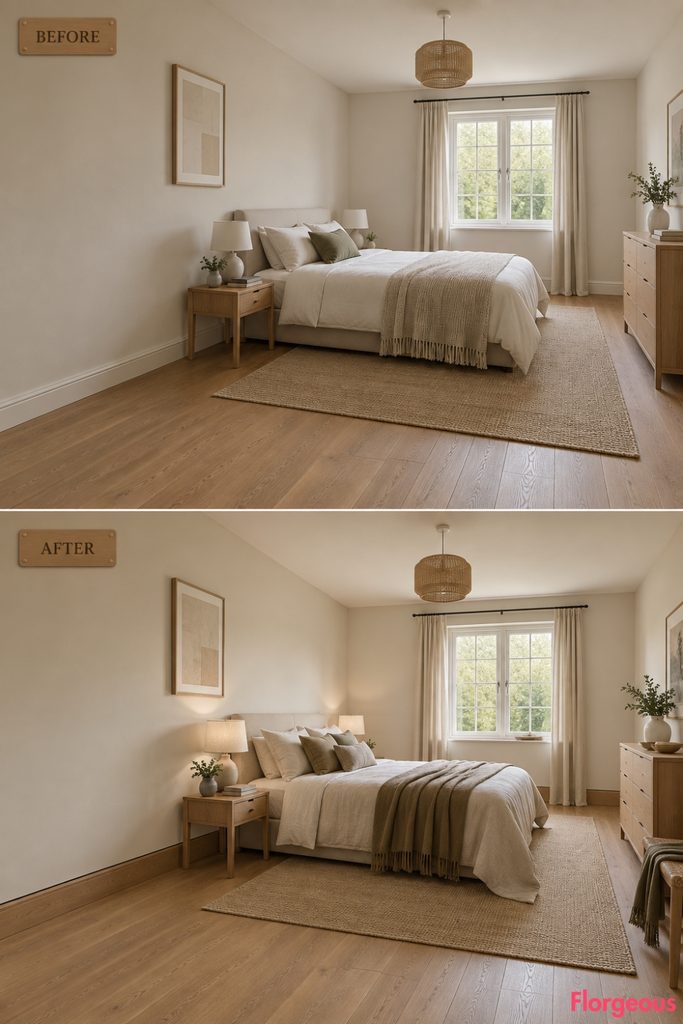
This idea changes the architecture visually without rebuilding it.
Before: Ordinary light-colored baseboards disappear against the warm neutral walls.
After: A deeper surface-mounted oak skirting runs around the room with a narrow shadow gap immediately above it. The horizontal timber line visually connects the oak floor to the furniture.
Why it works: Small finish details can make a basic shell look intentionally designed.
12. Add One Black Lava-Stone Floor Lamp
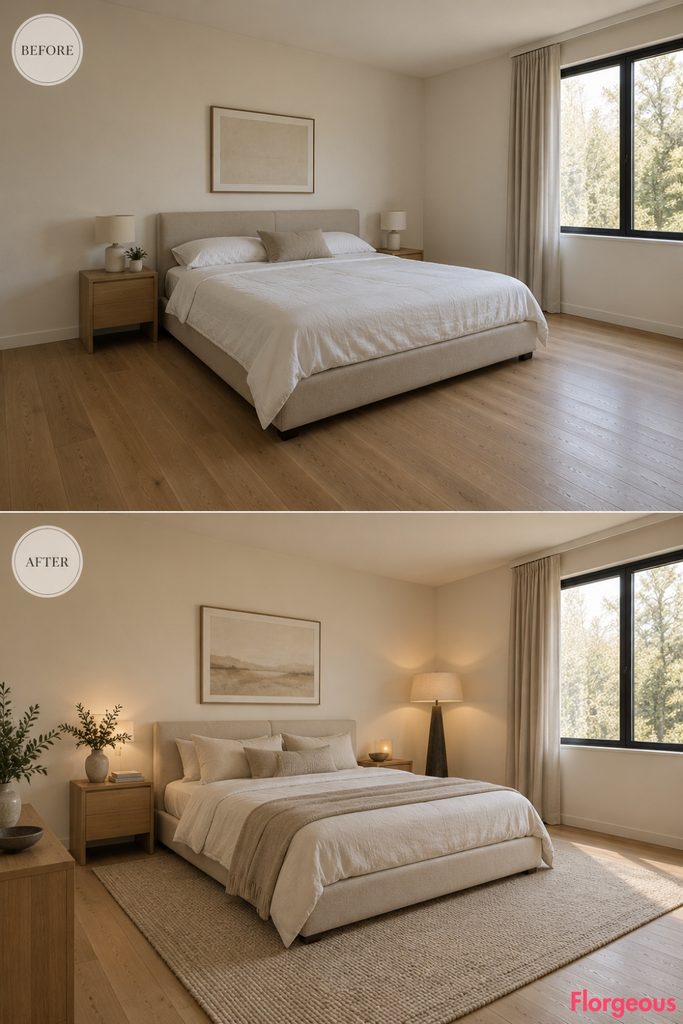
A single dark natural element can stop a pale room from feeling washed out.
Before: The window side contains no real focal point beyond the glazing itself.
After: A tall lamp with a slender porous black lava-stone base and broad flax shade stands near the window without blocking it. The bed and surrounding furniture stay pale and matte.
The dark stone provides contrast without metal, gloss, or dramatic color.
13. Hang One Quilted Hemp Relief Above the Bed
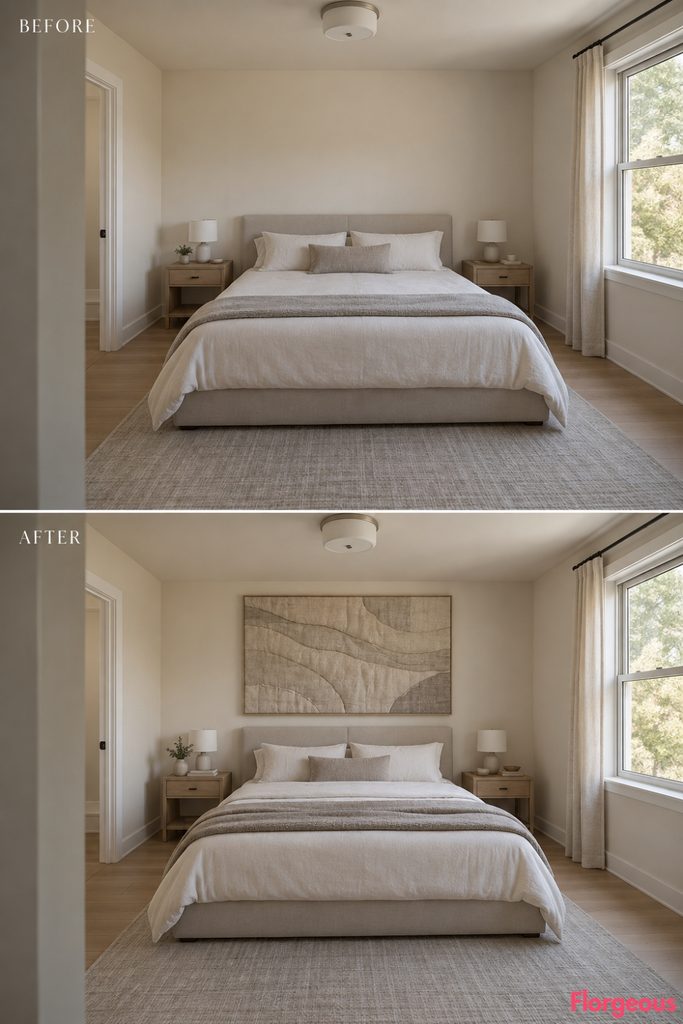
Art can provide softness without becoming another upholstered headboard.
Before: The wall over the bed is completely bare.
After: One oversized unbleached hemp artwork uses broad irregular hand-quilted channels in flax, stone, and mushroom tones. It hangs clearly above the bed rather than becoming part of the wall.
A simple bed and pale timber furniture allow the textile relief to hold attention.
14. Add a Quartzite Shelf Beside the Window
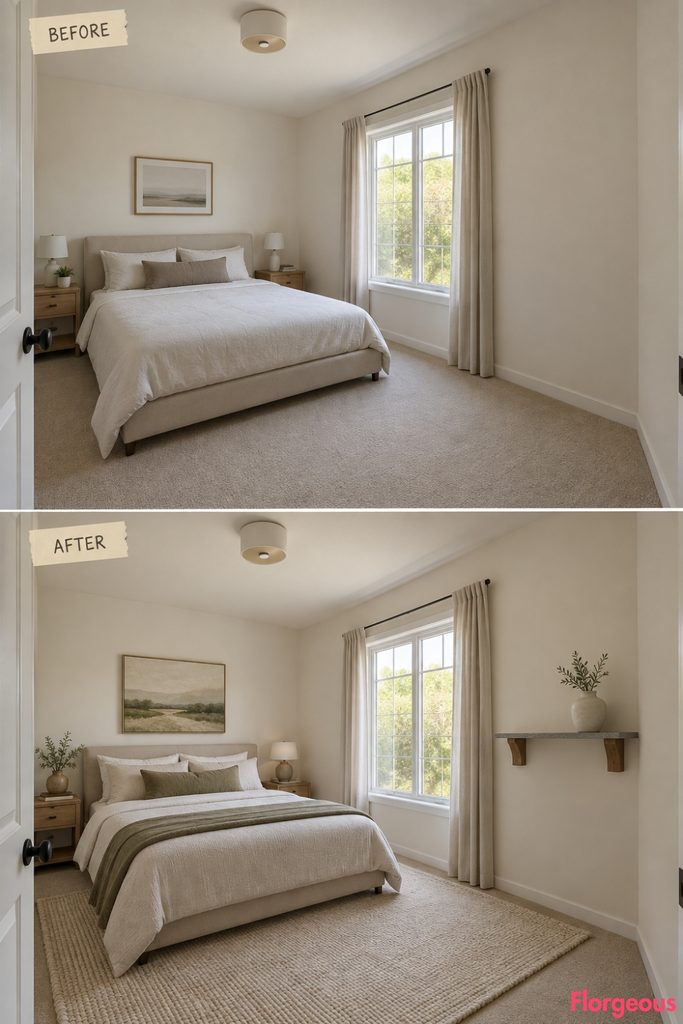
This concept uses a small overlooked piece of wall.
Before: The wall beside the right-side window is bare and contributes nothing to the composition.
After: A narrow honed quartzite shelf sits only on the solid wall beside the glazing, supported by two visible oak brackets. One matte ceramic vessel and a small sculptural object are enough.
The shelf adds stone without sacrificing floor space.
15. Replace the Upholstered Bed With Black Locust Timber
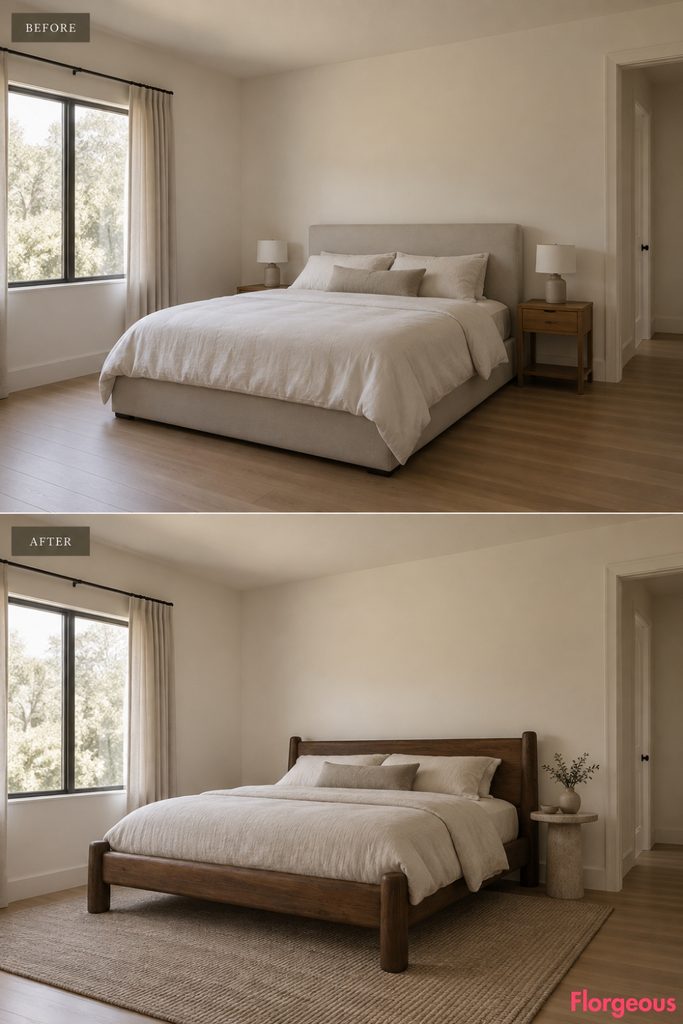
A warmer hardwood brings more visual character than another pale oak frame.
Before: The basic neutral upholstered bed has little shape or material presence.
After: A black-locust timber bed uses substantial rounded-square rails, thick legs, and a gently reclined low headboard. Chalk linen bedding keeps the honey-brown grain looking contemporary rather than rustic.
Try this: If black locust is difficult to source, look for another warm, durable hardwood with visible but controlled grain.
16. Turn the Vestibule Into a Darker Earthen Threshold
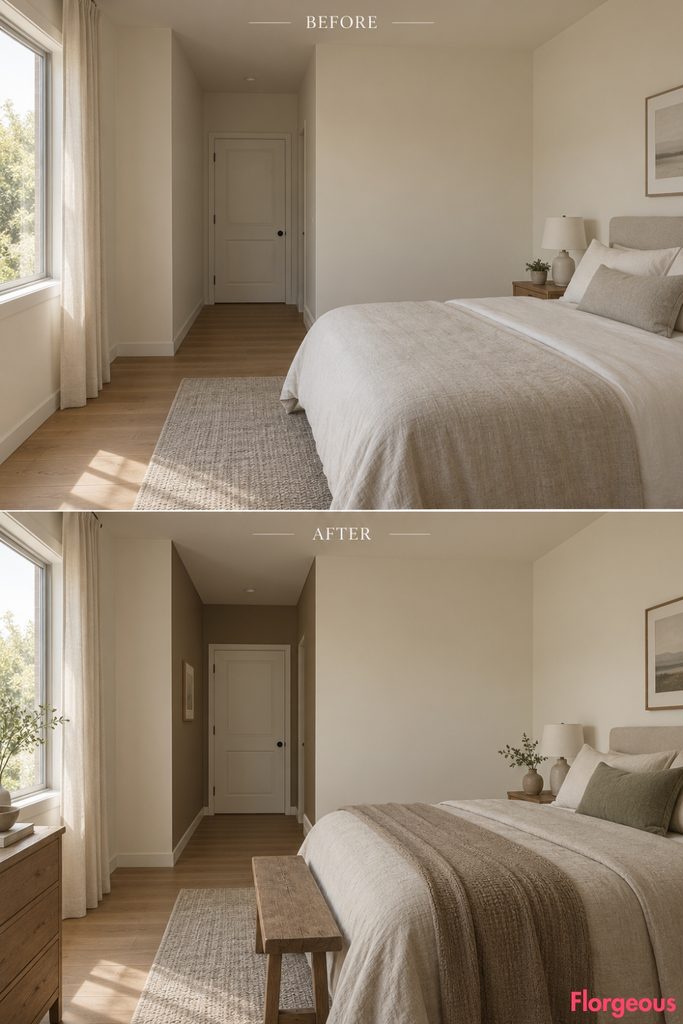
The offset entry becomes a design asset rather than leftover space.
Before: The same warm off-white paint continues from the vestibule into the bedroom.
After: Only the vestibule walls receive a muted umber mineral finish. The sleeping chamber remains warm off-white, making it appear calmer and brighter beyond the deeper entry.
No partitions, openings, or floor levels change.
17. Add a Horsehair Lounge Chair With an Oak Shell
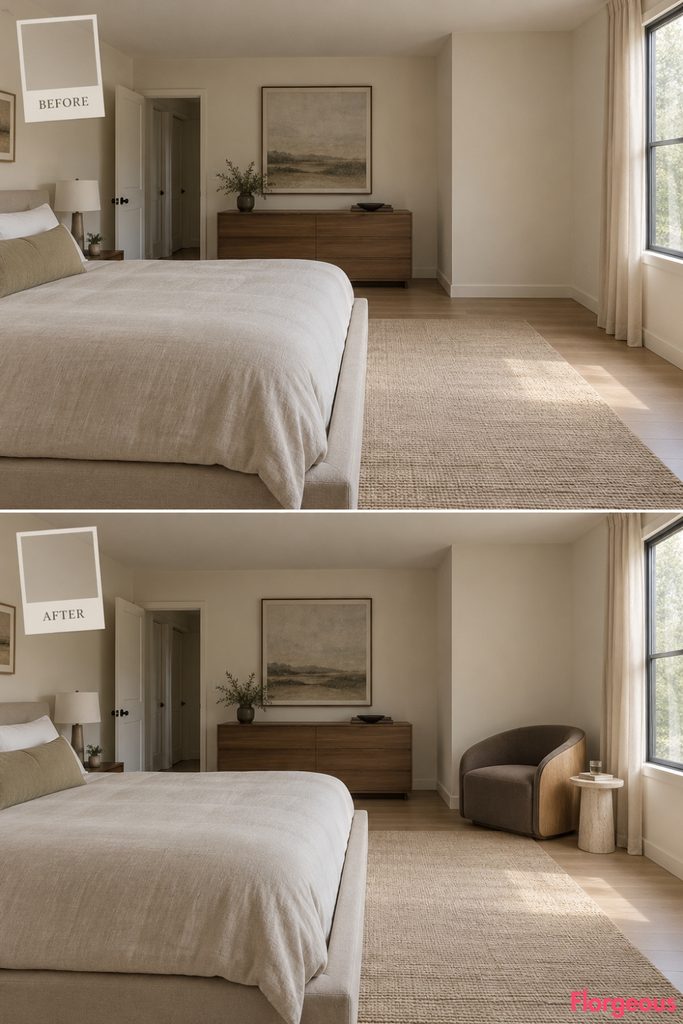
This reading corner avoids the expected boucle armchair.
Before: An open corner near the front of the sleeping chamber has no function.
After: A compact lounge chair uses a curved oak outer shell with tightly upholstered dark-taupe horsehair across the seat and back. A tiny tufa drinks table sits alongside.
The chair stays low enough to preserve the room’s sightlines.
18. Paint a Mineral Horizon Across the Rear Wall
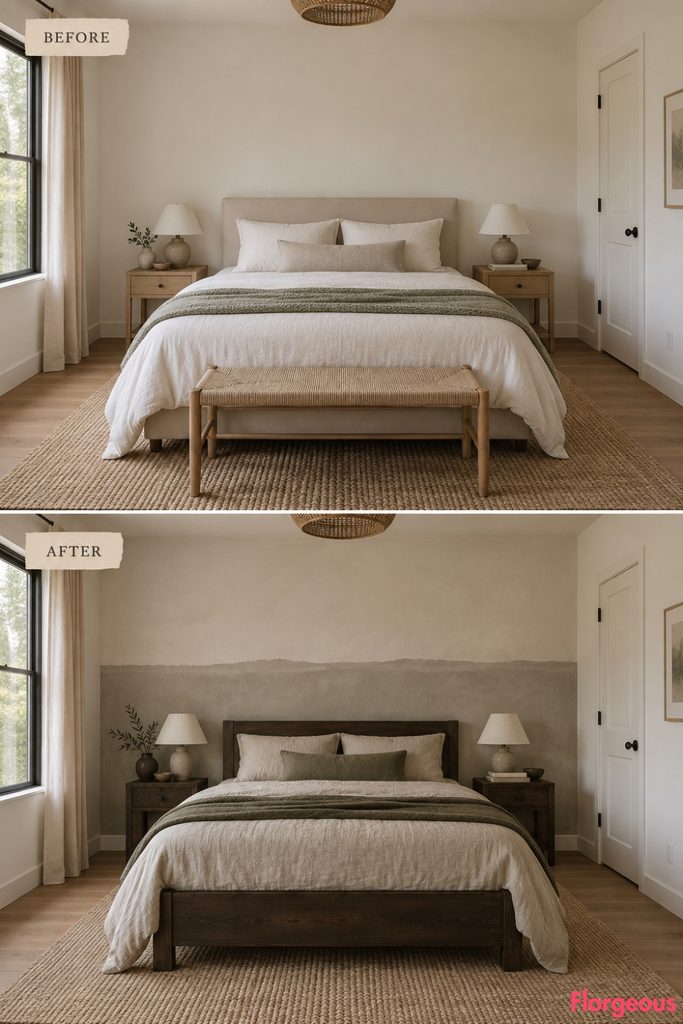
Instead of another all-over limewash finish, use color more deliberately.
Before: The bed sits against one uninterrupted warm off-white wall.
After: The lower wall becomes a muted clay-gray while the upper portion stays chalky bone. A softly hand-brushed horizontal boundary crosses behind the bed.
The effect is graphic enough to register in an image but still tactile and understated.
19. Wrap Only the Foot of the Bed in Undyed Wool
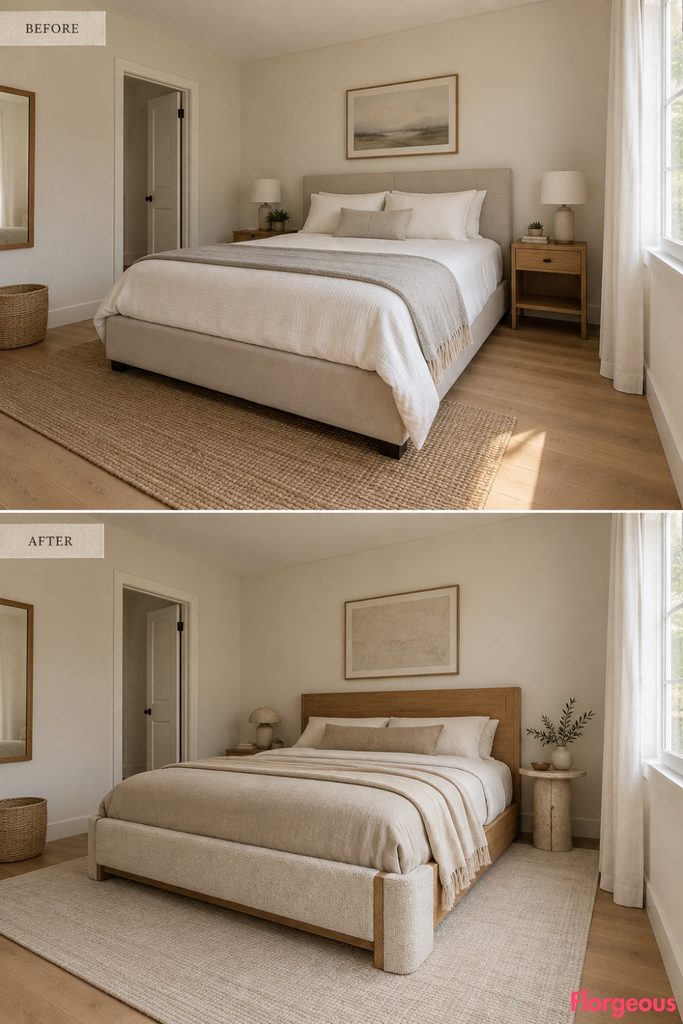
This makeover moves softness away from the headboard.
Before: The upholstered bed has the same visual weight from head to foot.
After: A clean timber bed receives one broad upholstered wool band around the foot and lower side corners only. The headboard remains exposed timber.
The soft band protects the area most likely to brush against people moving through the room.
20. Carve the Nightstand Into a Timber Bowl
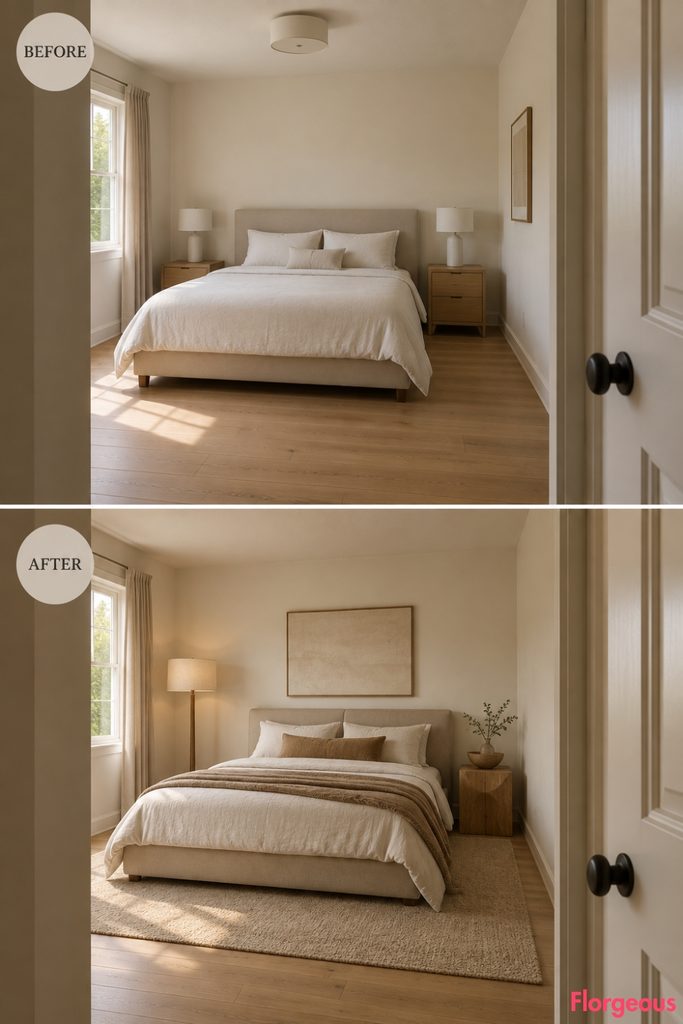
A bedside surface does not need drawers to be useful.
Before: Matching boxy nightstands sit at either side of the bed.
After: One substantial oak pedestal has a broad shallow bowl carved directly into its top. Small items collect naturally inside the hollow, while the wide rim remains usable.
The opposite side receives only a slender floor lamp.
21. Lead the Eye Into the Room With a Hand-Loomed Runner
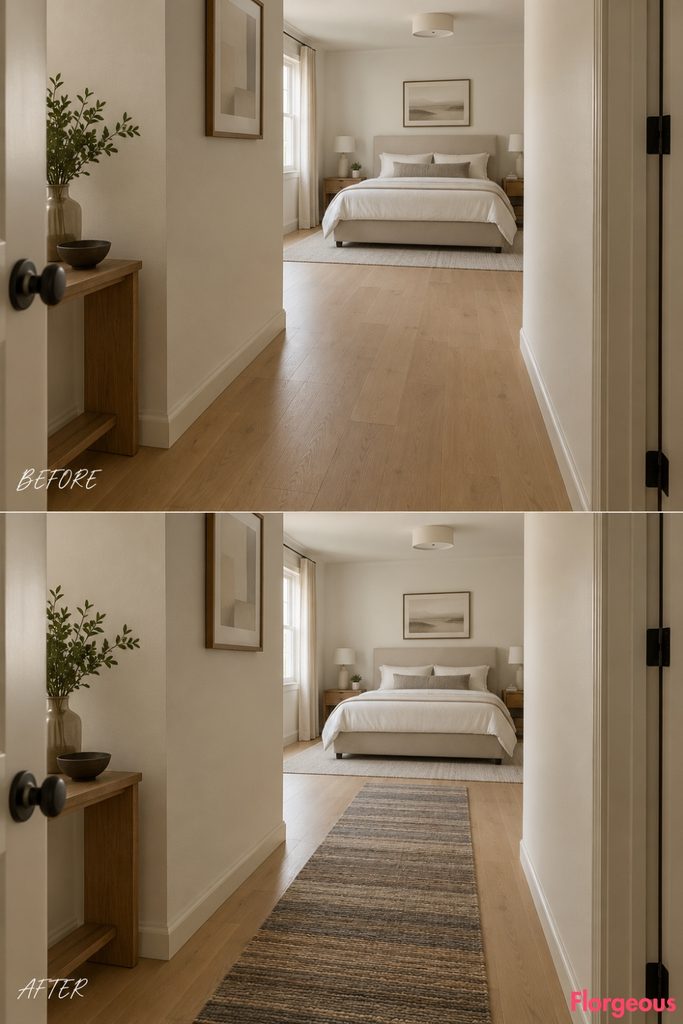
Instead of another rug centered beneath the bed, use the path itself.
Before: Bare warm oak visually connects the vestibule and sleeping chamber without emphasizing the unusual entry sequence.
After: A narrow hand-loomed wool runner begins near the entrance and continues through the vestibule into the bedroom, stopping before the bed. Irregular charcoal, flax, and tobacco bands give it a handmade rhythm.
The bed remains directly on exposed oak.
22. Use Brushed Bronze as a Hairline Detail
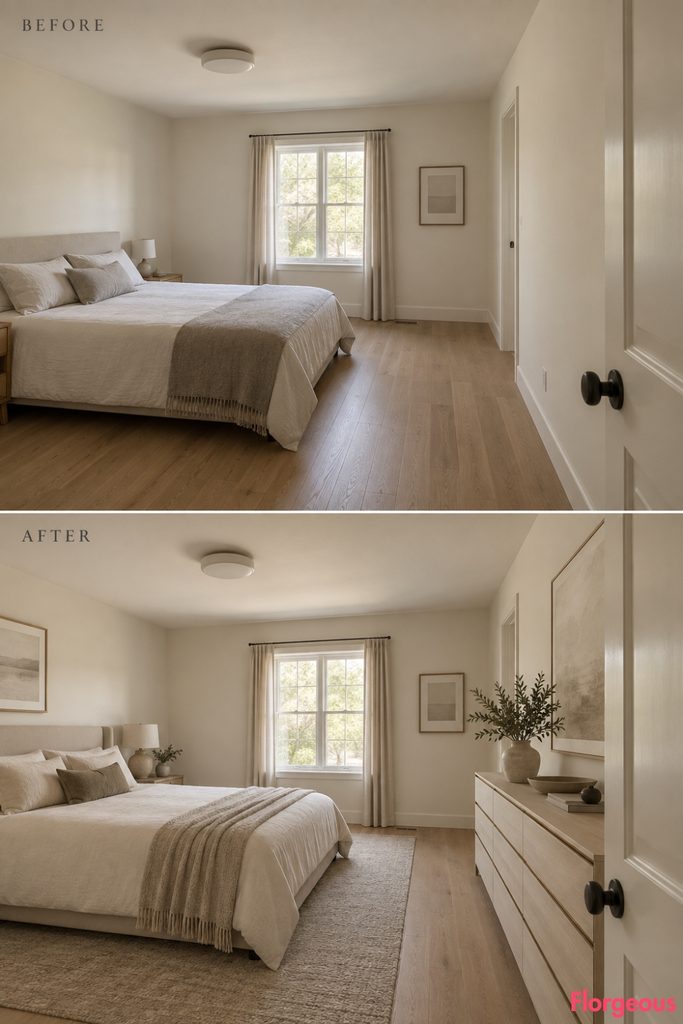
A small amount of metal can sharpen natural furniture without creating a glam bedroom.
Before: The side wall lacks a substantial storage element.
After: A pale-ash dresser introduces extremely thin brushed-bronze reveals around its top and drawer divisions. From a distance they read almost like warm shadow lines.
Everything else remains matte, including the stone-colored rug and ceramic light.
Style Note: If the bronze is the first material you notice, there is too much of it.
23. Place One Hand-Carved Elm Stool Beside the Window
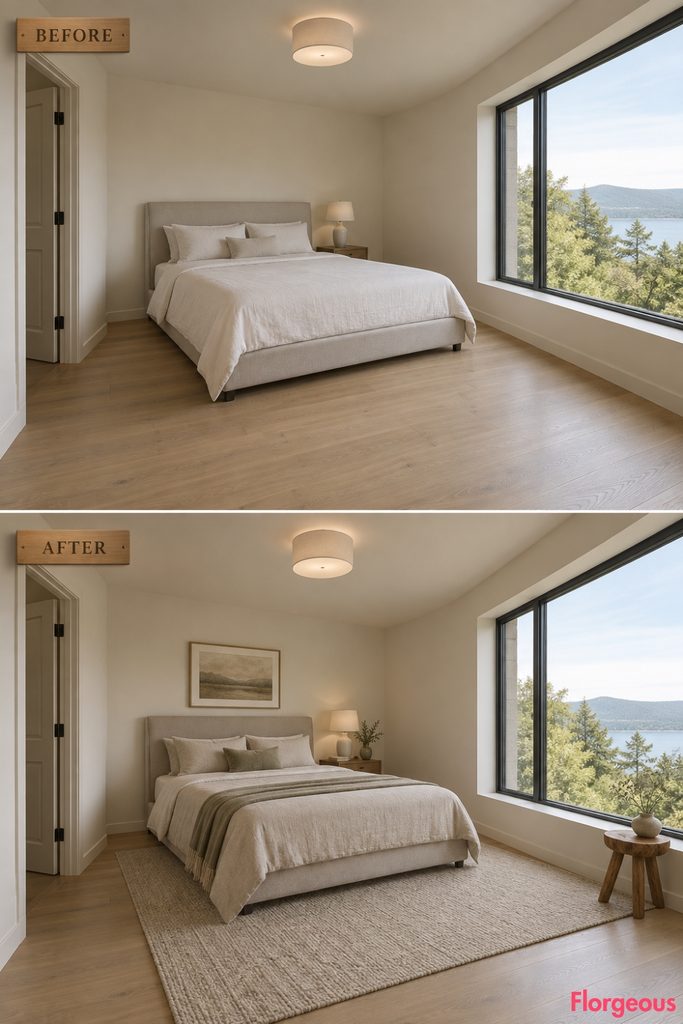
This idea gives the window a companion without turning it into an entire zone.
Before: The floor beside the glazing is empty.
After: One compact elm stool sits beside, not in front of, the window. Its thick seat has a shallow hand-carved saddle depression and rests on three slightly tapered legs.
It can serve as a book table, plant stand, or occasional seat.
24. Quiet a Dresser With Hand-Brushed Casein Paint
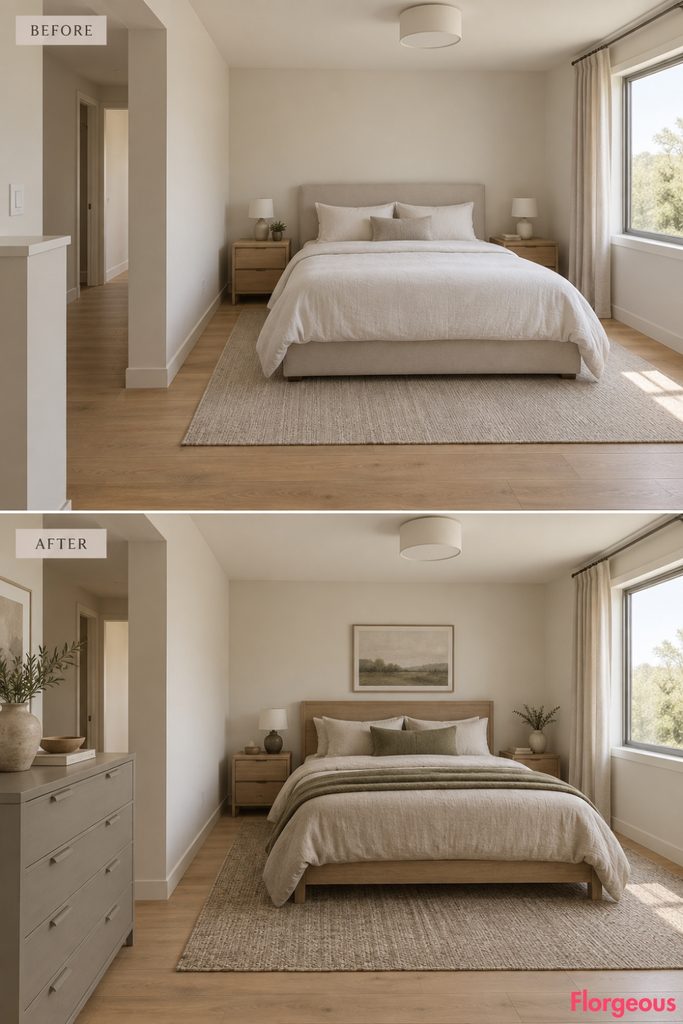
Organic modern does not require exposing every piece of timber grain.
Before: The room needs additional storage but another obvious wood species would make the palette busy.
After: A substantial dresser is coated in matte mushroom-gray casein paint with subtle brush variation. Integrated timber pulls reveal just enough underlying material.
A muted olive textile gives the neutral cabinet a little contrast.
25. Finish With a Pair of Pumice and Linen Lights
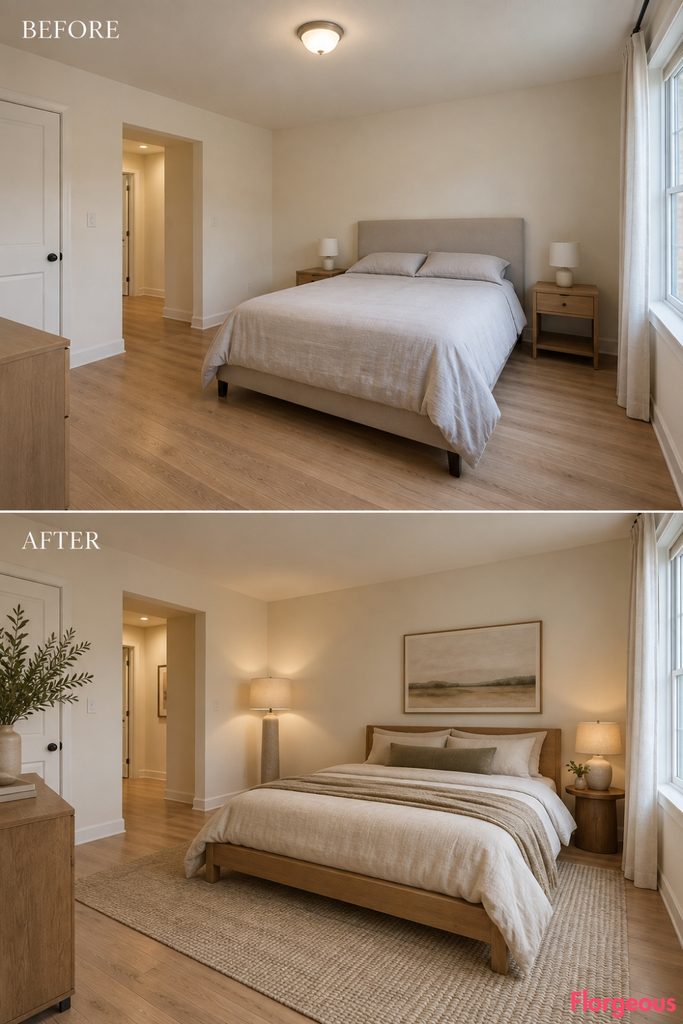
The final makeover uses repetition without symmetry.
Before: The bedroom relies on the basic ceiling fixture and has no atmospheric secondary lighting.
After: Two freestanding lights at different heights use porous pale pumice bases and simple cylindrical linen shades. One sits closer to the bed and the other farther across the room.
Because the material repeats but the forms do not, the composition feels connected rather than matched.
How to Make Organic Modern Feel Designed, Not Generic
The most successful ideas in this collection do not depend on stacking every natural material into one room. Each makeover chooses one dominant decision and lets everything around it become quieter.
For your own Organic Modern Bedroom, first decide where the room needs character. It might be the bed wall, the vestibule, a storage piece, the floor, the window, or simply the lighting.
Then measure before styling. Protect the path through the offset entry, keep the right-side window usable, check real cabinet depth and drawer clearance, and aim for roughly 90 cm of comfortable circulation wherever the room dimensions allow it.
Finally, stop before materials begin competing. Horsehair and oak may only need linen beside them. A mica cabinet needs a quiet bed. Rich mohair works best against simple surroundings. Organic modern design becomes convincing when every material has enough visual space to matter.