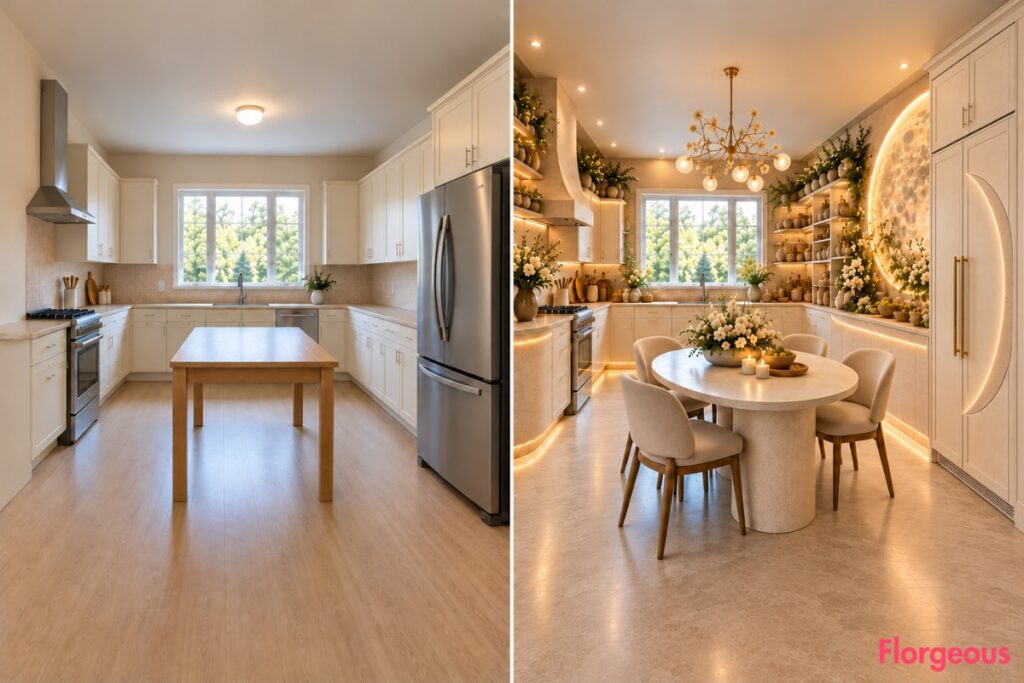
A plain kitchen can have everything it needs for everyday cooking and still feel surprisingly disconnected from nature. Standard cabinets, neutral countertops, and basic lighting often leave little room for personality, even when the space itself is comfortable.
That’s where a Garden Oasis Kitchen becomes so interesting. Instead of simply placing a few plants on the windowsill, imagine shaping an entire kitchen around the forms, movements, textures, and atmosphere of a garden.
These 19 before-and-after design visualizations explore that possibility across different residential kitchen layouts. Each makeover preserves its own original room architecture, window positions, entrance, and major appliance locations, while completely reinventing the interior.
From glowing moon gardens and sculptural botanical wings to dramatic rock landscapes and architectural flower installations, every concept offers a different way to make nature the defining feature of a kitchen.
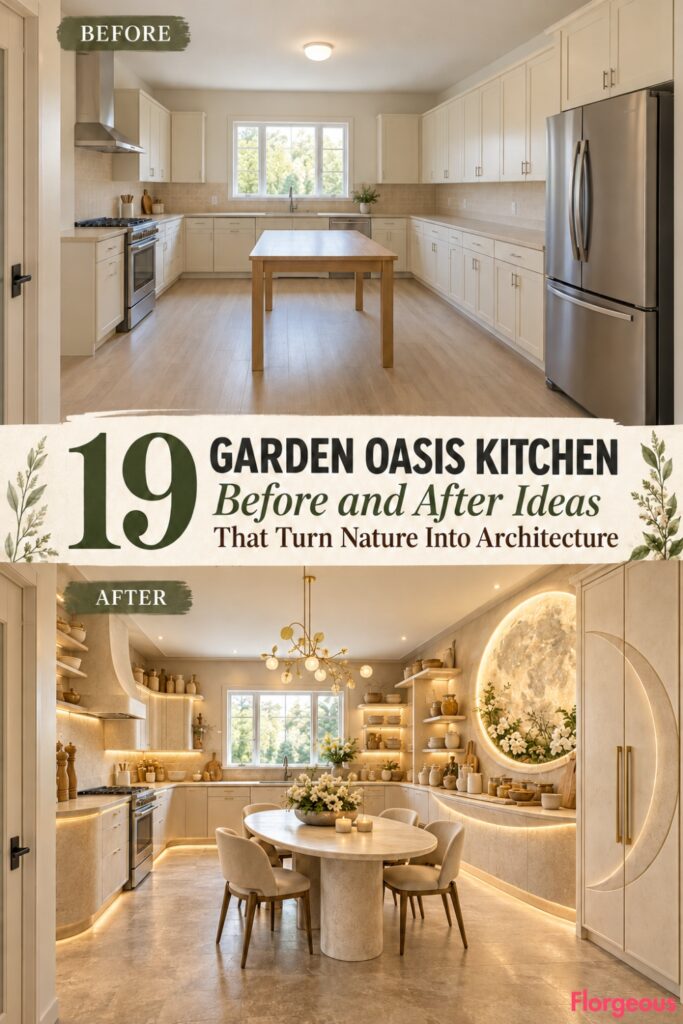
1. Turn a Plain Kitchen Into a Glowing Moon Garden Sanctuary
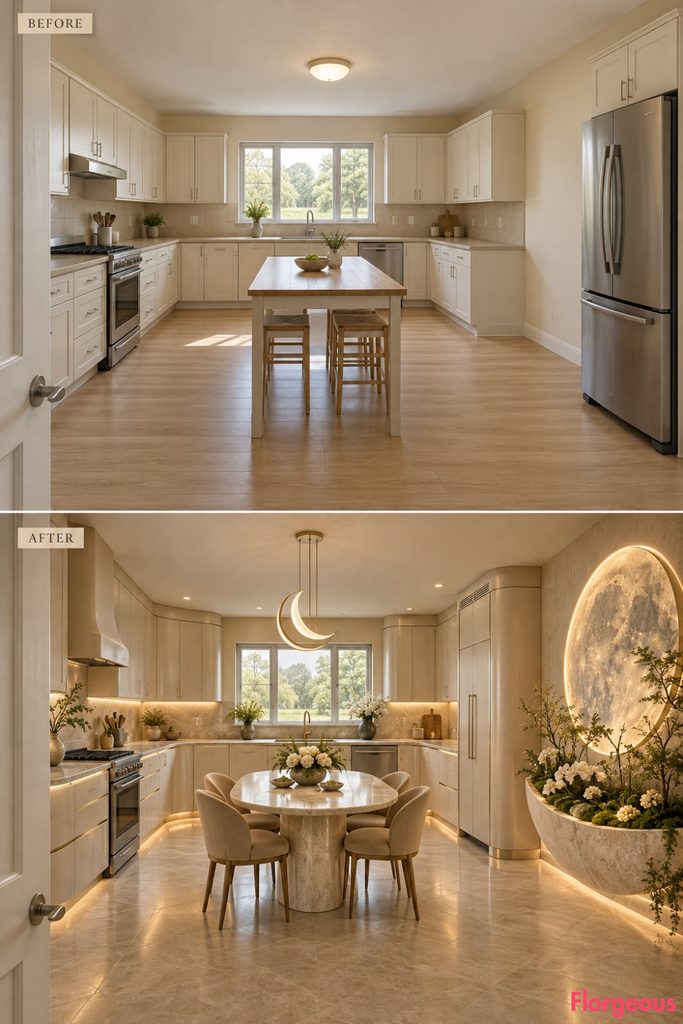
Imagine an enormous illuminated moon floating above a peaceful garden of white flowers.
Before: A rectangular kitchen has plain cream cabinets, beige countertops, and an underused right wall.
After: A monumental luminous moon disc dominates the right elevation, while a sweeping ivory-stone crescent planter introduces elegant flowering greenery. Curved cabinetry and a coordinated dining table create a serene, almost dreamlike atmosphere.
Why it works: The moon-and-crescent installation gives the entire room one unmistakable architectural identity.
2. Turn an Ordinary Kitchen Into a Hanging Garden Aqueduct
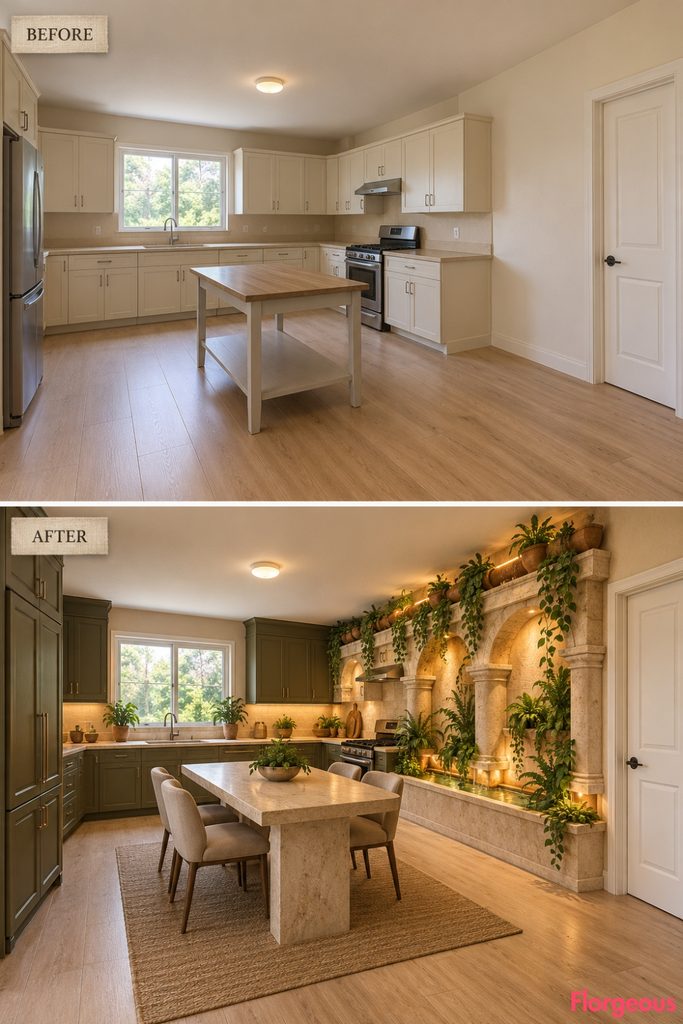
Imagine an ancient garden aqueduct transformed into a magnificent piece of living kitchen architecture.
Before: A simple kitchen with cream cabinetry, beige countertops, a plain central table, and an unremarkable dining perimeter.
After: A monumental limestone garden aqueduct stretches across the free dining-side wall, featuring sculptural arched supports, a narrow elevated water channel, and lush cascading planting pockets. Terracotta-lined details, rich olive cabinetry, and a beautifully proportioned stone dining table create the feeling of a historic garden pavilion reimagined for contemporary living.
Why it works: The aqueduct introduces a distinctive architectural silhouette and integrates water, greenery, and natural stone into one dramatic focal point, rather than simply decorating existing cabinets.
Try this: Build the aqueduct as a lightweight, nonstructural installation with a contained recirculating water system and removable waterproof planters.
3. Fold a Butterfly Garden Into Architectural Wings
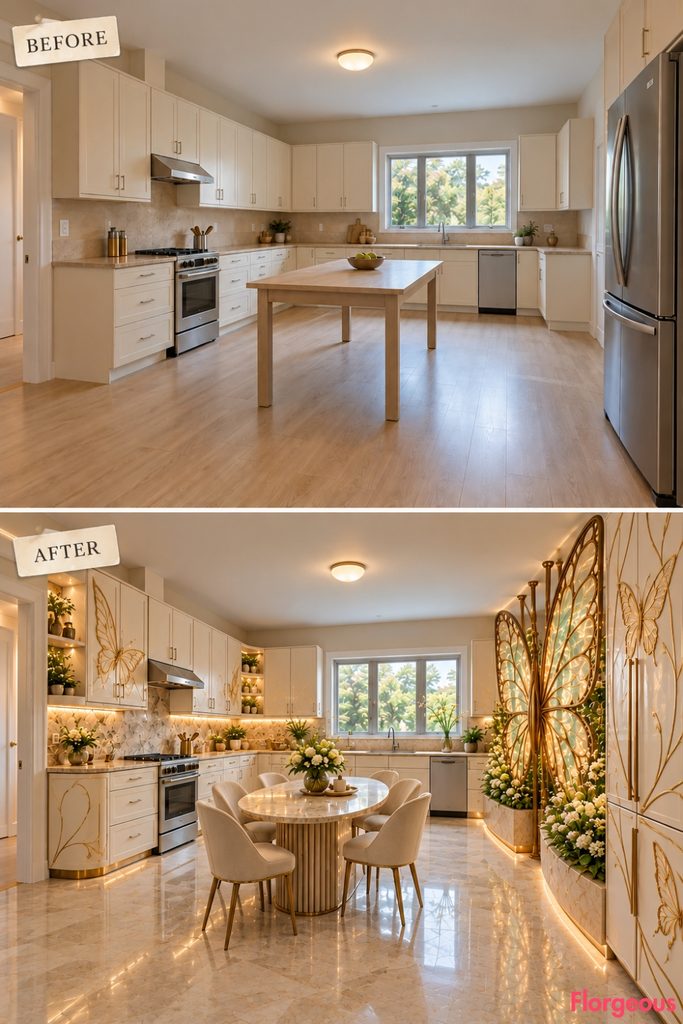
This makeover interprets the delicate structure of butterfly wings as architectural sculpture.
Before: Standard cabinets and an ordinary dining area make the kitchen feel conventional.
After: Two gigantic folded bronze-and-glass wings rise beside the dining area, with amber and jade glazing casting colored patterns across stone surfaces. Contained flowering planters complete the pollinator-garden atmosphere.
Why it works: The wing structures introduce dramatic height and visual movement without altering the room’s permanent architecture.
4. Float Giant Lily Pads Across the Kitchen Ceiling
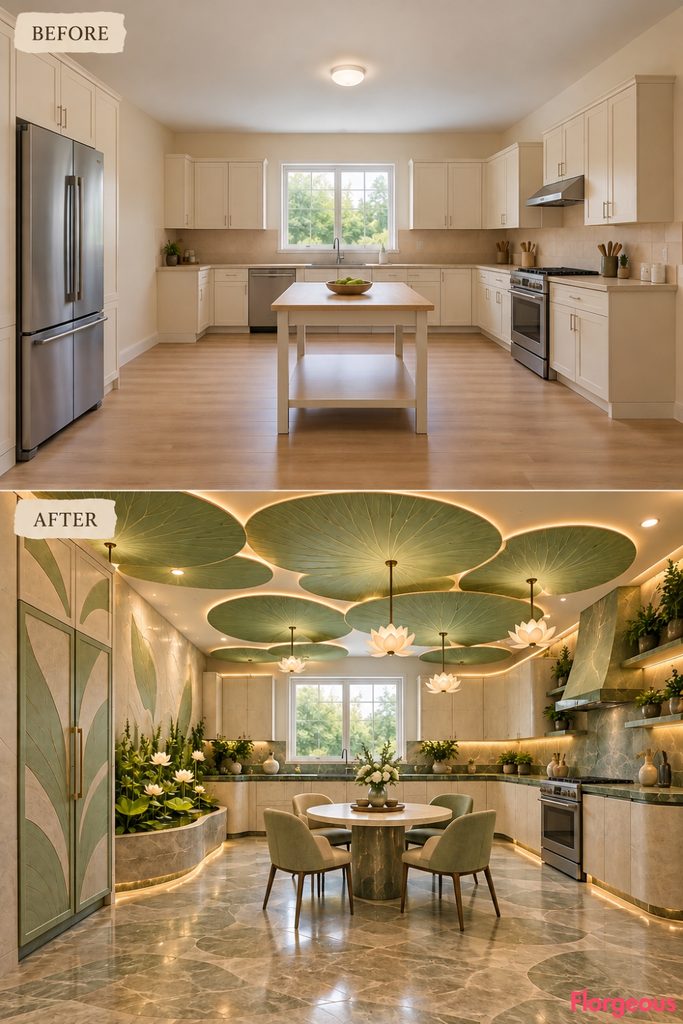
A water garden inspires an unforgettable overhead architectural composition.
Before: A flat ceiling with one basic light leaves the kitchen feeling ordinary.
After: Oversized overlapping lily-pad discs float beneath the existing ceiling, their softly illuminated green undersides casting gentle shadows. Rounded cabinetry and waterside-inspired planting reinforce the organic design.
Designer Tip: Lightweight suspended ceiling sculptures can create drama without rebuilding the original ceiling structure.
5. Wrap the Cooking Wall in a Giant Unfurling Fern
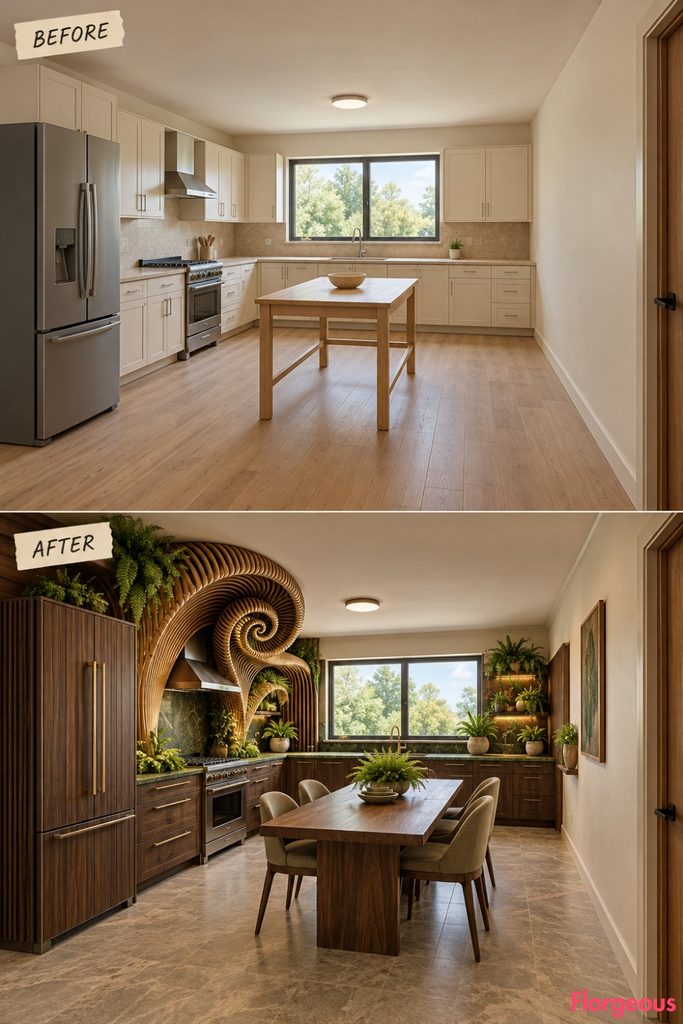
The beautiful spiral of a young fern becomes an extraordinary cooking-wall sculpture.
Before: Ordinary cabinet fronts and a standard range surround create little architectural interest.
After: A monumental ribbed-timber fiddlehead unfurls around the existing cooking range, integrating a functional extractor inside its curling form. Forest-green stone and rich walnut cabinetry establish a deeply natural atmosphere.
Try this: Specify noncombustible surfaces near the cooktop and maintain access to the extraction system.
6. Build a Botanical Prism Garden With Rainbow Light
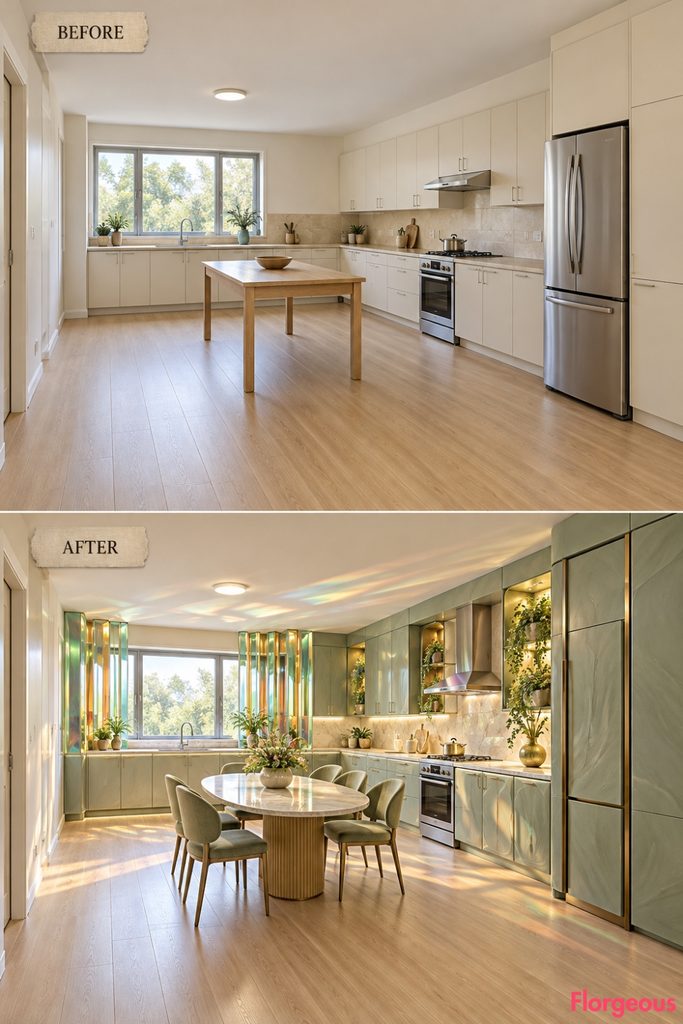
A kitchen can feel connected to nature through light itself.
Before: Neutral cabinetry and simple window treatments offer no memorable interaction with daylight.
After: Tall prismatic glass fins refract sunlight into delicate color bands across pale jade cabinetry and botanical stone surfaces. Carefully positioned foliage catches the changing light.
Why it works: The installation gives the kitchen a dynamic garden atmosphere without depending on dense greenery.
7. Carve an Alpine Garden Into a Dramatic Stone Cliff
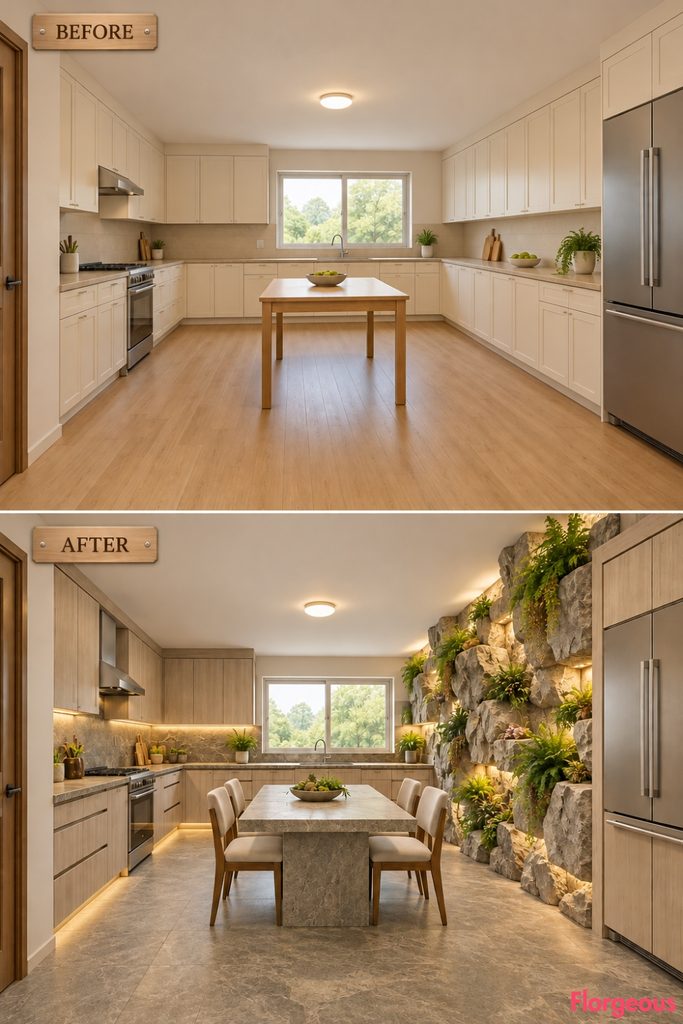
A rugged mountain landscape provides the inspiration for this sculptural kitchen.
Before: Basic cabinetry and flat walls lack dimension.
After: A dramatic faceted stone cliff rises across the free right wall, with planted fissures and projecting rock ledges. Pale ash cabinetry, honed grey limestone and discreet botanical lighting create a refined Alpine retreat.
Try this: Fabricated lightweight stone panels can provide the desired depth without adding structural masonry.
8. Create a Mushroom Garden Beneath Giant Sculptural Gills
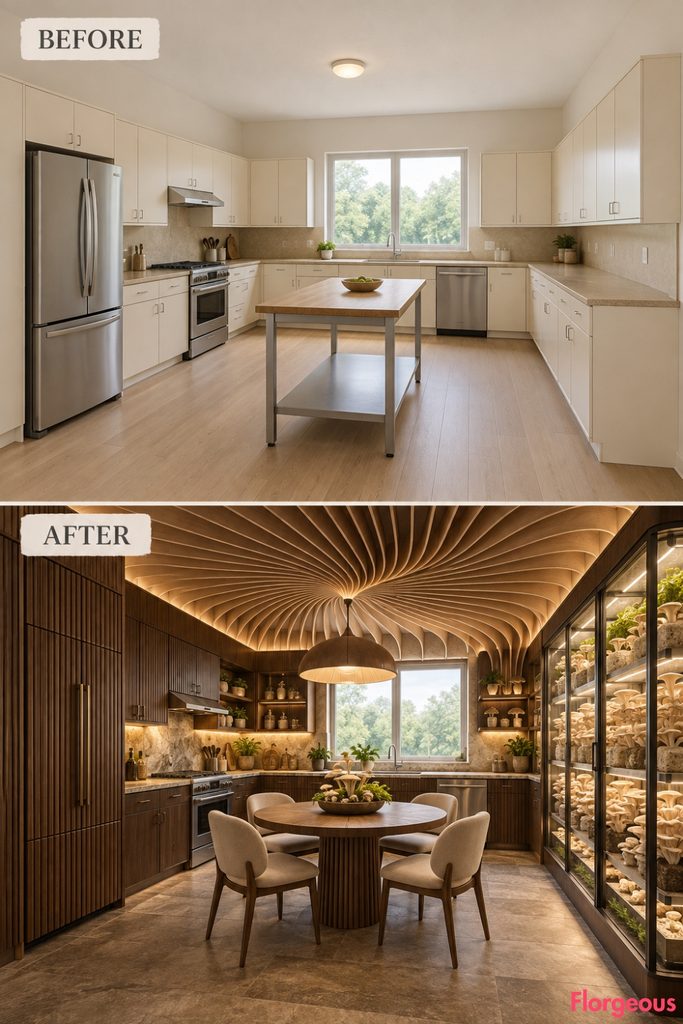
A mushroom garden can inspire a kitchen that feels almost like an enchanted woodland.
Before: Basic overhead cabinets and a single light give the room no distinguishing character.
After: Dramatic mushroom-gill-inspired ceiling ribs spread above an enclosed cultivation gallery. Deep oak cabinetry, earthy stone and softly illuminated mushroom displays produce a mysterious yet functional interior.
Plant Care Tip: Use independent, enclosed mushroom-growing modules with proper humidity and ventilation control.
9. Turn the Kitchen Into a Botanical Sundial Courtyard
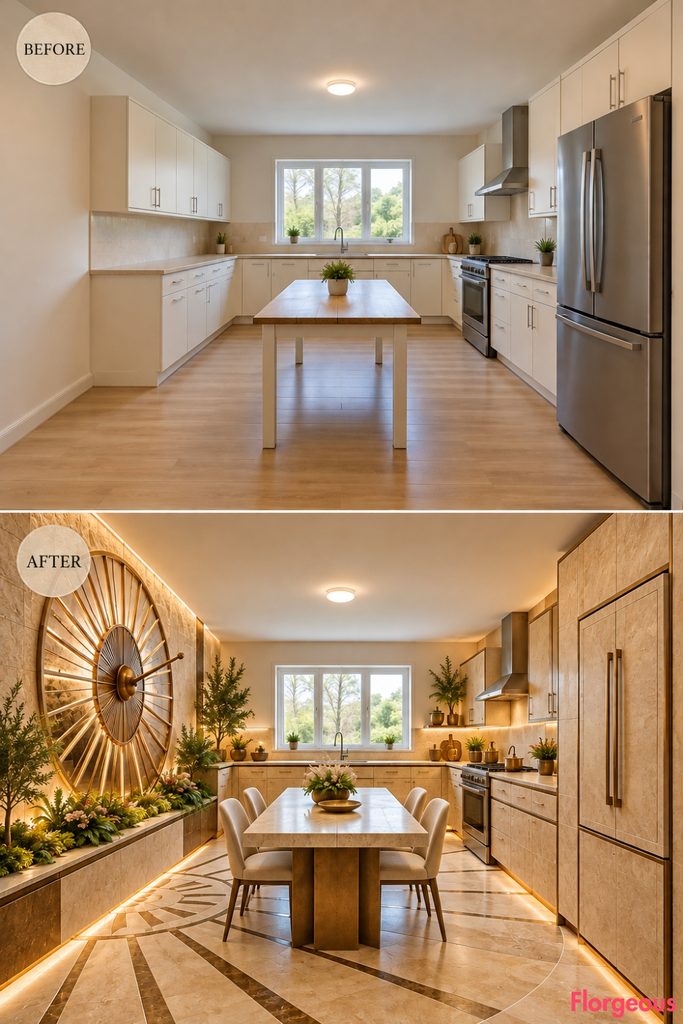
Garden sundials inspire an interior shaped by geometry and sunlight.
Before: Flat walls and neutral flooring offer no architectural focal point.
After: A monumental bronze sundial artwork anchors a free wall, with radial stone inlays spreading across the floor. Restrained botanical planting complements the interplay of shadows and warm mineral finishes.
Why it works: The garden concept is expressed through architectural geometry rather than conventional plant displays.
10. Suspend an Enormous Dandelion Seedburst Above the Dining Area
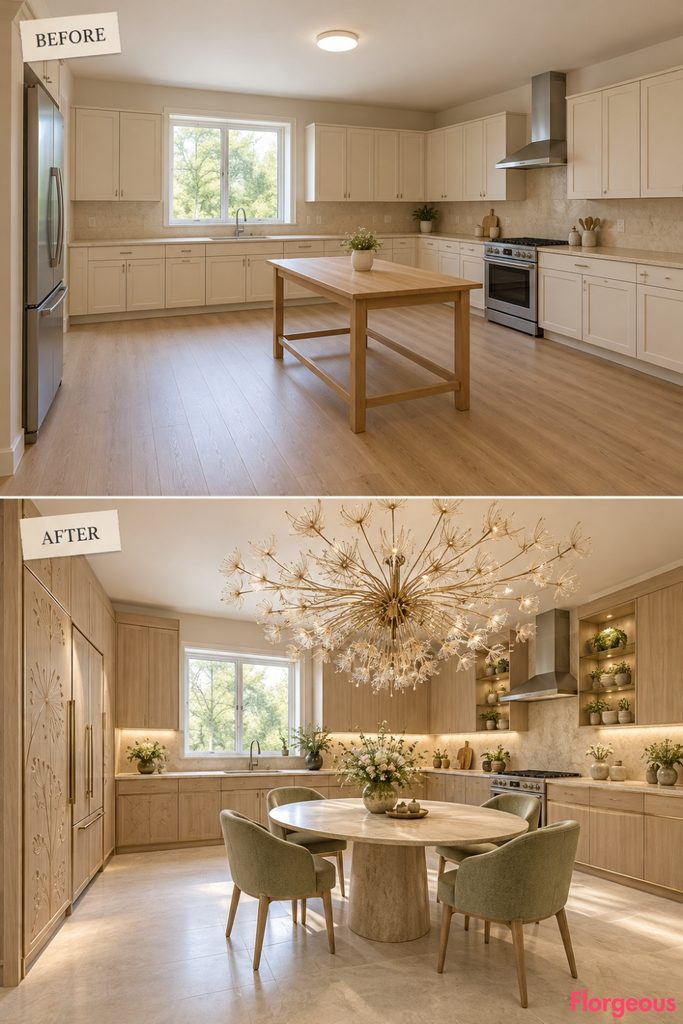
The delicate moment when a dandelion disperses its seeds becomes a spectacular centerpiece.
Before: A simple utility table sits below an ordinary ceiling light.
After: A massive radial seedburst sculpture appears suspended above the dining table. Hundreds of delicate metallic filaments create an airy botanical cloud, contrasted with understated meadow-inspired cabinetry.
Designer Tip: Use lightweight decorative elements and position the installation safely above normal standing head height.
11. Create a Kinetic Flower Garden With Opening Petal Cabinets
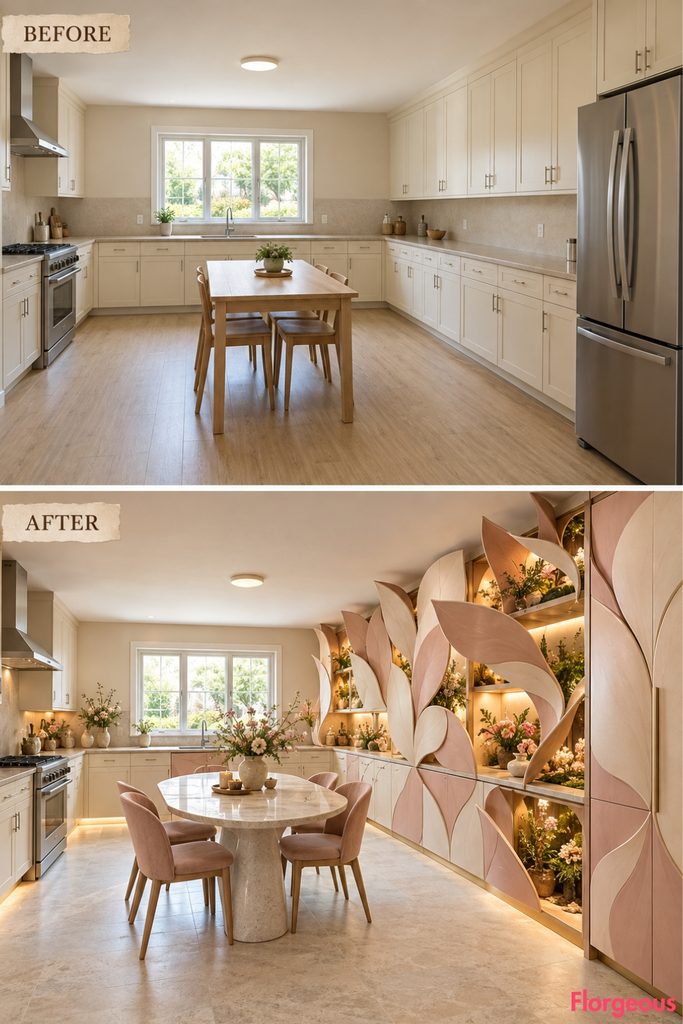
Imagine an enormous flower unfolding across the kitchen’s storage wall.
Before: Conventional rectangular cupboard doors create a repetitive, featureless elevation.
After: Giant overlapping petal-shaped cabinet fronts form a dramatic blooming composition. Selected petals open to reveal illuminated plants, while the remaining panels conceal practical storage and a fully integrated refrigerator.
Why it works: The botanical concept changes the actual form and operation of the cabinetry.
12. Reimagine the Kitchen as a Four-Quadrant Paradise Garden
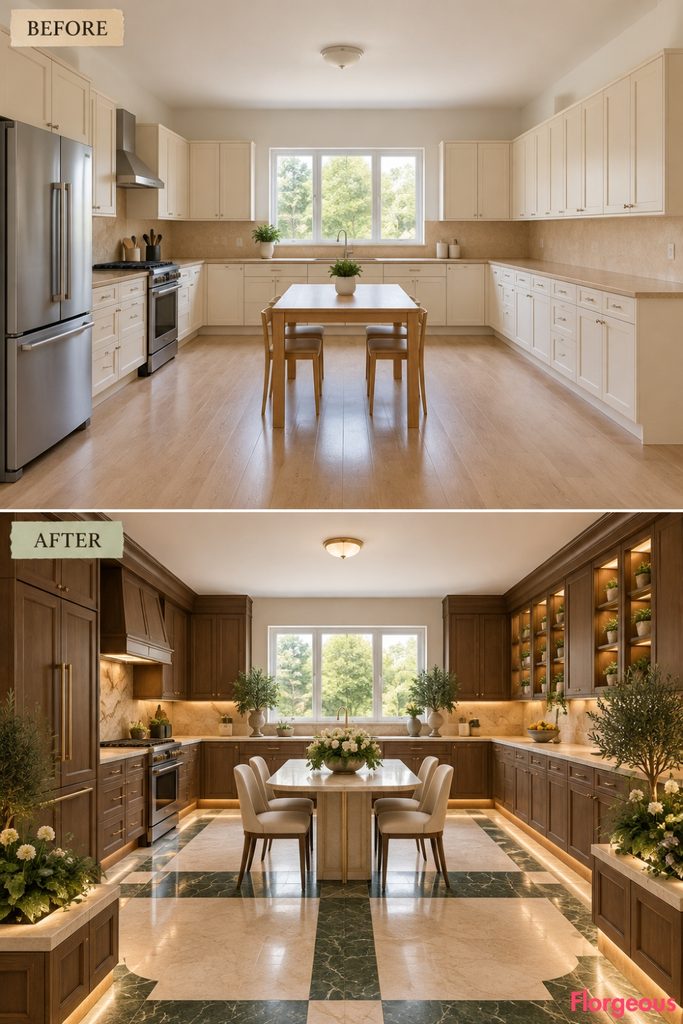
The geometry of classical paradise gardens creates a striking visual organization.
Before: A basic central table occupies an open space without a defining pattern.
After: A dramatic cruciform limestone inlay divides the floor into four symbolic garden quadrants. Architectural planter consoles define the surrounding edges, while a sculptural dining table becomes the centerpiece.
Try this: Keep the entire floor level, with decorative stone bands flush and slip-resistant.
13. Build a Cork-Oak Garden Grove With Sculptural Bark Columns
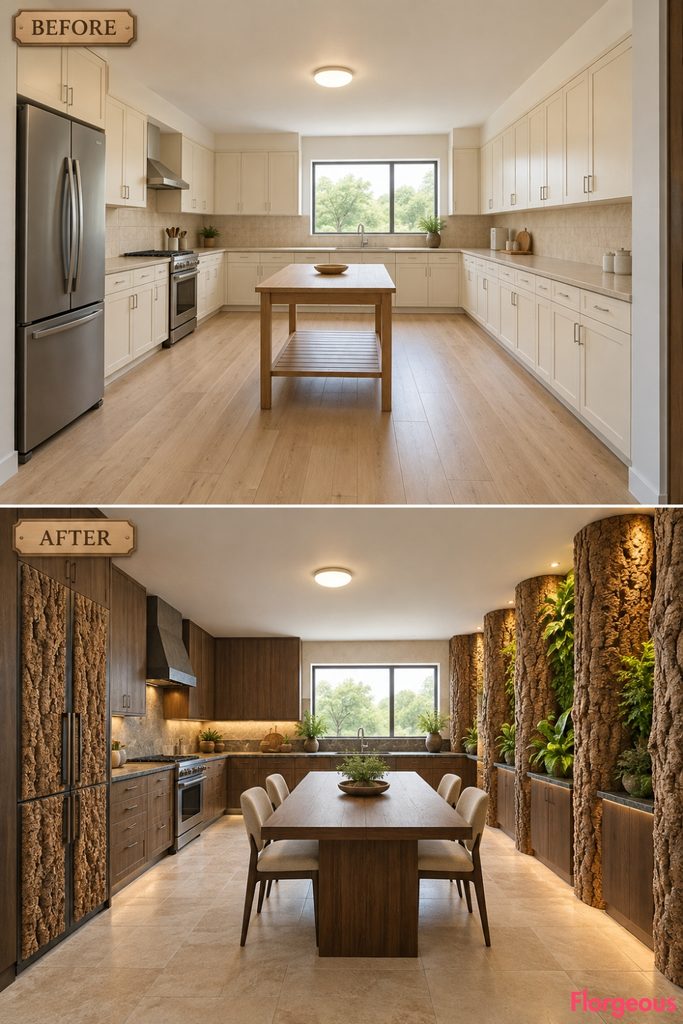
This concept transforms a plain kitchen elevation into a woodland-inspired architectural grove.
Before: Flat cabinetry and ordinary wall finishes offer little depth or rhythm.
After: Massive decorative cork-bark columns rise along the free wall, with protected plants nestled between them. Smoked oak cabinetry, dark stone, and warm integrated lighting create an immersive forest character.
Try this: Use lightweight cork-clad structures rather than adding real structural columns.
14. Shape a Rose Garden Dining Court From Giant Stone Petals
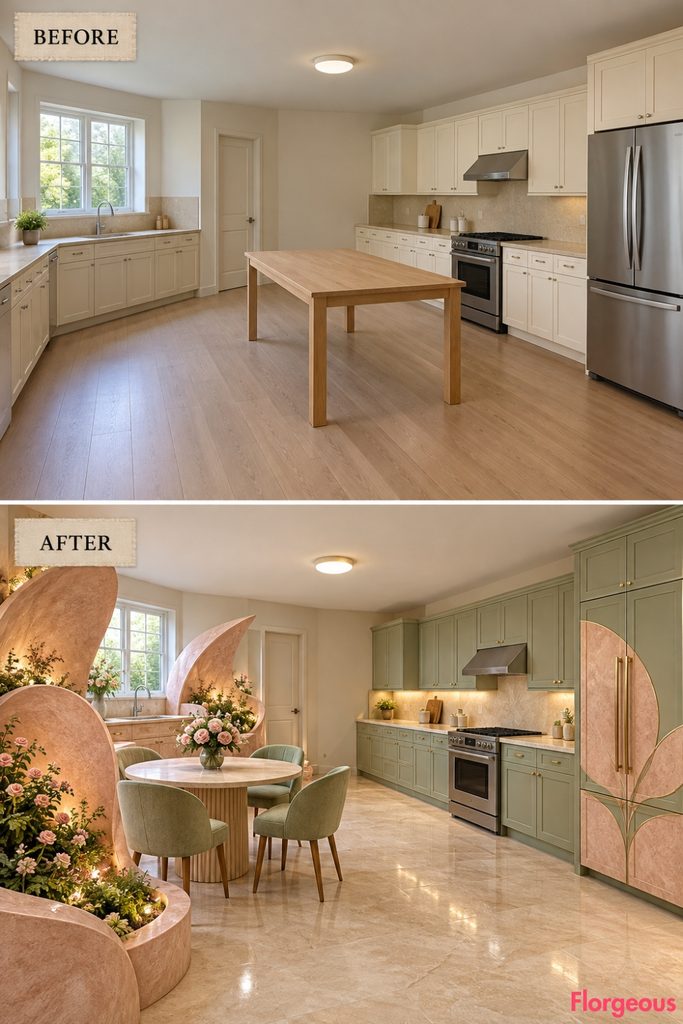
An oversized flower sculpture redefines the dining experience.
Before: A conventional central table has little connection to the surrounding cabinetry.
After: Enormous overlapping blush-stone petals frame a distinctive dining court. Rounded sage cabinetry, soft lighting and carefully placed flowering plants create an elegant garden atmosphere.
Why it works: The petal structures make the dining area feel enclosed and intimate without adding permanent walls.
15. Create a Wind Garden With Monumental Copper Harps
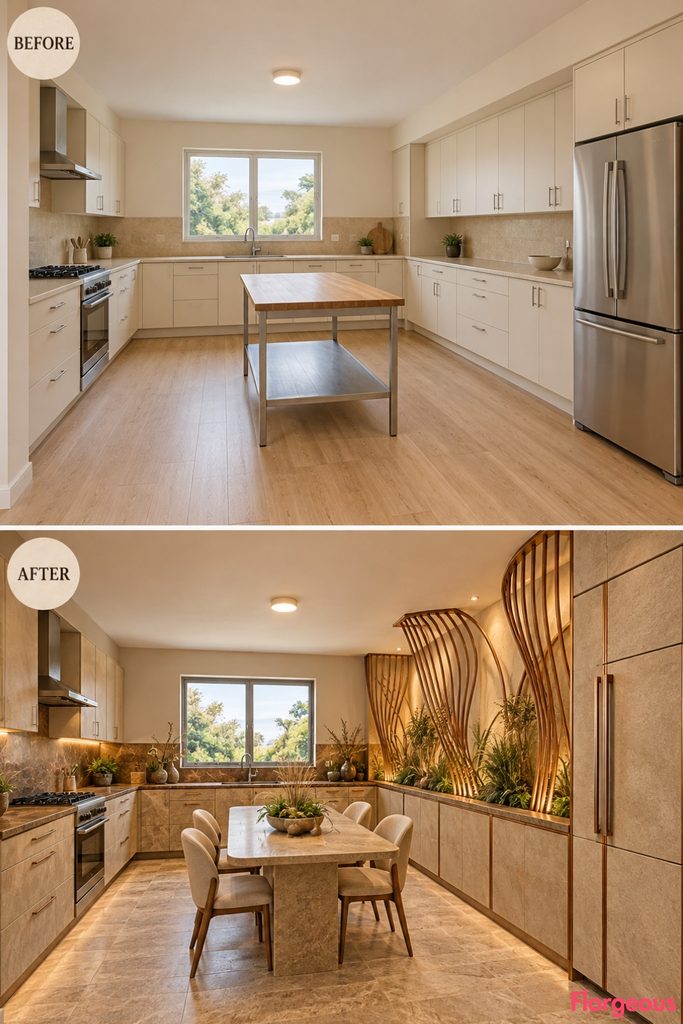
The movement of wind through tall grasses becomes a remarkable architectural statement.
Before: Plain cabinetry and walls have little vertical rhythm.
After: Tall copper rods sweep upward from protected grass planters, forming an extraordinary wind-harp sculpture. Warm sandstone cabinetry and carefully directed lighting emphasize the contrast between metallic curves and delicate foliage.
Try this: Fix all rods securely and avoid loose suspended wires near cooking areas.
16. Create a Kintsugi Garden Where Plants Grow Through Golden Seams
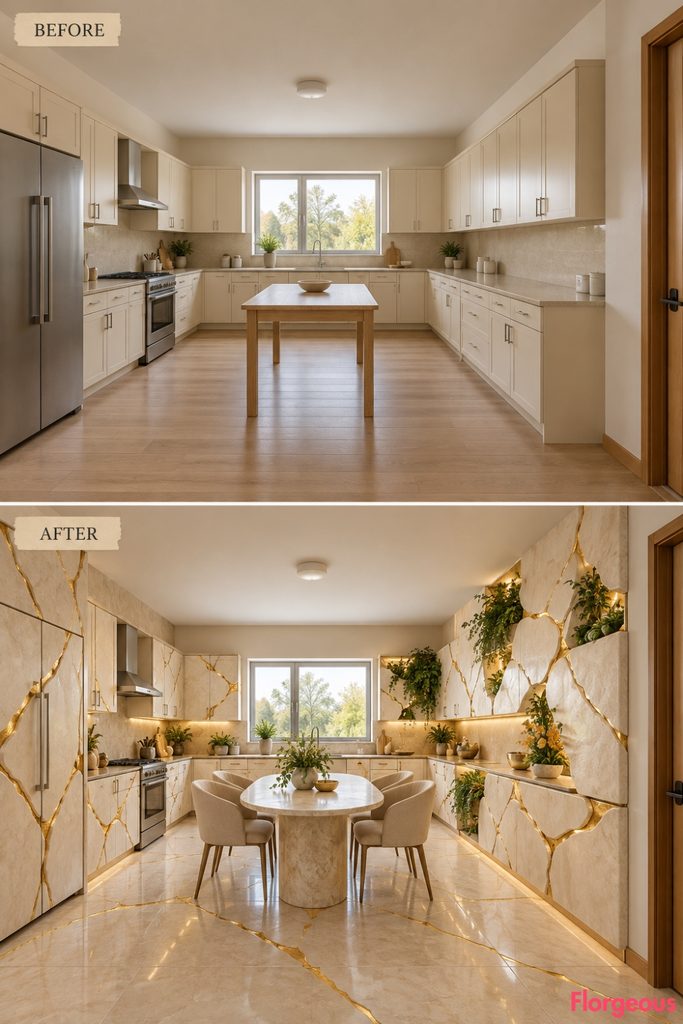
The Japanese art of repairing broken ceramics inspires a stunning metaphor for botanical growth.
Before: Basic cabinets and neutral surfaces offer little pattern or visual interest.
After: Enormous irregular mineral panels are joined by expressive gold seams. Contained living plants emerge from selected intersections, while coordinated cabinetry extends the fractured geometry throughout the kitchen.
Style Note: Use waterproof removable inserts for planted seams, keeping moisture away from cabinet joints.
17. Design a Glowing Garden Grove of Giant Flower Stems
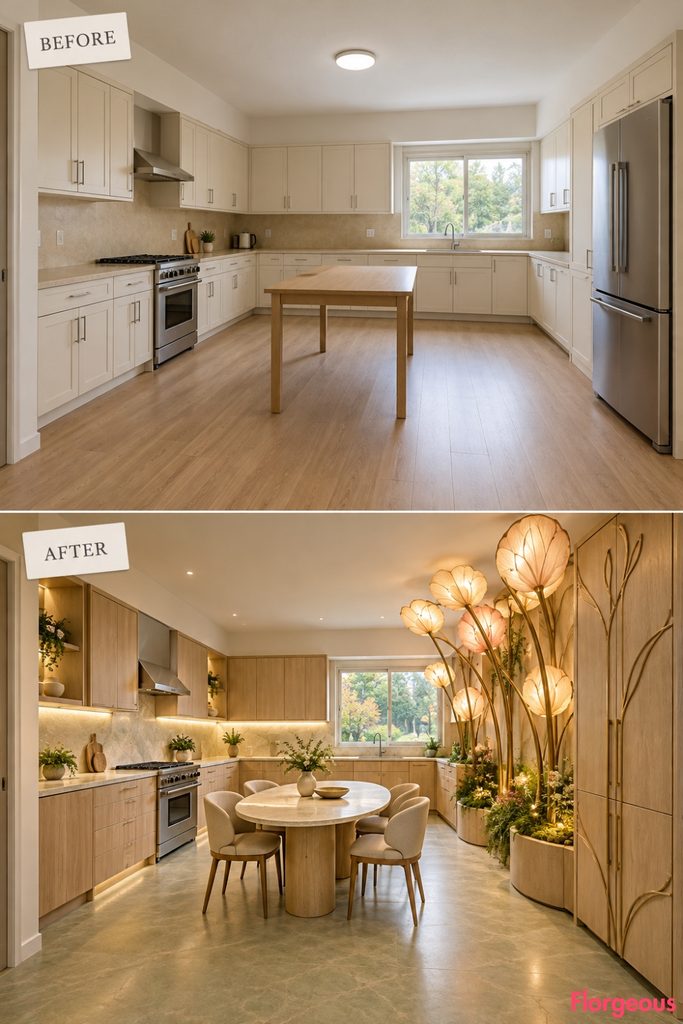
This kitchen resembles a luminous botanical sculpture garden.
Before: The open perimeter contains ordinary cabinetry and lacks any memorable focal point.
After: Several enormous sculptural flower stems rise from low planted bases, each supporting a glowing translucent flower-bud lantern. Pale oak cabinetry and warm stone allow the luminous forms to dominate.
Why it works: Vertical flower sculptures create a powerful three-dimensional garden setting without occupying the main preparation surfaces.
18. Form a Continuous Green Ribbon Between Cooking and Dining
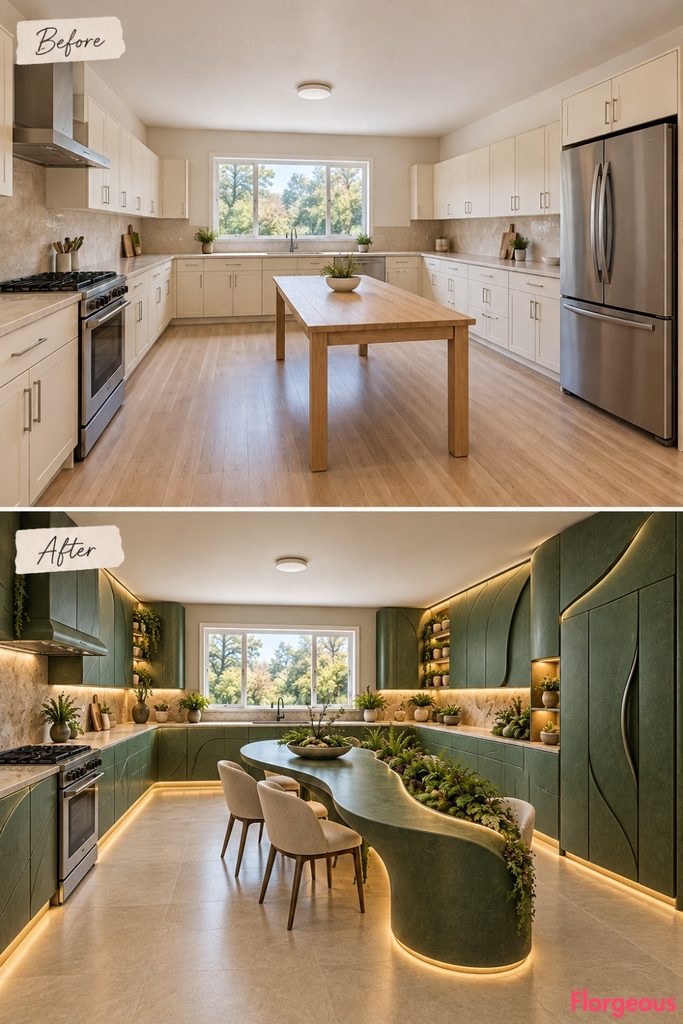
This makeover creates a striking functional sculpture at the center of the room.
Before: Basic cabinetry and a separate rectangular utility table lack visual connection.
After: A dramatic S-shaped mineral-composite ribbon flows from the storage cabinetry into a sculptural preparation-and-dining table. Select exterior edges contain protected greenery, making the furniture resemble a living garden form.
Try this: Keep the growing channels separate from the food-preparation surface and provide realistic seating clearance.
19. Turn the Kitchen Into an Immersive Firefly Garden
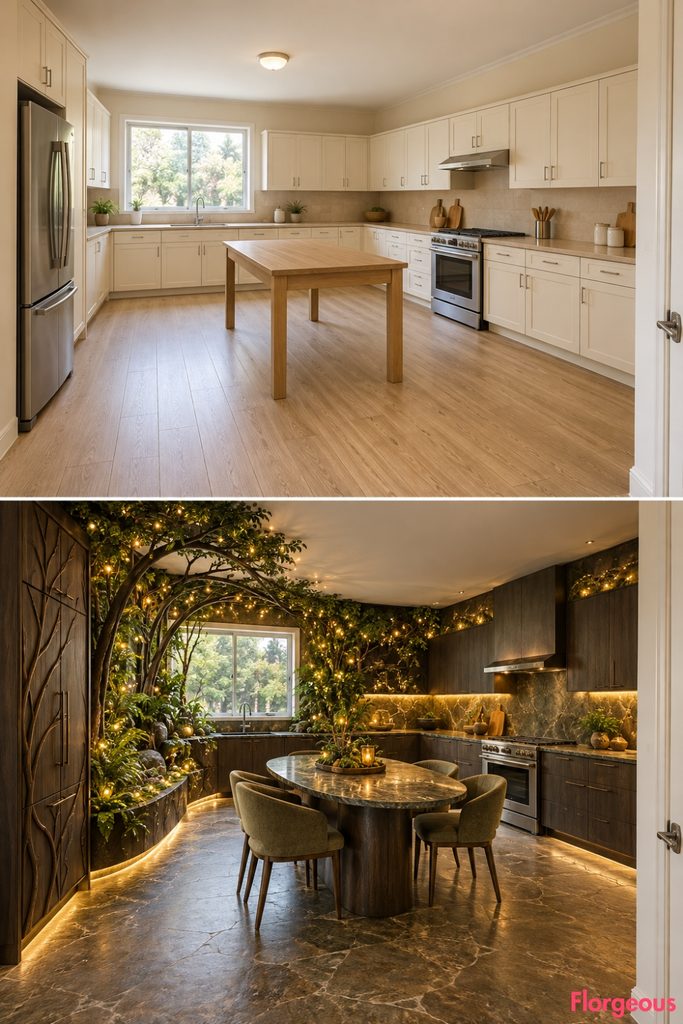
The final transformation captures the magical atmosphere of a garden illuminated by hundreds of fireflies.
Before: Ordinary cabinetry, basic lighting and a central utility table offer little connection to the outdoors.
After: Sweeping dark botanical frames surround lush planting along the free perimeter. Hundreds of tiny glowing lights appear among the foliage, creating extraordinary depth while natural stone and charcoal timber provide a sophisticated backdrop.
Choose a Garden Design That Changes the Whole Kitchen
These 19 transformations reveal how dramatically a kitchen can change when nature inspires its architecture rather than simply its decoration.
Some ideas draw attention upward with extraordinary ceiling sculptures. Others reshape the dining space, reinterpret botanical forms through cabinetry, or create an immersive garden along the room’s perimeter.
A successful Garden Oasis Kitchen combines one memorable focal point with practical storage, comfortable circulation, realistic plant care and cohesive materials. The design should look striking while still supporting the routines of everyday cooking and dining.
Before beginning your own makeover, examine your existing floor plan and the locations of its permanent architectural features. Choose the garden-inspired element that fits those conditions, then develop the cabinetry, furnishings, materials and lighting around it.