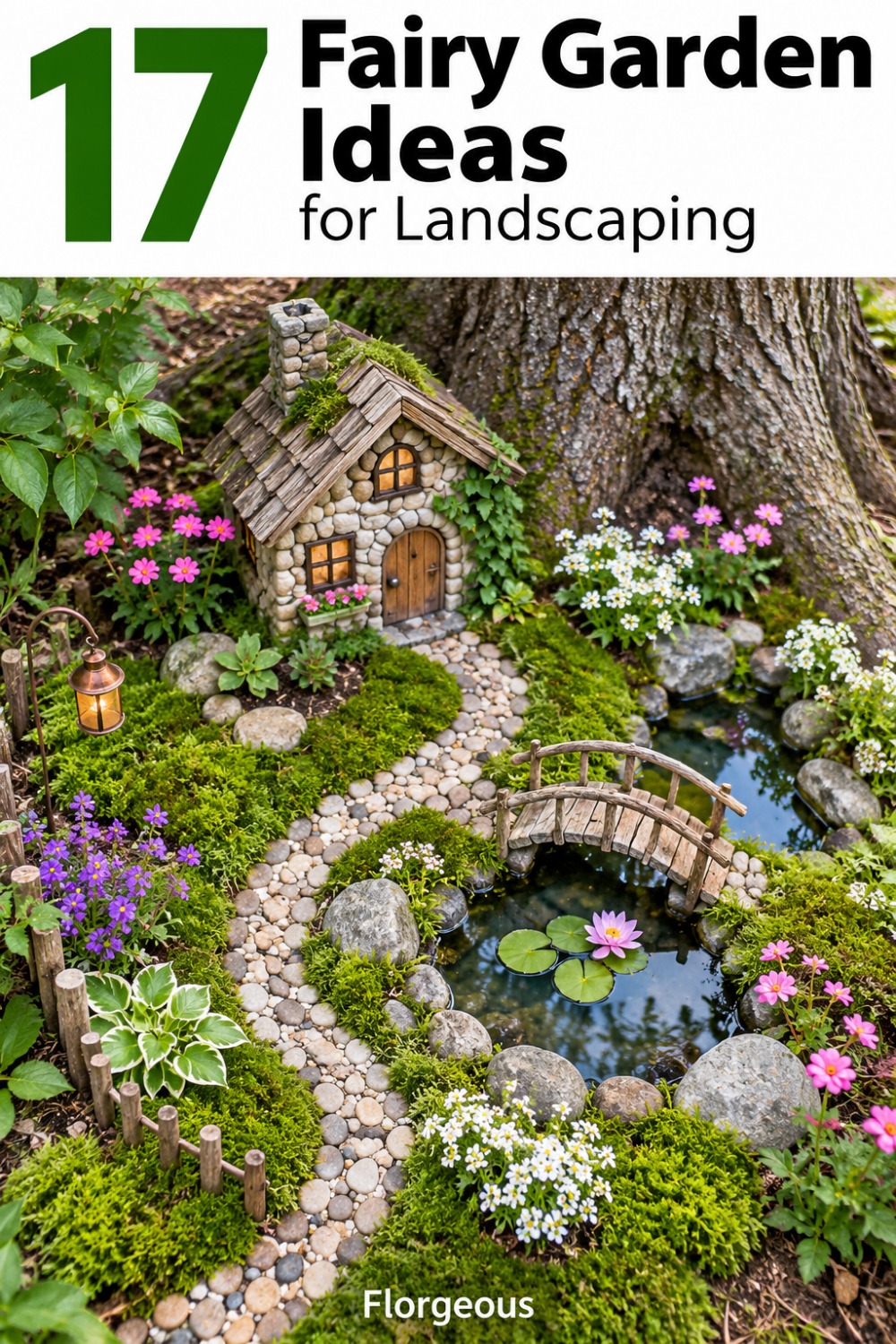
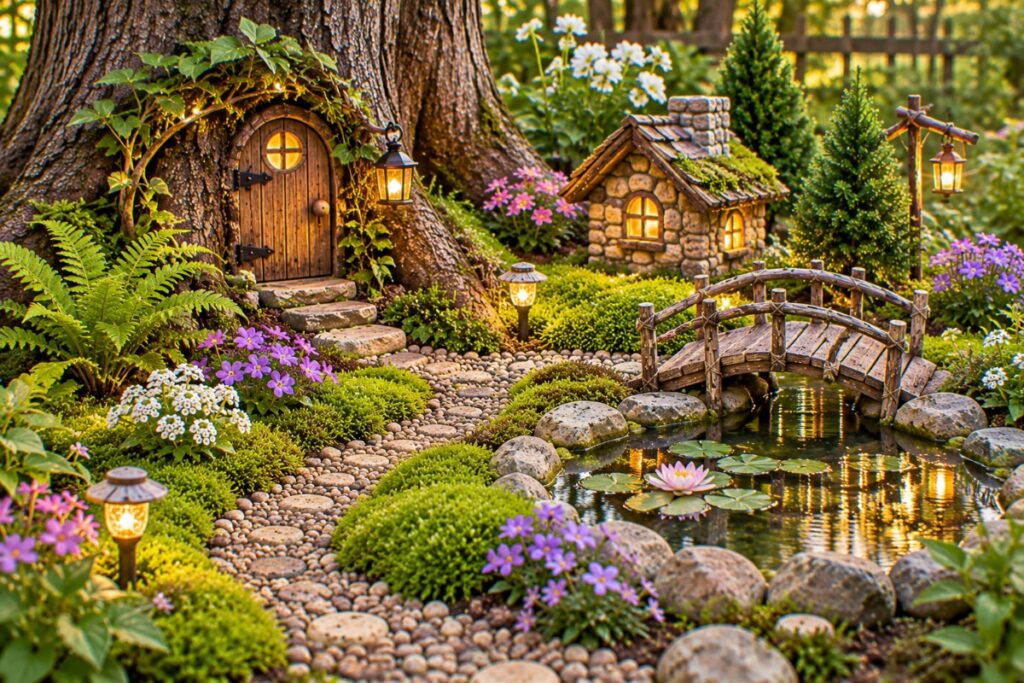
There’s something irresistible about a tiny world hidden in the garden.
A fairy garden is a miniature landscape, complete with paths, little houses and pint-sized plants, that invites you to slow down and look closely.
The secret to a fairy garden that looks magical rather than cluttered is scale. Choose truly small plants, keep accessories natural and give the scene a simple story, like a cottage by a pond or a village at the foot of a tree.
These 17 fairy garden ideas for landscaping work in pots, beds and shady corners, and many are perfect projects to make with children.
Best Plants for Fairy Gardens
| Plant | Light | Role in the scene |
|---|---|---|
| Irish moss (Sagina subulata) | Sun to part shade | Soft green ‘lawn’ |
| Creeping thyme | Full sun | Fragrant ground cover |
| Baby’s tears (Soleirolia soleirolii) | Shade | Moss-like carpet |
| Dwarf mondo grass | Sun to shade | Tiny clumps of ‘grass’ |
| Sedum and echeveria | Full sun | Shrubs and boulders |
| Dwarf Alberta spruce | Sun | Miniature trees |
1. Start With a Container Fairy Garden
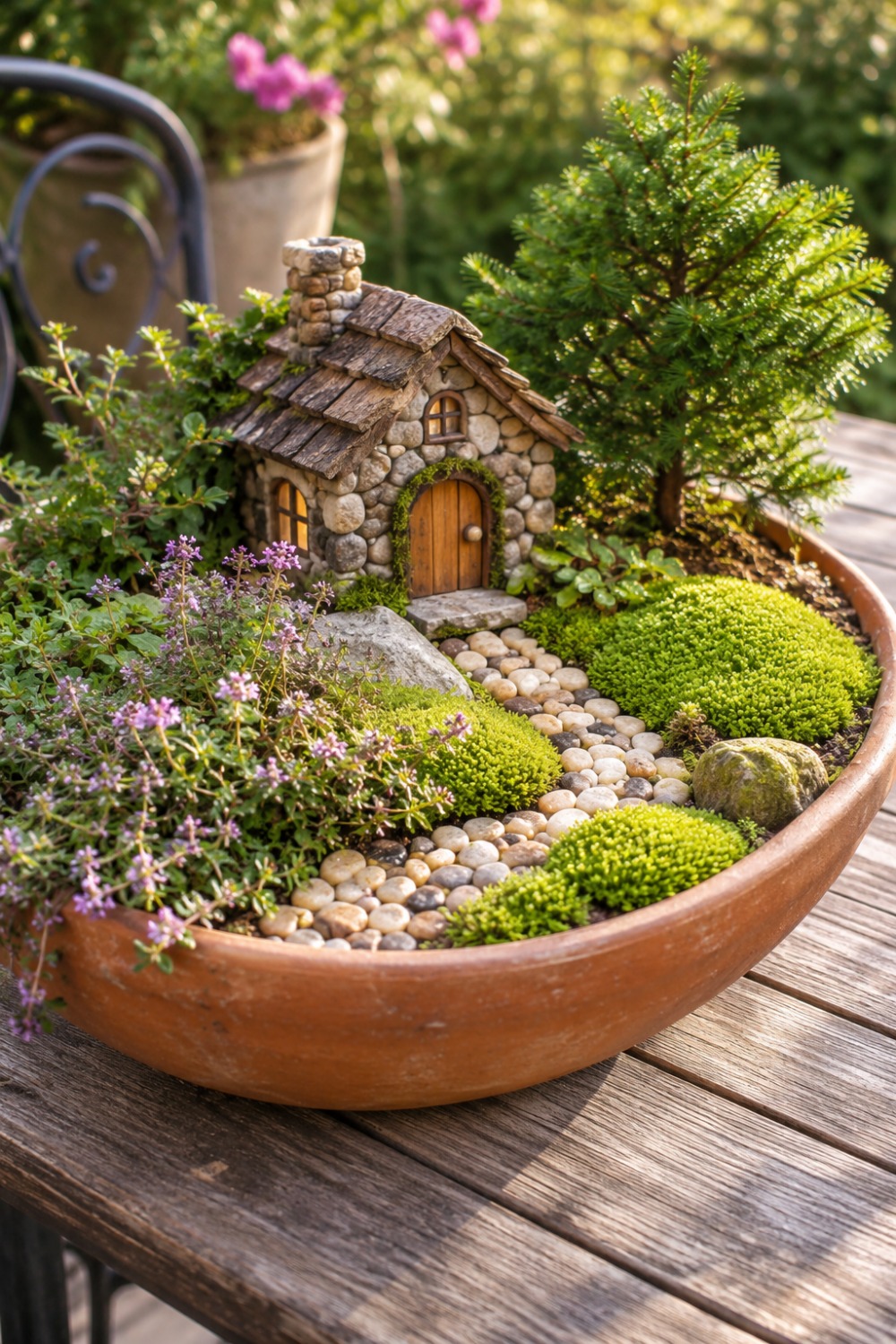
A wide, shallow container is the easiest way to begin.
It keeps the scene compact, you can move it into the best light and it’s easy to change when you get new ideas.
Choose a bowl or trough at least a few inches deep with drainage holes.
How to do it:
- Fill a wide container with good potting mix.
- Plant two or three tiny plants first.
- Add a path, a small house and one or two accessories.
2. Turn a Broken Pot Into a Tiered Fairy Village
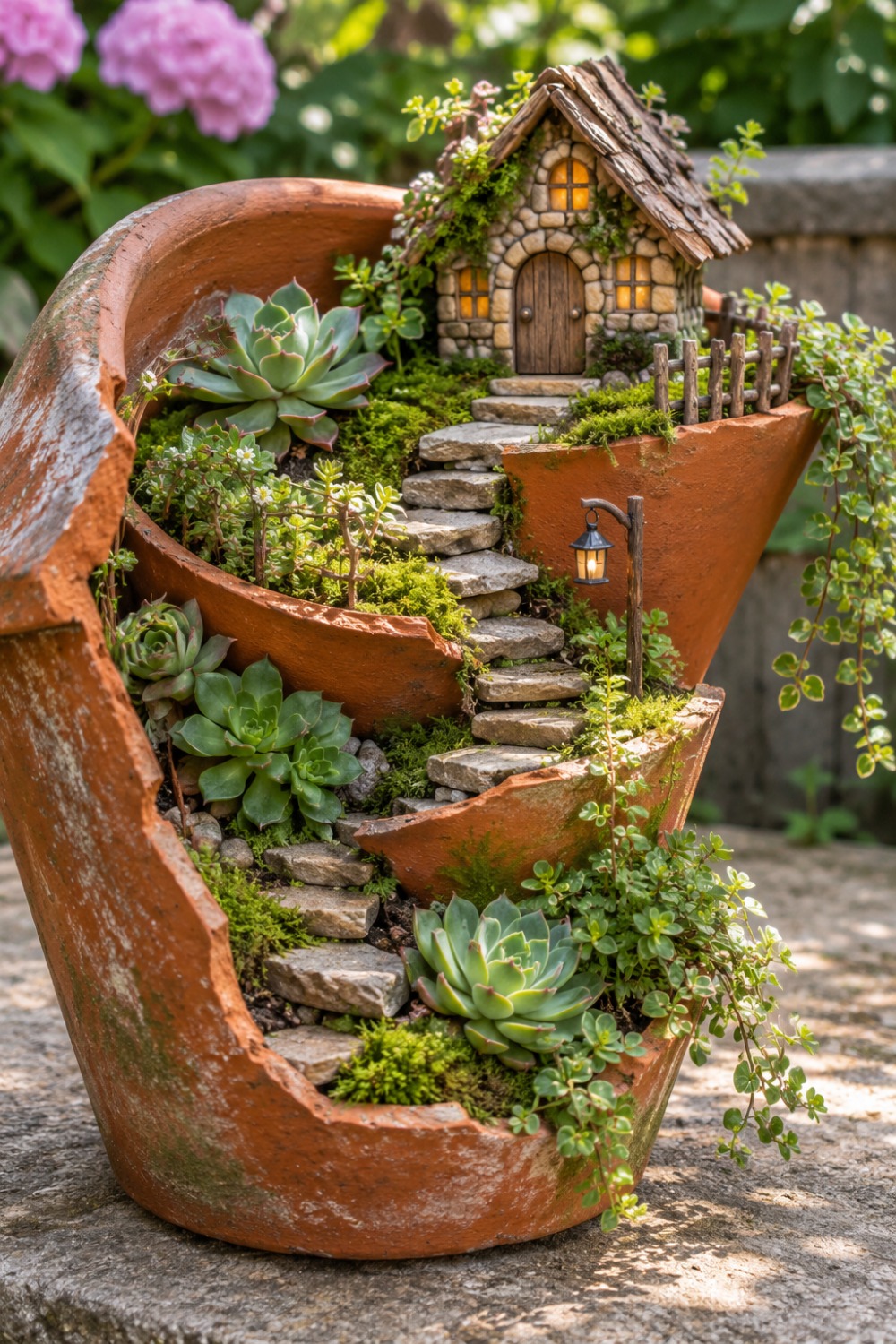
A cracked terracotta pot can become a charming hillside village.
Lay it on its side, use the broken shards as steps and terraces, and plant tiny succulents and moss on each level.
It’s a favorite fairy garden idea because it looks so magical yet costs almost nothing.
How to do it:
- Break the pot carefully or use one that’s already cracked.
- Fill it with soil and arrange the shards as steps.
- Plant small succulents and moss on each terrace.
3. Tuck a Fairy Garden Into the Base of a Tree
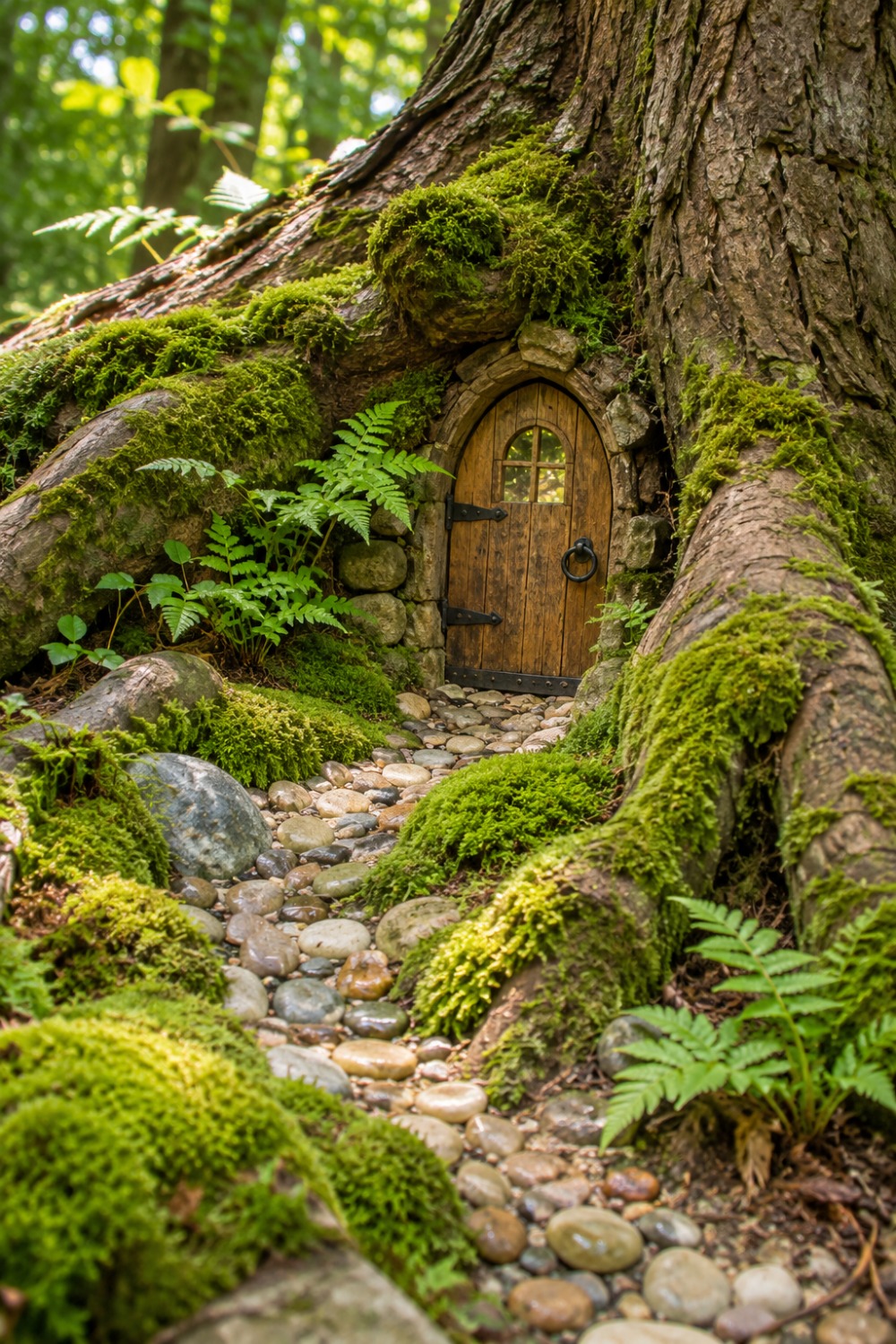
The roots of a large tree make a natural setting for a fairy village.
Add a tiny door against the trunk, a path between the roots and moss or small ferns in the hollows.
Avoid piling soil against the trunk or damaging the roots, and keep everything on the surface.
How to do it:
- Pick a tree with interesting surface roots.
- Place a small door and house against the trunk.
- Add a pebble path and shade-loving miniatures.
Tip: never bury the root flare. Arrange the scene on top of the soil instead.
4. Build a Fairy House From Natural Materials
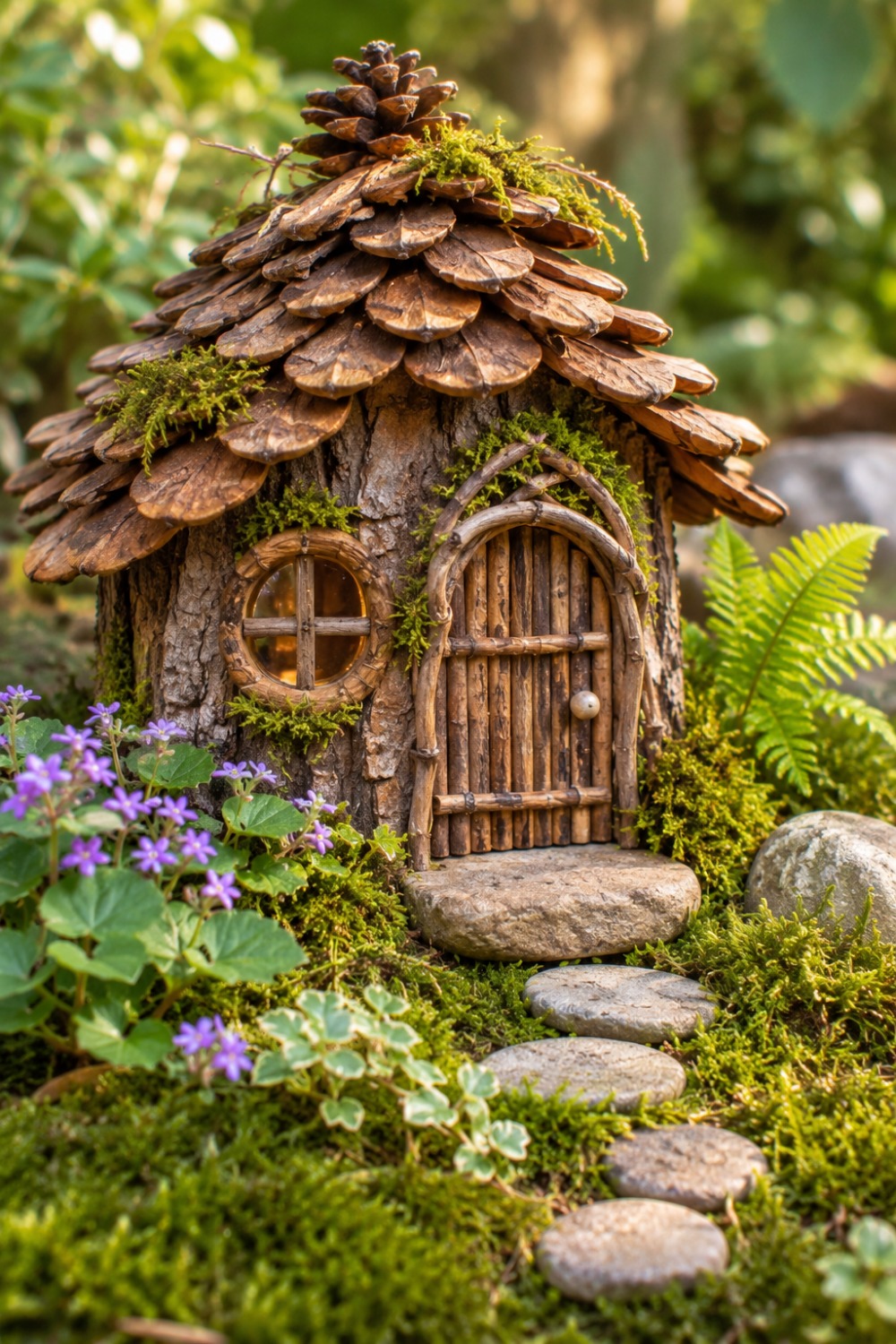
Handmade houses look more magical than shiny shop-bought ones.
Use bark for walls, twigs for frames, pinecone scales or leaves for the roof and a flat stone for a doorstep.
A small clay pot turned upside down also makes a quick, sturdy cottage.
How to do it:
- Gather bark, twigs, moss and small stones.
- Glue them to a small box or upturned pot with outdoor glue.
- Seal with an outdoor varnish so it lasts.
5. Use Moss for Soft Miniature Lawns
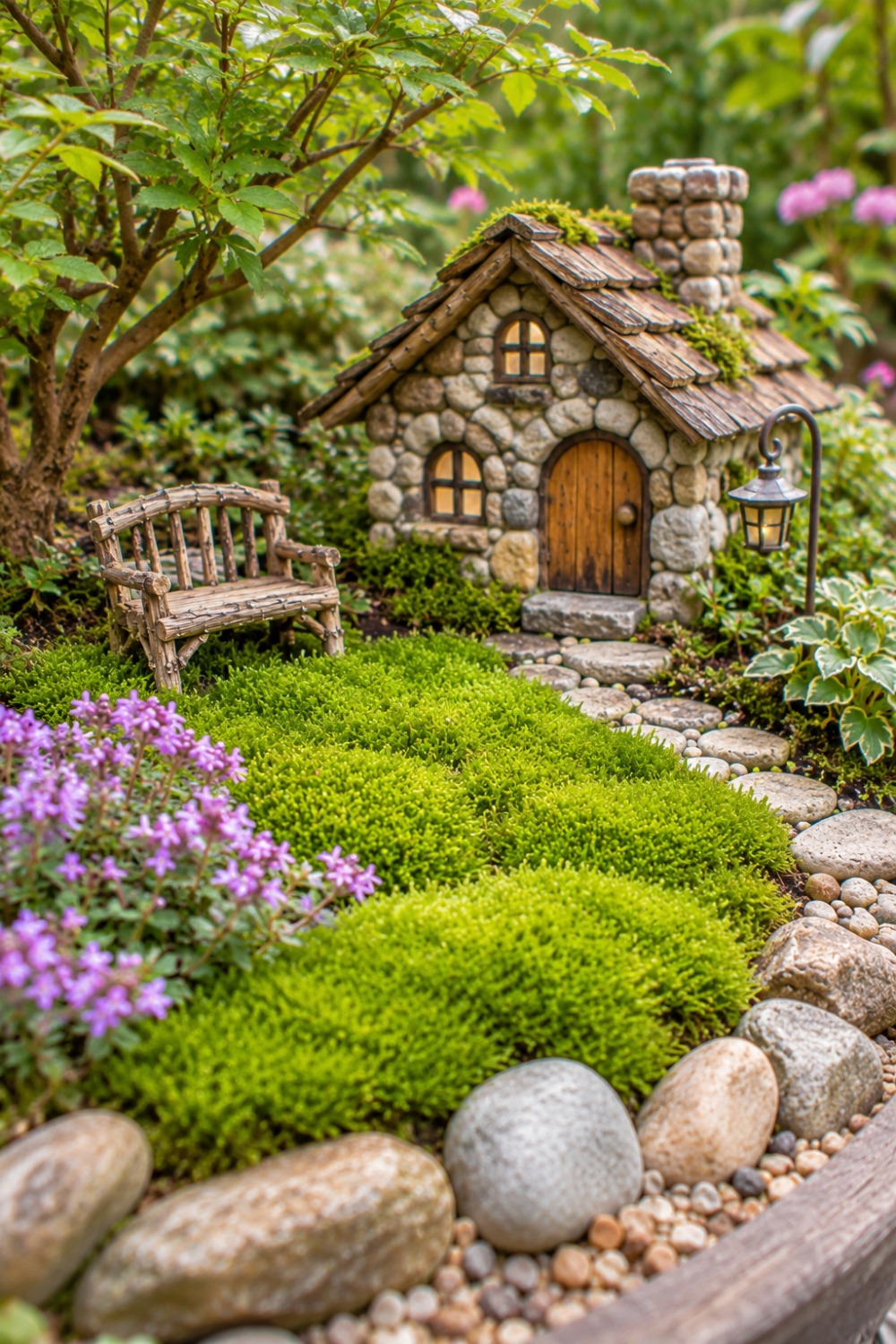
Moss and moss-like plants make perfect tiny lawns.
Irish moss and Scotch moss thrive in sun to part shade, while baby’s tears and true mosses prefer shade and moisture.
Press them in firmly and keep them damp until they settle.
How to do it:
- Choose a moss or moss-like plant suited to your light.
- Press pieces firmly onto moist soil.
- Mist or water lightly until established.
6. Plant Tiny Trees for Scale
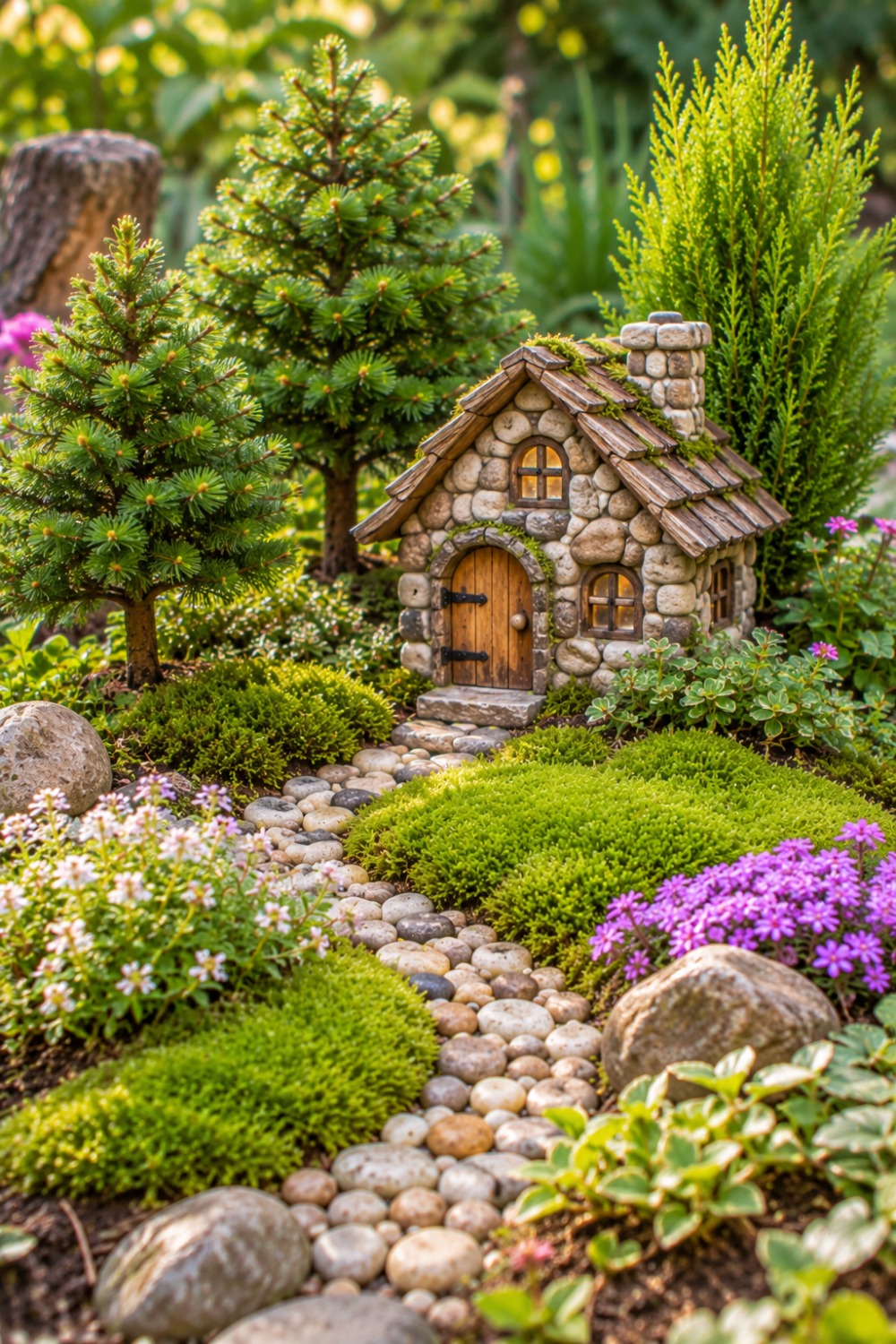
Miniature trees give a fairy garden height and make everything else look smaller.
Dwarf Alberta spruce, dwarf Hinoki cypress, rosemary trained as a tiny tree and small bonsai-style junipers are popular choices.
Look for very slow-growing varieties so they stay in scale.
How to do it:
- Choose slow-growing dwarf conifers or herbs.
- Plant one or two as the tallest point.
- Trim lightly to keep their tree-like shape.
7. Make a Pebble Path and Stepping Stones
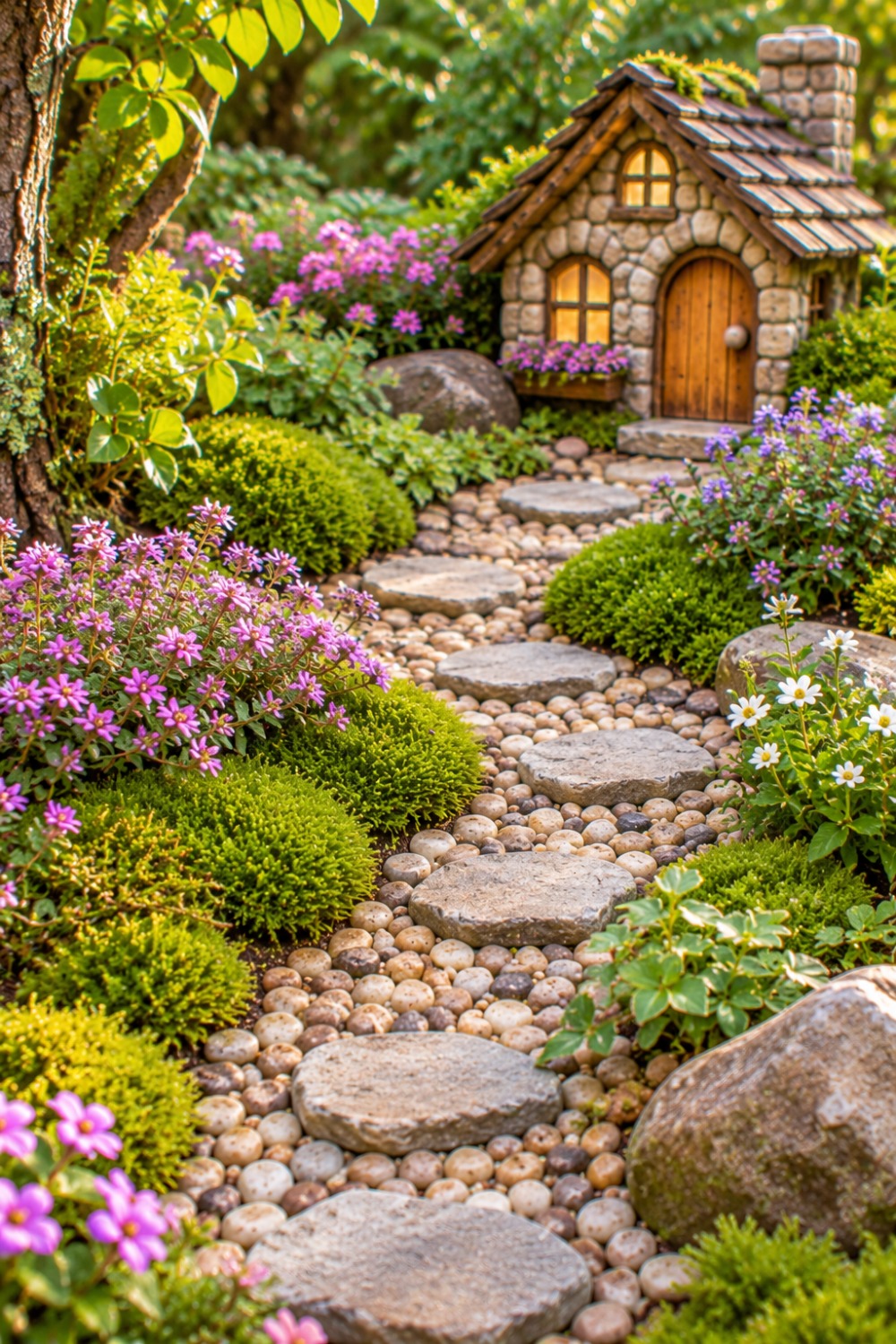
A winding path draws the eye through the scene and makes it feel like a real place.
Use small flat pebbles, aquarium gravel or tiny slate pieces.
Curve the path so it disappears behind a plant, which adds a sense of mystery.
How to do it:
- Mark a winding route through the scene.
- Press small flat stones into the soil.
- Fill gaps with fine gravel or sand.
8. Add a Miniature Pond
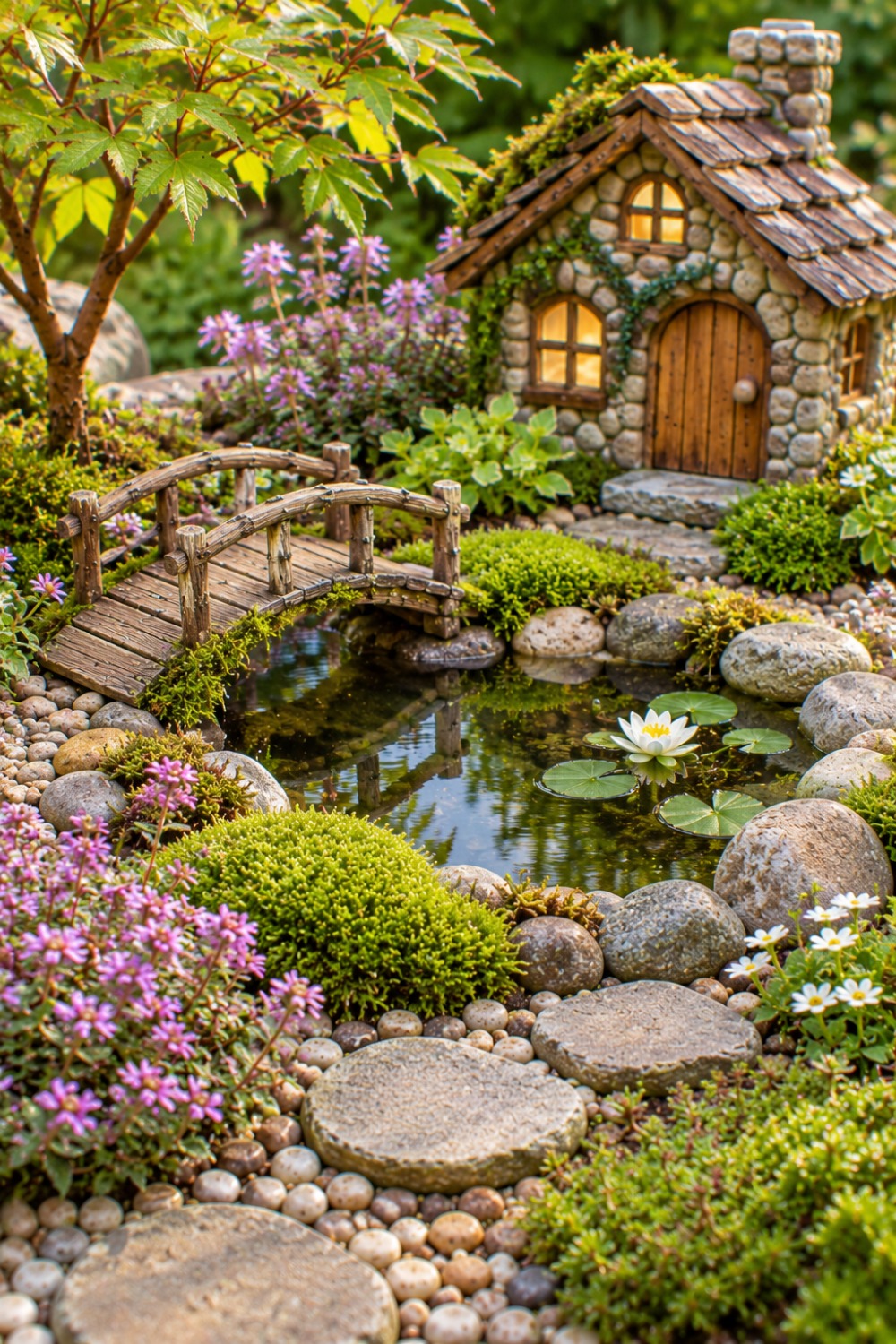
A tiny pond brings sparkle to the scene.
Use a shallow dish of water, a small mirror or a patch of blue glass pebbles to suggest water.
Edge it with small stones and moss, and add a tiny bridge.
How to do it:
- Sink a shallow dish level with the soil, or use a mirror or blue glass.
- Edge it with pebbles and moss.
- Add a small bridge or stepping stones.
9. Create a Succulent Fairy Garden for Sunny Spots
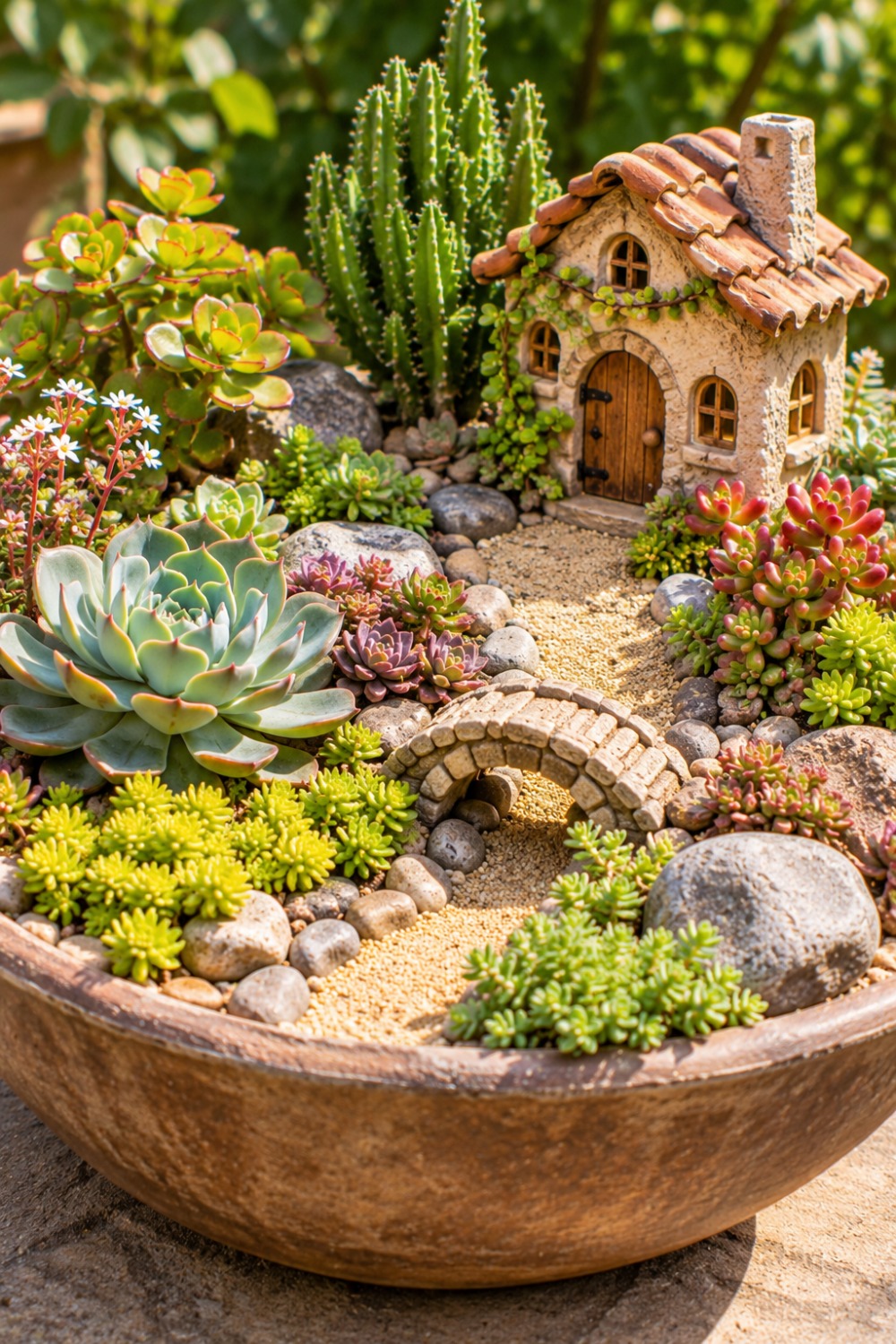
In hot, sunny spots, succulents make a low-water fairy landscape.
Rosettes of echeveria look like giant flowers, sedums become tiny shrubs and columnar types like the fairy castle cactus look like towers.
Use gritty soil and sand or gravel for paths.
How to do it:
- Use cactus and succulent mix in a draining container.
- Arrange succulents by height and color.
- Water only when the soil is dry.
10. Grow a Shade Fairy Garden With Ferns and Moss
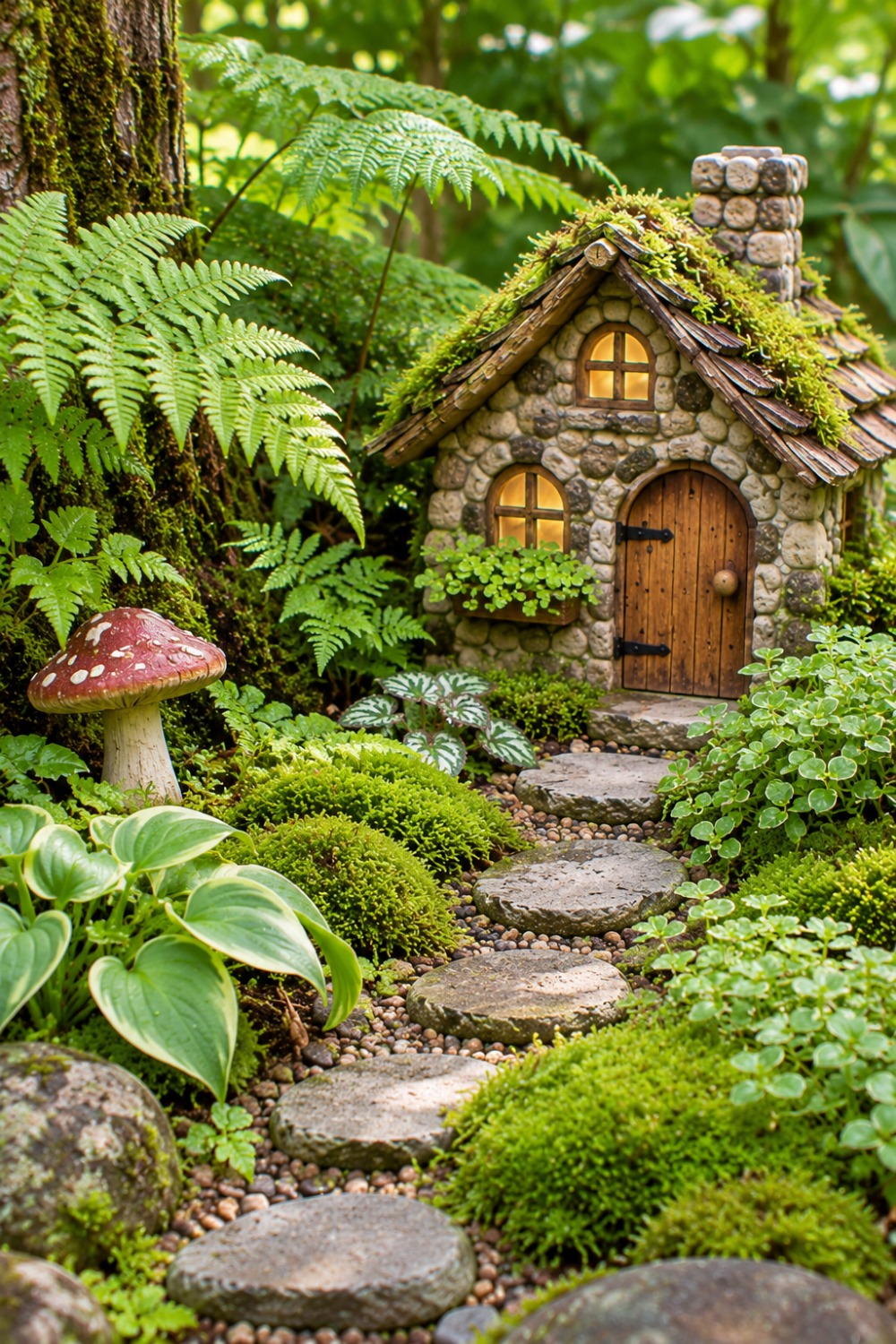
A shady corner is ideal for a woodland fairy garden.
Tiny ferns, moss, baby’s tears and miniature hostas create a lush green world.
Add a mushroom ornament or two and a small stone cottage for a storybook feel.
How to do it:
- Choose a shady, sheltered spot.
- Plant ferns, moss and miniature hostas.
- Keep the soil evenly moist.
11. Turn a Tree Stump Into a Fairy Home
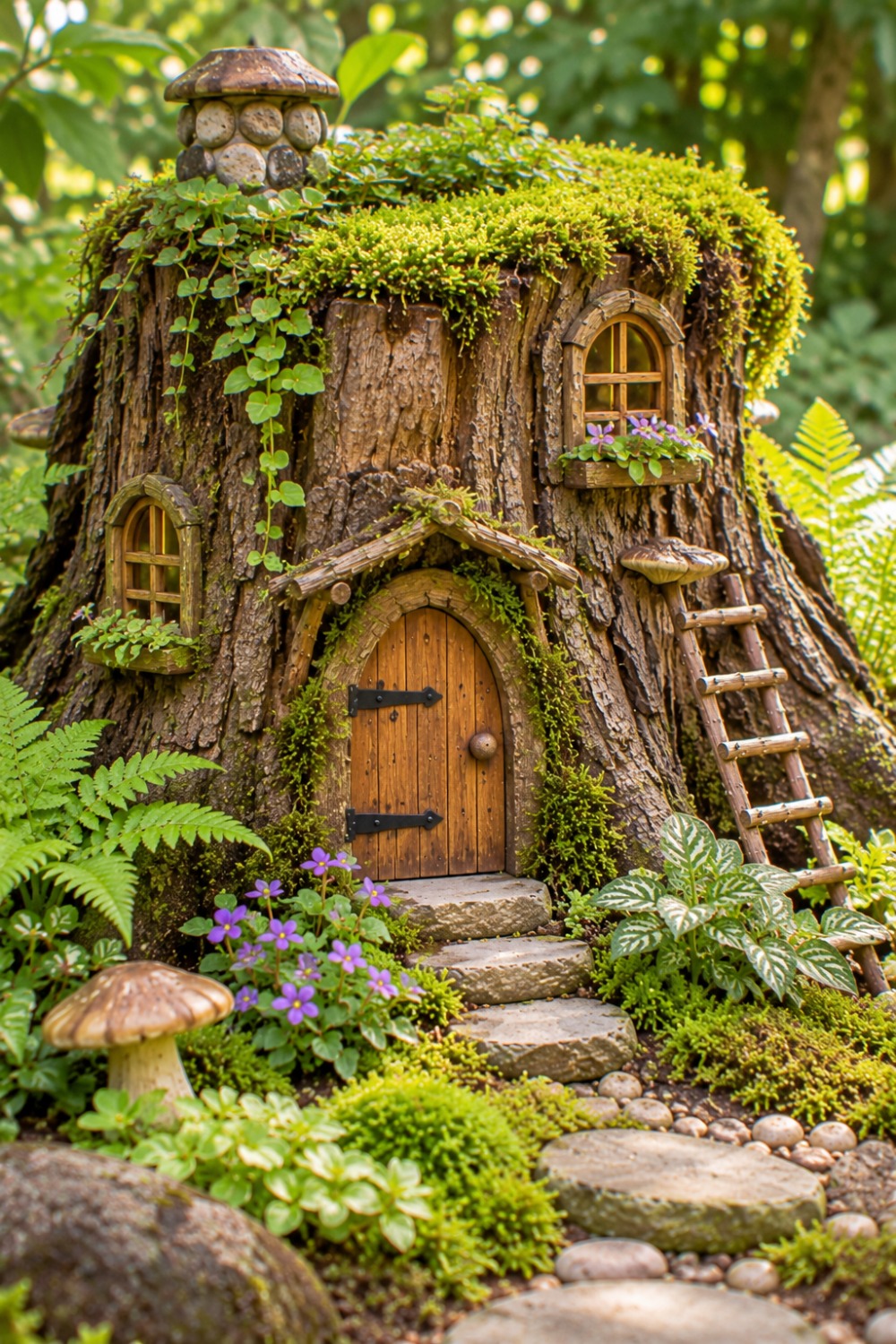
An old tree stump can become a fairy home instead of an eyesore.
Add a tiny door and windows, a ladder or steps and planting around the base.
Moss and small ferns will happily grow on a damp stump.
How to do it:
- Clean up the stump and remove loose bark.
- Attach a small door, windows and steps.
- Plant moss and small plants around the base.
12. Plant a Fairy Garden in a Wheelbarrow
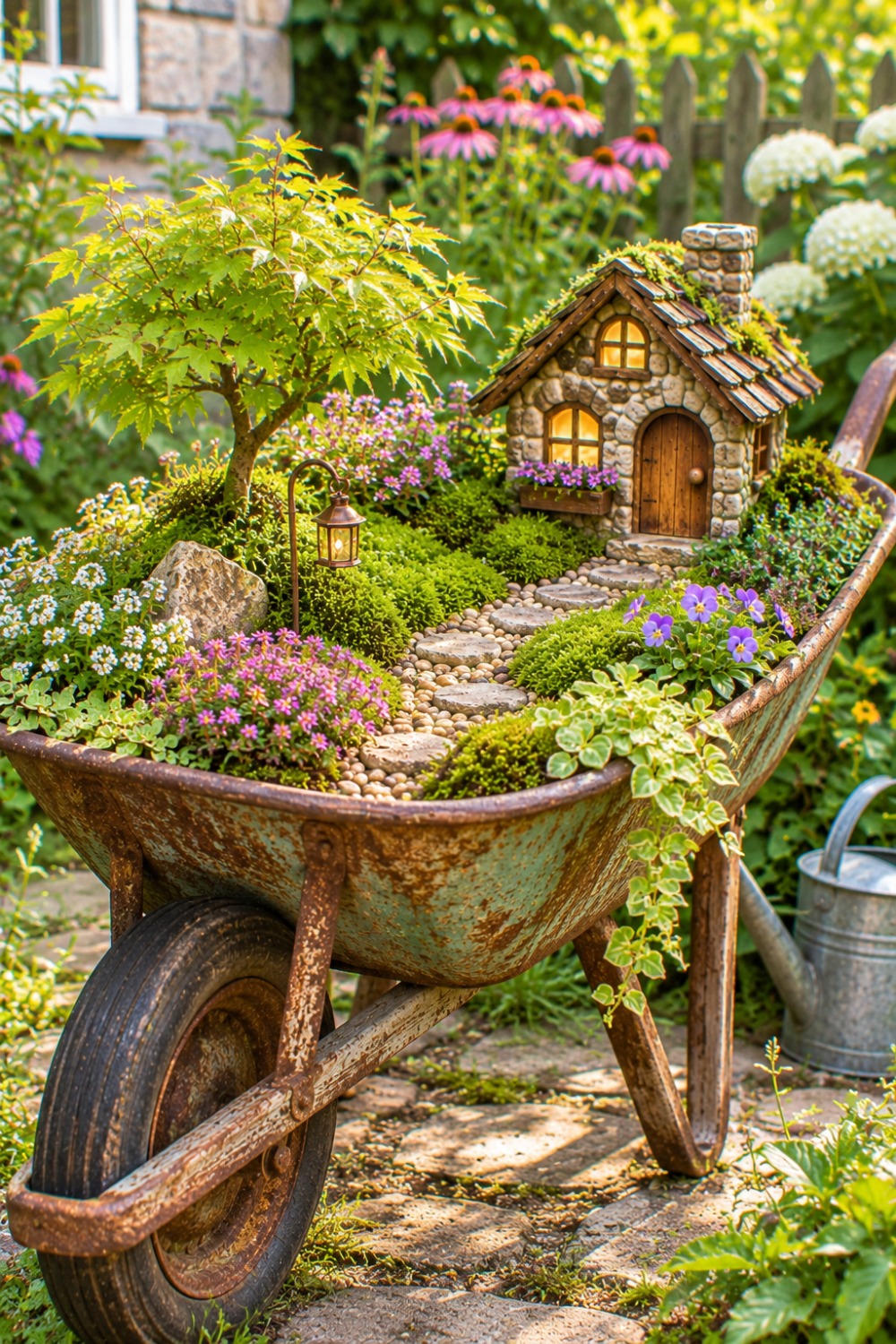
An old wheelbarrow makes a charming raised fairy garden that you can move around.
Drill drainage holes, fill it with soil and create a little landscape inside.
It’s a great project for a cottage garden or a child’s corner.
How to do it:
- Drill drainage holes in the wheelbarrow.
- Fill with potting mix and plant small plants.
- Add a house, path and pond.
13. Add Miniature Furniture Made From Twigs
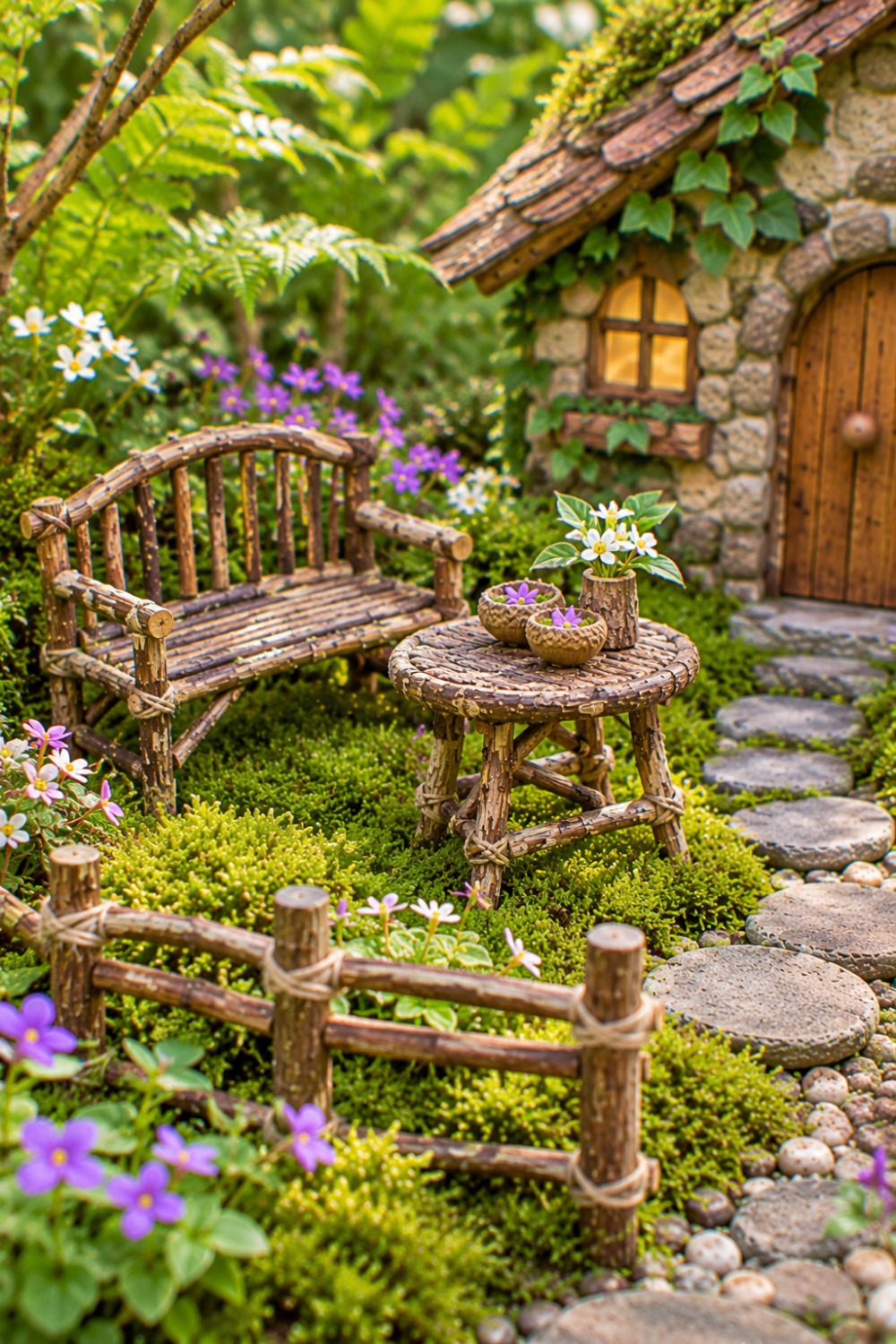
Tiny benches, tables and fences made from twigs add charm and scale.
They’re easy to make with garden clippers and outdoor glue.
Natural materials weather gently and blend into the planting.
How to do it:
- Collect straight, dry twigs.
- Cut them to size and glue into benches, fences or tables.
- Seal with outdoor varnish.
14. Light It With Solar Fairy Lights
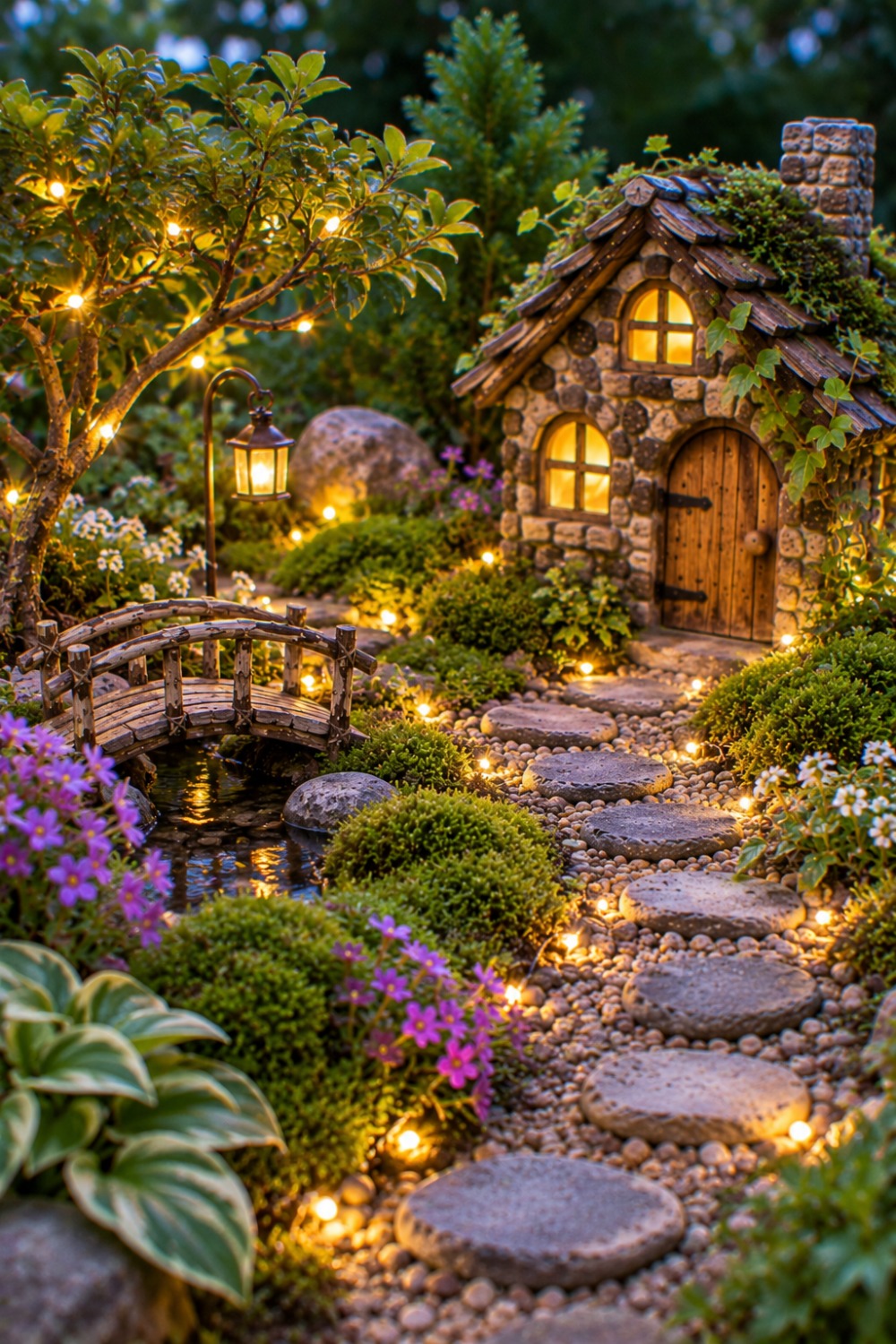
Fairy gardens become truly magical after dark.
Tiny solar string lights, a solar lantern beside the house or glowing pebbles along the path add a gentle sparkle.
Choose warm white lights for a soft glow.
How to do it:
- Place a small solar panel where it gets sun.
- Weave tiny lights through plants and around the house.
- Add glow-in-the-dark pebbles along the path.
15. Change the Scene With the Seasons
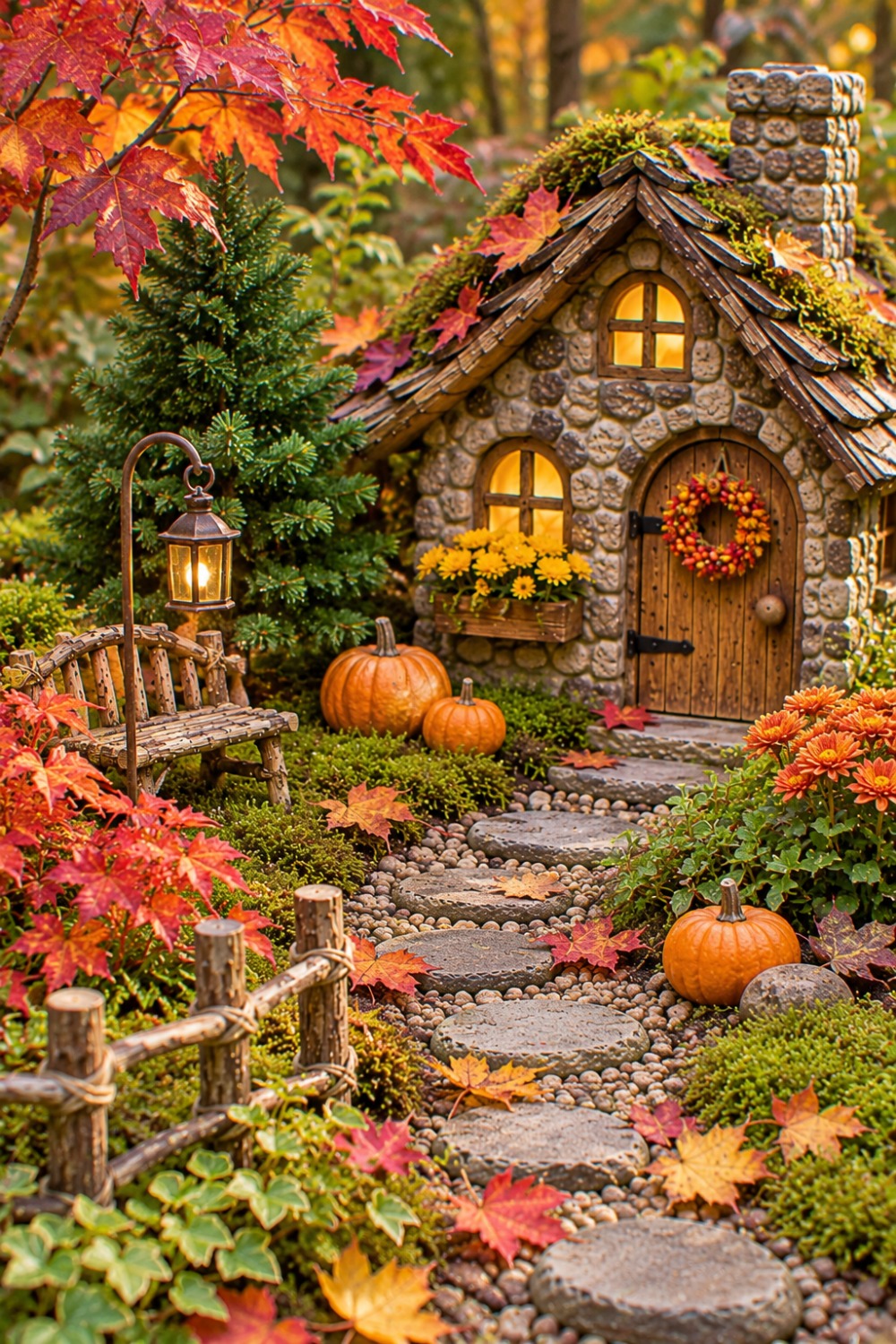
Part of the fun is updating the scene through the year.
Add tiny pumpkins and leaves in autumn, a miniature wreath in winter and fresh flowers in spring.
Keep the plants and main structures the same and swap only the small details.
How to do it:
- Keep a box of seasonal accessories.
- Swap them at the start of each season.
- Refresh annual flowers when needed.
16. Choose Tiny Flowers for Color
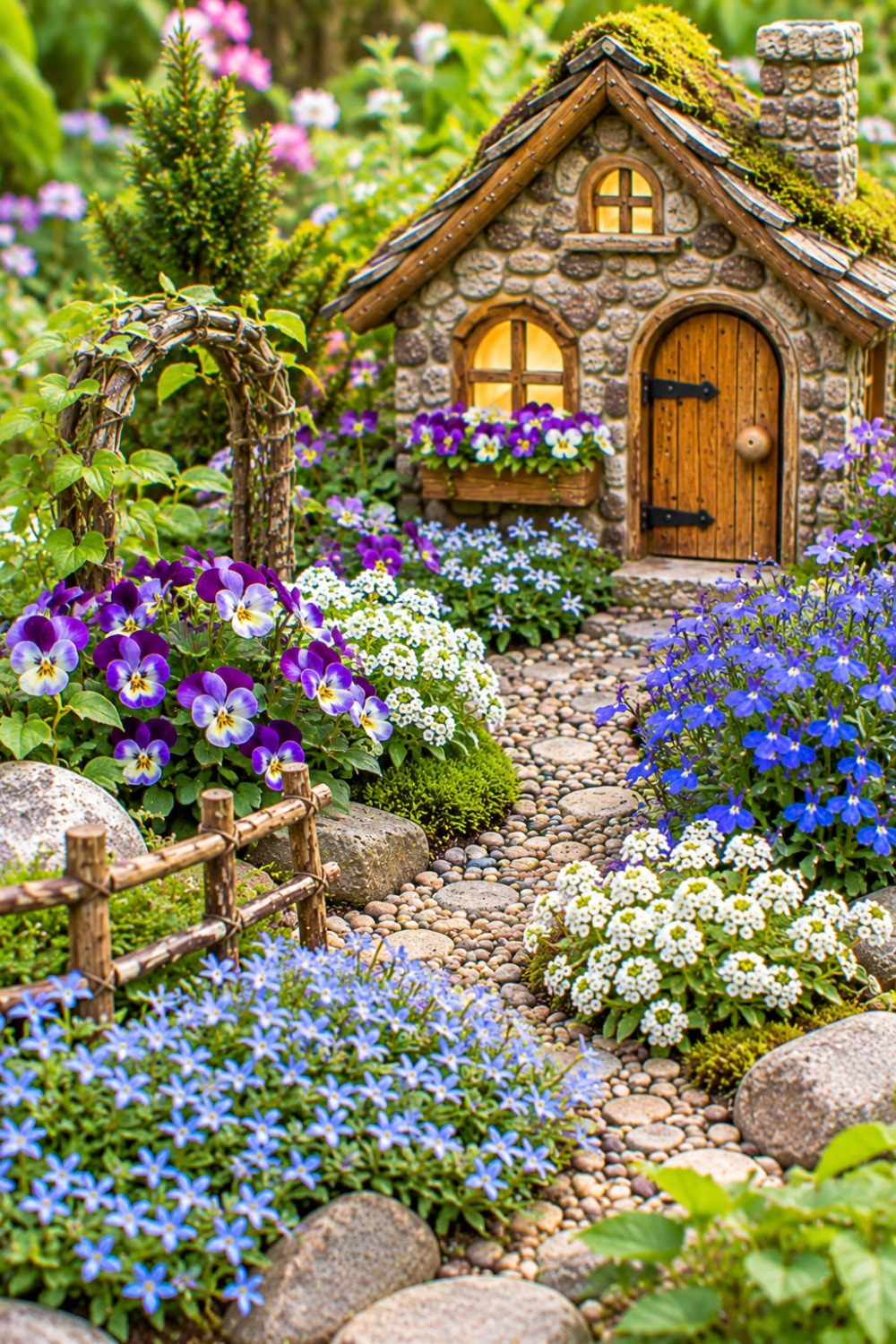
Small flowers keep the scene in scale while adding color.
Look for blue star creeper, alyssum, lobelia, miniature violas and baby’s breath.
Our guide to small flowers has many more pint-sized options.
How to do it:
- Choose flowers with tiny blooms and a low habit.
- Plant them in small drifts.
- Deadhead to keep them flowering.
17. Let Kids Build Their Own Fairy Corner
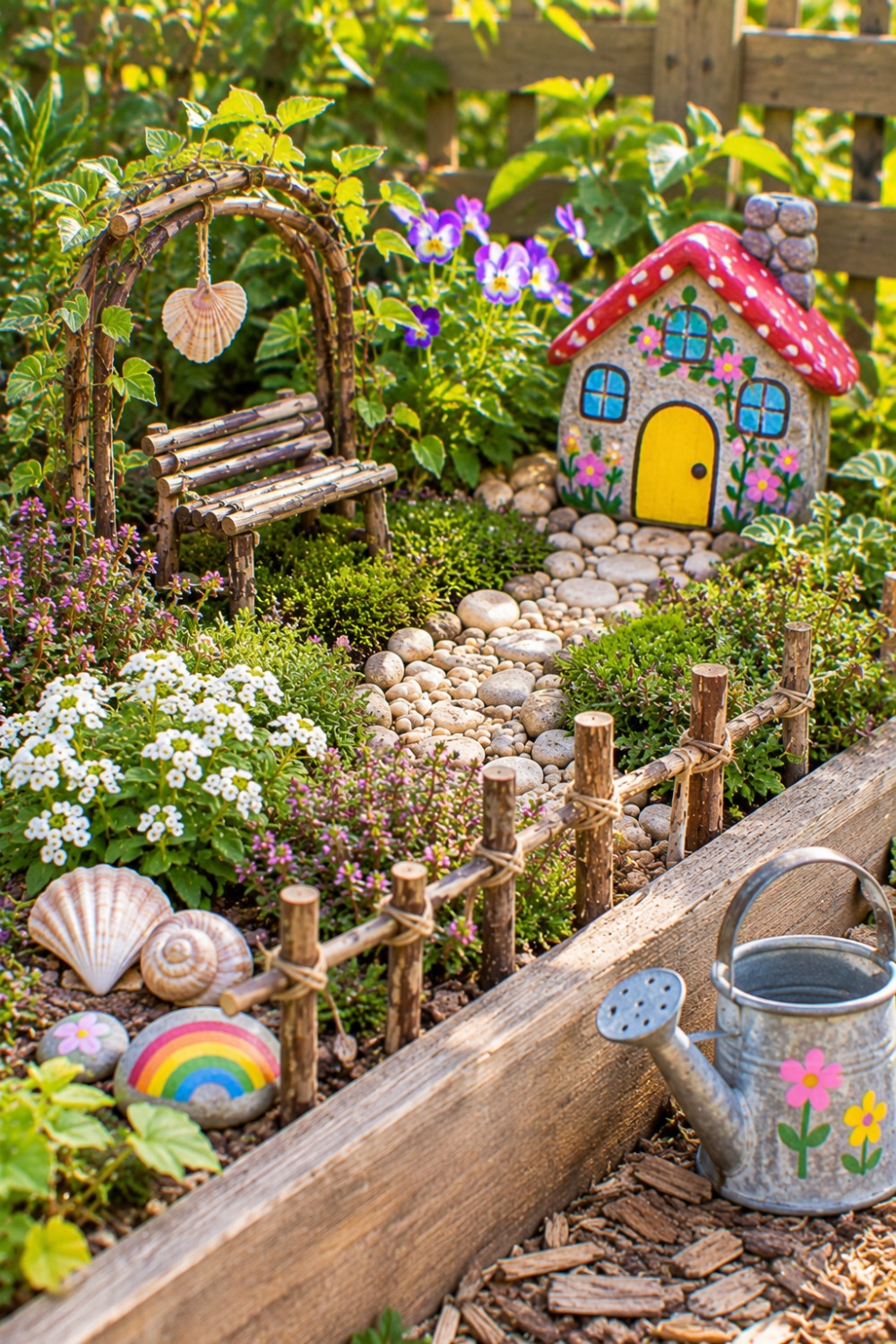
A fairy garden is one of the best ways to get children interested in gardening.
Give them a small bed or container, a few easy plants and a basket of pebbles, shells and twigs.
Let them design the story and change it whenever they like.
How to do it:
- Choose a safe spot that’s easy for children to reach.
- Provide tough, non-toxic plants.
- Let them add and rearrange natural treasures.
Frequently Asked Questions
What plants are best for a fairy garden?
Slow-growing miniatures such as Irish moss, creeping thyme, dwarf mondo grass, baby’s tears, small sedums and echeveria, dwarf conifers and tiny-flowered plants like alyssum and blue star creeper.
Can a fairy garden be in full sun?
Yes. Use succulents, sedums, creeping thyme and dwarf conifers in sunny spots, and save moss and ferns for shade.
How do I keep a fairy garden from washing away?
Use a container with drainage holes, press paths firmly into the soil, glue small accessories to stones and move delicate pieces indoors during storms.
Where should I put a fairy garden in my yard?
Choose a spot you pass often, such as beside a path, at the base of a tree or near a patio, so you can enjoy the details up close.
Final Thoughts: Create a Little World of Your Own
A fairy garden is a small project with a big sense of delight.
Start with a container or a single corner, and choose tiny plants that suit your light.
Build the scene around a simple story, like a cottage by a pond or a village beneath a tree, and keep accessories natural.
Add a winding path, a little water and some soft lighting to make it feel alive.
Change the details with the seasons, and invite children to help.
Most of all, have fun. Every fairy garden is different, and that’s part of the magic.