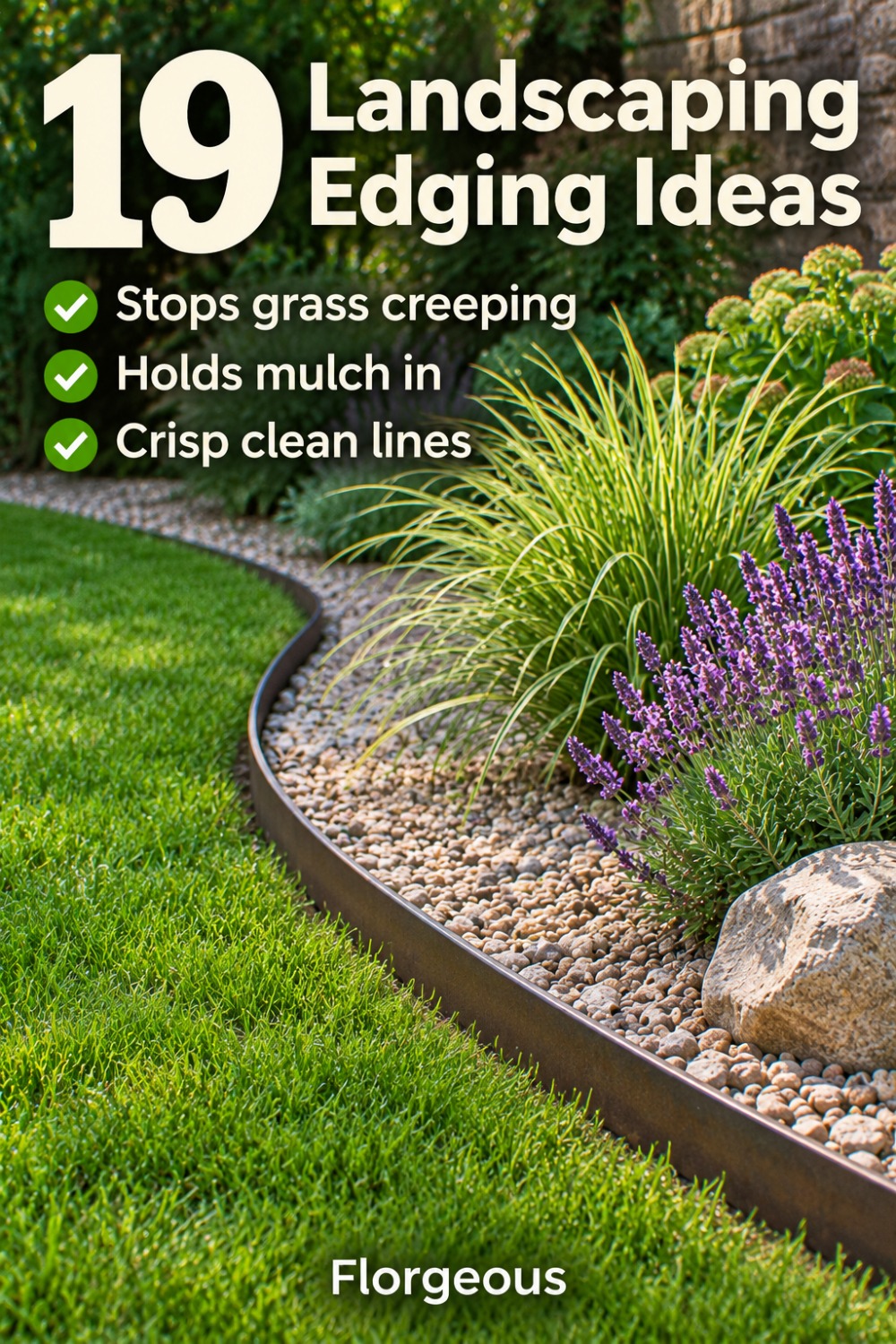
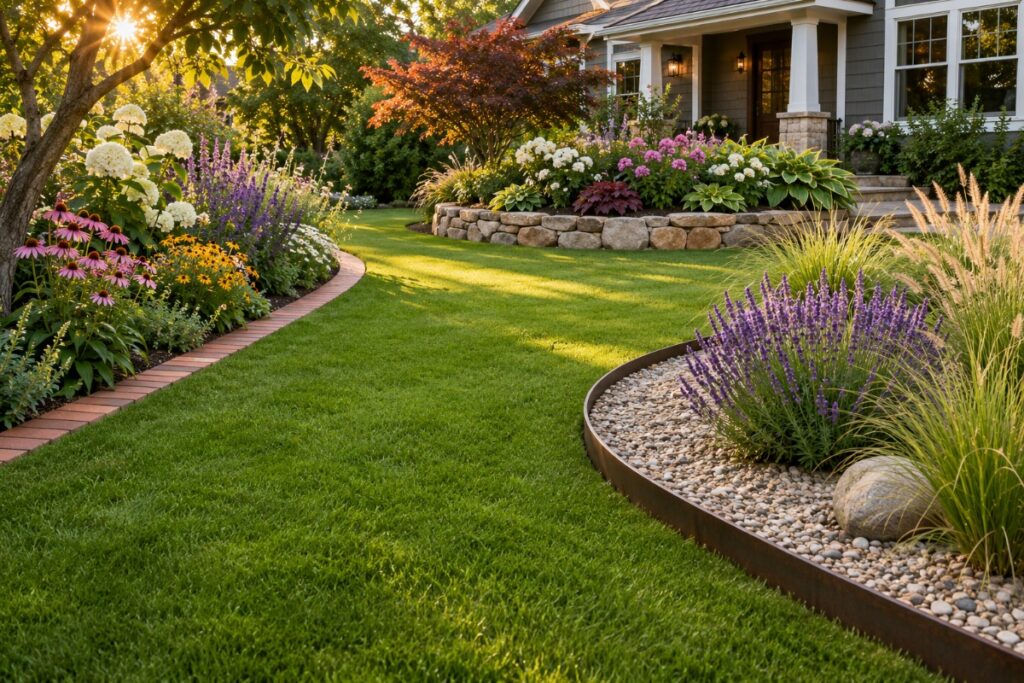
Edging is one of those small details that makes a garden look finished.
Without it, grass creeps into flower beds, mulch spills onto paths and even beautiful planting starts to look messy.
The secret is to choose edging that suits both your style and the job: crisp steel for modern lines, warm brick for cottage gardens or natural stone for a relaxed look.
These 19 landscaping edging ideas range from free and simple to built to last. For more budget projects, see our cheap simple front yard landscaping ideas.
Garden Edging Materials Compared
| Material | Look | Durability |
|---|---|---|
| Spade-cut edge | Natural, classic | Needs recutting a few times a year |
| Steel or aluminum | Modern, nearly invisible | Very long-lasting |
| Brick | Traditional, warm | Long-lasting if set in a base |
| Natural stone | Rustic, relaxed | Long-lasting |
| Timber | Warm, informal | Several years, depending on wood |
| Poured concrete curb | Clean, continuous | Very long-lasting |
1. Cut a Classic Spade Edge
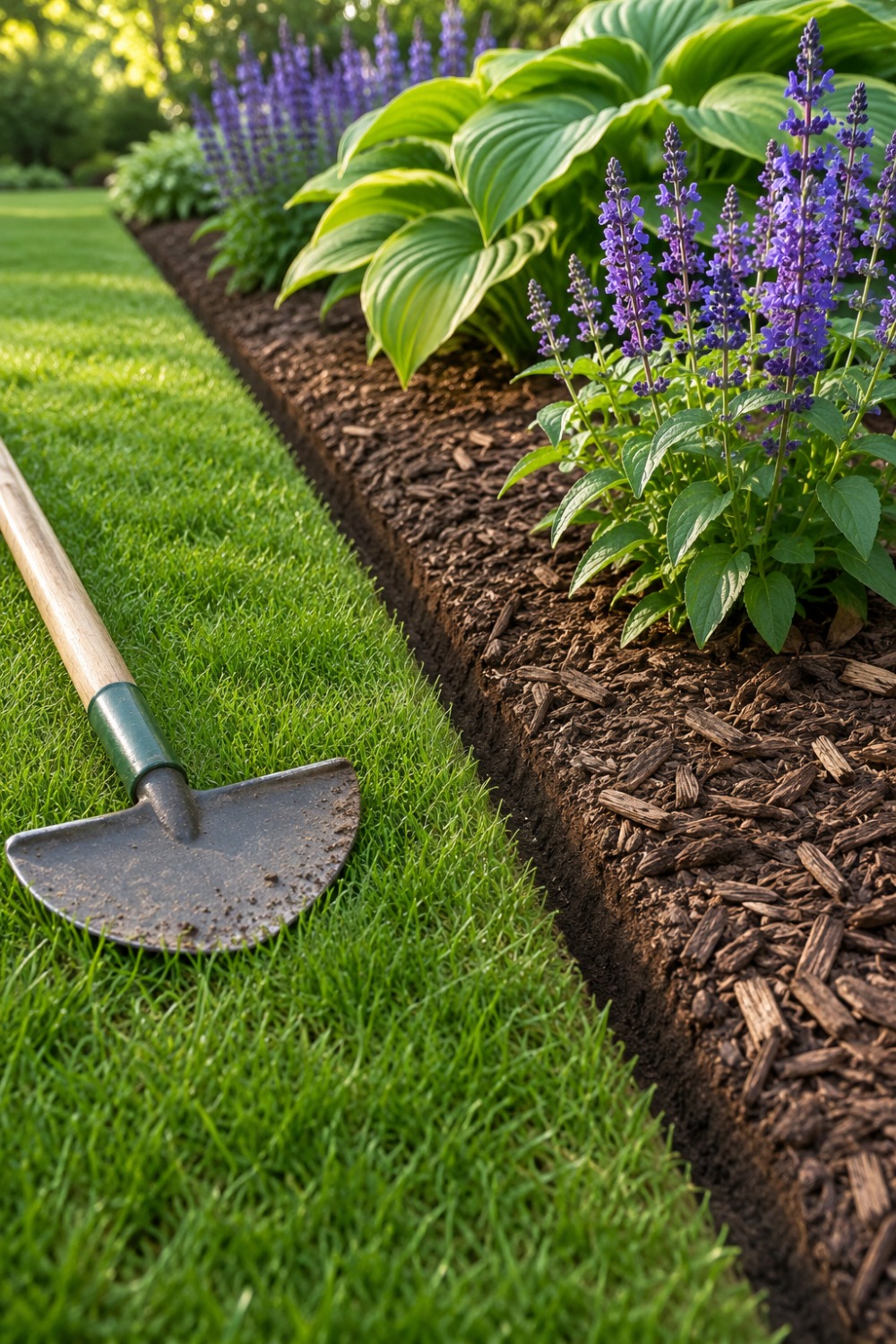
The simplest edging costs nothing at all: a clean, V-shaped trench cut with a sharp spade between lawn and bed.
It gives a crisp, natural line that many garden designers still prefer.
The trade-off is that you’ll need to recut it a few times a year.
How to do it:
- Mark the line with a hose or string.
- Cut straight down on the lawn side and angle in from the bed side.
- Remove the wedge of soil and tidy with edging shears.
2. Install Steel Edging for Modern Lines
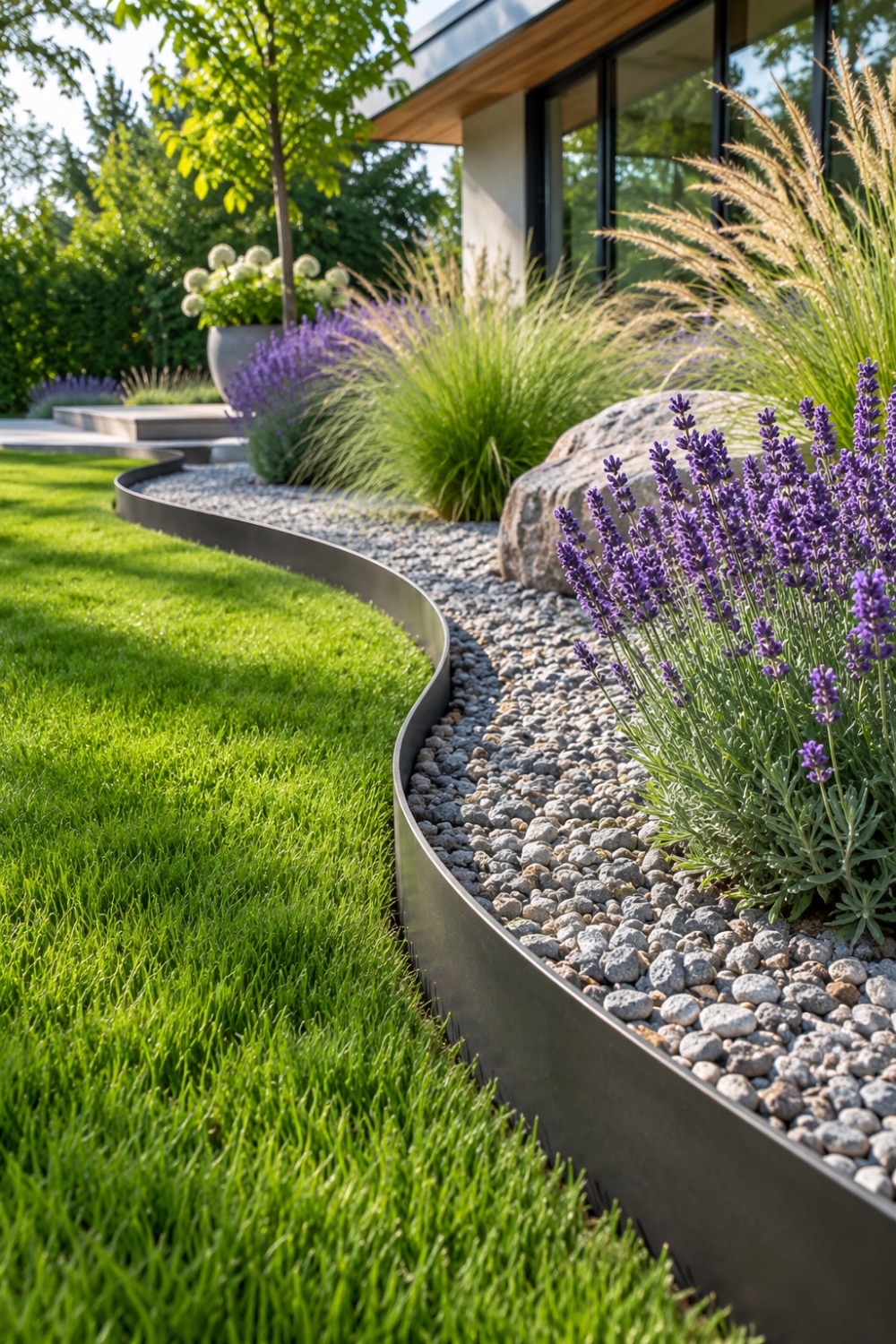
Steel edging creates a thin, crisp line that almost disappears, letting plants and lawn take center stage.
It bends smoothly into curves and lasts for decades.
Corten (weathering) steel develops a rich rust patina, while powder-coated steel stays dark.
How to do it:
- Mark your line and dig a narrow trench.
- Set the steel strips with stakes so the top sits just above soil level.
- Backfill and tamp firmly on both sides.
3. Lay a Brick Mowing Strip
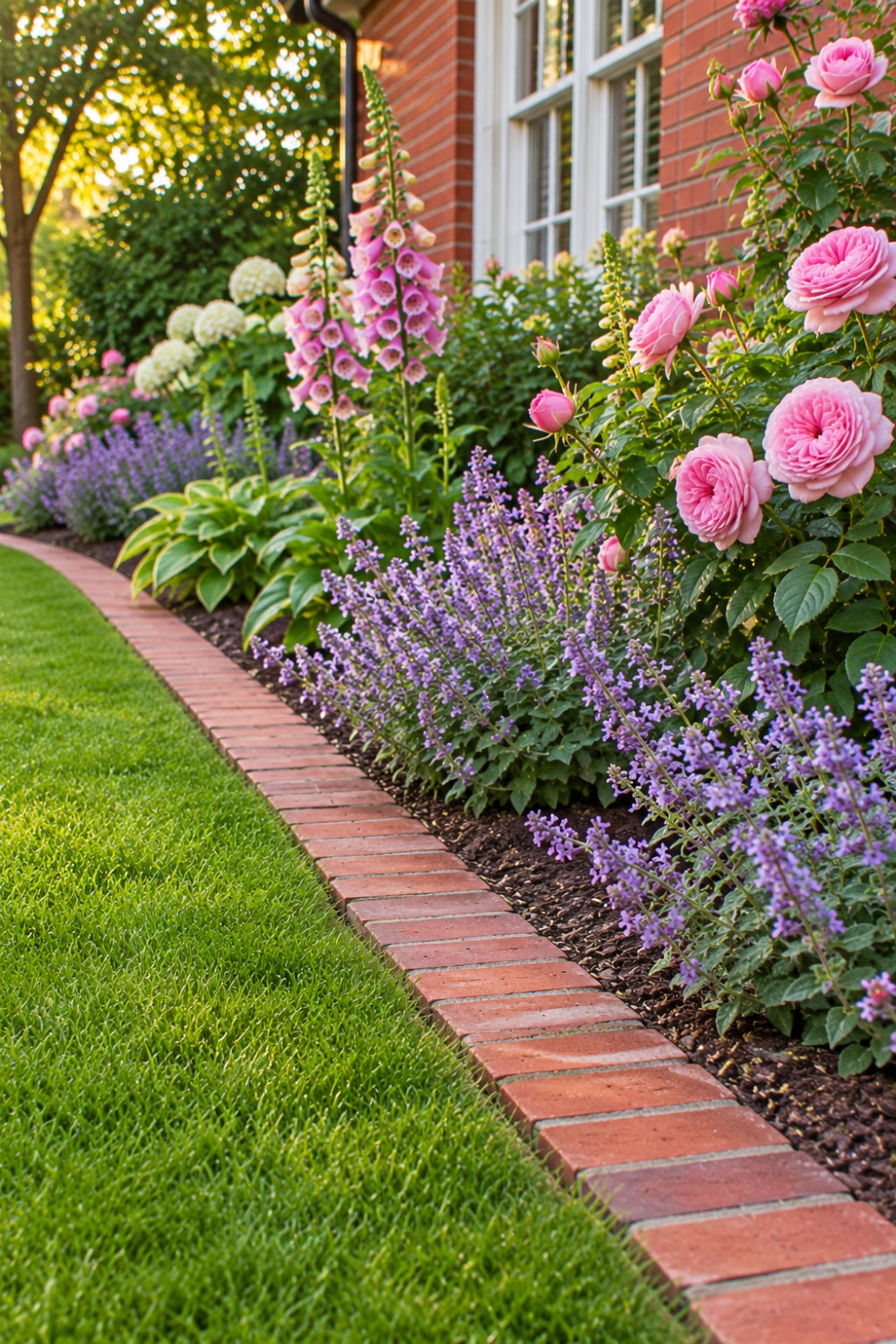
A row of bricks laid flat at lawn level makes mowing easier: one wheel runs along the brick, so there’s no hand trimming.
It also gives a warm, traditional look that suits cottage and colonial homes.
Set the bricks on sand or mortar so they stay level.
How to do it:
- Dig a shallow trench the width of a brick.
- Lay a compacted base and a layer of sand.
- Set the bricks flush with the lawn and tap them level.
4. Stand Bricks on End for a Sawtooth Edge
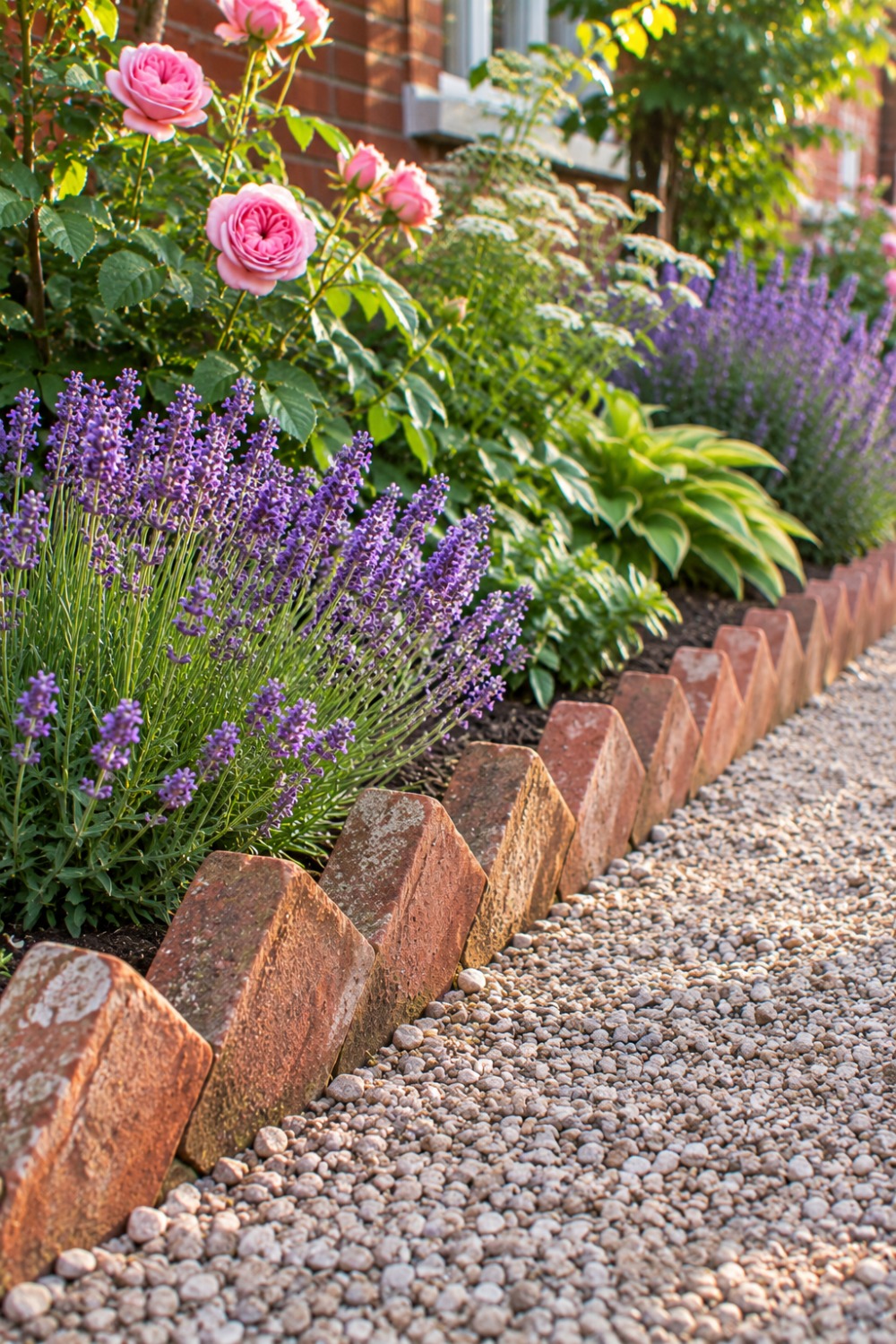
Bricks set at an angle in a sawtooth or dog-tooth pattern add a decorative Victorian touch to beds and paths.
Reclaimed bricks look especially charming and can often be found cheaply.
Bury each brick about halfway so the edge stays firm.
How to do it:
- Dig a narrow trench along the bed.
- Set the bricks at a 45-degree angle, leaning on each other.
- Backfill and firm the soil around them.
5. Edge Beds With Natural Stone
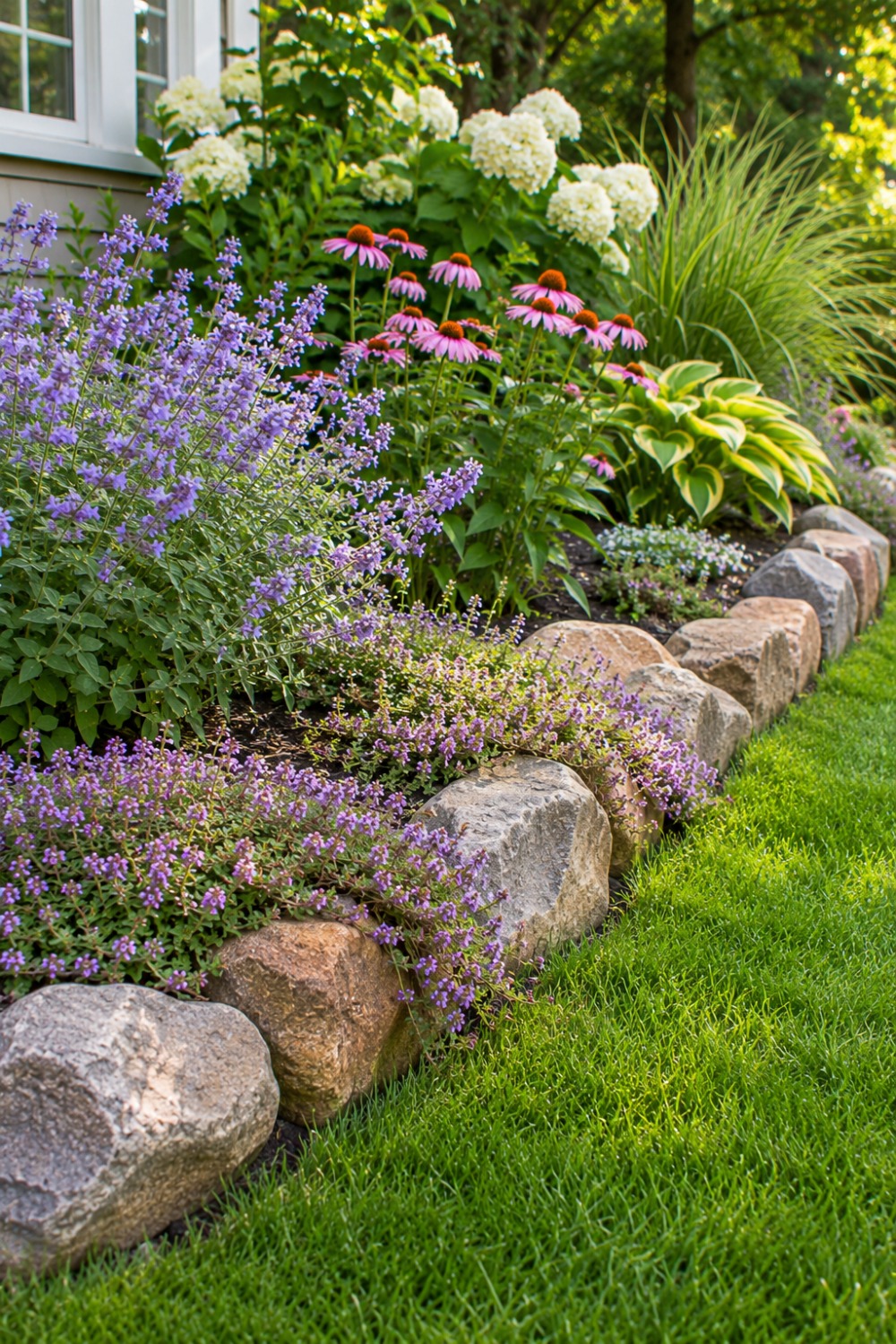
Irregular natural stones give beds a relaxed, rustic border that suits cottage and woodland gardens.
Flat flagstone pieces, fieldstone or local rock all work.
Set them partly into the soil so they look as if they’ve always been there.
How to do it:
- Choose stones of a similar color and size.
- Dig them in by about a third of their height.
- Plant low ground covers to spill over the edge.
6. Use River Rock as a Border
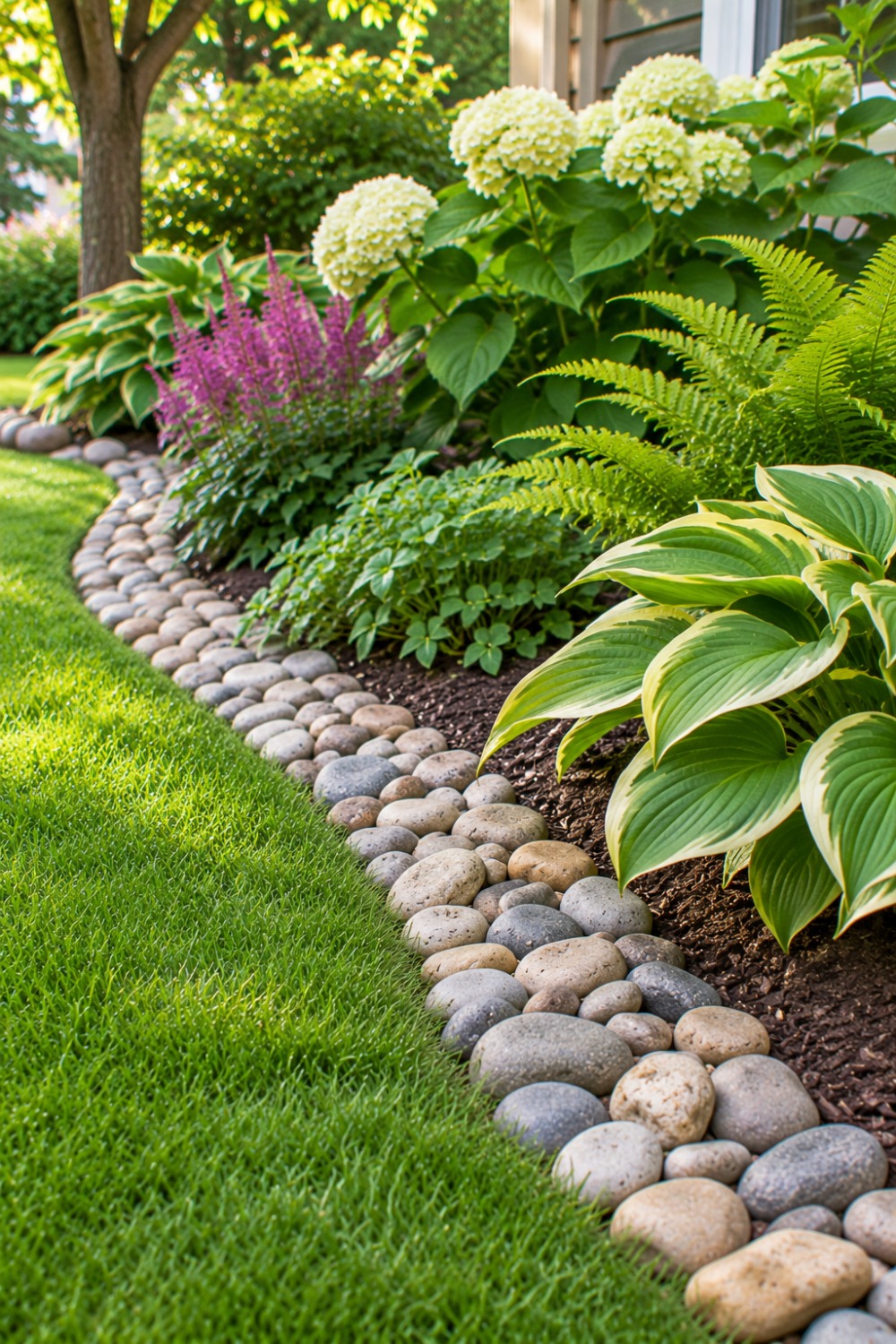
A band of smooth river rock makes a soft, natural edge and helps with drainage.
It works well along driveways, under eaves and around foundations.
For more ideas with stone, see our front yard landscaping ideas with rocks.
How to do it:
- Dig a shallow trench about a foot wide.
- Lay landscape fabric and add a hidden edge restraint.
- Fill with smooth river rock in mixed sizes.
7. Build Low Timber Edging for Raised Beds
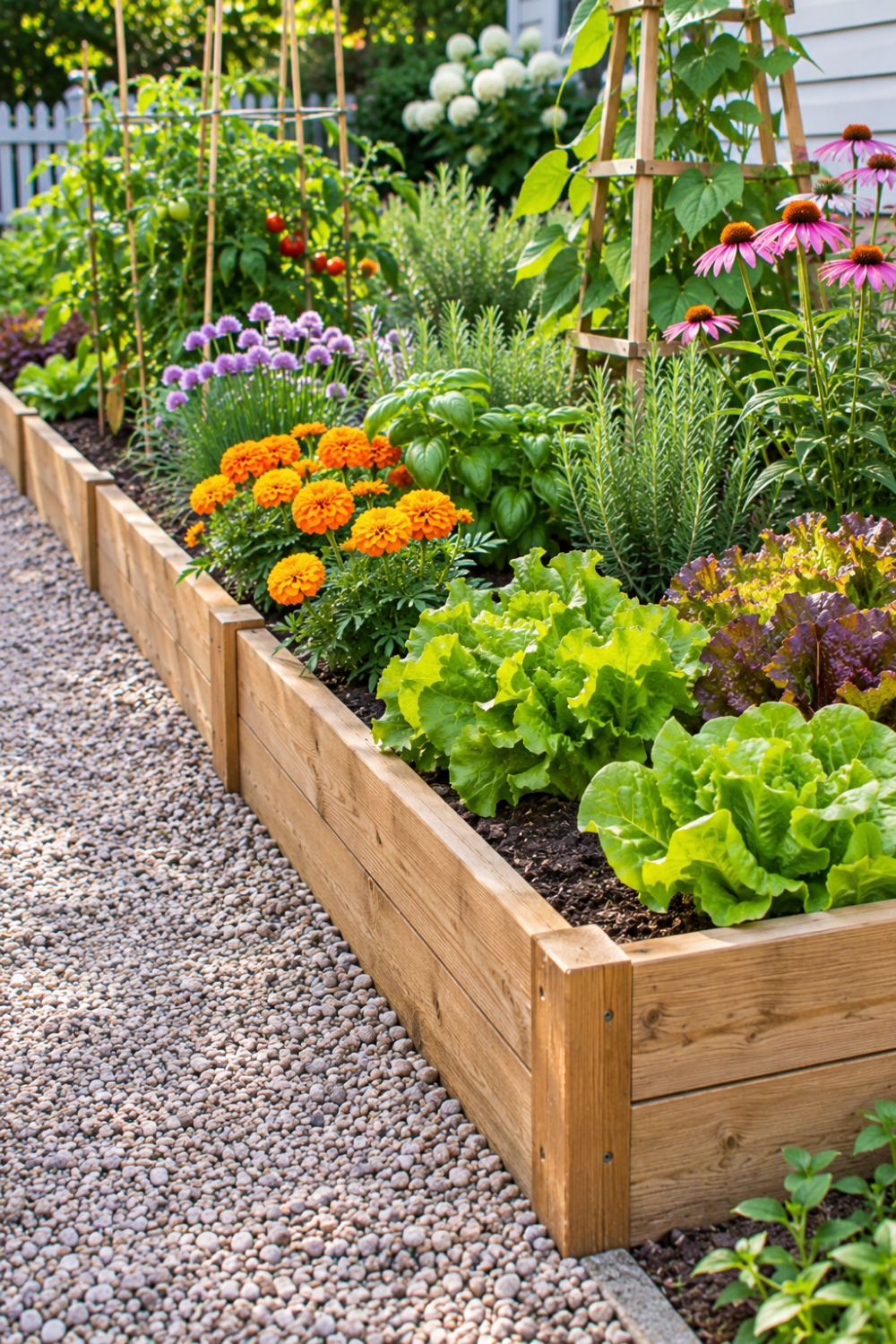
Timber boards or sleepers make a warm, simple edge that slightly raises the bed.
They’re great for vegetable gardens and informal borders.
Choose naturally durable or properly treated timber suitable for garden use.
How to do it:
- Cut boards to length and set them on edge.
- Secure them with timber stakes on the inside.
- Fill behind with soil and compost.
8. Pour a Concrete Curb for a Continuous Edge
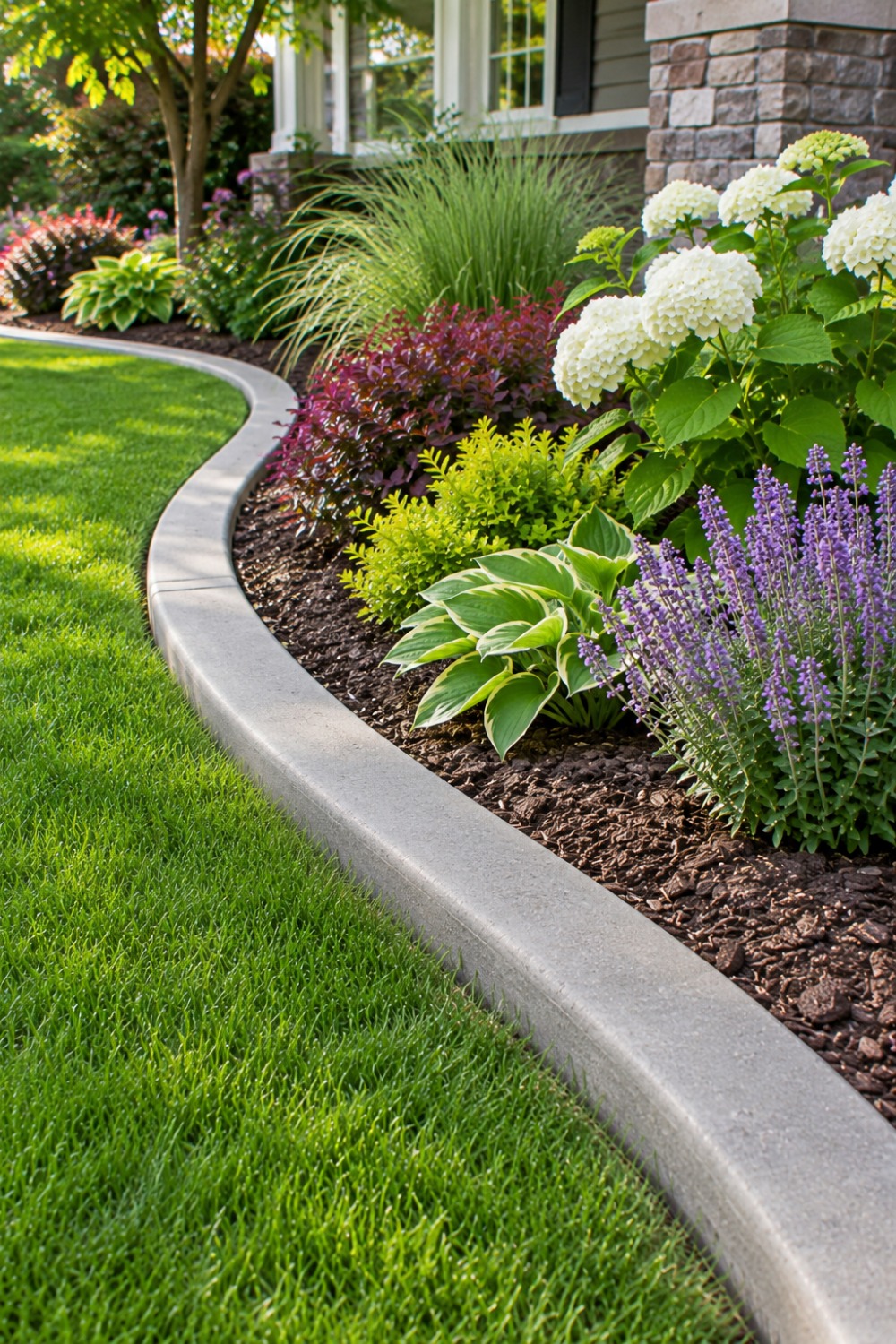
Poured or extruded concrete curbing creates a smooth, continuous edge that won’t shift.
It can be colored or stamped to look like stone or brick.
It’s usually installed by a contractor with a curbing machine.
How to do it:
- Plan the curves you want and mark them clearly.
- Get quotes from local curbing contractors.
- Choose a color that complements your house.
9. Create a Living Edge With Low Plants
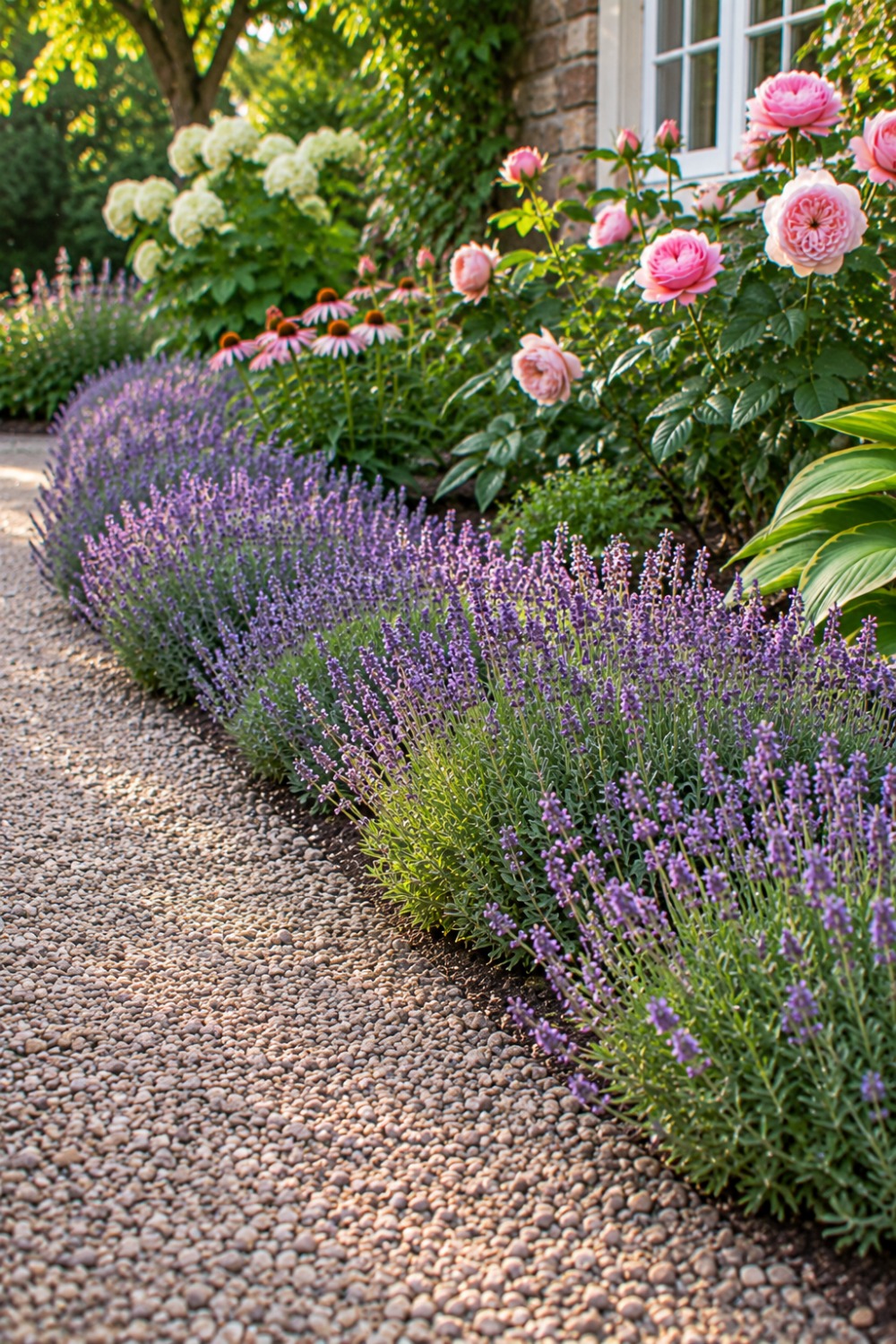
Instead of hard materials, use a row of low plants to define a bed.
Dwarf boxwood, lavender, catmint, liriope and mondo grass all make soft, tidy edges.
Plant them closely so they knit together into a continuous line.
How to do it:
- Choose a low, compact plant that suits your light.
- Plant at close spacing along the front of the bed.
- Trim once or twice a year to keep the line neat.
10. Use Clipped Boxwood for Formal Borders
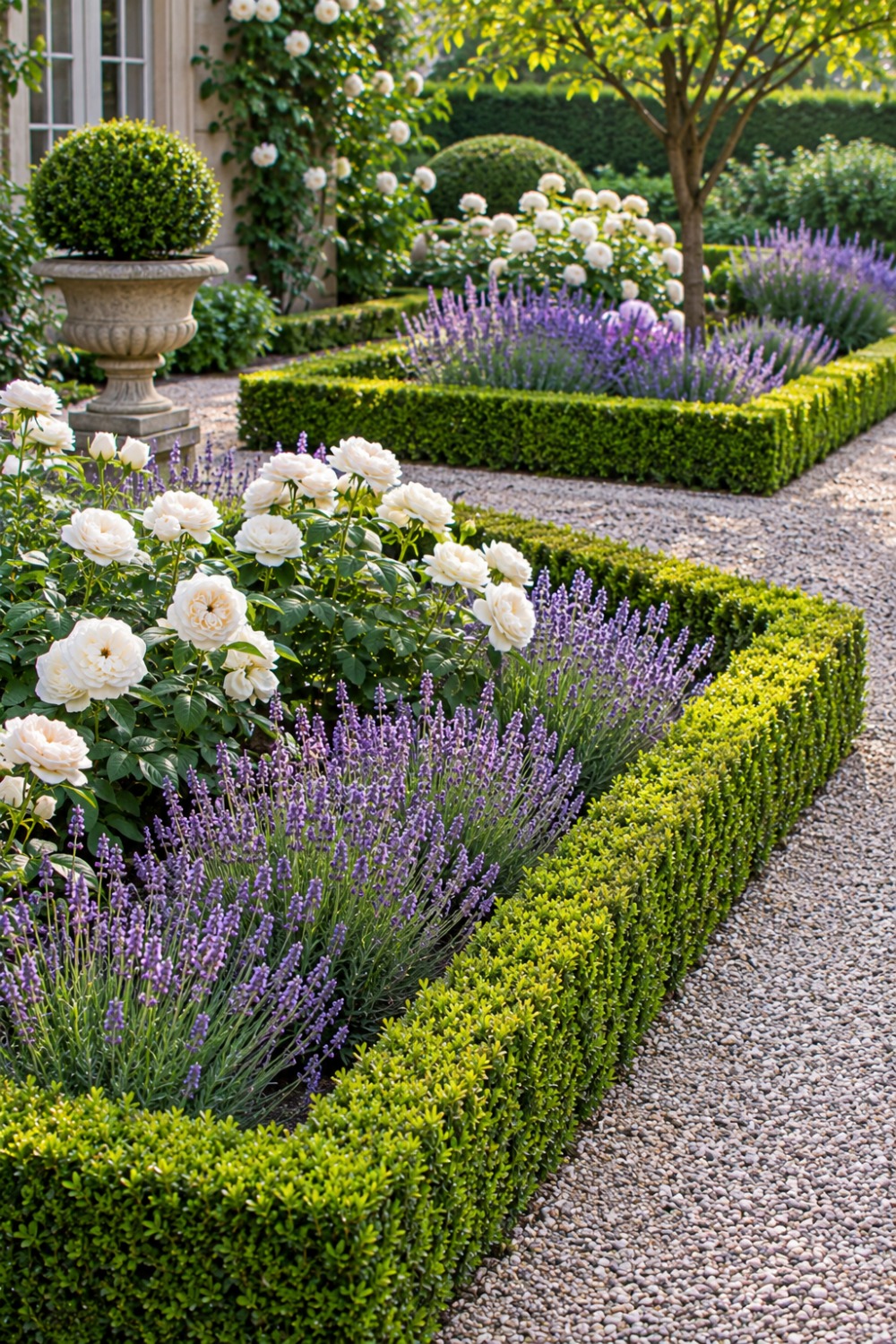
A low clipped hedge is the classic edge for formal gardens and parterres.
Boxwood is traditional, while Japanese holly and dwarf yew are good alternatives where box blight is a problem.
Keep the hedge small, around ankle to knee height.
How to do it:
- Plant young shrubs in a straight or curved line.
- Space them closely for a quick, dense hedge.
- Clip twice a year to keep a crisp shape.
11. Recycle Wine Bottles or Tiles for a Quirky Edge
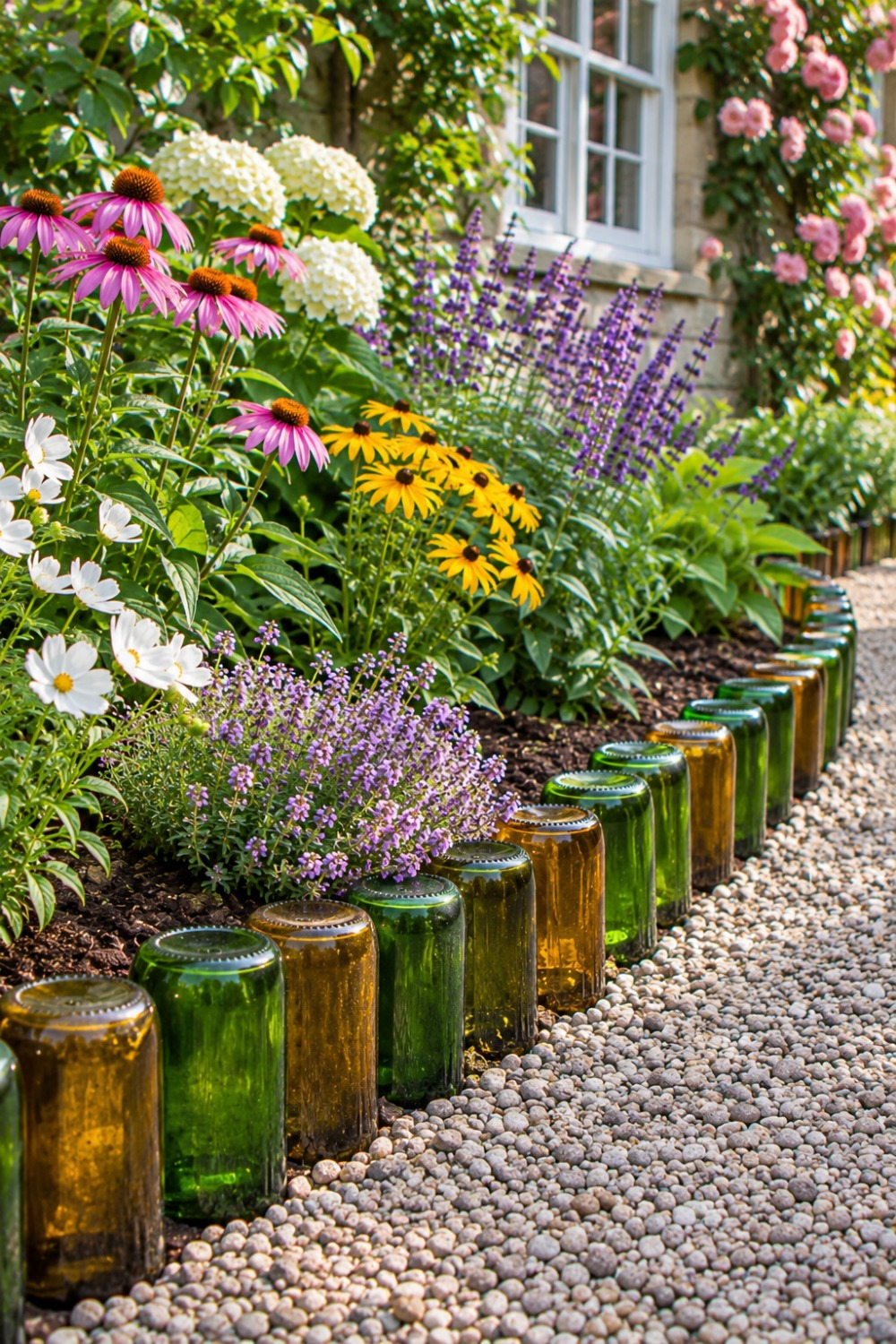
Upcycled materials make fun, budget-friendly edging with plenty of personality.
Wine bottles buried neck-down, old roof tiles or broken terracotta pots can edge a cottage or vegetable bed.
Use thick glass and bury bottles securely so they don’t break.
How to do it:
- Collect enough matching bottles or tiles.
- Dig a narrow trench and set them in a row.
- Backfill and firm the soil around them.
12. Line Paths With Pavers on Edge
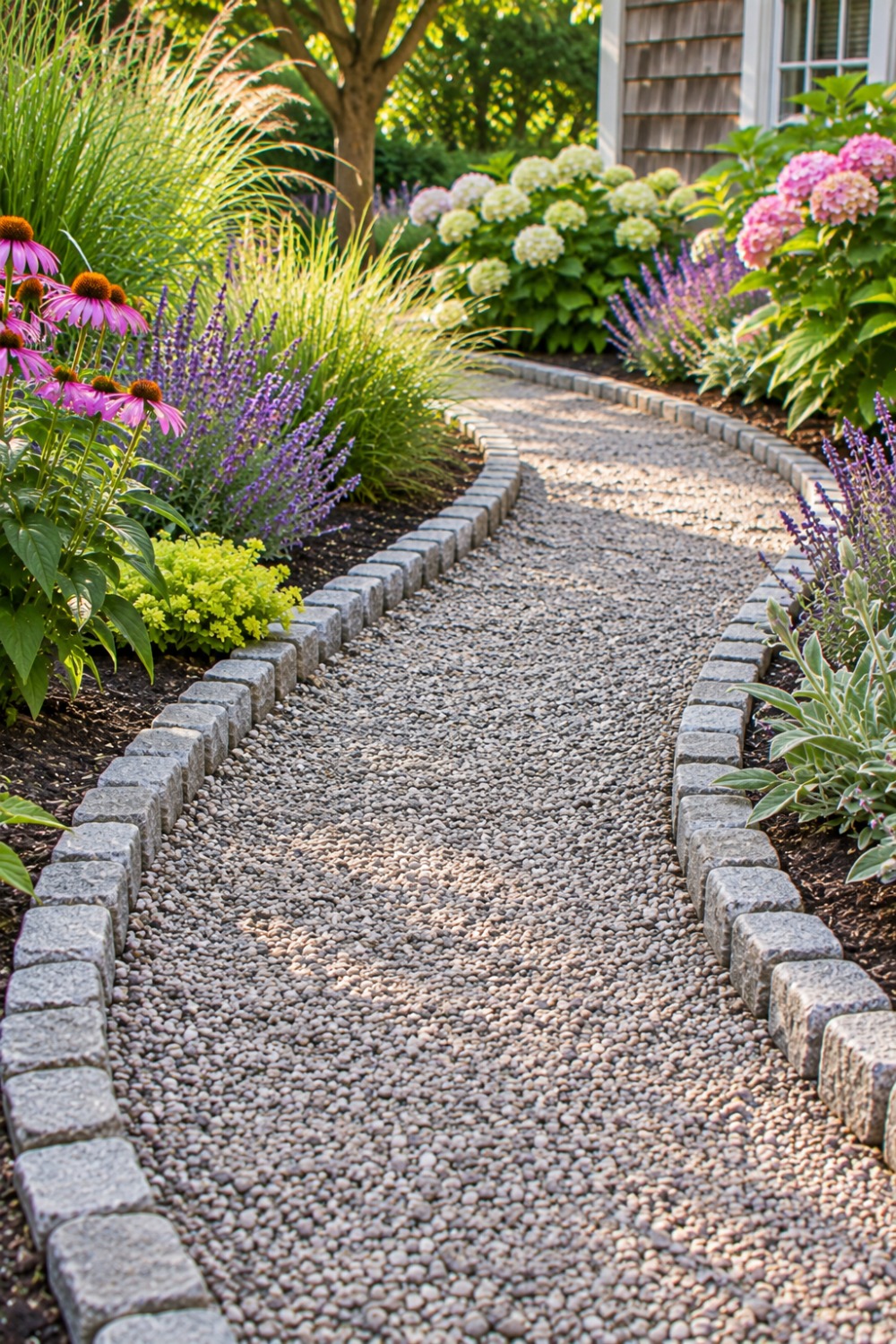
Pavers or cobbles set on edge give paths a crisp border and stop gravel from spreading into beds.
They’re sturdy enough to handle wheelbarrows and foot traffic.
Set them in concrete haunching for a permanent edge.
How to do it:
- Dig a trench along both sides of the path.
- Set pavers or setts in a bed of concrete.
- Backfill the bed side with soil and plant up.
13. Use Woven Willow for a Cottage Look
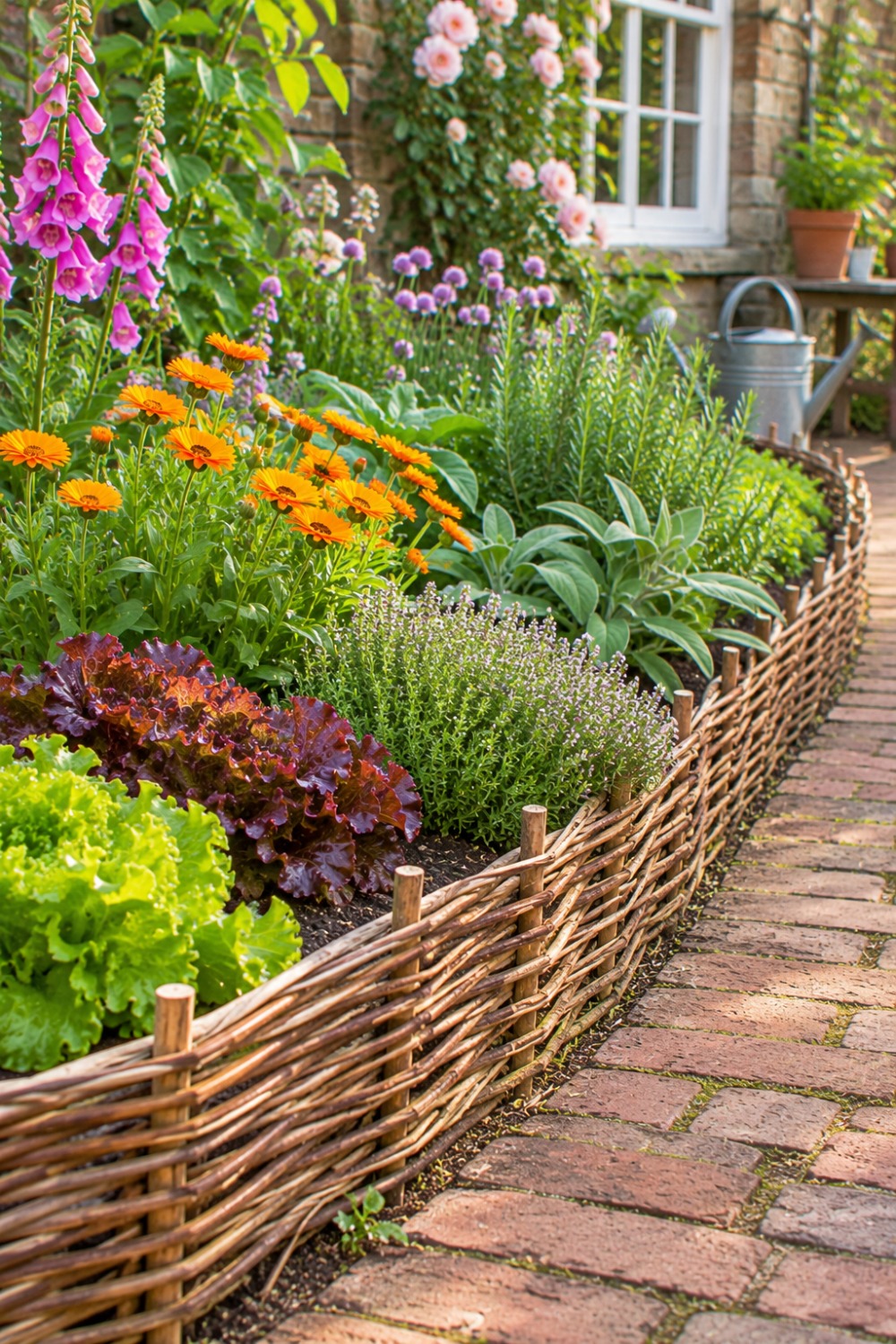
Woven willow or hazel edging brings a handmade, rustic charm to cottage and kitchen gardens.
It comes in ready-made panels or can be woven in place around stakes.
It won’t last as long as stone or metal, but it ages beautifully.
How to do it:
- Hammer stakes along the edge of the bed.
- Fix pre-woven panels or weave willow rods between the stakes.
- Replace sections as they weather.
14. Build a Low Dry Stone Edge
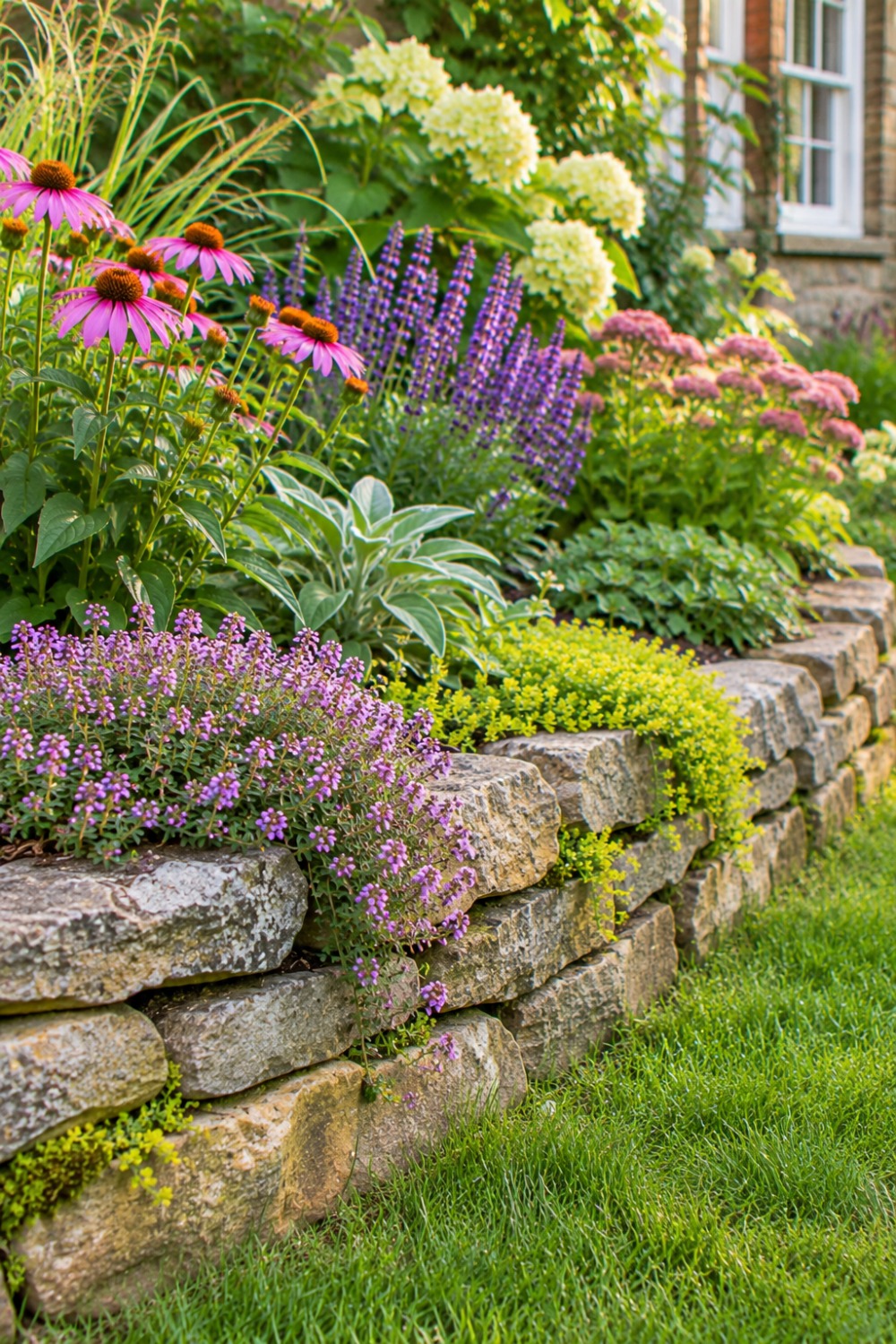
A low dry-stacked stone wall, just one or two courses high, edges a bed and adds a little height.
No mortar is needed, so it’s a satisfying DIY project.
Plant creeping plants in the gaps for a softer look.
How to do it:
- Lay a firm base of compacted gravel.
- Stack flat stones in one or two courses, staggering the joints.
- Backfill behind with soil and plant the bed.
15. Edge Tree Rings With Pavers or Stones
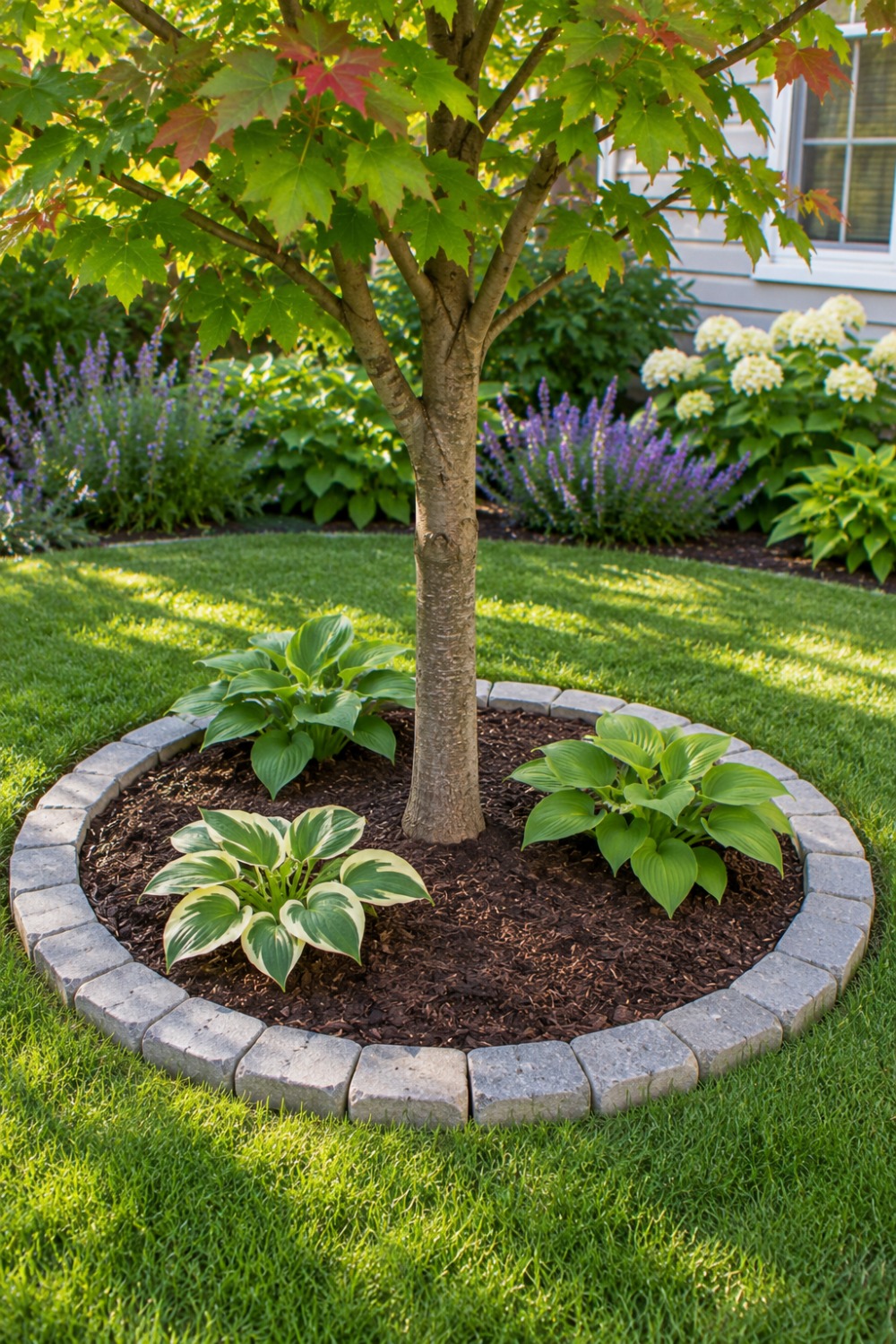
A neat ring around a tree protects the trunk from mowers and trimmers and gives the lawn a tidy look.
Pavers, bricks or stones laid in a circle make a crisp border for a mulch ring.
Keep mulch away from the trunk itself.
How to do it:
- Mark a circle around the tree, wide enough for a mulch ring.
- Lay pavers or stones around the circle.
- Fill inside with mulch, kept clear of the trunk.
16. Use Corten Steel Raised Edging
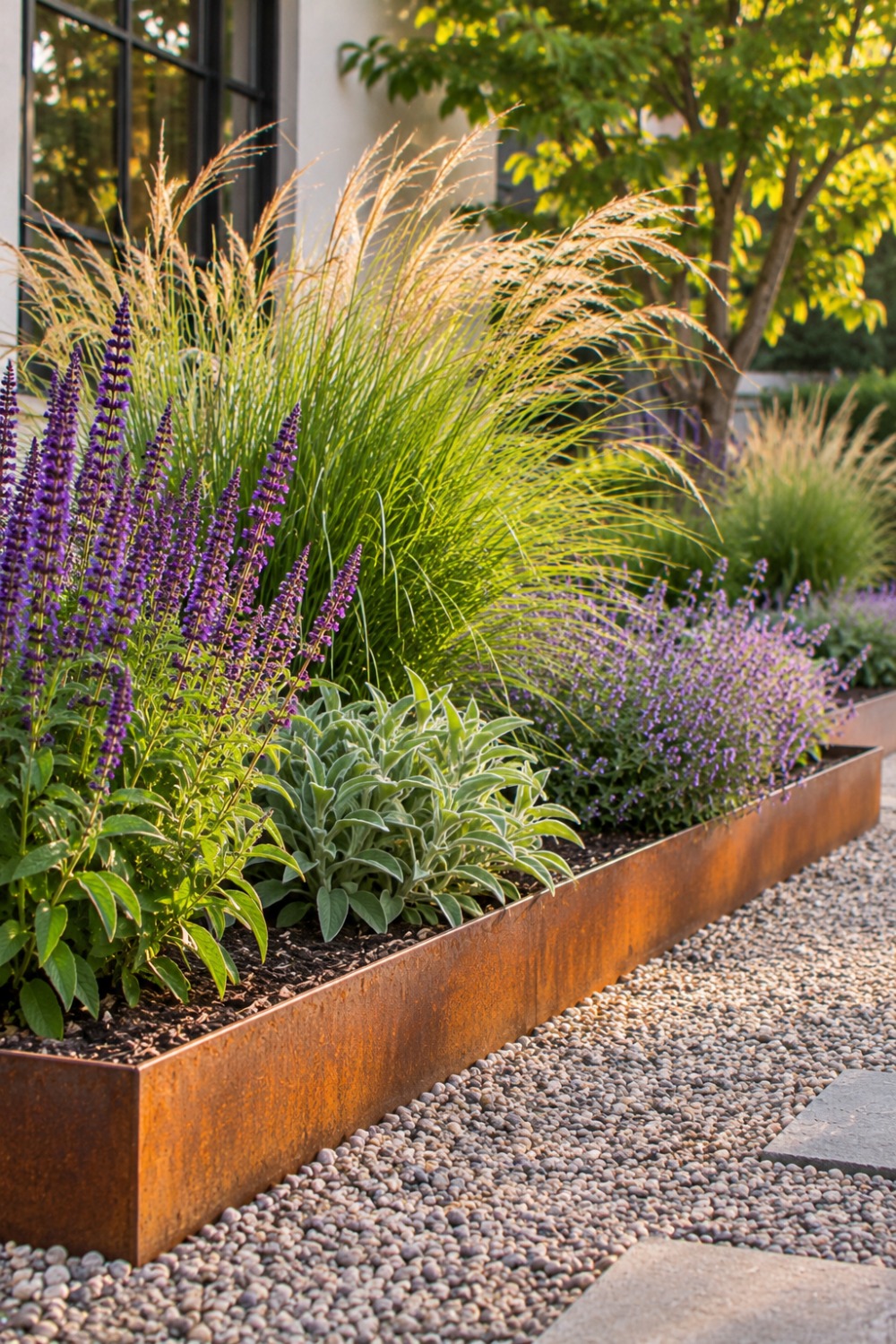
Taller Corten steel edging, a few inches high, creates slightly raised beds with a warm rusty tone.
It pairs beautifully with grasses, lavender and gravel for a contemporary look.
The patina forms naturally and protects the steel.
How to do it:
- Choose taller Corten edging strips.
- Set them on a level base with stakes.
- Keep the rust patina away from light paving, as it can stain while it forms.
17. Separate Gravel and Lawn With Metal Strips
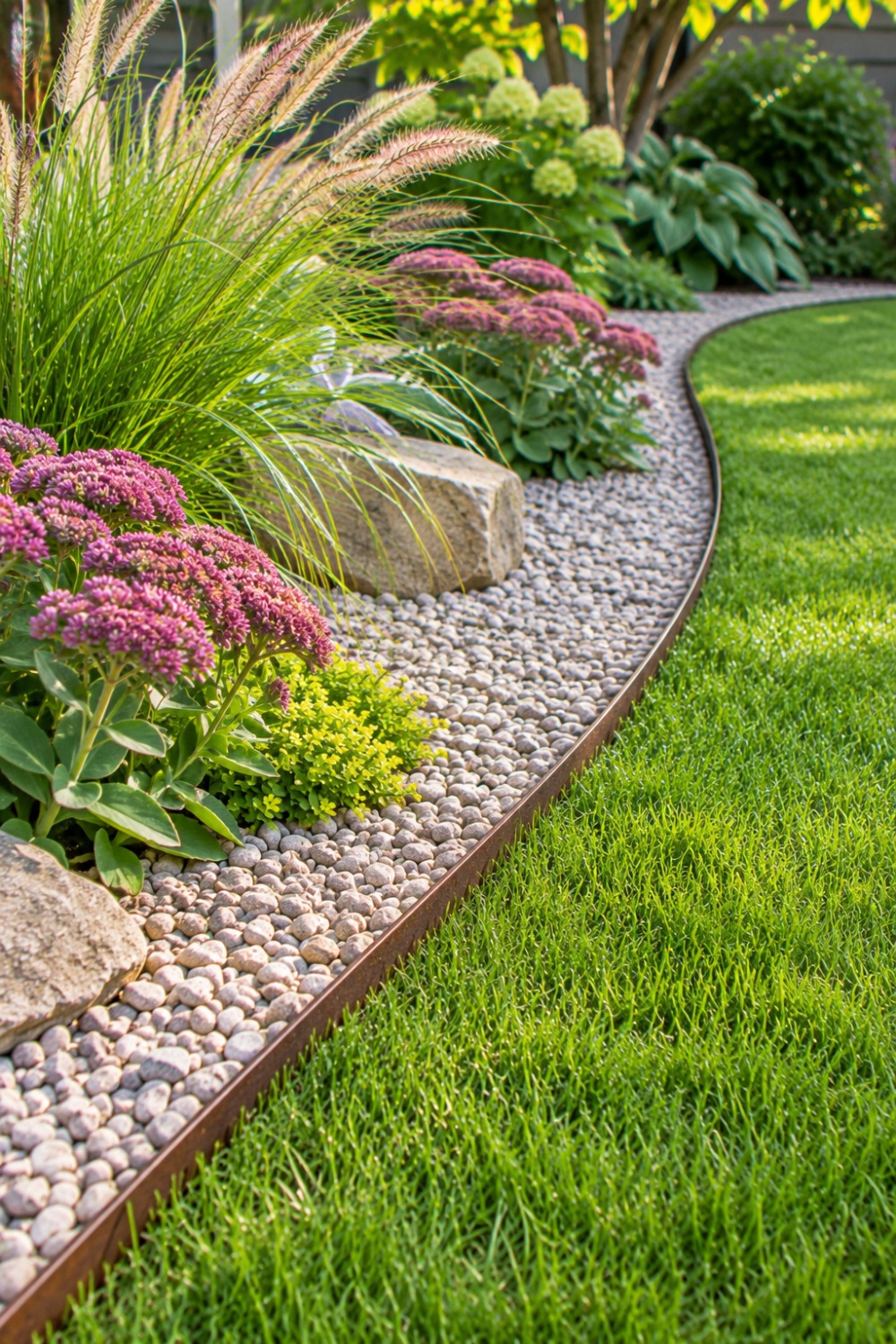
Where gravel meets lawn, an edge is essential to keep stones out of the mower.
Low-profile aluminum or steel strips set just below the lawn surface keep them apart without being seen.
Lay the gravel slightly below the edge so it stays put.
How to do it:
- Install metal strips along the lawn edge.
- Set the gravel level slightly lower than the strip.
- Top up the gravel once a year.
18. Line Borders With Seashells or Pebbles
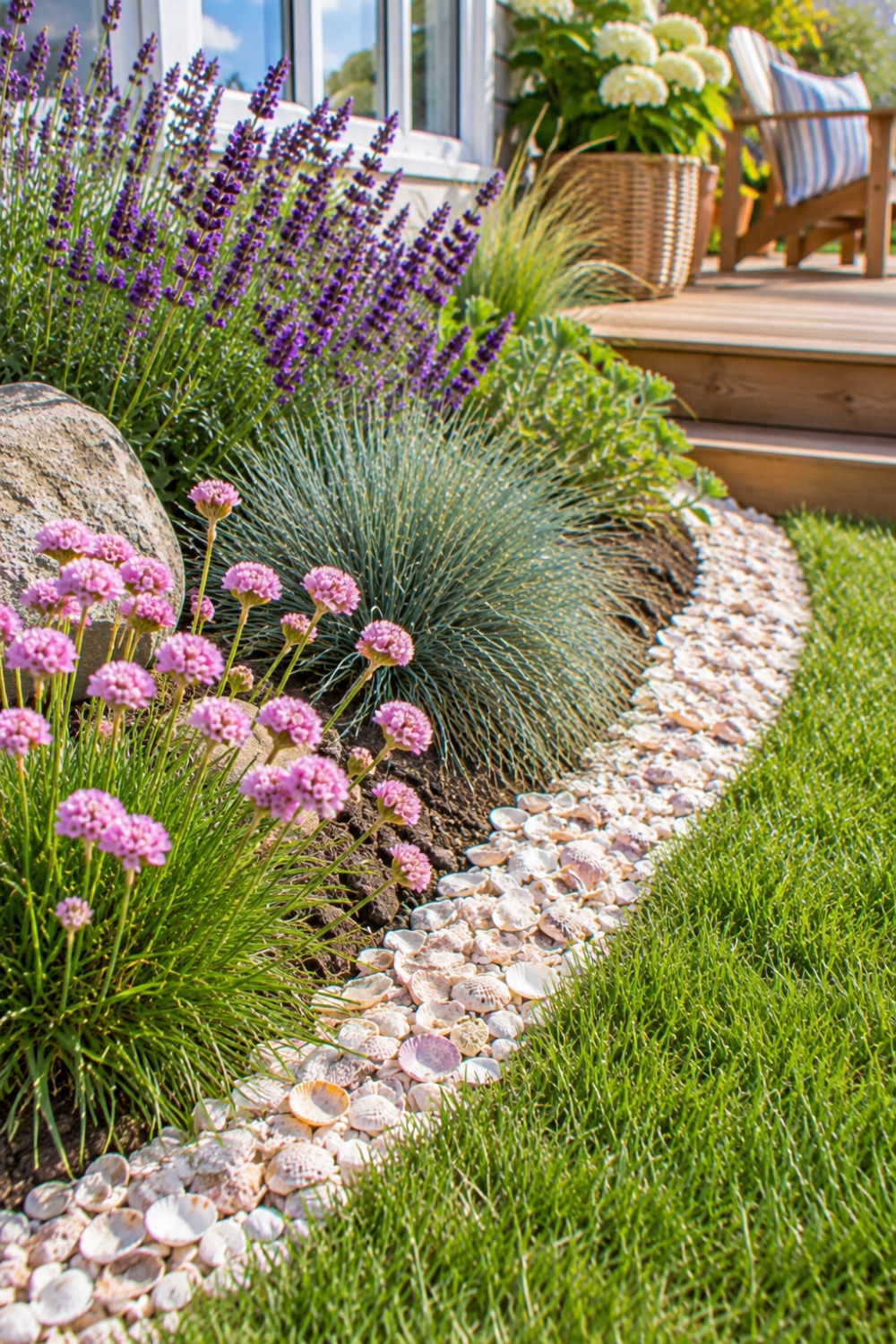
In coastal gardens, a border of crushed shells or smooth beach pebbles gives a relaxed seaside feel.
Use it to edge sandy beds of grasses and coastal plants.
Buy shells and pebbles from a supplier rather than collecting them from beaches.
How to do it:
- Dig a shallow band along the bed.
- Lay landscape fabric and a hidden restraint.
- Fill with crushed shells or smooth pebbles.
19. Choose No-Dig Edging for a Quick Fix
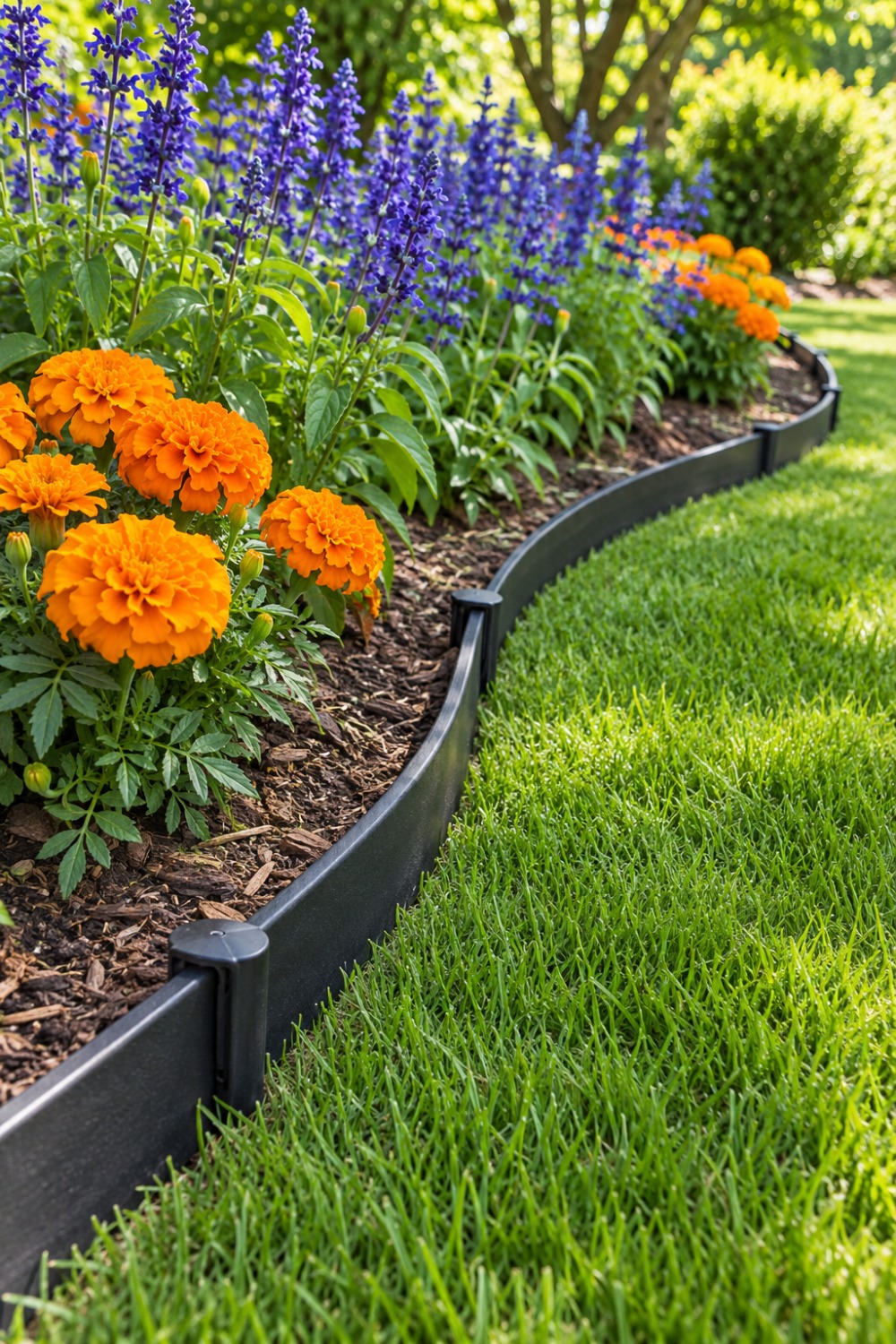
No-dig plastic or composite edging can be installed in an afternoon with just stakes and a mallet.
It’s flexible, inexpensive and a good option for renters or quick refreshes.
Look for thicker, UV-stable products, which last much longer than thin rolls.
How to do it:
- Lay the edging along your marked line.
- Drive the stakes through the edging into the soil.
- Backfill with mulch or soil on the bed side.
Frequently Asked Questions
What is the cheapest landscape edging?
A spade-cut edge is free. Beyond that, reclaimed bricks or stones, upcycled materials and no-dig plastic edging are the most budget-friendly options.
What landscape edging lasts the longest?
Steel, aluminum, concrete curbing, natural stone and properly set brick all last for many years with little maintenance.
How deep should landscape edging be?
Most edging works best when it goes at least a few inches below the soil to block grass roots, with a small lip above the soil to hold mulch in. Follow the product’s instructions.
Does edging stop grass from growing into beds?
Deep, continuous edging such as steel, concrete or a brick mowing strip greatly reduces creeping grass, though you’ll still need to trim the edge now and then.
Final Thoughts: Small Details, Big Difference
Edging is a quick way to make the whole garden look cared for.
Start by choosing a material that matches your style: steel or concrete for modern gardens, brick and stone for traditional ones, and living or woven edges for cottage gardens.
Then think about the job it needs to do. Mowing strips save time, deep edges stop grass and taller edges hold gravel and mulch in place.
Use the same edging throughout the garden for a cohesive look, or change materials to mark different areas.
If budget is tight, start with a spade-cut edge and upgrade one bed at a time.
Before long, those crisp clean lines will make your whole garden look sharper.