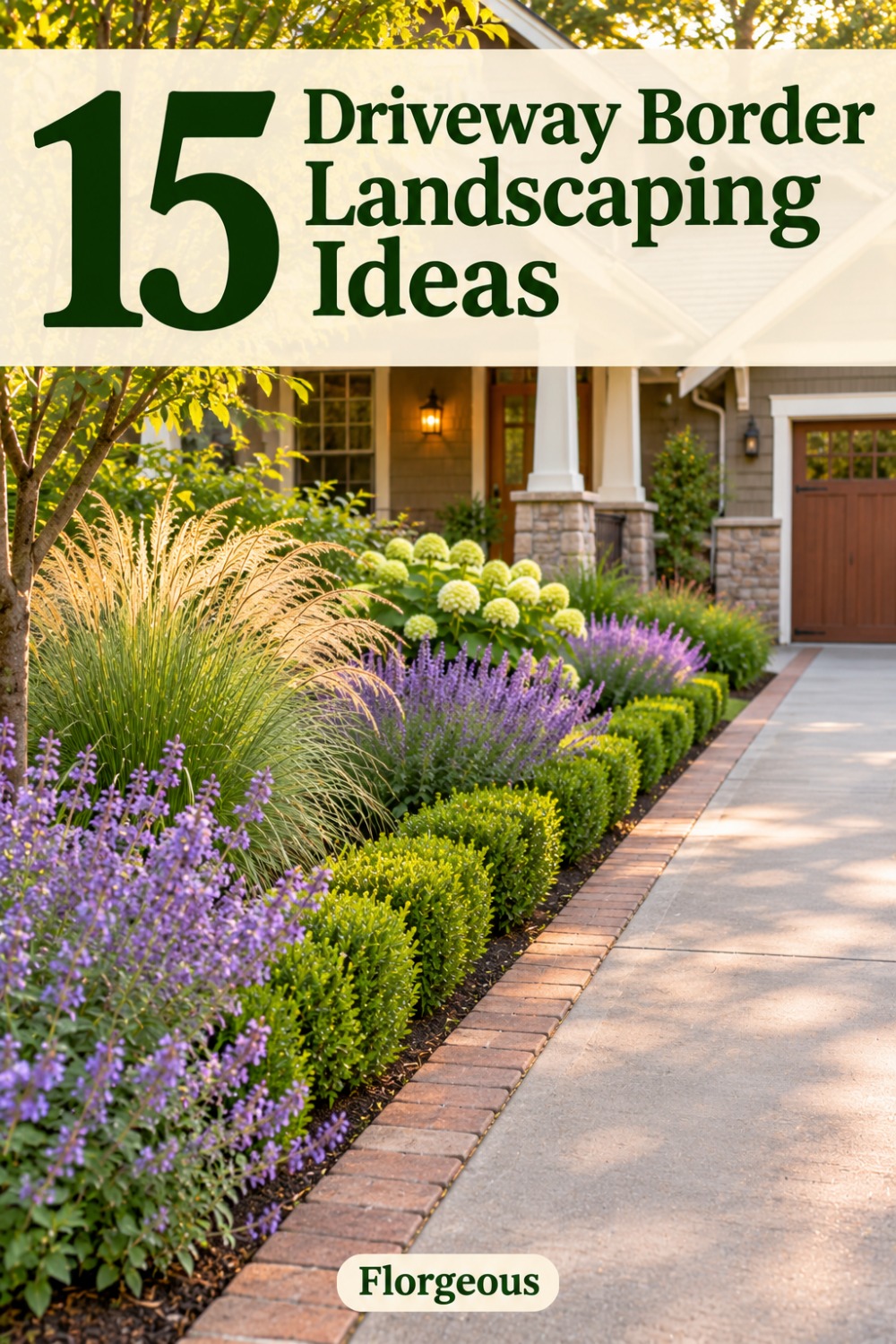
Your driveway is often the biggest hard surface in your front yard.
It’s also the first thing you see every time you come home.
The secret to a good driveway border isn’t filling every inch with plants. It’s choosing tough, tidy plants that look good from the street and still leave room for car doors, snow and sightlines.
These 15 driveway border landscaping ideas will help you soften all that concrete or asphalt and turn the drive into a welcoming approach to your home.
Driveway Border Plants by Job
| Job | Good choices | Typical height | Notes |
|---|---|---|---|
| Low edging | Lilyturf (Liriope muscari), mondo grass, dwarf mondo | 6 to 15 in | Evergreen in mild climates; choose clumping L. muscari, not spreading L. spicata |
| Ground cover | Creeping thyme, creeping phlox, sedum | 2 to 6 in | Tough in sun; good in narrow strips |
| Evergreen line | Dwarf boxwood, dwarf yaupon holly, ‘Blue Star’ juniper | 1 to 3 ft | Year-round structure |
| Long flowering | Catmint, salvia, daylily, lavender | 1 to 2.5 ft | Full sun; lavender needs sharp drainage |
| Salt and snow tough | Daylily, sea thrift, creeping juniper, switchgrass, northern bayberry | 6 in to 5 ft | For snowy climates where de-icing salt is used |
| Movement | Prairie dropseed, little bluestem, blue oat grass | 1.5 to 3 ft | Cut back once in late winter |
1. Keep Plants Low Near the Street
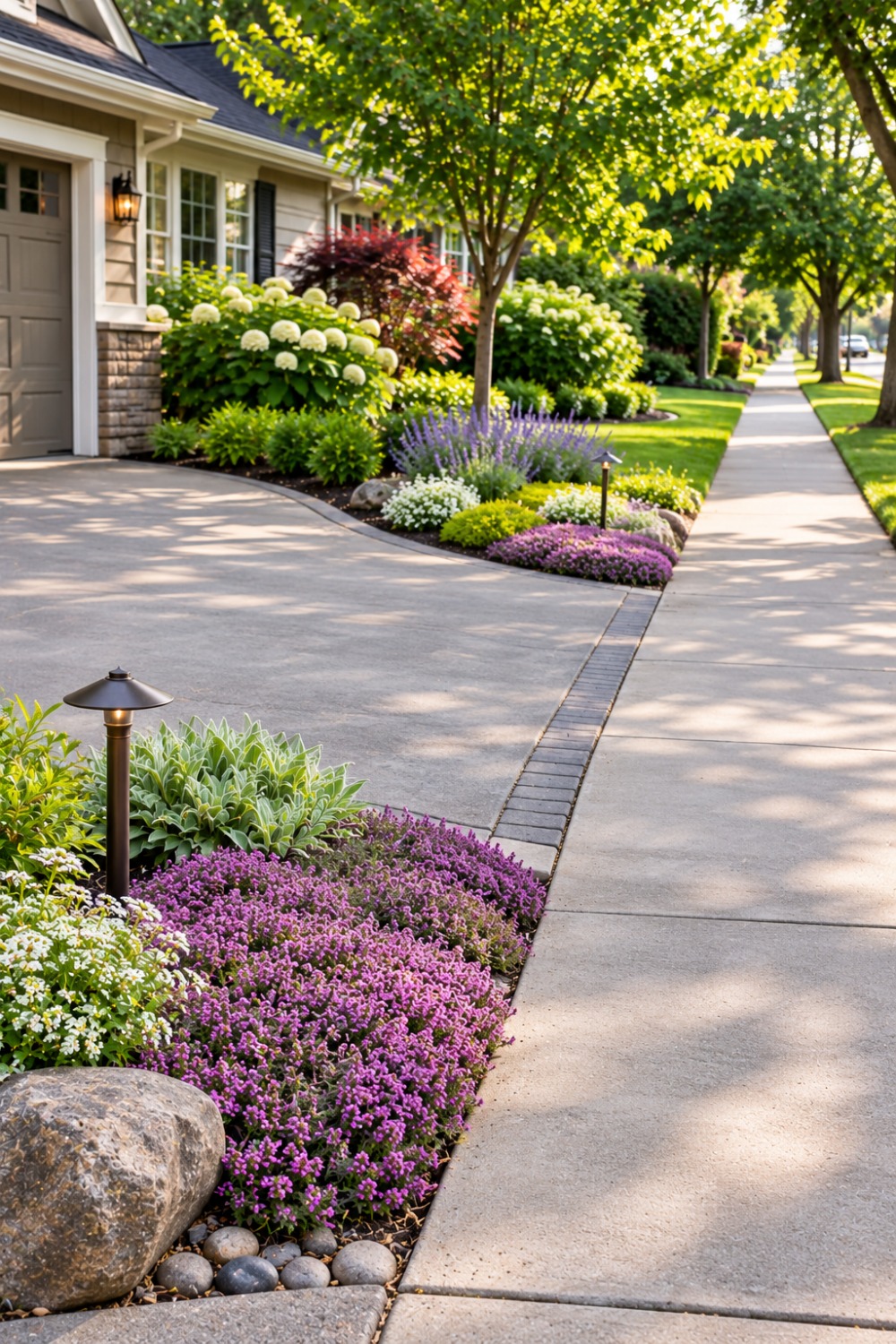
The few feet where your driveway meets the street need the lowest plants.
Tall shrubs here block your view of children, cyclists and passing cars as you back out.
Use ground covers and low perennials under about 2 feet near the street, then let heights build up toward the house. Many towns also have rules on plant heights near the road, so check before planting.
How to do it:
- Stand at the end of the drive and note where your view of the sidewalk and road begins.
- Keep that zone to ground covers or low edging plants.
- Place taller shrubs and grasses farther up the drive.
2. Leave a Step-Out Strip Beside Parked Cars
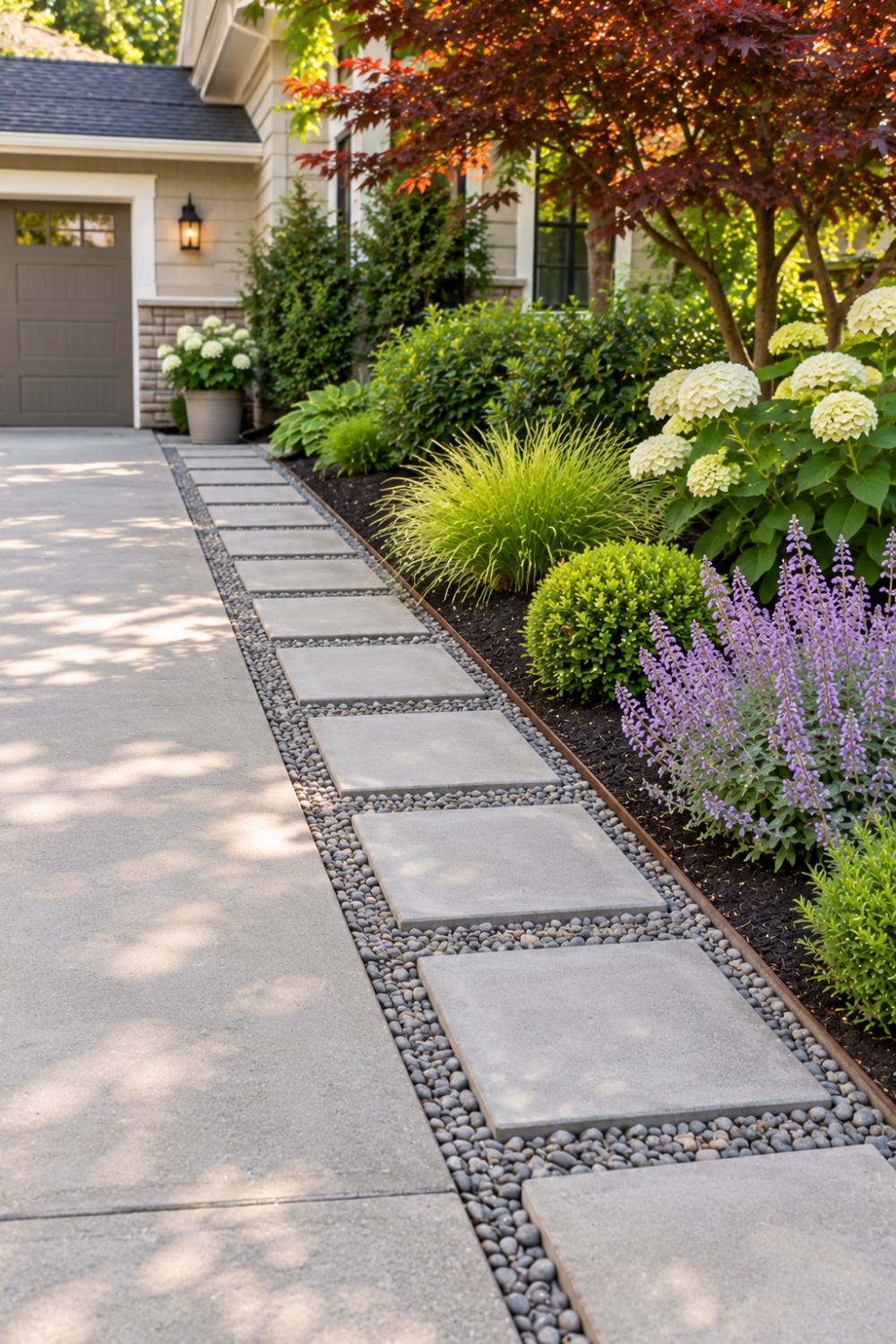
Plants right against the driveway get trampled every time someone opens a car door.
A narrow step-out strip of pavers, flagstone or gravel solves it and makes the border look deliberate.
About 18 to 24 inches is usually enough to step out and walk around the car without crushing anything.
How to do it:
- Mark a strip 18 to 24 inches wide along the side where people get out.
- Lay pavers or compacted gravel on a firm base.
- Start the planting bed on the far side of the strip.
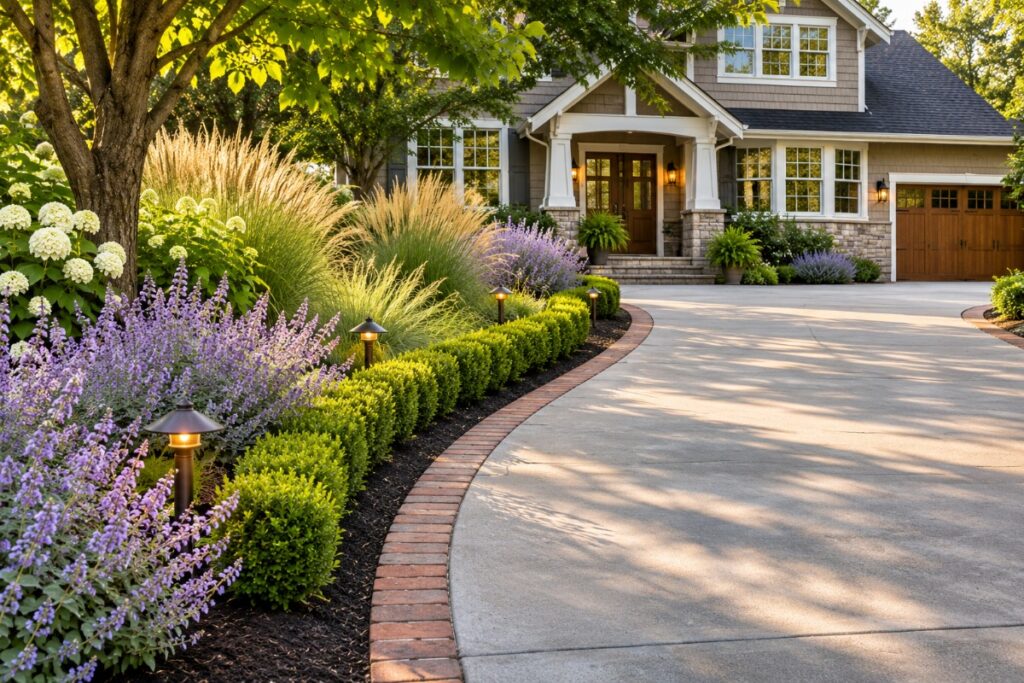
3. Edge the Drive With a Ribbon of Brick or Cobble Pavers
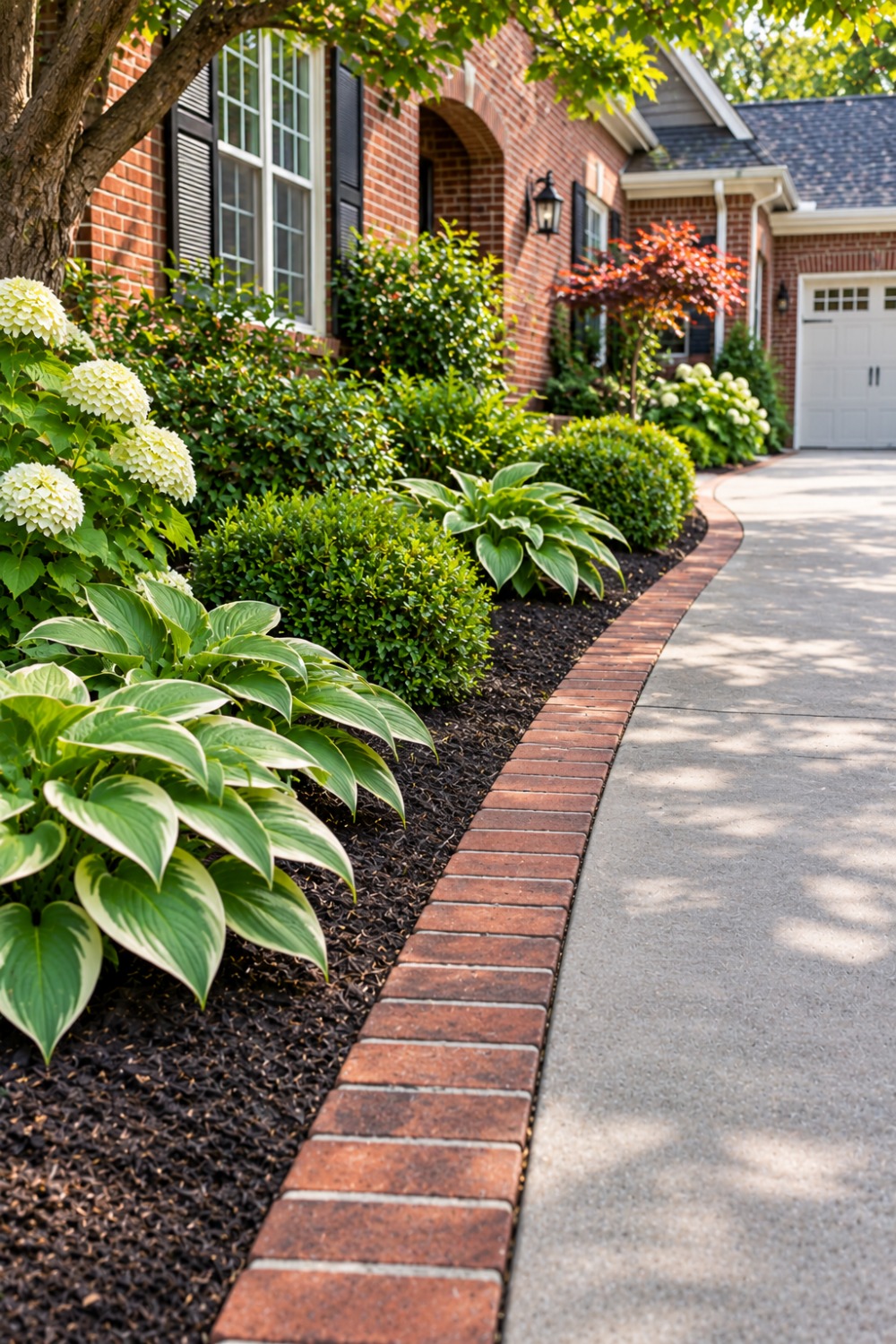
A band of brick or cobblestone pavers along the edge makes a plain concrete driveway look custom.
It also creates a hard buffer so mulch and soil don’t wash onto the drive.
Choose a paver that matches your house: red brick for traditional homes, gray cobble or charcoal pavers for modern ones.
How to do it:
- Dig a trench a little wider than your pavers along the driveway edge.
- Add a compacted gravel base and a thin layer of sand.
- Set pavers level with the driveway and lock them in with edging restraint.
4. Plant a Low Hedge of Dwarf Evergreens
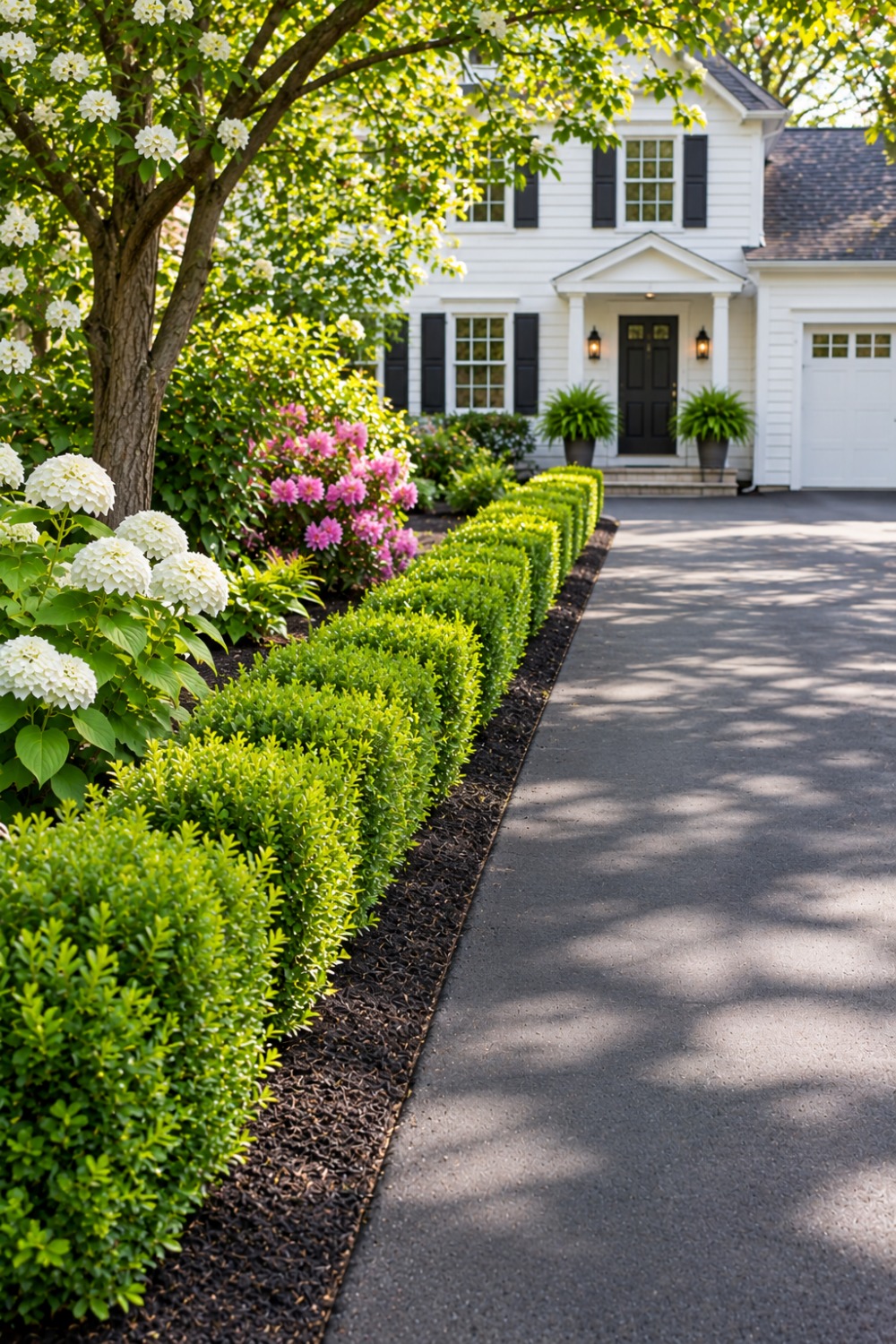
A low evergreen hedge gives a driveway clean structure in every season.
Dwarf boxwood, dwarf yaupon holly (Ilex vomitoria ‘Nana’) and dwarf inkberry (Ilex glabra) all stay compact with light trimming.
Keep the hedge under about 2 to 3 feet so it frames the drive without walling it in.
How to do it:
- Choose a variety whose mature width fits your bed.
- Space plants so they just touch at maturity.
- Trim lightly once or twice a year to keep the line even.
5. Line a Sunny Driveway With Catmint and Lavender
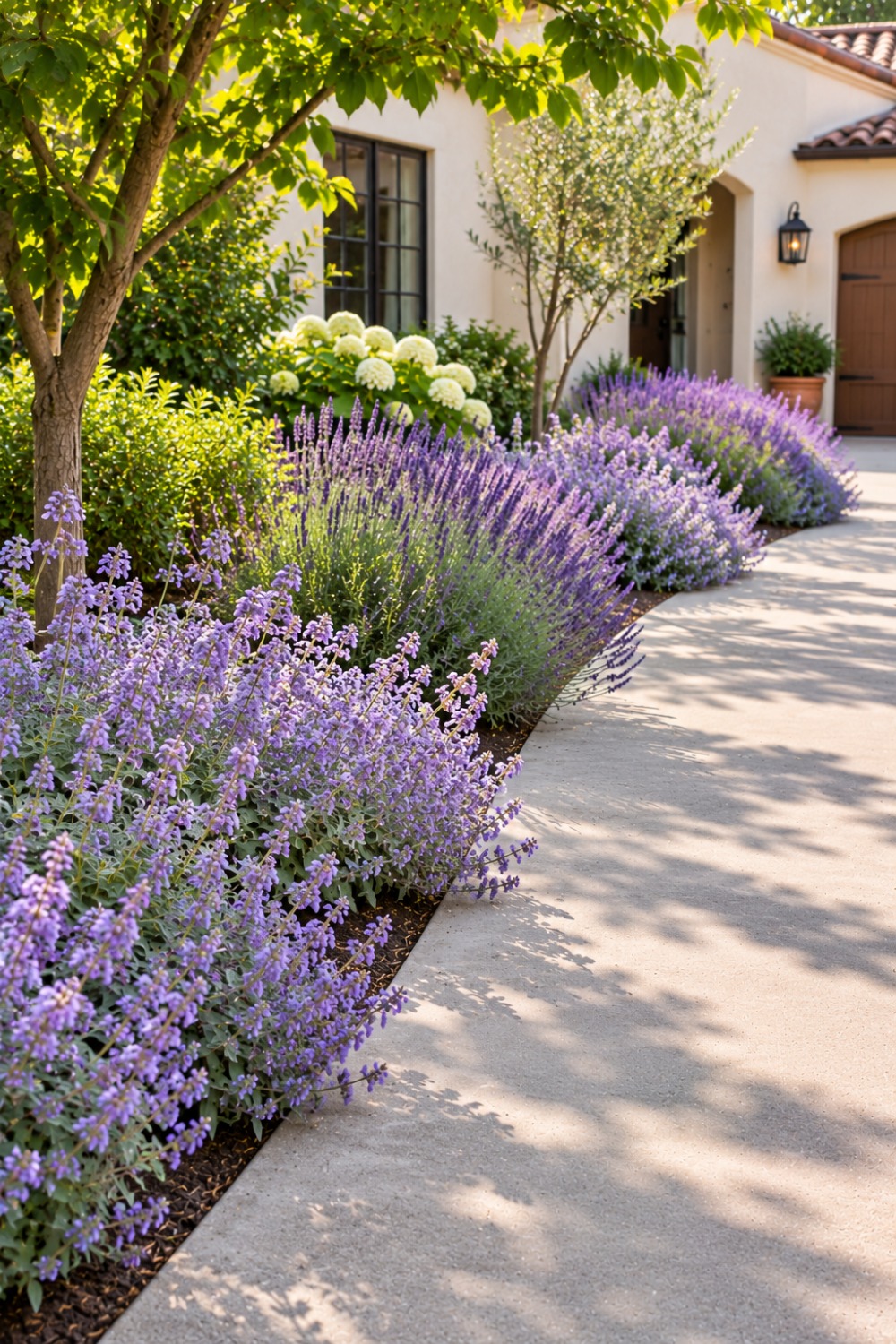
Driveways often soak up heat, which suits sun-loving, drought-tolerant plants.
Catmint (Nepeta) and lavender form soft purple waves that spill gently toward the edge and smell wonderful when you brush past.
Catmint is the more forgiving of the two. Lavender needs full sun and very well-drained soil, so add gravel to heavy clay or skip it in wet climates.
How to do it:
- Plant in a sunny strip with good drainage.
- Alternate catmint and lavender, or plant one in long drifts.
- Shear catmint back by about half after the first flush of flowers for a second bloom.
6. Add Movement With Ornamental Grasses
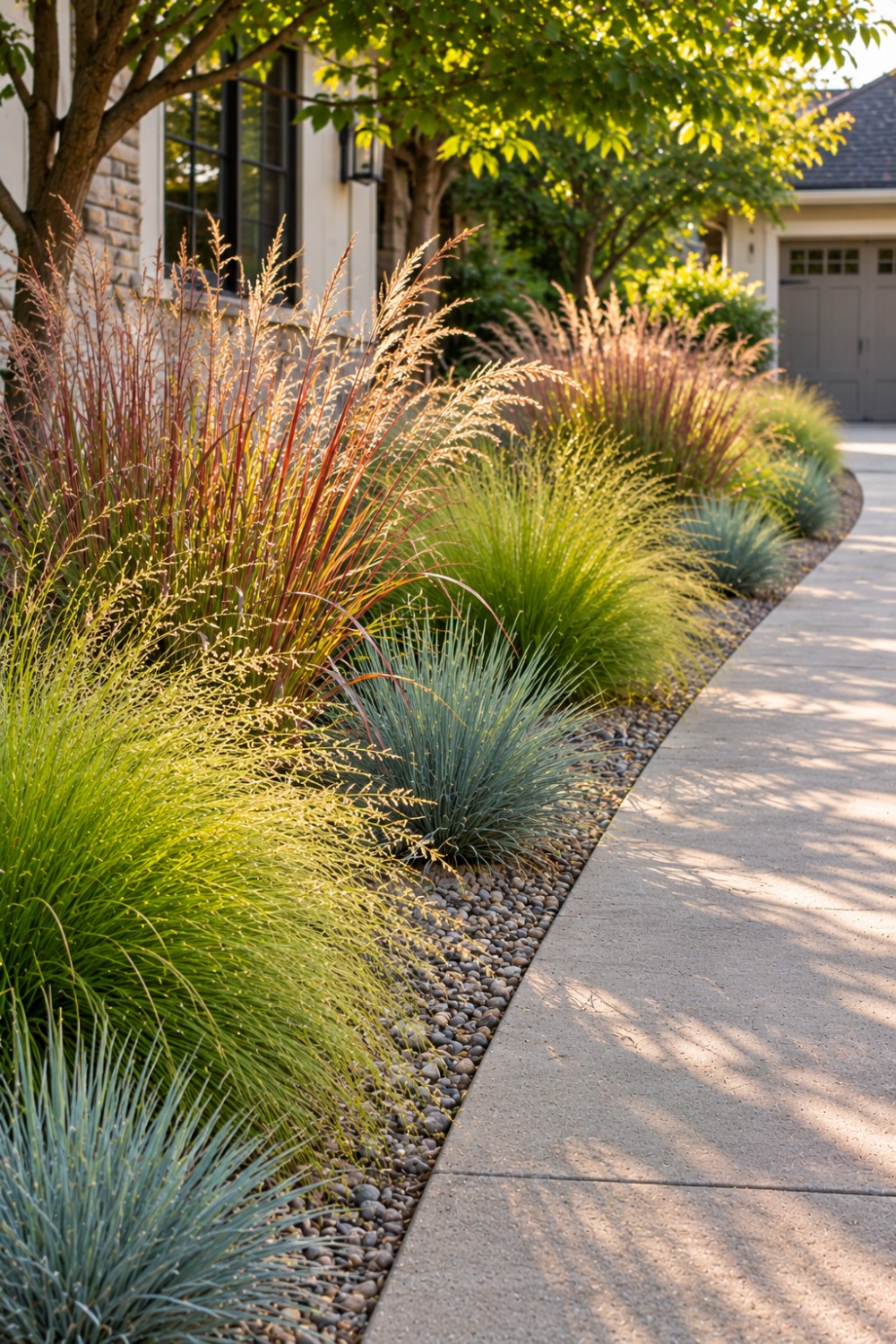
Ornamental grasses soften the hard line of a driveway with movement and sound.
They’re also tough, low maintenance and look good from summer through winter.
Prairie dropseed (Sporobolus heterolepis), little bluestem (Schizachyrium scoparium) and blue oat grass (Helictotrichon sempervirens) stay compact enough for most borders.
How to do it:
- Plant grasses in a repeating rhythm along the drive.
- Fill between them with low perennials or ground cover.
- Cut them back to a few inches in late winter.
7. Choose Salt-Tolerant Plants in Snowy Climates
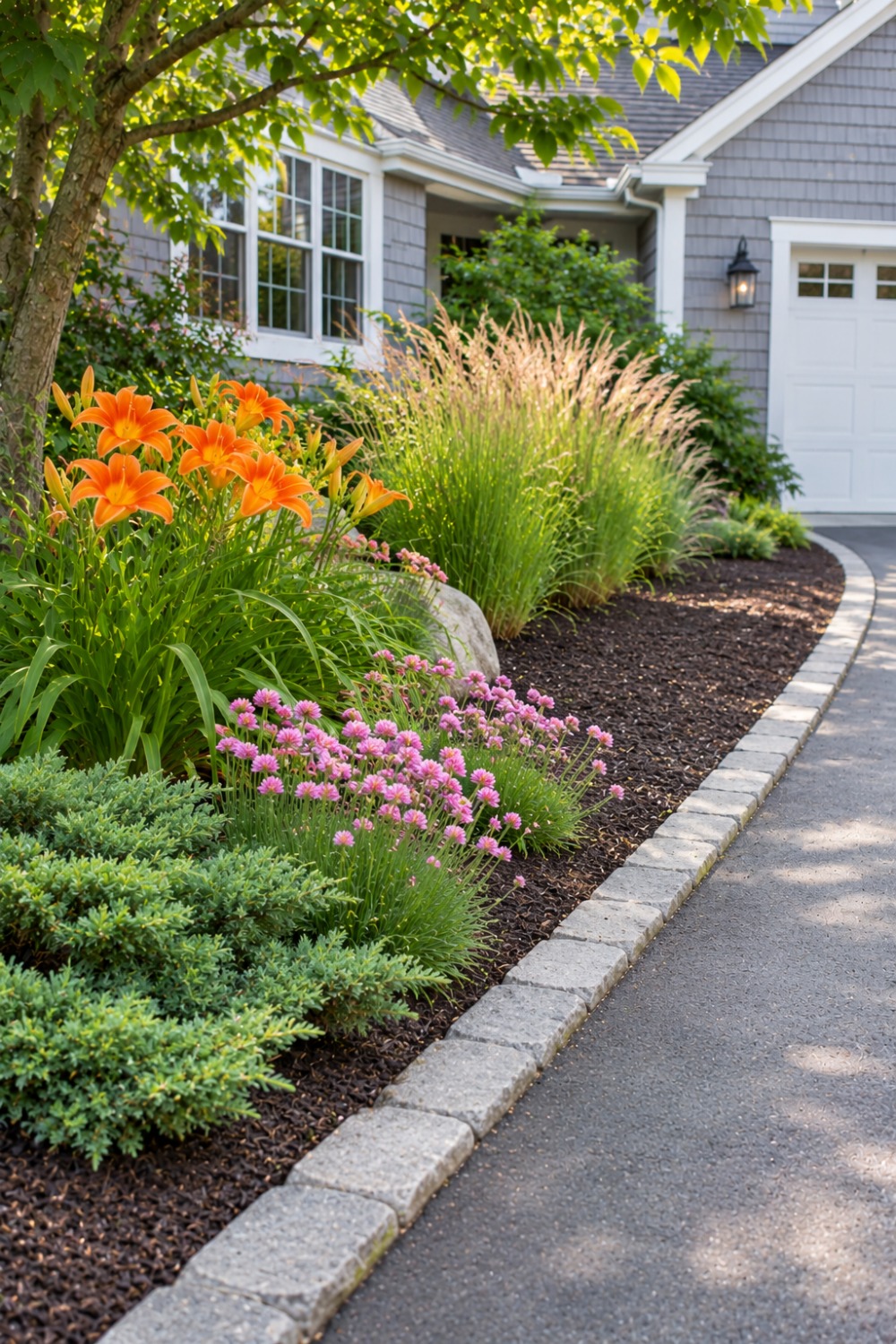
Where winters bring snow, driveway borders take a beating from de-icing salt and plowed snow.
Plants such as daylily, sea thrift (Armeria maritima), creeping juniper, switchgrass (Panicum virgatum) and northern bayberry (Myrica pensylvanica) handle salt spray better than most.
Leave a section of border free of shrubs where you can pile snow each winter.
How to do it:
- Choose a snow storage spot and plant it with perennials that die back in winter.
- Use salt-tolerant plants closest to the drive.
- Rinse beds with plenty of water in spring to flush out salt.
8. Frame the Entrance With a Matching Pair
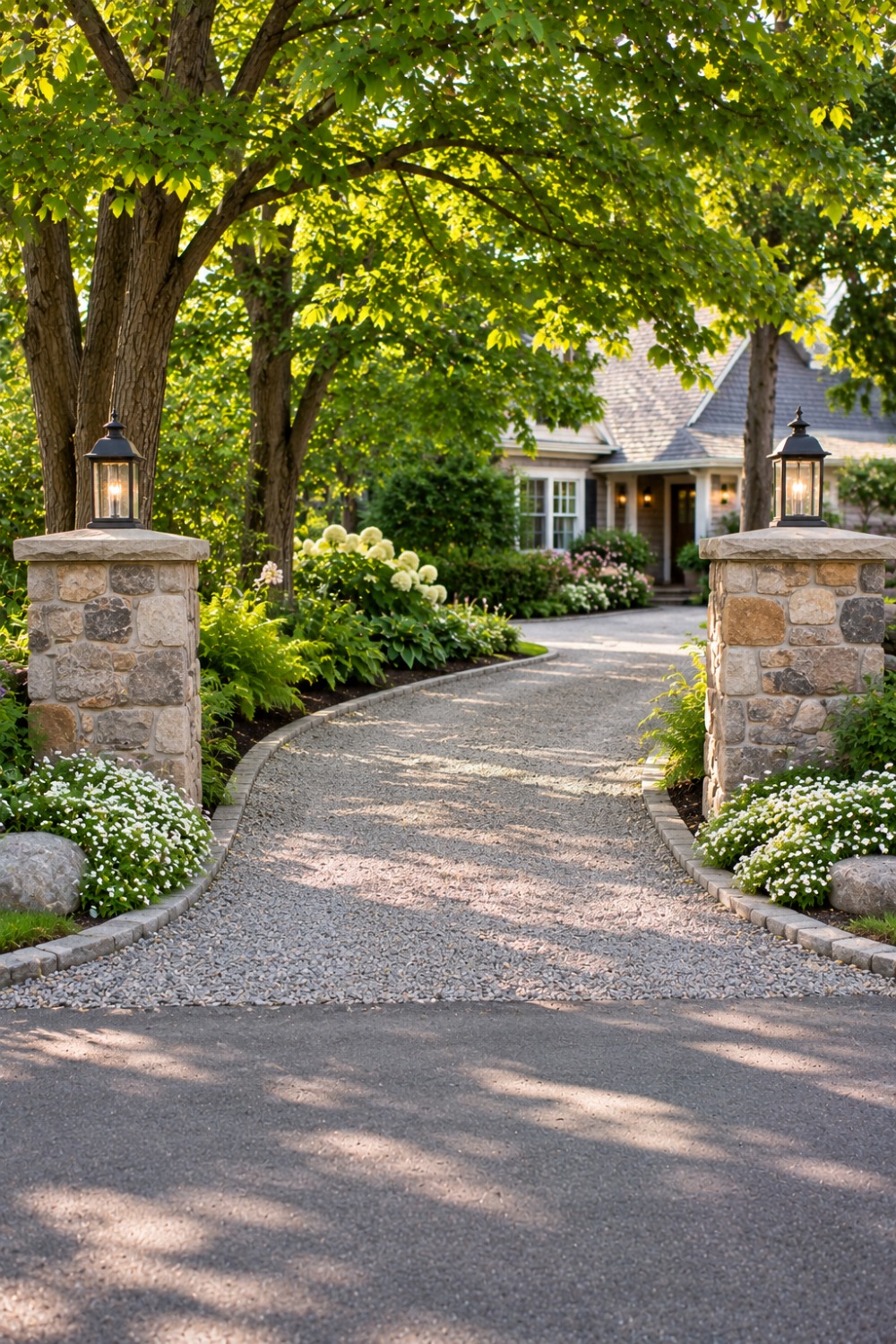
A matching pair at the start of the drive works like a front door for the whole property.
It could be two stone pillars, two large planters or two identical small shrubs or trees.
Keep them back from the street and low enough that they don’t block the view of traffic.
How to do it:
- Measure an equal distance from the street on each side.
- Set pillars, planters or plants in a mirror image.
- Plant low ground cover or seasonal flowers at their base.
9. Catch Runoff With a Gravel Strip Along the Edge
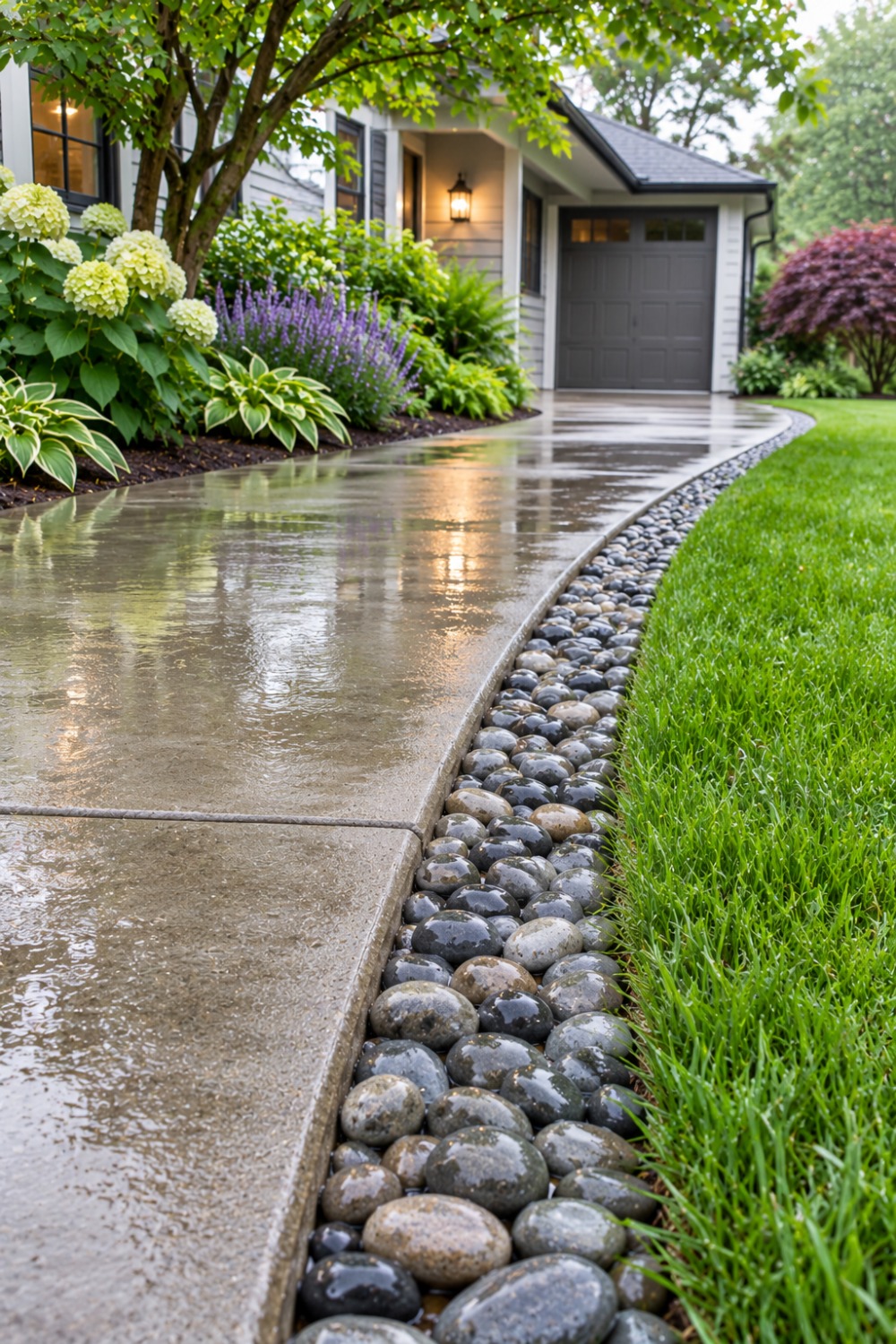
Driveways shed a lot of rain, and that water often washes mulch away or leaves a soggy strip of lawn.
A narrow strip of river rock or gravel along the low side catches and slows runoff.
It also gives a clean break between the driveway and the planting bed or lawn.
How to do it:
- Dig a shallow trench about 8 to 12 inches wide along the low edge.
- Line it with landscape fabric.
- Fill with washed river rock or angular gravel.
10. Light the Drive With Low Path Lights
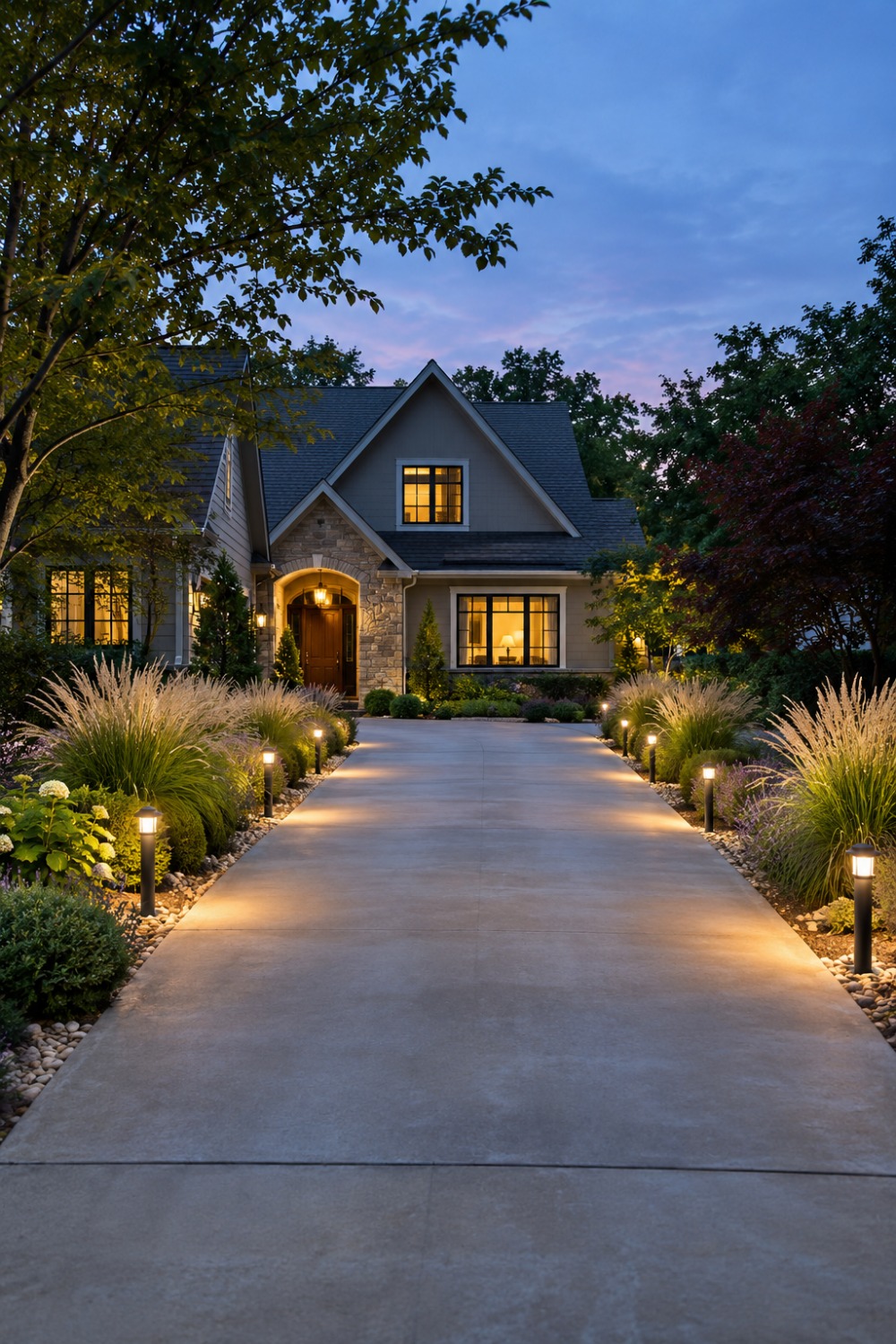
Soft lighting makes a driveway safer and much more welcoming at night.
Low path lights or flush-mounted markers show the edge of the drive without glaring into drivers’ eyes.
Space them evenly and tuck them among the plants so the fixtures disappear by day.
How to do it:
- Plan a light every 6 to 10 feet along one or both sides.
- Use warm white bulbs for a welcoming glow.
- Choose low-voltage or solar fixtures for easy installation.
11. Plant Small Trees Along a Long Driveway
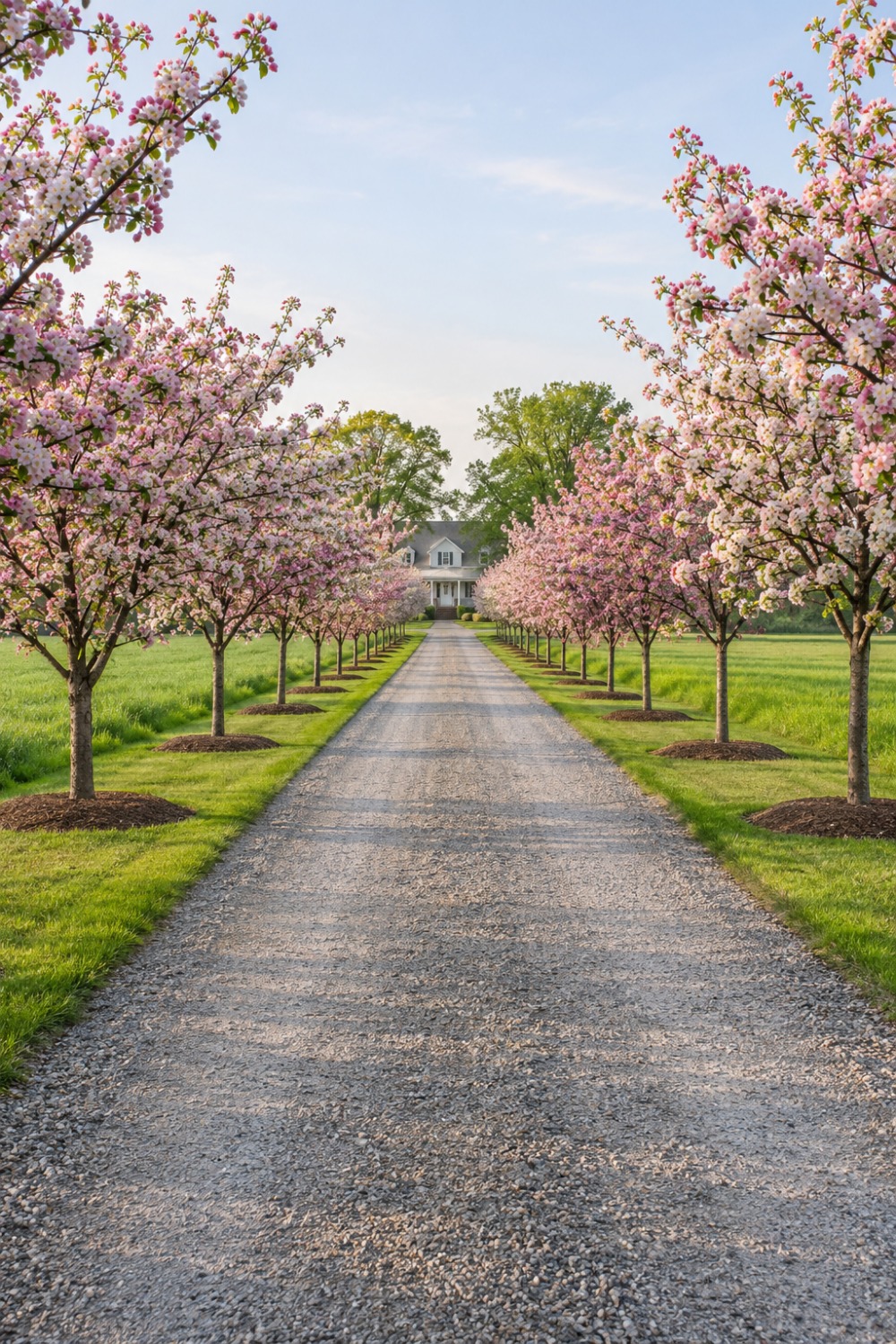
On a long or rural driveway, a row of trees turns the drive into a grand approach.
Small flowering trees such as crabapple, serviceberry (Amelanchier) and redbud (Cercis canadensis) give spring blossom without huge roots.
Set them several feet back from the paving so roots and branches have room, and keep branches pruned above vehicle height.
How to do it:
- Choose one tree variety and repeat it for a formal look.
- Space trees evenly, based on their mature spread.
- Mulch each one with a wide, flat ring kept away from the trunk.
Common mistake: planting large shade trees right beside the drive. Their roots can lift and crack paving over time.
12. Soften a Raised Edge With Trailing Plants
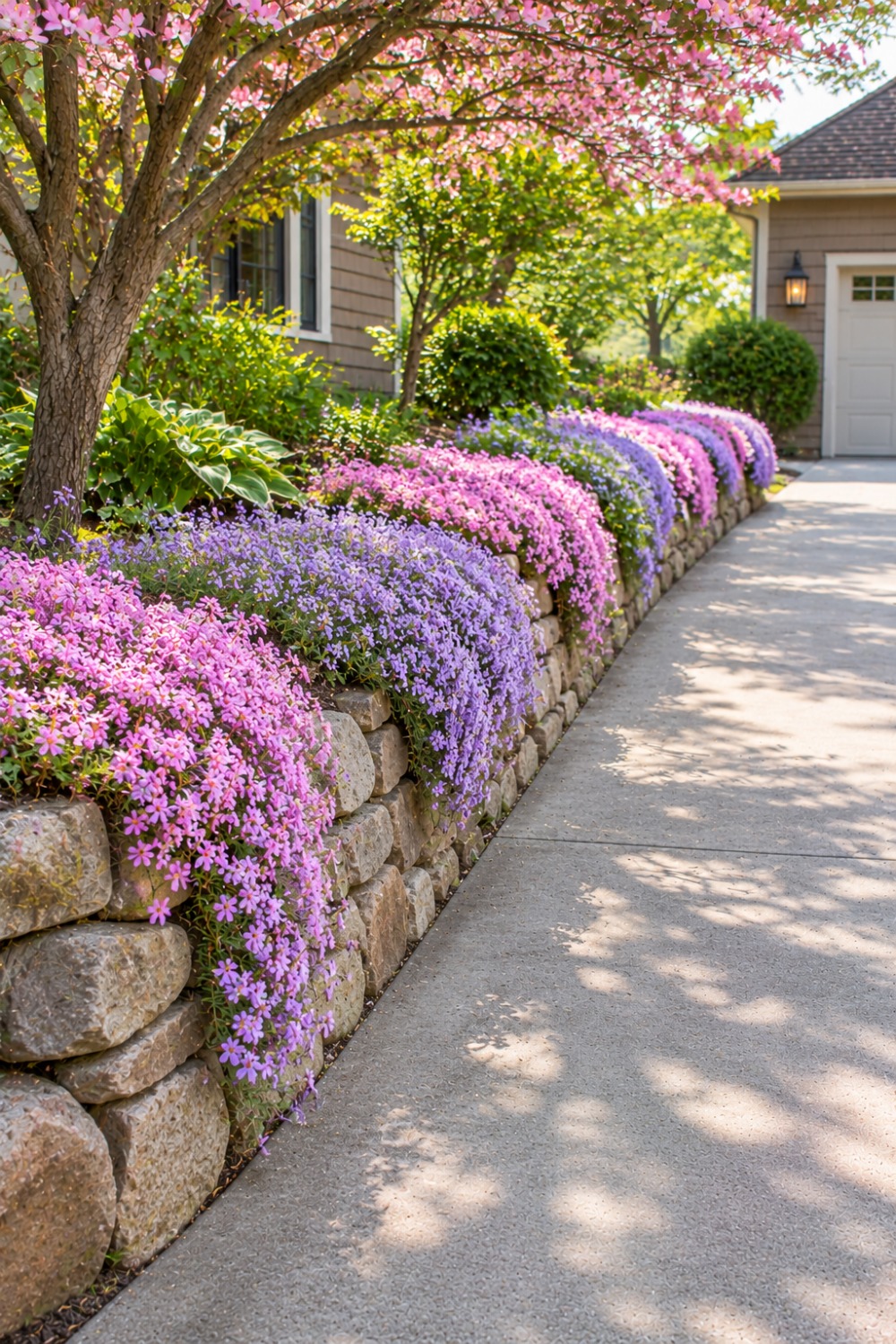
Many driveways cut into a slope, leaving a low wall or bank along one side.
Trailing plants spilling over the top soften the wall and help hold soil on the bank.
Creeping phlox (Phlox subulata), creeping juniper and creeping thyme all handle sun and dry soil well.
How to do it:
- Plant along the top edge of the wall, a few inches back.
- Space plants so they knit together within a couple of years.
- Mulch between them until they fill in.
13. Hold the Line With Steel Edging
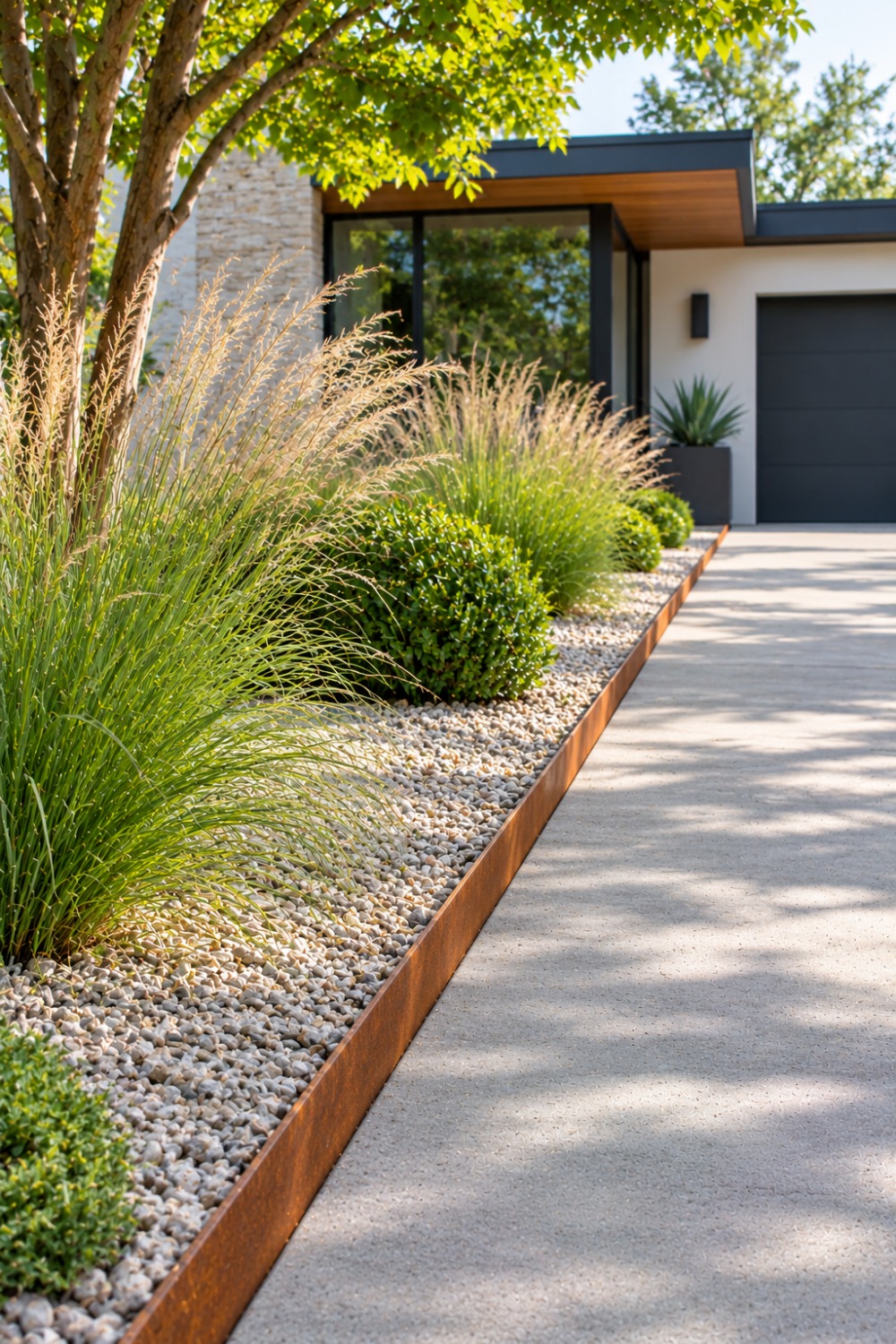
Steel edging gives a driveway border a sharp, modern line.
It keeps gravel and mulch in place, stops grass creeping into beds and lasts for decades.
Corten (weathering) steel turns a warm rust color, while black powder-coated steel looks sleek next to gray concrete.
How to do it:
- Mark a straight or gently curved line along the drive.
- Hammer the edging in so the top sits just above the soil.
- Fill the bed with gravel or mulch and plant.
14. Plant a Pollinator Strip Along a Sunny Drive
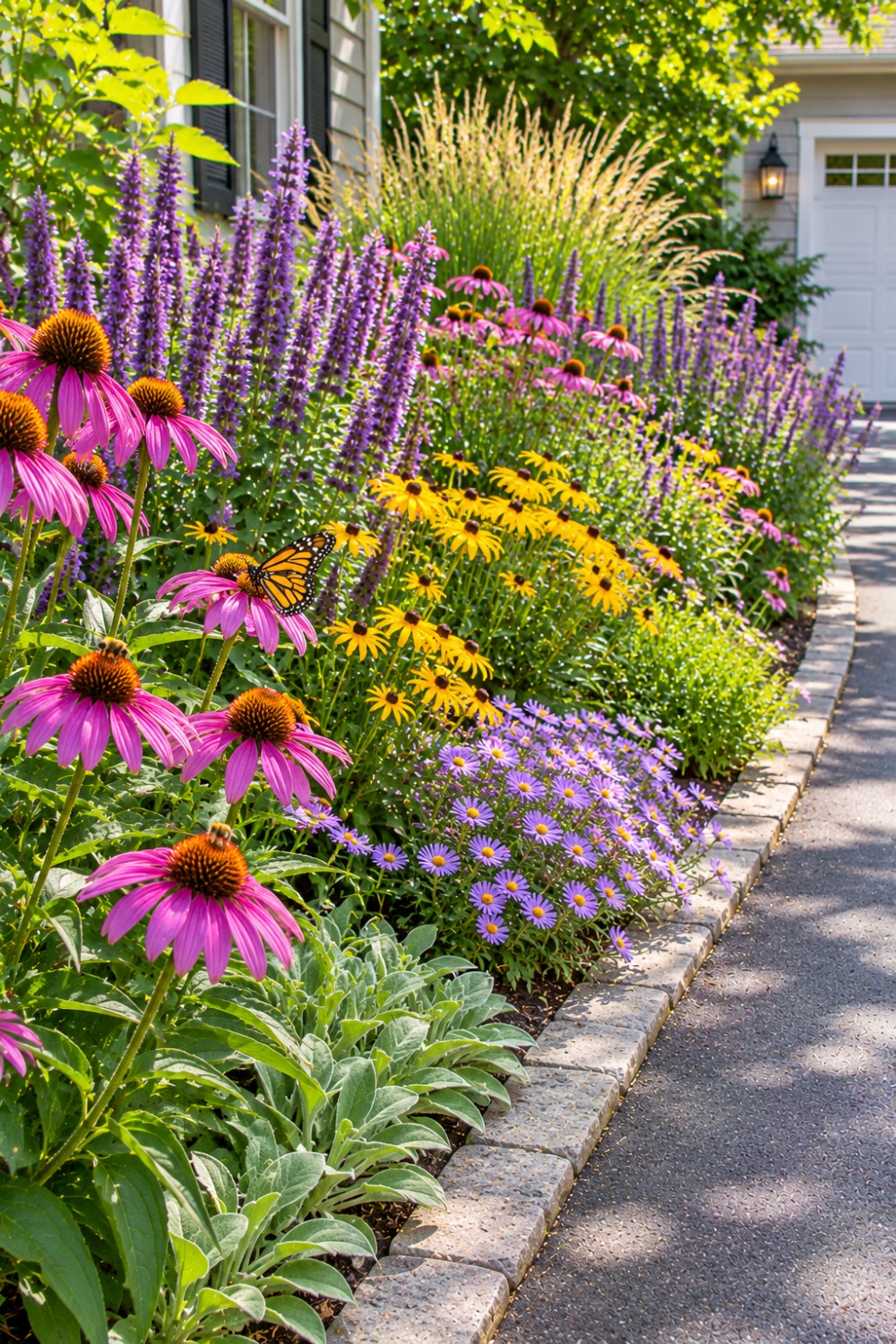
A sunny driveway border is the perfect spot for flowers that bees and butterflies love.
Native perennials like purple coneflower (Echinacea purpurea), black-eyed Susan, anise hyssop (Agastache foeniculum) and asters bloom from summer into fall.
Keep taller plants toward the back and shorter ones near the edge so the border stays tidy.
How to do it:
- Choose at least three plants that bloom at different times.
- Plant in drifts of five or more of each.
- Leave seed heads standing in fall for birds, then cut back in late winter.
15. Repeat the Same Plants Along the Drive and Front Walk
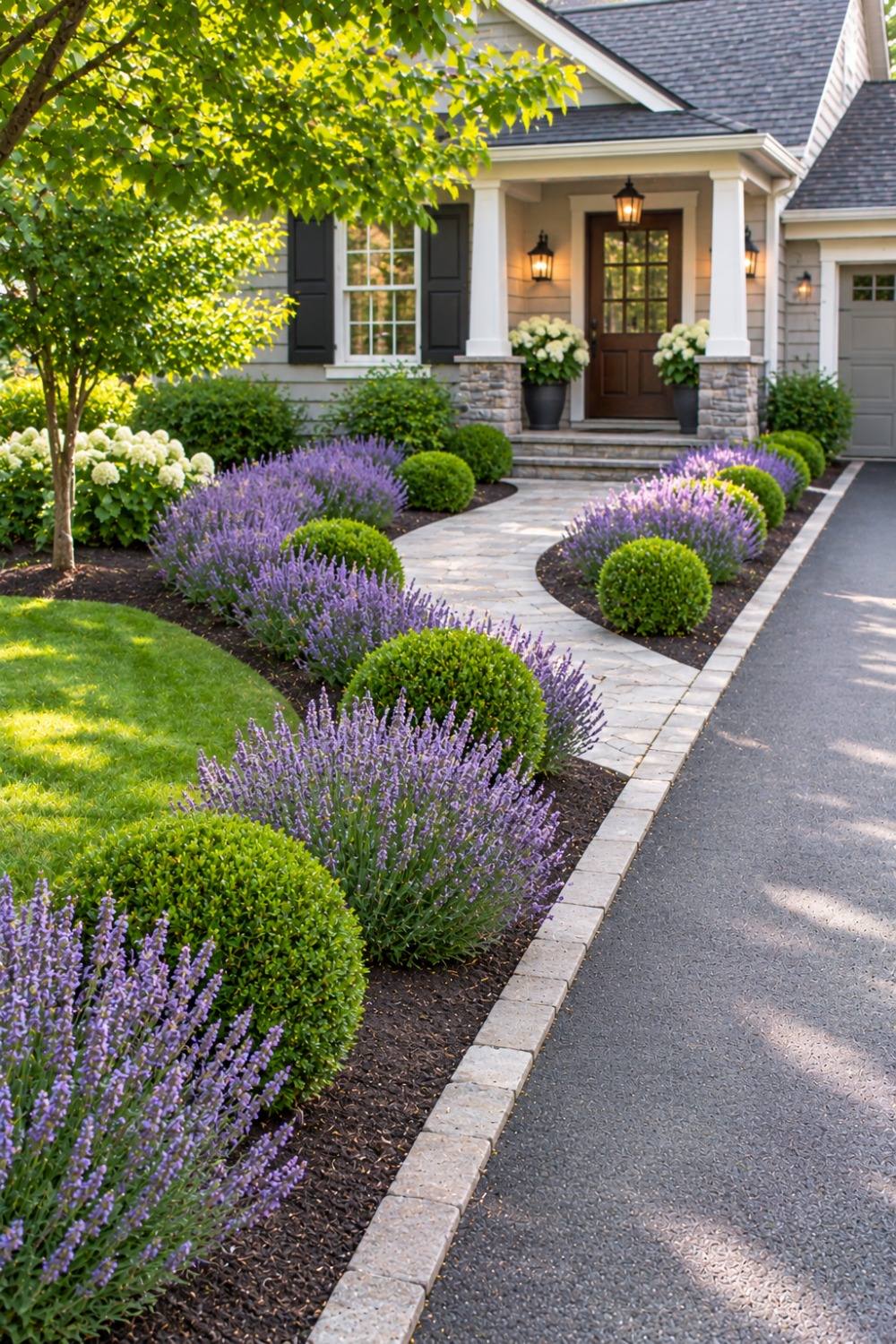
The most polished front yards treat the driveway and the walkway as one design.
Repeating the same two or three plants along both ties the space together and looks intentional.
If you’re working on the rest of the yard too, our front yard landscaping ideas show how to build the whole design around your entry.
How to do it:
- Pick two or three plants that already do well in your driveway border.
- Plant the same varieties along the front walk.
- Use the same mulch and edging on both.
Frequently Asked Questions
What are the best plants to put along a driveway?
Tough, compact plants that handle heat, reflected light and occasional foot traffic work best. Lilyturf, dwarf evergreens, catmint, daylilies and ornamental grasses are reliable choices in many regions. Your local nursery can confirm what thrives where you live.
How far from the driveway should I plant trees?
Small trees should go several feet back from the paving, and large shade trees much farther. Check each tree’s mature spread and root habit, and avoid species known for shallow, aggressive roots near hard surfaces.
How do I keep grass and weeds out of the driveway edge?
Install a physical edge, such as steel, brick or pavers, and keep a layer of mulch or gravel over the soil. A step-out strip of pavers also stops weeds where plants tend to get trampled.
What is the most low-maintenance driveway border?
A simple mix of low evergreen shrubs, one ornamental grass and a ground cover, all set in mulch with a sturdy edge, needs very little care. Trim the shrubs once a year and cut the grasses back in late winter.
Final Thoughts: Design the Drive as Your Home’s Welcome Mat
A driveway border should look good from the street and work hard every day.
Start with the practical needs: clear sightlines near the road, room to step out of the car and space for snow if you need it.
Then add one strong element, such as a paver edge, a low hedge or a row of small trees.
Fill in with tough, repeating plants rather than lots of different varieties.
Keep the plants closest to the drive low and resilient, and save taller grasses and flowers for farther back.
Finish with soft lighting so the drive feels as welcoming at night as it does by day.
For a rockier, lower-water look, our front yard landscaping ideas with rocks pair well with a driveway border.
Start with one side of the drive this season, then extend it as the plants prove themselves.