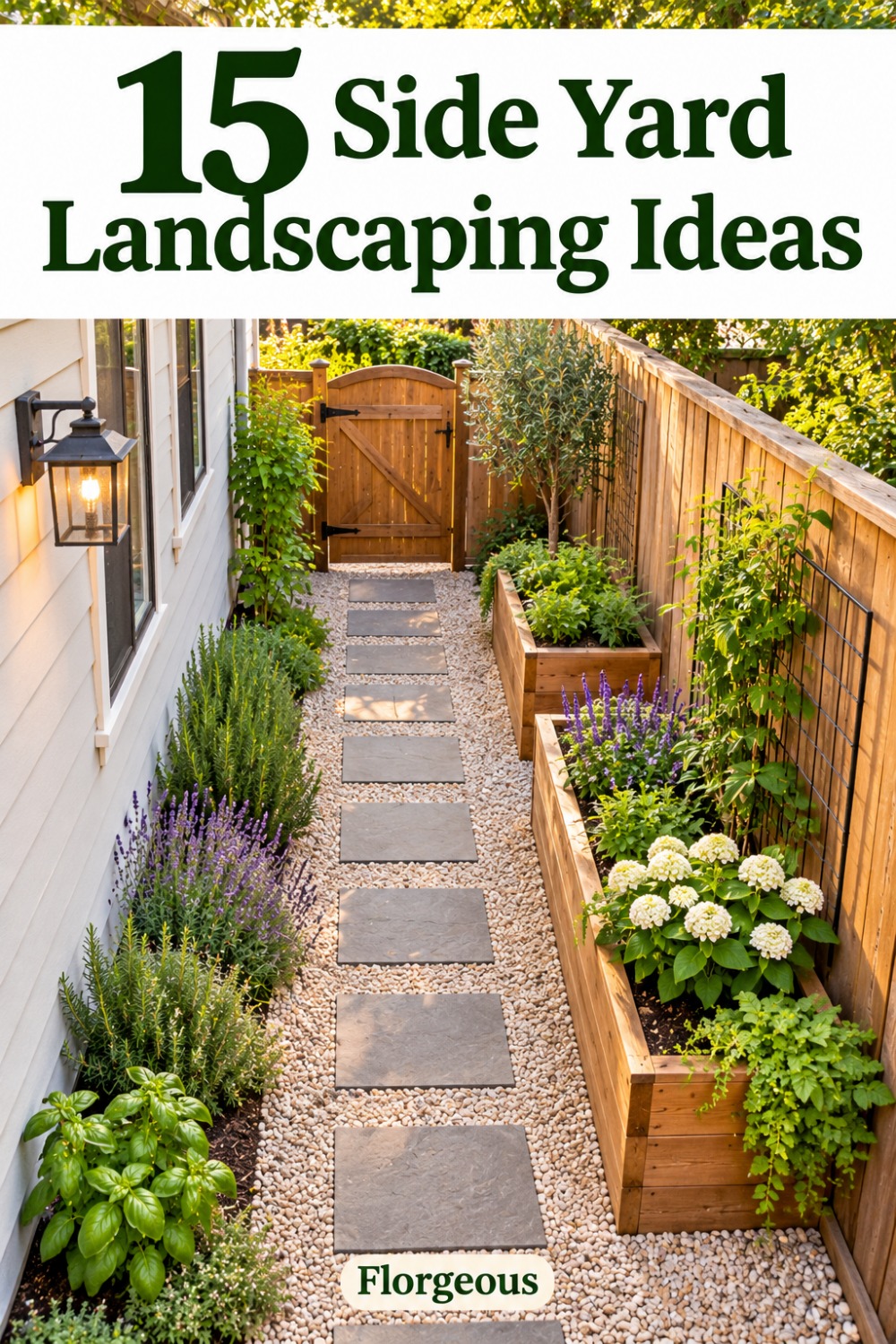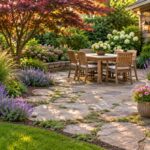
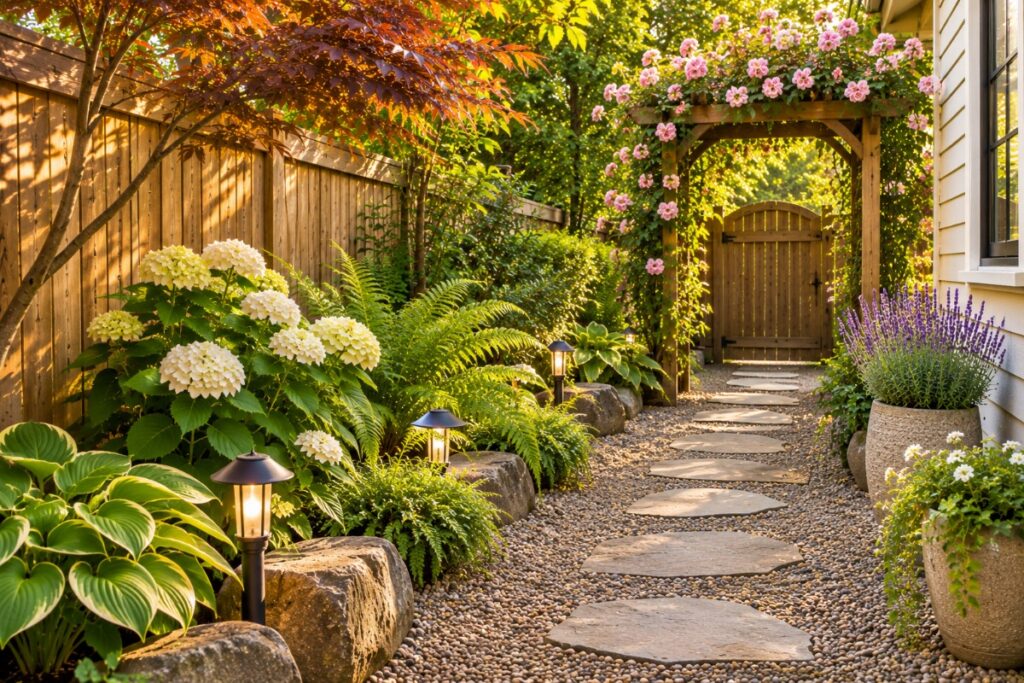
Most homes have one: a narrow strip down the side of the house that nobody quite knows what to do with.
It often ends up as a muddy shortcut to the backyard, a home for the trash cans or a patch of weeds behind the gate.
The secret to a great side yard isn’t making it look bigger. It’s giving it one clear job, whether that’s a pretty passage, a working garden or a tidy storage spot.
These 15 side yard landscaping ideas will help you turn that forgotten strip into space you actually use. For more small-space tricks, see our small front yard landscaping ideas.
Side Yard Ideas by Job
| Main job | Good ideas | Best for |
|---|---|---|
| Easy passage | Stepping stone path, gravel, a garden gate | Busy routes to the backyard |
| Growing space | Herb garden, espalier, raised planters | Sunny side yards |
| Storage | Bin enclosure, slim shed, hose station | Practical households |
| Relaxing nook | Bench, small fountain, string lights | Wider side yards |
| Shade garden | Ferns, hostas, hydrangeas | North-facing or tree-shaded sides |
1. Lay a Stepping Stone Path Through Gravel
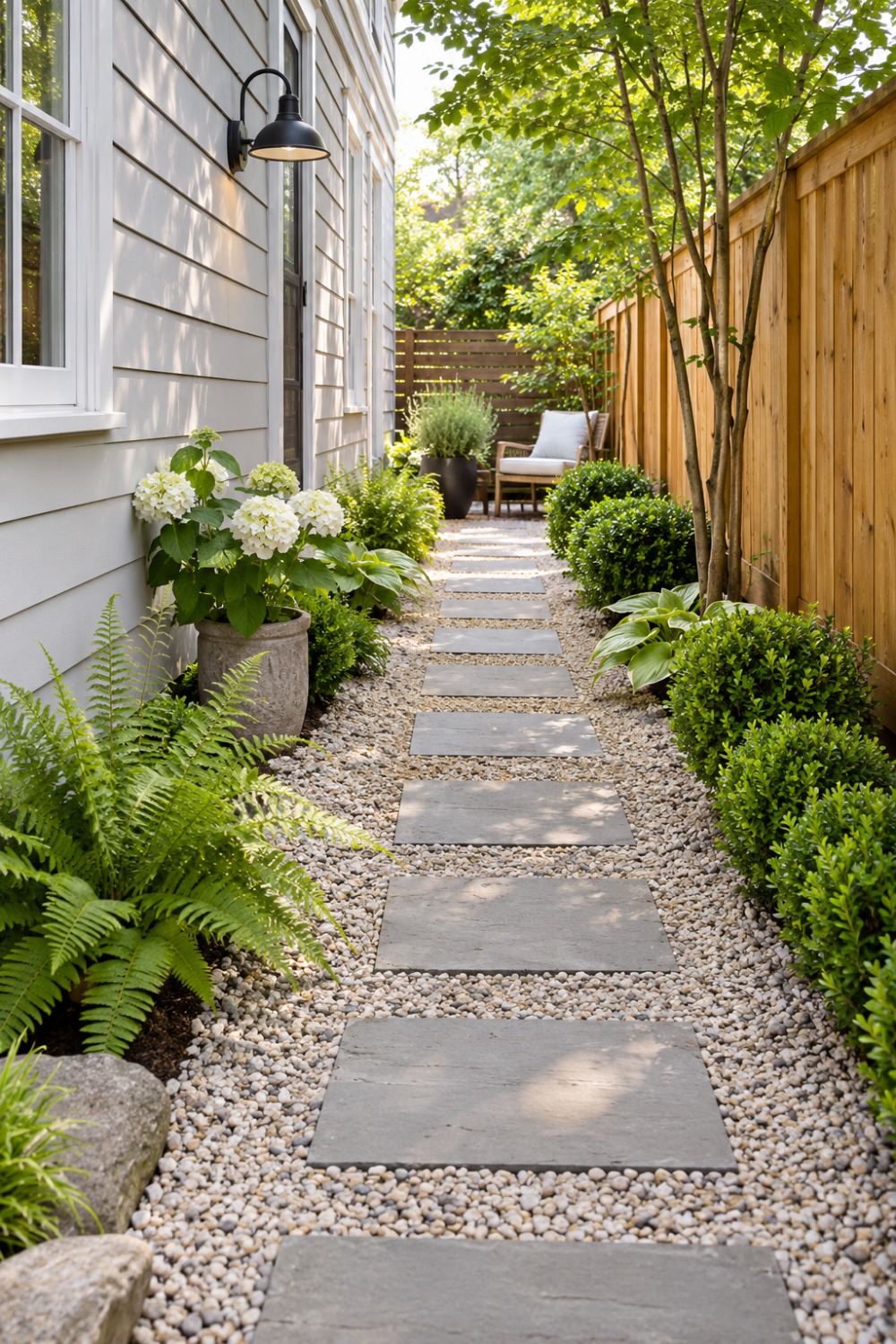
A stepping stone path is the simplest way to make a side yard feel intentional.
Large stones give firm footing, while gravel between them drains well and stops mud.
Stones laid slightly apart slow your pace and make even a short walk feel like a garden stroll.
How to do it:
- Remove the turf and lay landscape fabric.
- Set the stones on a thin sand bed, spaced for a comfortable stride.
- Fill around them with 2 inches of pea gravel and add edging to hold it in.
2. Add a Garden Gate as a Welcoming Entry
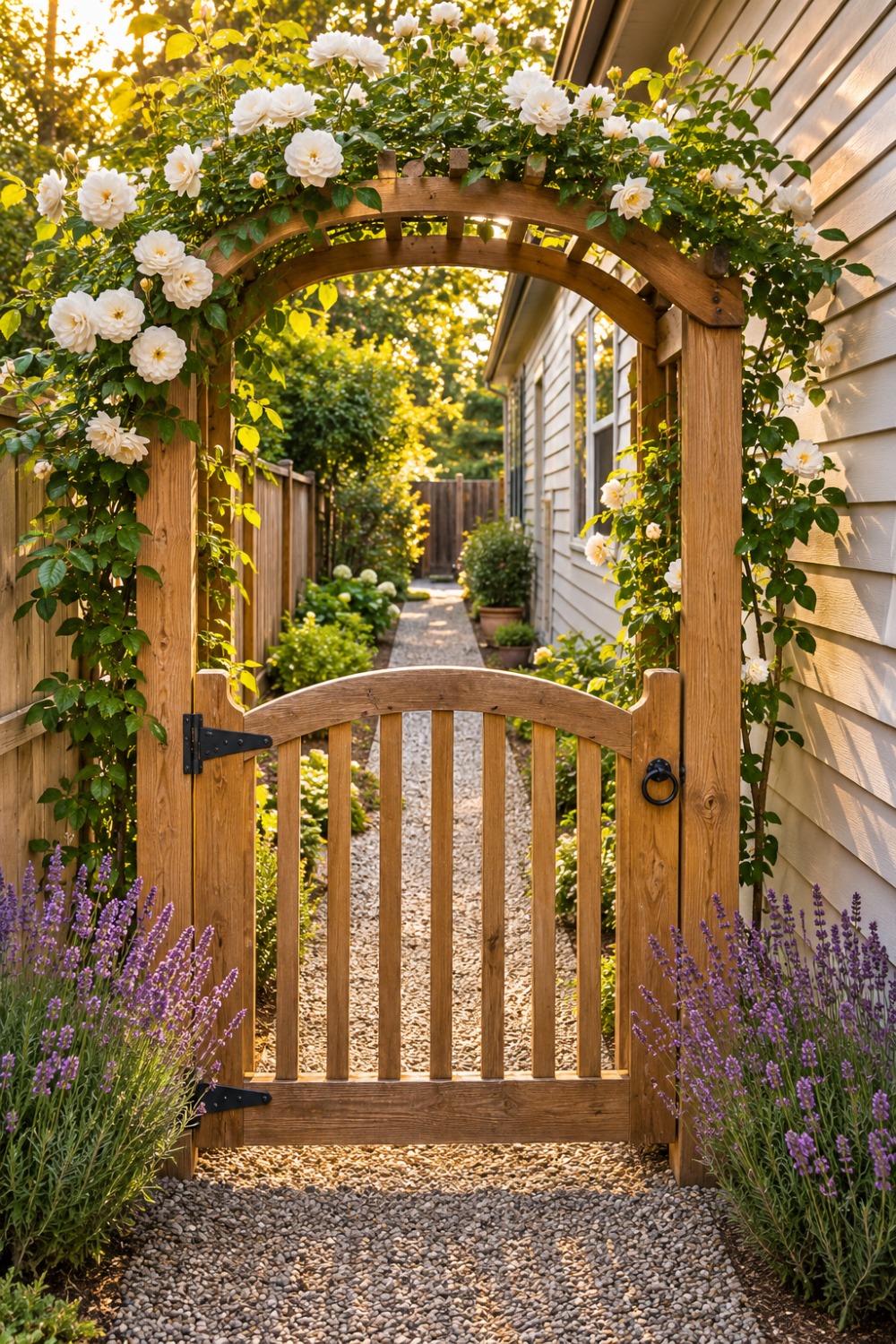
A gate marks the side yard as a garden space rather than a leftover corridor.
It also hides the clutter behind it and creates a little sense of mystery for visitors.
An arbor overhead with a climbing rose or clematis turns the gate into a feature you see from the street.
How to do it:
- Measure the opening and choose a gate wide enough for a wheelbarrow or bins.
- Set sturdy posts in concrete and hang the gate with strong hinges.
- Plant a climber at the base of each post and train it over the arbor.
3. Grow an Herb Garden in a Sunny Side Strip
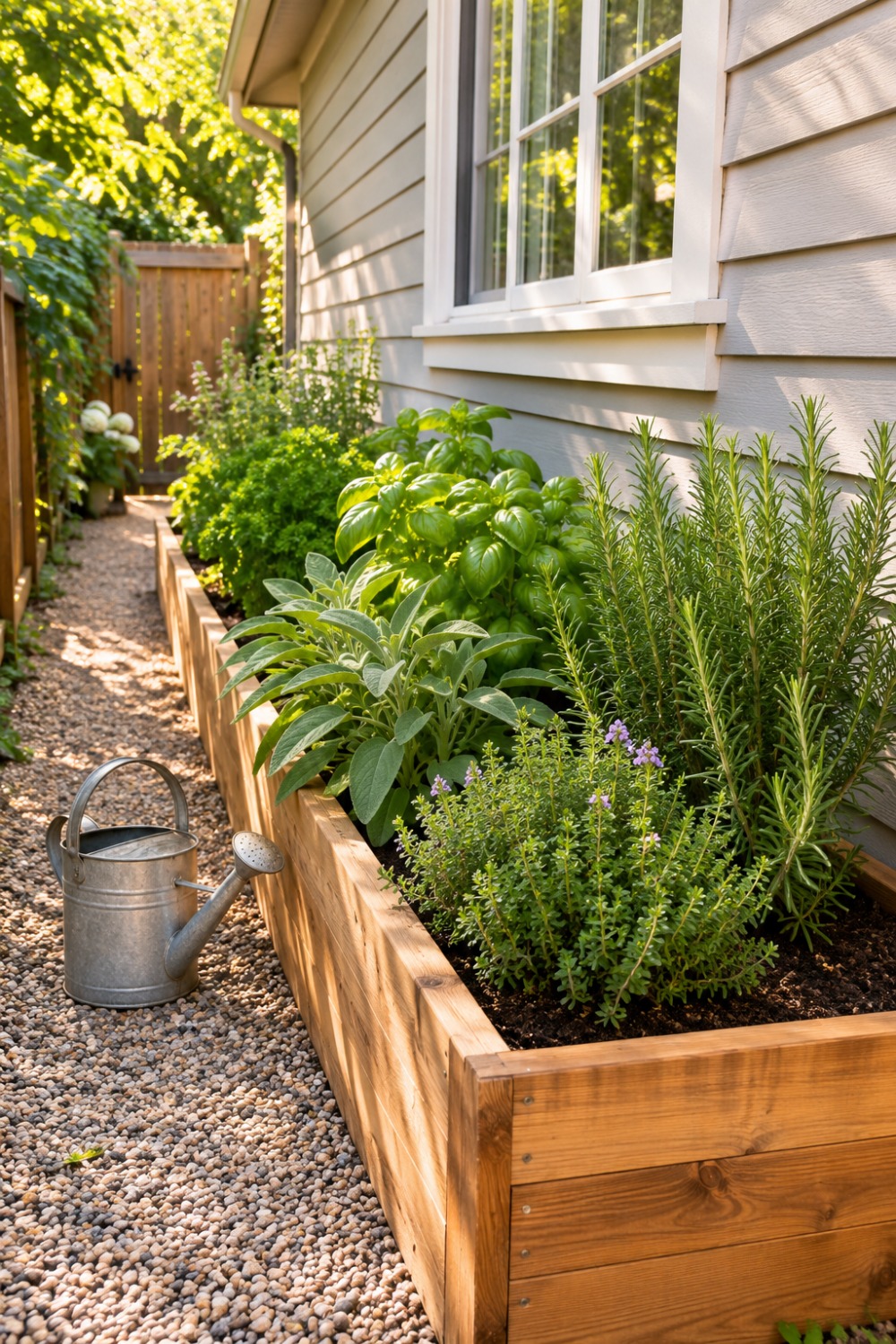
If your side yard gets at least six hours of sun, it can be the perfect kitchen garden.
Herbs don’t need much width, and having them steps from the kitchen door means you’ll actually use them.
Rosemary, thyme, sage and oregano love heat and handle the reflected warmth from a wall.
How to do it:
- Build a narrow raised bed about 18 inches wide along the sunny wall.
- Fill it with a free-draining mix of soil and compost.
- Plant woody herbs at the back and soft herbs like basil at the front.
4. Build a Hidden Trash and Recycling Enclosure
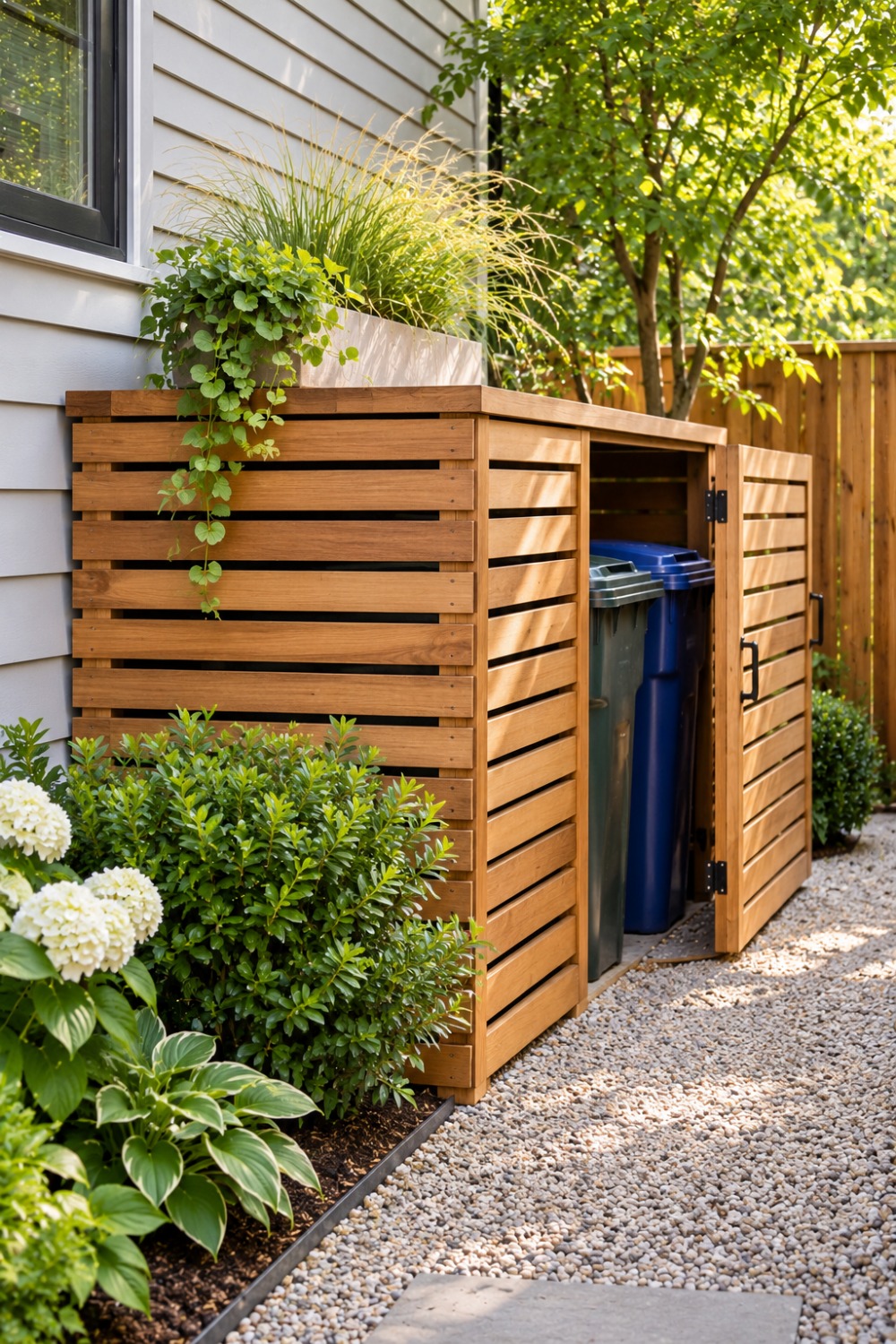
Bins are often the first thing you see in a side yard, and they rarely look good.
A simple slatted screen or enclosure hides them while still letting air flow.
Planting low shrubs or a planter in front makes the whole corner look tidy and intentional.
How to do it:
- Measure your bins and leave room to open the lids.
- Build a three-sided screen from horizontal slats on sturdy posts.
- Lay gravel or pavers underneath so the bins roll easily.
5. Plant a Shade Garden Along the North Side
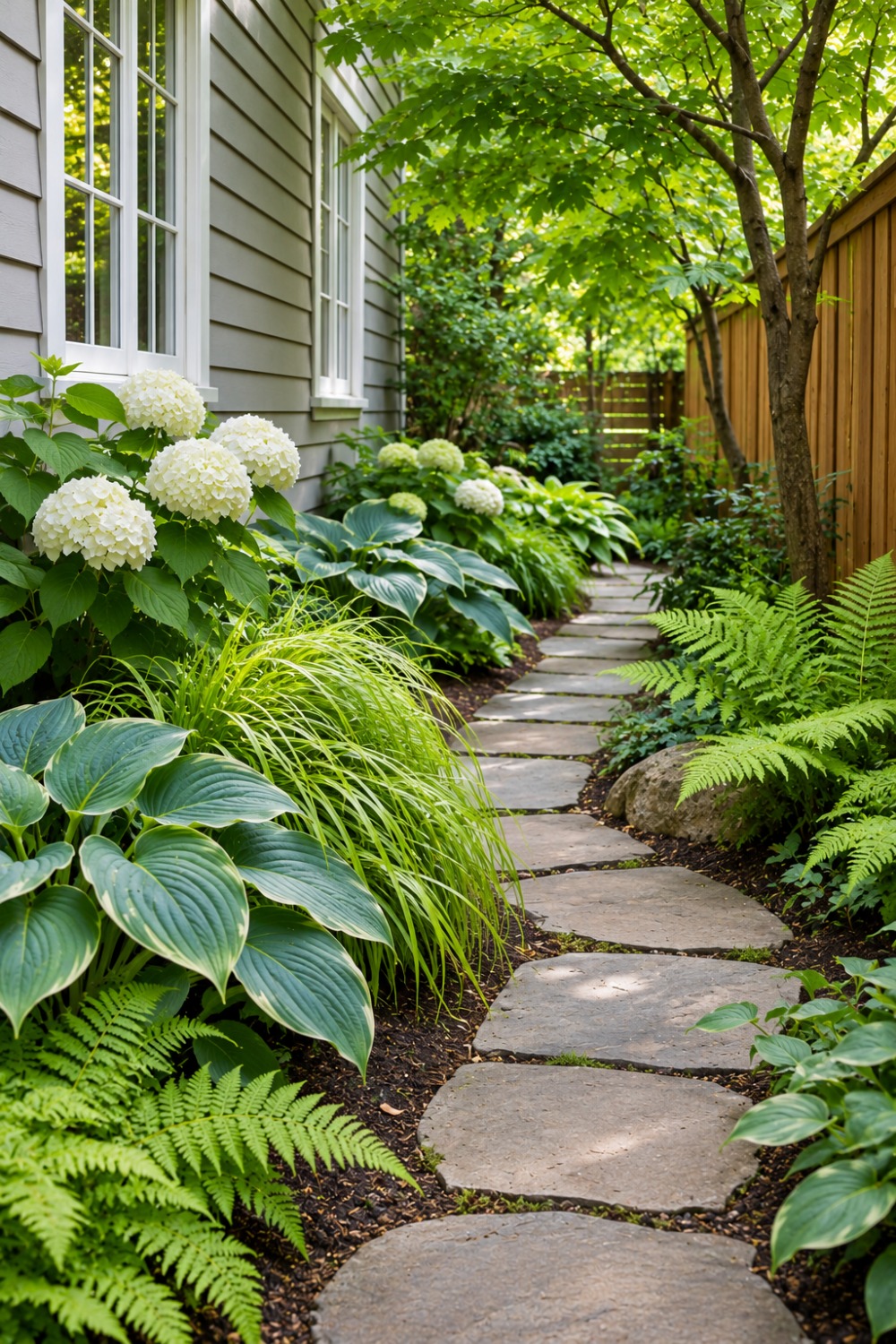
Many side yards get little direct sun, especially on the north side of a house.
That’s ideal for shade lovers like ferns, hostas, hydrangeas and hellebores.
Choose plants with bright or variegated leaves to light up the darker corners.
How to do it:
- Improve the soil with compost to hold moisture.
- Plant taller shrubs near the house and lower plants along the path.
- Mulch well and water during dry spells, since walls can block rain.
6. Train an Espalier Against the House Wall
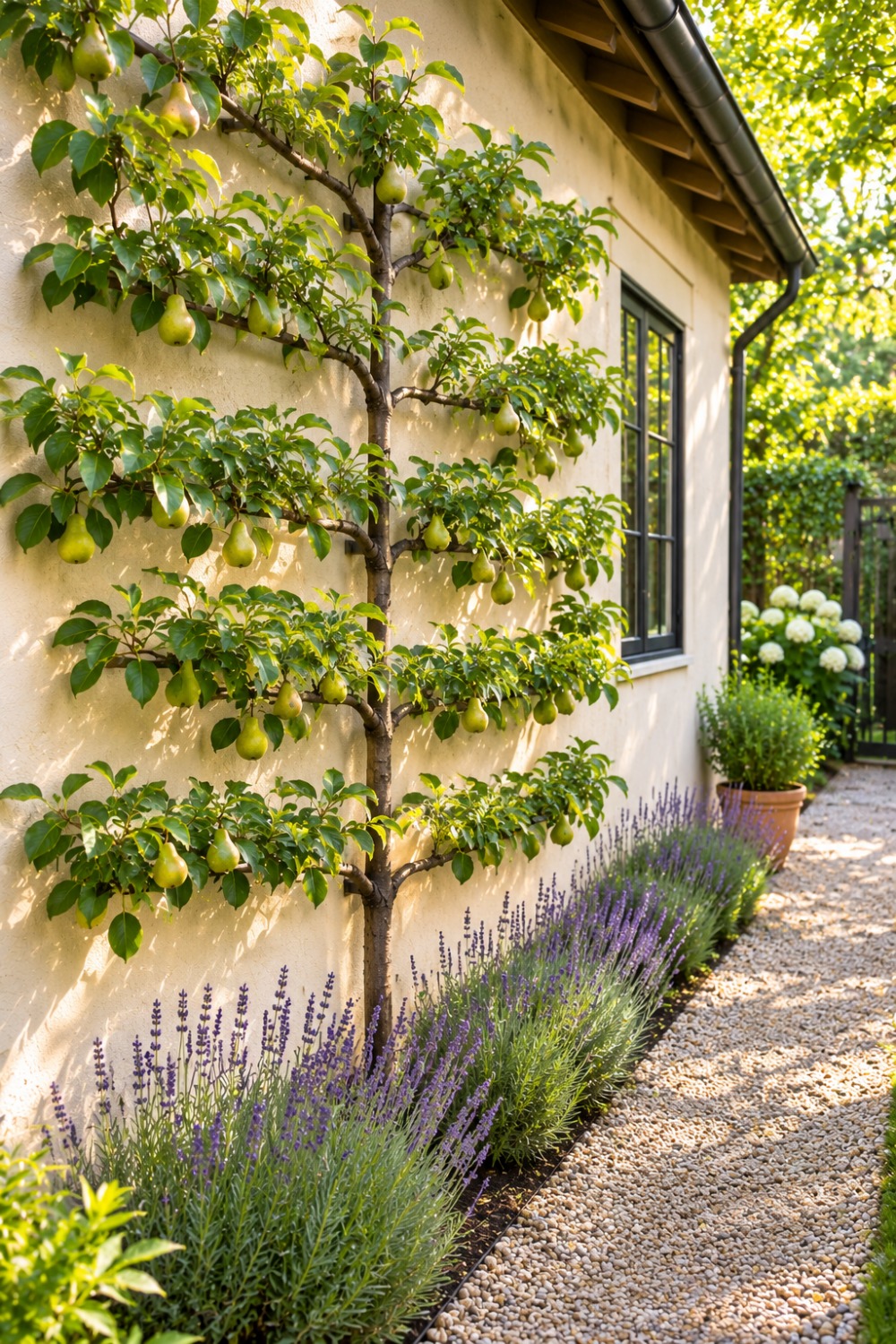
When space is tight, grow a tree flat against the wall instead of out into the path.
Espaliered pears, apples, figs or camellias add greenery and even fruit in just a foot of depth.
A sunny wall also holds warmth, helping fruit ripen.
How to do it:
- Fix horizontal wires to the wall with a few inches of clearance.
- Plant a young tree and tie its side branches along the wires.
- Prune in summer to keep the shape crisp.
7. Add a Slim Storage Shed for Garden Tools
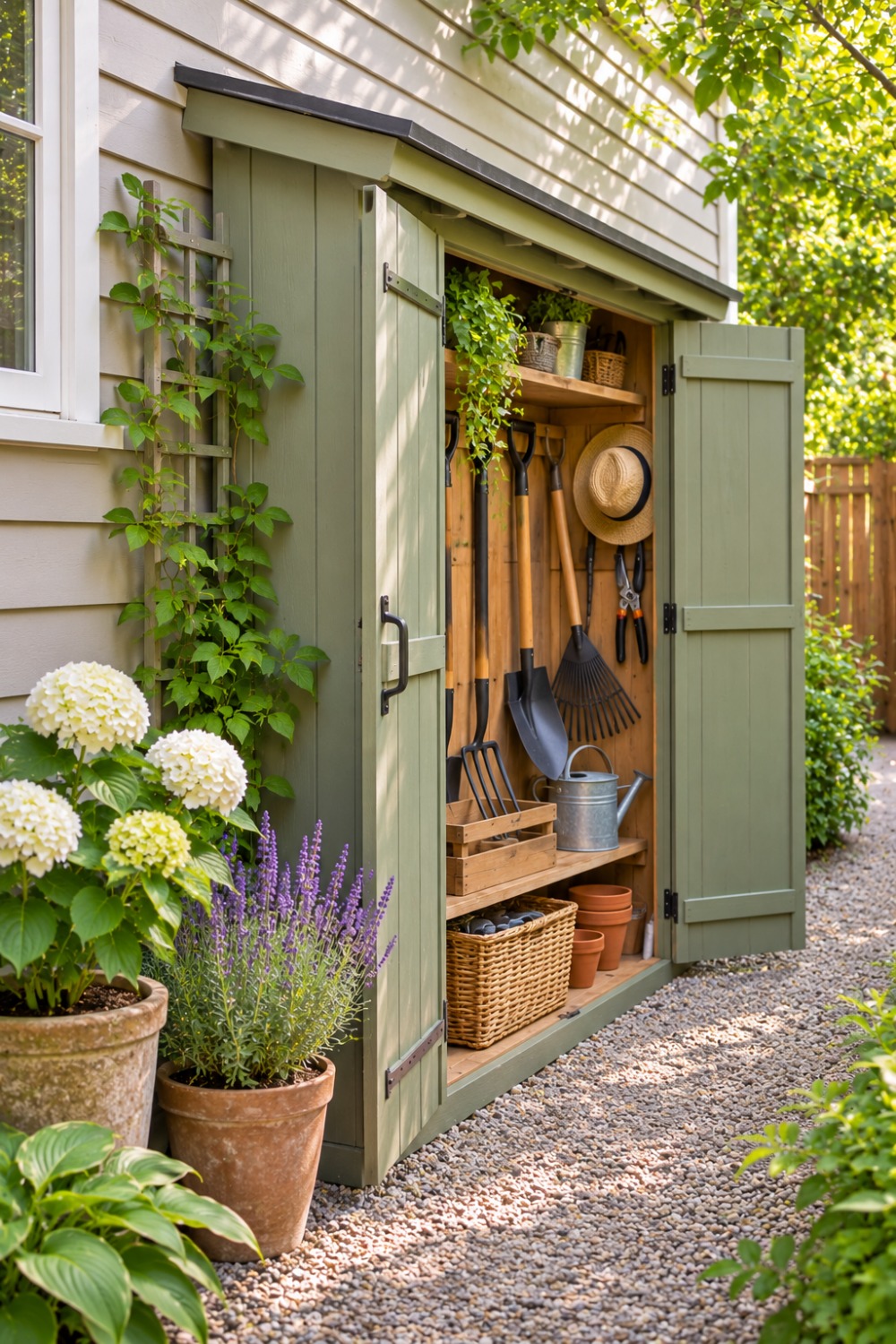
A side yard is the perfect place for a slim lean-to shed that keeps tools close at hand.
Narrow designs only need a couple of feet of depth and keep clutter out of the garage.
Paint it to match your house trim and add a planter or climber so it blends in.
How to do it:
- Measure the width carefully, leaving enough room to walk past.
- Set the shed on a level base of pavers or gravel.
- Check local rules on how close structures can sit to the property line.
8. Hang a Vertical Garden on the Fence
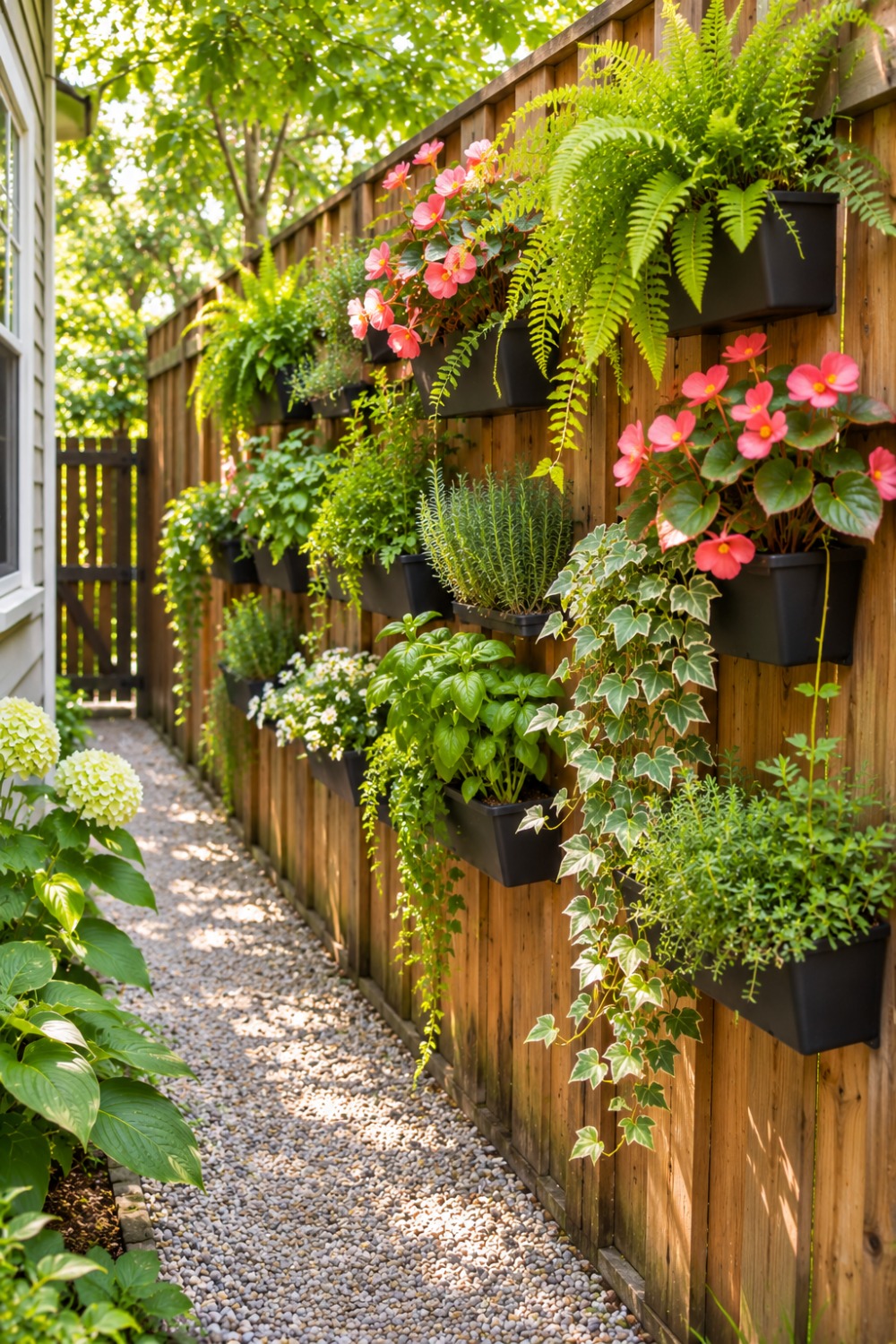
When the ground is narrow, grow up instead.
Pocket planters, gutter planters or shelves on the fence turn a bare boundary into a living wall.
Trailing plants, herbs and small flowers all work well, depending on how much sun you get.
How to do it:
- Fix sturdy planters or shelves to the fence posts.
- Fill them with lightweight potting mix.
- Use a simple drip line or water every day or two in summer.
9. Turn the Side Yard Into a Dog Run
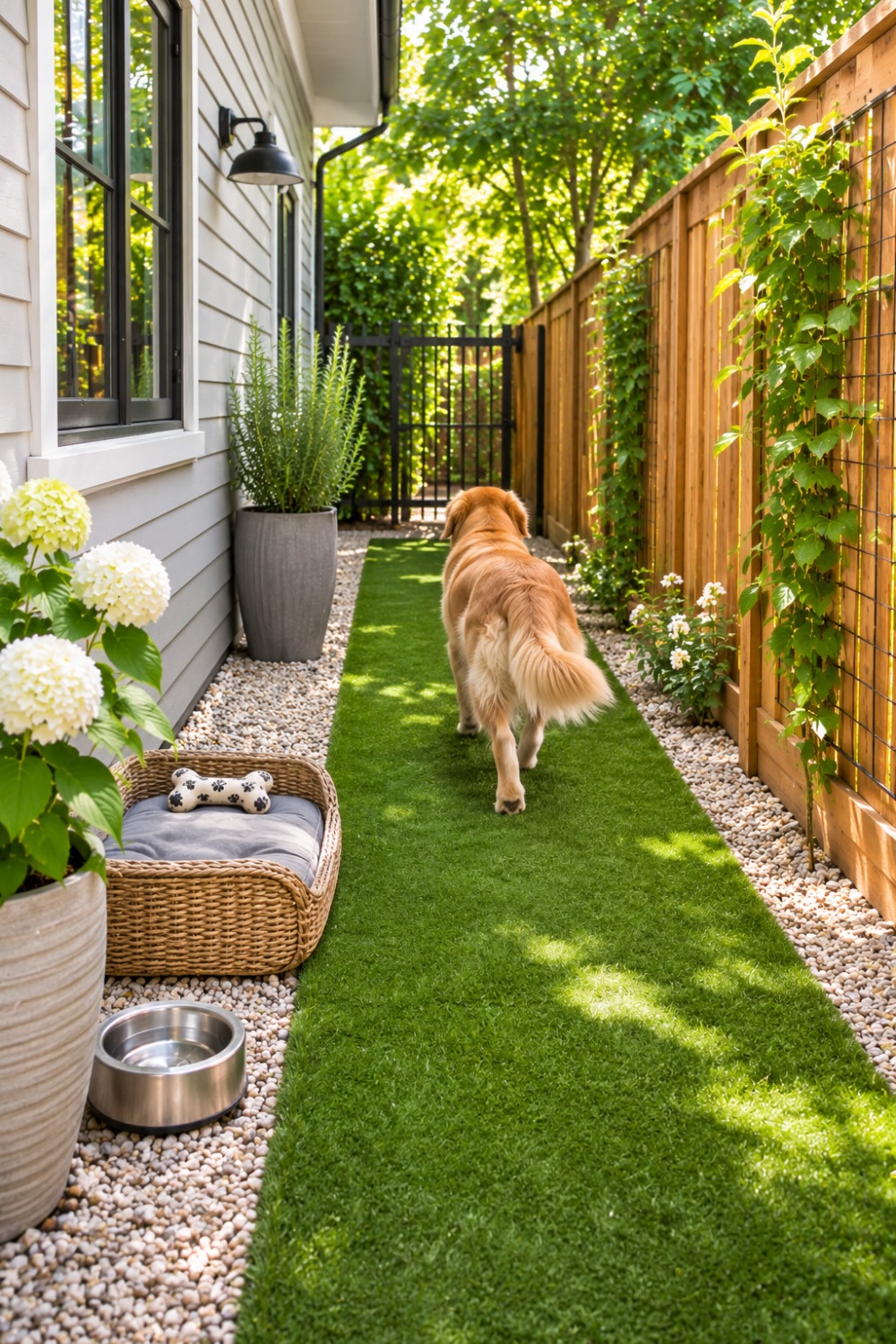
A fenced side yard can give dogs their own space without wrecking the main lawn.
Pet-friendly surfaces like pea gravel, artificial turf or wood chips stand up to running and digging.
Add a shady spot and a water bowl, and keep toxic plants out of reach.
How to do it:
- Check the fence and gates for gaps your dog could squeeze through.
- Lay a durable surface such as pea gravel or pet turf.
- Rinse the area regularly and keep a shady spot available.
10. Create a Cozy Bench Nook
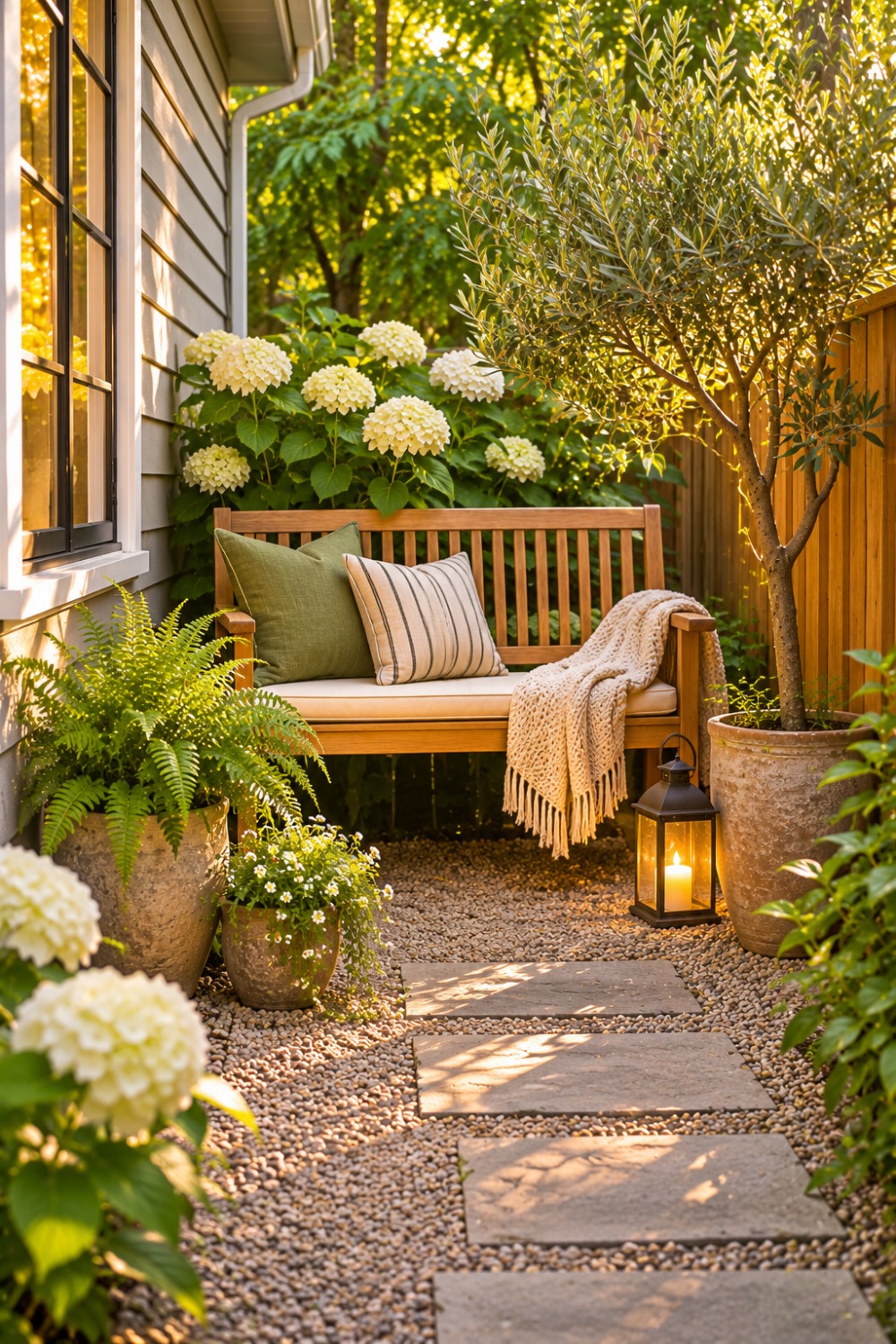
If your side yard widens at one end, use that spot for a quiet seat.
A small bench surrounded by pots becomes a private place to read or drink your morning coffee.
Because side yards are sheltered, they often feel calmer than the main garden.
How to do it:
- Find the widest, most private spot in the side yard.
- Set the bench on a few pavers so it stays level.
- Surround it with pots and add a lantern for evenings.
11. Install a Small Wall Fountain
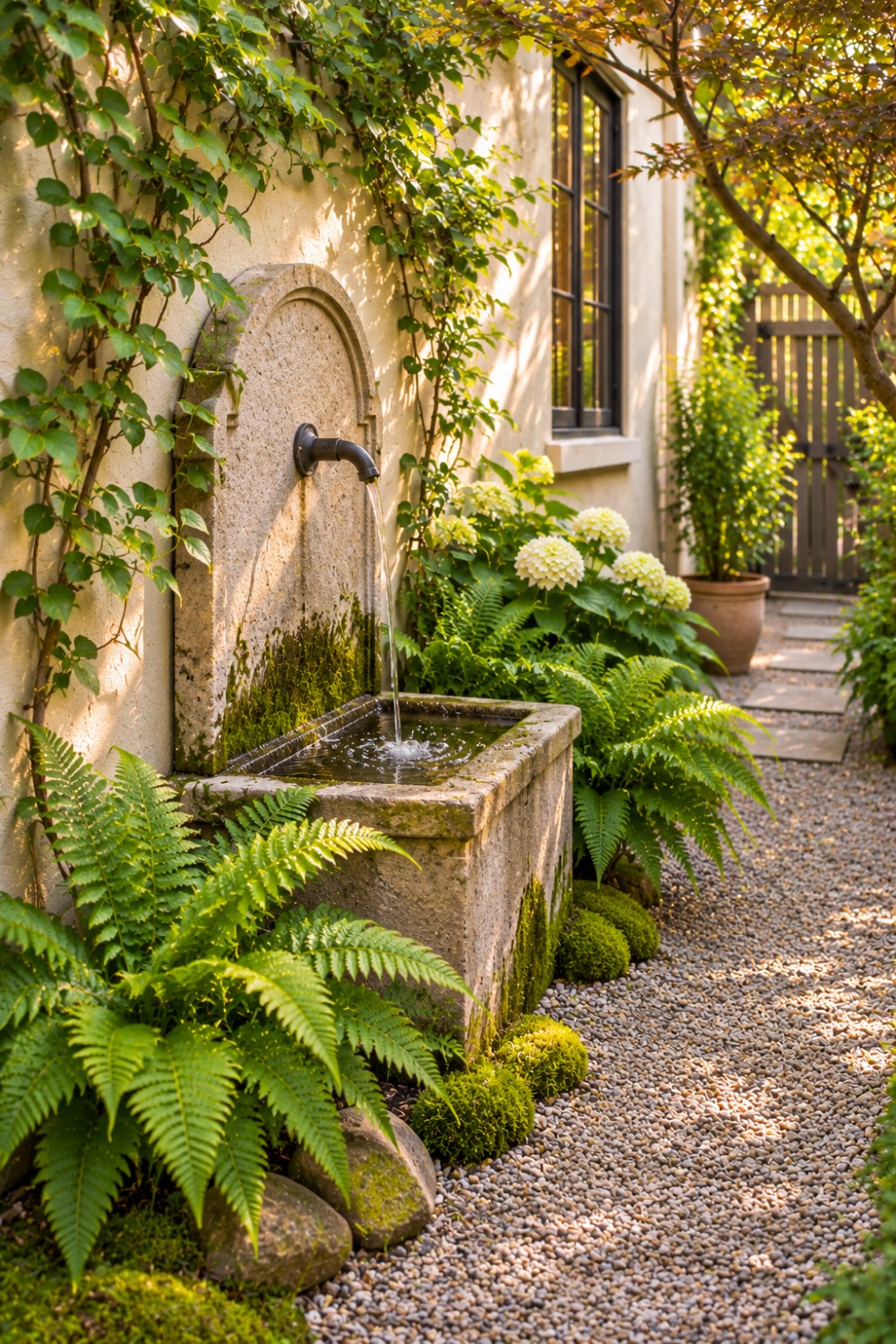
The sound of running water makes a narrow passage feel peaceful.
A wall fountain takes up almost no floor space and works well near a seat or window.
It also helps mask noise from neighbors or the street.
How to do it:
- Choose a self-contained wall fountain with a recirculating pump.
- Mount it securely on the wall or fence and run power safely to it.
- Top it up regularly and clean it every few weeks.
12. Light the Path With Low Step Lights
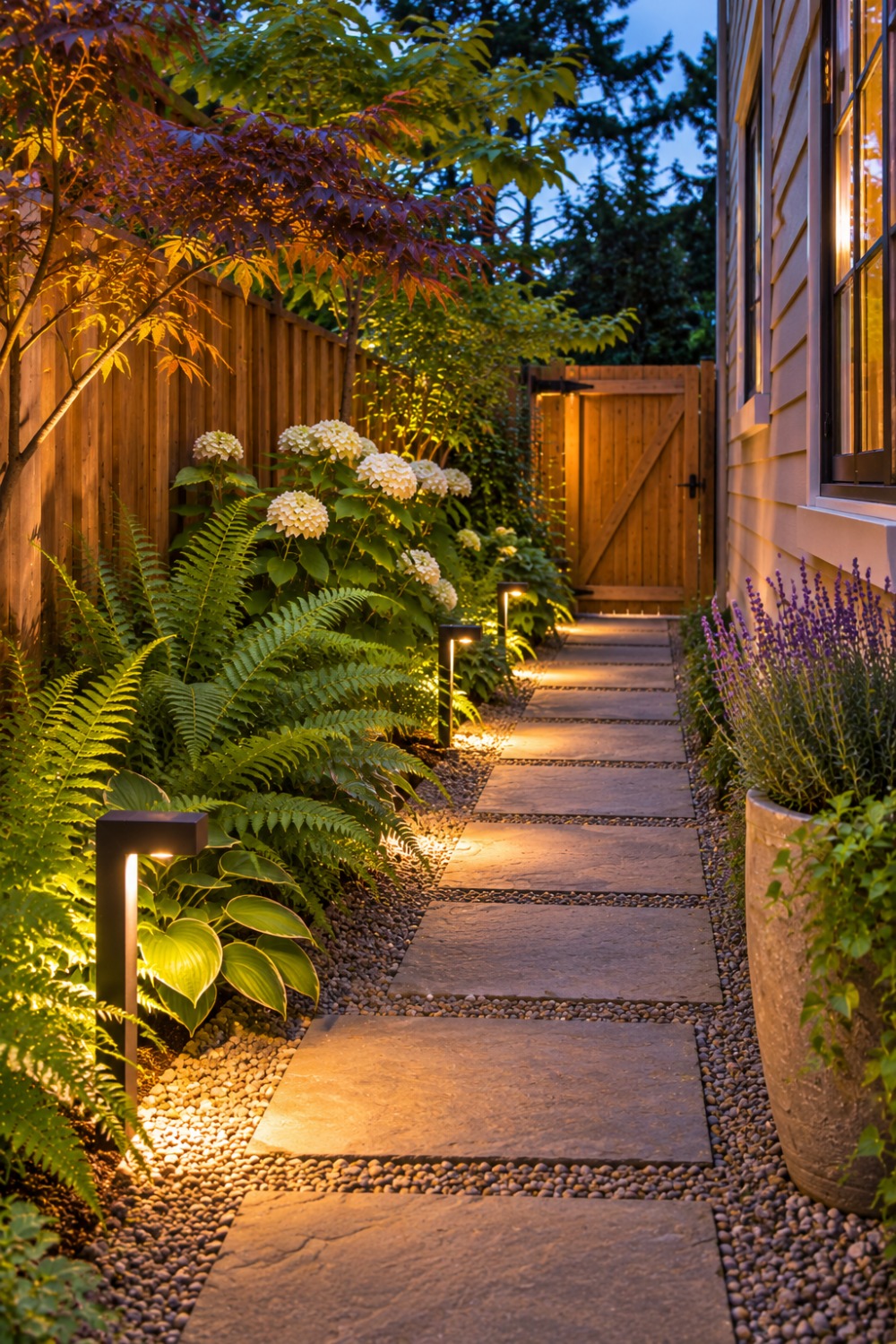
Side yards can be dark and tricky to walk through at night.
Low path lights or lights set into the wall make the route safe and look lovely after dark.
Solar lights are easy to install, but shaded side yards may need wired low-voltage lights.
How to do it:
- Space lights every 6 to 8 feet along the path.
- Keep them low and angled down to avoid glare.
- Use warm white bulbs and a timer or dusk sensor.
13. Grow Columnar Plants for Privacy
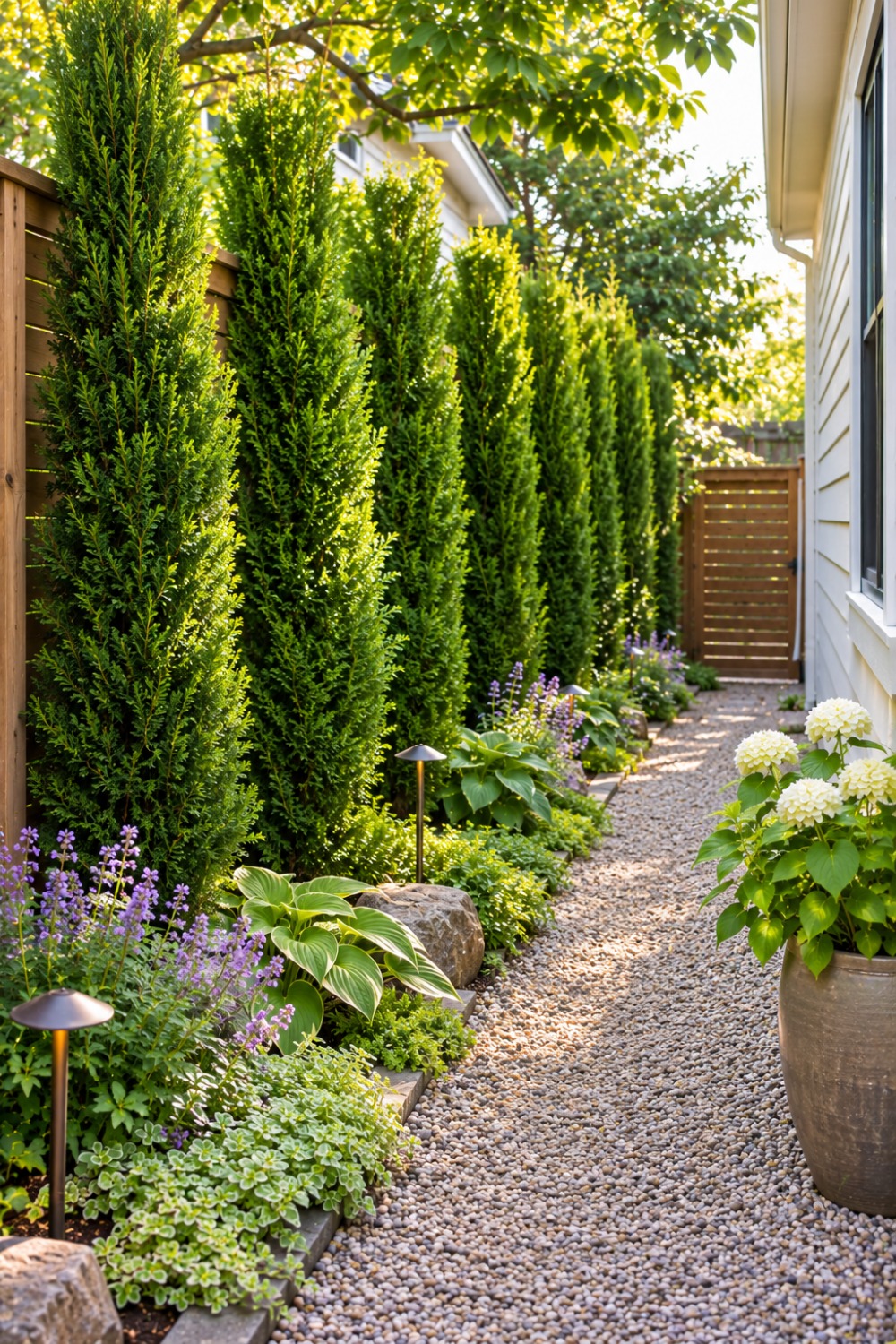
Side yards often face a neighbor’s windows just a few feet away.
Slim columnar plants add privacy without eating into the path.
Narrow conifers, columnar hollies or bamboo in containers all work well. Choose clumping bamboo only, and keep it contained.
How to do it:
- Pick plants labeled as columnar or narrow at maturity.
- Space them so they knit together in a few years.
- Water well during the first two summers.
14. Build Raised Planters Along the Fence
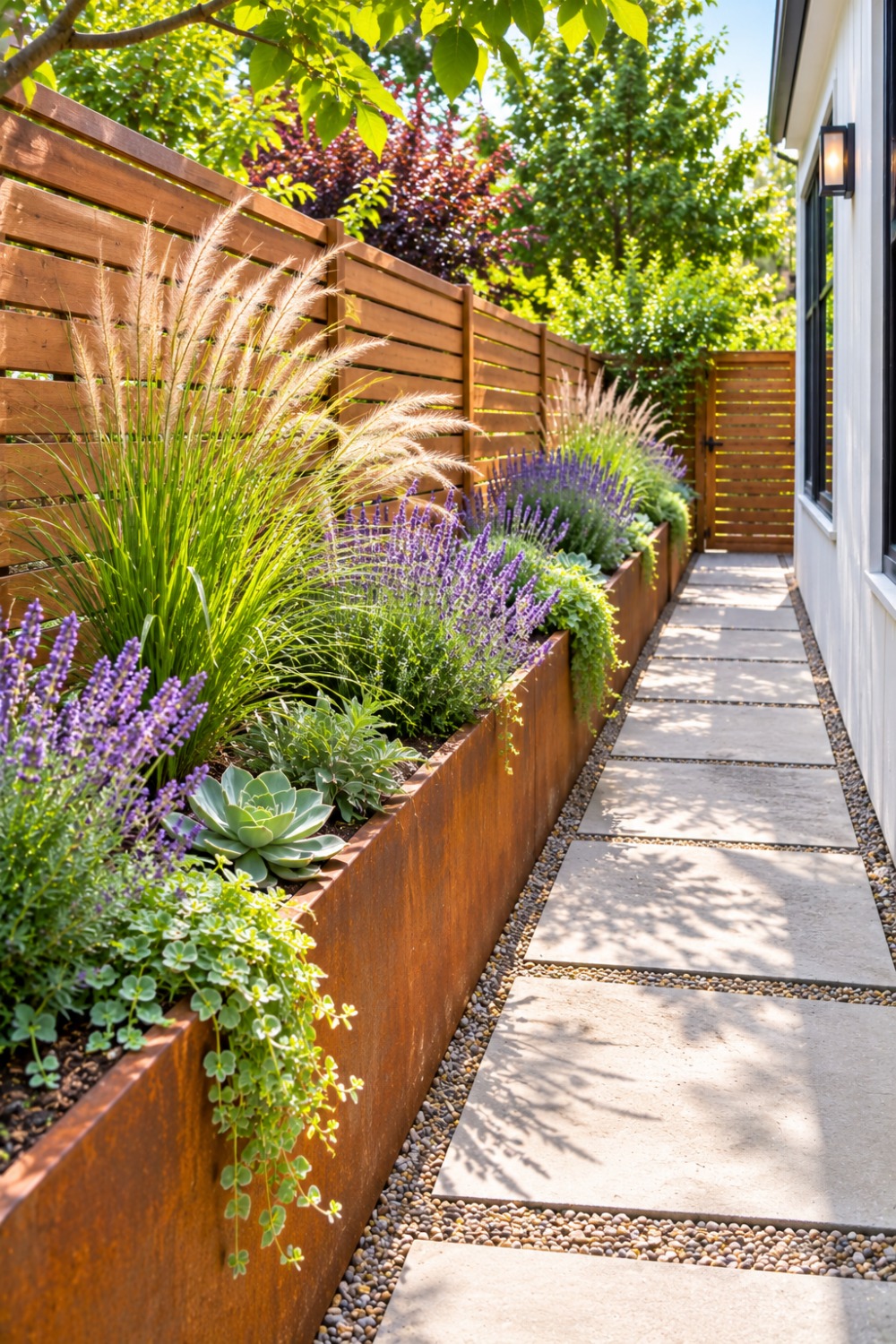
Long, narrow planters give side yards a clean, modern look.
Raised beds also make planting easier where the ground is compacted or full of builder’s rubble.
Choose low, tidy plants like grasses, lavender or succulents so they don’t spill onto the path.
How to do it:
- Choose planters about 12 to 18 inches wide.
- Fill them with good-quality soil mix.
- Plant in a simple repeating pattern for a calm, modern feel.
15. Lay Pavers With Ground Cover Joints
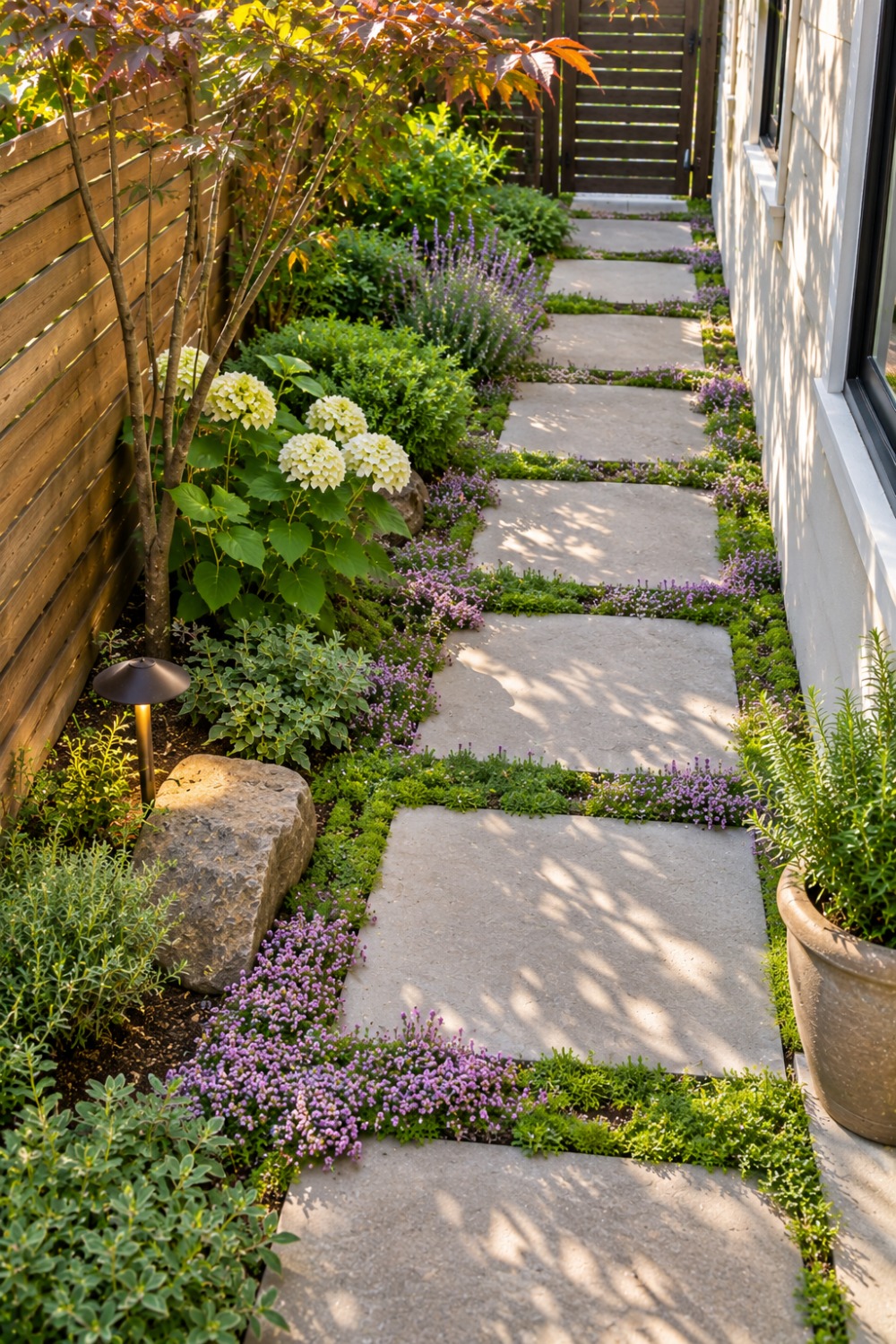
Pavers with planted joints feel softer and greener than solid paving.
Creeping thyme, Irish moss or dwarf mondo grass fill the gaps and can take light foot traffic.
The plants also help water soak in and stop the path from feeling like a corridor.
How to do it:
- Lay pavers on a compacted base, leaving 2 to 3 inch gaps.
- Fill the gaps with soil mixed with compost.
- Plant low ground covers and water often until they fill in.
Frequently Asked Questions
What is the cheapest way to landscape a side yard?
Pea gravel with a few stepping stones is usually the most affordable option. Add a few tough plants or containers to keep it from feeling bare.
What can I put in a narrow side yard?
A path, a slim herb garden, a storage spot for bins or tools, a vertical garden or a small seating nook all fit narrow spaces.
What plants grow well in a shady side yard?
Ferns, hostas, hydrangeas, hellebores and Japanese forest grass all do well in shade.
How do I stop a side yard from getting muddy?
Replace bare soil or patchy grass with gravel, pavers or stepping stones, and make sure gutters and downspouts drain away from the path.
Final Thoughts: Give Your Side Yard a Job
The side yard doesn’t need to be the forgotten part of your home.
Start by deciding what you need most: an easy path, a place for bins, a growing space or a quiet corner.
Then fix the ground first. A firm, well-drained path makes every other idea easier.
Check how much sun the strip gets, and choose plants that suit it.
Use vertical space with fences, walls and slim plants, and keep the path clear.
Finish with a gate or a little lighting, and the side yard will feel like a real part of the garden.
For more ways to make the most of your outdoor space, explore our backyard landscaping ideas.
Even the narrowest strip can become one of your favorite places to walk through.