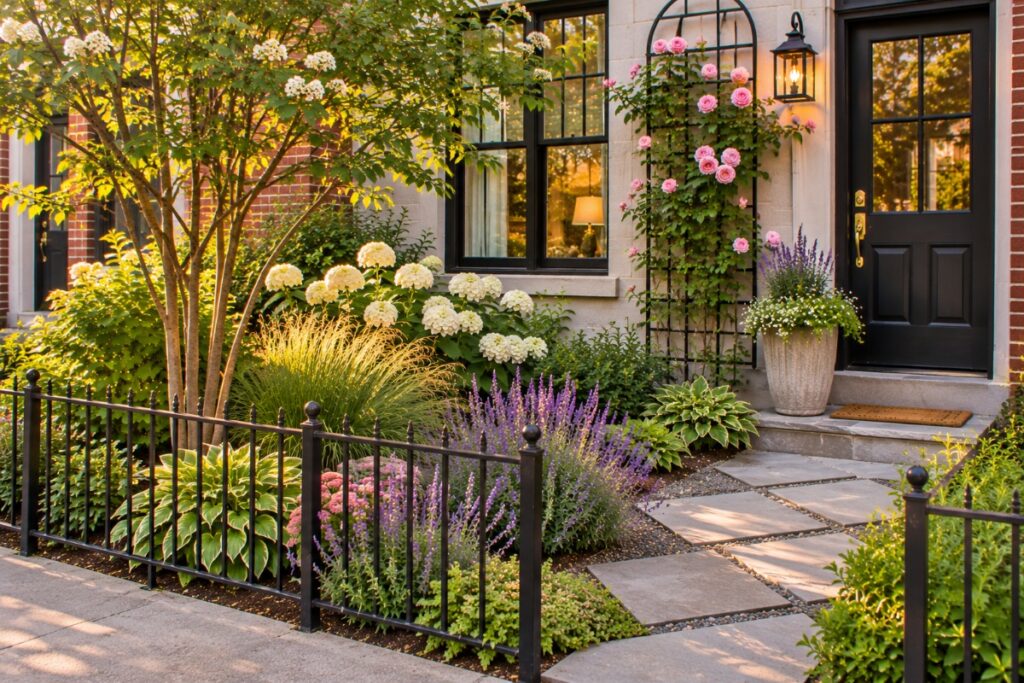
A small front yard can feel like a puzzle: too little space for a real garden, but too visible to ignore.
The good news is that small yards are often easier to make beautiful. Every plant counts, maintenance is quicker and a few smart choices go a long way.
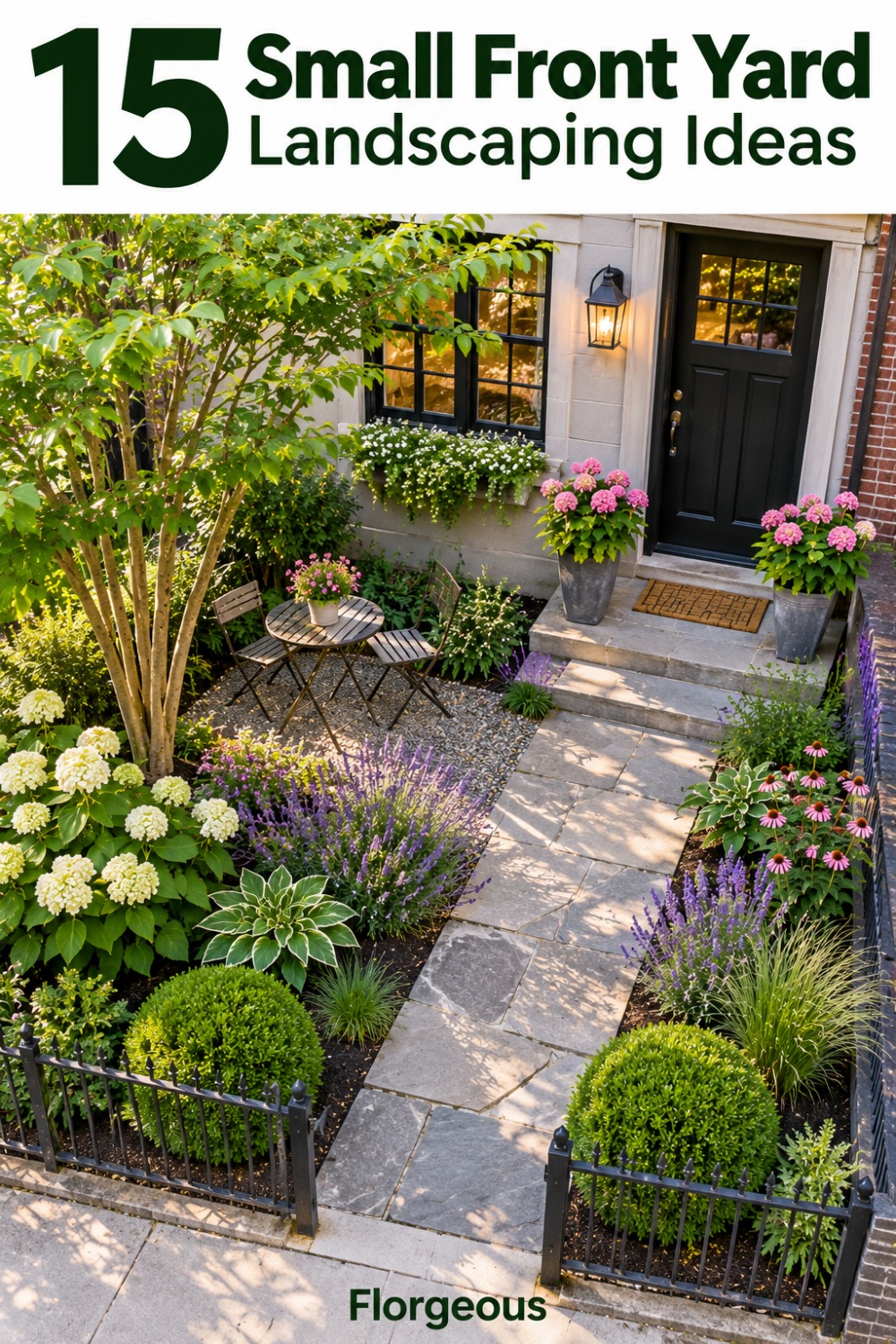
The trick is to edit. Pick one strong focal point, use compact plants, grow upward where you can and keep the layout simple so the space feels open rather than crowded.
These 15 small front yard landscaping ideas work for townhouses, cottages and tight suburban lots. For budget-friendly extras, see our cheap simple front yard landscaping ideas.
Small Front Yard Strategies
| Strategy | Why it works |
|---|---|
| Lose the lawn | Frees up space for planting and removes mowing |
| One star plant | Gives the eye a single focal point |
| Grow up, not out | Adds greenery without taking floor space |
| Compact varieties | Plants stay in proportion and need less pruning |
| Limited palette | Makes a small space feel calm and cohesive |
1. Replace the Lawn Entirely
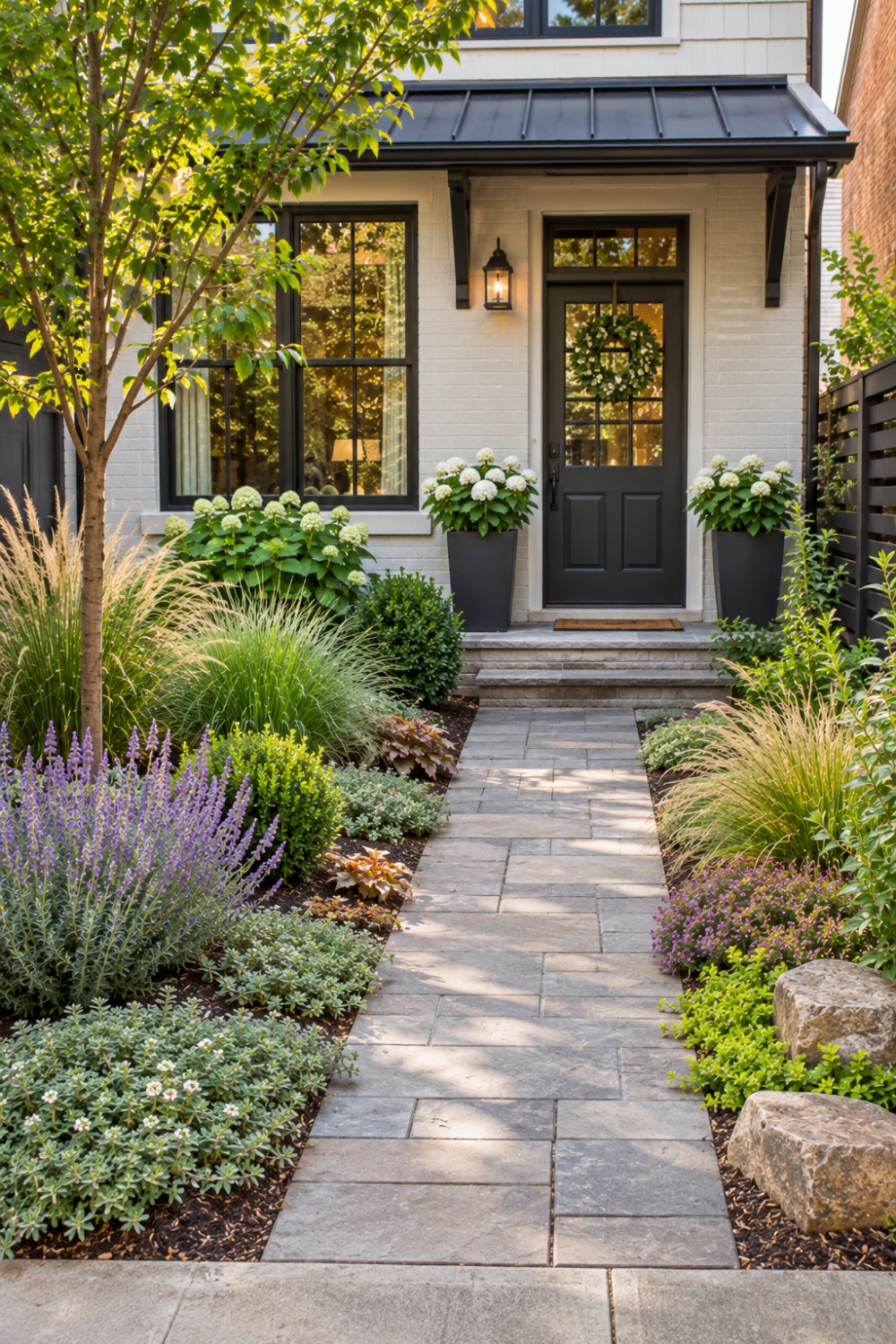
In a tiny front yard, a patch of lawn is often more trouble than it’s worth: it’s awkward to mow and hard to keep green.
Replacing it with planting beds, a simple path and low ground cover plants gives you far more interest per square foot.
It also cuts out mowing entirely.
How to do it:
- Remove the grass or smother it with cardboard.
- Lay out a simple path and two or three beds.
- Fill gaps with walkable ground covers or mulch.
2. Choose One Small Multi-Stem Tree as the Star
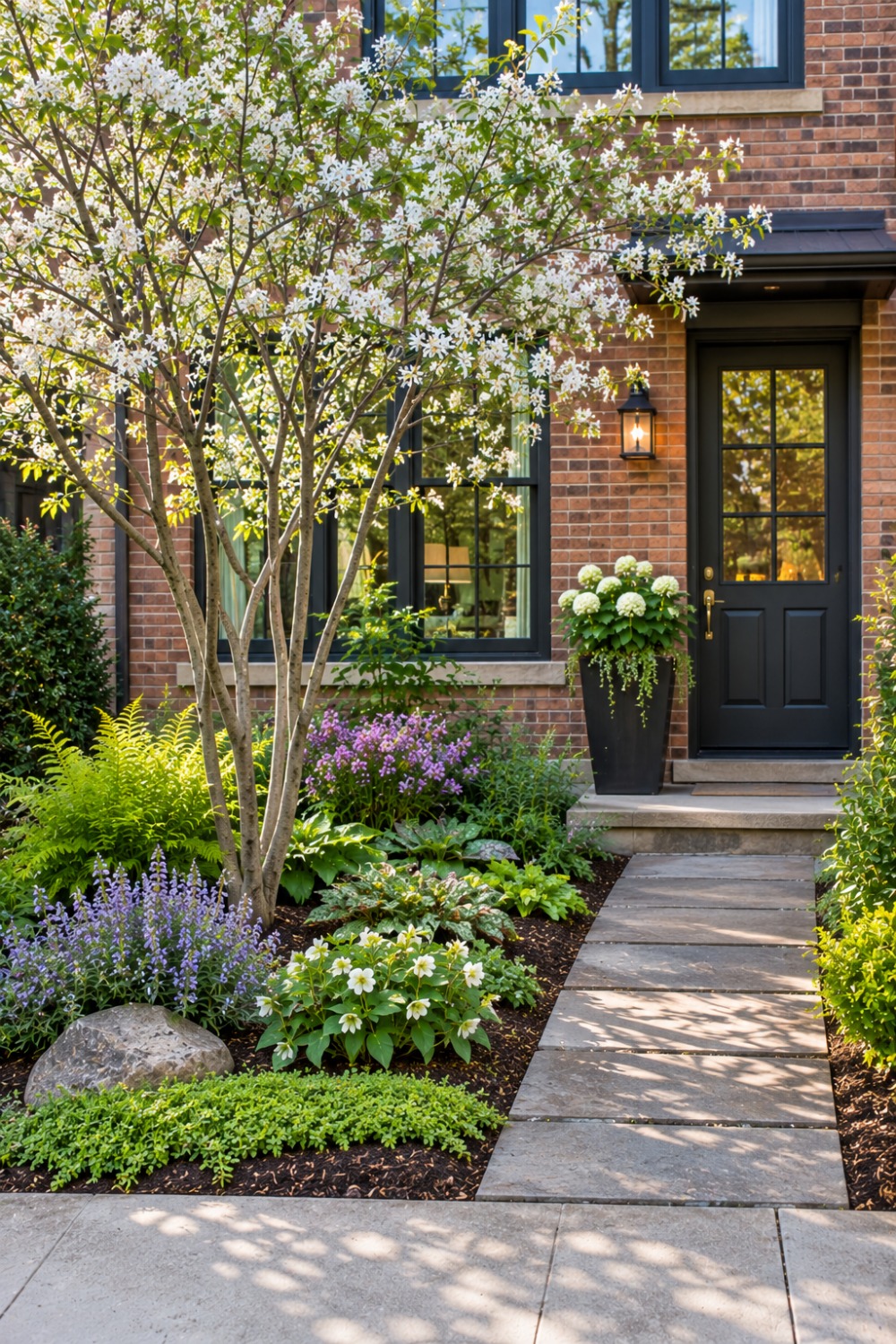
A single small tree gives a tiny front yard height, shade and a clear focal point.
Multi-stem trees such as serviceberry, Japanese maple, crape myrtle or redbud have sculptural trunks and stay in scale with small spaces.
Underplant with low perennials so the trunks remain visible.
How to do it:
- Pick a tree whose mature size fits the space.
- Plant it off-center so it frames the door rather than blocking it.
- Underplant with low, shade-tolerant perennials.
3. Plant in Layers Against the House
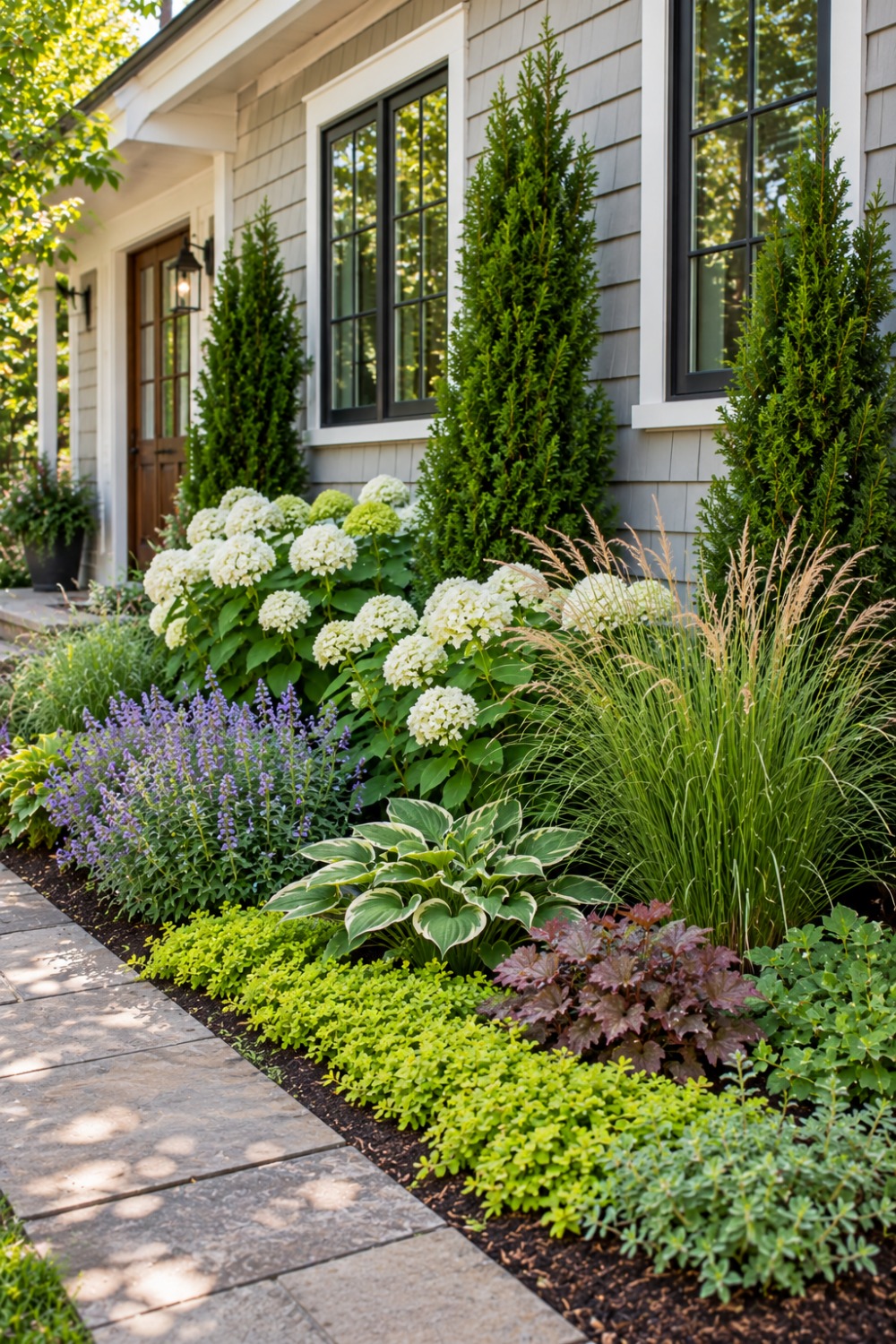
When ground space is limited, use height to create depth.
Place upright plants against the house, mid-height shrubs or perennials in front of them and low edging plants at the front of the bed.
This layered effect makes even a shallow bed look full and lush.
How to do it:
- Measure the depth of your bed.
- Choose three plant heights: tall, medium and low.
- Plant in rows from back to front, staggering plants for a natural look.
4. Pick Compact and Dwarf Varieties
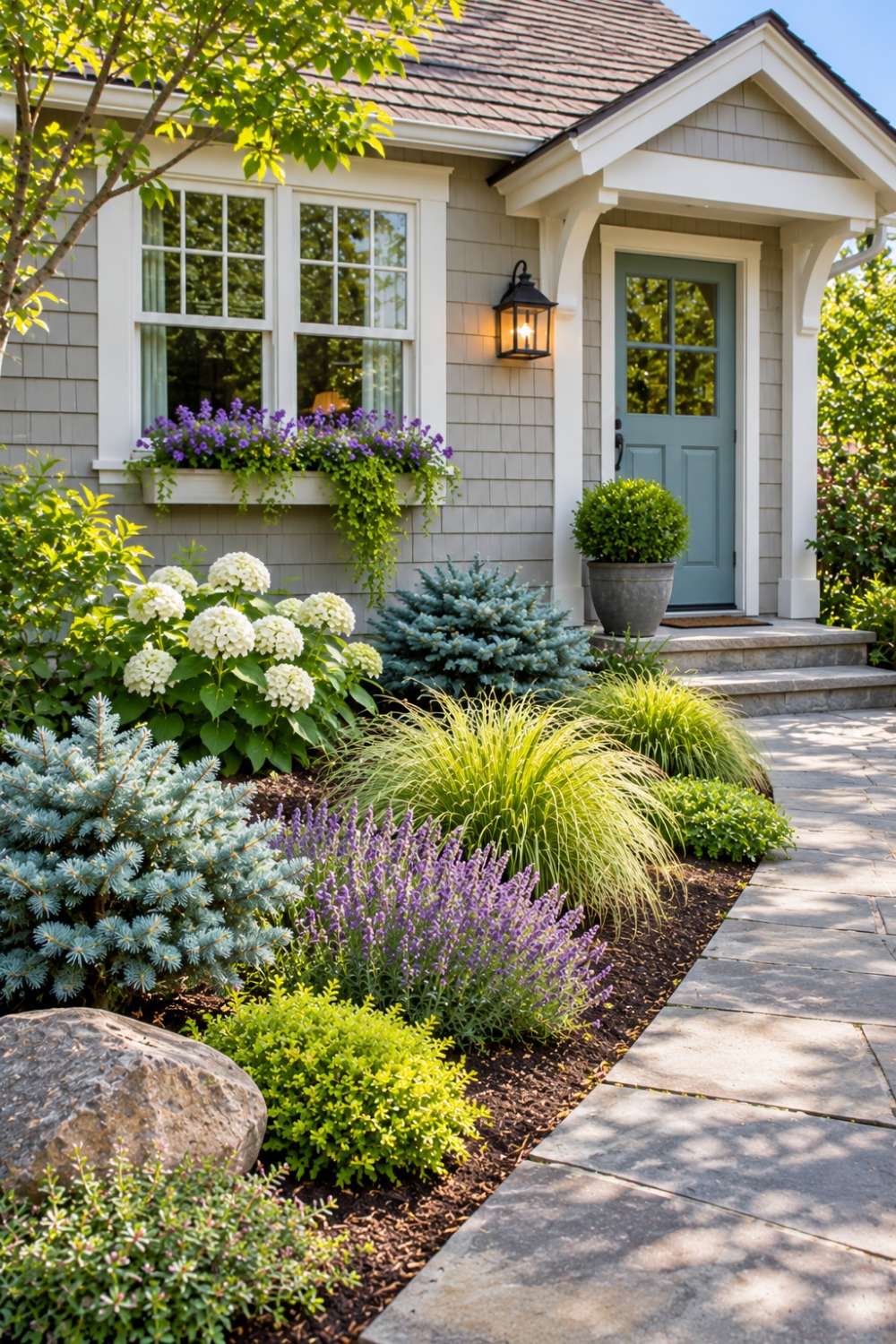
Many popular shrubs and trees come in compact versions bred for small gardens.
Dwarf hydrangeas, compact boxwood alternatives, dwarf conifers and short ornamental grasses stay in proportion without constant pruning.
Look for words like dwarf, compact or petite on plant labels. Our guide to blue star juniper companion plants has more ideas for low, tidy pairings.
How to do it:
- Read plant labels for mature height and width.
- Choose plants that fit the space at maturity.
- Space them correctly from the start.
Common mistake: buying full-size shrubs for a small bed. They quickly outgrow it and block windows.
5. Angle the Path to Make the Yard Feel Bigger
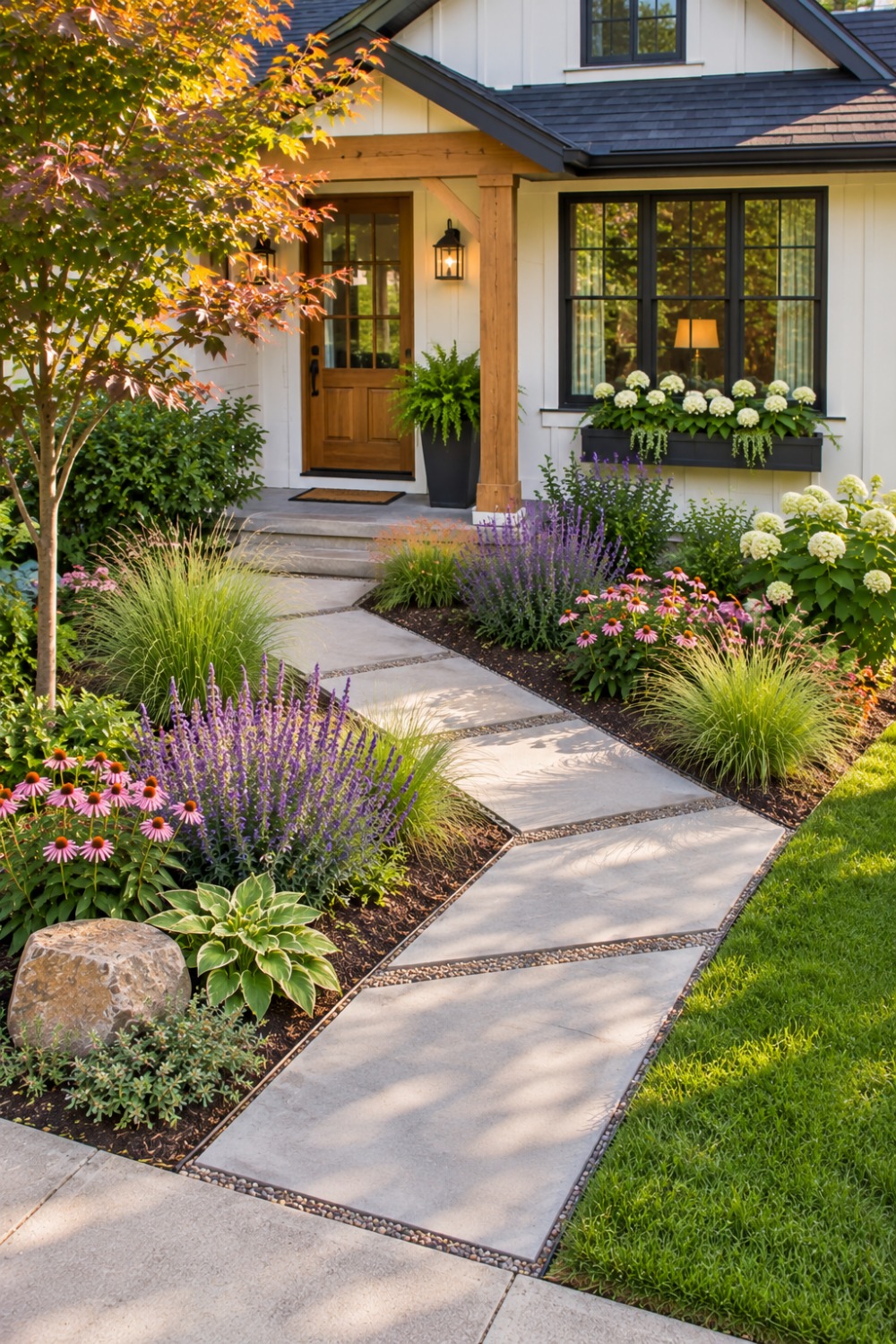
A straight path down the middle cuts a small yard in half. A diagonal or gently curved path makes the space feel wider.
It also creates larger, more usable planting pockets on either side.
Use large pavers or stepping stones, since big pieces make a space feel less busy.
How to do it:
- Sketch a few path routes on a plan.
- Choose large-format pavers or stones.
- Plant generously along both sides.
6. Define the Space With a Low Fence or Hedge
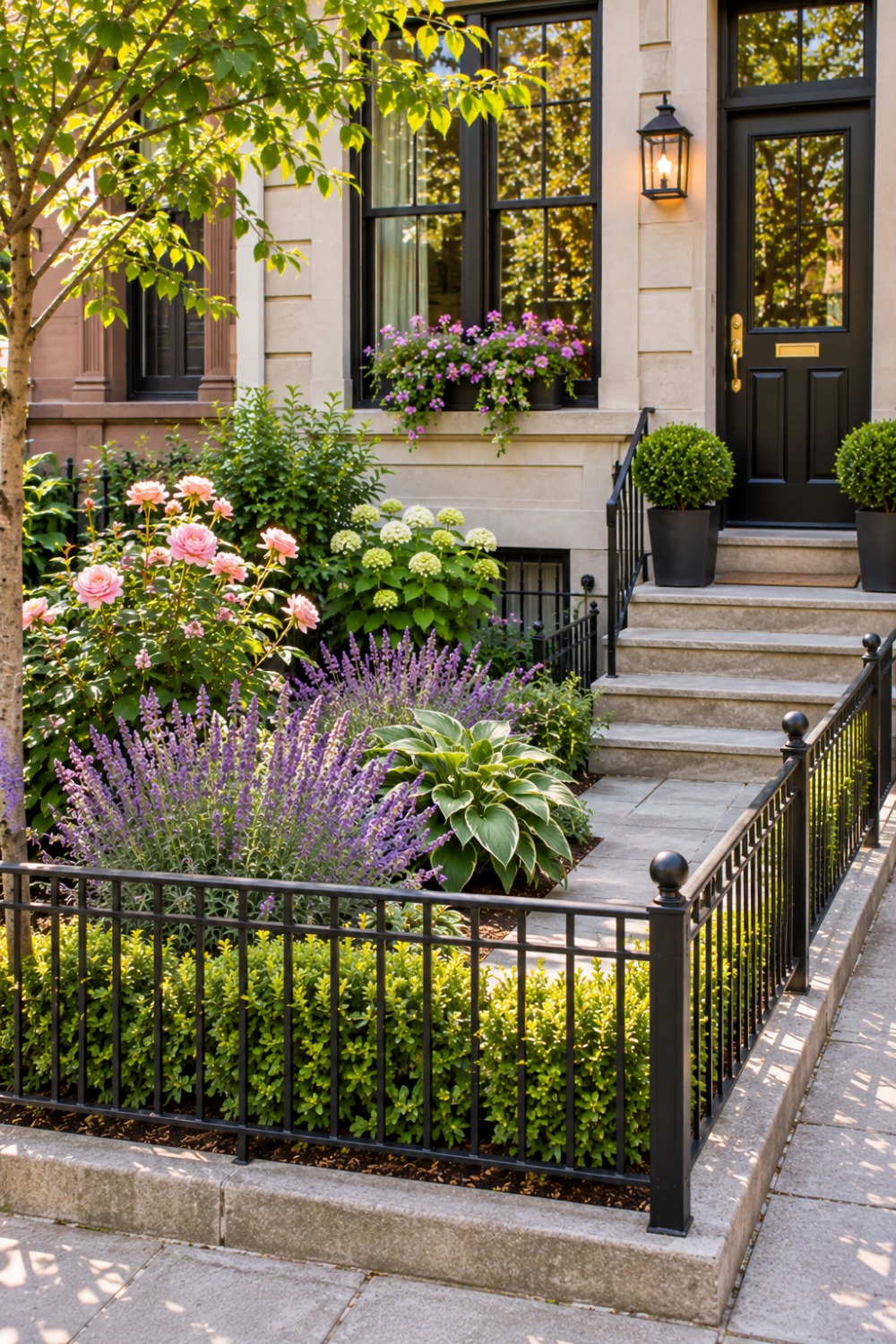
A low boundary makes a small front yard feel like a deliberate garden room.
A short picket fence, metal railing or clipped hedge separates it from the sidewalk without hiding the house.
It also gives climbing or spilling plants something to grow against.
How to do it:
- Check local rules on front fence height.
- Choose a style that suits your house.
- Plant a narrow border along the inside.
7. Grow Up With a Trellis Beside the Door
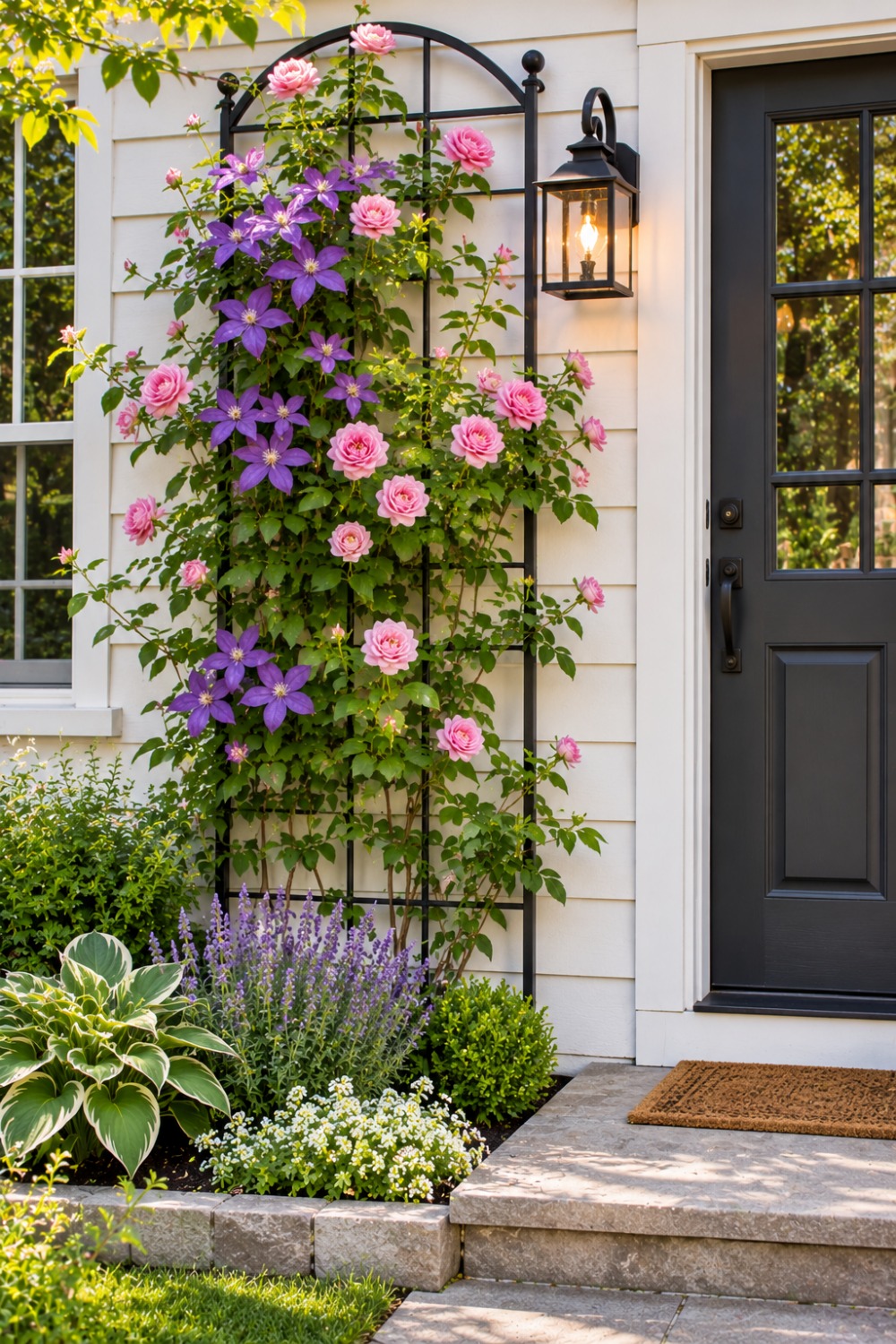
Vertical planting adds greenery without using precious ground space.
A slim trellis or wire panel beside the door can hold a climbing rose, clematis or star jasmine, framing the entry beautifully.
Choose a climber that suits your light and won’t damage siding.
How to do it:
- Install a trellis a few inches from the wall.
- Plant the climber in a deep bed or large container.
- Tie in new stems and prune once a year.
8. Squeeze In a Tiny Seating Spot
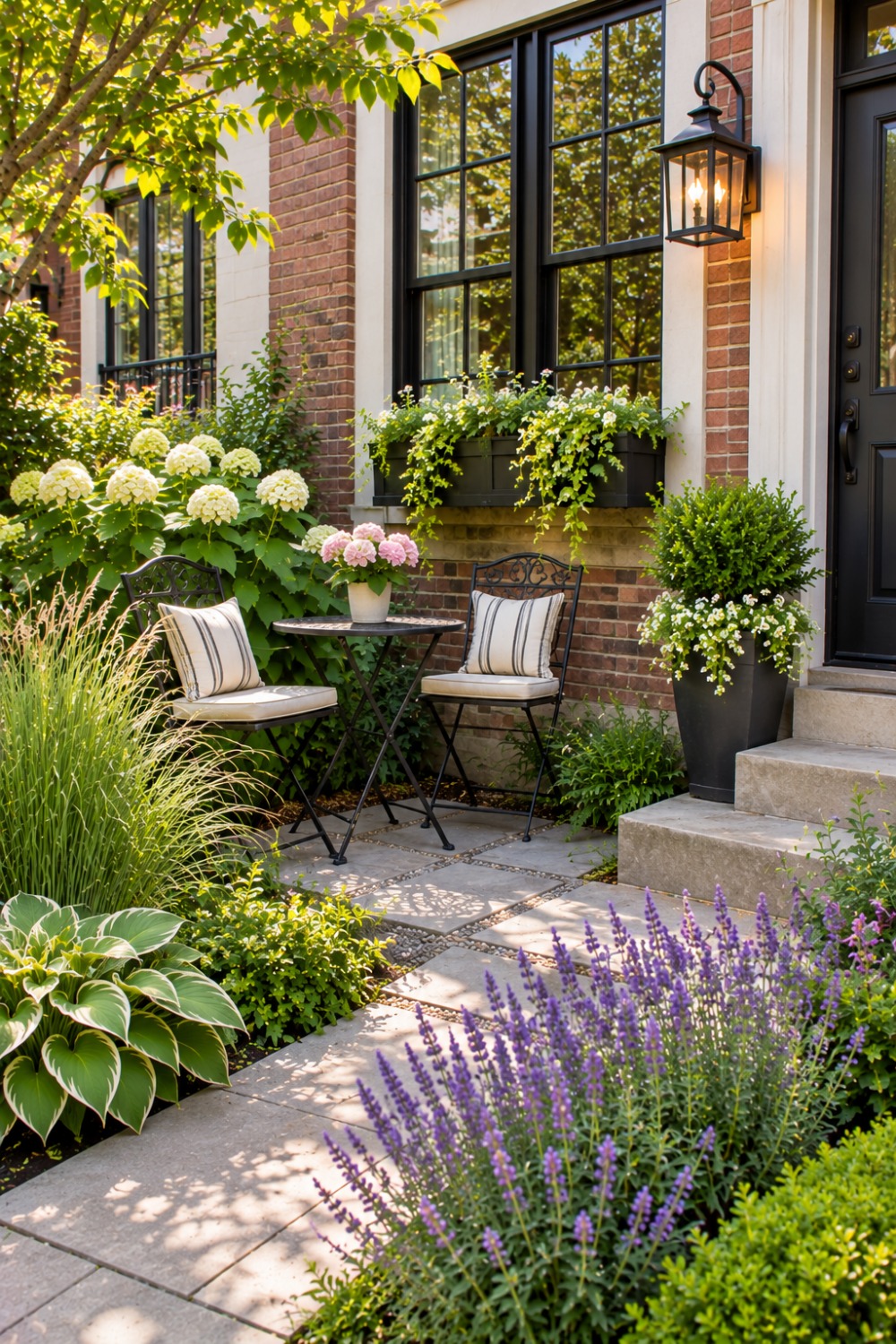
Even a small front yard can hold a bistro chair or a narrow bench.
A seat makes the yard feel lived in and gives you a place to enjoy morning coffee or chat with neighbors.
Tuck it into a corner on a few pavers, framed by planting.
How to do it:
- Find a corner near the door that gets morning or evening light.
- Lay a few pavers or gravel for a level base.
- Add one or two compact chairs and a pot of flowers.
9. Use a Limited Color Palette
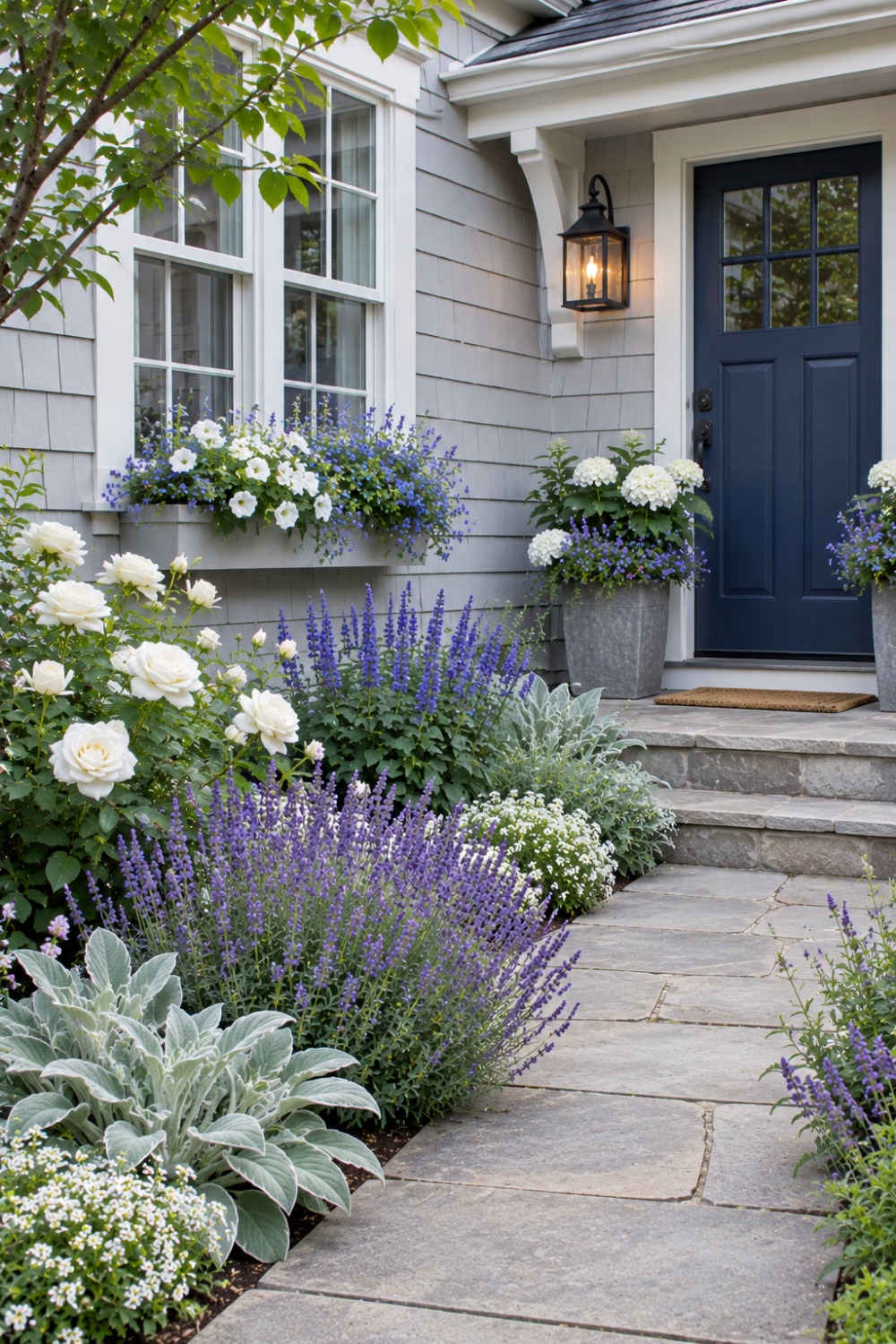
Too many colors in a small space can feel chaotic. Two or three colors look calm and deliberate.
Cool colors like blue, purple and white make a space feel larger, while warm colors feel cozy and bring things closer.
Repeat the same colors in flowers, pots and accents.
How to do it:
- Choose two or three colors that suit your house.
- Select plants that flower in those colors through the seasons.
- Match pots and accents to the palette.
10. Group Containers at Different Heights
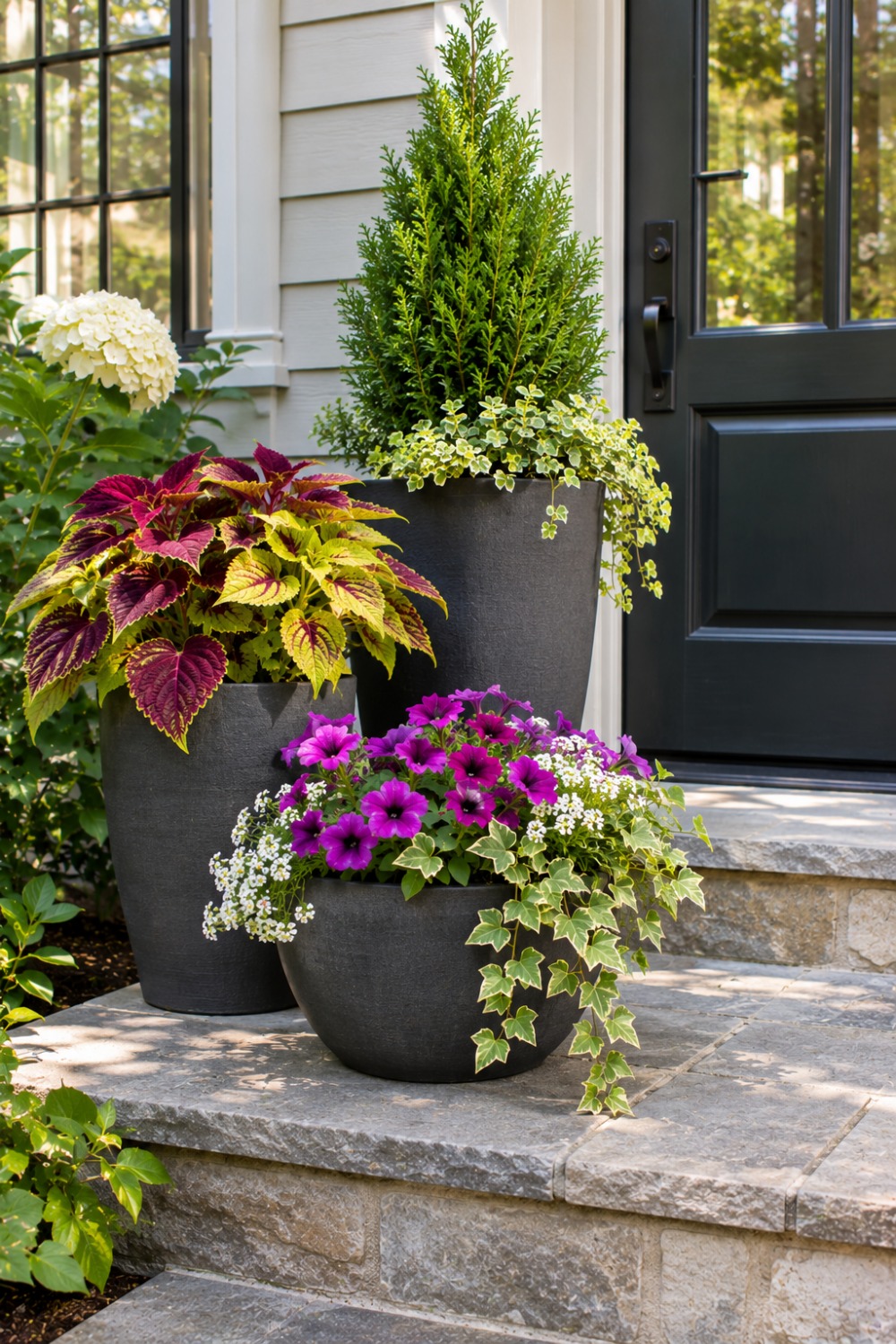
A cluster of three containers in different heights creates a mini garden on the steps or by the door.
Use one tall pot for structure, a medium pot for color and a low bowl for trailing plants.
Matching materials keep the group looking cohesive.
How to do it:
- Choose three pots in the same material and different heights.
- Plant a tall focal plant, a bushy filler and a trailing plant.
- Refresh seasonal plants two or three times a year.
11. Swap Solid Paving for Permeable Pavers
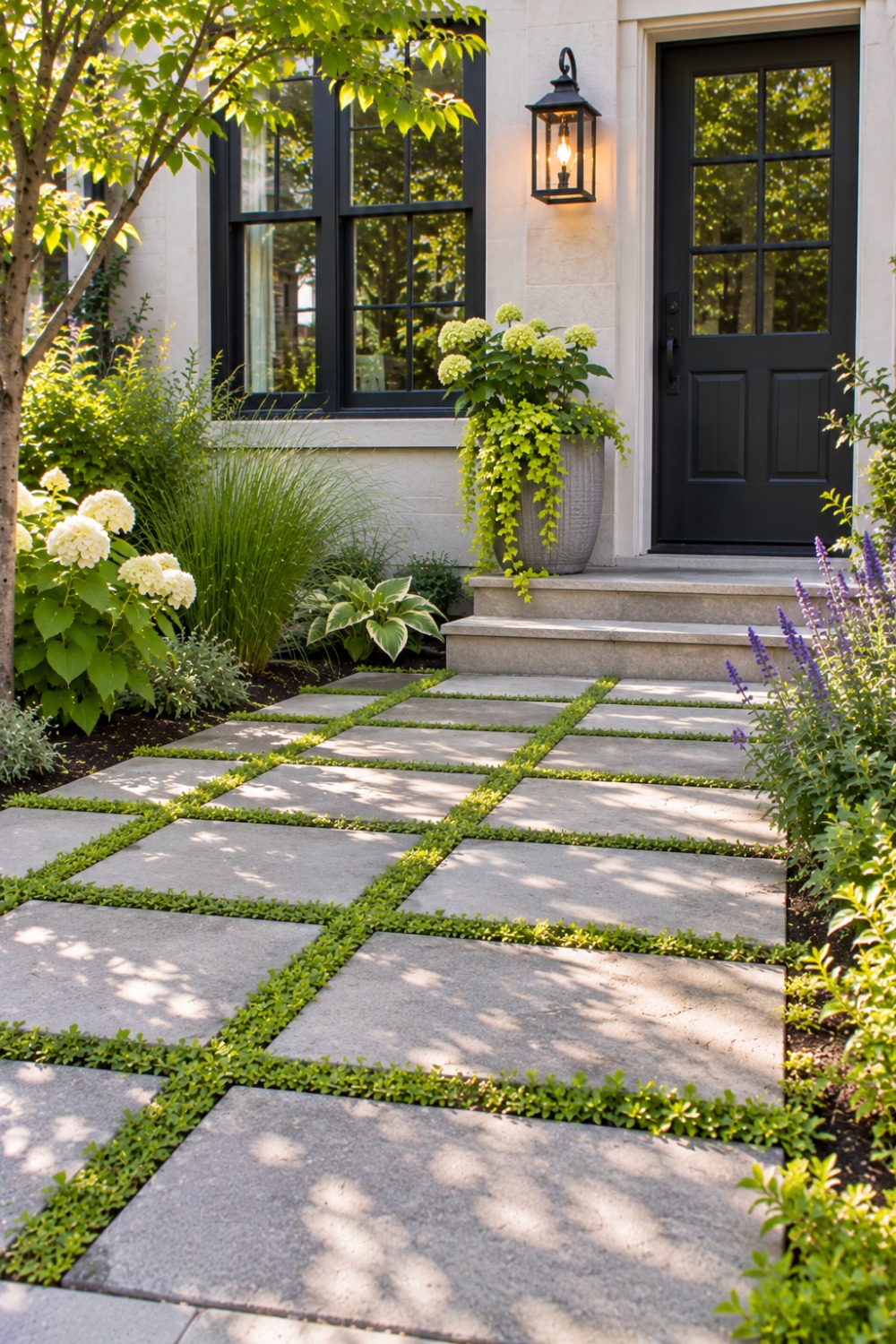
Many small front yards are mostly paving. Permeable pavers or pavers with planted joints let rain soak in and soften the look.
Gaps filled with gravel or low plants turn a hard surface into part of the garden.
It also reduces runoff toward the street.
How to do it:
- Remove old solid paving where possible.
- Lay permeable pavers on a gravel base.
- Fill joints with gravel or plant them with tough ground covers.
12. Turn the Front Steps Into a Garden
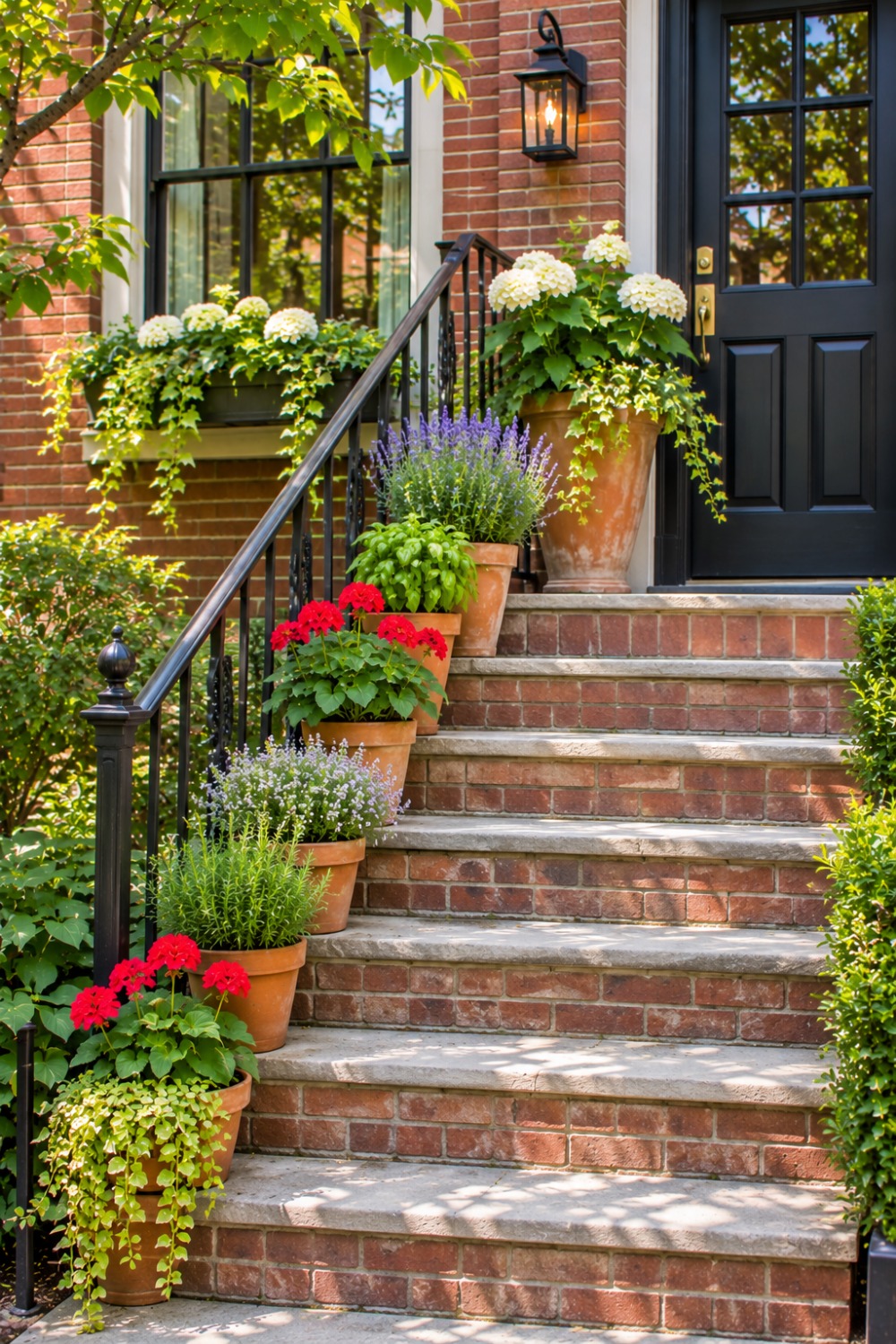
If your front yard is tiny, the steps can do a lot of the work.
Line them with matching pots, add a planter at the top and let trailing plants soften the edges.
Keep at least half the step width clear for safe walking.
How to do it:
- Measure step depth to choose pots that fit.
- Place pots on alternating sides or the same side.
- Choose plants that suit the light on the steps.
13. Mirror the Planting on Both Sides of the Walk
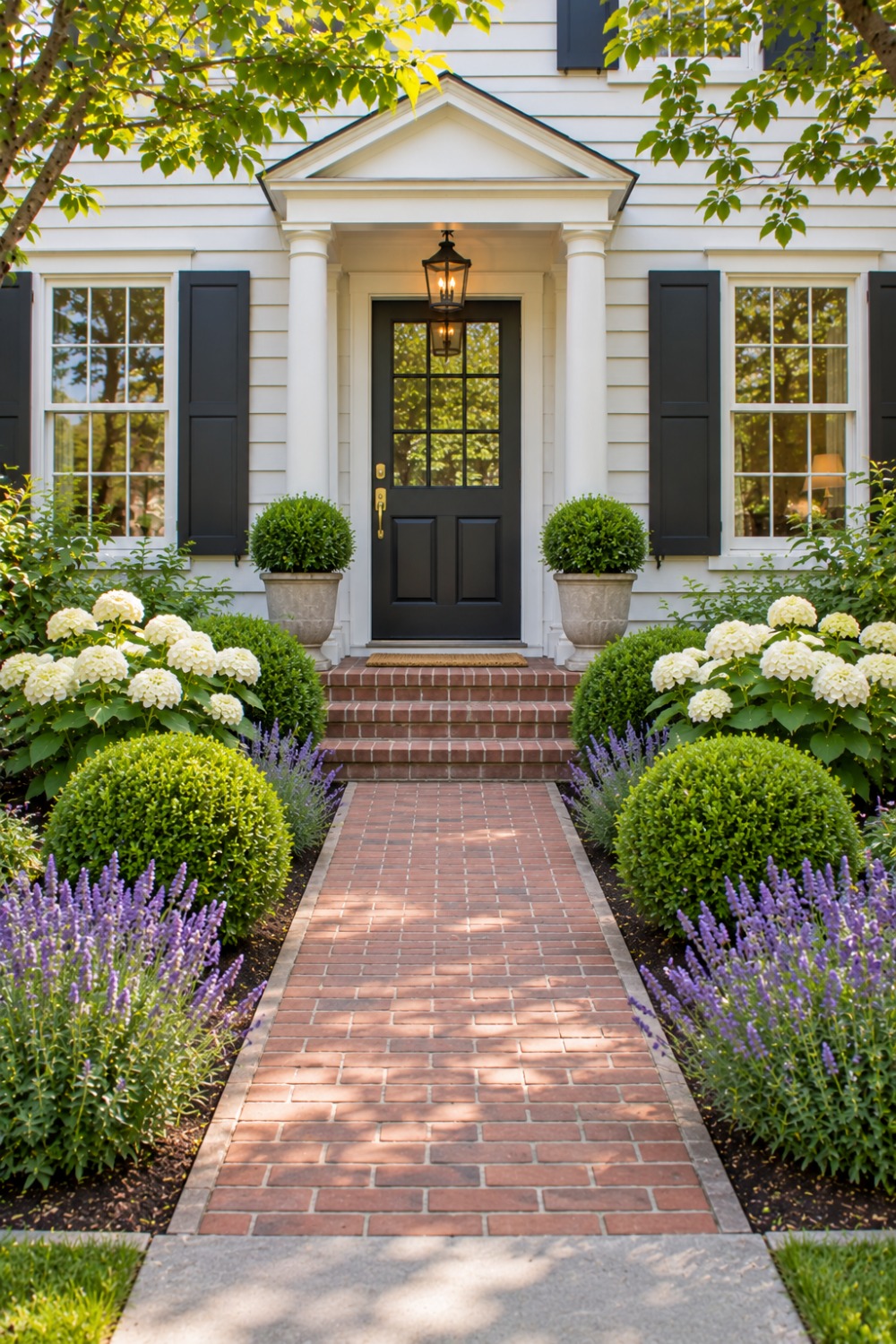
Symmetry makes small spaces feel orderly and calm.
Plant the same shrubs, perennials or containers on both sides of the path to the door.
This simple trick works especially well for traditional and colonial-style homes.
How to do it:
- Divide the yard into two matching halves along the path.
- Plant identical groups on each side.
- Keep the plants trimmed to the same size.
14. Add Soft Lighting for Evening Charm
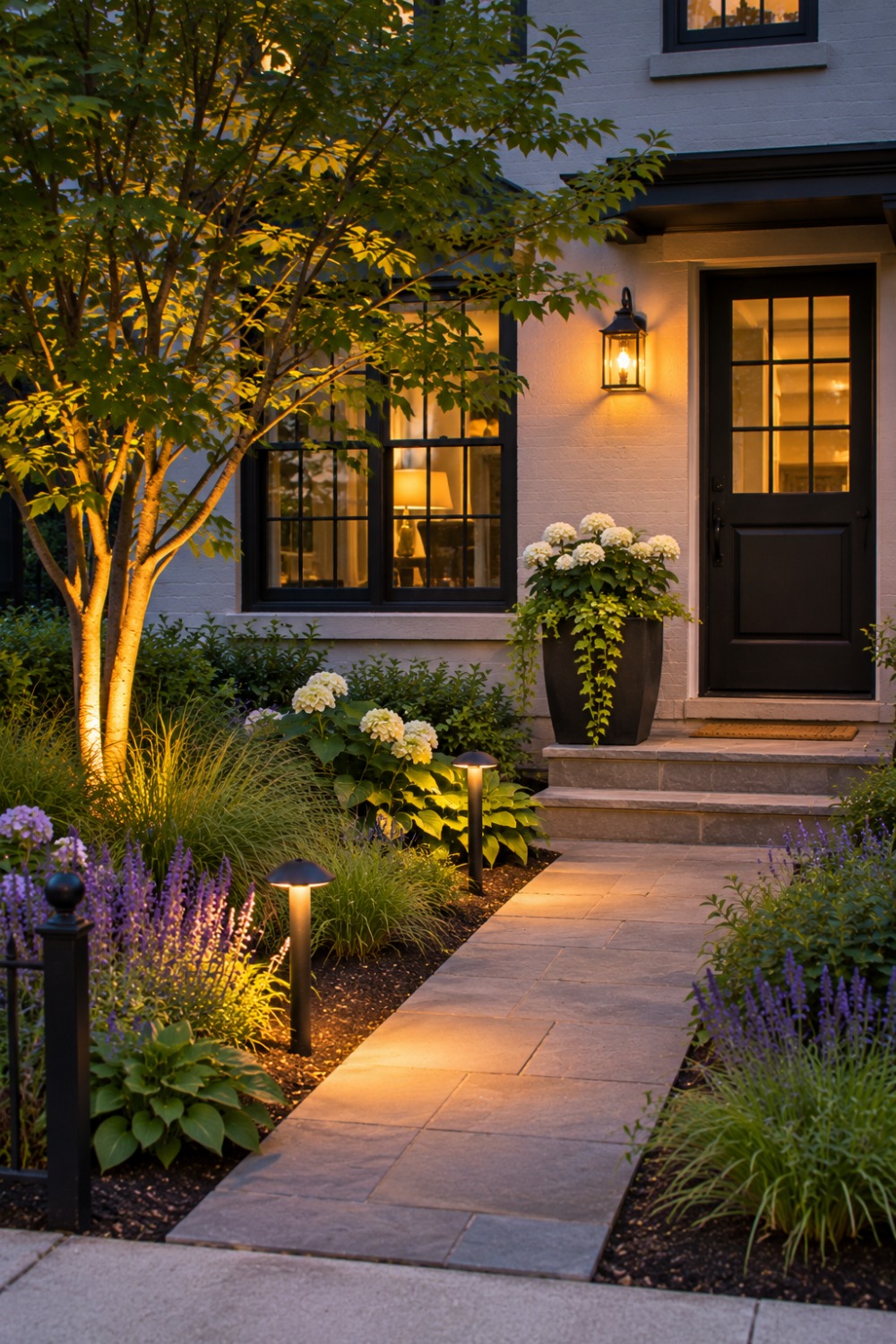
Lighting makes a small front yard feel welcoming and safe after dark.
A wall lantern by the door, a couple of low path lights and one small uplight on the tree are usually enough.
Too many lights in a small space can look cluttered.
How to do it:
- Start with good lighting at the front door.
- Add two or three low path lights.
- Uplight one feature, such as a small tree.
15. Choose Plants With Long Seasons of Interest
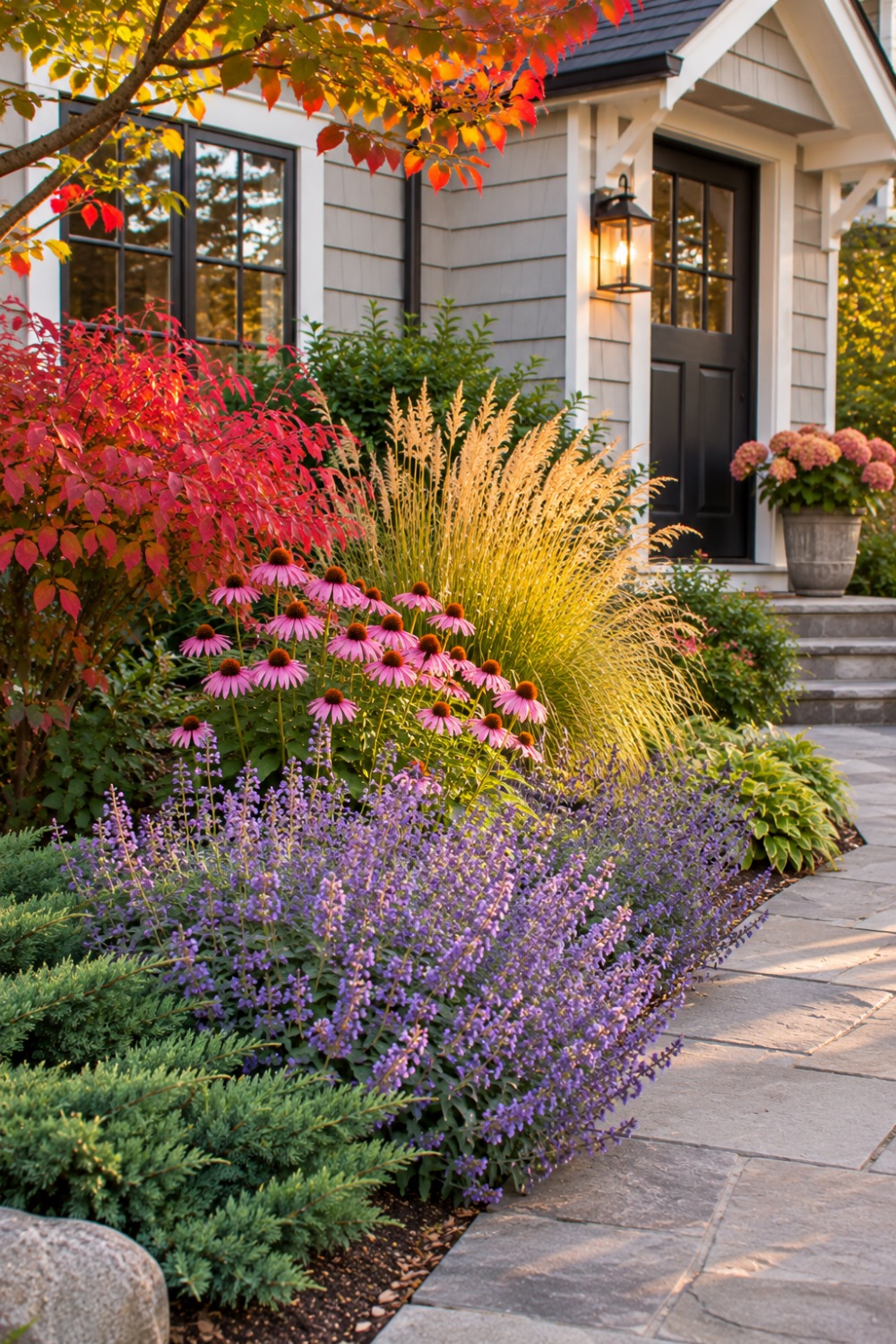
In a small yard, every plant needs to earn its place.
Choose plants that look good for months: long-blooming perennials like catmint and coneflowers, shrubs with fall color and grasses that hold their shape into winter.
Evergreen ground covers keep the base looking tidy all year.
How to do it:
- List plants with at least two seasons of interest.
- Mix flowering, foliage and evergreen plants.
- Remove plants that only look good for a few weeks.
Frequently Asked Questions
How do I make my small front yard look bigger?
Remove clutter, use a diagonal path, choose large pavers, plant in layers and limit your color palette. A single focal point, such as a small tree, also helps the space feel intentional.
What is the best low-maintenance small front yard?
A lawn-free layout with mulched beds, compact shrubs, long-blooming perennials and evergreen ground covers needs very little upkeep compared with grass.
What trees are good for a small front yard?
Small multi-stem trees such as serviceberry, Japanese maple, redbud and crape myrtle (in warm climates) stay in scale. Always check the mature size and your local zone.
Can I have a garden in a front yard with no grass?
Yes. Planting beds, gravel, permeable pavers and ground covers can replace grass entirely and often look better in a small space.
Final Thoughts: Make Every Square Foot Count
A small front yard rewards careful choices more than big budgets.
Start by deciding whether you really need lawn. In most tiny yards, replacing it with beds and ground covers adds more beauty and less work.
Choose one focal point, then plant in layers with compact varieties so the space feels full but not crowded.
Use vertical space, mirrored planting and a limited color palette to make the yard feel calm and cohesive.
Finish with a small seat, a few containers and soft lighting so the space feels lived in.
Small spaces change quickly, so experiment, edit and enjoy watching your front yard come together.