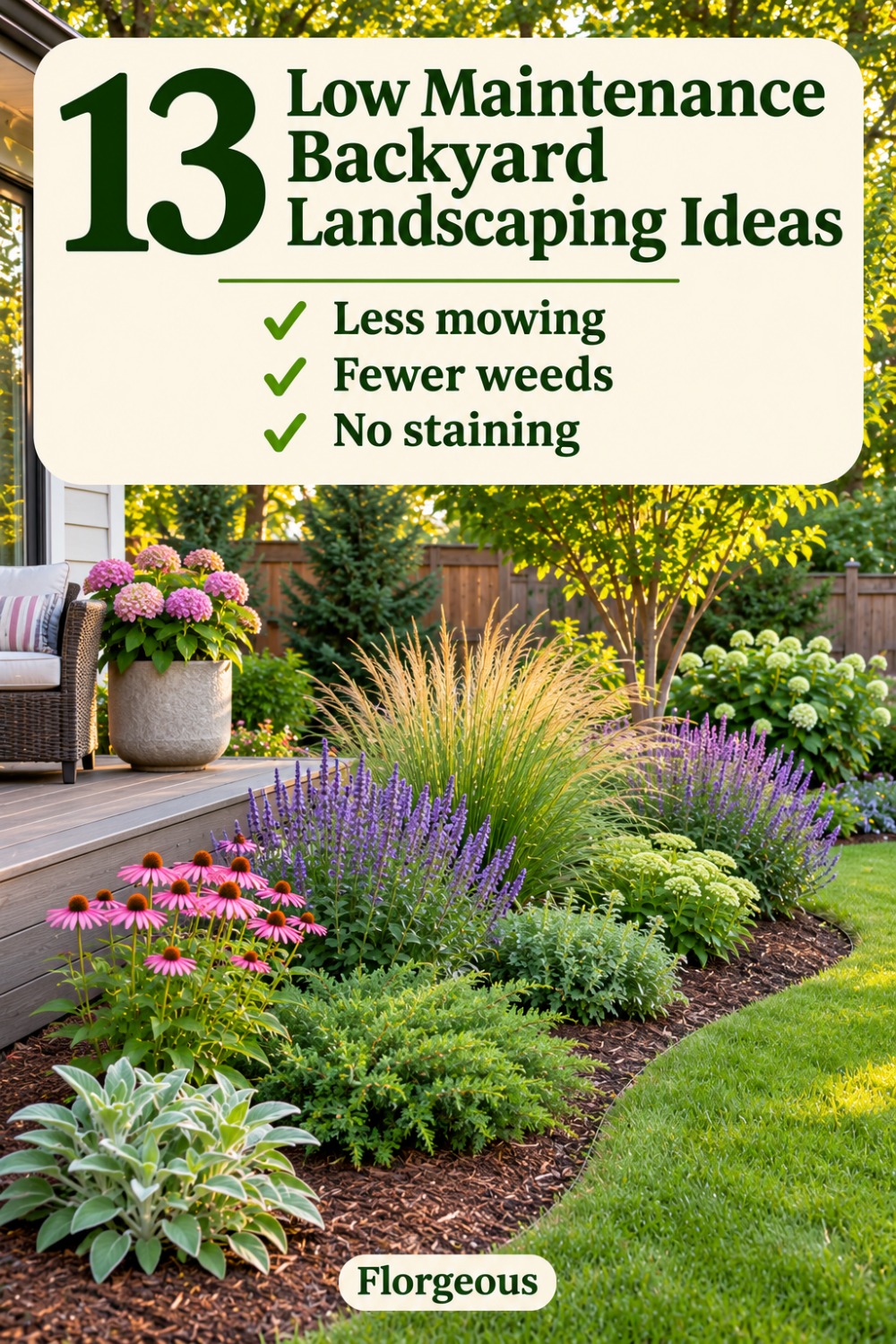
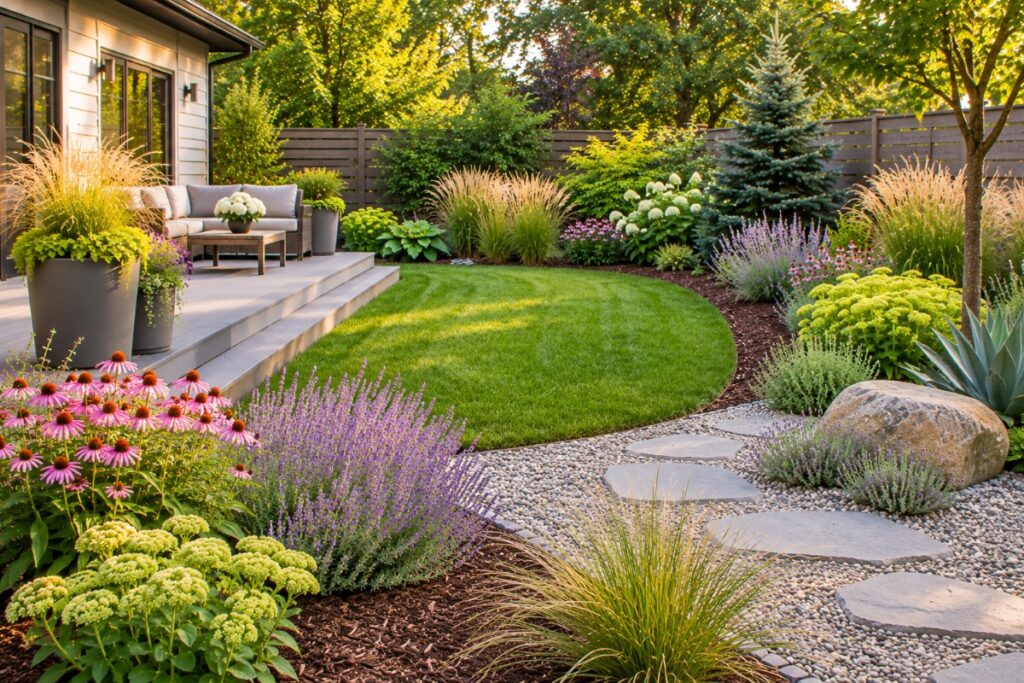
A backyard should be a place to relax, not a list of chores waiting for every weekend.
Yet many yards are planned in a way that guarantees work: big lawns to mow, shrubs that outgrow their space and bare soil that sprouts weeds.
The secret to a low maintenance backyard isn’t paving it over. It’s choosing the right plants and surfaces from the start, so the garden mostly looks after itself.
These 13 low maintenance backyard landscaping ideas will help you spend less time working and more time enjoying your yard. For a full range of backyard projects, see our backyard landscaping ideas.
Where Backyard Chores Come From
| Chore | Low maintenance fix |
|---|---|
| Mowing | Smaller lawn, ground covers, gravel |
| Pruning | Shrubs chosen for their mature size |
| Weeding | Mulch, dense planting, ground covers |
| Watering | Natives, drip lines, self-watering pots |
| Replanting | Perennials and evergreens instead of annuals |
| Repairs | Long-lasting materials like composite and stone |
1. Shrink the Lawn to What You Actually Use
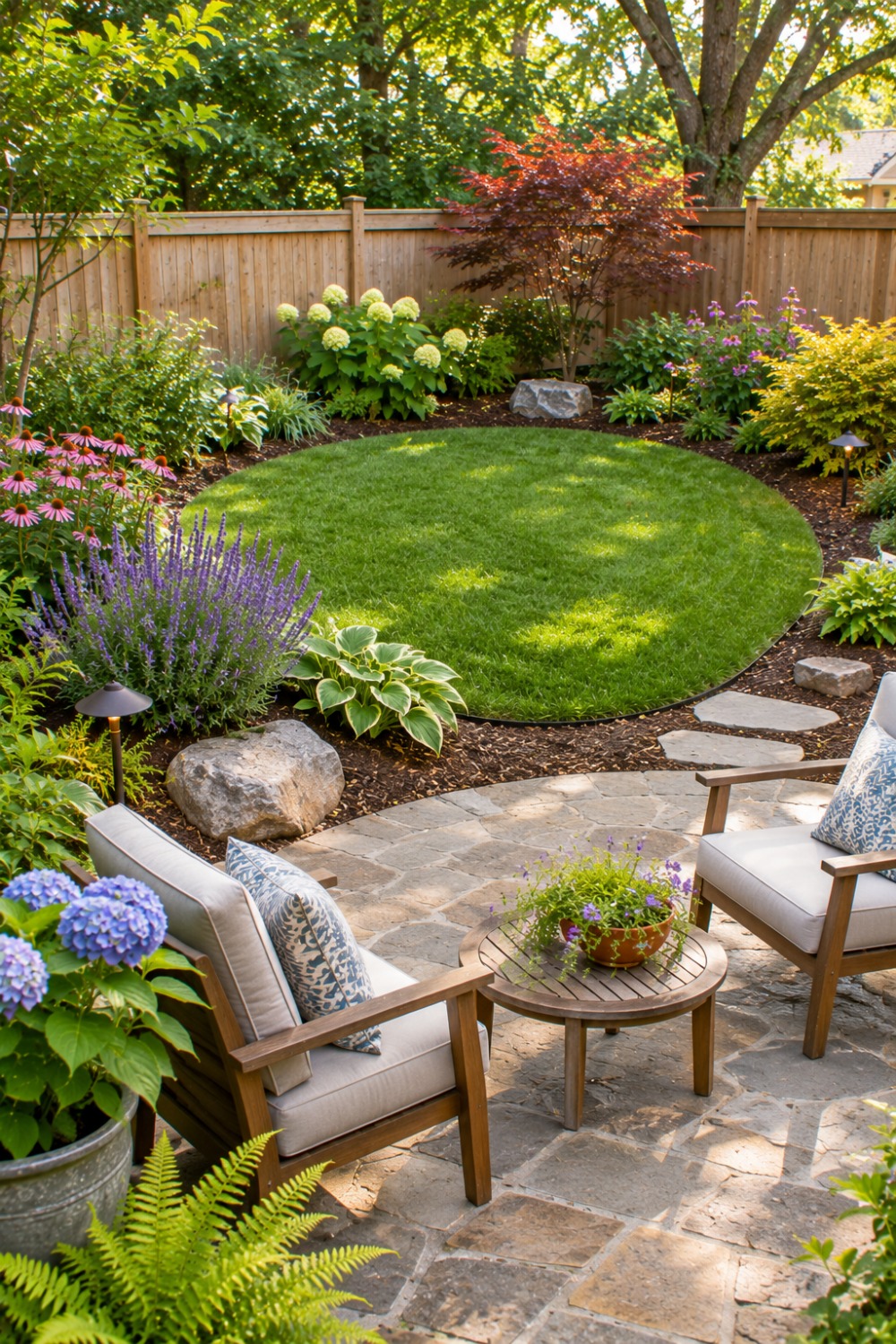
Lawns are one of the most demanding parts of any yard, needing regular mowing, watering and feeding.
Keep only as much grass as you really use for play or relaxing, and turn the rest into beds, ground covers or gravel.
A small, well-kept lawn also looks better than a big patchy one.
How to do it:
- Mark the lawn area you actually use.
- Smother the extra grass with cardboard and mulch.
- Plant the new beds with tough shrubs and perennials.
2. Choose Shrubs That Fit Without Pruning
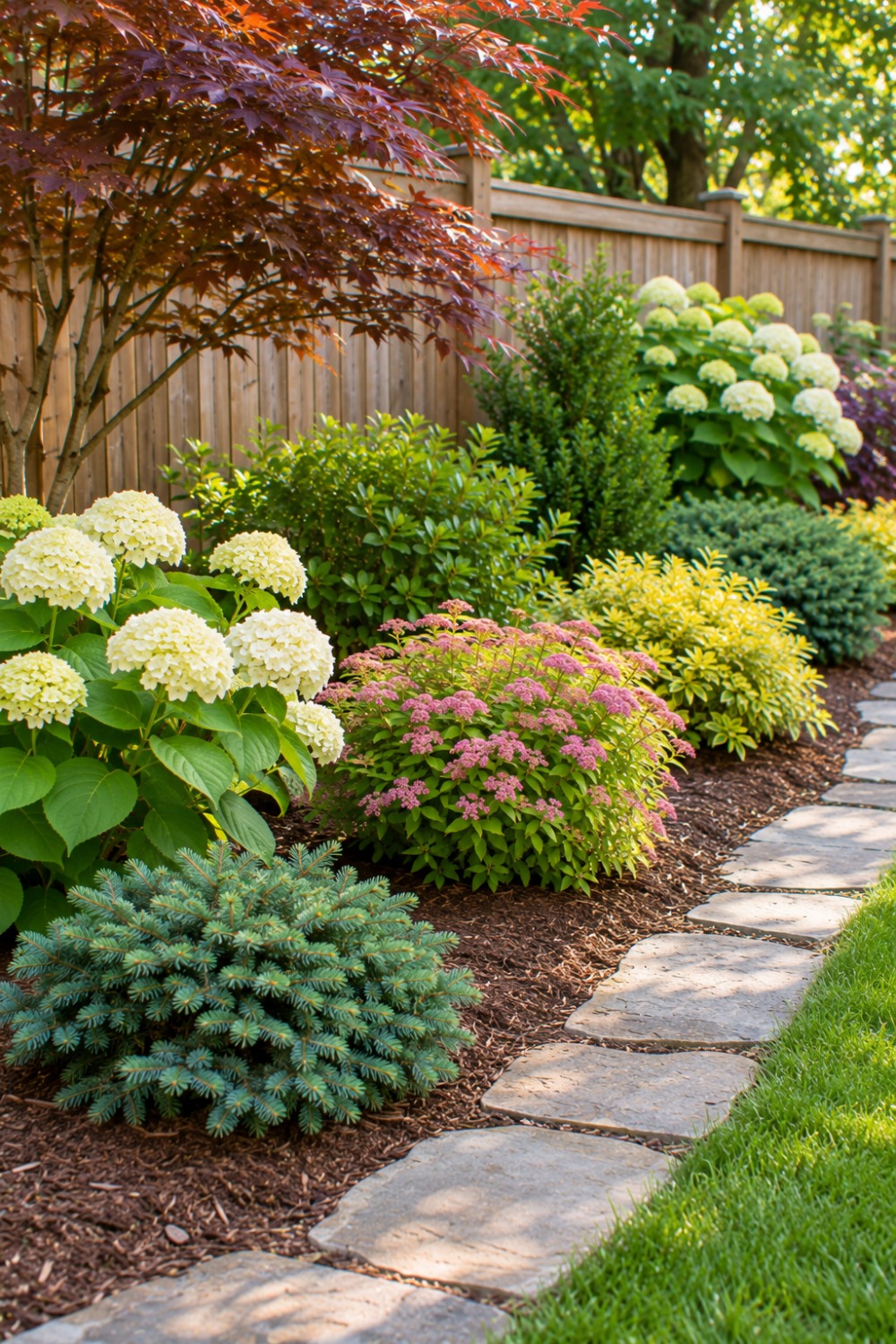
Many hours of garden work come from cutting back shrubs that are too big for their spot.
Choose compact or dwarf varieties that grow to the size you want and stop there.
Always check the plant label for mature height and width before you buy.
How to do it:
- Measure the space you have for each shrub.
- Choose varieties whose mature size fits that space.
- Plant them far enough apart to grow without crowding.
3. Plant Perennials Instead of Annuals
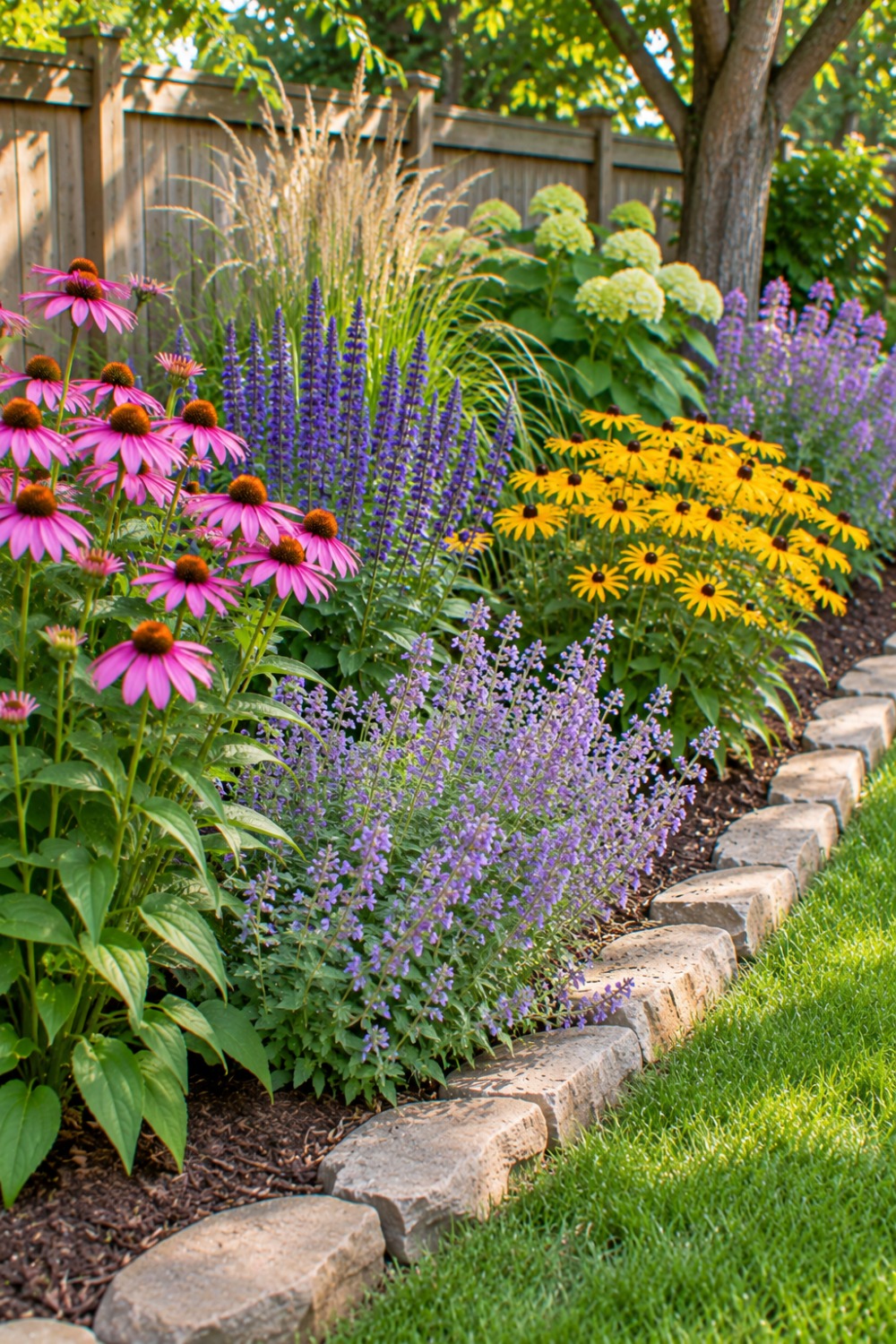
Annuals need replanting every year, but perennials come back on their own.
Choose long-blooming, tough perennials like coneflowers, salvia, catmint and daylilies for months of color.
Use annuals only in a couple of containers where you want a seasonal change.
How to do it:
- Pick perennials suited to your sun and climate.
- Plant them in groups of three or five.
- Cut them back once a year in late winter or early spring.
4. Cover Bare Soil With Ground Covers
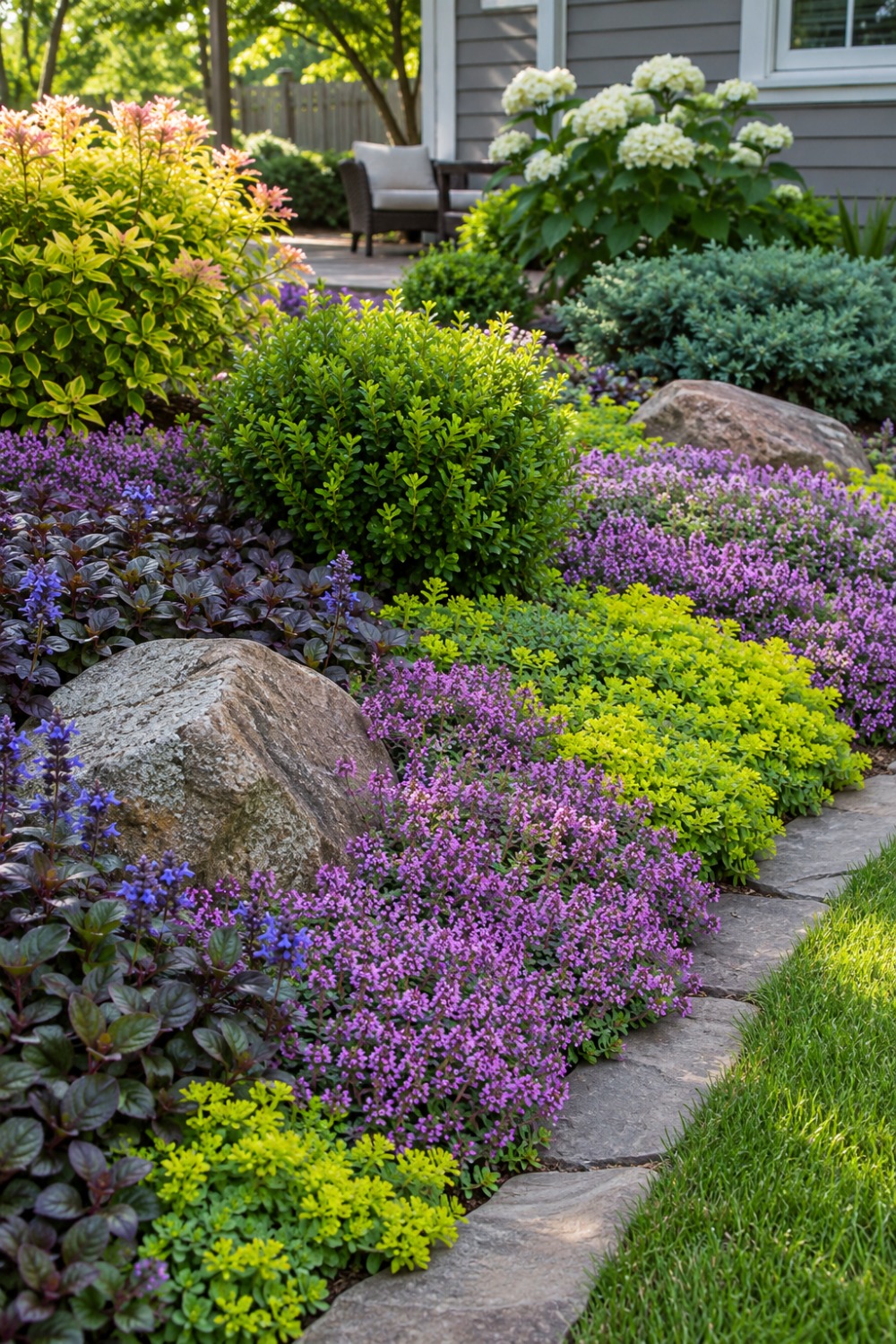
Bare soil is an open invitation for weeds.
Low ground covers spread to fill the gaps, shading out weeds and holding moisture in the soil.
Choose ones suited to your light, and avoid invasive spreaders such as English ivy.
How to do it:
- Plant ground covers between shrubs and perennials.
- Water them regularly until they knit together.
- Pull any weeds that appear in the first season.
5. Build a Composite Deck That Won’t Need Staining
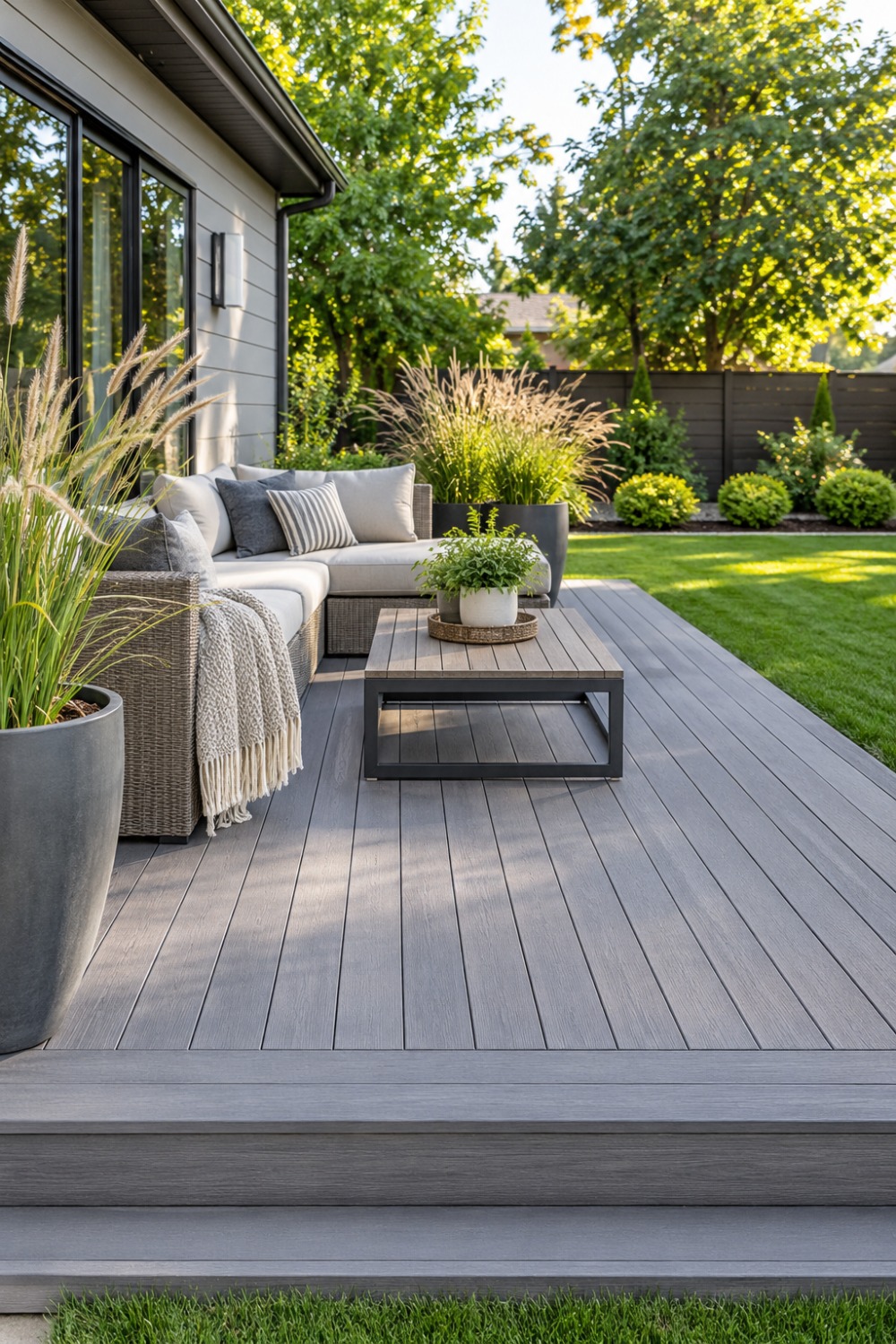
Wooden decks need sanding, staining and sealing every few years.
Composite decking costs more upfront but usually needs only an occasional wash.
It won’t splinter or rot, making it a long-term time saver.
How to do it:
- Compare composite brands for warranty and heat in full sun.
- Install it on a well-built frame with good drainage.
- Rinse it a couple of times a year to keep it clean.
6. Lay Pavers With Polymeric Sand to Stop Weeds
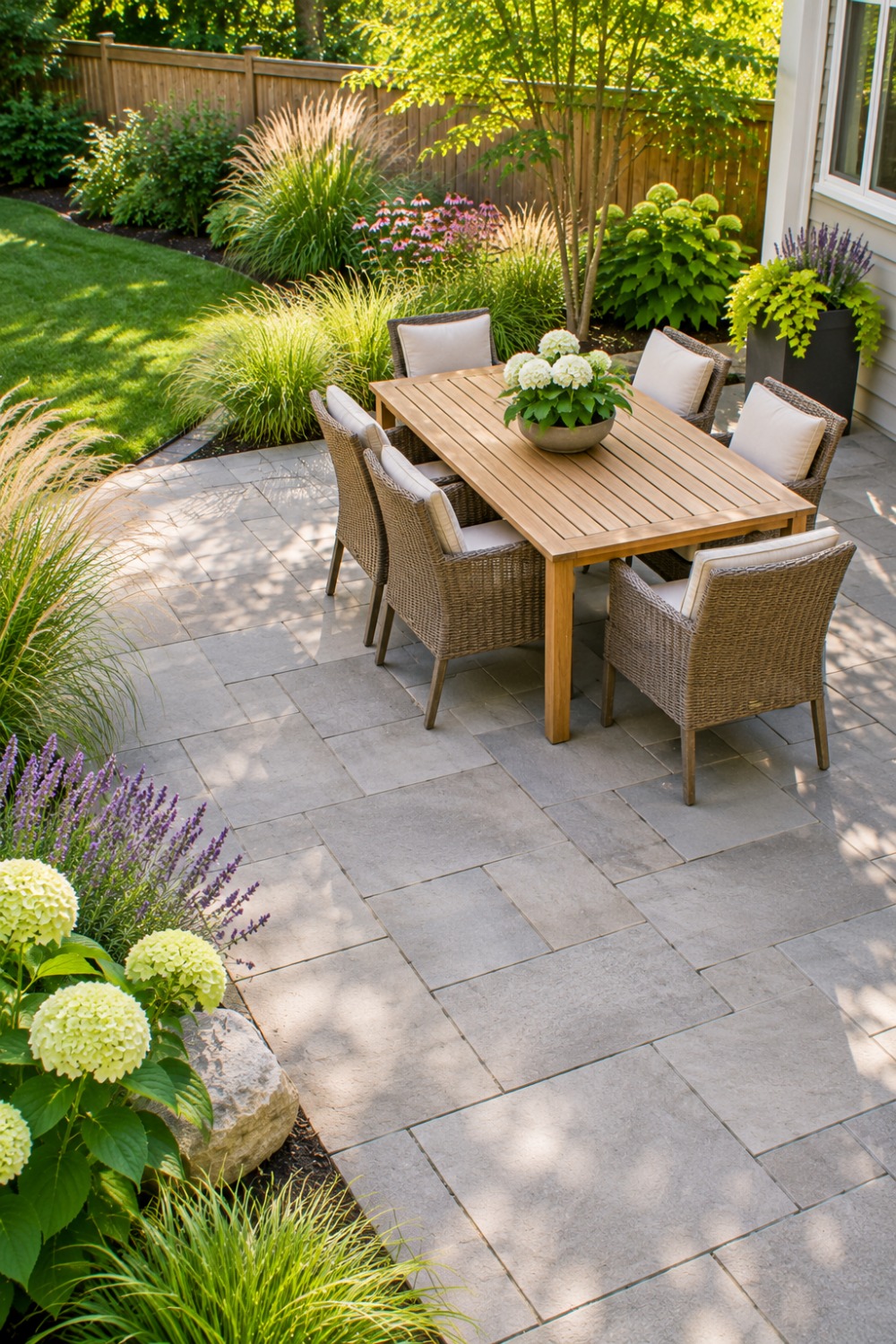
Weeds growing between patio pavers are a constant chore.
Polymeric sand hardens in the joints after watering, which helps block weeds and stops ants digging.
A well-built base also keeps pavers from sinking or shifting.
How to do it:
- Lay pavers on a compacted gravel and sand base.
- Sweep polymeric sand into the joints.
- Mist with water as directed to set the sand.
7. Mulch Every Bed Thickly
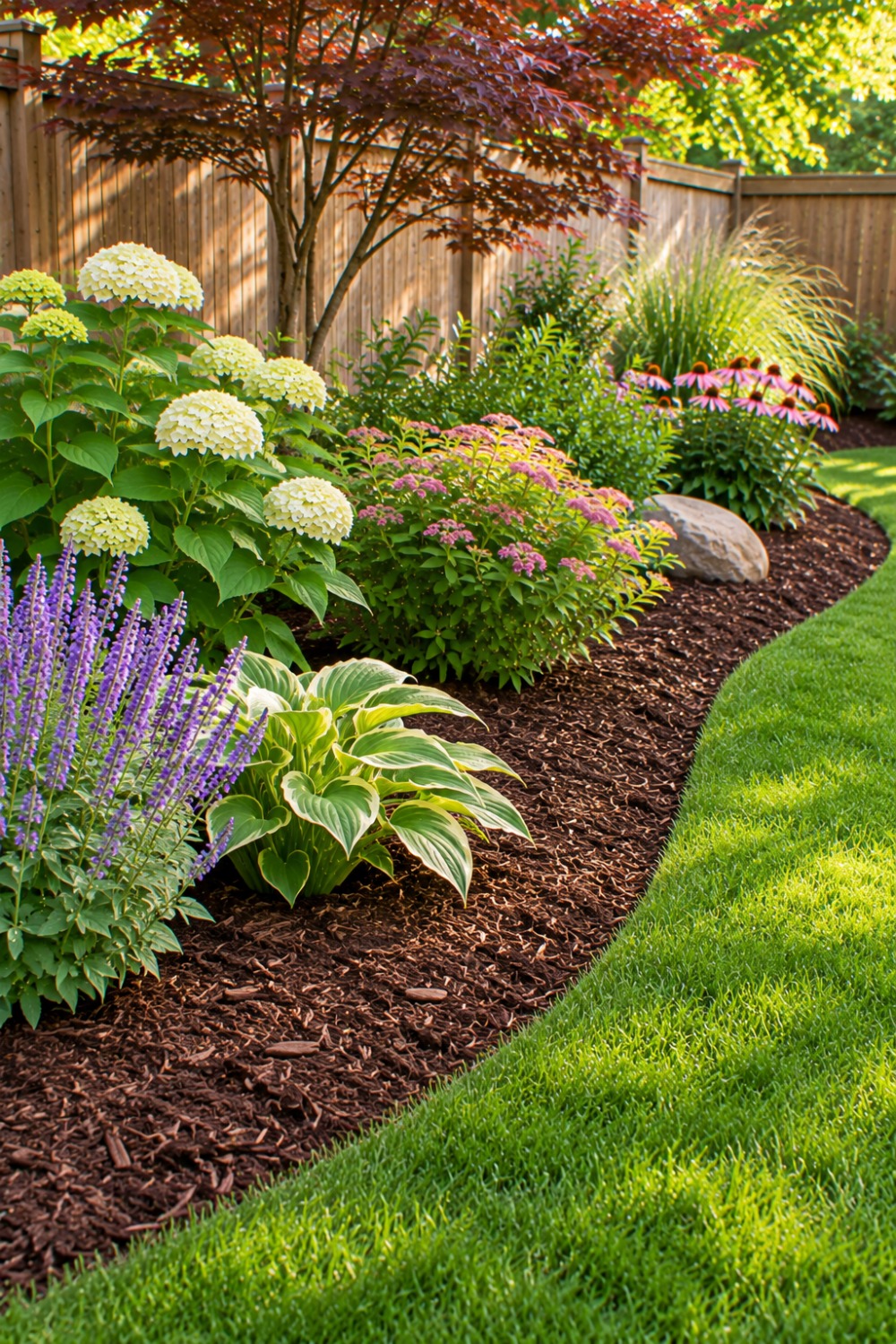
A thick layer of mulch is one of the easiest ways to cut down on weeding and watering.
It blocks light from weed seeds, keeps soil moist and slowly feeds the soil as it breaks down.
Top it up once a year and your beds will stay neat.
How to do it:
- Weed the beds thoroughly first.
- Spread 2 to 3 inches of shredded bark or wood chips.
- Keep mulch a few inches away from stems and trunks.
8. Plant in Large Drifts for a Simpler Look
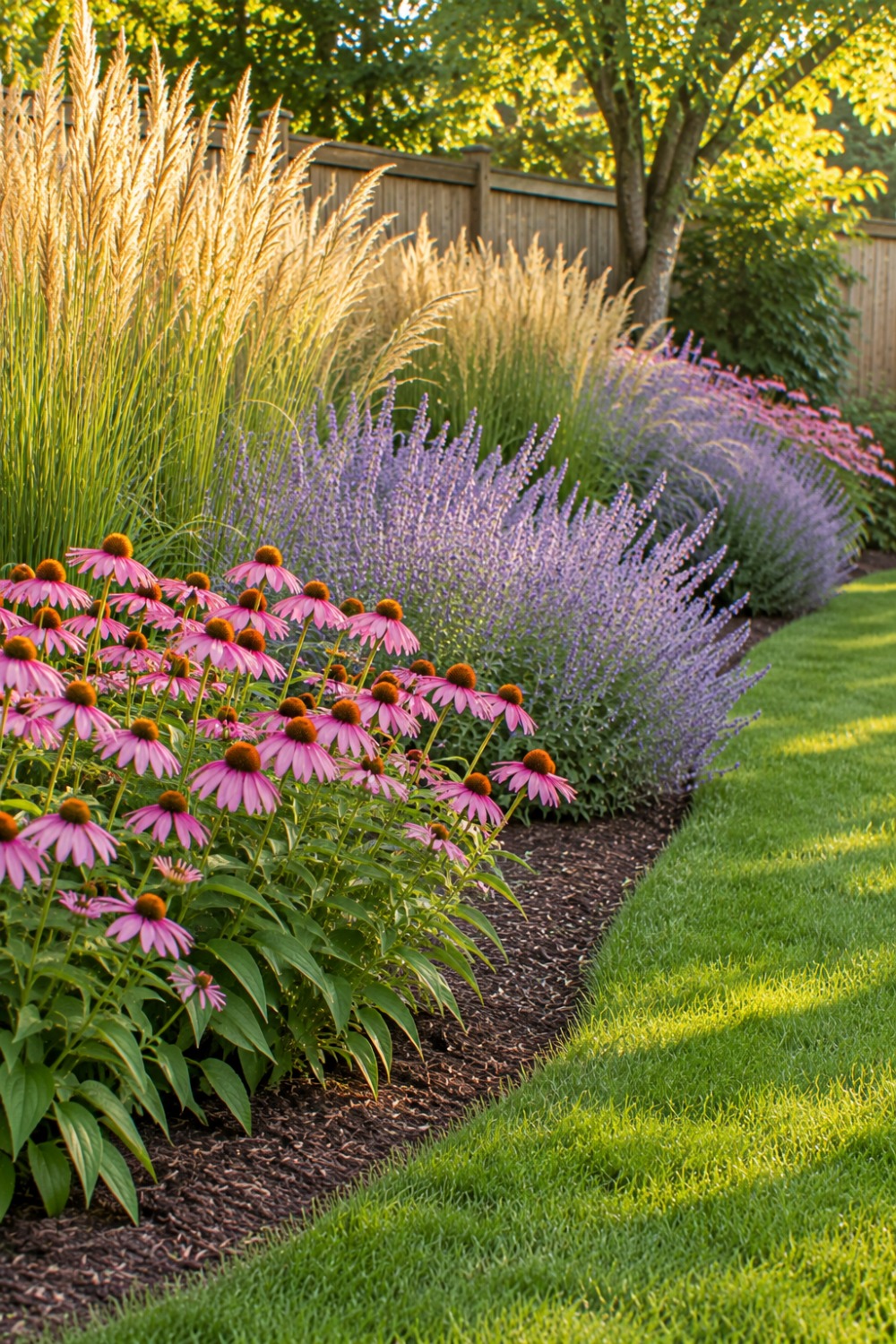
Planting many of the same plant together looks bold and calm, and it’s much easier to care for.
You’ll learn one routine for each group instead of juggling dozens of different plants.
Drifts also fill in quickly, leaving less room for weeds.
How to do it:
- Choose four or five plants you love.
- Plant each in groups of five or more.
- Repeat the same groups along the border.
9. Choose Native Plants Suited to Your Yard
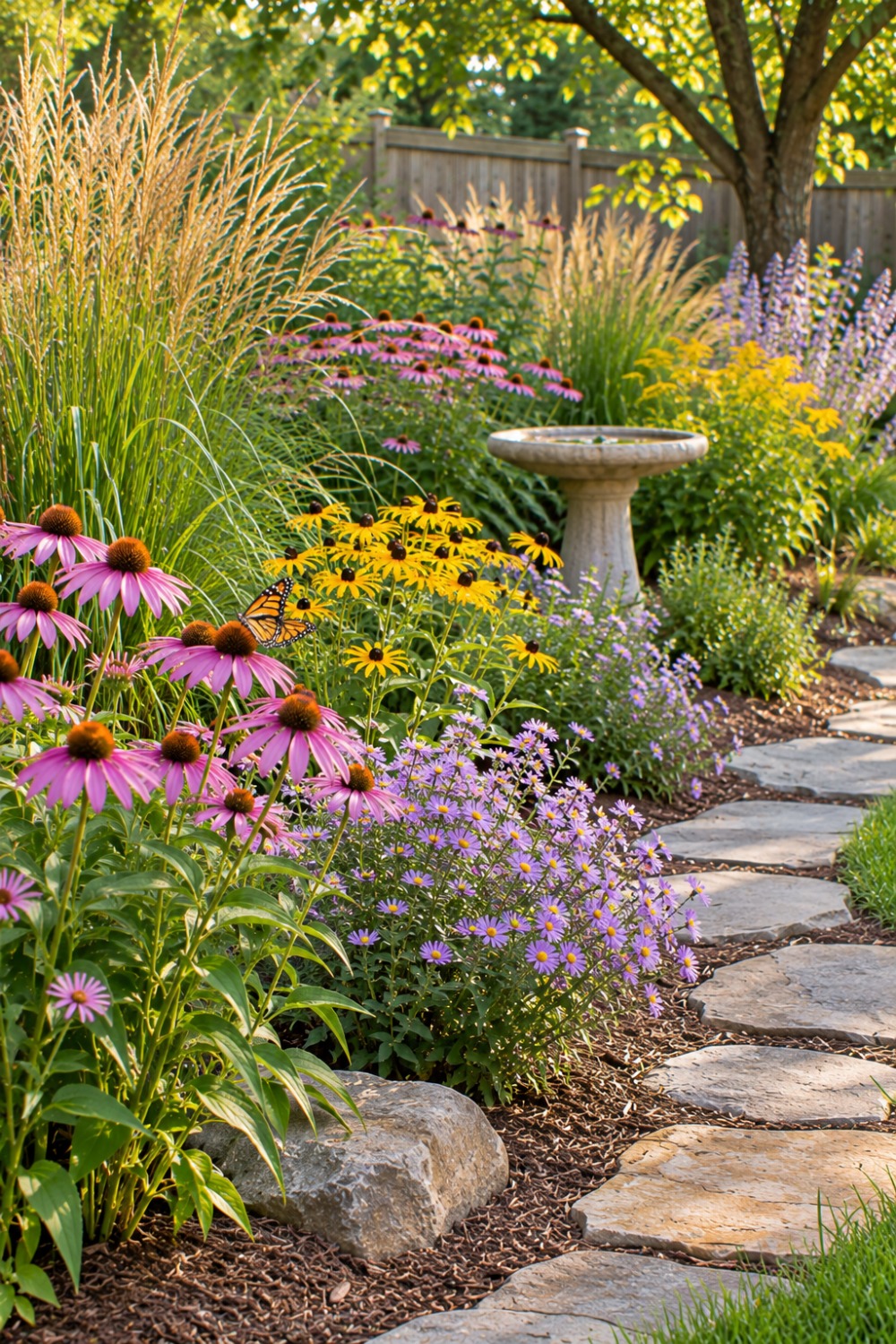
Native plants are adapted to your local climate and soil, so they often need less watering and fewer treatments.
They also support local birds, bees and butterflies.
A local native plant society or nursery can help you choose the best ones for your area.
How to do it:
- Find a list of native plants for your region.
- Match each plant to the right light and soil.
- Water well during the first season, then let them settle.
10. Use Self-Watering Containers
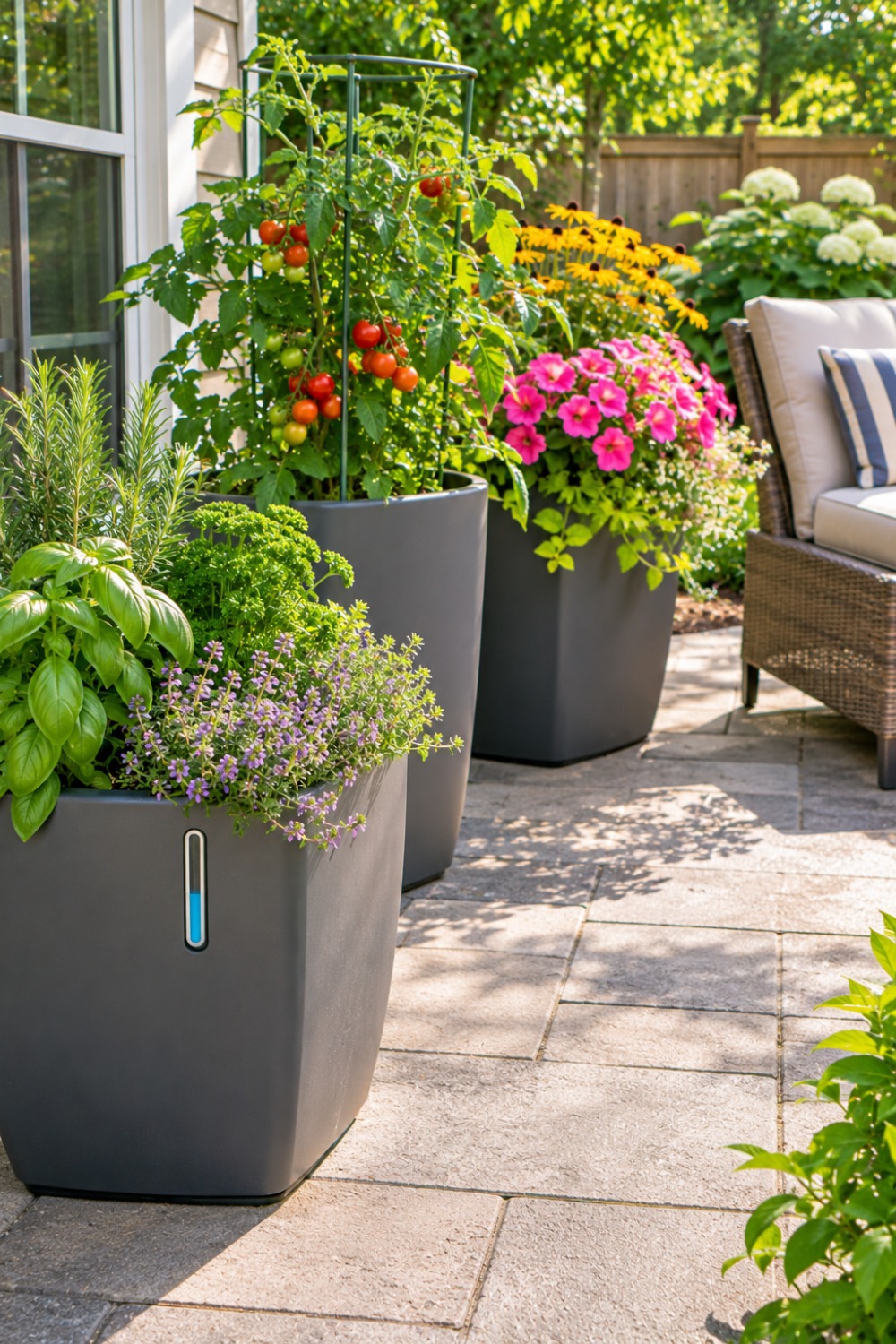
Containers can dry out fast in summer, but self-watering pots have a reservoir that keeps soil moist for days.
Larger pots also hold more soil, which means less frequent watering.
They’re perfect for herbs, vegetables and flowers near the patio.
How to do it:
- Choose large self-watering containers.
- Fill with potting mix, not garden soil.
- Top up the reservoir every few days in summer.
11. Create a Gravel Garden With Tough Plants
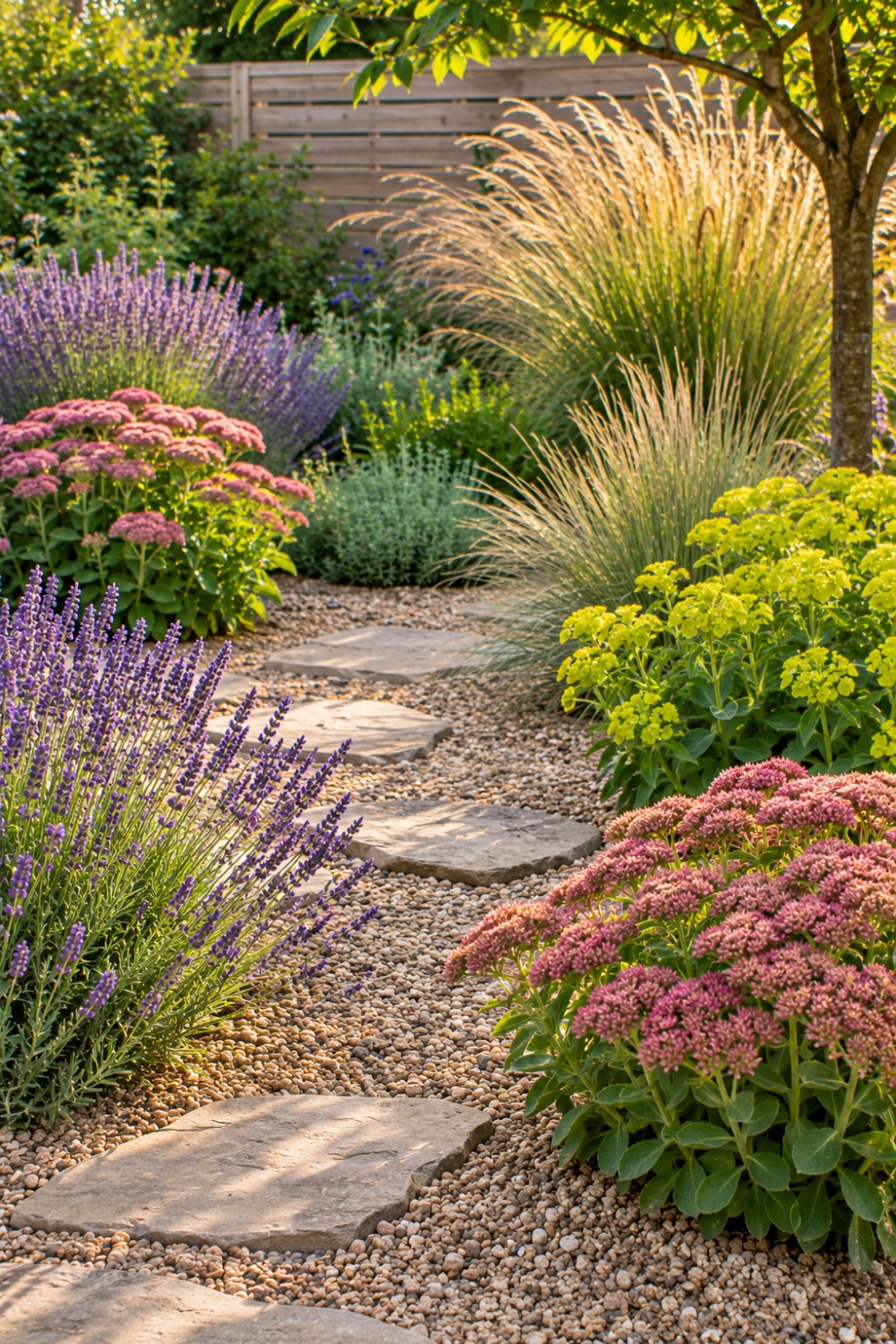
A gravel garden is one of the most relaxed, low-care ways to fill a sunny area.
Drought-tolerant plants like lavender, sedum, salvia and ornamental grasses thrive in the free-draining gravel.
Once established, it needs very little water and only occasional weeding.
How to do it:
- Remove grass and loosen the soil.
- Plant drought-tolerant perennials and grasses.
- Spread 2 to 3 inches of gravel around them.
12. Add Evergreens for Year-Round Structure
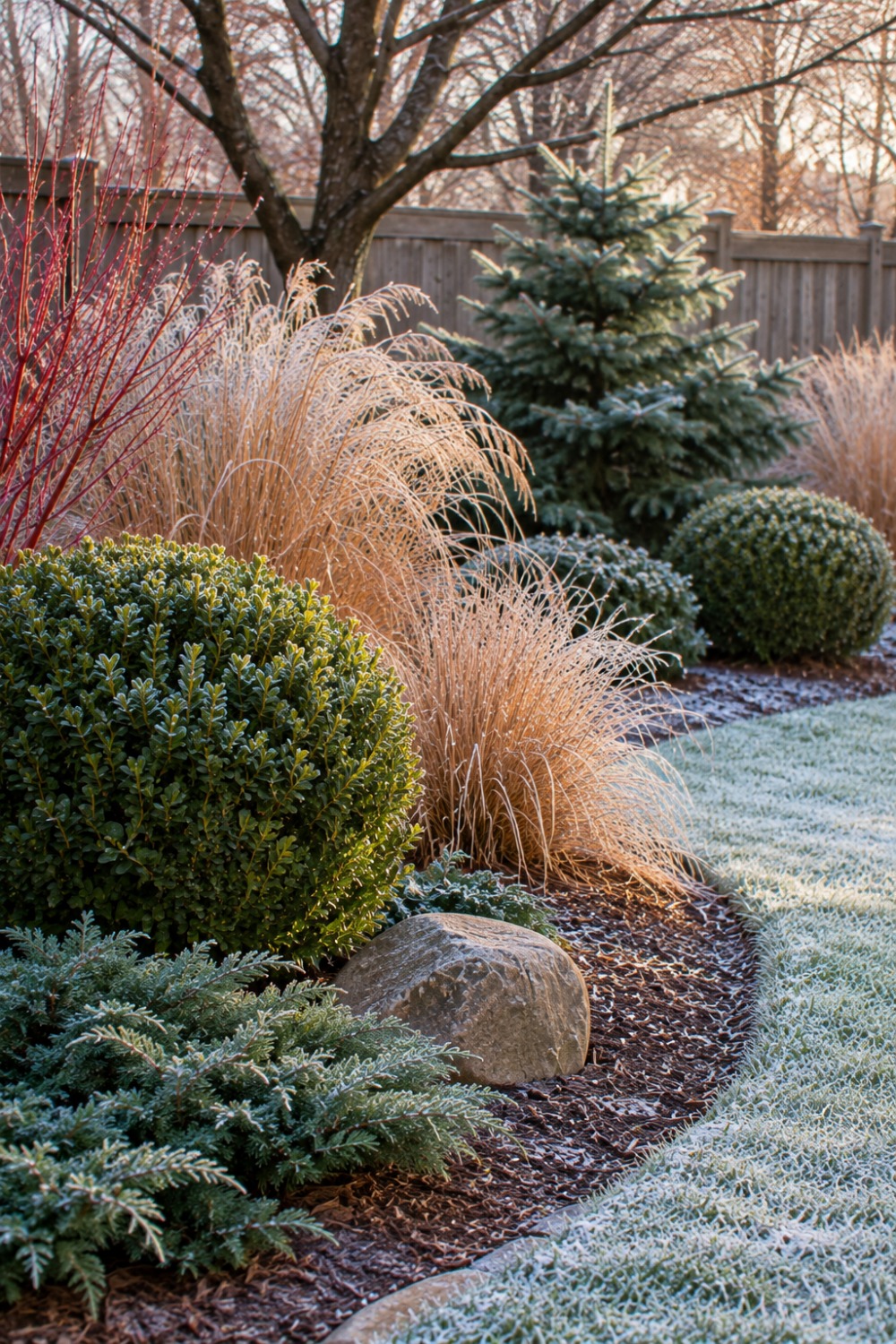
Evergreens keep your backyard looking good all year without seasonal replanting.
They give shape in winter, when perennials have died back.
Choose slow-growing, compact varieties so they need little trimming.
How to do it:
- Place evergreens at corners and along borders for structure.
- Choose compact varieties suited to your climate.
- Mulch and water well in their first year.
13. Automate Watering and Lighting With Timers
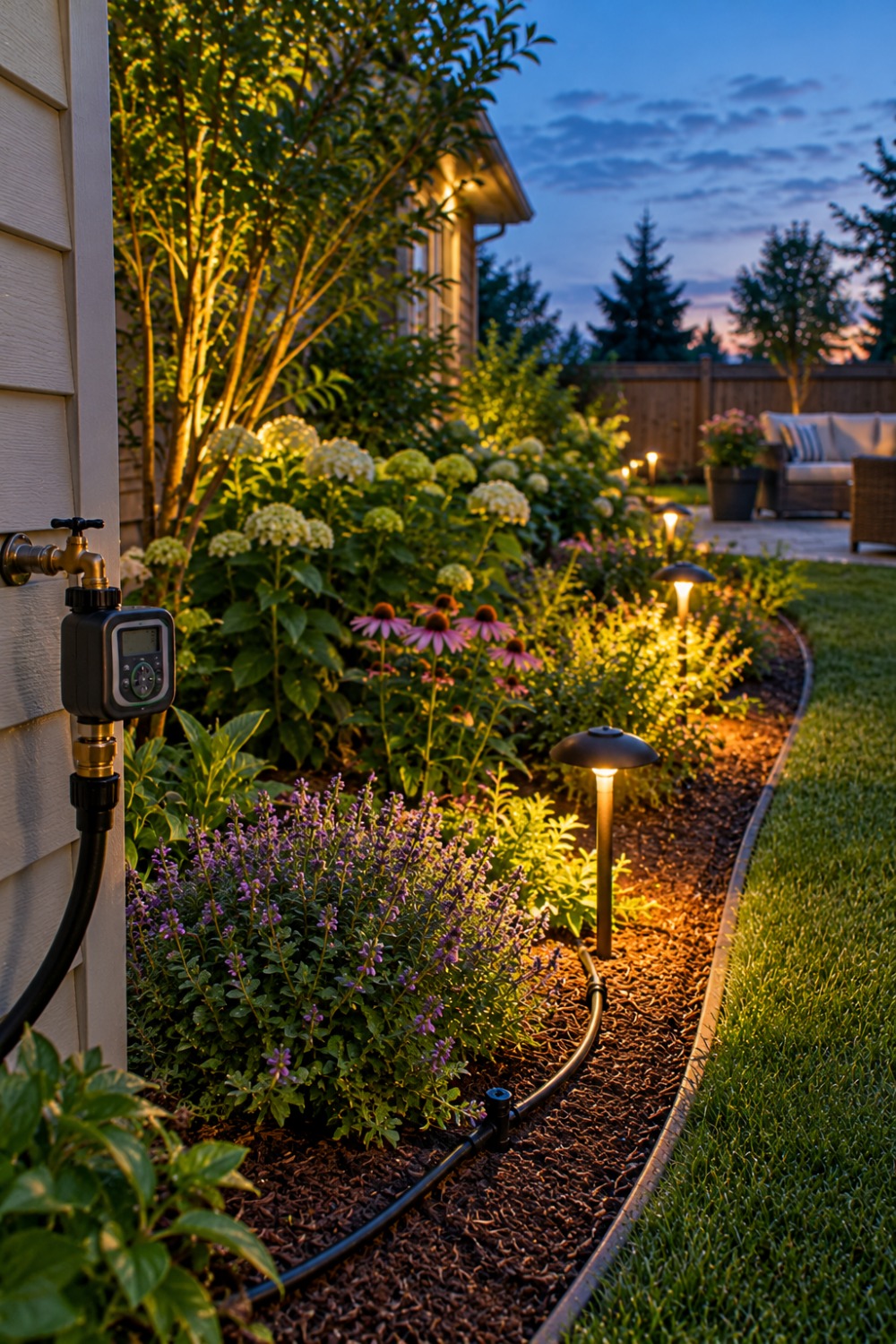
Timers take two regular chores off your list.
A simple hose-end timer or drip system waters plants at the right time, even when you’re away.
Solar or timer-controlled lights switch on at dusk without you lifting a finger.
How to do it:
- Attach a timer to your hose or drip system.
- Set it to water early in the morning.
- Use solar lights or a dusk sensor for evening lighting.
Frequently Asked Questions
What is the lowest maintenance backyard?
A backyard with a small lawn or none, mulched beds of perennials and compact shrubs, ground covers, and long-lasting surfaces like stone or composite needs the least work.
What can I use instead of grass in my backyard?
Ground covers, gravel, mulched planting beds, patios and decks are all good alternatives to lawn.
What are the best low maintenance plants for a backyard?
Native perennials, ornamental grasses, compact evergreens and shrubs chosen for their mature size need the least care.
How do I keep weeds out of my backyard?
Mulch every bed, plant densely, cover bare soil with ground covers and use polymeric sand in paver joints.
Final Thoughts: Design Once, Relax Often
A low maintenance backyard starts with smart choices, not hard work.
Begin with the biggest chore, which is usually the lawn, and shrink it to what you really use.
Fill beds with perennials, compact shrubs and ground covers, and mulch them well.
Choose lasting materials for patios and decks so you’re not repairing them every year.
Let timers and self-watering pots handle the daily jobs.
Then simply enjoy the space, with only a few seasonal tasks to keep it fresh.
For more easy-care ideas, see our front yard landscaping ideas with rocks.
Your weekends are about to get a lot more relaxing.